Minnesota’s Celebrated “Homeschool Pioneers” Founded a High-Control Cult

Screen Shot 2014-07-07 at 9.30.38 PM

By R.L. Stollar, HA Community Coordinator

4 months ago, Given Hoffman and Eileen Hoffman — writers for the Minnesota Association of Christian Home Educators (MACHE) — wrote a book entitled, “The Voices of the Pioneers: Homeschooling in Minnesota.” Given Hoffman is a “20 year old homeschool graduate” and “alumni of Worldview Academy”; Eileen Hoffman is Given’s mother and a MACHE Board member. The Hoffmans and MACHE describe their book as follows:

The Minnesota Association of Christian Home Educators (MÂCHÉ) brings you this collection of first-hand stories of more than a dozen homeschool pioneers. Sit down with a hot beverage and enjoy this conversational-style history of those who ventured to do what was considered less than legal and more than a little bit crazy. Learn why parents removed their children from public schools to educate them at home and how these pioneers fought for that right before local courts, district courts, the Minnesota Supreme Court, and in hearings before both the Minnesota House and Senate. Witness the birth of MÂCHÉ and its thirty years of growth and influence. Be informed, encouraged, and inspired by these mostly ordinary yet courageous people.

One of the “courageous” couples the book celebrates is Karl and Suzanne Solum. The Solums began homeschooling in Minnesota in 1982 (a year before HSLDA existed). In the book’s timeline of Minnesota’s homeschool “pioneers,” the Solums are the fourth family to begin homeschooling — so they are on the forefront of the pioneering. The Hoffmans write that the Solums “start homeschooling with a group before it’s legal and begin lobbying for legislation that would make homeschooling legal in Minnesota.”

The following is an excerpt from the Solums’ contribution to the book:

When we first started homeschooling in 1982, it was considered illegal to homeschool. Spring Grove Public School took one of the families of our Christian fellowship to court and charged them with truancy—we schooled as a group.

At that time, we decided as a fellowship to bring the superintendent and principal of Spring Grove to a few of the homes to show them the curriculum and prove the children were being educated and were well socialized. We also talked to them about our Christian convictions that led us to choose home education.

An attorney was hired to defend the family. On the basis of religious liberty, they won the case, which was watched by other counties because of all the people starting to homeschool.

…At that time, we joined Home School Legal Defense Association and Christian Liberty Academy, who both encouraged us and other Christians in Minnesota to lobby our state legislature for a homeschool bill that would make it legal to homeschool with the least possible restrictions.

Karl and his brother John were both at the Capitol at different times, talking personally to as many senators and representatives as they could.

The inclusion of the Solums might not be newsworthy except for one thing:

The Solums founded a high-control cult. That’s the aforementioned “Christian fellowship.” And now they’re in the news because they’re suing that cult.

Last week CBS Minnesota reported the following story: “Lawsuit Exposes Southern Minnesota Religious Group.” CBS reports that,

For 35 years, Suzanne and Karl Solum were members of a Christian ministry called Maranatha in Spring Grove, Minn. They pooled all their money with everyone else in the group but when they left six years ago, they wanted their share and sued. In a Houston County courtroom in June, they testified about decades of control, abuse, and deceit from the man known as the group’s shepherd.

Those decades of “control, abuse, and deceit” were dark and troubling. The group’s “shepherd,” a man by the name of Tom Tollefsrud, has been accused by former Maranatha members of “beatings and punishment,” creating “a hell they were afraid to escape,” and “breaking the jaw of one Maranatha member to ‘teach him a lesson.'” Claims of forced financial and medical decisions have also been made.

But the Solums were not passive participants in this high-control community — in other words, a cult. Beginning in the 1970’s, the Solums actively built the community.

According to the Post Bulletin, Tom Tollefsrud and John Solum (Karl’s aforementioned brother John, who would later lobby for homeschooling rights alongside Karl) “started the group in Spring Grove in 1972, basing it on a ministry founded in 1971 by a youth pastor in Kentucky.” Karl and Suzanne Solum got involved in 1978 (4 years before they started homeschooling.) According to CBS, after “Suzanne and Karl Solum helped start the group,” they “picked a close friend, Tom Tollefsrud, to be their pastor.” The community had shared values, which included homeschooling:

The families all lived in separate homes but by the rules Tollefsrud set, like to homeschool their children, share bank accounts, and involve him in every decision they made, from what furniture to buy to what to wear.

The group “absolutely” believed that God spoke directly to Tollefsrud.

Fast-forward several decades. After eventually becoming isolated and upset by the direction Tollefsrud was taking the group, Karl and Suzanne left the cult in 2008. And they are now suing their former pastor to “secure property that they say is rightfully theirs given certain financial contributions and other considerations over the 35 years of which they were members of Maranatha.” (According to The Post Bulletin says, their legal battles have “spanned five years, two trials, 13 lawsuits, 26 defendants and hundreds of thousands of dollars.”) All of Karl and Suzanne’s children “remain a part of Maranatha Fellowship and testified against their parents.” Karl Solum mourned this fact in court, saying that, “I taught them how to read the bible, but I failed at teaching them to be their own men.”

All this information puts the Hoffmans’ and MACHE’s “Homeschool Pioneers” book in a different light, especially considering that this information has been publicly available and known for several years. The Hoffmans and MACHE neglect to mention any of this. (And so do the Solums in their contribution to the book — which is unfortunate, because some honesty and transparency about their life’s path and mistakes would go a long way here.)

It definitely sounds much better to read

Spring Grove Public School took one of the families of our Christian fellowship to court and charged them with truancy—we schooled as a group.

than to read

Spring Grove Public School took one of the families of our cult to court and charged them with truancy—we schooled as an isolated, high-control group that absolutely believed God talked to our leader.

It also sounds better to read

[Our fellowship] won the case, which was watched by other counties because of all the people starting to homeschool.

than to read

Our abusive, high-control cult won the case, which was watched by other counties because of all the people starting to homeschool.

Finally, HSLDA would definitely prefer

We joined Home School Legal Defense Association and Christian Liberty Academy, who both encouraged us and other Christians in Minnesota to lobby our state legislature for a homeschool bill that would make it legal to homeschool with the least possible restrictions.

to

We joined Home School Legal Defense Association and Christian Liberty Academy, who encouraged our abusive, high-control cult in Minnesota to lobby our state legislature for a homeschool bill that would make it legal to homeschool with the least possible restrictions.

Minnesota Association of Christian Home Educators probably doesn’t want it known that some of their celebrated “homeschool pioneers” founded a high-control religious sect that fostered and hid criminal abuse. Nor does HSLDA want their members to know that the Twelve Tribes isn’t the only abusive high-control group they have supported.

So whitewashing it shall be.

How the Teachings of Emotional Purity and Courtship Damage Healthy Relationships

CC image courtesy of Flickr, Randi Deuro.

HA note: The following is reprinted with permission from Darcy’s blog Darcy’s Heart-Stirrings. It was originally published on January 18, 2011.

There are many times that I don’t realize just how much strange teaching I’ve had to “un-do” in my life until I try to explain them to someone else. This happened to me the other night. A dear friend and I were talking about our kids and how to help them transition from children to adults. The topic of dating and relationships came up and we started talking about my story. Sometimes it’s actually comforting to me to be met with blank or incredulous stares from people I consider “normal”, good Christians. It somehow validates my belief that some of the teachings I grew up with were very wrong.

I’ve also lately started facing the ways in which the teachings of “emotional purity”, (a la Josh Harris, the Ludys, and others) have damaged the part of my brain that makes healthy relationships function.

I define “emotional purity” in the same way that popular homeschool writers have: it is the idea of “guarding your heart”. Which sounds all noble and righteous and everything but in this context is really just a facade for fear. Fear of loving and losing. Fear of making the wrong choice. Fear of getting hurt. Fear of being damaged. Fear of not measuring up. In my life it meant never having a crush on a guy, never allowing myself to “fall in love”, basically training myself to shut down a normal, healthy, functioning part of my human heart.

I’m 27 years old, been married for almost 7 years. I rejected the teachings of courtship and emotional purity when I was 19. But their effects have yet to leave.

There are several ways that these teachings can damage a person’s heart.

1. They cause shame.

Shame because sometimes you can’t help but like one guy a little more than another. Shame because that’s “sinful” and “emotionally impure”. Shame because it sets a standard and proclaims that you are somehow shameful if you cannot keep it. You are considered damaged goods if you have fallen in love and had your heart broken. It was Josh Harris in I Kissed Dating Goodbye and the Ludy’s in several of their books that popularized the idea that everytime you fall in love or get “emotionally attached” to someone, you give away a piece of your heart. The more pieces you give away, the less of your heart you have to give to your spouse someday. He even went so far as to say that each of those former flames actually have some sort of hold on you. This has got to be the most bogus and the most damaging teaching of this entire movement. Love doesn’t work that way. The more you give, the more you have. My 3rd child doesn’t have less of my heart just because I’ve loved two other children before him. And, really, I haven’t given them “pieces” of my heart. I’ve given them each all of my heart. The miracle of love is that it multiplies by being given.

Each person I love has “a piece of my heart”…my best friend, my sisters, my husband, my parents, my kids. It is ridiculous to suggest that there is not enough of my heart to go around.

And what view of redemption does this teaching proclaim? Not one that I want anything to do with. It is an incompetent redemption.

2. They cause pride.

Pride because suddenly you are better than everyone else. Because you have never had a crush on a guy. You have kept your heart for your spouse. You didn’t say “I love you” til your wedding day. Pride in human accomplishment. Pride because you are so much more spiritual than that poor girl over there who is crying because her boyfriend broke up with her. Because your heart is whole and she just gave a piece of hers to a guy she isn’t married to. Pride because you did it right, she did not. You have more to give your future husband than she does. She is damaged goods, you are the real prize.

This is exactly what happened to the Pharisees. They made up laws that God never condoned, then patted themselves on the back for keeping them, while looking down on those who didn’t. This has nothing to do with the righteousness and grace of God, and everything to do with the accomplishments of man. I remember watching a video where one of the biggest names in the courtship movement bragged with obvious arrogance that he didn’t tell his wife he loved her until their wedding. And I thought “how twisted can we get?” We took something as simple as saying “I love you”, built a strawman rule around it (“saying I love you is defrauding”) then hung it like a trophy on our walls. Job well done, folks.

3. They create skewed views of relationships which lead to dysfunction

This is where I still struggle. Where others see nothing wrong, I am suspicious of every look, every situation, every witty exchange. I am still uncomfortable hugging one of my best friends who is a guy. Because we were never to hug or have physical contact, even innocent, with a guy. Voices in my head scream “defrauder!” just by giving a friend a quick hug. I feel ill at ease sometimes even talking to other men. Oh, they never notice. Because I’m really good at pushing those feelings away and acting “normal”. But I am bothered by my reaction to everyday situations. We were taught never ever ever to be alone with a guy. Because it could look bad. He could be tempted. You might start thinking impure thoughts. You might even *gasp* flirt!

I was trying to explain this to my friend and it came out sounding so….crazy and embarrassing. I told her if she was to walk out of the room, leaving me and her husband in the same room, my first reaction would be one of panic. “This might look bad…. what if he talks to me…what if someone else sees us….what is he thinking…” My second reaction, close on the heels of the first, would be a coping mechanism that I learned long ago: I calmly tell myself that “this is perfectly normal and perfectly innocent…he probably doesn’t even notice me…this is a Godly man I know and trust….the only person who would ever freak out about this is me….to the rest of the world there’s nothing wrong here”. I then calm down, act normal, and hope nobody noticed my crazy internal battle. Cuz they’d probably admit me to a psych ward. Thank you, Josh Harris and Co. I hatethis about myself! I am a strong, confident person. But the idea that I can defraud just by a look, that I could become emotionally impure just by a thought, that I might become damaged goods with pieces of my heart strewn all over tarnation, and that guys “only have one thing on their mind” and we need to help them control themselves, has truly negatively affected what should be normal interactions with my friends. Honestly, I don’t get embarrassed talking about much. But this admission isn’t easy for me.

Guess what? In the real world, men and women can have innocent relationships. They can talk to each other without one of them thinking there’s ulterior motives. They can laugh and exchange wits and, yes, even drive in a car together without anybody thinking anything dubious is happening. They are not naiive but they are not afraid of their own shadows. Purity and integrity in relationships can be there without being unnaturally freaked out about it. The other night, I stuck my tongue out at a guy friend who was teasing me and his wife cracked up laughing. As I laughed, I felt myself looking down on the situation, amazed that nobody thought twice about it, then amazed that I DID…that I had to push away feelings of guilt because what if someone thought I was *gasp* flirting?! This is one dysfunction that I really wish I could be freed from. Maybe time is the only cure and I need to be more patient with myself. These teachings have deep, rotten roots and it takes time to pull them all out.

4. They teach us to make formulas to be safe

1 + 1= 2. Emotional purity + Biblical courtship = Godly marriage. But life doesn’t work that way. You can do everything “right” and your life can still suck. You can do everything “wrong” and still be blessed. Rain falls on the good and evil. Time and chance happen to them all. People who follow the courtship formula still get divorced. Or stuck in terrible marriages. Courtship is not the assurance of a good marriage. Life is too complicated for that. Love involves vulnerability. When you choose to love, you are choosing to accept risking a broken heart. No formula can protect you. Life involves risk. Following God involves risk. He is not a “safe” God. But He is good.

God doesn’t seem to like formulas. Because formula is the opposite of faith. Formula says “I will follow a God that I’ve put neatly in a box, to give me the desired results”. Faith says “I will follow You even when I can’t see where I’m going, even when the world is collapsing around me”. Formula says “I will not risk, I will be in control of my future”. Faith says “I will risk everything, I will trust Whom I cannot see, surrender what I cannot control anyway.” Formula is the assurance of things planned for, the conviction of things seen. Faith is the assurance of things hoped for, the conviction of things not seen (Heb. 11:1). But we are afraid. So we control instead of trust. We don’t take a step unless we can see where we’re going. We build neat little formulas and say “THIS will keep me safe!” Then we blame God when our puny formulas fail.

These teachings need to be stopped. They were new in my generation and now I, and others like me, are reaping the fruit of them. And the fruit is rotten to the core. I’m sure those who promoted such ideas had good intentions. But good intentions aren’t enough. Without Truth and Grace they can do more harm than good. Thanks to those good intentions, we are seeing an entire generation of homeschool alumni who have no idea how to have normal relationships. I have talked with literally hundreds of alumni my age, and am not exaggerating the extent of the issue. It’s nice to know I’m not alone in my dysfunction but discouraging as well. What is encouraging is that most of us have determined to stop the insanity. We will not be passing these things to the next generation. Instead we will teach our children to love God with all that they have, all that they are; and to love and respect others as they love themselves.

I leave you with the words of a very wise man:

“To love at all is to be vulnerable. Love anything, and your heart will certainly be wrung and possibly broken. If you want to make sure of keeping it intact, you must give your heart to no one, not even to an animal. Wrap it carefully round with hobbies and little luxuries; avoid all entanglements; lock it up safe in the casket or coffin of your selfishness. But in that casket- safe, dark, motionless, airless–it will change. It will not be broken; it will become unbreakable, impenetrable, irredeemable.”

~C. S. Lewis

Emotional Purity and Courtship: A Few Years Later

I Am Learning To Love Myself: Mara’s Story, Part Five

Screen Shot 2014-06-30 at 11.00.08 AM

HA note: The author’s name has been changed to ensure anonymity. “Mara” is a pseudonym.

< Part Four

Part Five

A week later he started taking narcotics again.

In the following months I lost both my grandmother and the great aunt that had lived next door to us. One the day after the other’s funeral. My mother’s swings were escalating. She had a hard time keeping down jobs and holding onto money. She blamed all her problems on my father.

Shortly after the deaths, she divorced my father and gained full custody. (They had been threatening this every other day for the last 14 years.). Two days after, she kicked out my sisters who were 20 and 18 at the time. The 20 year old had travelled a lot with work-stay and had just been home a quarter to finish college. The 18 year old was working and in school and gave a majority of her paycheck to my mother. They weren’t given any notice. My sister and I had gotten an apartment together after I had separated from my husband and we invited them to move in with us until they could get on their feet.

Shortly after, my husband started spiraling down with his drug use. The men in our community group talked with him – but they did it from where they had come from and with love. They told him that they were scared he was going to kill himself or others driving as high as he was. They told him that they would pick him up and drive him home. They knew that he wasn’t ready to change and didn’t ask him too. They just told him they were here when he was ready and that he wasn’t alone. I felt at complete peace to give him up, my pastor told me something that has stuck in mind. He said “Know this isn’t yours to carry alone.” They weren’t pitying me, they weren’t trying to help me, they weren’t taking over my problem. Instead they were standing beside me and loving me.

My husband recently told me he was going to start selling. I know the road this will take. I have decided for the sake of my unborn daughter and me, that divorce is going to be the best choice and a way to protect ourselves. He has already stolen money from me and I have accepted that he still has a long way to go before he decides he wants to change. I’ve stopped trying to control and manipulate him. It’s pointless.

I can only change myself and what I allow in my life and I have accepted that.

For many years, I never knew who I was… just who I was supposed to be, who everyone around me needed me to be. My boundaries had been so trampled growing up – I had no idea I was allowed boundaries and limitations. I had become – still am- bitter and resentful. I still can’t forgive everyone.

I was told that forgiveness is closely related to acceptance and for me to forgive I have to accept what was done to me. For me to fully accept that, I have to accept that I wasn’t as powerless as I wanted to be. I couldn’t separate love from pity and didn’t even know what love was. I was supposed to love my mother but all I could do was pity her.

I couldn’t love God because I didn’t know what to pity in him. I couldn’t imagine God loving me because I just felt He did everything for me out of pity or condemnation.

Now I truly am learning who I am.

I am learning my limitations and boundaries. I am learning how to love without pity. I am learning how to trust people that love me. I am learning how to love God and that He loves me – not who I want me to be – but plain old me. I am learning to love myself.

The sinner’s prayer has long confused me – how can saying those magical words make you a Christian – who decided those words were the one they were going to use? But I think I’m starting to understand true Christianity and some of that prayer. I think when it says confess your sins –

He doesn’t really want you to confess your sins, he wants you to stop hiding and simply confess yourself.

I wrote this poem recently. It’s my confession of self…

 *****

Confession of Self 4/29

When she stops using,

The bitter bite of withdrawal sinks in.

Blood dripping from the gaping wounds

Her habit has left on her.

She tries to smile politely and courteously

So that no one discovers the secret she holds inside.

Another day hidden behind the mask of a perfect little girl

The fear of survival looms in threat of stopping

How will she be able to make it through the day without her addiction?

Her drug of choice gives her a dose of denial

So that she doesn’t have to feel reality.

So that she can ignore the fears, anxiety and horrors that await her in reality.

So that she doesn’t have to face the eyes staring back in the mirror in reality.

She fears letting the world down again if she stops using.

She’s never had enough strength to stop before.

She used to be strong – so beautiful – so full of life

And, here she is now, just a shell drowning in tears.

Suffocating in sorrows she’s too scared to feel.

She uses her body to feed her habit.

Abuses her body to fuel her habit.

She’s scared of the person that remains if she stops – the person she’s become.

The only way to support this habit is to sell her body.

To give up every piece of her in hopes that it is worth it.

That the high last longer this time

That she never comes down this time.

She’s died so many times before – what’s one more?


I am an addict.

Addicted to deceit,

Refusing to own who I am in the place of who I want to be.

Selling my life in hopes of keeping my soul

Buying an image that doesn’t require a God.

I am addicted to hiding myself – to wearing a mask.

I am addicted to selling myself to prevent being myself.

To prevent owning my depression, my downfalls, my numbness.

— The fact that I am but human

I am addicted to pity in the place of love

I am addicted to the misconception that I don’t need more than myself.

That my independence is my castle – my everything.

I am an addict.


I need more – I am worth more

I am loved and I can accept love

Your love isn’t a favor to be repaid at the cost of my soul.

Your love is what will allow me to buy myself

What will give me a soul

What will allow the wild, crazy, passionate life within to be loved and lived.

Your love is what will save me

Your strength will shelter my weakness

This isn’t pity – this is the opposite.

I’ve gained a soul, a self, a life.


Yes, I am an addict

But I am not alone.

I am truly loved,

I have gained a soul in owning myself,

And I can finally love the girl staring back from the mirror.

End of series.

“Everyone is Forgiving”: Bill Gothard’s Bold-Faced Lies

Screen Shot 2014-07-05 at 1.20.37 PM

Jeri Lofland blogs at Heresy in the Heartland. The following was originally published by Jeri on July 3, 2014 with the title “When Apologies Make It Worse,” and is reprinted with permission.

Since Bill Gothard had to resign from leading his Institute in Basic Life Principles amid allegations of inappropriate behavior toward female staffers, he has made few public statements. But in private, he has been far from silent.

An article published last week by Mother Jones stated:

These days, Gothard says, he is busy “contacting people I’ve offended and asking them to forgive me.” Asked how this process is going, he chirpily replies, “Wonderful. People are very grateful and everyone is forgiving.”

However, some former IBLP staff members take issue with Gothard’s version of the facts. Gothard has made efforts to contact them, they say, and “grateful” was not a word that came to mind.

One woman, who has had contact with Gothard since his resignation from IBLP, dismissed his attempted “apologies” as unethical and disingenuous. As this woman has requested anonymity, I will refer to her here as “Sally”. After her story was published on the website Recovering GraceGothard sought to engage Sally in an email correspondence. She has given me permission to share the content of those emails here. Gothard did not reply to the last message included below.

******

Sally,

I was grateful for my talk with ***** and he told me of his contact with you. It would be an answer to prayer to be able to be reconciled with you and I would appreciate any direction you would have towards this goal.

Sincerely, Bill Gothard

******

Bill,

As a starting point, I would like to know why you have resigned as president of IBLP?

Sally

******

Thank you, Sally, so much for your response. I resigned from the Institute because I have finally realized that relationships with the Lord and others are far more important than the work I do for Him. I have offended many individuals including you and it is my desire to be reconciled with as many as possible in the years to come.

Sincerely, Bill

******

Bill,

You say that you have offended many individuals including myself.

I would like you to be specific regarding the manner in which you believe you have offended me.

Sally

******

Sally,

I apologize for the delay in getting this message to you. For many years I have treasured the memories of the friendship that we had. I am praying that this can be restored. Some of my actions were inappropriate and offensive. Is it possible to hear your perspective on these wrong actions so that I can more precisely understand and acknowledge my fault and seek your forgiveness?

Sincerely, Bill

******

Bill,

I should not have to explain to you what was “inappropriate and offensive” about your actions towards me. It is very wrong of you to ask me to recount them for you, and I do not intend to do so.

If you sincerely desire my forgiveness and you wish for reconciliation, then you need to acknowledge your offensive behavior in an honorable, fearless and truthful manner. If you are not willing to do this, then please do not contact me again.

Sally

******

Readers of the accounts on Recovering Grace will recall that Gothard commonly groomed his victims of sexual and/or emotional abuse by urging them to confide to him all the sexual details of previous relationships. It would appear from this series of emails that even at nearly eighty years old, he still takes a voyeuristic interest in hearing his victims describe the shame he sought to burden them with.

“He consistently asks the girl to tell him what it is she thinks he has done. Then he apologizes for ‘her perceived’ grievances. There is no ownership of his behavior. He’s putting it all back on the the victim.”

And once again, Gothard is breaking his own fundamental rules–this time for apologies. In his Basic Seminar textbook, he wrote a whole chapter on the right way to clear one’s conscience by asking forgiveness.

bsFor example, Gothard’s text points out:

It does little good to ask forgiveness for a small offense when in reality that offense is only a fractional part of a much greater offense.

Also:

There are several ways to ask forgiveness which are guaranteed not to work–such as, “I was wrong, but you were too”; “If I was wrong, please forgive me”; “I’m sorry”, etc. There is one genuine statement which reflects true sincerity and humility: “God has convicted me of how wrong I have been in (my attitude and actions). I know I have wronged you in this, and I’ve come to ask, will you forgive me?”

Carefully choose the right wording

  • Your words must identify the basic offense
  • Your words must reflect full repentance and sincere humility

 …One of the hardest statements for any person to make is, “I was wrong.” It is a lot easier to say, “I’m sorry about .. ” It is also much easier to say, “Please forgive me” than it is to ask, “Will you forgive me?” and wait for the answer.

Gothard then gives examples of wrong wording:

“If I’ve been wrong, please forgive me.”

And right wording:

“God has convicted me of how wrong I’ve been in ______ (Basic Offense). I’ve called to ask will you forgive me?”

This request, spoken in the right attitude, is certain to be well-accepted by the one to whom it is directed. This approach must include correction of any attitudes or actions which caused the offense and also restitution for any personal loss which was suffered by the one offended.

Oh, yes, restitution. Did you see that mentioned in the emails to Sally? No, I didn’t, either.

But let us go on. The seminar manual taught that one should not go into too much detail, and emphasized the principle with a verse from the New Testament:

In Scripture we are warned that, “It is a shame even to speak of those things which are done of them in secret.” (Ephesians 5:12) This warning definitely applies when asking for forgiveness. It is neither important nor appropriate to review impure details of an offense. This only tends to stir up the mind of the hearer to the past. 

And yet Gothard needs more details so he can “more precisely understand and acknowledge” his fault? Hmmmm.

Of course Gothard wrote the seminar text long before email, but he recommends making apologies only by phone or in person, not by correspondence. I have highlighted some relevant points in Gothard’s explanation:

Please don’t write a letter. Most people are tempted to use this method because it is so easy and the least painful to their pride. But it is not effective for many reasons. First, it documents your past offenses and your purpose is to erase them. Second, a letter can be misused by the one receiving it. This only complicates the problem. Third, it often embarrasses the one receiving it, and they may never reply to it. Fourth, a letter doesn’t allow you to gain their verbal assurance of forgiveness. That is a very important factor for you and for the one you have offended. A verbal forgiveness allows him to become free of his bitterness.

Oh, yes, bitterness! So we ask forgiveness in order to help our victim “become free of his bitterness”? No wonder these women are frustrated!

Let me give you a tip, Bill. Forgiveness alone is not enough to erase your many offenses. And the women you used for your own sexual or emotional gratification are wiser and more self-protective now. This is not about restoring a friendship, it is about your manipulative abuse of your position.

“I am not trying to reconcile – I am trying to bring to attention a problem that has been ongoing for forty years. I forgive him, but I have no wish to reconcile with him.” 

–“Sally”

Perhaps most interesting of all, though Gothard’s attorney friend-turned-investigator failed to contact any of the women who spoke out on the Recovering Grace website, Gothard himself is contacting them. He is even contacting other women who have not publicly spoken about their IBLP experiences but who were indeed mistreated by him. Would he possibly be working from memory here? And if his memory is that sharp, why would he need to ask for more details?

This is, after all, a man who taught millions exactly how to ask forgiveness for the offense of “Behaving improperly on a date“:

Wrong Confession: “I realize that I was wrong in necking with you on our date. Will you forgive me?” 

Right Confession: “I realize that I have been wrong in my selfish actions and attitudes toward you when we were dating. It would mean a great deal to me if you would forgive me. Would you forgive me?”

…be as brief and as clear as possible…. Talking too much will not only “sidetrack” the whole purpose of your coming, but may give the impression that you are trying to justify or explain your offenses in order to minimize them. 

You don’t say, Bill? You don’t say.

I Am Learning To Love Myself: Mara’s Story, Part Four

Screen Shot 2014-07-03 at 2.17.23 PM

HA note: The author’s name has been changed to ensure anonymity. “Mara” is a pseudonym.

< Part Three

Part Four

I wanted that image to haunt him as long as he lived.

He called the pain clinic and told them what had happened and then left with our only car and all of my personal information. I packed a suitcase and called my best friend to pick me up. I went and hid at her friend’s house for a couple of days. My husband was furious and started saying that he wanted me back and went out driving looking for me all night. He had stopped going to church shortly after we had gotten married, but I had kept them abreast of what had been going on.

On the third day that I was gone, knowing I had to work the next day, I called them up and asked if they could go with me while I went to pick up my work ID. I told him to leave my stuff outside the door. I remember shaking, trembling walking down that pathway to pick it up, afraid he was going to come out the door. My best friend’s mom, who had come with me, went and knocked on the door. He opened it up.

I could smell the cigarettes even from a distance. She came in and we talked and he said he was sorry for doing that but that I shouldn’t have done that. He added that he was going to stop narcotics. She seemed assured and left me there with him. I remember trembling again as she left.

The church only believed in divorce upon the grounds of physical abuse and adultery.

I had a long talk with the men in the church, I know my husband had dabbled in selling a couple of his pills, but had no idea if he was doing it then. They said if I knew for sure he was selling drugs that I not only was allowed to divorce him, but for my safety should. He started using again, and, although I had suspicions, I never could find any concrete proof. He started a new contract job at that point after he decreased his narcotic use, but after a couple of months started complaining about neck pain and got doctors to increase his prescription.

He soon lost his job and his car subsequently broke down. Right after he had gotten a job, I had found a good car at a great price with the help of one of the men at the church. It had a manual transmission which I knew how to drive but that my husband didn’t. My husband’s narcotic use started to spiral downward again after he lost this job.

At the same time, my 24-year-old best friend who was part of the only remaining family in the church, was offered an opportunity for a job raise, college funding, benefits, and a link to her dream job in the corporate office of a Christian company. Her father had had a brain injury when she was 14 years old and most of the girls worked to support the family at a minimum wage job since they were old enough to be hired (her mother stayed at home with the younger kids having more kids). The brother-in-law of her store owner had recently been placed in charge of another store and after being trained by her, wanted to bring her and some of the other managers with him. The caveat — it was in a different state. This manager’s wife was close with my best friend and became her mentor, but neither one had met her family closely. They were both strong in the Christian community, but because they hadn’t met them, my best friend’s parents saw this as her being deceitful.

They told her she was in sin because she wanted to move for a job without knowing of a 1 cor 14 church.

They told her she hadn’t been communicating with them and she hadn’t been open for the past couple of years and they questioned her faith. They would talk about the rebellion in church service without mentioning names. They told her if she couldn’t find a verse that spoke — told her to go — that she must respect her parent’s wishes. If she didn’t want to do that she could bring it up with the other two men at church.

She left anyways.

Her parents cut ties with her and told her siblings she was in rebellion and in sin. They told the kids they couldn’t be with her because of her sinfulness and were not allowed to talk to her. During this time, two of the other sisters left as well. I kept in contact with both her and her parents and still attended the church. Her mother had been like a mother to me, since mine had started swinging crazier and crazier. She had become my spiritual mentor.

I was so confused: my best friend was not doing anything rebellious and she still loved her family despite the circumstances. But here her parents were, talking about her like she was in sin and wasn’t a Christian for merely moving. Any feelings that didn’t agree with her parents were sin.

Her older sister put me in contact with her best friend who I was able to ask a lot of questions to. Every time before, anyone I had told about a 1 Cor church told me that I was wrong and I was wrong because it was cultural. This friend was the first one to gently walk aside me and give me the tools about how I had been told to interpret it. She never told me I was wrong, she merely told me why she didn’t believe that interpretation. She was patient with me as I reviewed what I had learned and researched and studied it and came to the same conclusion she had. I sat down in front of all the men in the church and told them why I didn’t believe that how they interpreted 1 Cor was the only way to practice a service. I told them that I couldn’t have fellowship with them if they were going to call people sinners based on the type of church they attended because the only commandment in that verse is to have an orderly service.

That was my last conversation with the church.

As everything I had learned about faith began to crumble apart, I didn’t know where to begin. I knew God existed. I am an artist and a nurse, both of those require sensitivity to feelings and intuition and faith. I found that if I had a feeling it was usually based in fact.

I had felt God, I had no doubt in my mind that he existed, I just didn’t know who He was anymore. I remembered something my mom had always told me : “Go from what you know to what you don’t know.” I knew God existed and I knew he was love. I decided to walk forward based on those two facts alone. I would use that as my ruler, my measuring tape, my tool to assess truth.

My new friend and her husband walked alongside me patiently, and for the first time, I began to understand love.

As I met more people from their church, I decided to give the church a try, even though I had read that they believed Calvinism. I told myself just because I went to one service didn’t mean I had to attend for the rest of my life. I could always leave if I disagreed. My church had always used the verse about being “of the same mind” to mean that they had to agree as a church on every little thing. But I learned at this new church that some aspects of Christianity are primary — for example, God is love, God died for us. Some are secondary, such as doctrine, or method of worship (protestant) and that we didn’t have to all agree on those secondary things to still be Christians together. I told them that I didn’t believe in Calvinism, and immediately flinched expecting the backlash I had always faced around the Calvinists my dad brought around, but it never happened.

Instead I heard, “Yeah, a lot of us don’t.”

It surprised me that they could love each other without having to agree on every little thing.

It surprised me to see the way the really cared about the community and would go out of the way to help someone in need no matter the religion and without trying to indoctrinate them. Yes, they witnessed to others, but they did it from love and not a need to increase their numbers or be a good Christian. These people were upfront with their struggles. One service they asked anyone who had ever been in jail to stand up, half of our church stood up. There was such a transparency to everyone’s life that attracted me. These weren’t “good Christians” these were real people who chose this life because it was what they truly wanted. I took me almost a year to start going to church regularly, but I am still in awe that the first one I went to was just the one I needed.

At the end of July last year, I told my husband he could stop taking drugs or I was leaving him. He stopped and even started going to Narcotics Anonymous meetings, but he never really worked the steps. He even got a job — a good job. However, he told me toward the end of November that he was mad at me, that I had taken everything that made him happy away from him. I told him I was miserable too and if we were both so miserable why it might be better to just divorce.

After that he was really nice for a while.

Around this same time, I met the wife of one of the men who struggled with addiction at church. She was so refreshingly honest it was beautiful. She talked me into going to Nar-anon (Family support groups for people who are affected by the addiction of another). That is when I truly started learning about addiction and, more importantly, codependency and enabling.

Up until this point, I had viewed birth control as a sin and was taking no measures against getting pregnant.  The only reason I hadn’t gotten pregnant after three and a half years of marriage was that my husband didn’t want any and was taking precautions. In December I told him that I wanted to start birth control, he told me that he wanted a family and a baby and he didn’t want me to. Later that month, I started smelling cigarettes on his breath again and asked him if he was smoking. He denied it without blinking an eye. That lie, among 3 years of lies, was it.

I separated from him in January and found out I was pregnant on the same day.

Part Five >

Should Parents Be “Involved” in Their Children’s Love Lives?

Screen Shot 2014-07-03 at 1.50.01 PM

HA note: The following is reprinted with permission from Libby Anne’s blog Love Joy Feminism. It was originally published on Patheos on June 30, 2014.

Blogger That Mom (Karen Campbell) recently began a series on courtship. I don’t know where she will take the subject as she goes on through the series, but I did want to touch on the premise she begins with—that parents need to be involved.

The Necessary Parent

When we attended Bill Gothard’s IBLP Basic Seminar back in the mid-80s, one of the topics he covered was dating. This was before he had moved into his courtship teachings and even before anyone we knew of had started discussing things like courtship and betrothal. In fact, courtship, to us, was how our grandparents and sometimes even our parents would refer to meeting, getting to know, and preparing to marry each other. In fact, they didn’t often refer to relationships with the opposite sex outside of the goal of being married one day.

Our grandparents on both sides had been in “til-death-to-us-part” marriages and each of our parents were close to celebrating golden wedding anniversaries. We made the same commitment and we knew that, as parents, we wanted to encourage our own children to do the same. But we also knew we had not always chosen wisely along the way and hoped to see our children avoid some of the bumps in the road we had encountered.

Isn’t it interesting that often parents will do this with children when it comes to making career or educational choices, involvement in extracurricular activities, and financial decisions but it is hands off when it comes to dating and marriage?

So we began listening to the many voices of instruction and took away one really important truth that, I believe, is central to the whole discussion of dating, courtship, marriage, and our children.

Parents need to be involved.

In The Joy of Relationship Homeschooling ~ when the one anothers come home, a central theme I discussed is the importance of relationship building beginning before birth so that mentoring our children through the big decisions of life will be a natural, organic process. Too often we believe that once children reach a certain age, we are supposed to sit on the sidelines and watch them makes choices, for good or for bad, without giving them any input. This is folly. Scripture commands us to practice the one anothers of Scripture with our brothers and sisters in Christ, beginning with our precious children! As they become adults, we approach them just as we do other believers, admonishing, exhorting, bearing their burdens, forgiving, etc., all aspects of the dating, courting, and marriage years.

“Parents need to be involved,” That Mom says when speaking of dating, courtship, and marriage. What exactly does it mean for parents to be “involved”?

My landlady, Linda, once told me a story about her relationship with her own daughter. It seems when her daughter was a young adult she entered a relationship that soon became abusive. Linda wanted her daughter out of the situation, but her daughter was insistent that she loved her boyfriend and that the relationship was fine. Linda knew that trying to convince her daughter to leave the relationship would likely make her daughter pull away from her, so she simply voiced her concerns in a natural way and then dropped it. Then, instead of trying to extricate her daughter, Linda focused on being there for her daughter.

Linda told me that she wanted to make sure that when her daughter eventually realized that she needed to get out she would know she could come to her mother for help. No judgement, no guilt trips, no manipulation, no constant hinting. Just love and acceptance. And sure enough, after a few years her daughter realized that the relationship was broken and came to her mother, because she knew that her mother accepted her, and loved her, and would be there for her. No “I told you so,” no pointed looks, no judgement.

Was Linda “involved”?

When I was in college I met a young man named Sean. Sean was not homeschooled, but in other ways his background was similar to my own. Sean and I quickly gravitated toward each other, and eventually our friends took us aside separately and told us we were perfect for each other and really should try making a go of it. So Sean and I approached my father about beginning a “courtship,” given that that was what I had been raised to expect. My father spoke with Sean and then gave his permission to begin a courtship.

Sean was asking some big questions at the time, but my father believed he was what he called “an honest seeker,” and that everything would work out in the end. My father had always told me that it would take a particular kind of man to make me willing to submit, and he hoped Sean might be that man. But then I concluded, after some intensive research into the issue, that God had created through evolution rather than in six days. My father took this as a sign that Sean was leading me astray, and he ordered us to break up.

I couldn’t do it. My father was a stalwart young earth creationist, and I had just realized that he was fallible. I didn’t feel that I could obey my father in this when I knew Sean so much better than he did and his only problem with Sean was that Sean, too, believed that God had created through evolution—something I no longer saw as wrong or a problem. I told my father that I would not break up with Sean, and I took my love life into my own hands.

And here I sit, happily married to Sean for over half a decade. We have two children together. Sean is a wonderful father, partner, and provider. Even my parents have warmed up to him, and enjoy him when we come visit. But even as I made good relationship choices on my own and have a solid relationship with a wonderful man, my relationship with my parents was utterly and completely destroyed.

My parents believed they had a right to vet my partners and set the pace of my relationships, and when I told them no their response ruined our relationship. I stopped coming home because they made living there an utter torture of guilt and manipulation. My family almost didn’t come to my wedding, and when my parents decided to come at the last minute, they chose to sit in the back. My siblings were not allowed to be in the ceremony. What relationship we have today was built over the rubble of shattered dreams.

Were my parents “involved”?

When Sean and I first started “courting,” we spoke to his parents as well as mine. His parents were surprised that we had come to them, but when we asked for their advice they gave it. Some of their advice we followed, and some we did not, and they never gave us any trouble for the parts we did not follow. They accepted that we were adults capable of making our own decisions.

When Sean and I got engaged, his parents thought we were marrying a bit young. They told us that we were still young and that we would face hard times if we went ahead with our plans. But they didn’t tell us this with the expectation that we would do as they advised, and they didn’t make involvement in our wedding plans contingent on their timing. They simply offered advice, take it or leave it, no guilt, no manipulation, nothing. When we decided to go ahead and marry as planned Sean’s parents immediately pitched in however they could and helped with the planning of the rehearsal dinner, the wedding, and the reception.

Were Sean’s parents “involved”?

Do you see what I’m getting at here? At issue is how we define “involved.”

Parents should absolutely be there for their children, and they should absolutely offer advice, both solicited and (at times) unsolicited. But (adult) children have are not obligated to follow this advice, and their parents have no business calling the shots. 

When parents think their (adult) children are under some sort of obligation to follow their advice, or that they as the parents have a right to call the shots, the results are incredibly toxic. So if by “involved” we mean Linda, or Sean’s parents, I’m all for it. But if by “involved” we mean my parents, I couldn’t be more opposed.

Even today, thinking about everything that happened before Sean and I married brings up a whole host of painful feelings that swirl around in my chest and my gut. My relationship with my parents will never be fully restored. There was too much hurt between us. I have many friends today who had the same thing happen, and watched the courtship process destroy or severely damage their relationships with their parents.

I also have a problem with the way this culture approaches “mistakes.” 

You can’t keep your children from making mistakes, and frankly you probably shouldn’t. My parents embraced courtship because they believed that it would help us children avoid some of their own mistakes. Both of my parents dated before meeting each other, and neither was a virgin when they married. They felt that these things had had made things harder for them, and they wanted to spare us that. But sometimes children need to make their own mistakes. We learn from our mistakes, and sometimes things parents think are mistakes turn out to be growing experiences.

I can’t say whether Linda’s daughter wishes that her relationship with her abusive ex had never happened, but from Linda’s telling of the story it’s clear that her daughter learned and grew through the experience. More to the point, Linda could not have prevented her daughter from making her mistake, and trying to do so would only have damaged her relationship with her daughter. Sometimes we simply have to make mistakes for ourselves, as painful as it may be for our parents to watch.

As for Sean and I, marrying as young as we did did result in several years of economic hardship. I remember months when I had to decide between buying meat and buying ice cream. That may sound silly, but I agonized over decisions like that. But I wouldn’t give up those early, hard years for the world. Sean and I scraped by, and we grew together through that time. Sean’s parents were right that it wouldn’t be easy, but Sean and I were not wrong in choosing to give it a go anyway.

Yes, I parent differently from my parents. Yes, I want to give my children things I never had. But parenting that is at its heart reactionary can be dangerous—as can parenting that attempts to realize an impossible utopia. I once heard it said that we won’t repeat our parents’ mistakes, we’ll make new ones, and I see some truth to that. My parents might have been trying to save us from their mistakes, but they made a whole host of other mistakes while trying to protect us from those mistakes.

Oh and also? Parents don’t “need to be” involved in their children’s love lives.

My parents’ involvement in my relationship with Sean ended when they decided to devote all of their energies to ending our relationship, and you know what? Sean and I are happily married all on our own. Believe it or not, young adults are perfectly capable of making responsible and healthy relationship decisions on their own. Advice without strings or guilt or manipulation can be helpful (especially when solicited), but we really can make our own decisions without bringing down disaster, I promise.

I wish these parents would stop trying to butt in on their children’s love lives and instead simply focus on being there for their children. Without strings. Young adults need support and encouragement from their parents, not guilt trips and emotional manipulation. Their parents should be their children’s cheerleaders, not their referees.

I want to finish with a comment from reader MrPopularSentiment:

There’s another kind of involvement that I wanted to bring up. When my husband and I started dating, his parents treated our relationship seriously. Everyone else rolled their eyes and assumed that we’d break up within a short span of time, so there was no need to really get to know us as a couple, but his parents treated me like I was there to stay and worth getting to know.

And it was with no strings attached, too. When my sister-in-law had a stormy, abusive relationship, they treated her husband as a permanent fixture when he was there, and they just didn’t mention it when he wasn’t (the “punishment” phase of the abuse cycle). When she finally left him and found someone new, they treated the new guy as her permanent partner.

It was wonderful to feel like we were being taken seriously by adults, and it did so much to build up my relationship with my in-laws. Soon after I started dating my husband, I was going out on day trips alone with his parents and hanging out with his mother. And now, nearly 15 years later, we have a really good relationship with them.

It also meant that they were the ones we felt comfortable coming to when we needed help or advice, because we knew that it would be given without judgement. So not only is this style of involvement so much healthier for the parent-child relationship, it also meant that we were more open in talking to them, which meant that they knew more about our lives and had more opportunities to give us pointed advice that really has helped us avoid mistakes.

I couldn’t agree more.

I Am Learning To Love Myself: Mara’s Story, Part Three

Screen Shot 2014-07-02 at 10.05.33 AM

HA note: The author’s name has been changed to ensure anonymity. “Mara” is a pseudonym.

< Part Two

Part Three

His mother didn’t like me, I had a free-spirit locked inside a 40 year old woman. Every now and then my free spirit would come out and I would do things that are a little crazy (like jump in a pool at a new years party with some of the other girls — and yes, we were clothed). All of my family were late bloomers and didn’t hit puberty until 16-18 but, once we did, we all ended up having the body of swimsuit models.

Being tall, small-boned, with D+-cups and a nice butt and legs, is the worst thing that can happen to a homeschool girl.

No matter what you wear, if the wind hits right, or if the shirts too baggy can make you “immodest.”

We were on a thrift store budget and most shorts and dresses that look good on other girls look like daisy dukes and mini-dresses on us. Anyways, his mother hated my clothes, she felt I dressed too provocatively (I mean a t-shirt and fingertip length or longer shorts, or dresses). I had a figure and she hated it. I also was passionate and intelligent. I was starting to gain a little independence and her family was huge into the umbrella concept. She ran the house and hated that her son liked me and would look down her nose at me every time she saw me.

I had never been alone with anyone, and one night when we were alone, we started kissing and before the night was over we were pretty much naked. I felt so bad and so guilty, even though we hadn’t physically had sex. I felt as if I had sinned so much that there was no going back and I had to marry him. Not soon after, I lost my virginity to him. He proposed shortly after, largely due to how much pressure I was placing on him. I had grown up believing my body was my husband’s and that I should never deny him sex if he wanted it.

When we are told that, sex is your gift for your husband and you are only worth your virginity. Once you lose it, you place all your future on that person. You feel as if you have to marry him or no other man will want you. But, we finally broke it off after he told me that he thought a women was supposed to do exactly what her authority figure said, even if there was a bible verse that contradicted it.

I went through a very severe bout of depression after that. I ended up telling my mother what had happened and my mother ate it up. She loved having her little baby back. Anytime I tried to gain any sort of independence she would always bring up how much sin I had gotten in on my own. I had lost any ability to feel by this time. I started trying to date again, I was so numb and wary then, it made life difficult. Unbeknownst to me, my mother signed me up for a Christian dating website and reached out to a couple of the men on their without my knowledge eventually gifting me the website as a “present.” I tried to date one of them, but I could sense that something wasn’t quite right with him and ended up breaking it off before I was invested at all.

After that, I just really didn’t care anymore.

I thought ‘if the “good, Christian boy” hadn’t treasured me at all, why don’t I find someone on the opposite end of the spectrum?’ I also started to reason that if guys were just after sex, I would just give my body away and anyone who stayed after that might be worth getting to know. For me, I had already given away my precious jewel, so what did I have to lose just letting everyone else have it? At least then, I didn’t have to spend the time, energy, and trust vetting them out. I had started MMA and absolutely loved it, but met one of the guys from there who had little ambition in his life, smoked/dealt weed all day long, was not attractive, and had no job. So I went home with him one night, I was so numb. I remember, I just couldn’t take it and it began to hurt because I wasn’t into it so I made him stop and went home crying. I snuck into the house and didn’t tell a soul for the longest time.

A couple of months after, I met a guy at work, he worked insurance and we had been put together one day. I talked back and forth with him and he had a good personality — it was easy to talk to him and he could make me laugh. Later that week he made me a flower out of a post-it note and a paperclip and asked me on a date. He had been the first guy to ask me on a date ever without me having to manipulate them into asking. I decided I had had enough with courting and trying to find the man I was going to marry and decided to just have fun. When he picked me up, his car had the faint smell of smoke in it and I wondered if he was a smoker. He took me ice-skating, then to dinner which he ordered for me and bought the most expensive item (my first filet), and then to his house for a movie. We lay down together and started kissing, but I left before anything else happened.

I wasn’t physically attracted to him, I just was desperate to feel something — anything.

He was fun. He didn’t ask about me and he didn’t condemn any of my choices. I could just be with him, without having to divulge anything. He didn’t pressure me for sex either.

Our next date I ended up staying the night and I was always the one who initiated, I wanted to see what would happen if he could have it anytime, how he would treat me once he had gotten “ what he wanted.” On our third date he told me that he wanted to marry me, and my heart started racing, I had never had to go slower than the guy in the relationship. He had told me he had been into drugs and alcohol as a kid but had been clean for several years.

I had finally found the good medium between a “good, Christian boy” and a bad-boy — a reformed bad boy.

He started coming to church and loved the attention from our one elder. He stopped smoking and started reading the Bible. We were still spending many nights together, but I just kept that our secret. My mother would grow suspicious, but I would talk her out of those saying that I had had to work that night — she heard what she wanted to and it wasn’t hard to convince her.

After three months of dating, we went to the justice of the peace and got married, alone. I was afraid that after much more time, the church was going to find something wrong with him and forbid my dating him. By this time, the church had dwindled down to one family and 2 men and me. One of them was a single father, the other was a father of a big family who had separated from the church. They were particularly hard on men and felt that if they showed anyone the “truth” any truth and they didn’t immediately convert, they were in sin.

I went ahead and got married so that I could be under the authority of someone who didn’t try to control me – someone I could manipulate. I had gotten rather good at underhanded and submissive manipulation. My great aunt had a finished basement, complete with kitchen, so we moved in there. After being interrupted a couple of times, we decided we had to move out. He had told me he wanted a bunch of kids before we were married, but, after I miscarried our first, he changed his mind.

They sent me home with some narcotic pain medicine for the miscarriage, but I didn’t like it and only took a couple. A couple of months later, I had a migraine headache and went looking for the medication, only to find out it was completely empty. My husband made an excuse about his neck hurting and that he had had to take. Before we were married, he had told me that he had had an addiction to this same medication in the past and I questioned him about it, but he told me that I had misheard him and that hadn’t been the case. Pretty soon, he was going to several different doctors about his back and neck pain until they finally started prescribing him narcotics. Over the next couple of years, they escalated the dose until he could barely keep his eyes open, but all he said is that it wasn’t enough.

I had grown up very sheltered — I hadn’t been around an addict or drunk before.

Unless they had a bottle in their hand, I had to be told when someone was drunk. I didn’t know what a bong was, I didn’t know what a pipe was. Nursing school and the internet had taught me what sex was and I used urban dictionary to pick look up references my friends or patients made.

Soon after the heavy narcotic use, my husband lost his job and one of our cars broke down. He stayed home all day, and wouldn’t let me use the car for anything (one that had been bought with my pre-marriage savings) he would drive me places, but he would fall asleep at the wheel while driving me to work and I would have to wake him up while we were driving. I would tell him to text me when he got home, so that I would know that he had made it home alive and that he hadn’t crashed into someone else.

I would discuss my fears with a nurse I worked with who was a former addict and one day he made a joke that you know how addicted someone is if you flush their medicine down the toilet. This was brilliant, I had wanted to take all his medicines for a while, but didn’t know where to hide them were he couldn’t find them. I thought that if I could just get him sober he would see what he had done and want to stop. I flushed half of his pills down the toilet and hid the rest of them in a tampon wrapper.

When he woke up, he flew into a rage.

He started yelling at me, throwing my stuff on the floor, taking all of my credit cards and IDs, he picked me up and threw me on the bed. He sat on top me yelling “You stupid bitch! Why would you do that?” He raised his hand as if to hit me and I looked into his eyes and told him that if he was “going to hit/kill me to go ahead.” I really thought I was facing my death and I didn’t want to leave earth without him seeing the defiance in my eyes.

I wanted that image to haunt him as long as he lived.

Part Four >

The Old Schoolhouse Says Child Molestation Allegations “Are False,” Insinuates Possibility of Legal Retaliation

Screen Shot 2014-07-01 at 8.53.01 PM

By R.L. Stollar, HA Community Coordinator

Last week we reported that Paul and Gena Suarez, owners of the “global homeschooling company” The Old Schoolhouse, have been accused by a former key employee of (1) allegedly protecting several known child predators and (2) shaming and silencing members of their community who tried to stand up and do the right thing. Yesterday Hännah Ettinger covered the story on Patheos as well: “Publishers of Christian Homeschooling Magazine Exposed for Protecting Child Abuser.” It has also been claimed that David Gibbs III — who is involved in the mediation process between the abuser’s family and the victim’s family — allegedly told the victim’s mother to “keep silent” about her son being molested. (Note that David Gibbs III also happens to be a columnist for the Old Schoolhouse and a part-owner and sponsor of the Great Homeschool Conventions.)

When people began asking about the allegations last week (on June 24) on The Old Schoolhouse’s (TOS) Facebook page, TOS responded simply by deleting their comments and ignoring and blocking their questions. It was not until three days later, on June 27, that TOS actually engaged their customers’ concerns, seen in this solitary thread on TOS’s Facebook page. (Should the thread get deleted in the future, it is archived as a PDF here.) An individual asked TOS the following:

Can we expect some response from TOS addressing the serious accusations that have been leveled at its owners this week? I have long endorsed this magazine to the more than 100 families in my homeschool group and as the group leader, I feel some responsibility to retract that endorsement if TOS isn’t going to deal with this issue honestly and publicly.

TOS did not answer the question publicly. Rather, their customer service representative said, “Please email me at customerservice@theoldschoolhouse.com.” Another individual asked for an answer as well; that individual was also asked to email TOS privately.

To date the Old Schoolhouse has yet to make any public statement about the serious allegations of abuse and misconduct by owners Paul and Gena Suarez and their son.

However, Homeschoolers Anonymous has obtained a copy of the Old Schoolhouse’s official, but not public, response that is being sent privately to those inquiring about the allegations. Below is both a screenshot of the email they are sending people as well as the text:

Screenshot:

Screen Shot 2014-07-01 at 8.55.46 PM

Text:

Thank you for emailing us privately with your question. A more public response is not possible due to the agreement with the other party and ethics which state that when minors are involved broad publicity is not encouraged.

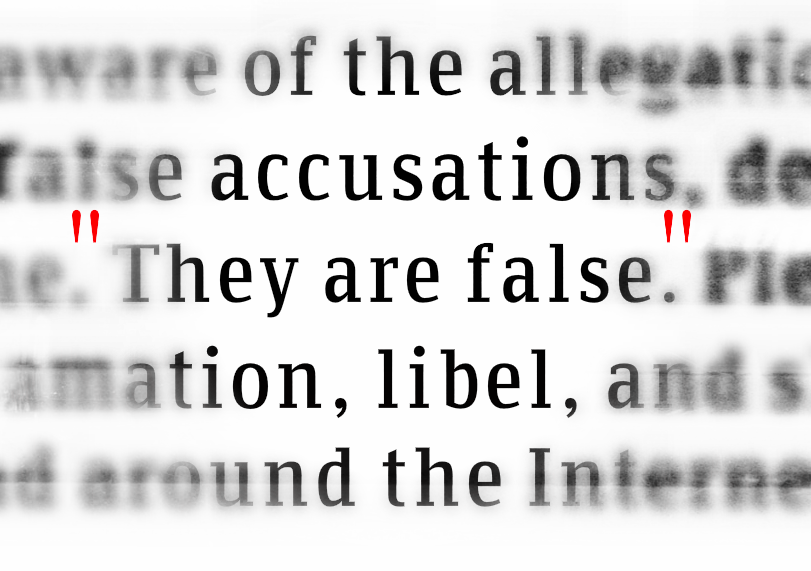
TOS and the Suarez family are aware of the allegations circulating online. They are false. Please be patient as we are in the midst of proceedings with legal and other advisors concerning false accusations, defamation, libel, and slander.  We trust that the Lord will expose it all in His time, and we feel hopeful that people who love Him will believe the best before assuming that something spread around the Internet is automatically true.

That’s all we can share at this time. Thank you for checking with us in the spirit of Proverbs 18:17and Proverbs 18:13.

This, then, is the Old Schoolhouse’s official company position on the allegations: that “they are false” and nothing more than “something spread around the Internet.” TOS also seems to insinuate the possibility of legal action by speaking of “legal and other advisors concerning false accusations, defamation, libel, and slander.”

One thing is true: truth shall be exposed in due time. And I do not advise placing any bets on the side of the Old Schoolhouse.

This is What Child Abusers Look Like in Homeschooling Communities

By R.L. Stollar, HA Community Coordinator

We like to think that we know what child abusers look like. That we can pick them out of the crowd based on their creepy mustaches, darkly-tinted cargo vans, or their giant, thick-rimmed glasses.

But those stereotypes are just that: stereotypes.

And like all stereotypes, they fall tragically short. The fact is, child abusers are not Others. They do not walk around with signs that say, “Monster.” They are able to violate our trust — and children’s lives and bodies and minds — because we trust them. Which means they have our trust, because they are a part of our community. They are friends and family and teachers and loved ones. Boz Tchividjian from G.R.A.C.E. (Godly Response to Abuse in Christian Environments) is spot-on when he says,

“Those who pose the greatest risk to our children are within our families, churches, and circle of friends.”

A month ago, news broke that demonstrates just how true this is. A homeschooling family — the Jackson family from North Carolina — was revealed to have hidden child sexual abuse for over a decade. Homeschooling’s Invisible Children reports,

A 16-year-old girl was repeatedly raped and sexually abused by the six Jackson brothers (Eric, 27; Jon, 25; Matthew, 23; Nathaniel, 21; Benjamin, 19; and Aaron, 18) from the time she was 4 until she was 14. Though the girl was not identified, it appears that she was the brothers’ younger sister. The boys’ parents, John and Nita Jackson, knew about the abuse and did nothing to prevent it.

You can read the original news report from WTKR here, which notes that “the Jackson brothers’ parents were charged in this case because they witnessed the abuse.” Furthermore, as Julie Anne Smith at Spiritual Sounding Board has pointed out, “At the time of the alleged abuse, they were living in North Carolina and two of the brothers were reportedly members of Scott Brown’s church, Hope Baptist Church in Wake Forest, North Carolina.” This would be the same Scott Brown who has “very close ties with the now defunct Vision Forum Ministries and recently fallen Christian Patriarchal leader, Doug Phillips. Brown also heads up National Centers for Family-Integrated Churches.”

I was intrigued to find out that the Jackson brothers still had their Facebook pages active. So I decided to go look at their pages and see what their public lives had looked like. I was interested — but not surprised — to find out that the Jackson brothers had mutual Facebook friends with me. Several brothers actually had quite a few. So these kids (some now adults) clearly had somewhat social lives. They weren’t growing up in a stereotypical compound in the middle of nowhere. They existed within groups — like homeschool speech and debate — that I used to exist in. And yet no one seemed to have any idea what was going on. No one, including some people I myself know.

But here’s the thing: their Facebook pages look normal. They look like the Facebook pages of conservative Christian homeschool students and graduates. And that is exactly the point here. If this case wasn’t being criminally prosecuted, how many people do you think would be defending these people as “godly” and “upstanding” men who would “never do something like that” because they “love Jesus”?

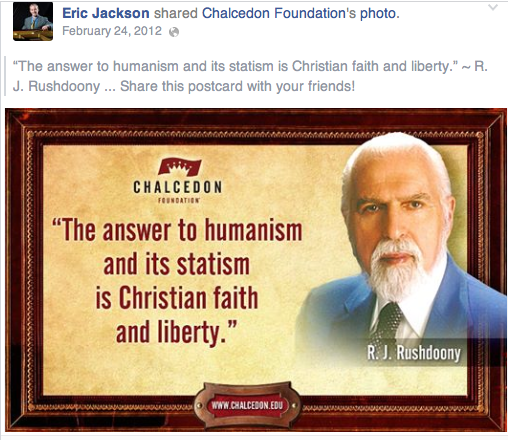
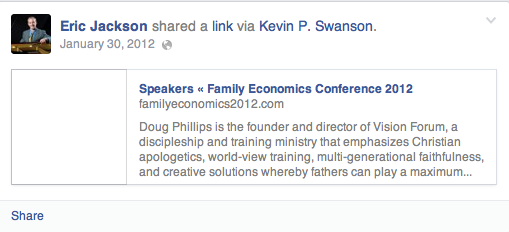
To make this point more salient, let’s look at what the average Facebook posts by the Jackson brothers look like. Because this will tell you what child abusers look like in homeschooling communities.

What Child Abusers “Like” on Facebook:

Eric Jackson

Screen Shot 2014-06-26 at 7.18.20 PM

Matthew Jackson

Screen Shot 2014-06-26 at 7.24.09 PM

What Books Child Abusers Read

Matthew Jackson

Screen Shot 2014-06-26 at 7.25.03 PM

Eric Jackson

Screen Shot 2014-06-26 at 7.37.31 PM

What Movies Child Abusers Watch

Aaron Jackson

Screen Shot 2014-06-26 at 7.26.19 PM

Nathanael Jackson

Screen Shot 2014-06-26 at 7.27.25 PM

What Child Abusers Post About on Facebook:

Nathanael Jackson

Screen Shot 2014-06-26 at 7.28.40 PM

Eric Jackson

Screen Shot 2014-06-26 at 7.30.17 PM

Screen Shot 2014-06-26 at 7.31.15 PM

Screen Shot 2014-06-26 at 7.32.20 PM

Aaron Jackson

Screen Shot 2014-06-26 at 7.33.33 PM

Matthew Jackson

Screen Shot 2014-06-26 at 7.35.07 PM

Screen Shot 2014-06-26 at 7.35.24 PM

Obviously one can “like” any of the above sites, people, books, or movies and not be a child abuser. One can post pictures of sunsets and attach Bible verses to them and not be a child abuser. But it’s the opposite mindset we need to focus on, isn’t it?

— The mindset that assumes people who love the Bible and share its wisdom and love respected homeschool leaders are somehow safe, or safer to “ungodly” people.

— The mindset that “good Christian boys” would never abuse anyone.

— The mindset that homeschooling will make better, more holy, children.

We will not be able to fight child abuse in homeschooling communities until we realize that the child abusers among us effortlessly blend right in. They might be our respected leaders (in fact, sometimes they have been our respected leaders, like Bill Gothard and Doug Phillips); they might be a homeschool celebrity that HSLDA publicly calls a “hero” (like Michael Gravelle); they might be the owners of our beloved companies or those owners’ children (like the son of Paul and Gena Suarez, owners of The Old Schoolhouse); they might even be some of the people claiming to be allies of abuse survivorsThere is no magic formula.

This means we must constantly be on our guard. It means we must know the warning signs and know how to report abuse to law enforcement and we must actually report the abuseWe cannot sweep it under the rug or turn a blind eye. We cannot shame those trying to bring it to light. We must start taking a stand, we must start raising a ruckus, and we must demand that our leaders and communities do so as well.

We must demand that our leaders and communities do more than write blog posts about not looking away and actually do the hard work of not looking away.

I Am Learning To Love Myself: Mara’s Story, Part Two

Screen Shot 2014-07-01 at 10.29.15 AM

HA note: The author’s name has been changed to ensure anonymity. “Mara” is a pseudonym.

< Part One

Part Two

My mother probably has both undiagnosed bipolar and borderline, but her symptoms then were not as bad as they have gotten to be. She also is extremely intelligent and manipulative. Unless you know her, it’s very hard to see.

Appearance was huge in the church. They harped on gluttony as a major sin. Almost all of the girls in my family growing up were rail thin. My sister, who we later found out had a food allergy and intolerances, was not overweight by any means but just slightly heavier than all of us. My mother, who had been slightly overweight growing up, saw this as one of her greatest disappointments — a visible sin for all the church to see. She would get my sister up early in the morning to run on the treadmill, watch and restrict her diet, and spank her if she didn’t lose weight. My best friend, who also went through the loss of one of her closest friends and was big-boned but not overweight, would also be harped on her by her family for what they saw as sin.

The year before puberty — when fluctuating hormones cause bloating — was the worse for all of the girls at church. We would be sat down by parents and told that they were afraid we were gaining weight and that we needed to exercise more and watch our diet so that we weren’t sinning.

Almost all the girls in my family or in my best friend’s family have struggled with anorexia or bulimia at some point in time.

My mother would tell my sister that no one would want to be around her if she was fat and that people wouldn’t find her attractive. My sister became very reclusive — hiding in her rooms behind books or playing with animals, not people. When in public she would almost look down on others before they had a chance to tell her anything my mother said they would. My sister also hated all the ditzy little girls her age who played stupid to get attention, she hated attention and could not understand why they would want to attract it.

When I was 16, my best friend’s older sister (who I was close with) invited me to a birthday party she was having and didn’t invite my little sister. My mom believed in almost complete inclusivity and anytime our friends came over, we had to allow anyone who wanted to be with us in the room all the way down to the babies.

My mom took this exclusion personally and took all her anger at the other family out on me. She would get mad at me if I saw my best friend without taking my sister, even though my sister didn’t really want to go. She would tell me how I was in sin for not confronting my friend and her family for excluding my sister and then tell me I couldn’t tell anyone in the church about it because it might “embarrass” my sister. I was told that if I had a problem with her I could get “help” from my great-aunt who got offended and hurt for my mother if I said anything assertive or had any problem with my mother. After two or three years of this, I finally caved and told my best friend’s mom who ended up becoming a second mother to me. My mother left the church at this time and I kept going alone because my best friend went to this church. I didn’t have any other friends (as children we were told to tell people about 1 Cor 14 church and, if they didn’t immediately convert, it was sin to be spending time with them).

During this period of time, I started struggling with depression.

To deal with my father I had to turn off all emotion and feelings or he would sense it and use it against me. I couldn’t ever talk to him in any way unless I was challenging his actions toward my mom or my mom would become hurt and guilt us. My mother would become offended if I had any personal feelings and preferred me as her emotional caretaker than as her daughter. The church taught us that any negative feelings were a sin and it was our job to “take them captive.” Depression was viewed as a sin and medication the epitome of not trusting God – that it stemmed from some unknown root of bitterness that we were supposed to work out.

My mother’s swings became worse and worse and I started seeking an escape from that house. I was taught in church that we are under our family’s authority and if there wasn’t a bible verse contradicting what they were telling us to do, than we were supposed to do it. My mother didn’t want me to leave, so I felt chained down.

One thing that I am glad about is that all the fighting led my mother to both hate men and fantasize about them. She believed all of her girls needed to have a stable career as soon as possible so that they didn’t have to rely on men. She also believed that the school system repeated the last 2 years of high-school in college. So, when I was 15, I CLEP 5 college classes and, when I was 16 began prerequisites for nursing school. I finished at the age of 21 with a BSN in nursing and to this day, at the age of 26, I have had 8 years of hospital experience, 6 as an ER/ICU nurse. I am a hard worker and I can have a steady, self-supporting job anywhere I want at any time.

I met a boy through one of the extracurricular activities and we became close. He was a good, homeschooled, Christian boy who was very outspoken. He didn’t live in the area and, therefore, didn’t go to my church he just went to a regular church. He was very opinionated on what sin was and what it wasn’t and, after church, his whole family would stand around and talk about how the other members in the church were hypocrites and in sin. I had saved all of myself, first kiss and everything. We began “courting” or hanging out with each other’s family. But one thing led to another and he leaned in and kissed me one night despite my trying to wiggle free. I was 21 at the time and felt so guilty for kissing him, for tempting him and not staying strong enough, for being alone with him.

I didn’t tell anyone because I knew it would be my fault and I wouldn’t be allowed with him again.

Part Three >