UnBoxing Project: Racquel’s story

Eleanor Skelton blogs at eleanorskelton.com, is the news editor of the UCCS student newspaper, and is majoring in English and Chemistry. The following was originally published on Eleanor’s blog on March 7, 2015, and is reprinted with permission. 

20131130_165428
Source: Eleanor Skelton

< Part Three

This is Racquel’s story.

Content warning: forced starvation, religious manipulation.

Somehow I never imagined the inner peace and joy I felt as a 5 year old girl after being filled with the Holy Ghost would disgust and scare me. I am writing this because I believe my voice should be heard. I hope that by telling my story it will help my healing and others with similar stories as well as prevent more stories like mine from happening.

The music was loud and the atmosphere was pulsing with energy. I wanted to show how much I loved God, so I went up to the front of the sanctuary and danced with all my might, letting my tears flow. I had been taught that I should dance before the Lord and not let anyone’s opinion stop me.

Often I was the first one or the only one at the front of the church. This was good. It meant I was a leader, and that I was fighting spiritual warfare. It would also show my pastor, who was God’s voice in my life, how my walk with God was and what a good apostolic young person I was. I remember night after night where this was my mindset.

Source: First United Pentecostal Church of Colorado Springs

I was isolated from other members of the youth group because I would refuse to do things that the Pastor had commanded us not to such as ride in a car with a guy unless it was approved or there was a married approved chaperone was in the car. However, then there were the many many times where I sat or knelt at the alter weeping feeling the guilt of my many sins because yet again I simply failed to uphold the standards because again I had listened to unchristian music, watched a tv show, or could not stick to a daily prayer life.

For years I went through a cycle of getting trouble with my best friend for questioning the pastoral authority or why we held to some of our standards or had completely disregarded the rules, and then being told that I and my best friend Ashley should not talk or hang out because our personalities did not complement each other. Meanwhile, I stood by as she was abused in so many ways by both the pastoral authority and her parents because the only thing I could do was be there for her.

In January 2013, my best friend and I had come to the conclusion that we did not and could not agree with the church. However, we were discovered yet again and were ripped apart. This time, the Pastor lied to both of us, trying to turn us against each other by saying that the other one had ratted us out.

At the direction and guidance of the Pastor, my friend’s parents were punishing her for not losing weight because it was said that God could not use her unless she lost the weight. Because of her inability to meet their demands, she had begun starving herself. I texted her in absolute caring compassion for her to “FUCK (written politely as $@##) what they [her parents] think” to drive home to my friend that starving herself was not the answer, and that her parents and pastor were wrong.

During one of the long sessions in the Pastor’s office after getting caught, I discovered the Pastor had hacked into my best friend’s phone and found my text. I was questioned about my lack or respect for authority. My hands were tied as I seethed in anger not able to tell the pastor the context of the text, lest the abuse she suffered would increase because the Pastor was part the abuse. My best friend was far too scared of losing her parents and being kicked out to do anything other that play along with them. So at the age of 19, she had every form of communication, transportation, and even her means of education stripped from her. She was not even allowed to be alone in her own home.

Source: First United Pentecostal Church of Colorado Springs

In March, the deception worked and the pressure had finally broken me to the point that I gave in and did exactly as the church (i.e. the Pastor) wanted me to do. I felt helpless and that the reason for my insanity was that I was not submitted. I continued to not talk to my best friend and tried to force myself into the mold they had created for me with my approved Christian friends and my guilt-ridden prayer life.

I still had all of the same questions. Why must a man my pastor dictate to me what God wants and God not talk to me directly? Why must I not be allowed to talk to my best friend who was still the most important person in my life? How could so many injustices and abuse be what a loving God wanted? So when my little sister decided to leave suddenly and move in with a guy I had never met, and I had no idea were she was or if she was safe, when my approved friends failed, I reached out to the one person I knew who would be there: my best friend.

10553500_802766489755823_1022764128682957679_n
Source: Eleanor Skelton

Within two weeks of resuming secret communication, we had both discussed in detail what we saw wrong with the church, and had stated that no matter what we were going to keep communicating, even if it had to be hidden. Almost immediately, my best friend started to date a coworker.

On December 15, 2013, her dad followed her to her boyfriend’s house, and that night he kicked her out. I received a text saying, “they know everything can you come and get me.” I immediately drove to her house and picked her up. From there we were housed in a friend’s apartment who had also recently escaped an abusive fundamentalist home.

There has been a lot of healing and learning since then and now. Learning to live outside of the box has not been easy, nor do I think it ever will.

I now have the wonderful freedom of choice and with that comes both what I would describe as the beauty of a rainbow and the burden of the rain cloud.

Making these choices is the scariest and most exhilarating thing that I have ever done. I have learned and accepted more of who I am.

I can only hope that healing will come in time and the scars will become less painful.

Racquel graduated with a bachelor’s in psychology in May 2014. She struggled with undereducation from inadequate homeschooling and private education in her church throughout her college career. Racquel hopes to pursue a graduate degree in counseling, and her job involves assisting troubled teens.
Part Five >

Why the name The UnBoxing Project?

Eleanor Skelton blogs at eleanorskelton.com, is the news editor of the UCCS student newspaper, and is majoring in English and Chemistry. The following was originally published on Eleanor’s blog on March 6, 2015, and is reprinted with permission. 

< Part Two

Why did you informally call yourselves the UnBoxing Project?

Right after I moved out, several others came to me, and I’d provided emotional support or physically helped them to move out. I’d alert the same network of friends who supported me, enlisting their aid.

My friend Cynthia Barram, who also happens to be African-American, started calling it “Eleanor’s Underground Railroad.”

The name stuck. I think this was for a couple of reasons.

1.) Homeschool kids often read a lot of history.

I researched the Underground Railroad for a 6th grade project, and I often reenacted what I read, playing “slaves” and “overseer” with my siblings. Several of my homeschooled alumni friends that I met in college played the same games in childhood.

Before bedtime, my mom used to read us Laura Ingalls Wilder books and the Between Two Flags series, set during the Civil War. I read biographies of Harriet Tubman and historical fiction like Jip, His Story, and the patriarchal Elsie Dinsmore series. My friends Kathleen and Rebekah wrote their own Civil War historical fiction novel in late middle school, distributing serialized chapters after church each Sunday.

I think homeschool subculture really connected with this narrative.

We weren’t immersed in popular culture, so we tended to identify more closely with people from before our time.

2.) It became a model for social action.

No, we weren’t actually enslaved.

We were controlled, some of us were abused. My friend Kyle, who works at a non-profit to prevent human trafficking, says that the number of young adults from this background being denied agency by overbearing parents is troubling.

But we didn’t adopt the name as a direct comparison. I don’t pretend to understand what others before suffered. It was just a model, a template.

The original Underground Railroad worked because it was subtle. A secret, subversive organization for social justice, involving Quakers, escaped former slaves, and other religious or politically motivated people who couldn’t tolerate the injustices they observed.

So they hid people, moved them from house to house until they reached freedom.

And that’s what my friends and I did.

We took people escaping oppression into our homes, fed them, gave them a place to sleep until they were ready to move on to their next station. We told them it was okay to be themselves, to follow their dreams and desires.

Harriet Tubman and the others became like our patron saints, our guides. We followed the model because it worked for those before us.

And by following in their footsteps, we also sought to honor them.

Part Four >

UnBoxing Project: The trouble with freeing people

Eleanor Skelton blogs at eleanorskelton.com, is the news editor of the UCCS student newspaper, and is majoring in English and Chemistry. The following was originally published as “The Underground Railroad: Intro” on Eleanor’s blog on March 5, 2015, and is reprinted with permission. 

tumblr_nbyckjuMaB1qe90hso9_1280
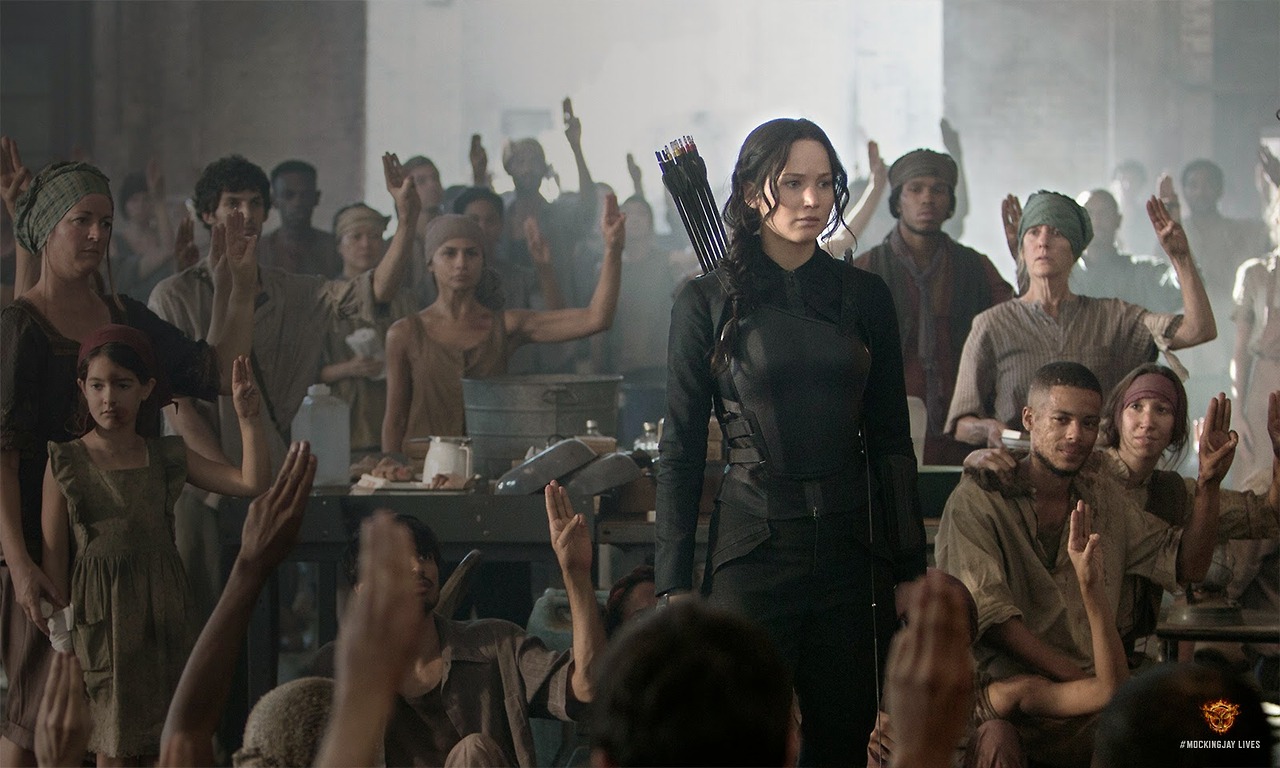
Source: Hunger Games: Mockingjay (part one).

< Part One

Continued from Being an angel with a shotgun.

“Eleanor, does your church teach the doctrine of pastoral authority?” my friend Racquel asked.

She was waiting with me in the classroom for my Organic Chemistry review session to start.

“What is that exactly?”

Racquel attended an apostolic Pentecostal church in Colorado Springs that taught a person wasn’t saved unless they had been baptized and spoken in tongues at that particular church, not another Pentecostal church in the area.

A long list of offenses such as watching movies and television or wearing short skirts and jewelry could grieve the Holy Spirit, and then you’d lose your salvation and have to “pray through at the altar” again.

“Pastoral authority means that Brother Burgess prays and decides if it’s God’s will for us to talk to a guy in the church, date him, get engaged, or marry. And whether or not we can move out of town and attend another apostolic church,” she explained.

“Other apostolic churches allow social media and let their young people listen to CCM [contemporary Christian music], but our pastor has decided it’s not spiritually good for our congregation.”

Racquel didn’t see the harm in what her church banned, but believed her pastor had good intentions.

“I can tell my pastor cares about the people in the church, the way he walks around and prays for us during the service.”

I hadn’t moved out of my parents’ house or begun dealing with the unhealthy cycles in my own life, but I knew something wasn’t right. A church should support my friend, not make her miserable.

Over the next few months, Racquel and I had many theological discussions, and I argued that Jesus was about freedom and grace, not rules. I said her church had the tendencies of a cult. But she couldn’t see it yet.

—————————

I’d started texting Racquel’s best friend Ashley. She’d just gotten permission from her parents to own a cellphone and drive the car again, even though she was nearly 20 years old and attending massage therapy school full time as well as a part time job.

I had moved out in August 2012, and felt even more strongly that Ashley’s family situation was toxic since my escape from fundamentalism.

In January 2013, I lost contact with Ashley when her parents and Brother and Sister Burgess discovered she and Racquel had watched movies again and listened to rock music, including Skillet. Brother Burgess declared Skillet was demonic after listening to their song “Monster.” Ashley finally bought her own iPhone with parental and pastoral permission eight months later.

Now it was late October. Ashley and I were meeting for coffee that evening. She taught me Search for Truth Bible study lessons, intended for potential converts, as an excuse so her parents would allow us to hang out.

I was driving down south towards Starbucks when I got a text message from her.

“I’m sorry, Eleanor. I can’t come meet u. My parents are now not letting me use their car for anything.”

“Stay calm, see if I can pick you up in a bit,” I replied.

“I’ll try. Don’t know if I can last that long. Cya.”

“You can make it. I believe in you. You still ok?”

“No I’m not. I’m done Eleanor, I’m sick and tired of this. I can’t do it anymore. I’m too tired and can’t keep this facade up. I’ve fought for 13 years against this and am too tired to continue fighting this. I have no control and no choice. I’m fed up and there’s no way out. I realize that now. I just don’t know what to do now.”

“Do you want out? Do you want to make the jump?”

“Yes I do. But I can’t.”

The church and Brother and Sister Burgess trapped both girls in an awful double bind, using manipulation and lies. I knew they needed out.

I organized a network of friends to be prepared when they asked for help. We informally called ourselves the Underground Railroad, in honor of the Civil War stories most homeschooled kids read over and over.

But when would they be ready?

As Cynthia Jeub wrote in The Trouble with Freeing People that fall on the Huffington Post, describing Ashley’s situation, I couldn’t force them to leave.

“Helping her feel ready to take freedom for herself is the only way to make her free,” Cynthia wrote.

Only they could decide.

Part Three >

UnBoxing Project: Being an Angel with a Shotgun

Eleanor Skelton blogs at eleanorskelton.com, is the news editor of the UCCS student newspaper, and is majoring in English and Chemistry. The following was originally published on Eleanor’s blog on March 4, 2015, and is reprinted with permission. 

2479
Source: Konachan.com. Image links to source.

Get out your guns, battle’s begun,
are you a saint, or a sinner?
If love’s a fight, then I shall die,
with my heart on a trigger.

– The Cab, Angel with a Shotgun (Nightcore remix)

These are the stories they told me.

“Eleanor, my best friend’s parents told her she can’t drive the car unless she loses weight consistently every week.

I’m really worried about her. Yeah, she could lose some weight, but it’s not that bad, and I don’t think that’s healthy. What do you think I should do?”

My insides went cold, feeling the familiar rigidity and control descend, but this time for someone else.

They say before you start a war,
you better know what you’re fighting for…
if love is what you need, a soldier I will be.

“Eleanor, I’m 26 years old and my mom wants me to get married. She says she’ll send out the word among the [Indian] community to find a man for me. But I don’t want an arranged marriage.”

My friend already had a bachelor’s degree from an ivy league college, wasn’t enjoying her post-baccalaureate pre-med classes, and knew her parents wouldn’t understand her adoption of American culture.

She asked for help in moving her things out of her parents’ house. I rounded up a few friends and she got out.

I’m an angel with a shotgun,
fighting ’til the war’s won,
I don’t care if heaven won’t take me back.
I’ll throw away my faith … just to keep you safe…
and I wanna live not just survive tonight.

“Did you know Mike died?”

“No, I just talked to him last week. He was trying to start a chapter of the F.A.S.T. club at his graduate school.”

The coroner ruled Mike’s death a suicide. Mike grew up in the Colorado Springs homeschool community, although I didn’t meet him until college.

Questions about his death still linger with me and my friends.

Sometimes to win, you’ve got to sin,
don’t mean I’m not a believer...
Yeah, they still say I’m a dreamer.

Text messages from Cynthia Jeub, September 2, 2013.

“I need help. My dad is angry because he’s not making enough money. Can you help Lydia and me get out and find a place to sleep until our apartment paperwork goes through?”

“Dad was yelling at me when you tried to call. I never thought this would happen. We have a friend who will help, we might need help from you when we get back.”

“Dad says he might turn off my phone and Internet. Tell [a friend] to come if you don’t hear back again.”

I was five hours away up in the mountains and couldn’t come get her on the day that they were kicked out.

They say before you start a war,
you better know what you’re fighting for…
if love is what you need, a soldier I will be.

Google chat conversation, June 2013.

“I just want to go Home and be with Him. It’d be so easy… one bullet, one noose, two cuts, but I can’t bear to think of facing Him when I got there… For being a coward. For not trusting him enough… I really just want to escape. Wouldn’t you eventually get over it [grieving for me]. Death is a natural part of this life.”

A younger friend was suicidal again. She’d done this off and on since she was 13, and a couple of friends and I had talked her out of it, over and over.

“As long as I’m in class, getting A’s and studying all the time without a boyfriend or any other distractions, no one really pays me much mind. A fight’s brewing. So I’ll let you know after it happens if it does happen.”

Once again, her parents crushed her with unrealistic expectations.

I’m an angel with a shotgun,
fighting ’til the war’s won,
I don’t care if heaven won’t take me back
.
..and I wanna live not just survive tonight.

I didn’t become an activist because it was another hobby. Friends came to me with their wounds, their struggles. And I couldn’t just let them keep bleeding.

This is a series on helping isolated homeschoolers and religiously oppressed young adults escape cults and abusive households.

These are the ones I fight for.

…and I’m gonna hide, hide, hide my wings tonight.

Part Two >

The Story of an Ex-Good Girl: Part Four

Barn

HA Note: The following is reprinted with permission from Exgoodgirl’s blog The Travels and Travails of an Ex-Good Girl. It was originally published on August 2, 2014 and has been slightly modified for HA.

Trigger warning: graphic depictions of infant abuse

< Part Three

Part Four: Rebellion is as the Sin of Witchcraft

Later on, in that first year of Wednesday night meetings, I remember the child-training starting in earnest.  My youngest brother at the time, J, was a year old, and I remember him being an exceptionally happy baby.  He had reddish curls and an infectious grin, and he laughed all the time!  We have pictures of him playing in the grass, or being bounced by my sister or mom, and playing in the sand at the beach, and he was smiling in all of them.  That all changed.  Mr. LaQuiere decided it was time to teach his parents-in-training how to properly train obedience in children.  The only way to get good obedience in was to get bad rebellion out, starting as young as possible (which in our case was already too far behind us he said–if he had known us sooner he could have started training J when he was only a few months old and still a fresh slate; but as J was already a year old and set in his ways, we had better not lose any more time!)  So the process was started of teaching a wiggly toddler to sit quietly and obediently on his parents’ laps.  Refusing to sit still, whining, or worst of all, arching the back in protest, were all signs of rebelliousness in a baby (we were directed to the verses of how “foolishness is bound up in the heart of a child” and assured that babies are born with this sinful rebellion that starts to show itself practically the moment they arrive home from the hospital).

This rebellion needed to be corrected, because rebellion was the most serious and evil of all childish sins – “like unto the sin of witchcraft”, as the King James Bible says.

This correction was accomplished in various ways.  Mostly it was through repeated swats and slaps on J’s leg or bare bottom, hard enough to sting, every time J tried to get down or refused to sit still.  They worked with him on this for longer and longer periods of time, but instead of turning docile he fought it harder and harder.  He cried a lot, and these “training sessions” dragged on, and on, often into the wee hours of the morning.  Mr. LaQuiere assured my parents that though J was clearly a very rebellious little boy, they could break his will and train it out of him, if they would be firm and not give up!  So they kept at it, day after day.  Little J would cry himself hoarse, but he wasn’t allowed to get down, or fall asleep, or even nurse, until he submitted and obeyed by sitting still and not crying.

Often times Mr. LaQuiere would insist that J had to be trained only by my dad, because it was clear he wanted his mommy, and he shouldn’t get his way because that would reinforce his rebellion.  At least once, when they were fighting him (training him) all night and couldn’t get him to stop crying, they took turns, at Mr. LaQuiere’s direction, holding him with his face stuffed into the sofa cushions until he stopped crying, when they’d let him up to breathe. Then he’d catch his breath, cry some more (“disobedient, rebellious cries”), and they would stuff his face back into the cushions.  This was bewildering and terrifying to me as a young child.

My world was suddenly confusing and no longer safe.

I was intensely distressed at my baby brother’s crying and at how much he had to be punished.  At the red marks on his legs.  At Mr. LaQuiere’s insistence that they pull down his little diaper to spank him because it “didn’t hurt enough” being spanked through a thick diaper.  Confusingly, my parents seemed all right with this and assured me in whispers that everything was fine – this was for Baby J’s own good, and he was only crying because he didn’t want to be good.  It was in his power to stop it and be obedient at any time.

Over the course of the next few months, 1-year-old J eventually gave in and stopped fighting.  He also stopped smiling.

He became a sullen, withdrawn baby, and this change in temperament was permanent.  He never went back to being the bouncing, bubbly baby I remembered.  His sullenness was further evidence of his rebellious nature, we were told.  His laughter wasn’t the only thing that was silenced: he didn’t speak his first word until he was nearly 4.

This was the beginning of the “secret” child-training methods that my parents were to learn from Mr. LaQuiere and use over the next eight years that we were a part of his group.

Part Five>

photo credit: Joel Dinda via photopin cc

Man Shares Personal Testimony of How Bill Gothard Used Bible Verses Which Led to the Abuse of Children: Part Two

Belt

<Part One

HA note: The following is reprinted with permission from Julie Anne Smith’s blog Spiritual Sounding Board. It was originally published on March 31, 2015 and has been slightly modified for HA.

The following is Part 2 of Dash sharing how the teachings of Bill Gothard influenced his parents to “spank” his siblings. Although I know Dash’s identity, he has asked to remain anonymous. Dash’s account shows that they were not spankings, but abuse:

I am a survivor of Gothard’s cult. I experienced unspeakable physical, sexual, and emotional abuse from my mother and father, who were at one point among Gothard’s “model parents.” Gothard is not human. Gothard does not deserve compassion. Gothard is not a man, and he does not have the slightest shred of decency or humanity within him. Bill Gothard is a monster in human form, and as far as I am concerned, he can’t die soon enough.

I asked Dash questions about his childhood and more specifics about how he was disciplined. Again, I must issue a trigger warning to those who have experienced abuse.  There may be some parents reading who used to follow Gothard’s teachings and have now left that behind. This, too, might be difficult for you to read.

triggerzone1

In the following, Dash responds to my questions. My questions are in green:

What kinds of things did you and your sister do that resulted in “spankings?”  Can you give an example of what disobedience looked like, i.e, talking back, not doing what you were told to do, etc.?

It’s hard to dredge up specific examples of behaviors that resulted in beatings (I’m going to use the term “beating” rather than “spanking,” because that’s what they were), because frankly my recollection of the events leading up to the beatings are hazy. However, punishable offenses included: Not getting a chore done on time, or to the required degree of perfection (chores included dusting, vacuuming, taking out the trash). Arguing or fighting with my siblings (to clarify, I have an older sister and younger brother), and I mean trivial things like arguing over which record we were going to listen to or who got to play with which stuffed animal. Arriving home late from a friend’s house, arriving home late after school, not getting out of bed promptly in the morning, complaining about going to church. The list is endless.

As our family began to seriously decay and slide toward doom, punishments extended to include: making a salad incorrectly, accidentally dropping a dish or a milk bottle, getting the bathroom floor wet during a bath, not setting the table for dinner quickly enough, forgetting to put clothes in the laundry basket, putting a book back on the bookshelf in the wrong place.

In other words, any trivial perceived imperfection became grounds for beatings.

One of the worst beatings of my life was administered by my mother around nine years old when we were making chocolate chip cookies. I was given the task of running the hand-held mixer, which I was happy to do because then I might get one of the detachable beaters with cookie batter on it after. I was standing on a stool, and I turned to ask my mother a question. Being an absent-minded kid, when I turned I unconsciously lifted the mixer out of the batter and cookie dough flew all over the wall. My mom went livid and slapped me full in the face, knocking me sprawling off the stool. She then dragged me bawling upstairs and beat me with the 3/4″ dowel rod for almost 30 minutes.

What made them stop the beatings after an hour or however long?  Was there something you or your sister did that helped them to stop? Were your parents looking for signs of remorse?  Did they finally give up?

The stipulation was that we had to hold still and submissively accept the beating, and we had to stop crying and be silent and not make a sound. This was a specific part of Gothard’s beating protocol, found in one of his pamphlets: the silent, limp submission to a beating was his metric for a “repentant spirit.”

To this day, I cannot show normal emotional responses to my environment as a result of this aversive conditioning; I reflexively suppress every emotional response.

I cannot maintain a long-term relationship with a woman because of this emotional dysfunction, which is why I am still single at 44. I have had therapists hint that I might be a sociopath because of the superficial appearance of this emotional dysfunction, which I know not to be the case. I have emotions; I just cannot show or express them properly. It makes me want to kill myself.

Did your parents talk to you while you were getting spanked?  How was their tone of voice? Were they yelling or did they use a normal tone of voice?  Did they use scripture while “spanking?”  Did they pray with you after?

They would yell and scream and bellow. They would tell us what bad, awful, evil, horrible, sinful children we were. In the beginning, there was no pretext of spiritual context; later on as I got older and the beatings continued, my father began making attempts to pray with us after a beating, as if it was a spiritual exercise. For the most part, however, the beatings took place in an atmosphere of apoplectic, psychotic rage, especially when my mother was administering them. I use the term “psychotic” because my mother has been diagnosed as bipolar, and her fits of apoplexy were probably manic fugues. It was terrifying. To this day I have nightmares about it.

Did they realize you were bruised?  Did they ever acknowledge they went overboard or apologize?

The bruising and other injuries (which at one point for me included a broken finger, and for my brother once included a broken forearm) were never acknowledged by my parents. It was implied that we deserved it.

“That’s what you get for your sinful disobedience” was the message.

My parents have never really acknowledged the specific details of what they did. Both of them have acknowledged that hitting us was wrong, but we can’t discuss details properly because they are so horrified and humiliated by the recollection of what they did to us. My mother has sobbing fits when I try to bring any of this up. Both my parents have tried to make amends through financial reparations: paying for therapists, occasionally helping with rent or medical bills. But I’m still broken, so everyday life is a constant struggle. I wake up every morning and look in the mirror, and I have to find a reason not to kill myself.

I have a cat that I adopted 13 years ago who snuggles with me and is my little buddy. Having a cat is the only thing that keeps me going; I have to take care of my cat, so I can’t kill myself. I have to focus on something other than myself in order to go on living. It’s pretty bleak.

I’d like to state again for the record that Gothard apologists are remorseless sadists, and this includes that Alfred character who comments on your blog. These people KNOW THAT THESE THINGS ARE HAPPENING IN THE IBLP/ATI PROGRAM, AND THEY ARE FINE WITH IT. They are sociopaths.

And Gothard is a monster, because he knows about these events and he ENCOURAGES THEM.

photo credit: bark via photopin cc

The Story of an Ex-Good Girl: Part Three

Barn

HA Note: The following is reprinted with permission from Exgoodgirl’s blog The Travels and Travails of an Ex-Good Girl. It was originally published on August 2, 2014 and has been slightly modified for HA.


< Part Two

Part Three: Ice-Cream and Dr. Seuss

We met a lot of new families that first year.  There was the K family, with five kids and counting (they ended up with ten, I think), who were already good friends of the LaQuiere family and had been for a long time, so either they were already good at the secret training method, or they were mostly exempt from it because they were best friends.  Then the R family, with two kids, who were best friends with the K family, and also mostly exempt from the secret methods, for reasons unknown.  Then came the regular families: the T family, who had mostly girls, all pretty, with long, curly black hair down their backs that I envied intensely, being myself a plain child with super-fine, straight hair that my mom kept cutting short to my chin despite all my protests.  The N family, who had girls my age, a teenage son, and a baby.  Then the J family, who had a bit of a stigma attached to them because Mr. J was divorced, and this was his second wife.

We all knew this was considered a mark of shame, in the secret way that children know something without ever actually hearing it said or being allowed to talk about it. 

My mom’s best friend from high-school, Mrs. W, also came with her second husband (they were both divorced and remarried – Mr. LaQuiere spoke at their wedding), each bringing one child of their own. Needless to say, this was also considered one of the Lesser Families by the unspoken rules, and they were always fighting about each other’s children too.  (He thought she babied her son too much, and she thought he played favorites.)  They were probably the most unhappy family starting out, but we all knew we had our own issues, so we weren’t (openly) judging.  Last but not least, came my aunts and uncles and assorted cousins, the A’s and the S’s, who became a very large part of the story later, in two very different ways.

I don’t remember too much about those early days – it seemed like a lot of fun and games at first!  We were young enough not to pay too much attention to the adult conversation, though that changed pretty quickly, and mostly we just read books on those Wednesday nights: great quantities of approved-for-kids books, of which an oddly high number were about Amish children.  The best ones were Dr. Seuss, which they kept around because they provided valuable object lessons for the trainee-parents, but we didn’t know that at the time.  All we knew was, for voracious readers like ourselves (our parents actually made rules about where we weren’t allowed to read books – not in the car, not in the bathroom, not in bed, not at our friends’ houses, not on the way home from the library…) it was book heaven!  Also—and this was, to be honest, the major lure of Wednesday nights–there was ice-cream.  Not just ice-cream.  ICE-CREAM!  In over a dozen flavors and dished out generously in huge bowls: more ice-cream than our excited little eyes had ever seen before!  The LaQuiere family bought Breyer’s ice-cream in bulk from Sam’s Club and stored it in a huge chest freezer in their basement filled with nothing but gallons and gallons of ice-cream!  We knew, because occasionally we’d get sent down there by Mrs. LaQuiere to grab a refill, and it was a sight that made our gluttonous eyes gleam with avarice!  I’m not sure I can entirely blame my love-affair with ice-cream on this weekly ice-cream orgy, but it was definitely a factor, believe me.  Anyway, except for the ice-cream and the books, I don’t remember too much of that first year.

We were already homeschooling because my older sister R was a very bright child and bored with kindergarten at the Christian school my parents sent her to, so they figured what the heck, they could surely do better at home.  So they took her out of school, and that one year of kindergarten was the only public schooling any of us ever had.

It turned out, though, that homeschooling was the ONLY godly option, so it was lucky we were already doing it!

The LaQuiere family had started homeschooling back in the days when it was illegal and dangerous to do so.  They drove their children around in dark vans and kept them away from windows in case someone saw them and called the cops.  But they were determined to do what was RIGHT for their children and avoid the sinful lies (I think this meant “the theory of evolution”) being taught in the public schools. My parents also agreed that this was a worthy goal, and so our future as homeschoolers was settled and sealed.  I only vaguely remember those early days of being homeschooled, but I know we had little desks, and my mom made us chant the Pledge of Allegiance with our hand over our heart at the start of every school day. Aside from that it’s all a foggy blur.  I definitely learned to read and write and generally thought school was great fun, so my mom must have been a good teacher!

Part Four>

photo credit: Joel Dinda via photopin cc

Update: Lawsuit Filed Against Doug Phillips by Lourdes Torres-Manteufel

By the HA Editorial Team 

On Monday, Spiritual Sounding Board published an update on the lawsuit filed by Lourdes Torres-Manteufel against Doug Phillips and Vision Forum Ministries. SSB reports that the lawsuit is proceeding in the United States District Court for the Western District of Texas and in Texas state court.

Assurance Company of America, an insurance company, filed the federal lawsuit against Doug Phillips, Vision Forum and Lourdes Torres-Manteufel in order to avoid obligations to compensate Torres-Manteufel for any damages she may be rewarded. The case is set for trial in July 2015.

The original lawsuit filed by Torres-Manteufel now includes three additional defendants: Don Hart, Scott Brown, and James Zes. All three were members of the board of directors at Vision Forum. The case is set for trial in March 2016.

This is the latest update on the events following Doug Phillips’ resignation from Vision Forum Ministries in October 2013, due to what he called “an inappropriate relationship.” In April 2014, Lourdes Torres-Manteufel filed a complaint against Phillips in Kendall County District Court in Texas, accusing him of using her as a “personal sex object.” She worked closely with the Phillips family for a period of several years, caring for their children, helping out on their family farm and working for Vision Forum Ministries in various capacities.

Statements made by Torres-Manteufel and her attorney, David Gibbs, alleged that Phillips used her close relationship to his family to groom her as a victim and his status as her employer to coerce her into a non-consensual intimate relationship.

“To Save A Life”–Or, On HSLDA and the Rights of the Child: Rachel’s Story

HA Note: Rachel’s story was originally published on her blog on February 6, 2015. To learn more about Rachel, see her blog Between the Raindrops.Rachel's Story
 

I’ve read a lot of blog posts lately slamming HSLDA for being pro parents’ rights at the expense of children’s rights, protecting abusers, lobbying against mandatory education, and the like.And quite frankly, I’m sure that probably happens sometimes. Anytime you lobby for the rights of the parent, you risk disregarding the rights of the child, and vice versa. Things slip through the cracks. Granted, there will always be people who abuse both their children and their rights as their children’s parents. And mandatory basic education today could become mandatory state education tomorrow. I realize that.

But. I’d like to tell my story, if I may, and perhaps weigh in on my experiences with HSLDA.

So will you give me a few moments of your time?

I thank you.

My birthday is towards the end of winter. February, to be exact. But I’m not a huge fan of the snow.

A month after I turned 16, the depression I had been struggling with for a little over 5 years worsened, due to a painful breakup. I had been self harming for a while, developed an eating disorder, and that, plus the depression, put me in a fairly vulnerable state.

April of that year was the annual MassHOPE Homeschooling Convention, and I donned an armful of bracelets, along with the good girl mask, for a weekend, not really expecting anything positive to come of the convention.

Was I ever wrong.

The Teen Program that year was run by a team from Generation Joshua, the youth branch of HSLDA, and they had set it up in such a way that each teenager was assigned a post, based on his/her capabilities, in either the legislative or executive branch of the American Government, and had to navigate assorted diplomatic and other scenarios both at home and abroad.

It was a blast. My brother and I stayed up late, discussing the day’s events and planning for the next day, and mom remarked that she couldn’t remember the last time we were both this excited about something school – related. But what I learned from the program, about how the government works, wasn’t actually the most memorable thing of the weekend.

He was.

I don’t remember when I first noticed him.

Perhaps it was when he was introduced at the beginning, along with the rest of the staff. Perhaps during one of his “passing-out-paper-clips” rounds. Or perhaps the fifth time he stopped by my table to ask how things were coming, and didn’t seem to mind how hysterical we all became over the smallest hilarious thing. Or perhaps it was when I heard that my used-to-be-best-friend-who-I-just-met-again-that-weekend slapped him in the face and stole his phone simply because she came back to find him sitting in her chair for a brief moment, and he didn’t seem angered by it. Or perhaps it was when, after an hour of asking around, he was still the only other person who knew the difference between the Sunni and the Shia Muslims.

I don’t know.

What I do know is that he piqued my curiosity, since he seemed unfazed by the myriad of questions I asked, and after the weekend ended, I found him on Facebook and sent him a friend request.

He responded, and we started talking. I quickly discovered that my first impression of him was accurate. He allowed me to ask questions, encouraged me to keep seeking the truth, and somewhere over the following months we became friends.

I was struck by how non – judgmental he was, and the way he reacted with understanding and compassion, upon learning that I self harmed. He didn’t pull away from me, or shun me when I started questioning much of my fundamentalist upbringing, and discarding large portions of it at a time. In fact, he encouraged me to keep questioning and discover the truth for myself. He never unthinkingly touted the party line, and his answers always reflected deep thoughtful contemplation.

He allowed me to ask “why” incessantly, and didn’t get irritated or accuse me of trying to pick a fight because of it.

I found myself turning to him more and more with the difficult questions – the ones no one else was willing to tackle along with me. Such as, “Is God male or female, and how do we know?” “Does modesty matter, and why?” “Is ‘Christian patriarchy’ even Biblical?” “Why is Western Civilization considered the epitome of Christendom?” “Was the Civil War really just over states’ rights?” “What about the role of women in the church/home/state?” “Is courtship actually Biblical?” “What about purity?”

To date, he is still the only male to ever take the time to explain and discuss modesty with me.

He never made me feel inferior, never berated me for asking stupid questions, or called me anti-establishmentarian or a rebel, and never made me feel ashamed for being smart and that I had to ‘dumb myself down’ in order to be understood by him. He never lorded it over me that he was three years older, or treated me like a child.

Rather, he engaged on the difficult questions, and the fun ones, such as westerns, music, hobbies, etc.

When he found out about my eating disorder, he didn’t laugh and exclaim that I was skinny enough as it was. Nor did he attempt to solve my self esteem issues with a trite compliment. He reminded me that it was alright to allow scars to heal, and the pain I had experienced was no less real, simply because I no longer had the visible reminders of it.

He broke all the stereotypes.

Slowly, I grew to trust him.

I knew I could safely go to him for sound, yet understanding, advice on basically anything.

Such as the night I messaged him asking what he would tell someone who was planning on ending their life, and he insisted that I tell the person’s parents, because suicide is serious, and gave me his phone number in case all else failed.

His insightfulness struck me a few days later when I confessed that I was the suicidal person I had referred to in our earlier conversation, and his first response was that he had had his suspicions, therefore that revelation didn’t come as a surprise to him.

That conversation ended with me promising, at his request, not to kill myself. His argument? He wasn’t asking me to stop cutting, or start eating. Those things take time, he said. All he asked was that I choose life. So I agreed.

Two days later my father received a phone call from the director of GenJ himself, informing him of the way I was feeling, and that night ended with me in the Emergency Room due to an on-purpose overdose – they called it a failed suicide, and told me I was lucky to be alive.

It seems my friend cared more about whether or not I was alive, than whether or not I hated him forever for telling his boss in order to get me help before it was too late.

He later told me that this wasn’t the first time GenJ/HSLDA has had to intervene to save a life, yet, because of client confidentiality, were prohibited from publicizing those stories, and that while I was in the hospital, they had all been praying for me.

Exactly a week after my discharge from the hospital, I turned 17. By this time, I was fairly convinced that I had had my breakthrough – the week I spent in the hospital – and was now healed, and would no longer continue to struggle. And, once again, I was wrong.

My time in the hospital was only a partial fix. It temporarily allowed my issues to be brought to light and addressed, but the underlying unhealthy mindsets, which I remained a slave to, persisted. Within a month of discharge, I found myself once again in the same place where I had been prior to hospitalization – hopeless, despairing, starving, cutting, and isolating myself within the walls of my pain.

But instead of walking out on me, pointing out my failures, or calling me a disappointment due to my seeming inability to recover, my friend insisted that under no conditions would he allow me to push him away and shut him out. He consistently spoke truth to me, even when I had no desire to hear it, and kept telling me, over and over again, to ‘never ever ever give up’.

…and that I ought to come to camp.

See, Generation Joshua runs three, week-long, camps, at various locations around the country, and he apparently felt quite strongly that camp would be a positive experience for me. So, somehow, after much persuasion, I wound up at GenJ camp, in Virgina, for the last week of June.

By the time I made it to camp, I was a mess. I had starved myself for three weeks straight, prior to my arrival at camp, and although I hadn’t cut recently, I lied to him and packed blades ‘just in case’.

But that week blew me away…no, God blew me away. The people I met there were unlike any I had ever experienced before, in the best way possible, and every night, the chapel message left me in tears. It was as though God had decided, at the beginning of the week, that ‘Since I have your undivided attention for the entire week, and there is literally no way you can escape me, I am going to pull out all the stops on you…simply because you have been wandering long enough….and it’s time to come home.’

And through a series of events far too lengthy and complicated to go into in detail here, He did just that, and by Friday evening, the truth finally broke through to me, and I realized just how much I am loved, not only by others, but by God.

The lessons I learned that week changed everything. I regained my hope, my purpose, my faith, my life! I learned how to recover, and I truly chose recovery. To never ever ever give up. For him. For my family, my friends, and for myself. And by God’s grace, I never ever have to go back.

See, I feel like it’s so easy to forget that HSLDA is an organization, just like any other, composed of a group of diverse men and women with an overreaching aim to help and protect homeschoolers. There will be differences between their worldviews, and they sure aren’t perfect! Abuses will occur, regardless, but abuse happens to public school kids, private school kids, and boarding school kids, also. Some homeschooled children have died. But then again, so have countless kids in the inner city, and heck, even in the suburbs, and where was the government to intervene there? Besides, I know for a fact that neither he, nor anyone he works with, would ever endorse or condone allowing a parent to harm a child.

So, for me at least, HSLDA basically saved my life. Well, my friend really did. But, if he hadn’t worked for HSLDA, I doubt he would have told his boss, because his boss would not have known what to do. His boss would never have called my father, and I would probably be dead right now.

I am alive because a young man from HSLDA made the hard decision to save his friends life, even if it meant she might permanently hate him for breaking confidence, and then patiently, unfailingly, walked beside her for the next six or so months until, not only her life, but her soul, was finally saved.

Because his self-styled older sister convinced him to do what he knew was right, despite the cost, and, while at camp, held me when I cried, and allowed me to break down to her as she reminded me of truth, long forgotten, which I now believe again.

Because his best friend and best friends wife were willing to interrupt their pleasant evening of friends and fellowship in order to join hearts in supplication for the survival of someone they had never even met, and welcomed her later, when we met in real life, with open arms.

Because one of his closest friends, who was also my camp counselor, instead of rejecting me when I came to her with everything I had been struggling with, hugged me, and allowed me to open up safely without fear of misunderstanding.

But, finally, I am alive because the head of GenJ thought that the life of a teenage girl he had only met once was worth a phone call to her father asking him to get help for her before time ran out, which started a chain of events, ending in my salvation.

So, for everyone who says that HSLDA doesn’t care about the lives of children, only about the rights of parents, please hear me when I say that I would not be alive right now if it were not for HSLDA.

And for that, I will be eternally grateful.

The Story of an Ex-Good Girl: Part Two

Barn

HA Note: The following is reprinted with permission from Exgoodgirl’s blog The Travels and Travails of an Ex-Good Girl. It was originally published on August 2, 2014 and has been slightly modified for HA.

 < Part One

Part Two: Welcome to the Secret Club

Though I don’t know this for certain, I think my parents started going to Mr. and Mrs. LaQuiere for advice on how to handle my handful-of-a-sister.

They were at their wit’s end at that point and desperately needed to find “The Answer” to how to have a well-behaved child.

Such a stroke of luck it was for them that someone recommended Joe LaQuiere, who had a beautiful family of five perfectly-behaved children, all with names starting with J (Mr. LaQuiere’s first name started with J).  I always felt sorry for Mrs. LaQuiere because her name did not start with J and sympathetically felt that she must feel bad about being the outsider in her family.  They were a wonderful and happy family, and their child-raising-methods clearly worked because they had grown children, as old as twenty, and not one of them had ever rebelled or gone through “difficult” teenage years (they didn’t believe in the word “teenager”, because it was steeped in worldly rebellion).  Not even as little toddlers did they ever so much as go through the horrible misnomer of the “Terrible Twos”! Their toddlers (and children, and young adults, and grown adults) all were as sweet and obedient as any proud parent could wish for, and it was all through a secret method of training that Mr. LaQuiere would share with us, if we wanted.  (I mean, if our parents wanted.  Children’s wants don’t matter, haha!)

Naturally my parents were very excited, and so were we!  Here were these very cool kids (they were older than us – older kids are cool just by virtue of being older!) and something that sounded tantalizingly like an adventure!  We would get to start coming to Mr. and Mrs. LaQuiere’s home to observe them, and they would visit us at our home to observe us, and we would get to see first-hand how this magical method of child-training worked!  Most importantly, in my mind, they had a miniature barn in the backyard and ducks! And the kids got to gather and eat the duck eggs, and how often do you get to do that as a suburban child?  Never, that’s how often.  But now we were lucky and got to gather and eat duck eggs too; which, for the record, are quite strong-tasting, and I wouldn’t recommend them at all.  But still, the novelty was the thing.

So we went to their house to observe them, and they came to our house to observe us – actually, as it turns out, they were observing us the whole time at both houses, which was rather unfair, I thought — and they sat us down and gave us their observations, which wasn’t nearly as fun as I had initially thought it would be.

It turned out that we were doing all sorts of things wrong.

A lot of them were things I didn’t even realize were wrong, and I was rather crestfallen to realize that while I thought I was being especially good, I was actually being bad. I had thought that I would know the difference at least, but here was the bona fide list of crimes we had committed, things like “talking back to parents” instead of instantly and cheerfully obeying.  Or acting disappointed (“having a fallen countenance” they called it) when we were called away from something fun and told we had to go home.

I don’t really remember the other things on the list, but I left the initial diagnosis feeling quite ashamed and shown-up in front of the cool LaQuiere kids, and I wished their parents wouldn’t have paraded our faults out when they were right there listening because now they wouldn’t like us. Actually I don’t recall them really liking OR disliking us – they were just dutifully cheerful and happy with everyone and treated us all the same.

It turned out that we were not the only family seeking Mr. and Mrs. LaQuiere’s help (I’m just going say “Mr. LaQuiere” from now on, because while Mrs. LaQuiere was a most dutiful wife and supported everything her husband said, she really didn’t add anything of her own to the discussion). Lots of other families needed their help too, and they would all meet together on Wednesday nights for training times with the LaQuiere family, and now, we were invited too!

It was like being invited to join a special club!

Definitely exciting enough to forget my initial embarrassment over my list of character deficiencies!  We started attending on Wednesday nights, and so did my mom’s brother and sister and their families. (I think that one of them was actually the connection that encouraged us to meet Mr. LaQuiere in the first place.)  So not only did we get to join a special club, but our cousins were all a part of it too!  Life couldn’t get much better for a 7-year-old!

Part Three >

photo credit: Joel Dinda via photopin cc