Talking To Kids About Social Services, Part II

cps

HA note: The following is reprinted with permission from Libby Anne’s blog Love Joy Feminism. It was originally published on Patheos on June 12, 2014.

Part One

I wrote yesterday about the fear of social services I received from my parents and from the wider homeschooling community. Once I grew up I realized that this fear was both irrational and counterproductive. Social services was not the enemy, and social workers do important work protecting children from abuse and neglect. Sure, social services isn’t perfect, and they sometimes make mistakes. But what good does teaching children to be afraid of social services do? Absolutely none at all. When I had children of my own, then, I determined to do things differently.

I wanted Sally and Bobby to see social services not as an enemy but as a friend.

Several months ago we got from a store and Sally refused to get out of the car. She was tired and was comfortable where she was. She was four at the time, and I needed to take her inside and get on with my list of things to accomplish for the day. My options, as I saw them, were to either pick Sally up and carry her into the house or to convince her to come inside voluntarily. I decided to try the later and save the former for last resort.

“I can’t leave you out here,” I told her. “I’m your mom and it’s my job to take care of you.”

“I don’t care about that, mom!” Sally insisted. “I don’t mind if you leave me out here!”

“Okay, let me see if I can explain this,” I said, and I got down on her level. “Kids don’t know everything yet, and sometimes they can get hurt. Kids can get lost or hit by cars or stolen or drown or any manner of things. So parents’ job is to protect their kids and take care of them. That’s me—that’s my job.”

I took a deep breath and considered whether to go on.

I didn’t want to give her my childhood fear of social services, but I wanted her to understand that I really truly and honestly am required by law to take care of her, and that leaving her outside in the car alone is literally not an option. Sally likes understanding how the world works and having reasons for things, and she tends to be fairly mature for her age. So I went on.

“There are laws that require me to take good care of you,” I told her, “and if I don’t take good care of you I will get in trouble. There is an agency called social services that helps make sure children are taken care of. If parents do not take good care of their children, social services will come and tell them they have to take good care of their children. And if parents still do not take good care of their children, social services will find them a new mommy and daddy so that there is someone to take care of them.”

Sally considered for a moment.

“Okay, I’m coming inside, mommy,” she finally said, climbing out of the car. “You have to take good care of me, because that’s your job.” And she looked at me and smiled. “It’s your job to take good care of me!”

Sometime later we were at an outdoor event when Sally asked if it was fine if she go off on her own. I told her that I was okay with her moving around a little bit but that she had to stay close enough that I could see her and would know where she was. I reminded her that it’s my job to protect her and take care of her.

“That’s right mommy, it’s your job to protect me!” she said. “And you can’t protect me if you can’t see me!” And with that, she laughed as though she’d told a joke—and she stayed close enough for me to keep tabs on her throughout the event.

I was glad to see Sally being more understanding of times I had to tell her “no” because what she was asking was not safe. Sally had definitely taken to heart that it was my job to take care of her. But I still worried that she might take the bit about social services finding new mommies and daddies for kids who were not taken care of the wrong way, and end up feeling afraid.

Some time after this I was carrying a load of groceries from the car into the house, and Sally was dawdling and lagging behind.

“Come on Sally!” I called over my shoulder. “Hurry up!”

“I’m coming, mommy!” Sally called out as she picked up per pace and jogged to catch up. “Because you have to take care of me, mom, or they will find me a new mommy and daddy, and I don’t want a new mommy and daddy!”

And there it was. Had I messed up, I wondered?

Was I giving her the same fear I had had? After the groceries were safely on the counter and we were both in the house, I pulled Sally aside.

“Sally, daddy and I try very hard to take good care of you,” I told her. “If social services came here to check on you, they would see that we take good care of you. Social services only takes children away from their parents if their parents are not taking care of them at all, or if their parents are hurting them. Does that make sense?”

Sally paused to think. “Those kids need new mommies and daddies, because they need someone to take care of them!”

“That’s right,” I responded. “Social services comes to check things out if someone calls them and says, ‘that child’s mommy and daddy are not taking care of her, she needs help.’”

“And then they help?” Sally asked.

“Yes,” I told her. “They try to help the family, and they only find kids new mommies and daddies if their parents still refuse to take care of them. If social services ever comes to our house and a social worker wants to talk to you, don’t worry about it, they’re just trying to make sure you’re taken care of and happy. They’re nice people and they want to make sure kids are safe. If that ever happens you can just answer their questions, okay? It is their job to make sure children are taken good care of, and that’s a good thing, because it is good for children to be taken care of and not get hurt. Does that make sense?”

“Oh!” Sally exclaimed, “If they come to our house, they will say, ‘do your mommy and daddy take good care of you?’ And I will say, ‘yes, they do!’” And then they will say, ‘that is good, we like mommies and daddies to take care of their kids!’ Right mommy? Right?”

“Wow, um, yes, that’s absolutely right,” I responded. I’m telling you, you just never know with this kid. She does voices and everything. And with that, our conversation was over and Sally was off to play.

It has been some time now since this second conversation, and Sally has not expressed any fear of social services. Indeed, her comment as she ran to catch up with me—the comment that prompted our second conversation—was less one of fear than one of stating facts. Sally is a very logical and ordered child, and tends to be matter of fact like that.

I have to remind myself not to let my own childhood fear of social services determine my interpretation of Sally’s comments.

That it is my job to take care of her, and that I’m required by law to do so, has continued to help at moments when Sally would really like to be outside alone, or to wander around on her own at an event, and I can’t let her. It means that Sally understands that I don’t let her do those things because it is my job to take care of her and I’m required to do so, and not because I want to kill all of her fun.

Now I’m not saying any of this as a prescription. I don’t know for sure whether I’ve handled this topic correctly, or whether I should have held my tongue and found some other way to coax her out of the car that time several months ago—say, offering her a cookie once we got inside, or emphasizing all the things I had to get done in the house that evening. I do know that I just looked around the internet and couldn’t find a single guide to talking to your children about social services. Perhaps that means most people say nothing, and maybe that’s what I should have done too. But with my background of fear, and my parents in my children’s lives, I think part of me wanted to offer Sally a healthy perspective rather than leaving her with a vacuum.

End.
IBLP’s Statement Is A Disgrace

Screen Shot 2014-06-17 at 8.04.15 PM

By R.L Stollar, HA Community Coordinator

Earlier today, the Institute in Basic Life Principles (IBLP) released a statement by their board concerning the resignation of Bill Gothard and the many allegations against him concerning sexual misconduct and abuse. You can view the statement in entirety on IBLP’s website here. We have also archived a PDF of the statement on HA here.

The statement begins, unsurprisingly, with praise for IBLP itself. The board speaks glowingly of their own ministry, saying “each of us has been positively impacted by the relationships, teachings, and opportunities available through the Institute in Basic Life Principles.” That this is how the board chose to begin a statement on such a serious matter is rather telling.

The board then discusses the results of their “investigation” into Bill Gothard’s actions. They say the following:

In response to allegations against Bill Gothard, the Board sought the facts through a confidential and thorough review process conducted by outside legal counsel. Many people were interviewed, including former Board members, current and past staff members, current and past administrators, parents, and family members. At this point, based upon those willing to be interviewed, no criminal activity has been discovered. If it had been, it would have been reported to the proper authorities immediately, as it will be in the future if any such activity is revealed.

The fact is, the “thorough review process” was not conducted by “outside legal counsel.” It was, rather, conducted by David Gibbs, Jr. — a longtime associate of Gothard’s ministry. As Jeri Lofland at Heresy in the Heartland has pointed out,

Gibbs, whose Christian Law Association has been described as “the Fixers for fundamentalism”, gave three sermons at last year’s ATI training conference in Nashville and is slated to address this year’s conferences, too.

Considering not only Gibbs’s relationship with Gothard and his own history of defending child abusers, as Jeri also detailed, I have little faith in the legitimacy of the “review process.” It is entirely unsurprising that “no criminal activity has been discovered,” and I have no reason to believe that, was it discovered, that the IBLP would actually report it. The board has been aware of sexual abuse by both Bill Gothard and his brother for decades, and their track record on reporting it has been dismal. Earlier this year, Recovering Grace told Charlotte’s story, which included disturbing details about Gothard’s “long hugs” and sexually charged questioning of a young woman. And as Libby Anne at Love Joy Feminism pointed out,

The IBLP Board knew that Bill was acting in appropriately toward her when she was a 16-year-old secretary at headquarters in 1992, and yet they simply sent her home and kept things quiet.

In 1992. And nothing was done. Nor was anything done as early as 1980:

Even before this, people knew and chose to cover for Gothard. There was a sex scandal in 1980 that involved Gothard’s indiscretions (it seems he made a habit of visiting the female staff in their beds at night), and yet people were willing to ignore, overlook, cover for, and outright lie about what happened.

Now, in today’s statement, the IBLP board has sadly chosen to continue their history of whitewashing and denialism. It may be a new board, but the actions remain the same.

The most tragic part of this, to me, is that while IBLP is willing to admit wrongdoing on the part of Gothard —

The review showed that Mr. Gothard has acted in an inappropriate manner, and the Board realizes the seriousness of his lack of discretion and failure to follow Christ’s example of being blameless and above reproach.

— there is not a single moment where the IBLP board takes the time to say what should be most obvious:

“We’re sorry.”

Not once.

If he acted in such an inappropriate manner that “the Board unanimously agrees that Mr. Gothard is not permitted to serve” in any IBLP role, could you maybe, you know, apologize?

Nope. Not once.

Not once does IBLP take a long, serious look at the devastation their ministry’s leader — and his twisted false gospel — have had on thousands of young people and families. Not once do they say, “We’re sorry about that.” Not once do they take seriously their role as stewards of a ministry that allowed a man in power to take advantage of young women under his authority — be it criminal or simply “in an inappropriate manner,” as they spin it. Not once do they say, “We’re sorry,” to those young women and their siblings and families for the broken hearts and hurting souls.

I mean, seriously, IBLP? Was it that difficult for you? Did you not know how to say a simple, “I’m sorry”? Here, let me Google that for you.

The board needs to take full responsibility for their leader’s actions and sincerely apology for those actions, whether criminal or simply “inappropriate.” They need to make amends to every individual grieving and suffering. They need to reassess their own organizational structure and teachings and consider how to ensure that such actions never happen again, nor get swept under the rug for decades. As it stands, IBLP’s latest statement is a disgrace to the name of the God they claim to serve.

Talking To Kids About Social Services, Part I

Screen Shot 2014-06-15 at 6.36.09 PM
“I grew up afraid of social services.”

HA note: The following is reprinted with permission from Libby Anne’s blog Love Joy Feminism. It was originally published on Patheos on June 11, 2014.

I grew up afraid of social services.

Social workers were something of a bogeyman in the homeschooling community, and my parents bought into it completely. In fact, in a recent conversation on the topic with my mother, she insisted that social workers today do in fact take children away from their parents for nothing more than homeschooling. That she still says this today says a lot about just how high fear of social workers was in our home when I was a child.

In fact, my parents walked us children step by step through what we should do if a social worker came to the door when they were not home. We were not to let a social worker in the door under any circumstances, and we were to call the Home School Legal Defense Association and get a lawyer on the line immediately. My mom had the phone number on the inside of a cupboard by the phone.

I’ve spoke to others raised in the same background as me who actually had drills that involved them hiding in the attic, or in a basement. While we didn’t do this, I well remember hearing conversations about the horrible things social workers do—strip-searching children to search for bruises or interviewing children without their parents present. The homeschooling literature I read was full of references to the evils of social services.

When I was a teen, I read a novel by Michael Farris titled Anonymous Tip. In it the main character’s daughter is taken away from her based on a false tip called in by a malicious ex. When the social workers realize that the tip was false, they fake evidence to keep the little girl away from her mother. One of the social workers was a Wiccan, and her boyfriend worked for the ACLU.

The novel helped cement my fear and dread of social services.

I think to really get across what we’re talking about here I’m going to have to share a story of a terrifying event that took place when I was about fifteen. In fact, this moment may well be the most scared I’ve ever been in my life.

I was home alone with a few of my siblings while my mom and the others were at a friend’s house. I tried to call the weather phone number to get the forecast, but our phone was old and not all the buttons went through. I had dialed 911 without realizing it. As soon as the 911 operator came on, I hung up because it was a person rather than the weather recording I had expected. And then I realized too late that I had just hung up on the 911 operator.

I called my mother in an absolute panic. I was incredibly afraid. I knew that there was a strong likelihood that a police officer would come to our house to check if everything was alright, and there I was home alone with a few of my siblings. Looking back, my fear was entirely misplaced. My mother assured me that it would be fine, that I should simply tell the officer what had happened. I don’t think she realized the depth of my fear, or where it was coming from. The fear I was given of social services bled over into this experience.

As it happens, everything was fine. Two police cars did make their way up our driveway that morning, and a police officer got out and talked to me at the door. I told him what had happened—that I had dialed 911 on accident and hung up as soon as I realized I had the wrong number—and that was enough. But a police officer coming to the door to ask me questions and check the situation out while my parents were away was too similar to a social worker doing the same for me not to be terrified.

Fear—we’re talking real, visceral fear.

So far, this blog post could well be titled “How Not to Talk to Kids about Social Services.” My parents and the homeschooling community taught me to see social workers as the enemy and to fear social services in such a visceral way that it made my stomach hurt. This is how not to do it. Is social services perfect? No. But social services is set up to protect children from abuse and neglect, and it does a lot of good for a lot of kids. Social services should be seen as an ally, not an enemy, and teaching children to fear an agency set up to help protect them serves to prevent children who really need help from seeking it or speaking out—and result in a lot of unnecessarily frightened children.

Tomorrow I will write about how I talk about social services today with my own children. Is it necessarily to talk to children about social services? Maybe not, but given my background and the fact that my parents are a part of my children’s lives, I would rather give my children a positive foundation for understanding these things than leave them with a vacuum.

Part Two >

Christian Patriarchy Just Made WORLD Magazine $11,200 Richer

Screen Shot 2014-06-16 at 2.57.09 PM

By R.L. Stollar, HA Community Coordinator

WORLD Magazine, a biweekly conservative Christian news magazine, was and continues to be immensely popular among homeschooling families. As a kid, I remember eagerly anticipating each new edition of WORLD. I particularly loved the music reviews, since I used them to convince my parents that I should be allowed to buy new CDs. My family certainly was not alone in our admiration for WORLD: Libby Anne at Love Joy Feminism, for example, also “grew up in a family that read every single issue of WORLD magazine thoroughly.”

The popularity of WORLD among homeschoolers probably isn’t a coincidence. One factor here is staff overlap: WORLD’s longtime (now former) culture editor, Gene Edward Veith, is the Provost of the HSLDA-funded Patrick Henry College, founded by Michael Farris — who also founded HSLDA. WORLD’s editor-in-chief, Marvin Olasky, is the Distinguished Chair in Journalism and Public Policy at Patrick Henry College. And Les Sillars, the current Mailbag Editor at WORLD, is also (currently) Patrick Henry College’s Professor of Journalism.

Another factor is the content of WORLD. WORLD’s founder, Joel Belz, wrote back in 2003 about homeschoolers being the “Secret Weapon” for conservative Republicans — which HSLDA broadcast in their 2004 Court Report while promoting its Generation Joshua program. Furthermore, as Libby Anne has pointed out, a rather friendly relationship has existed between WORLD and Christian Patriarchy, especially Doug Phillips and Vision Forum:

At least a few WORLD magazine writers have been fans of Vision Forum, attending major Vision Forum events, etc. … WORLD magazine published an article by Doug Phillips in 1998. Also in 1998 WORLD magazine also praised one of Phillips’ books and spoke positively of Vision Forum’s publishing wing. … WORLD Magazine…promote[d] the recent patriarchal Vision Forum—related movie Courageous up and down. If WORLD magazine is serious about having nothing to do with the patriarchy movement, they need to be more proactive and less ambiguous.

If WORLD is serious about having nothing to do with the patriarchy movement, they need to be more proactive and less ambiguous. That’s the same criticism we’re hearing about Patrick Henry College’s chancellor, Michael Farris, who gave a tepid and responsibility-shirking criticism of “Christian Patriarchy” in World Net Daily and also recently “critiqued” it via insulting LGBT* and atheist homeschool alumni.

Of course, WORLD has started covering several of the recent scandals within Christian homeschooling — including Bill Gothard being placed on administrative leaveresigning, and the charges against him; as well as the fall of Vision Forum and the sexual assault lawsuit against Vision Forum’s Doug Phillips. Yet in their just-published “2014 Books Issue,” it appears that money speaks louder than principles. Because just like HSLDA continued to receive ad revenue from promoting Vision Forum in Michael Farris’s official HSLDA emails (while claiming it was trying “to keep this stuff outside the mainstream of the homeschooling movement”), WORLD Magazine covers the crumbling public face of Christian Patriarchy all while taking its money to promote it in full page ads.

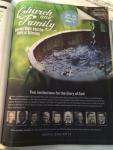
In WORLD’s most recent print edition, the magazine features two full page ads for the biggest names in Christian Patriarchy. The first is for Kevin Swanson’s new (and academically embarrassing) book “Apostate.” The second is for a NCFIC (National Center for Family Integrated Churches) conference featuring Christian Patarichy celebrities like Scott Brown, R.C. Sproul, Jr. Kevin Swanson, and Geoff Botkin.

You can check out the ads here, the photographs of which are courtesy of Chris Hutton at Liter8 Thoughts:

The NCFIC ad is for their upcoming “Church and Family” conference. You can see their speakers are a Who’s Who of Christian Patriarchy — and basically a list of everyone who previously walked in line with Doug Phillips: Scott Brown, Kevin Swanson, Don Hart (General Counsel for Vision Forum Ministries!), Geoffrey Botkin, R.C. Sproul, Jr., etc. You honestly can’t get much more Christian Patriarchical than this. As Julie Anne Smith at Spiritual Sounding Board has said, Scott Brown is “posed to fill the void left by Doug Phillips and Vision Forum to further the Christian Patriarchy Movement among homeschool families and family-integrated churches.”

And Kevin Swanson’s “Apostate”? Really, WORLD? You want the guy who talks about “feces eaters” and compares abused children to “dead little bunnies” advertising in your magazine? That’s a new low, especially since “Apostate” is a book that seriously proposes that “Charles Darwin’s farting at night (not kidding) is relevant to his philosophic and scientific influence.”

Not to mention that many WORLD subscribers are conservative Catholics and one of the “Apostates” that Kevin Swanson believes helped usher in the end of Christianity is Thomas Aquinas. Yes, like the classic Christian theologian Thomas Aquinas. But despite Aquinas being Evil Incarnate to Swanson, Aquinas’s face is absent from Swanson’s WORLD ad. Pretty convenient, right?

Ultimately, money makes the world go round, and that’s evidently no less true for Christian magazines. Considering that full page ads are $5,600 each, Christian Patriarchy just made WORLD $11,200 richer this month. And WORLD just brought Kevin Swanson and NCFIC into the homes of 100,000 families. Wink, nod, shhh.

16 Things I Wish My 16-Year-Old Self Knew About Mental Health, Part Four

Screen Shot 2013-10-18 at 3.26.01 PM

HA note: A while ago we asked members of the Homeschoolers Anonymous community what they wished their 16-year-old selves knew about mental health. We received a significant number of responses, so we’re going to run 4 sets of “16 things” throughout this week. Each set is a group post compiled from various people’s answers.

< Part Three

Part Four

1. I wish my 16-year-old self knew about personality disorders and that I would soon know people with them, and how to navigate knowing who I was talking to when it was not that person but one of their many personalities — and this was OK, not demon possession or someone just doing some sort of elaborate fakery.

2. I wish my 16-year-old self knew that masturbation isn’t a sin, that everyone lusts and fantasizes (and noticing that a girl has boobs doesn’t even count as lust), and that — most importantly — a healthy sex drive is absolutely not worth contemplating suicide over.

3. I wish my 16-year-old self knew that it wasn’t her fault when her parents would fight. I wish someone had taken the time to tell her that instead of just pretending that everything was fine when it wasn’t.

4. I wish I could give my 16-year-old self a hug. I wish my 16-year-old self knew that she is loved.

5. I wish my 16-year-old self knew that she wasn’t “fat” because she read books and stayed inside, but because she was depressed. She wasn’t “fat” at all.

6. I wish my 16-year-old self knew that eating right, praying right, thinking right, and doing right are not foolproof ways to ward off mental illness. Sometimes illness just happens, and it isn’t because you aren’t perfect enough.

7. I wish my 16-year-old self knew that when my mom went crazy on us kids, screaming and changing history, it wasn’t our fault.

8. I wish my 16-year-old self knew that I was beautiful and it was ok. I wish I knew that normal people didn’t feel guilty all the time. I wish I knew that being grown-up didn’t mean no fun or happiness. I wish I knew that being imperfect didn’t make me a failure, it just made me human.

9. I wish my 16-year-old self knew that it is better on the outside of the dark, rigid, insulated little world I had grown up in. I thought that the world was a scary, hard, miserable place and that everyone basically toiled along fighting emptiness. That’s what I was preparing myself to go out into. And then to get out into the rest of the world and find that, yes, it can be hard and scary and heartbreaking but that it’s also beautiful and challenging and exciting and has so much light and hope and good… I wish I had known that.

10. I wish my 16-year-old self knew that not wanting to be around people is normal. It just means you’re a really big introvert.

11. I wish my 16-year-old self knew that I had a learning disability. I wasn’t stupid. I was just as smart as my brothers. I just learned differently.

12. I wish my 16-year-old self knew that I had other options as a Woman, that Women everywhere are strong and have careers and didn’t just get married and have a ton of kids and stuck being house wives forever.

13. I wish my 16-year-old self knew that it wasn’t her responsibility to keep the family together — and that it wasn’t her fault that things fell apart. She did everything she could.

14. I wish my 16-year-old self knew that my mother was wrong when she responded “how can you do this to me” when she found out I was suicidal.

15. I wish my 16-year-old self knew that disagreeing with my parents or — god forbid — being angry with them wouldn’t send me to hell. I wish my 16-year-old self knew how to speak up, and how to speak out.

16. I wish my 16-year-old self knew YOU. ARE. NOT. ALONE. And someday you will meet others, and you will feel better than you ever thought was possible because of it.

End of series.

If The Shoe Doesn’t Fit…

Screen Shot 2014-06-09 at 1.46.33 PM

HA note: The following is reprinted with permission from Darcy’s blog Darcy’s Heart-Stirrings. It was originally published on May 28, 2014.

So here’s the deal, and I’m just gonna lay it out for you.

When I and my friends discuss “the homeschool culture” or the “homeschool movement”, when we tell stories about growing up in that culture and its effects, we are not talking about all people who educate at home.

We are talking about a very specific religious sub-culture, with specific teachings, whose purpose was to create an entire culture based on certain principles that were purposefully counter-cultural. 

It doesn’t matter than many of us experienced differences within this culture, some on very extreme ends of a spectrum. When we say “courtship”, or “umbrella of authority”, or “modesty”, everyone who grew up in the culture knows what we’re talking about.  

So can we please just stop with the comments about how not all homeschoolers are “like that”? We get it. We’re not saying all home educators are the same. We’re not dissing homeschooling. We’re not saying “if you homeschool, you fit the shoe we’re throwing”. Just stop alreadyIf the shoe doesn’t fit, quit complaining to us about how the shoe we’re describing doesn’t fit you and maybe realize we’re not talking about your foot. If you can’t relate, it’s probably because you didn’t grow up in the homeschooling culture and you’re not part of it now. That’s perfectly OK. Matter of fact, it’s wonderful!

What gets tiring are the comments that decry how unfair we are to all homeschoolers. Those are major facepalm moments for me and my friends. We wonder if you even read what we wrote or care to understand it. Why you feel the need to defend yourself when*we’re not even talking about you*. (The people who just have to comment about how they’re not even religious but they’re homeschoolers and nothing like what we describe really make me want to bang my head on my computer.) This seems like it should be self-explanatory but apparently not.

When I write about my experiences, when Libby Anne writes about a specific sub-culture and how unsafe it is for women, when anyone on Homeschoolers Anonymous writes just about anything, someone (or several someones) just have to cry foul about how unfair we’re being even though we’re not talking about them or about home educators everywhere. I would completely understand the outcry if we were going around writing about how horrible homeschooling is and how terrible are the people that home educate and how all homeschooling should be banned because homeschooling = BAD. But, we’re not.

So, for the record, we know that “not all homeschoolers” are “like that”. The culture we grew up in that is still alive and well IS “like that”. If you’re not “like that”, we’re not talking about you. OK? OK. Good talk.

Parenting With Fear: Why I Don’t Agree With It

Screen Shot 2014-06-09 at 1.54.08 PM

HA note: The following is reprinted with permission from Caleigh Royer’s blog, Profligate Truth. It was originally published on October 11, 2013.

I have long pondered and thought about how I was raised and how my siblings, from infants to young adults, were raised. As we get closer, hopefully, to have children of our own, Phil and I have had lots of conversations about how we are going to raise our little ones. My parents went to several of the Pearls’ conferences, had pretty much all of their books, and I distinctly remember sitting in [home]church watching my dad “train” the baby of the family at the time. My sibling was probably 6 months old, and was sitting on dad’s lap. My dad held a flexible rubber plumbing rod in his hand and would swat the child on their leg if they started making any noise or squirmed. Then of course, the child would start crying and they would get swatted again to be silenced.

I remember sitting at the kitchen table with everyone, and dad force feeding another child. The baby didn’t want to eat what was in front of them, and in a few cases, it was because the child was sick. Dad would start yelling at the baby, setting timers, and getting the baby down from the table to be given a spanking, all because they weren’t eating their food. Mom wouldn’t do anything to stop the “disciplining” and all the rest of us kids would sit at the table, petrified that we would be next if we didn’t eat or made a noise. We got disciplined for making too much noise, we got disciplined for running to get mail if we didn’t ask, we got disciplined for not eating or for losing tools we hadn’t even used.

My dad created the illusion of a well disciplined, well put together family, but under it all was this idea that the kids were only there to be seen not heard, and there was no room for children to just be children.

I grew up understanding that children were evil and only capable of disobeying and had to be trained fiercely and kept a close eye on because anything they did was with the intent of disobeying. 

It wasn’t until I started nannying that I began to see just how wrong and destructive my parents’ parenting styles were. I was closely tied into helping raise the little girl I was nannying. I remember many conversations and shared articles between her parents and I. I remember feeling confused and scoffing at the idea that children were their own identities and that their “disobedience” was simply their way of exploring the world they were growing more aware of. I watched my little charge closely to see if maybe my employers were right. I was amazed at what I started seeing as I began adjusting my beliefs on how to raise a child. I saw a child enthralled with the silliest things, things to me that were boring and not worth noticing. But to that little girl, those things were fascinating, something she had never noticed before. The entire world, even if it was only certain areas of the house, was brand new to her. It took a lot for me to break out of the child training ideas I was raised with. It helped seeing how ludicrous those ideas were when it came to this little girl I watched almost every day.

To shut down her healthy curiosity seemed so wrong, to train her to stay in a certain area, even though other areas were safe for her, seemed so cruel. 

I had to go through a massive shift. I couldn’t, in my right mind, treat this little girl like I had been treated growing up. When she cried as she was being put into her highchair, more often than not there was something actually wrong. But, because she couldn’t speak, crying was her way of letting me know something was wrong. It was not her fighting me or being sinful and disobedient. Babies, infants, toddlers, even most young children aren’t fully capable of logically and thoughtfully telling you, an adult, what is wrong. I realized my parents’ ideas of training me and my siblings was as if they were treating us like full grown adults capable of interacting on my parents’ level. There was no leeway given for children’s developing brains, their natural curiosity, their eagerness to understand the bright new world around them even if they can’t understand what is bad for them or not. Nor was there any room given for natural fears a child faces, like a fear of the dark, nightmares, or scary noises. It most likely was just the way my parents were, but I remember there being very little grace and love for any of those natural fears I or any of my siblings faced. Oh, then add in the abuse and yelling my dad did often, and then the entire home environment was one of fear.

My parents raised us through fear; fear of my parents’ spanking stick and the consequences for being a child. I found a quote the other day is the exact opposite of how I was raised.

“Don’t stand unmoving outside the door of a crying baby whose only desire is to touch you. Go to your baby. Go to your baby a million times. Demonstrate that people can be trusted, that the environment can be trusted, that we live in a benign universe.”  Peggy O’Mara

Babies are brought into the world fully dependent on us adults. They only know the warmth of their mother’s womb, the safety in being held by loving arms. An infant has no cause to distrust their safety. Unless we give them cause to distrust and fear us by disciplining a child for something they cannot understand they have done. I am willing to change and give up my comforts to comfort any child I may have. I believe it is very appropriate for moms to find time for themselves and to leave their child(ren) with a friend or family member for some “me” time. But my habits should change whenever we have a baby. I will then be responsible for that child, for its comforts, safety. I shouldn’t expect to continue living as I have and expect my child to adapt to my lifestyle and to force it into unnatural habits.

I believe in teaching a child, when they are old enough to start beginning to understand, the difference between right and wrong. I don’t believe, nor do I agree, in teaching a child, an infant, toddler, or an older child, the theology of sin. If we as adults can’t even fully understand what real sin is, then how can we expect a child, who doesn’t even have half the understand we have, to understand it? Raising a child is raising a fully human being, not a little being you get to twist and train however you so please. They have feelings, they have memories that will haunt or warm them as they get older. But they also need to be guided as they grow and as they begin to understand their place in life. I believe in teaching a child how to make wise choices for themselves and to not be afraid of their own opinions.

I don’t ever want a child of mine to question whether or not they matter, nor do I ever want to give them cause to fear me or Phil. I believe in showing a child respect. Just because a human being is pint sized and needs to be carried by you does not make that person any less important.

Our children are brought into this world helpless, how can we then hit them and treat them like animals to be controlled? 

I heard a phrase once about house-proofing your child. This has got to be one of the most selfish things I have ever heard. The parenting styles my parents’ tried to implement on me and my siblings had to do with them not really changing how they do things, but instead expecting and “training” us to do what they wanted. The only place I think house-proofing anything is appropriate is when you are training a puppy or a kitten to be house trained, but a baby? Hell no. It is so selfish for parents to expect for their children to conform to their ideas of what a well behaved child looks like, instead of taking the time to make the house a safe environment for the unsteady, curious baby. Much less forget about treating a child as a real person.

Comparing my siblings to the little girl I nannyed is heart wrenching. It has only been in the past maybe two years that my siblings have somehow broken the harsh bonds they have been tied up with and are finally starting to act like real kids. But in some cases, it is too late. I never had a childhood. I had to become a full blown responsible adult by the time I was 12. I cooked, cleaned, did laundry, was expected to complete my homework, and became a second mother to my youngest siblings. This is part of the problem I have with having a large family. I know I am not the only one and I know others have not had this experience. But as I have said before, this blog is specifically about what I have been through and my journey out of it.

I want to see my children be happy, allowed to be curious, and their inquiring of how things work to be encouraged. I will respect my children for the amazing little humans they will be. 

16 Things I Wish My 16-Year-Old Self Knew About Mental Health, Part Three

Screen Shot 2013-10-18 at 3.26.01 PM

HA note: A while ago we asked members of the Homeschoolers Anonymous community what they wished their 16-year-old selves knew about mental health. We received a significant number of responses, so we’re going to run 4 sets of “16 things” throughout this week. Each set is a group post compiled from various people’s answers.

Part Two

Part Three

1. Most of all, I wish my 16-year-old self knew that it was okay to accept herself exactly where she was at, that she didn’t need to lie awake at night berating herself after her parents had done that for her, that self-loathing isn’t holy, and being made of iron is a coping mechanism, and doesn’t have to be an entire existence.

2. I wish my 16-year-old self knew that my parents’ compulsive behavior was a sign of mental illness, not an edict from god.

3. I wish my 16-year-old self knew not to internalize everything

4. I wish my 16-year-old self knew that it’s morally okay to be depressed, that depression does not have to have a known cause to excuse it, and that it’s okay to seek help for it.

5. I wish my 16-year-old self knew that he didn’t have to be the savior knight in shining white armor for every friend dealing with overwhelming circumstances. I wish he knew it wasn’t his responsibility to be everyone’s counselor, pastor, and confidante. I wish I could have warned him about the massive burnout he was hurtling himself toward, that “bear one another’s burdens” doesn’t mean “bury yourself alive”.

6. I wish my 16-year-old self knew that having a crush is not a sin, that “emotional adultery” isn’t even a thing, and that being head-over-heels for the same girl for three years is maybe an indication that I need to stop thinking about her and get to know her… and maybe ask her out if I felt inclined, because dating doesn’t turn people into licentious nymphomaniacs.

7. I wish my 16-year-old self knew that mental illness exists. Like, it’s an actual, real live thing.

8. I wish my 16-year-old self knew that not being happy all the time doesn’t mean you’re “broken”.

9. I wish my 16-year-old self knew that mental illness is not a sign of demon possession or an “ungrateful spirit”.

10. I wish my 16-year-old self knew that she was beautiful, even after all the struggles with health took a huge toll on her body and her self esteem.

11. I wish my 16-year-old self knew that, unlike the patriarchal messages would have her believe, she did not need a man to validate her self worth in order to feel beautiful.

12. I wish my 16-year-old self knew that what happened to her was not her fault, that she was not a “temptress” or seducing someone.

13. I wish my 16-year-old self knew what grooming was and what abuse looked like, but I also wish she knew not to blame herself for being manipulated and abused. I wish she knew that it wasn’t her fault. I wish she knew how to forgive herself.

14. I wish my 16-year-old self knew that, as my friend advised, “You are a human being — not human doing. Your value lies in simply being human, not in what you do for others.”

15. I wish my 16-year-old self knew the signs of enmeshment, co-dependence and a relative having a personality disorder.

16. I wish my 16-year-old self knew what to do when I found out that two relatives were self-harming.

Part Four >

Getting My Wings Back

wings

HA note: The following is reprinted with permission from Kay Fabe’s blog Post-Fundamentalist Fashion. It was originally published on June 9, 2014.

Trigger warning: discussion of sexual assault.

So I saw Maleficent over the weekend. And for me and many other sexual assault survivors, that gut-wrenching scene where Stefan cuts off Maleficent’s wings instantly read as rape. I just sat there staring in shock, like…. “No. He took HER WINGS. This is way worse than if he just stabbed her.”

Maleficent’s wings are her source of power. Stefan takes that power away from her, but in the end SHE GETS IT BACK. I was so, so happy about that. (I love that the idea of rape is so clearly tied to power, rather than sex, throughout the whole film, too. It’s not like “her wings are her virginity, and she lost that, so now she’s broken.” It’s like “Her wings are her power, and he stole them, but she can get them back.” YES, YES, YES.)

But in that scene where she’s slowly limping down the hill afterwards, stunned, leaning on her staff and trying to process what just happened, my heart bled. I know pretty much exactly what she felt like at that moment.

This story is for later, but the guy who assaulted me was much older and he was constantly pushing my boundaries and trying to get me to do things I felt uncomfortable with. (It says something that I thought marrying this dude would be better than living with my parents.) The actual assault was one of those pesky gray areas: it started out as a sort-of-consensual encounter, and then he told me to do something I was uncomfortable with and I said “No,” and then he grabbed me and made me do it anyway. We broke up soon after.

I was really angry at him for a long time, but the older I get and the farther away from it I get, I’ve started to feel like my anger was sort of misdirected. That dude only took up about four months of my life, tops. The homeschool culture spent 20+ years systematically stripping me of my privacy, dignity and autonomy as a human being.

I came to realize I was raised in a culture that stole my wings before I really knew I had them. My No didn’t matter. My Yes didn’t matter. Basically, nothing I said really mattered – so I quit trying to say anything. When Mr. Grîma Wormtongue first met me, he knew I would be a REALLY easy person to abuse, so he took advantage of that.

I don’t have a good way to end this, exactly, but I think it’s sobering that so much of the homeschool subculture is a massive power play. The people in control are determined to stay in control, even if that means systematically destroying the individual souls of individual kids. They’re basically like, “We don’t care about you as a person, about what you think or feel or say. We’re just going to do our thing and be in charge, and we don’t care if you get broken. In fact, it’s easier for us if we can break you.”

Honestly, if rape is about power, homeschooling sometimes looks very, very similar.

I was homeschooled, but I am getting my wings back. Feather by beautiful feather.

16 Things I Wish My 16-Year-Old Self Knew About Mental Health, Part Two

Screen Shot 2013-10-18 at 3.26.01 PM

HA note: A while ago we asked members of the Homeschoolers Anonymous community what they wished their 16-year-old selves knew about mental health. We received a significant number of responses, so we’re going to run 4 sets of “16 things” throughout this week. Each set is a group post compiled from various people’s answers.

< Part One

Part Two

1. I wish my 16-year-old self knew that it is okay to need time to yourself and that you don’t have to act like you are happy all the time even when you aren’t.

2. I wish my 16-year-old self knew that I could seek help. I was so trapped in my religion, all I knew to do was pray.

3. I wish my 16-year-old self knew that you can think you’re fine for a while and later on realize that you’re not, and childhood trauma plus a secondary trauma (getting mugged, a natural disaster, loss of a loved one, war, etc.) can bring about delayed-onset PTSD.

4. I wish my 16-year-old self knew that a lot of what I was experiencing was not mental “weakness” but mental injury and that it needs to be taken as seriously as a badly set broken bone.

5. I wish my 16-year-old self knew that dissociation can take different forms ranging from an out-of-body type experience to just feeling like your head is the only thing that isn’t numb, and that dissociation is a coping mechanism that works to help protect you in a time of extreme hardship but needs to be overcome when you’ve reached a more stable place in life.

6. I wish my 16-year-old self knew that the mind-body connection is a powerful thing and somatic symptoms like stomach aches, headaches, and changes in appetite that don’t seem to be for any particular reason might be the main signs you have that something is off.

7. I wish my 16-year-old self knew that cultures where the typical solution for mental health issues is to go to church or go to drinking often end up with too many religious fanatics and alcoholics. Make a counseling appointment if you feel yourself needing help.

8. I wish my 16-year-old self knew that you are not broken, defective, sub-par, or damaged goods if you have these feelings and issues. You can have a good life and you are worthy of self-care, outside care, respect, and meaningful work and relationships.

9. I wish my 16-year-old self knew everything truly wasn’t her fault.

10. I wish my 16-year-old self knew that there was another way of life, and that depression is a real illness that she had.

11. I wish my 16-year-old self knew that she was beautiful and not fat.

12. I wish my 16-year-old self knew that feeling “down” pretty much all day, every day, and sleeping so much that your mom takes you to get bloodwork done because she’s worried you have anemia are signs of depression.

13. I wish my 16-year-old self knew that it’s okay to need encouragement, unconditional love, and affection and that depression can be a natural response to not getting them.

14. I wish my 16-year-old self knew that it was okay not to be “strong” all the time, that feeling as though I was a shell made of metal isn’t normal or healthy, that numbness isn’t what happiness feels like, and that feeling and crying aren’t signs of weakness, but the inability to do either is a sign there’s something wrong.

15. I wish my 16-year-old self knew that it was okay to get help and that life does get better and doesn’t have to be the hell-hole her parents told her it should be.

16. I wish my 16-year-old self knew that she had intrinsic value just because she existed, and was worth more than the broom she felt like. I wish she knew it was wrong to have been stripped of her humanity and individuality that way, and wrong to feel like she needed to apologize for her existence.

Part Three >