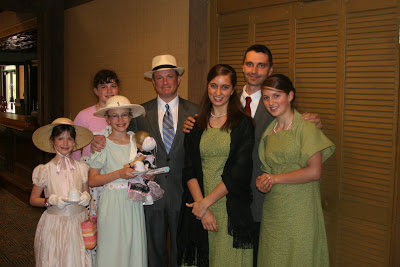
Kirk Cameron Lends Support to G.A. Henty Audio Drama

Bill Heid and Kirk Cameron. Source.

By R.L. Stollar, HA Community Coordinator

Content note: anti-black, racist language.

Three years after championing a providential view of history in his movie Monumental, former child star Kirk Cameron has joined forces with Marshall Foster and Bill Heid to create and promote an audio drama based on G.A. Henry’s 1890 book, With Lee In Virginia.

Ever since starring in Left Behind, Cameron has enthusiastically embraced the Christian Reconstructionist worldview, a worldview that Foster has long promoted through the World History Institute. In her 2015 book on Christian Reconstructionism Building God’s Kingdom, scholar Julie Ingersoll notes the following: “When I told Foster that I was writing about the influence of [Christian Reconstructionism founder] R.J. Rushdoony, he embraced Rushdoony’s influence on all his work, and indeed, it is Rushdoony’s philosophy of history that Foster articulates throughout the film [Monumental].” A friend of Doug Phillips’s, Bill Heid is a self-proclaimed “expert of Christian history” and the Executive Producer of Heirloom Audio Productions.

Heirloom Audio Productions specializes in creating audio dramas based on stories by G.A. Henty. As Heid says on his website, he “turned to the adventure books of G.A. Henty for rich, exciting story material.” Henty lived from 1832-1902 and was, ironically, a universalist and racist evolutionist who wrote popular historical adventure stories. Despite his beliefs in universalism, white supremacy, and evolution, conservative Christians who fetishize the U.S. Antebellum South (like Doug Phillips and Marshall Foster) have long adored Henty’s books, which are ripe with defenses of southern slavery, idyllic depictions of slaves adoring their masters, and thickly patriarchal gender roles.

This time around, Heid chose to create an audio drama based on Henty’s 1890 book With Lee In Virginia. Last July, Marshall Foster and Kirk Cameron were both enthusiastic about and endorsed the project. Cameron voices the character of Stonewall Jackson. He has stated that he liked the project because it makes “people look biblically at the subject of slavery, and to understand that there were good and godly men on both sides of this war [the American Civil War].”

In the book, the main character Vincent is a Confederate supporter who fights against the Union. Though the character initially finds slavery repugnant, Vincent learns from his father that not all slave owners are bad and that some slaves like being enslaved. “There are good plantations and bad plantations,” the father tells Vincent, “and there are many more good ones than bad ones.” Throughout the book, Henty as narrator (and through his characters) defends the institution of slavery. He lambasts “Mrs. Beecher Stowe” (abolitionist Harriet Beecher Stowe, author of Uncle Tom’s Cabin), accusing her of “libel” against the South. Henty writes that, “Taken all in all, the negroes on a well-ordered estate, under kind masters, were probably a happier class of people.” This sentiment echoes other contemporary slavery apologists like Doug Wilson. At the end of the novel, Hentry has the freed slaves decide to return to their former owners because the black people decide freedom “was a curse rather than a blessing to them.”

This theme of black people returning to their former owners extends from Henty’s belief in white supremacy and black inferiority. In With Lee In Virginia, Henty writes that black people “are very like children.” Henty believed black people could not handle freedom, a belief he makes explicit in his other novels as well. In By Sheer Luck, he writes, “The intelligence of an average Negro is about equal to that of a European child of ten years old… Left to their own devices they retrograde into a state little above their native savagery.”

In A Roving Commission, Henty declares that, “The majority of blacks are as savage, ignorant, and superstitious as their forefathers in Africa.” He also describes “the utter incapacity of the negro race to evolve, or even maintain, civilization, without the example and the curb of a white population among them.” Because of their alleged “incapacity to evolve,” Henty thought slavery was necessary for black people. In A Woman of the Commune, Henty refers to slavery as the “nature of the negro” because “servitude is his natural position.”

This is not Kirk Cameron’s first foray into the controversial subject of slavery. Though he has taken a firm stand against the modern-day practice of human trafficking, he also published in 2012 — and continues to host to this day on his website — an article from WallBuilder’s Stephen McDowell that claims, “We cannot say that slavery, in a broad and general sense, is sin.” McDowell says this is because “aspects of slavery are Biblical (for punishment and restitution for theft)” and because “unbelievers are by nature slaves” and thus can “be held as life-long slaves.”

10 Surprising Revelations in the Lawsuit Against Bill Gothard and IBLP

HA note: The following is reprinted with permission from Libby Anne’s blog Love Joy Feminism. It was originally published on Patheos on January 11, 2016.

Last week, I published a summary of the allegations included in an ongoing lawsuit against fundamentalist guru Bill Gothard and the Institute for Basic Life Principles, which he founded in the 1980s and spent three decades running. The lawsuit focuses on Bill Gothard and IBLP’s negligence in failing to report abuse and failing to train their employees to recognize and report abuse, and at its center are allegations that Bill Gothard spent decades grooming, sexually harassing, and molesting teenage girls he employed at his organization’s headquarters.

Having read through the lawsuit in full, I want to take a moment to mention ten things even I found surprising. Many of the allegations included in the lawsuit have been common knowledge since being posted in 2013 and 2014 by Recovering Grace, a website run by graduates of IBLP programs critical of Gothard and his teachings. However, the lawsuit also includes information I had not seen before. I want to focus on these points because of the questions they raise about why Gothard’s abuse was not recognized and addressed earlier.

As a quick note, I would appreciate it if you would keep down the snark in the comments section out of respect for the survivors who are bringing this suit. Their suit isn’t some sort of “gotcha” against Christians or against fundamentalists or even against Gothard himself, it’s an attempt to bring justice to Gothard and ensure that IBLP actually fixes the problems that allowed Gothard’s abuse to go unaddressed.

I want to throw into stark relief the extreme predatory nature of Gothard’s actions. I want us to look at these points and ask how this could have gone on for so long.

1. Gothard once gave his credit card to a girl he was grooming and told her to “fix” her clothes. When she expressed confusion, one of his assistants explained to her that Gothard was unhappy with her ankle length skirts and would like her to buy some that were calf length.

2. Gothard paid for a young woman he was grooming and sexually harassing to have cosmetic surgery to remove two skin blemishes which he called “a distraction.” The lawsuit positions this move as part of the increasing control Gothard was assuming over the young woman’s body.

3. Gothard told an 18-year-old girl who rebuffed his advances that if she had still been 17, he would have called social services and gotten her taken away from her parents.

4. Gothard tried to convince a woman to divorce her husband and take a job at headquarters because he wanted to groom and molest her daughter, who had told him she would not be without her mother. See also above.

5. Gothard once had a girl he was grooming placed in a bedroom opposite his office window “so he would know when she could come to his office, after everyone else had left.”

6. Gothard preyed on girls as young as 13, had parents send girls as young as 14 to his headquarters at his request, and assigned girls as young as 15 to be his personal assistants.

7. In the early 1990s, Gothard asked the IBLP Board of Directors for permission to marry Rachel Lees, a young woman he was grooming. At the time, he was nearly 60 and she was around 20. Gothard did not mention the subject to Rachel herself. It was not until Rachel learned two decades later that Gothard had asked the board’s permission to marry her that she recognized Gothard’s behavior as predatory.

8. Gothard told a victim of childhood abuse “that parents were to be believed over children and that children were to obey their parents no matter what, even if they were being sexually abused.” When Jane Doe II reported her father’s sexual abuse to Gothard, he immediately called her father on speakerphone and asked him if the allegations were true (not surprisingly, her father said they were not).

9. Gothard made a habit of having teenage girls come to his office alone late at night under the guise of “Bible study” or “mentoring.” This isn’t technically a new revelation, but it is striking how many of the plaintiffs refer to these late-night one-on-one sessions. For an organization that teaches that people of opposite genders should never be alone together, it is startling that this practice was allowed to continue for so many years without raising an eyebrow.

10. It was common knowledge at IBLP that Gothard took teenage girls as “pets.” It was also common knowledge that Gothard’s behavior with regard to these girls was not appropriate. At one point in the early 1990s, after Gothard asked the IBLP Board of Directors for permission to marry Rachel Lees, the board barred Gothard from having female personal assistants. This ban was never enforced, and Gothard continued his pattern.

I’m sitting here trying to come up with some explanation for how this went on for as long as it did. People knew this was going on. The IBLP Board of Directors knew, the personal assistant who told Jane Doe III to buy shorter skirts knew, the employee who arranged the room assignment for Jamie Deering knew. People knew something was off. We’re talking about an organization that sent teenage boys home for merely talking to girls, while its leader held late night one-on-one “mentoring” sessions in his office with teenage girls.

Well sure, you say, it was a cult. That’s how cults work. But I want to stress just how widespread IBLP’s influence was within the Christian homeschooling world throughout my entire childhood and beyond. There were hundreds and thousands of families involved who had no idea that anything untoward was happening. This wasn’t so much an insular group like we’re used to thinking about, with its members cut off from contact with the outside. Rather, it was one that faced outward and led wide swaths people across the country to trust it its leadership and its “godly” mission and methods.

I am filled with sudden respect for one of my younger brothers, who approached me five years ago at age 17, worried. He told me that our parents wanted to send him away to a program in Texas, but that he was worried that it was a cult and wanted my advice. (It was Gothard’s ban on rock music that worried him—he played the drums and loved Christian rock music, which my parents grudgingly allowed.) At this point, I hadn’t given Gothard’s name a second thought. I grew up learning about the “umbrella of authority” and I attended a COMMIT Bible study for teenage girls, but my family had never been an ATI family, and I’d paid little attention to his name.

I texted my brother this morning. I wanted to let him know about the lawsuit. I wanted to make sure he knew just how right he had been, five years ago. What made the difference, exactly? How could he see it while so many others—including my own parents—did not? My brother told me, actually, that he and my dad had visited Gothard’s ALERT program headquarters in Texas, in anticipation of sending him there. Apparently my dad was a bit worried there might be something “off” about Gothard’s ministry—my dad by nature is antiauthoritarian, except in his parenting, and I think the focus on a single leader threw him off—but the visit assured him that all was fine, and that the ministry was godly and sound, one he could get behind.

And perhaps that is the problem. For whatever reason, my 17-year-old brother was already starting to push back and ask questions, but to those predisposed to see anything with a “godly” image as de facto good—well, you can see how that might prime people to accept Gothard’s ministry without asking too many questions, especially when so many others were already supporting it—after all, could they really be all wrong? And yet they were. And perhaps that is the biggest lesson for anyone—don’t assume that a leader or organization is legit just because it has a lot of followers, or projects a certain image.

Also, don’t create authoritarian power structures focused on a single leader.

I keep coming back to the fact that there were people close to the situation who knew these things were going on and did nothing. I can better understand people following the ministry without any knowledge that something was “off,” but once you’re in the organization and you see what’s going on—it’s boggling. There are, of course, explanations. Someone who said something might not be believed, or might be kicked out or shunned. Some might have doubted what they were seeing, given Gothard’s godly extra-human reputation. And some, too, might have assumed that if something was actually wrong, someone would surely have spoken up, so it must not be. And then, too, there’s the fact that obedience was central to Gothard’s teachings.

And so, in the end, we have a cautionary tale. This isn’t simply about one more Christian organization beset with sexual scandal, it’s about power structures and beliefs that create a situation where numerous people let significant warning signs go by, either unrecognized or ignored, but unaddressed either way. No more.

Some of my readers may be wondering what came of my brother, and what I told him when he came to me for advice. To tell the story briefly, I googled Bill Gothard’s name to assess my brother’s concerns and quickly came upon blogs written by homeschool graduates raised in ATI voicing their concerns and processing their experiences. It was those blogs that inspired me to start this blog, and it was those blogs that informed the response I gave to my brother. Over the next year I helped him wade through his options and find ways to make his own choices. He never did go to ALERT, and for that I am thankful. And so perhaps, in some small way, the voices of survivors can serve as an antidote to Gothard’s abuses.

A Summary of Allegations against Bill Gothard and IBLP

HA note: The following is reprinted with permission from Libby Anne’s blog Love Joy Feminism. It was originally published on Patheos on January 7, 2016.

CW: Descriptions of child sexual abuse, rape, and sexual harassment

It has been nearly two years since Bill Gothard stepped down from leadership at his ministry, the Institute for Basic Life Principles (IBLP), amid a growing number of accusations that he sexually harassed and molested girls and young women in his employ. This past October, a group of individuals filed a negligence lawsuit against IBLP. This lawsuit has been amended, and Bill Gothard is now named as well.

This week, Homeschoolers Anonymous obtained the text of the lawsuit, which involves complaints made by ten women, seven named and three Jane Does. This document is over 100 pages long. In the interest of improving accessibility, I have read through the entire document and am listing a summary of each woman’s allegations below. But first, some general thoughts.

Some of the allegations listed in the document were previously published at Recovering Grace, a website run by graduates of Gothard’s programs to express criticism of Gothard and his teachings, and others are similar in content to these allegations. In sum, Bill Gothard selected girls as young as 13 from the audiences at his conferences and invited them to come work at headquarters. Once there, he groomed them sexually and molested them. It was common knowledge at IBLP that Gothard took “pets,” and yet his behavior was allowed to continue unchecked.

Other allegations included in the lawsuit are new, though not surprising. One plaintiff discloses that Gothard raped her, including full intercourse. In addition, we learn that Gothard and his employees failed to report disclosures of physical abuse, sexual abuse, and human trafficking as required by law for organizations working with children, and that this was true not only for allegations made against Gothard but also for disclosures that involved sexual abuse conducted by other IBLP employees or by children’s parents.

In several cases Gothard responded to teenagers’ disclosures of parental abuse by calling the parents, sometimes in front of the teen, to ask them whether the allegations were true. At one point he told an individual that children must obey their parents even in cases involving sexual abuse. However, when an 18-year-old girl Gothard was pursuing rebuffed him, he told her that if she were 17 he would have called social services and had her removed from her parents’ home.

We also learn more, in the allegations, about Gothard’s grooming and the extent to which he would latch onto a specific girl as his “pet.” The plaintiffs allege that Gothard told them he loved them, that they were special to him, that they were his “energy giver,” and more. He dictated where these girls lived, what clothes they wore, how the wore their hair, and even paid for them to undergo cosmetic surgery. That all of this was taking place and was common knowledge and nothing was done attests to the abusive power cult leaders wield over their followers.

Also of note, the lawsuit makes it clear that Gothard continued his predatory behavior all the way up to the point he stepped down from IBLP in 2013. Two of the plaintiffs, Melody Fedoriw and Jane Doe III, describe abuse that occurred in 2011 and 2012. This is especially appalling to me, given that I had friends from growing up who worked for IBLP and at headquarters during this period and in the years immediately before it. I’ll be honest—when I first opened the document I scanned the list quickly, worried that I was see a familiar name.

For most of the women listed in the lawsuit, the statute of limitations for the sexual abuse they suffered at Gothard’s hands have passed. For this reason, the lawsuit focuses not so much on the abuse itself as on the failure of both Gothard and IBLP to handle the abuse as required by law and on the damage caused through the sham investigation conducted by the Christian Law Association (CLA) in 2014.

According to the lawsuit, Gothard himself chose the CLA to conduct IBLP’s internal investigation into the allegations of sexual misconduct. CLA is a fundamentalist Independent Baptist organization run by David Gibbs, Jr., a personal friend of Gothard’s and a frequent speaker at IBLP conferences. CLA has no staff qualified for investigating abuse allegations, and the organization failed to contact or interview the individuals named in the lawsuit, in spite of the fact that many of them had already published their allegations and that it was these allegations that had triggered the internal investigation.

The lawsuit also claims that IBLP has made moves to sell its holdings in Illinois in order to avoid being sued there, where the majority of the abuse occurred.

These women—both the plaintiffs and those who have not been in positions to come forward—deserved better. They were failed on multiple levels. My heart goes out to the ten women serving as plaintiffs on this lawsuit, and with every survivor of Gothard’s abuse who has had to put one foot in front of another day after day. One of the women, Jane Doe III, describes the personal harassment and verbal assault she faced from Gothard after publishing her accusations in the comment section of Recovering Grace in 2012. To my knowledge, this is the first time any of Gothard’s survivors have come forward under their own names. Many of these women will lose family members or friends for what they are doing. They and the other survivors supporting them from behind the scenes are to be commended for their efforts to bring Gothard and IBLP to justice and help protect future young people from facing similar pain.

I am going to summarize the allegations of each woman below, with quotes from the lawsuit. I am doing so in order to get this information out there. Remember, there are still individuals out there defending Bill Gothard. I don’t want them to have any excuse—including the excuse that the information is buried in a 100+ page document full of legalese—not to view and learn the allegations involved in this current website.

First, a very brief summary:

Gretchen Wilkinson was groomed and molested by Gothard during counseling from 1991 to 1993 while was still a minor.

Jane Doe was severely abused by her adoptive parents. When she reported this to Gothard as a young teenager, he blamed her and failed to notify the authorities.

Jane Doe II was sexually abused and trafficked by her father. When she told IBLP staff they failed to notify the authorities. She was also raped as a child by IBLP employee Kenneth Copley while at the Indianapolis Training Center. She reported this, but the other IBLP employees did not believe her.

Melody Fedoriw was groomed and molested by Gothard while working at headquarters in 2012 at age 15.

Charis Barker was groomed and sexually harassed by Gothard while working at headquarters in the late 1990s, beginning at age 18.

Rachel Frost was groomed and sexually harassed by Gothard while working at headquarters in the early to mid-1990s, beginning at age 15.

Rachel Lees was groomed and sexually harassed by Gothard while working at headquarters in the early 1990s, beginning at age 19 or 20.

Jane Doe III was groomed by Gothard in the late 2010s beginning at age 13.

Jamie Deering was groomed and molested by Gothard while working at headquarters in the early to mid-1990s, beginning at age 14.

Ruth Copley Burger was sexually abused by her father, Kenneth Copley, while the family lived at the Indianapolis Training Center in the mid-1990s when she was 11 or 12.

Now a more detailed summary. As you read this, if you choose to do so, please remember that these women have come forward not to give people more fodder to use to mock “fundies” but rather to bring accountability to IBLP and bring Gothard to justice. They are have told their stories not to initiate a snark fest but rather to bring change. Many of the women involved in this lawsuit are still strong believers in God and the Bible. This isn’t about making a strike against religion, it’s about making a strike against abuse and bringing meaningful change.

Gretchen Wilkinson

Gretchen was an IBLP participant and employee as a minor from 1991 to 1993. She was molested by Bill Gothard while being counseled in his home office. According to the lawsuit:

45. The molestation included Bill Gothard placing his hands on Ms. Wilkinson’s breasts and on her thighs—up to her genitals, while she was clothed.

Gretchen was a minor at this time. Gretchen published her account with Recovering Grace under the name “Charlotte.”

Jane Doe

Jane Doe attended IBLP conferences from 1982 to 1988. Jane Doe was abused and neglected by her adoptive family, including sexual abuse by multiple male relatives and severe physical abuse. According to the lawsuit, “she was beaten so severely by her adoptive family that she would duck and flinch anytime someone came near.” When Jane Doe told Gothard about her abuse as a teenager, he not only failed to report it but also blamed her for her own abuse.

80. On several occasions—including when JANE DOE was 14, 15, and 16 years old, JANE DOE informed Bill Gothard of her physical, psychological, and sexual abuse. Bill Gothard’s response was to advise her to ‘let go of her bitterness,’ and to ‘let go of her rights,’ and to ‘stop being rebellious.’ Bill Gothard always made the abuse JANE DOE’s fault.

Gothard also sought to cast demons out of Jane Doe.

82. When she was approximately 15 years old, JANE DOE became aware of Bill Gothard’s teaching that adopted children should be ‘given back’ to their biological parents or to the state. Bill Gothard taught that due to the ‘curse of the sins of the forefathers’ adopted children were doomed to repeat the evils of their biological parents. Bill Gothard also taught that adoptive children tainted a family’s biological children. Thus the reason they should be given back.

83. Bill Gothard attributed his teachings about adopted children to ‘demonic forces’ that he claims affect these children. He taught that if adoptive children were not ‘returned,’ they should at least be ordered to ‘earn their keep’ in the family home. It was his teaching that they should be treated more like slaves than children.

Under the influence of Gothard’s teachings, Jane Doe’s parents ultimately kicked her out of the house and disowned her. Her mother beat her again the day she was kicked out.

At around this time Jane Doe spoke again with Bill Gothard, expressing concern that her siblings, too, were being abused. Gothard never reported anything to social services. Jane Doe wrote to the IBLP Board, letting them know what she had told Gothard, and they, too, failed to report anything.

Jane Doe II

From 1991 (when she was four) through 2009, Jane Doe II participated in IBLP programs and served as an IBLP volunteer. She was physically, emotionally, and sexually abused in her home, as were her siblings. According to the lawsuit, she was “raped by her father and other relatives” and “sold for sex by her father through commercial sexual exploitation and human trafficking.” Jane Doe II reported both the severe sexual abuse and the human trafficking to IBLP staff, but those staff members did not contact authorities.

As a child, Jane Doe II was raped by Kenneth Copley, a counselor at ATI’s Indianapolis training center. Jane Doe II reported this rape to IBLP staff, but nothing was done and nothing was reported to authorities.

Jane Doe II later told Gothard about her abuse.

128. On at least five occasions, JANE DOE II told Bill Gothard that she was being sexually abused by her father and that her younger siblings were also being abused. Bill Gothard took pleasure in the details presented and kept pressuring JANE DOE II for more explicit details of the abuse that took place.

129. On one occasion, when JANE DOE II disclosed details about her abuse and the abuse of her siblings, Bill Gothard called JANE DOE II’s father on a speakerphone and asked if the allegations were true. JANE DOE II’s father denied the allegations. JANE DOE II was humiliated by this process. The last time JANE DOE II tried to disclose abuse, Bill Gothard personally threatened her. Bill Gothard taught that parents were to be believed over children and that children were to obey their parents no matter what, even if they were being sexually abused.

A short time later, Bill Gothard took Jane Doe II to his “private suite” and raped her.

During this entire time, neither Gothard nor any of the numerous other IBLP staff members who also knew of Jane Doe II’s accusations against her father and against Kenneth Copley notified authorities.

Melody Fedoriw

Melody attended IBLP’s Journey to the Heart in 2011 and worked at IBLP headquarters during much of 2012. During her time as an employee at headquarters, Melody, only 15 years old, was groomed and molested by Gothard.

169. Bill Gothard would call Ms. Fedoriw into his office late at night for Bible study and to mentor her. During this time, Bill Gothard would always want to sit on the couch with Ms. Fedoriw.

170. During the Bible study and mentoring process, Ms. Fedoriw reported the fact that she was being abused by a parent to Bill Gothard.

171. Bill Gothard then called Ms. Fedoriw’s parents and disclosed the abuse information that she had disclosed in confidence to her abuser.

172. By the second instance of late night Bible study/mentoring, Bill Gothard was putting his arms round Ms. Fedoriw and pulling her closer to him.

173. Despite the fact that Ms. Fedoriw confronted Bill Gothard about his conduct, it continued.

174. Bill Gothard continued to touch Ms. Fedoriw in ways that made her uncomfortable, including rubbing her back and legs. While Bill Gothard was rubbing Ms. Fedoriw’s legs, he would move his hands to her upper thigh. Bill Gothard was touching Ms. Fedoriw very close to her vaginal area, when he rubbed her upper thighs.

The above quote is long, so let me summarize. Gothard had one-one-one late night mentoring sessions with Melody, who was then 15 and living at headquarters. When Melody disclosed abuse she had suffered at her parent’s hands, he called her parent and reported what she had said. He also sexually molested her during these mentoring sessions despite her attempts to get him to stop.

In March 2014, after Gothard stepped down from his position, Melody reported Gothard’s conduct to the local police department. The police department classified Gothard’s actions as criminal but did not prosecute because they had passed the statute of limitations.

Charis Barker

Charis Barker’s involvement with IBLP began in 1986, when her family enrolled in the ATI program when she was six, and continued through 2000. In 1997, when she was 17, Gothard singled her out at an IBLP seminar and invited her to come work at headquarters. When she was 18, she left home for headquarters, first as a volunteer and then as an employee. While there, Gothard groomed and sexually harassed her.

211. At lunch, at times in his office, while riding in his van, while sitting on his couch, whoever possible, Gothard’s feet would touch Ms. Barker’s feet, whenever her had the opportunity.

212. Gothard’s sexual harassment of Ms. Barker got to the point that the only way she was able to prevent Gothard from touching her feet, while riding in his van, was for Ms. Barker to sit on her feet.

213. Whenever she sat on the couch in his office, he would sit very close to her and put his hands on her knee.

214. During church he would lay his head on her shoulder and he would at least pretend to fall asleep.

Over time, Charis became more and more uncomfortable, and ultimately contacted her parents, who “assured her that Bill Gothard would never inappropriately touch anyone.” Gothard’s behavior continued for the 18 months Charis spent at headquarters. Charis stayed to complete her year-long employment contract (after six months of volunteering). Her parents told her that if she was kicked out of headquarters, she should consider herself kicked out at home, too.

Charis published her story with Recovering Grace under the pseudonym “Grace.”

Rachel Frost

Rachel Frost was a volunteer and employee at IBLP headquarters from 1992 to 1995. Gothard singled Rachel out at an ATI conference when she was 15 and asked her to come work at headquarters. Rachel initially demurred, saying that she was too young, but Gothard hounded her and wore her down, paying for her plane ticket and handing her cash to attend to her needs once she arrived. Gothard then groomed and sexually harassed her.

259. Gothard told Ms. Frost that he wanted to keep her close to him, so she started her work at headquarters as one of his personal assistants (secretaries). However, at the age of fifteen (15), she had poor secretarial skills and no understanding of how the organization ran or who was important. After a week in his office, Ms. Frost was moved to the ATI Department.

Gothard paid Rachel special attention and would touch her feet with is during lunch; she eventually learned to keep her feet back behind her chair to prevent this. Gothard sent a 17-year-old boy home for talking and flirting with Rachel.

265. Gothard advised Ms. Frost that she had a special place in his heart and advised her that he wanted her to remain at headquarters indefinitely.

Rachel returned home after three weeks because of family issues, but Gothard called her soon afterward to ask her to travel with him on a trip to Australia and then to come to headquarters permanently. He offered to pay all of her expenses. Rachel’s parents wanted her to stay at home and finish her education, but were worn down by Gothard’s constant requests. At age 15, Rachel took the GED and headed to headquarters to work for Gothard’s ministry “indefinitely.”

Once she was back at headquarters, Gothard continued to single Rachel out, and gradually initiated further inappropriate physical contact. He sexually harassed Rachel during van trips, pushing his thighs against hers, grabbing her hair, and touching her legs with his fingers and her feet with his feet.

274. As a result of the special treatment and physical attention she received from Gothard, Ms. Frost was referred to as Gothard’s “pet,” his “type,” his “favorite,” or a “Gothard girl.” The sexual harassment, and special attention were no secret. Gothard’s conduct was common knowledge to the IBLP staff.

Rachel began looking for excuses to avoid Gothard, and ultimately left for a job as a nanny. Rachel published her story on the Recovering Grace website.

Rachel Lees

Rachel Lees served as Gothard’s secretary from 1992 to 1993, during the same time Rachel Frost was at headquarters, and had many similar experiences. Rachel was 19 or 20 when Gothard met her at a seminar in New Zealand and asked her to come work at headquarters. He assigned her to himself personally. When she was running low on money, he gave her cash. He quizzed her about former boyfriends and wanted to hear the details of any moral failings she may have had.

312. Approximately six to eight weeks after Ms. Lees began working for Gothard, she noticed that he found reasons to touch her. The touching consisted of sitting so close to her that they were touching. He would sit close, so that his arm or hand would brush against hers. It progressed from there to other physical contact, which made Ms. Lees uncomfortable. The other physical contact included lingering hugs and holding hands. Gothard also began to find reasons to be alone with Ms. Lees.

313. Gothard told Ms. Lees that it was fun. He liked being with her, “just you and me.”

At one point, while on a trip to Dallas, Gothard called Rachel to his hotel room alone, and embraced her as they sat on the couch. At another point, Gothard embraced her and whispered in her ear, telling her that she was his “jewel” and his “energy-giver.”

317. On a long drive to Detroit, Ms Lees felt Gothard put his hands on hers. Later, she felt his foot brush up against her leg. When she first felt his foot run up the back of her leg, she was startled. He locked his leg under hers, and she felt his foot rubbing against hers. He was playing “footsie” with her. But Ms. Lees describes Gothard’s actions as more intimate than that. His foot stroked the back of her leg, played with her toes, explored her leg all the way up her calf muscle and back down over and over again, while he was tripping her hand in between them. When Ms. Lees lifted her hand to intentionally break his hold, Gothard pulled her hand over his thigh. When she resisted, he held her hand and rested it on his thigh, covering her hand with his. He patted her hand, massaged it, rubbed her fingers with his dumb, running his dumb slowly up and down between her fingers, over and over. Gothard would frequently hold hands with Ms. Lees during travel.

And once again, this attention was not secret.

318. Gothard’s emotional and physical attraction to Ms. Lees was no secret at IBLP. On one occasion, the wife of an IBLP Board member approached Ms. Lees and told her that people had expressed concern about “the attachment between you and [Gothard].” “People are starting to notice that he is paying you special attention.”

At one point, one of Gothard’s sisters accused Rachel of wanting to marry Gothard, and was angry with her. Gothard pushed his control further, arranging for a doctor to remove Rachel’s small skin blemishes, which he called “a distraction.” In 1993 Rachel was forced to leave IBLP headquarters due to immigration issues.

Years later, Rachel learned that Gothard had sought permission from the IBLP Board to marry her. She was horrified at this information, finally recognizing him as a predator. She learned that the board denied Gothard permission to marry her. At this time, Bill Gothard was nearly 60 years old. Rachel was 20. The board also reportedly told Gothard that they were not going to allow him to have female personal assistants in the future, but they never enforced this rule.

Rachel published her story with Recovering Grace under the name “Meg.”

Jane Doe III

Jane Doe III participated in ATI from 2003 through 2012. In 2006, Gothard approached Jane Doe III at a seminar and asked her to join a missions opportunity on his staff as soon as she turned 14. Jane Doe III declined the invitation because of a medical condition, and Gothard spent the following five years badgering her.

352. . . . Gothard frequently used the stress in JANE DOE III’s home as a reason that she should come to headquarters.

353. In 2011, at the age of 18, Bill Gothard aggressively pursued JANE DOE III at a conference in Indianapolis. At 11:00 PM one night, he called JANE DOE III’s father to ask permission for her “to come to headquarters for 3-4 weeks” to “learn how to respect him.”

354. Gothard did not want JANE DOE III to work. He just wanted her to come counsel with him personally to learn how to deal with the stress of her strained relationship with her father.

When Jane Doe III’s parents finally agreed to let her come to headquarters for several weeks, Gothard wanted to come pick her up in his van immediately. Her mother refused, insisting on driving her to headquarters herself the following week.

356. When JANE DOE III arrived at headquarters, Gothard announced: “the day I have been waiting for for six years—you are finally here.”

357. Gothard then informed JANE DOE III, that her “[f]ather has lost his authority over [her], because of his behavior. We are your family now.” He made an analogy to Jesus on the cross telling John to care for Mary, her mother.

Rather than counseling her, Gothard focused on convincing Jane Doe III to stay at headquarters permanently. He attempted to turn her against her mother, and to convince her to send her mother away. When Jane Doe III refused, and explained that her mother was her “best friend” and that she would not be separated from her, Gothard commented efforts to convince Jane’s mother to divorce her father and stay and work at headquarters.

361. Gothard would hold JANE DOE III’s hand, touch her hair, carries her, wink at her, whisper in her ear, kick her feet under the table, place his shoes on top of hers when sitting on the couch, and be very flirtatious with her. Frequently, he would press his thigh against hers while sitting together, place his arm along the top / back of the sofa or chair. He would complement her hair, smile and laugh several times per day. He directed her never to cut her hair. He would say to her: “[JANE DOE III] come over here.” “You belong here. Perfect Angel. Beautiful. Amazing.” He said to her: “I love you, you know that, right?” “Maybe you dad doesn’t love you, but I do.” “God has put a special love in my heart to you.” “You are my energy giver.” “I love being around you.” She felt that other people knew that she was one of “Gothard’s pets.” This made her uncomfortable and she would shake her head and with a stern look would frown and correct Gothard and tell him: “No, I’m not perfect.” Despite JANE DOE III’s clear disapproval, the unwelcome complements kept coming.

Gothard gave Jane Doe III his credit card to buy new clothes and had his assistant tell her that he was unhappy that her skirts were ankle length rather than calf length.

364. After ten days, JANE DOE III and her mother decided to leave. After Gothard tried another failed attempt to convince JANE DOE III’s mother to separate from / divorce her husband, Gothard attempted to have JANE DOE III stay by trying to get her to say that her mother was abusing her. Gothard asked: “How old are you again?” When JANE DOE III said: “18,” Gothard replied: “Well, if you were 17 we wouldn’t even be having this conversation, because I would call up DFS immediately and tell them you are being abused and have you taken away from home. After all, emotional stress is just as bad as physical abuse.”

In 2012, both Jane Doe III and her mother wrote about their experiences in comments on the Recovering Grace website. Gothard saw the posts and personally contacted Jane Doe III, verbally besetting her and accusing her of being a liar and of “trying to viciously destroy his life’s work and his entire organization.” Gothard continued to harass and verbally assault Jane Doe III until she removed her comments.

In 2014, Jane Doe III contacted IBLP headquarters hoping to talk to the IBLP Board of Directors about what had happened, but she was refused access. She managed to get in contact with the director of ATI, who told her the Christian Legal Association (CLA), which was conducting a review of the accusations, would be in contact with her. When she failed to hear from CLA, she contacted the group directly, leaving a detailed message. She never received a return call.

Jamie Deering

Jamie Deering was involved in IBLP’s ATI program beginning in 1992. In 1994, when she was 14, Gothard personally invited her to come to headquarters. Jamie’s story is much like those of Rachel Frost and Rachel Lees, with one exception. During a trip to Russia, something “very bad” occurred in the middle of the night that left Jamie sleeping on the couch in another couple’s room and led to Gothard being sent home. Jamie has not recovered full memory of the event, and has other memory gaps as well.

Beyond this, her experiences mirror those of other girls sexually abused by Gothard during these same years, with the same process of groom and the same “pet” status.

404. Gothard went so far as to make sure Ms. Deering’s bedroom was directly across form his office window, so he would know when she could come to his office, after everyone else had left.

. . .

407. As part of his sexual abuse of Ms. Deering, Gothard would tell her where to sit. Gothard would then sit across from her, with his legs spread wide apart. Gothard would frequently have an erection and he wanted Ms. Deering to know it.

408. On airplanes Gothard would have Ms. Deering sit next to him, and—under a blanket—he would touch her thighs and her hand. Ms. Deering was very uncomfortable with this and was afraid people would know what was occurring.

. . .

412. On one occasion, Gothard required Ms. Deering to touch his groin area on top of his clothing.

. . .

414. As a result of the special treatment and physical attention she received from Gothard, Ms. Deering was referred to as Gothard’s “pet,” his “type,” his “favorite,” or a “Gothard girl.” The sexual harassment and special attention were no secret. Gothard’s conduct was common knowledge to the IBLP staff.

At one point when Jamie was back at home, her father physically abused her. At a loss for what to do, Jamie called Gothard for help. Gothard refused to help in any way and did not report the incident to the authorities.

Ruth Copley Burger

Ruth is the adopted daughter of Kenneth Copley and lived at the Indianapolis Training Center from 1994 to 1995. Her father had already been forced out of a previous ministry due to sexual misconduct, and was forced to leave IBLP in 1995 due to “sexual misconduct involving other IBLP staff in the age range of 14 to 20 years old.” In 1994, when Ruth was 11 or 12 years old, Copley began sexually abusing Ruth. Copley used the IBLP facilities to conduct this abuse, which I will not describe.

Ruth has suffered PTSD and has been suicidal on multiple occasions, leading to two hospitalizations, as a result of the abuse she faced at the hands of her adoptive father. Ruth published an account of her abuse in 2010 or 2011 and added more details in 2012. Her allegations came to the attention of the IBLP Board of Directors, and were badly mishandled during the sham 2014 CLA investigation.

Conclusion

Over the past two years, multiple Gothard defenders have asked why, if all of this did happen, no one had had attempted a lawsuit. It’s ironic, really, because these are the same people who argue that Christians should not sue Christians, and should instead settle disputes within the church, and here the were, using the lack of a lawsuit as proof that there was nothing to the allegations. There were, of course, multiple barriers to starting a lawsuit, including the statute of limitations and the personal costs involved in doing so.

Still, I am glad to see that there is now a lawsuit, and I would like to hope that it will help put remaining objections to rest, bring justice for survivors, and save future young people from similar predation. I’ve said it before and I know I’ll say it again—evangelical Christians need to clean up their act when it comes to abuse. Between blaming victims for what happened to them, elevating religious leaders beyond question, and sweeping problems under the rug because they might detract from an organization’s “godly witness,” there are some serious problems that need addressing.

We can only hope that this lawsuit will prod others to clean their houses.

I’m Tired of Talking About Bill Gothard and The Duggars

Editorial note: The following is reprinted with permission from Micah J. Murray’s blog, Redemption Pictures. It was originally published on May 26, 2015.

I’m so very tired.

I just got home from a four-day camping trip — four days of sunshine and rain and afternoon naps and black coffee — and when I opened my computer for the first time last night, the notifications started rolling in. Tweets and Facebook comments and interview requests from the tabloids and click-bait blogs.

I know what they want.

They want to talk to me about the Duggars. About Bill Gothard. About my life in a cult.

They want to talk to me about sweet, sweet scandal — the poster-children for family values caught in a headline-making disaster.

But they don’t want the truth. I know what they really want.

They want to split me open and dissect me like a freak.

They want a juicy quote from me — “The Duggars are cult freaks too!“, perhaps. I’ve done this before. I know the drill.  

They want to splash words and pictures on their shiny pages and say, “Look at the way these folks lived! Isn’t it cute? isn’t it fascinating?”


duggars-people-april-2014

No. It’s not cute. It’s not fucking fascinating. It’s devastating.

And I’m tired of it.

Because sitting in their media conglomerate offices in New York or L.A., they have no way of comprehending the questions they’re asking.

They bounce from one thing to another — the Training Centers, courtship rules, and oh my god they didn’t kiss until they were married can you imagine that? — looking for a juicy tidbit to carve out and serve to their barely-interested readers.

They have no way of comprehending what it means for that to be your normal.

And I’m tired of trying to explain it.

I’m tired of watching them fumble around with dramatic heaviness the “oh my god can you believe this scandal?” when it was my fucking life for twenty years. It was all of our lives.

It was normal.

What the gawkers and headline-makers can’t comprehend is that for every scandal splashed across their glossy tabloids, there are a thousand broken lives that will never make the news. 

Sick as it is, sexual abuse sells page views. So they fire up the ol’ outrage machines and crank out a few thousand dollars worth of shock over the latest discovery.

But there will never be headlines for broken marriages and broken hearts, for eating disorders and suicidal depression. For innocent faith destroyed beyond repair. You won’t read in the news about years and years of therapy, about brainwashing and codependency and deprogramming. There won’t be stories about the way some songs still make us get up and walk out of church services, about the thirty- and forty- and fifty-year-olds still trying to believe that their childhood hearts were loved.

This is our normal.

I’m so tired of it.

I’m tired of reading stories of abuse at the hands of those entrusted with the hearts of children. You should be too.

I’m tired and fucking sick to death that we need to keep having this conversation.

And I keep thinking that at some point the church will open their goddamn eyes.

But they duck and weave and slip sideways to avoid how complicit they still are. The church wants to wash her hands of Bill Gothard — “we never knew him!” — but the backers and supporters and poster children are still celebrated. I’ve told you all this before. And I’m tired.

Every time another pillar collapses, you clutch your pearls and buy your tabloids and “oh god isn’t that awful.”

Yes. It’s fucking awful.

And also, it’s completely unsurprising.

But they just rename and rebrand and the show goes on and on and on.

And you keep defending it: “Not all homeschoolers… It was a mistake… Nobody’s perfect….”

I’m tired.

I’m tired of hearing folks like Mike Huckabee taking to the microphones to say shit like:

“They are no more perfect a family than any family, but their Christian witness is not marred in our eyes because following Christ is not a declaration of our perfection, but of HIS perfection. It is precisely because we are all sinners that we need His grace and His forgiveness. We have been blessed to receive God’s love and we would do no less than to extend our love and support for our friends.”

Goddamn it, Mike Huckabee. Don’t bring God’s love into this. Not like that. Not now.

Because your words are fucking clanging cymbals. Your religious phrases are the brush-strokes whitewashing the tomb of a system rotten to its very core.

You want to talk about Jesus?

Let’s talk about how Jesus said, “If the root is evil, the fruit will be evil. Then there’s nothing to be done but to cut the whole tree down and cast it into the fire.”

Stop gathering around the rotted-out tree, gawking at the rotten fruit sagging from its branches and saying “How awful. How terrible. How could all this rotten fruit come from this wonderful tree?”

Please, just stop. Stop.

I’m so tired.

Somebody grab the matches and gasoline.

It’s time to burn this motherfucker down. 


Here are some good places to start:

http://www.recoveringgrace.org

https://homeschoolersanonymous.wordpress.com

http://www.chicagotribune.com/news/opinion/commentary/ct-the-duggars-josh-20150524-story.html#page=1

http://fiddlrts.blogspot.com/2015/05/the-duggars-how-fundamentalisms.html

Amended Lawsuit Against Bill Gothard: Text

By R.L. Stollar, HA Community Coordinaor

Today, ten women filed an amended lawsuit against Bill Gothard, the former director of the Institute in Basic Life Principles (IBLP) and creator of IBLP’s immensely popular homeschool program, the Advanced Training Institute (ATI). The women accuse Gothard of not only sexual harassment and abuse (as the original lawsuit with five women alleged), but also of rape. They also are suing IBLP for negligence in responding to reports of abuse.

Sarah Pulliam Bailey interviewed Gothard for the Washington Post concerning the lawsuit on Wednesday. Gothard denied the charges, telling Bailey, “Never in my life have I touched a girl sexually. I’m shocked to even hear that.”

HA has obtained a copy of the text of the lawsuit, which is now public record. You can read the lawsuit in is entirety here. Content warning for the lawsuit text: the text contains detailed descriptions of sexual abuse and rape, including child sexual abuse.

Why Public Speculation about the Duggar Children’s Sexuality Should Be Off Limits

HA note: The following is reprinted with permission from Libby Anne’s blog, Love, Joy, Feminism. It was originally published on January 5, 2016.

When Jim Bob and Michelle Duggar signed on with TLC, they put their family before the public as a form of entertainment, and that is how many Americans seem to view the Duggars—as entertainment. I’m not surprised, then, to see people publicly speculating about the Duggar children’s sexuality, but I am concerned. To be clear, I’m not talking about noting that the odds are one of the Duggar kids is going to be gay. I’m talking about public speculation about the sexual orientation of individual Duggar children. I’ve seen fans and critics alike analyze individual Duggar children’s dress, bearing, and other details looking for indications that this one or that may be gay, and then gleefully trumpeting their findings.

There are some very serious problems with public speculation about the sexual orientation of individual Duggar children, particularly those still living at home (whether or not they are minors). First, while Jim Bob and Michelle chose to sign with TLC, thrusting their family into the public eye, their children have never had a choice in the matter. Second, while it may not be obvious at first glance, speculating about the Duggar children’s sexuality is actively dangerous.

Imagine, for a moment, that you are a teenage child growing up in a fundamentalist Christian homeschooling household. Imagine, now, that there are rumors circulating that you are gay, rumors based on your appearance or bearing, or your interests or likes. Think for a moment about how such rumors would impact you—because you better believe they would. These rumors might make your local homeschool and church community standoffish and suspicious, and they would certainly lead your parents to crack down on any sign of failure to toe the party line.

Your every move would be scrutinized. 

This is not idle speculation on my part, either. I know of homeschool alumni who experienced exactly what I described above. As rumors swirled in their communities, or as their parents became concerned that they might be showing gay tendencies, they faced consequences—whether or not they were in fact gay. They were shunned by their communities, or had their parents treat them with suspicion and quick judgement or even try to “cure” them of their tendencies. Speculation about a fundamentalist child’s sexual identity isn’t just harmful, it can be outright dangerous.

Roughly 40% of homeless teenagers are gay. Where do you think all those gay homeless teens came from, exactly? There are fundamentalist Christian families out there who respond to having a gay child very very badly. Remember Leelah Alcorn, the transgender teen who walked in front of a truck a year ago? Her parents were fundamentalist Christians whose efforts to “cure” their daughter’s gender identity ultimately led to her death. There are other stories too. Homeschool alumni Susie writes this of coming out to her parents:

After a few weeks of gay therapy, I was still gay so my parents did the unthinkable. They both, in my opinion, totally slipped over the edge of reason. I had gone to my therapy appointment and when I came home, as I was pulling in the driveway I realized my driver’s license was not in the console of the car where I usually kept it. So I went inside and asked my mom if she knew where my driver’s license was. Long story short, in an effort to “protect me from myself,” my dad had taken my driver’s license, passport, social security card, birth certificate, credit card and debit card and put them all in a safety deposit box at the bank. I had no legal identity!

I am trying to share enough details to paint the picture, without boring you. So I am going to cut to the chase.

My mom ended up driving me two hours away, in my car, with some of my things and dropped me off with $7 to my name. Tough love is what they called it. I was lucky enough that a friend had a house with two of his friends and they let me stay in an open room. I had no bed, just a pillow and a sleeping bag with some clothes. I didn’t even have a blanket.

Tough love.

Leelah and Susie both chose to come out to their parents, on their own timing. Engaging in public speculation about the sexuality of children living in fundamentalist Christian homes risks forcing those children’s hands, which, again, is actively dangerous. Being a gay teen in a fundamentalist Christian home is a risky proposition even without having to worry about public speculation forcing you out of the closet, especially when the consequences can be astronomically high.

But wait, you say! Speculation about the Duggar children’s sexuality will never actually get back to the Duggars themselves! This is not at all clear to me. It’s fairly clear that the Duggars follow what the media says about them. After the news broke that Josh Duggar had molested four of his sisters as a teen, the girls themselves spoke of feeling re-victimized by the media. The Duggar children still living in the home do have internet access, albeit with certain restrictions. And even if such rumors never make it to the kids themselves, the same is unlikely to be true for the Duggar parents—or for others in their communities.

Perhaps you would still argue that the Duggars signed on for this when they signed with TLC? Public speculation about your personal life is just one more consequence of leading a public life, yes? First, let me repeat, again, that the Duggar children didn’t have a choice in the matter. And second, do you truly care more about your “right” to publicly snark and speculate about the Duggars than you do about the Duggar children’s safety or autonomy? I certainly don’t.

Yes, it is likely, given the sheer number of Duggar children, that one of them is gay. But we need to give that child the space they need to decide when and how to come out, on their own terms, and without having to worry about public speculation about their sexual orientation. This isn’t just about privacy, though it is about that as well. This is also about basic personal safety. Growing up gay in a fundamentalist home is hard enough without the risk of being forced out of the closet by rumors fed or created by public speculation. As homeschool alumni Andrew Roblyer put it:

I often equate growing up gay to growing up in a warzone, where bombs fall all around you day after day after day.  Eventually the abject terror you feel when one lands nearby fades into a constant clenching in your stomach that you don’t even realize, because while you can’t entirely relax, you can’t afford to run at full alert at all times.  I saw and heard so many gay people attacked and condemned by the people I grew up with that my stomach was perpetually clenched, terrified that their rhetoric and doctrine would be used to attack me if they ever found out.

How can we make things better for children like Roblyer? And, presuming that at least one of the Duggar children is gay, what can we do to support that child?

To begin with, we can stop making children’s sexual identities a thing of snark or speculation or a “gotcha” against fundamentalist Christian parents and instead demonstrate our support for LGBTQ youth wherever they are found (and that includes respect for their self-determination of when and how to come out). We can prove ourselves safe people by being safe people. And while we’re at it, we can deconstruct myths about homosexuality or queer identities and criticize the Duggar parents’ anti-gay rhetoric without putting their children in the firing line.

If we care at all about the safety and wellbeing of the Duggar children, and not just about the entertainment value they provide, we need to end public speculation about whether this or that one may be gay.

HSLDA’s Will Estrada Endorses Ted Cruz

By R.L. Stollar, HA Community Coordinator

In a public Facebook status today, HSLDA Director of Federal Relations Will Estrada declared his endorsement of Senator Ted Cruz for President.

“I am proud to endorse Ted Cruz for President,” Estrada says, “and to be named one of the national co-chairs of the ‘Homeschoolers for Cruz’ coalition.” The coalition, announced today on Cruz’s website, boasts “an astounding 6,670 members.” You can watch Cruz’s video announcement of the coalition below:

According to Cruz’s website, “The group represents homeschool communities across the country who are dissatisfied with their local school districts, the recent implementation of Common Core, or just wish to be more involved in their children’s upbringing.” The coalition is co-chaired by Estrada, Quiverfull advocate Marlin Bontrager, and former Mike Huckabee campaigner Vicki Crawford. Last year Crawford arranged to have Cruz speak at the Network of Iowa Christian Home Educators’ (NICHE) Homeschool Day at the Capitol on March 18, saying, “He’s the perfect match for us [homeschoolers].”

Estrada’s endorsement of Cruz comes at a curious time, considering the efforts HSLDA has made over the last couple years to distance itself from the Christian male supremacy movement known as “Christian Patriarchy.” Marlin Bontrager, who co-chairs the coalition with Estrada, is a long-time supporter of the now-disgraced Christian Patriarchy advocate Doug Phillips and his organization Vision Forum. Bontrager has his family in ATI, both performing as well as participating in the Children’s Institute, ALERT Academy, and other ATI institutions. Bontrager endorses Above Rubies, the Duggar family, and Michael and Debi Pearl.

Marlin Bontrager, co-chair of the “Homeschoolers for Cruz” Coalition with Will Estrada, poses with his two daughters next to Doug Phillips and his daughters at a Vision Forum event. Photo via the Bontrager Family Singers website.

Last year Ted Cruz was a featured speaker at both the National Religious Liberties Conference, organized by outspoken Christian Patriarchy advocate Kevin Swanson, as well as Bob Jones University, a heavily patriarchal school recently rocked by major sexual abuse allegations. Last November Cruz also was excited and proud to receive the endorsement of Flip Benham, who has long been a supporter of the Institute in Basic Life Principles, also a heavily patriarchal (and legalistic) organization founded by the now-disgraced Bill Gothard. Gothard faces sexual harassment accusations from 30 women, 5 of whom are suing IBLP.

According to Cruz’s website, 82 other individuals have been selected to be “leaders” in the Cruz/homeschool coalition. These individuals are:

Leslie Beck
Joshua Bontrager
Carson Bontrager
Mitchell Bongtrager
Allison Bontrager
Chelsy Bontrager
Becky Bontrager
Joseph Brown
Gary Bryan
Kim Bryan
Caleb Burke
Gary Buske
Jason Conner
Mary Cory
Thomas Cory
Jacob Cowman
Samantha Cowman
Dale Crawford
Jeanette Davis
Nate Day
Amy Deace
Steve Deace
Mark Deford
Joe Desaulniers
Sadie Desaulniers
John Desaulniers
Wes Desaulniers
Allison Desaulniers
Tina Dicks
Bethany Dorin
Mary Dorin
Tyler Dorin
Benjamin Dorin
Bryan English
Amy English
Allan Frandson
Amanda Friedl
Bethany Gates
Kristi German
Tom German
Will Ghormley
Judy Goodman
Rob Goodman
Dennis Guth
Mike Habermann
Greg Heartsill
Adam Horning
Brian Kelly
Jan Kendall
Spencer Keroff
Joel Kurtinitis
Kelsey Kurtiitis
Byron Linden
Tim Lubinus
Preston Martens
Kaylee Morris
Marie Morris
Josie Morris
Heather Nandell
George Nelson
Vance Nordaker
Michelle Ober
Rhonda Paine
Kristine Pfab
Ron Richardson
James Snow
Deanna Snow
Jeff Stillwell
Joseph Stillwell
Josiah Stillwell
Kim Stillwell
Kevin Subra
Judith Trumpy
James Unger
Adam Vandall
Tasha Vos
Erin Watkins
Daniel Watkins
Sue West
Darran Whiting
Debi Zahn
Karice Zahn

In other news, Ted Cruz’s super-PAC is being led by David Barton, a controversial historian also popular among conservative Christian homeschoolers.

Archives of above links: Estrada’s endorsement of Cruz | “Homeschoolers for Cruz” Coalition announcement | Bontrager’s “Recommended Resources”

Our Top 21 Most Viewed Posts of 2015

As 2015 comes to a close, we want to look back and remember the 21 posts that received the most attention on HA this year. So here they are, our top 21 most viewed posts of 2015!

21. How Many More Dead Kids? — 5,578 views

20. Alecia Pennington, “The Girl Who Doesn’t Exist,” Can Now Prove She Does — 5,655 views

19. Today I’m Proud of Joshua Harris — 5,790 views

18. 3 Things You Should Know Before Writing About Josh Duggar — 6,636 views

17. Why Dan Savage’s Call to Redefine “Duggar” Will Only Further Hurt Josh Duggar’s Victims — 7,259 views

16. Technically, Nicole Naugler Is Not a Homeschool Mom — 8,320 views

15. “Worse Than Any House I Saw on My Little Island”: A Homeschooled MK’s Thoughts on the Naugler Family — 8,854 views

14. The Child as Viper: How Voddie Baucham’s Theology of Children Promotes Abuse — 9,162 views

13. Josh Duggar Checks Into Treatment Center After Porn Star Details “Very Traumatic” and “Terrifying” Sexual Encounter — 10,940 views

12. Bill Gothard Unveils “New Statement” Then Promptly Deletes It — 10,962 views

11. The Jamin C. Wight Story: The Other Child Molester in Doug Wilson’s Closet — 13,348 views

10. Josh Duggar and Josh Komisarjevsky: A Tale of Two Joshes — 13,457 views

9. Joe Naugler’s Oldest Son Alleges Physical, Sexual Abuse; Children Not Returned — 16,979 views

8. An Open Letter to Anna Duggar — 21,427 views

7. James Dobson on Domestic Violence: Women “Deliberately Bait” Their Husbands — 22,899 views

6. James and Lisa Pennington Respond to Identification Abuse Claims — 27,158 views

5. When Your Very Identity is Held Hostage: Alecia Pennington and Identification Abuse — 28,579 views

4. Gothard’s ATI and the Duggar Family’s Secrets — 52,411 views

3. Blanket Training is About Adults, Not Children — 56,695 views

2. A Brief Word of Caution Regarding Joe and Nicole Naugler, The “Off-Grid” Homeschooling Family — 83,758 views

And the most viewed HA post of 2015 was…

1. A Former Off-Grid, Homeschooled Child’s Thoughts on the Naugler Family — 98,257 views

Happy holidays and thanks to everyone for supporting HA in 2015! We look forward to continuing our work in 2016.

The Uncomfortable Origin of HSLDA’s “Parental Rights”

The following is an excerpt from R.L. Stollar’s “Children as Divine Rental Property: An Exposition on HSLDA’s Philosophy of Parental Rights.” You can read the paper in full here.

HSLDA’s concept of children as divine rental property forms the basis for HSLDA’s understanding of parental rights as expressed through common law. HSLDA attempts to ground many of its arguments for religious liberty and homeschooling on a Western concept of common law, especially as expressed by English jurist William Blackstone in his work, Commentaries on the Laws of England. In The Right Choice: Home Schooling, the late Chris Klicka wrote, “One of the most influential common law sources on which the founders of our country relied was Sir William Blackstone’s Commentaries. Blackstone recognized that the most important duty of parents to their children is that of giving them an education.”[i]

Blackstone’s advocacy of parental rights, Klicka argued, became the cornerstone of an Oklahoma Supreme Court Case that Klicka considered key: “Building on this traditional liberty of parents as enunciated by Blackstone, the Oklahoma Supreme Court in School Board Dist. No. 18 v. Thompson secured the right of parents to control the education of their children.”[ii] This was key to Klicka because he and HSLDA desired to return to a previous era where “parental liberty historically was held to be virtually absolute,”[iii] and the Thompson case argued that, “In this empire [the United States], parents rule supreme during the minority of their children”[iv] [emphasis added by Klicka].

Because Klicka considered this court case to be of such significance, it is worth reviewing what aspects of the case Klicka neglected to mention. It is true that in 1909 the Oklahoma Supreme Court ruled in School Board Dist. No. 18 v. Thompson that, “In this empire parents rule supreme during the minority of their children.” However, the Thompson case also situates this parental supremacy in only one figure: the family patriarch. The case declared that, “The father was vested with supreme control over the child.” In terms of legal rights, “A mother, as such, is entitled to no power.”[v]

What the Thompson case declared — that the family patriarch has supreme power over his children (and the mother or wife has no legal power whatsoever) — is exactly what one should expect to find in traditional Western common law. Traditional Western common law is specifically grounded in the property-rights paradigm descended from classical Roman patriarchy. It goes back to the Roman legal concept of patria potestas (Latin for “power of the father”). Patria potestas meant that the male head of a household, otherwise known as the pater familias (father of the family), “not only…had control over the persons of his children, amounting even to a right to inflict capital punishment, but that he alone had any rights in private law.”[vi] The pater familias’s power went beyond his children: “The pater familias could do as he pleased with his family members: from dictating the conditions of marriage and divorce to disposing of his wife, children, and slaves through adoption, sale, or death.”[vii]

Under such a paradigm, rights are distributed according to property. Since adult Roman men (the family patriarchs) were the only ones allowed to have property, they were also the only ones allowed to have legal rights. Children, women, and slaves had no legal rights. They were all considered property under traditional Western common law — even to the point that they could be bought and sold: “In early law the paterfamilias could sell children into slavery… [The paterfamilias] had available to him the standard proprietary remedies of an owner. Thus, if a child was kidnapped, it was regard as ‘stolen’ which enabled the paterfamilias to recover it through a vindicatio and to sue for damages under the action for theft.”[viii] Similarly, “in controlling his wife, a man was simply exercising control over his own person or property.”[ix]

This is the tradition to which Klicka appealed and to which HSLDA continues to appeal.[x]

A primary reason for such appeals is that the United States Constitution does not explicitly mention the rights of parents. Thus HSLDA appeals to the tradition of common law to deduce the rights of parents from “the laws of nature” found in Western Civilization, in other words, property rights. Chris Klicka and fellow former HSLDA attorney Doug Phillips made this very argument in a 1997 article for Educational Leadership. In their section “Roots in Common Law,” Klicka and Phillips say, “The United States Constitution does not explicitly mention parental rights. Like other legal principles at the time of the nation’s founding, the right of parents to direct the education and upbringing of their children was an implicit and necessary assumption of society. That parents had a God-given duty as well as right to make all decisions with respect to the future of their unemancipated children was part of the higher law that the Declaration of Independence termed ‘the laws of nature and of nature’s God.’” They say these “laws of nature and of nature’s God” were enshrined in Western common law: “For more than a thousand years, the doctrine of parental rights had been a bedrock principle of the Western legal tradition, expressed throughout the ‘common law.’”[xi]

HSLDA founder Michael Farris explicitly ties this concept of Western common law to HSLDA’s advocacy of conservative Christianity and his organization’s understanding of what conservative Christianity teaches about parental rights. Farris says, “Our nation was founded upon the traditions of Western Civilization. This civilization was founded on the principles of the Word of God. God gives children to parents—not to the state, and not to doctors.”[xii]

To Farris and HSLDA, therefore, any threat to traditional Western common law or Western civilization could be perceived as a threat to homeschooling. One sees this fear directly in the rationale HSLDA has given for making opposition to same-sex marriage part of its homeschool advocacy. On their (now-removed) web page entitled “Why HSLDA is Fighting Against Same-Sex Marriage,” HSLDA states that, “Parental rights are a recognized constitutional right despite the fact that they are not explicitly stated in the Constitution. It is a fair question to ask: if they are implied rights rather than explicit rights, what is the source of parental rights?…Parental rights are based on ‘western civilization concepts of the family.’ When those concepts are no longer the legal definition of the family in this nation, then the foundation upon which parental rights are based is completely removed…Therefore, HSLDA will continue to fight against same-sex marriage. Same-sex marriage attacks the traditions of the family in western civilization. This is an attack on parental rights.”[xiii] HSLDA takes this “attack on parental rights” so seriously that it has supported a constitutional amendment to ban not only same-sex marriage, but also civil unions for same-sex partners by means of “the Institution of Marriage Amendment” [xiv] (web page also now removed).

The problem with grounding parental rights in common law (on the one hand) and then denying children should be treated as parental property (on the other hand) is that, as we just saw, common law is a property-based system. These “traditional rights” of parents come from a tradition wherein the male patriarch of a household rules supreme. The patriarch is the sole recipient of legal rights. This tradition continued even through 1909 in the Oklahoma Supreme Court case Thompson that Chris Klicka eagerly cited. In that case we see the vestiges of the tradition: the father alone has supremacy over everyone; the mother has no legal supremacy; the children have no rights until maturity; slaves have no rights whatsoever. Thus HSLDA is holding a logically tenuous position by trying to claim that, because of the Western common law tradition, parents should have sole legal authority over their children and yet children should not be considered those parents’ property.

This not only creates a legal Twilight Zone. It also means that granting anyone other than the father of a household any rights would (as it has) upset the entire tradition.

Click here to read the rest of “Children as Divine Rental Property: An Exposition on HSLDA’s Philosophy of Parental Rights.”

Sources

[i] Chris Klicka, The Right Choice: Home Schooling, Noble Publishing Associations, 4th printing and revised edition, 1995, p. 339.

[ii] Ibid.

[iii] Ibid, p. 338.

[iv] SCHOOL BD. DIST. NO 18 GARVIN COUNTY v. THOMPSON, 1909.

[v] Ibid.

[vi] Encyclopedia Britannica, “Patria potestas,” link, accessed on December 3, 2015.

[vii] A. Javier Treviño, The Sociology of Law: Classical and Contemporary Perspectives, Transaction Publishers, 2001, p. 21.

[viii] Paul du Plessis, Borkowski’s Textbook on Roman Law, Oxford University Press, 2010, p. 112-113.

[ix] James G. Dwyer, Religious Schools V. Children’s Rights, Cornell University Press, 1998, p. 72.

[x] See, for example, Michael Farris, “Parental Rights: Why Now is the Time to Act,” Court Report, Marcy/April 2006, link, accessed on December 3, 2015: “The legal principle used in Pierce was first announced in Meyer v. Nebraska. The Court announced that ‘those privileges long recognized at common law as essential to the orderly pursuit of happiness by free men’ were protected under the Due Process Clause…If implicit rights are tied to history, then there is a solid basis for determining what was a recognized right at a particular point in time.”

[xi] Christopher J. Klicka and Douglas W. Phillips, “Why Parental Rights Laws Are Necessary,” Educational Leadership, November 1997, Volume 55, Number 3, link, accessed on December 3, 2015.

[xii] Michael Farris, “Who Makes the Really Tough Decisions: Parents? Or Doctors?”, HSLDA, November 29, 2011, link, accessed on December 3, 2015.

[xiii] HSLDA, “Why HSLDA is Fighting Against Same-Sex Marriage,” link, accessed on December 12, 2014. Archived as PDF here.

[xiv] Michael Farris, “Questions and Answers Regarding a Constitutional Amendment on Same-Sex Marriage,” HSLDA, April 15, 2004, link, accessed on December 12, 2014. Archived as a PDF here.

The “Real Men” of Evangelical Christianity

CC image courtesy of Flickr, Jeremy Brooks.

HA note: The following is reprinted with permission from Libby Anne’s blog, Love, Joy, Feminism. It was originally published on November 18, 2015.

I’ve run across a number of memes about what “real men” do. The most frequent seems to be that real men “protect” women rather than abusing them. This meme has bugged me because I’d rather have a man’s respect than his protection. On a whim, I went to google, typed in “real men,” and started scrolling through images. I found quite a number of these “real men” memes that were Christian-themed (most were probably created by evangelicals), and found myself cringing on a variety of levels.

If you’re like me, your social media feeds are probably filled with discussions of ISIS and refugees and epic battles between conservative friends and progressive friends. So today, let me offer you a break, such as it is. Let’s look at some of the “real men” memes I found, and I’ll take this opportunity to discuss some of the problematic aspects in evangelicals’ approach to male-female relationships. Let’s get started!

And why do men need to lead women anywhere, pray tell? I think this is the biggest problem I have with Christian “real man” memes—they all focus on male leadership. They don’t treat women as people. Instead, women become objects to be protected, or cared for, or led here or there. What about “real men listen to women”? What about “real men respect women’s ability to make up their own minds”? I could have stopped at “real men respect women,” but in Christian meme world that actually means “real men don’t have sex with women before they marry them,” not “real men listen to women and accept their decisions about their bodies and lives.”

The problem with this meme is related to the problem with all of the memes about fathers and daughters. Men are supposed to be overly protective of their daughters, and controlling of their daughters, and possessive of their daughters—or so the memes suggest. It’s as though their daughters are objects to be locked up or put on a shelf for looking at only. When was the last time you saw a meme where a father said he wanted his daughter’s suiters to treat her with respect and let her make her own decisions and choices? That’s right, never.

And so here this meme is, suggesting that a “real man” should treat his wife or girlfriend the way he would would want another man to treat his daughter. Given the way we talk about fathers and daughters in our society, this is extremely infantilizing. Respect for women as people disappears, swallowed up by a respect for women that is defined by their relationship to men.

I appreciate the assertion that woman was created from man’s side “to be equal,” but nothing in the rest of the meme reflects this focus on equality. Instead there’s a focus on women’s tears, because we all know women are delicate flowers who cry at the drop of a hat. And then there is a focus on women being created under man’s arm, “to be protected.” Well guess what? A protector/protected relationship is not equality. Why not “a real man gives women the tools they need to protect themselves”? After all, if a woman must rely on a man for protection, who will protect her from that man?

Let’s talk about the stereotype of women crying easily for a moment. One thing I’ve noticed is that sometimes women cry when they want to be heard but aren’t being listened to. Sometimes women cry to get the attention of a man in their life because saying “this matters to me, please listen and take me seriously” isn’t enough. As a general rule, men don’t tend to take women as seriously as they do other men. But when tears come—then they listen. Then they realize shit, this is serious, she really means this!

I’m not saying that all women do this (they don’t) or that this is what is happening every time a woman cries (it isn’t). What I’m saying is that I’ve noticed a pattern where men refuse to pay attention to what a woman is saying until she cries, and then all of a sudden they realize it’s important. But no, this meme can’t be imposed upon to include any realization of this pattern. It’s all “be careful when you make a woman cry because God counts her tears” rather than “a real man listens to a woman and doesn’t drive her to tears by refusing to take her concerns seriously.”

Again with the protectors rhetoric—and again I say, why not equip women to protect themselves? If a woman must always have a protector, she is vulnerable to abuse by that protector. If a woman is equipped to protect herself, she will not have to depend on a fallible male to protect her. Seeing women as beings that need protection gets in the way of seeing women as equals. Instead we are weaker vessels that need male protection—and, presumably, male leadership, because we apparently aren’t capable of looking after ourselves.

Note too the use of the phrase “our women.” In this context, it denotes ownership.

Christian memes about “real men” often repeat traditional societal assumptions about male/female relationships, such as the assumption that a man will pay for a woman’s dinner on a date. Maybe it’s just me, but I don’t recall seeing that in the Bible, so it’s worth noting that they’re pulling things from cultural norms that date back to the Victorian Era and treating them as a sort of gospel truth. Either way, the wording in this meme—”pay for you,” rather than the less confusing “pay for your food” or “provide for you”—is creepy.

While praying for a woman doesn’t have the same problematic aspects as the “protector” rhetoric, I’m curious about what rhetoric is to be engaged in these prayers. There’s a difference between “please help Wendy today as she undergoes her performance review at work” and “please help Wendy see that, as a woman, she needs to submit to my leadership” or “please make Wendy realize that she shouldn’t have stood up to me today.” There’s an assumption in these memes that prayer is always good, and a lack of understanding that there are certain sorts of prayer that can make a situation worse.

Here again we see the repetition of traditional patriarchal gender norms—men are supposed to open doors and pay for their dates’ food. Note also the last line, where men are presented as guides. Why does a woman need a guide, exactly? It is true that relationship partners influence each other—as do individuals in other relationships—but I’m uncomfortable with the one-way nature of the phrase as used here and the centering of the idea of guiding, which suspects that one party must lead and the other will naturally follow. Women aren’t treated as independent entities who chose their own direction in these memes.

I could go on, but the memes have started to become repetitive. The same focus on protection and opening doors marches from meme to meme. In each meme, a focus on respect—true respect, not simple sexual abstinence—is glaringly absent. And this isn’t only an evangelical thing—secular memes about “real men” also tend to focus on protection and lack any mention of respect. And that, quite frankly, is tragically sad.

But let’s not leave off on a downer! Let me leave you with this:

Note: This is all without even getting into what “real men” means. What’s the alternative, “fake men”? Speaking of “real men” also ties into ideas of masculinity. Why not focus on how “people” should treat each other—i.e. with compassion, respect, understanding—rater than what “real men” should or should not do?