Click here to download a PDF version of Wisdom Book #2.






















Click here to download a PDF version of Wisdom Book #2.
Click here to download a PDF copy of Wisdom Book #1.


Covert art from Steve Taylor’s “On the Fritz” album.
HA note: The following is reprinted with permission from Kathryn Brightbill’s blog The Life and Opinions of Kathryn Elizabeth, Person. It was originally published on May 26, 2015.
The music hasn’t worn well with time (so very ‘80s), and this isn’t one of Taylor’s better songs, but it’s all there. The chain of command, the seminar notebooks, the umbrella of authority, all of it. So next time people try to play dumb about how Bill Gothard was just some fringe figure that nobody in mainstream evangelical Christianity had ever really heard of, here we have one of the most important figures in Christian music calling the whole thing out. In 1985.
No wonder Steve Taylor was one of my favorite artists when I was a teenager. He’s one of the only people in American evangelicalism who have consistently called out the problems within American evangelical Christianity. We need more of that.
I’ve posted the lyrics after the jump.
I Manipulate
Does your soul crave center stage?
Have you heard about the latest rage?
Read your Bible by lightning flash
Get ordained at the thunder crash
Build a kingdom with a cattle prod
Tell the masses it’s a message from God
Where the innocent congregate
I manipulate
Take your notebooks, turn with me
To the chapter on authority
Do you top the chain of command
Rule your family with an iron hand
I dispense little pills of power
From my hideaway ivory tower
From the cover of heaven’s gate
I manipulate
Now it’s time to fill in the space
Where we talk about a woman’s place
Do you want to build a happy home?
Have you sacrificed a mind of your own?
‘Cause a good wife learns to cower
Underneath the umbrella of power
From the cover of heaven’s gate
I manipulate
Yes, I know that parable
That’s the story of the prodigal
If you question what I’m teaching you
You rebel against the Father too
If he loved him why’d he let him go?
Well, I guess I don’t really know
But I see it’s getting late
By Nicholas Ducote, HA Community Coordinator
I recently received a set of first edition Advanced Training Institute Wisdom Booklets – thanks to the generous scrounging of an HA community member. I distinctly remembered a volume of the WBs (Wisdom Booklets) that dealt with sexuality, lust, and immoral sexual activity. At the time, it left me more confused than anything. I thought married couples literally could not catch or spread a venereal disease. My sexual education from the WBs did not include anything on consent or rape, and it placed much of the burden of lustful thoughts on the seductive powers of scantily clad women. While I cannot say with any certainty that the Duggars received the same sexual education I did, our shared curriculum in the WBs and Bill Gothard’s teachings were at least our shared base line for “sexual education.” Ironically, it was the coverage of President Clinton’s affair with Monica Lewinsky that prompted me to ask “what is rape?” and not a concept I learned from my sexual education.
A foundational point in ATI and Gothard’s sexual ethic is a lack of agency for men and women as a powerful temptation.Women were saddled with the majority of the responsibly for men’s “lustful” thoughts. Gothard’s characterization of women meant that their immodesty compelled men to sexualize, harass, or assault them.
One of Gothard’s big things was for families to have “bible time” in the mornings, which consisted of reading a Proverb each day of the month, then a handful of Psalms. Proverbs 7 (KJV was what ATI mandated) was always emphasized by my parents, and it describes a young man being tempted and literally led down a dark alley to have sex with a woman of the night. The woman is described as wearing “the attire of an harlot.” Her participation in the public sphere is key to her function as a temptation, and “her feet abide not in her house: Now is she without, now in the streets, and lieth in wait at every corner.” The chapter constantly emphasizes the woman “catching” the man, convincing him to “take our fill of love… with her fair speech.” Despite the highly sensual details provided by the author, the consequences of participating in such actions are clear:
He goeth after her straightway, as an ox goeth to the slaughter… Many strong men have been slain by her. Her house is the way to hell, going down to the chambers of death.
Let not thine heart decline to her ways, go not astray in her paths.

The message of Proverbs 7 is echoed by ATI’s Wisdom Booklet #24, which focuses on lust, temptation, and provided the basics for sexual education for thousands of ATI students.
A full copy of the volume is included at the bottom of this post, and I will discuss excerpts. ATI and Gothard always encouraged families to apply their WB lessons to everyday life. My parents decided the teachings of this volume meant I shouldn’t play rec-league soccer on a team with girls (I was 16). Wisdom Booklet 24 focused on Matthew 5:27-28, which reads:
“Ye have heard that it was said by them of old time, Thou shalt not commit adultery: but I say unto you, That whosoever looketh on a woman to lust after her hath committed adultery with her already in his heart.”
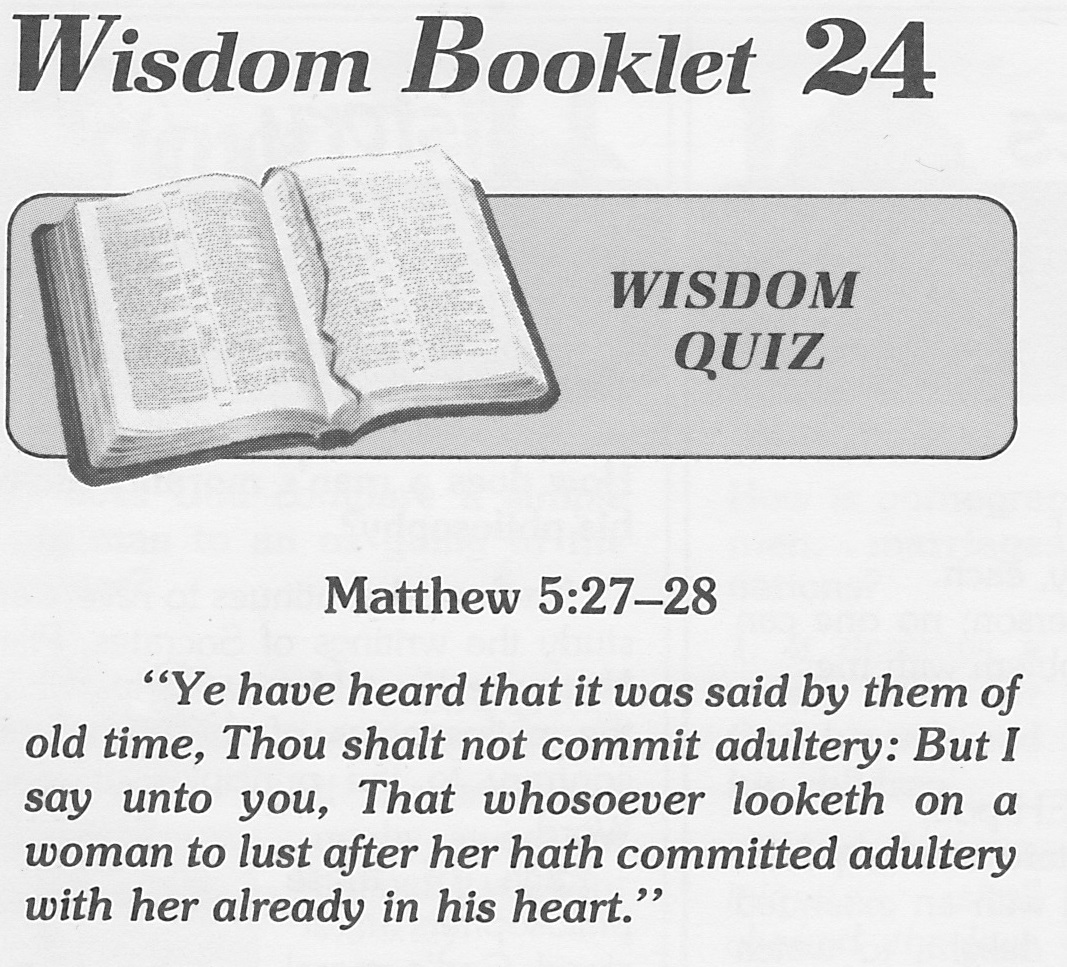

Much like Proverbs 7, this WB wanted to emphasize the physical dangers that can come from lusting. However, in typical Gothard fashion, the WB claimed that envisioning an act three times had the same effect on your body and soul as doing the action. Not only can imaginative lusting equal fornication, but the WB claims that lusting can actually make you a violent criminal. “As a result [of lusting], the glands and other bodily functions are activated, and the level of testosterone increases. Recent studies revealed a significant correlation between high testosterone levels and those who commit violent crimes.” I’m not here to say I know what was going on in Josh Duggar’s mind all those years ago, but I can tell you what I felt when I was taught these things as a teenager.
This teaching really messed me up. I assumed I was no better than a sex criminal because I had sexual thoughts. If I wanted to be with a girl, I was no better than a violent rapist. Sexual thoughts are natural for pubescent teens, and making them feel their life and soul are in literal danger by even thinking these thoughts fucks you up. How is it productive sex education to tell young people that they might as well commit the act if they are going to think about it three times?
Another glaring error in the text is the lack of any discussion of consent. In the chapter where we translated the original Greek and made all sorts of assumptions about God, called “How Does the Greek Confirm the Dangers of Partners’ Defiling Their Marriage By Lust?,” there are a number of terms defined, including: honorable, undefiled, fornicator, adulterer, judge, lewdness, lechery, lust, prolifigacy, abandonment, depravity, perversion, dissipation, dissolution, vice, and profanity (all terms defined in the context of marriage). But where is consent? Where is “marital rape” in this list of terms? Michelle Duggar is outspoken about her beliefs on a wife’s subservient role and need to be sexually available to her husband. ATI’s curriculum would have taught no different.


And just to make sure you are grasping the slippery slope put forth by the text – 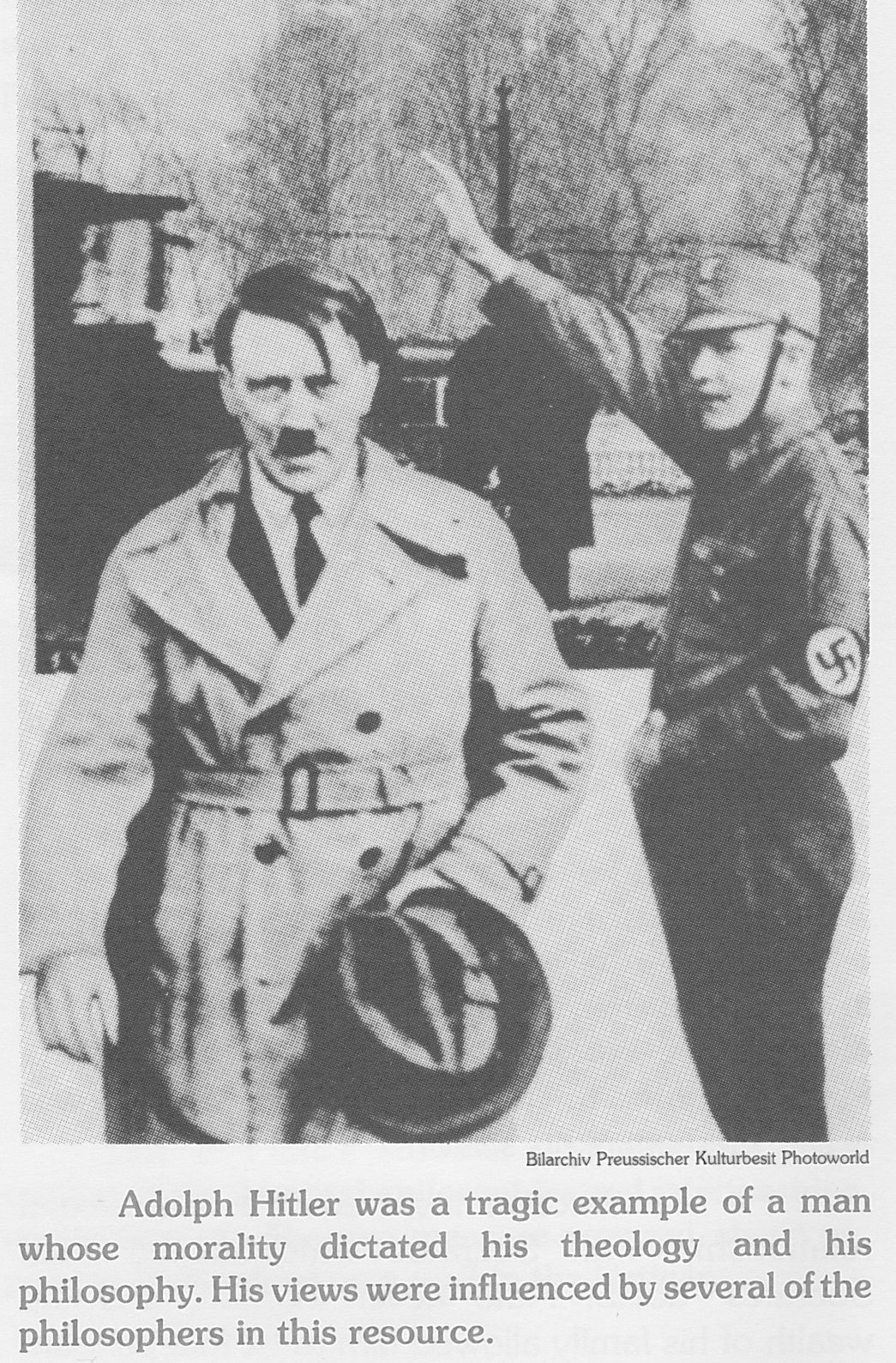 thinking about immorality three times is just as bad as doing it. Immorality is entirely defined by scripture verses and does not address things like consent or marital rape. The Wisdom Booklet’s “History Resource” profiled Hilter, Socrates, Plato, Aristotle, Karl Marx, and Nietzsche. You guessed it, each one of these people were characterized by how their immorality led them astray or ended up with genocide. Next in history, we learned about how immorality led to the collapse of the Maya, Incas, Ancient Greece, and the Roman Empire. In the Math section, we learned how to “visualize the consequences of lust” with visual graphs.
The “Science Resource” chapter further emphasized the role of women as active “trappers.” The chapter is entirely on different kinds of traps used animal trappers and it begins with “How Do Trappers Illustrate the Enticements Which Satan Uses to Appeal to our Lusts?” This language is borrowed directly from Proverbs 7, which says the seductress “perfumed [her] bed with myrrh, aloes, and cinnamon.” Throughout this volume, men are the presumed focus of the lust and women are the dangerous seducing forces that can lead to the collapse of civilizations.

As Wende discussed yesterday, many of Gothard’s teachings explain that victims of sexual abuse may be at fault for being abused. This image has been making the rounds through mainstream media. Its horribly offensive and damaging message are reiterated in other information like this that redirects responsibility for assault to “immodest” victims. Wisdom Book 24 covers this very topic on page 1130. “God’s Laws on Nakedness Begin with Modesty in the Home” begins the section:
The requirement for modesty among family members is given in Leviticus 18. Twenty-four times in this chapter, God’s people are commanded not to “uncover their nakedness” to those near of kin. Whether this refers to an incestuous relationship or nakedness alone, the fact is clear that indecency as well as immorality is forbidden.
Gothard’s insistence on a literal interpretation of Levitical law informs his sexual ethic. Deuteronomy 22:23-24 also advocates stoning raped women “because she cried not.”
If a damsel that is a virgin be betrothed unto an husband, and a man find her in the city, and lie with her; Then ye shall bring them both out unto the gate of that city, and ye shall stone them with stones that they die; the damsel, because she cried not, being in the city; and the man, because he hath humbled his neighbour’s wife: so thou shalt put away evil from among you
Right on queue, WB24 throws in a graphic image of s omeone being stoned “for incestuous relationships.” It’s no stretch to say that ATI and Gothard continually pushed the idea that victims were, at least partially, at fault for their abuse.
The closest WB24 gets to actual sex education is the medical section on venereal diseases. However, even this led to very basic confusion about how one can acquire a VD.
Venereal diseases are transmitted primarily by a corruption of God’s design for love. When man violates God’s design for marriage and follows his own lustful desires, he suffers grave consequences to his own health.
The section, and WB24, ends with an admonition to “identify the medical consequences of lust,” once again equating mental fantasies with physical consequences. The supposed impacts are VDs, and each sub-heading of the chapter is matched to the appropriate Bible verse.
The distortions of the idea of appropriate sexual relations and consent by WB24 are inexcusable. Men are characterized as dominated by fleeting lust, which are irresistibly stoked by the dress of girls or women. Even family members not excused from discussion by ATI, thus family members are subsumed into the “seductress” category. If a father molests his children, perhaps they are to blame. Such is the thinking proposed by Gothard. Looking back, it’s easy to see how this philosophy can lead to serial sexual abuse because men are relieved of much of their responsibility for their actions, while just lusting is as bad as actually doing the act. Leading many men to think they are beyond help, consumed by their desires. So instead of dealing with them, they repress them, and it only makes it more difficult to deal with what may have begun as natural sexual urges.
I can see just in my own life how this thinking impacted my sexual ethic and ideas of consent at a young age. It made me think that masturbating made me as perverse as sex criminals. I talked with a friend of mine and we would confess our “sins of lust”, and I saw us as struggling with similar burdens. His burden meant he took advantage of underage girls, mine was masturbating in my bed. ATI and Bill Gothard taught me those things were just as bad.
In my many conversations with ATI survivors, sexual abuse is too often a topic of discussion. One woman I talked with was abused as a child, and her family not only blamed her for it, but held exorcisms. They convinced her the demons inside her were “making” men abuse her. Agency and responsibility are replaced by pseudoscience and utterly incomprehensible logic about sex and sexual desire. Gothard used this system to groom his victims, to shame them into silence, to make them afraid to speak up. Why? Because they might have been responsible for the abuse.
Full copy of Wisdom Booklet #24:
Jim Bob Duggar and Bill Gothard at an ATI conference. Source: http://www.duggarfamily.com/.
By Wende Benner, HA Editorial Team
Content Warning: Spiritual Victim Blaming
The recent revelation that Josh Duggar admittedly molested five young girls as a teenager has taken over social media for the last two days. There has been a wide array of reactions and speculations. But, for many who were raised in the same quiverfull and patriarchal homeschool world, this has been a time of reliving their own traumas brought about by that dysfunctional culture. Those who lived it know all too well how the teachings and attitudes that are part of the Duggar family’s life affect families, victims, and even offenders.
The Duggar family’s involvement in Bill Gothard’s Advanced Training Institute (ATI) homeschool program adds complexities to this story which are unknown to the average person. The underlying principles and beliefs the Duggars have built their lives around actually help groom and shame victims, help hide grievous abuse, and even keep offenders from receiving needed help.
The lessons learned from birth in homes like the Duggar’s strip children of their voice and agency. Starting with blanket training babies and toddlers understand quickly that disappointing a parent leads to swift and painful consequences. As they grow, it becomes clear that simply doing what is expected is not enough. It must be done instantly and cheerfully. Children are even forbidden to seek out the logic behind the request, as kids are prone to do, because that is seen a making excuses or delaying obedience. The consequences of failing to meet these expectations are severe. Gothard and the Duggars believe that spankings are necessary to save a child from their inborn nature to do evil, and these are not just any spankings. The Duggars endorse the child abuse methods taught by the Pearls. Growing up in an environment of fear, where questions are seen as rebellious, eventually makes children unable to speak up for themselves. They become unable to trust their own judgment of what is right and wrong. These children are the perfect targets for abuse; they do not know how to advocate for themselves.
Also, from a young age the children are instructed in God’s plan for their gender. Strict gender roles are the foundation of a patriarchal system. Girls learn their role is to be wives, mothers, and keepers at home. Most people know that for the Duggar family this includes the expectation of having as many children as possible. Michelle Duggar is also outspoken about her beliefs on a wife’s subservient role and need to be sexually available to her husband. Children learn by watching their parents that men hold the power. This is detrimental for both boys and girls. Neither learns to have a healthy relationship without the power differential already in place.
All of this is accompanied by one of Bill Gothard’s 7 Basic Principles, Authority (these principles are the foundation to his Institute in Basic Life Principles seminar). This concept is taught with a diagram of umbrellas, which represent protection.
 Notice the man has authority over the entire household. The teaching claims that as long as the father has no holes in his umbrella-sin in his life, then nothing bad can happen to the rest of the family. However, any member of the family can step out from under the father’s protection if they sin. Then all manner of evil can happen to that person. Therefore, if something bad, like a sexual assault, happens to you and your father hasn’t done anything wrong, it must be your fault. Knowledge of this fact keeps many from even disclosing their abuse. They are aware that questions about sin in their life are likely to follow any revelation of their violation.
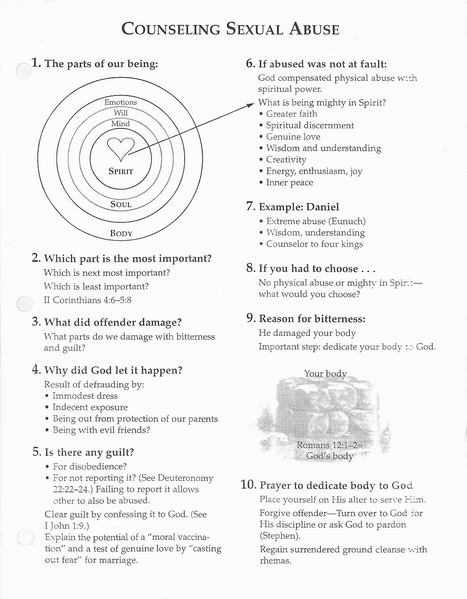
In Gothard’s world there are many other ways in which sexual abuse can be the victim’s fault. At the ATI student’s Counseling Seminar students are taught Gothard’s method of helping victims of sexual assault. The handout pictured here is part of the teaching material. 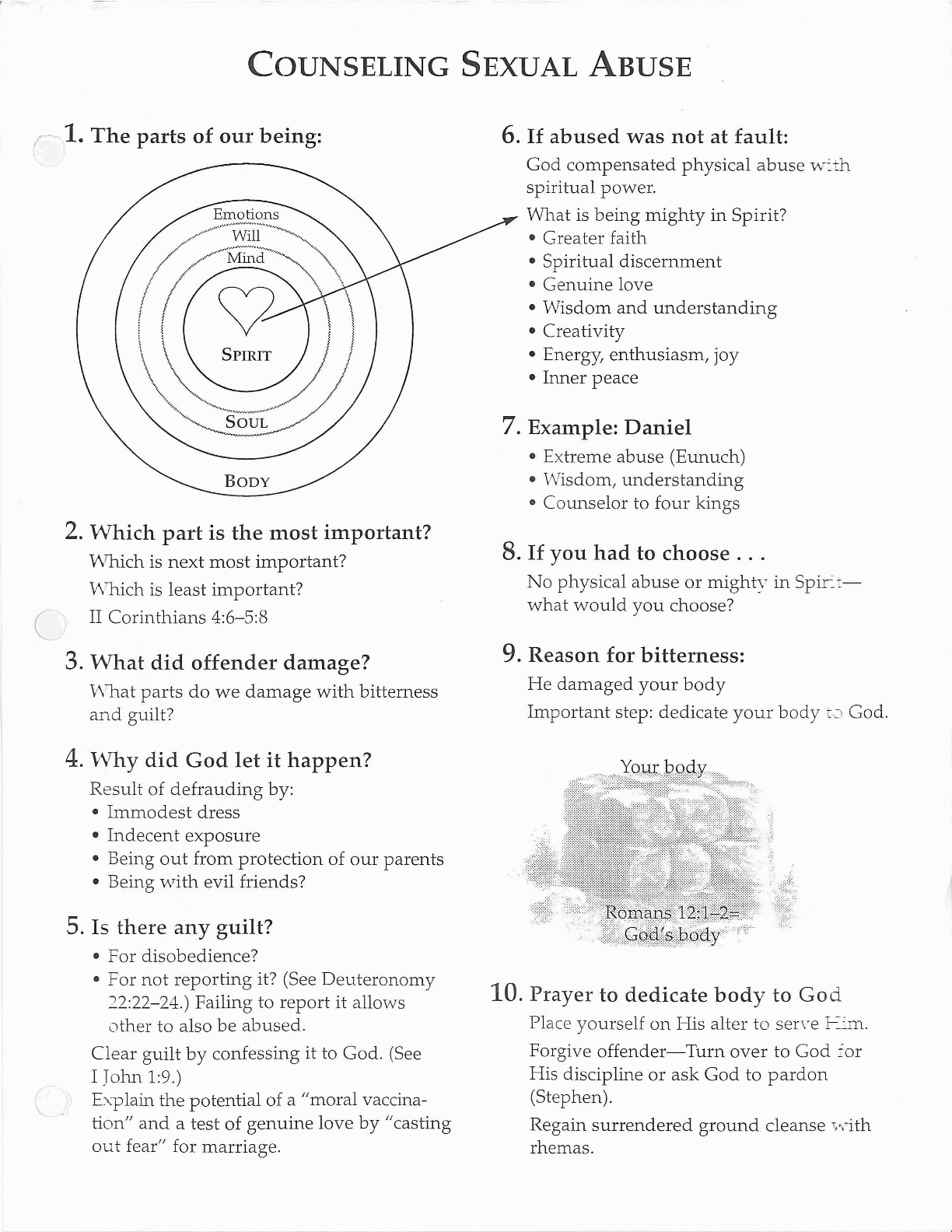 Students are taught to question the victim if they had any fault in the assault. The most obvious way they would be at fault is if they defrauded their attacker. Defraud is Gothard’s favorite word for any dress, actions, or manners that cause someone to lust. This teaching is further backed up by a handout on moral failure released in the 90s after an ATI boy was caught molesting his sisters.
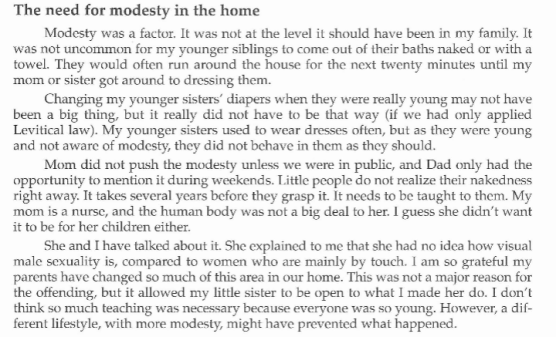 With this teaching a case can easily be made to blame the victim in some way. The feelings of arousal the offender felt must have been caused by some fault of the victim.
Defrauding is not the only way a victim can be at fault. Gothard also teaches that if a victim fails to “cry out” or be alert (one of the 49 required character traits everyone should have) enough to have anticipated the assault, then the victim bears responsibility. The story of Tamar, daughter of King David, is used to illustrate this point. It is easy to see how these teaching have set up a system where the victim bears the blame. Anyone raised with these beliefs is set up to struggle with a lifetime of shame and guilt while still bearing the scars of their abuse.
Before the victim has a chance to make sense of what has happened to them or deal with the chaos of emotions, they will also be reminded of another one of Gothard’s 7 Basic Principles-Suffering. This principle emphasizes the necessity of forgiveness and has dire warnings about the consequences of unforgiveness. If a victim fails to forgive, bitterness will take root in their heart, and bitterness causes pieces of your soul to be given to Satan. Satan will then build strongholds on this piece of your soul.
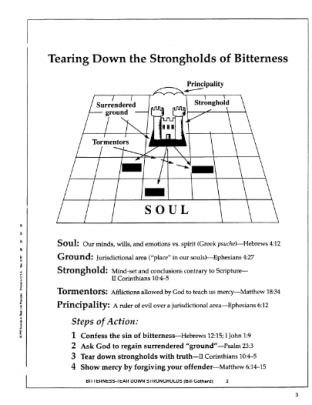 This teaching is also echoed in the handout from the Counseling Seminar. Victims are to be reminded that their soul has more value than their bodies, so forgiving the offender must be the priority. Any suffering caused by the assault is then brushed aside.
The Duggars assured the public Josh’s victims have received counseling. Yet, the type of counseling taught in their world does not promote healing. It teaches shame. How can these young people be expected to heal from such a violation with these principles guiding the process?
The Duggars also claim that Josh received counseling. It is reported this counseling was done over three months at an old VA hospital in Little Rock, AK. While there he did construction work. The old hospital was donated to Bill Gothard for use as a training center. The Integrity Construction Institute was at that time a part of this facility. Evidence that manual labor is an effective treatment for sex offenders is hard to come by. Construction work alone would be a disservice to someone seeking help.
It is important to note that any counseling received from someone associated with ATI would be driven by the belief that mental disorders do not exist. This approach to counseling would be ineffective to address the very nature and needs of a serial molester.
Any counsel Josh did receive would probably be similar to the counsel noted earlier, in the handout on moral failure from the 90s.
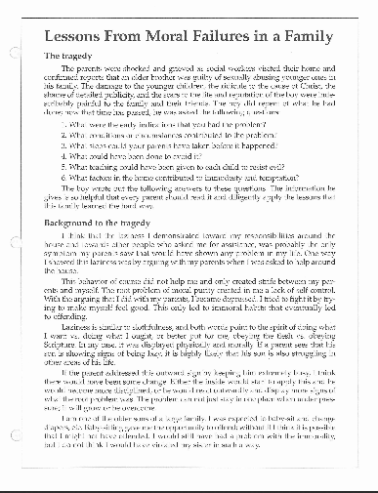 With close examination it becomes clear that the boy referenced learned a lesson on shifting blame. The victims were blamed for their lack of modesty. The parents were blamed for their lack of teaching. The offender learned to see how others have failed and have caused his problems. This approach would not bring any lasting change in someone needing serious help.
Josh Duggar’s situation as a teen was critical. Studies show that young offenders who are able to get the right kind of help reduce their probability of reoffending by more than 50%. Yet, as far as we can tell, that kind of help was not available to him. The ATI system of counseling not only fails the victims but the offenders as well.
This toxic system of beliefs originated with Bill Gothard, a man who had to resign from his own ministry last year when faced with dozens of allegations of sexual harassment and abuse. Even though Michelle and Jim Bob were aware of this, they still continued to use these teaching in their home and promote them using their fame. They also continued to speak and teach at the annual ATI family conferences. They have failed to see how their own system of belief has contributed to the devastation in their own family and in the ministry they promote.
The secrets the Duggar family hid all these years have tragic and devastating effects. The lives of five victims will be permanently altered. ATI only helped cover their abuse. ATI also was unable to provide the necessary counseling that Josh Duggar desperately needed at that time. The consequences of that failure could have changed to course of his life.
Bill Gothard’s cult creates a world in which abuse thrives in secret, and those that need help the most are silenced and shamed.
HA note: The following is reprinted with permission from Libby Anne’s blog Love Joy Feminism. It was originally published on Patheos on May 21, 2015.
When I first saw rumors circulating yesterday I didn’t pay any attention, because the accusations were vague and felt rehashed. Remember when the tabloids reported that Jessa Duggar had sex at the church immediately after her wedding, based on a word of an obviously satirical blogger who claimed to have been there? Yeah, I remember that too. There have been rumors circulating for years about Jim Bob blaming Josh for the loss of a political campaign, based on “sin in the camp,” so I thought it was probably just those rumors being rehashed in the way tabloids do.
But now there’s a police report. And now People Magazine has posted Josh’s confession. And now Josh has resigned from Family Research Council.
What happened exactly? Answering this question is sensitive because of the need to protect the identity Josh’s victims. According to TMZ, one of Josh’s victims has asked to have the unredacted police documents destroyed to protect her identity—and even the redacted police report gives more than enough information to guess at the victims’ identities. This is a problem.
I’ve gone back and forth about whether I should blog about this. This is not a gossip blog. I blog about weighty issues, and when I do blog about scandals like this I try to do so in a way that makes larger points, rather than just scoring cheap shots. That said, I’ve decided to go ahead and blog about this for several reasons. For one thing, I want you to have a reliable place to get good information (there’s still incorrect information circling out there). For another thing, I do think there are larger points to be made here. I’ll start by summarizing the police report.
See more at Libby Anne’s blog: Love, Joy, Feminism
HA note: The author’s name has been changed to ensure anonymity. “Sarai” is a pseudonym.
Though she can quote entire books of the bible and finds hidden pearls in every wisdom search, but does not know God’s enduring and unchanging love, it is worthless —
And though she knows her spiritual gift and receives rhemas and knows all 49 commands of Christ and spends hours working on her faith journals —
Though she knows 3/4 + 3/4 = 1 1/2 cups so that she can easily double recipes for her large family (this is where her education will end because there is no need for her to know more in order for her to care for her family one day. She has been told that an education could even tempt her in to the terrible sin of perusing a career! She knows she should be grateful to her parents for protecting her from the possibility of this temptation), but knows not the freely given love of God, all her knowledge is worthless —
And though she joyfully rises at 5 A.M., to make homemade bread and spends so many hours faithfully serving her family —
And though her body has been violated countless times by a sex offender, she joyfully bears and surrenders her personal rights, knowing it is part of a gods plan for her life… Or maybe it was not that bad to start with… Or maybe it was punishment for some unknown sin… Or maybe she did not cry out loud enough… And though she cheerfully receives her spankings and humbly bares her purple and blue stripes as a reminder of her parents love yet she feels no love…. Well it is sad. So very sad —
And though she never wears pants or listens to rock music and avoids all friendships with other foolish children (foolishness is bond in the heart of a child after all) and though she made a commitment to courtship and her father holds the “key to her heart” and though her cabbage patch doll has been burned and every sin confessed —
And though she stays under her umbrella, it does her no good. She does not know God’s love —
Love quietly obeys; love never questions authority; is not vain (let’s not forget Jezebel who was eaten by dog for her vanity. Let’s avoid purple nail polish and flashy jewelry and heavens forbid you ever wear a low cut shirt); Love summits personal rights and always forgives and forgets; love deliverers no bad reports; love bares all pain, sorrow and suffering knowing it is a gift from god to save her from her sinfulness… Or so her mama told her —
When she was a child she saw God through a Gothard tainted screen from inside her little box. She believed the lies. They where all she knew. She trusted a sin filled man named Gothard who promised a better way.
But now she is grown and has throw away the Gothard tainted screen.
She has come out of her little box and into the brightness of God’s unearned, unending, free, abiding, enduring love. She now places her faith in God alone knowing his grace, that is, his unmerited favor, is all sufficient.
Now abideth her faith, her hope and the Love of Christ in her life and the greatest of these is the love of Christ.

HA Note: The following is reprinted with permission from Kallie Culver’s blog Untold Stories. It was originally published on June 29, 2014 and has been slightly modified for HA.
Homeschooling and the Woman It Is Making…
Many people, upon finding out that I was homeschooled, inevitably ask if I will homeschool my children someday. Growing up, when asked that question, my answer was always yes. My plan was to grow up, go to Pensacola Christian College, get a degree in education, find a husband, get married, and home-school my own children…. or so I thought. As one might surmise, homeschooling for me brings with it very mixed emotions.
It stands as a double-edged sword, acting as both gift and weapon.
Homeschooling gave me the gift of years of wonderful childhood memories spent playing, laughing, swimming, and growing up surrounded by a loving family on a ranch in Texas. It gave me self-discipline, a love for reading and imagination, a love for writing, and an insatiable thirst for traveling. It was never just enough to read about things on a page. Each new book and place I learned about made me want to go and see and do. Because we were homeschooled and my parents loved traveling, I got to visit places like The Grand Canyon, Las Vegas, Yellowstone National Park, the Grand Tetons, Yosemite National Park, Mount Rushmore, ski slopes in Colorado, sandy beaches in Florida, the U.S.S. Alabama, The Vicksburg War Memorial, and so much more. These memories and the life we built as a family, I will forever cherish.
With light however, also comes shadows, and I have seen where even something meant to be good also became a weapon. As a child, it is hard to distinguish what is a healthy fear and what is not. Looking back, I can now see how, as a sensitive child, I gravitated towards fear and allowed it to consume me. Instead of giving me tools to understand my fears, and to reason through which ones were healthy and which were not, the homeschooling environment I was raised in only fueled the fire. Looking back, I see traces of fearful and defensive mindsets everywhere–in my class materials, in the community around me, at home, at church, in the books I read, in the magazines we read, in the conferences we attended, in the conversations I had with peers, etc.
For many parents I knew, whether it was the original reason or not, the decision to homeschool became more about protecting your children from the worldliness and dangers of public school than anything else. The fundamental homeschool networks we encountered and conservative political voices we were inundated with feverishly fed apocalyptic predictions. Whether it was the rapture, the end times, Y2K, fear of bombings in the wake of 9-11, fear of the social work system, fear of liberals, fear of homosexuals, fear of people of other races, fear of men, fear of rape, fear of secular college campuses, fear of psychology, fear of philosophy, fear of the darkness…
Evil was waiting for me everywhere I turned, and so I absorbed terror like a sponge.
Its web only grew stronger and spread further as my environment taught me to be afraid of anyone different, afraid of learning too much, afraid of wanting to much, and afraid of the unknown world outside my small comfort zone. In schooling it made me feel alone and forced to confine my love for learning to what I could teach myself, what was allowed, or what was better for others. The weapon only cut deeper as I believed the lies to discount myself and anyone else I felt unable to compare myself to.
Perhaps, however, its most fatal flaw was that it taught me to know all the answers to the questions of faith before I asked them.
I know that, for some, homeschooling was merely a means of education, and religion was more of a side note. However, for me, homeschooling and fundamental Christianity were inextricably intertwined. I cannot separate one from the other. Both were all I knew and everywhere I turned. I was given the questions anyone might use to doubt either and then given the answers, chapter, line, and verse with which to decry them. If I ever did doubt, I read scripture and prayed to take my thoughts captive unto Christ, for strengthened faith, and for forgiveness for my unbelief. As a result, Belief and Faith became a formula to master and a list to memorize, all the while blinding me to the reality that to actually have faith one must first understand its absence.
To this day the words Rachel Held Evans wrote in her recently re-released book Faith Unraveled haunt me with their accuracy:
“It was within this social context that I and an entire generation of young evangelicals constructed our Christian worldviews. You might say we were born ready with answers. We grew up with a fervent devotion to the inerrancy of the Bible and learned that whatever the question might be, an answer could be found within its pages. We knew what atheists and humanists and Buddhists believed before we actually met any atheists or humanists or Buddhists, and we knew how to effectively discredit their worldview before ever encountering them on our own. To experience the knowledge of Jesus Christ, we didn’t need to be born again; we simply needed to be born. Our parents, our teachers, and our favorite theologians took it from there, providing us with all the answers before we ever had time to really wrestle with the questions.”
(p. 78 in older version, originally titled Evolving in Monkey Town)
In the end, through pervasive fear ordained by Christianity, homeschooling taught me to limit my life to what was safe and comfortable, leaving me unprepared for the harsher realities of life and adulthood. For these reasons, I now know that I will not homeschool my children. I do not say that lightly or vindictively, and I know my experiences and struggles as a young adult have largely produced that decision. Homeschooling afforded me and my family time together, travel opportunities, and a personal love for learning that I will always be grateful for and never deny. However, when I evaluate my homeschooling experience, I have had to allow myself time to be very honest about not only the good, but also the bad.
For years, I often felt pressure to hide my feelings, or to only focus on the good. However, remembering only the good did nothing to address the lack I have struggled with, whether it was in self-confidence, self-discovery, my understanding of others, my education, my socialization skills, or my experience at large. Only by taking the time to truly grieve and to evaluate my experience honestly was I actually able to see beauty beyond the pain. It was easier to have a knee-jerk response of “all homeschooling is evil,” when all I could see and feel around me was my unacknowledged pain. Everything became a reminder of what I was trying to forget and trying to hide. So now I am learning that, by dragging the skeletons out of the closet into the light of day, not only can they be buried in peace, but the sunlight also seems to reveal some hidden treasure buried there, too.
Because of my childhood environment, I have done a lot of my growing backwards.
In today’s society, many often spend their single years finding themselves, finding their individual passions, and pursuing their own interests until they feel ready to enter a serious relationship commitment that entails building your life together and yes, sometimes even having to sacrifice for each other. For me, Rick and I began dating when I was a sophomore in college, and we were married in the summer between my junior and senior years. If I had been the typical college girl, I would have probably had my heart set on a four year university plan, and not interested in a wedding till at least after graduation, but given I was homeschooled, even my college path was far from normal. Instead it involved attending a community college, a private university, and a public university. It entailed taking preparatory classes and taking the ACT and SAT during my freshman year. It meant transferring twice, taking summer classes, and completing courses online in order to complete my degree in the midst of our move to Japan.
Even so, while my college path was abnormal, each year I grew more confident, more independent, and more aware of how much I still had to learn.
My husband has also been a huge support, as he has encouraged me to discover my own dreams alongside his. Instead of discovering ourselves separately as many do in their 20’s, we have been discovering not only how to make marriage work, but also how to grow and celebrate our own individuality at the same time. From the very beginning, he was never interested in me just adopting his dreams and losing myself behind housework, homemaking, having babies, and raising children, as was my first tendency to expect. While these are abilities I have, skills I utilize at times, and things I will pursue more someday in the future — he quickly challenged me to realize that I did not have to hide myself behind them as my only source of meaning and identity.
We have both found what works best for us is to work hard at mutuality in decisions and reciprocating support and interest in each other’s dreams versus mandating his or mine over the other. Yes, moving to Japan meant me giving up the chance for law school immediately following my graduation, and yes, it meant me having to forgo career opportunities at the time. Acknowledging that has been something we have worked to be very honest about in our communication and all the emotions it brought with it. Some days it has been very hard, and I would be lying if I didn’t admit to having felt sorry for myself at one point or another or felt torn on more than one occasion between his dreams and mine. Still, I have someone who acknowledges those feelings and appreciates the depth of my support, and that makes all the difference in the world. He has long believed in me more than I knew how to believe in myself, and it’s just one of the many reasons I love this man as much as I do. When I have felt my lowest and questioned my sanity the greatest in giving as much of myself as I have over the past six years in volunteering for ministries, nonprofit organizations, and our base community here in Japan—often given in addition to a full-time course load or due largely to the absence of gainful employment—he has been my greatest encouragement in reminding me of my value, my passions, my strengths, and what I bring to the table.
When I get fearful about the unknowns of the future, how I will make a career work with the constant moves, what jobs will even be available, how we will work kids into that plan, etc. — he is my anchor that brings me back to reality. With my long-ingrained anxious and fearful tendencies, I struggle with constantly worrying about what is over the horizon. This seasoned military brat I am married to, though, knows that it’s a recipe for misery to waste time worrying about what you don’t know. So, as he constantly reminds me, “you might as well sit back and focus on what matters today.” I am a slow learner, but a grateful one.
I know this may sound strange, but the greatest gift Japan has given me is the time to truly discover myself. In looking back, I would make the same choice again and I would not change these past three years abroad for the world. Living overseas has given me the opportunity to meet people from all kinds of backgrounds and cultures. It has pushed me to learn how to be a capable, independent woman on my own, given how often my husband was either deployed or traveling for work. It has taught me how much I love being an active participant and leader within my community. It has given me time to learn what I wanted to continue to study, and how to be creative in pursuing higher education. It has increased my passions and shown me that more is always possible. It has given me the courage to learn what I truly think and believe, and to find my voice.
It has been a safe haven, providing a space for my faith to fall apart and time for me to search through the rubble for what to rebuild it with.
It has taught me the gift and cost of true friendship that only the fires of distance reveal. Leaving family and friends behind and facing months at a time without your spouse forges friendships of a lifetime in this military community. I also found that some friendships from home bloomed in ways I never dreamed possible, thanks to inventions like Skype, Facetime, and iMessage, while others (to my surprise and grief) slipped away. So, while homeschooling did not give me the space to discover much about myself as an individual, its footprint in my life has pushed me to do just that.
When I was young, I thought I needed to be a mother and a wife before I needed to be a person. I thought I would marry some nice Christian boy who would think just like every other male I grew up knowing. I honestly thought that was all I was allowed to be and never dreamed my life would follow the path it has. Instead of becoming everything homeschooling taught me to be, I have found meaning, identity, and a life far richer beyond its boundaries.
Instead of a Christian college, I went to three secular colleges over the course of finishing my bachelor’s degree. Instead of a degree in Education, I got a degree in Political Science. Instead of a Protestant homeschooler from the country, I married a Catholic boy in the Air Force and have traveled all over the world. Instead of being a homeschooling mother at the young age of 25, I am instead working on my Master’s in Public Administration and a certification in Nonprofit Management, with only my cat and husband to care for. I am not sure yet exactly what my career path will look like, as being a military spouse means being extra creative, but I do know that I will find ways to utilize my education and talents, and to contribute to my community and the world at large.
Instead of being an active member in yet another church, being an active church leader, or being a minister’s wife (all of which seemed highly plausible in high-school) I have now gone through three plus years of my faith falling apart and my participation in church slowly decreasing. In the last year alone, I finally found the courage to be honest about my need to heal, and have spent the larger amount of my Sundays at home resting and feeling safe to have my own time of private reflection. Instead of being 100% certain of my faith and beliefs, I have learned to honestly question. With that, I have also found peace in accepting that I don’t have to know all the answers to hold on to a faith in a love and life source bigger than myself.
Christianity is what I am most familiar with, given my upbringing. It’s a familiar language, and one that I have learned to love for all its strengths and despite its weaknesses, both present and historical. However, in questioning it, I have also discovered respect and beauty in learning about other religions and faith outside my own. Instead of being close-minded, judgmental, and afraid of anyone different than me, I am now learning how embracing diversity and difference makes my life more interesting. Instead of limiting people based on gender or sexual orientation according to the doctrines I was taught but had never examined, I am now a feminist and an LGTB-Affirming Christian.
The ever-pervasive fear I lived with for so long is now a daily, sometimes hourly, sometimes minute-by-minute process to deprogram and unwind. I have learned to treasure activities like running and yoga, as they have taught me to hone my racing thoughts and to simply breathe.
In and out.
One step at a time.
One day at a time.
Until suddenly I look up and around, and I see the woman I am becoming:
A Woman with a voice.
A Woman with hope of a life, filled with passion and purpose, unchartered by fear.
HA Note: The following is reprinted with permission from Kallie Culver’s blog Untold Stories. It was originally published on June 20, 2014 and has been slightly modified for HA.
Homeschooling: The Fall Out
When we first started homeschooling, we utilized a mixture of curriculum, beginning with Christ Centered Curriculum, Christian Liberty, and Saxon Math. In fifth grade, we switched to a new curriculum called Accelerated Christian Education, or A.C.E. By this point, my parents had been researching and were unhappy with the academic quality of the material that we had been studying. Research in the Christian Homeschooling world led them to settle on the A Beka Video curriculum, one that I know many in our circles considered too rigorous and too expensive. My parents settled on doing Program 2. This program entailed your parents doing all the grading, setting any deadlines, determining the calendar, etc., whereas Program 1 entailed sending all reports, grades, quizzes, tests, etc., into Pensacola Christian Academy to be graded and recorded. With Program 1 you were considered a satellite student and thus allowed to travel to Pensacola to graduate at the end of high school if you wanted to participate. We continued to do Program 2, however, until I graduated six years later. Given that the number of children in our family continued to expand, A Beka gave my mom more freedom to focus on the babies and toddlers, and required less hands-on time spent with us older children in school, as we could watch the videos, do the required work, and come to her only when we needed help.
For me, homeschooling was something that I loved and hated. I was a very self- disciplined child and an avid reader, so I loved the challenge academics posed. I loved learning new things. I loved learning to write. I loved every time I aced a quiz or a test. Most of all, though, I loved reading. I can’t even remember when I couldn’t read. I was the kid who would check out 40 books at a time from the library. I would read in the bathtub, outside in a tree, and under my covers with a flashlight late into the night. Every chance I could possibly find, I was probably somewhere with my nose in a book. History was fascinating to me, and I quickly developed an insatiable love for the historical fiction genre in the library. Granted, my choices were greatly censored to safe children’s versions, or Christian versions, but I didn’t care. I read every single book I was allowed to, and then read them again. If, however, I had to list out what hurt me the most and impacted me negatively through homeschooling, it would be a lack of structure, a lack of personal boundaries, a lack of accountability, a lack of educational opportunity, and a very biased education.
Today I want to focus on the first three.
A Lack of Structure:
I saw how kids who went to school got to have a set schedule every day. They had teachers available whenever they needed help. They got to socialize with friends every day, play sports, and do extra-curricular activities that I could only dream about doing. So many people like to throw out that homeschool kids aren’t socialized. The problem was not that we weren’t socialized – if your basic meaning of the word entails being around children your own age. We had plenty of friends and people of all ages that we interacted with socially on a daily basis. My parents worked hard at that time to maintain a social life for us kids, which then meant monthly outings with other Homeschool families, where we would go bowling, roller-skating, on a picnic, or to a church hosted pot-luck.
Every few months they might arrange a mini-conference, or an art clinic that we would also participate in. We attended weekly piano, voice, ballet, and tap lessons throughout my junior high years, and continued with piano through high school. We also had an in-ground pool, so we had friends coming over to our house all the time. The problem was we only socialized with people exactly like us. The only diversity I ever really encountered growing up were the extended family members and few friends that I knew who went to public school, most of whom also grew up in a small town in Texas, going to church every week, and living the typical Friday Night Lights life. It just so happened that my bubble of a world was even smaller.
In family as large as ours, there is very little room for an “I,” since for things to work, individual needs are frequently sacrificed for what is best for the family. Sports were out of the question, as it meant a minimum of driving an hour one way for practices and two-hours one-way minimum for home games. Packing up the entire family for that kind of rigorous schedule for just one kid was not an option, much less the cost involved. As far as a schedule, given my father was a pastor and operated a Christian counseling ministry out of our home, the only word for describing my family’s lifestyle growing up is flexibility. My father was also a private investor, for additional family income as well as his own personal business pursuits. With a Father who worked from home and a stay-at-home mom there was no schedule to build our lives around. The schedule could change at a moment’s notice, whether it was a sudden family trip, a decision to go spend the day with some of our closest friends, a homeschool group event, a church event, or a trip to the nearest city – the schedule changed frequently.
In order to allow for this kind of lifestyle, we did school on a calendar year, year-round. As long as we finished out the video curriculum by the return deadline at the end of the year period, it didn’t matter as much how strict our schedule was. This also applied in the daily school schedule, since when you have all day to do it and you are at home anyways with that large of a family – interruptions were frequent and easily found. This often drove my list-loving, black/white, rule-follower personality insane. I would create schedules, chore charts, and lists for my mom, thinking that if I created the perfect one the family would all fall into a system where I could feel a sense of stability and control – but they kept failing again and again. This is where my mom would ironically point out how it was probably great training for life as a military spouse in the Air Force, because if it’s one thing you can’t do in the military life with a husband in the flying world, it’s plan too far ahead or plan on a predictable schedule.
Life has taught me there are two sides to every coin. Flexibility and finding the serenity to let go of controlling every detail of our lives is a challenging quality to develop in a healthy way. I am thankful that I learned from a young age to embrace change quickly, even if I didn’t always like it. However, for a child growing up in that atmosphere, I also learned too easily how to sacrifice my own feelings and needs for the greater good, believing that was the only option.
A Lack of Boundaries:
When I talk about a lack of personal boundaries, homeschooling for me and many other kids I knew meant that an individual child’s needs often suffered or went completely unnoticed for the greater needs of the family. I never learned how to say no or to express an opinion without first validating it by either saying “I feel that God is leading me…” or pointing to someone else and attaching my need to theirs. Personal space in a house with that size of family was also a rare luxury. I didn’t even know what it meant to have healthy personal boundaries, or that it was ok to need and want personal space. I have learned the hard way that for a child to have a healthy development into adulthood, they need to begin learning how to establish and articulate their own likes, dislikes, personal preferences, and wishes at home. This means they have to be able to feel safe to express an opinion, draw a boundary line, or even say no. While it may seem best for a young child to be wholeheartedly compliant, never learning boundaries and never learning how to be an individual within the safe confines of a loving and healthy family environment translate into a lot of heartache later on.
In sharing this, it is not my intention to ever minimize the good that I experienced growing up, because I know that my story could be far different. My parents or siblings never abused me physically or sexually. I was a happy child for the most part, who loved my family, God, and life, and saw everything in life with an undeniable optimism. I have read story after story of others like me who endured far worse, and I would never want to portray my experiences as anything else than what they were. My trials and pain came more after I left the home. Those ingrained traits of selflessness, unquestioning submission, and my desperation to please and be liked—turned into seeds for some of my hardest lessons and greatest nightmares as an adult on my own.
Having little individual development as a young adult coupled with self-hatred, insecurity, and a belief that being a girl severely limited my role in society at large meant I left home with no clue as to who I was, what I wanted, how to say no, how to establish healthy boundaries, how to trust my own decision-making abilities, or how to value myself. I was powerless, having been taught to only be a submissive child and female completely dependent on men. I transferred that submission and unhealthy levels of co- dependency to mentors, to church leadership, and to men that would come into my life – never realizing that for years I would be a walking doormat and frozen at any sight of conflict.
Growing up with the belief that for me to want something on my own was wrong meant that (as a young girl) for years all I knew to do was to want what other girls wanted. When my older sister got a horse, I wanted one, too. When my cousin started playing the violin, I wanted to learn, too. When someone did something different then me, lived differently then me, or pursued an interest different then me – it would only cause me to further buy into the lies of comparison. Who I was and what I wanted on my own was not only not allowed, but also never good enough. This is why I easily fell into the traps of first copying, and if that wasn’t allowed, then judging and mocking. It was easier to criticize and set myself up as better than others than to deal with the ache of wanting to know why I couldn’t be like them.
My parents and I have discussed this at length. I know that, as a parent, it would be hard to realize the messages your children are internalizing, especially when they don’t communicate them to you. I know now that the community and the spiritual teachings we fed on at that time played a large role in making me believe I had no right to voice what I was internalizing. I am sure it also played a role in why my parents never thought to question if I was hiding my true feelings. The entire family structure was often a subject of sermons and teachings, and many of these teachings centered around what proper familial roles entailed. It meant a strict patriarchal and complementarian view of marriage, where the man is the leader of the home and all decisions defer to his wishes and judgment. So, as a daughter, I was raised in an environment that taught me that my wishes were secondary. They were to be subordinate to my parent’s wishes, as it was our role to honor and obey our parents unquestioningly. They were secondary because I was female, and daughters and wives did not question what the father or male leader in their life wanted. They were secondary because I believed there was no time or room for individual wishes with a family so large. Lastly, they were secondary because, as a Christian, personal wishes were highly subject to being classified as selfish and self-serving.
In effect, a message that was perhaps at one time or in certain situations begun on some level as basic consideration for others – I internalized as a far more violating message:
Your opinions do not matter.
Your wishes are selfish and wrong.
You are a girl and thus your voice doesn’t count.
In believing these, I began to try to kill my desires and dreams by telling myself things like:
Your love for school and academic achievement is a source of pride, so not getting to pursue education further is the cross you must bear.
You would probably love your friends and activities too much at school, and thus become selfish and too easily influenced by peer pressure to sin – so not getting what you want is God protecting you.
Your family needs you too much at home, so for you to want to leave them and to secretly wish for things like graduation or a prom is selfish, worldly, and wrong.
So the struggle to hide only grew stronger. The web of comparison, lies, and self-hatred spread everywhere. The harmful reality of these messages, doctrine, and beliefs hung my family out to dry a few years later when my sister’s marriage was destroyed. As I have mentioned in previous posts, for my family, choosing to support her divorce meant losing a community and lifetime of friendships. We never realized how debilitating our doctrines and beliefs concerning women were until they left my sister at the mercy of protecting reputation and enduring abuse for the cause of Christ. The mere fact that those who claim to follow Christ can then twist and use Him as a reason to protect abuse in any situation makes my blood boil to this day.
It has been a journey for all of us to process through, grieve, recover, reexamine, change, and move on. It has now been almost eight years since our world fell apart, and I am so grateful that my siblings today are receiving a completely different childhood experience. I know that not every kid or family gets a second chance.
A Lack of Accountability:
As far as a lack of accountability, given how many children there were and how much my mother had to divide her focus between so many children – homeschooling placed a huge responsibility on me as a teenager to be self-disciplined, self-motivated, and studious. If I had wanted to skip subjects I could have. If I had wanted to look up answers I could have. I often graded my own quizzes and tests. By high school, I was largely on my own when it came to my education. Granted, I actually enjoyed school, and I was a Pharisee about following the rules, so the thought of trying to cheat was contemptible. Yet, I know other siblings of mine, and friends in similar situations, who found ways to work that system and missed foundational parts of their secondary education, if they got a high school-level of education at all. I know girls my age that were lucky enough to get to an eighth grade education level, as college was considered unnecessary and a waste of money for girls. I myself only completed pre-algebra, geometry, and a consumer business math elective in my math high-school classes, and so had to retake several preparatory math classes to be able to complete College Algebra once I got to college.
In high school I remember crying after every local high school graduation ceremony I attended because I knew I would never have one. I carried that pain with me through my college years, and the day I walked across a stage to receive my college diploma felt like someone had given me a pair of wings. College for me was a gift I will treasure forever. It sparked a flame, and I am still not done. Now I am in the midst of obtaining my Master’s Degree, and, knowing how much I love school, it probably isn’t the end.
Education is an investment that will never give a bad return. Through college I have found that I thrive in a classroom setting where there are clear expectations, accessible help, accountability, and competition. I wish I’d had that as a child because I know I would have done well.
As an adult, I have developed a love for running. It makes me feel powerful. It helps me de-stress and produces tangible results I can see in increased strength, discipline, and endurance. I have also found a community, inspiration, and well of encouragement in running with other women. Knowing how good it makes me feel has made me wish, on more than one occasion, that I could have discovered it sooner through something like track or cross-country, as a young girl, with other girls my own age.
I know that many parents today, mine included, find it hard to hear voices like mine point out how homeschooling failed us. For those parents who made this decision with the best of intentions and hearts full of love, I know it’s hard to see something you thought would be so good lead to your child’s confusion, heartache, and pain. However, what must be remembered is that it is equally as important for me, and others like me, to be honest about homeschooling’s failings–even if it means being painfully honest.
Consider how you respond.
Do you automatically reach for conversation stoppers? Consider how, if you respond defensively, refuse to listen, or respond with “but it wasn’t all bad” or some version of “don’t write it off altogether” it comes across dismissive and leaves little room for the conversation to go anywhere. Suddenly, the focus is again on the adult child taking care of your needs, your comfort level, your emotional stability, understanding your decisions, or protecting their relationship with you—instead of it being about honestly communicating what they have experienced and how it has affected them.
Love and healthy relationships grow with truth and vulnerability. It’s not easy to listen to where we have failed each other or how we see, interpret, and experience things differently. It takes courage.
Nathan Pyle, when writing about his relationship with his son and what he has learned about parenting, couldn’t have put it in a more beautiful way when he said,
“No parent gets it perfect. For all of our best intentions and best efforts, we will create wounds in our children. We have a better chance of avoiding paying taxes than we do at not creating a wound, or thirty, in our children. It is going to happen. I’m not beating myself up over this. Nor do I think I am overstating my impact as a parent. I’m just being honest about what is so. I need to tell the truth about this so that I can begin the internal work necessary to hear him tell me about his wounds. The key isn’t to try and become the kind of person who doesn’t create wounds, the key is trying to become the kind of person who helps heal wounds – even the ones we inflict.”









 Homeschoolers Anonymous