Letter to Our Parents

Photo by Darcy: http://www.darcysheartstirrings.blogspot.com

HA note: The following is reprinted with permission from Darcy’s blog Darcy’s Heart-Stirrings. It was originally published on Patheos on May 9, 2014.

Dear parents,

I’m in several online groups consisting of thousands of the homeschool alumni of my generation, the “Joshua Generation”, the products of the Christian homeschooling pioneers. And one major theme going on in our conversations right now is an overwhelming frustration that we cannot talk to our parents. We cannot be real with you.We want a relationship but don’t know how to get past the mental and emotional walls you have put up to protect yourself, the denial that your choices for us caused pain. Your disapproval of our choices and rejection of how you raised us is thick enough to be cut with a knife, and weighs very heavy on our shoulders. Can we just for a moment sit here together, walls and guards down, and be honest with each other? There’s so much we want to say to you, to help you understand. So much WE want to understand. So this is my attempt to give voice to so many, including myself.

Unless you’re never on the internet, I’m sure you know by now that your kids’ generation isn’t turning out how you’d hoped and planned. How you were assured we would if you only followed the rules. Dissatisfaction, pain, anger, and disillusionment are plastered all over the internet by your children and their cohorts. Story after story written by the adult alumni of the homeschool movement, honest and real and painful. Stories of dysfunction and inability to cope in the real world because of the choices you made for them. Stories of pain suffered, feelings of betrayal, and honest, raw emotions that are probably hard for you to see and hear. Words like “spiritual abuse” everywhere, directed at you and the people you trusted to teach your children how to be godly. “Survivor blogs” are popping up, being written by your adult offspring. That’s gotta hurt. We are walking away from so much that you held dear. We are raising our own kids so differently than you raised us. Even the leaders you followed have turned out to be frauds.

I’ve seen your reactions. Denial. Anger. Verbal lashings. Tears. Disbelief. Shunning. Excuses and justifications. Feelings of betrayal. Guilt. So much pain.

“How dare they!”

“We were just doing what we thought was best.”

“We only wanted to protect you.”

“We were trying to follow God the best way we knew how.”

“We gave you the best we could and you repay us by rejecting it all and plastering your discontent all over the internet?!”

“You are dishonoring us by focusing on the bad!”

“You’re just bitter and need to move on.”

“We loved you and this is how you repay us?”

“It wasn’t that bad.”

I understand the sheer amount of unexpected consequences and the reactions of your children must be overwhelming. You didn’t expect this. You did everything “right” and followed the people who had all the answers, who made promises about how your family would turn out if you did what they told you was “God’s will”. And when it didn’t work, those teachers and their followers blamed you and your “rebellious” children. “You must not have followed the rules correctly.” The broken relationships are like a knife in your heart.

Our rejection of your ways is not personal. It’s not a “reaction”, as we have been accused of ad nauseam. Many of us were taught to “stand alone”, to figure out what was right and then go do it regardless of what everyone else was doing.

Well….that’s what we’re doing.

We have weighed the teachings of our past and found them wanting. We have chosen different paths for our own families, much like you did for yours. We have taken what was good and thrown out what was not, some of us throwing out everything because, honestly, there wasn’t much good left to hold on to. Many of us are lost and dysfunctional, trying to put together pieces of a puzzle, trying to live in a world we were not prepared for because we were told we weren’t part of it. Many of you have taken this as ungratefulness toward what you did for us, but this is not about you. This is about us….our lives, our choices, our own children who we must now make choices for.

Can you please stop making this about our rejection of you and instead see it as our embracing of our own lives?

We are your children yet we are not children anymore, many of us older than you were when you set out to raise your family the way you saw fit. We want to have relationship with you, but not as your children. As your equals. As friends. As fellow human beings. Please stop treating us as rebellious children. Think back to when you chose differently than your parents and remember what that was like before you treat us with the same disdain and disappointment.

For those of you invalidating our stories, saying “it wasn’t that bad”, can I ask you to take a step back for a moment? To gain a broader perspective? Because what may have been only a small part of your life, was our ENTIRE lives. You were adults when you chose to attend that Basic Seminar, when you picked up your first courtship books, when you decided to promote the modesty culture, when you chose to become part of a patriarchal system, when you made the choice to spend your kids’ childhoods sheltered from the world in your own little reality and the culture you created. But us? We were born into it. We were raised our whole lives immersed in it.

We spent the most formative years of our cognitive and emotional development in an alternate religious culture ruled by fear, shame, legalism, and authoritarianism. We had no choice. We knew nothing else. We had no other experience and knowledge and discernment to ground us like you did, to give us perspective, to compare anything to.

For you, this was 10-20 years of your life. For us, it was our whole lives. It was all we knew. Our entire lives have been built upon a time period that was just a small part of your own life. So, yes, it was “that bad”. Our experiences were nothing like yours and you’ll have to see them through our eyes if you want to understand.

You had a different life before this, and a different one after. This homeschooling movement and the resulting culture is all we know. It made us who we are, for better or for worse. Our stories cannot be separated from it. We are the products of that movement. You were the facilitators who got to choose what affected you and what didn’t. We didn’t have the capacity as children to even begin to make that choice. What you only observed and instigated and perpetuated, we lived, felt, internalized, and became. 

You keep telling us we’re overreacting. You’re offended because we “don’t appreciate” what you did for us. But this is not about you. How we tell our stories and work through the consequences of your choices for us is not about you. It’s about us. Our lives. Our hearts, souls, minds, marriages, relationships, spiritual journeys, and futures. The things we write about how teachings like emotional purity, the umbrella of authority, modesty, and courtship affected us, how they hurt us, messed us up, how we’re working through the messages we received and internalize….these things are not about you. We aren’t telling our stories to “dishonor” you. We’re telling them because truth sets free and light banishes darkness. Because wounds fester in silence and heal in openness. We can love you, forgive you, and have a relationship with you and still tell our stories. We HAVE to tell them and tell them truthfully. Because sometimes it’s the only way to wade through the muck and the crap and the dysfunction that you inflicted on us and we are leaving behind.

Some of you have regrets. You look back and say “What were we thinking?!” You know you made mistakes, big ones, and you know it hurt us, hurt our relationship with you. Some of you are watching your children struggle to overcome the consequences of your choices for them and hurt for them and are angry at yourself. Can you please just say it? Be as open and honest as we are. You know what I don’t hear in the reactions of our parents that I listed above? “We are so sorry.” Why is that so difficult to say? I know it’s scary to think that the choices you made damaged your children. I’m a parent. I have the same fears that my choices will hurt my kids. But as a parent, I cannot imagine NOT telling them “I’m sorry” when they come to me and lay bare their souls, and explain how I’ve hurt them and how they’re healing. Yes, it hurts. But I guarantee that holding it inside and bearing that burden alone will hurt you and your children far more than being honest with them about your regret.

So many of us get it. We get that you were duped. That you were victims of spiritual abuse yourself, who went on to unwittingly inflict that abuse on your kids. Give us a chance to express that. To openly forgive and to honestly work through the anger and the pain with you. Many of us have forgiven you, but we cannot talk about it with you because you refuse to go there. It’s easier for you to just deny the past, our pain, and your part in it. Keep that up, and the denial and facade will eat out your soul til there’s nothing left, while we move on with our lives without you. We want to have a real relationship with you, to repair what was broken, but you are holding so tightly to your elephants in the room, and we have to stay on the surface and walk on eggshells around you, playing your game of pretending that everything was peachy, trying to live well in the present while denying the past. Meanwhile we are frustrated and wonder how much longer we can keep up your charade.

Please stop.

As scary as it is to face pain you caused, it’s much worse to pretend it never happened. So many of us are ready to start building a real relationship with you, to include you in this conversation. But it’s your move. I can’t promise it’ll be easy or good, that’ everything will turn out the way it is supposed to, but it will be worth it, for yourself and for your family. Honest and human is the only way to live.

I asked some of my friends…your children who are now grown…what they would say to their parents if they could. I’d like to end with their words. Listen to their hearts.

“Can you please stop focusing on the extremely few truly good things there were about the way you raised me and just admit, “I was wrong” with no conditions, qualifiers, buts or brakes? Can you please just admit that you were far too strict on standards which had nothing to do with my relationship with God and only hurt my relationships with others, without inserting qualifiers about how your extremism was justified because ‘there was so much evil in the world?”

“The scars from our past are not the fruit of bitterness, but part of the healing process for us. It would help if you acknowledged our feelings and apologized for the pain you caused us instead of passing the blame to us. We don’t demand any retribution for the hurt in the past, but for our relationship to be fully whole we need to be able to talk through what happened without being made out to be the bad guys.”

“If what you did was perfectly right, why did you change with my younger siblings? And if you were wrong… why don’t you acknowledge it??”

“You rejected how you were brought up, how is it wrong of me to do the same?”

“I know you’ve changed, I know you’re trying to love us as best you can. But can you stop pretending the past was perfect? Can you please just say ‘our choices hurt you and we’re sorry’? I’ve forgiven you. But I’m tired of playing your charade, walking on eggshells, pretending that I wasn’t hurt that I’m not still trying to wade through the mess of my past. Can we just talk about it, really, truly, honestly? You want me to ‘move on’ and I will, with or without you. I’d prefer with you. But we have to go back in order to go forward.”

“You disagree with some of my life choices, but I disagree with some of your life choices as well. That is just everyday life: there are very few people with whom you will ever truly agree 100%. We’re both mature adults and need to learn to respect one another’s choices and learn to have a relationship despite our differences.”

“I would like for my Mom to stop whitewashing the past. Instead I’d like her to acknowledge that she and my dad were controlling and manipulative, that they were abusive and authoritarian, that they didn’t trust me (instead treating me as guilty until proven innocent) and they demanded things from me (like my heart) that was not theirs to demand. A lot of what I’d like to hear them say could be summed up as “I’m sorry”. That would go a long, long way for me. But they can’t even say that, not without 60,000 disclaimers like “We were doing our best” and “We were following God”, or worse “YOU DID x, y, z”. If they could ever acknowledge that they did something wrong without attempting to share blame with me… I’d really, really like that.”

“There are parts of me I hide from you because even though you say you love me, I know they would break your heart and make you want to scream. I know because you’ve told me how you felt about my siblings. Since I can’t share these vital parts of myself without disappointing you, I feel like an adult relationship between us is impossible.”

“Please don’t write off my opposition to Christian patriarchy as ‘an ax to grind’ and attribute all my adult decisions to a reactionary attitude or desire to flip off people who haven’t been a part of my life for years. I make decisions based on what’s best for my mental health. And you have to admit, I’m a lot more balanced and cool-headed than you were at my age. Did you get involved in the fringe movements you did as a reaction against your parents? If you did, please consider that I’ve learned from your mistakes and am not repeating them.”

“Why do you act like I’ve turned my back on my upbringing and my faith, just because I don’t agree completely with you? I still love you very much, and it kills me to avoid so many topics with you because you get upset and sad if I’m not parroting you perfectly. You made completely different life choices from your parents and yet you still love and respect them. Why can’t you see that I’m in exactly the same place?”

“Even if you don’t see anything as wrong in the way you raised me or treated me, please recognize and acknowledge I had a very different experience than you perceive. Acknowledge that I was hurt, deeply, and don’t invalidate my childhood.”

“I feel like I don’t need any retribution for the pain of the past, but it would really help to have our feelings acknowledged. That would make a huge difference in moving forward.”

Please, let us have these difficult, but so necessary, conversations with you.

A Thank You Note

Screen Shot 2014-04-27 at 5.56.08 PM

HA note: The following is reprinted with permission from Faith Beauchemin’s blog Roses and Revolutionaries. It was originally published on February 26, 2014.

I’ve often talked about the culture I grew up, my parents’ various toxic teachings and attitudes, and you may get the impression that my childhood was all bad all the time.  That’s not even close to accurate.  Today I was thinking about the things I have to thank my parents for.  The ways that they laid the foundation for who I am today.  When they were raising me as best they could, they were seriously misguided about a lot of things.  But they were right about a lot of things too.  I just don’t think they ever imagined those things would lead to me being a progressive.  But, here we are.

None of these lessons were perfect, but today I am leaving aside the toxic aspects and focusing only on the good.

So, dear Mom and Dad, thank you.

Thank you for teaching me respect and compassion.  I don’t remember how you did it, but it was part of my life as long as I can remember.  We treat other people kindly.  We are careful with inanimate objects.  We are gentle with animals.  This, more than anything else, laid the foundation for me to grow into a healthy member of society.

I remember when I went vegetarian, you never said one word of objection, you just asked me to suggest some meals for our menu every week.  I remember long before that when a young neighbor purposely tore some leaves off the maple tree I’d planted from seed.  I was so upset I cried, partly for the poor tree and partly for a little boy who could be so mean as to hurt a tree for no reason.  That sense of compassion for every inhabitant of earth is your greatest legacy to me, Mom and Dad, and I thank you.

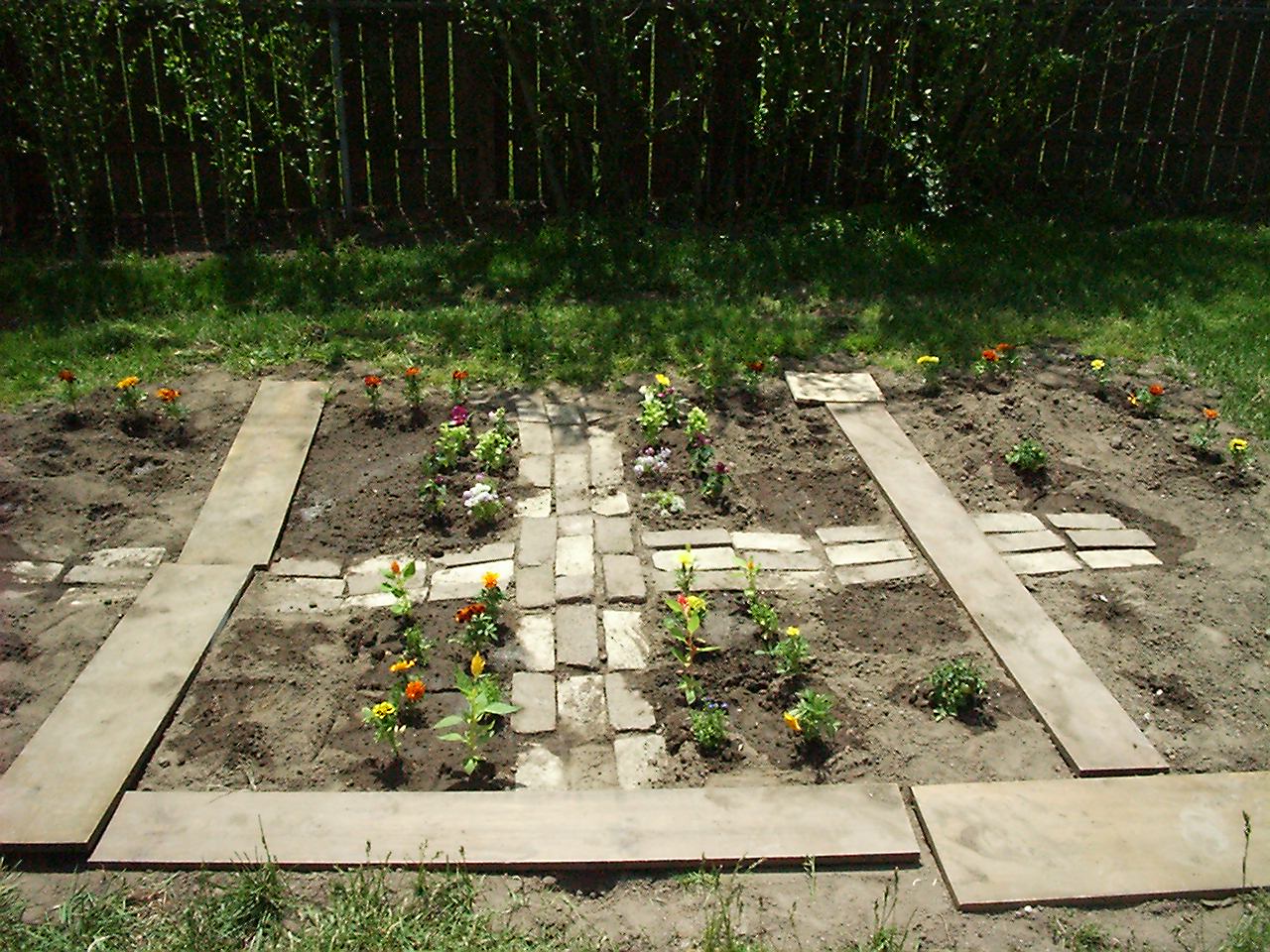
The beginnings of our garden one year when we tried “square foot gardening”

Thank you for teaching me to care for the environment.  Thanks to you, Mom and Dad, the first question on my mind when I look at a new town to live in is, what things can I recycle here? Because you were recycling long before it was cool.  You recycled long before curbisde pickup, before we could recycle almost anything, back when you had to take the labels off the cans and jars, long before our town started instituting a rewards system based on recycling volume which now has every person on our street doing it . We have a picture of me at two or three years old, both feet on a soup can, squashing it down to take it to the recycling center.  Squashing cans and milk jugs was so much fun! So was feeding bottles into the bottle return at the grocery store.

We had a vegetable garden for most of my childhood, and taking care of those vegetables and the profusion of flowers around our home ensured that I perpetually had dirt under my nails and a working knowledge of plant life.  You told me about how air quality regulations significantly improved the sustainability of American manufacturing.  You took me to state and national parks.  Dad, you were the first person to ever tell me about biodiesel.

Speaking of that vegetable garden,, thank you also for teaching me a strong diy ethic.  It may have been because we always had a hard time making ends meet.  It may have been because of how craft-y you are, Mom.  Whatever the case, you taught me how to do all kinds of useful things.  I can cook any meal from scratch, a skill which has really helped ease my shift to veganism.  The beautiful quilt I have on my bed right now is one that you taught me how to make. You would sew us dresses from scratch, a level of commitment I just don’t have, but thanks to you I have modified more than a few thrift store finds.

Dad, every time I build a campfire I do it how you showed me.  I also know how to paint a wall, how to saw a board, and how to keep a lawn looking tidy, all because you taught me.

Thank you, Mom and Dad, for instilling in me a lifelong love of books and music. You kept more books on your nightstand than a lot of people have in their entire house.  We would go to the library every couple of weeks and return home with five or ten books each.  Mom, you read out loud to us kids at lunch time every day, and to the whole family on road trips.  That was a brilliant way of getting us kids to settle down in the car, by the way, because we couldn’t be fussy or get into fights when we were busy hanging on your every word. One time, you were reading Lord of the Rings to us and were within three chapters of finishing Return of the King.  So we all got in the car and took a spontaneous day trip up the thumb of Michigan just so we could finish the book.

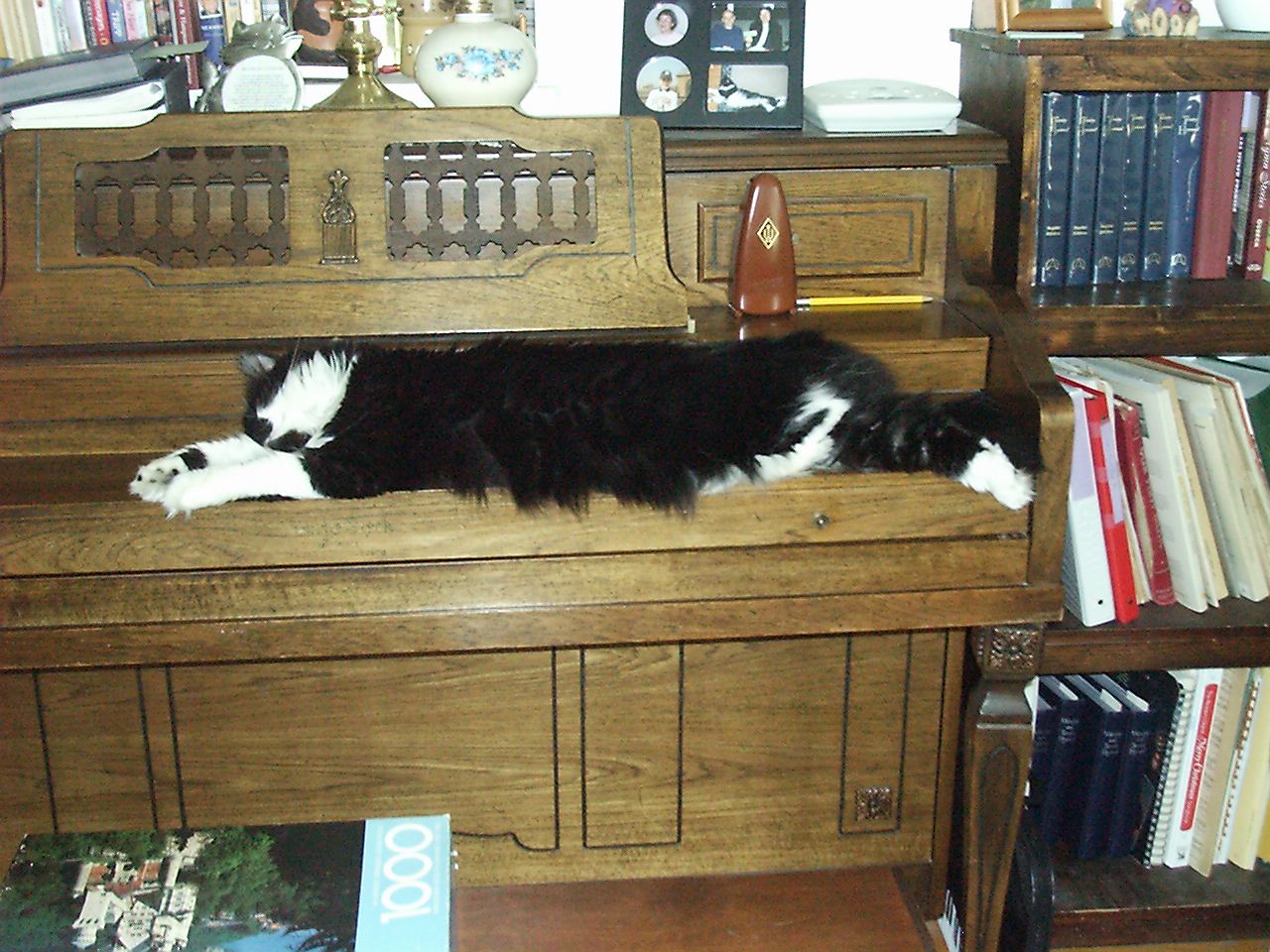
Pianos also make excellent cat beds.

Music was part of daily life.  Whether we were singing hymns during family bible time, or putting on marching band music and making up silly dances, it was a rare moment when there was no music to be heard.  I remember us kids sitting under the piano while you played it, Mom, because we wanted to get as close as possible to the sound.  I also remember you playing a piece called “Midnight Fire Alarm” over and over while we pantomimed rescuing everyone and everything from a fire.  Or we would all be in the living room, playing with the couch cushions (which made an excellent fort), or coloring (because you always encouraged our creative endeavors too), with a tape or a record playing in the background.  Later on, you didn’t really like our teenage music choices, but you would have never told us to stop listening.

Thank you, Mom and Dad, for constantly modeling generosity and hospitality. You never had much money but you were always willing to share.  You would often invite people to come home with us from church for Sunday dinner.  Our home was always open to friends passing through, and since we lived near the Detroit airport, that happened quite a lot.

I know you always had a lot to deal with.  Raising three children on one small salary, several recurring health problems, and later on, Dad losing his job altogether.  But it was never a question that we would give whatever we could to those in need. We would always donate used clothes, books, and toys.  Mom, you coordinated the women at church to bring meals to people who were sick, having surgery, experienced the death of a family member, or had a baby.  Whenever there was an opportunity to help anybody, we would show up.  Mom, you have spearheaded a wonderful effort to make beautiful quilts for newly married couples and to make baby blankets and quilts to give to new mothers and to donate to women’s shelters.  Even now that you have a full time job, you can still be found making meals for others and endlessly sewing or quilting for those in need.

I haven’t stayed true to the doctrine you taught me but in a more important way, I strive to live up to all the important values you modeled and instilled in me.  So for these things, I am grateful to you every single day.

Reaching the Other Side: Deanna Stollar’s Thoughts

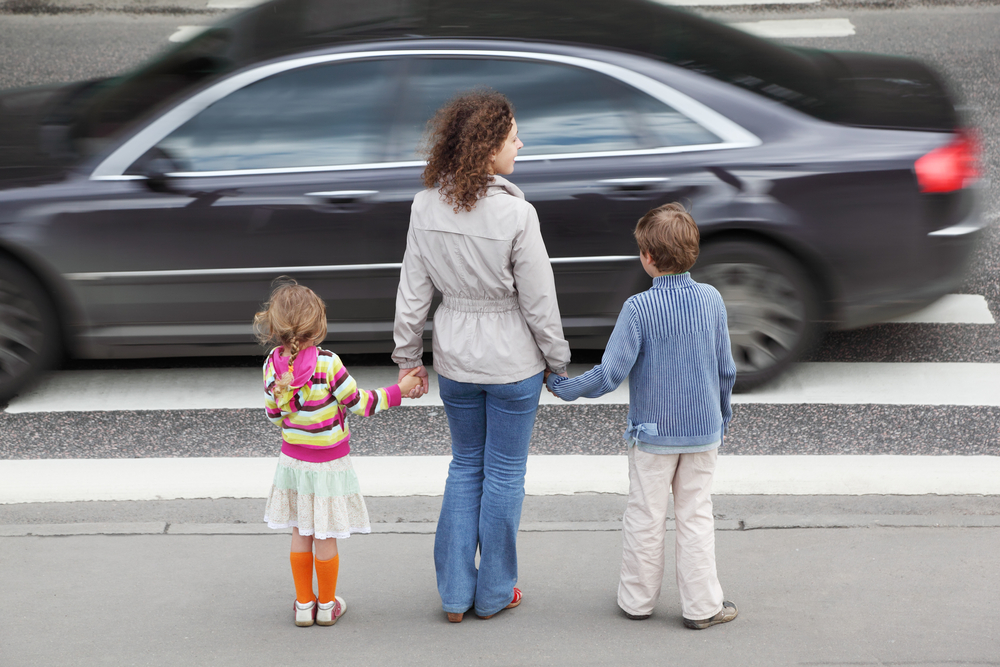
mother-child-crossing-road

Deanna Stollar lives in Springfield, Oregon and is a former homeschooling mother of four children (including HA’s R.L. Stollar) and grandmother of two grandchildren. In the 1990’s she co-founded the San Jose, California homeschool support group SELAH (Students Educated Lovingly At Home) as well as San Jose homeschool debate club, CLASH. Deanna has written two debate textbooks for homeschool debate families, It Takes a Parent and Coaching Policy Debate. Along with her husband Terry, Deanna has spoken at numerous homeschool conventions, on topics ranging from “Creating Good Writers” to “Raising False Expectations.” In her spare time she loves to write; her work has been featured in a number of publications, most recently in A Cup of Comfort for Horse Lovers and A Cup of Comfort for New Mothers.

*****

Today at the library I watched as a mother told her kids that they needed to leave.

“Time to go home,” the Mom said. “That computer is gross. Someone else’s eyelash is on it – ugh. We don’t want to use a computer that has something like that on it.”

Her son looked dismayed, “But mom, I was in the middle of my report.”

“It doesn’t matter,” she said, a military determination in her eyes.

His brown hair, shoulder length in a blunt cut, he looked about twelve years old. His younger sister stood next to him. She didn’t argue with her mother, seemingly resigned to the fact they must leave — not willing to question her.

*****

We all know how ridiculous we homeschooling parents can be at times, but I shudder when realizing how dark and cruel some homes can be where instead safety and love should exist.  It sometimes overwhelms me to think of the kind of education taking place in such homes, and often I don’t want to even read about them.

As a now retired homeschooling mom of twenty-six years, I certainly made my fair share of mistakes both as a parent and educator.

Seeing this mom, however, struck a chord in me I have not felt in a while. It sat with me for days. I kept seeing the young boy’s disappointed face and his sister’s disengaged one. From their body language, it was clear this scene of irrationality was an often occurrence for them — a mother who changed her mind on a whim, over the perceived health danger in something as simple as an eyelash imbedded in computer keys; why not use that eyelash as a springboard for an imaginary story? Did a fairy leave it there or a unicorn? Why run away in fear from it?

This scene in the library, their words, their faces, haunted me for nearly a week until it rose to the surface what was really bothering me about it: what was this woman teaching her kids everyday?

She was teaching them to be afraid: afraid of a stranger, of someone who had dirty eyelashes, of equipment shared by others. How was she equipping and preparing them for the future? She was teaching them to fear something that was not real.

She was teaching them to be afraid of the library, of others, of society, and perhaps even of learning itself.

This made me very sad. What made me even sadder was that the librarian, who also witnessed this scenario, along with me, did nothing to remedy the situation either. Maybe she concluded, as I had, why bother.  What could we have realistically accomplished by stepping into this mom’s life in that one moment? Maybe nothing, but maybe our interjections could have helped her children. They perhaps for the first time would have heard something different — a taste of freedom — and longed for it more. Our words might have stayed with them over time and been beneficial.

I will never know now what difference we might have made.

About twenty years ago, I watched on a street corner as another mother screamed at her young blue-eyed, curly blond girl of three. The mother’s tone was both abusive and her reasoning completely unrealistic. Her three-year old was expressing valid fears at crossing the street and the mother refused to console her. She only berated her child. I watched for a moment then went up to the mother. I asked her if there was anything I could do to help. At first her voice was curt, annoyed with my interference, but eventually both she and her daughter calmed down and crossed the street together. As they held hands, the three-year-old girl added a skip in her gait. As they reached the other side, the little girl turned around and waved at me.

Reflecting back on that moment I wish now that I had tried to help the mother in the library. I wished I had tried to help get them to the other side, instead of being stuck in ignorance and fear, but I was too afraid to try that day — bound up in fear myself — the fear that I could not help her.

This is part of why I am glad that Homeschoolers Anonymous exists and that passionate people work hard on a regular basis to help others reach the other side of difficult and often horrifying situations.

They are making a difference, and that is a good thing indeed.

Happy 2014 HA! May it be a blessed year for you.

Snake Oil Homeschooling: The False Promises of Fear and Control

Screen Shot 2013-11-21 at 11.05.43 AM

By R.L. Stollar, HA Community Coordinator

A friend of mine recently shared with me a post from Cindy Rollins, a homeschooling mother of 9 children who blogs at Ordo Amoris. The post is entitled “Homeschooling and the Fear of Man.” It is circumstantially about Doug Phillips’ resignation and the fallout that resignation caused within the Christian homeschool movement. But more than that, it is about an overwhelming human emotion everyone can relate to:

Fear.

Fear is a powerful force. When it becomes a motivating factor for our actions, it often leads to control. We try to control our environments — and kids’ environments — because we are afraid. We are afraid of what might happen if we do not control. We are terrified of “the world” and its many “influences” — sex, drugs, and rock n’ roll; secular humanism and evolutionism and all those other spectral -isms.

Having grown up in the Christian homeschool movement and ingested these messages all my life, I really appreciated Cindy’s perspective in her post. Cindy contextualizes Phillips’ resignation within a broader picture of homeschooling “gurus” who peddle their fares among the masses:

Over time gurus age and new ones take their places. Perhaps like viruses the new gurus are stronger than the old ones. They adapt and change to survive… These are men (and women) who make their way into your homes and…lure you because you are afraid. They lure you because you want to be in control of the future. They speak to your worst nightmares and offer you hope and while you are not looking they exchange the gospel for your own lousy efforts and theirs.

I am not a parent myself. But I still understand what she is saying. My parents fought against this trend, but not always successfully. I have seen many other homeschool parents get sucked into this trend and I have seen new parents — homeschool graduates themselves — get sucked in, too. This is the sort of trend that my older brother empathized with yet resisted yesterday: “Living a life without those extra rules can be scary.”

Good, well-meaning parents want the best for their children.

Good, well-meaning Christian parents want their children to thrive in good Christian ways. Rules or formulas give a sense of security. But that desire for security goes haywire when coupled with your worst nightmares, when those nightmares lead you into artificial and stagnant legalism with the false hope of perfect kids.

Furthermore, your worst nightmares — your kid ending up a Satanist or a socialist or 16 and pregnant and twerking — are preyed upon at nearly every homeschool convention and exacerbated in so many parenting books by homeschool “gurus.” People who promise that, if you only follow their system, your kids will be spared from heartache and pain and apostasy.

Cindy minces no words and calls those promises nothing less than “snake oil”:

Even now some homeschool vendors sell their products as if there were spiritual value in them. There are only two words for this type of sales: snake oil. I just keep asking myself why. Why are we so fragile? Why do we fall for this stuff? Why do these people have such power over our minds? The Bible tells us there is no fear in love. Love conquers a multitude of sins.  But we fear and we fall over and over again for false hope.

From my interactions with now-grandparents, older and wiser parents, and new parents, I am aware of how significant this struggle is. This is probably one of the most universal concerns parents have: wanting their kids to be ok, to be mature and independent, to be healthy. And if you are Christian, your desire that your kids remain Christians can override all these other concerns. It is Christianity or bust.

The “Christianity or bust” mentality leads to unfortunately-named articles like “How to Raise a Pagan Kid in a Christian Home.” This mentality leads to false either/or situations like, “Do you teach your kids ‘be good because the Bible tells you to’ or do you teach your kids that they will never be good without Christ’s offer of grace?”

This should be a neither/nor. 

Parents should want their kids to be loving, compassionate, humble, healthy truth-seekers.

Period. 

If Christianity is true, then what better sort of kids to have prepared to embrace it? And if Christianity isn’t true, well, hey — you still have loving, compassionate, humble, and healthy kids.

There is no product, no curriculum, no educational option that will guarantee the condition of your child’s soul. I have seen friends raised with every creationist text imaginable become evolutionists. I have seen friends raised with hardly a whiff of creationism become hardcore fundamentalists. There is no guaranteed outcome. Even that stay at home daughter you know, the one who seems perfect and happy — one day her parents will be dead and she will have to figure out life for herself. That is just how life works. The person that today seems to have his or her life together might in two decades be convicted of child abuse. The person who today is doing lines of cocaine in a strip club might in two decades be changing the world. Life happens. There is no guaranteed outcome. 

But I can tell you what is constant: kids wishing home was a safe place. Kids wishing their parents loved and accepted them.

That is what you have control over. You have control over whether you show your children love and acceptance, whether you model for them the love you see in Christ — the self-sacrifice, the unconditionality, the grace and forgiveness and patience. When you model that sort of love, you are seeing your children as human beings, as autonomous creatures rather than IKEA furniture. As Cindy says,

At no time should our goal be to make our children into artifacts. There is a difference between a soul and a product.

Love Misapplied: A Response to Chris Jeub

Screen Shot 2013-11-19 at 10.36.36 PM

HA note: The following is reprinted with permission from Libby Anne’s blog Love Joy Feminism. It was originally published on Patheos on November 9, 2013 as a response to Chris Jeub’s article for HA, “Stiff-Necked Legalism.” We extended to Chris the opportunity to write a follow-up post, but he decided to respond directly on Libby Anne’s original post. You can view his response here.

I grew up hearing about Chris Jeub.

He was a big name in NCFCA homeschool debate circles, and while I never met him I did use the evidence briefs he put out. The Jeubs had 16 kids and were deep into the patriarchal and controlling ideas at the heart of the most conservative strains of the Christian homeschooling movement. In fact, they kicked their daughter Alicia out of the family and shunned her completely when she became “rebellious.” However, Chris says that he and his family have since left that whole legalistic mess.

In fact, Chris is, I think, the only current Christian homeschooling leader who has written a post for Homeschoolers Anonymous.

All of the Jeubs’ book titles have the word “love” in them. Even their blog title has the word. Their move away from legalism involved embracing love. Then why, I have to ask myself, does their approach make me so very uncomfortable? Oh right! Because the problem I had with my parents was not that they didn’t love me. They did.

The problem I had with my parents was that they didn’t accept me.

I would feel a whole lot more comfortable if instead of Love in The House and Love Another Child, the Jeubs titled their books Acceptance in This House and Accept Another Child.

I just read Chris Jeub’s recent blog post Pattern of the Fallen. Here’s an excerpt:

I consider it tragic when people walk away from God. Sometimes they leave in a huff, sometimes they’ve intellectually wrestled, sometimes they dive into crazy sin and blow up their lives. Whatever the story, they are no longer walking with God, and that’s sad.

I’ve seen a pattern, though. This may give you hope. Wendy and I see this time and time again. Any separation between man and God can be attributed to a lack of love.

. . .

One is of a former student of mine who, on the surface, is angry with God. He and I have had rich conversations, but he’s struggling with some genuine relational hurdles that he finds bothersome. Here’s what I find encouraging: this young adult has a deep heart of compassion and love for people. He’s justifiably ticked at people who treat others wrong. His doubts about God stem from the lack of love from the so-called Christians in his life. Funny, I believe God is love (1 John 4:8), so though he is denying God’s love, he’s still running with God whether he believes it or not.. . .

There is a pattern here, don’t you see it? You probably see it in your family. For me, every single squabble or fight we have (sibling vs sibling, parent vs parent, parent vs child) can be attributed to a lack of love. Wendy and I have found that when we focus on love, solutions to the fights work their way out. A quick read and application of 1 Corinthians 13:4-7 solves a lot of problems in our household.

Remember: LOVE is the most excellent way (1 Corinthians 12:31). This reality slaps us up now and then. The trials, heartbreaks, disillusions, confusion, and turmoil in life can often be whittled down to a lack of love in our lives. Someone along the way failed to love, it is as simple as that.

No. Just, no.

Do you know, I would rather be accepted than loved.

Want to know why? Because my parents loved me until it hurt so much that I thought the inside of my chest was going to implode—and not in a good way. I have spent hours curled into a ball sobbing because of how much my parents loved me. I have been ripped apart, shredded, and mangled by their love. Through all of this, I honestly didn’t want my parents to love me. I just wanted them to accept me.

Before you say that love includes acceptance, I’ll point out that for Chris Jeub it clearly doesn’t. Chris very clearly can’t accept the former student he mentioned. Instead, he has to spent an entire paragraph saying that his former student is an atheist because he is angry at God, and that this former student is actually really following God or he wouldn’t have a heart to help those in pain. That is not acceptance. That is so not acceptance. Speaking from personal experience, that kind of thing can feel like a slap in the face to the person on the receiving side of it.

I grew up in a family that had a lot of love. I honestly don’t think I even for a moment questioned whether I was loved. My parents told us frequently that they loved us, and they were always physically affectionate toward us. Mom read us books, baked cookies with us, did crafts with us and sewed clothes for our dolls. Dad showed us how to plant a garden, built us playground equipment, read aloud to us on winter evenings, played board games with us, and took us swimming. My parents centered their lives around us, and we always felt incredibly loved.

And in the end, that is why it hurt so much.

When I was in college, I began to form my own beliefs and to disagree with my parents. Sex? Drugs? Alcohol? No. It was things like just how God went about creating the world, whether or not God required unmarried adult daughters to obey their fathers, and whether I needed my parents’ permission to go out with a guy. But while my parents had buckets of love, they had not a drop of acceptance. They didn’t stop loving me, and in many ways that’s what hurt so much. It hurt that these people who loved me so profoundly could stand in front of me in tears and tell me how much my actions and beliefs hurt them. It hurt so much my insides shriveled. And don’t say they didn’t actually love me. They did. If they hadn’t, that period wouldn’t have been nearly so painful.

Love is a very slippery thing.

Anyone can claim to have it, and people can claim it means anything they want.

For example, I am willing to bet that most abusive parents would claim that they are acting out of love for their children. And are you really going to argue that legalistic parents don’t love their children? Really? Indeed, I’ve heard it argued that the most loving thing a parent of a gay teen can do is to refuse to accept that child’s homosexuality. Telling that child that they are accepted, it is argued, only validates that child’s sin and keeps them from coming to wholeness in Jesus. I grew up hearing from religious leaders who told parents that if they truly loved their children, they must require them to submit to parental control and punish them with the rod when they are disobedient. In fact, I would go so far as to say that the religious leaders I grew up hearing from preyed on parents’ love for their children.

So when Chris Jeub goes on and on about how the solution to dysfunctional Christian homeschooling is love, I can’t help but say no. No, it most certainly is not. If I had experienced a lack of love, my life would have been a whole lot simpler and a whole lot less painful.

The problem isn’t a lack of love. The problem is a lack of acceptance.

The problem is love misapplied.

Raising Aria Rose: Christopher L. Stollar’s Thoughts

Even before our daughter was born, people were telling us how to raise her.

Christopher L. Stollar, his wife Natalie, and their daughter, Aria Rose.

Some said we should home school. Others advocated for public school. Then there were those who railed against day care. And vaccines. And infant formula.

To be fair, these people probably only wanted the best for our child, Aria Rose. But my wife and I started to see a dangerous pattern in this type of advice — it was given as Gospel truth. If we home schooled Aria, we weren’t letting her be a “light” in the public schools. If we sent her to public school, we were allowing her to be taught by “godless” teachers. And if my wife wanted to go back to work, we were just letting others “raise” our daughter.

Unfortunately, none of this advice has anything to do with the Gospel. While the Scripture gives general commands about parenting, it has nothing to say about specific forms of schooling, day care, vaccines or formula. And yet, as a former homeschooler, I have seen this type of thinking prevail in some religious subcultures of American Christianity — especially the modern homeschooling movement. Thankfully, I had good parents who taught me well, but look at this quote from the introduction to a K4 A Beka Book:

“The Christian home school is not a school merely for the sake of academics, but for the sake of fulfilling the church’s God-ordained role in carrying out the Christian education mandate … Just as we believe it would be wrong to place a student under the influence of godless teachers, so we believe it would be wrong to place him under the influence of godless, humanistic readers and teaching materials.”

This textbook uses Deuteronomy 6:7, Proverbs 22:6 and 2 Timothy 3:15-17 as proof. But if you look at the context of those passages, the authors are specifically referring to teaching the ancient Scriptures to children — not math or science:

  • Deuteronomy 6:7: You shall teach them diligently to your children, and shall talk of them when you sit in your house, and when you walk by the way, and when you lie down, and when you rise
  • Proverbs 22:6: Train up a child in the way he should go; even when he is old he will not depart from it
  • 2 Timothy 3:15-17: From childhood you have been acquainted with the sacred writings, which are able to make you wise for salvation through faith in Christ Jesus. All Scripture is breathed out by God and profitable for teaching, for reproof, for correction, and for training in righteousness, that the man of God may be complete, equipped for every good work

Of course, this is not the first time a religious subculture has twisted Scripture for its own gain. Jesus himself called out the Pharisees for their narrow-minded interpretations of the law in Matthew 23:

“The scribes and the Pharisees sit on Moses’ seat, so do and observe whatever they tell you, but not the works they do. For they preach, but do not practice. They tie up heavy burdens, hard to bear, and lay them on people’s shoulders, but they themselves are not willing to move them with their finger. They do all their deeds to be seen by others … Woe to you, scribes and Pharisees — hypocrites! For you tithe mint and dill and cumin, and have neglected the weightier matters of the law: justice and mercy and faithfulness.”

In the previous chapter, Jesus summarized the law in two simple commands:

“You shall love the Lord your God with all your heart and with all your soul and with all your mind. This is the great and first commandment. And a second is like it: You shall love your neighbor as yourself. On these two commandments depend all the Law and the Prophets.”

That’s the true Gospel.

Nothing more. Nothing less. There is no law that states:

  • Thou shalt home school thy children
  • Thou shalt not send thy child to day care
  • Thou shalt not vaccinate thy children
  • Thou shalt only breast feed
  • Thou shalt vote Republican
  • Thou shalt attend a Protestant church
  • Thou shalt not drink
  • Thou shalt not smoke
  • Thou shalt not have oral sex
  • And thou shalt especially not challenge these laws

The good news is, groups like Homeschoolers Anonymous have been recently challenging these laws — and the hypocrites who enforce them. The community coordinator for HA, my brother R. L. Stollar, recently wrote this in a powerful story called “The Stones You Cast, The Tables You Built”:

“If we threaten your bottom line, if we call your idols into question, if we melt your golden calves and dance like David in their shimmering puddles while we reclaim our lost youth, it’s on you whether you will listen or pick up stones … And we will keep overturning those tables. We will keep overturning the tables made from the stones you cast.”

Jesus himself overturned the tables of hypocrites in the temple so that we might experience freedom grounded in love — not man-made laws. Of course, living a life without those extra rules can be scary. It’s easier to define love by our lists. I’m guilty of that, especially when it comes to raising Aria.

But the beauty of the Gospel is that I don’t have to be a perfect father.

I can fail. I can mess up. And each time I do, my true Father in Heaven is waiting to welcome me back home.

Then Why Didn’t You Tell Us That, Mom?

HA note: The following is reprinted with permission from Libby Anne’s blog Love Joy Feminism. It was originally published on Patheos on September 1, 2013.

"My mother subscribed to Above Rubies and read each issue thoroughly."
“My mother subscribed to Above Rubies and read each issue thoroughly.”

“I want you to know that I never actually believed everything in those Above Rubies magazines,” my mom told me when I was visiting home a while back.

“Then why didn’t you tell us that, mom?” I asked. “I read every issue of that magazine cover to cover, and I always thought it was completely approved material.”

I don’t know why my mother made that admission to me when she did.

It was before the Mother Jones article about Kathryn Joyce’s new book on evangelical adoption, which sheds light on the Above Rubies/Liberian adoption scandal. My mother knows I identify as a feminist and that I’m critical of at least some aspects of the culture of the Christian homeschool movement, but that’s about it. Beyond that, we have a strict Don’t Ask Don’t Tell policy. Except, I suppose, for the Pearls child training methods—that we’ve discussed on more than one occasion. But the Pearls don’t run Above Rubies magazine. Nancy Campbell does.

Regardless of what prompted my mother’s admission, I think there is something incredibly important to be learned here.

Kate and I were talking a few months ago, and she told me she doesn’t think her parents realized quite how many extreme patriarchal/purity ideas she picked up and took to heart through Christian homeschooling culture. Her parents, she said, were always quick to condemn reading material, organizations, and leaders they believed promoted ungodly ideas or false doctrine. Because of this, she always assumed that materials that entered the house under the banner of Christianity and without condemnation were things they approved and endorsed.

My experience was very much the same.

My mother subscribed to Above Rubies and read each issue thoroughly. The ideas contained within the magazine aligned at least generally with beliefs I heard my mother espouse. When my parents disagreed with a religious leader, they were quick to say so. In fact, I grew up hearing James Dobson described as too wishy-washy and soft. Yet, I never heard my mother call Nancy Campbell or her magazine into question, so I assumed that the messages contained therein were approved, and that it was something I should read, take to heart, and learn from. And read, take to heart, and learn I did.

I’ve talked to many homeschool graduates—some I knew growing up, some I’ve met in person since, and others I’ve connected with over the internet or through facebook. This thing I’m talking about? This thing is important. Once homeschool parents enter the Christian homeschool subculture, if they don’t vocally and openly condemn, question, or contradict what that subculture teaches, their children will assume that the ideas and ideals of that subculture are approved—something they should listen to, take seriously, and imbibe.

I’ve talked to more than my fair share of homeschool graduates who grew up in this culture and took to heart things they later found out their parents never even realized they were learning.

Christian parents who choose to homeschool their children but do not ascribe to the ideals of the Christian homeschool subculture, especially things like Christian Patriarchy or Quiverfull, need to be on guard against this. It’s not uncommon for homeschool parents who happen to be Christian to find themselves in the same homeschool circles with Christian parents who homeschool out of religious conviction. And it’s also not uncommon for their children to find themselves in those circles whether their parents actively frequent them or not. In this kind of situation, parents may not realize the toxic ideologies their children taking in through osmosis from the Christian homeschooling culture around them.

In my mother’s case, it’s not that she disagreed entirely with the Above Rubies magazine. My mother was more mainstream than many, but she definitely ascribed to the outer circles of Christian Patriarchy and Quiverfull ideology. To be honest, I don’t actually know what parts of what Above Rubies she takes issue with—I was too surprised by her admission to think to ask.

There is one thing I was not too shocked to make sure to tell her, though:

“You need to tell the girls, mom,” I said. “They read Above Rubies just as I did at their age. You need to tell them you don’t agree with all of it, because if you don’t, they’ll think you do.”

When Mennonite Stories Are Your Only Literature: Sean-Allen Parfitt’s Story

Screen Shot 2013-08-23 at 2.22.40 PM

Sean-Allen Parfitt is a a gay software engineer, who dabbles in creative writing, music composition, and fashion design. He lives with his boyfriend Paul in Schenectady, NY. Follow Sean-Allen’s blog at Of Pen and Heart, or on Twitter: @AlDoug. The following post was originally published on Of Pen and Heart on August 9, 2013 and is reprinted with the author’s permission.

*****

HA note: The following is the first of a three-part series by Sean-Allen that we will be posting. This post explores the negative aspects of his homeschooling experiences; the other two posts will explore the positive aspects and will be included in next week’s positives series.

*****

Recently I wrote about how the church keeps us in, because we don’t know any better. This is a concept I call Control Through Ignorance (CTI). Today I’m going to approach it with more detail from a different perspective: homeschooling.

I am the eldest of 8 children, all who have been or are still being taught at home by my mother.

Our parents decided to teach me at home before I was in first grade, so I never went to public school. Everything I came in contact with was carefully selected for my growth and benefit. There are several areas I would like to address. These are places in my life where my access to outside influence was restricted or completely cut off.

The first area was social interaction. Just about the only friends I had were from our church, and that’s the only time I saw them. I never made any friends who had a radically different upbringing that I did.  I never met Muslims, Jews, Hindus, or atheists. I never went over to my friends’ houses for sleepovers. We were often reminded why certain things my friends did were wrong. We were very much kept in the shelter of our own home and my parent’s rules.

Because of this, we actually learned to believe that almost everyone in the world was wrong about something. We were the only ones who had it all right.

Why would we spend time with people who might influence us to back-slide into some sort of sin?

Another way in which we were tightly controlled was through the prohibition of any kind of entertainment except that which my parents approved. Basically, this meant that we were allowed to read Mennonite stories.

Period.

The end.

Here is a list of story elements which were particularly banned, with examples.

  • Animals that talk/wear clothes
    • Winnie the Pooh
    • The Little Red Hen
  • Any sort of magic
    • Narnia
    • Lord of the Rings
    • Harry Potter
    • Any Fairy Tails
  • Anything violent
    • Oliver Twist
  • Anything non-Christian
    • The Bobbsey Twins
    • Sherlock Holmes
    • Good Night Moon
"the only reading material we had were story books published or sold by the conservative Mennonite publishing house Rod and Staff."
“the only reading material we had were story books published or sold by the conservative Mennonite publishing house Rod and Staff.”

There were a very few exceptions to the last rule, such as Children of the New Forest. Generally, though, the only reading material we had were story books published or sold by the conservative Mennonite publishing house Rod and Staff. I generally enjoyed them, but there was a very religious/indoctrinating theme in many of them.

In the last few years I lived at home, I saw the Mennonite teachings from these books make a serious impact on my mother and brothers.

When we lived in England,we studied British history as part of our home school curriculum. However, the books we used were all published before 1980, because our parents didn’t want us to be influenced by modern thinking and interpretation of the facts of history. Thus, we learned very little about the last few decades of history.

We were not allowed to watch TV or movies, either. We watched a few Christian movies till about 2003, when our TV/VCR broke. If we were at a friend’s house, or at a party with the cousins, we were forbidden to stay in a room with the TV or a movie playing. We were not allowed to play video games, because they supposedly teach violence, besides wasting time. Any time on the computer was closely monitored. When I was 24 and still living at home, I had to have my computer set up on a table in the living area, so that I could not visit any site that was not appropriate for school, work, or little children.

As you can see, we were very much isolated from everything around us. I did occasionally wish I went to school, but mostly because I wanted to play video games. We thought we were right and nobody else, so we even judged other conservative families at church.

Ours was one of the most conservative and uptight families.

I am so glad that I’m out of that now, but I ache for my siblings. They are still stuck in that environment, in which they have no opportunity to learn about who I am, that I’m not an evil person! That’s the hardest thing about this. I didn’t know that I was OK. What if one of my siblings is gay or lesbian? What if one is transgender? What about my siblings who want to go to college, but can’t because Mom won’t let them?

And I can’t go back and show them these things.

Why?

Because I no longer fit into the category of acceptance. Thus I am excluded from my family.

And that really hurts.

*****

Part Two: Not Well-Rounded, But Excellent >

Learning To Leave My Son With Others

mom-and-child-holding-hands-1000x500

HA note: The following is reprinted with permission from Latebloomer’s blog Past Tense Present Progressive. It was originally published on August 15, 2013.

I am a chronic worrier, a bit of a pessimist, an over-preparer, and prone to occasional panic attacks.  And since becoming a mother a few years ago, all of these tendencies are now focused on my son and his soon-to-be baby brother.

Growing up, I heard so many times, in so many ways, how unsafe the world was.

As an adult, reflection has made me realize how the “safe” isolated homeschooling world my parents confined me in was actually incredibly damaging to me and many of my peers, while my adult experiences in the “dangerous” outside world have been very positive and affirming.  I have been able to overcome my deeply ingrained childhood perceptions for myself, and feel like a functioning and happy member of the big outside world.

However, I am unexpectedly having to go through the same process again, now that I am in the role of a mother.

All the progress I made for myself, I am having to do again, this time for my son.

Hours, days, weeks, and months of continuously caring for his little infant needs really affected me.  I had never felt so needed and so intensely protective before–my entire life was about him, his happiness, his well-being, and I couldn’t spare any attention for myself or my marriage.  After all, no one could take care of my little baby boy as well as my husband me–we knew him better than anyone and loved him more than anyone!

It didn’t help that I had a huge falling-out with my mom and my mother-in-law at around the same time that my son was born.  And it also didn’t help that we were living in a relatively new area with no long-term friends around.  No local family, no close established local friendships, plus drama with both of my son’s grandmas–that situation made it easy for me to continue for a long time in my hangup without ever acknowledging to myself that I was deathly afraid to leave my baby with another person besides my husband.

As my son got older, I saw other parents that I respected leave their babies with babysitters, or in daycare, or with family and friends, and I thought nothing of it.  It seemed like the right choice for them, and once they got through the initial adjustment, it seemed like their choice really benefited the whole family.  But when I tried to imagine myself in the same situation, I would be flooded by panic attacks and vivid imaginations of what might go wrong.

My old fears were coming back to haunt me–not for myself but for my son.

With a lot of encouragement from my husband and my friends, and a realization that I was going to either fade from existence or crack under the pressure, I left my son with someone I trust and went out on a quick lunch date with my husband.  I sobbed, I thought about my son constantly, and I was in a rush to get back to him.  It really wasn’t much of a date, more of a milestone, because for the first time I saw that my son could be fine without my husband and me–he didn’t cry at all when we left or while we were gone!

Since then, I’ve gotten more and more comfortable leaving my son with a small group of people I know and trust.  And he has helped a lot by never crying when we leave, not even once!  However, I’m now stuck on the next step–finding and using a babysitter.  Once my second little one arrives, it will be a far bigger imposition to ask for babysitting favors, and much harder to return the favors as well.

The time has come to find and learn to trust a babysitter.  

The thought absolutely terrifies me.  But I will eventually push through this fear as well, and enjoy the benefits it will offer to me (sanity!), my marriage (better communication and more affection!), and my kids (more social confidence and self-reliance!).

I want to always be there for my little boy and his soon-to-be baby brother; I don’t think that will never change.  But I can balance that desire with my other desire, to see my sons learn to navigate the world when I’m not around and gain confidence in themselves.

And I need to give them space, little by little, for that to happen.

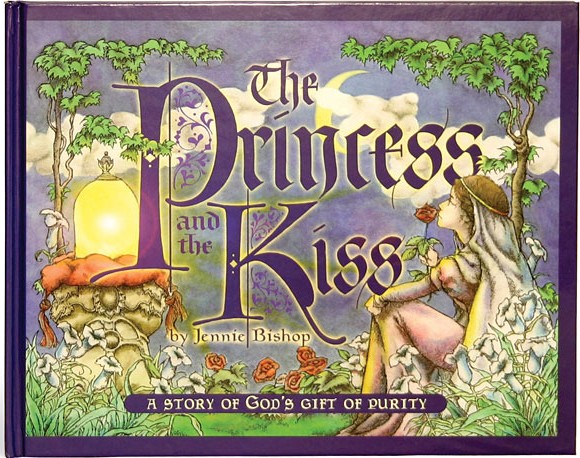
Crosspost: Sally’s First Kiss and The Princess and the Kiss

The-Princess-and-the-Kiss1-e1373847077493

HA note: The following is reprinted with permission from Libby Anne’s blog Love Joy Feminism. It was originally published on Patheos on July 24, 2013.

When I was a teen, I did a lot of babysitting for other homeschool families. One day I babysat two families worth of children while their moms went out for lunch—I think there were about ten kids total that I was watching. I was in the kitchen cleaning up from lunch and the kids were in the living room putting on a play wedding as kids sometimes do. The nine year old was presiding over the wedding of the two five year olds, a girl from the one family and a boy from the other.

All of a sudden I heard the older child say “now you’re supposed to kiss each other” and I freaked out and ran into the living room to break it up.

I wasn’t about to let those two five year olds kiss, thus forever depriving each of the chance to save that first kiss for the altar.

In the conservative Christian homeschooling community in which I grew up, a person’s first kiss was incredibly important. Even today, the products of this culture debate this question with great energy, arguing about whether forbidding the first kiss until the altar is a form of legalism or the preservation of a precious gift.

Now, I was taught that part of the reason that the first kiss should be saved for the alter was that it was a gateway into other things. First comes kissing, and then, who knows? Making out, humping, sex—once you open the door, it’s hard to close it. It would seem, then, that five year olds kissing at a play wedding wouldn’t fit this category, given that we’re not talking about a kiss that comes as a result of sexual tension and mutual attraction.

And yet.

The literature I read didn’t make a distinction between preschoolers kissing and teens kissing.

Instead, it simply talked about the importance of saving “your first kiss” for your wedding day. And of course, we were regaled with stories of virtuous couples who had done just that—didn’t we want to be like them? And then there is The Princess and the Kiss, a book marketed to children as young as four.

The book is about a king and queen who help their daughter save her most precious gift, her first kiss, for the prince she will marry. The princess’s first kiss lives in a glass orb, something like the rose in the Disney version of Beauty and the Beast (you can see it on the cover). This book has become very popular in Christian homeschooling circles and beyond, and there are hundreds of thousands in print. This is the sort of thing I was raised on (though this particular book wasn’t around when I was little, lots of kids are growing up on it now).

All of this came rushing back to mind recently when [my daughter] Sally kissed a little boy at her preschool—or, as I would have seen it in the past, when Sally “gave away her first kiss.”

We had gotten together with the family for a play date, and Sally and her little friend did the whole pretend wedding ceremony thing that little kids spontaneously do (I presided over a few in my day myself). At the end Sally grabbed the little boy and planted a kiss on his face. Surprised and bemused, I couldn’t help but recall my reaction to the pretend wedding staged by the five year olds I was babysitting so many years ago. This time, of course, my perception and reaction was different.

Sally didn’t lose anything when she kissed her little friend. Instead, she simply gained a common life experience—something she will look back at and laugh about when she’s grown.

It’s the people who impute a cute childish action with so much meaning who are creating the problem, not my preschooler.