#WhyILeft Fundamentalism, Part 2

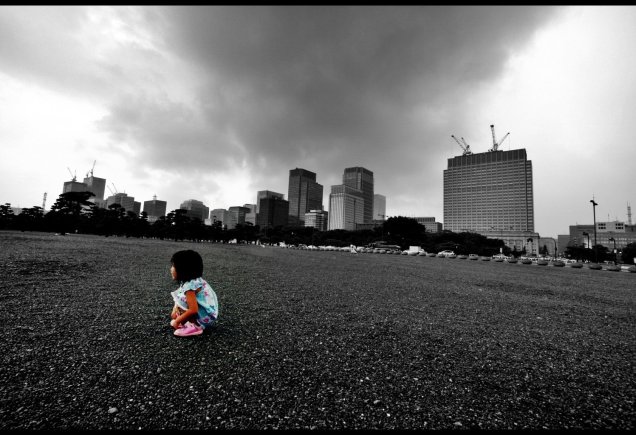
Source: invisigoth88, Deviant Art. Image links to source.

Eleanor Skelton blogs at eleanorskelton.com, is the news editor of the UCCS student newspaper, and is majoring in English and Chemistry. The following was originally published on Eleanor’s blog on January 10, 2015, and is reprinted with permission. 

Part One

They make me feel so empty
Their words, they cut like knives
You tell me to forgive them,
But I’m not sure I’ll survive… – TFK, In My Room

“The way you talk about English, you really don’t seem like a dentist to me. You talk about it like you really love it,” Cynthia B. said, shifting in her electric wheelchair.

Cynthia B. was my first friend outside the box. We met in a British literature survey class fall semester 2010.

“I get that the practice is your dad’s gift to you, but maybe there is another way to honor him. Maybe you could take the practice, keep it for a few years, then pass it on to safe hands. And do something with English.”

But I didn’t see how I could be my real self and not disappoint my parents. Since I couldn’t have both, I was sacrificing myself in an attempt to please my parents and protect my siblings.

But my creative soul was reawakening.

My dad said leisure activities were a waste of time since it wasn’t school or work for his office. He said rest was for the dead.

I taught myself to sightread music using a hymnal when a family friend gave us her old piano right after moving to Colorado Springs. Mom had wanted a piano ever since she first married. Dad said I didn’t have time for lessons, but later allowed my sister to learn from our pastor’s wife.

But if Mom or I sat down to play, my dad would call us away within minutes and give us a more useful task.

I hid in my room when I read or wrote poetry or waited until I was alone in the house to play a musical instrument.

Senior year of high school, I took A Beka Academy’s Jaffe Strings orchestra program for the performing arts requirement, using a family heirloom violin from the 1890s.

But Dad didn’t let me play in the orchestra group at church or take private lessons after graduation. He drove me to rehearsals, but had Mom call my mentor and say I couldn’t attend the actual performance. After two times, I gave up.

Later, I drove myself to college, so I paid for violin lessons every other week second semester of freshman year. But June 2010, a week before our group perfomance in church, Dad told me I couldn’t participate because it was on his birthday.

I called my teacher to back out. She was furious. I hung up, called my mom crying. Mom said I had to obey my dad.

I asked Jesus if I could die now. Breathing hurt.

Trapped at home alone, I dialed Focus on the Family’s number in a panic around 9 a.m., thinking they wouldn’t involve the outside government agencies I feared. I told the elderly lady who answered that I was suicidal and needed to speak to a counselor.

While I waited, I read forum threads online to distract myself and watched the Lifehouse Everything skit on YouTube and sobbed.

A counselor called back around 2 p.m. I told him my dad controlled me and didn’t let me have friends and I was miserable. He said I should join a college Bible study on campus or at church.

I told him Dad didn’t allow that and asked him how I could move out and honor my parents. He said I needed to keep living at home and seek out friends and a mate in Bible study groups. Then he prayed with me and hung up.

Dad relented, I was in the performance. But he said he didn’t see any value in doing special music at church.

I despaired. The one hotline I trusted to keep my anonymity didn’t understand. Maybe I was the problem, maybe I should accept my loneliness and deaden my desires.

This is how I stopped feeling, how I got emotional hypothermia.

But I didn’t stay alone.

In October 2009, first semester of college, another homeschooled friend I met in driving school invited me to CleanPlace, an online Christian writer’s forum for teens run by a handful of women writers in their 30s. They encouraged my poetry and feedbacked my stories. They didn’t dismiss creativity as a waste of time.

Most of the members were homeschooled, and several of them had been crushed and isolated like me. I found community. I wasn’t the only one stuck in the box.

I started making friends at college, too.

First I befriended my professors, since I was a straight A student and I was used to talking to adults, not my peers.

Then I tutored chemistry in the Science Center on campus, my first real job outside my family or my church.

I’d avoided the punk girl with long pink hair and industrial piercings who yelled FUCK at her Analytical Chemistry textbook, but then she befriended me. We debated Christianity and philosophy and traded graphic novels.

After sophomore year, I let myself read for fun again.

That summer and fall, after a discussion with one of my writing mentors, I read the Harry Potter books and later wrote a defense of them as being almost Christian fantasy.

I was happier than I’d been in years.

But my parents saw me changing. And they were afraid.

Part Three >

#WhyILeft Fundamentalism, Part 1

Source: UnusualYoung.com, Tumblr. Image links to source.

Eleanor Skelton blogs at eleanorskelton.com, is the news editor of the UCCS student newspaper, and is majoring in English and Chemistry. The following was originally published on Eleanor’s blog on January 9, 2015, and is reprinted with permission. 

I’ve been trying to erase myself
By trying to be someone else
They say there’s no hope for me
I guess this must be hell… – TFK, In My Room

“I have to go, my dad’s calling me again.” I head for the door of the campus library.

My friend rolls her wheelchair closer to me. “What’s wrong, honey?”

I fidget. I’d never told anyone. Not even a pastor or coworker.

Pause. Deep breath.

“I…I…My dad, sometimes, he gets really angry. He doesn’t hurt us, but if anyone in the family makes him mad, he takes it out on everybody.”

There. I’ve said it. My friend doesn’t shrink away. “Have you thought of talking to TESSA or Social Services?”

“But…won’t they take away my siblings?” I had trained myself to fear any outside interference, to protect my family and their reputation above all.

“No, honey. They don’t just come in and haul people off. They try to help.”

*****

My friend pointed out the tip of the iceberg. I knew my ship was sinking.

From my earliest memories, my family’s unity wobbled on tiptoe, depending on careful balancing. My mom taught us all how to survive.

Don’t do anything to make Daddy angry. He’s the head of the household. God wants us to respect him.

Daddy’s displeasures were arbitrary. He didn’t like any of us girls wearing green, and he said we couldn’t have friends outside the family, even at church.

Until I was nearly seven when my sister was born, I was an isolated only child.

The smoldering, bitter 9 year old who bruised herself to ease her guilt became the submissive 13 year old with separation anxiety too severe to attend the only slumber party that met parental approval.

Weekly panic attacks before Sunday morning church were the norm through adolescence. And our cross-country moves between Texas and Colorado led to attending churches with more and more rules, insulating us from the wider world.

By 14, I wanted to die daily (not in the religious sense) for an entire year. I clenched my arms around myself, blocking out the incessant voices telling me to jump.

My mom read us an HSLDA email newsletter winter 2004 about the homeschooled kid about my age who shot and killed his entire family and then himself. My insides went cold, because part of me is him.

I found some relief when my dad allowed Awanas during my freshman year of high school. I memorized the book of Ephesians with the youth group, and was often allowed phone conversations with Kathleen, my first close friend, for our regular accountability Bible Buddies sessions.

Halfway through 10th grade we moved again. I filled the long, lonely hours between A Beka Academy DVD lessons and homework with lengthy prayer journal entries addressed to Jesus and reading all the Gospels over and over. And twenty page handwritten letters to pen pals and church friends back in Texas.

I went back to cutting senior year of high school. Only blood could wash away sin, right? Jesus’ blood didn’t seem to cover it.

Graduation isn’t enough when you’re decaying from within. I dreaded college.

For a year, my dad had told me dentistry was the best and only valid occupation. He ignored my arguments, even though I devoted hours to researching salaries for other jobs and interviewing people with established careers for a required 12th grade “Vocation Project.”

He said I’d never make it as a high school English teacher or a translator. He ridiculed my desires with off-hand comments.

“You won’t be able to buy clothes like this if you’re just an English teacher.”

“You know, that’s the sort of car an English teacher would drive.”

I graduated, took a gap year to rest for resistance. I worked full-time as a receptionist at my dad’s office, so every waking hour was micromanaged. I gained 20 pounds because my dad didn’t like leftovers in the fridge.

I asked my parents to send to me to Bob Jones or Pensacola Christian College, because I wanted independence but feared the secular world. My dad said I had to study at least two years locally and commute.

When I applied to college, I declared my major in English literature, after a huge fight with my parents in July 2009 when I nearly left home.

Two years in, I’d added a minor in pre-dentistry and I had to be at the house whenever I wasn’t in class. I worked for my dad whenever I wasn’t studying.

And I wasn’t sure who I was anymore.

I hoped maybe I’d be free to make my own choices after dental school, after 6 more years of…well. Hell.

Part Two >

Things I Wish My Younger Self Knew: Sarah Morgan’s Thoughts

CC image courtesy of Flickr, Vincepal. Image links to source.

Pseudonym note: The author’s name has been changed to ensure anonymity. “Sarah Morgan” is a pseudonym.

I wish I had known they did not have to stay in my world.

I wish I had known that answers can be found for the very real problems I was begging god to fix.

I wish I had known that the threat of hell is illegitimate.

I wish I had known that, if I wanted, I could succeed at getting away: because, no, god was not on their side. I didn’t learn to drive because it was hell to try, with one of my parents in the passenger seat telling me my every wrong move. If I had known that driving is a ticket out, I could have pushed through that or gotten driver’s ed. I wish I had known that out is doable.

I wish I had known that it is okay to both earn and spend money on the things important to me, and that loving things simply because I love them is okay.

I wish I had known it is okay to be beautiful on purpose, and that putting effort into looking pretty does not make me stupid.

I wish I had known that strangers are some times much, much kinder than my family. (Strangers often don’t know differently than to threat you like a person. They also can have the capacity to act more objectively towards you, unlike the family friend whose vested interests include staying in your dad’s good graces by disbelieving you. It was another six years before I started to realize how it felt for someone who didn’t know my parents to hear my story.)

I wish I had known that sex has the potential of being good and non-painful, and can be had without jailing yourself in a submissive relationship for life or trampling on the Only One who truly defines true love. I wish I had some inkling that said One was made up by people to control me, and that this was unhealthy.

I wish I had known that it was okay for me to exist, and that being me was an appropriate goal to strive for, rather than a bad thing to extinguish.

I wish I had known that it was okay to find a boyfriend. I wish I had known to calculate my risks based on the things I could see and perceive, rather than factoring in the supernatural things I had been taught to fear. I wish I had known that my body was my own, and understood my options when it came to birth control and hair styles. I wish I had known I didn’t have to let my parents control me, that the terrible darkness I fought was not my fault, and that it was possible to find something different.

I wish I had known that college can be a ticket out. I wish I had known it was okay to plan a career based on a practical job combined with my passion, and the sooner the better.

I wish I had known that it was okay to love what I love, and hate what I hate, and that I don’t have to announce it to anyone or trust this information to anyone I don’t feel safe around. I wish I had known that I knew both far more and far less than I thought, and I could be wrong about significant things without my value as a human decreasing. I wish I had known that, as a girl, I could have as many options and was at least as smart as my brothers.

I wish I had known it was okay for me to have friends, and to pursue hobbies and interests and adventures; that time has the value we humans give it, and none of my activities were inherently a “waste of time” — except perhaps exerting effort whose sole return is the pleasure of people who didn’t even like or want to know me. I wish I had known that I deserved respect.

I wish I had known that what I grew up with was messed up; that I was not crazy, but my surroundings may have been. I wish I had known to see my anger and discomfort with my upbringing as a sign it was drastically skewed, and that there is zero merit in lying to say a parent is a better person than their behavior has shown them to be. I wish I had known that I had far more power in my own life, and far less in the broader sphere of my family, than I had the capacity to comprehend.

In summary:

I wish I had known that, if I wanted a hero, it was going to have to be me.

No one, human or divine, was coming to my rescue. I wish I had known that I was capable, that escape was morally okay, and that it was up to me.

40 Ways to Help Homeschool Kids in Bad Situations, Part One

Screen Shot 2014-06-17 at 4.16.05 PM

HA note: For this two-part post, we asked members of the Homeschoolers Anonymous community the following question: If you grew up in a bad or less-than-ideal family and/or homeschooling environment, what are things that people around you (other family, friends, community members, etc.) could have done to help you and make your life better, more tolerable, etc.? We edited and compiled everyone’s answers into a list of 40 suggestions and will present those suggestions in 2 sets of 20. Each set is a group post compiled from various people’s answers.

*****

1. Compliment the child to the parents in front of the child.

Even if the parents shoot down the compliment, it might be one of the kindest things the child has heard about themselves in years.

2. Let them overhear you offer to include them in your own family events/outings.

Even if the parents refuse, it might offer the child hope for the future and give them a self-esteem boost.

3. Give them opportunities, however small, to express their own feelings or thoughts.

Tell them it’s ok to have feelings and thoughts, especially if they’re super repressed. Ask them if they have dreams, and if they don’t know how to dream, try to show them what it means to think about a future. Tell them about cool occupations, about sports, about music, about dance. That might seem like torture, if it’s something their parents won’t allow them, but maybe it will give them something to hang onto and look for in the future. Find ways to rekindle their inner fire.

4. Believe women who say they’re being abused.

Believe women who say they’re being abused, and support them in leaving their husbands. Don’t tell them to pray more, submit more, anything more. Help them get out, and help them and their kids through the transition.

5. Call children’s services if you suspect abuse or neglect.

Always call; what you see is only the tip of the iceberg.

6. If they come over to your house for some reason, a meal for example, don’t let them/ask them to help with dishes.

Don’t let them/ask them to help with anything, including table washing or sweeping — or anything housework related. Chances are they have a ton of that at home, and they think it’s their duty in life. Give them ice cream or start them a movie, or talk to them happily as you wash their dish for them. It might be really confusing for them. But it will be good.

7. Encourage them to dream of careers.

Encourage them to dream of careers beyond gender role ideals by remarking on what they’re good at. They’ll remember it for years and years..

8. Encourage them to dream big.

My “adopted grandpa” was convinced that I would be chief justice of the supreme court one day. Now, since I didn’t go an ivy school that’s highly unlikely, but that was one of the few voices I heard other than my parents who actually took my goals seriously. In the broader homeschool community there was usually a, “That’s nice, she thinks she’s going to be something more than a stay at home mom,” subtext.

9. If you want to risk being entirely cut out of the child’s life, offer to lend parent-unapproved books and movies for cultural education.

Maybe give the cover reason of helping them understand more about the culture for witnessing to the “lost”. Then be careful not to shock them too much with your choice of material if they are not ready for it.

10. Attribute their successes and their great personality traits to them, and them alone.

None of this “your parents must have raised you right!” or “you must have great parents” or “[parents] did a good job on this one!” Let the kids know they deserve praise for their own accomplishments. They are not their parents’ puppets or pet dogs.

11. If a parent tells you they’re being harsh or strict with their children, don’t praise them for doing so.

Don’t praise them for doing so or encourage them to be even harsher or stricter. You don’t necessarily need to assume they’re wrong — not every parent is narcissistic like mine — but you should always keep in mind that the parent you’re talking to is a potential abuser.

12. Tell them that fun doesn’t have to be edifying.

Happiness is enough for its own sake. Harry Potter is awesome and will not lead you on the path to hell. Most people are pretty decent, even if they swear, do drugs, or talk about sex. You can befriend people who aren’t perfect. It’s okay not to be perfect — just being yourself is a form of perfection. Being human is the greatest gift we have. Kindness is the best guide for morality I’ve found. Watch Star Wars.

13. If there’s a way to communicate to home schooled kids that the outside world isn’t this awful place on the brink of collapse, do it!

Help them realize there is more than one way to live a happy, fulfilling life.

14. If you notice they don’t have a lot of friends, for the love of Pete, be a friend and help them make some! 

Suggest music similar to what they already like/listen to so they can listen to it at work or in their car and give it back to you without being in trouble. Offer books they can read while they are on their lunch or smoke breaks, or in Sunday school.

15. If they are stressed out about family, do your psychoanalyzing silently.

It is very likely they’re being gaslighted at home and otherwise mentally/emotionally abused. Process in your own head. If you suspect something, ask around how to appropriately intervene. Don’t embarrass yourself or them.

16. Let them know it’s never wrong to question.

Truth will stand up under scrutiny. Question down to the foundations, and when you get to a wall of assumptions or tenets or axioms you can’t get past, ask yourself why. Question your beliefs and question the reasons for your beliefs. Question authority. That’s not a statement of rebellion, it’s a search for truth. Truth will always prevail, and if/when your beliefs come out whole on the other side, you’ll be that much stronger in holding them, because the hard questions are behind you.

17. If you have your own kids, invite just the kids over.

Befriend the parents if you can and then invite the kids over often. When they are with you, don’t ask them to do any work, let them sit at the table while you talk about parenting gently, being happy your kids are growing and making their own decisions, how to write a transcript, when to apply to college. Tall about anything the kid needs to get to college and anything to crack the ideas about harsh parenting and gender roles and submission.

18. Tell the kids about other school experiences.

Even just seeing public schooled kids’ textbooks and homework in their car or laying around the house caused the beginnings of doubt for me. The program my mom used liked to say that homeschooled kids averaged 3 grade levels ahead of public school peers. Seeing homework revealed that wasn’t true. For me at least. Especially in math and sciences.

18. Check in on them regularly, personally or through your church.

We lived in three places where the churches we attended never checked on us. Like, we had one car and my dad had it all the time and no one once asked if we need help going to the doctor, grocery shopping, or if we wanted to have a play date or anything like that. A simple “Hey, do ya’ll have enough food to go on the table?” or “Would your kids like to come over and play?” would have been very nice.

19. Accept them.

Even if they are different, even if they seem a bit odd, shower them with acceptance. They need acceptance, not judgement.

20. Love them.

Listen to them like they matter because they might not get much of that. Simple little gestures like telling them it’s okay to be sad or saying ‘you can do it!’ ‘I believe in you’ or ‘I am proud of you’ can stick in their mind for years.

Part Two >

40 Ways to Help Homeschool Kids in Bad Situations, Part Two

Screen Shot 2014-06-17 at 4.16.05 PM

HA note: For this two-part post, we asked members of the Homeschoolers Anonymous community the following question: If you grew up in a bad or less-than-ideal family and/or homeschooling environment, what are things that people around you (other family, friends, community members, etc.) could have done to help you and make your life better, more tolerable, etc.? We edited and compiled everyone’s answers into a list of 40 suggestions and will present those suggestions in 2 sets of 20. Each set is a group post compiled from various people’s answers.

< Part One

*****

21. Remember to distinguish between the children and their parents.

If you homeschool for non-religious reasons, strive to distinguish between religious homeschooling parents and religiously homeschooled kids, rather than negatively lumping them all together as “religious homeschoolers.” With your own kids, try not to model contempt for those religious homeschoolers, especially not the kids, even if they proselytize or repeat views with which you strongly disagree.

22. Create opportunities for the children and their families to broaden their horizons.

Keep your own children safe and socialized with diverse peers, but when possible, consider organizing pluralist homeschool events at which religious homeschooling families will feel welcome. These can broaden the horizons of all kids involved and help break down the “us-and-them” of religious vs. secular homeschooling.

23. Challenge them.

Disagree with them in a kind way. Most these kids are parroting the same rhetoric they’ve heard for years. Say it’s not a sin to be gay, that atheists have the same capacity for morality, that liberal Christianity has a solid theological basis, that you don’t believe in a young earth and don’t think it’s necessary to maintaining faith. They’ll probably disagree with you, but it opens you up as someone who they might be able to ask questions they don’t already know the right answers for. It gives them permission to consider alternative view points, just knowing that someone they respect can have good reasons to think in a different way than the conservative noise machine. Speak Christianeese if you can, but let them know that you can have conversations where the bible is not the only authority. Tell them about the way other countries work ± it challenges our extremist rhetoric when other places make things like healthcare work.

24. If they have mental health struggles, encourage them to get help.

Let them know anxiety and depression have real causes, they are not sent by god or caused by the devil. If they struggle with those things, let them know they can ask for help from someone who won’t try to exorcise them.

25. Encourage them, period. Let them know it gets better.

I wish someone had told me that I would be able to make it on my own both mentally and physically because I was strong and capable. Give them hope that there is life beyond the prison they are in and that with enough determination and planning you are fully capable of escaping. Let them know that the life they have outside of their parents’ home is so much more beautiful and amazing than they can imagine and that although the road is hard it is worth every effort it takes to get there so don’t stop trying.

26. When appropriate and welcomed, show them safe physical affection.

If they aren’t uncomfortable with it (always ask first) give them hugs and pats on the back and warmth. My family was not a touchy family, more about rules and basic provision than affection or pleasure. I hug my mother perhaps three times a year, tops, and this has been the case since late elementary school when she stopped forcing me. I probably have an inclination to physical affection naturally, but this affection desert I grew up in definitely starved me painfully. It was awkward at first when I got to the age where friends started hugging me (when I got out of the conservative circle the first few times) but as soon as I acclimated my heart started opening up a bit, because of the affection suddenly available to me.

27. Encourage them to accept and love their bodies.

Everyone here has such amazing, positive suggestions and mine is going to sound really lame but here it is: Tell her she’s pretty and give her a reason that’s nothing to do with her home schooled outfit. When I was in the hospital having my appendix out at age 11, right before I went under, the doctor said “You have such gorgeous brown eyes. You’re going to drive the boys wild one day.” Throughout my years of homeschool depression, house church, frumpiness, everything, I clung to that doctor’s words like a teeny-tiny lifeline.

28. Teach them about consent.

It would be really helpful if you discussed things like consent and that it really is ok if you say no… and also how to contact a domestic violence center.

29. Only teach them about consent (and other such things) when they’re comfortable with it.

If they’re getting married or in a relationship, it’s ok to discuss sex/relationship related things. But if they’re creeped out or obviously feeling like you shared too much information, please stop for the time being.

30. Help them realize public school isn’t the Anti-Christ.

As a public school teacher, I try to talk to some of the folks about the cool, fun, educational, and wholesome projects and activities my students are doing at school or how advanced their learning is. I also try to give examples of how Christian kids in my public school are able to share their faith.

31. Counter-act the demands of exceptionalism.

Let them know it’s okay not to focus on “being a leader” or “changing the world” or “being a light.” You can just be you, have fun, play or read or watch TV all day, and you haven’t wasted one second.

32. Teach how to establish boundaries.

Encourage them to be careful of mentors who try to treat you like their child. We have broken relationships with our parents, so we crave these bonds, but it’s often the first red flag for someone who will try to control and spiritually abuse you. Get comfortable with being treated like an equal, it’s something you need to expect in relationships or you will get walked all over. You’re not better than anyone else, but neither is anyone else better than you.

33. Respect their boundaries.

If a child (teen, young adult) who is still living at home after their homeschooling career tells you “I really can’t talk about that” or “I am uncomfortable discussing that”, please for the love of all that is holy, drop it. Bring it up sometime later, but not the same day/week/month. There is a reason they asked you not to discuss it.

34. If they’re high schoolers, give them information about what they will need to finish.

If they’re high schoolers, give them information (or just implied indicators phrased as questions like “so have your parents written up your transcript yet?” if you’re being subtle) about what they will need to finish, have documented, etc. to go on to college or a particular career. Their parents might not know or care about this, or they might be actively obstructing it. There’s no way for the teen to know this if their social / internet / library access is censored. But they’re still the ones who will pay the consequences later in life.

35. Help them with resources to succeed.

Help or show them how to find the right resources and make good choices in housing, employment, and whatever else might be necessary to get out.

36. Help them prepare for the work place.

If you have a lucrative skill/trade, or one that looks great on resumes, offer to tutor them in it. (Example: Any computer skills, handcrafting items, foreign languages, etc.) Things like that will help them get out living on their own and buy them (literally) time to catch up on school if they need to, or earn money, before pursuing higher education on their own. Pitch it to the parents as extracurricular, and better yet as free. Lesson time would also give you time to connect with them, invest in them, and encourage them emotionally.

Also, teach them about finances: I wish someone had taught me how to work and save, instead of isolating me from money so that I didn’t learn to manage it.

37. Help them get breaks from their family.

If you have offered for them to stay over, find a reason like dog/cat/baby/house sitting. Let them know they can use your internet, cable and peruse your books. Offer food they can eat (if there are dietary restrictions, be mindful of those) and understand if their parents freak out and don’t let them do it. Start challenging those parents but maintain your relationship with the (teen/adult) child. Odds are, they’re stuck at home “care-giving” and have no outlet, especially if they are not working, but also if they are.

38. Stand up for them against their family.

One thing I wish someone had done was stand up for me. My dad used to grab me and spank me — hard — as a joke for “things he didn’t catch me at.” He still did this when I was a fairly old teenager. He sometimes did it in front of friends of his for a laugh and not once did anyone not laugh. Not once did anyone stand up for me. I wish they had. I regard those people as unsafe people now.

39. If you’re going to help them in a drastic way, actually be prepared.

If you offer a way out, be sure you have all the ducks in a row, because they likely have very little resources at their fingertips and cannot truly function as an adult “outside”. Think of them as being raised in “The Village” and finally being outside for the first time. They are going to need a safety net.

40. Don’t give up on them.

Stick around. If you sense that anything might be wrong, stick around and find out what it is and what you can do. Even if the family situation makes you uncomfortable, even if the parents hate you and creep you out.

Stay in the child’s life.

It will take a long time for them to come to trust you, but once they do you can be an invaluable lifeline. Let them know that they can always come to you. If anything really concerning comes to light, call CPS. If nothing happens, call CPS again. I had someone in my life who was an “outsider” and for the most part a stranger, but she instantly grasped that our family was messed up and could see how unhappy I was. The four most important things she did for me were: 1.) Offer me a free place to live (I was 18 so that was an option). 2.) Convince my mom that I needed to see a therapist. 3.) Tell me over and over and over again that I was pretty and talented and could do anything I wanted. 4.) Listen.

As I grew to trust her I poured out my whole story for the first time, and she listened and offered genuine sympathy. She also let me know that yes, my mom really was abusive and that my situation was not normal. She affirmed and validated all my feelings.

Don’t give up.

Call For Help: Sarah’s Story

SONY DSC

HA note: The following call for help is shared by Hännah Ettinger, who blogs at Wine & Marble. It includes the personal story of Sarah.

Note from Hännah: I’ve used my blog to share the story of a friend’s sister after she got kicked out of her QF family home for being vegan, and you wonderful people chipped in to raise $10,000 for her to replace her clothes, art supplies, and go toward her college tuition in the fall. 

This time, a 24 year old QF daughter, Sarah, reached out to me to share her story with you — she’s a beautiful person with a knack for words, and she wrote up her story here for you to read. Sarah just started blogging at The Pathway Maker, and will be doing a series of posts on her story in longer form. We set up a PayPal account specifically for donations to her tuition fund, and she made an Amazon wishlist for her school and apartment supplies that you can help her out with, too. 

*****

Sarah’s Story

My world spun inside my head, each thought more terrifying than the last. I would lose my soul. The demons would get in if I ate that food. They would get in.

Then my father was there, forcing the spout of the water bottle between my clenched teeth, jamming it into my mouth. I struggled and fell. My father bent over me, forcing the water down my throat as I choked and cried out in panic. Over a decade of my internal tortures had come and gone, but now things were worse than ever.

I hadn’t always been like this. My early childhood had been reasonably happy, despite the anger and the yelling and the spanking. But these had never crushed my spirit, and I had been a carefree child in many respects. But then things changed.

I began struggling with scrupulosity as a young child. My labored confessions were the first signs of the mental illness which would destroy me for years. As if this growing inner torment were not enough, I began to struggle to see the physical world around me and learned, at the age of 8, that I would one day be legally blind because of an incurable retinal disease.

I lost my sight gradually over a period of several years, and at the same time, struggled increasingly with my mental illness, later diagnosed as Obsessive Compulsive Disorder.*

When I began exhibiting signs of OCD, it manifested in the form of terrifying, uncontrollable thoughts (obsessions) that prompted ritualistic action responses (compulsions). Because my OCD was religious in nature, it was only exacerbated by my fundamentalist, Christian Patriarchal, Quiverfull, homeschooled upbringing. My fear of hell and demonic possession drove me to pray for hours, forego food and sleep and pace for hours in the middle of the night.

My family treated my OCD like silliness or sin that could be rationalized or prayed away. Worse, while they disregarded my obvious need for mental health assistance, they treated me as though I was already possessed by demons

*****

For the rest of Sarah’s story, or for more information on how you can help her, please see Hännah’s original post at Wine & Marble.

Hope For A Better Tomorrow: Matthew Gorzik’s Story

Hope For A Better Tomorrow: Matthew Gorzik’s Story

Hello, my name is Matthew Gorzik.

I’m a 19 year old from Missouri, recently liberated from my parents and my homeschool. I was taught via the curriculum offered by Alpha Omega Academy, a YEC-oriented set of curricula which taught the wrong things and didn’t even teach them well. I learned that Pi = 3, that the Earth is 6,000 years old and that the *only* way fossils could possibly exist is if a great flood happened. It also tended to use History class as indoctrination, and tried to teach 9 and 10 year olds that they should only vote for Christians in elections because ‘otherwise, we’d have to live by Man’s law, and not God’s.’ All of this, of course, paled in comparison to the largest problem this caused.

I was completely isolated from civilization for most of my life, with the exception of the internet.

My parents were extremely sheltering, to the point that they demonized things like public school. Because of this, I only knew my family. I knew some of my extended family, but only got to see them on a monthly basis. Otherwise? I didn’t know a single person that I did not share a blood relation with.

And my family? They were not nice people.

My father was emotionally abusive, constantly reminding you that everything you had was his, that he could take it away at any time. He would threaten to kick me out of the house for speaking against him, and would openly say to my mother that I was lucky that he didn’t slap me into submission. My mother, of course, was a parent of the same vein. She would use my father as a mouthpiece when she didn’t want to get her own hands dirty, and would basically lie you into doing what she wanted. If the lies didn’t work, she would basically say “I’m the parent. I run barter town. You don’t get to question me, you get to do what I tell you to.” Failure to comply would result in having things taken away from you, or being slapped if you didn’t apologize for daring to question her authority.

I lived in the belief that this was normal.

I lived thinking it was normal to obey your parents without question. I lived thinking it was normal for someone of my age to not even be considered a person in their own home, thinking that it was normal for a parent to be nothing but a fear-monger to the child, demanding respect and complete obedience under threat of physical abuse or being kicked out. It drove me to a deep depression for a time, to the point that I considered myself completely without worth.

Then the internet found me, so to speak.

I had been online for a few years at this point. I had made friends – good friends. Friends that still stick with me to this day. They helped me realize that life wasn’t meant to be full of fear, and they helped me find a voice for myself. They helped me find my own personality – something that I would be completely lacking without their influence. I didn’t realize, though, the true extent to which they would help me. I found a forum for a site devoted to poking fun at the overtly religious and downright insane people of the internet. My boyfriend poked me into showing them some of my schoolwork, and telling them about my family.

They did not like what they heard.

My family situation, and their anger about it, escalated to the point that they banded together, raising $1,000 for a rescue operation. One of the members of that forum literally drove out to MO with a friend and picked me up in the morning without my parents even noticing until I called, I even got out with most of my belongings. We then drove for three days straight into Salem, OR.

Nowadays? I’m living with the family of the member that saved me. They have done more for me than anyone could possibly know, and they have been more of a family to me than my own. I’m going to a community college – trying to get my GED – and they’re doing everything they can to help me make up for lost time.

Where my life before was left empty — and I wondered if I would ever amount to anything more than just another person forgotten by time — my life is now filled with hope. Hope for a better tomorrow and, with the fact that the word is getting out about this kind of behaviour, hope that nobody will ever have to suffer my yesterday.

Call For Help: A Quiverfull / Patriarchy Rescue

Call For Help: A Quiverfull/Patriarchy Rescue

HA note: The following call for help is written by Hännah Ettinger, who blogs at Wine & Marble. “Jennifer” is a pseudonym. Her name has been changed to protect her identity. Jennifer turned 18 recently and graduated high school the weekend of this rescue. She is currently in a safe home. HA has personal confirmation of this story from the involved individuals.

Update, 05/31/2013: Over $10,000 raised so far! Read Hännah Ettinger’s update here.

Last Sunday night, I got a call from one of my post QF/CP buddies–we’re both the oldest from big homeschooling families with some unhealthy dynamics, and we both left that world when we got married (which torqued both of our fathers, for different, but similar reasons). She and I have been discussing with some of our post-QF/CP peers the needs of new adults trying to get out of borderline abusive or codependent or controlling family situations.

“Hännah,” she said. “I need advice.”

And then she spilled a story about her family’s downward spiral into isolation, fear, and control (increasing after she left and got married as a reaction against how “bad” she turned out), about how her sister “Jennifer” was demeaned by daily screaming from her mom, Bible-based lectures from her dad on why her interest in being vegan and an animal rights activist were rebellious and wrong. Despite many requests to be allowed to make herself vegan food, she was never given permission to even make herself a salad. She wasn’t allowed to touch fruit or vegetables unless given permission, which sometimes meant that food would rot in the fridge even though she wanted to eat it. Jennifer’s parents also threatened her pets, telling her that if she did not eat meat for dinner, she would wake up the next morning to find one of them gone.

The final crushing moment came last weekend, after her high school graduation, when she wasn’t singing in church (out of self-consciousness) and so, in a fit of anger, her parents removed all of her access to the outside world, taking away the power cord to her computer and her cell phone charger. She managed to get a few calls out, begging for help, with the battery power left on her phone.

She called her sister, and asked her to come get her out.

Her sister called me. “What should I do?”

But we knew there was really only one option, and so she and her husband put in 28 hours of driving in three days and went to rescue Jennifer. They got her out after a confrontation with her parents that required police backup, and cost Jennifer her three pets, her graduation gift iPad, her computer, her art supplies, her summer clothes, and her life savings of nearly $3,000.

Jennifer plans to become a concept artist for computer games, and wants to start college classes in the fall in order to pursue her art, but she will need a computer and art supplies and a number of other essentials to start life over in a new state with little to her name.

So, dear readers, I’ve never done this before, but I think this is a worthwhile cause. Would you be willing to chip in $10-15 to help raise money for Jennifer to get back on her feet and start school in the fall?

*****

To donate to Jennifer’s fund: Please go to Hännah Ettinger’s original post and click on the PayPal button at the bottom.