I Hate That There Is A Name For This: Heather Doney

I Hate That There Is A Name For This: Heather Doney

Heather Doney blogs at Becoming Worldly.

Trigger warning: self-injury.

First off, let me say that I can’t write about this topic without tears of shame coming to my eyes.  Still, I figure the best thing to do with shame is to shed sunlight on it.  So here goes…

I pull my hair out when I’m stressed.  I grab a single hair and yank it out by the root, and then grab another one and do the same thing.  Pulling out the coarser hairs hurts more and those are the ones that I want to pull out.  Wanting to do it isn’t the right word, actually.  It is a compulsion.  If I am absentmindedly messing with my hair (and I generally don’t notice I’m doing it when I am) and find a coarse hair, it is very very hard to not pull it out.  It is an exercise in willpower to just leave it alone, smooth my hair back the way it was, and do something else.  Sometimes I have to put my hair up in a ponytail or a bun because otherwise I can’t help but pull that hair out and then look for another one just like it and then another one after that.

This may seem like an odd problem to have.  Maybe it strikes you as kind of nutty.  I guess I think it’s kind of nutty, and I imagine that if I didn’t have it, I’d probably be pretty judgmental towards someone who did.  Heck, I’m pretty judgmental about it and I do have this problem.

You probably wouldn’t ever know I had this problem if I didn’t tell you I did, or at least I hope you wouldn’t.  I have lived in fear of people discovering it and thinking I am ugly or crazy.  Instead lots of people tell me I have great hair, beautiful hair, compliment me on the cut and color, but I secretly know the truth.

There have been many times when I’ve had a patch or two of short hairs growing back in after I’ve pulled a number of them out and I will use hairspray, clips, ponytail holders, and lots of other things in the arsenal of hairstyling products and tools to hide it.  When in doubt I’ve sometimes gone months without ever wearing my hair down in public.  It makes me so mad.  I prefer having a simple beauty routine as well as wash-and-go haircuts, so the idea that I have this annoying problem and need to spend time and mental space on covering it up, all the while knowing I caused it myself, drives me nuts.  The frustration of being your own worst enemy with something this weird is as maddening as it is hard to explain.

There is a name for this problem.  It’s called trichotillomania.  I still can’t stand that word.  Just writing it down I feel intense loathing for it.  It makes me want to puke or punch a wall.  I hate that there is a name for this.  I hate that it exists.  I hate that I still have it and I hope that sometime, somehow, it will go away.

There are apparently other problems connected or somehow related to trichotillomania and I used to have some of them too.  I still have one of them, although it’s minor.  Nail biting is a similar sort of compulsion, as is skin-picking, and chewing on the corners of your mouth.  I still chew on the corners of my mouth, particularly while reading or writing.  (Yep, just caught myself doing it right now.)

I used to bite my nails and the skin around my nails down to the point where they’d bleed.  I quit at age 14 and have nice healthy nails today. I accomplished this by carrying a nail clipper in my pocket for immediate use on any hangnails (biting them just makes them worse), keeping my nails neatly trimmed and painted with clear nail polish that had a hint of glitter (a forbidden rebellious thing that made me happy), and I would literally sit on my hands when I really wanted to bite my nails until the urge had passed.

I used to pick at my skin daily, making my teenage acne considerably worse, and I stopped because I got a better skin care routine (I use Lush facial scrub followed by a little dab of organic coconut oil as moisturizer every day).  I also limited the time I allotted myself to inspect my skin, and I stopped using a magnifying mirror.  Today I have good and well cared for skin and thankfully the tiny scars I accidentally gave myself aren’t all that visible since I have freckles.

I had trichotillomania for years before I knew what it was.  One day when I was around 11 or 12 years old I was reading a book and noticed I had a small pile of my own hair on the couch next to me.  I threw it in the garbage.  Pulling my hair out inexplicably felt like a relief from stress, which, as the eldest daughter in a large, impoverished, and dysfunctional Quiverfull homeschooling family, I had a lot of.  A few months later I was shocked out of my hair-pulling denial when my parents noticed I had two visible bald spots on my head, each about the size of a quarter.

“Are you stupid or something?” My Dad said,  “You’re quite an idiot to be pulling your hair out by the root.  It might not even grow back now.  You’d better hope it does.  Nobody’ll want anything to do with some baldheaded girl who’s yanking out her own hair, that’s for sure.  Do it again, stupid, and you’re gonna get a spanking.”

My Dad and my siblings mocked me and laughed at me in the months afterwards as the tiny little baby hairs started sticking up when they grew back in.  I was filled with shame and embarrassment. I started wearing my hair in a ponytail all the time.  It’s the only way I was able to stop pulling it out so much and stop having people notice what I’d done.

My Dad’s solution to my problem had been (predictably) to make me feel powerless, ashamed, fearful, insecure, and scared of being hit.  As it is, I think I developed trichotillomania in the first place because I already felt all of those things very strongly.  My life was out of control, I was pointed down the future submissive wife track, and as a sensitive girl who enjoyed books and ideas a hundred times more than babies and domestic duties, I felt I would rather die than have that be my lot.  I felt stuck inside of a skin, an existence, a body, all of which I desperately wanted to shed.  Those were some of the darkest times in my life and I loathed myself as much as I felt my parents did.

I’d like to say that it was sheer willpower that got me to quit these destructive behaviors, but the truth is that over time, as my life trajectory changed for the better and I could see the light at the end of the tunnel, these compulsions naturally weakened to the point that quitting them was possible.  The most noticeable improvement was when I started public school.  Still, I never did quit the hair pulling entirely.  I just hid it better and I tried my best to put my hair up and out of my own reach when I noticed I was doing it.  Thankfully today I don’t do it nearly as often as I did as a girl and at times I have thought the problem was gone entirely.  In recent years it has still returned during periods of extreme stress though.

Finals week.

Flooding out in Hurricane Katrina.

The death of my grandfather.

A breakup.

For years I believed that this problem was because I was somehow defective, screwed up, pathetic, damaged goods, and just couldn’t hack it.  When I think of trichotillomania today I view it through a different lens though.  The image that comes to mind is a bird in a cage.  This connection hit me when I learned that certain kinds of parrots, when they do not get proper socialization and care, will pull their own feathers out.  I can identify with being that bird, wings clipped, kept behind bars, not even knowing what goes on outside of the little space it’s allowed to live in, but feeling bored, unloved, and loathing it’s immediate surroundings.

I think that for girls (and probably guys) who grew up like this and have struggled with various forms of self-harm, it was a perfect storm where the expectation that “God-given natural beauty,” obedient behavior, rigid levels of self-control and self-denial, and perfection in your assigned duties were seen as giving you all of your worth, while any real independent thinking, personality, and human desire were ignored or stamped out, that self-harm became a rebellion of sorts.  It’s natural to want to be valued for who you are, not what you are, so I think that although it is certainly counter-productive, harming your appearance or health, behaving in a manner that is not allowed (towards a body that is your own but you’re told doesn’t really belong to you), and developing compulsions (the very definition of a loss of self-control) is on some level reactionary against that mindset, a twisted affirmation that you are more than those things.  After all, we all are more than those things.

I don’t think I would have ever developed trichotillomania if it hadn’t been for how I was treated as a girl, day in and day out.  Being made to live in a way that is not compatible with human nature really does strange things to people and this is what happened to me and apparently to so many other former homeschoolers (and mistreated kids in general) who developed self-harming behaviors.  The toxic environment messed with our heads so much to where we hurt ourselves, it felt natural to do so, and we didn’t even know why.

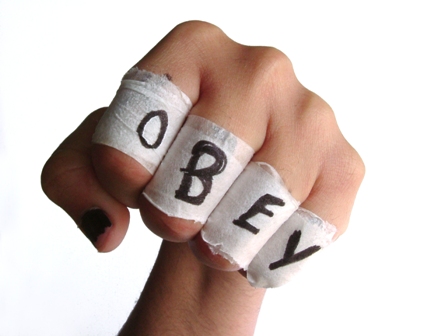
Connecting Homeschooling and Religious Abuse

HA note: The following is reprinted with permission from Heather Doney’s blog Becoming Worldly. It was originally published on April 1, 2013.

I was asked a very good question by a homeschooler recently and figured I’d answer it here as well, expanding on it a little bit. The essence of that question (as I understood it) was “Why are you including homeschooling in your discussion of religious abuse? Aren’t those two separate things that you’re mistakenly combining?”

I guess the pattern and argument for why I include them together is very clear to me but I can see how most people would likely view them as two separate things. After all, abuse in a religious context can certainly occur without homeschooling ever being in the picture (Ex. See Catholic Church child sex abuse scandal), and homeschooling can be done without ever even having religion involved, not to mention religious abuse. Homeschooling and child maltreatment based on extreme (and in my opinion pretty warped) interpretations of Christianity (what I’m calling “religious abuse” for the sake of simplicity here) certainly do not have to be connected, and obviously curtailing the former would not stamp out the latter. So why would I be talking like this, like they’re connected? Is it because I am mistaken, somehow conflating factors, or because in some ways they really and truly are?

First off, let me say that I too wish that the issue of religious abuse could be decoupled from homeschooling (which I think is a legitimate and respectable educational option), but I don’t think it can be done as it currently stands. They have become intertwined.

I think that there are some important links and patterns that once recognized, change everything, but if I don’t highlight the pattern of what I see, I imagine it’s easy to conclude that I am just mistaken or generalizing based on my own personal experience. As it is, it’s also easy for me to assume that others will automatically see this system and to get frustrated when people don’t. Then I remember that everyone’s lived experience is a bit different and that I have also read and researched a heck of a lot on this topic in addition to having the lived experience of growing up in it. Additionally, I had six years of training (bachelors in political science and master’s degree in public policy) that taught me how to use certain tools, methods, frameworks, and analysis techniques. So here’s my “policy nerd” reasoning:

If you look at the individual or family level, homeschooling looks like a mishmash of various styles based on personal choice, varying from family to family. The pattern is not very apparent (and I would reach the same conclusion that these are two separate topics) but if you look at it at a system level the situation becomes stark (and to me very disturbing).

Homeschooling started out as a way to “liberate” children from authoritarian and rote desk-based learning, but leadership of the movement has been hijacked and become the main socio-political apparatus of a fringe group that has some very extreme practices and aims and has grown very politically powerful due to this takeover of homeschooling leadership. I mean just look at what kind of stuff the HSLDA advocates for with its dues money and the radical bent of its leaders. For brevity’s sake I will only list five things:

(1) They have said that “everyone” should have the right to homeschool, not making formal distinctions for convicted abusers or others who would not pass a background check or ever be seen fit to teach other people’s children.

(2) They have advocated for what is essentially a dismantling of the child welfare system and an expansion of parental rights in a way that essentially amounts to “ownership” of children, as opposed to simply having and carrying out a duty to raise and protect your offspring.

(3) They have called for a parental rights amendment to the United States constitution essentially saying that parents should not have checks or balances from outside entities. They ignore and paper over the unfortunate yet widely known fact that not all parents are fit or have their children’s best interests in mind and that absolutely awful things can and do happen when there is no mechanism to discern or intervene when things have gone wrong within a family.

(4) The HSLDA has funneled homeschoolers’ dues money and aptitude for activism and volunteerism into fielding political candidates such as Rick Santorum, Michele Bachmann, and Todd Akin and supporting others with similar radical socio-political agendas. (This has not just been about homeschooling deregulation either. These politicians’ records and agendas regarding family planning, women’s rights, gay people’s rights, religious freedom, and rape have been clear.)

(5) HSLDA fearmongering and political activism has helped them keep their coffers full and our nation awkwardly keeping company with only Somalia and South Sudan when it comes to not ratifying the U.N. Convention on the Rights of the Child. The whole recent debacle with the U.N. Convention on the Rights of Persons with Disabilities was similar.

So at first this stuff just seems weird, right? I mean why might homeschooling have anything to do with gay people or rights for the disabled or the idea that ordinary children should being treated like actual people deserving of similar protections to any other American citizen? Well, the short answer is it certainly doesn’t need to (well, except that homeschooling might be a desirable option for a disabled kid, or that homeschooling in certain circumstances is used to protect children). The thing is, if you are a fearful conspiracy theorist who also believes that you are the new set of God’s chosen people and you must “take back” our nation so that everyone can adhere to the most fundamentalist interpretations of biblical law, apparently these things have a lot more in common with homeschooling than first meets the eye. Homeschooling is one of the main tools to be used in this agenda. Additionally, if you believe in this stuff, you also think that all the “unbelievers” are out to take your homeschooling away and there is a good chance they are being led by Satan himself in an effort to do so, and as such they must be fought hard, smashed into the ground. If you look at the world this way, the crazy stuff suddenly makes perfect sense. The odd political advocacy goals of the homeschooling leadership suddenly make sense too.

I think Anderson Cooper’s incredulity at Michael Farris and the U.N. Convention on the Rights of Persons with Disabilities issue properly expresses what a normal person’s perspective might be when encountering this form of extremism, but the fact is we need to understand it and we also need to do something about it.

Things that normal homeschooling parents might want (opportunities for seamless and easy transitions into and out of public schools, the ability to participate and use public education resources on an “a la carte” basis, assistance with academic subjects that are not their forte, structures that make sure homeschooling kids at least know as much as their public school counterparts and are being given due credit for it, and an option for their kids to join local school sports teams) are not being advocated for by these people. The fringe doesn’t want these things. They want total control over children’s minds, bodies, and souls for their “holy” fight.

Under their leadership, homeschooling is not an educational choice. Instead it is pushed as being a lifestyle but it is really about using people as a culture wars tool. You soon learn that it is ultimately not about having a happy family life but rather about fulfilling “duties” with hope of rewards for it in heaven. I am not even going to get into how certain pastors and homeschool leaders are getting rich and powerful leading this movement. I will say that homeschooling of this sort is ultimately not about the children except that they are seen as tools in this crusade and so that is why it is seen as good to have or adopt as many of them as possible. They are weapons of sorts. This is so bad for children. I cannot overstate how bad this is for children (even when they seem to obey with a smile all the time).

This is why so many grown kids from this movement have totally rebelled against it and anything that even remotely looks like it and why others stay in, don’t question, and operate essentially as automatons working towards the objective. It hurts people in different ways and it’s why the former fundamentalist homeschool kids I know joke about whether someone “is still drinking the kool-aid” or not. It is why so many of us have “health problems” stemming from the years of being threatened, coerced, and told we were not measuring up to being what our parents were told they needed to craft us into if they were “Godly.” Yeah. Like that wouldn’t leave almost anyone with some issues.

I know plenty of homeschooling families definitely don’t buy into this extreme worldview and in fact are just as horrified by it all as I am. They just want to educate their children as best as they are able and enjoy family life. They don’t have some rabid agenda that requires building an “army.” They are more normal than that. The problem is that the crazy is louder than them, so the crazy gets heard and they get ignored or just lumped in and expected to put up with the crazy, as infuriating as that is.

So the bottom line is that an extreme fringe wing of the Christian religious right has taken over the homeschool movement leadership and continues to mold homeschooling as they see fit. They have turned something that was meant to liberate children into something that is often horribly oppressive. This is why the two issues cannot be decoupled – homeschooling is successfully being used as a powerful tool by these people, no matter how many kids their power grab disguised as “advice” hurts.

Anyway, I’m hoping this helps explain why both the religious abuse and homeschooling components are connected, and why I find that discussing them in tandem, with caveats, is the best approach to use when discussing this complicated issue.

I am not criticizing homeschooling as an educational option when I do this. In fact, I think this extreme fundamentalist homeschooling agenda is ultimately as toxic to “real” homeschooling (in all its various forms) as it has been to kids who grew up within this sort of damaging environment. If homeschoolers want to be associated with quality then they absolutely need to make sure they don’t sit back while people with extreme agendas claim to speak for them.

I think right now there is not much public awareness of these connections or how these extreme ideological agendas influence homeschooling (or our nation) as a whole, but in addition to needing to draw a distinction in motivations for homeschooling (and there are a wide range), there is also a huge need for responsible homeschoolers to “take back” the homeschooling movement leadership from the people who see it as a power and “culture wars” indoctrination tool rather than a way to give their kids the best skills and opportunities. I am not maligning homeschooling. I do not have a problem with homeschooling. I do have a problem with the current leadership of the homeschooling movement.

It is the real gorilla in the room.

Why I Stopped Being Anti-Gay: Heather Doney

Why I Stopped Being Anti-Gay: Heather Doney

Heather Doney blogs at Becoming Worldly.

I was homeschooled until my grandparents forced my parents to put my siblings and I in public school.  I landed smack into the middle of 9th grade and big time culture shock.  It wasn’t that my high school was some liberal bastion of anything (being in the suburban Deep South, it definitely wasn’t), it was simply that I was around a ton of people my own age for the first time in my life and most didn’t seem to care about or hardly even notice me at all.  I was that unsocialized homeschool kid, the only one like me, alone in the crowd, awkward, lonely, and vulnerable.

I tried hard to adjust and at the end of sophomore year something amazing happened – I finally, for the first time in my life, made a close friend.  He was smart, so we competed for who got the higher grade on assignments, and he made me laugh with his mischievous sense of humor.  We lived in the same neighborhood and soon became official “best friends.”  This meant that we sat by one another in every class we could where there wasn’t assigned seating, passed notes, and got together to ostensibly help each other study for tests, then mostly sat around listening to music and talking instead.  He really helped my transition into public school get better and made me feel much more normal. I finally, for the first time in my life, did not feel socially alone. It was awesome.

We generally got along well except for a couple serious arguments on faith and morality.  The first was after he’d convinced me to go to church with him and ended up trying to pressure me to “get saved.”  The fact that I was agnostic really bothered him. “I just want you to go to Heaven, Heather,” he’d said.  He’d also once told me (when unsuccessfully trying to skip an extra credit event and convince me to just sign his name to the attendance sheet) “Come on…please? You don’t believe in God, so what does lying bother you?”  It was such a hurtful comment that I remember my reaction to this day.  I’d started crying and explained that just because I didn’t pray didn’t mean I didn’t have a decent sense of right and wrong!  I had rebelled against some things, but still kept a lot of the morals I’d been taught as a homeschooler.  Lying was wrong.  Cheating was wrong.  Stealing was wrong.  Being gay was wrong.

Looking back, I guess one reason my friend and I bonded is that we both had painful secrets.  I never told him, not even once, about the patriarchal violence, supposedly based on Christian values, that I still endured at home.  After all, the only thing worse than it happening was people knowing about it.  Sometimes I called him up and asked to come over though, not telling him why I needed to get out of the house.  During one of those hangouts late in our junior year, as we idly sat around listening to Eryka Badu, his new favorite singer, he’d said “would you be my friend no matter what?”  “Yeah,” I’d responded, “Why?”  “Nevermind,” he said. “I’m not ready to say yet.”

He didn’t say until the beginning of senior year.  We were painting set pieces for our senior play behind the cafetorium (yes, a cafeteria/auditorium combined) and he told me he was in love with “Jay,” another high school guy.  They had kissed and he felt so happy and he also hated himself, figured God would hate him, that his grandmother would hate him.  I told him that I was shocked to hear this but I loved him no matter what and he was my best friend no matter what.  We changed the subject to other things.

I kept my composure until I got home and then I got in the house, dropped my backpack on the stairs, sat down next to it, and bawled my eyes out.  My Mom came out of the kitchen to ask me what was wrong and when I blurted out that my friend had said he was gay, the horrified look on her face made me cry even more.  I felt so confused about everything.  This was the same mother who, in a lecture to me once on how I was “so disobedient and disrespectful,” had said “at least you’re not a lesbian.”  Like most homeschool kids, I was not raised aware of the fact that both gender and sexuality are a spectrum rather than a dichotomy, some either/or.  I was instead taught it was all black and white and being gay was just a really bad choice, terrible in fact, made by messed up people.  Fact is, while I’m pretty straight, I have occasionally found other girls attractive before, so at the time my Mom had made that comment, I’d felt silently guilty for that.

I was now quite heartbroken for my best friend.  I cried for the “disorder” he had, the wife he’d never have, the babies that would never look like him, the unhappy, shunned life I imagined he would always lead, and then, after I was done crying, I had to think about homosexuality in a light I’d never done before, not as I’d been taught to view it, as something done by disgusting and warped people, but as the seemingly innate orientation of a loved one.  It made me feel very confused and start to reconsider my beliefs.

The next day at school my friend passed me a note, a letter he’d written.  It said that if I told him to stop being gay that he would, that he wanted me to tell him if I thought he should stop, convince him out of it, that because I was his best friend, I could.  Now, as an adult, the answer to such a letter seems easy but back then it wasn’t.  It was while writing him a response by flashlight in my bed late that night, thinking the situation and my response through for hours, that I realized that being gay was obviously not a choice, like I’d been told.  It was just how he was and it was society that was hurting him, not his orientation.  He would not be risking everything for this if he could help it.  He found guys attractive like how I found guys attractive and he always had.  I thought about the tone in his voice when he said Jay’s name and then the answer was clear.  He had to be himself and he also needed to avoid emotional abuse as much as possible.  I wrote him back a note saying that I loved him no matter what, that he was my best friend, and if he loved Jay and wanted to be with him, that I would keep his secret, wouldn’t say a thing, so no one would be mean to him about it.

I kept my word and was fiercely protective of him when rumors started, but another friend he confided in wasn’t.  She told people he was gay.  Word spread fast in our small southern high school.  Suddenly social life became harder for him, and my friend, the stellar student, always put together, always chatting with everyone in the hall, started getting lower grades and seeming to hate school.  I was worried about him.  Being a marginally popular guy had always mattered to him and now he endured all this social judgment and it was a huge weight on him.  I could see it.  His boyfriend Jay had it even worse.  Jay’s father found out about the relationship, called Jay a faggot, threatened to kick him out of the house, and forbid him to speak to my friend.  My friend and Jay’s newfound love did not survive the stress and they were over before the senior play happened.

Soon afterwards, my best friend and I were in cap and gown, walking across the stage at graduation.  Southern graduations are loud affairs, often with airhorns, whistling, and stomping involved, but it seemed like hardly anybody around me even clapped for my friend as he walked (although personally I yelled like a banshee because hey, that’s how it’s done).  None of the football players, baseball players, or basketball players (and my high school was a sports-first, academics-second kind of place) wanted to be seen as being too heartily enthusiastic for a gay guy though.  After all, then someone might suspect them.  My friend was the exact person he had been before – smart, dedicated, competitive, good looking, fun to be around, and yet because of who he had loved he was now seen as tainted and dangerous.  It was hard to watch this unfold, but I imagine it was considerably harder to endure.  I can definitely see how homeschooling (in the right kind of non-fundamentalist environment) could help protect a kid from the pain of that sort of anti-gay culture.

Thankfully things have changed a lot since that graduation day in 2001 and my friend and I, who still keep in touch, have very different lives now.  When they say “it gets better” I suppose that’s what they mean.  I have a graduate degree and nobody has laid a hand on me since I was 17, and he has an accountant boyfriend and a good job today.

It wasn’t a conscious decision to come out as an “ally” and I actually never officially have before now, but I will say that this friendship definitely changed my perspective and I have been one ever since, just in quiet ways.  After all, this friend was my ally at a key time in my life, the very first best friend I’d ever had.  Once I saw the truth about how toxic and false the anti-gay worldview that I had been taught really is to people like him, I had to stop perpetuating it myself.

Shame on those parents who think that their children are an “arrow” in this “fight for traditional marriage.”  Nobody, gay or straight, deserves to be another casualty in this “culture war,” and nobody deserves to be shamed or prevented from being honest about their romantic and sexual desires because it shakes up someone else’s little world of black and white thinking.  Today I am proud to say that I am no longer anti-gay and I strongly feel that gay people deserve equal respect, equal love, equal opportunity, and equal honor for their love and relationships.

What Happened When I Called the Cops on Dad

HA note: The following is reprinted with permission from Heather Doney’s blog Becoming Worldly. It was originally published on April 26, 2013.

I’ve been reading these stories of homeschool kids who were so scared of CPS. They were told that CPS were evil, would find any excuse to take them away, and that they would wind up in foster care situations where they would be horribly abused, physically and sexually, and where people hated them because they believed in God. They were told that the worst thing the foster care people would try to do was force you to reject Jesus and if you did, you would go to hell with them when you died.

Sadly, that fearmongering anti-CPS indoctrination was my story too. I was told the same thing. I was also not allowed to go outside in the yard on weekdays until we saw the Catholic schoolgirls through the window, walking down the sidewalk in their matching skirts, signifying that “school hours” were over. My parents were careful to keep us hidden from truancy police even if they weren’t careful to have us do any actual schoolwork.

Given all these years of instilled fear and propaganda, and how much I honestly believed a lot of it back then, I ended up doing something surprising as a teen, something that is still to this day the bravest thing I’ve ever done, and I figured I’d share it here.

Just to give you the background, I was 14 years old, my grandparents had recently forced my parents to put all of us in public school (I went into 9th grade), and my Dad still regularly did things like hit us with belts; slap, kick, and body slam us; yank our hair; drag us out of bed or out of the shower; and repeatedly slap us in the face. Often it looked and sounded a lot like this. As we got older and he increasingly lost control of us, as we started to question and oppose things more, the abuse just seemed to escalate. It was bad enough that today I have a “bum knee” and a pinched nerve in my upper back, both developed in my mid teens and neither attributable to any other cause than getting physically abused by my Dad, as I did not play sports.

The worst part of it all was seeing my siblings get hit (I either “tuned out” or fought back when I got hit) and I was concerned that one of them might get maimed or killed, particularly my younger brother, the eldest son, who always got it the worst. At public school I had recently learned that most people figured you were supposed to call 911 if something real bad was happening. I decided to give it a shot.

“I’m gonna call the police!” I said, but nobody seemed to notice. Dad was too busy hitting and shoving my brother and calling him names, and my brother was too busy curled up on the livingroom floor, trying to make himself as small and unhittable as is possible for a nine year old to do. I don’t know where anyone else was. It was a small old house with all the rooms pretty much connected to all the other rooms, but people still seemed to find ways to quickly disappear at times like this, except for me. I never seemed able to pull off the escaping thing very well, and by now I was thoroughly sick of it. I had also been told I was responsible for my siblings often enough that I believed it. I had decided I was going to do something radical and crazy. Even if foster care got us it couldn’t be worse than this, right?

I shouted about calling the cops again and again no one paid me any attention. I went into my parents’ bedroom and picked up the phone. I pushed the 911 buttons quickly so I wouldn’t lose my nerve. I could barely hear the sound of the operator’s voice over my own heartbeat. I told her “my Dad’s hitting my brother and won’t stop.” She calmly asked for the address and said “ok, we’re sending someone out there right away.” She asked me if I wanted to stay on the phone until they got there and I said no and then thanked her. It seemed I only had a moment to wait and then suddenly there were sirens. The police arrived and then two young men in blue were standing in the living room. I came out and sat on the old gold-colored couch in the living room in my ratty nightgown, stifling sobs. I suddenly felt embarrassed as I hadn’t brushed my teeth or washed my hair since waking up, and my face was red and stained with tears. I felt ugly and by the looks on their faces they seemed to think I was ugly too. They looked at my brother, standing there, bug-eyed, and then let him go in the other room, which he was in a hurry to do. Dad turned on the charm and told them a story of how he was disciplining his son, who had misbehaved and that I had just lost it and interfered. He told them I was wayward, and willful, and disrespectful and had cursed at him.

One cop took my Dad outside to hear more of this yarn, and the other one stayed to look at me sternly and lecture me on how I needed to be respectful to my father, accept punishment for bad behavior, and not curse at adults. I sat there, seething, saying nothing. You just don’t talk back to a cop, especially when you’re a 14 year old girl and he’s obviously taken sides and ignored all evidence that didn’t fit with what he wanted the situation to be. They didn’t even check my brother for bruises or marks (which he had). The cop looked only a few years older than me, not much taller. He apparently knew nothing about this type of situation and obviously didn’t want to learn more.

Mom was standing there in her nightgown, nervous and sinewy, arms folded tightly, with purple lips and a crazy, almost baffled expression. Her usual look when fights happened. The policeman tried to include her in the conversation about what I should and shouldn’t do. I glared at her and said “you know what was going on, and you never do anything.” Now it was time for her to play the victim. She looked at the cop with big child eyes and said that she believed children should be disciplined in a Godly manner and her husband was the head of the household, blah blah blah, but that she didn’t like it when he slapped the kids in the face and when he would get mad she just didn’t know what to do.

The cop then directed all of his attention at Mom, trying to ask her questions, probe deeper into this. He quickly discovered what everybody else already knew, that asking Mom any kind of yes or no question and expecting any kind of direct or conclusive answer was an exercise in futility. She gave him a few long, indirect run-on sentences about nothing. He became bored and joined the other cop outside with Dad. I looked out the window and saw them talking on the gravel driveway, just along the fence line. Dad was standing inside the gate and they were standing outside. His body language showed that he probably wanted to kick them off the property altogether but instead was being submissive and deferential and thinking he might be in trouble. I looked at my brother, who’d come back in the living room, still bug-eyed, to look out the window with me. He said “you shouldn’t have done that, Heather.” I turned away from him as my heart sank and I sobbed. I’d done this for him. I didn’t want him to get killed. I looked back out the window.

The two policemen looked comfortable, chatting with Dad easily. One of them came back up to the door to tell Mom that they’d spoken to him and told him that corporal punishment was ok, but that slapping your kids in the face is not included or allowed. They said they’d also told him that if they had to be called back out here, he’d be arrested. They were leaving now. That cop didn’t even look at me again, still sitting on the couch. I didn’t matter. I felt so alone, terrified. I figured I was probably going to end up dead. Dad would kill me and I would be buried in the ground somewhere and no one would ever find me! They were leaving and he was coming back inside and I knew he was furious, and…suddenly I wasn’t scared anymore. I was a ghost, floating up above my left side, looking down at the ugly gold couch with the ugly teen girl on it, saying “hmmm, I wonder what’s gonna happen to that girl, Heather?”

Dad walked into the house and I stopped dissociating. I wasn’t a ghost anymore. I was me and all I could hear was my heartbeat. I wasn’t afraid. I would meet death straight on and show no emotion. I would look expressionless. He would not get any begging for anything from me. He stepped into the kitchen and instead of showing anger, he looked over at me with the saddest betrayed eyes I had ever seen him look at me with. He seemed like a little child that someone had punched. He slowly looked at me again and then averted his eyes, seeming to not bear to even see me anymore. He spoke to Mom in a sad voice and said “I can’t believe you didn’t support me. I don’t even have a good Christian wife that supports me.” He brushed off her attempts at conversation and sadly shuffled into the bedroom to lay down. Mom tried to go in and talk to him but he said “just leave me alone,” in the same sad resentful voice, and she ended up coming out and cleaning the kitchen table instead. I couldn’t believe it. I wasn’t smacked or yelled at or killed! I was still on the couch and nothing had happened to me.

The next day at school I felt exhausted and mentioned to the boy I liked in computer science class that I’d called the cops on my Dad. He looked at me, shocked, and said “Wow, that’s terrible!” He didn’t ask any questions and kept playing Doom, so I kept playing Oregon Trail, feeling worse than usual every time my pioneer family drowned in a creek or starved to death. I felt guilty. Maybe it was terribly wrong to call the police on a parent. It sure felt wrong, but so did a lot of things. Was it more wrong to treat your own kids like that? Was it wrong to be a cop that’s stupid and doesn’t pay attention when it’s your job? What was I supposed to do? Accept that it was corporal punishment and it was ok, we deserved it? I just couldn’t. Getting hit had just always felt wrong, disrespectful. I decided I wouldn’t say anything else to people at school though. Apparently that just wasn’t a good idea. Still, the more I thought about what happened when I called the cops, the more I felt angry. I was still afraid and on guard the next few days, thinking there was a chance I might still have it coming from Dad.

All that week he didn’t speak to me or interact with me, except once to tell me “Grammy wants to talk to you,” and hand me the phone. I picked it up and she started yelling on the other end. She was attempting to tell me what a terrible child I was for calling the police on Dad. I tried to explain to her what was going on, because she’d listened and tried to help when I’d told her stuff before, but she just couldn’t hear me over all of her own yelling. I finally told her I knew I did the right thing and she just didn’t know. She got me to promise her that next time there was a problem, I’d call her, not the police. It was an easy promise to make because after what had happened and how those cops were, I didn’t plan on ever calling them again anyway.

After that everybody stopped mentioning that I’d called the cops on Dad. The only reminder was that he seemed to try and show more self control. He stopped getting the belt or the red stick, even if he still threatened to use them. If we did something he didn’t like, he would put us “on restriction,” his term for grounded, in back-to-back two week increments (which would usually end up being extended for months on end), and when he did lose it, he was more likely to only corner or intimidate us, and if he did hit us, only leave bruises where clothes or hair would cover them up. Also, now he had to be careful because every time he lost it on somebody, Mom would scream “I’m gonna call the police! I’m gonna call the police!” She never did call on him though.

The abuse ended for me when I moved out at age 17 after Dad knocked me over in a chair, chipping my front tooth. The abuse ended for my siblings two years later when Dad moved out and my parents divorced.

Two years ago my brother, now 25, and I finally talked about the time I called the police, our first time ever discussing it since it had happened. He said he was sorry for telling me I shouldn’t have called back then, that he had thought what was happening to him was just routine, normal, and that what I did was what was out of line, extreme. He said looking back he was glad that I called, that he felt it was a “wake up call” to Dad and while things still weren’t ok after that, they got better. I cried when he said that.

There was certainly no need for him to say sorry for anything he’d said as a little boy, but his words now, as a grown man affirming that I’d done the right thing, meant so much to me. Nobody had ever told me that. Back then everyone had acted like I was very much in the wrong, a person who betrayed my family.

I look back and feel so very thankful that I somehow had the guts to fight that fight, that my siblings and I all survived it, and that the younger ones can just be kids and don’t have to go through any such stuff.

Homeschool or Public School – What’s Worse?

HA note: The following is reprinted with permission from Heather Doney’s blog Becoming Worldly. It was originally published on March 5, 2013.

I was talking with a homeschooled friend the other day who was raised fairly similar to how I was, with a more structured and less impoverished environment, and we were sharing stories. This and a few other things got me thinking. We both went on to higher education, got our masters degrees. The conversation between us turned to whether homeschooling was preferable to public schooling. While the homeschooling environment was very oppressive and abusive for us both, we each had access to classic literature and read voraciously as a coping mechanism. Favorite books would be read 3, 4, 5, sometimes 6 times over. I think this intensive, almost obsessive, consumption of the written word is one reason why a number of former homeschoolers who have had neglectful educational environments can often write eloquently, in an almost old-fashioned way.

Still, I am sure there are many more who did not get into reading like this and whose voices are not being heard. I knew a homeschooled kid who could barely read or write when he was a preteen, but could repair everything from lawnmowers to electronics just by self-taught tinkering. I often wonder what became of him. I would like to find some of those people too, and feel that those of us who write stories should help them write theirs, share theirs. (Then maybe they can help us fix that jammed door or the broken old-school Nintendo game set in the basement.)

Anyway, so my homeschooled friend and I discovered that despite the problems and the loneliness, we both cherished certain aspects of what we learned as homeschoolers, largely left to our own devices, and we both felt that if we had been sent to public school as little kids, we would not be who we are today, that we wouldn’t value the same things. He was homeschooled the whole way through, so he also expressed concern that he would have been bullied for a health condition in a public school. I told him that I was bullied when I started high school initially, not for any health condition, just for being socially backwards. A few aspects of the bullying I experienced were rather bad (like someone putting gum in my hair once), but most of it was just incredibly awkward. There were many gaps where I tried to connect and failed painfully, many awkward and lonely times before I found friends to eat lunch with and learned social norms. (See Lindsay Lohan’s movie Mean Girls, which accurately captures the feeling on homeschool to high school culture shock.) It lasted almost a year and by then I was seen as properly integrated so it stopped.

So I told my friend that I thought the bullying would have been a bearable phase for him and that the main risk I saw from public school was absorbing the lack of enthusiasm about learning and knowledge endemic to a typical middle-of-the-road public school. He would have learned a lot of different things, but he wouldn’t have likely read all those books that have informed his hopes and dreams because they would not have been assigned, and if they had, depending on what kind of school he went to, by then he might have already been trained into not caring.

Most people I knew in public school only did the assigned work and the bare minimum at that. I guess this is normal, but it was shocking to me – I fought so hard to get an education, then ran into others’ lethargy about learning, an expressed desire for good grades without putting in the work, and widespread dependence on the grade book and teachers’ expectations for self-worth. I think it was much more a problem with the system than the people, although some people certainly stood out in both good and bad ways.

I took honors and advanced placement classes because I had the drive and ability to, so I met and became close with friends who felt similarly about the value of knowledge as I did. I had some good teachers who taught me a lot and who I still love and respect, and a principal and an assistant principle who supported me and tried to integrate me as much as they were able. I also had a terrible guidance counselor, one who knew I grew up poor, and after I’d taken the ACT and made a 25 (a good score), crisply noted that being on the B+ honor roll didn’t mean I was in the top of my class, and then she told me “college isn’t for everyone. There’s community college and trade schools.”

I sent my guidance counselor’s negative comments into the same mental trash bin I reserved for my parents’, so I naturally assumed other people wouldn’t take her seriously either, only later realizing they might not have had a lovable old military grandfather talking to them about degrees and high-powered careers, counteracting her negative message.

Maybe it should not have surprised me back then that certain classmates of mine who also grew up poor but were by all standard metrics very good students (certainly better students than me), went on to work at Wal-Mart, or Waffle House, or enlist in the military, and forgo college altogether. It did come as a pretty big shock to me though, as I’d absorbed the idea of a “meritocracy,” the idea that your skills and abilities are what set you apart. Whenever I see it being something else that sets people apart it still sucks. It just plain and simple sucks.

It also makes me angry when I reflect that I wasn’t the only one who heard this not-so-subtle tune of low expectations while in the guidance counselor’s office. I feel that my fellow students from low-income families deserved better. The truth is maybe she was right though, since the statistics indicate that only 11% of students who grow up below the poverty line complete college. However, the fact is I am now one of that 11%, and I expect that if I’d been in public school the whole way through, absorbed more of the social values on what being poor meant, perhaps the bar for my own dreams would have been set a bit lower.

Overall I am really glad I got to have my Grandad’s intensive tutoring (a form of homeschooling) and I am glad I got to attend public school. Attending public school helped me to familiarize myself with social norms, connect with classmates and make friends (a number of whom I still have), and do all those lovely things like go to prom and have an awkward 10 year class reunion. I have good memories of passing notes in class, volunteering in the concession stand, and cheering my high school football team as they won the state championships.

However, there are a lot of things that do make me want to hold my nose when I consider the entire public school system across our nation, with all the inequality, discrimination, busywork, and reinforced social stratification it brings. That’s why people like John Holt advocated homeschooling as an “underground railroad” away from it in the first place. He saw this and he felt that highly structured authoritarian classrooms were generally not the best learning space and I think in many ways he is right.

Considering where I am today, a person with a master’s degree who is kicking around the idea of going for a PhD, I also realize I need to take a fuller view beyond my own experience. I could say “oh, it turned out fine for me. No harm no foul.” However, although I can speak to what educational neglect is like, ultimately my experience has not been that of the average educationally neglected homeschool kid. My trajectory drastically changed. If I had been left there without outside help, I doubt I’d be writing here today, plain and simple. It would be beyond my sphere of knowing. I would be keeping my head down, working a low-wage job somewhere. That’s what too many kids from poorly run, under-resourced, low-performing public schools also do. The neglected homeschool kids and the neglected public school kids are both neglected kids. They are ultimately the same group.

So this debate of public school versus homeschool that keeps cropping up seems really silly and often rather irritating to me. Homeschool and public school are both options — chicken and fish, apples and oranges, paper and plastic. Sometimes, given the circumstances or personal preference, one option is obviously better than the other, sometimes it isn’t. It is important to have the best versions you can available so people can make the most of the choices.

So why do people keep talking about homeschool or public school being better or worse when the real question is, “How do we get kids, including kids from families living in poverty, to reach their full potential?” I don’t know. But I think we need to think about why we do it and then think how we can fix it.

Like I said in my recent guest post for Libby Anne (which I am pleased to say was chosen as an Editor’s Pick for the whole Patheos website), I think it ultimately comes down to children’s rights. If the needs of children are seen as being important and the voices of children are seen as being important then both homeschooling and public schooling must work to improve the experience of kids who struggle, live with few resources, and who have seen and dealt with hardship beyond their years. There are cracks in both systems and there should be no “throwaway” children in either. Pointing fingers does nothing to erase what is going on for these kids.

So if you want to pick a dichotomy, if you really need one, then think about the “haves versus the have-nots,” the kids who have people in their lives who truly care about their education and wellbeing and have high expectations for them versus the ones who don’t. Those groups exist in both homeschool and public school and they are pretty serious problems in both worlds. That is the variable that educational success is dependent on, not whether you are sitting in a classroom or a living room.

Was I Spiritually Abused?

HA note: The following is reprinted with permission from Heather Doney’s blog Becoming Worldly. It was originally published on January 30, 2013.

I was just asked if I could add my blog to No Longer Quivering, a site for people who have left and are speaking out against the Quiverfull movement and people who are interested in learning about such things. My blog will now be cross-posted under the Spiritual Abuse Survivors Blog Network. I guess this is sort of a big deal for me, particularly considering the role NLQ bloggers had in helping me understand my own story.

"Spirituality, faith, was just as much a tool for my parents to control and hurt me as the belt or the red stick, or being put 'on restriction.'"
“Spirituality, faith, was just as much a tool for my parents to control and hurt me as the belt or the red stick, or being put ‘on restriction.'”

Being a researcher at heart, even in the middle of a meltdown, when I was hit by these scary and to me inexplicable symptoms (flashbacks, nightmares, insomnia, concentration problems, a generally creeped-out on-edge feeling, and feeling compelled to avoid people for reasons that made no sense even to me), I started googling late into the night (and early into the morning) for answers. I finally typed in “overcoming childhood abuse,” not even mentally sure that what had happened to me qualified as “legitimate” abuse, with all the levels of doubt and denial that were in between me and the past. I quickly discovered that that’s what this was, and I ended up making a counseling appointment where I was told I had PTSD. I didn’t accept that either (yeah, authority issues), until with more research, I realized that yes, it was true. I did.

It was through trying to solve this issue, find others like me (hopefully ones with good advice and happy outcomes), that I googled “homeschooling and child abuse.” I came across the NLQ site, Chandra’s posts, and then I looked at some other posts, Melissa’s, then Vyckie’s story. I read it all with a lump in my throat. This was exactly what had happened to me. How? People were talking about spiritual abuse. Had I been spiritually abused? Was that a real thing? I had never even considered it because that would have meant considering spirituality itself, an off-limits topic in my mind.

I spent considerable time trying to wrap my head around all this information and getting to the point of where I decided to publicly tell my story, and can honestly say blogging about spiritual abuse is still never something I imagined myself doing.

As someone who considers myself agnostic, sees the idea of God as being a giant question mark, a blank I’m not too worried about filling in, writing about spirituality seems kind of hypocritical to me, like a virgin writing about sexual experience, or an old man writing about what it’s like to be a young girl, or a pastor writing about what it’s like to be Jesus. It is a topic that is sort of removed from my day to day life, and one that I still haven’t fully addressed or worked through I think.

The concept of spiritual abuse (or even emotional or verbal abuse) existing didn’t cross my mind growing up. It was the physical abuse, material neglect, and the educational and medical neglect that I was primarily concerned with. All of those issues had a spiritual component though. It was because the spiritual aspect of life took up all the room, the fact that everything was seen as spiritual, that made life pretty dangerous sometimes and often at least generally unpleasant and sad for the physical side.

Few people knew that I had stopped believing in God at age 11 or that I’d been repeatedly told I was on a “pathway to hell” after ill-advisedly sharing my new perspective on religion with my mother. If I did mention it to anyone, I turned it into some sort of a pastor’s daughter joke. Deep down it wasn’t funny though.

I once walked out of a high school play about the garden of Eden that my then boyfriend, now husband, had invited me to. Shaking with rage, I explained to him how not only was the dialogue crappy, but in this version Eve was wholly blamed for the fall, and how inaccurate and anti-woman it was. He just looked confused. I had never talked about how attending funerals or weddings or services where I’d hear someone preach was a weirdly nerve-wracking experience for me, that even people inviting me to church or questioning my beliefs made me very uncomfortable. When my mother-in-law invited me to go see Mel Gibson’s “The Passion of the Christ” movie, the only possible answer was no.

I didn’t want to explain that there had been a spiritual component to me being dragged across the floor by my hair (headship, disobedience), or having my butt and legs covered in welts from an old leather belt, or living in fear of the red stick (spare the rod, hate your child). I didn’t like to discuss the fact that my siblings and I didn’t have medical or dental care before I turned 17 (trust in the Lord with all things), or that the medical neglect had started when I, the firstborn of my mother’s 9 children, had almost died due to an unexpected breech birth at home, no prenatal care, and unlicensed “birth assistants” from church rather than real midwives. I didn’t want to recall how all childhood injuries and illnesses I had, including a hernia, a broken tooth, and a concussion, were responded to with only “home remedies” and prayer. I didn’t mention how scary it was to be an 8 year old, watching my dehydrated little brother’s eyes roll back in his head, knowing “laying on of hands” is all he would get and if he died of the flu it would have been seen as “God’s will.”

My parents said it was all in the bible, that I’d come to understand. So I read the bible and saw a lot worse things happening, genocide, rape, war, women and children treated as chattel. I told my parents the bible was barbaric and disgusting, like them. I rejected the idea of submission or having some burden due to the sin of Eve. I bluntly said that girls should not be forced to constantly care for their younger siblings just because their parents didn’t properly understand birth control or abstinence. I even *gasp* told my Dad to quit loafing and go put his own cup in the sink. Because of this, and my penchant for responding to abuse with explosive violent anger (using your fists is solely a manly thing apparently), I was viewed as somehow not feminine, not desirable or womanly or any of the things I should be. My parents even told me no man would want to marry me, that because I rejected their ideas that guys too would reject me and go find other, more pleasing, girls. This hurt because, like most people, more than anything I wanted to find love, to feel I was desirable and worthy of love.

The spiritual side of me got put in a trunk with mothballs. There was no other option, really. Spirituality, faith, was just as much a tool for my parents to control and hurt me as the belt or the red stick, or being put “on restriction.” It was safer for it not to exist at all. So I grew up without feeling any sense of faith, without praying, without imagining that there was any higher power, that there was anyone there for me except the real people that I knew, and they weren’t there as often as I needed them, leaving me largely alone with my troubles, ultimately needing to solve them myself. I figure some people would describe this as incredibly sad. Others would say it’s accurate. My take? Heck if I know.

When I stopped believing at such a tender age, I never really revisited it. Well, I did a few times, going to church with friends as a teen, but I wouldn’t attend more than once after learning the same bible verses used to cause pain in my family were blithely being recited or referred to in this church, often in what seemed to be a similar context. This experience would make me so uncomfortable that it only reinforced not questioning or revising my stance. How could I feel safe? It was better to make an excuse and not even approach it, not have my friends think less of me or feel hurt when I said I didn’t want to go back to their church. How could I not like church? Was it because I didn’t respect their choices? Was it because my soul wasn’t right?

For a while I just wished religion didn’t exist. Then nobody would inquire about my “church home,” or invite me to bible study with virgin margaritas, or ask if my family was Catholic. My favorite answer for that last one, before I knew Quiverfull was the name for it: “No, they’re Nondenominational bordering on Southern Baptist with a little Pentecostal and Christian Scientist thrown in.”

My distaste wasn’t just confined to Christianity either. I was pretty rude and dismissive to a (slightly annoying) cousin-in-law who was into Wicca. When a very nice Jewish friend invited me to a Passover Seder, I found the beef brisket and matzo ball soup to be amazing culinary delights (the gefilte fish slightly less so) and the traditions very moving, but I still got a lump in my throat when it was my turn to read about Moses from the Haggadah. When Muslim friends of mine invited me to an Eid al-Adha dinner honoring the day Abraham didn’t kill Isaac, I brought a bottle of sparkling grape juice and thoroughly enjoyed hanging out and eating Egyptian macaroni bechamel casserole, fragrant Afghan rice, and spicy Pakistani mutton biryani, but secretly wished we were celebrating something that hadn’t been used as a veiled threat against me by my parents growing up.

Apparently I’ve always had low-grade PTSD symptoms that could be triggered by religious activities even though to me that was just my normal baseline level. I guess in many ways these issues also manifested as post-traumatic resilience. I had this intensity that helped me learn and remember, a semi-photographic memory, an obsession with literature and the written word, a fascination with learning what made people tick, with picking out errors in an argument. I had a little “bullshit alarm” that beeped in my head. I was also lucky (or perhaps somehow blessed). The few opportunities I had to make things better I took and those turned into more opportunities. It wasn’t because I was being intentionally strategic either, rather that I was truly excited about learning and positive human interaction. I intellectualized things though, I put a wall up, and that wall is definitely still there.

So today I am an un-spiritual person writing about spiritual abuse.

12 Reasons Why My Homeschool Story Doesn’t Matter

HA note: The following is reprinted with permission from Heather Doney’s blog Becoming Worldly . It was originally published on February 10, 2013.

Homeschooling parents sometimes react badly to stories like mine. It’s generally the ones who see themselves as fighting an uphill battle with society, surrounded by enemies, feeling personally threatened when any problem within a homeschooling environment is openly discussed. I guess it should not be surprising, but I am often a bit shocked by how nasty and devoid of empathy things can get when people feel defensive. How did I become some “opponent” getting yelled at for being honest about how it really was for me and what I think the problems really are??

The people who do this often fall into a predictable pattern of trying to silence, drown out, invalidate, or scare away all potentially negative reviews, positioning themselves as a long-suffering yet expert victim trying to set the story straight, then beginning to (often viciously) attack and attempt to eviscerate the whistleblower’s credibility.

I find that kind of behavior pretty messed up to say the least, so I figured I’d just write down my responses to the 12 most common reasons why my story and my homeschool experience apparently don’t matter. The next time someone says one of these, instead of re-explaining myself, I’ll just send them a link.

1.) “You were not really homeschooled. Don’t generalize about your dysfunctional family experience.”

I may have been the only one to learn to read in that place, but we were registered as a private school with the state. We belonged to a CHEF homeschoolers group, signed a statement of faith, paid dues to HSLDA. Also, there are over 30 “survivor blogs” right here talking about pretty much the same thing. I don’t need to generalize. This is a bona fide pattern.

2.) “Plenty public school children get abused and get terrible educations.”

Because bad things happening in one place obviously makes it ok for them to happen in another…

3.) “There are crazies out there, but real homeschooling is always a good thing”

Homeschooling is very diverse, so there are many real kinds and more than a few fake ones. If by “real” you mean “most prevalent,” then no, I think it’s often a bad thing. Homeschooling was started with good intentions to liberate kids from rote learning but now the “culture war” crazies pretty much run the place. You people who are not trying to indoctrinate your kids are outnumbered.

4.) “Hey, I’m not hurting anyone over here and that other stuff is not my problem”

Here’s where I quote Edmund Burke and say “All that is necessary for the triumph of evil is that good men do nothing.”

5.) “I know plenty conservative Christian homeschooling families who are happy/well-adjusted/successful”

I too know some who I imagine genuinely are and plenty who I thought were and later learned were just playing the part like my family was. It’s hard to tell the difference. When kids get punished every time they disobey or display a “bad attitude” they learn to give “correct” answers, think “correct” answers, and even instinctively smile when sad or disappointed. Sometimes you can only tell something is wrong by their overenthusiasm and the weird hungry look in their eyes.

6.) “You just have an axe to grind”

I used an axe once in a rather unsuccessful attempt to chop wood. I have never sharpened one. I am a fan of peace, reconciliation, and forgiveness, burying the hatchet, solving the problems. I do not want anyone’s head on a platter.

7.) “You are not a parent so don’t tell me how to be a parent”

By age 12 I’d bandaged up more skinned knees, cleaned more snotty noses, rocked and patted more hiccuping infants, and cleaned more poopy toddler butts than plenty of grown folk. I may not have popped out any offspring of my own just yet but I can give you tried and true pottytraining tips, recipes for picky eaters, and bedtime reading suggestions too.

8.) “As a parent I alone will decide what is best for my children”

My Grandad once said “children don’t come into this world to you, they come into it through you.” I will always be grateful that he stepped in where it was “not his place” simply because my siblings and I mattered to him.

In societies where we are “our brother’s keeper” (i.e kindly say something or help the vulnerable when we see someone headed in a dangerous direction), we have stronger communities and happier people. When there are no safeguards for when people (parents included) make bad decisions or struggle (and everyone does), that’s when things can get real bad. Please don’t push things in that direction because you are scared people might misunderstand and judge. Telling everyone to butt out might not hurt your family but it contributes to a standard that hurts others.

9.) “You’ve never been a homeschooling parent yourself, so what do you know?”

I almost want to say “well, you went to public or private school, so what do you know?,” but that would be acting like experiencing homeschooling from the parental side means nothing, which is untrue and would be just like saying that experiencing it from the kid side doesn’t count. Fact is the first generation of homeschooled kids are now in their late 20′s and early 30′s. You now have “consumer reviews.” Ignoring those and just going with the recommendations of other first-time homeschooling parents means you are missing out on valuable info and your kids may one day be giving less than stellar reviews themselves.

10.) “You are obviously not a Christian or you’d understand”

Why do you have to be a “bible-believing Christian” to have a problem with the legalistic sickness and power-drunk behavior that stems from the so-called Christian homeschooling leadership and infects vulnerable families like it did my own? It looks nothing like love and everything like fear and controlling behavior. If God is love than devout Christians should have a bigger problem with this stuff than I do.

11.) “Shh! The government will persecute us and take our kids”

There were a few truancy prosecutions in the late 70′s. Acting like that’s still reality is HSLDA fearmongering and hype to keep themselves in business. Unless you get caught actually running a homeschool meth lab project or something, nobody’s taking your kids.

12.) “All the stats/facts/studies say homeschooling is the best option”

By this I assume you are referring to studies on homeschooling done by NHERI, a “research institute” run by Brian Ray. A study where an author self-quotes without caveats using data funneled in by an advocacy group (HSLDA) and with an only 23% survey response rate may convince most journalists for now, but once an alternative story comes out (and it is) that stuff just won’t hold water. Even if they were solid stats (and they aren’t), generalizing a self-selected sample (the “prep school” equivalent of the homeschooling crop) to the general public school environment (where low-performing students can’t opt out) is comparing apples to oranges.

Because of all the work the HSLDA has done convincing lawmakers to deregulate homeschooling, we just don’t have much real data on the lower-end homeschoolers aside from case studies and personal accounts. Not collecting information on these kids has only made them invisible, not nonexistent.

*****

My life is pretty good today. I don’t need to harp on the past. The reason I speak out is to use my experience to shed light on a problem. It is for friends who grew up like I did and didn’t get the opportunities I did. It is knowing little children are living today the way I did then. We need to listen to one another, brainstorm, form coalitions to make homeschooling better, to make education and society in general better, to raise our children in the best and most informed way possible, because that’s ultimately the goal, isn’t it? So please don’t yell at me or get defensive when I tell you about my homeschooling experience. Hear what I’ve got to say, ask me questions, and share your (hopefully much better) homeschooling stories. I’d love to hear them.