My Mind Wasn’t Lost, I Had PTSD: By Susannah

Screen Shot 2013-09-06 at 4.18.02 PM

My Mind Wasn’t Lost, I Had PTSD: By Susannah

HA notes: The author’s name has been changed to ensure anonymity. “Susannah” is a pseudonym.

Writing about mental illness frightens me.

It’s a topic I don’t like to think or talk about, especially at times when it takes a lot of energy to maintain my emotional equilibrium.

My grandmother used to go through phases when she would sign our birthday cards “Snowflake” instead of “Gramma”, which always unsettled me. Other times she just took her “happy pills”, to my mother’s chagrin. My parents were opposed to “mind-altering drugs” and “worldly philosophies” of psychology. They were also followers of Bill Gothard, whose singular ideas about the root causes of mental illness are legendary. We were taught to smile to create good feelings, to force enthusiasm, to “submit” to authority even when we disagreed, and not to express “bad” feelings.

It was a recipe for disaster.

Though we knew numerous Christian people who suffered from depression, anxiety, mood disorders, and even psychosis at times, prayer–and maybe fasting–was considered the [only] acceptable course of treatment. One did not consult physicians (ours was a Catholic man who prayed with his patients and recommended homeopathic remedies) for problems with spiritual causes. One might consult a trusted pastor, but they never seemed able to offer anything but more prayer and Bible reading, which we certainly did enough of, anyway.

My sisters and I learned that it was better to keep our private internal conflicts inside our own heads.

I started having panic attacks as an adult when my other grandmother, my closest friend outside the world of religious homeschooling, died of cancer. (We used to pray daily that she wouldn’t perish in hell.) I went to the E.R. only to be told that my symptoms were a classic presentation of anxiety. Panic attacks? Me? As the eldest of eleven siblings, I had prided myself on being strong and resilient.

I was not happy to learn that my body had ways of bypassing instruction from my brain!

Like the society in Shyamalan’s “The Village”, the world I was raised in had been hemmed in by fears: fear of God, fear of  Satan, fear of persecution, fear of government control, fear of strangers or nosy neighbors, fear of vaccines and unhealthy foods, fear of ourselves. Though I had left that world years earlier, the patterns of anxiety were worn deep in my psyche. For the next eight months, I struggled with fear, insomnia, and depression. I did seek out a therapist who helped me process the fears of my past.

The fog eventually lifted, and life moved on.

Later on, the panic attacks returned with a vengeance–this time triggered by a college professor whose rude and controlling manner in the classroom dredged up numerous uncalled-for memories of misogynistic “spiritual leaders” from my past. Physically and emotionally overwhelmed, I returned to my therapist, who recognized PTSD. I was a child again, being spanked across my dad’s lap for asking one too many questions. I was a teenager trapped in his office being told my character flaws, or in his car while he asked about my sexual thoughts. I was a young woman in a fundamentalist cult organization where women had to be led, protected, and prevented from “causing” men to lust. I was walking on eggshells in my mom’s kitchen, afraid of accidentally saying, doing, or not doing something that would send her upstairs to her room in tears.

I started reading about C-PTSD, especially as it relates to adults whose childhood was abusive or neglectful. It made so much sense, and I was relieved to know my mind wasn’t “lost”, only responding normally to being bruised again and again. Medication didn’t help my situation a bit (made it worse, actually), but I found that writing and exercise would counteract insomnia and stress-induced pain, while yoga and coloring pictures calmed my hypervigilant and anxious mind. Meanwhile, supportive, healthy friendships gave me a new standard of how respectful adults interact.

Knowing people outside my family whom I can trust and talk to about my struggles means the world to me.

For so many years, I knew no one who would not defend my parents. I was socially isolated and there was no one I could turn to for objective counsel. Every major influence in our lives reinforced the fear and the pressure to conform our everyday emotions to an ideal level of contentment. But my friends and neighbors have never been judgmental; they never assume that depression or anxiety are my fault. More often than not, we end up sharing stories of feeling weak and of overcoming hard things. And when they ask me how I’m doing, I don’t feel I need to make something up.

The realization that all emotions are valid aspects of human experience was a huge relief to me. I am learning to first acknowledge my feelings without judging them, and then to choose how I want to act on them.

Bill Gothard on Education: Jeri Lofland’s Thoughts

advanced_seminar_0

Jeri’s post was originally published on her blog Heresy in the Heartland  on September 8, 2013. It is reprinted with her permission. Also by Jeri on HA: “Generational Observations”, “Of Isolation and Community”“His Quiver Full of Them”, “David Noebel, Summit Ministries, and the Evil of Rock”, and “The Political Reach of Bill Gothard”.

My parents began homeschooling me in third grade, and enrolled in Gothard’s Advanced Training Institute, a curriculum exclusively for alumni of his Advanced Seminar, before I started seventh grade. Our family was part of ATI until I reached my mid-twenties.

The following statements are the main points from a session of Bill Gothard’s Advanced Seminar. They can be found on pages 88-91 of the accompanying workbook and on his website. Looking back, these “principles” explain so much of my educational experience.

Advanced Seminar Session 16: Successful Education

(Bill Gothard)

  • The ultimate goal of education is not to produce a degree, but to produce many godly generations.
  • God charges parents and grandparents, not teachers, with the responsibility to train their sons and daughters.
  • God established the home, not the school, as the primary learning center; the school and church must be recognized as extensions of it.
  • The most destructive force in school is peer dependence, and parents must constantly work to protect their children from it.
  • God wants the priorities of every family to be built around daily engrafting of Scripture, rather than accumulating man’s knowledge.
  • The ability of sons and daughters to stand alone is the result not of rules, but of principles that assure a superior way of life.
  • When knowledge is learned before godly character, it produces pride and arrogance.
  • Parents who teach sons and daughters at home must be accountable to a local church (Christian school and the government).
  • Sons and daughters thrive with appropriate responsibility, and it is God’s goal that they be mature in their youth.
  • God gave boys and girls differing aptitudes; when children are taught together, boys are programmed for failure.
  • When schools group children by ages, older examples are cut off and rebels usually rise to leadership.
  • When the Bible is separated from courses, the contents come under the control of human reasoning.
  • True socializing takes place not in the arbitrary groupings of school, but in the real world of children-to-adult relationships.
  • Valuable learning time is lost in school; two hours of home teaching is equivalent to six hours of school teaching.
  • The key to effective education is not just a trained teacher and a professional curriculum, but a concerned parent and a motivated child.

God has set a limitation on learning; thus, academic freedom is no justification for studying the details of evil.

Inge Cannon (pictured here with her husband) helped Gothard develop the ATI curriculum in the early 1980's. She later directed HSLDA's National Center for Home Education.
Inge Cannon (pictured here with her husband) helped Gothard develop the ATI curriculum in the early 1980’s. She later directed HSLDA’s National Center for Home Education.

As an ATI student, I attended numerous conferences that became pep rallies for volunteerism with the Institute or urged us to study our favorite topics from the safety of our homes. (I even spent eighteen months enrolled in IBLP’s unaccredited correspondence law school!)

Inge Cannon was one familiar conference speaker. Cannon holds a master’s degree in education and helped Gothard develop the ATI curriculum in the early 1980’s. She later directed the National Center for Home Education, a division of HSLDA.

At an opening session of the 1990 ATI training conference held at the University of Tennesee in Knoxville, Inge Cannon warned us against the dangerous “High Places” of education. As she talked, I took careful and enthusiastic notes. I was just fourteen, and excited about this chance to sit with the adults.

In the Bible, God repeatedly told the ancient Israelites to tear down the idolatrous “high places”. Cannon thus defined a high place as:

“any goal or objective so commonly accepted that it is validated and esteemed as good, even though it violates the will and word of God”.

According to Cannon, the following “high places” are educational myths for home-educating parents to avoid.

The High Places of Education

(Inge Cannon–June 23, 1990)

  • Comparison–i.e., SAT tests and bell-shaped curves, parents should not base their curriculum on these; also pluralism that pressures those with strong beliefs to “give in to those who believe nothing”
  • Grading–earning a teacher’s certificate, for example, merely means one has passed the right courses, not that one is “qualified to produce results”
  • Completion–filling in all the blanks or answering all the questions or taking the final exam does not mean the educational task is complete; the object is to “know” the material, not merely to “cover” it
  • Equivalency–“believing that a curriculum is proper and right when it matches the academic sequence and requirements of traditional, formal education”
  • Tangibility–“believing only what I can see or touch is real, thereby de-emphasizing those elements that require faith or minister to the spirit of my child”
  • Self-expression–“believing that the arts are too personal to be governed by absolute standards”; the arts can never be amoral
  • Methodology–“believing there is only one right way to teach a lesson”
  • Socialization–“Children don’t learn anything good from one another!”
  • Exposure–exposing children to all kinds of knowledge is unnecessary for a well-rounded education; children should be ignorant of evil, they shouldn’t understand dirty jokes, they shouldn’t study false religions; “There are some things God doesn’t want us to know.”
  • Statistical Verification–believing [the Bible] “needs to be verified  by scientific measurements before choosing to obey its instructions”

During my time in ATI, I was just one of thousands of young people who were told that we didn’t need college credits, that college would corrupt our minds with “vain philosophies” and threaten our faith, that there are some things “God doesn’t want us to know”, and that employers would come looking for us because of our diligence, obedience, and virtue. So, many of us dutifully eschewed degrees in favor of home-based study.

Gothard, incidentally, later changed his mind and now even touts the Ph.D. degree Lousiana Baptist University conferred on him in 2004, much to the chagrin of those of us for whom the new dispensation came too late. Hundreds of former ATI students live today with the socioeconomic consequences of what we were taught, even as we struggle to catch up to our college-educated peers.

A Few Leave, But Others Stay

Screen Shot 2013-09-09 at 1.43.33 PM

HA note: The following is reprinted with permission from Libby Anne’s blog Love Joy Feminism. It was originally published on Patheos on August 29, 2013.

I recently read a post by Lana that made me think about everyone I left behind when I left my conservative evangelical patriarchal homeschool upbringing.

With all the [ex] conservative homeschooler blogs out there nowadays, people may be under the impression that homeschool fundamentalism has virtually disappeared among homeschool alumni. To be sure, this Christian movement among homeschool graduates is dying a very slow and painful death. But it is so far from over, and I have so many friends still trapped in the ideology that I constantly feel the tension with old friends and old hangouts.

I don’t spend as much time in my old hangouts as Lana, so I don’t feel quite as much of the tension that she feels, but I’d like to echo what she says about not assuming that the thriving ex-conservative-homeschooler blogosphere means there’s some sort of mass exodus going on.

Sure, there’s an exodus — but in my experience most stay.

Out of the half dozen girls I was closest to in high school, only one has left. You know her as Kate. Two others are still living at home, under the authority of their father, having never left home even as they are now in their mid- to late twenties. One married young, going straight from her father’s home to her husband’s and has begun to fill her husband’s quiver with arrows. The final two left home with their fathers’ blessings and attended college in traditionally feminine pursuits, only to return home to live once again under their fathers’ authority afterwards.

Both were Gothard girls.

One now attends Vision Forum conferences with her family.

When I widen the net to the dozen or so girls I knew as acquaintances and saw only from time to time, the numbers don’t get any better.

Of the four girls who were in a Gothard Bible study with me, only one has questioned and left. Others I don’t know about—they just drifted away after I left. Two girls I knew are divorced, having married early to men who turned out to be abusive. Others, I really can’t say.

When I widen the net still further, to the teens I participated in debate with or saw at homeschool camps, I can point to a few more. One girl I met at a homeschool camp left home and wound up pregnant. Things were hard with her family for a time, but she made it through and questioned some things along the way. Another girl I met at a homeschool camp also questioned and left. One guy I knew through debate turned out to be gay. He came out and headed for the big city. But of the dozens and dozens others I knew through these venues? I have very little idea.

Of the guys, it’s really hard to say, and for a very interesting reason.

It’s easy to tell when a girl leaves. There are angry sparks and an extremely visible rift is torn. When a guy leaves? In my experience, the process is generally not quite so fraught with trouble, and is sometimes invisible on the outside. No one is going to be telling that guy that he is supposed to submit to his father, or that it’s his role to follow, or that he shouldn’t be pursuing a career. The family expects him to go off on his way and forge his own way, even if they also expect him to maintain a specific ideological viewpoint.

When a guy leaves, 4 times out of 5, it just looks like he’s doing what he’s supposed to do—leaving home, going to college, getting a job, and starting his own life. When a girl does those things, she’s often seen as stepping outside of the box she was supposed to contentedly inhabit.

There really isn’t any way to get at exact numbers, but Lana is right.

We left plenty of people behind when they didn’t walk the same path we did, and some of them are now repeating our parents’ patterns.

Homeschooling, A Means to an End: R’s Story

tools

HA note: The author’s name has been changed to ensure anonymity. “R” is a pseudonym.

I’ve been following Homeschoolers Anonymous almost from its creation when I first learned about it from Lewis Wells’ blog, CommandmentsofMen. Many of the stories written here have resonated with me, and I’ve shared quite a few on Facebook, especially those regarding HSLDA.

But a comment one of my friends left on one of my Facebook posts got me thinking.

I was homeschooled all the way through high school. When I would ask my parents why I was homeschooled, the answer they gave never involved religious reasons. I was a hyperactive child, and the preschool teacher I would have made it clear that she did not want any parental help with the 15+ little children in her class. Thus my parents decided it was in my best interest for them to teach me at home, at least for the first few years of school to ensure that I had good preparation. I think my parents planned to enroll me in public school at some point, probably once they felt the school subjects were above their reach, but that day never came. I remember asking a couple times throughout my young life when I’d go to public school, and my parents always had a different reason to delay.

To be fair, the quality of education I received was very good.

Both my parents have 4 year degrees; my father even has a science-based PhD from Stanford. I think the real concern for them was choosing a curriculum, building lessons plans, and being responsible for my younger brother’s and my education. I think as the years went by, they became more comfortable with the mechanics of homeschooling.

I’m not sure when it started, but religious fundamentalism started to creep into our house.

I know both my parents were Catholic growing up, but in college they found evangelicalism. Their faith, however, wasn’t rooted in a specific denomination; whenever we’d move to a new city they would find a church that agreed with their dogma. In one state we were Baptist, in another Presbyterian. I think they grappled with how to best instill their values in their children. I can’t recall what age I was, but I remember sitting through one of Bill Gothard’s seminars and also participating in a Growing Kids God’s Way workshop. Naturally, with these influences my parents gravitated towards a very authoritarian style of discipline.

It was several years into college before I could even entertain the thought that I may have been abused as a child.

Because of my parents’ involvement with HSLDA, they had carefully built the following mental roadblocks for me:

  • DHS is bad. Completely normal disciplinary actions are considered abuse by them, and if DHS even suspects my brother or I have been abused, they will swoop in, kidnap us, and stick us with a family that doesn’t want or care about us because we’re an inconvenience.
  • Psychologists only care about money; they will try to blame every problem on the parents and write scripts for imaginary issues.

But it all worked out.

Random people would always compliment my mother on how well behaved my brother and I were. People that knew us from church or other places were always impressed by how talented we were. I was a national merit scholar, went to university on a full scholarship, majored in engineering, and now work for a global leader in the oil and gas industry. I have a talented wife and a beautiful daughter.

It seems homeschooling did an excellent job.

Except it is a lie, just like the cake.

I mentioned earlier that my parents first decided to homeschool me because of hyperactivity; I was diagnosed with ADHD as a child and took medication for it until I was around 12. My father was an excessive perfectionist, and both parents embraced an authoritarian style of parenting. By the time I got to university, I was struggling with depression and low self-esteem that oftentimes left me paralyzed with feelings of hopelessness and uselessness. While I graduated as an engineer, my grades were far from exemplary, and my current position is the result of years of work and preparation overcoming the hurdles I had graduating from high school.

Because of my lack of freedom growing up, I still have problems deciding what I want, and I am plagued with uncertainty and doubt every time I make a major decision. In short, I could not function in the real world and still have difficulty even today.

So I blamed homeschooling.

But as I began to think about my friend’s comment, I realized something: homeschooling is just a tool, a method of instruction, a means to an end. All the positive homeschooling stories combine with the negative stories to show that.

Like any tool, homeschooling can be misused and abused.

It is important to remember this as we chronicle the stories of our youth: that responsibility does not lie with the method of instruction but with the instructors themselves, whether they be our parents or those our parents look to for guidance.

The Political Reach of Bill Gothard: Jeri Lofland’s Thoughts

Bill Gothard, Mike Huckabee, and the Leiningers at a 2007 Huckabee for President fundraiser.

Jeri’s post was originally published on her blog Heresy in the Heartland  on September 5, 2013. It is reprinted with her permission. Also by Jeri on HA: “Generational Observations”, “Of Isolation and Community”, “His Quiver Full of Them”, and “David Noebel, Summit Ministries, and the Evil of Rock”.

With Bill Gothard’s ceaseless emphasis on authority, obedience, and chain-of-command, it should be no surprise that he is compulsively attracted to men (and more rarely, women) whom he perceives to be in a position of power. He believes without question that his organization has answers that can solve the problems faced by any public official, if they can only work together to promote Gothard’s vision.

This characteristic has resulted in an extensive mycelial network whereby Gothard silently influences public policy across the country.

Its reach is difficult to measure, however. While Gothard loves to privately advertise his latest affiliations, he always exaggerates their scope or significance. And he frequently drops an old project when something shinier comes along.

Below I list some of Gothard’s better-known political alliances*. Since I left the organization in 1999, there are undoubtedly more fibers of connection now than I am able to trace here. As time passes, however, we can also see more clearly whether his “new approach” has yielded “lasting solutions” for those who have advocated them.

*There is no doubt that Gothard favors conservative political causes. I once heard him describe Rush Limbaugh as “our man on the radio”.

INDIANA

During his two terms as mayor of Indianapolis, Stephen Goldsmith partnered with Gothard to create the Indianapolis Training Center, selling a city-owned building to IBLP for a token $1 around 1993. During Goldsmith’s unsuccessful bid for Governor, ITC staff (many of them minors, most from other states, some salaried by the non-profit IBLP and others paying for the educational opportunity of working there) assisted the mayor’s campaign, running a mailing center from the top floor of the hotel and handing out campaign literature at polling places on Election Day. Some even registered to vote in Marion County to support him.

George W. Bush later made Goldsmith his chief domestic policy adviser. 

Goldsmith “helped formulate the president’s ‘faith-based initiatives’, which give tax dollars to churches.” In 2010, New York City Mayor Michael Bloomberg chose Goldsmith to be his deputy mayor of operations, a position which included oversight of law enforcement agencies.

Goldsmith’s domestic policy came into question when he was arrested for assaulting his wife, Margaret in their home. Though Margaret later recanted her story, Goldsmith was pressured to resign. According to Mr. Bloomberg, “I think that domestic violence is a phenomenally serious scourge on our society. We work very hard to attack the problem of domestic violence and the implication — the accusation — unfortunately made it untenable for him to continue to work for the city.” Stephen Goldsmith filed for divorce earlier this year.

Back in Indianapolis, Margaret Goldsmith had worked for juvenile court judge James Payne, who used his court to send delinquent Marion County youth to the Indianapolis Training Center as an alternative juvenile detention facility. Despite investigations into allegations of child abuse at the ITC, Judge Payne was made Director of Indiana Department of Child Services, a post from which he resigned last year after charges of interference with a DCS neglect case involving his grandchildren.

FLORIDA

With support from followers Rep. Steven Wise (R-Jacksonville) and now-Congressman Dan Webster (R-Orlando), Gothard considered opening a similar youth training center in Jacksonville, Florida in 1997. Though that never materialized, Jacksonville children were sent by the court system to the correctional residential program at ITC.

Delinquent youths were designated “Leaders-In-Training” and spent their days studying the Bible, watching Bill Gothard lecture videos, doing the chores necessary to run a hotel, filling in homeschooling workbooks from Accelerated Christian Education, memorizing character qualities, and dressing up for dinner. Denim, television, and rock music were strictly forbidden. Discipline reportedly included solitary confinement in “prayer rooms” and spanking without parental notification.

According to The Cult Education Institute, former Florida governor Jeb Bush “implemented Gothard’s controversial character education program, Character First!, at his charter school in Liberty City.

The governor also publicly encouraged the Palm Beach County School Board to approve Character First!, which is also listed as a model program in state law.”  (Watch for more on the Character Training Institute in a future post.)

ARKANSAS

Gothard touts former governor of Arkansas Mike Huckabee‘s name on materials promoting his “Character Cities” initiative. The two were photographed together at a private campaign luncheon in Houston in late 2007.

For years, Gothard cultivated close ties to Huckabee, an alumnus of Gothard’s “Basic Seminar”, and to Jim Dailey, mayor of Little Rock. With encouragement from Mayor Dailey, Gothard opened his Little Rock Training Center in an empty VA hospital purchased by Hobby Lobby and donated to Gothard’s Institute.

Despite Gothard’s grandiose vision, the enormous structure was in poor repair and was never utilized as fully as the Indianapolis facility. Still, it served as a base for the Institute’s prison ministry. Gothard quotes Governor Huckabee’s support for conducting his seminars for Arkansas inmates: “I am confident that these are some of the best programs available for instilling character into the lives of people.”

Having gotten his foot in the door in Arkansas, Gothard combined forces with CCA, the nation’s largest operator of privatized correctional institutions, to promote his intense lecture-based seminars inside more prisons.

Gothard was enthusiastic about character education being made mandatory in Arkansas schools and visualized schools restructured into age-integrated “learning teams” instead of age-segregated classrooms. The Institute also operated a secretive character-building Eagle Springs program for youth in rural Altheimer, Arkansas. (The Eagle Springs program was later moved to Skiatook, Oklahoma. Many allegations of corruption and abuse have been made by girls who participated in the program involuntarily.)

Another Gothard devotee is Jim Bob Duggar, a Springdale Republican who served two terms in the State House, now best known for the reality show “Nineteen Kids & Counting“. Not only are the Duggars enrolled in Gothard’s homeschooling program, the Advanced Training Institute, their family website links to at least twenty Institute programs and calls Gothard’s organization their “#1 Recommended Resource“. Jim Bob and wife Michelle are featured speakers at ATI national conferences.

Though Duggar lost his last two election bids, he hasn’t abandoned politics. During the 2012 presidential primary, Jim Bob and his well-known family campaigned for candidate Rick Santorum. Duggar’s oldest daughter has worked closely with the current IBLP indoctrination program for girls, while his oldest son now directs political lobbying for the conservative Family Research Council.

OKLAHOMA

The Family Research Council was founded by Jerry Regier* in 1983. He was succeeded as president by Gary Bauer and eventually became a versatile member of Oklahoma Governor Frank Keating’s administration. Regier was Keating’s Cabinet Secretary of Health and Human Services as well as Acting Director of the State Department of Health, tasked with reinventing “the scandal-ridden” agency. Like Mayor Goldsmith in Indianapolis, he is a proponent of partnerships between government departments and the faith community. Under his leadership, Oklahoma became inundated with materials from the Institute’s character training program, which was largely created at Gothard’s training center campus in the heart of Oklahoma City.

According to an article in the St. Petersburg Times, “Regier brought Character First! management training to the Department of Juvenile Justice [in Oklahoma]. In this program, employees are recognized on their anniversaries and birthdays for certain character traits they exhibit. He encouraged the use of several of Gothard’s programs with juvenile offenders before a U.S. Senate subcommittee in 1996, including a “log cabin ministry” that places juvenile offenders in cabins in the wilderness with peers who are trained by Gothard’s Advanced Training Institute.”

Like the Indianapolis Training Center, the Oklahoma building was formerly a hotel. It was purchased by Kimray, Inc. and leased to IBLP for $1 a year. Kimray is run by Tom Hill, who served on Gothard’s Board of Directors for over a decade and piloted the secular adaptation of Gothard’s “character qualities” in his company.

Gothard gathered support from numerous state and local officials prior to establishing operations in Oklahoma. A 1994 news article lists several:

Several local officials wrote letters to Mayor Ron Norick supporting Gothard’s program, including state Rep. Carolyn Coleman, R-Moore, and Sen.Howard Hendrick, R-Bethany. Both joined other local officials in a visit to Gothard’s juvenile education center in a renovated Indianapolis hotel last spring.

With them were Richard DeLaughter, assistant Oklahoma City police chief, and John Foley, director of Oklahoma County’s juvenile division.

DeLaughter said… the facility emphasizes the Bible “so it obviously is not for every kid and every family. ” “I don’t think anybody thought it was the end all and be all answer for every one of our juvenile problems,” he said. “As an option, it was pretty good. “

Rep. Joan Greenwood (R-Moore) was a homeschooling mom who used Gothard’s curriculum. Howard Hendrick later served as Director of Oklahoma’s Department of Human Services. At Hendrick’s retirement, he was replaced by former Oklahoma City prosecutor Wes Lane, who has been a speaker at Gothard’s “Character Cities” conferences. On the DHS Commission, Lane was responsible for investigations into cases of child abuse and neglect.

Congresswoman Mary Fallin (now Governor of Oklahoma) joined Tom Hill and Oklahoma City Mayor Mick Cornett in welcoming attendees at a Character First! conference. That 2009 conference was held at the refurbished hotel where I served as an ATI student volunteer in 1999. I remember the character posters on the walls in the lobby, and reciting Bible passages to one of the “adults” (I was in my twenties) before dinner–the only meal offered on Sundays–was served in the dining room.* (Governor Keating later recommended Jerry Regier for a post in Florida Governor Jeb Bush’s administration. When Bush made Regier his Secretary of Children and Families, Regier quickly implemented the CharacterFirst! program within the department. Regier now works in the U.S. Dept. of Health and Human Services.)

GEORGIA

Sonny Perdue, former governor of Georgia, has spoken at national IBLP conferences. The Insurance Commissioner for the State of Georgia, Ralph Hudgens, is not only an ATI homeschooling dad but also sits on the Institute’s mostly harmless Board of Directors.

TEXAS

Another “advisory board” member whose name no longer appears on the IBLP website is San Antonio billionaire Dr. James Leininger, a shrewd investor described as “one of the most powerful people in Texas politics”. Leininger and Rick Perry have had a rewarding symbiotic relationship for many years as Perry rose through Texas state politics. See a photo of Bill Gothard and Mike Huckabee with Dr. Leininger at his Houston home on Flickr.

Congressman Sam Johnson (R-TX) formerly chaired the IBLP board and has recognized Gothard’s Institute from the House floor.

David Noebel, Summit Ministries, and the Evil of Rock: Jeri Lofland’s Thoughts

Screen Shot 2013-08-02 at 12.26.23 PM
Summit Ministries’ Jeff Myers and David Noebel on James Dobson’s radio show.

Jeri’s post was originally published on her blog Heresy in the Heartland with the title “Time Makes Ancient Good Uncouth.” It is reprinted with her permission. Also by Jeri on HA: “Generational Observations”, “Of Isolation and Community”, and “His Quiver Full of Them.”

*****

New occasions teach new duties, time makes ancient good uncouth,
They must upward still and onward, who would keep abreast of truth.

~James Russell Lowell, 1845

I ordered David Noebel’s booklet “Christian Rock: A Stratagem of Mephistopheles” from Summit Ministries in Manitou Springs as a teenager sometime in the early ’90’s.

I needed to know that Gothard and my parents weren’t crazy, that other intelligent adults had reasonable arguments with which to oppose Christian rock.

From the back cover: “It is The Summit’s purpose to arm Christian young people with facts and information concerning God, home and country so they will be able to hold fast to the true and the good in building their lives for the future.” I wanted facts; I wanted information.

And it turned out that Noebel supported my parents’ position:

“The church is beset with a relentless beat which weighs on the nerves and pounds in the head. And the syncopation evokes a most basic sensuous response from the body, since it is purposely aimed at the physical and sensual.”

“Squeezing in a few ‘thank you, Jesus’ or ‘Hallelujah, it’s done’ in rock music does not cleanse rock of its evils. Indeed, the lyrics were not its main sin for some time. The beat of the music was its evil.

Noebel presented 30 reasons, plenty of Bible verses, a study involving houseplants, and claims about applied kinesiology by a John Diamond. He quoted Henry Morris (a civil engineer and ardent young-earth creationist also opposed to modern art) and had a lot to say about sex and Marxism. Additionally, he linked the rock beat to atheistic Soviet communism and objectionable art styles like cubism and surrealism.

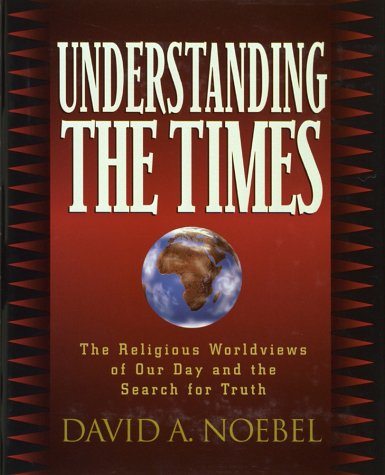
David Noebel is the author of "Understanding the Times," a book popular in evangelical and homeschool circles.
David Noebel is the author of “Understanding the Times,” a book popular in evangelical and homeschool circles.

I knew nothing about David Noebel.

I was not familiar with his much earlier work Communism, Hypnotism, and the Beatles, published in 1965–long before my birth–by Billy James Hargis’ Christian Crusade.

In one reviewer’s words: “Noebel is compelling because he’s intelligent, coherent, and well-researched, despite being absolutely paranoid and utterly mad. Aside from some inconsistent use of the Oxford Comma, he has a clear, if discursive thesis:

“Rock ‘n’ roll is turning kids into gay, Communist, miscegenators.”

Billy James Hargis was a right-wing evangelist and radio and television ranter long before Rush Limbaugh. He saw communist plots everywhere: in the NAACP and the civil rights movement, in the assassination of JFK, in water fluoridation. According to TIME magazine (Feb. 16, 1976), he founded American Christian College “to teach ‘antiCommunist patriotic Americanism'” from the city he called the “Fundamentalist Capital of the World”. From there, he promoted a hard line against drugs, homosexuality, sex education, abortion and the Beatles and toured with the college choir.

David Noebel was an aide to Hargis for twelve years, speaking around the country, founding The Summit in 1962 as a Christian Crusade program to combat anti-Christian teachings from secular universities (like the University of Tulsa) and contributing to Hargis’ television show where together they decried marijuana use and rock music. Later, Noebel became Vice President of Hargis’ new American Christian College in Tulsa.

In 1974, Noebel was staggered when students confided to him that Hargis, ardent promoter of traditional morality and father of four, had had sex with several of them.

Eventually four men and one woman exposed Hargis’ sexual abuse and manipulation over a period of years. TIME reported on the scandal in 1976, Hargis was forced to resign, and the school closed its doors the following year. Noebel went on to effectively “fold” Christian Crusade into Summit Ministries, building it into a successful international worldview training/brainwashing center targeting all ages, but teenagers in particular.

Noebel was an aide to Billy James Hargis, a right-wing evangelist and radio and television ranter who saw communist plots everywhere.

Postmodernism has replaced communism as the bane of our times. According to an article by Summit’s Steve Cornell,

“[The] pre-modern era was one in which religion was the source of truth and reality…. In a postmodern world, truth and reality are understood to be individually shaped by personal history, social class, gender, culture, and religion…. Postmoderns are suspicious of people who make universal truth claims…. Postmodern thinking is full of absurdities and inconsistencies.”

As a postmodern myself, I find it ironic that the decades have softened Noebel’s hardline position on Christian rock.

Apparently Mephistopheles has released it for other uses. Students at Summit’s youth conferences speak of the meaningful “corporate worship“, which now includes rock songs like “How Great Is Our God” by Chris Tomlin and “Jesus, Thank You” from Sovereign Grace Music.

The teens attending the worldview lectures today were not yet born when David Noebel penned Stratagem and would likely be surprised to learn that the religious anthems they find so powerful are actually “estranging them from traditional values”. According to the now retired, but still involved and revered, “Doc” Noebel, “although the lyrics might acknowledge the concept of true worship, the music itself expresses the unspoken desire to smash it to pieces.”

Summit’s John Stonestreet writes, “Truth does not yield to popular opinion. Unlike postmodernism, the biblical worldview can withstand all challenges and still speak to the dominant culture.” This belief is at the core of Summit’s “worldview” training.

And yet, Lowell’s line rings more true: time does make ancient “good” uncouth. Morality and truth are, in fact, shaped by history and culture.

As Summit’s stance on Christian rock illustrates so well.

Maybe, in another 30 years, Noebel’s successors will stop fighting same-sex marriage and even give up warning kids about “the gay agenda” as they “keep abreast of truth”? One can always hope…

His Quiver Full of Them: Jeri Lofland’s Thoughts

His Quiver Full of Them: Jeri Lofland’s Thoughts

Jeri’s post was originally published on her blog Heresy in the Heartland. It is reprinted with her permission. Also by Jeri on HA: “Generational Observations” and “Of Isolation and Community.”

Decades ago, I cross-stitched a scripture motto for my parents from Psalm 127, the favorite psalm of large families.

“Lo, children are a heritage of the Lord: and the fruit of the womb is his reward.”

The psalmist goes on to say: “As arrows are in the hand of a mighty man; so are children of the youth. Happy is the man that hath his quiver full of them…”

The term “quiverfull” is now used as both a noun and an adjective to describe a theology and lifestyle that glorifies human fertility while maintaining that God will provide the resources to raise as many children as he allows a couple to conceive. Contraception is held to be “playing God” and a violation of the command to be “Be fruitful and multiply”. The ideal Quiverfull couple are always open to “more blessings”, regardless of financial situation, health concerns, housing limitations, or needs of existing children.

I’m not certain when my parents decided that contraception was immoral. As a high schooler, Mom was an advocate of zero population growth and intended to adopt rather than bear children. A few years later, she graduated from a strict Catholic nursing school and married my dad. I was born a year later, my brother two years after that, and so on for the next 20 years.

Mail would arrive periodically from the Couple to Couple League and my parents had a couple of books by Catholic authors John & Sheila Copley explaining the practice of abstinence and/or breastfeeding as a means of birth control. Of course, even “natural family planning” (NFP) sounded too much like the evil “Planned Parenthood” so it was usually referred to as “child spacing”. Somewhere along the line my parents abandoned NFP (turns out it’s not all that effective at preventing pregnancy!) and the babies began to come even closer together.

Certainly Mom was influenced by Mary Pride’s 1985 book The Way Home, a story of the author’s journey from feminism to what she calls “reality”. Mary had just three young children when she wrote the book, in which she blasted away at contraception, lingerie, Marabel Morgan’s The Total Woman, and even Christian schools.

All forms of sex that shy away from marital fruitfulness are perverted. Masturbation, homosexuality, lesbianism, bestiality, prostitution, adultery, and even deliberate marital barrenness–all are perverted.”

“Since the word used for female is connected so strongly with the idea of nursing babies, whereas it has no connection at all with the idea of sexual activity, I believe that God is saying here that when women exchange their natural function of childbearing and motherliness for that which is ‘against nature’ [that is, trying to behave sexually like a man], the men tend to abandon the natural sexual use of the women and turn to homosexuality. When men stop seeing women as mothers, sex loses its sacredness. Sex becomes ‘recreational’, and therefore the drive begins to find new kicks.”    (Mary Pride, The Way Home, 1985)

(Pride’s position against family planning was more extreme than even the Catholic Couple-to-Couple League’s, prompting a correspondence between her and John Kippley, president of CCLI, and leading Pride to grudgingly endorse NFP in some situations in her sequel to The Way Home.)

Pride went on to birth six more babies and became a powerful force in the new homeschooling movement. My mom used to share The Way Home with all her friends and donated it to church libraries when she could. (When she encouraged me to read it, I was confused. Especially by the story about the lady wearing saran-wrap. Sexually naive young women raised in patriarchal, homeschooling isolation were definitely not Pride’s target audience.)

Mary Pride’s views fit rather well with the teachings of Bill Gothard–a middle-aged bachelor who handed out plenty of sexual and parenting advice at his seminars and encouraged couples to have surgeries to reverse previous vasectomies and tubal ligations. One of Gothard’s books informs us, “Labor in childbirth… was given to the woman for her spiritual benefit…” and points out that the God of the Old Testament “cursed several women by closing their wombs.” Attendees of Gothard’s conferences learned to associate infertility with God’s judgement. A full quiver, on the other hand, was a sign of God’s favor, a spiritual status symbol.

In 1990, a Nebraska couple published A Full Quiver: Family Planning and the Lordship of Christ. In this book, Rick and Jan Hess (homeschooling parents of ten) invite the reader to imagine a world where no one has ever had more than two or three siblings, effectively eliminating many historical figures. This exercise concludes with visualization of a future where enormous families are normal and God provides spacesuits for a missionary family moving their brood to evangelize a colony on the moon. My parents had this book, probably purchased at an IBLP seminar and still available on Gothard’s website.

Then there was Nancy Campbell’s occasional magazine for moms, Above Rubies. Nancy is a fierce promoter of anti-feminism from her compound in Tennessee. Her website includes multiple articles by women who felt guilt and regret over “the biggest mistake” of their life. After they repented, they went on to expand their families by four, five, six more babies. What mistake is reversed by more pregnancies? An abortion, perhaps? No, as it turns out, the biggest mistake of these women’s lives was a tubal ligation. Nancy also sells a book, A Change of Heart, encouraging couples to have surgeries to reverse both vasectomies and tubal ligations.

Vickie Farris, whose husband Mike is president of the Home School Legal Defense Association, homeschooled their ten children and lived to write a book about it. She encourages other women to reject birth control methods and embrace motherhood. Quiverfull women like Farris, and Michelle Duggar of “Nineteen Kids and Counting”, have built their lives on the mantra “God won’t give anyone more than they can handle”, sometimes phrased as “What God orders, he pays for”.

My parents were opponents of both birth control and sterilization. They even encouraged some of their friends to have reversal surgeries, resulting in many more babies. My mom had eleven children over 24 years, including ten [unassisted home]births. Pregnancy was not easy for her–she often referred to herself with the phrase from St. Paul, “a living sacrifice”. She spent most of my childhood breastfeeding, diapering, potty-training, and homeschooling on top of that. I understood that this was not culturally normal, but sought to convince myself that God was pleased with this self-sacrifice. I spent my teen years watching my mom’s body swell and deflate, and changing thousands of diapers.

In my twenties, as I waited for my turn to become a wife and mother, I quietly ticked off how many children I could have in years. I may have been ideologically persuaded that contraception was wrong, but I didn’t want to spend twenty years lactating either. When I got impatient for God to bring me a husband (no boyfriends on the horizon), I consoled myself by guessing how many fewer children I would bear in a shorter window of fertile sexual activity.

Fortunately, when I did get married, my husband and I quickly began to realize that many aspects of Quiverfull thought and practice were contradictory to our values. Not before taking NFP classes from a Catholic certified trainer, though. When we got pregnant anyway, we were told the method worked fine–we’d just had sex when [it turned out!] we were actually fertile. Well, what do you know?

I think my relationship with the Quiverfull movement finally ended a few years ago as I was perched on the end of an exam table in my doctor’s office. Looking up from my chart, she compassionately observed, “You’ve been raising kids for a long time,” and I burst into unexpected tears.

These days, stories of ex-Quiverfull moms and their “quivering daughters” are multiplying on the Internet like rabbits in the spring. The fruit of the movement has not turned out to be sweet; we deal with health problems, poverty, anxiety, depression, PTSD, eating disorders, cutting, sexual abuse, emotional incest, and divorce. (You can read far more than you want to know at the Homeschoolers Anonymous blog.)

In spite of these firsthand horror stories, Quiverfull continues to enjoy wide support in America and is gaining traction in other nations. Earlier this year, the BBC reported on the movement’s growth in the United Kingdom. You can listen to more, including scary-sounding clips from Nancy Campbell, here.

Meanwhile here in the States, Hobby Lobby and Catholic hospitals gnash their teeth over their employees’ rights to use birth control. Texan teenagers are taught that contraceptives don’t work. (The result? Texas has more than 10% of America’s teen births.) And TLC continues to profit from shows like “Nineteen Kids and Counting”, promoting Quiverfull ideology to some unsuspecting viewers.

The show should include a disclaimer: For your own safety, don’t try this at home.

Cookie Cutters and The Power of Secrecy: Esperanza

Cookies Cutters and The Power of Secrecy: Esperanza

HA note: The author’s name has been changed to ensure anonymity. “Esperanza” is a pseudonym.

Trigger warning: self-injury.

I was so grateful when I saw that HA was doing a series on self harm. Because it is something that I feel is so prevalent within the homeschooling subcultures, yet, is the one thing that everyone is still afraid to speak up about, because it is “that” problem. In my opinion, self harm is not merely restricted to cutting, or injuring one’s self, but can also include eating disorders. With over two million cases reported in the United States alone, anorexia has the highest mortality rate of any psychological disorder, and is something that the homeschool community simply cannot afford to ignore any longer.

Before my mid teens, I had never even known of someone that had an eating disorder, or self harmed. I certainly never thought that I would ever in a million years be “that girl.”

Growing up, I was the perfect little ATI daughter. I wore the jumpers and culottes, wouldn’t even look a boy in the eye, and constantly bent over backwards to protect my family’s good image so as not to tarnish their ministry. I rarely did anything wrong, and that is why it came as such a shock to me when I realized I was actually pretty darn good at lying. I lied about the scars, the sudden weight loss, the passing out. I only remember ever telling one lie before this in my life, and so it surprised me when this life filled with lies just came so naturally.

I still remember the day I stopped eating. It was a very simple decision, and one that oddly enough gave me courage. I was at an extremely broken place. The only person who offered me  protection had left my life, and life was about to become even worse than it had been. Nothing was mine, everything was being taken from me, and I felt trapped in this massive cycle of manipulation, threats, loss, and depression. I could not see that there was any way out. I’d never been told that this way we lived, the things that were happening were wrong. How could they be, when I’d been shown Bible verses that “proved” otherwise? My head was so twisted around that I couldn’t tell up from down, right from wrong. The only thing I knew for sure was that no one could make me eat. That was the one tiny part of my life that I could control, and as long as no one knew my secret, I could keep at least a little control over my own life.

The dangerous thing about the homeschooling culture like the one I was raised in, is that no one expects their daughter or son, brother or sister, friend, to cut their body, or to stop eating. And in these type of cultures, because of the secrecy and lack of education on the issue,  it can very easily become a dangerous situation very fast. These types of behaviors are a reaction to what is happening in one’s life, or a release of some type of pain. As we all know by this point in our lives, we certainly didn’t  grow up learning how to properly talk about and process the difficult things in our lives, and homeschoolers, in my opinion, are even more likely to engage in these types of harmful behaviors. Being homeschooled leaves you feeling very isolated, with no way to reach out, and certainly not as much access to help as those in a traditional school environment.

In my case, I kept lying, every single day. It helped that I was actually working outside the home at the time, and so very often I only ate one tiny meal a day when I got home. When I eventually found freedom for myself and left, and finally had a chance to just stop and be in a peaceful place, all of the emotions of the past 21 years came rushing at me like a tsunami, and I had such a hard time dealing with it, that my eating disorders suddenly became ten times worse. Suddenly I wasn’t eating for days on end, and it was getting harder and harder to lie to the people around me. But suddenly I was meeting people that were actually caring and noticing and saying that I was too valuable to be hurting myself this way. However, the problem with eating disorders, and harmful behaviors, is that while they most often start as a way for you to control your life, before you even realize it, they suddenly control you. Once I was out, and had a chance to begin to really process and heal, I no longer wanted to starve myself. However, this cycle of self harm had become an instinctual reaction to the pain and issues I was facing during this healing process had completely overtaken me. Once I realized that the only power this thing had was in the secrecy, I opened up to the people closest to me, that loved me, and cared, and it was as if immediately, the massive hold this disorder had over me was gone.

And that is the problem with eating disorders, and self injury in the homeschool world. All of our families are supposed to be picture perfect. Cookie cutter families who never have any problems. So many families I knew growing up acted as if this life were a competition, to see who’s family they could beat in the godliness Olympics.  I know that growing up as the daughter of a preacher, there was an enormous amount of pressure placed on me to be perfect. So, when I would see little cuts or burns on my friend’s arms, when I would notice a friend who wouldn’t eat anything in front of anyone, my heart hurt for them because I knew. I knew that we shared this unspoken burden. One we could never reach out for help from because that would mean breaking that perfect little family picture into a million pieces.

These days things are a lot better. There was a time last year where I thought that this thing, this pain that took itself out on my body was never going to go away. That I could never beat it. While honestly, there are still bad days where food is not my friend, and there are sometimes new scars on my arm, but the battle is getting easier to fight.There are still days where my father’s nasty comments about my weight echo in my head and I hate my body all over again. But the days when I remember all the people that love me for me, just as I am, who tell me daily that I am valuable and have worth are far more. The ability to just be me, to have struggles and to be broken is strangely enough the most freeing feeling in the world. The need to be perfect is finally gone, and I can rest in each day, just taking one step at a time, doing the best I can possibly do that day.

The Queer Elder’s Son: George

The Queer Elder’s Son: George

Trigger warnings: this story contains brief references to molestation.

Hi, I’m George, and I’m a queer man who was homeschooled.  And guess what?  For me, it wasn’t all that bad.  Yes, within the conservative Christian community I was raised in, complete with the requisite Bill Gothard character studies and HSLDA membership, I actually turned out okay.  How is this possible?  Let’s take a look.

I’ve never attended a public school.  I stayed at home and was taught by my mother from a self-created curriculum from kindergarten through senior year of high school.  During this period, my family attended a series of churches, trying to find the correct mix of the fundamentalism my mother sought and deism my father was attracted to.  Surprisingly, this meant a lot of different churches including one ill-fated and ill-advised attempt at creating our own.

We’ll start with some of the ugly stuff.  Like most in my situation, sexuality was always correlated directly with shame.  We never, ever spoke of sex.  I found out about it when I was ten years old and reading the encyclopedia article on vaginas.  The line “insertion of the penis into the vagina” was the most detail I got, later telling my parents who laughed, asked if I had questions, and never spoke of it again.  The secrecy and taboo nature of sex led to me being more than slightly obsessed with it.  However, the idea of purity had been ground into my mind, and I remember flagellating myself after masturbating for the first time, thinking I had left my purity behind.  No God could love someone like me.  But the confusion of sex as being ugly — after all, God struck down that man who ejaculated on the ground — and somehow ‘good’ was something my mind was unable to rectify.

I still hesitate when trying to find words for what happened next.  The simplest explanation is often the best.  While at a Christian summer camp, I was molested by a male counsellor over the course of a three-week session.  He was in his late teens and while what occurred between us wasn’t rape, it obviously wasn’t consensual sex either.  I came away from the experience with two major problems.

First, my purity was definitely gone now.  What I had done with that man meant I was officially damned to hell.  It was over.  Could I even go to heaven now that I’d lost that part of myself?  I figured the answer was no.

Second, I enjoyed it physically.  I found myself attracted to him.  Him, a man.  I was a homeschooled preteen, and thus the idea of homosexuality didn’t even make sense to me.  But it was obviously not normal and not something men were meant to feel for men.

For mostly the second reason, I kept it a secret.  And the next year?  I went back to the same camp, he was still there, and we picked back up where we had been.  This move I did regret afterwards, serving myself up to him so obviously.

So that year I decided to tell.

This is probably the lowest point of this tale, the part where things suddenly screech to a halt.  My mother told me she did not believe me, it was too ridiculous to think the person I was specifically singling out had done what I was saying.  So I slammed it back inside and did not speak of it again for years (this post is around the fourth time I’ve ‘said’ it in the last fifteen years).

Unfortunately this didn’t mean the attraction to boys went away.  Which was a problem, especially once I found the terms to label it.

Sitting through long discussions of purity?  Of how to remain like Timothy or Titus or some other short book of the Bible?  I had already committed the sin of Onan, with another man.  How on earth was I supposed to return to a time before that all happened?  So I settled for keeping it quiet.

Fast forward a few years, to my first same-age homosexual encounter.  In an extremely conservative Christian organization, I attended an annual ‘summit’ of sorts.  Boys and girls were kept very separate for propriety’s sake.  I am unsure how the organizers didn’t see how this would backfire, as it led to me and several others initiating activity which was just a ‘joke’ and ‘so gay lol’.  I do wonder about those men, some of them now married with children being raised in the heart of southern baptist ministries.

This was when I decided to embrace my sexuality.  I had only one life.  The shame I felt about it?  Still present.  Always present.  Knowing God hated me.  But he had hated me since the first moment I had had hands lain on me back at summer camp, so what did it matter any more?

I manifested this choice in several overt ways.  I began to dress much more flamboyantly, with bright colors, patterns, and the occasional piece of non-gender-appropriate clothing worn in public, even to church.  I started to spend time grooming myself, discussing personal hygiene with ‘the girls’ and loving the camaraderie we shared.  My male friends dropped away one by one, until none were left, which was picked up on by the homeschooling community we were a part of.  My mother was a leader in it, my father an elder in a church with a few thousand congregants who all paid close attention to his kids.

The son showing up in makeup, flares, and paisley?  With a sash?!  Yes, it was noticed.  The boy who was quickly becoming ‘one of the girls’?  Oh, very much noticed.

People whispered.  People talked.  I wasn’t invited to so many messianic seder celebrations any more, but I could handle it.  Because I was already damned to Hell!

But soon the girls weren’t allowed to be my friend either.  The more conservative families pulled away entirely, leaving my own siblings without close friends.

Finally my parents had two very different conversations with me.

My father sat me down and requested very plainly that I not come out of the closet.  He said if I did, he would cut off ties with me.  But otherwise, I was free to live my life.  There was no preface at all, it was said during a car ride to get groceries, and I guess my desire to self-destruct had reached a point where he felt it necessary to say something.  I told him I was still into girls, and his smirk made me want to prove him wrong.

Within the same week, my mother and I were baking together (yes, a homeschooled son allowed to help prepare family dinner!) when she asked me if I was gay.  She quickly followed with “because it seems like you really want people to think you are.”  I told her I sort of was and sort of wasn’t.  I just liked expressing myself.

My mother, a friend of Michael Farris, worshipper of Francis Schaeffer, former pal of Doug Phillips, said she just wanted me to be happy.

We had Bible studies every morning still.  I read about how much Jesus loved those who were as fucked up as me, obviously lacking the belief that this was true.  My parents loved me, and still love me.

Shortly, my father was removed from the board of elders of our church.  We were still welcome to attend, but not to hold leadership or serve in any particular area of ministry.  The hunt for a new church began quickly, settling on a liberal Presbyterian congregation that left me with less of a desire to rub my sexuality in everyone’s face.

Prior to enrolling in college, I dated a Good Christian Girl for a year to make my family happy.  We did it all the right way, asking about courtship, allowing her father to have some level of control (my own father terrified of messing up what seemed like the perfect ‘out’ for him with regards to his gay son), and keeping things very chaste.  After our breakup, my mother asked if we had ever kissed, and seemed disappointed when I said no.  Seemed like that wasn’t the cure, but she had hopes still.

I dated another girl in college, one I got much more physical with, though not to the point of full-on sex, as we were at a conservative Christian school and she wanted to preserve her ‘purity’ for marriage.  I was aware mine was gone and didn’t believe in the magic ability to restore virginity, so I broke up with her rather than break her heart with the truth of me.

I remained celibate for the next two years, toning down my flamboyancy and joining a church’s youth ministry where I quickly became a favorite of the kids and a hot item for the single ladies seeking a man to produce a quiver full with.  I think perhaps browsing my old Facebook photos was enough for them to know it probably wasn’t going to happen.

The period of celibacy brought great joy to my parents.  Perhaps I wouldn’t turn out gay, just maybe.  I had dated two girls after all.  I was just a bit more…out there than most men.

When I started dating my most recent partner, a black male poet from Brooklyn, I kind of figured it was time to admit something to myself.  But my Dad’s words about coming out still rung in my head, and I kept it quiet.

That relationship ended without anyone ever hearing about it.

Shortly thereafter I moved far from my family’s location.  Dated a couple other men, a couple other women.  Kept it quiet and out of their earshot (except for my mother, who once asked specifically about my ‘special friend’, who she found endearing).

The shame is still there.  The desire to hide it is still there.  Most of my siblings don’t even know I’ve dated men, much less several men.

I wonder where I’d be had it not been for that summer camp.  I wonder if my belief in purity would have resulted in many more years of repression or would have resulted in me being able to maintain a heterosexual relationship?

But those value judgements are for people who desire to make value judgements.  I’m past that.

My parents still love me.  They are from a different time, a different age, and aren’t quite able to cope with the entire truth.  But they know who their son is, and they love him anyway.  They love him enough to lose friends, to be removed from a church, to question their own deep biases.  Sure, things could be better.  But they could also be a lot worse.

Mostly, I worry about those who are less happy than me.

Is my story the picture of perfection?  No, not at all.

But I’m finding ways to like myself.  Finding ways to believe in something that brings me joy rather than pain.

I’m here, I’m queer, I was homeschooled and I’m not ashamed.

Home School Marriages: Shadowspring’s Story, Part Three

Home School Marriages: Shadowspring’s Story, Part Three

Shadowspring’s story was originally published on her blog Love. Liberty. Learning. She describes herself on her blog as, “a home school mom near the end of my career home schooling and looking forward to what life has to offer next. I am a follower of Jesus and a lover of freedom, as it is for freedom that Christ has set me free (Gal 5:1).” This story is reprinted with her permission.

*****

In this series: Part One | Part Two | Part Three

*****

3. Poison For My Marriage

"I did this because I believed these false teachings. They are simply more of the same old Gothardite lies."
“I did this because I believed these false teachings. They are simply more of the same old Gothardite lies.”

I have sat and listened to some whacked out teachings about gender roles, and especially teachings to women about unilateral submission, why it’s important, what it should look like.

They were poison.

And I ate it up.

It was inevitable that I would, since as a fundamentalist Christian, it was offered everywhere I went. There really isn’t any other marriage advice on their radar. In the fundamentalist churches I attended anyway, once you were married the rest of the Bible faded away. You were no longer a disciple of Jesus, you were a wife. And that’s the sum total of all you were expected/allowed to be.

Funny thing, my husband also stopped being a brother in the Lord at the same time I stopped being a sister in Christ. Suddenly we were only husband/wife in the teachings I was hearing. No other scriptures applied to our relationship.

Here are some of the falsehoods I was taught, and often by women themselves.

(1) Because I am married, I am no longer to speak the truth in love. (Ephesians 4:15) I am no longer to consider how to spur my husband on to love and good works. (Hebrews 10:24)

Since Paul would not suffer a woman to teach a man, I should keep my opinions and insights to myself. Yet in all the time my now-husband and I spent together before considering marriage, we were very good friends. We talked about everything. Nothing was off the table. But according to these teachings, once a girl says those vows, she is no longer welcome to share her thoughts and insights. Paul’s words were the scripture cited, but there were other reasons given. I’ll get to the stated relational excuse in a bit.

(2) Because I am married I cannot help my husband see his fault. (Galatians 6:1)Because I am married, I am not to go to my brother who has sinned against me and seek repentance and restoration. (Matthew 18:25)

A wife should fast and pray before approaching her husband about anything, and then only if she feels she absolutely must. This advice is based on the story of Esther as she has to approach the wicked king Xerxes. Excuse me? I didn’t marry a wicked pagan king, I married a brother in Christ. Esther, the exalted concubine, was no valued partner of King Xerxes. She was chosen strictly for her looks and her bedroom skills. Their marriage was hardly an example of the one-flesh union comparable to Christ and the church. Ooh, ick.

Further, because of Peter’s advice that a woman with an unbelieving husband can win him over without a word, relying on her quiet and gentle spirit, I was told that I should keep my mouth shut. But again this made no sense to me. I didn’t marry an unbeliever! I married a brother in Christ. We met at church and I saw him at prayer meetings, church socials and visitation ministry. He already knows Jesus. I was puzzled.

(3) Because I am married, I am no longer to run the race to win. (Hebrews 12:1,I Corinthians 9:25-26) I can no longer put off falsehood and speak truthfully. (Ephesians 4:25) 

I have heard women speakers say that wives who feel their husbands are lukewarm in their faith, are really just making their husbands look bad. Men apparently have really fragile egos and can’t take this, so they quit serving the Lord in their struggles with feelings of inadequacy.

A smart wife will hide her devotion to God, pray and read her Bible in secret, and keep her mouth shut about spiritual things unless her husband brings it up. In order to encourage (manipulate) him to discuss spiritual things, a wife should ask her husband questions, feigning spiritual ignorance in order make him feel more spiritual than the little woman.

In other words, she should pretend he is a “spiritual leader” in order to manipulate him into becoming more fervent for God. We are to pretend he’s running the race faster than we are, even if in fact he is sitting doing nothing. It amounts to nothing less than living a lie, and dishonoring the Lord by not loving Him with all of the wife’s heart, all of her soul, all of her strength, in order to make her man look better.

Yes, it really is that crazy.

All that to prop up his ego, lure him into thinking himself a true “man of God” when in fact he is lukewarm and lazy and unconcerned about spiritual matters.

This teaching rewrites Ephesians 4:25 as “put on falsehood”! Though it never sounded right to me, in my fervent desire to please God, I gave it a shot. I admit it. I did. Stupid woman that I was, I was of no help to my husband or my family by living a lie.

I did this because I believed these false teachings. They are simply more of the same old Gothardite lies: be subservient and commit your way to God, pray in sincerity and love, suffer “as unto the Lord” and God will make all the changes in your authority figure that need to be changed. That is such a destructive doctrine.

(4) I was told to engage in “smooth talk and flattery” (condemned in Romans 16:18, Job 32:22) by offering undeserved respect to my husband. 

Fundamentalists falsely teach that the greatest need a husband has is to be respected by his wife. Too bad they don’t teach that the greatest need a wife and children have is for the man to live a life worthy of their respect. The Bible calls men and women alike to live lives worthy of respect. (I Timothy 3:8,11 and Titus 2:2.) I don’t recall reading anywhere that we should give undeserved respect. The scripture that tells wives to respect their husbands does NOT add the caveat “whether they deserve it or not”. Yet I have listened to people claim that is exactly what God meant. The God of truth? Are you serious?

Uh, no, a man’s greatest need is for authenticity, just like the rest of humanity. Truth is our greatest need. For nothing else we say or do or feel or think is worth experiencing if it is based on a lie.

This whole doctrine is so disrespectful to men. My husand’s ego is not so fragile that he needs to be told he is succeeding when he is failing. He is not incapable of serving God or earning respect. A lukewarm man who is coddled like this will be shocked when the day of truth comes, and it will. The truth will out for every person.

One day, the ridiculousness of the whole teaching finally became crystal clear to me. I called to my husband and told him that I had something to say. God had convicted me that I was not to hold back anymore. I showed him in Hebrews that I am to run the race to win, and I am not going to lag behind him pretending he is racing ahead of me anymore.

He was shocked that anyone ever told me I should!

I determined that day that I would not disrespect God and my husband by following these false teachings one more day. I have his full support on this.

First and foremost, my husband and I are believers in the Lord Jesus Christ. This is who we were when we met, and who we still are. That relationship will never change, and trumps every other relationship we will ever have.

We are the one anothers mentioned in all those scriptures (John 13:34, Romans 12:10,16, 13:8, 14:13, 15:7; I Corinthians 1:10,16:20; Galatians 5:13; Ephesians 4:2,32, 5:19,21; Colossians 3:13,16; I Thessalonians 5:11; Hebrews 3:13, 10:24,25; James 4:11; I Peter 2:22, 3:8, 4:9, 5:5,14; I John 1:7, 3:11,23, 4:7,11,12; 2 John 1:5). This is how we are called to live as believers, keeping the unity of the Spirit (Romans 15:5, Ephesians 4:3). It is the only way we will ever with one mouth and one mind glorify the Lord (Philippians 2:2).

Once we have that relationship down smooth, we will revisit the scriptures on marriage. It could be a while.

(Karen Campbell uses the term “one anothering” in many of her teaching about the Christian home and family. You can find her website at that mom. But it is the Lord who first coined the phrase and the concept.)

I urge anyone reading this post to hold up the totality of any marriage teaching they hear to the light of the one anothering verses, remembering that one another is a two-way relationship.

I encourage you to speak the truth in love to your spouses, spur them on to love and good works. Go to your brother who has sinned against you in gentleness and respect, seeking true repentance and restoration.

I encourage you to always be honest, and never pretend to be someone you are not.

To be continued.