Rewriting History — The History of America Mega-Conference

Rewriting History — The History of America Mega-Conference: Part One, First Impressions

HA note: This series is reprinted with permission from Ahab’s blog, Republic of Gilead. For more information about Ahab, see his blog’s About page. Part One of this series was originally published on July 3, 2013.

*****

Also in this series: Part One: First Impressions | Part Two: Doug Phillips on God in History | Part Three: “Religious Liberalism” And Those Magnificent Mathers | Part Four: Kevin Swanson Is Tired Of Losing | Part Five: Messiah States and Mega-Houses | Part Six: Doug Phillips Rages Against the 20th Century | Part Seven: Christian Vikings, Godly Explorers, and Strange Bacon | Part Eight: Closing Thoughts

*****

On the evening of Tuesday, July 2nd, I observed the History of America Mega-Conference at the Radisson Hotel Harrisburg in Camp Hill, PA. The event is sponsored by Vision Forum, a ministry with a strong Christian Patriarchy slant that focuses strongly on “Biblical education” for children. The History of America Mega-Conference features workshops on the past four-hundred years of American history, filtered through a conservative Christian lens. (More here.) The description of the event at the Vision Forum website left no ambiguity about the conference’s agenda.

“Are you and your children equipped to answer the politically-correct, historical revisionism that dominates higher academia and the mass media today — to defend our nation’s godly heritage with nuance and precision against the fierce onslaught of secular skepticism?

Antagonists to the Christian faith are stealing our history, and it’s time we take it back. The engaging messages given at this conference will arm your family with the truth to combat the lies of the Left — to have a sure foundation for the 21st century.”

This week marks the 150th anniversary of the Battle of Gettysburg, and given the proximity of Camp Hill to Gettysburg, many attendees dressed in Civil War era costumes. The costumes, while lovely, made navigation tricky. I almost fell over a woman’s enormous hoop skirt, then got accidentally whacked in the knee by a scabbard swinging from a passing man’s belt. When did Religious Right events become this hazardous!? I thought.
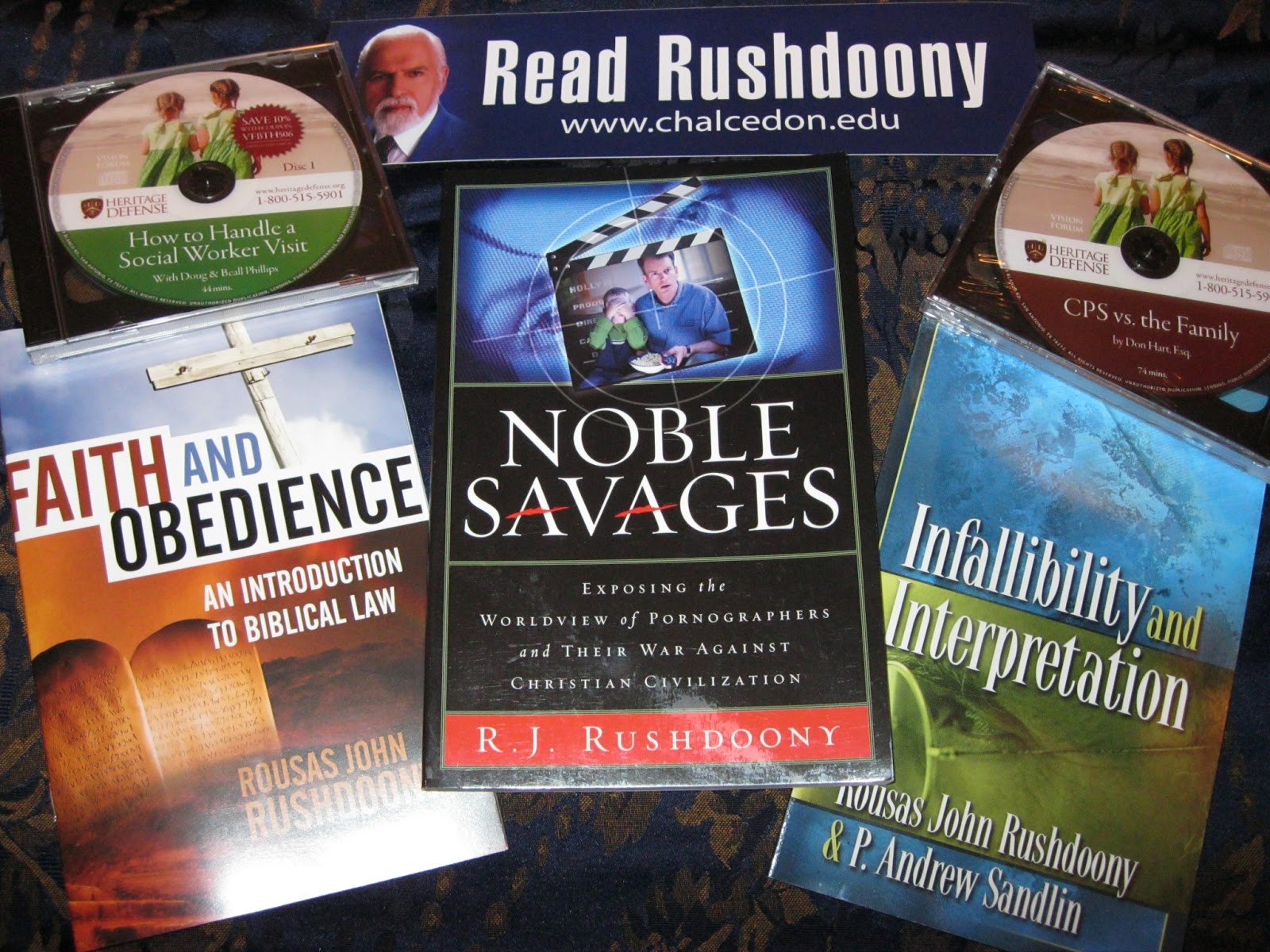
"The New Geneva Christian Leadership Academy table was stocked with books by Christian Reconstructionist author R. J. Rushdoony."
“The New Geneva Christian Leadership Academy table was stocked with books by Christian Reconstructionist author R. J. Rushdoony.”

About a dozen vendors were manning tables at the conference — mostly books, DVDs, and homeschooling curricula — and their titled amused me. The National Center for Family-Integrated Churches seemed keen on gender roles, judging by book titles such as Preparing Boys for Battle and Feminine By Design. At the Vision Forum merchandise table, alongside toy guns, toy swords, and books such as Large Family Logistics were DVDs with titles such as Tea with Michelle Duggar and Birth Control: How Did We Get Here?, a video on the evils of “child prevention”. I chuckled at the title of a video on food culture, Food Heresies: How to Reform Our Theology of Food Without Becoming a Selfish Marxist, a Radical Environmentalist, or an Imbalanced Vegan.

The New Geneva Christian Leadership Academy table was stocked with books by Christian Reconstructionist author R. J. Rushdoony, such as the colorfully named Noble Savages: Exposing the Worldview of Pornographers and Their War Against Christian Civilization. 

However, one display made my blood run cold. In the hotel’s grand ballroom was a display from Heritage Defense that read, “NO, YOU MAY NOT TAKE MY CHILDREN!” Sitting in the display were free DVDs such as CPS vs. the Family and How to Handle a Social Worker Visit. Upon reading the flyers at the foot of the display, I realized that Heritage Defense was casting child protective services as an opponent to Christian families. On its flyer, Heritage Defense claimed that it empowers Christian families by “uncovering social services abuses” and “holding abusive social workers accountable”. The flyer also celebrated the organization’s efforts to protect families from the following “threats” from social services:

  • Corporal Punishment
  • Sanctity of Life Decisions
  • Medical Choices like vaccinations and midwifery
  • Mandatory Reporters such as doctors, nurses, dental care providers, law enforcement, child-care services, nursery workers, coaches, counselors, and others…
  • Accidents in which children are injured
  • Premature Births or special-needs children
  • Anonymous Tips by those who wish to harm families
  • Harassment by extended family, neighbors, or mere acquaintances regarding disagreements concerning philosophical/religious direction and training of children
  • False reports generated by rebellious, disobedient, or indiscreet children within the home
  • Targeting of Profiling of Christian families because of faith, number of children, or other family dynamics
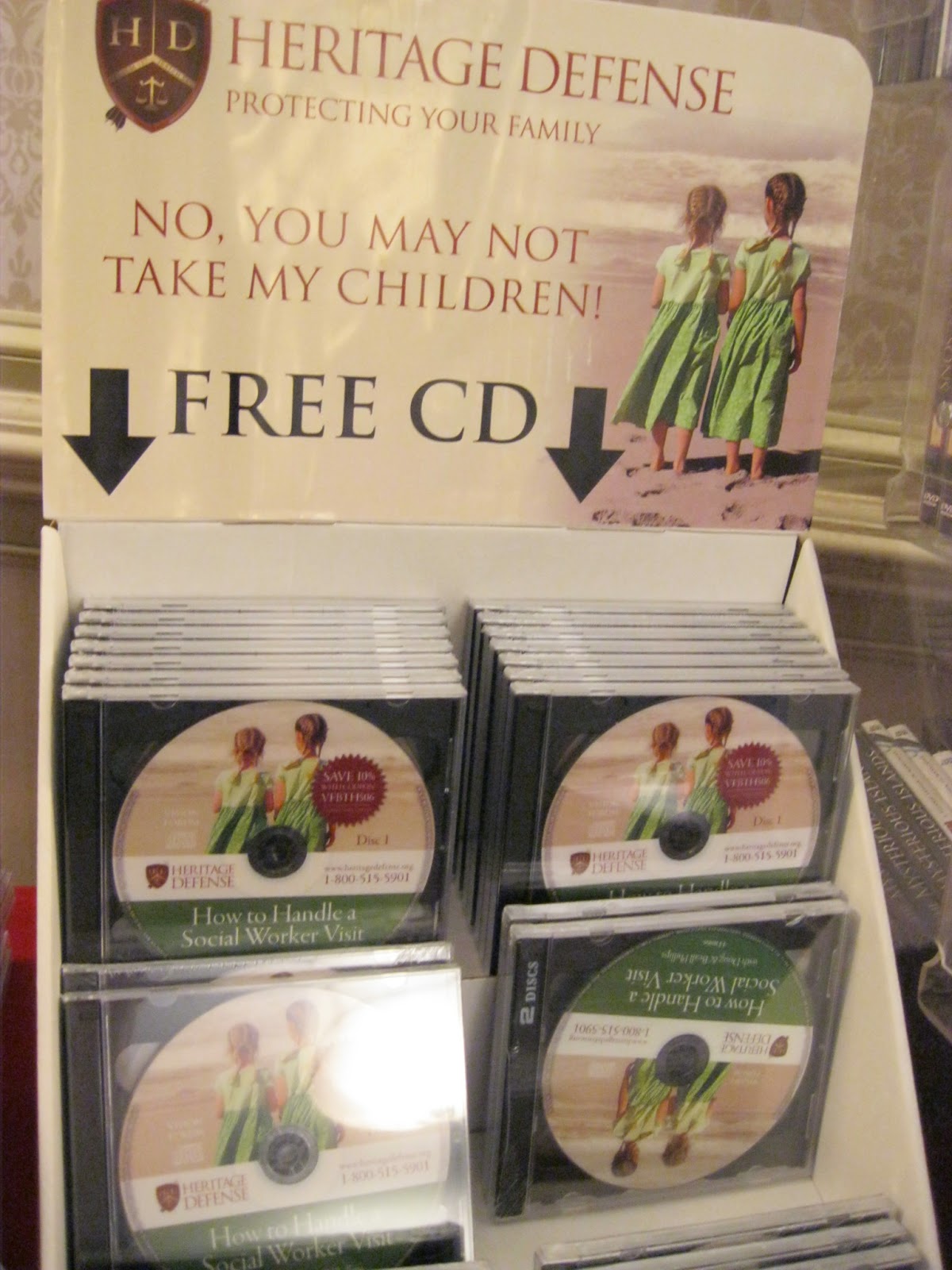
"Heritage Defense was casting child protective services as an opponent to Christian families."
“Heritage Defense was casting child protective services as an opponent to Christian families.”

Suggesting that mandatory reporters and anonymous tipsters are “threats” casts child abuse reporters as troublemakers rather than responsible citizens. To boot, the branding of children who seek help from CPS as liars or “rebellious, disobedient, or indiscreet” made me shudder. When child abuse occurs in fundamentalist families, where can victims find refuge if they’ve been taught that CPS is monstrous and that those who report are wrongheaded? When fundamentalists witness or suspect child abuse, could rhetoric like this make them reluctant to do the right thing? CPS is by no means perfect, but it does protect children from abuse and neglect, and thus this kind of demonization benefits no one.

Opening ceremonies for the conference began at 6 p.m., and hundreds of participants streamed into the grand ballroom. As the crowd filed in, I noticed several things about the attendees. First, the gathering was overwhelmingly made up of white families. Second, practically all of the women were wearing casual dresses or skirts, which I assumed had something to do with Christian patriarchy subculture. Finally, many of the families I saw had at least three children, often more, and babies were a common sight.

To be fair, everyone I met was gentle and helpful, and the families I observed treated their children with warmth. I struggled to reconcile these kindly people with the jarring messages I would hear from workshop speakers. It wasn’t just the workshop content that gave me pause — although polemic workshop titles such as “Why 19th Century American Literature Was at War with God” and “The Rise of Religious Liberalism” left me scratching my head — but the presenters of those workshops as well. I wondered how the women felt about a conference with only male presenters, or how anyone felt about a conference with all white presenters.

Stay tuned for posts on Doug Phillip’s opening speech and Wednesday’s workshops!

For more information on Vision Forum’s History of America Mega-Conference, visit the conference’s website.

*****

To be continued.

Voddie Baucham, Shy Kids, and Spanking 5 Times Before Breakfast

HA note: The following is reprinted with permission from Julie Anne Smith’s blog Spiritual Sounding Board. It was originally published on June 17, 2013.

One of the traps that we got ourselves caught in was looking to religious leaders for guidance on how to raise our children. It’s ok to seek guidance, but we didn’t always check what we learned with scripture. We read a lot of books and went to parenting seminars/classes over the years:  Train Up A ChildShepherding a Child’s HeartTitus2.com, Ezzo’s Growing Kids God’s Way, etc.

We weren’t the only ones. Some of these books/classes were trendy and many churches across the states would jump on the bandwagon. During the mid 1990s, I spent time visiting homeschool forums online and I’d hear of new parenting books/programs popping up all over the country. Next thing I knew, our own church was now promoting the program I had just read about online.

In general, we tried to adopt ideas that worked for our family and leave the other stuff behind. That seems like a balanced approach, but we still got ourselves in trouble and I have had to apologize to my kids for the way I treated them.

It’s interesting, but the Bible really doesn’t have a large amount of verses on child training, yet some of these Christian leaders were able to write meaty books on the subject or speak for hours on the subject,  showing us how to parent our children the “biblical” way. Yet how much of what they write or speak about really is in the Bible?  It’s really more of their interpretation of the Bible and the application of it. I don’t know about you, but none of my kids were born with an instruction manual and coming from a dysfunctional family, I wanted all the help I could get.

I now get red flags when I see big names being promoted as being the expert on a particular issue. Voddie Baucham is one such pastor whose name is in the celebrity pastor limelight.  I don’t quite understand why people elevate certain pastors to the level of celebrity status.  It’s high time we start removing people from pedestals and acknowledge that God has given us parents the same ability to discern that He has given them.  They were not given a direct line to God any more than we have been given.

From Mr. Baucham’s “about” page at his church website:

Voddie Baucham wears many hats.  He is a husband, father, pastor, author, professor, conference speaker and church planter.  He currently serves as Pastor of Preaching at Grace Family Baptist Church in Spring, TX.  He has served as an adjunct professor at the College of Biblical Studies in Houston, TX, and Union University in Jackson, TN.  He has also lectured at Southern Seminary.

Baucham is a big proponent of homeschooling and his 8 children are educated at home. He and his church also promote family-integrated church model, meaning families worship together and there is no age segregation for Sunday school classes, youth groups, etc.

In this article, we read about his involvement in the Homeschool Movement.  The Homeschool Movement is a subculture within the homeschooling community which subscribes to specific teachings and ideologies:  Courtship, Patriarchy, Purity/Modesty teachings, Quiverfull, etc.  He believes the Homeschool Movement has the ability to turn the tide in recapturing this current generation for Christ.  Here’s one quote:

”The one hopeful sign I see is that the home-schooling movement is thriving. If there is an answer, I believe that is it.”

Along with his support of the Homeschool Movement, Google searches will show that he is a strong supporter of Courtship and Patriarchy. He also does not think adult daughters should leave the home to go to college.

I’m not going to discuss those specific issues, but only bring them up to give a little background information.

What I do want to focus on is his parenting ideas, namely, spanking. Listen to his words. Line up his words with what the Bible says on parenting and see for yourself if this man is speaking biblically or his own agenda. Does the Bible say anything about shy children? Does the Bible say anything about how many spanks a child needs each day? Where does that come from?

*****

The following was transcribed from the above video:

Voddie Baucham

November 4, 2007

CORPORAL PUNISHMENT

SPANK OFTEN

Ephesians Chapter 6 Verses 1-4: I want to take you through three things, I want you to see three things, three phases in the training of our children. Phase number one is the discipline and correction phase. These are the first few years of life incredibly important. This is where we lay the foundation for everything else. The discipline and training phase. In this phase is where we are saying to our children “give me your attention, give me your attention.” “You need to pay more attention to ME than I do to YOU, give me your attention.” “The world doesn’t revolve around YOU, YOUR world revolves around ME.” That’s what we need to teach our children in those first few years of their life. Because they come here and just by nature of things they believe that the world revolves around them. And for the first few weeks that’s okay, but eventually we need to teach them that that’s over, that, “The world no longer revolves around YOU. YOUR world TODDLER, revolves around ME, around me.”

Folly is bound up in the heart of a child and the ROD of correction will drive it far from them. In other words God says your children desperately, desperately need to be spanked.

Amen, Hallelujah, Praise the Lord and spank your kids, okay? (laughter from audience)

And, they desperately need to be spanked and they need to be spanked often, they do. I meet people all the time ya’ know and they say, oh yeah, “There have only been maybe 4 or 5 times I’ve ever had to spank Junior.” “Really?” ‘That’s unfortunate, because unless you raised Jesus II, there were days when Junior needed to be spanked 5 times before breakfast.” If you only spanked your child 5 times, then that means almost every time they disobeyed you, you let it go.

Why do your toddlers throw fits? Because you’ve taught them that’s the way that they can control you. When instead you just need to have an all-day session where you just wear them out and they finally decide “you know what, things get worse when I do that.”

THE SELFISH SIN OF SHYNESS

Let me give you an example, a prime example. The so-called shy kid, who doesn’t shake hands at church, okay? Usually what happens is you come up, ya’ know and here I am, I’m the guest and I walk up and I’m saying hi to somebody and they say to their kid “Hey, ya’ know, say Good-morning to Dr. Baucham,” and the kid hides and runs behind the leg and here’s what’s supposed to happen. This is what we have agreed upon, silently in our culture. What’s supposed to happen is that, I’m supposed to look at their child and say, “Hey, that’s okay.” But I can’t do that. Because if I do that, then what has happened is that number one, the child has sinned by not doing what they were told to do, it’s in direct disobedience. Secondly, the parent is in sin for not correcting it, and thirdly, I am in sin because I have just told a child it’s okay to disobey and dishonor their parent in direct violation of scripture. I can’t do that, I won’t do that.

I’m gonna stand there until you make ‘em do what you said.

*****

Call For Help: A Quiverfull / Patriarchy Rescue

Call For Help: A Quiverfull/Patriarchy Rescue

HA note: The following call for help is written by Hännah Ettinger, who blogs at Wine & Marble. “Jennifer” is a pseudonym. Her name has been changed to protect her identity. Jennifer turned 18 recently and graduated high school the weekend of this rescue. She is currently in a safe home. HA has personal confirmation of this story from the involved individuals.

Update, 05/31/2013: Over $10,000 raised so far! Read Hännah Ettinger’s update here.

Last Sunday night, I got a call from one of my post QF/CP buddies–we’re both the oldest from big homeschooling families with some unhealthy dynamics, and we both left that world when we got married (which torqued both of our fathers, for different, but similar reasons). She and I have been discussing with some of our post-QF/CP peers the needs of new adults trying to get out of borderline abusive or codependent or controlling family situations.

“Hännah,” she said. “I need advice.”

And then she spilled a story about her family’s downward spiral into isolation, fear, and control (increasing after she left and got married as a reaction against how “bad” she turned out), about how her sister “Jennifer” was demeaned by daily screaming from her mom, Bible-based lectures from her dad on why her interest in being vegan and an animal rights activist were rebellious and wrong. Despite many requests to be allowed to make herself vegan food, she was never given permission to even make herself a salad. She wasn’t allowed to touch fruit or vegetables unless given permission, which sometimes meant that food would rot in the fridge even though she wanted to eat it. Jennifer’s parents also threatened her pets, telling her that if she did not eat meat for dinner, she would wake up the next morning to find one of them gone.

The final crushing moment came last weekend, after her high school graduation, when she wasn’t singing in church (out of self-consciousness) and so, in a fit of anger, her parents removed all of her access to the outside world, taking away the power cord to her computer and her cell phone charger. She managed to get a few calls out, begging for help, with the battery power left on her phone.

She called her sister, and asked her to come get her out.

Her sister called me. “What should I do?”

But we knew there was really only one option, and so she and her husband put in 28 hours of driving in three days and went to rescue Jennifer. They got her out after a confrontation with her parents that required police backup, and cost Jennifer her three pets, her graduation gift iPad, her computer, her art supplies, her summer clothes, and her life savings of nearly $3,000.

Jennifer plans to become a concept artist for computer games, and wants to start college classes in the fall in order to pursue her art, but she will need a computer and art supplies and a number of other essentials to start life over in a new state with little to her name.

So, dear readers, I’ve never done this before, but I think this is a worthwhile cause. Would you be willing to chip in $10-15 to help raise money for Jennifer to get back on her feet and start school in the fall?

*****

To donate to Jennifer’s fund: Please go to Hännah Ettinger’s original post and click on the PayPal button at the bottom.

Homeschooled Girls and Trash Cans: Latebloomer’s Story, Part Six

Homeschooled Girls and Trash Cans: Latebloomer’s Story, Part Six

HA note: The author’s name has been changed to ensure anonymity. “Latebloomer” is a pseudonym. Latebloomer’s story was originally published on her blog Past Tense, Present Progressive. It is reprinted with her permission.

*****

In this series: Part One | Part Two | Part Three | Part Four | Part Five | Part Six | Part Seven

*****

Part Six: A Tomboy in Christian Patriachy

"If I had known the term 'badass' back then, I would have applied it to myself with pride."
“If I had known the term ‘badass’ back then, I would have applied it to myself with pride.”

I was not the type of daughter that my mother wanted. I was a tomboy.

My hair was very short and I preferred blue clothes. I wanted to run faster and climb higher than anyone. I wasn’t afraid of slimy frogs and worms, and I could kill a spider without batting an eye. I looked with confusion and disdain at the passive little girls with their hair-bows, sitting and talking about clothes and boys. If I had known the term “badass” back then, I would have applied it to myself with pride.

When I was young, my mom was more tolerant of this. After all, in the early days, there were mostly boys in my age group in our small homeschooling community. So I was free to run wild with the boys and join their sports games during our weekly park days.

However, puberty was looming, and it signaled the end of my adventurous life. It was time for me to learn to act like a “lady”, and the means of teaching was through one sentence: “That’s not very ladylike”.

I was a difficult student; after all, the rules seemed very arbitrary and I couldn’t see any advantages that compensated for the extra restrictions. The heart of the message seemed to be that I had to become extremely aware of my body in order to keep other people from being aware of it. A lady did not run. A lady did not sit with her knees apart. A lady did not lie down in public. A lady did not make random bodily noises or find them amusing. A lady did not use crude language like the word “crap” or “fart.” A lady did not wear tight or revealing clothing — for awhile, that meant no shorts or sleeveless shirts. A lady never pointed to or discussed her own body in public. And most of all, a lady never called boys or invited them into her bedroom (not even when I was 23, in a group, with my family home and my door open! What did my mom think I was going to do, have a blatant daytime orgy before my first kiss??).

And besides the extra restrictions, there were also extra responsibilities. I had to learn to sew and cook, things that my brother was exempt from. I tried and tried, but I was never able to enjoy these womanly skills. Eventually my mom gave up on me and moved on to teaching these skills to other more grateful homeschool girls, leaving me feeling jealous and rejected.

It didn’t help my situation that my sister took naturally to wearing cute dresses, having tea parties, and making crafts. She didn’t even need coaching, while I was unsatisfactory even with coaching. As I watched my brother leave for his many outdoor adventures with other boys, I felt cheated and limited, having been born a girl.

In some ways, I was lucky compared to many other girls in the Christian Patriarchy culture that attended Hope Chapel with us. I was never required to wear only dresses or have long hair. I didn’t have to take care of innumerable younger siblings. But most importantly, I was actively encouraged to go to college.

For many conservative Christians, higher education is seen as suspect because of the so-called “secular liberal bias” of universities and professors. That was the case for my family as well. However, my parents were unusual in our church and homeschooling community because they believed that even a daughter should be educated enough to support herself if necessary. So they encouraged me to attend a very conservative Christian college such as Bob Jones University, Pensacola Christian College, or Moody Bible Institute. They advised me to choose an area of study that would allow me to supplement my future husband’s income by working from home after I had children.

So, why didn’t I head off to college right away? After all, I was completely miserable at home due to the extremely authoritarian parenting style that my church promoted. There were really two reasons: first, my severe social anxiety made the thought of college overwhelming and terrifying. Second, my parents’ pro-college message was drowned out by the sexist anti-college message of my church.A couple more years of worsening family relationships, of increasing depression, of a sense of purposelessness, of no prospects of a church-approved way out of that mess — that was exactly what I needed to reach my breaking point. My exact thought process at the time was this: “I’ve been praying for guidance about my future for years, and I haven’t heard anything. I can’t go on like this. I’m going to just start moving and hope that God will steer me if I go the wrong direction.”As I left home for the first time at age 23, I felt small, weak, timid, and vulnerable, heading out into the great wide world all alone. There was no trace of my former badass self from childhood. So is the Christian Patriarchy right about women after all?People tend to live up to the expectations of those around them, what others believe they are capable of.  The sexist beliefs then become a self-fulfilling prophecy. The women in the church were told over and over that they were easily deceived and easily swayed by their emotions and needed a man’s protection/guidance. But denying women education and experience is what made them that way.College was a time of transformation for me; I was overcoming my severe social anxietydiscovering my true identity, learning to be comfortable with sexuality, and learning to set boundaries and take responsibility for myself.   Marriage has only continued that process, as my husband and I work to maintain an equal partnership–something truly beautiful that I didn’t know existed 7 years ago.Now I am a feminist stay-at-home mom.  I stay at home because I want to, because I love the bond I have with my little one and the adventures we have together as I introduce him to the world.  I can understand his excitement as he discovers what he’s capable of — because I’m finally feeling. it too.

*****

To be continued.

More Than Just a Love Story: Phoebe’s Story

HA note: The author’s name has been changed to ensure anonymity. “Phoebe” is a pseudonym.

It was awkwardly quiet in the car as my words settled. They echoed in my own brain, I could only imagine what Michael was thinking.

“I have the highest respect for you, but I don’t think we can keep dating. I feel like I need to find someone who is more like-minded.”

The problem was, Michael was not a homeschooler and did not come from an evangelical background like I did, just the opposite in fact. His family was laid back about spirituality and never addressed it with structured religious custom. Pressure from my homeschooling family and friends and internal guilt had brought me to this point. I was sitting in the car with him having this awkward conversation because I felt there was no other option. I had grown up in a cloistered, homogenous community and I needed to find someone who would help me create the same kind of community for my own future children. This had been made clear to me when my family found out what kind of man I was dating.

When he graciously hugged me despite his confusion and left the car without looking back, I felt the old loneliness unpacking its bags and moving back into my heart.

For me, the story of being homeschooled was a story of being told to sit down and shut up. “An ideal woman is quiet and submissive,” I was told time and time again. As a weird, geeky, slightly tomboyish girl, I certainly didn’t fit that description at all. I ran around in the woods for hours at a time, I loved competitive debate, Cheese-Its and oversized cargo pants. My stubborn, goofy personality did not fit well in the sheltered, pressure-cooker that is the homeschooling culture.

My family followed the Quiverfull doctrine, which meant I was told that I was an arrow in my parent’s quiver, to be shot out into the world for God’s glory. As time went on, I began to realize that girl arrows get a much narrower, more specific target than boy arrows. They are to become wives and mothers or celibate missionaries. End of story.

At the local homeschooling meetups, it was hard for me to find a place in the circles of thin, whispy girls who were being groomed to be homeschooling mothers and wives. The pressure to be quiet, mousy and seemingly perfect was very high. I tried. I wore dresses and grew my hair out long. I read and quoted books about meekness and godly womanhood, and did my best to avoid hugging boys.

Ultimately, I wasn’t happy. I would hear the adults debate about how women were to be silent in the church. I would hear my dad yelling at my mother, telling her she was not a submissive wife. I would hear girls and mothers gossip about each other and use nasty words for whoever wasn’t ladylike enough. I saw the thousand mile stare and deadpan look on my mom’s face when she opted yet again to check-out, bottle up everything she was thinking and let her bitterness grow. I watched as other homeschooling mothers picked our family apart, criticizing us and pushing my mom around, spreading lies and rumors about each of us that my mother refused to refute. After years spent in this oppressively judgmental and chauvinistic environment, I listened to what I was told. I shut up just to avoid attention and judgment. I hoped to go unnoticed so no one would point out how inadequate I was. The silence and submission I was pushed into was ultimately a place of loneliness, bitterness and almost crippling insecurity. I wanted to get out, but I didn’t know how.

I went to the local college despite my parent’s discouragement. College (especially for women) is clearly contrary to the beliefs of many very zealous home-educators. In class, I met women who spoke up when they had something to say (sometimes even when they didn’t) without anyone thinking anything of it. Women who taught and led classes with passion and a certain touch of oddness that was all their own. They didn’t fit the submissive woman cookie-cutter shape I had grown up with. They were themselves. They were more feminine with their pant suits, unkempt hair and unabashed geek-out sessions than anyone else I had met. I wholeheartedly believe this is true because didn’t feel judged by them and I didn’t feel like less of a woman myself when I was around them. In my mind, that is a huge part of being truly feminine, letting other women feel comfortable being themselves around you. I cut my hair short, I got clothes that fit and I raised my hand in class.

Then I met Michael and we started dating. Michael is goofy, he is curious, he asks questions. He drew me out of my shell, took my hand and encouraged me to stand up and say something. We got into debates and he never once told me to shut up or submit. He was one of the first men I met who didn’t feel like women were solely meant to be homemakers; he helped me build a new confidence in the possibilities that were ahead of me.

Things got rough for Michael and I when my family and friends in the homeschooled circles realized what was going on. I was encouraged to dump him. I was told the path I was going down was dangerous. I was told our future children would go to hell, for sure. Michael was aggressively witnessed to by my family and friends almost constantly. He and I began to argue about religion and conservative beliefs almost every time we went out. I desperately wanted him to sit down with me, to shut up with me, so we could just quietly carry on and go unnoticed and free from judgment. Maybe if he would just nod his head in public and let the judgment pass us by.

He wouldn’t have any of that, so I tearfully dumped him. I decided in that moment that I would rather be comfortable, miserable and silent than be with the man I loved.

It took time, but we stayed in touch and slowly our friendship grew again. It became obvious that he was the man I wanted to be with and that the homogenous, fear-based homeschooling environment I had lived in for so long was holding me back from the life I now knew I really wanted. I wanted to be part of a family that could be open and honest and be married to a man who treated me as a true partner and an equal and respected my thoughts and goals. Two years later, on a pleasantly chilly day, we were married. My family and friends are still unhappy that this arrow went off target, but slowly they are learning to accept my husband and I for what we are and I am learning to stand up for myself around them.

With time I came to understand that my purpose on earth is not determined by my parents or the judgments of the homeschooling community. It can be hard to think and decide for yourself when you grow up without any autonomy, stuck at home with all your life decisions and friends carefully picked out for you. Sometimes, I get overwhelmed and slip back into passivity or dysfunction. I know this is frustrating for my husband to see, but he encourages me to step out of it.  Slowly, I am discovering how to communicate and take charge of my own life.

I am grateful to be away from an environment where women are told to sit down and shut up. Michael and I are slowly building a new family culture from the ground up, one that’s founded on mutual respect, openness and love. I hope if we ever have children, they will never feel like powerless arrows that their parents just shoot at set targets. I hope they will know that they are free to choose their own future, and that they will be prepared to take responsibility for doing so.

After homeschooling, this next phase of my life has become more than just a love story. It is about breaking the silence and learning to speak out for myself.

Copy Kids—The Immorality of Individuality: Jessica’s Story, Part One

Copy Kids—The Immorality of Individuality: Jessica’s Story, Part One

*****

In this series: Part One | Part Two | Part Three

*****

I believe that the greatest source of tension between myself and my mother is that I have deep sense of compassion. I care about the suffering of others, too much in her opinion and it set me apart from her in a serious way. I loved to help people and she always believed that people need to help themselves. A very staunch conservative Republican. I was not her mini-me and she couldn’t stand it. I also didn’t fit her mold in any way. My mother always told me, “I had three kids. I wanted an older boy, then a girl, then another boy. That way you would be in the middle of two protectors, but your older brother can’t protect you and you don’t fit.”

She was right. I did not fit.

My mother did get her wish on the order of the children. I am the middle of three children. My older brother has a mild form of autism known as Aspergers Syndrome. My younger brother was the definition of the baby. My parents made the decision to homeschool after a series of bad experiences with public school. Autism, especially high functioning spectrum disorders, were not at all well understood in the late 80’s and early 90’s. So when my brother, with his severe speech delay (caused by deafness as a toddler) and a complete inability to cope with his peers came to public school, they had no idea what to do with him. The school attempted to diagnose him with a range of disorders from mental retardation (he has a genius intelligence) to epilepsy. This difficulty with public school coupled with their extreme religious right views led them to homeschooling.

It was perfect. My parents could hide away the autistic child that they did not understand and were ashamed of, they could indoctrinate us and they could discipline us without fear of anyone hearing the stories or seeing the bruises.

I believe of the most fundamental problem with religious homeschooling is that in the seclusion provided by homeschooling, abuse can hide and thrive. There does not have to be anyone else around that differ from the views of the parents. How can a child even know they’re being abused if they don’t know that other children aren’t treated that way? It took me years to identify the sources of abuse in my childhood. There are still times when a childhood memory comes to mind, I think it through and realize just exactly how fucked up the situation was.

My three earliest childhood memories go as follows:

Memory number one: I remember myself sitting in a highchair, I couldn’t have been more than two. My mother was chasing my older brother around my highchair with a rolling pin.

Memory number two: I was about four and was sitting playing with dolls in the living room. My oldest brother starts screaming from the bathroom. I walk to the bathroom to find my mother beating my 7 year old brother’s head into the shower wall and there was blood running down his naked body. Then we went to the hospital for stitches. We had to practice saying, “He tripped in the shower.” This was my first introduction to the government.  If we didn’t say what we were told, the government would take us away and put us with awful people that wouldn’t feed us.

Memory number three: I was 5. I do not remember what I was in trouble for, but I remember my mother looking at me and saying, “You give me looks like you want to stab me in my sleep. I’ll get you first.”  I’m sure at some point in time, I played with my parents. We had a swing, I had a bicycle, but I remember almost nothing before around age 10 that wasn’t traumatic.

The curriculum that we used was from Bob Jones University. The famous science textbook page that is floating around the web about the girl with the hair dryer that states we don’t know how electricity works? That was in my elementary “science” book. I will say that my mother did dedicate herself fully to our education, but we inherited her educational weaknesses. She was not at all proficient in even basic math. As her daughter, she was convinced that I shared her lack of math skills. She firmly placed in my head the idea that I was incapable of math. Instead, we focused on reading. The science was young earth creationism and the history, revisionist christian. I knew that the earth was no more than 6000 years old. God created it in six literal days and then flooded the planet.

When I shared my disdain for the idea of killing everyone on earth, I was beaten. God was not to be questioned. This was the academic aspect of my early childhood years.

The theological side was pure right wing extremism and some things that I can’t even give a label to.  I would like it to be noted before this section that I believe my mother suffers from untreated mental illness.  She is a pathological liar and possibly schizophrenic. I will lay out the basic tenants of my religious upbringing.

1) Abortion:

One of the most important lessons that my mother ever tried to teach was about evils of abortion. Alone in the car one day, she told me the story of my twin brother. I could not have been more than five. I learned that my mother had originally been pregnant with twins. After she was several months pregnant, she was in a car accident that killed my brother. At this point, she did not know that she was pregnant with twins. She was informed at the hospital that the fetus was dead and needed to be removed before it caused infection. She refused because she does not believe in abortion under any circumstances. God would deliver the baby when he was ready. A month later, the doctor did another ultrasound and found me. If she had submitted to an abortion I would not be here.  Then, in graphic detail I was told how my brother’s arm was born, then he came out, then me.

I was horrified. I had nightmares for weeks. I cried and cried. I spoke to my brother in prayer for years. Even as a teenager, I would lay in bed at night wondering how my life would have been different if my twin hadn’t died.

This might be one of the most important stories of my entire childhood.

It is completely made up.

At the age of 27, I told this story to a very close friend of mine. He looked at me like I had three heads and called bullshit. I was completely taken aback, highly offended. How could anyone hear one of my most personal, painful secrets and tell me it was crap? I had to prove him wrong. I ran upstairs to get my birth certificate, it would say twin birth and then he would apologize. I had never really read my birth certificate before and it said single birth.  I became instantly nauseous as the details of the story ran through my head. My mother never mentioned that story in front of anyone. We were always alone but we discussed it a lot. I ended up filing for copies of my birth records at the hospital I was born at.

I was a single, uncomplicated delivery. Single.

2)  Obedience to men:

To quote my mother, “You kids are the third most important things in my life:  God, my husband, then you. Remember, I will always choose your father over you.” This was ironic, very ironic. As I’m sure you, the reader, has noticed, I have thus far said very precious little about my father. There really isn’t anything to say. I saw him for roughly one hour a day in my early childhood. The only other times I saw him were on his few days off and vacations. When he was home, it was misery. He hit us; he beat my eldest brother with sticks. We also sometimes saw him at night. If we had misbehaved during the day, my mother would report to him as the head of household.  He would then come home from his second shift job and wake us up for a spanking with a heavy leather mechanic’s belt.  It was rarely more than one child a night, so if you were awakened in the night to the screams of another sibling, you were safe.

Even though my father was rarely present, I was to submit to him in all things. Then one day, he would pass me to my husband and I would submit to him.

Women were created to help men. We were not to question. Honestly, this is all I know about my father. I don’t know what his childhood was like. I don’t know his favorite food, his favorite color. I know that he’s a Republican, that he enjoys camping, and that I was to listen to him second only to god, just like my mother. This was also in my homeschooling curriculum. Most lessons for girls were somehow tied back to obedience of the father and, one day, the husband.

3)  Demons are real:

My mother was in constant fear of demonic influences and witches. Growing up, she would constantly discuss demons and witches. She was very fearful of witches casting spells on items to watch us. Things like MTV and other modern tv and radio could lead demons into us. This was so deeply ingrained from such a young age that I would lay awake at night paralyzed with fear that the scratching sound at my window was a demon. I even had to burn a present given to me by a friend once because my mother believed that my friend had cast a spell on it.  Even today, as an atheist with no supernatural beliefs, I still have to catch myself if something unexplained happens. The anxiety can be literally physically paralyzing and I have to stay constantly aware. I can’t let my self start into my cycle of fear.

At the age of ten, my mother decided that we had surpassed her ability to teach us. This and the strain of my older brothers autism led to the decision to put us in the local public school. I also believe, though I cannot verify this, that we were put in school because we did very poorly on the Iowa Test of Basics Skills that the state had forced my parents to take us to.

I was very excited about the prospect of school. I was going to be around kids of my own age for the first time. I would get to have friends.

Then the first day of school started and I was completely out of my element.

Imagine, if you will, that you are doing an experiment with monkeys. The test is to see how quickly the monkey can adapt and learn. So, you take this test monkey and you put it in the driver’s seat of a running vehicle heading straight for a wall. The purpose is to see if the monkey, having no prior experience with cars, can stop the car before it crashes into the wall and dies.

I was that monkey. I died.

To be continued.

Post-Fundamentalist Marriage

Crosspost: Post-Fundamentalist Marriage

HA note: The following is reprinted with permission from Latebloomer’s blog Past Tense Present Progressive. It was originally published on July 4, 2012.

"My church was completely wrong about women."
“My church was completely wrong about women.”

If I had stayed within the constraints of fundamentalism and Christian Patriarchy, my husband and I would absolutely not be happily married today.  Our relationship from the very beginning consisted of many departures from the teachings I grew up with.  Each of those departures furthered the development, health, and mutual happiness of our relationship.

The first departure: As a single woman, I moved out of my parents’ home to get a college education. What is a completely ordinary step for many North American women was a desperate and terrifying leap for me. My family’s homeschooling church, led by Reb Bradley, promoted a very restrictive view of gender roles along with a strong suspicion of the “liberal bias” of higher learning institutions. Within the church culture, daughters were obligated to stay home under their father’s authority until marriage; once married, they would be housekeepers and stay-at-home mothers.  For daughters, a college education was dangerous (because it removed them from their father’s protection), risky for their faith (because it exposed them to non-Christian ideas), and wasteful (because it was not practical for their duties at home).

However, despite my church’s reservations about college, only good things came to me through my experiences there, far away from home.  College helped me grow socially, intellectually, physically, and spiritually in ways that have benefited me in every area of my life since then.  But of all the good things, I am most grateful for the chance to meet my husband; we were definitely meant to be together.  Without college, we would never have met.

The second departure: My boyfriend and I dated instead of courting. According to Reb Bradley’s teaching of “Biblical” courtship, a daughter needed the protection and guidance of her father to find a spouse. This was because women were supposedly easily deceived, just like Eve in the Garden of Eden, swayed by their emotions and easily taken advantage of. Through the courtship process, a father could “guide” his daughter by screening any suitors for “correct” religious and political beliefs; he could “protect” his daughter by making rules about displays of affection and enforcing those rules through constant supervision.

My experiences away from home at college convinced me that my church was completely wrong about women.  In fact, it was denying women experience and education that caused them to be so dependent on men; it was not an innate quality of women. As I was working hard to increase my self-confidence and independence that my church and family had damaged, I made a goal for myself: I was not only going to date, I was also going to ask out the guy.

The first and only guy that I asked out turned out to be my future husband.  As it so happened, we lived several hours apart from each other, so we only had one meeting and one shot at a relationship.  If I hadn’t taken the initiative to ask him out, we would never have ended up together.

It is absolutely critical that my husband and I found each other without being pushed or restricted by our parents.  We were not playing a role of trying to please our parents and stay true to our parents’ beliefs; we were free to be ourselves, and we could see more clearly what our life would be like together if we got married.  We were adults, taking responsibility for ourselves and our well-being in the present and the future.

The third departure: My fiance and I cohabitated before getting married. It goes without saying that cohabitation was forbidden in the culture I was raised in, since even the alone time of dating was considered unnecessary and hazardous to “purity”.  In fact, cohabitation was seen as one of the great evils of society and a major contributor to the decrease of marriage and increase of divorce rates in North America.

My fiance and I never planned to cohabitate. The circumstances of life simply made it the best option for us. It was only later that we saw that cohabitation itself benefited our relationship.  It gave us confidence that we were making the right decision to get married, because we could more clearly envision our future married life together.  What were the gaps like between structured activities and conversations?  What were we like as introverts, when we withdrew from our pseudo-extroversion in order to recharge?  What was it like to take care of mundane tasks together, like keeping up an apartment, cooking, cleaning, and shopping for groceries?  What did he act like, first thing in the morning before he’d had his coffee?  What did I look like, first thing in the morning before I’d put on makeup?  The fewer surprises, the better–especially when it’s a lifelong commitment you’re talking about.

Besides that, cohabitating without having premarital sex allowed us to horrify absolutely everyone in the world.

The fourth departure: He pushed me to freely express my opinions and disagree with him.  As we developed a closer relationship, we began to experience some communication challenges.  Specifically, I found it extremely difficult to express my opinions, even when we were just making simple decisions such as what movie to watch or restaurant to eat at.  A lot of this was due to my emotional repression from authoritarian parenting, but there was more to it than that.  It also came from a serious misunderstanding of healthy relationships, which I had learned from my church and family.  I felt, deep down, that having and expressing my own opinions was selfish and would cause my partner unhappiness. I thought we would have a better, stronger, and happier relationship if I buried my preferences and played the role of a supportive wife.

To my surprise, the opposite was true.  Due to my “unselfishness,” I rarely felt loved or understood, and my partner constantly felt frustrated as he tried to guess my wants and needs in order to make me feel valued.

It turned out that he wanted to have a relationship with a real person, a person with feelings and thoughts. He did not want a “yes man” or a deferential subordinate; he wanted us to learn from and challenge each other.  Improving our communication skills beautifully affected our relationship; we began to understand ourselves and each other much better.  With that greater understanding, we were able to begin making better decisions as a team, compromising and compensating each other when necessary, so that we experienced the most mutual benefit.

The fifth departureWe don’t separate our responsibilities based on gender.  Within fundamentalism and Christian Patriarchy, your role in life is based on your gender, with no regard for your personality, strengths, weaknesses, or preferences.  If you are a man, you must provide and lead.  If you are a woman, you must take care of the house and children and defer to your husband’s decisions.  Any unhappiness that arises from this gender-based arrangement is merely a sign of your need to depend on God more and try even harder to fulfill your gender role properly.

That approach to life is blind to the huge amount of variety in the world and even the variety in the Bible.  Instead of acknowledging variety and diversity, everything is black and white, neatly categorized, and stacked in little boxes.  All the misfits and in-betweens are either ignored or labeled as sinful.

My husband and I realized right away that we would both be unhappy if we just automatically followed traditional gender roles without adapting them to suit who we were. In some ways, we appear very traditional at first glance; I quit my job to be a stay-at-home mom, and he supports us financially by working every day.  However, we are only doing that because we both happen to be happy in those roles right now, and we do not feel trapped because we know we could choose another arrangement at any time.

In many other ways, we have chosen to depart from traditional gender roles to promote the greatest mutual happiness and success.  For instance, he loves cooking and experimenting in the kitchen, while I find cooking to be a monotonous chore.  We are both happier when we share the cooking responsibilities.  Also, organizing and planning comes naturally to me, but he has a lot of difficulty thinking of and keeping track of the details.  That means we are both happier and things run more smoothly when I take charge of managing our plans and vacations.  Over time, we have recognized that we each have areas of expertise, so the person with the relevant skill or knowledge naturally takes the lead at the appropriate time.  Each of us is unique, and together we make a unique team; it would be a shame to damage that dynamic relationship by trying to force ourselves into roles that don’t fit us.

These five departures are risks that I took, doing the very things that I had been warned about for my whole fundamentalist youth.  In the end, it turned out that they were stepping stones from my depressed past life to my satisfied present life.  They were an escape route surrounded by scary shadows and “maybes”, but I’ve finally made it out into the light. I feel extremely lucky. I hope for the same happiness for each person who reads this; just realize that happiness doesn’t come from formulas and rules, and it will probably look different for you than for me, because of the beautiful variety of life.