Home School Marriages: Shadowspring’s Story, Part Three

Home School Marriages: Shadowspring’s Story, Part Three

Shadowspring’s story was originally published on her blog Love. Liberty. Learning. She describes herself on her blog as, “a home school mom near the end of my career home schooling and looking forward to what life has to offer next. I am a follower of Jesus and a lover of freedom, as it is for freedom that Christ has set me free (Gal 5:1).” This story is reprinted with her permission.

*****

In this series: Part One | Part Two | Part Three

*****

3. Poison For My Marriage
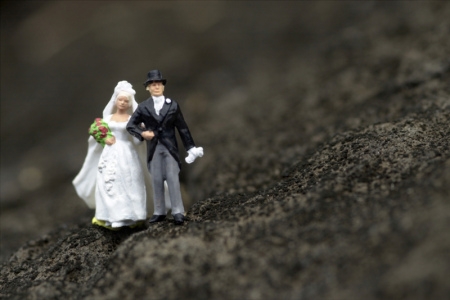
"I did this because I believed these false teachings. They are simply more of the same old Gothardite lies."
“I did this because I believed these false teachings. They are simply more of the same old Gothardite lies.”

I have sat and listened to some whacked out teachings about gender roles, and especially teachings to women about unilateral submission, why it’s important, what it should look like.

They were poison.

And I ate it up.

It was inevitable that I would, since as a fundamentalist Christian, it was offered everywhere I went. There really isn’t any other marriage advice on their radar. In the fundamentalist churches I attended anyway, once you were married the rest of the Bible faded away. You were no longer a disciple of Jesus, you were a wife. And that’s the sum total of all you were expected/allowed to be.

Funny thing, my husband also stopped being a brother in the Lord at the same time I stopped being a sister in Christ. Suddenly we were only husband/wife in the teachings I was hearing. No other scriptures applied to our relationship.

Here are some of the falsehoods I was taught, and often by women themselves.

(1) Because I am married, I am no longer to speak the truth in love. (Ephesians 4:15) I am no longer to consider how to spur my husband on to love and good works. (Hebrews 10:24)

Since Paul would not suffer a woman to teach a man, I should keep my opinions and insights to myself. Yet in all the time my now-husband and I spent together before considering marriage, we were very good friends. We talked about everything. Nothing was off the table. But according to these teachings, once a girl says those vows, she is no longer welcome to share her thoughts and insights. Paul’s words were the scripture cited, but there were other reasons given. I’ll get to the stated relational excuse in a bit.

(2) Because I am married I cannot help my husband see his fault. (Galatians 6:1)Because I am married, I am not to go to my brother who has sinned against me and seek repentance and restoration. (Matthew 18:25)

A wife should fast and pray before approaching her husband about anything, and then only if she feels she absolutely must. This advice is based on the story of Esther as she has to approach the wicked king Xerxes. Excuse me? I didn’t marry a wicked pagan king, I married a brother in Christ. Esther, the exalted concubine, was no valued partner of King Xerxes. She was chosen strictly for her looks and her bedroom skills. Their marriage was hardly an example of the one-flesh union comparable to Christ and the church. Ooh, ick.

Further, because of Peter’s advice that a woman with an unbelieving husband can win him over without a word, relying on her quiet and gentle spirit, I was told that I should keep my mouth shut. But again this made no sense to me. I didn’t marry an unbeliever! I married a brother in Christ. We met at church and I saw him at prayer meetings, church socials and visitation ministry. He already knows Jesus. I was puzzled.

(3) Because I am married, I am no longer to run the race to win. (Hebrews 12:1,I Corinthians 9:25-26) I can no longer put off falsehood and speak truthfully. (Ephesians 4:25) 

I have heard women speakers say that wives who feel their husbands are lukewarm in their faith, are really just making their husbands look bad. Men apparently have really fragile egos and can’t take this, so they quit serving the Lord in their struggles with feelings of inadequacy.

A smart wife will hide her devotion to God, pray and read her Bible in secret, and keep her mouth shut about spiritual things unless her husband brings it up. In order to encourage (manipulate) him to discuss spiritual things, a wife should ask her husband questions, feigning spiritual ignorance in order make him feel more spiritual than the little woman.

In other words, she should pretend he is a “spiritual leader” in order to manipulate him into becoming more fervent for God. We are to pretend he’s running the race faster than we are, even if in fact he is sitting doing nothing. It amounts to nothing less than living a lie, and dishonoring the Lord by not loving Him with all of the wife’s heart, all of her soul, all of her strength, in order to make her man look better.

Yes, it really is that crazy.

All that to prop up his ego, lure him into thinking himself a true “man of God” when in fact he is lukewarm and lazy and unconcerned about spiritual matters.

This teaching rewrites Ephesians 4:25 as “put on falsehood”! Though it never sounded right to me, in my fervent desire to please God, I gave it a shot. I admit it. I did. Stupid woman that I was, I was of no help to my husband or my family by living a lie.

I did this because I believed these false teachings. They are simply more of the same old Gothardite lies: be subservient and commit your way to God, pray in sincerity and love, suffer “as unto the Lord” and God will make all the changes in your authority figure that need to be changed. That is such a destructive doctrine.

(4) I was told to engage in “smooth talk and flattery” (condemned in Romans 16:18, Job 32:22) by offering undeserved respect to my husband. 

Fundamentalists falsely teach that the greatest need a husband has is to be respected by his wife. Too bad they don’t teach that the greatest need a wife and children have is for the man to live a life worthy of their respect. The Bible calls men and women alike to live lives worthy of respect. (I Timothy 3:8,11 and Titus 2:2.) I don’t recall reading anywhere that we should give undeserved respect. The scripture that tells wives to respect their husbands does NOT add the caveat “whether they deserve it or not”. Yet I have listened to people claim that is exactly what God meant. The God of truth? Are you serious?

Uh, no, a man’s greatest need is for authenticity, just like the rest of humanity. Truth is our greatest need. For nothing else we say or do or feel or think is worth experiencing if it is based on a lie.

This whole doctrine is so disrespectful to men. My husand’s ego is not so fragile that he needs to be told he is succeeding when he is failing. He is not incapable of serving God or earning respect. A lukewarm man who is coddled like this will be shocked when the day of truth comes, and it will. The truth will out for every person.

One day, the ridiculousness of the whole teaching finally became crystal clear to me. I called to my husband and told him that I had something to say. God had convicted me that I was not to hold back anymore. I showed him in Hebrews that I am to run the race to win, and I am not going to lag behind him pretending he is racing ahead of me anymore.

He was shocked that anyone ever told me I should!

I determined that day that I would not disrespect God and my husband by following these false teachings one more day. I have his full support on this.

First and foremost, my husband and I are believers in the Lord Jesus Christ. This is who we were when we met, and who we still are. That relationship will never change, and trumps every other relationship we will ever have.

We are the one anothers mentioned in all those scriptures (John 13:34, Romans 12:10,16, 13:8, 14:13, 15:7; I Corinthians 1:10,16:20; Galatians 5:13; Ephesians 4:2,32, 5:19,21; Colossians 3:13,16; I Thessalonians 5:11; Hebrews 3:13, 10:24,25; James 4:11; I Peter 2:22, 3:8, 4:9, 5:5,14; I John 1:7, 3:11,23, 4:7,11,12; 2 John 1:5). This is how we are called to live as believers, keeping the unity of the Spirit (Romans 15:5, Ephesians 4:3). It is the only way we will ever with one mouth and one mind glorify the Lord (Philippians 2:2).

Once we have that relationship down smooth, we will revisit the scriptures on marriage. It could be a while.

(Karen Campbell uses the term “one anothering” in many of her teaching about the Christian home and family. You can find her website at that mom. But it is the Lord who first coined the phrase and the concept.)

I urge anyone reading this post to hold up the totality of any marriage teaching they hear to the light of the one anothering verses, remembering that one another is a two-way relationship.

I encourage you to speak the truth in love to your spouses, spur them on to love and good works. Go to your brother who has sinned against you in gentleness and respect, seeking true repentance and restoration.

I encourage you to always be honest, and never pretend to be someone you are not.

To be continued.

Burn In Case Of Evil: Cain’s Story, Part Three

Burn In Case Of Evil: Cain’s Story, Part Three

HA note: The author’s name has been changed to ensure anonymity. “Cain” is a pseudonym.

*****

In this series: Part One | Part Two | Part Three | Part Four

*****

Why It’s Not Just About the Past and My Bitterness

"Their identity as conservative Republicans is almost as important as their identity as Christians."
“Their identity as conservative Republicans is almost as important as their identity as Christians.”

As I sat down to a steak dinner with my parents after my MA graduation ceremony (8-2012), the conversation drifted to my younger sister’s future plans.  She is being homeschooled much in the same way I was, except with a hefty dose of Victorian ideas on gender roles and sexuality. (She is truly brilliant and reads tremendous amounts of literature. She could likely score a 30+ on the ACT and receive a scholarship.) I asked her if she still intended to go to college — she used to talk of being a veterinarian – and she replied that my father gave her a choice. She could either have him pay for her wedding or her college. I said that giving a young girl such a choice was cruel and my father replied that he had “lost confidence in college since [my] education obviously failed me.” And I said, “Well, I guess it failed [my older sister] too.” He said, no it hadn’t, because she is now a Christian, homeschool mother who generally agrees with them religiously. So basically, he said college failed me because I don’t believe what he does. 

Throughout my years at college, in a rural town in the Bible Belt, he has used this line of thought many times. I discovered in conversation with my extended family that he led them to believe I’d been “brainwashed” at college by my professors. I’d confronted my father numerous times about how insulting this was, but he really didn’t get it. Not until I told him that my being a liberal was actually going against the grain did he begin to respect me.

They continue to expect me to be a person that I’m not. I’ve written about how there are two versions of me and I want to focus on a few occasions during and after college that illustrate how their beliefs have continued to hurt me. Nearly every time we get together, conversations devolve into arguments about politics because their identity as conservative Republicans is almost as important as their identity as Christians. They insult my beliefs by saying that they are just a phase – when I am living in the “real world,” I will surely be conservative like them.

When I tried to explain that their twisted worldview makes nearly every minute political and social issue into a religious issue, my father simply did not understand. He responded…“Yes I try to live my life in obedience to the Word of God in the Bible. That means these beliefs inform all I do in my life. If that insults you then truly Jesus was correct in stating that those that followed Him would enter into conflict, even with their own family.”

When I visited home for Christmas with my then-fiancé, my mother started a conversation on Christmas morning about how the rise of feminism ruined America. To give some background, my wife is incredibly close to her mother, who divorced when she was young. My wife’s mother worked extremely hard and worked her way up the corporate ladder. My wife draws a lot of inspiration from her mother. Now to the conversation. My mother said that women should never have been given the right to vote, that birth control broke down the American family, and women in the workforce was simply not the proper place for women. My mother subscribes completely to the submission doctrines of fundamentalist Protestantism and, suffice it to say, my wife is very empowered. Like most Christmases with my family, it devolved into a heated argument and my wife was very offended by what my mom said. My mom was literally saying women like my wife’s mother were ruining America.

Nearly six months after my graduation-fight with my parents, my mother finally decided to weigh-in. My father and I sent a barrage of emails back and forth, because I cannot control my emotions when we get into arguments.  After a lot of small talk, the conversation turned to my sinful lifestyle. My mom asked me if I was “pure” on my wedding day. I told her no I wasn’t and I didn’t want to talk about my sex life with her. She reminded me of a pledge I made to her at the age of fourteen, promising abstinence until marriage. I told her that was very unfair to bring up something like that. Then she proceeded to tell me how I would face “consequences” later in my marriage because of my sins.Then she told me the reason we fight is because I just “feel guilty” about all my sinning. She never said anything about my living with my fiancée before our marriage. Only after we were married did she choose to judge me. She didn’t even understand why her comments were judgmental – to her she was just imparting some righteousness. It’s like she forgot to judge me two years ago, so she did it then. But to my mother, it’s not “judging,” it’s just telling the truth – she likes to call herself a prophet.

So I told her some truth. That I think they raised me in a fundamentalist cult and that’s why I don’t get along with them. Especially because they believe all the same things they used to. She tried to say they believe differently now, but couldn’t name a single area where they’ve changed their minds, except they watch more TV now. So when mom is crying on the phone telling me that “we don’t get along because your conscious is guilty” or that I broke a promise to “stay pure” that I made to her at 14, I go to a very dark place.

Whenever we go back to arguing about the things we’ve literally been arguing about for a decade, I am physical affected. The sort of panic attacks I used to have come back and I have a lot of trouble controlling my emotions. They still think rock is evil, they are going to push my sister into courtship like they did me, they are going to fuck her up.  My only twisted hope is that I can reach out to her when they start to become senile.

I don’t enjoy spending any time with them because I just leave feeling shitty. I’m so sick of it. It’s emotionally and intellectually exhausting. They say things like “we’re proud of you” but they only ever talk about my accomplishments. When it comes to my intelligence, morals, or ethics, I’m just a dirty liberal sinner to them. The fact that, after seven years of this, they still refuse to see past my political beliefs and have made no real efforts to get to know me is incredibly discouraging. I have made a lot of efforts to be more reasonable, less argumentative, and I try to never bring up an issue that would spark an argument.  The reason it’s still hard for me is because they aren’t over it and they still inject it into my life. In the past, it was easier to pretend like it didn’t bother me and I figured mom and dad would grow out of it (like almost all of my friends’ parents).

It would be different if my parents made an effort to get to know me – instead of the me I used to be. They still give me Lamplighter books for Christmas, which are out-of-print works of fiction, re-printed by Christian Book Distributers because they are explicitly Christian. I have no interest in these shitty books – I will be reading Harry Potter to my children. I recently moved across the country and they have taken literally no interest in my safety or my new home. Part of why I moved was to get away from them. I don’t want to be obligated to see them – ever.  Maybe after years of space, I can start to forgive them. It feels like every time I make myself vulnerable, usually against my better judgment, it ends in pain. Every time I let things go, more gets piled onto me.  It’s unfortunate, but the less time I spend interacting with my parents, the happier I am.

To be continued.

This One’s For The Homeschool Moms: Mercy’s Story

HA note: The author’s name has been changed to ensure anonymity. “Mercy” is a pseudonym. 

Homeschool Moms (Present, Past, and Future), this post is for you.

"Be strong and call it like it is."
“Be strong and call it like it is.”

I’ve thought a lot about how conservative, Christian (in my case, not fundamentalist) homeschooling has shaped my life, but it wasn’t until last year that I took the time to think about how it impacted my mother. My sister had just called home to tell me that her and her husband of a short time were divorcing. I broke the news to my mom before my sister did, to soften the blow a little bit. My mom’s face went grey and she said, “How could this happen to your sister? I did everything right.” There was little consoling her, she thought that she had failed as a parent.

Why would the divorce of a child who married at a young age, in a country with a high divorce rate come as such a shock to a parent? Because the homeschool movement told my mom that they had given her the magic formula to make her children’s lives perfect. They give her a list, and promised her that if she followed the rules that her children would be perfect, Godly, and never experience life’s pain. How could that not be a tempting promise to any parent who cares about their children?

Homeschool moms, I want to tell you that promise is false, and that believing it is going to hurt you. Your child is a sovereign individual, and no matter how carefully and lovingly you arrange every part of their upbringing, education, and socialization, you cannot control their future. You can’t control it because you don’t have total control over your child or other people. If you’re stressing yourself out, afraid you’re doing it wrong, and a constant bundle of nerves, I want you to take a moment and think about whether or not you have set unrealistic expectations for yourself as a parent, and your child as a child. You probably have, and I want to tell you to give yourself a break.

Also, a lot of you have commented on these posts explaining that you’re different from the “crazy” homeschool moms, and I do believe you, but chances are if you’re Christian and homeschooling, you and your kids will be interacting with fundamentalists and you may be gradually sucked into parts or the whole of their ideology over time. These are some warning signs that could cause you to be more susceptible or signal that you’re already being sucked in:

1. You have deep regrets about your past. Perhaps you were raised non-religious like my mother, and then converted later in life, causing you to view your earlier years as sin-filled and in need of atonement. Maybe you were raised in a religious home and just think that you made some stupid, sinful decisions. Either way, if you are feeling guilt about your past, and like you need to make up for it, I want to tell you that homeschooling perfectly isn’t the solution. Don’t let people lead you into thinking that this is your path to forgiveness and the way to prove that you have become good. Additionally, many homeschool conventions, talks, gatherings will involve long lectures and speeches about the evils that your kids are supposed to avoid and that are taking over America (divorce, abortion, pre-martial sex, drinking, drugs, etc…). If these are things in your past, that you have regrets about, I want you to step out of those talks and lectures and stop punishing yourself. By sitting through those demonizing speeches you are tearing yourself down emotionally. You’re forgiven, now move on.

2. You find yourself becoming increasingly judgmental of other’s “walk with God” and parenting choices. Perhaps you were always fairly even keel, easy to get along with, not too judgmental, etc… and then lately you’ve noticed just how few people seem to truly be Christians, and how other parents are not really raising their kids to be Godly enough. Stop right there. You are treading into dangerous water. I remember there was a stage in my mother’s homeschooling where she felt that she was dressing more modestly, using more Christian curriculum, and going to a Godlier church than most other people. My dad sat her down one day and said, “Do you remember where you came from? You look at everyone and judge them, like you’ve forgotten that you’re human, too.” Was my dad harsh? Yes, but it opened up my mom’s eyes to the fact that she, a woman who had always been a fair-minded free spirit, was becoming fundamentalist. My mom dumped her jumpers and added a good dose of charity and compassion to her assessment of other’s (including her children), and her assessment of herself.

3. You find other homeschool moms criticizing you and your children, as “sisters in Christ.” It feels like they’re just being mean, but everyone says that they’re being Godly… True story, they’re probably just being mean. If you are a more relaxed, liberal homeschooler, and you are involved in homeschool activities where you are around fundamentalist homeschoolers, they will judge you and your children. Other homeschool moms were constantly telling my mother about my “slutty” dressing and “immoral” ways. They sought to demonize me, punish me, and slander me because I was not a cookie-cutter Christian homeschooler. My mother always defended me, but what makes me sad is that she never defended herself. I noticed that the longer we were involved in certain homeschool activities populated by more fundamentalist homeschoolers, the more fragile my mom was becoming. She went from outgoing and smiley, to frighteningly quiet, she stopped telling jokes, she got sick almost every time we went to a homeschool gathering, and her head started shaking. It was like all of her bottled up anxiety and hurt couldn’t be kept in, so a barely perceptible shake would start as soon as we pulled up to a homeschooling event. I found out why my mother was acting this way my senior year of high school: other home school parents were bullying her. I overheard them openly confront her about how prideful, how unloving, how assertive, how terrible, and how unchristian she was. My mom never stood up for herself. To any mom who is being treated this way, and is afraid to stand up to it because you either think that a). you deserve this, or b). what’s being done is Godly I want you to be strong and call it like it is. Some homeschool moms are bitches. If they treat you and your kid terribly, tell them that it’s not Godly. It’s rude, and get out of there.

4. You’re told that the answer to parenting/homeschooling is ________________. There is no perfect way to parent. If you’ve come across a group, speaker, pastor, or curriculum that promises that they have the one and only way to good parenting and God then you know you’ve run into a nut job. They may have great success stories, and a bevy of perfectly mannered children at their beck and call to demonstrate their effectiveness, but you shouldn’t fall for it. There is not one way.

5. You feel like other homeschool families are always so much more perfect. You see these glowing, wholesome families who encourage you to homeschool and sell you curriculum, and then when you start homeschooling your kids don’t magically change. They don’t want to do their school, they fight with each other, they back talk, they may even turn into teenagers. And, you get frustrated, mad, tired, and say mean things. You might look at these other families and ask, “What am I missing?” What you’re missing is the whole picture. No family is perfect, nor are their children. Even the most well-mannered exemplars of homeschooling virtues have kids that misbehave and days where they feel frustrated, too. As you can see from this blog, a lot of these kids that may seem so much more virtuous than yours are actually deeply hurting and will eventually turn their parent’s perfect world upside down. So, be patient with yourself and your children, and don’t let other family’s public veneer make you feel like a bad parent.

And, please, please don’t feel like if you try homeschooling, and hate it, that you’re bad and must work through it. If you really hate it, are unhappy, and struggling, then maybe homeschooling isn’t for you and that is just fine. Keep your options flexible and your mind open. You don’t have to homeschool to have happy, well-educated, respectful kids. Look out for them, and look out for yourself. Don’t let other people force you into any lifestyle or belief system that you feel uncomfortable with, and if you feel as though that might be happening, be strong and get out now.

20 Ways Not to Respond to Homeschool Horror Stories

HA note: The following is reprinted with permission from Heather Doney’s blog Becoming Worldly. It was originally published on April 17, 2013.

The following is a list of things that range from impolite to incredibly disrespectful that I have heard since I started speaking out about this issue. I’m (unfortunately) not making any of these up and I’ve actually had every single one of them either said to me or seen them said to others. If you don’t want to be a jerk, please don’t say any of the following:

Concerning homeschooling:

1. Tell me how good of a homeschooling experience you or someone you know had and imply that it cancels out mine.

2. Say that obviously it was just a parenting problem, not a homeschooling problem at all.

3. Say that obviously it was a religious fundamentalism problem/bible-based cult problem, not a homeschooling problem at all.

4. Say that I am not describing real homeschooling so I should not be talking about my experience like it was homeschooling at all.

5. Say that I need to be careful, that openly speaking about this will help enemies of homeschooling (nosy neighbors/government/the minions of the Antichrist) have the political cover to mess up or destroy homeschooling for the good homeschoolers.

6. Say that obviously because I am standing here today with a job/degree/spouse/all four limbs that the homeschooling I got really wasn’t too bad and therefore we all should keep calm and carry on.

7. Say that my parents only homeschooled because it was a problem with the school district and obviously any public school in my area/state/nation/world would have been worse.

8. Say that maybe my homeschooling experience was even secretly good and I likely don’t know enough about what I’d be comparing it to, with public school being so awful and all.

9. Say that you/your kid/someone you know had a much worse experience in public school/government school/a hole in the ground and so I should quit bellyaching and overdramatizing my homeschooling experience and instead just be grateful it wasn’t as bad of a story as the one you just told.

Concerning abuse:

10. Say that what happened to me was so uncommonly rare that it’s not something we need to be generally concerned about.

11. Say that you are sure that it was that my parents were uneducated/rural/brainwashed/obviously raised wrong and that’s why they did what they did, even though you know nothing about my parents’ background.

12. Say it is obvious that I am so hurt/broken/angry/bitter/emotional/weird/vengeful that I have lost track of reality, don’t know what I’m talking about on any of this, and no one should listen.

13. Say that I need to just let the past be the past, understand that parents make mistakes/are not perfect, then go forgive mine (immediately assuming that I haven’t), and stop disrespecting them by talking about this issue.

14. Say that the way life works is that your parents can raise you however they want/force you to be the person they ask/mess you up for the first 18 years of your life and then it will be your turn when you have your own kids.

Concerning religion and politics: 

15. Say that if my parents were real Christians that this never would have happened.

16. Say that this is obviously a problem with Christianity itself and all homeschoolers should respond by being secular/atheist/Buddhist/some other faith.

17. Say that you seriously doubt (or had it laid upon your heart by Jesus himself) that it is in God’s will/my best interest/society’s interest for me to be talking/thinking/spreading lies like this and you will pray/worry/be quite concerned for me.

18. Ask me if I am aware that when I talk about my story it is mainly going to be helping people who hate homeschoolers/Christians/parents/Americans/suburban white people unfairly stereotype/hurt/oppress all of your group because people will mistakenly think you are like me and my family and obviously you are nothing like us at all.

19. Accuse me of being put up to this by teachers unions/liberal brainwashing/feminism/Satan and not having actual good reasons for how I characterize a problem I lived through and/or am studying.

20. Accuse me of being anti-homeschooling, anti-Christian, and anti-family all in one fell swoop because I said what happened to me should not happen to other kids.

Now that I’ve listed all the rude, insensitive, selfish, and potentially threatening things I can think of that you should not be saying to people who have shared their horrible (or even just a little bit bad bordering on mediocre) homeschooling experience (I’m sure I left some out, so please feel free to include them in the comments), here are eight examples of something that might be a good idea to say:

1. Thank you for sharing your story.

2. I am trying to understand where/when/how this occurred. Can I ask you? How did X, Y, or Z happen/come to be/take place?

3. What helped you get out/get better?

4. What do you think could have made this situation better/not happen at all?

5. What do you think someone like me might do or keep in mind to prevent this from happening to others?

6. What do you like to do today, now that you’ve left that environment?

7. Can I share what you said with my friend/relative/pastor/neighbor/blog readers/Facebook?

8. I wish you well and hope that tomorrow/this week/life/the future will be good for you.

Also, even if this stuff is foreign to you and you really have no idea (or maybe don’t care) what it is like to walk in the shoes of someone who has had this kind of homeschooling experience, please try for a moment to imagine how it would make you feel and what it might lead you to do and then have compassion. Personally, I love to argue and I have a lot of “fight” in me, but for many people who are sharing their story, just finding the words and the strength to do so is incredibly hard. People should not, under any circumstances, be pushing someone who’s telling a survivor story to defend themselves or expect them to deal with the kind of obnoxious behavior I listed above.

Thank you.

Why I Blame Homeschooling, Not Just My Parents: Reflections by Nicholas Ducote

By Nicholas Ducote, HA Community Coordinator

Author edit to clarify my call for more oversight: I recommended intra-community policing in my post. State action should be a last resort. Those that care to preserve their parental rights to homeschool need to hold other parents accountable. Unfortunately, fundamentalist homeschooling communities are often isolated from anyone who would question the parents. I don’t have a solution, but I know we can’t just assume the status quo will fix things. Hopefully, projects like this will scare other parents enough to make them confront other parents. But let’s be honest, do you see that happening in these sort of communities? Most of these people laugh at the idea of children having rights and would never support anything that encroaches on their ability to teach their children whatever they want. If you suspect child abuse or neglect in a family you know, please report them to Child Protective Services. 

Homeschooling, as a method of instruction, is not intrinsically bad, dangerous, or damaging. I saw many children raised in homeschooling who were not abused by religious fundamentalism – even if they were Christians. However, as a society, we have to realize that the current state of homeschooling gives parents unique power over their children. Yes, many homeschooled children are a part of co-ops, interact with neighbors, and have relatively normal social interactions. But other homeschoolers are isolated in rural areas, with no contact with neighbors, or the outside world. Abuse develops in these environments because there is no oversight from outside the parents and, if criticism if lodged, the parents are defensive. To many homeschooling parents, homeschooling (the method) is part of a larger worldview that involves rejections of secularism, science, and academic institutions.

I developed claustrophobia, a generalized anxiety disorder, and panic attacks in high school. At the time, I assumed my panic attacks were the result of the Holy Spirit convicting me of my sins. The most common trigger for my panic was sexuality. As a teenager, I would often shake uncontrollably after masturbating. Homeschooling can make children feel trapped because they are literally never away from their parents. When I was quasi-dating girls in high school, behind my parents’ back because they wanted me to court, I would have a mini-panic attack when the phone rang – scared that my parents would find out. When I got in trouble it meant a few hours with mom and dad, crying and arguing about what God told them to do, ending in me feeling completely trapped. When I woke up the next day, I had no choice but to bottle up my anger, shame, and humiliation and go “do” homeschooling. In ATI, many leaders preached about how listening to rock music would literally result in demonic possession. This is abusive to teach to children. To this day, I struggle with anxiety before I fall asleep.  I was taught, by my parents and by ATI’s leaders, that demons were very real and they could possess rebellious Christians. Many in the homeschooling movement conceptualized the “culture war” as spiritual warfare — the secular humanists were literally portrayed as the minions of Satan.

Spiritual abuse is a difficult term for many people to wrap their heads around. It may seem like we are trying to say that raising children in a religious tradition is abusive, which we are not. However, I can say that when homeschooling is mixed with religious fundamentalism, abuse almost always occurs.

There is a distinction between religious fundamentalism and mainstream religions. I once told my mom, “I would have been fine if you stayed Baptist. It’s when you drifted into fundamentalism that hurt me.”  What many people fail to realize is that most parents don’t wake up one day and decide they need to start controlling their childrens’ lives and prepare them for the culture wars. Yes, my parents are to blame for subscribing to fundamentalism, but the homeschooling community and movement are also to blame.

In many states in the 1990s and 2000s, homeschooling parents received most of the curriculum, instruction, and indoctrination at state, regional, or national conferences. There are a myriad of institutions and groups that formed the movement, so it is impossible to point to a single root cause of the abuse in homeschooling. But I know abuse doesn’t just happen because of bad parenting. The bad parenting that people indict was being advocated on stage before thousands of people. There is a reason why so many homeschooling alumni share stories and experiences. Tens of thousands of homeschoolers attended state Christian Home Educator Fellowship (CHEF) conferences, where they were exposed to

  • The Harris family and their beliefs about Biblical courtship
  • David Barton and Little Bear Wheeler’s revisionist history
  • Evangelical leaders that scared everyone about the evils of secular humanism
  • Michael and Debi Pearl’s harsh ideas on corporal punishment and misogynistic ideas of gender roles
  • Huge book sales populated mostly by Christian fundamentalist textbooks — advocating creationism, teaching math based around the Gospel message, or other “educational tools.”

All of these ideas circulated around the homeschooling communities and trickled down to local CHEF chapters.

Parents’ responses have been mixed, but many of them see our blog as a tool to take control of their children away from them. Parents emphasize their rights to raise their children however they want. But, as a society, we have already decided that parental rights end where abuse begins. Thus, one of the main issue in this debate becomes whether or not a homeschooling environment is emotionally or spiritually abusive.

You might think this is only a problem of the past decades — that now, in this new zenith of modernity, fundamentalist homeschoolers that spiritually abuse their children are dying out. You would be wrong. Yes, there is growing momentum behind secular homeschooling, but there is no hard social science about homeschooling.  At this point, observational data is almost all that exists about homeschooling and its demographics. We know very generally how many people homeschool and for what reasons. But ten states do not even require the parents to inform them of their childrens’ “enrollment” in homeschooling.

This is the start of an important conversation about homeschooling. I am opposed to religious fundamentalism in all forms and I believe that the abuse that occurs when fundamentalism is allowed to dominate homeschooling has no place in the modern world. I’ve heard so many Evangelicals and homeschooling parents mock the Islamic madrasas for their religious instruction, but fundamentalist homeschooling isn’t different by much.

To those homeschoolers who are afraid of this exposure, it’s time to own up. These abuses happened, the community’s leaders encouraged it, and the community does not regulate itself. If the homeschooling community is not willing to regulate itself – lest a parent tell another parent their methods and ideologies are abusive! – then someone else will.

I am tired of sitting around hoping that the abusive fundamentalist culture within homeschooling will die out.  I don’t want it to die out, I want to trample it out so that no other children face the sort of abuse I, and many other, went through. Part of the means telling the honest, visceral truth about what happens in many homeschooling homes. Yes, abuse is ultimately the fault of the perpetrators, but why does everyone leave the homeschooling community blameless for how it brainwashed my parents?

The issue of abuse in homeschooling is an issue of the distortion of parental rights and the reality of systemic indoctrination.

You cannot stop the abuse without exposing the advocates.

Looking Back At My Fundamentalist Homeschooling Past: Sheldon’s Story

The author of this piece writes under the pseudonym Sheldon at his blog, Ramblings of Sheldon. This piece was originally published on Reason Being on December 20, 2012. It is reprinted with Sheldon’s permission. He describes himself as “a former Christian fundamentalist” who “is now a semi-closeted agnostic” that writes about “his fundamentalist past, his beliefs now, and the cult known as the Independent Fundamental Baptist denomination, which his sister was a part of (and he also had some personal experience with).”

Recently, I have begun to start thinking about homeschooling, how I feel about it now, and how it has affected me in my life.

Two things have really gotten me started thinking about this. First, my sister decided to homeschool her children. And second, I read recently an article on the Patheos blog, Love Joy Feminism.

As I have talked about in the past, my sister was once a part of the Independent Fundamental Baptist cult — more specifically, the First Baptist Hammond/Hyles Anderson College complex. This complex was, until this summer, run by the infamous pastor Jack Schaap, who is now awaiting sentencing after a guilty plea on federal sexual abuse charges.

Thankfully, she left that group about 3 or 4 years ago. But she just traded a fundamentalist cult for fundamentalism lite (the Southern Baptist denomination). It’s a vast improvement from where she was, and both she and her kids are happy in this church. But I feel she’s dealing with what Lewis of Commandments of Men, the brilliant anti-cult/anti-fundamentalism blogger, calls the Halfway Houses effect.

Some people, like her, don’t want to give up fundamentalism entirely. They have come from such an extreme cult life background that even other fundamentalist lite groups like the Southern Baptist denomination, etc, feel refreshing. (Which is pretty damn sad when you think about it).

One of the ways she is going through the Halfway Houses effect is the decision to home school. I was just at her house in the Northwest Indiana suburbs of Chicago this past week, and she was showing me the curriculum she was using.

It was the same atrocious Accelerated Christian Education (A.C.E) curriculum we were raised with. I spent my whole school life with it, first in a IFB affiliated private school, then in home school. She spent from about 5th grade to graduation with A.C.E curriculum in that same private school, which is what unfortunately got her introduced to the Independent Fundamental Baptist cult, where she remained until recently.

(If you really want an eye opener, read some of the A.C.E survivor stories at the blog Leaving Fundamentalism, for just how bad A.C.E itself is, and how many of the schools who use it act towards their students).

I knew she had been using the curriculum for a while now, but to actually see those books sitting on her table, it was a mountain of flashbacks, and definitely not in a good way. I thought she would know better, after what she has been through, but I guess it all feels like home to her.

I could go on and on about the problems of fundamentalist home schooling and of the private school culture within those groups, but I think Libby Anne of Love Joy Feminism says it best. Libby Anne was raised up in a home in the Quiverfull movement. Her family’s beliefs were very similar to Independent Fundamental Baptist cult that my sister fell into head first. Like Quiverfull, the IFB also rejects birth control except for in extreme circumstances (such as a future pregnancy putting the wife’s life in danger).

Reading an article from her last week made me think about my current feelings on home schooling.

First of all, do I think home schooling in and of itself is harmful? No.

There are many families who do their best to educate their kids at home while exposing them to the world around them, and encouraging them to keep an open mind. There are even atheist families that home school.

There are many reasonable circumstances that would lead a family to home school their child, from having a child who has a serious physical illness, to having a job that causes a family to move often (such as one parent being a solider). Then there’s always the desire to have one’s children get one on one attention, to help them learn.

However, using homeschooling as a tool to isolate your children from the outside world is wrong. I’ll even go as far as to say it is emotional abuse. Fundamentalist groups deliberately use home schooling this way so that their children are rarely, if ever, exposed to people they don’t agree with politically or religiously, or to people who they feel are “evil” (such as people in the LGBT community).

When someone like this is isolated to such an extent, the basic social skills that most of us learn at a very early age are not developed. I will not say that this was the only cause for the problems that I have now in relating to people. It’s more than likely something I was born with, but this isolation only made far worse.

Not only are social skills impaired, knowing how to deal with normal classroom life is affected, as well as things like changes that come by moving out of home. Libby Anne talks about coming to tears more times than she can remember in her attempts to adjust to living away from home after being in such an isolated environment. At least she had a solid group of people who helped her to work through the stress. In my case, it led to a nervous breakdown.

Simple things that everyone around me knew, such as where the little pop up desk was on the side of the auditorium style seats in most class rooms in that college, (or the fact they even existed), was unfamiliar to me, in so many thousands of ways, and people kept expecting me to know it all, and I didn’t. Just like Libby Anne, I didn’t know how to write a foot note for an academic paper.

All of this, combined with a cultural disconnect from other people, led to a miserable time and downright debilitating depression.  People who have never been through this don’t realize just how much everyday conversation and interactions are based on the culture around us. I love the way Libby Anne talks about this in a post on socialization:

I sometimes wonder if one reason so many home school parents cannot seem to understand the real meaning of the socialization question is that, having been socialized themselves, they cannot imagine what it would be like to not be.

They don’t understand what it feels like to be a foreigner in your own country. They don’t understand what it feels like to not be able to fit in. They don’t understand what it’s like to berobbed of the ability to be normal because they have the ability to be normal. Parents who home school may choose to be different, but their children have no such choice.

When I read this, I reflected on both my family, and all the families that I have encountered that home school, or send their kids to fundamentalist private schools, she’s right. All of them grew up in what could be considered normal families, attending public schools, usually with parents that were either non-Christian or were only casual followers of a religion. What’s even more ironic is that many of them were baby boomers who experienced the decadence of the 1970′s. They have no idea what this kind of isolation does to someone.

This isolation and this culture that is hostile to the outside world and everyone in it will cause two extremes in the people who were raised into it. Either people will be hesitant to leave, because it’s the only life and way of thinking that they know — a perpetual Stockholm syndrome, like my sister is experiencing. Or it will drive people to leave it, like I did.

Most people of younger generations who were raised in this system are fortunately going the same route I did. The hostility towards the outside world is one of the primary reasons why younger generations are leaving fundamentalism at a very fast pace. A 2011 study by Christian polling group Barna researched most of the top reasons listed for young people leaving the churches. They had something to do with their broader rejection of the outside world, and isolation from it (which is the major aim of the fundamentalist home schooling movement). Whether that is their rejection of science, hostility towards outsiders, or hatred of homosexuality, this isolationism is starting to disgust the people raised into it.

I can only hope that this trend continues.

The Beginning of a Conversation: Sarah Jones’ Thoughts

The following piece was originally published by Sarah Jones on her blog ANTHONYBSUSAN with the title, “Homeschooling: Creative Alternative or Brainwashing Tool?” It is reprinted with her permission. Sarah has a master’s degree in postcolonial culture and global policy, and another degree in international studies. She was an Evangelical Christian at one point in her life, then a feminist member of the Emerging Church, and now describes herself as “agnostic, leaning atheist. Still a feminist though.”

The Daily Beast’s coverage of Homeschoolers Anonymous has reignited the perennial debate over the homeschooling movement and parents’ rights. As a former homeschooler, this is an intensely personal debate for me: I disliked the homeschool experience and I remain deeply critical of the Christian curriculum my parents employed. My own experience is not identical to the stories detailed in the Daily Beast article. I did not grow up in a Quiverfull home and my parents eventually became wary of the movement’s fringes. As a result, they did agree to send me and my brother to private and then public school. They’re not homeschool activists in any meaningful sense. Nevertheless, this article resonates with me, and I agree with the premise put forward by the members of Homeschoolers Anonymous: that homeschooling left me totally unprepared for the real world, and facilitated religious abuse.

"I hope that this Daily Beast article marks the beginning of a critical national conversation."
“I hope that this Daily Beast article marks the beginning of a critical national conversation.”

Before I continue I want to make it clear that I understand that homeschooling isn’t intrinsically a social evil. Done well, it can certainly prepare children to excel in higher education. Moreover, I don’t intend to argue that the alternatives are without flaw. The state of public and private schools in the US is a valid concern. I’m not going to summarize that debate here, but I’m referencing it in order to show that I do understand why parents (like my own) may make the decision to homeschool. I’m concerned by a specific branch of the homeschool movement, and its emphasis on religious indoctrination.

Certain common themes emerge from the Daily Beast story. Readers are introduced to adults who spent their formative years engaged in a battle against secularism. There is much praise for homeschooling’s ability to encourage children’s natural gifts, but as these stories demonstrate, many Evangelical and fundamentalist families encourage these gifts in order to advance a specific ideological agenda. Those of us raised in the religious right will recognize the rhetoric. We’re meant to be culture warriors, engaged in battle to return America to its Christian roots. Homeschooling is meant to create a pure environment. Christian parents are free to teach (read: train) their children in an atmosphere free of secular corruption.

For obvious reasons, this attitude toward education lends itself easily to abuse, particularly when you consider that most of these families adhere to traditional gender roles that revere the father as the head of the household. When your father is your chief disciplinarian, spiritual adviser, breadwinner and the principal of your school, a patriarchal structure is so firmly entrenched that the possibility of addressing domestic abuse is incredibly unlikely. Additionally, it reflects the belief that children are the property of their parents, that children have no rights, independent of their parents. The potential consequences this attitude poses for the children subjected to it are evident from the Daily Beast piece and from the other stories provided by Homeschoolers Anonymous.

There are additional points of concern; namely, the overlap between this fringe and Christian reconstruction. R.J. Rushdooney, truly the father of contemporary Christian reconstructionism, advocated homeschooling as an alternative to secular education. Later figures like Michael Farris continue to champion homeschooling as a religious obligation for Christian parents. Precociousness is considered evidence that homeschooling works. In the comments of the Daily Beast piece, you’ll find at least two adolescent homeschoolers engaged in a passionate defense of the movement. They repeatedly cite their personal success, and the successes of their homeschooled peers, as evidence of homeschooling’s superiority.

As a homeschool alumna, I don’t credit my own academic success to my parents’ decision to homeschool. If anything I believe I’ve succeeded in spite of it. I’ve never received accurate scientific instruction and I had to re-teach myself history and government. My decision to pursue political theory at the graduate level is partially inspired by this drive to strip my thought process of the misinformation and bias I learned as a child. Similarly, I reject the belief that my current progressive views are derived from mere rebellion, as many current homeschoolers like to assert. Those of us who object to the movement do so for valid reasons, and I hope that this Daily Beast article marks the beginning of a critical national conversation about children’s rights and the need to better regulate home instruction.

Fundamentalist Homeschooling Is A Poison: Isaiah’s Story

Fundamentalist Homeschooling Is A Poison: Isaiah’s Story

HA note: The author’s name has been changed to ensure anonymity. “Isaiah” is a pseudonym. 

"Fundamentalist homeschooling is a poison. I say this from experience. It spreads like a virus, and not just among the conservative Christians who form its natural hosts."
“Fundamentalist homeschooling is a poison. I say this from experience. It spreads like a virus, and not just among the conservative Christians who form its natural hosts.”

I have mixed feelings about homeschooling, to say the least. While I find many, if not most, of the common criticisms of homeschooling to have some kind of validity, I still feel myself cringe when homeschoolers are caricatured as deranged fundamentalists since I know from experience that there is more to the story. My experience with homeschooling consists of extremely varied highs and lows — the highs of a dedicated and capable parent as a teacher, an education that fit with my self-motivated personality, and freedom from rigid schedules; and the lows of religious indoctrination and the personal struggles caused by living in an insular environment. If the good side of my homeschooling experience was very good — and it was — the bad side was very bad, and I still feel its effects to this day.

I was homeschooled for my entire lower-level education — kindergarten through high school — and in that time I knew homeschoolers from all sides of the social spectrum. I knew unschoolers, conservative Christians, liberal Christians, vaguely religious people, non-religious people, and even a Wiccan at one point (though I didn’t know what “Wiccan” meant until some time later). I knew people — or more accurately, the children of people — with a fairly wide range of beliefs and philosophies which had led them to homeschool, rather than just the evangelical families so well-represented in cultural tropes about homeschoolers.

But in spite of the diversity I was exposed to, my experiences have led me to be very suspicious of homeschooling in general, for a simple reason: in the homeschooling movement, the most extreme voices are the majority. There is a reason why the archetype of homeschoolers as fanatical morons is so popular. For every parent who chooses to homeschool for health reasons, extenuating circumstances, or educational philosophy (ie, that of unschooling), it seems like there are ten who homeschool because they are part of the fundamentalist or Quiverfull movements. Knowing what I know now about the history of homeschooling, this makes sense. After all, the Quiverfull movement openly says its goal is to produce large broods of future homeschoolers who will repeat the process over and over until they outnumber everyone else, and while the majority of Christian homeschoolers tend to be less brazen, they often only believe in milder versions of the same philosophies touted by Michael Farris and the other leaders of the Fundamentalist/Quiverfull movement.

Fundamentalist homeschooling is a poison. I say this from experience. It spreads like a virus, and not just among the conservative Christians who form its natural hosts. There are people of milder faith who get progressively sucked into more and more conservative elements of the homeschooling movement. Sometimes, through ignorance of fundamentalism’s real motives and philisophical underpinnings, a person can be lulled to sleep by the superficially attractive images of evangelical rhetoric and never notice the bigotry and delusion lurking right below the surface. I’ve seen it happen to people, and my mother was one of them.

As is probably typical for non-fundamentalists, many things contributed to my mother’s decision to homeschool me. Essentially, she believed — not without reason — that the public schools I would go to were dirty, violent, overcrowded, had poor curricula and bad funding. We couldn’t afford a private school, so she as a stay-at-home parent began to consider homeschooling.

By the time I had reached four my mother decided not to enroll me in preschool or kindergarten, and for the next three years did a wonderful job both educating me and socializing me with other children and adults. Even though I was an only child, I had a healthy and very normal social life, and was able to be educated above my age group, starting grade one at five years old. These were some of the best years of my childhood, and I still believe to this day that with sufficiently intelligent, caring and involved parents, early life education does not require formal schooling of any kind (although I see nothing wrong a with a good formal early education either).

After this successful start, when I had turned about seven, we decided to continue homeschooling through grade school. This marked the beginning of our brush with the conservative homeschooling movement. The HSLDA, which previously had been only an abstract form of social insurance to us, began to be a resource for our studies, and its sister organizations were used to help choose my formal curriculum. We spent a while before the start of my third grade school year deliberating on what system offered the best education, and ultimately decided on a hybrid approach. Other than the notoriously dry Saxon math textbooks, we chose a fundamentalist Christian curriculum called LIFEPAC and its digital equivalent, Switched-On Schoolhouse. This might seem incongruous, since we weren’t fundamentalists, but my mother was a religious conservative in the sense that she had a very hard time criticizing anyone who claimed to represent Christianity, and always gave religious individuals and organizations a great deal of respect even when her values were utterly opposed to their beliefs.  She never looked beyond the very thin religiously moderate veneers that the HSLDA and other conservative Christian organizations put up, and so she assumed the curriculum was merely a good Christian education, and nothing more.

If the thought had ever crossed her mind that the curriculum I used for ten years would progressively harm me intellectually, psychologically and spritually, she would have thrown it back on the shelf in an instant. But as it turned out, this curriculum would prove to be the central destructive influence of homeschooling on my life. It was from these textbooks and lessons that I was poisoned by fundamentalism, and they are largely responsible for the part of my homeschooling experience which stunted my development and left me struggling with extreme self-doubt, self-hatred and depression as years went by.

The lesson plan started off innocuously — even with a bible study textbook as one of the main subjects (right next to science, history, and English), the first few grades were of decent quality and generally avoided controversial material. Thanks to excellent teaching I excelled consistently in my studies and everything seemed to be going well. But as the years went by, little oddities started to present themselves when I studied my textbooks or took lessons on the family computer. Starting around the sixth grade — once biology and astronomy became serious subjects — science seemed to take a strange path, and as grades progressed upwards the tone of the text became more and more defensive, with the writers eventually resorting to actually mocking biology and astronomy (evolution and the big bang were the biggest targets) rather than merely promoting creationism. The extreme immaturity of using mockery in a textbook apparently never occured to the writers of the lesson plan.

History not only consisted of the standard American whitewashing, which strains a person’s grip on historical facts badly enough, but also a Biblically literalist whitewashing, an almost colonial view of non-Europeans, and to top it off, no acknowledgement that anything over six thousand years old could exist at all. It is not an exagerration to say that everything I actually know about history I learned outside of that curriculum, and that beyond certain parts about Rome, colonial Britain and early America, I have had to erase and relearn much of what I was taught to get an accurate picture of the world. As with the science curriculum, history lessons progressed in their deviance from standard textbooks over time, in this case by including slightly more biblical content in each grade level, marked as “history” right next to the founding of Rome or the pyramids of Egypt. Bible study, needless to say, was extremely focused on inculcating the “right” beliefs into students as quickly as possible and didn’t pull its ideological punches as much as the other subjects did. Although it did review the whole Bible (starting at about the 6th grade) it only did so in a literalist context, progressing in nastiness and pushiness by grade. All this time I had continued to use Saxon’s math textbooks — which I loathed, but did seem to work — and occasionally found myself welcoming their dry dullness near the end of the school day.

Saxon didn’t preach — it merely made you fall asleep.

The curriculum as a whole struck very softly with indoctrination, couching it in well-written and produced textbooks as well as computer applications that included media and games. The packaging was, as a whole, fairly slick, and if you weren’t looking it was easy to miss the poison that peppered the whole thing.

In addition to the other beliefs I described, all the subjects I studied promoted complementarian sexism, sexual abstinence, chastity, Edwardian/Victorian style gender roles, human exceptionalism, and of course Biblical Literalism, though they all did so in different ways. What strikes me now is how subtle some of this propaganda could be — it was even present in English class, not only in the books on the required reading list but occasionally written bluntly between otherwise unrelated text in the middle of a lesson. Now and then harsh Bible quotes would appear beside inspiring ones, as if in warning, and heaven, hell, angels and satan were all real characters in the context of the textbooks.

Before I make this look too bad, though, I have to say that I didn’t even notice much of this until the last years of my education, although I always noticed, ignored and then tried to forget all kinds of little doubts I had about what I was learning.  I read voraciously, including many science and history books that contradicted what I was taught, but until I became an older teenager I never really paid much attention to the contradictions, and through some kind of doublethink held that both ideas could be true. My mother remained an excellent teacher, I continued to hold a healthy social life, and I was otherwise quite whole as a person. Because fundamentalism only came from one part of my life and it was not promoted — though it was also never criticized — by my family, I had a lot more intellectual freedom than do most of the children who use this kind of curriculum. While some problems were simmering within me, my middle school life was overall a good experience even with my inane curriculum.

Personal issues during my high school years finally drove me to look back on, question and eventually discard the philosophy I was taught. A move to a faraway state had left my social life in tatters and it never recovered for the rest of my teenage years, I was forced to realize my own sexuality (both the existence of a sexual instinct itself, and that I was bisexual), I learned enough about real science and history to know that my education had not given me the whole truth, and I began to realize the terrible cruelty and undesirability of the world that fundamentalism sets out before people. All the little doubts and moral outrages I had repressed over the years came flooding back piece by piece, and after a long and hard struggle that included four years of constant depression I left both the fundamentalist part of my education and religion in general, becoming a happier and better person for it.

Only a couple of years after that last break from fundamentalism, my feelings on homeschooling remain mixed because my experience was mixed, and while the high points were great, the low points could be awful and intolerable. My mother’s dedication and inherently tolerant and empathetic nature gave me not only a good basic education, but a diverse and varied social life, ethical feelings I could seperate easily from religion, and intellectual freedoms that most homeschooled children never enjoy. But my curriculum, much of the media I watched or listened to, and the culture I grew up in contained no voices arguing actively against fundamentalism. Because of this, I became a host to the virus of religious paranoia and self-hatred, which I only recently managed to shake off enough to do things like write this essay. I was taught a much more warped perspective of history than even the average American middle-schooler, and my knowledge of useful science was very small until I studied real science for enough time to fix what my curriculum had broken. My relative intellectual freedom as a young child had left me well-prepared for this and I have managed to “catch up” without much fuss, but not everyone gets that opportunity.

Ultimately, I can’t say what my views are on what should or shouldn’t be legal in homeschooling. No matter what, I believe that there must be a strict basic code of regulations on homeschooling to prevent indoctrination and abuse, but I also understand the position of Germany and Scandanavia when they choose to simply ban it outright except in exceptional circumstances. I have met a few secular homeschoolers, unschoolers and other non-fundamentalist homeschoolers who have done well with their children’s education and have nothing to do with religion, let alone religious indoctrination. But the poison of religious fundamentalism is very potent, and the potential for even non-religious abuse within homeschooling is still high, regulated or not. I was a very loved and nurtured child in a relatively liberal household, and yet I suffered at least some of what children in deeply authoritarian Christian homes do.

I can’t imagine what I would be right now if I had grown up in a family of true fundamentalists, Quiverfull members, or right-wing evangelicals.

I can only say I’m glad that I didn’t.