HA note: The following is reprinted with permission from Kierstyn King’s blog Bridging the Gap. It was originally published on December 2, 2013.
When I was 8, I was expected to be an adult.
I had adult responsibilities (taking care of kids) and was expected to act as mature as an adult – learn all the things, do all the things, cook all the food, wash all the babies. I had to fight for some semblance of my own childhood. My mom wanted me to grow up and grow up fast. I remember her asking me, before I was 10, to stop playing “dogs” with my brother (we’d run around on our hands and knees barking and stuff) because, essentially, it was embarrassing. I don’t remember the exact words she said, but that was the gist.
I just looked at her, and willfully ignored her until I was 11, and by then, I was too busy doing her job that I didn’t really have time to play with my siblings, because if I did, I was quickly ushered to change someones diaper.
Funny, because my mom said that I should be happy I have so many siblings/sisters to play with and that I don’t need friends my own age. But I never had time to play with them even if I wanted to – and honestly, they were so much younger than me, and she had them with such frequency, that I wasn’t even on the playmate list – I was the caretaker, the other kids, they all had each other, but I was quickly forced out, alone, and expected to be happy about it and have no needs.
I wasn’t allowed to have needs. I wasn’t allowed to be a child after I started puberty.
As I aged, I was expected to be more adult – not in like the normal, kids mature way, but in the I-was-8-and-was-expected-to-be-20-and-go-from-there kind of way. By the time I was 13 I’d lost any semblance of childhood that I’d had. I’ve never experienced the care-free years of being a kid or a teenager, because the entire time I was a kid(‘s age), I wasn’t.
I don’t understand teenagers, I don’t understand 18 year olds who don’t look and feel like they’re 40. I don’t understand 16 year olds who still play and aren’t crushed under the weight of grown up responsibility. I don’t understand 22 year olds who act like 22 year olds are supposed to act, and don’t have random existential crises because they feel like their life is over and they’ve accomplished nothing.
I’m 22, but most of the time I feel like I’m so. much. older. and learning how to act my age.
I’m actively trying to become more immature, because I can’t handle the continued weight of having to be more responsible and older than I am, of having to be the parent all the time even though there’s no one around to parent (except myself, which isn’t healthy either).
When I got married, I was 18, but I felt as though I’d lived a lifetime before that even happened. It said 18 on my documentation, but in my head I was in my 40′s, most of my life lived – well, survived, and it was time to do something else. Most people are like, no, you can’t marry at 18, and I agree and feel bad about it until I realize, when I was 18, I wasn’t actually 18. I was much older than that – because I was forced and pushed into growing up well before I even had the ability to understand what everything meant.
When I was 8, until I was 18, I was given all of the responsibility of an adult, with none of the power. I often felt like the only adult in the situation, like I was the actual parent, but I had no ability to change things for myself or for my siblings.
My mom confided in me things that really she should have confided in other adults to – things I didn’t need to know and didn’t understand and had no idea how to respond to. You shouldn’t tell your kid about how you’re mad at their father, or what you do in the bedroom and how it’s sinful (because every sperm is sacred), but you just really don’t want to be pregnant again (and pulling out is SO effective) – bearing in mind, I still thought sex consisted of invisible metal tubes connecting at the belly button of the other person.
When Alex and I started going out, I wasn’t even 17, and they heard wedding bells. They wanted me married right away, it felt like I was being pushed out, which was strange, considering.
My parents wanted everything to move so quickly. They said “but you WANT to get married, right?” and I was like “sure, yeah, but not RIGHT NOW” (because, 16, even I knew that was a bad idea). They didn’t seem to understand the concept of time. They wanted me to grow up so fast and never experience having grown up.
I never had a relationship with my mom and I think this is largely why.
I was the parent. I was the confidant. I was the one who had all of the responsibility, the consequences, and the anger shoved on to. I bore the brunt of her frustrations and I was the one who was berated for simple mistakes.
In every way, I never had a mother. I was never her daughter, I was only ever her tool.
The only time my mom was ever sweet to me was when she was trying to butter me up and manipulate me.
So when people say they’re so sorry I never had a relationship with the person who made the choice to give birth to me (and then demanded my life in return), I stare at them blankly. I don’t understand why they would say that. It actually hurts, because it’s almost as though they’re blaming me for not having or wanting a mother-daughter relationship – like I’m unjustified in my relief to have finally left her grasp.
I’ve grown in odd patches, with massive gaps where experiences should be, but aren’t. Learning what to do with feelings, and learning what needs are (after not being allowed to have them, because adult…which is BS, actually, my mom had ALL OF THE NEEDS). I feel old, I look young, I have experience and naivety in all the wrong places.
I hate having had to fight for everything – whether it’s for childhood, or autonomy, or myself.
I am tired.
I don’t know what made me think of it – maybe it’s because it’s the holidays and I really want the gingerbread that we used to make, and that reminds me of the fact that holidays were chores and mostly unenjoyable, save christmas morning, and I get tired from the memories and the forced aging.
Nachman Helbrans (front), son of group founder Rabbi Shlomo Helbrans, said, “We were speaking with lawyers and organizations — especially the Home School Legal Defense Association and many associations associated with them — and all of them tell us that we must leave Quebec.”
HA note: The following is reprinted with permission from Jennifer Stahl’s blog Yeshua, Hineni. It was originally published on December 1, 2013.
Lev Tahor or Lev Tohor [Website] is a fringe movement from within ultra-orthodox Judaism and is headed by Rabbi Shlomo Helbrans (also known as Rabbi Erez Shlomo Elbarnes, Erez Albaranes, Shlomo Helbran, and Rabbi Shlomo Halbernetz) and his son Nachman. The Rabbi is now estranged from his wife and one of his sons, who are now in Israel.
Information below in the various news articles and blogs will detail information linking Rabbi Helbrans to the group “Hisachdus Hayereim” (Union of the God-Fearing) and others.
Lev Tahor are known in Canada and Israel for homeschooling their children; their women and girls holding to very strict (even to Orthodox Jewish ideals) modesty standards that include wearing a similar clothing standard to a burqa or niqab, and a few run-ins with the law between the 1980s and 1990s. Lev Tahor is again in the news due to some child welfare and homeschooling concerns that the state of Quebec has with the group.
The name “Lev Tahor” could be translated clean or pure heart, which references a passage from Psalm 51:10, and began in Jerusalem in the 1980s. Shlomo and Malka Helbrans lived in Safed, Israel, for six years as Baalei Teshuva. In the mid-1980s, though he had not been given Smicha, he opened a yeshiva (Braslav Yeshivat Hametivta) in Jerusalem after relocating his family there.
About a third of the sect members are baalei teshuva (Individuals raised as non-religious who later became religious.), another third come from other Hasidic groups, and the final third are people who have been raised in the movement. In the last thirty years, members have followed the Helbrans family from Israel to the United States and Canada.
Rabbi Shlomo Helbrans Convicted of Kidnapping
Lev Tahor members are known in Canada and Israel for homeschooling their children and for modesty standards that include wearing a similar clothing standard to a burqa or niqab.
The movement relocated to Williamsburg and later to Monsey [in New York] in the 1990s. Sometime between 1991 and 1993, a student was put under Rabbi Helbrans’ wing to study for his Bar Mitzvah. The child went missing and his mother involved the police in the search for him. The child’s mother was not religious and was separated from her abusive husband who is now in Israel. He returned to the United States to search for his son and the rabbi attempted to extort large sums of money from the family to return the child to their care.
Once the son was returned, he appeared in court and later ran away again, News reports had been made of his random appearances in various places around the world. Some reports say that he is no longer religious.
After a 10-month investigation by state and federal authorities, Rabbi Schlomo Helbrans, whose yeshiva Shai had attended, was indicted recently on charges of kidnapping and conspiracy, along with his wife, Malka, and one of his followers, Mordechai Weisz. The case is expected to go to trial sometime this fall or winter.. [Source]
Hearing that Shai refused to attend school, Weisz proposed that the boy spend Sabbaths with him, promising Hana that he wouldn’t let Helbrans get near the boy. Hana consented, and for a few weeks that arrangement seemed to work. Shai went back to public school and seemed to be returning to normal. [Source]
Tobias Freund, 36, the man convicted Wednesday, had told the grand jury that he was not involved in the boy’s disappearance, but prosecutors said he drove the boy out of the city. The boy has not been found. A jury convicted Mr. Freund of three counts of perjury and one count of obstruction of justice, for altering his phone records.[Source]
Rabbi Helbrans offered the plea of guilty to a charge of conspiracy to kidnap in the fourth degree in State Supreme Court in Brooklyn. The plea was part of an intricate arrangement with the Brooklyn District Attorney that will give the rabbi a sentence of five years’ probation and 250 hours of community service… Charges were dropped for… Malka.. [Source]
A Jewish teen-ager reunited with his parents after he disappeared for two years in a struggle over his religious training will be separated from them again, a judge ruled here today. [Source]
… Justice Thaddeus E. Owens rejected a plea deal granting probation to the accused rabbi — a deal the judge had already accepted last month — after hearing yesterday from the boy, his divorced parents, the rabbi and some of the lawyers in the case in an hourlong session in a packed courtroom.[Source]
The youth has said he willingly chose to live a secret life from early 1992 until late this February with various Orthodox families in Rockland County. His parents and lawyers contend now that he has been brainwashed and needs psychiatric care.[Source]
A Hasidic rabbi yesterday withdrew his guilty plea to a lesser charge and will stand trial on charges of kidnapping a Jewish teen-ager from his parents. [Source]
Shai Fhima, who has been at the center of a long custody battle after he disappeared with a Hasidic rabbi in Brooklyn, has disappeared again, his mother says. [Source]
Shlomo Helbrans, responded that Shai had voluntarily run away from a home in which he had been physically abused, and Shai made the same contention after he reappeared. The teen-ager also vowed that if forced to return to his parents, he would flee — a promise on which he has since made good. [Source]
Shlomo Helbrans, said ” ‘If you don’t want your son to be religious I have the right to take him away from you’ ” and after one of the rabbi’s followers “held my arm and twisted my arm.”She acknowledged that her son, who is now 15, wanted to stay at the Borough Park yeshiva rather than go home with her to Ramsey, N.J., but she suggested that he had been brainwashed.[Source]
The defense lawyers told the jury that Shai had voluntarily run away from a dysfunctional family in which his stepfather beat his mother and him, sending them to a shelter for battered women. They held that the rabbi and his wife had given the boy sanctuary and had not criminally abetted his disappearance.[Source]
Mr. Reuven, a 35-year-old Israeli citizen… learned from an Israeli newspaper article in late April 1992 that his son had allegedly been kidnapped on April 5, 1992. He said he then had a series of conversations with Rabbi Helbrans by telephone from Israel, while preparing to travel to New York to find his son. [Source]
With Mr. Reuven on the witness stand, a prosecutor, Michael Vecchione, read an excerpt from the transcript in which Rabbi Helbrans is quoted as having said to Mr. Reuven, “The amount that I committing (sic) myself to is in the neighborhood of $10,000. More than that I would not be able to.” [Source]
The leader of a small ultra-Orthodox Hasidic group, 32-year-old Rabbi Shlomo Helbrans, was found guilty of abducting Shai Fhima Reuven, who was 13 when he disappeared in 1992. Helbrans’ wife, Malka, 33, was found guilty of conspiracy. [Source]
In suburban Rockland County, Shai’s mother is fighting for custody of him with Rabbi Aryeh Zaks. Pending a decision, Zaks has custody and Shai’s mother can see him once a week. [Source]
In a courtroom rife with rancorous passion, an ultra-Orthodox rabbi was sentenced yesterday to 4 to 12 years in prison for kidnapping a Jewish teen-ager who disappeared from his family for two years. [Source]
“This kidnap is not over for me,” the mother, Hana Fhima, said in a packed Brooklyn courtroom, referring to a battle she has been waging with another rabbi for custody of her son, Shai Fhima Reuven, since he resurfaced last February in Rockland County. The youth, now 15, was 13 when he vanished in 1992 after Mrs. Fhima sent him for bar mitzvah instruction to a yeshiva Rabbi Helbrans then ran in Brooklyn. [Source]
Tai Ellin-Byrd, one of the dozen jurors who convicted Helbrans of kidnapping … said that “this sentence is morally appropriate.” The jury, which deliberated for just five hours following the five-week trial in New York State Supreme Court, was “pretty much unanimous” about Helbrans’ [guilt] as soon as they walked into the deliberation room. [Source]
Mr. Weisz was originally charged with kidnapping, but the case was severed from the charges against Rabbi Helbrans. Malka Helbrans, 33, who was tried along with her husband, was acquitted of the kidnapping charge but convicted of criminal conspiracy. [Source]
“I feel the evidence was legally insufficient,” Justice Thaddeus E. Owens of State Supreme Court in Brooklyn said in dismissing the wife’s conviction. On Nov. 9, a jury had convicted the woman, Malka Helbrans, of conspiring to kidnap the teen-ager, Shai Fhima Reuven. [Source]
For the first time, New York State accepted a computer-generated image of what an inmate, in this case, Rabbi Shlomo Helbrans, would look like without a beard instead of making him shave for a conventional photograph. [Source]
Rabbi Shlomo Helbrans was found guilty of abducting Shai Fhima Reuven.
During the court case, it was uncovered that the Rabbi moved to the United States illegally. By 1994, Rabbi Helbrans was convicted of kidnapping a minor child. His wife and a member of the sect were given lighter sentences. A book was written about the case and entitled “The Zaddik: The Battle for a Boy’s Soul”, which was published in 2001.
There are some allegations that Rabbi Helbrans was given preferential treatment during court proceedings and his later incarceration. He did not complete his lengthy jail sentence.
The federal probe also focuses on whether the Pataki administration gave preferential treatment to Rabbi Shlomo Helbrans, who in a notorious case in 1994, was convicted of kidnapping teenager Shai Fhima Reuven from his mother. Wiesenfeld, a former aide to Sen. Alfonse D’Amato (R-N.Y.) and a former FBI agent, declined to comment about the grand jury. [Source]
The federal government is also focusing on a similar but separate case involving possible lenient treatment given by parole officials to Shlomo Helbrans, a Hasidic rabbi imprisoned in a widely publicized kidnapping case. Rabbi Helbrans was deported to Israel in May, his lawyer has said, but federal officials say their investigation is continuing. [Source]
An influential Pataki fund-raiser also intervened in the case of Rabbi Shlomo Helbrans, seeking an early release hearing, according to the papers and sources.[Source]
State records show that prison officials moved the rabbi, Shlomo Helbrans, from prison into a work-release program even though he was ineligible for the transfer because Federal immigration officials wanted to deport him. The transfer in June 1996 was rescinded after a Federal prosecutor who had brought charges against Rabbi Helbrans protested to state prison officials.[Source]
After being awarded parole, Rabbi Helbrans was investigated by the Immigration and Naturalization Service and deported to Israel in 1996.
Rabbi Helbrans, 38, an Israeli citizen, was arrested Wednesday night by agents of the Immigration and Naturalization Service at the police station in Spring Valley, N.Y. …was put on a plane for Israel at 5:25 p.m., his lawyer, Ronald G. Russo, said. [Source]
Immigration officials on May 11 deported Helbrans, 38, on two grounds: that he entered the United States illegally and that convicted felons can be deported.[Source]
The rabbi was found guilty of kidnapping, jailed for two years and deported to Israel — despite testimony from Shai, who had resurfaced after two years in places like a yeshiva in France, that he had voluntarily run away after the Helbrans family showed him ”what a normal family was.” [Source]
In 1997, a book about the trial (With Liberty and Justice for all?) was written by Jacob Y. Zick. It is now available on the Lev Tahor website in PDF format.
Lev Tahor Moves to Canada
Sometime after this, Rabbi Helbrans was linked to the Marii Zambron murder case in New York in 2000. [Source] The Lev Tahor movement then relocated to Canada [in 2000] while the rabbi was on a on a temporary visa. Families of the sect began joining him soon after. While this is not unusual for most of Orthodox Judaism, it is what was uncovered after this in Canada and Israel that is pertinent to the current case in Canada.
Vaad Hoaskonim, a New York-based rabbinical council with members in Williamsburg, Boro Park, Monsey and Queens, ruled that Elbarnes’s movement is “a great threat, spiritual and physical, to the Torah-observant community.” The council forbade members of their communities to associate with Elbarnes and urged his followers to leave him. [Source]
Canada’s Immigration and Refugee Board, an independent tribunal, accepted Elbarnes’s claim that he would be in danger if deported to Israel, and so it granted him refugee status. This month, however, the Federal Court of Canada granted leave to the federal government to appeal the tribunal’s ruling. The appeal is to be heard October 5, probably in Montreal. [Source]
Those speaking up for him included well-known Montreal human rights lawyer Julius Grey and anti-Zionist history professor Yakov Rabkin. [Source]
Elbarnes advocates the end of Israel as an independent country and turning the land over to the Arabs, he would likely not enjoy protection by the Israeli government because his ideas could be viewed as dangerous. [Source]
Elbarnes, 42, was granted refugee status by IRB judge Gilles Ethier, who based his decision on documents, written testimony and the oral testimony of eight witnesses, including Elbarnes’ mother, described as secular, and the abducted boy, now an adult. [Source]
Shlomo Helbrans-Satmar style Rebbe and head of polygamist cult (Lev Tahor) based in Quebec. He is accused of marrying off his underage daughter to a man in his 30’s and arranging similar such marriages among members of his cult. He was also involved in the notorious Shai Fhima abduction case, it is also interesting to note Fhima’s own allegations that he was sexually molested while living among the cult. [Source]
Rabbi Shlomo Helbran and his wife Malka and Mordechai Weisz,were originally accused of physical abuse and kidnapping of a 13-year-old boy. The rabbi was also accused of having cult like practices. Rabbi Helbran was convicted in State Supreme Court in Brooklyn in 1994 of kidnapping a young boy. At the time Helbran headed a small group described as an offshoot of the Satmar movement of the Hasidic Jews. [Source]
In 2004, the Immigration and Refugee Board of Canada linked Neturei Karta and Lev Tahor together and sought to better understand these communities.
In 2008, Lev Tahor were among the protesters during the Israel Day celebrations in Montreal.
The major addition to this year’s Jewish protest at the Israel Day commemoration was the 35 Lev Tahor Chasidic community members from Ste-Agathe, north of Montréal with Rabbi Elbrans. [source]
Beit Shemesh Family Causes Concerns about Child Marriages
One incident about Lev Tahor that came to limelight in 2011, concerned underage girls being sent from Israel to marry within the community in Canada.
The girls, aged 15 and 13, were forcibly detained by Canadian immigration officials in Montreal and returned to Israel apparently under order of an Israeli court. The girls’ great-uncle had petitioned for the writ out of concern that the girls would be harmed by the group in Canada, that their property would be taken, and that they could be forced to wed male members of the Lev Tahor sect. [Source]
The parents of the girls decided the community in Canada would be suitable and sent them from Beit Shemesh to N. America, hoping to have them there in the Lev Tahor village in time for Rosh Hashanah. The family members who petitioned the court feared that in the cult’s community, the Lev Tahor village, they would be compelled to get married in line with the groups hashkofa towards keeping them pure. [Source]
The episode has raised questions about the legitimacy of Lev Tahor, and an Israeli court will rule next week on whether membership of the sect should be made illegal for all Israelis. If this happens, one implication is that social welfare agencies will be empowered to take away member parents’ children. [Source]
The girls in the midst of the firestorm, ages 13 and 15, are the daughters of two secular Israelis who became ultra-Orthodox and joined the sect. Their grandmother and great-uncle, concerned for the girls’ well-being, petitioned the court after the girls’ parents put them on a plane headed to Canada, to an isolated village outside Montreal that comprises 45 families from Lev Tahor. [Source]
The spiritual leader of Lev Tahor in Canada, Rabbi Shlomo Elbarnes, denied using coercion. “Use force? We want everybody who is not 100 percent happy … to leave us,” Elbarnes told the Globe and Mail. [Source]
Bringing the Beit Shemesh sisters back to Israel was an international operation, involving the foreign ministry and Interpol. The goal of the operation was to stop the pair from entering the ultra-Orthodox community in Canada. [Source]
Israel Investigates Lev Tahor
It was after this incident that the Israeli government began renewed investigations into the sect over alleged kidnappings and other child welfare issues. Some of the parents in the sect were given injunctions to prohibit them leaving the country or sending their children to Canada as investigations were underway
…an Israeli court is expected to decide next week whether it is legal to belong to the extreme ultra-Orthodox group Lev Tahor, known as “the Taliban sect.” A decision reached this week by a family court in Rishon Letzion indicates that a ruling on Lev Tahor’s legality is imminent. [Source]
In 2012, Rabbi Helbrans was again in the news in New York, discussing his 1990s kidnapping case.
Also in 2012, Israeli newspapers, Haaretz Daily and Israel HaYom, began investigating the sect and published exposés on Lev Tahor, its leaders, practice, strict kosher rules and the welfare of its members. Israel HaYom discussed the origins of the sect, various run-ins with the law and other accusations and concerns, whereas Haaretz Daily embedded a reporte in the culture and report on what he saw and heard. The blog, “Shearim”, discusses the exposés from an Orthodox perspective. Israeli Channel 10 also investigated Lev Tahor after several allegations about the sect had been made and much concern was expressed by individuals who have family members in the sect.
Haaretz spent five days with the controversial ‘Lev Tahor’ Haredi community in Canada to uncover the truth about the sect and its charismatic head, Rabbi Shlomo Helbrans. Part one of a two-part series. [Source]
In the second part of Haaretz’s investigation into the Lev Tahor Hasidic cult in Canada, Shay Fogelman speaks to the group’s leader, Rabbi Shlomo Helbrans, about his prison time in America and the community’s attitude to underage marriage, to a young man who managed to leave the religious extremists and to a mother who defend their hard-line way of life. [Source]
The very existence of the radical community, aloof and controversial is not new: since the early 90s been linked to various cases, including those who came to the Israeli police, the FBI and courts in Israel and the United States [Source]
“In general, there were a lot of threats and penalties. There was an atmosphere of abstract fear. When my sister talked to a step-brother, a son of our mother’s new husband, my Rebbe punished her with the prohibition to leave the house for several days. . .” [Source]
Helbrans who is, according to Israel Hayom without any SMICHA from the Israeli Rabbanut (Chief Rabbinate) wrote his own books and this is what he is teaching his followers. Still in Jerusalem, he studied with the Toldot Aharon for a while and afterwards in Satmar but insisted on founding his own group.[Source]
‘Lev Tahor’ congregation, a radical sect located in Canada, was reviewed last night (Wednesday) extensively in ‘True side’ a broadcast program by Amnon Levi on Channel 10 [Source]
Channel 10 accompanied Aryeh Leber, a cult refugee, who is operating a search campaign for his mother [Source] – Videos in Hebrew
Shay Fogelman put up an exposé on Rabbi Helbrans in two parts at T.O.T. Private Consulting Services blog. Part one and part two are quite lengthy on the history and practices of the sect.
Shortly after, Jewish paper Vos iz Neias, The Jewish Voice and Behadrey Haredim also carried stories on the sect in the fall of 2012.The articles discuss the Channel 10 exposé, among other information. Due to the time limits of the show, not everything was able to be covered, so Behadrey Haredim did their best to share everything else that they felt was pertinent to the case by interviewing a current member about the accusations made about Lev Tahor.
A group of ultra-Orthodox Jews in Quebec have attracted media attention – and some serious concern – with reports of extremist religious behavior and communal coercion that go way beyond the standard behavior of even their most devout co-religionists. [Source]
Some of the members of Lev Tahor were involved in trying to illegally leave Israel with their children to join the sect in Canada in the summer of 2013 after court injunctions that halted their movement out of the country. They were caught in Jordan by Jordanian police and later returned to Israel for trial. This was the same family implicated in the 2011 incidence involving Canadian immigration returning two underage girls to Israel after the holy days of Rosh Hashanah and Yom Kippur.
The ultra-Orthodox Jewish family, consisting of parents and six children, crossed the border with Jordan, on Wednesday night and was arrested by the Jordanian authorities. [Source]
Parents of six children trapped in Jordan when they tried to join the Lev Tahor cult were brought before a judge, and refused to be represented by attorney [Source]
This family, along with many of the members of Lev Tahor are balei teshuva, which is to say newly orthodox. They previously hit the headlines in 2011 in Israel when they attempted to send two of their daughters, then aged 13 and 15, to Canada, only to have them forcefully returned to Israel by the Canadian authorities. [Source]
According to Channel 10, initial questioning revealed that — contrary to early speculation that they had accidentally wandered into the neighboring country while hiking — the family had intentionally entered Jordan in an attempt to circumvent a court order, sought by the father’s family, forbidding them to leave Israel. [Source]
Orit Cohen, sister of the father who was arrested in Jordan in an exclusive interview to B’Chadrei Charedim • “My brother was caught into the cult “Lev Tahor” • “the haredi public must condemn the cult and leader Shlomo Halbernetz [Source]
The Beit Shemesh family that tried to join him is led by parents who were not raised in the religious Jewish community, but became religious in adulthood. They joined the hareidi-religious community in Beit Shemesh and began raising six children there. [Source]
Rabbi Shlomo Helbrans’ Wife Ejected from the Community
In Spring of 2013, The Rabbi’s wife, Malka Helbranz was apparently ejected from the community. She has since returned to Israel. There isn’t much news coverage on this issue in English at this time.
Malka Halbernetz is not the only one who abandoned the sect. So far there were several cases of families or family members, after receiving assistance from external sources left the cult. The Center for Victims of Cults was established seven years ago and so far has handled over 10 center cases of families and individuals who abandoned Lev Tahor. [Source]
“She is staying at the home of one of the women in her family in the north of the country,” says a source involved in the details of her escape. The source added that the community in Canada are pleased and happy that she left, “They never liked the fact that the leader’s wife denies any of their methods.” [Source]
The trouble for the rabbi’s wife began after she voiced opposition to the rampant child abuse going on in the community. “The main reason for my sufferings is the fact that I dared to voice opposition to the punishments that are being used in the village,” Malka said. [Source]
I also found that one of the Rabbi’s sons has also since returned to Israel, and has been ostracised from the group. He is, however, still active in the religious community.
A son of the group’s leader fled the group and moved back to Israel. According to Nachman Helbrans, this brother was in a bitter custody battle with his ex-wife, left for Israel, and then claimed his children were being neglected. Several children from that family were removed and sent to live in Israel with the father. [Source]
On Shabbos afternoon, about 50 protesters came to the corner of Devora Haneviah Street in the capital, where – as every week – they protested against the desecration of Shabbos in the city. At about 16:30 a garbage truck passed by that came to clear the garbage can which is situated nearby. The wrath of the protesters skyrocketed. Halbernetz’s son, who was among the group of protesters, lay on the road behind the truck to block it and stop the continued activity on Shabbos. [Source]
2013 Homeschooling Case in Quebec
Sometime in 2013, investigations began in Quebec on the Rebbe’s son Nachman and the Lev Tahor community. There were concerns about the children’s education and welfare, match-making efforts and young ages of girls given in marriage; as well as allegations of abuse and mind control.
Later on, investigations into the conditions in the Lev Tahor community had been found that the children were not being instructed in English and French, but rather in Hebrew and Yiddish and would be unable to call for assistance should anything happen to their parents or another member of the sect in an emergency. It was also found that the girls were not getting the same standard of education as the boys, and that the children were unable to do basic mathematics.
Due to the investigation in Quebec, after discussing the issue with a few homeschool advocacy groups (including the HSLDA), the Rebbe and his son moved the community to a town in Ontario, which then involved both Quebec and Ontario’s Child Welfare Services and court systems. From what I understand, Canada is also trying to get information on the group from the United States and Israel.
About 40 ultra-Orthodox Jewish families living in the Laurentians, in the closed community of Lev Tahor, disappeared this week without warning — leaving youth protection officials in Quebec worried about the safety of 120 children.[Source]
About 40 families belonging to the cult, tried yesterday (Tuesday) to flee the country, having realized that the welfare authorities intend to intervene in raising their children. [Source]
Under the Monday morning moonlight, at about 1 a.m., 40 families numbering nearly 200 people boarded a convoy of buses to flee their homes and what they considered the imminent threat of Quebec’s child protection authorities.[Source]
“Youth protection services reiterates its will to collaborate, in any way, to assure the safety and well-being of the children in the community,” said a written statement issued by Quebec’s youth protection department Monday evening.[Source]
A hearing has been scheduled at the St. Jérôme courthouse Wednesday. [Source]
“The reason for departure of the community,” explains its people in the notice, “decrees on education in Quebec. Other communities in Quebec and abroad (eg Antwerp) are struggling against the decrees in court, but the situation with Lev Tahor, because it is a small community is much more serious.” [Source]
Israeli media have previously reported that the ultra-orthodox Lev Tahor group engages in forced marriages. Child protection services north of Montreal had issued a summons for Lev Tahor members to appear before youth court on Thursday on allegations of child abuse. [Source]
Chatham-Kent Children’s Services says the group will not get any special treatment. “If there are issues to be followed up on we would conduct our business the same way we would with any other situation that presented itself to a child protection agency,” says Interim Executive Director Stephen Doig. [Source]
“The nature of this community is to go back to the old traditions,” he said. “Freedom of religion is important to us. This is something that in Ontario that is much more respected.” Jewish human rights organization B’nai Brith Canada expressed its concern for the children living in the Lev Tahor community. [Source]
Authorities in Ontario say they are aware of the group’s presence in the region. The local police force in the Chatham-Kent area has given a similar statement [Source]
Nachman Helbrans, a member of the Jewish fundamentalist group, Lev Tahor, talks about the groups move from Quebec to Ontario amid a child neglect investigation, while at a motel in Windsor Ont., where they are temporarily staying. Nachman is heard saying that the Homeschool Legal Defense Association and other homeschooling associations suggested they leave Quebec. [Video Source]
“They force us to learn things that are against our religion, such as evolution,” Goldman said, adding that he believes the authorities planned to take the children and place them in a foster home. [Source]
“The education system in Quebec does not comply with our views because in Quebec it says each child should receive equivalent education, otherwise, they will call youth protection services,” said Helbrans. “We cannot just accept the curriculum, including evolution and many other issues we cannot teach our children.” [Source]
Uriel Goldman, spokesperson for the fundamentalist Jewish group Lev Tahor speaks in in Chatham, Ontario on November 28, 2013. [Video Source]
Despite being a convicted felon, he was granted refugee status in 2004, after he claimed to be in danger if he was sent back to Israel because of his extreme anti-Zionist views. [Source]
Ontario reportedly has liberal requirements for faith-based home schooling. [Source]
Nachman Helbrans, a spokesman for the sect, has said they want to educate their children according to their own religious beliefs and fled to Ontario to avoid Quebec’s education system, which “doesn’t give freedom of religion as most people understand it.”[Source]
“We’ve received complaints from former members of the sect, about abuse allegations, which we referred to (Youth Protection Services) in the Laurentians,” Ouellette said. [Source]
“For sure we are worried by the fact that they fled Quebec to go to Ontario,” Denis Baraby, director of youth protection for the Laurentians region, said Friday. His workers have been actively involved in the community since August, trying to help children suffering from poor hygiene, inadequate housing and unsatisfactory schooling. [Source]
“There were health issues, hygiene issues, the houses were dirty with garbage everywhere,” Baraby said in an interview. Education was another issue, Baraby said. The children were home schooled and “not even capable of doing basic math.”[Source]
In a radio interview with Radio-Canada on Tuesday, Quebec Education Minister Marie Malavoy called the situation “sensitive” and one that must be taken seriously. The Education Department had negotiated with the community over the children’s schooling, which is largely religious teaching in an environment without proper permits.[Source]
According to Canadian media, one of the charges against the families was that their children – who are homeschooled – did not know basic math, and in several cases, could not speak either English or French. [Source]
He said boys learn the basic Quebec curriculum, including history and math, but most of it is in Yiddish. He said the group has even taken the necessary steps to translate textbooks into Yiddish. Girls are taught basic home economic skills, like sewing and cooking. [Source]
“The schooling matter is one issue but not the only. There were important shortcomings, serious negligence,” said Denis Baraby, director of Centre jeunesse des Laurentides. “Their children, even at age 10 or 12, wouldn’t be even be able in an emergency to ask for help.” [Source]
He said his group recently spent thousands of dollars on textbooks for such things as math and history. He said most adults in his group speak English or French, though he acknowledges that the children speak only Yiddish or Hebrew. He said the Quebec government demanded that Lev Tahor teach things members disagree with, such as evolution and homosexuality. [Source]
Quebec youth protection services told the Canadian Broadcasting Corp. that there are concerns that the children were neglected. The children reportedly were forced to live in the homes of families other than their own for punishments. [Source]
A youth court judge in Quebec has ordered that 14 children from the ultra-orthodox Jewish sect Lev Tahor be placed temporarily in foster care, undergo medical exams and receive psychological support.The order also compels the children’s parents to turn over their passports. [Source]
Quebec Judge Pierre Hamel said in his ruling that he believed the children were at “serious risk of harm” after hearing testimony from three child-protection workers as well as a former member of the sect, who related what he endured while living in the community and how he ultimately fled the group.[Source]
A number of the children are at or near the age of 13, which Shlomo Helbrans has said is the ideal age for marriage under his interpretation of Jewish law. The eldest of the children targeted by the court order—a married 16-year-old — is the mother of the infant child that has been ordered into foster care.[Source]
Two families from an extremist haredi Orthodox sect will comply with a court’s order to return to Quebec for a hearing on allegations of child neglect, a sect leader said. Nachman Helbrans, son of the community’s leader, Rabbi Shlomo Helbrans, said the families will meet with child protection officials on Wednesday, the Toronto Star reported Monday. [Source]
Judge Pierre Hamel issued the ruling Wednesday night, ordering the children be removed from the community and placed in foster homes immediately, for at least 30 days. [Source]
The emergency order Wednesday from Quebec Youth Court Judge Pierre Hamel said the children should be placed in foster care for 30 days and receive medical and psychological evaluations. They are to have no contact with Shlomo Helbrans, or other Lev Tahor members, and contact with the families is to be tightly controlled by child protection investigators in Quebec. [Source]
Yoil Weingarten, a member of the ultra-orthodox Jewish sect Lev Tahor, defends his community and accuses Israel of being behind the persecution of his community. [Video included at Source]
Oded Twik has urged the Canadian authorities to remove all 137 children from the community. Dozens of family members and supporters attended a demonstration outside the Canadian Embassy in Tel Aviv on October 14. Many family members have not communicated with their relatives for eight years. [Source]
Due to the investigations in Canada, Israel has ramped up their efforts in hearing more information about the sect and deciding what to do, in a spirit of cooperation with American and Canadian authorities. Special hearings are now underway in the Knesset. [Israeli Parliament]
Hitting children with iron bars, denial of food, taking psychiatric pills by coercion and total disconnection from the family in Israel. These are some of the testimonies heard today (Tuesday) by the Committee in the Knesset, about the Israeli families at the ‘Lev Tahor’ community in Canada. [Source]
On Tuesday the Knesset’s Committee on the Rights of the Child held a hearing on Lev Tahor, and families of the cult members as well as MKs slammed the State Prosecutor’s Office for dragging its feet on the case. [Source]
In the meeting representatives of the Ministry of Internal Security, the Ministry of Foreign Affairs, the Justice Ministry, the Welfare Ministry, the ”Lev Ahim” Organization, INTERPOL, the National Council for the Child and the victims of the cult will be present. [Source]
Hitting children with iron bars, denial of food, taking psychiatric pills by coercion and total disconnection from the family in Israel. These are some of the testimonies heard today (Tuesday) by the Committee in the Knesset, about the Israeli families at the ‘Lev Tahor’ community in Canada. It was also told about achieving compliance by constant pain such as wearing shoes smaller than one’s shoe size, forced divorce and marriage.. [Source]
I have put all of this information together in hopes that it will help anyone who is currently investigating this issue to find out more about Lev Tahor, the rabbi and his family, issues with the police and immigration authorities and the homeschool community.
It is, very often, difficult to wade through the sea of information and get to the heart of the issue, and it is my hope that this post will enable you to do just that. Keep in mind that any articles posted in Hebrew can be run through Google Translate. It is not the best, but you will understand the basics of what is being said.
HA note: The following is reprinted in a modified format with permission from Libby Anne’s blog Love Joy Feminism. It was originally published on Patheos on December 3, 2013 with the title, “Matthew Chapman, and Why I Included Lauren’s Picture.”
Matthew Chapman wrote the following in 2003, five years before he gave his daughter Lauren away in marriage. In it he referred to his marriage at age 27 to Lauren’s mother Maranatha, who was only 15 at her wedding:
I know that in my case, I cannot even begin to fully communicate the wonderful gift Maranatha’s father gave to me in his daughter on the day we married. All her life, he had called her to trust him and follow him, even when she didn’t understand or, perhaps, even agree with how he was leading her, and she did. A few nights before our wedding feast, when Maranatha was dressed and ready and waiting for me to come, the doorbell rang and it was her dad who showed up instead. He assured her the wedding feast was not that particular night, and asked her to change her clothes and join him for a special dinner. He took her to a nice restaurant where they had a wonderful evening talking and sharing and laughing and crying together. Then, at one point, he told her, “Sweetheart, all your life you have submitted to me, trusted me, and followed me, and you have done this well. But, when Matthew comes and takes you, all of that transfers over to him, even if that means he leads you in ways that vary from how I would do things.” And when I went to get her, she followed her dad’s final lead right into my headship of her. Wow! Did I walk into a good deal or what?!
…I had no idea how common this sort of thing was, because no one in my homeschool community had married before age 18, and I still don’t know how common it is—but it’s clearly more common than I had hoped. What really bothers me here is the age difference bit. If these parents were marrying their 16-year-old daughters off to other families’ 17-year-old sons I would still be concerned, but when they’re marrying their 16-year-old daughters off to full grown men significantly older in both years and experience, I am appalled—and not in small part because of quotes like Matthew Chapman’s.
This is a major convention, and this past summer the now-discredited Doug Phillips was a keynote speaker. Voddie Baucham spoke there in 2012, as did Eric Ludy. In addition to Matthew serving as keynote speaker, his wife Maranatha is slated as a featured speaker. Matthew runs Kindling Publications, and both Maranatha and Lauren is featured heavily on organization’s website.
Like it or not, it appears that the mainstream of the Christian homeschooling movement, its major convention circuit, has chosen to give a platform to those who practice and promote the marriage of girls of 15 and 16 to much-older men. Here is something else Matthew Chapman wrote in 2003:
Parents, I would also charge you to consider this. The way many Christian homeschooling parents raise their daughters, they mature rather quickly and develop significant capacities by a relatively young age. By their middle-teens, many daughters (but by no means all) possess the maturity and skills to run their own home. My point is to encourage you to be open to the Lord and take to heart that some of your daughters may be ready to marry sooner than your preconceived ideas have allowed for. And why not, if they are truly ready? What is the purpose of holding out for a predetermined numeric age if they are legitimately prepared and the Lord has brought His choice of a young man along for her? Don’t be surprised if this is some of the fruit of your good parenting in bringing forth mature, well-equipped, Godly young daughters. However, I seldom think this will be the case for most young men—it takes them (us) a lot longer to get to where they need to be. I have also seen that, oftentimes, a difference in age—even a significant one—with the man being older, helps make for a better fit.
This is the man who is now being given the keynote slot at major Christian homeschooling conventions.
People need to know this.
Matthew Chapman promotes the marriage of homeschool girls in their “middle-teens” to older men, endorsing an age difference, “even a significant one,” as making “for a better fit.” Matthew Chapman not only followed this advice in his own marriage, but also in marrying his daughter Lauren off immediately after her sixteenth birthday to a man of twenty-six.
What does this say of the Christian homeschooling movement?
…Where are the voices speaking out against this? Where are the Christian homeschooling leaders saying that this is wrong?
I’m searching for them, but I’m finding only crickets—crickets, and Matthew Chapman serving as keynote speaker at major Christian homeschooling conventions.
HA note: The following is reprinted with permission from Libby Anne’s blog Love Joy Feminism. It was originally published on Patheos on December 2, 2013
Maranatha’s courtship story has been told and retold in homeschooling circles at least since the 1990s, and is held up by many as an ideal. But there’s one thing that is routinely left out of the story. Just how old was Maranatha Owen when she married Matthew Chapman at the culmination of a parent-guided courtship/betrothal process?
We often think about child marriage as something that happens in other countries, but not here.
I’ve generally thought of it that way too, even with my background. I grew up in a conservative evangelical/fundamentalist homeschool community where no one dated and everyone talked about and aspired to courtship. But in my community essentially no one started courting before attaining legal adulthood. Recently I’ve been hearing other stories, though, far different stories—and one of those stories is Maranatha’s, which I will tell in a moment.
There were a couple of relevant reasons those in my community put off courtship. First, courtship was scary, and the consequences were huge. If you courted and then broke it off that had the potential to look really really bad. After all, the whole reason for foregoing dating was the idea that for every romantic relationship you have, you give away a piece of your heart that you will never get back. Second, courtship was about finding a marriage partner, and long courtships or engagements were seen as causes for fleshly temptation. Therefore it made no sense to begin a courtship before you were actually ready for marriage. And thus we waited.
There are some Christian homeschooling leaders, Jonathan Lindvall primary among them, who brush these reasons aside and preach the godliness of youthful courtship.
Lindvall argues for avoiding the heartache of broken courtship by means of heavy parental control and what he likes to term “betrothals.” If parents help their children find godly partners, love will follow eventually, or so his argument goes. Lindvall and others like him also argue that young people are ready for marriage far earlier than “the world” may recognize, and that waiting rather than marrying young only leads to temptation and the possibility of going astray.
Having began saved at age 19, Matthew Chapman felt led to the ministry. He attended Baylor University’s ministerial program and began serving as a ministerial intern at a large church in Waco, Texas. During this time he began to look for mentorship from an older man at the church, a homeschooling father named Stan Owen. Stan became Matthew’s spiritual father, and the two spent a great deal of time together. In the summer of 1986, Stan began to feel that God had destined Matthew to marry his daughter Maranatha. Without talking to either Matthew, his spiritual son, or Maranatha, his biological daughter, Stan dedicated the two together in marriage in prayer before God.
In early fall of 1986, Matthew confessed to Stan that he was troubled by a strong attraction to Stan’s daughter Maranatha.
He confessed that he found her “very attractive” and that she had become “a distraction.” “I don’t know what to do about it,” he said. According to Lindvall’s telling, “Matthew was certain this attraction could not be right since Maranatha was so much younger than he.” ”Have you ever considered that this may be a good thing?” Stan asked him in response, “How do you know this isn’t from the Lord?” But Stan went on to tell Matthew that Maranatha wasn’t ready for marriage yet, and that he therefore needed to put a hold on his feelings for a while. Matthew continued to be a frequent guest in Stan’s home, constantly in contact with Maranatha and the rest of the family, but was forbidden to tell Maranatha about his feelings or have any physical contact with her.
Shortly after this Maranatha told her father that she had “an interest” in Matthew. As time went by Maranatha found her “attraction” to Matthew “increasingly distracting.” She told her father about her crush as she had been taught to do. Stan told Maranatha that she needed to “keep her heart pure and focused on the Lord” and to “wholly give herself to the Lord without any lingering desire for Matthew.” And Maranatha obediently sought to do just that. Of course, Stan had already decided to give Maranatha to Matthew, so this was simply a matter of biding his time until he decided Maranatha was ready.
A year later, in early fall of 1987, Matthew felt that God had told him by direct communication that he, Matthew, was to marry Maranatha. Matthew shared with his mentor what God had told him, and asked permission to propose to Maranatha. Stan confirmed that the thoughts may well have been from God, but asked Matthew to wait a little longer, promising to share when he had heard from God himself.
Several months went by and Christmas arrived. Stan’s Christmas present to Matthew was a Christmas card with the words “This year for Christmas, I am going to give you the greatest gift I could ever give you” on the front.
Inside was a photograph of Maranatha.
There were also instructions: “On January 1st, you may ask Maranatha to marry you.” The instructions stated, however, that while Matthew and Maranatha could become engaged Stan would not give Maranatha to Matthew until he determined she was ready, which might be months or years. Matthew proposed and Maranatha accepted.
Stan wanted to do things as they were done in the Bible, when betrothal was legally binding. Therefore, on February 22, 1988, just over a month after Matthew’s proposal and Maranatha’s acceptance, the two were legally married at the courthouse. Maranatha continued to live in her father’s home until her official “wedding” day, which, although she was already legally married, would be when she would begin her married life.
The summer of 1988, Stan decided that Maranatha was ready. In the six or so months since Matthew’s proposal and Maranatha’s acceptance, Matthew had prepared a home for them to live in and Maranatha had sewed a wedding dress. After dinner one day, Stan unexpectedly and without prior warning informed Matthew and Maranatha that the time was fast approaching. But Stan wanted to reenact the Biblical story of Jesus as bridegroom and the Church as his bride, so he did not give either Matthew or Maranatha a date.
Immediately after Stan’s surprise announcement, Maranatha was taken by her family members to the home of another Christian family. There Maranatha waited for Matthew to come and claim her. Every day between 3 pm and midnight she dressed in her wedding dress and sat with her suitcase, waiting. Finally, at long last, Stan told Matthew that the day had arrived, and Matthew came to the house where Maranatha was staying, claimed her, and took her to a surprise wedding feast Stan had prepared, complete with guests, singing, and dancing. The couple then left on their honeymoon and began their married life.
So now let’s talk ages.
When Matthew first expressed his interest in Maranatha—interest Stan affirmed as from God but asked Matthew to put on hold—Maranatha was 13 and Matthew was 26.
When Matthew heard from God that he was to marry Maranatha, and begged Stan to let him propose marriage to her, Maranatha was 14 and Matthew was 27. When Stan gave Matthew the go ahead to propose to his daughter, Maranatha was 15 and Matthew was 27. They were the same ages when they married just over a month later, and when Maranatha left her father’s home and the couple began their married life together Maranatha was 15 and Matthew was 28.
The original story doesn’t include any ages at all. I suspect that Lindvall and others felt these ages were appropriate, but were concerned that some might be put off by the idea of a 15-year-old girl marrying a 27-year-old man. I found the ages by looking them up on public record. They’re not available on the internet or in print otherwise.
Marrying girls off so early does several things. For one thing, it precludes them having other options. They have not finished their academic education and are not qualified for anything besides homemaking. And even then, what fifteen-year-old is truly ready to run a home in today’s world? For another thing, such early marriage means a girl marries before she has time to completely mature and form her own outlook on life. But then, sadly, that’s rather part of the point. This sort of arrangement, after all, functions not as an independent adult making her own decisions but rather as a property transfer—and it is explicitly stated as such.
I know that in my case, I cannot even begin to fully communicate the wonderful gift Maranatha’s father gave to me in his daughter on the day we married. All her life, he had called her to trust him and follow him, even when she didn’t understand or, perhaps, even agree with how he was leading her, and she did. A few nights before our wedding feast, when Maranatha was dressed and ready and waiting for me to come, the doorbell rang and it was her dad who showed up instead. He assured her the wedding feast was not that particular night, and asked her to change her clothes and join him for a special dinner. He took her to a nice restaurant where they had a wonderful evening talking and sharing and laughing and crying together. Then, at one point, he told her, “Sweetheart, all your life you have submitted to me, trusted me, and followed me, and you have done this well. But, when Matthew comes and takes you, all of that transfers over to him, even if that means he leads you in ways that vary from how I would do things.” And when I went to get her, she followed her dad’s final lead right into my headship of her. Wow! Did I walk into a good deal or what?! I’ll tell you what though, having a wife with a heart like that makes you all the more want to seek the Lord and lead her faithfully.
Parents, I would also charge you to consider this. The way many Christian homeschooling parents raise their daughters, they mature rather quickly and develop significant capacities by a relatively young age. By their middle-teens, many daughters (but by no means all) possess the maturity and skills to run their own home. My point is to encourage you to be open to the Lord and take to heart that some of your daughters may be ready to marry sooner than your preconceived ideas have allowed for. And why not, if they are truly ready? What is the purpose of holding out for a predetermined numeric age if they are legitimately prepared and the Lord has brought His choice of a young man along for her? Don’t be surprised if this is some of the fruit of your good parenting in bringing forth mature, well-equipped, Godly young daughters. However, I seldom think this will be the case for most young men—it takes them (us) a lot longer to get to where they need to be. I have also seen that, oftentimes, a difference in age—even a significant one—with the man being older, helps make for a better fit.
Matthew says that homeschooled girls mature quickly.
While I’m sure there are some homeschooled girls for whom this is true, I know the sort of homeschooled girls he’s talking about—they’re the ones raised to care for big families, cook, clean, and take care of babies, wear long dresses, practice submission, and learn a modest temperament. Maturity isn’t the ability to make a pie or change a diaper. Maturity isn’t the ability to quote a Bible verse or stay silent rather than gushing over the latest fad. And while we’re at it, running a home in today’s world takes more than knowledge of cooking, cleaning, and childcare.
Let me take a moment to address two objections I’ve seen raised. First, it is true that many girls in mainstream society date as early as 14. However, the courtship or betrothal process is closer to actual literal wedding planning than it is to dating. Courtship and betrothal are quite literally about getting married, and not at some nebulous time in the future but now. Second, it is true that it used to be more common for women to marry younger, even as young as 15. However, it was never as common to marry so young as we tend to think it was looking back (in fact, there are entire historical periods where people married just as late as we do today), and besides, the world today is not the same as the world of the past. Average age of marriage is generally a result of societal and economic factors that actually, like, matter.
Maranatha’s story is an extreme, yes, but it is not the only one of its kind. In 2008, only weeks after turning 16, Maranatha’s daughter Lauren married a man who was 26, a man who had already been interested in her for several years. And I’ve been hearing other stories too, stories of courtships begun at age 14 and marriages entered into at 16 or 17. Right now, my heart is sad for girls married off before they have the time to live, to learn who they are, to forge their own beliefs and outlook on life—girls married off so early other options are severely limited, and in such a patriarchal setting that even consent is curtailed.
In case you’re wondering, Matthew and Maranatha were married in Texas.
The law in that state requires parental permission for marriages involving those who are 16 or 17, and a special court dispensation for marriages involving those under 16. I suspect that the law was different in 1988, and that this is the reason Maranatha’s daughter Lauren married immediately after turning 16 rather than before.
HA note: The following is reprinted with permission from Caleigh Royer’s blog, Profligate Truth. It was originally published on January 20, 2013.
For awhile now, I have been wanting to write a background for everything that I am working through… I want to write about myself, and who I really am.
Exactly two years ago, I found out that one of my dearest friends passed away from two brain aneurysms. Not only that, Phil’s guitar mentor passed away, the day before my friend, from ALS. Two days later, my dad kicked me out of the house. All through this time as well, Phil and I were trying to get married and get my dad’s blessing. This time was the climax of many years of hurt, emotional, verbal, and spiritual abuse, and it was the climax of Phil’s and my relationship. That January of 2011 was a train wreck for both of us, and since then I have been deconstructing my faith, my past, and my broken heart.
I am the oldest of 9, 10 technically, with 3 sisters and 5 brothers. Being the oldest has given me heavy responsibility and has made me “old” before my time. I half jokingly say at times that I am an old soul in a young body. As with many typical Patriarchal and Quiverfull families, I — as the oldest — got the brunt of the house work. I took care of the children, made almost all of the meals, and all while trying to keep up with my school work for homeschool. I love all of my siblings, and I could never imagine life without them, but I will never have that large of a family. I don’t blame my parents, but when there are major issues that screw up the family, a lot of the love and togetherness that a “normal” family experiences ends up greatly lacking.
I don’t ever want to put my children through what I have been through growing up.
My husband Phil and I recently left Covenant Life Church for the purpose of finding a smaller church. But that wasn’t really my only reason for leaving. I needed to get out of an environment that told me that I had to forget and forgive, I had to not say anything negative, nor could I be angry over something that I should be angry about. For years, all of my life in fact, I have tried to block out, tried to forget, purposefully felt nothing (this didn’t really work though) whenever I saw my dad yell at my siblings, manipulate my mom, or whenever he got mad enough and started throwing things or getting in the kids’ faces. Getting kicked out two years ago, after all of the years I was my siblings’ protector to the best of my ability, all of the years that I have helped raise my youngest siblings, or made dinner consistently to feed the 11 mouths in the house, was the pinnacle of tolerance for me. I knew from a very young age that something wasn’t right in my family, and that something wasn’t right with my dad.
As my family bounced around over the years with dad being in the military, we have been in many different churches. And at each church, we would get a verbal beating from my dad on the way to church, but as soon as we pulled up, all of the fake smiles would go up, and the family would act like nothing was wrong. I could never do this. I could never put the fake smile on and pretend that I hadn’t watched my dad throw the breakfast dishes in the sink that morning because someone dared to speak back to him.
I couldn’t stand by and watch my siblings suffer while no one knew what happened behind the doors of my family’s home.
I don’t remember when my parents got introduced to Bill Gothard’s patriarchy ideas, but I have seen this stuff totally mess up my family, myself, and many other families. One of my biggest griefs with his version of patriarchy is that it enables narcissistic, controlling, manipulative, and abusive men to continue their abuse under the name of “God-given authority as the husband and father to rule over the wife and children.” Fathers who are abusive are enabled through this ideology by basically being “God” for their family.
There is no one above them, and they are the ultimate rulers.
God speaks through them, and never to the wife or children. It’s no wonder that I have seen, read, and watched so many children who were raised under this mindest leave the faith because of the hypocrisy they had seen in their dad.
Bill Gothard’s “patriarchy” says that women are simply baby-making machines who bow down to their husband’s rule, and who aren’t allowed to have a voice. “Patriarchy” says that young women are their father’s property and are to be traded to off to the father-chosen men when the times comes. ”Patriarchy” seems to have this unspoken rule that even if it is a living hell at home, you don’t tell anyone else. “Patriarchy” told me that when I questioned something dad said, with the purpose of understanding better, I was not honoring him, or respecting him. “Patriarchy” said that when I fell in love with Phil, I was being idolatrous, lustful, and that I wasn’t honoring my dad. “Patriarchy” says that when I talk about the pain, the truth, the real life that I have experienced, I am not being forgiving, I am bitter, I am angry.
Well, “patriarchy,” I am angry.
I am angry that there are so many men out there taking advantage of this so called right to hold abuse over their wives and families and not being held accountable for the pain they inflict. Forgiveness is a difficult animal to deal with. It is not a one time deal, nor is it something I am always dealing with, or never dealing with. Writing these things out are just barely touching the surface. These are the truth, and these are not things I am bitter about, nor are these not forgiven. Patriarchy says that once you forgive, you must go on living life as if nothing happened.
I say hell no, and that is never the case in forgiveness.
When I wrote about reading my bible, and I wrote about how difficult it is for me to open my bible without being triggered, I meant that I can’t open my bible without hearing my dad’s hypocrisy, or without hearing the gut wrenching sobs that I had when my dad told me that he didn’t have time for me, that I was a bad influence on my siblings, that he wanted me to leave as soon as possible, and that he had had enough of me. Even though I have done my best to honor my dad, to initiate time and time again daddy-daughters dates so that we could have an actual father daughter relationship, he tossed all of that out when he told me to leave. I can’t open my bible without hearing the verses that have been thrown at me with the means of showing me how my pain is sin. I can’t open my bible without having flashbacks that start bringing on a panic attack. It’s hard enough opening the app on my phone to look up verses when I do make it out the door to church.
I can’t open my bible without feeling guilty of sin I did not commit and remembering the people who felt obligated to tell me about that so called sin.
The more that I have acknowledged the pain that is hidden in my heart, the harder it’s become to go to church, read my bible, sing worship songs, hear certain phrases, or even speak the lingo. Why? Because in all of those things I have been hurt, I have been burned, I have been broken.
I am eager to get to the place where I can once again enjoy all of those, but I am not there yet.
I am still rifling through the ashes trying to find the burning embers that are still burning me. I will, I promise, be able to open my bible again one day, but the promises that comfort so many of you, bring cries of pain and panic attacks for me right now. I find comfort in knowing that my salvation is never in question, and Jesus is always by my side. Through the uncovering of my broken heart, I am finding peace. But it takes a long time. The number of pieces that my heart has been shattered into time and time again makes it even more difficult to make sure that I have each shard back into place. I don’t think I will ever fully heal, but fully healing is not my goal right now.
My goal is to be able to admit to myself that yes, I have been hurt, and yes, it’s okay to cry.
This I believe is the step I need to take right now towards healing.
My story is an uncomfortable one. It sucks, it hurts, it has made me dissolve into a puddle of tears and totally forget entire weeks at a time because the pain is too great. I have learned great tolerance, compassion, and understanding for those who have been where I have been, and still are.
I can weep with those who are weeping, and I cheer the bold and brave who are finding their voice and stepping forth with their story.
HA note: The following is reprinted with permission from Libby Anne’s blog Love Joy Feminism. It was originally published on Patheos on November 21, 2013
“Libby, you could be an engineer. You have the mind for it.”
My dad made this comment while we were in the car, driving by a factory of some sort. I was probably around sixteen. My dad’s comment was completely offhand, and I didn’t bother to respond. Inside, though, I was baffled.
Why would my dad suggest such a thing?
Didn’t he realize that my lot in life, the lot God had designed for me, was to be a homemaker, raising children, caring for my husband, and tending the home? Couldn’t he see that engineering was not even remotely related to homemaking, and that if I were going to learn a trade it should be something feminine like teaching or nursing?
Why would he even suggest that I could be an engineer? It made no sense!
I wrote recently about something similar regarding my mother. I grew up seeing that Above Rubies magazine on the counter, in mom’s bedroom, or on the stool in the bathroom, and I myself read it voraciously. It was clearly approved reading material, and I never heard my parents contradict it or disagree with it, so I assumed that my parents believed everything in it. I adopted its beliefs myself, and it shaped my conception of myself as a woman and my dreams for my future. And yet, my mother told me several months ago that she had never believed everything in that magazine.
I had had no idea.
Every so often I am reminded of my father’s offhand comment and I am bothered. When I was growing up, I was immersed in the literature of the Christian homeschooling movement and was surrounded by the patriarchal ideas I found there. These ideas shaped my understanding of the world and the trajectory of my life. But did I miss something? Did my father not actually hold all of these beliefs?
Did he honestly think that being an engineer would have been a perfectly legitimate life choice for me?
The mothers and fathers of my parents generation of homeschooling had no idea what it was like to grow up homeschooled in the Christian homeschooling communities they saw as so safe and godly. They may not have realized how deeply we children were imbibing and embracing ideas the that flowed through the Christian homeschooling movement—ideas they may not always have agreed with. Perhaps our parents took many of these things with a grain of salt—but if they did, unless they were vocal about this we had no way of knowing it. And so we believed.
As for my father, I honestly cannot say for sure. When I was in college and things started going haywire, he very clearly expected me to obey him, and very clearly believed that he was my male authority and that I was bound by God to submit to him. But was this perhaps simply the way he responded in his fear of losing me? How deeply did he actually hold those ideas? At the time, I took his reaction as confirmation that he bought into the entire slate of patriarchal beliefs that so characterized the Christian homeschooling world of my childhood and youth.
A friend of mine recently shared with me a post from Cindy Rollins, a homeschooling mother of 9 children who blogs at Ordo Amoris. The post is entitled “Homeschooling and the Fear of Man.” It is circumstantially about Doug Phillips’ resignation and the fallout that resignation caused within the Christian homeschool movement. But more than that, it is about an overwhelming human emotion everyone can relate to:
Fear.
Fear is a powerful force. When it becomes a motivating factor for our actions, it often leads to control. We try to control our environments — and kids’ environments — because we are afraid. We are afraid of what might happen if we do not control. We are terrified of “the world” and its many “influences” — sex, drugs, and rock n’ roll; secular humanism and evolutionism and all those other spectral -isms.
Having grown up in the Christian homeschool movement and ingested these messages all my life, I really appreciated Cindy’s perspective in her post. Cindy contextualizes Phillips’ resignation within a broader picture of homeschooling “gurus” who peddle their fares among the masses:
Over time gurus age and new ones take their places. Perhaps like viruses the new gurus are stronger than the old ones. They adapt and change to survive… These are men (and women) who make their way into your homes and…lure you because you are afraid. They lure you because you want to be in control of the future. They speak to your worst nightmares and offer you hope and while you are not looking they exchange the gospel for your own lousy efforts and theirs.
I am not a parent myself. But I still understand what she is saying. My parents fought against this trend, but not always successfully. I have seen many other homeschool parents get sucked into this trend and I have seen new parents — homeschool graduates themselves — get sucked in, too. This is the sort of trend that my older brother empathized with yet resisted yesterday: “Living a life without those extra rules can be scary.”
Good, well-meaning parents want the best for their children.
Good, well-meaning Christian parents want their children to thrive in good Christian ways. Rules or formulas give a sense of security. But that desire for security goes haywire when coupled with your worst nightmares, when those nightmares lead you into artificial and stagnant legalism with the false hope of perfect kids.
Furthermore, your worst nightmares — your kid ending up a Satanist or a socialist or 16 and pregnant and twerking — are preyed upon at nearly every homeschool convention and exacerbated in so many parenting books by homeschool “gurus.” People who promise that, if you only follow their system, your kids will be spared from heartache and pain and apostasy.
Cindy minces no words and calls those promises nothing less than “snake oil”:
Even now some homeschool vendors sell their products as if there were spiritual value in them. There are only two words for this type of sales: snake oil. I just keep asking myself why. Why are we so fragile? Why do we fall for this stuff? Why do these people have such power over our minds? The Bible tells us there is no fear in love. Love conquers a multitude of sins. But we fear and we fall over and over again for false hope.
From my interactions with now-grandparents, older and wiser parents, and new parents, I am aware of how significant this struggle is. This is probably one of the most universal concerns parents have: wanting their kids to be ok, to be mature and independent, to be healthy. And if you are Christian, your desire that your kids remain Christians can override all these other concerns. It is Christianity or bust.
The “Christianity or bust” mentality leads to unfortunately-named articles like “How to Raise a Pagan Kid in a Christian Home.” This mentality leads to false either/or situations like, “Do you teach your kids ‘be good because the Bible tells you to’ or do you teach your kids that they will never be good without Christ’s offer of grace?”
This should be a neither/nor.
Parents should want their kids to be loving, compassionate, humble, healthy truth-seekers.
Period.
If Christianity is true, then what better sort of kids to have prepared to embrace it? And if Christianity isn’t true, well, hey — you still have loving, compassionate, humble, and healthy kids.
There is no product, no curriculum, no educational option that will guarantee the condition of your child’s soul. I have seen friends raised with every creationist text imaginable become evolutionists. I have seen friends raised with hardly a whiff of creationism become hardcore fundamentalists. There is no guaranteed outcome. Even that stay at home daughter you know, the one who seems perfect and happy — one day her parents will be dead and she will have to figure out life for herself. That is just how life works. The person that today seems to have his or her life together might in two decades be convicted of child abuse. The person who today is doing lines of cocaine in a strip club might in two decades be changing the world. Life happens. There is no guaranteed outcome.
But I can tell you what is constant: kids wishing home was a safe place. Kids wishing their parents loved and accepted them.
That is what you have control over. You have control over whether you show your children love and acceptance, whether you model for them the love you see in Christ — the self-sacrifice, the unconditionality, the grace and forgiveness and patience. When you model that sort of love, you are seeing your children as human beings, as autonomous creatures rather than IKEA furniture. As Cindy says,
At no time should our goal be to make our children into artifacts. There is a difference between a soul and a product.
I have trouble making basic decisions. Big decisions are paralyzing.
I’m nearing the end of my first semester back to school. My one class was a pretty fun, fairly easy fiction writing workshop. It was an elective. I took it more for the chance to be around other adults than anything else.
And now here I am, facing a new semester with two classes, one for my minor and one for my major. More serious classes, requiring more serious brain engagement. I don’t know whether to take them or quit college again.
I am majoring in Media Communications, but other majors have begun to appeal to me. So what should I do? Do I even want to major in MC? I don’t know.
Do I even want to go to school at all? Do I want a job afterwards or should I skip it all and stick to trying to write and get published?
I’m not used to making decisions like this.
My future was all planned out. After finishing homeschooling, I was going to go to college. Then in college, I got married and was going to quit school if I got pregnant (I ended up quitting earlier), and then I was going to be a stay at home mom, and have ‘as many children as God gives us’ (no decision necessary). Then I was going to homeschool those children, then in 30 or forty some years when all the kids were grown up and graduated, I would have time to write.
It was all decided.
But we’ve decided not to have any more kids, at least for now. We’re not planning to homeschool, and in fact are going to send the kids to part time preschool next semester. And with those decisions, my future is no longer all planned out.
I have options for the future. I might get the first real job of my life in the next few years.
And I am terrified.
As stifling as a scripted life can be, it’s safe; it’s comfortable in a cramped sort of way. I didn’t have to take responsibility for many decisions.
I no longer have my mom scheduling my homeschool day, or my dad telling me what major he thinks would be helpful to my husband. I no longer have God insisting I be a submissive, stay at home wife and mom.
I decide where to go and when (mostly nowhere), and I decide what to major in, if anything.
And sometimes I miss the days when i didn’t have to make and own my decisions. It’s terrifying to hold your life in your own hands.
Does anyone want to boss me around?
But no. Because even if I hand the decision making to someone else, I still have to live my life and live with the choices I make (even if that choice is to follow other’s prescriptions for life).
There is no perfect decision maker, there is no formula for a perfect life. There’s just me, trying to do the best I can do, and owning my decisions.
Even before our daughter was born, people were telling us how to raise her.
Christopher L. Stollar, his wife Natalie, and their daughter, Aria Rose.
Some said we should home school. Others advocated for public school. Then there were those who railed against day care. And vaccines. And infant formula.
To be fair, these people probably only wanted the best for our child, Aria Rose. But my wife and I started to see a dangerous pattern in this type of advice — it was given as Gospel truth. If we home schooled Aria, we weren’t letting her be a “light” in the public schools. If we sent her to public school, we were allowing her to be taught by “godless” teachers. And if my wife wanted to go back to work, we were just letting others “raise” our daughter.
Unfortunately, none of this advice has anything to do with the Gospel. While the Scripture gives general commands about parenting, it has nothing to say about specific forms of schooling, day care, vaccines or formula. And yet, as a former homeschooler, I have seen this type of thinking prevail in some religious subcultures of American Christianity — especially the modern homeschooling movement. Thankfully, I had good parents who taught me well, but look at this quote from the introduction to a K4 A Beka Book:
“The Christian home school is not a school merely for the sake of academics, but for the sake of fulfilling the church’s God-ordained role in carrying out the Christian education mandate … Just as we believe it would be wrong to place a student under the influence of godless teachers, so we believe it would be wrong to place him under the influence of godless, humanistic readers and teaching materials.”
This textbook uses Deuteronomy 6:7, Proverbs 22:6 and 2 Timothy 3:15-17 as proof. But if you look at the context of those passages, the authors are specifically referring to teaching the ancient Scriptures to children — not math or science:
Deuteronomy 6:7: You shall teach them diligently to your children, and shall talk of them when you sit in your house, and when you walk by the way, and when you lie down, and when you rise
Proverbs 22:6: Train up a child in the way he should go; even when he is old he will not depart from it
2 Timothy 3:15-17: From childhood you have been acquainted with the sacred writings, which are able to make you wise for salvation through faith in Christ Jesus. All Scripture is breathed out by God and profitable for teaching, for reproof, for correction, and for training in righteousness, that the man of God may be complete, equipped for every good work
Of course, this is not the first time a religious subculture has twisted Scripture for its own gain. Jesus himself called out the Pharisees for their narrow-minded interpretations of the law in Matthew 23:
“The scribes and the Pharisees sit on Moses’ seat,so do and observe whatever they tell you, but not the works they do. For they preach, but do not practice. They tie up heavy burdens, hard to bear,and lay them on people’s shoulders, but they themselves are not willing to move them with their finger. They do all their deeds to be seen by others … Woe to you, scribes and Pharisees — hypocrites! For you tithe mint and dill and cumin, and have neglected the weightier matters of the law: justice and mercy and faithfulness.”
In the previous chapter, Jesus summarized the law in two simple commands:
“You shall love the Lord your God with all your heart and with all your soul and with all your mind. This is the great and first commandment. And a second is like it: You shall love your neighbor as yourself. On these two commandments depend all the Law and the Prophets.”
That’s the true Gospel.
Nothing more. Nothing less. There is no law that states:
Thou shalt home school thy children
Thou shalt not send thy child to day care
Thou shalt not vaccinate thy children
Thou shalt only breast feed
Thou shalt vote Republican
Thou shalt attend a Protestant church
Thou shalt not drink
Thou shalt not smoke
Thou shalt not have oral sex
And thou shalt especially not challenge these laws
The good news is, groups like Homeschoolers Anonymous have been recently challenging these laws — and the hypocrites who enforce them. The community coordinator for HA, my brother R. L. Stollar, recently wrote this in a powerful story called “The Stones You Cast, The Tables You Built”:
“If we threaten your bottom line, if we call your idols into question, if we melt your golden calves and dance like David in their shimmering puddles while we reclaim our lost youth, it’s on you whether you will listen or pick up stones … And we will keep overturning those tables. We will keep overturning the tables made from the stones you cast.”
Jesus himself overturned the tables of hypocrites in the temple so that we might experience freedom grounded in love — not man-made laws. Of course, living a life without those extra rules can be scary. It’s easier to define love by our lists. I’m guilty of that, especially when it comes to raising Aria.
But the beauty of the Gospel is that I don’t have to be a perfect father.
I can fail. I can mess up. And each time I do, my true Father in Heaven is waiting to welcome me back home.
Did you know that demons can be sexually transmitted? That many Vietnam veterans’ problems are caused by demons picked up from prostitutes? That a person can be “demonized” through listening to music, watching TV, or by playing Dungeons & Dragons?
Welcome to the world of Dr. James Logan, “the demon whisperer”, “the Stephen King of ATI“, pastor, adviser to missionaries, and conservative fundamentalist exorcist.
Logan told one audience that he gets calls about house hauntings every day: “We dedicate the ground. Many people miss the ground.” He tells about a missionary in Vienna, Austria who had to leave Europe because his “fourteen-year-old son got full of demons from listening to rock music”. Logan claims parents in Missouri are teaching fourth and fifth graders to call up demons in the mirror and he believes government officials have demons assigned to them to influence them to oppose Christianity.
Jim Logan.
I would not know Jim Logan’s name were it not for Bill Gothard. Gothard’s signature teaching on the “Umbrella of Authority” taught followers that obedience and submission to the will of “authorities” (husbands, parents, employers, pastors, law enforcement officers, and government officials) would protect them from the attacks of Satan, which could not penetrate the “umbrella”. Thinking for one’s self or acting against the wishes of authorities was venturing beyond the safety of the umbrella and would expose one to the invisible danger of demonic influences.
But the Umbrella of Authority teaching would have had no teeth if we had not been convinced that demons were real, and scary. And that‘s where Jim Logan comes in.
Jim grew up in an “ungodly” home; years later his stomach still knotted at the sight of his father. Logan was drafted during the Korean War; he converted to Christianity when he was 19, through the ministry of Dawson Trotman and the Navigators. He attended Biola University, and then Biola’s seminary, Talbot School of Theology. But he received his training in “deliverance” straight from Fred Dickason at Moody Bible Institute. Dickason, a professor and theologian, authored Angels: Elect and Evil and other books on demonology and “warfare”.
In 1987, Dr. Mark Bubeck founded the International Center for Biblical Counseling (ICBC International) in Sioux City, Iowa. (Read more about Bubeck’s belief in demons here.) Jim Logan joined the ICBC staff in 1989 and stayed for sixteen years. Eventually, new centers were started in Indiana, Colorado, and Texas, becoming independent over time. (ICBC International has since merged with Deeper Walk Ministries to become Deeper Walk International.) Logan started his own Biblical Restoration Ministriesin Sioux City in 2005. According to Logan’s website, none of the counseling staff or their associates are “professional or licensed counselors, therapists, psychiatrists, medical or psychological practitioners.” Logan has carried his “expertise” to numerous countries counseling missionaries, working especially with CEF, Navigators, and J.A.A.R.S.
Somewhere along the way, Logan became pals with Bill Gothard. Gothard was stuffy compared to the irrepressible Logan. Logan liked to tell how he was the last member of his family to give up television, watching his favorite shows alone in the garage after his wife and kids refused to have anything to do with it anymore. Logan like to joke and tease (behavior that would earn IBLP staff a rebuke for “folly”), and he would frequently interrupt himself with loud laughter, releasing the tension in an auditorium made anxious by tales of noises in shadowy rooms and men’s voices coming out of small children.
The two men had at least one thing in common: a love of stories. Gothard soon invited Logan to speak at numerous Institute in Basic Life Principles seminars around the country, addressing homeschooling parents and pastors. Logan and Gothard frequently told each other’s stories and recommended each other’s teachings and materials. Logan helped Gothard write an IBLP publication (Life Purpose Journal Vol. III) that is no longer available. More recently, Logan helped lead IMI, an IBLP program developed to train young men to be pastors.
Gothard and Logan shared similar views of “iniquity”, “warfare”, and “ancestral spirits”.
A fetus conceived out of wedlock, for example, had to be prayed over to break the ancestral demons passed on by his/her conception. The brightness of the eyes were supposed to reveal an individual’s spiritual state: “The eyes show me if Satan’s clouding your mind” (Logan). While Gothard tended to avoid talking about demons directly, he had a lexicon of coded terminology hewas comfortable with: carnality, evil, spirit of rebellion, heaviness, darkness, principalities, ground, hedge, attacks, tormentors, protection, and deception. Logan didn’t beat around the bush; he was matter-of-fact about strange voices coming out Christian missionaries who had been invaded by demons.
Logan became a fixture at Gothard’s ATI conferences. After listening to his tales of hallucinations, seizures, and demons being let loose in homes because of Cabbage Patch Kids or evil art objects received as white elephant gifts, or even “twin beds gotten from homosexuals”, families would go home frightened. Some parents burned their children’s toys, even putting dolls on barbecue grills while the kids watched in anguished terror. Parents like mine cleansed our home of Winnie-the-Pooh and all other “talking animals”. Others banished Cabbage Patch dolls, My Little Ponies, clowns, superheroes. We knew our parents were dead-serious about our welfare: they were willing to make burnt offerings to keep us safe.
Notes from a lecture by Gothard, 1992
Despite having no credentials, Logan was frequently sought out by ATI parents at a loss to “fix” their rebellious or depressed sons and daughters, who must be affected by demonic influences. But he could be contradictory. Despite recommending Gothard’s book against Christian rock music, calling it “awesome“, Logan still found some Christian artists acceptable. He told one family that he listened to Amy Grant, and recommended Michael Card’s “Sleep Sound in Jesus” album of lullabies at an ICBC conference, saying that the songs would keep children from having nightmares. Far more disturbing is the allegation that he failed to report claims of sexual abuse made by those he “counseled”.
Gothard had been teaching his “Umbrella of Authority” for decades, when he had a new breakthrough. In 1992, Gothard introduced his Strongholds concept. He soon developed it into a fancy new package complete with diagram illustrations explaining how any sin or disobedience or “bitterness” could “give ground” to Satan in a person’s soul. And if Satan had enough “ground” on this imaginary chessboard in the mind/heart, the victim would be plagued by temptations and troubles.
For years, Logan says, he helped people gain freedom from demons using the “direct confrontational method”: he would speak to the evil spirits and command them to speak back. With the discovery of Strongholds, he could switch to a “less invasive” approach, helping people pinpoint the acts of disobedience whereby “the enemy” had been given permission to invade their inner being. By confessing and renouncing these “sins”, a Christian could be “freed” from cross-dressing, anorexia, depression, “bondage” to masturbation, or any number of “torments”.
In 1995, Moody Press released a book by Jim Logan entitled Reclaiming Surrendered Ground. Though written by a ghostwriter (provided by Moody), it was based on Logan’s messages, with a foreword by Baptist preacher Charles Stanley. The book, along with some of Neil Anderson‘s writings, is still a standard resource recommended by Gothard for those who want to conquer “lust”. It also received endorsements from Erwin Lutzer and Warren Wiersbe.
In 1995, Moody Press released a book by Jim Logan entitled Reclaiming Surrendered Ground.
That same year, Dr. Kenneth Copleyjoined Jim Logan and Mark Bubeck to open an ICBC branch in Carmel, Indiana. In 2001, Moody published Copley’s book on spiritual warfare, The Great Deceiver. Jim Logan himself wrote the foreword. Besides offering “counsel” in spiritual warfare, Copley was an instructor for teenagers in Gothard’s EQUIP program at the Indianapolis Training Center. The ITC worked closely with Judge James Payne of the Marion County Juvenile Court, who sent young offenders to the ITC to be mentored by graduates of the EQUIP training.*
In one talk available on YouTube, Logan addresses a group of young people at an unspecified IBLP Training Center. Uninhibited as usual, he rambles about “helping” counselees with anorexia, who can never have “victory” as long as they have pride in their life, because God resists the proud. “If God himself is resisting you, you’re doomed.” Likewise with rebellion: “When I push away authorities, God will push me away,” says Logan. However, Logan then turns to complaining about the food served at the training center, seeking support from his listeners who dare not express their “rebellion” for fear of unpleasant consequences.
“If I’m nasty, it’s for fun. If I didn’t like you, I wouldn’t be nasty… I’ve earned it,” Logan bluntly reassures his nervous audience.
One minute he is claiming that he came upon an altar where human sacrifices had been made in the woods on on the JAARS campus (“human bones, that used to have meat on them”), and minutes later he is mocking the modesty of Islamic women.
Logan seems to find Hell particularly amusing. At one point he chuckles, “Look at all the brilliant people going to hell”. At another conference he breaks out in a loud belly laugh describing a small child being threatened with eternal torment in flames. Could it be that, deep down, this “good news of the Gospel” is just a joke?
The people who come to Logan may be suicidal, homicidal, depressed, or mentally ill. His office provides a data sheet where they are instructed to mark if they have hostility toward those in “deliverance work”, if they gossip, if they have practiced any martial arts, and if they have desires for bestiality or premarital or lesbian sex.
While he may not come across as especially bright, Logan captivates audiences with his rambling yet spellbinding yarns of what he describes as encounters with demons. And far from being politically correct, Logan can sound downright racist, warning against the “animism” inherent in native American, African, and Filipino culture. He has a story of demons “throwing dishes out of cupboards” because a house was built over an Indian burial ground and another of an African musical instrument causing a child to threaten a sibling with a butcher knife. The sister of the Ambassador from Togo asked Logan to come pray for her children and bless their new home. Logan says his interpreter saw Chinese spirits in the house, which had formerly housed a family from China.
Sometimes, Logan progresses from simply rambling to incoherent, weaving yarns that don’t even make sense. For example:
In Indiana, they wrap an egg with yarn and put the egg in fire but the yarn doesn’t burn and they bury it; “…and that group of people has the highest suicide rate of teenagers in America”.
“The same spirits that stalked the Philippines walk in the Caribbean and terrorize the people on the island of Maui.”
Logan claims one of his CEF missionaries, Larry, was a “self-styled Satanist” before converting and going to Indonesia. To break ties with his old life, Larry got rid of a glass pendulum he had used in Satanism, throwing it into a city dump near Seattle–but it beat him home, sitting back in its box at his house when he returned. So Larry and his family took it back in the dump and prayed that God would keep it there and this time it stayed. According to Logan, Larry still has “spooky eyes” from his previous occult involvement even though he is “clean”.
These stories, and many others like them, are what I grew up on.
When I ask myself how I could ever have accepted some of Gothard’s most egregious “principles”, I think of Logan. That’s how. Because Logan claimed to have evidence that the spirit world existed, that Satan wanted to kill me, that there were real unseen dangers I needed to be kept safe from, that obeying my parents would keep strange voices from coming out of my mouth, or books from flying off my shelves. That the name of Jesus was my talisman against evil (unless God wanted me to learn a larger lesson from suffering).
My parents believed it, too. To them, Logan was just another Christian voice telling the truth, like Hal Lindsey (author of Satan is Alive and Well on Planet Earth) and Mel Tari (author of Like a Mighty Wind). That’s why we turned the placemats upside down when we ate at a Chinese restaurant (don’t read the zodiac!) and asked the waiter for almond cookies instead of fortune cookies. In the Merriam-Webster dictionary that I’ve owned since I was twelve, the chart of zodiac signs is scribbled out in black marker. We never took a newspaper because it would be too easy for someone to read a horoscope.
Mom chose to give birth without assistance rather than trust midwives who might be into “Eastern religions”. We left church services when demonic music was played under the guise of worship. We did not acknowledge Halloween.We said a prayer for safety before each and every road trip, even we were only headed to the post office. And Mom refused to consider using the Saxon math curriculum (popular with other homeschoolers) because she had seen “ghouls” in a word problem.
So it was huge for me to reconsider the nature of Satan. Ultimately, my faith in God required a cosmic enemy–an evil being trying to snatch my soul and longing to drag me into hell. My theism rested on a belief in a “personal” devil, and when I lost my fear of the demonic, my fear of god went tumbling after! My husband, who sat under Ken Copley’s instruction for an entire week in the EQUIP program, lost a lifelong fear of the dark after finally reaching the conclusion that the “spirit world” is nothing more than a fantasy of human imagination.
Jim Logan has spent his life alternately frightening people of, and presuming to rescue people from, a phantom menace.
Despite his lack of credentials, many badly hurting individuals have unfortunately been led to believe that Jim Logan’s teaching could provide the help they sorely needed, and many more children and teens were further scarred in the process.
*****
*Last year Dr. Copley’s adopted daughter came forward, accusing him of sexually abusing her even while the family lived at the Training Center. Another victim has come forward accusing Copley of sexually abusing her while she was seeing him for counseling at ICBC. By the time Copley’s daughter decided to seek legal action, Indiana’s Department of Child Services was being run by Judge James Payne himself. Dr. Copley is currently a pastor at The Cross in Fort Wayne, Indiana.



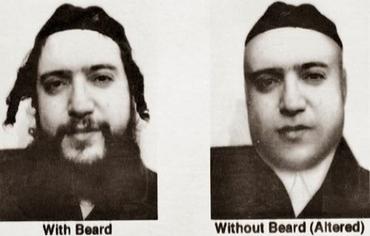




 Homeschoolers Anonymous