David Noebel, Summit Ministries, and the Evil of Rock: Jeri Lofland’s Thoughts

Screen Shot 2013-08-02 at 12.26.23 PM
Summit Ministries’ Jeff Myers and David Noebel on James Dobson’s radio show.

Jeri’s post was originally published on her blog Heresy in the Heartland with the title “Time Makes Ancient Good Uncouth.” It is reprinted with her permission. Also by Jeri on HA: “Generational Observations”, “Of Isolation and Community”, and “His Quiver Full of Them.”

*****

New occasions teach new duties, time makes ancient good uncouth,
They must upward still and onward, who would keep abreast of truth.

~James Russell Lowell, 1845

I ordered David Noebel’s booklet “Christian Rock: A Stratagem of Mephistopheles” from Summit Ministries in Manitou Springs as a teenager sometime in the early ’90’s.

I needed to know that Gothard and my parents weren’t crazy, that other intelligent adults had reasonable arguments with which to oppose Christian rock.

From the back cover: “It is The Summit’s purpose to arm Christian young people with facts and information concerning God, home and country so they will be able to hold fast to the true and the good in building their lives for the future.” I wanted facts; I wanted information.

And it turned out that Noebel supported my parents’ position:

“The church is beset with a relentless beat which weighs on the nerves and pounds in the head. And the syncopation evokes a most basic sensuous response from the body, since it is purposely aimed at the physical and sensual.”

“Squeezing in a few ‘thank you, Jesus’ or ‘Hallelujah, it’s done’ in rock music does not cleanse rock of its evils. Indeed, the lyrics were not its main sin for some time. The beat of the music was its evil.

Noebel presented 30 reasons, plenty of Bible verses, a study involving houseplants, and claims about applied kinesiology by a John Diamond. He quoted Henry Morris (a civil engineer and ardent young-earth creationist also opposed to modern art) and had a lot to say about sex and Marxism. Additionally, he linked the rock beat to atheistic Soviet communism and objectionable art styles like cubism and surrealism.
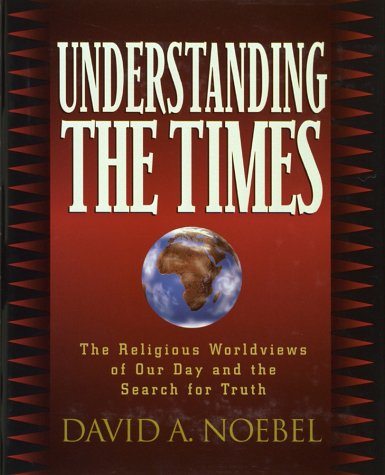
David Noebel is the author of "Understanding the Times," a book popular in evangelical and homeschool circles.
David Noebel is the author of “Understanding the Times,” a book popular in evangelical and homeschool circles.

I knew nothing about David Noebel.

I was not familiar with his much earlier work Communism, Hypnotism, and the Beatles, published in 1965–long before my birth–by Billy James Hargis’ Christian Crusade.

In one reviewer’s words: “Noebel is compelling because he’s intelligent, coherent, and well-researched, despite being absolutely paranoid and utterly mad. Aside from some inconsistent use of the Oxford Comma, he has a clear, if discursive thesis:

“Rock ‘n’ roll is turning kids into gay, Communist, miscegenators.”

Billy James Hargis was a right-wing evangelist and radio and television ranter long before Rush Limbaugh. He saw communist plots everywhere: in the NAACP and the civil rights movement, in the assassination of JFK, in water fluoridation. According to TIME magazine (Feb. 16, 1976), he founded American Christian College “to teach ‘antiCommunist patriotic Americanism'” from the city he called the “Fundamentalist Capital of the World”. From there, he promoted a hard line against drugs, homosexuality, sex education, abortion and the Beatles and toured with the college choir.

David Noebel was an aide to Hargis for twelve years, speaking around the country, founding The Summit in 1962 as a Christian Crusade program to combat anti-Christian teachings from secular universities (like the University of Tulsa) and contributing to Hargis’ television show where together they decried marijuana use and rock music. Later, Noebel became Vice President of Hargis’ new American Christian College in Tulsa.

In 1974, Noebel was staggered when students confided to him that Hargis, ardent promoter of traditional morality and father of four, had had sex with several of them.

Eventually four men and one woman exposed Hargis’ sexual abuse and manipulation over a period of years. TIME reported on the scandal in 1976, Hargis was forced to resign, and the school closed its doors the following year. Noebel went on to effectively “fold” Christian Crusade into Summit Ministries, building it into a successful international worldview training/brainwashing center targeting all ages, but teenagers in particular.

Noebel was an aide to Billy James Hargis, a right-wing evangelist and radio and television ranter who saw communist plots everywhere.

Postmodernism has replaced communism as the bane of our times. According to an article by Summit’s Steve Cornell,

“[The] pre-modern era was one in which religion was the source of truth and reality…. In a postmodern world, truth and reality are understood to be individually shaped by personal history, social class, gender, culture, and religion…. Postmoderns are suspicious of people who make universal truth claims…. Postmodern thinking is full of absurdities and inconsistencies.”

As a postmodern myself, I find it ironic that the decades have softened Noebel’s hardline position on Christian rock.

Apparently Mephistopheles has released it for other uses. Students at Summit’s youth conferences speak of the meaningful “corporate worship“, which now includes rock songs like “How Great Is Our God” by Chris Tomlin and “Jesus, Thank You” from Sovereign Grace Music.

The teens attending the worldview lectures today were not yet born when David Noebel penned Stratagem and would likely be surprised to learn that the religious anthems they find so powerful are actually “estranging them from traditional values”. According to the now retired, but still involved and revered, “Doc” Noebel, “although the lyrics might acknowledge the concept of true worship, the music itself expresses the unspoken desire to smash it to pieces.”

Summit’s John Stonestreet writes, “Truth does not yield to popular opinion. Unlike postmodernism, the biblical worldview can withstand all challenges and still speak to the dominant culture.” This belief is at the core of Summit’s “worldview” training.

And yet, Lowell’s line rings more true: time does make ancient “good” uncouth. Morality and truth are, in fact, shaped by history and culture.

As Summit’s stance on Christian rock illustrates so well.

Maybe, in another 30 years, Noebel’s successors will stop fighting same-sex marriage and even give up warning kids about “the gay agenda” as they “keep abreast of truth”? One can always hope…

How I Learned To Stop Being Afraid and Love Other Religions, Part One: If Satan Made Xanax, And Other Worldview Myths

screen-shot-2013-07-29-at-7-46-16-pm

HA note: The following is reprinted with permission from R.L. Stollar’s personal blog. It was originally published on July 30, 2013.

*****

“Nothing short of a great Civil War of Values rages today throughout North America. Two sides with vastly differing and incompatible world-views are locked in a bitter conflict that permeates every level of society.”

~James Dobson and Gary Bauer, Children at Risk: The Battle for the Hearts and Minds of Our Kids, 1990

*****

Part One: If Satan Made Xanax, And Other Worldview Myths

When I enrolled in the Eastern Classics program at St. John’s College back in 2005, I encountered many and varied responses from fellow evangelical Christians. Some proved encouraging and others not so.

The most common response, though, was: “Are you a Buddhist?”

As the months passed and the time of graduation grew closer, the question changed, but only slightly:

“Have you become a Buddhist?”

At first the question provoked but a smile. As it grew more regular, however, and as I began to know more about Eastern philosophies and religions as well as what actually occurred in the minds of the questioners, it provoked a thought process. I realized that, to many Christians I knew, “Eastern” meant “Buddhist.” And “Buddhist” meant some tranquil species of rebellion against the American Jesus — like if Satan made Xanax for the mind. I vividly remember one individual who commented that, if I were to study Eastern religions, I better not become a Buddhist: Buddhists have no emotions whereas, you know, Jesus wept.

Such comments are likely the result of ignorance regarding world religions. A good number of the people who asked this question in 2005 did not shun inquiry. They merely lacked familiarity with Buddhism. They did not know (as I did not know prior to a year of study in the Eastern Classics) that Buddhism, like Christianity, has a dizzying number of denominations, each vying for doctrinal dominion. Consequently, when someone asks me now if I agree with Buddhism, I experience great difficulty answering the question: “Which denomination?” I have to ask. I have great fondness for the emotional freedom and experience-based practices of Diamond Way Buddhism, for example, whereas I dislike the asceticism of Theravada Buddhism. American Zen Buddhism is another story.

I have thus realized, after these conversations with friends and fellow students, that the American Christian mind (maybe even the American mind) has a paltry understanding of some of the longest-standing and deeply rooted ideas of the world. American evangelicals especially do not take time to appreciate, let alone understand, a good number of their strongest opponents in the sphere of religion. Those who have taken time (seemingly not much) only do so to construct flimsy card-houses with the purpose of a surprise attack.

You have groups like Summit Ministries and Worldview Weekend, training up the next generation with nothing more than an arsenal of generalizations, simplifications, and shameless reductionism.

No one seems interested in taking the ideas of other religions at face value and learning to see any sort of beauty or value in them.

To say that other religions can be beautiful or valuable is not an exercise in relativism. But granting this beauty or value will likely suffer the fate of being interpreted as such by many of today’s “worldview” champions. The old guard of American Christianity and Christian homeschooling — Dobson and Bauer, from this post’s opening quotation, and people like Summit’s David Noebel and John Stonestreet, or homeschooling’s Kevin Swanson and Ken Ham — is terrified of anything that sounds “postmodern.”

Postmodernism is like intellectual dub step to the old guard.

In today’s evangelical culture, a defense of religion as an aesthetic and social phenomenon seems indistinct from a defense of religious pluralism and intellectual apathy. But that’s because this culture is so afraid of “liberal” arts to the point that it cannot comprehend some basic philosophical and sociological concepts. The fact is, to understand religion as an aesthetic and social phenomenon grants humanity the freedom to explore a ground to aesthetics and society that condemns, rather than condones, an unwillingness to pursue truth.

But first: what does “religion” mean? And what would it mean, that one can perceive this noun’s content as “aesthetic” and “social”?

To the evangelical culture, religion is either Christian and thus true or pagan and thus untrue. This proves a stunted understanding, however, because religion is neither one nor many truth-claims which one can either affirm or reject. Religion is no doubt a phenomenon which entails truth-claims. But it also entails much more. Religion is a complex totality of human and other elements, only one element of which is the sort of truth-claim that one can package into propositions.

We need to start seeing religion — and any particular religion — not as a mass of disembodied doctrines but as what sociologist Peter Berger calls a “world conspiracy.” “World conspiracy,” in fact, seems the best definition for religion.

What does this mean?

In The Sacred Canopy, Berger explains that,

“The condition of the human organism in the world is…characterized by a built-in instability. Man does not have a given relationship to the world. He must ongoingly establish a relationship with it.”

The world abounds with the sort of innate precariousness that a Buddhist would term as impermanence — “All things pass,” sighs Kaoru, one of the main characters in Murasaki Shikibu’s Tale of Genji. This line is almost identical to Solomon’s sentiment in Ecclesiastes.

Human and other life forms, buildings and projects, ideas and romances—these all rise and fall, constantly, perpetually, each and every day. As a result of this precariousness, human beings go about selecting structures of meaning in which they can operate. Humans construct families, work places, technology, and institutions in which to control the elements of the world that bear chaos. Out of their constructions human beings hope for an order, a society. Peter Berger says,

“Society, as objective reality, provides a world for man to inhabit. This world encompasses the biography of the individual, which unfolds as a series of events within that world”

But humans need more than order: they need to feel meaningfulness within that order. They require that order to be “ordained” in some way. Thus,

“a meaningful order, or nomos, is imposed upon the discrete experiences and meanings of individuals.”

This nomos is religion:

“Religion is that human enterprise by which a sacred cosmos is established, wherein ‘cosmos’ implies not a galaxy but order.”

This final addition to the human world-building project grants the project and its everyday objects and endeavors a sense of purpose, an all-encompassing reason for pursuing the ends of the society. Berger terms this sense of purpose or reason a “sacred canopy” cast over world-building. It is a “world conspiracy” in the sense that humans work together to give their reality a meaning:

“Religion is the audacious attempt to conceive of the entire universe as being humanly significant”

What Berger as a sociologist calls a “world conspiracy,” or “sacred canopy,” a theologian like N.T. Wright might term “worldview.” (1) Jamake Highwater, a historian and philosopher of sexuality, preferred the term “mythology” in his 1991 book Myth and Sexuality:

“All human beliefs and activities spring from an underlying mythology—those metaphors, informing imageries, and paradigms which deeply influence every aspect of our lives and which determine our attitudes about reality—about the world and about ourselves: good and evil, normalcy and abnormalcy, fact and fiction, justice and injustice, beauty and ugliness, power and powerlessness.”

Whether one prefers world conspiracy, sacred canopy, worldview, or mythology as a descriptive, the common factor among the ideas is that human being itself contains within it a hope and passion for carving out a home in a hostile existence.

This hope and passion — and all its nuances, quirks, failures, and successes — is the stuff of religion.

*****

Part Two: When Buddhism Saved My Life >