CC image courtesy of Flickr, Catarina Oberlander. Image links to source.
HA note: The following is reprinted with permission from Kierstyn King’s blog Bridging the Gap. It was originally published on November 28, 2014.
Cynthia Jeub touched on this in the first part of her post “Freeing Self-Deceived Fundamentalists“. My family has glorified death for a really long time. I remember Columbine, like she was talking about – being something almost revered – not remotely tragic. When things were shitty(-er than normal) or if I was making a life choice my mom didn’t agree with she would say “well the end times are coming and we’ll be raptured soon [so we won’t have deal with XYZ]”. Going to heaven was all my parents really cared about, they instilled a sense of life being almost useless into me, unintentionally.
Why bother living here when life will be so much better after you die?
When parents neglect or kill their children because they think god told them to or that they’re saving them.
When parents talk about how brave Abraham was for almost murdering Isaac.
When I remember that my parents coped with my two still-born siblings by talking about how lucky they were that they got to be in heaven while we had to suffer on earth…
I used to be afraid, or worried sometimes……..that something like that would happen. That “god” would tell my parents to murder us, and they would. Or that I would be murdered (martyred) because I was a (true) christian in America, and I would look down that gun barrel at Columbine and say “Jesus will save me” or “Get behind me satan” or whatever clever bible phrase I could come up with before my imminent death.
And my parents wouldn’t mourn – they’d talk about how much better off I was dead than alive, how everyone needs to be a christian so they can wait out their miserable existence and go to paradise.
It’s really depressing thinking about it. But it explains a lot about why, I guess, I’ve rarely been afraid of dying and have always just been kinda nonchalant about it.
It’s not a good thing, because it adds intensity to depression: why bother living, anyway? Now that I don’t believe in god and don’t believe that suicide would nullify my non-existent salvation.
But when I was a child…
The emphasis my parents put on dying and going to heaven always bothered me.
It was like they were so ready for our lives to be over.
They didn’t want to live.
They communicated that living was a waste of time. After all, we’re citizens of heaven, not earth, so why care about the world?
And that always fucked with me because I wanted to live, and I felt guilty for wanting to live, fully, and make the most of my time and help people while I was here, and even, (gasp) enjoy my life here. Because some part of me understood that being here mattered, even though I didn’t – and sometimes still don’t – know why.
I was so hurt when my mom would rather I die/be raptured than marry my spouse. She said, hopefully, that Jesus would probably come back before I even had that chance.
I can’t explain to you with words how much that messes with a person. When your parents whole life revolves around the end of their, yours, and everyone else’s life………when rapture is the answer to things that you don’t like…and pretend like everyone who wants to live and love now is silly because obviously they should just be working on getting into heaven.
Everything my parents do is motivated by being the best christians so they get all the heavenly kudos.
I think my parents were really really depressed.
And I think that messed with me in a lot of ways, too.
HA note: The author’s name has been changed to ensure anonymity. “Wayne” is a pseudonym specifically chosen by the author.
I am a graduate of Patrick Henry College. Moreover, I am a recent graduate – I didn’t go through the schism. Many of the stories critical of PHC come from those who lived through that time, and many of those defending the school come from those currently attending.
I hope to offer a perspective that “splits the difference.”
There will be many in the PHC community who will immediately write this off as the complaint of yet another of the “bitter alumni.” That’s an in-house pejorative frequently applied to PHC grads who openly criticize the school. To preempt this narrative, I would like to observe up front that I am not a disaffected former student taking out my recession-inspired frustration on the institution. At PHC, I worked hard, received good grades, and graduated with honors. I participated on multiple forensics teams, including the celebrated moot court squad, and was accepted to my top-choice graduate program. By most metrics, I had a very successful outcome.
In many ways, I regret attending PHC. In others, I do not.
(Some background: I did not have the extremely conservative homeschooling background many on this website experienced. My parents are successful professionals and committed Christians who truly live out the call of their faith to love others. They are two of the most exceptional people I’ve ever met. Accordingly, my homeschool experience was both spiritually positive and academically enriching. I’m also a straight white male, so my perspective is certainly limited compared to the experiences of others who have written here.)
As a student interested in pursuing a public-policy career, I thought PHC was a perfect fit. I was, unfortunately, incorrect. In my view, PHC must confront and overcome three major issues if it hopes to succeed in the future and avoid the serious problems of its past: 1) lack of meaningful academic engagement, 2) administrative authoritarianism, and 3) corrosive student culture.
Before discussing these, however, I wish to highlight some of the positive aspects of my time at PHC.
Positive Elements
During my time at PHC, I met a number of very exceptional people with similar backgrounds and, in many cases, similar convictions. (I still consider myself a committed Christian, though I have renounced the “evangelical” subculture). Furthermore, the school’s Dean of Academic Affairs, Dr. Frank Guliuzza, served as both a mentor and a personal friend to me. Over and over, Dr. Guliuzza exemplified the very best ideals of Christianity, offering both compassion to the broken-down and guidance to the highly motivated.
I do not know if I would have met the same concentration of incredible people elsewhere. In some ways, PHC’s lack of “diversity” ensured that many of us shared common ground and common experiences. Accordingly, when we faced challenges, we developed uniquely close bonds. I can say with complete honesty that I would die for many of the friends I made at PHC.
And despite the presumed inferiority of any supposed “liberal arts” education delivered within such a rigidly doctrinaire framework, PHC is not an easy school (something which many of its detractors fail to appreciate). The coursework is objectively rigorous (at least in many upper- level government major classes), and the success of the school’s forensics programs speaks for itself.
Having outlined many of the positive elements of my experience, I move now to consider the challenges the school faces.
Lack of Academic Engagement
I first developed concerns on this front during freshman year. Even as a new student, I understood that censoring Michelangelo’s “David” and Botticelli’s “Birth of Venus” – with black boxes around the genital areas – was contrary to the purposes of a classical liberal arts education. PHC’s overprotective and intrusive Internet filtering system extended to “tasteless” material (as defined by whom?) and blocked any discussions of drug legalization as a matter of policy. The perspectives of contemporary Catholics and Orthodox Christians were largely absent from the curriculum, as were the contributions of minorities and non-Western cultures to philosophy, history, science, religion, and the arts. Moreover, students were expressly forbidden from making a case for same-sex marriage, even as purely a matter of public policy (Student Handbook 5.1.2.9).
This is not how any “liberal arts education” should be conducted, but it is the inevitable consequence of maintaining a rigid Statement of Faith interpreted solely by the College’s senior leadership.
Administrative Authoritarianism
The school’s priority, above all else, appeared to be maintaining its pristine image as the “Christian Ivy League.” This objective naturally conflicted both with valuing students as individual persons and producing scholarly research which may challenge the established consensus.
I frequently felt that my political views and opinions, which emphasize personal liberty in one’s private life and affairs, were unwelcome on campus. Moreover, I was constantly afraid that any expression of views deemed “problematic” would be relayed to the ever-present Office of Student Life. It is impossible to convey the particularly sickening, stomach-churning dread that somewhere, someone is judging your attitude and spiritual condition. No student in higher education should face that kind of fear on a daily basis.
I hold the Office of Student Life directly responsible for creating a climate of paranoia among students whose views differ from the established consensus. There was no counterpoint to this authoritarianism; the college “newspaper” was censored beyond belief, clearly forbidden to print anything critical of the College or the administration (this last point was not the fault of the staff or supervising professor, but of the College’s higher authorities).
If I had been female, it would have been far worse. I witnessed the shaming of girls by their Resident Assistants – who obsessively sought, as a “Mean Girls”-style means of social retribution, to dress-code them for made-up modesty violations. I listened to chapel messages stating that the responsibility of women was to “control their beauty.” Further discussion of the gender issue is properly the domain of others, however.
As a final example, the administration recently decided to institute an electronic “card scan system” to monitor chapel attendance. The rationale? Attendance numbers reflected that 81% of the student body was attending chapel, rather than the (apparently more acceptable) 85%. I find such an approach – as well as the policy of mandatory daily chapel – a disgrace to worship.
Frankly, I find much of the “big issues” on campus laughable in retrospect – but at PHC, they’re spoken of with dead seriousness and an absurd level of self-righteous pomposity.
Corrosive Student Culture
This is necessarily a highly subjective question, but one which I feel warrants some discussion. A few highlights based on instances I personally witnessed:
My personal focus on obtaining good grades and planning for my future career was condemned by other students as unspiritual and utilitarian.
Some students outright refused to argue certain topics, even hypothetically, in parliamentary debate rounds (i.e. resolutions in which they may be required to construct a theoretical case for abortion rights). They were subsequently celebrated for their moral courage, rather than encouraged to think through both sides of crucial issues or advised to leave the league. (PHC tuition dollars funded the cross-country travel of these students.)
Student “Resident Assistants” betrayed personal confidences to the Office of Student Life, which in turn betrayed those confidences to other Resident Assistants.
A large subset of PHC culture expected that fathers give permission for their adult daughters to go out on dates.
Many students attributed mental health issues to “spiritual warfare” and “demonic activity,” creating a climate of distrust for modern medicine.
Students were taught, and routinely promulgated to others, the toxic idea that the school administration may claim spiritual authority over its students. The school rules expressly forbid public criticism of professors, based on the rationale that such activity “violates the Biblical principle of submission to the authorities whom God has put over us.” (Student Life Handbook, 2.1.2).
Conclusions
My objective in writing this is not to exact some sort of retribution. After all, I and my friends are graduates. I seek to identify some serious problems that persist at PHC and suggest that the school recognize these, taking steps to reform itself accordingly. Such changes are absolutely not incompatible with the Christian faith that the school professes, but may require some painful evolutions: as long as the school’s current administrative figureheads remain in power and remain committed to inflexibility, genuine reform will likely be stonewalled.
I deeply care about many of the people involved in my PHC experience – both those currently attending and those who have graduated. If you are a current student at PHC and this story resonates with you, I hope you realize that you are not alone. Others have wondered the same things, asked the same questions, and faced the same unknowns. Do not accept the narrative that all alumni are angry, pathologically bitter individuals whose post-PHC lives have stalled; I think I speak for many PHC graduates when I say that we sincerely care about you. Please reach out to us. Hear our stories before you make snap judgments about our character or motivations.
When all is said and done, there are two directions a Christian college such as PHC may pursue: embrace the simplistic model of Bob Jones University/Pensacola Christian College, and choke off dissent in the name of ideological purity; or take the path of Wheaton and many others, encouraging cultural engagement while recognizing that all students will not fit into cookie-cutter molds. PHC is clearly caught between these two competing impulses.
One can only hope the school chooses to take the harder, but necessary, road toward reform.
HA note: A while ago we asked members of the Homeschoolers Anonymous community what they wished their 16-year-old selves knew about mental health. We received a significant number of responses, so we’re going to run 4 sets of “16 things” throughout this week. Each set is a group post compiled from various people’s answers.
1. I wish my 16-year-old self knew about personality disorders and that I would soon know people with them, and how to navigate knowing who I was talking to when it was not that person but one of their many personalities — and this was OK, not demon possession or someone just doing some sort of elaborate fakery.
2. I wish my 16-year-old self knew that masturbation isn’t a sin, that everyone lusts and fantasizes (and noticing that a girl has boobs doesn’t even count as lust), and that — most importantly — a healthy sex drive is absolutely not worth contemplating suicide over.
3. I wish my 16-year-old self knew that it wasn’t her fault when her parents would fight. I wish someone had taken the time to tell her that instead of just pretending that everything was fine when it wasn’t.
4. I wish I could give my 16-year-old self a hug. I wish my 16-year-old self knew that she is loved.
5. I wish my 16-year-old self knew that she wasn’t “fat” because she read books and stayed inside, but because she was depressed. She wasn’t “fat” at all.
6. I wish my 16-year-old self knew that eating right, praying right, thinking right, and doing right are not foolproof ways to ward off mental illness. Sometimes illness just happens, and it isn’t because you aren’t perfect enough.
7. I wish my 16-year-old self knew that when my mom went crazy on us kids, screaming and changing history, it wasn’t our fault.
8. I wish my 16-year-old self knew that I was beautiful and it was ok. I wish I knew that normal people didn’t feel guilty all the time. I wish I knew that being grown-up didn’t mean no fun or happiness. I wish I knew that being imperfect didn’t make me a failure, it just made me human.
9. I wish my 16-year-old self knew that it is better on the outside of the dark, rigid, insulated little world I had grown up in. I thought that the world was a scary, hard, miserable place and that everyone basically toiled along fighting emptiness. That’s what I was preparing myself to go out into. And then to get out into the rest of the world and find that, yes, it can be hard and scary and heartbreaking but that it’s also beautiful and challenging and exciting and has so much light and hope and good… I wish I had known that.
10. I wish my 16-year-old self knew that not wanting to be around people is normal. It just means you’re a really big introvert.
11. I wish my 16-year-old self knew that I had a learning disability. I wasn’t stupid. I was just as smart as my brothers. I just learned differently.
12. I wish my 16-year-old self knew that I had other options as a Woman, that Women everywhere are strong and have careers and didn’t just get married and have a ton of kids and stuck being house wives forever.
13. I wish my 16-year-old self knew that it wasn’t her responsibility to keep the family together — and that it wasn’t her fault that things fell apart. She did everything she could.
14. I wish my 16-year-old self knew that my mother was wrong when she responded “how can you do this to me” when she found out I was suicidal.
15. I wish my 16-year-old self knew that disagreeing with my parents or — god forbid — being angry with them wouldn’t send me to hell. I wish my 16-year-old self knew how to speak up, and how to speak out.
16. I wish my 16-year-old self knew YOU. ARE. NOT. ALONE. And someday you will meet others, and you will feel better than you ever thought was possible because of it.
HA note: A while ago we asked members of the Homeschoolers Anonymous community what they wished their 16-year-old selves knew about mental health. We received a significant number of responses, so we’re going to run 4 sets of “16 things” throughout this week. Each set is a group post compiled from various people’s answers.
1. Most of all, I wish my 16-year-old self knew that it was okay to accept herself exactly where she was at, that she didn’t need to lie awake at night berating herself after her parents had done that for her, that self-loathing isn’t holy, and being made of iron is a coping mechanism, and doesn’t have to be an entire existence.
2. I wish my 16-year-old self knew that my parents’ compulsive behavior was a sign of mental illness, not an edict from god.
3. I wish my 16-year-old self knew not to internalize everything
4. I wish my 16-year-old self knew that it’s morally okay to be depressed, that depression does not have to have a known cause to excuse it, and that it’s okay to seek help for it.
5. I wish my 16-year-old self knew that he didn’t have to be the savior knight in shining white armor for every friend dealing with overwhelming circumstances. I wish he knew it wasn’t his responsibility to be everyone’s counselor, pastor, and confidante. I wish I could have warned him about the massive burnout he was hurtling himself toward, that “bear one another’s burdens” doesn’t mean “bury yourself alive”.
6. I wish my 16-year-old self knew that having a crush is not a sin, that “emotional adultery” isn’t even a thing, and that being head-over-heels for the same girl for three years is maybe an indication that I need to stop thinking about her and get to know her… and maybe ask her out if I felt inclined, because dating doesn’t turn people into licentious nymphomaniacs.
7. I wish my 16-year-old self knew that mental illness exists. Like, it’s an actual, real live thing.
8. I wish my 16-year-old self knew that not being happy all the time doesn’t mean you’re “broken”.
9. I wish my 16-year-old self knew that mental illness is not a sign of demon possession or an “ungrateful spirit”.
10. I wish my 16-year-old self knew that she was beautiful, even after all the struggles with health took a huge toll on her body and her self esteem.
11. I wish my 16-year-old self knew that, unlike the patriarchal messages would have her believe, she did not need a man to validate her self worth in order to feel beautiful.
12. I wish my 16-year-old self knew that what happened to her was not her fault, that she was not a “temptress” or seducing someone.
13. I wish my 16-year-old self knew what grooming was and what abuse looked like, but I also wish she knew not to blame herself for being manipulated and abused. I wish she knew that it wasn’t her fault. I wish she knew how to forgive herself.
14. I wish my 16-year-old self knew that, as my friend advised, “You are a human being — not human doing. Your value lies in simply being human, not in what you do for others.”
15. I wish my 16-year-old self knew the signs of enmeshment, co-dependence and a relative having a personality disorder.
16. I wish my 16-year-old self knew what to do when I found out that two relatives were self-harming.
HA note: A while ago we asked members of the Homeschoolers Anonymous community what they wished their 16-year-old selves knew about mental health. We received a significant number of responses, so we’re going to run 4 sets of “16 things” throughout this week. Each set is a group post compiled from various people’s answers.
1. I wish my 16-year-old self knew that it is okay to need time to yourself and that you don’t have to act like you are happy all the time even when you aren’t.
2. I wish my 16-year-old self knew that I could seek help. I was so trapped in my religion, all I knew to do was pray.
3. I wish my 16-year-old self knew that you can think you’re fine for a while and later on realize that you’re not, and childhood trauma plus a secondary trauma (getting mugged, a natural disaster, loss of a loved one, war, etc.) can bring about delayed-onset PTSD.
4. I wish my 16-year-old self knew that a lot of what I was experiencing was not mental “weakness” but mental injury and that it needs to be taken as seriously as a badly set broken bone.
5. I wish my 16-year-old self knew that dissociation can take different forms ranging from an out-of-body type experience to just feeling like your head is the only thing that isn’t numb, and that dissociation is a coping mechanism that works to help protect you in a time of extreme hardship but needs to be overcome when you’ve reached a more stable place in life.
6. I wish my 16-year-old self knew that the mind-body connection is a powerful thing and somatic symptoms like stomach aches, headaches, and changes in appetite that don’t seem to be for any particular reason might be the main signs you have that something is off.
7. I wish my 16-year-old self knew that cultures where the typical solution for mental health issues is to go to church or go to drinking often end up with too many religious fanatics and alcoholics. Make a counseling appointment if you feel yourself needing help.
8. I wish my 16-year-old self knew that you are not broken, defective, sub-par, or damaged goods if you have these feelings and issues. You can have a good life and you are worthy of self-care, outside care, respect, and meaningful work and relationships.
9. I wish my 16-year-old self knew everything truly wasn’t her fault.
10. I wish my 16-year-old self knew that there was another way of life, and that depression is a real illness that she had.
11. I wish my 16-year-old self knew that she was beautiful and not fat.
12. I wish my 16-year-old self knew that feeling “down” pretty much all day, every day, and sleeping so much that your mom takes you to get bloodwork done because she’s worried you have anemia are signs of depression.
13. I wish my 16-year-old self knew that it’s okay to need encouragement, unconditional love, and affection and that depression can be a natural response to not getting them.
14. I wish my 16-year-old self knew that it was okay not to be “strong” all the time, that feeling as though I was a shell made of metal isn’t normal or healthy, that numbness isn’t what happiness feels like, and that feeling and crying aren’t signs of weakness, but the inability to do either is a sign there’s something wrong.
15. I wish my 16-year-old self knew that it was okay to get help and that life does get better and doesn’t have to be the hell-hole her parents told her it should be.
16. I wish my 16-year-old self knew that she had intrinsic value just because she existed, and was worth more than the broom she felt like. I wish she knew it was wrong to have been stripped of her humanity and individuality that way, and wrong to feel like she needed to apologize for her existence.
HA note: A while ago we asked members of the Homeschoolers Anonymous community what they wished their 16-year-old selves knew about mental health. We received a significant number of responses, so we’re going to run 4 sets of “16 things” throughout this week. Each set is a group post compiled from various people’s answers.
Part One
1. I wish my 16-year-old self knew that happiness could be a daily thing. Like, the idea of waking up “happy” didn’t seem possible. I would have fought more if I knew that. I would not have given up and resigned myself. Even when I left home I didn’t know. I just wanted to get away from the pressure.
2. I wish my 16-year-old self knew that doing research on my own was absolutely not a proper substitute for real professional help and that I was worth the extra attention I needed. (Though to be fair, I did learn a lot of interesting stuff about abnormal psychology through my research. It just didn’t do me personally very much good).
3. I wish my 16-year-old self knew that I didn’t have to completely tank my life before I asked for help. It’s ok to ask for help before the problem reaches a crisis point.
4. I wish my 16-year-old self knew that addiction is a legitimate treatable disease. Addiction is not a sin, shortcoming, or lack of will power.
5. I wish my 16-year-old self knew that any non-mental health worker who tells you or anyone else that mental illness is just sin, someone’s will or anything other than mental illness is full of shit.
6. I wish my 16-year-old self knew that depression sometimes comes and goes, but that many people have it for much longer and making comments like “oh, turn that frown upside down!” or “well, if you got outside sometimes..!” are not only unhelpful, but hurtful.
7. I wish my 16-year-old self knew that depression, like the Zoloft commercial said, really does hurt. There is a physical pain to depression.
8. I wish my 16-year-old self knew that panic attacks are real, and they are frightening. They can be managed, though.
9. I wish my 16-year-old self knew that what you see on TV when it comes to therapy, really doesn’t even touch much at all of what actually happens in therapy.
10. I wish my 16-year-old self knew that mental health is no joking matter.
11. I wish my 16-year-old self knew that if someone tells you that they are contemplating suicide, take them seriously every single time.
12. I wish my 16-year-old self knew that feeling conflicting emotions after your parents’ divorce is normal and that you don’t have to lie awake at night afraid of going to hell because you are angry at your parents.
13. I wish my 16-year-old self knew that my internal freak outs were panic attacks and not God trying to convict me. And that even though when you’re in the midst of depression it feels like all there is and all that ever was, it goes away (at least for a time) and you get to be happy again, that the world isn’t always that suffocating.
14. I wish my 16-year-old self had known that spending time out in natural sunlight, even on cloudy days, could help boost my mood and energy. We lived in a dark, small-windowed house in the bottom of a steep valley and light was hard to come by, but I could have hiked up to the top of the pasture in the late afternoons and tried.
15. I wish my 16-year-old self knew that wanting to be thought of as pretty is not a sin; hell, I wish my 31-year-old self knew that.
16. I wish my 16-year-old self knew, somehow, that I would get free eventually, that it would get better, that I would learn in time that what had kept me confined for so long were nothing more than lies.
In my last post, I made a brief mention of how living in a state of survival affected my mental health. I thought it would be a good idea to expand on this issue, because in my opinion it is the crux of why having quiverfull families and homeschooling in chaos is abusive to the children involved.
As I have mentioned before, doing something that causes harm to your child is abusive regardless of your intentions or religious justification. Children are do not become raised in a vacuum. Children do not have the ability to protect their own interests, and as I have shown in a previous post, in fact unfortunately do not have the right to do so. Therefore it is a parent’s job to try to protect their children from harm as much as possible – no perfection required – and to introduce good things and reduce negative influences as much as possible. It is my belief that that most parents would not argue with this assertion, because most parents have their children’s best interests in mind.
When a child is raised a quiverfull family, there is a core belief involved that stipulates that older children should help raise their younger siblings.
This is commonly known to those outside the quiverfull movement as the “buddy system”, but survivors sometimes call this “sister-moms”. The use of older siblings to care for younger siblings can cause various levels of neglect depending on how organized the family is and whether there is homeschooling involved. It is typically simply impossible for a mother of 6 or more children to recover from childbirth and unending pregnancies at the same time as being able to provide adequate care to that many children, provide adequate schooling for that many different grades, cook nutritious meals, do laundry, and keep house. Don’t get me wrong, I do not object to children having chores. I do object to a ten year old child being responsible for a whole department of parenting or housekeeping, such as all cooking, or all laundry or all cleaning or all child care.
This is the difference between a child helping with chores, and “the use” of children to help raise other children or “take over” certain aspects of being a housekeeping mother. When there is a high level of chaos, the older children can become invested in running the household. Indeed, that is the goal of quiverfull families: to pass on the ideals of raising a big family and having women stay in the home and replicate the family values as soon as they are old enough. However, this emotional investment will have one of two outcomes: either the sister-mom will succeed in pulling off an inappropriate amount of responsibility in the home and move on to their own submissive marriage and many children without ever experiencing her own life, or she will fail at the vast amount of work required to raise a family as a young teen. If she succeeds, it is a tragedy.
If she fails – and many fail – she will be subject to shame by others inside and outside the family. The problem is, in order for a daughter to participate in the investment I described above, there is a certain amount of self-deception required. The girl must become oblivious to her own needs and desires, ignore her own sexuality, and truly believe in the moral obligation to participate, to the exclusion of all other life paths. Otherwise she will object to what is being taken from her.
The other important factor apart from self-deception is self-preservation.
In a chaotic situation, there is difficulty in maintaining discipline, and some parents do not have the skills to do so with a few children, let alone over half a dozen. Child abuse and “squeaky wheel” parenting is very common, where children are punished for being loud and only receive help when they are insistent enough to get it but not loud enough to warrant punishment. In this type of environment, there is not enough parental supervision to guarantee good behavior, so they may depend on older children to help supervise the younger children. Sometimes this means that if younger children misbehave, the child responsible for watching them may also be punished for not preventing the infraction. When this happens, the goal becomes less about moral behavior and more about each child protecting themselves from punishment.
A sister-mom who has juggled age-inappropriate levels of chores and child care for years, and is responsible for the behavior of others, lives in a haze of survival. They do not let themselves fully absorb what is going on around them, and do not allow themselves to experience the unfairness in their lives. When a failure takes place, the entire facade crumbles down. The girl will realize that the very parts of herself, the very skills she takes pride in, are what makes her different and scarred compared to others the same age. She will realize other girls have something she does not have: an identity outside of someone else’s children and ideology. If a girl fails at being a sister-mom, there is nothing left unless she makes something happen. If you have no other identity and no social skills, building these from scratch as a teenager seems like an insurmountable task.
The process of disillusionment that takes place is terrifying and horrifying.
Imagine spending several years working on something you really believed in, and investing every moment of every day in it, and believing that it was your life purpose, and one day it simply falls away. Teenaged girls in this situation are typically quite sheltered as well, and tend to not know much about depression and self-harm, which means that they are exposed to the life-changing effects without understanding what is going on, and believing that they are deficient in some way and are the only one in the world going through those feelings.
Quiverfull families are not open to exploring such issues and seeking help, and such help would be counter-productive to the goals of the ideology. Sometimes such girls retreat from their moment of clarity back into the haze and try again. Others are given help within the ideological circle, and the girls are encouraged to suppress their feelings. Others leave.
For the ones who leave and start their lives over outside the quiverfull community, it can take years to start to feel normal. It is difficult to feel normal when you are not living the purpose you have been taught, and are no longer pursuing those goals. Another important aspect is that as a sister-mom, a girl will raise children who are not hers. When she leaves, she walks away from small children who she loves and they know her as the source of food and comfort. It is impossible to fully describe the loss this causes, and the unselfish teachings from childhood can make it difficult to move forward with one’s own life when there is a huge part of the soul that is still attached to the raising and protecting of younger siblings.
When a girl starts to open up to her own life, she will start to realize how much of her life has been used up to pursue the goals of someone else. There is resentment towards both the parents and the siblings, which brings with it the conflict of not wanting to resent siblings for what they had no control over. Sister-moms are taught to not pursue their own goals and to malign typical ‘worldly’ goals, and it can be painful to process what is right and wrong and pick a moral code to live by. Sister-moms who leave will often also simply miss their families and feel rejection because they cannot stay and live their lives. They will feel confusion and shame, and be afraid of going to hell for their actions.
They experience the conflict of self-preservation both while living in the haze and while getting out. All these experiences can trigger depression, self-harm, and self-destructive behavior, and when a girl is used to living in a haze of denial, it is very difficult to get out of the new haze of depression if she falls into it.
A parent risking a girl’s mental health to get help with child raising other children is abuse.
Conflating demon possession with ‘madness’ hurts people.
That may sound harsh, but this is a real problem. I have been hurt by this in the past, and in the present, and others have too. When people talk about an (apparently) mentally ill person and say ‘He was definitely demon possessed’ that hurts me as a person with a mental illness. When people tell the Bible story about the ‘madman’ with demons, when they use that word ‘mad’, they are saying that the mentally ill person has demons. I have never heard this Bible story told with a caveat that mental illness often has a biological cause. I have, however, heard it told to prove that mental illness is caused by demons.
Here are five reasons you shouldn’t use the word ‘madness’ when talking about demon possession, or imply or say that mental illness is caused by demon possession.
Reason 1) It keeps people from getting help.
Who, especially a Christian, would seek help for mental issues if they know it will be attributed to demons? I was in denial about my depression for years because of the teaching that mental illness is caused by demons. Further, I didn’t get help for my panic attacks because I believed they were caused by demonic presence and would go away if I prayed enough.
Reason 2) It ‘others’ and dehumanizes mentally ill people.
It makes them out to be possessed by absolute evil, instead of treating them as regular humans who happen to have a sickness.
Reason 3) It ignores the physical reasons for mental illness, and the social reasons, such as past trauma or abuse.
Reason 4) It takes stigma to a whole new level.
Again, we’re confusing a chemical imbalance in the brain, or a misfiring of neural pathways, with the person being possessed by entirely evil beings. Anything bad you can say about stigmatizing mental illness, you can say about this concept.
Reason 5) It prevents us from trying to understand the person.
It’s a conversation ender that keeps us from looking further into the person and why they think and act the way they do.
I want people to stop using words that mean mental illness to mean demon possession.
I want people to stop assuming demon possession when the far likelier explanation is mental illness. I want people to be more careful how they talk about mental illness. I want people to be aware that 1/5 americans suffer from mental illness, and 1 in 20 of americans suffer so much that it adversely affects their lives at work, at school, and at home. I want people to realize that they need to be careful how they talk about it, because chances are good that a mentally ill person is listening. In a room with 100 people, it is statistically likely that 20 of those are dealing with some form of mental illness, and that 5 people have a severe case of it. Those people need to feel safe and like they will be treated as humans, they need to be listened to, they need to be loved, they need to feel safe enough to seek treatment.
They do not need to be made to feel as though they are infected with utter evil.
As someone who strives to take Jesus of Nazareth seriously, yet daily fights depression and suicide, I know full well the crushing weight that these ideas can have one’s life.
I know the immense guilt and shame they heap on people. I also know they have no basis in reality, are contrary to the history of Christianity’s relationship with mental health, and thus deserve to be called out for what they are: a twisting of the gospel and a careless rejection of science — in other words, of the nature that Baucham’s God so carefully made. To reject nature, as revealed by the science and reason so graciously gifted to us, is to reject God and exchange the gospel for fear and supernaturalistic dogma.
There is much in Baucham’s sermon I could critique. But I want, for the sake of length, to focus on three specific problems: (1) a misunderstanding of the basic nature of mental illness, (2) a misunderstanding of basic medical-scientific definitions, and (3) a misunderstanding of why people don’t talk to their pastors about their very real mental health struggles.
A misunderstanding of mental illness
I’d like to start at the beginning of Voddie Baucham’s sermon, where he reveals at the outset that he has no idea what he’s talking about. Baucham introduces the topic of mental illness by claiming that Nebuchadnezzar’s curse in Daniel 4 was a curse of schizophrenia:
You can act like Daniel, Chapter 4 is not here and we can not deal with the question of schizophrenia. But then you gotta read Job and you gotta deal with clinical depression. “Oh we’ll just act like Job is not there.” That’s fine. We’ll deal with the Apostle Paul and the murders he oversaw and then we can talk about post-traumatic stress disorder. “Well, I don’t really want to talk about that.” Ok, fine, if you don’t want to talk about that, let’s talk about Jesus, shall we? In the Garden of Gethsemane, where he experiences a classic instance of anxiety. Or better yet, when he comes to the tomb of Lazarus, weeping, there in depression, but then resuscitates Lazarus, and they celebrate — now he’s bipolar. Let’s not even talk about the Psalms, where you find every manner of what we would define as “mental illness” expressed by the psalmist himself.
Right here, at the beginning, Baucham disqualifies himself from discussing these issues in any accurate, sensitive, or thoughtful manner. In fact, his introduction to this topic trots out some of the most ridiculous myths and stereotypes about mental illnesses with which people daily suffer. For example: Job went through horrible times, was sad, and therefore was clinically depressed. In other words, “sadness” is “depression.” Or Jesus weeping? That’s “depression.”
No. No, it’s not. When you’re sad, you’re sad. When you’re depressed, you’re depressed. Those are two completely different categories. Sadness is an emotion. Depressionis a disorder marked by clearly defined symptoms. You see this marginalization of depressed individuals all the time in our society. Did you miss the opportunity to buy tickets to your favorite band and thus described yourself as “depressed”? You’re doing exactly what Baucham is doing: using a word that means something medically to describe nothing more than emotional state. When Jesus wept, he was being emotional. Being emotional is not the same as being mentally ill, though people — like Baucham — who marginalize and stigmatize the mentally ill love to make this equivocation. They love to do so because it allows them to collapse emotions with mental illness and thereby prove the latter amounts to nothing more than the unnatural (or “sinful”) rejection of the former.
When Jesus experienced sadness and wept, and then experienced happiness and rejoiced — those were normal human emotions, not bipolar disorder. And I don’t know a single psychiatrist or psychologist or emergency care physician or general practitioner who would confuse the two. He’s flogging nothing but straw men here. In other words, Baucham is the one confusing the two, not mental health professionals — which is why it’s a good thing that Baucham is not such a professional nor is qualified to treat those who suffer from mental illness.
A misunderstanding of definitions
One sees the continuation of Baucham’s ignorance of mental health when he goes on the attack about mental health terminology such as “symptom,” “syndrome,” and “disorder.” He tries to parse these terms to prove that mental illnesses, unlike physical illnesses, lack scientific basis. He even imputes some species of conspiracy to the professions of psychology and psychiatry (two entirely different professions, which he constantly equivocates between). Here’s an example:
Most Christians don’t know that there is no such thing as chemical imbalance. There’s no test for it. There never has been a test for it… That’s why we use the term “syndrome” or “disorder.”… Psychiatry and psychology have never cured anyone of anything nor do they claim to be able to. Let me say that one more time slowly. Psychology and psychiatry — and they’re not the same thing, one’s a medical doctor who goes to medical school, a psychiatrist, gets a medical degree, k? And they can dispense drugs, and, and that’s pretty much all they do, just dispense drugs and [unintelligible] drugs — and the other one, a psychologist, you don’t go to medical school, that’s a complete different degree, k? But in both instances, psychology and psychiatry have never cured anyone of anything. By the way, in order to cure somebody, you need to be able to diagnose them accurately, right? If you can’t diagnose someone accurately, and there’s no test to demonstrate what a person has, how could you know if you cured them? You can’t…. I’m not telling you my opinion, by the way. Everything I’ve stated for you up to this point is just pure fact… The reason they said “disorder” or “syndrome” is because it is not a disease….You do not have a medical diagnosis. It’s not a disease. And, and it’s time to, to, to expose the man behind the curtain on this one. Because he’s been parading as the great and powerful Oz for far too long.
Honestly, I don’t even know where to begin here. Much of what Baucham is saying is based on an outdated model of anti-psychiatry championed by a man named Thomas Szasz in the 1950’s. Had Baucham bothered to do a simple internet search — or even a lazy perusal of Szasz’s Wikipedia page, at the very least — he might have known this. As it stands, Baucham is merely repeating discredited science from decades ago.
Or there’s the asinine stereotype of psychiatrists being nothing more than psychotrophic Pez dispensers. While I am sure there must be psychiatrists out there who do that (since it’s a common stereotype), every psychiatrist I know is careful in handing out medication and also highly emphasizes exercise, meditation, positive thinking, spirituality, community programs, therapy, and so forth. Baucham’s picture of the average psychiatrist sounds more like an old stereotype of evil, lab-coated psychiatrists than actual, real psychiatrists in the 21st century.
But probably the most problematic part of these statements is Baucham’s understanding of the alleged inferiority of “disorders” and “syndromes.” So let’s look at 4 basic definitions to clear this up:
1) “Symptom”: A symptom refers to an observable behavior or state.
2) “Syndrome”: A syndrome indicates a cluster or combination of symptoms that occur together over time. It does not directly imply an underlying cause. The symptoms that occur together may or may not actually be related. Some syndromes, such as Parkinsonian syndrome, have multiple possible causes.
3) “Disorder”: Disorder means a functional abnormality or disturbance. Like a syndrome, a disorder is indicated by a combination of symptoms and does not necessarily have proven underlying cause.
4) “Disease”: A disease is a disorder where the underlying cause is known.
Baucham plays fast and loose with all these definitions to throw mental illness into a negative light, frequently referring to the illnesses as “syndromes” and “disorders” (rhetorically emphasizing the quotation marks as if they are figments of sufferers’ imaginations). He stresses that, as syndromes and disorders, mental illnesses have no set methods of diagnosis or cure.
The problem here is that Baucham ignores the fact that syndromes and disorders exist outside of the realm of mental illness as well. Take carpal tunnel syndrome, for example. It is highly unlikely (though I could be wrong) that Baucham would take people to task who claim they have carpal tunnel syndrome — the real, physical feelings of sharp pain that most people believe are caused by repetitive motions. Like mental illnesses, carpal tunnel syndrome has symptoms. However, also like mental illnesses, most cases of carpal tunnel syndrome (1) are idiopathic, or have no proven, known, or “scientific” cause, (2) are nonetheless diagnosed because many people report similar experiences, yet (3) there is no objective, all-mighty standard for the diagnosis of carpal tunnel syndrome.
In other words, Baucham might as well have dedicated his entire sermon to “disproving” the seriousness of carpal tunnel syndrome and attacking and belittling medical professionals who attempt to help those who suffer from it. But he did not. He instead chose to apply these arguments selectively to mental illness.
That’s not a coincidence. Rather, it’s nothing less than proof that Baucham is wrong in claiming that, “far from there being a stigma anymore with mental illness,” “we’re proud of our mental illnesses. We wear them like a badge. We won’t tell people our phone number but we’ll tell them our diagnoses.”
That’s not actually the case. In fact, we can directly disprove it by thinking about the differences — in the work place — when it comes to something like carpal tunnel syndrome versus something like a mental illness. If you are a cashier at a grocery store, the workplace would be supportive — in fact, would demand you to inform your superiors — of your getting proper care and treatment for carpal tunnel syndrome. This syndrome would be considered “real” — despite the fact that, as I just said, most cases of carpal tunnel syndrome (1) are idiopathic, or have no proven, known, or “scientific” cause, (2) are nonetheless diagnosed because many people report similar experiences, yet (3) there is no objective, all-mighty standard for the diagnosis of carpal tunnel syndrome. Despite all 3 of these facts, your workplace would never question your pain. You would also never turn up at a church — even Voddie Baucham’s church — and be subjected to an hour-plus sermon about how your carpal tunnel syndrome had a “direct link” to your “sin.”
But now imagine if you are a cashier at a grocery store and you suffer from bipolar disorder. Like carpal tunnel syndrome, bipolar disorder (1) is idiopathic, (2) is nonetheless diagnosed because many people report similar experiences, yet (3) there is no objective, all-mighty standard for its diagnosis. Yet not only would you feel less comfortable telling your manager about your bipolar disorder, your manager would also feel less comfortable supporting you in managing your disorder. Indeed, in a recent survey of 2,000 individuals from a cross-section of industries, it was found that over 50% “thought that if they were open about a mental health issue it would damage their career prospects.” If over 50% of employees who suffered from carpal tunnel syndrome felt their jobs were threatened from speaking up, OSHA would be all over that. But even if this was not the case: it is far easier to receive government acknowledgment that your workplace caused carpal tunnel syndrome (and thus receive worker’s compensation) than to receive government acknowledgment that your workplace caused a mental illness. Whether you believe it should exist or not, there is an inherent bias against the latter that is built within the worker’s compensation system.
That is the reality of mental health stigma. And Baucham has indirectly proven that it is still alive and well, just by the way he framed this discussion.
A misunderstanding of why people don’t talk to their pastors
Baucham attempts to challenge (or probably, in terms of results, shame) his listeners into revealing their private medical histories to their church leaders. Baucham says,
If you’re here today and you’re being treated by someone for a mental illness, and you have not informed your elders — first, I want to ask you a question. Why on God’s green earth would you do that? Why? By the way, I can tell you the answer: Because you’ve bought the lie.
Now I’m going to get a bit personal here and go out on a limb: If people aren’t telling their pastors about their mental health struggles, it’s probably because their pastors’ perspectives on mental illness are just as horrible as Voddie Baucham’s.
I don’t mean that as an ad hominem. I’m deadly serious: people die every day because of the stigma and public shaming of the mentally ill. A significant amount of that stigma and public shaming comes from Christian communities, churches, and leaders. And a significant amount of that stigma and public shaming looks just like Voddie Baucham’s sermon. The fact that he does not see how crippling and destructive the ideas he has communicated here are only goes to show how far certain Christians need to come to better support the mentally ill.
That is why many people don’t reveal their mental health struggles with their churches. Because when they do so, they often hear exactly what Baucham said.
In a 2008 Baylor University study, Matthew Stanford found the following among church attendees with professionally diagnosed mental illness(es):
41% were told by someone at their church that they did not really have mental illness.
28% were told by someone at their church to stop taking psychiatric medication.
37% were told by someone at their church that their mental illness was the result of personal sin.
34% were told by someone at their church that their mental illness was the result of demonic involvement.
A recent 2014 study by LifeWay Research also revealed that, “Only a quarter of churches (27 percent) have a plan to assist families affected by mental illness according to pastors.”
Instead of pushing people who suffer from mental illness to publicly disclose diagnoses that often lead to further shaming and stigmatization (like the shaming and stigmatization in Baucham’s own sermon), Baucham should be working to end stigma. He should be urging his church leadership — and other churches — to transform their communities to be places where the mentally ill feel safe and welcome: where they won’t be told their illnesses are caused by sin, where they aren’t treated as though their illnesses were second-rate illnesses or figments of their imagination, and where their pastors are actually equipped to assist them (or know when to stop pontificating unscientifically about mental illness and instead encourage to seek actual professionals).
Until Voddie Baucham can understand something as simple as the difference between Nebuchadnezzar’s curse and schizophrenia, he needs to sit down and pass the microphone to those who do.
Trigger warning: If you experience triggers from descriptions of physical and sexual violence, please know that the details in many of the cases are disturbing and graphic.
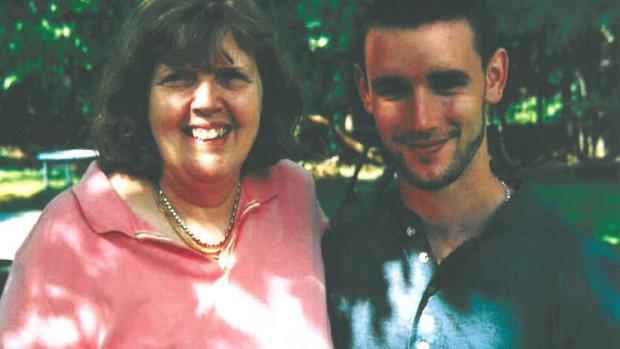
Joshua Komisarjevsky (right) was homeschooled under Bill Gothard’s ATI curriculum.
Joshua was adopted at two-weeks-old by fundamentalist Christians. His father Benedict has been described as “critical, cold, and controlling”; the mother Jude, “quite submissive.”
Jude homeschooled Joshua using material from the Advanced Training Institute (ATI), the homeschooling curriculum developed by Inge Cannon (the former Director of HSLDA’s National Center for Home Education) for Bill Gothard’s Institute in Basic Life Principles. Jude said that she and her husband Benedict “had tried to instill Christian values in the boy by pulling him out of public school and educating him at home,” but he had nonetheless “wallowed in depression” due to the death of his grandfather a year earlier and had “come under ‘satanic’ influences through other youths” in his hometown of Cheshire, Connecticut. Jude said her son “was easily manipulated and controlled by others,” and she recalled going into his room at one point and “he had written over and over again on the walls: ‘death’ and ‘die’ and ‘suicide.’”
Right before turning 15, Joshua set fire to a gas station. Since police recognized he had serious mental health issues, he was briefly hospitalized in a mental health hospital and given medication. However, his father did not want him on any medication, and instead sent him to a “faith-based” treatment program.
On July 23, 2007, Joshua and his friend Steven Hayes broke into the home of the Petit family — William, Jennifer, and their daughters, 17-year-old Haley and 11-year-old Michaela. Joshua and Steven held the family hostage for hours. They forced Jennifer to drive to the family’s nearby bank and withdraw $15,000 — on the threat of killing the entire family otherwise. They raped and strangled Jennifer and then sexually assaulted Michaela. William was severely beaten and tied to a post in the basement. Joshua and Steven then doused the house with gasoline and set fire to the house. Haley and Michaela died from smoke inhalation. William managed to escape.
Joshua had specifically targeted the Petit family. A day prior to the killings, he noticed Jennifer and Michaela at a grocery store. He followed them from the store home and made plans to come back the next day with Hayes.
Joshua was found guilty of murder. Evidence of “his strict Christian upbringing, his disturbed behavior as a youth and his parents’ decision not to get traditional psychological treatment for him because of their Christian beliefs” was a significant matter of discussion during his trial. In January 2012, Joshua was sentenced to death. His accomplice, Steven Hayes, was also sentenced to death.





 Homeschoolers Anonymous