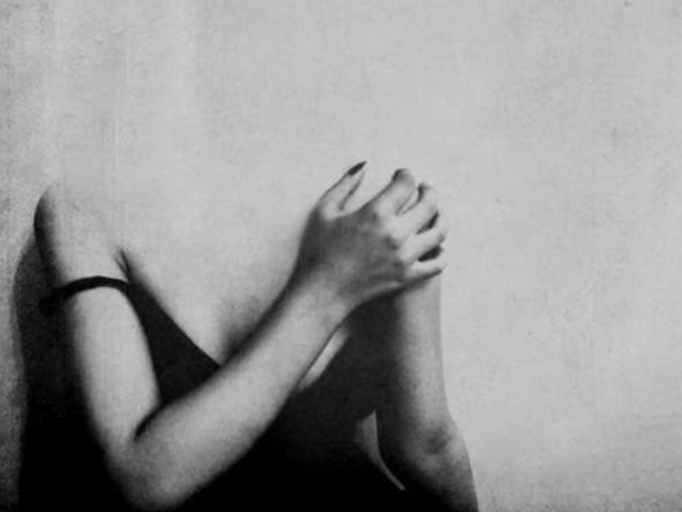
Self Preservation and Mental Health

Screen Shot 2014-05-21 at 12.04.25 PM

HA note: The following is reprinted with permission from Sarah Henderson’s blog Feminist in Spite of Them. It was originally published on her blog on September 3, 2013.

In my last post, I made a brief mention of how living in a state of survival affected my mental health. I thought it would be a good idea to expand on this issue, because in my opinion it is the crux of why having quiverfull families and homeschooling in chaos is abusive to the children involved.

As I have mentioned before, doing something that causes harm to your child is abusive regardless of your intentions or religious justification. Children are do not become raised in a vacuum. Children do not have the ability to protect their own interests, and as I have shown in a previous post, in fact unfortunately do not have the right to do so. Therefore it is a parent’s job to try to protect their children from harm as much as possible – no perfection required – and to introduce good things and reduce negative influences as much as possible. It is my belief that that most parents would not argue with this assertion, because most parents have their children’s best interests in mind.

When a child is raised a quiverfull family, there is a core belief involved that stipulates that older children should help raise their younger siblings.

This is commonly known to those outside the quiverfull movement as the “buddy system”, but survivors sometimes call this “sister-moms”. The use of older siblings to care for younger siblings can cause various levels of neglect depending on how organized the family is and whether there is homeschooling involved. It is typically simply impossible for a mother of 6 or more children to recover from childbirth and unending pregnancies at the same time as being able to provide adequate care to that many children, provide adequate schooling for that many different grades, cook nutritious meals, do laundry, and keep house. Don’t get me wrong, I do not object to children having chores. I do object to a ten year old child being responsible for a whole department of parenting or housekeeping, such as all cooking, or all laundry or all cleaning or all child care.

This is the difference between a child helping with chores, and “the use” of children to help raise other children or “take over” certain aspects of being a housekeeping mother. When there is a high level of chaos, the older children can become invested in running the household. Indeed, that is the goal of quiverfull families: to pass on the ideals of raising a big family and having women stay in the home and replicate the family values as soon as they are old enough. However, this emotional investment will have one of two outcomes: either the sister-mom will succeed in pulling off an inappropriate amount of responsibility in the home and move on to their own submissive marriage and many children without ever experiencing her own life, or she will fail at the vast amount of work required to raise a family as a young teen. If she succeeds, it is a tragedy.

If she fails – and many fail – she will be subject to shame by others inside and outside the family. The problem is, in order for a daughter to participate in the investment I described above, there is a certain amount of self-deception required. The girl must become oblivious to her own needs and desires, ignore her own sexuality, and truly believe in the moral obligation to participate, to the exclusion of all other life paths. Otherwise she will object to what is being taken from her.

The other important factor apart from self-deception is self-preservation.

In a chaotic situation, there is difficulty in maintaining discipline, and some parents do not have the skills to do so with a few children, let alone over half a dozen. Child abuse and “squeaky wheel” parenting is very common, where children are punished for being loud and only receive help when they are insistent enough to get it but not loud enough to warrant punishment. In this type of environment, there is not enough parental supervision to guarantee good behavior, so they may depend on older children to help supervise the younger children. Sometimes this means that if younger children misbehave, the child responsible for watching them may also be punished for not preventing the infraction. When this happens, the goal becomes less about moral behavior and more about each child protecting themselves from punishment.

A sister-mom who has juggled age-inappropriate levels of chores and child care for years, and is responsible for the behavior of others, lives in a haze of survival. They do not let themselves fully absorb what is going on around them, and do not allow themselves to experience the unfairness in their lives. When a failure takes place, the entire facade crumbles down. The girl will realize that the very parts of herself, the very skills she takes pride in, are what makes her different and scarred compared to others the same age. She will realize other girls have something she does not have: an identity outside of someone else’s children and ideology. If a girl fails at being a sister-mom, there is nothing left unless she makes something happen. If you have no other identity and no social skills, building these from scratch as a teenager seems like an insurmountable task.

The process of disillusionment that takes place is terrifying and horrifying.

Imagine spending several years working on something you really believed in, and investing every moment of every day in it, and believing that it was your life purpose, and one day it simply falls away. Teenaged girls in this situation are typically quite sheltered as well, and tend to not know much about depression and self-harm, which means that they are exposed to the life-changing effects without understanding what is going on, and believing that they are deficient in some way and are the only one in the world going through those feelings.

Quiverfull families are not open to exploring such issues and seeking help, and such help would be counter-productive to the goals of the ideology. Sometimes such girls retreat from their moment of clarity back into the haze and try again. Others are given help within the ideological circle, and the girls are encouraged to suppress their feelings. Others leave.

For the ones who leave and start their lives over outside the quiverfull community, it can take years to start to feel normal. It is difficult to feel normal when you are not living the purpose you have been taught, and are no longer pursuing those goals. Another important aspect is that as a sister-mom, a girl will raise children who are not hers. When she leaves, she walks away from small children who she loves and they know her as the source of food and comfort. It is impossible to fully describe the loss this causes, and the unselfish teachings from childhood can make it difficult to move forward with one’s own life when there is a huge part of the soul that is still attached to the raising and protecting of younger siblings.

When a girl starts to open up to her own life, she will start to realize how much of her life has been used up to pursue the goals of someone else. There is resentment towards both the parents and the siblings, which brings with it the conflict of not wanting to resent siblings for what they had no control over. Sister-moms are taught to not pursue their own goals and to malign typical ‘worldly’ goals, and it can be painful to process what is right and wrong and pick a moral code to live by. Sister-moms who leave will often also simply miss their families and feel rejection because they cannot stay and live their lives. They will feel confusion and shame, and be afraid of going to hell for their actions.

They experience the conflict of self-preservation both while living in the haze and while getting out. All these experiences can trigger depression, self-harm, and self-destructive behavior, and when a girl is used to living in a haze of denial, it is very difficult to get out of the new haze of depression if she falls into it.

A parent risking a girl’s mental health to get help with child raising other children is abuse.

The Deliberate Spread of Misinformation

Screen Shot 2014-05-04 at 3.57.26 PM

HA note: The following is reprinted with permission from Sarah Henderson’s blog Feminist in Spite of Them. It was originally published on her blog on August 14, 2013.

When my siblings and I were children, my parents deliberately misinformed us about the world.

I am still not sure what the overall goal was. Some of it makes sense. The ideological nonsense that contributed to psychological control makes sense, such as the misinformation about lust, reproduction, and consequences, but some of it really doesn’t make sense.

Why were we misinformed about the healthiness of foods? Why were we misinformed about women’s periods? Why were we misinformed about the lactose content of butter? My parents also gave us this information in a way that made us afraid to double check, and there was certainly no ability to find out correct information and take it back to our parents. As isolated as we already were, there was always the fear that we could be isolated further if our lifestyle allowed for too much knowledge seeking.

My parents taught us some strange theories about food, which I believe contributed to a lot of food and weight issues in our family. They told us that calories were a lie, and that potatoes and rice were vegetables. They didn’t teach us to have a treat or two and then healthy food, to make choices. They didn’t teach us that you could have a certain amount and maintain, lose or gain weight. They taught us that when food was available to eat it. There was always food, but sometimes it was just rice, for breakfast lunch and supper. So when there was tasty food available, we really wanted it. We weren’t taught moderation and we were taught that there was only ever starvation or overindulgence.

For the purpose of this writing I finally did some quick googling about lactose in milk. It doesn’t matter now and it didn’t matter then, no one in my family is lactose intolerant. But my parents told us that butter didn’t have any lactose but margarine does. This, as I learned today, is very outdated (50 years or more), because margarine is now normally prepared to be lactose free, and butter is often ‘enhanced’ with other dairy products. Pure butterfat is lactose free, but that is very difficult to achieve.

My mother had the female reproductive talk with me when I was younger than nine years old. I think I was eight, but she denies this, but I remember the house. I then promptly forgot until I thought I was bleeding to death when I was 11. She then reminded me what it was but didn’t give any more information so I thought I would bleed forever. Miraculously it stopped, so I thought I was gone forever. Then it came back and I had to ask again, and she was annoyed and made fun of me. I decided then not to ask any more questions. I learned about human anatomy from a health textbook, which my parents provided on the grounds that I wouldn’t look at that section. I did.

My parents taught us that everyone outside our circle wanted to harm us.

They taught us that foster parents are bad people and that social workers want to hurt children. They taught us that non-religious children are mean and selfish and would steal our stuff. It was only after going to high school that I learned that non-fundamentalist teens are great people. Sure they aren’t perfect, but they really don’t judge other non-perfect teens either.

My parents taught us that strangers are dangerous. Not like most parents do, but to the extent that I have to catch myself to not view all other drivers on the road as evil people who will hit me if they want to, for example. They taught us that if there is a way for other people to hurt us, they will.

They taught us that we were a lower tier of person than others. This is a complex issue, because they also taught that we were better than others because of the fundamental beliefs. I think this was more about guiding us to have low self-esteems. They taught us to let others walk first and butt ahead of us and choose last and give in, in all areas of life. It was hard to change this mindset and take my right of way and walk boldly through a grocery store.

They taught us that spending money on something that you do not need to the point of failing health or death is wrong. This extended from food to shoes to glasses. I was given a pair of glasses when I was nine, at which point I learned that stars are real (I thought people were lying about seeing stars in the sky) and stores in the mall have signs above them so you know which store it is – I thought people guessed and I couldn’t see in, and I never had the courage to ask what I was missing. My next pair of glasses came when I was 15. After there were about six of us I don’t think my parents ever bought shoes or clothes, not even from second hand, instead depending on other families to give us their cast off underwear and shoes and other items.

These are just some of the ways we were misled about daily life, not to mention the religion-based untruths. Further to the idea of not buying items that weren’t life preserving, we were taught that desiring things was wrong, and that god would judge us for jealousy if we wished for more of anything or asked for what we saw other children receive.

My parents taught us that girls were able to evoke some kind of sinful feeling in men, and so we needed to be very careful about how we dressed, stood, walked, and sat, or we would answer before god one day about what thoughts went through the minds of men in our lives.

My parents taught us that girls weren’t as valuable to parents as boys were, because boys could grow up to be powerful successful people one day, unlike girls. They taught us that the women’s role was to support the men in whatever the men wanted to do, and we weren’t supposed to have any dreams of our own because it would hinder the goals of our future husbands.

I know that at this point I have been able to gather knowledge and counteract the misinformation I received, but I still have siblings in that home that are receiving a similar level of false information.

I took it upon myself to give some information to my siblings, especially regarding female health, because there was a real worry that misinformation could cause harm. And I thought my sisters should know that tampons didn’t take your virginity. Lying to your children like this should be criminal.

The Cupcake Piñata

Source: http://thecupcakeblog.com/cherry-topped-cupcake-pinata/

HA note: The following is reprinted with permission from Sarah Henderson’s blog Feminist in Spite of Them. It was originally published on her blog on March 30, 2014.

I want to share a very simple little story about something that was a precious moment for me.

When I was a child, we didn’t really have birthday parties, although my mother did make an effort most years to cook a favourite meal for the birthday child. When I was really young, we did have a party or two with a few friends invited and a special meal, but eventually as we became more isolated by the homeschooling, there weren’t really friends to invite, and there was no money for extras like birthday meals when my father was just not working. So in my last few years before I left home, all our birthdays were barely noticed, much less celebrated, except by my mom quietly making a preferred meal from pre-set options and often no cake, or a very plain one with no icing. Birthdays could be a cause for concern for us, since we also were fair game to be confronted about whether we had matured into more godly children in the past year or not, and there was no safe way to answer that question. We were also sometimes taunted by the chance of a birthday party or a coveted gift if we behaved well enough. This was never really a possibility, and we would always lose that privilege no matter how good we were, since the money literally did not exist for it.

I became a little resentful about birthdays and birthday parties as I became an adult, because not only were birthdays not special, they represented a loss. I had been to a few normal birthday parties as a child and just couldn’t be happy for those kids when I would never get that myself. Seeing someone have a nice birthday party became a difficult thing for me. I explained this my non-fundamentalist husband, who along with millions of North American children, apparently had birthday parties. He was a little surprised by this, and decided to do something about it.

My husband threw me a kid’s party for my 24th birthday, because I never got one. He invited friends over, and ordered a very pink cake that said happy birthday on it. He stuck a ton of candles in it and lit them all. He set up our kitchen and living room with pink and white streamers all over, and blew up balloons and hung them from ribbons all over the downstairs area of our house. He made some kind of supper, I can’t even remember what it was, the party was so exciting. And the best part of my party was the cupcake piñata. It was huge, at least two feet in diameter. It had a colourful “wrapper” base, and “icing” on top covered in sprinkles. He filled it with candy rockets and jolly ranchers and suckers and Hershey’s chocolates and little plastic dinosaurs. We hung it in the doorway between the dining room and the living room and he videotaped us hitting it until it cracked open, and then we had little goodie bags and gathered up all the loot.

I didn’t really eat a lot of the smashed piñata candy, but being given that experience at 24 years old was such a healing day for me. I still don’t like it that I missed that part of childhood, but I am not hurt by that any more because the thing that I had lost was given to me. He gave me a piñata for my birthday last year too, I am coming up on my 26th birthday this year.

Who knows, maybe I will get another one.

Oh Daughters of Fundamentalism, Take Upon Yourselves the Cloak of Self-Deception

Screen Shot 2014-04-16 at 10.28.56 PM

HA note: The following is reprinted with permission from Sarah Henderson’s blog Feminist in Spite of Them. It was originally published on her blog on August 28, 2013.

I recently witnessed a young girl who is struggling a bit who expressed that she was a bit unhappy with her life, being told that she just needs to take it one day at a time, and be happy with it. To me it is shameful to express to a child or a teenager that their discomfort or unhappiness with a difficult situation stems from their own inability to cope. What message is being given to girls when they are told that although they are not the creators of the bad situation, they must be the authors of the solution, but the solution must only be to swallow their feelings and smile.

This is a relatively common comment made to daughters in conservative families. The basic idea stems from the idea if you are unhappy with your life, it is important to change your attitude about your life. Girls are not taught that they can cause change in their own lives. Of course this serves the purpose of preventing girls from making plans to get out. If they are responsible for their own happiness, and they do not get to make their own choices, fundamentalism is able to produce a new generation of women who not only do not fight back and fall in line with whatever rules and tasks are assigned to them, in the ideal scenario they will actually start to enjoy the fact that they are fulfilling their purpose, and own their own oppression.

This is a very difficult concept to understand if you did not grow up in patriarchy. How can women not only agree and allow themselves to be oppressed, but also seem to be happy and flourish in their own oppression? How can women become party to their own oppression, and in fact add their own restrictions to their own activities and assign themselves even more responsibility for the physical and mental well-being of the men around them? Because they are taught to believe it.

They believe that women are created to complement their husbands. They believe that any unhappiness they experience is selfish and sinful. They in fact quench their own desires and resentment at being treated as chattel, and tell themselves they enjoy it. Today I had the misfortune of reading the story of a young woman who was picked up from work by her husband with an entourage of other people to celebrate her last day of work. There was a banner on the car stating that she was free at 27, but her exit interview read that her new employer was her husband, and she would be a house wife from then on.

Teenaged girls in quiverfull families are taught that their purpose it to serve as a daughter, and then as a wife and mother. They try to fulfill their purpose in life by working hard, taking care of younger siblings, and generally not trying to rock the boat. They do not ask for things that they want or need, they do not tell their parents if they are pain, and they do not ask questions about their futures or their bodies. I can tell you that there are probably many teenaged girls right now that are suffering from severe menstrual cramps or low energy due to health problems, that will not say anything because they do not want to cause shame to their families by not being a strong contributor to the family.

These girls are trotted out at family and church gatherings to showcase their homemaking and child-rearing skills. To fail at cooking a dish or to not be able to handle several children at a time would be an unbearable humiliation. No self-respecting girl would allow that happen, and after a girl has put all of her time and effort into being a homemaker and mother for a few years, she is taught to take pride in it, and also starts to take pride on her own. After all, how many girls of 13 are capable of running a household of 8 or 10 or more on their own. How many girls can feed a dozen people with very few ingredients? How many can juggle a house cleaning and cooking a dinner and calming a crying infant and changing a toddler at the same time?

Untold numbers of innocent teenagers are living this life every day, and they take pride in their ability. They put their own desires away and learn to run a family that isn’t even theirs to keep. They are encouraged to compare their accomplishments with other girls, and on a church day they will go to their mothers and offer to take care of the babies for their mothers. They plan for their own happy families and wash laundry and cook meals and put band aids on babies. They change diapers and administer assembly line baths to dirty children. They make beds and clean up toys and wipe noses and do not go to school. They teach phonics and math and sewing and read the Bible to little children and make sure they listen to the parts about obeying your parents and making sure you do not think bad thoughts.

They tell themselves that this is what they want and that they can’t wait to have their own families and carry on god’s plan. And now they will grow up and teach their own baby girls to serve men and god. To deceive themselves.

Two Messages that Children Internalize that Contribute to Bullying in Patriarchal Church and Homeschool Groups

Screen Shot 2014-02-13 at 10.50.41 PM

HA note: The following is reprinted with permission from Sarah Henderson’s blog Feminist in Spite of Them. It was originally published on her blog on January 4, 2014.

Homeschooled children sometimes experience bullying from peers. Part of this stems from the messages that children absorb about themselves.

1. Children respond to the tiered authority by owning the message that they are the not as good as other people and exist to serve people who appear to be more powerful than they are;

2. Children respond to the opposite message that they are the best and brightest and most privileged and enact that power on others. 

I have mentioned the issue of bullying in homeschool groups in passing in a previous post, but bullying in homeschooling families and homeschool groups is a serious issue. In a well-meaning homeschooling family from a conservative background, there are several patterns, such as adherence to patriarchal family systems and the sense of responsibility held by the parents to teach their children to succeed in life and grow up to be adults with the same mindset and goals as the parents. There is also often a commitment to having a large family.

This creates unique family power dynamics.

Depending on how the family works, they will send a message to their children that corresponds with one of the point above: that the child is valued and special, or that the child is part of a plan that has nothing to do with the child.

Socialization has become almost a joke to both sides of the homeschooling debate, but the reality is that children who are homeschooled spend less time with other non-siblings, and sometimes this is even the goal of homeschooling. In patriarchal families, children are often authority-tiered in birth order, although preference in the ranking is sometimes given to boys. Sometimes this happens in large families due to the difficulty in parenting large numbers of children, and mothers bring in older daughters to take on various aspects of homemaking and parenting.

There is a large amount of anecodotal evidence that speaks to how damaging sibling parenting can be. There is a series posted by Heather Doney that tells the stories of sister-moms. Many of the personal stories shared on both No Longer Quivering and Homeschoolers Anonymous also outline the difficulties of being an adult who helped raise their own siblings. Children who are part of this tiered authority find themselves always as part of a ranked system, which is different from the experience of children who attend school, who are grouped with peers in spite of status struggles.

Homeschool groups and church “families” are touted as a significant source of socialization opportunities for homeschooled children. However, this means that children who spend most of their time in a tiered family structure are then tossed together as an artificial peer group and left to find their own status among themselves, which is one of the things that some homeschooling parents say they are attempting to avoid. The source for the information in this post is lived experience.

Children in homeschooling groups and church groups vie for status at the expense of each other, just as children do in public and private schools. They put each other down, and use similar ways of determining popularity as public schooled children do, including appearance, status of parents, ownership of desired items, and overall apparent confidence levels. They sometimes use physical strength to exert control as well. Parents do not always see the bullying but it does take place.

However, homeschooled children in these families are also subject to real responsibility/authority status and a tight social circle that is includes all available peers.

Girls sometimes compete to exhibit which is the more capable parent, and it is not uncommon to see these children carrying other children around, usually their own siblings or the young children of family friends. Because it is valued for girls to learn to perform homemaking tasks, girls are put on display to demonstrate proficiency in cooking and parenting, which creates resentment between peers. Financial struggles are a common problem among families with a stay-at-home mother and many children, so girls find themselves ranked in their peer groups according to whose parents have time to contribute to social activities and by common status symbols such as clothing. These families also share clothing, so children with a lower financial status have to wear the cast-off clothing of the more affluent families.

Very young boys in patriarchal families do not always realize that they are being groomed to take part in a power structure, but they do attempt to exert power over each other as much as public schooled boys do. The big difference here between public schooled children and homeschooled children is that since children tend to be part of a self-regulating system (and the parents are busy) there is not as much supervision and few complaints. As stated above, children either internalize that they exist to serve or exist to control. This results in children who are taught to stick to their ranking and do not usually object to unfairness.

Mental health problems are often not identified and treated in children in these circles, and some of the aspects of patriachal homeschooling life may contribute to the development of mental health disorders. This leaves suffering children even more vulnerable to bullying since children suffering from depression and similar struggles may only appear to be quiet and awkward, whereas in a public school they may have been identified as needing a teacher-mentor or recommended to see a mental health professional. An additional problem unique to church and homeschool groups that prevents children from being protected from bullying is that there is no central figure that children can turn to if their life isn’t working like a teacher or principal. Each parent usually has faith in their own children, and all parents in the church group or homeschool group has faith in their system, and it threatens their choices if the system doesn’t work, so there is simply no room for a bullied child to seek help.

Please share your input regarding the differences between bullying in public schools and patriarchal church and homeschool groups!

How I Left My Parents’ Home

Screen Shot 2014-02-04 at 12.06.32 AM

HA note: The following is reprinted with permission from Sarah Henderson’s blog Feminist in Spite of Them. It was originally published on her blog on September 2, 2013.

Several people have asked me about actually leaving my parents. It’s kind of hard to explain exactly what happened, because there was not one day when I decided to leave.

When I was 16, I was still attending a conservative church with my parents. In my family we were still expected to wear head coverings all the time, but the church we attended only expected them in churches. So in December of 2004 (when I was 16) I decided to stop wearing one at all – to me you either follow that verse 100% or not at all, and I wasn’t going to be the only one. I also secretly purchased jeans and changed into them on rare occasions when I was allowed out with church friends.

The summer of 2005 around my 17th birthday, I went for a week to visit my very secular grandparents in another province. They asked me some questions about what I wanted to do for a career.

I had not been asked that question, as my destiny was to get married and be a homeschooling mom even though I didn’t want that.

My grandparents mentioned that I couldn’t go to university without a high school diploma, and explained that I probably couldn’t even get a GED with how little schooling I’d had. This was news to me since I’d always been told our way was the best way to do anything, but it had the ring of truth.

When I got home, I looked into schools. I found I needed to have parental signatures to attend at age 17, so I privately convinced and cajoled my mom to sign, which she did, although it is my belief that she thought I would give up. My father refused to sign when he found out, and no one told him my mom signed, and the school accepted one signature and none for the bus (as I recall) because by then my mom was too scared to sign anything else. What is confusing about this is that in the summer my father drove me to take an ACT test (useless in Canada) which seemed to encourage academia, but it was with a bunch of homeschoolers so maybe it was the in thing to do for homeschoolers.

Miraculously my parents did not physically prevent me from going to school on the first day, I think because they knew it would probably be noticed if I didn’t go after all the trouble to sign up and get placed into many different classes across all four high school grades. I was expected to wear dresses. That lasted for a few weeks, and then I pulled out the secret pants. My parents tried to force me to change but I refused, and I ran out to catch the bus in a whirlwind of shame.

I quickly made friends with Christian kids at school that were mostly my age, some a bit younger. Two friends I made were sisters, and I would go to their house sometimes for ‘homework projects’. We were on the same bus route so it was easy to do, and their parents drove me home if they asked.

I was invited by other friends to a youth group at a mainstream Pentecostal church. I asked my parents for permission and they said yes sometimes and no sometimes and sometimes would drive me and other times refused when it was too late to find another ride. This was about November.

During this time I opened up a bit to the family I mentioned above with the two sisters. Once at their house I mentioned how hopeless life was with my family and that I was very upset (I didn’t really know what depression was). They told their parents, and somehow I ended up staying at their house for the weekend and just never went home (about November or early December 2005). I know that their dad went to several meetings with my dad and his church friends, and the consensus from my dad’s angle was that at 17, CAS would not force me to return home and it was better not to get the police involved to try and get me back since I was too far gone in rebelliousness anyways, and CAS might take a hard look at seven younger children who were not attending school.

I was able to get a few things from my parents’ home, but my father didn’t waste any time to completely pack up my room, junking most of it and putting lots of my stuff into the damp garage. I basically started life over with the family, I continued going to school, getting decent grades, going to church and youth group, and spending time with friends.

I’ve never really talked publicly about this before, but I need to talk about mental health here. I believe that I spent my first 17 years in some kind of survival state of mind. When I got out and was living with another family, I experienced a whole different lifestyle. The parents worked and provided for the family. I had a few chores like some laundry and dishes, but my job as a student was to do school.

There was also this whole unconditional love bit, and for the most part the emotional state of others in the home was predictable.

Children got pats on the back for doing something well. There was a certain expectation for behaviour and no one really crossed it- it just wasn’t optional. There were no out of control behaviours, because they were taught how to behave when they were younger.

One big problem I had was that I was so used to being told no that I assumed that parents just said no to be nasty. I had to learn at 17, at home and at school, that some stuff was ok and other stuff wasn’t,  and how to tell the difference. I had to learn in a flash how to use judgement because I was never taught that. My philosophy had just been ‘do whatever you need to do to stay out of trouble and try to enjoy life’. But in school and normal family life there are rules to follow so that you don’t violate the rights of others and everything runs smoothly.

I didn’t know that.

It was very hard on me to experience this “culture shock” and to realize how bad I was at relationships.

I had to go to grade 9 math, which I found very shameful. I didn’t know what the bells meant at school. I didn’t know how to share tasks at home. I realized I was very selfish after years of looking out for myself for all those years, and it was impossible to just switch that off when I was in an environment where there wasn’t too many people competing for too few resources. I also realized by comparison how chaotic, unreasonable and toxic my home environment had been. I didn’t know. And then it hit me that I still had siblings there.

It was a very difficult few years. I fell into depression for a while, but I somehow continued school because in this family school wasn’t optional so thankfully if you weren’t sick you went. The family also supported me in making regular calls to CAS over the next two years, so by the fall of 2006 my next brother and sister were enrolled in school at CAS’s recommendation, and the following fall my father was forced to leave the home by CAS for non-compliance and all the siblings were enrolled in school.

I also had many excellent teachers over my three years in high school who seemed to look for the good in students and were compassionate as long as I was trying. Between being granted some credits and earning the rest in three years, I graduated at 20 with a real diploma and I was given a plaque from the principal at commencement – a student leadership award. After graduating high school I was able to go to university and get both a BA and a post graduate degree in four years, and graduate from university on the Deans list.

I no longer have any kind of relationship with my father at all, and my relationship with my mother is complex, as do many of my siblings still live with her.

There is no one reason why I left. Obviously I had quite a bit of help, and there must have been a certain obstinate streak for me to seek out that help.

I have been free for 8 years now. It’s great. 

A Call for Inclusion in the Survivor Community: Sarah Henderson’s Thoughts

Screen Shot 2014-01-12 at 10.27.18 PM

HA note: Sarah Henderson blogs at Feminist in Spite of Them about her journey from Quiverfull to Feminist. The following post was originally published on her blog on January 11, 2014 and is reprinted with her permission. Also by Sarah on HA: “An Open Letter to My Former Highschool Teachers.”

There has been a bit of a ripple this weekend regarding a post that was published on Homeschoolers Anonymous. This post is written by someone who was homeschooled in a positive way, and has attained a higher level of education. He gave some recommendations for how survivors should be writing their stories. His main points are not false, he gives a solid explanation of the difference between narratives, philisophical statements, and empirical evidence. From a casual reading, his content is solid. However he goes on to explain that these claims need to be kept separate, or the movement will suffer.

We need to recognize that everyone who self-identifies as an abusive/neglectful homeschool survivor is in a different place.

If a requirement is made that people who wish to tell their stories must write them to an academic standard determined by someone who is not an abusive homeschooling survivor, we as a community run the risk of restricting possession of a voice to those who meet an academically rigorous standard. Many bloggers start out by writing their story for their own cathartic benefit, and then share it on the internet to help build the narrative.

Many bloggers, including myself, try very hard to avoid making statements without evidence, and try to differentiate between what part is our narrative, and what part is empirical evidence. Personally I do use empirical evidence in my posts, and cite it appropriately. I do not necessarily avoid making philosophical statements, because I believe that people have the right to their own opinion in matters of philosophy. Certainly the bloggers and advocates who are radically pro-homeschooling present their philosophy as truth, but I think it still clear when a statement is philosophical in nature. Some of them do sometimes present guesses and statements as empirical evidence (like this, as Heather posted on HA).

Not everything on my blog is empirically based, and I have grown in my understanding of the past since I started blogging. I have gone back and put some author’s notes in place, but I am not editing out statements and opinions that I presented early in my blogging, because this blog represents my story and understanding across time. Some other bloggers present their ideas with more and less clarity and empiricism. I do not think that these different styles and levels of accuracy take anything away from our community, but introducing the specter of the red pen might result in fewer stories being told by those who may experience new fear about their own story because they have been denied their story for their whole lifetime.

Telling a survivor story of this type goes against a lifetime of teaching to comply, conform, and protect the status quo.

We need be purposeful in our inclusion of stories, whether they match an arbitrary standard or not. People need to be able to start telling their stories no matter where they are in their healing, and it would be good to be mindful of the fact that some survivors of educational neglect may not meet an academic rigor and polish standard, but it is these stories that really really need to be added to the plethora of narratives.

A plural of narratives does not add up to empirical data. But it does add up to a plethora of narratives.

As more survivors come forward and share their narrative, it will become harder and harder to reject each narrative as an anomaly. Denial of abusive homeschooling survivorship is a serious issue, and becoming elitist and selective about sharing stories contributes to the denial. For whose benefit should all the stories be empirical and polished? A number of polished empirical articles will not in and of itself change the face of abusive homeschooling, just like a large number of narratives would not change it. But an abundance of both types of posts (usually not divided into such tidy categories) bring the need for a closer look to the attention of the survivors, and hopefully, at some point, to the attention of lawmakers.

Let’s reach out as a community for more stories that need to be told.

An Open Letter to My Former Highschool Teachers: By Sarah Henderson

HA note: Sarah Henderson blogs at Feminist in Spite of Them about her journey from Quiverfull to Feminist. The following post was originally published on her blog on October 15, 2013 and is reprinted with her permission.

Dear Teachers,

When I came to the high school at age 17, I had absolutely no idea how to be a student.  

Many of you know by now that I didn’t know what a teacher-student dynamic was. I hope you understand that up to that point I had been around adults who mostly made stuff up as they went along, and expected respect from authority that was derived simply from being bigger and older, not from legitimate accomplishment. To a scared 17 year old, it looked the same at first, because of the authority aspect.

In the three years I went to high school, I learned to respect you for the knowledge and expertise you represent. I think I was supposed to respect you simply for being teachers, adults, and authority figures, but instead I respected the time and effort it took to become teachers, and the skill and patience that kept you there.

I remember sitting in my first class, which was a grade nine math class. That was a difficult thing for me, to enter a class with people three years younger than I was. But to the teacher who taught that class, and the second teacher who took over part way through (this was when the big math shuffle happened), thank you.

Thank you for seeing my anxiety and deciding to explain to the entire class what the 8:25 bell was, even though they clearly knew.

Thank you for for patiently explaining what the relationship between decimals and fractions was. I really didn’t know. To the librarian, thank you for making the library a safe place. I would have been very afraid of that environment and never gone there, especially because some students really avoided it. But you always said hello to me and that made me feel special even though you did that with everyone.

I liked that you knew my name. It made me feel less anonymous and afraid.

To my language teachers, thank you for doing what it took to allow me to have the best swath of language courses that I could in three years. To my drama and music teachers, these classes pulled me out of my shell the most. I learned that for the first time I could be a meaningful part of something significant. You taught me to not be afraid and to simply do, and that putting myself out there was not dangerous. Thank you for recognizing my ability to create, and giving me the chance to do that with costumes.

To my science teachers, thank you for creating a safe environment to learn. It was a bit of a rocky road for me, and a lot of that came out in science classes for some reason, but you were patient and somehow I never failed a science class, for which I am grateful.

To my guidance counselors, thank you for not making me muddle through a grade nine phys. ed. class with 13 and 14 year olds and expose my complete lack of knowledge about various sports. Thank you for taking the time to place me in the appropriate levels of classes and being willing to juggle that for three years. Thank you for the time you spent listening to me and believing me.

Thank you for calling family and children’s services with me.

Thank you for trusting that even though I didn’t always know how to act appropriately, I was learning as quickly as I could, and thank for seeing that I could succeed. Thank you for not punishing me when I engaged in self-injury at school. I didn’t know how inappropriate that was until you told me.

I didn’t actually know that self-injury was a “thing” or a big deal. I had never heard of it

But I had been doing it for a decade by then.

To my principals, thank you for not suspending me or punishing me for mistakes I made, and thank you for trusting that they were legitimate errors and not deliberate. Thank you for making allowances where you did but also for drawing the line where you did. The fact that you did draw some lines and said that there were certain things I did need to do, helped me learn to function more fully in a society with expectations. I learned that there are provisions for when you need them, but I also learned to take responsibility and action when I was able. Thank you for recognizing how challenging school was for me, and thank you for doing it in a way that celebrated success, not difficulty.

To my English teachers, thank you for the impact you have had on my life. From Grade 11 English where you gently explained to me what an essay actually was and how to write one (I really didn’t know), to writer’s craft and children’s literature where I had a chance to be creative, these classes allowed me to feel successful because I was able to achieve decent grades and take pride in what I wrote. You recognized when I was trying hard even if my results were not stellar. You explained to me how to improve when I was not happy with a grade. You suggested books for me to read as you started to learn more about my past. Thank you for being available to me and hearing me. Thank you for supporting me and helping me process through these classes. Thank you for letting me start off doing presentations in private but pushing me to do them to the class when you knew I was ready.

Thank you for teaching me the value of writing. That positive experience is why I am able to use the written word to share my story now.

To all the teachers and other staff at the high school, thank you for encouraging me and helping me learn how to be a student. Thank you for treating me with dignity even when I didn’t act very dignified. Thank you for being willing to overlook my shortcomings in exchange for investing in a brighter future. Thank you for being kind even when I was rude, thank you for knowing when to let things slide and when to push me to do better.

Thank you for being gentle with me when I was going through rougher times, and thank you ever so much for taking it as a given that I would go to university. Once I reached a certain point in high school, it was not really treated by you as optional that I would go, instead it was simply a question of where and what.

I owe a great deal to you.

People do not always get a chance to hear about the positive impact they had with a smile or a short conversation, and this letter is intended to make sure you are aware of that impact.

Thank you.

Sincerely,
Sarah Henderson