By R.L. Stollar, HA Community Coordinator
*****
I have a very complicated relationship with homeschooling.
In many ways I have significant problems with the Christian homeschool movement; in many other ways, however, I appreciate my homeschool education. My education was lacking in some areas, particularly science, but it was also exceptionally above average in other areas, such as language arts and communication. I have suffered emotional and verbal abuse in homeschooling contexts. But this was at the hands of other homeschooling parents, not my own parents. My parents have been extraordinarily supportive of Homeschoolers Anonymous, for which I am deeply grateful. Also, while I experienced emotional and verbal abuse in homeschooling contexts, I have also experienced sexual abuse in a public school context.
I am under no delusion about the universality of abuse.
It is for these reasons that I do not primarily see my identity as a survivor of homeschooling. In many ways I am a survivor: I am a survivor of abuse, sometimes from abuse in homeschooling and sometimes not. But my experiences are too mixed to be able to fairly isolate only one community from which I am a survivor. I have instead channeled that complex pain into wanting to make the world a better place in whatever context I can. Since homeschooling was my life for so many years, I see myself as an advocate for other homeschoolers who have had far worse experiences than I have.
Honestly, most of my experiences growing up in SELAH and CHEA, my California homeschool groups, were positive. It was while traveling around the country with Communicators for Christ that my eyes were opened to all the different subcultures and ideologies that can create real and serious damage to children. Growing up, I only had an inkling about some of these phenomena. I did not begin to connect the dots until I came into contact with thousands of other homeschoolers and began observing patterns.
Much of my life has revolved around this sort of tension, or dialectic: there is so much good, and there is much bad; there is so much pain, and there is so much joy.
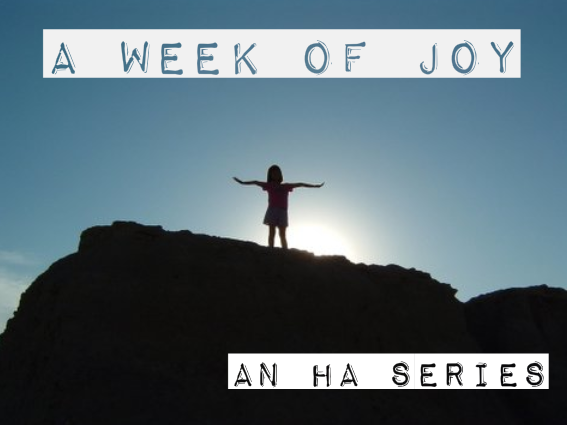
As we begin our next “week series,” I am hoping that as a community we can explore this sense of tension and the reality of dialectic in our experiences.
On July 15, we asked you as a community to pick the next topic you’d like to see us address as a community. We received votes via Facebook comments, private messages, emails, and Tweets. Honestly, there was a good number of votes for all four of the options: (1) Mental health, mental illness week, (2) Abusive relationships week, (3) Grandparent(s) appreciation week, and (4) Positives (what you liked about homeschooling) week.
No one topic won by a landslide.
So obviously we need to cover all of these at some point in the near future. Mental health came in second, with a lot of vocal support for it. So it seems that would be the most appropriate topic for the series after this next one.
For the immediate next series, the winning topic was positives.
While this topic was the winner, it also received a lot of pushback — which, frankly, I understand. If you have suffered neglect or abuse in homeschooling, you’ve probably spent the majority of your life wearing a “I love homeschooling and nothing is wrong with it” mask. This might be the first time in your entire life that you’ve felt the freedom to talk about the negatives. You might be thinking, “I don’t want to talk about positives. I’ve done nothing but talk about the positives since I was a kid.”
Honestly, I personally relate to that sentiment.
At the same time that every fiber of my being wants to finally talk about the negatives, there is a place for the positives in our community. Not everyone in our community has had a bad experience. Not every ally here has experienced our pain. But they are here, supporting us, and listening to us.
I want to give people with positive experiences a place to be heard, too.
Our allies’ positive experiences are fundamentally vital to making homeschooling better for future generations. Those of us with good stories are examples of how homeschooling can be done well.
For every story that says, “This was a problem,” the question is raised: “What is the solution?” Sharing positive experiences is crucial to teaching current and future homeschooling parents the difference between those environments that led to pain and those environments that led to joy.
We need to hear those.
So those of you in our community that have had positive experiences, this is your time to speak up.
And to those of you in our community that have had negative experiences, this is actually also your time.
A week of positives does not mean we are just talking about generally positive homeschooling experiences. Yes, it means that we are taking a week to celebrate the good things. But it also means we are dedicating time to celebrate those moments of joy that contrasted with those moments of pain. This is a week of joy for everyone: to share in others’ good experiences, and also to celebrate those people or those moments that gave us a hope to carry on, that gave us maybe a unique experience of unconditional love.
I have moments like that. I remember when a horde of parents surrounded me and yelled at me (no exaggeration), and one parent silently pulled me out of that crowd and went for a walk with me. That one parent in a very real sense rescued me. He told me that, regardless of what the other parents might say, I was valuable. I was a human being and I was to be unconditionally loved.
I learned that lesson from a conservative Christian homeschooling father. So I celebrate him.
I remember that moment because moments like that, though maybe few and far between, are some of my favorite memories to this day.
Our upcoming positives week is an official celebration —
Of parents that succeeded in giving their kids a good education, of those adults or peers that showed you real compassion, love, or respect, of those moments that gave you hope and healing amidst not-so-positive experiences.
Let’s celebrate all of those things together.
*****
To contribute:
If you are interested in contributing, here are some ideas for what you could write about:
- Your personal story of a positive homeschool education
- Your personal story of positive aspects of your homeschool education
- An experience you had where another person in your homeschool life (one of your parents, another homeschooling parent, a friend, a tutor, etc.) showed you love or respect that maybe you had not experienced before
- An experience you had where another person in your homeschool life taught you something that gave you hope about the future, or maybe a personal struggle you had
You do not have to pick just one topic. You could combine several of these ideas, or bring your own ideas to the table, or — if you have a lot to say — contribute several pieces on a variety of these topics.
The deadline for submission is August 23, 2013.
As always, you can contribute anonymously or publicly.
If you interested in participating in this, please email us at homeschoolersanonymous@gmail.com.
 Homeschoolers Anonymous