Earlier today, the Institute in Basic Life Principles (IBLP) released a statement by their board concerning the resignation of Bill Gothard and the many allegations against him concerning sexual misconduct and abuse. You can view the statement in entirety on IBLP’s website here. We have also archived a PDF of the statement on HA here.
The statement begins, unsurprisingly, with praise for IBLP itself. The board speaks glowingly of their own ministry, saying “each of us has been positively impacted by the relationships, teachings, and opportunities available through the Institute in Basic Life Principles.” That this is how the board chose to begin a statement on such a serious matter is rather telling.
The board then discusses the results of their “investigation” into Bill Gothard’s actions. They say the following:
In response to allegations against Bill Gothard, the Board sought the facts through a confidential and thorough review process conducted by outside legal counsel. Many people were interviewed, including former Board members, current and past staff members, current and past administrators, parents, and family members. At this point, based upon those willing to be interviewed, no criminal activity has been discovered. If it had been, it would have been reported to the proper authorities immediately, as it will be in the future if any such activity is revealed.
The fact is, the “thorough review process” was not conducted by “outside legal counsel.” It was, rather, conducted by David Gibbs, Jr. — a longtime associate of Gothard’s ministry. As Jeri Lofland at Heresy in the Heartland has pointed out,
Gibbs, whose Christian Law Association has been described as “the Fixers for fundamentalism”, gave three sermons at last year’s ATI training conference in Nashville and is slated to address this year’s conferences, too.
Considering not only Gibbs’s relationship with Gothard and his own history of defending child abusers, as Jeri also detailed, I have little faith in the legitimacy of the “review process.” It is entirely unsurprising that “no criminal activity has been discovered,” and I have no reason to believe that, was it discovered, that the IBLP would actually report it. The board has been aware of sexual abuse by both Bill Gothard and his brother for decades, and their track record on reporting it has been dismal. Earlier this year, Recovering Grace told Charlotte’s story, which included disturbing details about Gothard’s “long hugs” and sexually charged questioning of a young woman. And as Libby Anne at Love Joy Feminism pointed out,
The IBLP Board knew that Bill was acting in appropriately toward her when she was a 16-year-old secretary at headquarters in 1992, and yet they simply sent her home and kept things quiet.
In 1992. And nothing was done. Nor was anything done as early as 1980:
Now, in today’s statement, the IBLP board has sadly chosen to continue their history of whitewashing and denialism. It may be a new board, but the actions remain the same.
The most tragic part of this, to me, is that while IBLP is willing to admit wrongdoing on the part of Gothard —
The review showed that Mr. Gothard has acted in an inappropriate manner, and the Board realizes the seriousness of his lack of discretion and failure to follow Christ’s example of being blameless and above reproach.
— there is not a single moment where the IBLP board takes the time to say what should be most obvious:
“We’re sorry.”
Not once.
If he acted in such an inappropriate manner that “the Board unanimously agrees that Mr. Gothard is not permitted to serve” in any IBLP role, could you maybe, you know, apologize?
Nope. Not once.
Not once does IBLP take a long, serious look at the devastation their ministry’s leader — and his twisted false gospel — have had on thousands of young people and families. Not once do they say, “We’re sorry about that.” Not once do they take seriously their role as stewards of a ministry that allowed a man in power to take advantage of young women under his authority — be it criminal or simply “in an inappropriate manner,” as they spin it. Not once do they say, “We’re sorry,” to those young women and their siblings and families for the broken hearts and hurting souls.
I mean, seriously, IBLP? Was it that difficult for you? Did you not know how to say a simple, “I’m sorry”? Here, let me Google that for you.
The board needs to take full responsibility for their leader’s actions and sincerely apology for those actions, whether criminal or simply “inappropriate.” They need to make amends to every individual grieving and suffering. They need to reassess their own organizational structure and teachings and consider how to ensure that such actions never happen again, nor get swept under the rug for decades. As it stands, IBLP’s latest statement is a disgrace to the name of the God they claim to serve.
HA note: Kathi is a Bible-belt midwest transplant to the beautiful Pacific northwest. After homeschooling her kids for 10 years (she decided that high school math and science were not her strongest subjects), both kids are in public school. She is a former church goer and finds herself in that unstudied demographic of middle-aged Nones. She has a B.A. in Urban Ministry and a M.S.W. Her goal is to work with children who have been abused or are in foster care. She loves to knit, cook and read (not in any particular order). The following was originally published on Kathi’s blog Moving Beyond Absolutes on April 5, 2014 and is reprinted with permission.
I had never heard of Kevin Swason until after I got done homeschooling. That’s how out of touch with the Christian homeschool movement I was during my homeschooling period.
When he did a show on March 18th titled, How to Recover from Sexual Abuse, I had to listen. This program included guest Keith Dorscht from Biblical Concepts in Counseling. Here’s an interesting point to make note of – at the end of the program, Keith Dorscht tells listeners how to get in touch with Biblical Concepts (www.biblicalconcepts.org — this is the URL he provides). However, when you go to that URL, it shows up through Sedo’s Domain Parking and it gives someone the option to purchase that domain name. Because of this, I’m not sure how anyone who listened to Swanson’s program would be able to follow up with Biblical Concepts in Counseling.
I became interested in this particular program because of my social work focus in child abuse, my past work with children who had been sexually abused, and because of my own personal experience with abuse.
I admit that when I saw the title of the program I sighed and thought myself to be a glutton of punishment. (Swason’s voice tends to grate on me a little — okay, a lot. But, there’s nothing that a glass — or two — of wine can’t cure!) I tell you this because I am passionate about helping people who have been abused.
Unexpectedly, and thankfully, there were some good ideas and thoughts on dealing with sexual abuse. What did not surprise me were some of important things that were left out and the prevailing attitude toward victims that creeps in. I transcribed** the show and am here to offer my opinions on the good and the not so good of what I heard.
The Good
1. Keith Dorscht acknowledges the fact that sexual pleasure can be experienced at any age. At the 7 minute mark he says,
“What that means is that from birth, there can be sexual stimulation, excitement, that feels good. And, you can’t stop that as a child of any age, you can’t turn that off. God wants you to have that.”
That is true. It has been shown that babies are able to experience genital stimulation. Our bodies are hard wired to be that way.
2. Right after this remark, he continues saying,
“When some perpetrator comes in, takes advantage of that, but they also overwhelm you and you feel guilty because you know something is going on wrong. So one of the main damages is that someone at any age is experiencing something that feels pleasurable, but they’re feeling guilt. And there’s a knitting together, a marrying together, of those two emotions.”
Very true, too. Abusers will manipulate a victim for their own pleasure. Threats, fear or simple words such as telling the victim that this is something “special” shared between them and that no one else should know about it, are tactics used to keep them in their grasp. The victim, realizing that what this person is doing is wrong, may feel pleasure in the act. Thus, the feelings of guilt may become overwhelming.
3. As far as responding to a child who tells you that they have been sexually abused, Dorscht says the following after the 10 minute mark:
“You can pretty much trust that they’re telling truth. Only half a percent of children actually make up a story of this. So if you’re getting signs and statements being made and strange behaviors in your child, you want to definitely consider the idea that perhaps someone has sexually abused them and get talking about that.”
While there have been times when a child will lie about sexual abuse, it is very rare. If a child tells you that they have been sexually abused, always believe them.
4. Dorscht offers hope to victims of sexual abuse. Just before the 9:30 mark he says,
“There is so much hope for people who have been sexually abused. If I can say one thing on this program today and leave people with something, is that there is hope. That God can restore. He can finish the work.”
There is hope for a survivor of sexual abuse. A person can be made whole again. It takes a lot of time, patience and hard work with a therapist to get there. I do believe that God can help in that healing process. However, if the person does not have a faith in God, healing can also be accomplished.
The Not So Good
1. Kevin Swanson seems to think that sexual abuse did not happen as often in the 1800’s compared to today. In the opening of his show, just before the 1 minuted mark he says,
“See, we have social sins now that were almost unheard of in the 1800’s. And they are common place today. The 1 in 10,000 occurrences we saw in the 1800’s, now 1 in 100, the 1 in 100 now 3 in 10. The free sex movement of the 1960’s has resulted in people thinking they can get any kind of sex they want for free. And they’re doing it all the time. They’re doing it with kids. It’s hard to get accurate numbers of sexual abuse. But accounts have it as high as 20, 30, 40%
“The stories abound. Priests abusing kids. School teachers abusing kids. Babysitters abusing kids. Everywhere. Part it is the absence of parental oversight in the training of children. And, part of it is the whole sale raw eros sex on MTV and the whole music culture. Part of it is the lack of phileo love, agape love, and all that is left is animalistic physical copulation. Whatever the cause, the consequences of this free sex, this fornicating sexual abuse culture, the consequences of this stuff is just devastating. The purity has been stripped away.”
And, just after the 5:30 mark he says,
“Just horrific to see what is happening. And of course I believe this has been increasing over the last 30-40 years. This kind of thing was not happening as much 100 years ago.”
Dorscht follows this statement by saying,
“No, and you can blame the internet for that. Blame media influences and parents letting their guards down with their children and not protecting them the way they need to be.”
Does Swanson realize that, while avenues for reporting sexual abuse existed in the 1800’s, the response to those reports were very different than today’s response? Also, means of storing numbers for statistical analysis did not exist in the 1800’s.
How about the fact that there really was not a clear definition of child abuse in the 1800’s or child abuse reporting laws or laws set in place to help protect victims?
My only other note to Swanson is that if you are going to supply a fact in the form of a percentage of something happening, please make sure you do your homework and make it very clear to the listener. This “20, 30, 40%” of reported abuse does your listener no good. Let them know the facts up front.
2. Swanson wants to deal with the problem of guilt. Rightfully so. Children who have been sexually abused may feel guilty about their participation in the act, or in their lack of ability to stop the abuse from happening. Just after the 13 minute mark he says,
“You know, some Christian perspectives of psychology will tell us that man suffers from guilt and often he will resort to masochism or sadism, that is hurting themselves or hurting others, as a means of atonement. Because, of course, guilt cries out for atonement. And when people try to self atone for that guilt, by mean of masochism or sadism, they are denying the atonement of the son of God who came to atone for those sins. And that in itself is a sin, right Keith? If we don’t go to Christ and say, ‘Hey, your atonement is sufficient for me,’ you’re denying his offering.”
So Swanson wants to heap on more guilt for a person who is trying to deal with their abuse. (Shaking my head) In essence, he is saying, “If you don’t rely on Christ, you are sinning.” I’m sure this extra layer of guilt will be helpful for the victim.
3. Bitterness — one of my least favorite words. Swanson wants to deal with it though. Just after the 14:30 minute mark he says,
“Well, Keith, there’s also the issue of bitterness. Perhaps we should talk about this as well. This is, of course, carrying other people’s sins and holding them against them. How often do you see this problem of bitterness where they hold this bitterness against the violator?”
Dorscht responded at the 15 minute mark with,
“They’re holding that bitterness. Every single week in the counseling office those people are holding on to that bitterness. The problem is too often that the perpetrator is out of their reach and not receiving any of that bitterness. And, again, it can turn back on them. Or turn back on a spouse, or to parents. A girl will have anger issues with a father or a brother, and they may wonder where that’s coming from. And those people are paying.”
Swanson continues the thought after the 16 minute mark,
“And, you know, as we bring the guilt and the bitterness together, this is precisely what Jesus puts in the Lord’s prayer when he says, ‘Forgive us our debts, our sins, as we forgive those who sin against us.’ So, Keith, I think that these things come together in the counseling situation where we go to the cross of Christ. Yes, we drop our sins there, but while we’re there, we drop everybody else’s sins too. It’s almost as if the bitter person, the guilty person, is holding two burdens. He’s got his own sins, and then he’s got everybody else’s sins. I don’t think anybody can carry that much.”
I don’t have any training in Biblical counseling, so I’m not exactly sure how a Biblical counselor works in a therapy session. What I have heard, though, is that Biblical counselors stress the need for a victim to forgive a perpetrator. Dorscht confirms this at the 17:30 mark:
“When they forgive that person, I’ve seen people instantly, when they pray, ‘God I forgive that person.’ And they open their eyes, they look at me, and they say, ‘Can I pray for that person?’ And I say, ‘Why would you want to do that?’ Just to kind of test them. They say, ‘Because I know how much I’ve been forgiven. And I know now how hurting that person must have been for them to hurt me.’ And not in every case does this happen. But, I think people can get to that point where they can say, ‘I want to pray for them because they are hurting also.’ And that is a sign of genuine heart-level forgiveness. They have compassion. If that person needed a meal or needed a cup of water, that person is free to give that to them. That’s a minimum requirement.”
KS: “Wow! That’s true deliverance. And, that’s walking in Jesus’ ways when he says, ‘Pray for those who despitefully [sic] use you.’ And, if there is anybody who would despitefully [sic] use somebody, that would certainly be one who sexually abuses. And, to pray for that person is exactly what Jesus wants to see happen there.”
I’m not downplaying anyone who says that they are able to forgive someone who has victimized them. If they are able to say and do that, then more power to them. However, some people may never be able to forgive the person who abused them. I would never consider that person bitter, and I would never question their faith. I would also never say a person needs to forgive their abuser because they were hurting too. There is never a good excuse for someone to sexually abuse another person.
Saying that a victim is bitter because they are unable to forgive the perpetrator is another way of placing guilt and shame on a victim.
4. Going back up to point #1, did anyone else realize that Swanson never states that parents may be the ones who are sexually abusing their kids? He mentions priests, school teachers and babysitters, but not once in this radio show does he admit that a parent may abuse their child.
Just after the 18:30 mark, Swanson asks Dorscht what a parent should do when a child tells them that they have been sexually abused. Dorscht’s advice is to first allow their child to talk openly about what happened; to hold them and cry with them. Then at the 20 minute mark he says,
“You’ll want to report something to authorities if that’s appropriate and necessary. You want to warn anyone else who may be in danger. Again, I said there’s a 90% chance that you know the person who abused your child, so you might know other people that could be in danger.”
Of course it’s “appropriate” to report sexual abuse to the authorities! Along with being there for your child, this should be the first thing a parent should do — even if it means that your spouse is the perpetrator of the abuse.
5. Toward the end of the program, Swanson talks about the cold, hard reality of sin in the world. Honestly, at this point in the program I started getting an uneasy feeling and here is where Swanson’s voice starts to grate on me. Just after the 20:30 minute mark he says,
“And, Keith, I think the cold, hard reality of sin and this sinful world comes home to us. Not just in the case of sexual abuse, but when the family has been robbed. You know, when somebody has broken into our house or into our car and stolen our things. Or, even when we have a horrible disease or when somebody dies in the family. I mean, you know, it’s not as if these people who have been sexually abused are the only ones who have suffered the consequences of sin.”
Okay, “these people”? How condescending are those words toward a victim of sexual abuse? I would never refer anyone to Swanson for counseling. I do not think he has the ability to feel empathy or compassion toward someone who is suffering.
He brings in another illustration to emphasize his “cold, hard facts” about sin in the world. This is just after the 21 minute mark:
“And the cold, hard reality of that sinful world comes home at certain times in our children’s lives. In fact, just yesterday, two little bunnies died that we were trying to take care of that we found in the wild all by themselves. And my little daughters were crying. Oh, it was such a hard thing to see the little bunnies die. And they’re still recovering this morning. You know, we had to tell them, this is what happened when man sinned against God. This is what sin has brought into the world. Little bunnies die. This is the real facts of the matter. But, the hope is in Jesus. We’ve got to give them hope, don’t we Keith?”
Creepy. Dead little bunnies.
And to suggest sexual abuse is one of the the cold, hard realities of a sinful world that enters our children’s lives is horrendous.
*** Please note:: In my transcription I may have missed some words, and I intentionally did not include “filler” words (ummm…, and, or any repetitive words). Even though I left out the filler words, I maintained the cohesive thought of the speaker.
The highest praise I can give M Dolon Hickmon’s debut novel is a trigger warning: While I believe that everyone everywhere needs to read this book, I must urge those with a history of physical or sexual abuse to approach this title with care. I personally had a nervous breakdown after I finished it; I couldn’t breathe because it felt like someone had punched me in the gut. And I could not console myself by saying, “This is fiction.” It isn’t, as anyone who has experienced child abuse will recognize.
Hickmon gives readers an uncommon gift: a brief look behind the curtain of tragedy, a fleeting chance to understand a little more than we did.
In his prologue, the author explains his intentional use of real-life parallels, based on his childhood experiences and research into religiously-motivated child abuse. Also examined are the intersections between child trafficking rings, physical and sexual abuse, and fundamentalist cults. Woven with fictional elements, these create the book’s complex, dark, and brutal narrative.
13:24 is the story of two young men: Josh, a rising rock star, and Chris, the neglected teenaged son of a drug addict. Their stories begin distinct and distant, but as the novel develops, their pasts—and futures—are revealed to be connected in ways that both shock and disturb.
The story opens on a gruesome murder. While the body count rises, questions multiply as a small-town detective chases Chris as a murder suspect. Along the way, readers encounter events and characters with uncanny real-life parallels: Josh has flashbacks of being abused by his minister father, who resembles Michael Pearl and advocates harsh physical punishment; in another thread, a controversial parenting manual is linked to a spate of discipline-related deaths, bringing to mind real-life cases, like those of Hana Williams and Lydia Schatz. Elsewhere, an imprisoned child abuser is freed through the efforts of a “homeschool legal defense fund”, reminiscent of the Home School Legal Defense Association. At the same time, an oily “Christian psychologist” heads a James Dobson-esque media empire, with tendrils in state and national politics.
13:24 may be fiction, but it describes the lives of any number of people I have known. In its imagery, I recognize moments that friends and colleagues have breathed and suffered through. That is what made this novel so hard for me to read.
The book exposes what many religious and homeschooled children experience every day. Readers witness their pain and hear their cries. We see their misery multiplied when it is justified in the name of God; we see their tragedies covered up to save face and preserve religious “freedom”. And unlike a Frank Peretti novel, there are no angels rushing in to the save the day. We must pick up the pieces and fight this present darkness.
Despite the darkness, 13:24 has a poetic beauty. That beauty is in the narrative symmetry: a murder begins it and a murder concludes it. While death marks where the story begins and ends, there is a profound shift in what those deaths mean. This is the power of Hickmon’s prose: he delves deep into pain, into what he has described in his subtitle as “faith and obsession,” and shows us the human faces behind news headlines’ “monsters.”
13:24 is not easy reading. It is neither uplifting nor redemptive. It will crack your heart open, set your blood on fire, and turn your screams into music. Most significantly, the characters’ actions are neither justified nor condemned by the author. He simply allows them to exist. In doing so, Hickmon gives readers an uncommon gift: a brief look behind the curtain of tragedy, a fleeting chance to understand a little more than we did.
Series disclaimer: HA’s “Let’s Talk About Sex (Ed)” series contains frank, honest, and uncensored conversations about sexuality and sex education. It is intended for mature audiences.
I learned about sex because of a Boy Scout merit badge.
My older brother and I were on the way to a Boy Scouts meeting. My dad was nervous the whole time, seeming to stall until the last moment. I am not sure if this conversation would have ever happened naturally. But it did happen, if it only happened because it had to.
My brother and I were working to get our Family Life merit badge in Boy Scouts. Part of earning that badge was learning about sex. Someone had to give us “The Talk,” and — since our Boy Scout troop was a primarily Christian homeschool troop — that responsibility fell on our father. To learn about sex from anyone other than one’s parents was a cardinal sin in my Christian homeschool culture.
Most of the drive was awkward, because we knew we were about to get The Talk. I do not think The Talk necessarily has to be awkward, but it was for our dad. You could feel it in the air. As a result, The Talk really materialized on the 15-minute drive. Never, that is, until we pulled into the parking lot of the rundown Baptist church where our troop met. Then it was do or die time, and my dad gave us a quick summary of lovemarriagepenisvaginababy. Boom.
That was the extent of my Christian homeschool sex education growing up. It lasted less than five minutes.
I grew up in an almost alternate universe, where courtship methods of the Victorian era were popular and no one spoke of sex except in hushed or negative tones. Sex to Christian homeschoolers was like Voldemort to wizards — That Which Shall Not Be Named. I attended “purity” seminars at which homeschool celebrities like Josh Harris, author of I Kissed Dating Goodbye, urged audiences of horny teenagers to focus on God and flee that nebulous human demon called Lust.
In that universe, “abstinence only” was not an abstract concept but a concrete reality. I never learned about condoms, or how to use them. I never learned about STDs. As a male, I never learned about menstruation. That was a taboo topic; my parents referred to it as “that time of month” and all I knew was that it was something embarrassing and icky that only women talk about and men just need to know to avoid women during that time.
When I hear people arguing for abstinence-only education these days I cringe. I want to shout at the top of my lungs, “You don’t really want that!” I know what that education looks like because that is the education I received. It was a sham to even call it “education.” It was rather an absence of education. The so-called “abstinence” was an abstinence of knowledge about biology and empowerment about consent.
It did not help me in even a single way.
It did not discourage me from eventually having premarital sex. All it did was make me utterly ignorant of the reality of sex. It did not keep me from so-called sexual immorality. It made me incapable of acknowledging and processing my own experience of sexual abuse as a child.
As I have grown older, and both shared my story as well as heard other stories of former homeschool kids, there are so many similarities between our experiences. Sex felt like something dirty and secretive and repressed up until one’s wedding day, and then magically it was supposed transform into something holy and beautiful and celebrated. Sex was something only men wanted, that was given by women in exchange for love. (I am aware now, too, that this harmful stereotype transcends Christianity and homeschooling.) Men were incapable of controlling their physical desires, always on the brink of the sexual sin of lust. So much so, that women had to carefully don the most modest of clothing to avoid causing men to “stumble.” Men were also only attracted to women and women to men, thereby precluding any conversation about the existence of LGBT* individuals.
And foremost of all: sex education, that insidious tool of the evil secularists and humanists, was a weapon of Satan. It was described in classic misogynistic terms: a “temptress,” a “whore of Babylon,” hired by the Prince of Darkness to lead public schoolers astray. Us homeschoolers, God bless us, we were spared that temptation, as our parents took it upon themselves to raise us righteously, without sex education and its spurious ways.
But dreams run red lights and crash into the curbs of reality awfully hard.
As I hear more and more from former homeschoolers, I hear the same things I myself experienced: that what we were “spared from,” what we were “blessed” to avoid, could have really helped us. No matter how hard our parents tried to keep us unstained from “the world,” the world happened. We grew up. We made mistakes, got drunk, did drugs, made out, had sex; some of us were sexually abused and raped — all the things that happen outside of Christian homeschooling, too. The only difference is we had zero tools to process those things.
It is because of my very experience as a Christian homeschool kid that I am an advocate for comprehensive sex education.
I believe in comprehensive sex education because all people have the right to be empowered. I believe in comprehensive sex education because it is vitally important to know your body, respect your body and other people’s bodies, and understand how to stand up against those people who both want you ignorant of your body and aim to disrespect your body.
Depriving children of that knowledge, for whatever ridiculous religious reasons, is nothing less than educational abuse. It is not pleasing to God or god or anything that is allegedly holy. Ignorance is a unholy prison. Forced ignorance is one of the most soul-crushing experiences one can have.
Children need to be educated about their bodies because that is how children learn how to respect and love them and each other’s.
Children need to be educated about sexuality because sexuality is a fundamentally important part of being human.
Children need to be educated about consent because rape and sexual abuse happen in every community and every culture and you are living in a daydream if you think it will not happen in yours.
The more I learn about the universality of body-shaming, rape culture, and abuse, and the more I hear about how these things happen every day in Christian churches and conservative homeschooling communities, the more I see why sex ed is an absolute must. When we are afraid of sexuality, when we are afraid to talk bluntly and honestly and openly about our bodies and our emotions, we are giving power to those who want to take advantage of our ignorance and our silence. When we are blinded by our ideologies and unwilling to see every human being as worthy of respect and safety, we are giving power to those people advancing shame and bigotry. When we are afraid to name That Which Shall Not Be Named and speak about it plainly, we are only adding to the power of those in our communities — homeschooling, Christian, secular, and otherwise — who will abuse it.
I wish I knew about sex from something other than abuse. But my parents and my homeschooling community could not have changed that, no matter how much they wish they could.
Yet I also wish I knew how to talk about sex from something other than a Boy Scout merit badge. And that is something that my parents and my community could have done differently.
I have spent the last decade catching up on what I missed, on the lessons I never learned. It can be an awfully embarrassing process, but it is a necessary one.
HA note: The following is reprinted with permission from Libby Anne’s blog Love Joy Feminism. It was originally published on Patheos on February 13, 2014.
I’ll be honest: I’m more than a little bit upset right now.
I think it’s because I’m finally realizing the full impact of the growing Bill Gothard sexual abuse scandal. The real scandal is not that Bill Gothard sexually abused the young women placed under his authority. The real scandal is that it could go on for so many decades while leader after leader covered for him. This is the extent of the rot—that so many people knew what was going on and did nothing, including those who should have known better.
“In 2003, Midwest Christian Outreach president Don Veinot published a book called ‘A Matter of Basic Principles: Bill Gothard and the Christian Life.'”
I’ve had my eye on Midwest Christian Outreach for several years now. It is an evangelical organization dedicated to fighting heresy and cults. I generally find myself opposed to the group’s positions based on of their virulent anti-secularism and extreme political conservatism, but I have appreciated their longtime opposition to Bill Gothard. Back in 2003, Midwest Christian Outreach president Don Veinot published a book called A Matter of Basic Principles: Bill Gothard and the Christian Life. In it, Veinot detailed the history of Gothard’s ministry and accused Gothard of being legalistic and unscriptural.
In that book Veinot said nothing about concerns regarding Bill Gothard’s behavior toward the young girls sent to work at headquarters. Instead, Veinot focused only on Gothard’s theology. In the wake of Recovering Grace’s new revelations regarding Bill Gothard’s sexual molestation of young employees, Veinot has published a new article on the Midwest Christian Outreach website.
It turns out that he knew and intentionally chose to say nothing.
We also knew we had information about his behavior and sexual proclivities which we did not use or comment overly much about in the book. We knew, for example, that he is far too, shall I say, familiar with the young females he selects as his personal assistants. The reason we did not go into that too much was that we had spoken with the families of some of the former IBLP women and/or their families and realized that Bill had done so much damage, we did not want to subject them abuse to additional shame or possible embarrassment by making it more public. We decided that we could make our case that he is unqualified for leadership in a Christian ministry without having to describe his more prurient behavior toward those under his authority.
Veinot knew of the horrific damage Bill Gothard had done to the young women he made his personal assistants, and yet he chose to hide that information. It has been 11 years now since 2003. How many more girls have been subjected to sexual abuse at Gothard’s hands because Veinot covered for him? How could Veinot know what Gothard was doing and yet do nothing to warn the hundreds parents who so trustingly sent their daughters to work under Gothard’s authority? He knew—he knew—and did nothing.
Of course, Veinot is not the only Christian leader who has covered for Bill Gothard over the years.
According to Charlotte’s story, the IBLP Board knew that Bill was acting in appropriately toward her when she was a 16-year-old secretary at headquarters in 1992, and yet they simply sent her home and kept things quiet.
There were rumors going around about Bill and me. My brother started hearing things and asked me about it. Of course I denied everything. Bill had sworn me to silence with both guilt and fear. I was the one who was at fault because I was tempting him. If I told anyone, the future of the entire ministry could be compromised. Why would I want to hinder God’s work? He told me that this was our little secret, just between us. If I told anyone, he said he would kick my family out of ATI.
There was enough of a stir about how much time I was spending alone with Bill that my brother went to a higher-up in January and had him try to get Bill to send me home. As I understand it, the IBLP Board called Bill on the carpet for spending so much time alone with a young girl, and I was sent home in January. I believe my brother saved me.
When Bill knew I was being sent home, he called me into his office. He took me in his arms and ran his fingers through my hair. Hugging me tight, he told me never to cut my hair, that I was his inspiration. He then kissed me deeply on the lips and told me never to forget him. Then I was picked up and put on a plane, and I have never heard from him since.
Meanwhile, our team continued to receive emails and collect information that confirmed to us that these problems were not limited to the ATI era (1984–present) of Bill Gothard’s ministry. We learned that this type of behavior [toward young women] was commonplace in the early years of the Institute ministry, culminating in a public “scandal” that led to Bill Gothard’s forced resignation from the ministry in 1980, only to see him forcefully return to power shortly thereafter, decimating the financial and spiritual lives of dozens of Institute staff members in the process. The ministry nearly came to an end at that point, but Bill was able to revive it with a new group of leaders who were willing to overlook what had taken place. A few short years later, in 1984, the Advanced Training Institute of America homeschool program was created, and with it came a new generation of willing laborers … and young victims.
Bill Gothard’s behavior should never have been allowed to continue this long. It has only been allowed to continue for this long because people have covered for it. What’s really bizarre is the huge range of people willing to cover for Gothard, willing to overlook or ignore or not mention his indiscretions with the young women under his authority. Gothard’s board is most guilty of this, yes, but even Veinot writing against Gothard’s theology in 2003 chose to leave out what he knew.
How could so very many people know, and yet say nothing, do nothing, while it continued occurring?
This is why I can’t stand it when I hear Christians respond to this scandal with “What a good reminder that everyone is a sinner” or “More evidence that we live in a fallen world.” This is not just about one man. This is an entire system that collapsed on the heads of young girls it was supposed to protect as everyone else collectively turned their backs and looked the other way. This is about people conveniently not mentioning what they know, and for what? To protect a child molester?
Guess what? There’s a new Facebook page for defending Bill Gothard against “persecution.”
Here’s the page’s Description:
(Because complaining about cold fajitas is totally comparable to “complaining” about being molested by a religious leader?)
The page is run by people who think calling Bill Gothard out for a history of sexual harassment and molestation is pretty much the equivalent of stoning Stephen or persecuting Jesus himself. But don’t worry your pretty little head about whether or not that’s legitimate theology. Just get back under your umbrella of protection.
There’s also a public Facebook group for “friends” of Bill Gothard. It’s been around for a while, existing to “appreciate the wit and wisdom that Mr. Bill Gothard has shared over the years from his practical study of God’s Word and heartfelt desire to help young people find success in life.” But it has recently been revitalized to defend Gothard against everyone who is mad about the many disturbing allegations concerning him sexually harassing and abusing young women under his “umbrella.”
Full disclosure: I refuse to link to the Facebook page and group and thereby give them increased attention.
But I am happy to share screenshots from the public group.
*****
First of all, you should know there might be a “huge backlash” from IBLP directors and ATI parents who are “mad” and “repulsed” by Recovering Grace, the evilest of organizations dedicated to furthering the work of Satan by “helping people harmed by the teachings of Bill Gothard, the Institute in Basic Life Principles (IBLP), and the Advanced Training Institute (ATI).” There might even be a “rebuttal website” soon against Recovering Grace. This is according to Robert Norvell, who was the Director of Gothard’s Eagle Mountain Training Center:
Norvell is “glad there are some standing” with Bill Gothard because, basically, for every one girl Bill Gothard allegedly molested, there’s at least a hundred girls he didn’t molest. So that’s something, right? Especially since Recovering Grace is so “liberal.”
People are pretty mad at Recovering Grace for standing up for abuse victims. Abuse survivors and allies are like “children” who “mock the prophet Elijah.” Abuse survivors and allies are also like people who stoned Stephen:
So thank God for people who stand with abusers. These brave people are voices “crying in the wilderness”:
…and it’s a wilderness for IBLP indeed. A wilderness of $84,000,000 in assets and an annual income of $12,000,000. It’s a rough life.
What’s particularly weird is that the same people who accuse Gothard of being “cultish” also accuse his defenders of being “cultish,” too. But people in cults never defend their cult leaders, right? So that makes no sense. And really, everyone who is mad that Gothard might have sexually harassed and molested kids just want “to continue on in their sinful lifestyle.” After all, “it’s why they persecuted the Messiah too.” So if you think about, Gothard is pretty much like Jesus.
So come on, everyone. Let’s not try to “destroy” people by bringing abusers to justice. And let’s not focus on “who is right or wrong.” “Right and wrong” is doublespeak from the pit of Hell. People should just “move on.”
It’s all “under the blood” anyways. We might as well ignore abuse victims at this point.
It’s a free country. So let Gothard have the freedom to keep abusing and let the victims have the freedom to shut up.
Someone also posted this photo of young women who experience “brokenness” and “full surrender.” Not that that’s at all creepy in this context.
In conclusion: This last comment was probably prophetic, in light of all the screenshots I took.
HA note: The following is reprinted with permission from Libby Anne’s blog Love Joy Feminism. It was originally published on Patheos on February 6, 2014.
Bill Gothard has been a big name in the Christian homeschooling movement since its very inception.
Gothard runs the Advanced Training Institute (ATI) and the Institute for Basic Life Principles (IBLP), puts on family life seminars, and produces curriculum and “wisdom booklets” used by Christian homeschooling families across the country, including the Duggars (Bill Gothard himself spoke at Josh Duggar’s sister-in-law’s wedding, which was featured on the Duggars’ television show). Gothard’s influence in the Christian homeschooling world likely eclipses that enjoyed until recently by Doug Phillips, and certainly eclipses that of the Pearls or Botkins.
While my own parents were not strict Gothard followers and were more influenced by other leaders, they did adopt some of the ideas he taught (umbrella of authority, anyone?). Further, I was in an all-girls Gothard Bible study for a time (COMMIT), and several families I was close to were Gothard followers.
Bill Gothard never married. In the years that I’ve been blogging, I’ve heard more than a few people comment on this. How odd that someone who makes his living off of preaching about godly family life never married! It’s not like there would have been a shortage of picture-perfect Christian women who would have been honored to marry him, after all.
Well, the reason Gothard never married is starting to come to light—and it’s very, very ugly.
I’ve been following Recovering Grace, a group focused on correcting the errors of Bill Gothard’s teachings and exposing problems in his ministry, since they launched several years ago, and I soon noticed a pattern in some of the posts. It seems Gothard has displayed some weirdly improper behavior, and even harassment, toward some of the many teenage girls who staffed his ministries and offices, often working as volunteer interns and often coming at his personal invitation. It was very common among Gothard followers for parents to send their teen and twenty-something daughters to work for Gothard, and remains so today—one of the girls from the Gothard Bible study I attended as a girl is actually currently at headquarters, working for Gothard.
Many questions have run through my mind as I have read these stories of impropriety on Recovering Grace. One question is how these things could go on without anyone noticing. But as I’ve read, I’ve noticed another pattern—Gothard’s followers were so sotted with hero worship that they refused to see. In story after story, graduates of Gothard’s programs have said they thought it odd that Gothard would spend so many hours alone with teenage girls, behind closed doors, but he was Gothard—and Gothard could do no wrong.
But things have now turned a corner. Recovering Grace has put up a new post, this one pulling together the threads and providing background information, not only about Gothard’s recent past but also about his distant past—a past many of his followers have been unaware of for the past three decades.
The Recovering Grace team has decided that over the next couple of months we are going to release a large volume of information concerning the life and ministry of Bill Gothard. This information will come in the form of personal accounts, never-before-published documents and correspondence, and factual reports of events that were swept under the rug years ago. Additionally, many of the coming articles will clearly show how individuals attempted to reconcile with Bill Gothard and/or follow the Matthew 18 process but were met with persistent refusal to acknowledge the issues, distortion of the truth, and a resistance to follow biblical steps towards humble repentance.
Then came Charlotte’s story. Her story was the first that moved beyond grooming accompanied by uncomfortable and unwanted hand holding, caressing, and footsie. Her allegations are so serious that the Recovering Grace team felt the need to publish the confessions of two witnesses backing up her story. You can read Charlotte’s story yourself, but I do want to post an excerpt (HA note: trigger warnings for child molestation if you read the full version):
We went to a conference in Knoxville in July of 1992. That’s where I first met Bill Gothard. I remember he wouldn’t let go of my hand, and he kept telling my parents how sweet, beautiful, and pure I was… I was 16 years old… He wanted me around him as much as possible, wanted me to be with him as much as he could get me… He’d keep me with him to “talk.” It started out with him telling me how beautiful I was, how I inspired him, and how I made him feel alive. It went to hand-holding, then long hugs. He would touch me and hug me after devotions and then take me to the eight o’clock staff meeting session. His assistant would drive us to the staff meeting…We would meet after dinner in his office around 7 or 8 p.m. That’s when he started really touching me…
I am sure the statute of limitations has passed for a lot of this, and I don’t know whether Gothard can be taken down legally. I’m sure the Recovering Grace team is looking into it. Regardless, I would like to hope that Gothard will be increasingly seen as the sexual predator he is, and that this will dethrone him from his prominent position in the Christian homeschooling world.
I’m increasingly seeing the Christian homeschooling culture as an unsafe place for girls and young women.
I wonder about my childhood friend and her work at headquarters, and I worry for the girls Gothard continues to surround himself with even today. And when I remember that Bill Gothard had successfully weathered a sexual abuse scandal even before I was born, I despair of things changing.
Nightmare in Navy and White — Experiencing the Dark Side of ATI: Selena’s Story
HA notes: The author’s name has been changed to ensure anonymity. “Selena” is a pseudonym.
*****
Trigger warnings: graphic descriptions of sexual abuse and sibling abuse.
*****
Part One: A Childhood Destroyed
It was the early 1990’s. My family was fairly happy, and attended a church full of vibrant, hopeful people excited about Christ. Everything felt so alive. Even as a child, I never felt like church was drudgery, and every service was full of excitement with a very down-to-earth approach to Christianity that made everyone feel right at home. When I remember those days it is shocking to see how much has changed. How did we get this far? Where did it start?
It’s difficult to answer that fully. I was so young, I only remember the little things. I remember my mother and father having meetings with other members of the church. Quiet meetings – sad meetings. I remember my mother crying. As I was told years later, they were having trouble in their marriage and looking for any answers to keep this family together. My mother was hospitalized after having a breakdown, and for a time, we were sheltered at my grandmother’s house, kept safely unaware of the strange trouble that had befallen our home – circumstances nobody has really spoken of since. I remember someone telling my parents about a ‘seminar’ that seemed to give them hope. I remember the desperation in my mother’s eyes.
I remember when my parents came home with arms full of books and papers – and then, what seems like a short time later, they announced that we were going to start homeschooling.
The transition was difficult. My siblings and I were yanked out of school without any real explanation, and told never to speak of it to anyone, not even other family members. Our house immediately turned into a prison. Suddenly we were watched more and more closely if we played outside. It felt like the whole world collapsed into just the square of our yard, and everything outside of that suddenly became terrifying. It all happened so fast, but felt like a train wreck in slow motion. And it was just the beginning.
I don’t remember when my father took a turn for the worst, exactly; it was a progression more than a singular event.
When we were little, he had a remarkable temper – in an instant he could go from calm to screaming. He’d threaten to beat us, to leave us outside, to kill us; over time, though, the threats and behavior got stranger and stranger, more and more disturbing. Specifics on how exactly he’d kill us and make it look like a hunting accident; strange punishments, like being told to pick up a piece of wood swarming with fire ants and carry it around; working beside him and being left without relief or hydration in temperatures over 100 degrees. Throughout all of this, the teachings of Bill Gothard were being fed to us non-stop. We jumped in headfirst, and my father was quite happy to take the role of Umbrella over us – the hammer that pounded us into submission and into a “diamond” for Christ.
Around those early days, my father began sexually abusing me. He had hand-picked a few verses from the Bible that he felt gave him the permission to do so. He’d had a revelation from God, that it was his right, perhaps even his duty. Several nights a week, he would take what he thought was his. I learned how to keep my eyes open at bedtime, and started throwing fits (even if it meant being called ‘rebellious’) until a light was left on in the hallway – his shadow appearing in my doorway would stir me from sleep and give me enough time to try and turn over. I started staying awake at night, for hours on end. Sometimes I even put things haplessly in front of my door to make it more difficult for him to enter, trying to make it look like an accident or just a messy room.
Most days I had precious little sleep.
And if it wasn’t terrifying enough that my father was doing this – it was worse to think of an angry God who would send misfortune, curses, danger, even demons from Hell to torture me if I dared step out from under my father’s tyranny. I was told that this was what God, omnipresent, infinitely powerful, wanted.
How could I ever dream of escaping that?
My mother worried about her daughters. She was, perhaps, nearly as much of a victim as we were. She knew she was expected to submit to his will, and they, too, had left behind most of their friends. In retrospect, I believe she put on a brave face and tried to help us when she could – until she, too, became brainwashed into believing she was inferior, that she must answer to my father and to Bill Gothard’s angry God. I don’t believe she knew about the sexual abuse; if she did, she certainly never spoke of it. And, truth be told, I don’t think she would have stopped it if she knew – at the time, she was as much under my father’s iron fist as we were. She became quiet, sad, afraid – and then, she painted on a big vacant smile, and forced a cheery laugh.
We were expected to be cheerful, after all. Enthusiastic!
By the time I was about 11 years old, I had developed the best system I could think of to try and gain some semblence of safety from my father. I would come up with an issue, any issue at all, just before bedtime (after all, we were taught never to let the sun go down on your anger – always resolve all issues before bedtime!), and try to drag it on into the night. I’d make it as dramatic and urgent as I could; I needed prayer and I needed it now! I was bitter and really really had to confess something! Hey, maybe we can pray a hedge around the house! As long as it kept my father awake well past his bedtime, to the point of all but cursing at me – it sometimes meant one more night safe from his sexual advances.
Still the guilt burned inside me that I was going against God’s will by trying to keep my father at bay.
I was torn between guilty shame, and desperation. Some nights desperation won out, and my act would resume; I would sleep safely, but worn down by my guilt. Other nights I would accept my fate, even going to bed early in the hopes it would be over with soon. Unfortunately, he got downright vengeful about trying to break me down in response, often calling family meetings or trying to humiliate me in front of everyone. I was too afraid to tell anyone what was going on and he certainly didn’t mention it, so the only thing they got out of it was that I was the trouble child who had a real problem with the almighty patriarch of our family.
It was a daily war between myself and my father, and he usually won out.
I was the youngest in our household. Under Gothard’s strict sense of hierarchy, and because of my efforts to stave off some abuse and their interpretation as ‘rebellious’, my family readily interpreted these teachings to mean that I was the very bottom of the totem pole. As such, when I was about 7 or 8, my two older sisters began to abuse me as well. The middle sibling was hesitant, sometimes going along in fear with the oldest, and other times secretly trying to protect me. Quite in fact, she taught me how to open my eyes just a little bit so that it looked like they were closed but I could keep an eye out. She taught me places to hide, what to say, what to do. She tried to stop me from fighting it so hard, feeling that it was better to play along than to create problems and receive more abuse. She would often shush me or try to rein me in. She made fun of me when others were around, but in secret, she was my best friend and ally.
Caught literally in the middle, she took it all quietly and kept it all inside.
The oldest of us tried to stay out of the house a lot, but when she was home, she did a lot of her own abusing. I think her way of coping was to feel powerful by abusing those she saw as being beneath her, while claiming to be their best friend to keep them close. Using her rank as the oldest, she would order us to humiliate ourselves, perform sexual acts, or tell her embarrassing details of our lives, or divulge inappropriate details of her own sex life and make us swear to secrecy, all the while laughing and pretending it was all a joke or a game or just normal girl talk. She babysat frequently and turned the same pattern of abuse outward onto those children as well.
She liked to get others to gang up with her on her abuse – so when the middle sibling didn’t want to go along, she pressured me into going with her to babysit.
I was far too uncomfortable to join in on teasing and bullying the kids while pretending to be a nice person…it gave me a sick feeling in the bottom of my stomach. I usually stuck to the corner of any given room and quietly whined that I just wanted to go home.
Since all three of us slept in the upstairs portion of the house (a portion often neglected by our parents), most of this went on up there where they were blissfully unaware. I believe Gothard’s teachings of authority gave my oldest sister the feeling that she, too, had the right and perhaps even the duty to treat us in this way.
Every year, our family attended Knoxville conferences religiously. We would make it into a family trip, veering off into Colorado for a while (our other favorite vacation spot) or just sightseeing along the way. Each time we returned home, for a while we were high on Gothard’s teachings and on our best behavior. The abuse would sometimes stop for a while, but other times seemed to be worse. Knoxville was something I simultaneously dreaded and anticipated.
The Knoxville conference in either 1998 or 1999 really changed everything for us. During the side-seminar reserved for fathers, Bill Gothard revealed what I can only guess was some kind of new teaching about the dangers of demonic attacks. (I don’t really know much – my father was very secretive about any material reserved for men-only or fathers-only.) A checklist was handed out to each father. If your child exhibited a certain number of traits, the fathers were told, it was safe to say they were being targeted by Satan. There were specific steps to take, of course, to rid your home of these demonic influences – most notably, burning possessions.
That night, my father was wearing a big grin on his face.
He reached for his binder and pulled out the checklist. He described the teaching in brief, went through each item on the checklist, and then sat back looking at me over his glasses as if to say, “What now?” I was floored. I started to cry. Well on my way to being brainwashed, I wasn’t even sure what scared me worse: That demonic influences had taken over my soul, or that my father made a vague promise to bring ‘big changes’ into our house after we returned home. What was he going to do?
As soon as we returned home, my parents went to work. They started burning dozens and dozens of things in our home. About half my possessions were taken and burned, my sisters’ left virtually untouched; I was forced to watch the few shreds of joy I had go up in flames. Even a couple of my favorite shirts – just polos I liked – were burned away. I was prayed over. There were exorcisms with the help of the leader of the local fathers’ meeting and some local church and ATI members – hands laid on me, men shouting, my mother weeping for my soul. I shook in terror. My whole world was collapsing around me.
I felt something from those hands pressed on me, but it wasn’t love. It was hate and fear and punishment.
Weeks stretched into months that passed in a blur of numbness. It was October 1999. Y2K was looming, and my father had sunk into paranoia, vowing to prepare us for the worst. We were almost completely stocked with foodstuffs, guns, supplies. I stopped my attempts at safety; it was reduced to the occasional weeping reluctance to go to bed, and nothing more. I had been broken. The night of October 4th was one of the few nights I put up a fight. Dad had picked me up from basketball practice and driven me home, and when bedtime came, I sat at the top of the stairs saying I wouldn’t sleep. He looked up at me in disgust from the bottom of the steps, shook his head, sighed and went to bed.
I wasn’t even worth it anymore. Finally, I went to sleep in relative peace.
I woke to the sound of my mother calling tearfully up to me and my sister. She frantically told us to come downstairs, “your Dad’s not breathing!” She said she was afraid he might be having a heart attack, and she’d called the paramedics. She tried to assure us, and gathered us into a circle where we clasped hands and prayed. I looked up into her eyes, screwed shut and full of tears, and somehow I knew we would never be the same again. I knew Dad was never going to wake up. He was gone.
At the hospital, the news finally came. They couldn’t revive him, and he had passed away. My mother and sister wept. I sat there in stunned silence. Was it really over? That night we returned home, and for the first time, I broke down completely. Years of emotions and trauma came rushing to me at once, and I spent the entire night crying and violently sick.
After that, things were very different.
What little activities we did outside the house were clamped down. My mother received direct help from a few members of the ATI board of directors at Bill Gothard’s direction. I still don’t understand how it happened – she just received a phone call one day and that’s how it began. My best guess is that it had something to do with Bill Gothard’s teachings about caring for the “fatherless” and “widows”. The idea that a family would be without their powerful patriarch was almost taboo – we were more open to sin and Satan’s attacks, they said. The tone people took was one of pity, but often condescending.
It felt like we had become second-class members of ATI.
Did you know that demons can be sexually transmitted? That many Vietnam veterans’ problems are caused by demons picked up from prostitutes? That a person can be “demonized” through listening to music, watching TV, or by playing Dungeons & Dragons?
Welcome to the world of Dr. James Logan, “the demon whisperer”, “the Stephen King of ATI“, pastor, adviser to missionaries, and conservative fundamentalist exorcist.
Logan told one audience that he gets calls about house hauntings every day: “We dedicate the ground. Many people miss the ground.” He tells about a missionary in Vienna, Austria who had to leave Europe because his “fourteen-year-old son got full of demons from listening to rock music”. Logan claims parents in Missouri are teaching fourth and fifth graders to call up demons in the mirror and he believes government officials have demons assigned to them to influence them to oppose Christianity.
Jim Logan.
I would not know Jim Logan’s name were it not for Bill Gothard. Gothard’s signature teaching on the “Umbrella of Authority” taught followers that obedience and submission to the will of “authorities” (husbands, parents, employers, pastors, law enforcement officers, and government officials) would protect them from the attacks of Satan, which could not penetrate the “umbrella”. Thinking for one’s self or acting against the wishes of authorities was venturing beyond the safety of the umbrella and would expose one to the invisible danger of demonic influences.
But the Umbrella of Authority teaching would have had no teeth if we had not been convinced that demons were real, and scary. And that‘s where Jim Logan comes in.
Jim grew up in an “ungodly” home; years later his stomach still knotted at the sight of his father. Logan was drafted during the Korean War; he converted to Christianity when he was 19, through the ministry of Dawson Trotman and the Navigators. He attended Biola University, and then Biola’s seminary, Talbot School of Theology. But he received his training in “deliverance” straight from Fred Dickason at Moody Bible Institute. Dickason, a professor and theologian, authored Angels: Elect and Evil and other books on demonology and “warfare”.
In 1987, Dr. Mark Bubeck founded the International Center for Biblical Counseling (ICBC International) in Sioux City, Iowa. (Read more about Bubeck’s belief in demons here.) Jim Logan joined the ICBC staff in 1989 and stayed for sixteen years. Eventually, new centers were started in Indiana, Colorado, and Texas, becoming independent over time. (ICBC International has since merged with Deeper Walk Ministries to become Deeper Walk International.) Logan started his own Biblical Restoration Ministriesin Sioux City in 2005. According to Logan’s website, none of the counseling staff or their associates are “professional or licensed counselors, therapists, psychiatrists, medical or psychological practitioners.” Logan has carried his “expertise” to numerous countries counseling missionaries, working especially with CEF, Navigators, and J.A.A.R.S.
Somewhere along the way, Logan became pals with Bill Gothard. Gothard was stuffy compared to the irrepressible Logan. Logan liked to tell how he was the last member of his family to give up television, watching his favorite shows alone in the garage after his wife and kids refused to have anything to do with it anymore. Logan like to joke and tease (behavior that would earn IBLP staff a rebuke for “folly”), and he would frequently interrupt himself with loud laughter, releasing the tension in an auditorium made anxious by tales of noises in shadowy rooms and men’s voices coming out of small children.
The two men had at least one thing in common: a love of stories. Gothard soon invited Logan to speak at numerous Institute in Basic Life Principles seminars around the country, addressing homeschooling parents and pastors. Logan and Gothard frequently told each other’s stories and recommended each other’s teachings and materials. Logan helped Gothard write an IBLP publication (Life Purpose Journal Vol. III) that is no longer available. More recently, Logan helped lead IMI, an IBLP program developed to train young men to be pastors.
Gothard and Logan shared similar views of “iniquity”, “warfare”, and “ancestral spirits”.
A fetus conceived out of wedlock, for example, had to be prayed over to break the ancestral demons passed on by his/her conception. The brightness of the eyes were supposed to reveal an individual’s spiritual state: “The eyes show me if Satan’s clouding your mind” (Logan). While Gothard tended to avoid talking about demons directly, he had a lexicon of coded terminology hewas comfortable with: carnality, evil, spirit of rebellion, heaviness, darkness, principalities, ground, hedge, attacks, tormentors, protection, and deception. Logan didn’t beat around the bush; he was matter-of-fact about strange voices coming out Christian missionaries who had been invaded by demons.
Logan became a fixture at Gothard’s ATI conferences. After listening to his tales of hallucinations, seizures, and demons being let loose in homes because of Cabbage Patch Kids or evil art objects received as white elephant gifts, or even “twin beds gotten from homosexuals”, families would go home frightened. Some parents burned their children’s toys, even putting dolls on barbecue grills while the kids watched in anguished terror. Parents like mine cleansed our home of Winnie-the-Pooh and all other “talking animals”. Others banished Cabbage Patch dolls, My Little Ponies, clowns, superheroes. We knew our parents were dead-serious about our welfare: they were willing to make burnt offerings to keep us safe.
Notes from a lecture by Gothard, 1992
Despite having no credentials, Logan was frequently sought out by ATI parents at a loss to “fix” their rebellious or depressed sons and daughters, who must be affected by demonic influences. But he could be contradictory. Despite recommending Gothard’s book against Christian rock music, calling it “awesome“, Logan still found some Christian artists acceptable. He told one family that he listened to Amy Grant, and recommended Michael Card’s “Sleep Sound in Jesus” album of lullabies at an ICBC conference, saying that the songs would keep children from having nightmares. Far more disturbing is the allegation that he failed to report claims of sexual abuse made by those he “counseled”.
Gothard had been teaching his “Umbrella of Authority” for decades, when he had a new breakthrough. In 1992, Gothard introduced his Strongholds concept. He soon developed it into a fancy new package complete with diagram illustrations explaining how any sin or disobedience or “bitterness” could “give ground” to Satan in a person’s soul. And if Satan had enough “ground” on this imaginary chessboard in the mind/heart, the victim would be plagued by temptations and troubles.
For years, Logan says, he helped people gain freedom from demons using the “direct confrontational method”: he would speak to the evil spirits and command them to speak back. With the discovery of Strongholds, he could switch to a “less invasive” approach, helping people pinpoint the acts of disobedience whereby “the enemy” had been given permission to invade their inner being. By confessing and renouncing these “sins”, a Christian could be “freed” from cross-dressing, anorexia, depression, “bondage” to masturbation, or any number of “torments”.
In 1995, Moody Press released a book by Jim Logan entitled Reclaiming Surrendered Ground. Though written by a ghostwriter (provided by Moody), it was based on Logan’s messages, with a foreword by Baptist preacher Charles Stanley. The book, along with some of Neil Anderson‘s writings, is still a standard resource recommended by Gothard for those who want to conquer “lust”. It also received endorsements from Erwin Lutzer and Warren Wiersbe.
In 1995, Moody Press released a book by Jim Logan entitled Reclaiming Surrendered Ground.
That same year, Dr. Kenneth Copleyjoined Jim Logan and Mark Bubeck to open an ICBC branch in Carmel, Indiana. In 2001, Moody published Copley’s book on spiritual warfare, The Great Deceiver. Jim Logan himself wrote the foreword. Besides offering “counsel” in spiritual warfare, Copley was an instructor for teenagers in Gothard’s EQUIP program at the Indianapolis Training Center. The ITC worked closely with Judge James Payne of the Marion County Juvenile Court, who sent young offenders to the ITC to be mentored by graduates of the EQUIP training.*
In one talk available on YouTube, Logan addresses a group of young people at an unspecified IBLP Training Center. Uninhibited as usual, he rambles about “helping” counselees with anorexia, who can never have “victory” as long as they have pride in their life, because God resists the proud. “If God himself is resisting you, you’re doomed.” Likewise with rebellion: “When I push away authorities, God will push me away,” says Logan. However, Logan then turns to complaining about the food served at the training center, seeking support from his listeners who dare not express their “rebellion” for fear of unpleasant consequences.
“If I’m nasty, it’s for fun. If I didn’t like you, I wouldn’t be nasty… I’ve earned it,” Logan bluntly reassures his nervous audience.
One minute he is claiming that he came upon an altar where human sacrifices had been made in the woods on on the JAARS campus (“human bones, that used to have meat on them”), and minutes later he is mocking the modesty of Islamic women.
Logan seems to find Hell particularly amusing. At one point he chuckles, “Look at all the brilliant people going to hell”. At another conference he breaks out in a loud belly laugh describing a small child being threatened with eternal torment in flames. Could it be that, deep down, this “good news of the Gospel” is just a joke?
The people who come to Logan may be suicidal, homicidal, depressed, or mentally ill. His office provides a data sheet where they are instructed to mark if they have hostility toward those in “deliverance work”, if they gossip, if they have practiced any martial arts, and if they have desires for bestiality or premarital or lesbian sex.
While he may not come across as especially bright, Logan captivates audiences with his rambling yet spellbinding yarns of what he describes as encounters with demons. And far from being politically correct, Logan can sound downright racist, warning against the “animism” inherent in native American, African, and Filipino culture. He has a story of demons “throwing dishes out of cupboards” because a house was built over an Indian burial ground and another of an African musical instrument causing a child to threaten a sibling with a butcher knife. The sister of the Ambassador from Togo asked Logan to come pray for her children and bless their new home. Logan says his interpreter saw Chinese spirits in the house, which had formerly housed a family from China.
Sometimes, Logan progresses from simply rambling to incoherent, weaving yarns that don’t even make sense. For example:
In Indiana, they wrap an egg with yarn and put the egg in fire but the yarn doesn’t burn and they bury it; “…and that group of people has the highest suicide rate of teenagers in America”.
“The same spirits that stalked the Philippines walk in the Caribbean and terrorize the people on the island of Maui.”
Logan claims one of his CEF missionaries, Larry, was a “self-styled Satanist” before converting and going to Indonesia. To break ties with his old life, Larry got rid of a glass pendulum he had used in Satanism, throwing it into a city dump near Seattle–but it beat him home, sitting back in its box at his house when he returned. So Larry and his family took it back in the dump and prayed that God would keep it there and this time it stayed. According to Logan, Larry still has “spooky eyes” from his previous occult involvement even though he is “clean”.
These stories, and many others like them, are what I grew up on.
When I ask myself how I could ever have accepted some of Gothard’s most egregious “principles”, I think of Logan. That’s how. Because Logan claimed to have evidence that the spirit world existed, that Satan wanted to kill me, that there were real unseen dangers I needed to be kept safe from, that obeying my parents would keep strange voices from coming out of my mouth, or books from flying off my shelves. That the name of Jesus was my talisman against evil (unless God wanted me to learn a larger lesson from suffering).
My parents believed it, too. To them, Logan was just another Christian voice telling the truth, like Hal Lindsey (author of Satan is Alive and Well on Planet Earth) and Mel Tari (author of Like a Mighty Wind). That’s why we turned the placemats upside down when we ate at a Chinese restaurant (don’t read the zodiac!) and asked the waiter for almond cookies instead of fortune cookies. In the Merriam-Webster dictionary that I’ve owned since I was twelve, the chart of zodiac signs is scribbled out in black marker. We never took a newspaper because it would be too easy for someone to read a horoscope.
Mom chose to give birth without assistance rather than trust midwives who might be into “Eastern religions”. We left church services when demonic music was played under the guise of worship. We did not acknowledge Halloween.We said a prayer for safety before each and every road trip, even we were only headed to the post office. And Mom refused to consider using the Saxon math curriculum (popular with other homeschoolers) because she had seen “ghouls” in a word problem.
So it was huge for me to reconsider the nature of Satan. Ultimately, my faith in God required a cosmic enemy–an evil being trying to snatch my soul and longing to drag me into hell. My theism rested on a belief in a “personal” devil, and when I lost my fear of the demonic, my fear of god went tumbling after! My husband, who sat under Ken Copley’s instruction for an entire week in the EQUIP program, lost a lifelong fear of the dark after finally reaching the conclusion that the “spirit world” is nothing more than a fantasy of human imagination.
Jim Logan has spent his life alternately frightening people of, and presuming to rescue people from, a phantom menace.
Despite his lack of credentials, many badly hurting individuals have unfortunately been led to believe that Jim Logan’s teaching could provide the help they sorely needed, and many more children and teens were further scarred in the process.
*****
*Last year Dr. Copley’s adopted daughter came forward, accusing him of sexually abusing her even while the family lived at the Training Center. Another victim has come forward accusing Copley of sexually abusing her while she was seeing him for counseling at ICBC. By the time Copley’s daughter decided to seek legal action, Indiana’s Department of Child Services was being run by Judge James Payne himself. Dr. Copley is currently a pastor at The Cross in Fort Wayne, Indiana.
This week, the Duggars announced that their daughter, Jessa, had begun a “courtship” with Ben Seewald. News articles have been floating around in my facebook feed about this, and as I read a few of them . . . my heart sank. Many people are mocking the family, Jessa, Ben, her parents, for how they’ve chosen to handle this.
I can’t get behind the mocking.
All I can feel right now is compassion for Jessa and Ben.
It’s an emotion they might dismiss as completely unwarranted– from all appearances, they’re blissfully happy, and this courtship is what they’ve always envisioned for themselves. I don’t know about Ben, but everything I’ve seen from Jessa is familiar territory– she’s carefully “guarded her heart” so one day she could date with “intent and purpose.” The way she’s been taught to respond to romantic relationships probably feels very mature and sensible. It’s designed to be safe. Everything about it is carefully vetted, monitored, and controlled. There won’t be any unexpected surprises for them. This process will help ensure a happy, Spirit-filled marriage.
But, if I could sit down with Jessa over a cup of tea and talk with her, there’s a few stories I would share.
*****
The eldest daughter of my “pastor,” Leah*, was in her early twenties when an evangelist that came to our church every year suggested a young man, Steve*, to her father. Over the next month or so, her father carefully vetted this young man. The first time Steve came to visit, he didn’t even meet Leah. Her father took him out to dinner, then they sat in his truck for hours while he grilled him from pages of notes and questions. Barely any stone was left unturned– but I remember my father commenting offhand that it’s not likely that Steve was really honest about most of those questions.
The next time Steve came, he and Leah were never given a moment’s privacy. They were never allowed to be more than a few feet away from another member of the family. When he left, they were not allowed to talk on the phone, and could only communicate through letters that were read, out loud, in front of the entire family.
They did, eventually, get married. The next thing I heard about her was that she and Steve had not yet consummated their marriage, not even after being married for months. They were complete strangers when they got married. They didn’t know anything about the other– the only person they had gotten to know had been the person her parents expected to see. Without any private moments, without the ability to talk without being constantly monitored, they didn’t really know anything real.
They’d “courted” a performance, not a person.
*****
When I was in college, one of my best friends got married.
Their courtship story was perfect– charming, adorable, romantic in a Victorian sense. Her parents called him her “suitor” and his visits were “calls.” They had no physical contact– her father put the engagement ring on her finger when he proposed on the beach, in the moonlight– in front of their families. When they went through the wedding rehearsal, they held a handkerchief instead of holding hands. Their first kiss was at the altar, and Charity* looked like she was about to burst with happiness for the rest of the day.
It’s been a few years now, since they got married, and they’ve experienced some significant marital “bumps” in that time. There were a few moments when no one was sure if their marriage would make it. My mother was trying to give hers some comfort and advice during one of those hard times, and I remember hearing her start crying:
“I don’t understand, I just don’t understand. We did everything right. None of this was supposed to happen.”
*****
My own courtship experience was . . . ugly.
We “talked,” getting to know each other strictly in group settings, just like we were supposed to. I asked my parents to come meet him, and we all went out to dinner. I made sure that my father had plenty of time to talk with him, to get to know him. John* asked their permission to “court” me, and we did under the supervision of both our parents. By the end of the summer, he laid out his plan for them, what he planned to do and how he planned to accomplish it, and asked their permission to marry me. When he proposed at a fancy restaurant, my parents were sitting at a table directly across the aisle. For the first six months, everything seemed perfect. It was all going exactly how I’d been taught it should.
But, after I had that ring on my finger and I was in the middle of planning a wedding, and after all our families were on board and we’d announced it to everyone we knew… that was when the abuse began in earnest. It was abuse he kept carefully concealed from anyone– abuse I was promised I was protected from, because, after all, we were courting. We’d done everything exactly how we were supposed to.
And I was trapped.
Because I’d been told to guard my heart, that once I give my heart away, I won’t have my whole heart to give to my husband.
Because I’d been taught that it was my duty, my responsibility, to make sure our relationship was perfectly chaste. He knew that– he sexually assaulted me, he raped me, and he used what I’d been taught against me. I was a cup full of spit. I was a half-eaten candybar. I was that rose with all the petals torn off.
No one would want me, I wasn’t good enough for any other man.
*****
That’s what I’d tell you, Jessa, if I could talk to you.
I’d tell you that courtship doesn’t guarantee that you’ll actually get to know that person. I’d tell you that yes, you have to know how a person interacts with people who aren’t you, but you also have to know how he’ll interact with you when no one is watching.
I’d tell you that courtship doesn’t guarantee a happy marriage. There’s no magical promise that is impossible for either one of you to break. Following all the courtship procedures and rules means nothing when you realize that life has changed around you, and you might not believe everything you always did– and he hasn’t changed with you. Courtship doesn’t automatically grant you the ability to communicate without fighting or to have patience with each other. Most of the things you need for a healthy marriage you don’t get through having your parents monitor all your texts and never touching each other longer than a 30-second side hug.
I’d tell you that courtship doesn’t guarantee you won’t get hurt.
People are very capable of hiding. People can be very good at cloaking everything about themselves– especially when they are given an insanely precise checklist to follow. The roadmap, the rules, the procedure– they’re not going to shield you from a man using those rules to get close to you so that he can hurt you.
You might be getting to know this person on an honest, deep level– I don’t know. It’s possible that he’s a genuinely wonderful man and both of you are being completely, bluntly honest. It’s probable that you were raised with the understanding that you never hide anything from your parents– and up to this point, why should you? But, it’s also just as possible that you’re both innocently unaware that you’re not really getting to know each other.
Courtship, you’ve been told, promises a safe adolescent experience, free from the trauma and heartache of a thousand “crushes.” Courtship holds the sweet sanctuary of your parents’ blessing and God’s promises. Courtship is about commitment, and honor, and responsibility, and those are the things that will keep your marriage strong.
And maybe– maybe it will.
But, in the end, if you make it, it won’t be because you courted. It won’t be because of all the questions your father asked him or all the times you wanted to be alone but suppressed the desire. It won’t be because you kissed for the first time after the pastor said “you may.”
It’ll be because of who you are, Jessa, and who he is.







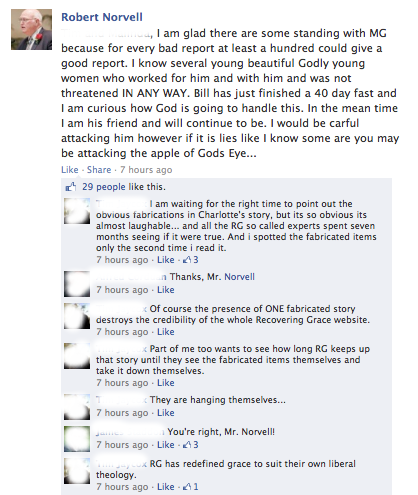
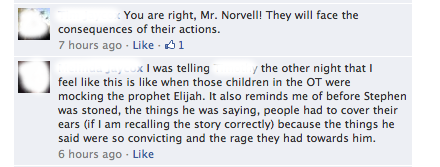

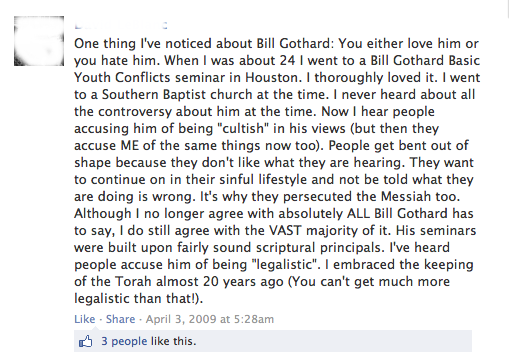
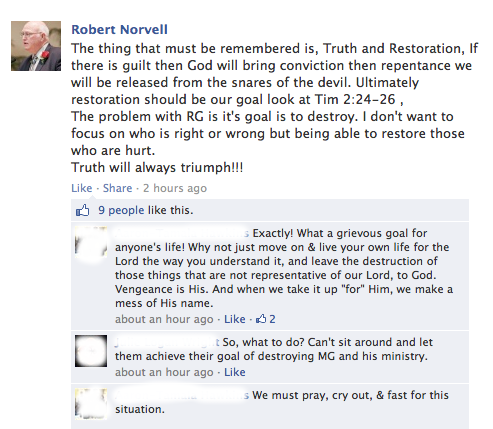




 Homeschoolers Anonymous