HA note: The following is reprinted with permission from Kierstyn King’s blog Bridging the Gap. It was originally published on December 2, 2013.
When I was 8, I was expected to be an adult.
I had adult responsibilities (taking care of kids) and was expected to act as mature as an adult – learn all the things, do all the things, cook all the food, wash all the babies. I had to fight for some semblance of my own childhood. My mom wanted me to grow up and grow up fast. I remember her asking me, before I was 10, to stop playing “dogs” with my brother (we’d run around on our hands and knees barking and stuff) because, essentially, it was embarrassing. I don’t remember the exact words she said, but that was the gist.
I just looked at her, and willfully ignored her until I was 11, and by then, I was too busy doing her job that I didn’t really have time to play with my siblings, because if I did, I was quickly ushered to change someones diaper.
Funny, because my mom said that I should be happy I have so many siblings/sisters to play with and that I don’t need friends my own age. But I never had time to play with them even if I wanted to – and honestly, they were so much younger than me, and she had them with such frequency, that I wasn’t even on the playmate list – I was the caretaker, the other kids, they all had each other, but I was quickly forced out, alone, and expected to be happy about it and have no needs.
I wasn’t allowed to have needs. I wasn’t allowed to be a child after I started puberty.
As I aged, I was expected to be more adult – not in like the normal, kids mature way, but in the I-was-8-and-was-expected-to-be-20-and-go-from-there kind of way. By the time I was 13 I’d lost any semblance of childhood that I’d had. I’ve never experienced the care-free years of being a kid or a teenager, because the entire time I was a kid(‘s age), I wasn’t.
I don’t understand teenagers, I don’t understand 18 year olds who don’t look and feel like they’re 40. I don’t understand 16 year olds who still play and aren’t crushed under the weight of grown up responsibility. I don’t understand 22 year olds who act like 22 year olds are supposed to act, and don’t have random existential crises because they feel like their life is over and they’ve accomplished nothing.
I’m 22, but most of the time I feel like I’m so. much. older. and learning how to act my age.
I’m actively trying to become more immature, because I can’t handle the continued weight of having to be more responsible and older than I am, of having to be the parent all the time even though there’s no one around to parent (except myself, which isn’t healthy either).
When I got married, I was 18, but I felt as though I’d lived a lifetime before that even happened. It said 18 on my documentation, but in my head I was in my 40′s, most of my life lived – well, survived, and it was time to do something else. Most people are like, no, you can’t marry at 18, and I agree and feel bad about it until I realize, when I was 18, I wasn’t actually 18. I was much older than that – because I was forced and pushed into growing up well before I even had the ability to understand what everything meant.
When I was 8, until I was 18, I was given all of the responsibility of an adult, with none of the power. I often felt like the only adult in the situation, like I was the actual parent, but I had no ability to change things for myself or for my siblings.
My mom confided in me things that really she should have confided in other adults to – things I didn’t need to know and didn’t understand and had no idea how to respond to. You shouldn’t tell your kid about how you’re mad at their father, or what you do in the bedroom and how it’s sinful (because every sperm is sacred), but you just really don’t want to be pregnant again (and pulling out is SO effective) – bearing in mind, I still thought sex consisted of invisible metal tubes connecting at the belly button of the other person.
When Alex and I started going out, I wasn’t even 17, and they heard wedding bells. They wanted me married right away, it felt like I was being pushed out, which was strange, considering.
My parents wanted everything to move so quickly. They said “but you WANT to get married, right?” and I was like “sure, yeah, but not RIGHT NOW” (because, 16, even I knew that was a bad idea). They didn’t seem to understand the concept of time. They wanted me to grow up so fast and never experience having grown up.
I never had a relationship with my mom and I think this is largely why.
I was the parent. I was the confidant. I was the one who had all of the responsibility, the consequences, and the anger shoved on to. I bore the brunt of her frustrations and I was the one who was berated for simple mistakes.
In every way, I never had a mother. I was never her daughter, I was only ever her tool.
The only time my mom was ever sweet to me was when she was trying to butter me up and manipulate me.
So when people say they’re so sorry I never had a relationship with the person who made the choice to give birth to me (and then demanded my life in return), I stare at them blankly. I don’t understand why they would say that. It actually hurts, because it’s almost as though they’re blaming me for not having or wanting a mother-daughter relationship – like I’m unjustified in my relief to have finally left her grasp.
I’ve grown in odd patches, with massive gaps where experiences should be, but aren’t. Learning what to do with feelings, and learning what needs are (after not being allowed to have them, because adult…which is BS, actually, my mom had ALL OF THE NEEDS). I feel old, I look young, I have experience and naivety in all the wrong places.
I hate having had to fight for everything – whether it’s for childhood, or autonomy, or myself.
I am tired.
I don’t know what made me think of it – maybe it’s because it’s the holidays and I really want the gingerbread that we used to make, and that reminds me of the fact that holidays were chores and mostly unenjoyable, save christmas morning, and I get tired from the memories and the forced aging.
She loves to write, she loves to teach others how to write, and she loves attending workshops on how to write better. As far back as I can remember, she emphasized the importance of writing well to her children. My siblings and I grew up being encouraged to write short stories, book reports, poems, and — in my case — even musical productions.
Two decades ago, my mom brought Andrew Pudewa to Los Gatos Christian Church in the San Jose, California area to teach homeschool kids about good writing. Pudewa runs the Institute for Excellence in Writing (IEW). IEW describes itself as an “award-winning approach” that “will give you the tools you need to confidently teach your students to write well, think clearly, and express themselves eloquently and persuasively.” The cornerstone of the IEW program is “Teaching Writing: Structure and Style,” a course for parents and teachers on how to teach writing.
About Andrew Pudewa
Two decades ago, my mom brought Andrew Pudewa several times to Los Gatos Christian Church in the San Jose, California area.
Pudewa has been the principle speaker and director of IEW since the 1990’s. While he does not have a college degree, he does have two stated credentials: First, he is a “graduate of the Talent Education Institute in Matsumoto, Japan.” This means he has a “Suzuki Violin Teacher” certificate. Second, he has a “Certificate of Child Brain Development from the Institutes for the Achievement of Human Potential in Philadelphia, Pennsylvania.” (The Institutes for the Achievement of Human Potential is a non-profit organization whose programs for brain injured children have provokedsignificantcontroversy over the last few decades.)
While Pudewa primarily focuses on writing, his opinions on other matters have popped up online from time to time. Pudewa believes public schools are “temples of relativism.” He has argued that multiple-choice tests are “evil” and “part of a clandestine effort by the inner sanctum of social scientists.” He also calls the Civil War “the War of Northern Aggression.”
I vividly remember three things from attending Pudewa’s writing classes:
1) Pudewa’s notion of the ideal paragraph.
2) Group massages.
3) Rock music kills plants and hurts rats.
The first — Pudewa’s notion of the ideal paragraph — I remember with fondness. Pudewa has these strategies for making a paragraph interesting. Each paragraph is supposed to include different “types” of sentences — a sentence beginning with a declarative, like “There is…,” a sentence beginning with an “-ing” verb, like “Thinking he was late, the boy rushed…,” a “very short sentence” with five words or less, and so forth. I have heard from other homeschool graduates that they hated this part of Pudewa’s program, that it was stifling and led to poor writing habits that took years to overcome. I even found a homeschooling mom express this sentiment recently in such a spot-on way it was simultaneously humorous and heartbreaking:
“[My child’s] paragraph on Noah is all stilted and weird because she HAD to include that who clause and that ‘ly word.
While I understand those criticisms, I personally appreciated the idea of intentionally changing your sentence structure to make each paragraph more arresting.
The second — group massages — was just weird. Pudewa would make all the class attendees — homeschool kids and homeschooling mothers — stand up and give each other back massages. When you’re a kid and your teacher makes you give a back massage to not only strangers but much older adult woman, and vice-versa, it is… weird.
The third — Pudewa’s tangential lessons on the “effects of music on life” — are what I am interested in discussing here.
Pudewa has a fascination with music and its alleged effects on the human brain and children’s ability to learn. This fascination makes sense considering Pudewa is not only a writing teacher, but also a Suzuki-method violin teacher. In fact, it might interest homeschool graduates who disliked Pudewa’s writing instruction methods to know that Pudewa’s methods are an experiment in applying Suzuki’s method for teaching violin to something other than music — namely, writing.
The Profound (New Age) Effects of Music on Life
It wasn’t random happenstance that other children and I learned about the detrimental impact certain types of music can have on rats, plants, and students two decades ago. Pudewa has been teaching this lesson since the 1990’s.
Even today, the Institute for Excellence in Writing continues to sell Pudewa’s presentation on music, entitled “The Profound Effects of Music on Life.”
More important, he still is.
Just a couple years ago in 2011, Andrea Schwartz — who works with the Christian Reconstructionist organization the Chalcedon Foundation and who oversees the Chalcedon Teacher Training Institute — interviewed Pudewa. In that interview, Pudewa brings up the same plant and rat stories I heard as a kid.
As of today, in November of 2013, the Institute for Excellence in Writing sells Pudewa’s presentation on music, entitled “The Profound Effects of Music on Life.” The presentation description says the listener will “discover the fascinating effects that different kinds of music have on our brains,” a discovery that will “transform your thinking” and make you “never listen to music in quite the same way again.” How does Pudewa accomplish this? Well, “Dramatic evidence regarding potentially harmful music is introduced with both scientific data and spiritual insight.”
Yes, “dramatic evidence.”
You could spend $15 and buy his presentation to find out more. Or you can check out the presentation handout that IEW has available for free on their website. A quick perusal of this handout verifies for me that this is exactly the same presentation with the exact same “dramatic evidence” that I heard as a child, years and years ago at Los Gatos Christian Church.
So what is this “dramatic evidence” that leads Pudewa to teach young, impressionable children for two decades now that rock music could “potentially harm” their bodies and brains? Well, the evidence comes from a number of sources, the most notable being: Dorothy Retallack, Frances Rauscher, and Inge and Ron Cannon.
The New Age Pseudoscience of Dorothy Retallack
Rock music kills plants.
Andrew Pudewa’s primary source for his musical plant claim is Dorothy Retallack’s book “The Sound of Music and Plants.”
If there is anything for which I will forever remember Andrew Pudewa, it is this claim.
He made the claim almost two decades ago. He is still making the claim today.
In Pudewa’s aforementioned presentation outline, you can see this for yourself. He claims that, “Plants exposed to classical music flourished while those exposed to rock and heavily percussive music were less healthy and turned away from the source of sound, many finally dying.” He then provides a footnote to the “primary source” for this “research citation.”
Pudewa’s primary source for his musical plant claim is Dorothy Retallack’s book The Sound of Music and Plants.
Dorothy Retallack was a professional mezza-soprano who described herself as a “doctor’s wife, housekeeper, and grandmother to fifteen.” In 1964, after her last child graduated from college, she enrolled as a freshman at the now-nonexistent Temple Buell College. Note that she was a professional musician, not a scientist. In order to fulfill her basic general ed science requirements, Retallack took an Introduction to Biology course. Her teacher asked her to conduct an experiment — any experiment that would interest her. This experiment led to her claim to fame: the musical plant myth.
According to Dr. Daniel Chamovitz (Ph.D. Genetics, Hebrew University of Jerusalem), Director of the Manna Center for Plant Biosciences at Tel Aviv University, Retallack was “a unique mixture of a social conservative who believed that loud rock music correlated with antisocial behavior among college students and a New Age spiritualist who saw a sacred harmony between music and physics and all of nature.” She was inspired for her experiment by a 1959 book called The Power of Prayer on Plants. This book was written by the late Reverend Franklin Loehr, who founded the Religious Research Foundation.
Do me a quick favor, by the way, and go look at his “foundation” website. This will tell you all you need to know.
But just in case that doesn’t clue you in, let me add: Loehr was a “past life reader” who believed he channeled an “entity” that called itself “Dr. John Christopher Daniels.” This entity was a “research librarian” 4300 years ago.
So Retallack’s experiment on plants was inspired by the ancient librarian-channeling Reverend’s book about plants. In his book, Loehr claimed that plants bombarded with prayers fared better than plants bombarded with hateful thoughts. This claim caused Retallack to wonder if music could impact plants in the same way. She exposed a variety of plants to Bach, Schoenberg, Jimi Hendrix, and Led Zeppelin. Her experiments, she claimed, demonstrated that plants exposed to soft classical music (and even elevator music) were healthy, whereas plants exposed to rock music — in particular, the drum beats of rock music — died. She wrote up her conclusions in the 1973 book The Sound of Music and Plants.
And there you have it. This is the origin of the idea that rock music kills plants. This is the entirety of the evidence that Andrew Pudewa cites for the idea as well.
Retallack’s studies were drought with scientific shortcomings… The number of replicates in her studies was so small that it was not sufficient for statistical analysis. The experimental design was poor—some of the studies were carried out in her friend’s house—and parameters, such as soil moisture, were determined by touching the soil with a finger. While Retallack cites a number of experts in her book, almost none of them are biologists. They are experts in music, physics, and theology, and quite a few citations are from sources with no scientific credentials. Most important, however, is the fact that her research has not been replicated in a credible lab… Retallack’s musical plants have been relegated to the garbage bin of science.
What Dr. Chamovitz states is the universal scientific consensus. Because — spoiler alert — plants don’t have ears. Plants can technically see, smell, and feel. But they cannot hear. As Eastern Connecticut State University professor of Botany, Ross Koning, has stated:
Plants have no ears to hear and no brain to process or develop musical taste or music appreciation…so any attempts to show relationships between music forms and growth or other responses have met with total failure in the hands of true scientists. This explains the lack of literature you find to read on the subject.
The popular TV show MythBusters even had a segment on this myth, entitled “Talking to Plants.” Like Retallack, they too used bad scientific methods. But unlike Retallack, their conclusions were in favor of beat-driven music: the plants they exposed to intense death metal grew the most.
Dr. Linda Chalker-Scott, who has a PhD in Horticulture and is the Extension Urban Horticulturist at Puyallup Research and Extension Center at Washington State University, has also written a scatching review of Retallack’s “research.” Dr. Chalker-Scott points out that, among many other problems, Retallack’s book should not be considered valid because: (1) out of the 40 footnotes only two are relevant to the subject of plant growth and sound; (2) Retallack “anthropomorphizes,” comparing “plants to humans in terms of having ‘likes and dislikes, their feelings and idiosyncrasies'”; and (3) “the potting containers were Styrofoam drinking cups with no drainage.”
Most curiously, Dr. Chalker-Scott also makes the following observation: “The book is published by a company that specializes in New Age literature, not science.”
Yes, New Age literature. Dr. Chamovitz also points this out: “Her book was eventually published as New Age literature.”
Andrew Pudewa has been teaching New Age literature to Christian homeschoolers for two decades.
Misinterpreting Frances Rauscher
Andrew Pudewa cites studies by Dr. Frances Rauscher, widely considered to be the pioneer of the “Mozart Effect.”
It’s not just plants that rock music hurts, though, according to Pudewa. Rats are also negatively impacted; in contrast, Mozart can positively benefit — via the “Mozart Effect” — students and children. Again from his presentation handout:
College students temporarily improved spatial-temporal IQ scores by 8-10 points after listening to Mozart, when compared with relaxation music and no music… Preschool children given six months of keyboard instruction increased spatial-temporal IQ scores by an average of 46% over other supplemental instruction (singing, computer, free play)… Rats exposed to Mozart music from before birth to 60 days old were able to learn mazes over twice as fast as those with no music, whereas rats exposed to repetitive “minimalist” music were unable to navigate mazes at all.
For all of these claims, Pudewa cites studies by Dr. Frances Rauscher. Dr. Rauscher (PhD, Experimental Psychology, Columbia University) is widely considered the pioneer of the “Mozart Effect,” the idea that listening to Mozart can positively impact young children and students. But this is sort of like the case of Brian Ray and the state of homeschooling research: the research does not really prove what people think it proves. Here is NPR’s summary of what Rauscher demonstrated:
In the spring of 1993 a psychologist named Francis [sic] Rauscher played 10 minutes of a Mozart Piano Sonata to 36 college students, and after the excerpt, gave the students a test of spatial reasoning. Rauscher also asked the students to take a spatial reasoning test after listening to 10 minutes of silence, and, after listening to 10 minutes of a person with a monotone speaking voice.And Rauscher says, the results of this experiment seemed pretty clear. “What we found was that the students who had listened to the Mozart Sonata scored significantly higher on the spatial temporal task.”
While this seems simple enough, it got quickly and increasingly complicated. J.S. Jenkins (MD, Fellow at the Royal College of Physicians) explains: “Some investigators were unable to reproduce the findings,” while “others confirmed that listening to Mozart’s sonata K448 produced a small increase in spatial-temporal performance.” Rauscher herself “stressed that the Mozart effect is limited to spatial temporal reasoning and that there is no enhancement of general intelligence.”
She also cautioned that her test might have involved “inappropriate test procedures.”
Many attempts to replicate Rauscher’s studies were conducted, many of which were unsuccessful. According to Andrew Gorman, Research Associate at the Institute of Cognitive Science at University of Colorado, Boulder,
In an effort to replicate and extend the results from UC, Irvine [Rauscher’s study], Stough, Kerkin, Bates, and Mangan performed a similar study using 30 subjects… The results of their test showed that while there was a small mean difference in scores across conditions in the predicted direction, these differences were not significant… The researchers concluded that further research in this area would not be of any benefit.
…Citing other studies that failed to show a “Mozart Effect” (Kenealy, 1994; Stough et al., 1994), Newman, Rosenbach, Burns, Latimer, Matocha, and Vogt tried to duplicate the conditions of the original study by Rauscher et al… This showed no significant difference between condition group and thus did not support the Rauscher et al. experiments. In analyzing the scores using music training as the factor, no significant difference was found. Interest- ingly, the subjects who reported liking classical music scored significantly lower than those who did not.
Gorman canvasses a good number of other studies, some backing up Rauscher’s study and some undermining it. Gorman’s conclusion of all the contradictory studies is as follows:
It is clear that there is growing evidence that support the claims that music can enhance verbal and spatial-temporal ability. However, this is by no means a panacea. The short-term effects that have been found are so ephemeral and are confined to such a narrow range of tasks that it is questionable as to whether any practical applications will come from this research. Any hope that these results will directly influence educational policy seems misguided.
While Rauscher’s studies created a storm of arguments, Rauscher herself was surprised and confused by the ways people took the results. The results were often misinterpreted or misapplied. Rauscher states,
“Generalizing these results to children is one of the first things that went wrong. Somehow or another the myth started exploding that children that listen to classical music from a young age will do better on the SAT, they’ll score better on intelligence tests in general, and so forth.”
Ironically, Rauscher sees her study as supporting a love of music in general, not a love of any particular type of music. She says,
“The key to it is that you have to enjoy the music. If you hate Mozart you’re not going to find a Mozart Effect. If you love Pearl Jam, you’re going to find a Pearl Jam effect.”
Yes, the person that Pudewa cites in favor of “the Mozart Effect” actually believes “the Pearl Jam Effect” is just as valid a conclusion.
And what about those rats that listened to Mozart non-stop? Well, I could point out that Dr. Kenneth M. Steele (PhD, University of Tennessee-Knoxville), Professor of Psychology at Appalachian State University, conducted his own Mozart/rat experiments. He concluded that, “in the context of piano note frequencies,” rats were “deaf to most of the notes (69%) in the sonata.” Thus, “Whatever the rats hear, it is not the sonata written by Mozart.”
Rauscher, at age 42, hears more Mozart in the lab than she did 15 years ago when she burned out and abandoned a more traditional pursuit of music. Even now she has mixed feelings–at least about the ‘all Mozart all the time’ auditory diet that she feeds her research subjects. ‘I’m so sick of it I could die,” she says. “Sometimes I can’t get it out of my head. It’s so annoying.'”
I think the lesson here is (1) listen to music you love and (2) don’t listen to any type of music (whether you love it or hate it) for 12 hours a day, day after day after day.
The Cannons Strive for Excellence
Another “citation” that Pudewa provides on his presentation handout is this:
Striving for Excellence (audiotape set), IBLP, Box One, Oak Brook, IL 60522
Why is Andrew Pudewa citing material from Bill Gothard’s Institute for Basic Life Principles
Jeri Lofland at Heresy in the Heartland has already summarized the contents of the Cannons’ “Striving for Excellence” message. So I will cite a few highlights from her summary:
The Cannons began with some music theory that was way over our heads… Then there were some odd bits and pieces about rhythms causing riots or neural damage in mice… Another doctor translated DNA into musical scores. (Don’t ask me how.)… Now we came to the heart of the argument: rock music, the very beat itself, was equated with rebellion and unbridled sensuality. It would make listeners want to take drugs and have sex… And if we still weren’t convinced, the Cannons explained that rock songs were imbalanced, like asymmetrical architecture. The best forms of art or music were those from the Age of Classicism: a definite beginning, a climax point, and a satisfying conclusion. With echoes of David Noebel’s publications against rock music, this one deprecated Impressionism and Cubism while celebrating the Baroque and the Classical periods.
This series by the Cannons is chockfull of so much debunked pseudoscience and conspiracy theories that I am unsure why Pudewa would direct anyone in its direction. Furthermore, notice what Jeri says Striving for Excellence mentions: “neural damage in mice.” Yes, the Cannons themselves reference Rauscher’s studies — and like Pudewa, they do so haphazardly. Should someone tell me that the Cannons also reference Dorothy Retallack, I will not be surprised.
Andrew Pudewa, David Noebel, and Bill Gothard
Ultimately, my criticism here is much bigger than Andrew Pudewa. It absolutely does bother me that Pudewa — as an instructor of young, impressionable students — would perpetuate pseudoscience and alarmist myths through his teaching position.
That is bad enough.
But this is bigger than Pudewa.
Interracial concert audiences concerned Christian fundamentalists and the Ku Klux Klan.
The Retallack and Rauscher experiments have inspired a longstanding trend within evangelical circles — and the Christian homeschooling movement — to spread fear and panic about any music with a beat. Since the 1960’s, people like Bill Gothard — from IBLP and ATI— and David Noebel — from Summit Ministries — have spread inaccurate and unintelligent claims about rock music. Gothard has argued that rock music leads “to rebellion, drugs, immorality, and the occult,” associating just about every possible sin with the musical genre.
David Noebel’s first claim to fame is the 1965 book Communism, Hypnotism, and the Beatles, where he alleges — no joke — that “Rock ‘n’ roll is turning kids into gay, Communist, miscegenators.”
Miscegenators, people.
David Noebel, the founder of our beloved Summit Ministries, was against interracial marriage as much as he is against gay marriage. And rock music was the root of the evil that was interracial marriage. What, you ask, led him to such an asinine, racist conclusion? Well, according to Dr. James Kennaway, a Wellcome Trust Research Fellow at the Centre for the History of Medicine and Disease at Durham University, Noebel brought to light “a less common aspect of music’s dangers – the threat posed to plants. He reported an experiment conducted by Mrs Dorothy Retallack of Denver that demonstrated, he claimed, that avant-garde classical music made plants wilt and Led Zeppelin made them die.”
Yes, with David Noebel we have come full circle to Doroth Retallack.
A seventeen-year old girl, while undergoing a routine operation to cut a non-cancerous tumor from her finger, suddenly developed what appeared to be a heart problem. However, when the girl’s headset turned off, her heart returned to normal rhythm. She had been listening to the rock album “Beyond Belief” by Petra.
Cue the horror movie music.
Dr. Kennaway situates these fears of the Religious Right in the broader context of what he describes as “the development of fears that music can make listeners ill.” He explains that, “For the last two hundred years many doctors, critics and writers have suggested that certain kinds of music have the power to cause neurosis, madness, hysteria and even death.”
One of the most significant factors in this fearmongering, according to Dr. Kennaway, is racism.
“Race,” he explains, “has played a major role in most medical panics about music since ragtime. Already in 1904, an American critic commented on the popularity of the argument that the ‘peculiar accent and syncopated time’ of ragtime could have a ‘disintegrating effect on nerve tissue and a similar result upon moral integrity’.” One sees this unfortunate sentiment in Noebel’s miscegnation comment. Noebel gets even more upfront about his racism, saying that rock music is a Communist plot to replace classical music with, and I quote, “the beat of African music.” One also sees it — whether intentionally or not — in Andrew Pudewa, the Cannons, Bill Gothard, and David Noebel whenever they make comments about “beats.” Because, see, each and every musical type has a beat. What all these individuals are objecting to is what they abstractly refer to as “syncopated” or “tribal” beats — in other words, beats brought to the U.S. by Africans.
So not only is this shared narrative anti-intellectual and unscientific, it is also an inherently racist narrative. I think the most vivid example of this fact comes from Dr. Roger Chapman (PhD, American Culture Studies, Bowling Green State University), Professor of History at Palm Beach Atlantic University. Dr. Chapman states,
Interracial concert audiences concerned Christian fundamentalists and the Ku Klux Klan, who called for a ban on the “devil’s music” to prevent the spread of juvenile delinquency and the “mongrelization” of white teens.
Conclusion
For two decades, Andrew Pudewa has taught young students flawed science about music. But the science is more than merely flawed. It originated from a man who thought he channeled a 5000-year-old spirit and then promoted by a New Age spiritualist. Why is such pseudoscience being taught by Pudewa to Christian homeschoolers? Why is something so untrue — and something that is actually New Age literature — being repeated over and over for decades by evangelicals and Christian homeschool leaders so concerned about New Age literature and African spiritualism — by Bill Gothard, David Noebel, and others like Bob Larson, Jimmy Swaggart, Geoffrey Botkin, and “Little Bear” Wheeler?
This is not only the height of bad scholarship, it is the height of irony.
Growing up, Christian homeschoolers were cautioned about how listening to rock music could cause you to be demon possessed. Now come to find out, that very alarmism was inspired by a man who quite literally claimed to be possessed himself.
I could end this whole post with some conclusion that wraps everything up nicely and neatly. But that would be too classical, if you know what I mean. So I will conclude with the best critique of the whole “rock music kills plants” myth that exists, courtesy of Audio Adrenaline:
Revelations that Doug Phillips of Vision Forum had a long-term affair, likely with a much younger woman who worked for his family without pay, have revived crucial interest in Christian patriarchy’s attitude toward relationships and consent. Phillips isn’t a mainstream figure; he’s a proponent of the Quiverfull movement who doesn’t think women should vote. He’s also a figurehead of the so-called Stay at Home Daughter Movement, which encourages young women to forsake higher education and careers in order to remain at home, under their fathers’ “protection.”
Obviously, that protection didn’t extend to Phillips’ young victim–and I use “victim” quite deliberately here. I agree with Julie Anne Smith of Spiritual Sounding Board that the Christian patriarchy movement grooms young women for abuse, consciously or not, by brainwashing them into compliance and encouraging them to forgo developing skills necessary for independent lives. There is a very clear power imbalance present, even in relationships between adults of the same age, because of an overwhelming emphasis on male dominion. I believe that Phillips knew exactly what he was doing. I think he sought this woman out at a young age specifically because of her vulnerability.
I think this a.) because that’s how predators work and b.) because the movement idolizes regressive gender roles.
Take the infamous Elsie Dinsmore series. Though they stopped selling the series this year, Vision Forum pushed the books as a wholesome alternative to worldly fiction for girls and formerly ran an essay contest based on the series. Unfortunately, Vision Forum has removed that page from its site and I can only find a cached pdf copy that doesn’t link to the full essays. You’ll have to trust my memory instead. I read the essays while still in college and had to restrain myself from picking up my lumbering school-issued PC and throwing it across the room as I read essay after essay by girls crediting the Dinsmore books for encouraging them to forgo a college education.
The series, which is available on Project Gutenburg if you feel like torturing yourself, stars Elsie Dinsmore and lauds her submission to her physically abusive father and her eventual marriage to one of her father’s friends, Mr. Travilla. Dinsmore is eight in the first book, which also features this stupendous quote from Travilla: “He (Elsie’s father) is not to take you away. I have made a bargain with him to let me keep you . . . call me papa in the future.” And so she did.
This is Vision Forum’s approach to romance. This is what they promote to their stay at home daughters. That’s why I, like Julie Anne, don’t really believe Phillips’ victim consented to the relationship. The environment in which it occurred is intrinsically coercive.
I was not a stay at home daughter. My parents had the sense to encourage me to attend college and pursue a career of my choice. But even their version of soft patriarchy granted my father a position of unreasonable power in our household and condemned me to a lifetime of submission to men.
As a college student, I became the victim of an attempted rape, the culmination of an abusive, controlling relationship.
It’s something I’ve written about before on my blog, and while I don’t enjoy writing about it, I will when I think my experience is relevant. Unfortunately, it’s relevant again. You see, Christian patriarchy–even soft patriarchy– doesn’t talk about consent. It doesn’t talk about relationship abuse. It encourages men to control women, and it expects women to submit to that control. And even though I was a non-theist and a feminist by the time I survived the attack, I blamed myself for what happened. I provoked it. I’d worn pajamas around a man, and just the year before, our student chaplain had warned women that wearing pajamas around men made them think about sex. And instead of going to the police when it happened, I continued to submit.
It’s incredible, really, how even the most absurd beliefs can embed themselves inside your psyche and stay there.
I am not that girl any longer. I’m older, wiser, and a bit tougher. I suppose that’s the up side of surviving something like that. You don’t make it unless you become stronger than you were, and I do not believe I’d submit to that abuse now. I think that’s partially because I know my real enemy: Christian patriarchy, the system that had shaped me and my attacker, too.
If the Christian church is concerned about abuse, it will have to divorce itself from patriarchy in all its incarnations.
It’s too late for me, and for Phillips’ victim, and for many, many others, but it’s not too late to protect the women and girls whose faith compels them to participate in Christian community.
Nachman Helbrans (front), son of group founder Rabbi Shlomo Helbrans, said, “We were speaking with lawyers and organizations — especially the Home School Legal Defense Association and many associations associated with them — and all of them tell us that we must leave Quebec.”
HA note: The following is reprinted with permission from Jennifer Stahl’s blog Yeshua, Hineni. It was originally published on December 1, 2013.
Lev Tahor or Lev Tohor [Website] is a fringe movement from within ultra-orthodox Judaism and is headed by Rabbi Shlomo Helbrans (also known as Rabbi Erez Shlomo Elbarnes, Erez Albaranes, Shlomo Helbran, and Rabbi Shlomo Halbernetz) and his son Nachman. The Rabbi is now estranged from his wife and one of his sons, who are now in Israel.
Information below in the various news articles and blogs will detail information linking Rabbi Helbrans to the group “Hisachdus Hayereim” (Union of the God-Fearing) and others.
Lev Tahor are known in Canada and Israel for homeschooling their children; their women and girls holding to very strict (even to Orthodox Jewish ideals) modesty standards that include wearing a similar clothing standard to a burqa or niqab, and a few run-ins with the law between the 1980s and 1990s. Lev Tahor is again in the news due to some child welfare and homeschooling concerns that the state of Quebec has with the group.
The name “Lev Tahor” could be translated clean or pure heart, which references a passage from Psalm 51:10, and began in Jerusalem in the 1980s. Shlomo and Malka Helbrans lived in Safed, Israel, for six years as Baalei Teshuva. In the mid-1980s, though he had not been given Smicha, he opened a yeshiva (Braslav Yeshivat Hametivta) in Jerusalem after relocating his family there.
About a third of the sect members are baalei teshuva (Individuals raised as non-religious who later became religious.), another third come from other Hasidic groups, and the final third are people who have been raised in the movement. In the last thirty years, members have followed the Helbrans family from Israel to the United States and Canada.
Rabbi Shlomo Helbrans Convicted of Kidnapping
Lev Tahor members are known in Canada and Israel for homeschooling their children and for modesty standards that include wearing a similar clothing standard to a burqa or niqab.
The movement relocated to Williamsburg and later to Monsey [in New York] in the 1990s. Sometime between 1991 and 1993, a student was put under Rabbi Helbrans’ wing to study for his Bar Mitzvah. The child went missing and his mother involved the police in the search for him. The child’s mother was not religious and was separated from her abusive husband who is now in Israel. He returned to the United States to search for his son and the rabbi attempted to extort large sums of money from the family to return the child to their care.
Once the son was returned, he appeared in court and later ran away again, News reports had been made of his random appearances in various places around the world. Some reports say that he is no longer religious.
After a 10-month investigation by state and federal authorities, Rabbi Schlomo Helbrans, whose yeshiva Shai had attended, was indicted recently on charges of kidnapping and conspiracy, along with his wife, Malka, and one of his followers, Mordechai Weisz. The case is expected to go to trial sometime this fall or winter.. [Source]
Hearing that Shai refused to attend school, Weisz proposed that the boy spend Sabbaths with him, promising Hana that he wouldn’t let Helbrans get near the boy. Hana consented, and for a few weeks that arrangement seemed to work. Shai went back to public school and seemed to be returning to normal. [Source]
Tobias Freund, 36, the man convicted Wednesday, had told the grand jury that he was not involved in the boy’s disappearance, but prosecutors said he drove the boy out of the city. The boy has not been found. A jury convicted Mr. Freund of three counts of perjury and one count of obstruction of justice, for altering his phone records.[Source]
Rabbi Helbrans offered the plea of guilty to a charge of conspiracy to kidnap in the fourth degree in State Supreme Court in Brooklyn. The plea was part of an intricate arrangement with the Brooklyn District Attorney that will give the rabbi a sentence of five years’ probation and 250 hours of community service… Charges were dropped for… Malka.. [Source]
A Jewish teen-ager reunited with his parents after he disappeared for two years in a struggle over his religious training will be separated from them again, a judge ruled here today. [Source]
… Justice Thaddeus E. Owens rejected a plea deal granting probation to the accused rabbi — a deal the judge had already accepted last month — after hearing yesterday from the boy, his divorced parents, the rabbi and some of the lawyers in the case in an hourlong session in a packed courtroom.[Source]
The youth has said he willingly chose to live a secret life from early 1992 until late this February with various Orthodox families in Rockland County. His parents and lawyers contend now that he has been brainwashed and needs psychiatric care.[Source]
A Hasidic rabbi yesterday withdrew his guilty plea to a lesser charge and will stand trial on charges of kidnapping a Jewish teen-ager from his parents. [Source]
Shai Fhima, who has been at the center of a long custody battle after he disappeared with a Hasidic rabbi in Brooklyn, has disappeared again, his mother says. [Source]
Shlomo Helbrans, responded that Shai had voluntarily run away from a home in which he had been physically abused, and Shai made the same contention after he reappeared. The teen-ager also vowed that if forced to return to his parents, he would flee — a promise on which he has since made good. [Source]
Shlomo Helbrans, said ” ‘If you don’t want your son to be religious I have the right to take him away from you’ ” and after one of the rabbi’s followers “held my arm and twisted my arm.”She acknowledged that her son, who is now 15, wanted to stay at the Borough Park yeshiva rather than go home with her to Ramsey, N.J., but she suggested that he had been brainwashed.[Source]
The defense lawyers told the jury that Shai had voluntarily run away from a dysfunctional family in which his stepfather beat his mother and him, sending them to a shelter for battered women. They held that the rabbi and his wife had given the boy sanctuary and had not criminally abetted his disappearance.[Source]
Mr. Reuven, a 35-year-old Israeli citizen… learned from an Israeli newspaper article in late April 1992 that his son had allegedly been kidnapped on April 5, 1992. He said he then had a series of conversations with Rabbi Helbrans by telephone from Israel, while preparing to travel to New York to find his son. [Source]
With Mr. Reuven on the witness stand, a prosecutor, Michael Vecchione, read an excerpt from the transcript in which Rabbi Helbrans is quoted as having said to Mr. Reuven, “The amount that I committing (sic) myself to is in the neighborhood of $10,000. More than that I would not be able to.” [Source]
The leader of a small ultra-Orthodox Hasidic group, 32-year-old Rabbi Shlomo Helbrans, was found guilty of abducting Shai Fhima Reuven, who was 13 when he disappeared in 1992. Helbrans’ wife, Malka, 33, was found guilty of conspiracy. [Source]
In suburban Rockland County, Shai’s mother is fighting for custody of him with Rabbi Aryeh Zaks. Pending a decision, Zaks has custody and Shai’s mother can see him once a week. [Source]
In a courtroom rife with rancorous passion, an ultra-Orthodox rabbi was sentenced yesterday to 4 to 12 years in prison for kidnapping a Jewish teen-ager who disappeared from his family for two years. [Source]
“This kidnap is not over for me,” the mother, Hana Fhima, said in a packed Brooklyn courtroom, referring to a battle she has been waging with another rabbi for custody of her son, Shai Fhima Reuven, since he resurfaced last February in Rockland County. The youth, now 15, was 13 when he vanished in 1992 after Mrs. Fhima sent him for bar mitzvah instruction to a yeshiva Rabbi Helbrans then ran in Brooklyn. [Source]
Tai Ellin-Byrd, one of the dozen jurors who convicted Helbrans of kidnapping … said that “this sentence is morally appropriate.” The jury, which deliberated for just five hours following the five-week trial in New York State Supreme Court, was “pretty much unanimous” about Helbrans’ [guilt] as soon as they walked into the deliberation room. [Source]
Mr. Weisz was originally charged with kidnapping, but the case was severed from the charges against Rabbi Helbrans. Malka Helbrans, 33, who was tried along with her husband, was acquitted of the kidnapping charge but convicted of criminal conspiracy. [Source]
“I feel the evidence was legally insufficient,” Justice Thaddeus E. Owens of State Supreme Court in Brooklyn said in dismissing the wife’s conviction. On Nov. 9, a jury had convicted the woman, Malka Helbrans, of conspiring to kidnap the teen-ager, Shai Fhima Reuven. [Source]
For the first time, New York State accepted a computer-generated image of what an inmate, in this case, Rabbi Shlomo Helbrans, would look like without a beard instead of making him shave for a conventional photograph. [Source]
Rabbi Shlomo Helbrans was found guilty of abducting Shai Fhima Reuven.
During the court case, it was uncovered that the Rabbi moved to the United States illegally. By 1994, Rabbi Helbrans was convicted of kidnapping a minor child. His wife and a member of the sect were given lighter sentences. A book was written about the case and entitled “The Zaddik: The Battle for a Boy’s Soul”, which was published in 2001.
There are some allegations that Rabbi Helbrans was given preferential treatment during court proceedings and his later incarceration. He did not complete his lengthy jail sentence.
The federal probe also focuses on whether the Pataki administration gave preferential treatment to Rabbi Shlomo Helbrans, who in a notorious case in 1994, was convicted of kidnapping teenager Shai Fhima Reuven from his mother. Wiesenfeld, a former aide to Sen. Alfonse D’Amato (R-N.Y.) and a former FBI agent, declined to comment about the grand jury. [Source]
The federal government is also focusing on a similar but separate case involving possible lenient treatment given by parole officials to Shlomo Helbrans, a Hasidic rabbi imprisoned in a widely publicized kidnapping case. Rabbi Helbrans was deported to Israel in May, his lawyer has said, but federal officials say their investigation is continuing. [Source]
An influential Pataki fund-raiser also intervened in the case of Rabbi Shlomo Helbrans, seeking an early release hearing, according to the papers and sources.[Source]
State records show that prison officials moved the rabbi, Shlomo Helbrans, from prison into a work-release program even though he was ineligible for the transfer because Federal immigration officials wanted to deport him. The transfer in June 1996 was rescinded after a Federal prosecutor who had brought charges against Rabbi Helbrans protested to state prison officials.[Source]
After being awarded parole, Rabbi Helbrans was investigated by the Immigration and Naturalization Service and deported to Israel in 1996.
Rabbi Helbrans, 38, an Israeli citizen, was arrested Wednesday night by agents of the Immigration and Naturalization Service at the police station in Spring Valley, N.Y. …was put on a plane for Israel at 5:25 p.m., his lawyer, Ronald G. Russo, said. [Source]
Immigration officials on May 11 deported Helbrans, 38, on two grounds: that he entered the United States illegally and that convicted felons can be deported.[Source]
The rabbi was found guilty of kidnapping, jailed for two years and deported to Israel — despite testimony from Shai, who had resurfaced after two years in places like a yeshiva in France, that he had voluntarily run away after the Helbrans family showed him ”what a normal family was.” [Source]
In 1997, a book about the trial (With Liberty and Justice for all?) was written by Jacob Y. Zick. It is now available on the Lev Tahor website in PDF format.
Lev Tahor Moves to Canada
Sometime after this, Rabbi Helbrans was linked to the Marii Zambron murder case in New York in 2000. [Source] The Lev Tahor movement then relocated to Canada [in 2000] while the rabbi was on a on a temporary visa. Families of the sect began joining him soon after. While this is not unusual for most of Orthodox Judaism, it is what was uncovered after this in Canada and Israel that is pertinent to the current case in Canada.
Vaad Hoaskonim, a New York-based rabbinical council with members in Williamsburg, Boro Park, Monsey and Queens, ruled that Elbarnes’s movement is “a great threat, spiritual and physical, to the Torah-observant community.” The council forbade members of their communities to associate with Elbarnes and urged his followers to leave him. [Source]
Canada’s Immigration and Refugee Board, an independent tribunal, accepted Elbarnes’s claim that he would be in danger if deported to Israel, and so it granted him refugee status. This month, however, the Federal Court of Canada granted leave to the federal government to appeal the tribunal’s ruling. The appeal is to be heard October 5, probably in Montreal. [Source]
Those speaking up for him included well-known Montreal human rights lawyer Julius Grey and anti-Zionist history professor Yakov Rabkin. [Source]
Elbarnes advocates the end of Israel as an independent country and turning the land over to the Arabs, he would likely not enjoy protection by the Israeli government because his ideas could be viewed as dangerous. [Source]
Elbarnes, 42, was granted refugee status by IRB judge Gilles Ethier, who based his decision on documents, written testimony and the oral testimony of eight witnesses, including Elbarnes’ mother, described as secular, and the abducted boy, now an adult. [Source]
Shlomo Helbrans-Satmar style Rebbe and head of polygamist cult (Lev Tahor) based in Quebec. He is accused of marrying off his underage daughter to a man in his 30’s and arranging similar such marriages among members of his cult. He was also involved in the notorious Shai Fhima abduction case, it is also interesting to note Fhima’s own allegations that he was sexually molested while living among the cult. [Source]
Rabbi Shlomo Helbran and his wife Malka and Mordechai Weisz,were originally accused of physical abuse and kidnapping of a 13-year-old boy. The rabbi was also accused of having cult like practices. Rabbi Helbran was convicted in State Supreme Court in Brooklyn in 1994 of kidnapping a young boy. At the time Helbran headed a small group described as an offshoot of the Satmar movement of the Hasidic Jews. [Source]
In 2004, the Immigration and Refugee Board of Canada linked Neturei Karta and Lev Tahor together and sought to better understand these communities.
In 2008, Lev Tahor were among the protesters during the Israel Day celebrations in Montreal.
The major addition to this year’s Jewish protest at the Israel Day commemoration was the 35 Lev Tahor Chasidic community members from Ste-Agathe, north of Montréal with Rabbi Elbrans. [source]
Beit Shemesh Family Causes Concerns about Child Marriages
One incident about Lev Tahor that came to limelight in 2011, concerned underage girls being sent from Israel to marry within the community in Canada.
The girls, aged 15 and 13, were forcibly detained by Canadian immigration officials in Montreal and returned to Israel apparently under order of an Israeli court. The girls’ great-uncle had petitioned for the writ out of concern that the girls would be harmed by the group in Canada, that their property would be taken, and that they could be forced to wed male members of the Lev Tahor sect. [Source]
The parents of the girls decided the community in Canada would be suitable and sent them from Beit Shemesh to N. America, hoping to have them there in the Lev Tahor village in time for Rosh Hashanah. The family members who petitioned the court feared that in the cult’s community, the Lev Tahor village, they would be compelled to get married in line with the groups hashkofa towards keeping them pure. [Source]
The episode has raised questions about the legitimacy of Lev Tahor, and an Israeli court will rule next week on whether membership of the sect should be made illegal for all Israelis. If this happens, one implication is that social welfare agencies will be empowered to take away member parents’ children. [Source]
The girls in the midst of the firestorm, ages 13 and 15, are the daughters of two secular Israelis who became ultra-Orthodox and joined the sect. Their grandmother and great-uncle, concerned for the girls’ well-being, petitioned the court after the girls’ parents put them on a plane headed to Canada, to an isolated village outside Montreal that comprises 45 families from Lev Tahor. [Source]
The spiritual leader of Lev Tahor in Canada, Rabbi Shlomo Elbarnes, denied using coercion. “Use force? We want everybody who is not 100 percent happy … to leave us,” Elbarnes told the Globe and Mail. [Source]
Bringing the Beit Shemesh sisters back to Israel was an international operation, involving the foreign ministry and Interpol. The goal of the operation was to stop the pair from entering the ultra-Orthodox community in Canada. [Source]
Israel Investigates Lev Tahor
It was after this incident that the Israeli government began renewed investigations into the sect over alleged kidnappings and other child welfare issues. Some of the parents in the sect were given injunctions to prohibit them leaving the country or sending their children to Canada as investigations were underway
…an Israeli court is expected to decide next week whether it is legal to belong to the extreme ultra-Orthodox group Lev Tahor, known as “the Taliban sect.” A decision reached this week by a family court in Rishon Letzion indicates that a ruling on Lev Tahor’s legality is imminent. [Source]
In 2012, Rabbi Helbrans was again in the news in New York, discussing his 1990s kidnapping case.
Also in 2012, Israeli newspapers, Haaretz Daily and Israel HaYom, began investigating the sect and published exposés on Lev Tahor, its leaders, practice, strict kosher rules and the welfare of its members. Israel HaYom discussed the origins of the sect, various run-ins with the law and other accusations and concerns, whereas Haaretz Daily embedded a reporte in the culture and report on what he saw and heard. The blog, “Shearim”, discusses the exposés from an Orthodox perspective. Israeli Channel 10 also investigated Lev Tahor after several allegations about the sect had been made and much concern was expressed by individuals who have family members in the sect.
Haaretz spent five days with the controversial ‘Lev Tahor’ Haredi community in Canada to uncover the truth about the sect and its charismatic head, Rabbi Shlomo Helbrans. Part one of a two-part series. [Source]
In the second part of Haaretz’s investigation into the Lev Tahor Hasidic cult in Canada, Shay Fogelman speaks to the group’s leader, Rabbi Shlomo Helbrans, about his prison time in America and the community’s attitude to underage marriage, to a young man who managed to leave the religious extremists and to a mother who defend their hard-line way of life. [Source]
The very existence of the radical community, aloof and controversial is not new: since the early 90s been linked to various cases, including those who came to the Israeli police, the FBI and courts in Israel and the United States [Source]
“In general, there were a lot of threats and penalties. There was an atmosphere of abstract fear. When my sister talked to a step-brother, a son of our mother’s new husband, my Rebbe punished her with the prohibition to leave the house for several days. . .” [Source]
Helbrans who is, according to Israel Hayom without any SMICHA from the Israeli Rabbanut (Chief Rabbinate) wrote his own books and this is what he is teaching his followers. Still in Jerusalem, he studied with the Toldot Aharon for a while and afterwards in Satmar but insisted on founding his own group.[Source]
‘Lev Tahor’ congregation, a radical sect located in Canada, was reviewed last night (Wednesday) extensively in ‘True side’ a broadcast program by Amnon Levi on Channel 10 [Source]
Channel 10 accompanied Aryeh Leber, a cult refugee, who is operating a search campaign for his mother [Source] – Videos in Hebrew
Shay Fogelman put up an exposé on Rabbi Helbrans in two parts at T.O.T. Private Consulting Services blog. Part one and part two are quite lengthy on the history and practices of the sect.
Shortly after, Jewish paper Vos iz Neias, The Jewish Voice and Behadrey Haredim also carried stories on the sect in the fall of 2012.The articles discuss the Channel 10 exposé, among other information. Due to the time limits of the show, not everything was able to be covered, so Behadrey Haredim did their best to share everything else that they felt was pertinent to the case by interviewing a current member about the accusations made about Lev Tahor.
A group of ultra-Orthodox Jews in Quebec have attracted media attention – and some serious concern – with reports of extremist religious behavior and communal coercion that go way beyond the standard behavior of even their most devout co-religionists. [Source]
Some of the members of Lev Tahor were involved in trying to illegally leave Israel with their children to join the sect in Canada in the summer of 2013 after court injunctions that halted their movement out of the country. They were caught in Jordan by Jordanian police and later returned to Israel for trial. This was the same family implicated in the 2011 incidence involving Canadian immigration returning two underage girls to Israel after the holy days of Rosh Hashanah and Yom Kippur.
The ultra-Orthodox Jewish family, consisting of parents and six children, crossed the border with Jordan, on Wednesday night and was arrested by the Jordanian authorities. [Source]
Parents of six children trapped in Jordan when they tried to join the Lev Tahor cult were brought before a judge, and refused to be represented by attorney [Source]
This family, along with many of the members of Lev Tahor are balei teshuva, which is to say newly orthodox. They previously hit the headlines in 2011 in Israel when they attempted to send two of their daughters, then aged 13 and 15, to Canada, only to have them forcefully returned to Israel by the Canadian authorities. [Source]
According to Channel 10, initial questioning revealed that — contrary to early speculation that they had accidentally wandered into the neighboring country while hiking — the family had intentionally entered Jordan in an attempt to circumvent a court order, sought by the father’s family, forbidding them to leave Israel. [Source]
Orit Cohen, sister of the father who was arrested in Jordan in an exclusive interview to B’Chadrei Charedim • “My brother was caught into the cult “Lev Tahor” • “the haredi public must condemn the cult and leader Shlomo Halbernetz [Source]
The Beit Shemesh family that tried to join him is led by parents who were not raised in the religious Jewish community, but became religious in adulthood. They joined the hareidi-religious community in Beit Shemesh and began raising six children there. [Source]
Rabbi Shlomo Helbrans’ Wife Ejected from the Community
In Spring of 2013, The Rabbi’s wife, Malka Helbranz was apparently ejected from the community. She has since returned to Israel. There isn’t much news coverage on this issue in English at this time.
Malka Halbernetz is not the only one who abandoned the sect. So far there were several cases of families or family members, after receiving assistance from external sources left the cult. The Center for Victims of Cults was established seven years ago and so far has handled over 10 center cases of families and individuals who abandoned Lev Tahor. [Source]
“She is staying at the home of one of the women in her family in the north of the country,” says a source involved in the details of her escape. The source added that the community in Canada are pleased and happy that she left, “They never liked the fact that the leader’s wife denies any of their methods.” [Source]
The trouble for the rabbi’s wife began after she voiced opposition to the rampant child abuse going on in the community. “The main reason for my sufferings is the fact that I dared to voice opposition to the punishments that are being used in the village,” Malka said. [Source]
I also found that one of the Rabbi’s sons has also since returned to Israel, and has been ostracised from the group. He is, however, still active in the religious community.
A son of the group’s leader fled the group and moved back to Israel. According to Nachman Helbrans, this brother was in a bitter custody battle with his ex-wife, left for Israel, and then claimed his children were being neglected. Several children from that family were removed and sent to live in Israel with the father. [Source]
On Shabbos afternoon, about 50 protesters came to the corner of Devora Haneviah Street in the capital, where – as every week – they protested against the desecration of Shabbos in the city. At about 16:30 a garbage truck passed by that came to clear the garbage can which is situated nearby. The wrath of the protesters skyrocketed. Halbernetz’s son, who was among the group of protesters, lay on the road behind the truck to block it and stop the continued activity on Shabbos. [Source]
2013 Homeschooling Case in Quebec
Sometime in 2013, investigations began in Quebec on the Rebbe’s son Nachman and the Lev Tahor community. There were concerns about the children’s education and welfare, match-making efforts and young ages of girls given in marriage; as well as allegations of abuse and mind control.
Later on, investigations into the conditions in the Lev Tahor community had been found that the children were not being instructed in English and French, but rather in Hebrew and Yiddish and would be unable to call for assistance should anything happen to their parents or another member of the sect in an emergency. It was also found that the girls were not getting the same standard of education as the boys, and that the children were unable to do basic mathematics.
Due to the investigation in Quebec, after discussing the issue with a few homeschool advocacy groups (including the HSLDA), the Rebbe and his son moved the community to a town in Ontario, which then involved both Quebec and Ontario’s Child Welfare Services and court systems. From what I understand, Canada is also trying to get information on the group from the United States and Israel.
About 40 ultra-Orthodox Jewish families living in the Laurentians, in the closed community of Lev Tahor, disappeared this week without warning — leaving youth protection officials in Quebec worried about the safety of 120 children.[Source]
About 40 families belonging to the cult, tried yesterday (Tuesday) to flee the country, having realized that the welfare authorities intend to intervene in raising their children. [Source]
Under the Monday morning moonlight, at about 1 a.m., 40 families numbering nearly 200 people boarded a convoy of buses to flee their homes and what they considered the imminent threat of Quebec’s child protection authorities.[Source]
“Youth protection services reiterates its will to collaborate, in any way, to assure the safety and well-being of the children in the community,” said a written statement issued by Quebec’s youth protection department Monday evening.[Source]
A hearing has been scheduled at the St. Jérôme courthouse Wednesday. [Source]
“The reason for departure of the community,” explains its people in the notice, “decrees on education in Quebec. Other communities in Quebec and abroad (eg Antwerp) are struggling against the decrees in court, but the situation with Lev Tahor, because it is a small community is much more serious.” [Source]
Israeli media have previously reported that the ultra-orthodox Lev Tahor group engages in forced marriages. Child protection services north of Montreal had issued a summons for Lev Tahor members to appear before youth court on Thursday on allegations of child abuse. [Source]
Chatham-Kent Children’s Services says the group will not get any special treatment. “If there are issues to be followed up on we would conduct our business the same way we would with any other situation that presented itself to a child protection agency,” says Interim Executive Director Stephen Doig. [Source]
“The nature of this community is to go back to the old traditions,” he said. “Freedom of religion is important to us. This is something that in Ontario that is much more respected.” Jewish human rights organization B’nai Brith Canada expressed its concern for the children living in the Lev Tahor community. [Source]
Authorities in Ontario say they are aware of the group’s presence in the region. The local police force in the Chatham-Kent area has given a similar statement [Source]
Nachman Helbrans, a member of the Jewish fundamentalist group, Lev Tahor, talks about the groups move from Quebec to Ontario amid a child neglect investigation, while at a motel in Windsor Ont., where they are temporarily staying. Nachman is heard saying that the Homeschool Legal Defense Association and other homeschooling associations suggested they leave Quebec. [Video Source]
“They force us to learn things that are against our religion, such as evolution,” Goldman said, adding that he believes the authorities planned to take the children and place them in a foster home. [Source]
“The education system in Quebec does not comply with our views because in Quebec it says each child should receive equivalent education, otherwise, they will call youth protection services,” said Helbrans. “We cannot just accept the curriculum, including evolution and many other issues we cannot teach our children.” [Source]
Uriel Goldman, spokesperson for the fundamentalist Jewish group Lev Tahor speaks in in Chatham, Ontario on November 28, 2013. [Video Source]
Despite being a convicted felon, he was granted refugee status in 2004, after he claimed to be in danger if he was sent back to Israel because of his extreme anti-Zionist views. [Source]
Ontario reportedly has liberal requirements for faith-based home schooling. [Source]
Nachman Helbrans, a spokesman for the sect, has said they want to educate their children according to their own religious beliefs and fled to Ontario to avoid Quebec’s education system, which “doesn’t give freedom of religion as most people understand it.”[Source]
“We’ve received complaints from former members of the sect, about abuse allegations, which we referred to (Youth Protection Services) in the Laurentians,” Ouellette said. [Source]
“For sure we are worried by the fact that they fled Quebec to go to Ontario,” Denis Baraby, director of youth protection for the Laurentians region, said Friday. His workers have been actively involved in the community since August, trying to help children suffering from poor hygiene, inadequate housing and unsatisfactory schooling. [Source]
“There were health issues, hygiene issues, the houses were dirty with garbage everywhere,” Baraby said in an interview. Education was another issue, Baraby said. The children were home schooled and “not even capable of doing basic math.”[Source]
In a radio interview with Radio-Canada on Tuesday, Quebec Education Minister Marie Malavoy called the situation “sensitive” and one that must be taken seriously. The Education Department had negotiated with the community over the children’s schooling, which is largely religious teaching in an environment without proper permits.[Source]
According to Canadian media, one of the charges against the families was that their children – who are homeschooled – did not know basic math, and in several cases, could not speak either English or French. [Source]
He said boys learn the basic Quebec curriculum, including history and math, but most of it is in Yiddish. He said the group has even taken the necessary steps to translate textbooks into Yiddish. Girls are taught basic home economic skills, like sewing and cooking. [Source]
“The schooling matter is one issue but not the only. There were important shortcomings, serious negligence,” said Denis Baraby, director of Centre jeunesse des Laurentides. “Their children, even at age 10 or 12, wouldn’t be even be able in an emergency to ask for help.” [Source]
He said his group recently spent thousands of dollars on textbooks for such things as math and history. He said most adults in his group speak English or French, though he acknowledges that the children speak only Yiddish or Hebrew. He said the Quebec government demanded that Lev Tahor teach things members disagree with, such as evolution and homosexuality. [Source]
Quebec youth protection services told the Canadian Broadcasting Corp. that there are concerns that the children were neglected. The children reportedly were forced to live in the homes of families other than their own for punishments. [Source]
A youth court judge in Quebec has ordered that 14 children from the ultra-orthodox Jewish sect Lev Tahor be placed temporarily in foster care, undergo medical exams and receive psychological support.The order also compels the children’s parents to turn over their passports. [Source]
Quebec Judge Pierre Hamel said in his ruling that he believed the children were at “serious risk of harm” after hearing testimony from three child-protection workers as well as a former member of the sect, who related what he endured while living in the community and how he ultimately fled the group.[Source]
A number of the children are at or near the age of 13, which Shlomo Helbrans has said is the ideal age for marriage under his interpretation of Jewish law. The eldest of the children targeted by the court order—a married 16-year-old — is the mother of the infant child that has been ordered into foster care.[Source]
Two families from an extremist haredi Orthodox sect will comply with a court’s order to return to Quebec for a hearing on allegations of child neglect, a sect leader said. Nachman Helbrans, son of the community’s leader, Rabbi Shlomo Helbrans, said the families will meet with child protection officials on Wednesday, the Toronto Star reported Monday. [Source]
Judge Pierre Hamel issued the ruling Wednesday night, ordering the children be removed from the community and placed in foster homes immediately, for at least 30 days. [Source]
The emergency order Wednesday from Quebec Youth Court Judge Pierre Hamel said the children should be placed in foster care for 30 days and receive medical and psychological evaluations. They are to have no contact with Shlomo Helbrans, or other Lev Tahor members, and contact with the families is to be tightly controlled by child protection investigators in Quebec. [Source]
Yoil Weingarten, a member of the ultra-orthodox Jewish sect Lev Tahor, defends his community and accuses Israel of being behind the persecution of his community. [Video included at Source]
Oded Twik has urged the Canadian authorities to remove all 137 children from the community. Dozens of family members and supporters attended a demonstration outside the Canadian Embassy in Tel Aviv on October 14. Many family members have not communicated with their relatives for eight years. [Source]
Due to the investigations in Canada, Israel has ramped up their efforts in hearing more information about the sect and deciding what to do, in a spirit of cooperation with American and Canadian authorities. Special hearings are now underway in the Knesset. [Israeli Parliament]
Hitting children with iron bars, denial of food, taking psychiatric pills by coercion and total disconnection from the family in Israel. These are some of the testimonies heard today (Tuesday) by the Committee in the Knesset, about the Israeli families at the ‘Lev Tahor’ community in Canada. [Source]
On Tuesday the Knesset’s Committee on the Rights of the Child held a hearing on Lev Tahor, and families of the cult members as well as MKs slammed the State Prosecutor’s Office for dragging its feet on the case. [Source]
In the meeting representatives of the Ministry of Internal Security, the Ministry of Foreign Affairs, the Justice Ministry, the Welfare Ministry, the ”Lev Ahim” Organization, INTERPOL, the National Council for the Child and the victims of the cult will be present. [Source]
Hitting children with iron bars, denial of food, taking psychiatric pills by coercion and total disconnection from the family in Israel. These are some of the testimonies heard today (Tuesday) by the Committee in the Knesset, about the Israeli families at the ‘Lev Tahor’ community in Canada. It was also told about achieving compliance by constant pain such as wearing shoes smaller than one’s shoe size, forced divorce and marriage.. [Source]
I have put all of this information together in hopes that it will help anyone who is currently investigating this issue to find out more about Lev Tahor, the rabbi and his family, issues with the police and immigration authorities and the homeschool community.
It is, very often, difficult to wade through the sea of information and get to the heart of the issue, and it is my hope that this post will enable you to do just that. Keep in mind that any articles posted in Hebrew can be run through Google Translate. It is not the best, but you will understand the basics of what is being said.
HA note: The following is reprinted in a modified format with permission from Libby Anne’s blog Love Joy Feminism. It was originally published on Patheos on December 3, 2013 with the title, “Matthew Chapman, and Why I Included Lauren’s Picture.”
Matthew Chapman wrote the following in 2003, five years before he gave his daughter Lauren away in marriage. In it he referred to his marriage at age 27 to Lauren’s mother Maranatha, who was only 15 at her wedding:
I know that in my case, I cannot even begin to fully communicate the wonderful gift Maranatha’s father gave to me in his daughter on the day we married. All her life, he had called her to trust him and follow him, even when she didn’t understand or, perhaps, even agree with how he was leading her, and she did. A few nights before our wedding feast, when Maranatha was dressed and ready and waiting for me to come, the doorbell rang and it was her dad who showed up instead. He assured her the wedding feast was not that particular night, and asked her to change her clothes and join him for a special dinner. He took her to a nice restaurant where they had a wonderful evening talking and sharing and laughing and crying together. Then, at one point, he told her, “Sweetheart, all your life you have submitted to me, trusted me, and followed me, and you have done this well. But, when Matthew comes and takes you, all of that transfers over to him, even if that means he leads you in ways that vary from how I would do things.” And when I went to get her, she followed her dad’s final lead right into my headship of her. Wow! Did I walk into a good deal or what?!
…I had no idea how common this sort of thing was, because no one in my homeschool community had married before age 18, and I still don’t know how common it is—but it’s clearly more common than I had hoped. What really bothers me here is the age difference bit. If these parents were marrying their 16-year-old daughters off to other families’ 17-year-old sons I would still be concerned, but when they’re marrying their 16-year-old daughters off to full grown men significantly older in both years and experience, I am appalled—and not in small part because of quotes like Matthew Chapman’s.
This is a major convention, and this past summer the now-discredited Doug Phillips was a keynote speaker. Voddie Baucham spoke there in 2012, as did Eric Ludy. In addition to Matthew serving as keynote speaker, his wife Maranatha is slated as a featured speaker. Matthew runs Kindling Publications, and both Maranatha and Lauren is featured heavily on organization’s website.
Like it or not, it appears that the mainstream of the Christian homeschooling movement, its major convention circuit, has chosen to give a platform to those who practice and promote the marriage of girls of 15 and 16 to much-older men. Here is something else Matthew Chapman wrote in 2003:
Parents, I would also charge you to consider this. The way many Christian homeschooling parents raise their daughters, they mature rather quickly and develop significant capacities by a relatively young age. By their middle-teens, many daughters (but by no means all) possess the maturity and skills to run their own home. My point is to encourage you to be open to the Lord and take to heart that some of your daughters may be ready to marry sooner than your preconceived ideas have allowed for. And why not, if they are truly ready? What is the purpose of holding out for a predetermined numeric age if they are legitimately prepared and the Lord has brought His choice of a young man along for her? Don’t be surprised if this is some of the fruit of your good parenting in bringing forth mature, well-equipped, Godly young daughters. However, I seldom think this will be the case for most young men—it takes them (us) a lot longer to get to where they need to be. I have also seen that, oftentimes, a difference in age—even a significant one—with the man being older, helps make for a better fit.
This is the man who is now being given the keynote slot at major Christian homeschooling conventions.
People need to know this.
Matthew Chapman promotes the marriage of homeschool girls in their “middle-teens” to older men, endorsing an age difference, “even a significant one,” as making “for a better fit.” Matthew Chapman not only followed this advice in his own marriage, but also in marrying his daughter Lauren off immediately after her sixteenth birthday to a man of twenty-six.
What does this say of the Christian homeschooling movement?
…Where are the voices speaking out against this? Where are the Christian homeschooling leaders saying that this is wrong?
I’m searching for them, but I’m finding only crickets—crickets, and Matthew Chapman serving as keynote speaker at major Christian homeschooling conventions.
Jonathan Lindvall is the president of Bold Christian Living. He has spoken at many homeschooling conferences and organized “Bold Christian Youth Seminars” as well as “Bold Parenting Seminars.” He also presented “New Testament House Church Seminars” in the U.S. and beyond.
I remember Lindvall from the homeschool teen track at a CHEA homeschool conference in California. Lindvall and Reb Bradley taught the teens about “godly” relationships — Bradley emphasizing courtship, Lindvall emphasizing betrothal. I distinctly remember Bradley making fun of Lindvall for “being extreme.” Which Lindvall would actually consider a badge of honor. According to Vyckie Garrison, who years ago also attended one of his “Bold Christian Living” conferences, Lindvall teaches that Jesus finds balanced people “repulsive.” “Don’t shy away from extremism,” Lindvall admonished.
I recently came across a quotation from Lindvall on No Longer Quivering suggesting young women should be “shielded” from jury duty and that women should not vote. I was pretty shocked to read this. I was not shocked that a leader in the Christian homeschool movement would express this, mind you. I am just shocked at how unapologetic and fervent Lindvall is in his dismissal of the women’s suffrage movement.
Here is what Lindvall said:
I obviously share your conclusion that young women serving on a jury is a very vulnerable, potentially damaging experience we should be able to shield them from. Let me share some thoughts of how we can protect our daughters from this particular emotional/mental threat.
You noted that “never allowing her to become a registered voter” is something you have learned the hard way. This is definitely one of the ways we express our “individuality” in our culture. Early in the republic’s history, only heads of households voted. Sadly, today even in very conservative households most of us have embraced the philosophic underpinnings of the women’s suffrage movement. Of course women should vote! Therefore even Christian couples occasionally “split” their vote, canceling one another’s vote.
But since women are allowed to vote in our society, doesn’t this mean Christians must compromise with the cultural mores and have our wives vote, so we can double our impact? This assumes that God NEEDS our help in appointing His choice of leaders (Romans 13:1 makes it clear that all “authorities that exist are appointed by God”). Especially if registering to vote creates greater vulnerability for our families, perhaps we should rethink this question.
HA note: The following is reprinted with permission from Libby Anne’s blog Love Joy Feminism. It was originally published on Patheos on December 2, 2013
Maranatha’s courtship story has been told and retold in homeschooling circles at least since the 1990s, and is held up by many as an ideal. But there’s one thing that is routinely left out of the story. Just how old was Maranatha Owen when she married Matthew Chapman at the culmination of a parent-guided courtship/betrothal process?
We often think about child marriage as something that happens in other countries, but not here.
I’ve generally thought of it that way too, even with my background. I grew up in a conservative evangelical/fundamentalist homeschool community where no one dated and everyone talked about and aspired to courtship. But in my community essentially no one started courting before attaining legal adulthood. Recently I’ve been hearing other stories, though, far different stories—and one of those stories is Maranatha’s, which I will tell in a moment.
There were a couple of relevant reasons those in my community put off courtship. First, courtship was scary, and the consequences were huge. If you courted and then broke it off that had the potential to look really really bad. After all, the whole reason for foregoing dating was the idea that for every romantic relationship you have, you give away a piece of your heart that you will never get back. Second, courtship was about finding a marriage partner, and long courtships or engagements were seen as causes for fleshly temptation. Therefore it made no sense to begin a courtship before you were actually ready for marriage. And thus we waited.
There are some Christian homeschooling leaders, Jonathan Lindvall primary among them, who brush these reasons aside and preach the godliness of youthful courtship.
Lindvall argues for avoiding the heartache of broken courtship by means of heavy parental control and what he likes to term “betrothals.” If parents help their children find godly partners, love will follow eventually, or so his argument goes. Lindvall and others like him also argue that young people are ready for marriage far earlier than “the world” may recognize, and that waiting rather than marrying young only leads to temptation and the possibility of going astray.
Having began saved at age 19, Matthew Chapman felt led to the ministry. He attended Baylor University’s ministerial program and began serving as a ministerial intern at a large church in Waco, Texas. During this time he began to look for mentorship from an older man at the church, a homeschooling father named Stan Owen. Stan became Matthew’s spiritual father, and the two spent a great deal of time together. In the summer of 1986, Stan began to feel that God had destined Matthew to marry his daughter Maranatha. Without talking to either Matthew, his spiritual son, or Maranatha, his biological daughter, Stan dedicated the two together in marriage in prayer before God.
In early fall of 1986, Matthew confessed to Stan that he was troubled by a strong attraction to Stan’s daughter Maranatha.
He confessed that he found her “very attractive” and that she had become “a distraction.” “I don’t know what to do about it,” he said. According to Lindvall’s telling, “Matthew was certain this attraction could not be right since Maranatha was so much younger than he.” ”Have you ever considered that this may be a good thing?” Stan asked him in response, “How do you know this isn’t from the Lord?” But Stan went on to tell Matthew that Maranatha wasn’t ready for marriage yet, and that he therefore needed to put a hold on his feelings for a while. Matthew continued to be a frequent guest in Stan’s home, constantly in contact with Maranatha and the rest of the family, but was forbidden to tell Maranatha about his feelings or have any physical contact with her.
Shortly after this Maranatha told her father that she had “an interest” in Matthew. As time went by Maranatha found her “attraction” to Matthew “increasingly distracting.” She told her father about her crush as she had been taught to do. Stan told Maranatha that she needed to “keep her heart pure and focused on the Lord” and to “wholly give herself to the Lord without any lingering desire for Matthew.” And Maranatha obediently sought to do just that. Of course, Stan had already decided to give Maranatha to Matthew, so this was simply a matter of biding his time until he decided Maranatha was ready.
A year later, in early fall of 1987, Matthew felt that God had told him by direct communication that he, Matthew, was to marry Maranatha. Matthew shared with his mentor what God had told him, and asked permission to propose to Maranatha. Stan confirmed that the thoughts may well have been from God, but asked Matthew to wait a little longer, promising to share when he had heard from God himself.
Several months went by and Christmas arrived. Stan’s Christmas present to Matthew was a Christmas card with the words “This year for Christmas, I am going to give you the greatest gift I could ever give you” on the front.
Inside was a photograph of Maranatha.
There were also instructions: “On January 1st, you may ask Maranatha to marry you.” The instructions stated, however, that while Matthew and Maranatha could become engaged Stan would not give Maranatha to Matthew until he determined she was ready, which might be months or years. Matthew proposed and Maranatha accepted.
Stan wanted to do things as they were done in the Bible, when betrothal was legally binding. Therefore, on February 22, 1988, just over a month after Matthew’s proposal and Maranatha’s acceptance, the two were legally married at the courthouse. Maranatha continued to live in her father’s home until her official “wedding” day, which, although she was already legally married, would be when she would begin her married life.
The summer of 1988, Stan decided that Maranatha was ready. In the six or so months since Matthew’s proposal and Maranatha’s acceptance, Matthew had prepared a home for them to live in and Maranatha had sewed a wedding dress. After dinner one day, Stan unexpectedly and without prior warning informed Matthew and Maranatha that the time was fast approaching. But Stan wanted to reenact the Biblical story of Jesus as bridegroom and the Church as his bride, so he did not give either Matthew or Maranatha a date.
Immediately after Stan’s surprise announcement, Maranatha was taken by her family members to the home of another Christian family. There Maranatha waited for Matthew to come and claim her. Every day between 3 pm and midnight she dressed in her wedding dress and sat with her suitcase, waiting. Finally, at long last, Stan told Matthew that the day had arrived, and Matthew came to the house where Maranatha was staying, claimed her, and took her to a surprise wedding feast Stan had prepared, complete with guests, singing, and dancing. The couple then left on their honeymoon and began their married life.
So now let’s talk ages.
When Matthew first expressed his interest in Maranatha—interest Stan affirmed as from God but asked Matthew to put on hold—Maranatha was 13 and Matthew was 26.
When Matthew heard from God that he was to marry Maranatha, and begged Stan to let him propose marriage to her, Maranatha was 14 and Matthew was 27. When Stan gave Matthew the go ahead to propose to his daughter, Maranatha was 15 and Matthew was 27. They were the same ages when they married just over a month later, and when Maranatha left her father’s home and the couple began their married life together Maranatha was 15 and Matthew was 28.
The original story doesn’t include any ages at all. I suspect that Lindvall and others felt these ages were appropriate, but were concerned that some might be put off by the idea of a 15-year-old girl marrying a 27-year-old man. I found the ages by looking them up on public record. They’re not available on the internet or in print otherwise.
Marrying girls off so early does several things. For one thing, it precludes them having other options. They have not finished their academic education and are not qualified for anything besides homemaking. And even then, what fifteen-year-old is truly ready to run a home in today’s world? For another thing, such early marriage means a girl marries before she has time to completely mature and form her own outlook on life. But then, sadly, that’s rather part of the point. This sort of arrangement, after all, functions not as an independent adult making her own decisions but rather as a property transfer—and it is explicitly stated as such.
I know that in my case, I cannot even begin to fully communicate the wonderful gift Maranatha’s father gave to me in his daughter on the day we married. All her life, he had called her to trust him and follow him, even when she didn’t understand or, perhaps, even agree with how he was leading her, and she did. A few nights before our wedding feast, when Maranatha was dressed and ready and waiting for me to come, the doorbell rang and it was her dad who showed up instead. He assured her the wedding feast was not that particular night, and asked her to change her clothes and join him for a special dinner. He took her to a nice restaurant where they had a wonderful evening talking and sharing and laughing and crying together. Then, at one point, he told her, “Sweetheart, all your life you have submitted to me, trusted me, and followed me, and you have done this well. But, when Matthew comes and takes you, all of that transfers over to him, even if that means he leads you in ways that vary from how I would do things.” And when I went to get her, she followed her dad’s final lead right into my headship of her. Wow! Did I walk into a good deal or what?! I’ll tell you what though, having a wife with a heart like that makes you all the more want to seek the Lord and lead her faithfully.
Parents, I would also charge you to consider this. The way many Christian homeschooling parents raise their daughters, they mature rather quickly and develop significant capacities by a relatively young age. By their middle-teens, many daughters (but by no means all) possess the maturity and skills to run their own home. My point is to encourage you to be open to the Lord and take to heart that some of your daughters may be ready to marry sooner than your preconceived ideas have allowed for. And why not, if they are truly ready? What is the purpose of holding out for a predetermined numeric age if they are legitimately prepared and the Lord has brought His choice of a young man along for her? Don’t be surprised if this is some of the fruit of your good parenting in bringing forth mature, well-equipped, Godly young daughters. However, I seldom think this will be the case for most young men—it takes them (us) a lot longer to get to where they need to be. I have also seen that, oftentimes, a difference in age—even a significant one—with the man being older, helps make for a better fit.
Matthew says that homeschooled girls mature quickly.
While I’m sure there are some homeschooled girls for whom this is true, I know the sort of homeschooled girls he’s talking about—they’re the ones raised to care for big families, cook, clean, and take care of babies, wear long dresses, practice submission, and learn a modest temperament. Maturity isn’t the ability to make a pie or change a diaper. Maturity isn’t the ability to quote a Bible verse or stay silent rather than gushing over the latest fad. And while we’re at it, running a home in today’s world takes more than knowledge of cooking, cleaning, and childcare.
Let me take a moment to address two objections I’ve seen raised. First, it is true that many girls in mainstream society date as early as 14. However, the courtship or betrothal process is closer to actual literal wedding planning than it is to dating. Courtship and betrothal are quite literally about getting married, and not at some nebulous time in the future but now. Second, it is true that it used to be more common for women to marry younger, even as young as 15. However, it was never as common to marry so young as we tend to think it was looking back (in fact, there are entire historical periods where people married just as late as we do today), and besides, the world today is not the same as the world of the past. Average age of marriage is generally a result of societal and economic factors that actually, like, matter.
Maranatha’s story is an extreme, yes, but it is not the only one of its kind. In 2008, only weeks after turning 16, Maranatha’s daughter Lauren married a man who was 26, a man who had already been interested in her for several years. And I’ve been hearing other stories too, stories of courtships begun at age 14 and marriages entered into at 16 or 17. Right now, my heart is sad for girls married off before they have the time to live, to learn who they are, to forge their own beliefs and outlook on life—girls married off so early other options are severely limited, and in such a patriarchal setting that even consent is curtailed.
In case you’re wondering, Matthew and Maranatha were married in Texas.
The law in that state requires parental permission for marriages involving those who are 16 or 17, and a special court dispensation for marriages involving those under 16. I suspect that the law was different in 1988, and that this is the reason Maranatha’s daughter Lauren married immediately after turning 16 rather than before.








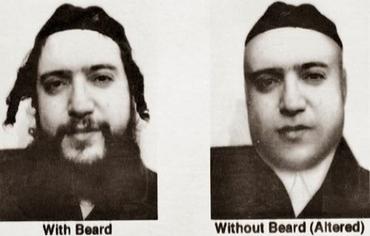


 Homeschoolers Anonymous