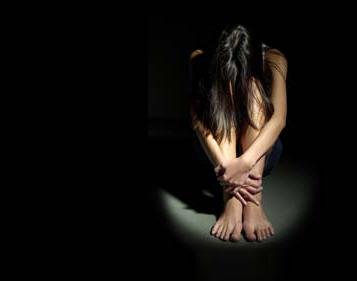
I Have to Live My Life: Eve’s Story

HA note: The author’s name has been changed to ensure anonymity. “Eve” is a pseudonym

My homeschooling experience in and of itself was not particularly awful. It started out harmlessly enough. My older brother was very ahead of his public school class in first grade and was bored so he asked my mom to homeschool him. (Or so the story goes, I’ve never actually bothered to ask if that was actually the case). I do know that there was a very strong homeschooling movement in our church and we immediately joined that group. For the most part I enjoyed school growing up. My older brother and I were very inquisitive and my mom did her best of fulfill our desire for knowledge. Unfortunately for me, much of my interest centered on biology. I was provided with plenty of Creationist curriculum, but very little that explained any actual science.

Church was a different matter for me. I was rarely happy at church. I did not understand many things and I had a lot of questions throughout high school. My questions were always met with the same types of answers, “We know best. Just trust us we’ll get to your answers eventually but for now just focus on the stuff we’re teaching you. You’re still young and the Bible says that when we are babies we need milk.” It was an empty reply and it always left me even more unhappy. When I tried to start a study group with some of the other girls my age so that we could find some answers for ourselves, we were immediately shut down. Even though we were meeting off church property we were told that in order to have a bible study we had to have one of the women from the church oversee us. Again I was left in the dark. All I ever wanted was for someone to sit with me and be honest. I needed someone to either tell me that they didn’t have the answers I wanted or to help me find them. No one would because asking questions was against the rules in my church.

I tried very very hard to have faith. Everyone around me believed so fervently in God and Creation. I went to Bible Camps, Summit, raised money and went on mission trips, joined Bible studies and read so many study books I’ve lost count, but I never had faith. I don’t know that I’ve ever truly experienced faith. This was a terrifying realization to come to. The thought that everything I was taught growing up, everything that my parents so fervently believed was not what I believed shook me to my core. I am terrified of disappointing my parents. I always have been and I think I might always be. All of my life up until college revolved around making my parents happy. I was the good kid.

Then, of course, my family became heavily involved with the NCFCA. I hated it. I  have never liked speaking in front of people. I willingly participated for one tournament and that was it. After that I supported my older brother. I had much more fun when all I had to do was help him research and then during tournaments I could run around doing whatever and helping my mom do Judge’s Hospitality. I never really made friends in the NCFCA. Most everyone loved my older brother so most everyone knew me (if only as his little sister), but I never found my own group of people. To be honest I was fine with that. I didn’t really like most of the NCFCA so I was fine just doing my own thing and living in my brother’s shadow.

Debate did, however, open me up to the world of the internet. I was suddenly immersed in research for debate, but also in everything else. All of the ideas on the internet fascinated me. I made friends with a very outspoken atheist who constantly questioned my beliefs. He never did it in a rude or antagonistic way. He could tell I wasn’t entirely convinced about my faith, but it was so deeply ingrained in me that I would never have admitted that to him. So instead he just persistently asked me why I believed what I believed. I never did have an answer for him.

In college I moved rapidly away from my parents’ beliefs. I majored in biology and was fascinated with everything I learned. When I took a class on evolution I had so many questions that I spent a large amount of time in my professor’s office. He was very understanding and very, very helpful. I stopped going to church when I moved to college and focused instead on answering all of those questions I’d had growing up. Unlike the elders in my church, my professors wanted to do nothing more than give me answers. I thrived in college. I made friends for the first time and was social. All the while, my relationship with my parents started showing signs of wear. Practically every time I went home we had a conversation that ended with my crying and feeling like I was nothing but a disappointment. All I wanted to do was figure out for myself what I believed, but because it was looking like I wasn’t going to believe what they did, they were very unhappy.

After graduating I got the hell out of my state and moved to the East Coast. I had some friends in the area but it was still a terrifying transition. I went from living near/with my family to living 18 hours away in the middle of a big city. Thankfully with the support of my friends I adjusted quickly. My parents were sure I’d be back to my home state after 3 months. I’ve now lived up here for almost 3 years and I’ve never been happier. Soon after I moved I met a guy and we started dating. He was the first guy I ever actually dated. Even when our relationship became serious, my parents never really made any effort to get to know him. He is not a conservative Christian so they don’t care to. I brought him home with me once for Thanksgiving and within 30 minutes of him being in my house my dad was trying to convert him. They  have still never actually invited him to come to their house for the holidays with me.

These days my relationship with my parents is superficial at best. I no longer feel comfortable sharing things about my life with them and they never ask anyway. Occasionally we talk on the phone to catch up a little but it’s always small talk. I do hope that one day they will begin to come around and accept that I just don’t believe what they do. I hope that they’ll realize that I still very much want to have a good relationship with them but that I can’t keep living my life just to make them happy. I will always be afraid of disappointing them and it will always profoundly hurt when they tell me that I have done so, but I have to live my life with the goal of achieving my dreams and desires, not theirs.

Currently, I no longer consider myself religious at all. I do not have any sort of faith. I would not go so far as to call myself an atheist. Agnostic would probably be the best if you have to term it.

The Truth About Sheltering Your Kids: Ralph’s Story

Screen Shot 2014-03-09 at 11.06.07 PM

HA note: The author’s name has been changed to ensure anonymity. “Ralph” is a pseudonym.

I was raised in a family where homeschooling wasn’t just the preferred method of education, but the only right one. Homeschooling was a way of life or a lifestyle if you will and everything revolved around my parents’ opinion of what God’s will was.  Other than AYSO soccer, I had no social contact outside of church, family, and the homeschool umbrella group until I went to community college. This was when I discovered that I was socially retarded (yes that’s a technical term).

The religious sheltering of my childhood was only made more extreme and miserable by the international homeschool conglomerate cult ATI (Advanced Training Institute) aka IBLP (Institute of Basic Life Principles) run by ‘his eminence’ Bill Gothard. I won’t go into too many details of how involved my family was with this group or how many times we went to the IBLP seminars or the national conference in Knoxville Tennessee. But even at a young age I can remember wondering what the point was of all the putting on of shows, the mass gatherings, and the ridiculous dress code which looks nearly identical to that of the Mormons.

Besides the endless hypocrisy of Mr. Gothard’s teachings, the suppression of children’s natural instinct to ask questions of things that don’t make sense, and the plain and simply false teachings that go against recorded history and scientific fact — the most damaging moment of my experience with this group and quite possibly of my childhood (ironic that at the age of 20 both my parents and I still considered me a child) was when I attended the ALERT Academy. ALERT stands for Air Land Emergency Resource Team, but is really nothing more than a glorified boy scout troop; often referred to by some as ‘Gothard’s boy scouts’.

The main point they tried to drive home to their ‘trainees’ (typically 16-18 years old) was that no matter what adversity or difficulty you are facing, either physical, mental, or spiritual, all you need to do is cry out to God and he will get you through it. The way they taught us to do this with the physical aspect was by hiking with 60-80 pound back packs at nothing short of a speed-walk pace which often turned into a jog for miles on end without ever disclosing how far or long we were going.

Again, I won’t go into too many details but the ‘physical training’ done at ALERT made Basic Combat Training feel like a summer camp when I joined the Army years later. During this abusive level of physical training I ended up spraining my back which caused horrible pain during these hikes, but as I was told, “just ask God to make the pain go away and you will make it through.” Needless to say this was not a satisfactory answer to me and I ‘developed an attitude’ according to the leadership there.

I eventually was kicked out with them citing a ‘prideful spirit’ as the root cause of my problems.

This explanation is truly only scratching the surface of my experience at ALERT, but I don’t really want to turn this into an book. A few years later I found myself thinking that being a youth pastor might be a good path for me to take. So I attended a Christian college to begin studying for this purpose. However it didn’t take long from being out of my parents immediate control and having even a tiny taste of independence and freedom to begin rethinking everything I had ever been taught. Of course this did not happen without some outside influence.

After years of hearing my mother rail against psychology as nothing but excuses and philosophy as a way of opening your mind to Satan, I decided to take some classes and ended up majoring in both. She was partially right about something, philosophy does open your mind, but not to an imaginary evil gremlin whose ultimate goal is to enslave humanity. It simply opens the mind to new ideas and not being close minded.

To this day my parents curse my philosophy professor for ‘leading me astray’.

Some may say I’m just another typical example of how the devil can take possesion of people through exposure to worldly things. The truth is if you shelter your kids from ‘the real world’ they are going to wonder what you are keeping from them and many will run at the first chance they get. If philosophy, being the love of knowledge by definition, is so evil, then what are you saying by telling people to stay away from it?

I’m pretty sure there is a word to describe the rejection of knowledge; it is called ignorance.

After years of rebuilding my beliefs and life I have come to clarity. I realize my parents were raising children, and while this is typically what people say, I believe the mentality of child rearing needs to change.

Stop ‘raising children’, start raising responsible and educated adults who will not only be beneficial to society, but understand how to be a part of it.

I Was Trained to Torture Myself: Grace’s Story, Part One

I Was Trained to Torture Myself: Grace’s Story, Part One 

HA note: The author’s name has been changed to ensure anonymity. “Grace” is a pseudonym.

*****

In this series: Part One | Part Two | Part Three | Part Four

*****

"Home was a place to try and live up to impossible standards. I learned at home that nothing I did was good enough. Who I was, was wrong."
“Home was a place to try and live up to impossible standards. I learned at home that nothing I did was good enough. Who I was, was wrong.”

I think I’m ready to tell my story. The thing is, I’m a very thorough, detail-oriented person, so it might work better to make it into a series, like a blog. I would like it to be anonymous, but I’m excited about this and I hope my story can bring healing and people can identify with me.

***

December 2

This is what I remember from my childhood. My mother decided to homeschool us for a variety of reasons. She had gone to a public school herself, but she had children starting at age 30, so in reflecting back on her education, and because of the kind of violent crimes that were happening in the 1980s in schools, she wanted to keep her children safe as well as give them an excellent education.

I remember as a young child, maybe 8, my dad’s dad, my grandfather, promising me a dime for each state and capital that I could correctly recite, only to find out in my twenties that he had been extremely skeptical of home-schooling, and my mother always felt she had to prove to him that we were actually being educated. My mother didn’t have a teaching degree, but she did have Bachelor and Master’s degrees. This was a smart woman.

She did, however, make one decision I will never understand.

She married my father.

***

December 5

As far back as I can remember, my father had three states of being.

1. Raging.

2. Trying to make up for it.

3. Asleep.

When I got older I noticed a 4th, which was either glued to a tv or computer screen. And I suppose a 5th: Working.

The reason I do not understand why my mother married this man is that he was verbally and physically abusive to her on a regular basis. My mother was afraid of him. I could see it. I was afraid, too, but as I got older it turned into anger, resentment, and even hate.

One day as a teenager, I tried to drive away, and he opened the car door and told me to get out, and that I was not leaving. I sat there in the driver’s seat, contemplating whether kicking him as hard as I could right in his nuts would give me the opportunity to shut the car door and escape. I ended up giving in to his wishes to come back in the house.

I hated myself for it.

I remember my mom used to leave the house regularly for a “break,” which usually lasted a few hours. But one night she didn’t come home. She called my dad to let him know that she was safe but wouldn’t be home that night. I think she was gone for two days, at my aunt’s house.

When my mom refused to tell my dad where she was, he hung up the phone. Ok, correction, he slammed the tough plastic coated metal rotary phone on its hook repeatedly until it broke into pieces. It sat in his workshop in the garage for months, waiting to be fixed.

It never was fixed.

I hated looking at it, because it would send me into flashbacks. I got to know the feel of adrenaline pumping through my veins at a very young age. Some of the abuse and neglect I’ve completely blocked out, and some of it I remember so vividly I would swear it only happened minutes ago.

My mother is now in her sixties, has been married to my father for more than thirty years, and has in the last year decided to separate from him. As a teenager I cannot count the times I wished they would get a divorce. A good friend of my mom left her husband because of abuse and I was jealous. At fifteen, I was elated to come home from a college class to a phone call from my mom, telling me to meet her at a nearby parking lot, and we were going to stay at someone else’s house for the night.

She had filed a restraining order against my dad.

But two weeks later, he was back. My mother was a pushover and I was pissed off. I was not ready to see him. I realize now that pressing charges and sending his ass to jail might have prevented the hell my siblings and I endured for the next few years.

By the time I was 17, I figured out I could escape all the fighting by staying away from home as much as possible, and at 18, I moved out.

***

December 16

My mom taught me from a very young age to be “modest,” which meant loose-fitting clothes, practically wearing turtlenecks because God forbid you show cleavage. And no tank tops. Shorts had to be almost to the knee if not below.

Looking back, I have almost no pictures of me looking feminine, other than floor-length dresses or skirts, mostly for church. My mom finally let me start wearing makeup around 15 or 16, but not too much. Mostly just a little eyeshadow and mascara.

When I was 12, some friends took me to an airshow, and I wore my shortest shorts, which were still almost to the knee, and then rolled them up after leaving home.

This is a perfect picture of what life was like most of the time. Hide who you are at home, you are only safe to come out of your shell with other peers, kids your own age. Shouldn’t home be the place to relax and be yourself?

It wasn’t for me.

Home was a place to try and live up to impossible standards. I learned at home that nothing I did was good enough. Who I was, was wrong. Conform. Yet my parents continually taught not to conform to the world’s standard. Hypocrisy.

As an adult, I struggle to replace these fallacies with logic, and it is difficult because of how deeply they’ve been ingrained.

I am a tortured soul.

I was trained to torture myself.

***

To be continued.

Thoughts on Healing

By Sage Sullivan, former HA Community Coordinator

What does losing your mind feel like?

In a word, awful. It can manifest itself in many ways. Anxiety, depression, nausea, anger, maniacal activity, constant illness, PTSD, you name it. Sometimes it can be just one of these things. Sometimes it can be many.

But ultimately, the feeling is that you are without control. You might feel led to do things you wouldn’t normally do. You may have abstained from alcohol and suddenly find yourself worrying about being an alcoholic. You may have been adamantly against smoking and find yourself smoking at least a pack a day. You may have been rail thin and now you’re struggling with weight problems. No matter how you cope, you find you just can’t manage to get things back under control. None of these activities are inherently bad, but you are driven to excess in an attempt to fill a new void.

Whether it’s depression, anxiety, anger, or something you’re experiencing, these are unfortunately completely natural feelings. I’ve experienced a number of them myself as have many other people who have suffered through religious abuse. Even if these feelings are normal, that doesn’t mean you shouldn’t do anything about them. With therapy (and medication in some instances), these feelings will begin to go away.

You will once again find yourself in control of your life and find something to fill that void.

You may be thinking right now about why there’s even a void in the first place. After all, you made the decision to depart that religiously oppressive upbringing for your own happiness. You shouldn’t be unhappy, right? Think about what you just did in doing that. In your mind, you’re a bird flying out of its cage. It’s truly a beautiful sight. However, in reality, you’re leaving behind a way of thinking and coping for something completely unknown. I’m not going to lie: breaking away at first is going to feel awful. You’re going to want to replace your way of coping with so many things to numb your feelings. It’s not an easy road, but it gets easier as you travel upon it. There is healing and happiness somewhere in the middle. As far as the eye can see after that, the road is rocky, but never quite the same as it is now.

You may have been taught otherwise but it’s a well-known fact that the activities of the mind and body are somehow connected. Constant stress compromises the mind’s ability to cope. Religious abuse is just one type of stress. Because of that fact, it’s rare for any of us to break free without experiencing some type of mental and emotional problems. After all, you’re not leaving because you’re happy with the way things are.

The good news is that we’re also learning more about the mind as time goes on. Activities such as therapy help repair some of that damage by helping us think about it differently. The brain is incredibly plastic and its ability to form new neuronal connections in unsurpassed by just about anything. Negative feelings can be turned into positive ones. Therapy is often necessary to do this. In some instances, medication will help quell some of the negative feelings so that therapy can be conducted more easily. In rarer instances, it’s actually necessary to keep things from getting worse. I fall into this last category.

I do not want you to think for a moment that you’re somehow defective or going against God’s will because you might need to take medication to help cope with some of the emotional problems you’re experiencing. Psychiatric medication is mostly just a “means” to an “end.” It doesn’t change who you are. It does help you figure out some things by constructing a sort of barrier against the negative emotions and helps them come in one at a time instead of flooding in all at once. A psychiatrist and therapist will work with you to see if you could benefit from this route and help you manage it.

You might feel a bit overwhelmed right now with all this information. You might feel that you want to be completely free all at once. It doesn’t work that way. It’s a gradual process, but it works. To me, this whole process is somewhat like learning to play the piano. You can choose to ignore the teacher and play all day, learning nothing. That’s the easy route, just banging around on the piano without direction. Or you can learn to play Chopsticks. You can learn to read the music and it opens new doors to you. You will probably never be a concert pianist, but I do think you’ll learn to play some beautiful Chopin, all on your own. 

Just don’t forget this important fact: if you don’t use it, you lose it. Keep practicing.

You can only get better, never worse.

Homeschool Confidential: Leaving Generation Joshua

By R.L. Stollar, HA Community Coordinator

*****

“Generation Joshua wants America to be a perpetual city on a hill, a beacon of biblical hope to the world around us.  We seek to inspire every one of our members with faith in God and a hope of what America can become as we equip Christian citizens and leaders to impact our nation for Christ and for His glory.”

~ William A. Estrada, Esq., Director of Generation Joshua

*****

The story that follows is a cautionary tale.

It is the story of a generation, overwhelmed and frightened by the 1960’s and 70’s, that wanted to create an isolated bubble in which to raise kids untouched by the chaos and depravity of the American world. It is the story of a generation that partied so hard that, ashamed of its doings, wanted its progeny to not do the things it did. It is a story of how you can so easily throw the proverbial baby out with the bath water — or, put another way, how babies always grow up and have to make their own decisions, no matter how hard their parents try to avoid that day.

***

This story is not meant to antagonize people, though it will surely antagonize many. It is not meant to attack anyone, but it will involve some serious disagreements. This story is first and foremost a personal statement of my personal experience — my experience of the conservative, Christian, homeschooling subculture in which I grew up.

I didn’t just grow up in the subculture. I was one of its most outspoken advocates and champions. I wasn’t merely a conservative, Christian homeschooler. I was raised and groomed to be a model for its tenets, an inspiration for my peers, and someone who trained my peers to also be advocates and champions.

I have struggled most of my life with sorting through everything I experienced as a homeschooler. Not the education, mind you — I can read, think, write, speak, and debate. But as I have been increasingly dealing with major depression, panic attacks, suicidal thoughts, and all sorts of other problems, I have been reflecting on my childhood. And I realize that the pressures put on me by the conservative, Christian homeschooling subculture have contributed significantly to my problems today.

It’s not the conservatism or the Christianity or the homeschooling, per se. It’s not my family. But it’s the combination of everything and especially my years in the homeschool speech and debate league that made me who I am. And lately I’ve been talking to other people who went through the same things. And I am starting to see patterns. I am starting to hear stories. Stories of pressure, control, self-hating, self-harming, and even abuse — emotional, physical, and sexual.

I am starting to hear that I am not alone in my problems.

Everyone, of course, has a different experience, even those who were homeschooled. Some of us were in the Home School Legal Defense Association. Some of us did speech and debate, while others did Teen Pact or Teen Mania. Some of us did Creation Science seminars; others did not. Some of us grew up in Quiverfull homes, or homes dedicated to Josh Harris’ model of courtship, or even betrothal homes. Some of us were allowed to date. We all have different experiences. Some of us are atheists now, or agnostics, or Buddhists, or still Christians. Some of us are liberal; others are conservative.

But there is a pattern emerging. And that pattern has a story that needs to be told.

***

What you might not know about conservative, Christian homeschoolers is that we are actually a smart bunch. Unlike the completely ridiculous cultural stereotype, many of us received more than adequate socialization. We had park days, sports teams, missions trips, and political rallies. We had drama clubs and the Bible verse memorization club AWANA — but more than that, many of us were in speech and debate leagues, moot court, summer camps dedicated to worldview training, and all sorts of other activities meant to make us articulate defenders and proponents of our beliefs.

We were, in fact, probably able to school our secular peers in argumentation and public speaking. And that was no coincidence. There is a vast, well-organized machine that yearly churns out advocates of the conservative, Christian, homeschooling viewpoint.  We were part of the so-called “Generation Joshua,” the new generation meant to reclaim America for the glory of the Christian god.

To my subculture, Generation Joshua means two things. First, it is a Christian youth organization founded in 2003 by the Home School Legal Defense Association (HSLDA), created to train children to be activists for conservative candidates who support pro-life and otherwise socially conservative platforms. But more importantly, Generation Joshua is a metaphor. It is a rallying cry based on a jumbled amalgam of biblical stories with the purpose of inspiring conservative parents and their kids.

In the Old Testament, the Egyptians held the Israelites in captivity. The Hebrew God chose Moses to lead the Israelites out of captivity and into the Promised Land, a land flowing with milk and honey. But the Israelites and Moses disobeyed God on numerous occasions, so God made them wander in the wilderness for forty years, banning them from ever entering the Promised Land. But God had compassion on them, and chose a member of the next generation, Joshua, to lead the Israelites’ children into that land of milk and honey.

While this story is considered by academics and exegetes to be a straightforward historical narrative, conservative Christians have transformed it into a metaphor for the United States. In this metaphor, the Israelites are U.S. citizens. The U.S. was founded as a Christian nation, but the forces of secularism have held us in captivity as the U.S. progressed. So God — now the God of Republican, conservative Christians — chose homeschooling parents to lead the U.S. away from its godlessness and back to its Christian roots. But the parents were once part of that secularism, so God will not allow them to see the fruits of their labor. God has nonetheless shown compassion towards their efforts, so the parents’ children are the new Joshuas. These children are to be trained in God’s original plan for the U.S. to be a Christian nation, and they will grow up to invade all levels of the U.S. government and society and reclaim the U.S. for Republican, conservative Christianity.

To this end, all aspects of a homeschooled child’s life are to be tailored to this vision. Every effort is made to ensure that the children become full-fledged advocates of this viewpoint. You see, many conservatives fear one thing almost more than everything else, including Bill Clinton and abortion: that their kids will grow up and disagree with them. There is an enormous apparatus in place to prevent that calamity. There are books, videos, seminars, and camps dedicated to keep kids in line with their parents’ ideology. One of the most talked about and feared statistics every year is how many kids gave up on their parents’ beliefs once they go off to college. This statistic will go viral everywhere. It will terrify parents, reinforce their mission, and inspire them to push and brainwash harder, faster, stronger. You don’t want to be that parent — the parent with the bad seed, the apostate.

It can be a major embarrassment and shame or alienate parents or families out of their long-trusted circles. “The family that has the atheist kid?” Or, “The family that has that girl who got pregnant?” “Surely they raised their kid wrong. Let’s not associate with them anymore.”

It kills relationships.

To be clear, there are many kind, sincere, and well-meaning members of this subculture. There are parents who believe and know they can offer their children a better education than public schools; or who withdraw their kids due to personal handicaps, bullying, or other real and serious complications; or who are capable of teaching their kids to think for themselves instead of merely indoctrinating them.

That I am even writing this is itself a testament to both homeschooling as well as the power of human experience to triumph over human doctrine. I can read, write, reflect, and self-reflect. Much of that is due to a good education.

Much more, however, is due to the continual wrestling my mind had to do with everything in homeschooling that is not education — the attitudes, culture, worldview, and underlying biases that often are more important to homeschooling than the education itself. If homeschooling in a conservative, Christian environment was merely a parent rather than a publicly licensed stranger teaching me 1+1=2, I would not be writing this.  But I am writing this, and that is because, where I grew up, 1+1=2 because God is a protestant Christian deity who wants us to reclaim a fallen United States of America for His glory.

***

As I slowly and painfully extricated myself from this world in which I grew up, I felt very alone. But the more I broke free and was willing to not just admit to others my differences in opinion but admit to myself I was changing (often the harder task, as I still fear that maybe I am wrong and thereby will be burned alive for eternity in God’s hell fire), I found that I was not alone. I would hear from increasingly large numbers of my peers, my former students, and even my former teachers that they, too, had or are trying to break free.

I had always been a rabble-rouser in homeschooling circles, but one from within being self-critical. So I am not unfamiliar with making waves and being chastised. So to take a significant, real break from this community is terrifying. But once I finally took a stand, I realized — sometimes, someone just needs to have the courage to say what others have been hoping to hear.

I think, for a lot of us, we are afraid to say what we feel, to say that we have changed. A lot of our subculture’s message to us was to shut up and get in line. That makes us, even as adults, fearful of a former community’s backlash. We have stuffed our questions and our seeds of discontent for so long that remaining silent has become a habit. Even as adults, we have that inner child who is terrified of saying, “Hey, I’m don’t want to be like that. I want to grow up. I want to have my own beliefs. I want to be my own human being.”

The fact is — I am my own human being. And I always was. I just was raised to not think that way. And I have witnessed with my own eyes, ears, body, and heart so much pain that comes from not acknowledging I am my own person. And I have heard of so many others’ pain. So I cannot keep silent any longer. I will no longer keep my mouth shut and I will no longer play the games of this strange world. While I do not oppose homeschooling in theory, how I have seen it practiced in many ways demands a reckoning.

From the Quiverfull movement to the betrothal/courtship mentality to Generation Joshua and the dominionist attitudes of HSLDA, there are many survivors who — like myself — are trying to put their selves’ pieces back together. We are slowly but surely standing together to make our voices heard. I want the world to hear our stories and I want to give hope to those who are still immersed in this subculture. There is a way to break free and reclaim your self.

So here I am today, deciding to take the leap and be honest about what I experienced and how I have changed.

***

I, Ryan Lee Stollar, long ago left Generation Joshua, and I think you should, too.

12 Reasons Why My Homeschool Story Doesn’t Matter

HA note: The following is reprinted with permission from Heather Doney’s blog Becoming Worldly . It was originally published on February 10, 2013.

Homeschooling parents sometimes react badly to stories like mine. It’s generally the ones who see themselves as fighting an uphill battle with society, surrounded by enemies, feeling personally threatened when any problem within a homeschooling environment is openly discussed. I guess it should not be surprising, but I am often a bit shocked by how nasty and devoid of empathy things can get when people feel defensive. How did I become some “opponent” getting yelled at for being honest about how it really was for me and what I think the problems really are??

The people who do this often fall into a predictable pattern of trying to silence, drown out, invalidate, or scare away all potentially negative reviews, positioning themselves as a long-suffering yet expert victim trying to set the story straight, then beginning to (often viciously) attack and attempt to eviscerate the whistleblower’s credibility.

I find that kind of behavior pretty messed up to say the least, so I figured I’d just write down my responses to the 12 most common reasons why my story and my homeschool experience apparently don’t matter. The next time someone says one of these, instead of re-explaining myself, I’ll just send them a link.

1.) “You were not really homeschooled. Don’t generalize about your dysfunctional family experience.”

I may have been the only one to learn to read in that place, but we were registered as a private school with the state. We belonged to a CHEF homeschoolers group, signed a statement of faith, paid dues to HSLDA. Also, there are over 30 “survivor blogs” right here talking about pretty much the same thing. I don’t need to generalize. This is a bona fide pattern.

2.) “Plenty public school children get abused and get terrible educations.”

Because bad things happening in one place obviously makes it ok for them to happen in another…

3.) “There are crazies out there, but real homeschooling is always a good thing”

Homeschooling is very diverse, so there are many real kinds and more than a few fake ones. If by “real” you mean “most prevalent,” then no, I think it’s often a bad thing. Homeschooling was started with good intentions to liberate kids from rote learning but now the “culture war” crazies pretty much run the place. You people who are not trying to indoctrinate your kids are outnumbered.

4.) “Hey, I’m not hurting anyone over here and that other stuff is not my problem”

Here’s where I quote Edmund Burke and say “All that is necessary for the triumph of evil is that good men do nothing.”

5.) “I know plenty conservative Christian homeschooling families who are happy/well-adjusted/successful”

I too know some who I imagine genuinely are and plenty who I thought were and later learned were just playing the part like my family was. It’s hard to tell the difference. When kids get punished every time they disobey or display a “bad attitude” they learn to give “correct” answers, think “correct” answers, and even instinctively smile when sad or disappointed. Sometimes you can only tell something is wrong by their overenthusiasm and the weird hungry look in their eyes.

6.) “You just have an axe to grind”

I used an axe once in a rather unsuccessful attempt to chop wood. I have never sharpened one. I am a fan of peace, reconciliation, and forgiveness, burying the hatchet, solving the problems. I do not want anyone’s head on a platter.

7.) “You are not a parent so don’t tell me how to be a parent”

By age 12 I’d bandaged up more skinned knees, cleaned more snotty noses, rocked and patted more hiccuping infants, and cleaned more poopy toddler butts than plenty of grown folk. I may not have popped out any offspring of my own just yet but I can give you tried and true pottytraining tips, recipes for picky eaters, and bedtime reading suggestions too.

8.) “As a parent I alone will decide what is best for my children”

My Grandad once said “children don’t come into this world to you, they come into it through you.” I will always be grateful that he stepped in where it was “not his place” simply because my siblings and I mattered to him.

In societies where we are “our brother’s keeper” (i.e kindly say something or help the vulnerable when we see someone headed in a dangerous direction), we have stronger communities and happier people. When there are no safeguards for when people (parents included) make bad decisions or struggle (and everyone does), that’s when things can get real bad. Please don’t push things in that direction because you are scared people might misunderstand and judge. Telling everyone to butt out might not hurt your family but it contributes to a standard that hurts others.

9.) “You’ve never been a homeschooling parent yourself, so what do you know?”

I almost want to say “well, you went to public or private school, so what do you know?,” but that would be acting like experiencing homeschooling from the parental side means nothing, which is untrue and would be just like saying that experiencing it from the kid side doesn’t count. Fact is the first generation of homeschooled kids are now in their late 20′s and early 30′s. You now have “consumer reviews.” Ignoring those and just going with the recommendations of other first-time homeschooling parents means you are missing out on valuable info and your kids may one day be giving less than stellar reviews themselves.

10.) “You are obviously not a Christian or you’d understand”

Why do you have to be a “bible-believing Christian” to have a problem with the legalistic sickness and power-drunk behavior that stems from the so-called Christian homeschooling leadership and infects vulnerable families like it did my own? It looks nothing like love and everything like fear and controlling behavior. If God is love than devout Christians should have a bigger problem with this stuff than I do.

11.) “Shh! The government will persecute us and take our kids”

There were a few truancy prosecutions in the late 70′s. Acting like that’s still reality is HSLDA fearmongering and hype to keep themselves in business. Unless you get caught actually running a homeschool meth lab project or something, nobody’s taking your kids.

12.) “All the stats/facts/studies say homeschooling is the best option”

By this I assume you are referring to studies on homeschooling done by NHERI, a “research institute” run by Brian Ray. A study where an author self-quotes without caveats using data funneled in by an advocacy group (HSLDA) and with an only 23% survey response rate may convince most journalists for now, but once an alternative story comes out (and it is) that stuff just won’t hold water. Even if they were solid stats (and they aren’t), generalizing a self-selected sample (the “prep school” equivalent of the homeschooling crop) to the general public school environment (where low-performing students can’t opt out) is comparing apples to oranges.

Because of all the work the HSLDA has done convincing lawmakers to deregulate homeschooling, we just don’t have much real data on the lower-end homeschoolers aside from case studies and personal accounts. Not collecting information on these kids has only made them invisible, not nonexistent.

*****

My life is pretty good today. I don’t need to harp on the past. The reason I speak out is to use my experience to shed light on a problem. It is for friends who grew up like I did and didn’t get the opportunities I did. It is knowing little children are living today the way I did then. We need to listen to one another, brainstorm, form coalitions to make homeschooling better, to make education and society in general better, to raise our children in the best and most informed way possible, because that’s ultimately the goal, isn’t it? So please don’t yell at me or get defensive when I tell you about my homeschooling experience. Hear what I’ve got to say, ask me questions, and share your (hopefully much better) homeschooling stories. I’d love to hear them.

Homeschooling Under the Influence

HA note: The following is reprinted with permission from Libby Anne’s blog Love Joy Feminism. It was originally published on Patheos on March 7, 2013.

After I wrote my posts on academics and socialization, I realized that there is another way homeschooling affected my life—and it’s no less significant. In fact, it’s a whole lot more significant. Quite simply, homeschooling affected my life because it changed my parents. When I was born, my parents were fairly ordinary evangelical Christians. That didn’t last. Their involvement in the homeschool movement introduced them to new ideas they had not before been exposed to—ideas put forward by people and organizations like Michael Farris and HSLDA, Michael and Debi Pearl and No Greater Joy, and Doug Phillips and Vision Forum. I simply cannot overestimate the affect this had on my life.

Libby Anne: "This is the real legacy of homeschooling on my life: the things that have left my family damaged and torn even today, temporarily patched back together but a shadow of what it could be."
Libby Anne: “This is the real legacy of homeschooling on my life: the things that have left my family damaged and torn even today, temporarily patched back together but a shadow of what it could be.”

Somewhere in all this were these toxic ideas about control, and this insidious idea fed to my parents that they could, by homeschooling, completely determine the way we children would turn out. The homeschool literature my parents read urged them to see themselves as gardeners carefully pruning and shaping us, tying us here and clipping us there, gradually turning us into their ideal Christian men and women. My parents were promised a result, promised perfect children if they followed the perfect homeschool formula. In some sense this entire ideology robbed my siblings and I of agency, turning us into mere projections of my parents, frozen snapshots pinned on the wall.

First, of course, was the dominionism. A big word for a simple concept, but apt nonetheless. Michael Farris is easily the best known figure in the homeschool movement, and the promises that fell from his lips were sweet to my parents’ ears, their path greased by the still-raging rhetoric of the culture wars. I heard Farris speak several times, in addition to reading his literature, and one motif he was fond of was that of the Joshua generation. Farris told parents that the public schools were like Egypt, and that they were the Moses generation, taking their children out of Egypt and educating them in the wilderness. Their children, he said, would be the Joshua generation, who like the Israelites’ conquest of Canaan would retake America for Christ, creating a nation built on Christianity and God’s law. My parents bought it hook line and sinker, and looked at my siblings and I as though we were their golden ticket.

Based on this newfound ideology, my parents told us children that the reason dad was working an ordinary job rather than being a pastor, or a missionary, or a politician was so that he and mom could raise up a large number of godly offspring to go out and do all of these things a hundred fold. We were the arrows in my dad’s quiver, and they were raising us to shoot out into the world to make a difference for Christ. This is called Quiverfull, an ideology born and nurtured in the homeschool movement, passed from homeschool mother to homeschool mother and homeschool co-op to homeschool co-op like a disease. My parents were honing us and training us, they told us, preparing us for this mission. Did I mention that this could feel dehumanizing, and stifling? Oh, sometimes it could feel gloriously empowering. But the only dreams we were allowed to have were the ones our parents fed us. Step outside of that, and our parents’ smiles would instantaneously turn to frowns. And believe me, we all knew it would happen. We watched it happen, sometimes to us personally and other times to our siblings.

This leads into my next point—the utter amount of control my parents exercised over all of us offspring. Somewhere around the time I was eight or so, another homeschooling mother passed my mom Michael Pearl’s To Train Up a Child. This child rearing manual urges parents to see any disobedience as outright defiance and to see the parent-child relationship as oppositional. In fact, it goes so far as to instruct parents in how to break their children’s wills—and to threaten that those children whose wills are not broken will grow up to be miserable failures in life. This was all new to my parents, but once again, they took it in as gospel truth. Their homeschool friends all swore by the book, so it must be right—right?

The biggest thing I remember in all this was the utter rage of not being listened to. Back talk was not tolerated. In fact, any questioning of a parent’s word was out of the question. Obedience was to be immediate, complete, and without question. If it wasn’t, it was disobedience. Oh, and obedience wascheerful. Sour faces got us sent to our beds. Normal human emotions were curtailed. Dragging your feet? Complaining? Moping? A spanking, or a timeout, or a hundred sentences to write. You’re trying to explain your case? More swats, more time, more sentences. Shut your mouth, don’t talk back. Don’t question your parents. Obey.

During my teenage years my parents adopted another line fed them by the homeschool movement—that the concept of “teenager” was a modern invention, and contrary to God’s plan for the family. Rebellion was unnatural, and not to be allowed. Questioning was frowned on, and quickly answered with emotional manipulation—the dense fog of disapproval was enough to make the strongest of us buckle and give in. Further, during our teenage years we were expected to bear the responsibility and workload of an adult, but without being given the freedoms of an adult. It was like being two years old, and thirty, in a fifteen year old body. Where we went, who we were friends with, what music we listened to, and what books we read—all was still carefully monitored and controlled. And being homeschooled meant we could never get away. We were smothered under all of it.

But there was more. At a homeschool convention my parents came in contact with the marketing and literature of Vision Forum, a group whose influence has become pervasive in many homeschooling circles. Their literature is passed from homeschool mom to homeschool mom and their speakers get top billing at the main homeschool conventions. Their message is a patriarchal family order that encompasses not just husband and wife but children as well—especially daughters. Words like courtship became commonplace, and the idea that fathers should help their daughters pick their future spouses suddenly became natural. Dating was quickly off the table completely, and we awkward homeschooled teenagers eyed each other warily from across the debate table or co-op room. The idea that you could control and direct your own love life? Unthinkable. Absurd.

And suddenly the male arrows were being fashioned very differently from the female arrows. My brothers were to go out and do great things for Christ, but my sisters and I? We were to be stay at home homeschool moms raising large broods. We learned to cook, and clean, and care for children, seeing our daily lives as junior mothers as practice for our future lives. It was an odd sort of tension we girls inhabited. We were to change the world—but we were to do so by being homemakers and raising a dozen or more children. The hand that rocks the cradle is the hand that rules the world. Choice? That’s a dirty word. All that mattered was your god-given role. Any earlier dreams I’d had were cut short and I was soon unable to dream beyond the future my parents so carefully laid out for me. And then there was the whole college thing. I got lucky. Through all of this my parents held onto the value they placed on education, and they sent me, a girl, to college in spite of the warnings against it they received from some quarters. I got an education. Other girls didn’t.

And then there was the huge problem when I began to question and leave my parents’ beliefs and ideology. Having been taught by the literature of the homeschool movement to see me as clay they could mold as they saw fit, they were shocked when I shook myself and chose my own direction. They had been promised the world, and were suddenly coming up empty on their investment. It was like the Greek myth in which Pygmalion sculpted a statue of his ideal perfect woman, and then it came alive. Or at least, it would be like that myth if Pygmalion had reacted with anger and rage when the statue came to life and dared move from the pose in which he carved it. When I began thinking for myself my parents reacted as though they suddenly saw me as broken, ruined. And in some sense I was. They had put everything into making me into this certain specific image, and then I dashed it all by asking questions and making up my own mind. I was like a mirror suddenly shattered into a shower of pieces. All of the plans they had built for me were ruined.

The homeschool movement took my parents, and it twisted them. The literature, the people, the groups, the rhetoric—my parents were drastically changed as a result of their decision to homeschool. The ideas that filtered into our home from the greater homeschool movement had an impact on my life the depth of which it is difficult to express. These ideas shaped how I saw myself, dictated my dreams, and created a fairy future that was dashed the moment I dared stop and really think about all of it. The triumphalist dominionism, the stifling authoritarianism, the all-encompassing patriarchalism—this was the stuff of my childhood. And the wake of destruction that followed was the rot produced by ideologies that so suffuse the homeschool movement that it’s a challenge for even the most independent-minded homeschooler to completely escape their sway.

This is the real legacy of homeschooling on my life. It’s not my academic achievement or the socialization issues I faced as a result of growing up in a bubble. It’s all of this, the things that have left my family damaged and torn even today, temporarily patched back together but a shadow of what it could be. The control, the conformity, the attempt to treat children not as individuals with their own agency but as beings to be molded into ideologically-perfect culture warriors. The emotional manipulation, the feelings of failure, the stunted and half-formed dreams. The pain, the tears, the way my blood pressure raises when the phone rings. The broken relationships, the fear, the anguish at what could have been. The ashes of a life so carefully built that burned down when I came of age, ashes blowing in the wind. I’m building something new today, yes, but the foundation I started on had to be razed and everything begun afresh, with echoes of the past still sounding in my ears, filling my dreams, and clouding my vision.

In some sense, none of this is the fault of homeschooling—but in another sense, all of it is. If my parents hadn’t homeschooled me, everything would have been different. This sounds like a huge claim, but it’s really not. My parents started homeschooling for educational reasons, not religious reasons. All of the stuff discussed above? It hit them after they entered the world of homeschooling, not before. And because my parents never stopped attending the evangelical megachurch that fit them well when I was small, and not so well as I grew, I can make a bit of a comparative study. By the time I was high school aged, there was a huge gap between me and most of the other kids who attended that church. They dressed like normal teens, listened to Christian rock music, and attended youth group. I didn’t associate with them or befriend them—for one thing, my parents felt the church youth group was too worldly, and for another thing, their social networks revolved around their schools and thus de facto shut me out. Instead, I stayed close to the homeschooled children of a few of my parents’ friends who had also attended the church from way back. We were different—they were like me. If we hadn’t been homeschooled, we would have been like those youth group kids. Evangelical, yes, but normal evangelical.

The most prominent leaders and organizations of the homeschool movement—the curriculum publishers, the speakers, the conferences—are currently awash in all of this toxic ideology. Courtship, and blanket training, and stay at home daughters, and the Joshua generation—it’s pervasive in many—if not most!—homeschool circles. Of course, there has always been dissent from this cocktail of ideas: you’ll find that while rural areas often only have Christian homeschool groups and co-ops, more liberal areas have two (or more) parallel networks—a larger Christian homeschooling community and a smaller secular one. The growing number of people homeschooling for purely practical and pragmatic reasons, combined with the advent of the internet, which has challenged the gatekeeper status of groups like HSLDA, may help turn the tide. But at the moment the messaging and the networking, all of that is still controlled by Farris et al., and that means that all of this—the dominionism, the authoritarianism, and the patriarchalism—is insidiously widespread among homeschoolers. And that means that when ordinary evangelical parents like mine enter the homeschool movement, they open themselves up to being pulled into a toxic cocktail of beliefs that may forever change their lives—and with them the lives of their children.

This is the true legacy homechooling has had on my life.