A Closer Look at Karen Campbell and Lisa Cherry’s Podcast Series on Sexual Abuse Prevention

CC image "Magnifying Glass" courtesy of Flickr, Auntie P.
CC image “Magnifying Glass” courtesy of Flickr, Auntie P.

About the author: Kathi is a Bible-belt midwest transplant to the beautiful Pacific northwest. After homeschooling her kids for 10 years (she decided that high school math and science were not her strongest subjects), both kids are in public school. She is a former church goer and finds herself in that unstudied demographic of middle-aged Nones. She has a B.A. in Urban Ministry and a M.S.W. (Master of Social Work). Her goal is to work with children who have been abused or are in foster care. She loves to knit, cook and read (not in any particular order). The following was originally published on Kathi’s blog Moving Beyond Absolutes on November 4, 2014 and is reprinted with permission. Also by Kathi on HA: “Kevin Swanson, Child Abuse, and Dead Little Bunnies”

I first heard of Lisa Cherry when R.L. Stollar at Homeschoolers Anonymous did a series about Lisa Cherry’s Frontline Family Ministry’s Child Abuse Prevention Week. While reading this series, I happened upon thatmom.com, Karen Campbell’s, first podcast with Lisa Cherry. I thought this first podcast was decent. It mostly addressed Cherry’s experience with her daughter when she was lured into a sexual abuse situation with an older man at church. She also addressed that homeschoolers face some distinctive vulnerabilities when it comes to abuse. The kicker, though, was that she did not address the fact that homeschooled kids may be abused by their parents until the end of the conversation.

This is my main frustration with homeschooling leaders.

I have yet to hear from one homeschool leader that homeschooled kids can be abused by their homeschooling parents. Karen Campbell’s second podcast with Lisa Cherry lived up to this.

Karen starts off her podcast by saying:

“The protection of homeschooling children from the ravages of sexual abuse is one of the hot topics within homeschooling circles, and for good reason. As much as we would love to be able to say this never happens in homeschooling families, sometimes it does.”

Okay.  Good start. At least she’s admitting that “sometimes” child abuse happens in homeschooling families. However, further on in her podcast, Karen states:

“One of the concerns that I have had is that there seems to be an agenda on the part of some people that the parents are the perpetrators of abuse towards children. Now you and I both know that there are times when that is true. We watched in horror the reports of what happened with people who had used the Pearl’s “To Train Up a Child” book. We have heard these abusive stories, we’re talking about physical abuse. We’ve, we’ve seen and I’ve heard and I know people personally who have been through very spiritually abusive homes where legalism rules and there is no desire for relationship with children. So we know those kind of things do happen. But I do not believe that parents for the most part are the perpetrators of this kind of situation with their children. And I also believe that sometimes when those things have happened it is not because you have parents who desire to be abusive, it’s because they have been subjected to teaching that tells them that this is the only Godly way.” 

This is the point at which I think I spit my coffee out on my laptop. Really, “But I do not believe that parents for the most part are the perpetrators of this kind of situation with their children.” And this “agenda?” Really?

And, even later:

“And I’m not convinced what they think is a problem actually is a problem.”  

Let’s look at some facts from Children’s Bureau, an Office of the Administration of Children and Families. Every year they post child abuse statistics. The most current listing regarding child maltreatment is for the year 2012.

  • Four-fifths (80.3%) of perpetrators were parents
  • 6.1% of perpetrators were relatives other than parents
  • 4.2% of perpetrators were unmarried partners of parents
  • 4.6% of perpetrators were an other relationship to the victim
  • 3.1% of perpetrators were an “unknown” relationship to the victim

These statistics are consistent with all of the statistics that I have ever read about child abuse. When it comes to child abuse, the only grace that I will give Karen Campbell and Lisa Cherry is that in the area of child sexual abuse, it is difficult to find information regarding the breakdown of the relationship of the perpetrator to the victim. Most statistics note that a “very high percentage” of victims of child sexual abuse “know” the perpetrator.

Lisa Cherry continues the train of thought:

“To think, to think that, you know, we’ve got a few cases here in homeschooling. Well, I open my, my email feed just constantly and I find, you know, the, the two women that went after the teenage boy in the high school just a few weeks ago. You know, you find just case after case after case.”

It’s as though child sexual abuse is committed by the bogeyman or some other government sponsored officials.

The continued denial of child abuse happening within Christian homeschooling families does not help victims. It is time for Christian homeschooling leaders to tear down the pedestal of the perfect Christian homeschooling family and admit that child abuse does happen.

The other point which stood out to me was this part of the conversation:

Lisa: “Now I know that there’s some places online that are saying we need the government to step in, we need more regulation, we need to protect our kids, we need to have more rules, we need to have more laws. Karen, I don’t believe that’s the answer.”

Karen: “No.”

Lisa: “I don’t believe the government will be able to protect from these kinds of very sensitive things. I think, I believe that God placed families together to provide protection for children.”

I would agree that the government is not the best parent of a child. I have been working with a kid in the foster care system due to child abuse and it is frustrating to get her the help that she needs. However, I believe that DHS is an avenue that attempts to help kids who have been abused. And to say that God provided families to protect kids? What about the kids who are being abused by their family members? Who is protecting them?

As far as Lisa’s concern about government’s regulation over homeschooling, I would agree with “some places online” that think there should be some regulation. Having been a homeschooler for 10 years and interacted with some in my state’s Christian homeschool association, I understand the concern for having more regulation to protect children. Campbell and Cherry’s defense that the government does not help protect public schooled kids is not helpful. First of all, let’s consider the fact that there are far more children schooled in the public school setting than in the homeschool or private school setting. Secondly, consider the fact that at least public schooled kids have mandated reporters that are able to see any potential child abuse problems and report them. Homeschooled children do not have this extra attention from mandated reporters who may advocate on their behalf.

But it was this additional statement that made me almost spew my coffee a second time:

“We’ve seen HSLDA try to help us with them.”

HSLDA? Honestly, I have not seen much by them for supporting victims of abuse. ThinkProgress.org has a good article about how HSLDA has lobbied for laws against making “false reports.” It is my opinion that HSLDA’s main goal is to protect the rights of homeschooling and parental rights. While HSLDA does not condone child abuse, I think that they really do not know how to handle a case of an abusing homeschooling parent unless it directly relates to homeschooling. In that case, I think that HSLDA will fight for the right of the parent to homeschool and not for the child victim.

All in all, this second podcast by Karen Campbell with Lisa Cherry left me very angry and frustrated. It seems that we will continue to wait for homeschool leaders to admit the fact that child abuse does in fact happen within homeschooling families. Until they are willing to accept this fact, child abuse “may” happen in homeschool families, but most likely it will be perpetrated by someone outside of the family.

Darn that elusive bogeyman.
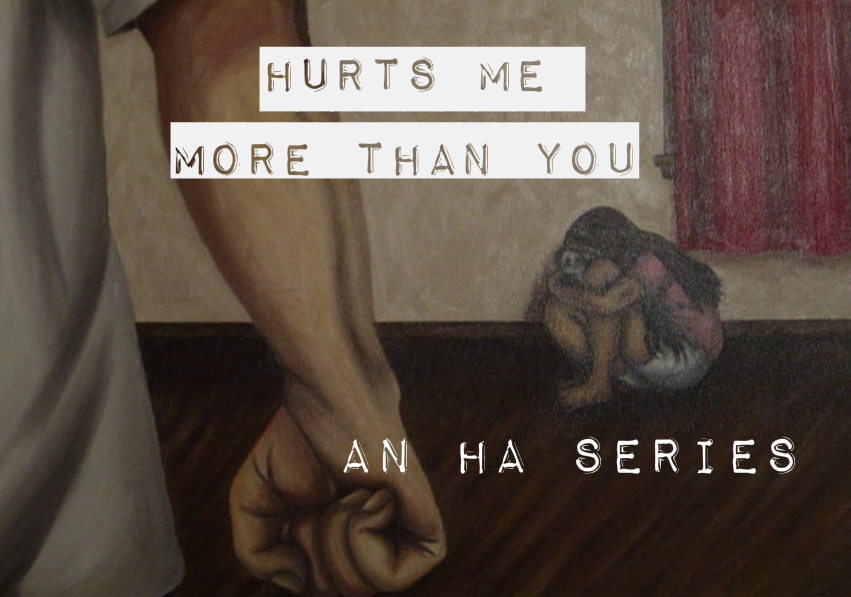
Hurts Me More Than You: Jennifer’s Story

Screen Shot 2014-09-23 at 10.15.16 AM

*****

Trigger warning for Hurts Me More Than You series: posts in this series may include detailed descriptions of corporal punishment and physical abuse and violence towards children.

Extra trigger warning for Jennifer’s story: descriptions of blood in relation to physical abuse during menstruation

*****

Jennifer’s Story

I am 17.

Funny how the majority of my life is a blur; I have very few clear memories of my childhood. I believe this is because my mind is suppressing the worst of the abuse.

But I do know that every day my oldest brother was beaten for mocking  and hitting me and that at least once a week I and my other siblings were beaten.

Rather than talk to my brother about why he felt the need to bully me, my parents used belts which only exacerbated the issue. And of course, I and my two other siblings were  ambiguously “disrespectful” and deserved beatings, no matter that everyone we ever had contact with thought us perfect.

I remember the times we hid from my father when he came  home and read the list my mother kept of infractions the children committed and deserved being beaten for. The four of us were always  found out and told to “line up.” Listening to my older siblings’ screams and being a helpless bystander knowing it would be my turn next was so much worse than the beating itself. Listening was much more psychologically damaging. Thanks to that damage, I was incredibly introspective.

It was a habit of mine in middle school  to sneak out and wander the streets by night, fascinated by the stars, doubting God. One day I was caught by a police officer, who called my mother at 3 a.m. I was  menstruating, but my father beat me anyway, until I had lost about a quart of blood, my legs coated in it. The combinations of cramps and blunt force created the most excruciating pain I have ever experienced.

That was four years ago.

Today, I still recoil when people reach out to me. I still cringe at the sound of a belt. I am still not free from them; indeed, today my sister has healing scabs on her arm from our mother clawing her.

And the worst, most depressing, soul draining thing is not the scars, but how I have no recourse but to watch her cry.

In my childhood, my parents mocked people who used the term “spanking,” saying they don’t call it what it is and they are right. Any form of physical punishment is violence and damaging. Not only to the one being hit, but to everyone hearing the screams.

Malala and Me

Malala Yousafzai. CC image courtesy of Southbank Centre.

HA note: The following is reprinted with permission from Kathryn Brightbill’s blog The Life and Opinions of Kathryn Elizabeth, Person. It was originally published in October 2014.

I sat here crying as I watched Malala Yousafzai talk about wanting to get an education and follow her dreams. She talks about how she decided to speak up against the Taliban because she didn’t want to be locked away in her house with no education, forced to marry at 13 or 14, and I can’t help but cry because it hits too close to home.

I know what it feels like to fight for an education in a culture that thinks girls shouldn’t get one. That believes girls should be married off young with no skills and little education beyond primary school. I know what it feels like to want more and to feel the weight of everyone around you writing off your dreams as a silly fantasy.

No, I didn’t have the Taliban forcing me home, and like Malala, my parents made sure that I had an education and encouraged me to follow my dreams. Who sent me to college, and who didn’t think that I had to marry off young and become the property of my husband.

I was lucky though.

There are so many girls stuck in the conservative Christian homeschool culture who aren’t so lucky. The stay-at-home daughter movement popularized by Doug Phillips and Vision Forum teaches that the proper place for a daughter is at home under her father’s authority until she’s given to the husband that her father has selected for her. Stay-at-home daughters are often given limited education, and dreaming of a life away from her father or husband, an education and a career, is unthinkable.

I remember going to hear popular homeschool speaker Little Bear Wheeler speak when I was in middle school, hearing from him that girls should be left as malleable clay to be shaped by their husband to best suit him as a helper. Her talents and interests don’t matter, only what her father and husband want from her.

For girls like Maranatha Chapman, long touted with her husband Matthew, as a fairy tale example of courtship and betrothal, that meant being married off as a 15 year old child to a 28 year old man. Matthew and Maranatha’s daughter Lauren was married off to a 26 year old man at 16, and I have to wonder whether it would have been sooner if Texas hadn’t raised the legal marriage age from 14 to 16.

I knew girls who started hope chests at 13 or 14 because they fully expected to be engaged or married by the time they were 17. Education? That would depend on whether their husbands decided to let them pursue it.

I’ll never forget the day that I overheard moms at homeschool skate talking about how their daughters didn’t need to learn algebra because, “they’re only going to be wives and mothers.”

Do you have any idea how hard you have to fight to hold on to a dream in that world?

I’ve wanted to be a lawyer since I was fourteen years old. I can’t count how many people I told that dream to who completely discounted it. How can I be a lawyer when I’m supposed to get married young and be a wife and homeschool mom to my dozen kids? No, that’s a suitable goal for your brother who has no interest in law, but not for you, you’re a girl, you need to stay home and work on your homemaking skills so you can have a parent arranged courtship.

No, I didn’t have a gun pointed at my head for daring to dream, but when Malala talks about facing a future as an uneducated child bride and rejecting that future, I understand.

It’s not just in places like Swat Valley in Pakistan where girls are being denied an education. It’s happening in America too, sometimes we give them reality shows on TLC and People Magazine covers.

I’m often asked why I keep fighting for homeschool children, why I care about this when there are so many other problems in the world.

I fight because every child, whether in Swat Valley in Pakistan or in the heartland of America, deserves an education. There’s a reason why Malala Yousafzai was shot in the head for speaking out, it’s because educated girls and women are a threat to the status quo. If they weren’t, no one would be trying so hard to keep them uneducated and locked away at home.

I hope that somehow Malala Yousafzai’s words find their way through to all of the stay-at-home daughters. They deserve a chance to dream.

Hurts Me More Than You: Robert’s Story

Screen Shot 2014-09-23 at 10.15.16 AM

*****

Trigger warning for Hurts Me More Than You series: posts in this series may include detailed descriptions of corporal punishment and physical abuse and violence towards children.

*****

Robert’s Story

I don’t remember anything about my young life before I was 5. They always told me I was a happy, quiet child.

The first memories I have of my childhood are extreme bouts of corporal punishment. As to whether the corporal punishment or the home education came first is as fine of a question as the chicken and the egg.

When I misbehaved as a young child my mother had the belief that “If you spare the rod, you spoil the child” in regards to punishment. In fact that’s what she told me before the belt came out.

The belt.

For the uninitiated a real leather belt taken off of a shelf can be a colossal terror for a small child. I suspect it was a 36″ model, the same size I wear now and that my father would have worn in his 30s.

My mother had a philosophy, that I assume was if I didn’t scream the neighbors would be less likely to intervene. Her exact words “Take it like a man”. Usually the beatings would be 10 at a time unless I cried or screamed, if a murmur came from my tiny mouth the count would be reset.

I cried a lot.

The beatings would continue until I was 13 and larger than her, at which point I took the belt from her by force and never allowed her to strike me again.

The “Education”.

As my young life continued I did not proceed to go to school with my friends across the street (we played their Atari and I found shelter in their house). Instead I found myself at home 24/7 with an abusive mother who decided that school wasn’t for her son. In my later years I found out that this was for religious reasons and to keep me from worldly things.

My childhood coursework consisted of whatever books she chose for me. I excelled in subjects I had interest in which led to much bragging among friends and family by mother about my proper education. Reading, biblical courses, basic math, American history (redux in a christian slant, obviously) and spelling were my highlights.

The Fallacy.

When I was in my teens I hit a glass ceiling in my education. The coursework – Algebra, Trig, advanced courses were all above my aptitude levels at that time. What’s the problem? a person might ask. You have a teacher right? Unfortunately this is where my truth and many of others comes out.

I was alone, in my room, studying without a teacher.

This was my home education. I was taught core basics in my early years, in my teenage years I taught myself as I had the basic skills needed to learn from a book. For me – it was a personal shelter and I was able to avoid most verbal abuse by keeping my head inside of a book and not admitting that I didn’t know what I was doing. This continued until I was 18 years old, I failed multiple courses of advanced subject matter and at the end my mother simply stated that I wasn’t good enough.

My mother attempted to kill my father and myself when I was 16 years old because “God told her to do it”. Somehow she avoided jail time, instead going for mental evaluation. My education did not advance past that point. PTSD took over my teenage brain and I lived my next two years in fear.

Growing up.

I removed myself from my parents home at 18 years of age after acquiring a GED (this was my way to graduation according to my mother and her home school group). My father filed for divorce from my mother less than a week after I left. He is a good man. He stuck around to make sure I was able to get out.

I didn’t know anything about the world and I didn’t have any experiences to fall back on. I immediately joined the wrong crowd, drinking and smoking at 18, smuggling large quantities of weed when I was 19 until I was ripped off, drunken driving in my 20s. I never went to jail and I deserved to so many times. The thing about homeschooling is that you just don’t fucking know what to do because you have no experiences and no peers. My family lived in the country for almost all of my childhood and had contact with others at church and small home school gatherings only.

I never grew to learn what not to do or the consequences of my actions.

Getting lucky.

Today I’m in my mid 30s. I am married to a beautiful woman who showed me true love. I have alcoholic, abusive tendencies that have gained me some trouble in my 30s along with depression and PTSD. Fortunately I am stable and with the help of my loved ones I am conquering my past.

If anyone is reading this story feeling alone in their struggle I encourage them to find peers that have been down the same road. We need each other.

One last thing — regarding “spoiling the child.” I am a strong atheist who has had no need for any gods and have been since my 20s. The rod will always fail you.

~ Robert, class of 1996

Bullied and Bullying: Aaron K Collett’s Story, Part Two

10350426_10152409855602761_4743387567954450240_n

Aaron K Collett is currently a Communication major, with an emphasis in Digital Film making. Aaron blogs at Bringing Thought to Life.

Part One

Part Two: Bullied and Bullying

Unlike many people coming out of homeschooling, I technically was not isolated – I got to go to a school with other people, I wasn’t stuck at home, and we referred to it in all ways as if it were a real school (spoiler: it kind of wasn’t). But “not technically being isolated” does not equal “had the opportunity for healthy relationships with my peers”.

For one thing, the school was K-12 with 60 students. We were almost literally a one-room schoolhouse. Now, the reasoning is student will learn to interact with people better if they have to interact with all ages. That can be true. It’s also true that it gives bullies a wider range of targets. And Christians are often not good at identifying and mitigating bullying, especially since the idea of God put forth by ACE is the biggest bully of all.

I was bullied pretty much from the time I started at RMCS in 1998 until the time I left in 2004.

It wasn’t the same person the whole time; sometimes it was older students, sometimes it was the teachers. In at least one occasion, to my eternal shame, I was the bully. It wasn’t any one thing – bullies are adaptable like that. But often it was because of my success academically, as far as the other students were concerned.

People lash out when they feel threatened. Because I hadn’t been in the program since elementary school, I was seen as an outsider. Since I worked so well in a self-paced program, I was an outsider that was threatening the status quo – I was better than them at “their” thing.

The teachers did not help, however. In fact, the teachers were a big part of the problem. Once, I reached the end of my patience, and went to the principal to report one particular person who had been terrorizing me particularly badly one week. Her response was to give me a chapter from the Bible to read and take care of it myself***.

Unfortunately, as is all too common, the abused becomes the abuser. Steeped in a culture which portrayed God as a merciless bully and being bullied every day myself, I projected. I became a bully myself. Not all the time, but once is enough. I shamed someone because of their height. The thing people have perhaps the least control over. I found out later she went home sobbing every day. I don’t know if she ever forgave me; I probably never will. But even if she did, I still did that harm. That won’t ever go away.

The curriculum, combined with the culture of abuse and bullying, created an awful high school experience for me.

I begged to go to a public school, or even home-school. I got to be home-schooled for one year, which was spectacular. I still had the curriculum issues (which I wasn’t aware of at the time), but the bullying had stopped. I didn’t have to worry who was going to terrorize me when I got to school in the morning.

I could just get up, have breakfast, and learn on my own, which was all I really wanted to do anyway.

End of series.


*** The passage in question was Matthew 18. Here’s the relevant bit:

 “Moreover if your brother sins against you, go and tell him his fault between you and him alone. If he hears you, you have gained your brother.  But if he will not hear, take with you one or two more, that ‘by the mouth of two or three witnesses every word may be established.’[b] And if he refuses to hear them, tell it to the church. But if he refuses even to hear the church, let him be to you like a heathen and a tax collector.”

Those are instructions for adults. Who mostly have the same power level as each other. This particular student had at least two years, 100 lbs, and 12 inches on me. When you tell children to deal with their “problems” that way, you are setting them up to be bullied even more. It was almost criminally irresponsible for the principal of the freaking school to give those instructions to a child being bullied. And that’s even without the implied shaming for “tattling” on another student, or the implied shaming of failing to “turn the other cheek”.

Hurts Me More Than You: Jace and Jocelyn’s Stories

Screen Shot 2014-09-23 at 10.15.16 AM

*****

Trigger warning for Hurts Me More Than You series: posts in this series may include detailed descriptions of corporal punishment and physical abuse and violence towards children.

Extra trigger warning for Jace’s story: reference to family sexual abuse.

*****

Jace’s Story

I believed my parents when they said this hurts me more then it hurts you. At least when I was young I did. I knew I was bad and needed the rod to drive the evil from me. The things my cousin did to me made me bad. I knew that. I was bad because I let him do those things to me. He always gave me the option, do as he said or he would just go get my little sister. So I done as he said. I was so bad.

When my father asked if I understand that I deserved the beating. I always said yes even if the reason he gave was false I still knew I was bad and deserved the spanking. My father loved me. God was using him to drive the bad from me. Foolishness is bound in the heart of a child.

Then the day came when someone in the family had committed a crime in my mother’s eyes. She was going to get to the bottom of it but no one would confess. So she put me in one room, my sister in another. Then she went back and forth spanking us and asking for a confession. I remember wishing she would just ask if I knew I deserved the spankings. I could say yes but to confess would be a lie.

I did not know what to do. I sat and listened to my sister’s screams when it was her turn to be spanked. I heard mom say this hurts me more then it hurts you. I knew that was a lie! I had suffered for years at the hands of my cousin so my sister could be safe. I loved my sister and I knew I could never beat her and hear her scream in pain even if God commanded it.

How could my mother do that? The spanking did not hurt mom more then my sister. I got up went in to the other room and confessed to a crime I had not done.

Mom beat me and for the first time I did not believe her when she said this hurts me more then it hurts you.

*****

Jocelyn’s Story

“Spanking isn’t abusive in and of itself.”

I used to say this when I heard someone say they would never spank a child. In my mind, you would have a bratty child if you didn’t spank them. Because that’s what I was told. Every time the wooden paddle came out, it was accompanied with a reminder that this was for my good, that it was because I was loved, and that God said it was the best way to discipline.

“My parents spanked in the right way”, I argued. 

I was never spanked to the point of bruising. It was always with clothing on. It was not a daily occurrence.  But recently, I have been becoming more in touch with my childhood, seeing it for what it was. I see fear. And anger. And confusion. I see a disturbing fascination with violence, even sexual violence, before I was ever exposed to much of the outside world or knew what sex was. Where did those feelings and thoughts come from? I am beginning to think that they came from being spanked. Spanked “in the right way”.

Which urges me to reconsider that there is a “right way” to hurt your child.

The violent and disturbing fantasies I had as a child have not gone away yet. I’m thinking of having my own kids soon. I won’t be spanking.

Not even in “the right way”.

I Was Once Considered A Success Story In The ACE World: Aaron K Collett’s Story, Part One

Screen Shot 2014-11-01 at 12.47.05 PM

Aaron K Collett is currently a Communication major, with an emphasis in Digital Film making. Aaron blogs at Bringing Thought to Life.

Part One: I Was Once Considered A Success Story In The ACE World

My homeschooling story is a bit different than a lot of people’s.

I wasn’t beaten, I wasn’t isolated (technically), in fact, I was only technically home-schooled for one school year. But oh, how I wished I were homeschooled while I was actually in school.

From the fifth grade through high school, excepting my freshman year in home-school, I attended Rocky Mountain Christian School. RMCS was a “private Christian school” – in all respects, though, it was really just a church-school. We used a fairly well-known home-school curriculum (Accelerated Christian Education), so it really was like being homeschooled at a different building.

Well, almost.

Before I came out as an godless apostate heathen atheist, I was considered a success story in the ACE world.

ACE is a self-paced program, which means students sit at a desk and do their work independently, only getting help when and if they need it. While I don’t have a problem with that idea necessarily, it has the same problem lecture-style teaching does: it pigeonholes students into one way of learning. It worked fantastically for me; I “graduated” a year early. Other students were not able to self-learn like I can, and suffered under the non-guided learning style. But the self-paced style was not the largest problem with the curriculum.

I “graduated” in 2004. “Graduated” because while I have a diploma, I learned very little actual things from ACE. As I’ve said before, I was fantastically lucky. My mother had a background in education, and she really was my teacher. She taught me how to write, she taught me how to read, and she taught me how to math and science. And when I got to college, I could do those things fairly well.

Unfortunately, other subjects were…less well-taught.

ACE history books start with Genesis. So do their science books. We learned that evil scientists who hated God were hiding the evidence for a six-day creation 7000 years ago. Ken Ham and Kent Hovind were our heroes. They were standing up to the evil scientist conspiracy.

History was a joke. We were spoon-fed the stories of Genesis as if they were fact. As if Mid-Eastern origin myths were at the same level as modern professional historians and archaeologists. We learned….well, nothing, actually. Pretty much all of my history and all of my science education has happened in college. I can fake it – I’ve taken it upon myself to learn on my own – but I didn’t get the opportunity until I was in my 20s.

But the lackluster schooling was not the worst part of Rocky Mountain Christian School.

To be continued.

Hurts Me More Than You: Warbler and Laralyn’s Stories

Screen Shot 2014-09-23 at 10.15.16 AM

*****

Trigger warning for Hurts Me More Than You series: posts in this series may include detailed descriptions of corporal punishment and physical abuse and violence towards children.

*****

Warbler’s Story

I was a “liar and a thief” growing up. AKA: I would take saltine crackers out of the cabinet and eat them between allowed meals and then I would lie when I was inevitably caught and told to fess up. I got spanked at least once per day for a couple years.

I don’t know were exactly my parents first learned about spanking, but they read and promoted the Pearls out the wazoo.

Over the years they spanked us with hands, paint stirrers, and lastly with 2-by-4s. My mom had a 2×4 custom made with a handle. If we tensed out butts, or put on extra layers we were spanked for avoiding the pain and made to take the layers off and be spanked over underwear. We were usually taken to another (private) room, but our walls were thin and every *thwack* echoed through the house, along with the eventual crying and the “I love you and this hurts me too.” Afterwards we were expected to say in explicit language exactly what we had done wrong, that we were sorry, and that we loved the parent who had just beaten us.

My mother was usually the one to do it, but she would spank us so often that her hands started hurting (blood vessels breaking, etc) that she had the 2×4 made, or she left us to wait in dread for daddy. His hands were tough and he hit hard. The paddle sometimes hit the tail bone as well, and that was the worst.

I usually cried.

As much as I tried I was “weak.” Sometimes if the boys didn’t cry they were spanked till they showed “proper” repentance. If we were stubborn, refused to say we loved them, or did not properly state our transgressions we were spanked again. 5 spanks was the bottom line, then ascending in number by units of 5.

As for me, I never got more than 40 in one sitting (that I remember) because I was (as stated) weak and timid and disliked getting spanked. My older brother was rebellious and would often get spanked for hours. I can still him yelling defiantly over the strikes, refusing to back down even when being punished.

As we got older (teens), our parents decided that spanking was not working and we were given leaf-raking jobs, cleaning jobs, or extra writing assignments. They thought that we were either so bad, or so old that spanking still hadn’t done well, and it was time to try something else. I once heard my mom say something about “decency” having something to do with it, but I have my personal doubts.

Our younger siblings were spanked much less because the “other” punishments on us older ones seemed to be working (or as we got older we didn’t take so much food and hid things better) so they got some similar punishments and spanking was reserved for serious, extra bad transgressions. With the sidelining of the spanking it got worse, though. They were reserved for daddy and he often beat far longer than needed because the younger siblings were not used to being contrite, crying enough to get out of it, and say the right things. I remember the 8th child had a problem at dinner and shouted at my mom or something. My dad had just gotten home from working and it seemed like the height of sin to be making noise and disturbing his dinner. My baby was taken to his room and hit for about 5 minutes long, screaming up until the last minute or so. He was either 4 or 5.

My mom also got more into slapping or hitting as we got older and talked back to her as older teenagers. It was like the ultimate shame because you could never hit back. Those were some of the times that I “saw red…” Brilliant shades of red color everything as you focus in on one person with all the hatred and anger in your tortured soul. Your body shakes and you blink, but still see the color. Nothing else is, or ever was. The only two things in the world are you and the face screaming at you in red waves…. and you wish you had a knife in your hand…. Sometime later you awake from your dissociation, you can’t remember the past 30 minutes, but you feel guilt for your feelings.

After all, you were the one in the wrong. You deserved punishment for your sins…

I don’t know how common spankings are now, as I “ran away” from home 4 years ago. I do know that if my mom had access to plumbing line or glue sticks one or more of us might have fared worse. The wood was solid and “just” bruised.

And we learned how to hide our transgressions in order to avoid it.

*****

Laralyn’s Story

Spanking. Even now I don’t know what to make of the term.

It feels so wrong to apply it to how our parents punished us. I initially assumed I would always spank my own children. After all, it was Biblical and right according to so many Christian parenting books. I didn’t want to have horrible children, so of course I would spank. As my first baby became a toddler, I found I couldn’t stomach the idea. I tried to spank her once and the attempt was half-hearted and I cried because I knew deep down it was horribly wrong. The moments I was tempted to spank were when I was angry or I didn’t know what else to do and that to me said more than any Christian parenting book ever could. I decided then and there that I would never physically punish her or future children in such a way.

I wish I couldn’t feel my stomach turn when I remember my parents disciplining us. The angrier they were, the worse it was. A belt was the most frequent tool and almost all spankings accompanied the remove of clothing below the waist. I still feel humiliation and shame when I remember it. We were spanked for nearly every infraction – my parents knew no other mode of discipline.

However, the moment I remember most vividly is when I was spanked for being afraid of the dark.

I had horrible fears as a child (of hell, of the house burning, of dying) and refused to sleep alone. One night, after repeated attempts to settle me, I was still crying uncontrollably. My parents, frustrated to the point of losing control, marched into the room. My dad ordered me to turn over and with my head buried in the pillow to muffle my crying, he hit me several times across my bottom. He yelled at me to shut up and then they left.

I was still crying. I was still afraid.

I started injuring myself when I was five in response to anger and overwhelming emotions. This behavior continued and worsened into my teens and young adulthood. My parents shamed me and blamed bad influences.

I blame their shaming and willful crushing of spirit.

How a Logical Girl Talked Herself into Fundamentalism, Part 3

screen-shot-2014-10-26-at-12-39-25-pm

HA note: The following is reprinted with permission from Cynthia Jeub’s blog CynthiaJeub.com. It was originally published on October 17, 2014. 

< Part Two

Trigger warning: child abuse

“Icy roads beneath my feet,
Lead me through wastelands of deceit,
Rest your head now, don’t you cry,
Don’t ever ask the reason why.” –Opeth

When Tangled hit theaters in 2010, my sister Lydia and I saw it within the first couple of weeks. We were late for the movie, missing the narrator introducing Mother Gothel as the villain. We found our seats just in time to see the song “Mother Knows Best.”

Both of us thought, after watching that song, that perhaps in this movie the witch in the tower was a good person. After all, it was a retold fairy tale. You never know what they’re going to swap around.

For the uninformed, “Mother Knows Best” features textbook emotional abuse with manipulation and control, using guilt trips, threats, and fear tactics. I watched the song again recently, and realized most people knew that when they first saw it. When I was eighteen, I did not see any problems with the song.

Gothel looked like a good mother to me.

So after reading an article about girls in the homeschool movement who live with self-deception, I did the most natural thing I could think to do. I emailed it to my mom, and said I felt like my life had been that way.

Her reply: “We left all that behind in ’06.”

For context, my family filmed for reality TV in 2006. After that, my parents re-branded themselves, championing the word “love” as the ultimate trump card. They wrote a book called “Love in the House,” and emphasized that the greatest commandment is love.

To this day I get shamed for talking about the multi-faceted manipulation in my family, because it’s not in accordance with our brand, “love.” I got a text message a couple of months ago from my dad, after I walked out the front door because he started yelling at me for, well, ignoring his text messages. The text read, “Love is the answer. This is not love.”

Because I was accustomed to believing my parents every time they reinvented stories, I believed my mom. Maybe I wasn’t under pressure after I was 14. But I wrote letters about brightening the house until I was 18.

I visited my parents’ house sometime in May this year, and my sister Hannah, age 11, was standing at the stove. I asked where mom was, and was told that mom had been shopping for the past four hours. My brothers were working, and my eleven-year-old sister was left to feed and supervise her six younger siblings, and clean the entire house. Hannah beamed proudly as she told me about her work: she’d cooked, cleaned, watched the kids.

It was the first time in my life that this situation seemed like too high an expectation for an 11-year-old girl. It was what I was raised with. It had been normal.

The only thing Hannah didn’t have time for was the dishes. We don’t have a dishwasher because, with 14 people living in the house, it’s inefficient. We use too many large serving and cooking items, and there are more plates and cups at each meal than a regular dishwasher can hold. My parents have always verbalized dreams about an industrial dishwasher, but we could never afford one. As a result, we wash everything by hand, which takes hours, but it’s better than putting up with a tiny dishwasher.

Mom got home an hour later. Hannah beamed with pride, waiting for a compliment on how well she’d done. Mom’s eyes went straight for the dishes, piled all around the sink. Hannah had cooked, babysat, swept all the floors, and the other counters and tabletops were clean. The dishes were her one oversight.

My mom started yelling, and I watched my little sister crumple. I felt a twinge of familiarity. I had received the same treatment at her age, and taken it with the guilt I was supposed to feel, and tried to perform better. I became a master of homemaking over the next several years.

We listened to mom rant about how dishes are an important chore, and why didn’t Hannah get them done, and now it would be hard to move ahead with the day, and I-was-gone-shopping-aren’t-you-grateful-for-my-hard-work-enough-to-do-what-I-asked.

Hannah defended herself, listing all she had completed. My mom would hear none of it, so I stepped in. “Mom, the house is never this clean when you’re in charge. It’s always in better shape when you leave one of the girls here.”

This was insult. I was informed that my mom did her best, and now was no time for criticism. I tried to help her see that she was holding her young daughter to a hypocritical standard. It was no use. Hannah deserved a tongue lashing, but my mom could not be expected to keep the house in order.

I brought up the email. “You said you left all this behind, and here we are,” I said. She insisted that there was nothing unreasonable about her expectations.

Another time I visited, Hannah and mom were having the same argument: mom had left the little girl in charge, and Hannah had failed on one chore, and mom was yelling at her. I walked in on the middle of the conversation, and Hannah had evidently just cried.

My sister turned to me. “Happy Fairy, cheer me up.”

Something twisted in my gut. This was what I’d been coping with when I pretended to be happy. This was what I convinced myself was a good thing. This was what I was burying away, and this was why I’d dropped out of college and started mental health therapy – because I couldn’t live in denial of my depression anymore.

I looked at Hannah, who was hopeful and ready for my “magic” power to cheer her, and said, “The Happy Fairy was a lie. I forced myself to be happy. Just in the past few months, I’ve learned to start sentences with ‘I feel…’ because I was never taught to express my feelings. I spent my teenage years pretending to be happy. I thought I could fake it until I made it.”

My mom was standing in the kitchen with us. She was quick to announce, “You didn’t learn that from me.”

But I did learn that from her. One of my mom’s favorite lines was, “It’s scientifically proven that if you smile when you don’t feel like smiling, it sends messages to your brain that you’re happy, and pretty soon, you feel better.”

I turned back to my little sister. “I also distrusted myself when I felt angry or sad. You’re angry for good reason: you tried to keep the house in order and you didn’t please mom, and she yelled at you. It’s okay to be frustrated about that. You don’t have to pretend to be happy, and I’m sorry I made you think it would work. It didn’t work for me. It just helped me bury all my emotions for years.”

In the weeks that followed, my mom used all kinds of emotional abuse to get me to stop criticizing her. She said she could yell at my siblings if she wanted to, that’s just the way she is. She could never see the hypocrisy of having higher expectations for her kids than she had for herself. She threatened to commit suicide. She appealed to my emotional vulnerabilities, and she knew them all: I’d just been through a breakup, I couldn’t trust myself because I was mentally ill, and I should feel guilty and ashamed for not being forgiving and loving enough.

One evening, when I was exhausted from arguing with her, I collapsed on the couch. She sat next to me and stroked my head, and told me I could trust her, and that she loved me, and that she hoped I’d get better, and said how she thinks I’m an awesome person.

It was like being cuddled after a nonconsensual BDSM session, as I told a friend a few days later. Had I not read a post on tumblr criticizing the lack of consent in Fifty Shades of Grey, I would not have recognized what my mom was doing that night.

Then I realized she’d done this all my life: attack, threaten, comfort. Hurt, and then flatter.

And in that one moment, with my mother gently caressing my hair and murmuring soothing words, I lost every ounce of trust I’d ever had for her.

End of series.

Hurts Me More Than You: A Poem by Sam

Screen Shot 2014-09-23 at 10.15.16 AM

*****

Trigger warning for Hurts Me More Than You series: posts in this series may include detailed descriptions of corporal punishment and physical abuse and violence towards children.

*****

“Love?”: A Poem by Sam


A child naked, helpless, letting himself be hit.

If he resists he will be hit more, if he doesn’t stop crying on command it is the same.

Every time he doesn’t obey unquestioningly,

Even if he just doesn’t want to finish his lima beans.

“We only do this because we love you.”

But is it love, or something very different?


Parents talk of all day spanking sessions till “they” are black and blue

After work a father continues what his wife did all day.

They talk to their pastors who tell them to continue to achieve the desired outcome.

Unquestioned obedience the only apparent goal.

“We only do this because we love you.”

But is it love, or something very different?


“You can only have friends over if the house is clean.”

But the house is never clean enough.

Friends do things differently, to dangerous to remain friends.

Xanga blocked. E-mail monitored. Mail read. Checkmate trapped.

“We only do this because we love you.”

But is it love, or something very different?


Behind in logic when it is reviewed the first time all semester

Upset mother. Tension palpable. She grabs coat to leave.

Son begs her not to go. “Tell your father I’m leaving.”

He comes home, begs forgiveness, and searches.

“We only do this because we love you.”

But is it love, or something very different?


I awake.  I can smell dinner in the kitchen.

We’re all there, we smile and eat. No one explains, no one questions.

Three months later I burst into tears at what was swept under the rug.

“Why do you bring things up that happened so long ago?”

“We only do this because we love you.”

But is it love, or something very different?


Of course since you are a Christian, you believe this.

What that means in practice varies by the day.

Questions are dismissed. Opinions can change,

But only if it is a parents thought.

“We only do this because we love you.”

But is it love, or something very different?


Son fails out of school, a perfect trophy no more.

Explosions from minor things. Parents are impossible to please.

He works hard and returns to finish what he started.

Professors see a success. Parents still only see a failure.

“We only do this because we love you.”

But is it love, or something very different?


Gorgeous woman. Incredible friend. Determined to treat her right.

Hugs and dancing leads to consternation.

Forced home. Cut off. Will Broken.

Why do I feel forced to agree to every demand?

“We only do this because we love you.”

But is it love, or something very different?


They try to sabotage and marry smile as we say “I do.”

We leave and cleave and start an incredible life.

Married children are not to be respected as adults.

If they think differently, they can not interact with younger siblings.

“We only do this because we love you.”

But is it love, or something very different?


I awake.  This is not right.

“You may not keep treating me this way.”

“Son, stop being bitter, get past the hurt.

“Why do you bring things up that happened so long ago?”

“We only do this because we love you.”


But this is not love, this is very different.