Heidi St. John: Whistleblowers Are “Clever Wordsmiths With Evil Intentions”

Screenshot from http://heidistjohn.com.

Yesterday HSLDA issued a response regarding its involvement in the Old Schoolhouse abuse cover-up allegations. Today our attention was drawn to a statement allegedly written by Heidi St. John about her involvement.

The statement alleged to be St. John’s was posted on Facebook by Melissa Crabtree (image archived here). Crabtree is Heidi St. John’s virtual assistant. St. John herself has not posted this statement on any of her publicly accessible social media accounts. We have repeatedly attempted to contact St. John — both to verify this statement’s authenticity and to give her the opportunity to comment on our “When Homeschool Leaders Looked Away” piece prior to publication — but she has refused to respond. (Update, 10/18/2014: Heidi St. John has finally confirmed the statement’s authenticity and posted it on her Facebook page.) However, numerous factors indicate the statement is authentic, so we are sharing it here:

10639599_10205324621224474_4943038396806950937_n

Text is:

Statement from Heidi St. John

10/15/14

For more than six months now, a variety of accusations have been swirling within a fringe segment of the homeschool community suggesting that I, along with other respected homeschool leaders, have been involved in a “scandal.”

In a series of increasingly wild allegations, I have been accused of all sorts of terrible things, including causing a homeschool vendor to be disinvited from a homeschool convention.

I did not request anyone be disinvited from a convention. I did not cover up a child abuse scandal. Both of these accusations are completely false.

While the Internet provides a wonderful platform for encouragement and information, I am now learning first-hand that it can also be used to spread false information. It is a place where people of character can have their reputation attacked with little recourse.

Even my blog post has been used against me; proof that words written from a good heart with good intentions can be twisted by a clever wordsmith with evil intentions.

God’s Word is clear:

A tree is known by its fruit.

Assuming this truly is Heidi St. John’s statement, I have two comments:

First: Honestly, I’m not sure who or what St. John is referring to when she says, “For more than six months now, a variety of accusations have been swirling within a fringe segment of the homeschool community suggesting that I, along with other respected homeschool leaders, have been involved in a ‘scandal.'” If she is referring to Eric Novak and Jenefer Igarashi, that certainly is not true. Eric Novak is an outspoken Christian homeschool graduate and former employee of The Old Schoolhouse. And Jenefer Igarashi is a frequent speaker and vendor at Christian homeschool conventions, the sister of Gena Suarez (one of the alleged abusers), and also a former employee of The Old Schoolhouse.

Both Novak and Suarez were and are at the heart of this situation; they are as far from “fringe” as possible.

If St. John is referring to Homeschoolers Anonymous, that also is not true. Our first mention of St. John being aware of the alleged cover-up is the piece we published just last week, “When Homeschool Leaders Looked Away.” We mentioned St. John in passing (to provide context about the Suarez family) in our June piece, “Paul and Gena Suarez, Old Schoolhouse Publishers, Accused of Protecting Known Child Predators,” but we never insinuated her involvement because we were not aware of it at the time.

So if St. John means either Eric Novak, Jenefer Igarashi, or Homeschoolers Anonymous, she is either speaking falsely about the “fringe” part or the “more than six months” part — or both.

Second: St. John claims that, “I did not request anyone be disinvited from a convention. I did not cover up a child abuse scandal. Both of these accusations are completely false.” We have testimony backing up the allegation that she had a hand in getting Jenefer Igarashi blocked from attending the 2014 Ohio Great Homeschool Convention. We also have an email sent to Igarashi from Heidi St. John herself wherein St. John refused to help her. St. John’s email was sent in response to a message from Igarashi, which directly mentioned abuse cover-up. In fact, the subject of the email is “Re: TOS Magazine molestation cover up… advice?”:

Screen Shot 2014-10-15 at 9.45.14 PM

Text is:

On Thu, Apr 10, 2014 at 9:49 AM, Jenefer Igarashi [redacted] wrote:Here is the letter that was sent to Mike Smith. It has also been sent to [redacted]. And as I mentioned earlier [redacted] is actually one of the first hand witnesses who gives testimony against the Suarez’s (she witnessed, first-hand, the bullying/intimidation of the Suarez’s when they demanded that Roy Ballard continue being allowed access to family gatherings AFTER a little girl told the adults she had been groped. Roy Ballard was later imprisoned for sex crimes against children) The 20 people named in the group letter are only the tip of the iceberg.

You can see from the time stamp that Igarashi’s email was sent at 9:49 am on April 10, 2014. Less than 2 hours later, on the same day, St. John replied with the following email:

Screen Shot 2014-10-15 at 8.17.22 PM

Text is:

From: Heidi St. John [redacted]

Date: Thu, Apr 10, 2014 at 11:15 AM

Subject: Re: letter

To: [redacted], [redacted], “Jay St. John” [redacted]

Jenefer, I asked Mike yesterday about this dispute. … HSLDA will not be getting involved in it.

… We are not central to your grievance and we do not wish to be involved in it. …

This is a huge distraction for us in the middle of the busiest season of the year. We have neither the time nor desire to be part of it. Again, I ask that you honor our request to be removed from your grievance against your sister and her husband.

St. John was clearly aware of the allegations of both the abuse and its cover-up. She also chose to do the opposite of what the blog post she mentions said.

In short, with no “wordsmithing” required: Heidi St. John turned away.

*****

Update, 10:45 am:

Both Eric Novak and Jenefer Igarashi made statements today. Links to them are posted below:

Eric Novak: “HSLDA & Heidi St. John Refuse to Support Victims of Abuse”

Jenefer Igarashi: “Too Hard To Apologize”

Graham Walker, President of Patrick Henry College, Announces Resignation

Photo from Patrick Henry College. Image links to source.

By R.L. Stollar, HA Community Coordinator

According to an email sent out today to Patrick Henry College (PHC) alumni by Daniel Noa, President of the PHC Alumni Association, Dr. Graham Walker announced his resignation today during an all-campus meeting. According to Noa’s email,

I have been officially informed that as of 4:30 PM (EDT) today, Dr. Graham Walker has resigned his duties as President of Patrick Henry College. A search committee will be formed under the direction of the Board of Trustees to find a long term replacement.

Noa notes that “there has been tremendous friction between the alumni community and Dr. Walker during the independent review process,” a reference to the alumni board established to review PHC’s handling of campus sexual assault allegations. Concerning Walker’s resignation, Noa also states that he sees it “as a positive change” and “a great step toward a bigger and more successful future for Patrick Henry College.”

You can view the PHC Alumni Association’s email in its entirety as a PDF here.

HSLDA on Old Schoolhouse Cover-Up: We’re Not “The Police Force of the Homeschooling Movement”

Image links to source.

By R.L. Stollar, HA Community Coordinator

Nearly a week after allegations about a widespread cover-up of physical and sexual child abuse in the Christian homeschooling community were disclosed, the Home School Legal Defense Association has issued a statement on their involvement. The child abuse is alleged to have involved the children and a relative of Paul and Gena Suarez, owners of the popular homeschool magazine The Old Schoolhouse. The mother of one of the alleged victims, Jenefer Igarashi, had repeatedly contacted HSLDA president Michael Smith to ask for his advice and assistance. Smith never responded to Igarashi. Furthermore, according to an email written by Heidi St. John (co-founder of Firmly Planted Co-ops and speaker for the Great Homeschool Conventions), Smith told St. John that, “HSLDA will not be getting involved in it.”

Since the story about the alleged cover-up went public on October 8, numerous individuals have posted on HSLDA’s Facebook page asking for comment. Those comments were met with silence until today.

Today, HSLDA finally responded, copying and pasting a form response to each comment. You can view their response here. An image and the text of the response is below:

Screen Shot 2014-10-15 at 2.27.50 PM

Text:

Thank you for sharing your concerns with us. HSLDA does not condone covering up sexual abuse. Sexual abuse is a crime and should always be reported to the police.

In addition, HSLDA does not get involved in conflicts between families or individuals. Professionals trained in mediation and arbitration are better suited than us to resolve civil disputes. Our mission is to protect the homeschooling rights of our member families, not to be the police force of the homeschooling movement.

It is worth repeating that The Old Schoolhouse remains an HSLDA-suggested resource promoted to HSLDA members at a special discounted rate. Furthermore, HSLDA is currently sponsoring The Old Schoolhouse. It is also worth mentioning something Dietrich Bonhoeffer once said:

bonhoeffersilenceevil

Other individuals and organizations accused to have known about or played a hand in the alleged cover-up — including Heidi St. John, Brennan Dean from the Great Homeschool Conventions, David Gibbs III from the National Center for Life and Liberty, and The Old Schoolhouse itself — have yet to issue any statements.

World Magazine’s Hypocrisy on Patriarchy and Child Abuse

Screen Shot 2014-10-14 at 11.32.06 AM

HA note: The following is reprinted with permission from Libby Anne’s blog Love Joy Feminism. It was originally published on Patheos on October 13, 2014.

Growing up in an evangelical home, I read World Magazine regularly. 

Today, I’m honestly not sure World knows what direction it is headed. Over the past year or so, the publication has been simultaneously distancing itself from the patriarchy movement within Christian homeschooling and promoting that same movement, and simultaneously calling for the self-policing of child abuse in Christian communities and allying itself with organizations actively involved in child abuse coverups.

This past April, in the wake of Lourdes Torres-Mansteufel’s lawsuit against prominent Christian homeschool figure Doug Phillips, World took the occasion to distance itself from the patriarchy movement, differentiating between Phillips’ views and those of more mainstream evangelicalism and stating that: “For evangelicals, these may seem like obvious distinctions, but they’re important to emphasize when a scandal erupts within Christian circles that grabs the attention of those outside the church.” Just last month, World published a piece titled “Drop the Movement and Back Slowly Away.” In it senior writer Janie Cheaney was highly critical of Christian homeschooling’s patriarchy movement, urging readers to focus on Jesus rather than a movement.

Given all of this, it seems a bit odd that World Magazine ran this ad in its latest edition:

Gen2-World

The Gen2 Leadership Conference is being put on by Kevin Swanson’s Generations with Vision. Kevin Swanson is a major figure in Christian homeschooling’s patriarchy movement. If World believes this movement’s view of gender and women’s role is in serious theological error, and if World would like to see people “drop the movement and back slowly away,” running this ad—which in a publication like this implies some level of endorsement—represents some serious hypocrisy.

But we’re not done yet. In August, World published an article largely dismissive of concerns about child abuse and neglect in homeschooling circles. Yet in spite of its dismissiveness the article did admit that bad things do sometimes happen, and called for self-policing as the solution.

This makes this recent choice of partnership rather problematic:

Screen Shot 2014-10-13 at 11

As you may remember, earlier this year Great Homeschool Conventions is alleged to have actively participated in a child abuse cover-up, defending child abusers and silencing those seeking to bring the abuse to light. It is rather horrifying that World would partner with a group accused of involvement in covering up child abuse while calling for Christian communities to deal with child abuse rather than turning a blind eye. This is not okay.

It’s also worth noting that Kevin Swanson is on record laughing at child abuse and educational neglect in homeschool settings. Swanson is no reformer when it comes to handling child abuse—he is, rather, the opposite. In fact, Swanson’s dismissal of abuse and neglect is likely the reason the Home School Legal Defense Association pulled out of the Gen2 Leadership Conference this past August. And yet, World is willing to promote Swanson’s conference—a tacit endorsement—in spite of his willingness to laugh at child abuse and neglect.

Of course, World doesn’t have the best track record on this subject themselves. A year ago they published a piece arguing that sexual abuse prevention measures get in the way of loving children as Jesus did. Also last year, the publication minimized horrific child abuse caught on tape at a cult compound in Germany. Just last month World minimized Adrian Peterson’s beating of his young son. The problem here is that World does these things and keeps these associations while claiming to be against the patriarchy movement and in favor of dealing with child abuse.

It’s honestly not that I’m surprised. It’s just that I’m fed up with the hypocrisy of it all.

I would like to see World Magazine held accountable. They should not be able to get away with saying they believe the patriarchy movement is bad theology while simultaneously promoting leaders of that very patriarchy movement, or with saying child abuse should be called out and dealt with while simultaneously partnering with an organization actively involved in covering up child abuse.

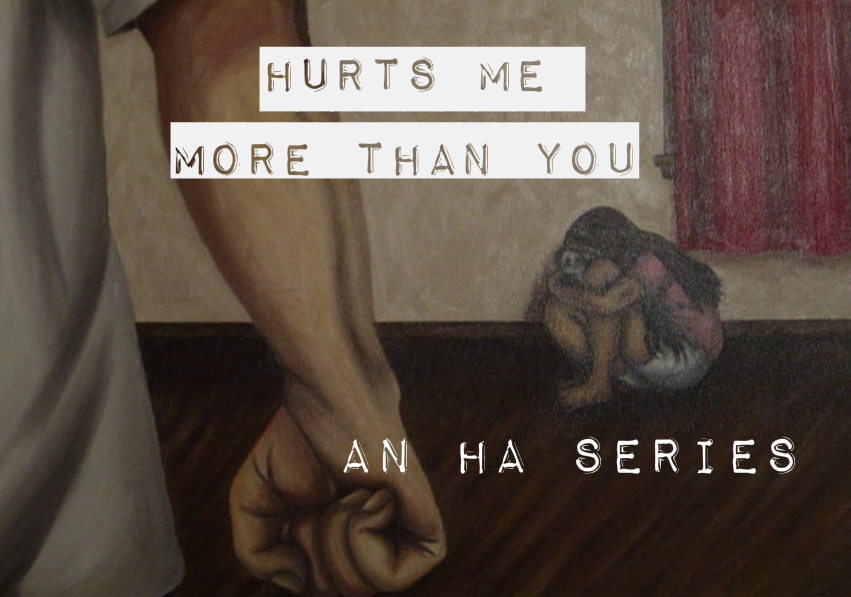
Hurts Me More Than You: Alexandria’s Story

Screen Shot 2014-09-23 at 10.15.16 AM

*****

Trigger warning for Hurts Me More Than You series: posts in this series may include detailed descriptions of corporal punishment and physical abuse and violence towards children.

*****

Alexandria’s Story

I was never told the words, “This hurts me more than you.” But I did hear, “This grieves my soul, but more importantly, it grieves God,” “Spare the rod; spoil the child,” “This is for your own good,” or my personal favorite from Mom, “I’m yelling – that must mean I’m not spanking enough,” many times.

As the fifth of seven, my parents were set in their disciplining ways by the time I came along. The Pearls’ books were scattered throughout our house. While my parents did not take all of their recommendations, there were enough implemented. I was spanked from the time I was a year old until the age of 17; with a threat of spanking even after I started college at 18. “You know, you’re not too old to spank,” was said more times than I would like to admit during the summer I was home after my freshman year.

Needless to say, I did everything in my power to not spend another summer at home until I finished college.

Some of my earliest memories are of being spanked. We could distinguish the distinct squeal of the spoon drawer from the furthest parts of the house and we knew we had to scatter, or at least distance ourselves from the offender or risk being painted with that infamous “broad brush.” I was not a bad child. But I was a child. I was sometimes willful. I made mistakes. I was clumsy. I didn’t understand math. All of these things could earn you a trip to Mom and Dad’s bedroom or the laundry room.

They were always terrifyingly calm when they spanked us. They would wait the necessary 10 minutes to cool down (while making me wait cowering and scared shitless in the laundry room or their bedroom) so they weren’t “spanking out of anger.” They may not have been visibly angry, but they were seething inside. The force that was applied and the length of the spanking correlated, not with what we had done, but with how angry it made them.

There was one spanking Dad gave me when I was about 8 that went on for 87 swats – one for each answer I had gotten wrong as I was trying to memorize my times tables. I was required to count them out as they rained down on my bent-over backside. I was immensely grateful for the skirts I had to wear because I could hide the fact that I wasn’t locking my knees out and therefore could clench as I heard the rod whistling toward me. The pause between swats was the worst – the anticipation killed me, and I’m fairly certain his timing was inconsistent on purpose so I wouldn’t know when it was coming. This particular spanking was earned because I couldn’t understand math; because no one had the patience to actually explain it to me, and because a third grader should not be teaching herself any of her own subjects.

This was also during a three day period in which I was not allowed to eat for the same reason I was earning the nightly marathon spankings.

That was not the only time they took away food as a form of punishment. There were several occasions when I and usually two of my brothers would have food taken away while also being spanked repeatedly until one of us confessed to whatever heinous act our 12, 9, and 6 year old selves had done – like leaving a door open, or turning the heat up.

My parents used wooden spoons (that were constantly breaking) when we were small, but when we got to be about 5 or 6, we graduated to the rod. The rod was a wooden paddle that was about 2’ long, 3” wide, and about ¾” thick.

Mom had carved “in love” into it.

I still snort when I think of that.

That thing packed quite a wallop! The first few times it was used on me, I wasn’t prepared for how much power it had and it knocked me over. I learned to brace for it so I didn’t lose my balance. It must have made a satisfying sound as it smacked into our backsides… until my older brother took it into the back yard and broke it when he was about 14 and sick of everything. I remember hearing it from across the house as my older siblings were in the laundry room with the door shut. After that, we went through a series of objects, such as arrows with the tips taken off (those shattered too easily and weren’t cost-effective) until they settled on a fiberglass rod that one of my brothers found somewhere that was about 30” long and 1/2” in diameter. That thing stung so bad! As it started to splinter, it would leave tiny cuts on my hips and butt. Mom and Dad didn’t believe me until I showed one of my sisters the welts and scabs after one particularly long spanking when I was about 12. Dad apologized and said he would be more careful next time. Then he duct taped that end, started using it as the handle end, and didn’t hold back. It was much more ergonomic that way! The better grip must have made it easier to get a good back-swing.

Spankings became less frequent as I began to reach puberty, but then they picked up as I moved into adolescence because I started to have my own ideas. The shame I felt every time I was spanked over the age of 11 was terrible. I was very proud of the fact that it had been weeks since I was last deserving of a spanking, but then something would happen and I would have a visit to the laundry room with Mom or Dad and my world and self-worth would come crashing down.

I am not a proponent of spanking.

I am fine in spite of my spankings; not because of them.

WORLD Magazine to Join GHC’s Troubled Group of Fiscal Sponsors

Screen Shot 2014-10-13 at 11

By R.L. Stollar, HA Community Coordinator

In an email announcement sent out today, Brennan Dean’s Great Homeschool Conventions (GHC) company announced that WORLD News Group (publishers of WORLD Magazine) will be sponsoring “Grand Finale Events at 2015 Conventions​.” GHC also added a page on their website that confirms that, “Great Homeschool Conventions is proud to introduce the WORLD News Group as a Presenting Sponsor of The Grand Finale Events of the 2015 Conventions.”

WORLD joins a group of 3 other fiscal sponsors, 2 of which — the Old Schoolhouse and the National Center for Life and Liberty — are alleged to have participated in the covering up of physical and sexual abuse of children.

The Old Schoolhouse’s owners, Paul and Gena Suarez, have been accused of horrific physical abuse of their children, including waterboarding and beatings. And the founder of the National Center for Life and Liberty, David Gibbs III, has been accused of using strong-arm mediation tactics to keep the Suarezes’ relatives from going public about alleged sexual abuse within the family. Brennan Dean and GHC are also accused of being involved by allegedly blocking homeschool speaker Jenefer Igarashi from a convention because of her attempts to make the cover-up public. You can read about those allegations here.

WORLD has made a point as of late to cover abuse within Christian communities, including cases like Bob Jones University, Doug Phillips, and Bill Gothard. It is disappointing, therefore, that WORLD would throw financial support behind GHC while they and their sponsors continue to remain silent about the allegations of their own abuse cover-up.

Hurts Me More Than You: Melissa’s Story

Screen Shot 2014-09-23 at 10.15.16 AM

*****

Trigger warning for Hurts Me More Than You series: posts in this series may include detailed descriptions of corporal punishment and physical abuse and violence towards children.

*****

Melissa’s Story

Melissa blogs at Permission to Live on Patheos.

I was putting lotion onto the eczema on my toddler’s back when without warning she flopped onto my lap, lying over my knees completely relaxed. Instantly panic rose in my throat, and I flashed back to a memory.

I was 9 or 10 and asking my mom for help with my clothes. The zipper on the back of my dress was stuck and I couldn’t reach it with enough strength to pull it open. It proved difficult for my mom too, and when she couldn’t get it open she asked me to bend over so she could see what she was doing better.

My body couldn’t do it. I heard what she was asking me to do, and my head told my body to bend over so she could get to the zipper, but my back went rigid.

I was afraid.

My mom repeated her request and I tried to stiffly move forward a little bit, she realized what was happening and laughed “I’m not going to spank you, just bend over so I can see the zipper.”

Rationally, I guess I knew she wasn’t going to spank me, I hadn’t done anything to disappoint her. But my body still fought. I did the best I could, but I could hardly move and the whole time she was fixing the zipper. Every muscle in my body was clenched in anticipation of being hit.

My mind told me that I SHOULD trust my mom, but the muscles in my body told me that I COULDN’T.

In contrast, my toddler trusted me completely. When she flopped over my knee I went stiff from the memory of many spankings from long ago. She, on the other hand, was relaxed, knowing that I was going to help her and not hurt her.

I have many memories of my parents.

I remember my Mom making me a birthday cake. She taught me how to do a backbend and how to brush all the knots out of my hair. Sometimes she sang “Home! Home on the range!” And sometimes when she was happy she danced a goofy little dance. I remember watching my Mom curl her bangs with a hot curling iron and put on blue eyeliner with a little pencil.

I also remember her hitting my bare skin with a flexible switch from the magnolia tree. She taught me that I was wrong, and she was right and that I had no power, no right to protect myself from harm. Sometimes she made me hold up my own skirt while she spanked me, sometimes if I moved she hit me again. I remember watching my mom break an orange spatula on my sister’s bottom.

I remember my Dad making us omelets on the weekends. He taught me how to tie a square knot and let me watch while he changed a tire. Sometimes he gave us a piggyback ride up the stairs to bed and sometimes he got out crackers and spreadable cheese and shared it with us. I remember watching Dad kiss my mom in the hall and bring her flowers for no reason other than he loved her.

I also remember his calm cold voice as he told me I must bend over and touch my toes and hold perfectly still while he spanked me. He taught me that he was bigger and stronger and more powerful than me and that I deserved to be hit when I made mistakes. Sometimes he squeezed my arm really hard to hold me in place while he hit me, sometimes he made me hug him afterwards. I remember cowering in a corner, hands planted firmly over my ears, trying to drown out the sound of him spanking my siblings again and again and again. I wished desperately that they would just say whatever dad wanted to hear, like I did, because I knew my dad would never ever “let them win”.

I know my parents did good things for me. I know they worked hard to care for me and provide for me. I know spanking doesn’t seem like that big of a deal to them. I was just a child after all, and what child enjoys being punished? I sometimes wish I could forget the bad, but I can’t help the way my back tenses if they use that tone of voice. I can’t help feeling somewhat panicky whenever they don’t agree with me. I can’t help but worry about ever leaving my kids with them alone. I can’t change the many memories of conflict, I can’t erase the fact that they are the people that hit me for the first 16 years of my life.

I can’t change how wrong and bad they made me feel. And I can’t change the fact that they disagree with and discredit my experience.

Four Reasons Why I Believe Cynthia Jeub

Screen Shot 2014-10-12 at 11.05.15 PM

HA note: The following is reprinted with permission from Susan Gabriella Douglas’s blog The Little Fighter That Could. It was originally published on October 12, 2014.

Susan’s disclaimer: the claims made in this article are drawn only from a Christian homeschool background and thus only pertain to similar such circumstances. Because this article responds to information found in this post, it may be useful to view it before resuming.

Cynthia Jeub’s claims of parental abuse on her blog have caused an uncomfortable stir in the Christian homeschooling community and beyond. Some people offer comfort to her and her sister, Lydia, who were both kicked out of their house, while others, obviously less moved by the story, are demanding reasons. Reasons for why Cynthia’s claims are true, and then, even if they are true, reasons why she feels the need to publish them.

This made me angry. I asked myself why an audience so detached felt the need to demand such technical answers of abuse victims like Cynthia. Why wasn’t her word good enough? Interestingly, I was actually able to get a partial answer.

A large portion of the people who hear Cynthia’s story may already know of her family—with sixteen kids, it’s hard not to get some press. And what most people (at least speaking for the Christian homeschool world) have been educated to believe is that the Jeubs are all reputable people up there with names like the Duggers and the Pearls. Consequently, due nearly only to the fact that Cynthia’s parents gave us our first impression of the family, Cynthia’s unexpected claims are now being weighed against a reputation toward which we have already been biased.

It’s been estimated that physical first impressions are made in one-tenth of a second. First impressions are hard to change. But imagine this—the tables turned. What if Cynthia presented to the world everyone’s first impression of her parents as abusive, hypocritical people? How much harder of a time would it be for Mr. Jeub to come along and retrieve his reputation?  You see, it’s not a question of credibility as much as it is our subconscious bias. And our bias requires logic to supersede it. Therefore, it cries out, give us reasons.

I do understand this. But I’m also still convinced that there ARE reasons. The reputations of those who came before Cynthia may be uncomfortable to question, but I believe they are worth braving in the name of open-mindedness. After having done this myself, I have even been surprised—with four reasons why I believe Cynthia Jeub.

 1) The Jeub’s Response to Cynthia

An article and a podcast were recently put up by Cynthia’s father, Chris Jeub, which were interestingly removed by him days later. While the article was eventually reposted, the podcast is now only available due to the initiative of those who believe, contrary to the podcast’s original intentions, that it supports Cynthia’s case. Here are a few reasons why.

In the article so appropriately entitled Responding to Heartache, Chris makes a bold statement meaning for it to prove that humans respond inadequately in the flesh to heartache. The statement he actually makes, however, gives a very different vibe.

“I envy the abusive parent whose kids never lip off, or the hot-tempered boss whose employees just do as they say, or the fire-breathing pastor who beats their congregation from the pulpit. Everyone seems to behave. I don’t know how they manage it, because I have not had good results with the response of the flesh.”

I do not intend to twist what Chris is saying to mean something it blatantly does not. I believe his train of thought was that this is the wrong attitude to have. He mistakenly assumes, however, that this power-hungry attitude is normal amongst the rest of us. And yet, somehow, I do not envy the abusive parent whose children never speak up for themselves, or the position of a hot-tempered boss whose employees just obey, or the fire-breathing pastor of a seamlessly behaving congregation.

It seems to have slipped Chris’ mind that even in the flesh we shouldn’t wish to be monsters. Certainly our flesh is weak, but a desire for complete and utter authority isn’t assumed, it’s developed. This is an attitude that is not healthy, which—if Chris took abuse seriously, for the crime that it is—he would know not to take lightly.

This is evidently not the case, because the podcast put up in defense of the Jeub’s reputation attempts to make a laughingstock of Cynthia’s first blogpost as four of her siblings attempt to debunk her claims.

It is my personal opinion that the reason the podcast was hastily removed was because it comprised of too much evidence in Cynthia’s favor. Below are the paraphrased alibis the Jeub children provide to disprove the abusive events disclosed by their sister.

  • “This always happens—this is normal.”
  • Mom only hit him because I hit him first and she took my side.”
  • “He wasn’t bleeding; mom and Micah only gave him a bruise.”
  • “Mom said she was sorry and she’d never do it again, so it’s irrelevant.”
  • “I don’t remember this happening but my siblings said it did, and it sounds like abuse—but mom would never abuse us kids. It can’t be abuse.”
  • “Why wouldn’t mom be upset if she didn’t do the dishes while cleaning and cooking and caring for ten kids? It’s her job to do the dishes. Cynthia’s an adult, she should just grow up and do the dishes.”
  • “Cynthia’s only mentioning this one part of the conversation. Dad didn’t only ask her ifthe reason she was cutting was to follow the trends of her college friends.”
  • “I doubt this even happened, but if it did, mom didn’t ORDER Cynthia to not tell her counselor she was self-harming…she just suggested it. Besides, that makes no sense.Why would she be in counseling and not tell her counselor she was self-harming? Cynthia totally is contradicting herself.”
  • “Mom and dad used to think spanking was a really good thing like ten years ago, but they don’t do that anymore.”
  • Mom blew it that one time and threw silverware at me, but that’s just what moms do when their kid doesn’t do the dishes, right?”
  • “Remember, mom was in the middle of a miscarriage. She was having a hard time. We have to cut her some slack.”
  • “She was so sorry, and you’ve forgiven her, so it doesn’t matter anymore.”

These statements do NOT justify what happened to Cynthia. In fact, if you read her blogpost and then listen to the additional information explained in the podcast, the abuse becomes even more evident. If you have any doubts about what’s been paraphrased here, I encourage you to go listen for yourself. I’ve also transcribed the entire podcast, which you can read here.

2) Brainwashing

Brainwashed Children Don’t Know They Are Being Abused.

Cynthia’s first post claimed three main things. Physical abuse—abuse her siblings did not deny happened, and instead trivialized by normalizing it or saying it was forgiven; psychological abuse—which her siblings responded to by doubting; and emotional abuse—which her siblings made fun of.

Before I go on, I want to make it clear that I relate closely to Cynthia, as I grew up in a family that was—not physically, but—psychologically, spiritually and emotionally abusive. I therefore feel that I understand where she is coming from.

From growing up with such abuse, I also know that the most confusing part of it can be that you don’t know you are being abused. If you grew up in a successfully abusive family, you would’ve been taught from the earliest age possible that your life as a victim was normal. To you, the world outside was a dark, scary place that wanted you to be miserable…unlike in the house where you lived, in the loving arms of your abusers: Your Christian homeschooling parents, who tell you they love Jesus more than anything else.

When you do something wrong or that makes your family look bad…that is your fault. When you don’t want to obey your parents because it hurts…that is your sinful spirit, which must be broken. You suffer from guilt and shame and the constant, crippling fear of inadequacy.

The reason why most children who are being abused don’t realize it is because they have been brainwashed. I know I was. In fact, I am out of school, and it was only last year that I began to realize my parents hurt me a lot more than the world has, or can. This is because, as an independent adult, I choose who hurts me by choosing how I live my life; but under my parents’ authority, I had no control over what I could do, say, or believe. I was not only withheld from being myself, but I was pushed into a mold that I was not designed to fit in.

Siblings Are Willing to Stand By Their Parents Even When Their Siblings “Rebel.”

Cynthia, Lydia and their two older sisters all agree that they have been abused, and yet the younger siblings make no such claims. Likewise, my older brother, Ryan, and I know that we have been abused as children. But our two younger brothers? They angrily have been pitted against us, believing we’ve rebelled against our parents.

In the comments of one of Cynthia’s blog posts, her younger brother, Micah, blatantly denies any abuse. Jumping on top of this, people immediately asserted that he was only brainwashed. In Micah’s defense, someone realistically pointed out that he was far too sharp to be brainwashed. And I have to agree. At the age of seventeen, it would be difficult to brainwash anyone. But…what if it had started at the age of two?

I don’t think a genius could stand a chance.

The brainwashed are simply people whose worlds have been painted inaccurately, in a way that causes them to function on someone else’s terms. It’s harmful for our independence to be denied for the same reasons that the American Revolution is considered just.

Seeing Micah repeatedly insist that his sister was the one to blame reminded me of myself years ago.

My older brother, Ryan, as a legal adult, had gotten into a relationship against our parents’ wishes. This was the situation that I firmly believe God used to get him out of my family’s abusive home. But in the wake of the moment, and for the next two years, our family was in shambles “because of his mistake.” It broke my mother’s heart, it pissed my dad off to the point of swearing in front of me for the first time in my life, and I and my younger brothers became very bitter at him—all because we believed he was sinning by dating instead of courting. I have many memories of talking with people who disagreed with me about Ryan’s situation, but I held fast, and never for a moment did I question whether my parents were right or not. That’s just how powerful brainwashing can be.

Perhaps this explains why Cynthia’s younger siblings are all standing with their parents—they simply do not yet have the unveiled eyes to see the truth.

Parents Can Be Brainwashed Too.

I am not here to proclaim that Mr. and Mrs. Jeub are evil, although I definitely feel that what they’re doing is not right. Instead, I sincerely believe that parents can be brainwashed too. Brainwashed to believe that what they’re doing is best for their kids. Brainwashed like mine were to believe that the man who tells them what is right is representing God. Brainwashed families quite often aren’t self-invented. Sometimes they’re hoodwinked by their leaders. This doesn’t justify anything abusers do—but it’s helped alleviate my perspective toward my parents, and people like them. Therefore I don’t look upon the Jeubs as monsters; instead, I see them as terribly, tragically misled people who—for the sake of their children—must be corrected.

3) Similar Testimonies

Cynthia’s story sounds like a plethora of others posted on Homeschoolers Anonymous, a blog dedicated to telling the stories of homeschool alumni who hope others can learn from their negative experiences. I have found the same behavioral patterns in her story that are evident in many preceding hers, and they all point to the same tragic idea: the misled continue to mislead others. Maybe it’s believing that God teaches them to beat the wickedness out of their children; perhaps it’s the simple idea that obedience trumps all else, regardless of the expense. There are many different patterns of abuse each with its own unique effects, but in every situation regarding parental abuse the children pay the consequences—often long after they’ve left childhood behind.

Cynthia’s story is one of many—too many to turn a blind eye toward. I can’t just reason stories like hers away, like I did with Ryan. They are becoming too loud and too real for me to continue to justify.

4) Track Record

Cynthia is not the only Jeub to leave the nest with less than stellar relationships with her parents. She is one of four—the oldest four—to not only leave with different beliefs than her parents, but to be kicked out of the house for refusing to be controlled. I really wonder how Mr. and Mrs. Jeub can fall asleep at night without wondering what they did wrong. Really, how can you parent and watch as 100% of the children who move out leave as disowned rebels without questioning your tactics?

Cynthia’s parents and siblings claim that Cynthia is mentally ill. I don’t argue that struggling with self-harm and suicidal thoughts is the epitome of emotional stability. Having struggled with self-harm and suicidal thoughts myself, though, I quote my counselor when I say that “emotions serve as an internal thermometer; so when our emotions tell us death is the best option, we know something is terribly wrong.”

But not wrong with us.

When people want to die, they’re not crazy—they’re being seriously oppressed. When I wanted to die, it wasn’t because I was losing it. I have never been diagnosed by anyone but my parents with madness; instead, what I have been told, and what I have grown to believe, is that the way my parents were treating me was threatening my mental well-being.

Suppose with me for a minute that Cynthia was mentally ill once (loosely defined according to whatever extent you may believe it); and by the way, she says she’s gone to therapy since moving out. Now ask yourself why she might be mentally ill. After all, there is no effect without cause. Perhaps she was in an unhealthy, abusive environment. Perhaps she was so oppressed that her only coping mechanism turned out to be the dream of a better reality, which—in her sheltered world—turned out to be none at all.

I don’t know this for sure.

But here is what I do know.

Cynthia’s track record is the same as her three other sisters. Interesting that her family is claiming that only Cynthia is mentally ill… And yet all three sisters support her words. All four sisters claim the same growing up experience. Clearly, we have few choices to be choosy with. Either:

  1. These sisters are telling the truth, or
  2. All four of them happen to be insane.

I believe each of these reasons stand alone as evidence that Cynthia is simply sharing her heart. I can’t blame her—her siblings are still living in the abusive conditions she’s clearly spent so much time recovering from. Besides, the whole idea behind blogging is to share opinions and experiences. The people who condemn Cynthia for sharing her story should likewise be condemned for telling her how they feel about it.

I, for one, think Cynthia is doing a really brave thing by sharing the truth. I hope that her story will someday feel worth the pain living through it has caused her. I hope she inspires people to be courageous and honest, as she has inspired me. I hope she educates people about the reality behind Christian homeschooling. And dear God, I really hope she helps her siblings.

“We Didn’t Kick You Out”: Cynthia Jeub’s Story, Part Five

Screen Shot 2014-10-10 at 9.48.45 PM

HA note: The following is reprinted with permission from Cynthia Jeub’s blog CynthiaJeub.com. It was originally published on October 10, 2014. 

< Part Four

“Easy for a good girl to go bad
And once we gone
Best believe we’ve gone forever
Don’t be the reason
Don’t be the reason
You better learn how to treat us right.” -Rihanna

Want to know what it’s like to be a Jeub? If you check my dad’s Facebook, you’ll see smiling faces and positive talk.

Let me tell you a story.

Dad walked into the bedroom I shared with my sister, Lydia. To consolidate space, Lydia had taken to hanging up most of her thrift-store clothes in the closet. We didn’t have room for another dresser in addition to my dresser, a bookshelf, the bunk bed we shared, and our two desks.

Lydia was 19 and I was 21. It was normal for dad to walk into our bedroom without knocking. Our door handle’s lock was broken – when you have fifteen rough brothers and sisters, most things don’t last, including bedroom door locks. We didn’t have curtains hanging in our window, so I usually changed in the bathroom, carrying my clothes with me each time I showered. The bathroom door was broken, too, and I shared it with six sisters, so I’d been dressing myself behind the shower curtain since I was eleven.

“Girls, get in my office.” He was yelling. “We need to talk.”

“Dad, will you please close the door behind you?” I asked, knowing he wouldn’t. In winter, the open door would chill the basement room, with a thin layer of carpeting protecting us from the icy concrete floor. We used spot heaters to warm our rooms during the colder months. It wasn’t cold today, but dad always left our door open after waking us up.

It was Labor Day, 2013. I’d just started my fifth semester of college, and I was working three jobs: my part-time desk job, editing a section of the school newspaper, and working for my dad. My best friend often said it was too much for me to do, when there could be five to ten kids in my bedroom at any given time. I told her it was fine, and this was normal for me.

Most of what Lydia and I owned was already in boxes. We’d planned to move into our own apartment that week. There was just one problem: we needed proof of income to take over an apartment lease. Lydia had just interviewed for a store that was about to open, and I’d just started my part-time job. The newspaper didn’t record many hours, and my new employer quickly produced what I needed to prove income. We just needed dad to show that, as our main employer, we were making enough to move into our apartment.

When we asked our dad to help us show proof of income, he refused. He said we couldn’t make it on our own, and we wouldn’t be able to afford an apartment on our own. We were confused, seeing as we both had jobs and incomes, but you couldn’t argue with dad.

So this morning, Lydia and I shuffled into his office. Mom was sitting in the corner, the two of us took seats in front of the desk, and dad shut the door behind the four of us.

“I’m upset.” He said. “You drain our resources, you eat our food, you live in our house, you drive our cars, and you were supposed to be moved out by now.”

He was worked up, pacing and glowering down at us in our chairs. For the first time in my life, my dad started cussing at me. He said we didn’t help out around the house enough, and we were ungrateful, and we were wasting his money. Mom sat in the corner and approved the whole episode with her silence and nodding.

If we stayed, dad told us, we would need to pay for everything: the printer, the Internet, the SUV we already fueled whenever we drove it, and rent to sleep in our bedroom.

I’m not sure why I was determined not to cry. I know dad had made me cry many times in these kinds of exchanges, but this was too far. He’d never used swear words, and I had done nothing to bring this on, and I needed to protect my little sister. “Dad, you’re not making any sense. We are literally packed and ready to leave.”

My training in competitive forensics let me see the status dynamics. He was standing, and when I stood up, this threatened his power over me. He demanded that I sit back down, or leave his house immediately. My mind raced. Where would I go? He’d already taken away my ability to get an apartment. I only had a few thousand dollars to survive, and with me being enrolled in school, I didn’t have time to try for more income.

I finally sat back down. “Now, see, why did you sit down?” Dad jeered. “Because you’re admitting that you can’t make it on your own. You need me. You need my resources, everything I pay for and can’t afford. Now, since you’ve chosen to stay, I’m going to charge each of you $500 per month for rent.”

I stood up again. “That’s it. You’re being completely unreasonable.” I walked out, and, as soon as the door was closed, started shaking uncontrollably. I frantically texted a handful of friends. I was afraid dad might disconnect my cell phone, since we were on the same plan. I told my friends to show up if they didn’t hear back from me in half an hour, because I might lose my ability to contact them.

I still had paperwork to print for school, but dad had yelled at me for using the network and printer. I was in a double bind: I could ask to use the printer, and have my request denied. I could print without permission, and risk him confiscating or tearing up my papers – which I sincerely thought was a real possibility in his current mood. I could also hand him twenty-five cents, which would cover the cost of a few sheets of paper in his industrial printer, purchased for the family business’ publishing needs. The last option seemed the least risky, but I also knew my dad would probably be offended. I gathered two dimes and a nickel from my wallet, brought it into his office, and said I was paying for sheets of paper and ink. I went back in my room, and began loading the last of my belongings into boxes.

Dad slammed my door open and threw the coins at me. “Take your damn money!” he yelled.

I yelled back at him, saying I thought he wanted me to pay for using his things.

Lydia and I have twelve younger siblings, and the kids looked frightened and worried. I asked mom if I could take a shower before I left, or if I should pay them for it. She seemed surprised that I even asked, and said, “of course you can.”

I cried in the shower, knowing it would be my last day living in my family’s house, I was being kicked out, and I hadn’t done anything. Mom came in the bathroom while I was toweling off, and she said I should apologize to dad for rudely offering him change. My brother Micah, age 16, just wanted peace, so he begged me to hug my dad and say everything was okay. Five little kids stood around and watched while we obliged him begrudgingly.

One of my friends was still living with her parents, and they said they could come pick us up. I informed my parents that I had a place to go.

Lydia went for a walk and angrily processed what was happening for two hours. When she came back, mom and dad were opposed to letting the two of us have a private conversation. “Don’t think that if you leave, your sister will want to go with you,” dad told me.

We ignored their wishes and talked briefly anyway, before meeting in the office again. Dad smiled widely. “You guys found a place to go, and we’re so proud of you guys!”

Lydia and I exchanged glances at the heel-face turn.

Dad said, “We just have some finances to sort out, and then we’ll send you on your way.”

In our family, we never really tracked finances. Most of our work for the family business was contracted, so extra hours weren’t paid. Most of those contracts were spoken, not written or signed. Dad controlled all our bank accounts, so he just transferred agreed-upon amounts when we finished projects. Lydia and I often thought he changed his rates before and after, but we had no way to track it, and besides, he would ask, aren’t we committed to the business? When we did get paid by the hour, it was supposed to be minimum wage, but filling out timesheets wasn’t a priority.

We talked about cell phone charges and other expenses. Lydia and I forced dad to look at his bills and do the math, and this always meant we owed him less than he said at first. When we finally figured out what we all owed each other, he paid us for the past six months of our work, and we paid him for utilities and phones. He came out ahead and transferred the difference from our accounts.

Then he said, “I’m so proud of both of you. We gave you options, to stay and rent from us, or to find a place of your own. So you’re moving out, and we don’t want you to go around to all your friends and complain about us. We didn’t kick you out, so don’t say we did.”

The next hour was perhaps the most awkward of my life. My friends came to get us, and my parents showed smiles and invited them in for dinner. We hadn’t gotten so much as an apology, but now everything was fine. As Lydia and I left, dad stopped us at the front door to take a picture. Of everything that happened that day, this is the Facebook post people saw:

Screen-Shot-2014-10-04-at-7.57.28-PM

That’s the difference between Jeub home life and what you see of my family online or on TV.

End of series.

Hurts Me More Than You: Jerusha’s Story

Screen Shot 2014-09-23 at 10.15.16 AM

*****

Trigger warning for Hurts Me More Than You series: posts in this series may include detailed descriptions of corporal punishment and physical abuse and violence towards children.

*****

The Mask of Modesty: Jerusha’s Story

HA note: Jerusha’s story originally appeared on her blog on October 8, 2014 and is reprinted with permission.

When I was a girl, my mother made modesty a top priority. She discarded all my shorts, all my pants. God had made me female, so I needed to look like the woman on the restroom sign. Dresses it would be from then on.

I was never quite sure if Mom reached this conclusion on her own, or if it was Dad’s decision for us, or if they worked it out together. I wasn’t happy about it, but then, I wasn’t consulted.

There were no more pajama outfits, only nightgowns. The sunsuit that had replaced my swimsuit was not replaced with a calico dress. Yes, I wore a dress in the lake. A dress on my bike. A dress in the sandbox and on the swings. I wore a dress in the garden, to the orchard, on a hike. When I went sledding, I wore a long flared wool coat over my snowpants. Later, I wore snowpants or sweatpants under a long, loose, flapping skirt. After a few runs down the hill, the snowy skirt would stiffen around me like a bell.

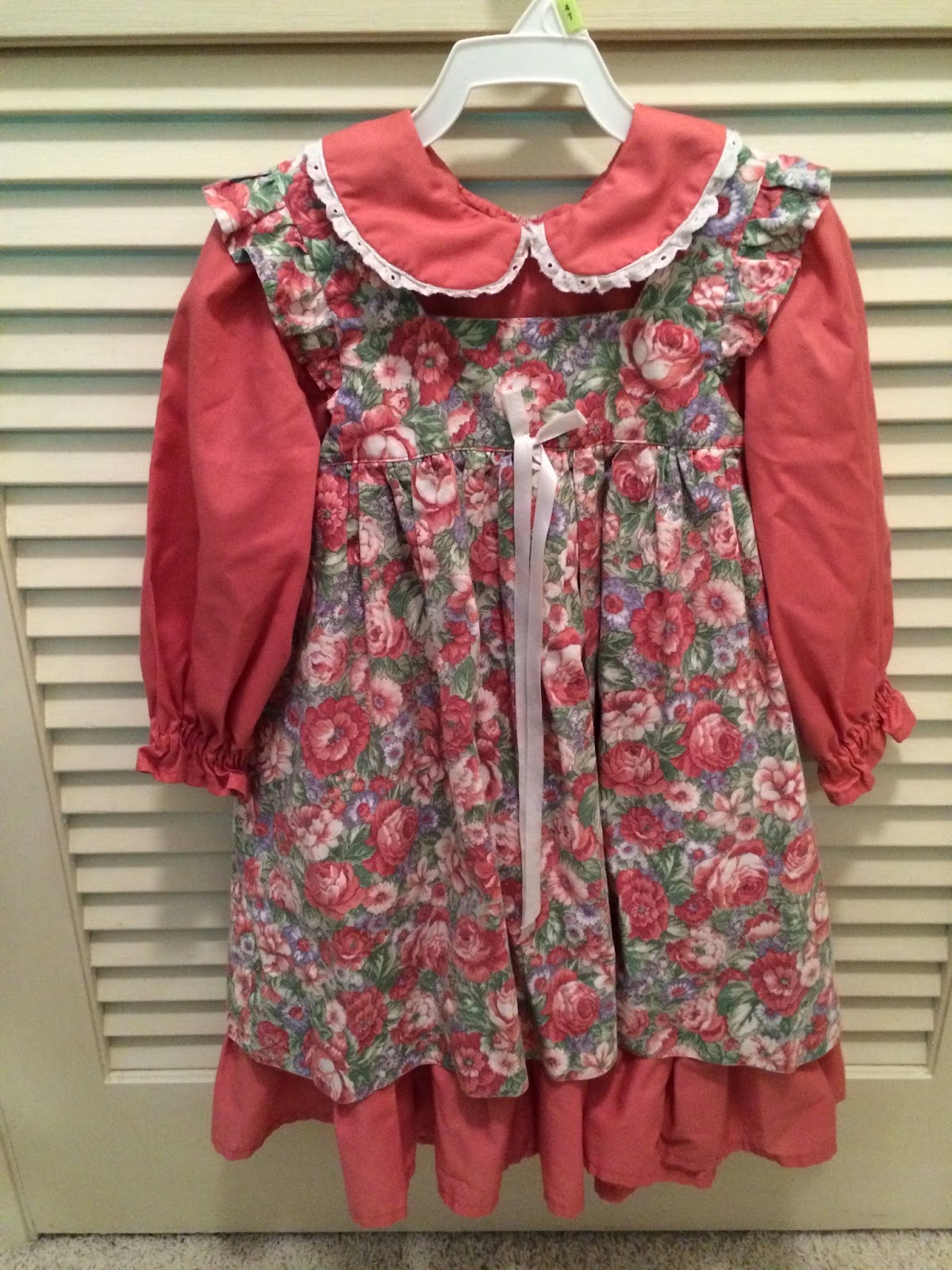
IMG_3831For warmth, I wore cable tights.

For modesty, I wore homemade knee-length bloomers over the tights.

They were usually white, longer than shorts, and they had eyelet ruffles below the elastic cuffs. The woman who first showed my mom how to make them called them “pettipants“. We quickly shortened that to petties. The petties were so modest that I would often strut around my bedroom in them.

“I could go out like this and most people would think I was already fully dressed,” I must have said to my sister a hundred times as a teen–before pulling a skirt or jumper over my loose-fitting shirt. No way would I leave my room in just my petties. They were a secondary undergarment, like a camisole. They should never be missing, but they weren’t meant to be seen.

If Mom told it once, she told it a hundred times–the story about an evil man who had tried to molest a young girl in her neighborhood.“He asked if he could see her underwear!” The girl had refused him, she said, but the situation had been traumatizing. Knowing that such predators existed was motivation for us to stay covered.

Once at a hotel, Mom was anxious that we close the drapes because some of the girls were already in their nightgowns. “Bad men might see me?” my little sister inquired sweetly.

Over the years, I spent many hours sewing dresses and petties. Mom bought elastic by the yard and I fished it through the casings with a safety pin. Those little girls’ diapers and underpants must never show, no matter how hard they played. My brothers must never see how their sisters’ bodies were different. (We girls could change diapers of either sex, a privilege not permitted to the boys.)

By two years old, my sisters were no longer dressed in rompers–they wore dresses and jumpers and pinafores. When they went outside in the snow, we shoved the handfuls of fabric down the legs until the girls looked like pink or green marshmallow people. But the downside of dresses was the risk of accidental exposure. So petties were ubiquitous. Rarely visible, but ubiquitous, nevertheless.

My sex education was spotty at best, but one message I got loud and clear was, “Keep men away from your underwear.” 

Whether playing outdoors or sitting on church pews, our bodies were kept hidden under layers of cotton. At IBLP training centers, we joked about boys not knowing that girls’ legs separated before the knee. When I started wearing shorts on occasion as an adult, I felt a twinge of betrayal, pondering whether God intended for my thighs to be displayed in public. Would they, as my friend’s grandma warned her, “make men think bad thoughts”?

Even when I married, I took my petties with me, accustomed to the secure and familiar feeling of soft cotton wrapped around my legs. And as Mom and I sewed dresses for the four sisters who were flower girls in my wedding, I never questioned that coordinating petties were an essential part of the ensemble.

And yet…

What I didn’t realize then was that there was one glaring exception to the inviolable rule of modesty:

Spankings.

I have many memories of being spread across Dad’s lap and struck with a belt or stick of wood. But my memories are always fully clothed. It was bad enough (and much more painful) when Mom hit me, but as the modesty rules tightened, something felt increasingly dissonant about a part of my body that was never supposed to be seen or talked about suddenly becoming a man’s target. (The last time he hit me, I was about 13. I had the body of a young woman and was wearing a long wool skirt. Being ordered to lie across his legs, I felt violated. Since it never happened again, I assumed it made him uncomfortable, too.)

However… when my father took one of his younger daughters into a bedroom and closed the bedroom or bathroom door, many times he would lift that modest dress. He would pull down her petties, exposing her panties. (I am uncertain when my parents adopted this invasive approach to “discipline”, but their pastor, also an ATI dad and a certified character coach, taught it in detail during a Sunday service years ago.) Sometimes Dad would pray aloud for “Satan to be bound”.

Only then would he raise the wooden spoon that was the implement of choice, bringing it down hard against her thinly-clad flesh again and again. I heard the cries of anger and pain, and later saw the dark bruise lines when I bathed the girls and helped wash their hair. I didn’t like the reminder of my own younger experiences, but I believed it was necessary. I had survived spanking, and now I was a responsible young lady. It never once occurred to me that our patriarch, the “priest of our home”, might be looking at his little girls’ backsides in their knickers.

The petties protected us all, didn’t they? They were a kind of magical garment, shielding us from prurient men and guarding men from lustful thoughts. Allowed too close to the natural shape of our bodies, any male might be overwhelmed with desire sufficient to become a pedophile. That was what we feared.

Though Dad slowly relented on parts of the family dress code, permitting his daughters to wear slacks, pajamas, and modified swimsuits, I had already absorbed the modesty mantra into the warp and woof of my being. So much so that it took a decade to silence my mother’s voice in my head every time I went shopping or opened my closet door.

But these days, I think very differently about those who would dictate how females dress.

I also think differently about inflicting intentional pain on children’s bodies to root evil out of their hearts.

And I feel more strongly than ever that if parent-teachers, in the sanctity of a child’s home, are permitted to remove her clothing at their whim for the purpose of making her good, they put a hurdle in the way of her learning self-respect.

Let me take a moment to unpack all the harm I see in this scenario.

1) Our parents rigidly defined our roles as females. We were subject to rules and dangers that didn’t apply to our brothers.

2) In our home, everything was sexualized. Books, from our encyclopedia set to our Bible storybooks, had white stickers covering illustrations that were deemed indecent. We left the beach if a bikini showed up. The dining room seating was arranged so that the boys would not see the teen girls across the street washing their car.

3) Threats of physical violence by adults against young children were normalized in our home. We called it “spanking”. It involved a weapon, and it left marks.

4) As if being painfully punished on the bottom with a stick was not enough, having one’s required covering forcibly removed was a special humiliation.

5) We were told constantly to be “modest”, but as soon as we were perceived as “independent”, “rebellious” or “talking back”, our modesty was no longer valued. Indeed, our value as females was directly linked to our obedient, submissive, and chaste spirits.

6)  That my father, in our insular world, had the privilege of exposing his own daughter’s panties underscored his tremendous authority. He was the top dog. The rules that applied to others did not apply to him, at least not when we had been defiant or lazy, or had spoken out of turn.

7) On occasion, my parents also spanked their daughters on bare buttocks. When Mom was particularly upset (she was often very cool while she beat us), she threatened to call Dad in to spank a girl’s already-bare bottom. That girl still remembers the horrible threat.

So tell me,

If a young child is made to feel dirty when she says “no”,

Or if her resistance to pain is met with threats of something worse, 

How can she be expected to enforce healthy boundaries in relationships when she is grown?

In Mom’s story, the would-be molester asked a young girl to show herself to him. But our parents made this sound shameful, and then demanded it of their own daughters.

Sorry, Mom and Dad, you can’t have it both ways. You abused the “blessings” that filled your quiver. And you wonder why we struggle to respect ourselves now.