Navigating the Justice System, Part Three: As a Young Adult

Screen Shot 2014-07-22 at 3.56.28 PM

HA note: The following is reprinted with permission from Sarah Henderson’s blog Feminist in Spite of Them. It was originally published on her blog on June 12, 2014.

< Part Two

When I was about 17, I moved out.

Once it was truly clear to me that what happened in my home was abusive and not normal I decided to try to end the abuse for everyone. I started making regular calls to Children’s Aid on my father. I had to get help making these calls because Children’s Aid did not take my calls seriously because I was perceived as a disgruntled daughter (I was a disgruntled daughter, I suppose – but it didn’t negate what I had to say). There had already been multiple closed investigations on my family, and my parents presented as godly people who were just doing the best they could do with very little money and terribly rebellious children (although the social workers were always impressed with our obedience). I had help from guidance counsellors at my high school, and from the family I was staying with.

This process exacted a steep personal cost.

I had to relive what had happened constantly, and I worried that if this bid for freedom for all my younger siblings failed, and my parents found out, I would be cut off from them forever. My father had always threatened to pack everyone up and move to Mexico in the middle of the night, and I was afraid that if CAS called and invited themselves over for a pre-announced visit, my father would follow through on this threat and be forever protected by his friend-of-a-friend counterparts in Mexico. This situation caused a lot of pain for me. I had a lot of suicidal thoughts, and began engaging frequently in fairly serious self-harm, although I had done some self-harm even as a pre-teen before I knew that it was a thing. I have self-injury scars on my arms that will never go away.

My self-injury served as a tangible demonstration to those who were supporting me by calling CAS, that there was a real problem that needed to be fixed. I believe that some of the thinking was that maybe if they could get an intervention in the family home, they would be able to save my younger siblings from going through the same thing. It was kind of too late to save them from the pain, but at least they could end it.

CAS became convinced to take a closer look.

Once another investigation was finally launched, things moved quickly. There were a few meetings, and my dad was given the option of promising to not yell at my mother or physically punish the children (this may sound familiar). They found out that he chased teenagers with garden implements, and beat kids with dowel rods and broomsticks. They only wanted that to stop. He declined this option, so he ended up being removed from the property by CAS and police. He was taken to jail and charged with child abuse for his use of unreasonable corporal punishment. He was not allowed back on the family property because my mom was there with the kids (I had also moved home) and he wasn’t allowed to displace the family. We went to criminal court when I was 19. I had just started dating my now-husband, and going out for some lunch while at court was our first date. I testified, along with several of my siblings.

We were given victim support this time.

We testified much more clearly than we did when we were kids. We went for a few days. The judge was kind to us, and cleared the court room of anyone that we didn’t want to have there. They asked us questions kindly, and didn’t push us when it was hard. We only testified against my father, not against my mother. We decided as a group of teenagers that the priority was to get my father to answer for what he did, because what he did was much more serious than what my mom did, and my mom had not been physically abusive to my siblings in the time between my father’s arrest, and court. The result of those court proceedings is that my father took part in a plea deal, where he pled guilty to three counts in exchange for the other six (there are nine siblings) charges being dropped.

He was given a year of probation. He also had to continue going to court with my mom (family court, I believe) to work out issues of custody, but for him to get a say, he was supposed to file his own papers. He never did. He repeatedly attended court with no representation, or asked for adjournments to have more time to file papers. Eventually this ended and my mom pretty much ended up with custody and residency in the home, because of his inaction. My grandfather bought my father a car and a cell phone, and he has spent the past 7 years floating around between staying on his other property in Nova Scotia, and living with his like-minded friends in Ontario who allow him to live in their houses with their children, or to set up a shed or camper in their back yards.

He still has no concept that he did anything wrong at all.

End of series.

Navigating the Justice System, Part Two: When My Parents Went to Court

Screen Shot 2014-07-22 at 3.55.57 PM

HA note: The following is reprinted with permission from Sarah Henderson’s blog Feminist in Spite of Them. It was originally published on her blog on February 2, 2014.

< Part One

This part of Navigating the Justice System deals with a time in my life when my parents went to court and I didn’t, but I am including it in the middle of a three part series since it hinges them together. Here is what happened when my parents went to court:

When I was about 11, we were living in Ontario, where we had moved to get away from the court proceedings in Nova Scotia. However, my parents had been ordered to appear back in court in Nova Scotia. We had been going a conservative church in Ontario, for about a few months to a year. My parents talked to some of their friends in the church, and the decision was made to “farm out” the kids to various families while my parents were away, for about 10 days. I was pretty excited about this, because I was always helping to look after my siblings, and I thought it could be a fun break for me. My parents sent my two close-in-age brothers to stay with a family on a farm, which they didn’t mind too much. They sent my next younger sister to stay with a family with a number of young children, with a daughter that was close to her age.

They didn’t consider that that daughter bullied my sister.

They sent me to an older couple with grown up children, along with the youngest two sisters. They took my youngest brother at the time with them. The two younger girls were very young, so they were not potty-trained and showed some signs of what I now know to be disrupted emotional development. (I would like to note here that these girls have grown up into wonderful young ladies). So the couple agreed to take them for the ten days only if I went there too, so I could change their diapers, and look after them. I suppose this wasn’t that much different from home life, but the lack of supervision at home meant I could make some of my own decisions and revel in some 11 year old laziness. While I was there, I had to do quite a bit of work. I washed their eggs for their egg business, got up before the girls so that I could change them and dress them before they disturbed the family, and usually got the girls their breakfast and did the dishes. I did laundry and other chores also, but I was always responsible for the girls too.

I was expected to keep the girls in the same room all the time and watch them. I don’t know what month it was, but it was some time in the summer, since we went outside at certain times too. The girls weren’t used to that kind of structure, since while my parents were extraordinarily controlling, they also had a notable lack of control in daily life, with no structure, no schedule, and the only rule really was to not upset the parents, and do everything they specifically demanded immediately. I think that this couple disapproved of my siblings’ behavior and my parents’ parenting style and methods, and decided that they could fix it. But it doesn’t work to take an 11 year old or even toddlers and suddenly change everything about how they do life in ten days. They talked to me about how I should behave and what I should be doing in daily life, and to respect my parents, but they also spoke negatively about my parents.

It was very confusing for me as an 11 year old. I knew that my parents were going back to court but I didn’t really understand it.

I kind of hoped that they would go to jail while they were there, but then I was afraid I would be stuck with this couple, raising my two siblings forever.

I had also been extensively isolated so I did not know how to function well around other people all the time, and they made fun of that. I was very awkward. I suppose I also showed signed of disrupted emotional development. My mom and the lady decided that I should keep a diary while I was there, but the lady read what I wrote every day, and then my mom read it when they returned. I felt like I had no privacy, so I only recorded what we ate, and when we went out for groceries.

I do not blame this couple, but it was after I returned home that I started to really experience depression. I didn’t want to go to church anymore, and I didn’t want to have friends. I still was forced to go to church, not that I tried to argue, it wasn’t optional. Being with this family really taught me what other people in the church thought of us, and I knew there was a good chance that everyone talked about us like that.

It also caused a great deal of conflict for me. On one hand, I was angry that they tried to impose so much structure, but on the other hand I realized that if I complied with the structure, it would be peaceful, and that was not how it was at home. Because there were no predictable rules at home, it could never be peaceful. I think as a child I wanted to have the best of both worlds: the comparative freedom of having no supervision at home, the power of being in charge when my parents were gone all the time, but also the peace in the presence of authority figures. The couple we stayed with never hit me or yelled at me or my siblings, just expressed “disappointment” if I didn’t live up to their expectations.

Being around this family 24/7 also really emphasized to me that I was socially awkward, and I felt like my actions and words were on display for constant scrutiny. It wasn’t even that I felt I couldn’t do anything right, but I didn’t even know what the right thing was. I think it was obvious to them that something was wrong in our family, and I wish that the couple had used that knowledge to get us some help, instead of becoming part of the oppression. Every week when we saw them at church after that, I felt exposed, like they knew something bad about me. They were disappointed because they thought I would have some sort of connection with them after I went home, but I didn’t. This experience really reinforced for me that adults had all the power and that no one would help me, and that there was something fundamentally wrong with me. That I was the problem.

My parents were finished with court and didn’t go back to court. I don’t really know what the resolution to that was. I just know that it was a terrifying time for me, and I don’t think it was right that I was put through the knowledge that they were going to court, and that it had to do with parenting, but I wasn’t made privy to the resolution. It also makes me very suspicious about the outcome. I also think it wasn’t right for the church to have that window into our family problems and not do anything about it. I know it should be surprising, as it is very difficult to risk being the whistleblower when surrounded by others who do not seem to recognize the problem.

But if any one of those three families who got glimpses into the mental health status of my siblings and I had chosen to do something, it could have saved us from the six years of suffering that was to come.

Part Three >

Navigating the Justice System, Part One: Alone at 9 Years Old

Screen Shot 2014-07-22 at 3.41.31 PM

HA note: The following is reprinted with permission from Sarah Henderson’s blog Feminist in Spite of Them. It was originally published on her blog on January 18, 2014.

Trigger warning: discussion of child maltreatment and its consequences.

If this is the first Feminist in Spite of Them post you have read, please consider reading this either before or after.

When I was about 9, my parents were investigated by Children’s Aid. Social workers came out to talk to us. They met with us and found out that my parents spanked as punishment — which made sense since my parents had posted “The 21 Rules of This House” next to the dining room table. They came back a few times and spoke to each of us children. My parents homeschooled and they questioned whether we were getting an adequate education and whether abuse would be identified easily enough without regular contact with other people. One day they came with police cars and two police men and took most of us to the police station and interviewed us on video. My parents left the youngest with friends and came to the police station too but we didn’t see them all day.

I don’t know what my siblings said in their interviews, but I had always been taught to be very honest so I answered all their questions honestly, which was hard because I had also been carefully taught to not divulge family business to strangers. The information I gave outlined clearly that we were spanked, when we disobeyed or showed a bad attitude, with an object that was somewhat anthropomorphised in our home: “the rod”. My parents also practiced time-outs like shutting children outside in the evening for several hours for not eating all their dinner. I trusted that my parents were acting appropriately, since that is what they told me when they did it, so I presented it as fair and reasonable, and did not see a reason to hide anything. They told me what abuse was and asked if I was abused. I responded that technically we were because of the punishment methods but it was not abuse because it was Biblical. We were sent home with our parents. They asked my parents to promise to not spank and they were very resistant.

A while later, we went to court. I went to court three separate times. As far as I can remember, I went to family court one day, and then later on I testified two days at a higher or different level of court across the hall.

I don’t really understand the reasoning that led to this situation, but I was interrogated in court by the prosecutor in family court as a reluctant witness to my own parents’ abuse.  I testified that I loved my parents and I wanted to be spanked when I disobeyed. I wasn’t quite sure about that but that was what my parents and their lawyer and all their friends told me to say. Please note that I was sent home with my parents after court and although I spent a few days away from my parents they were able to choose were I went, and they chose a family friend who reinforced my parents’ beliefs. At least two of my brothers may have also testified in that court. I believe that my parents and their lawyer offered us up to testify, but I am not sure. Part of the reason I believe that I was there by the choice of my parents is because we did not receive any kind of victim witness counselling or preparation, and I don’t think that my parents could have declined on my behalf if I was there as a victim of their actions. They should have not been allowed to decline in any case.

I may as well have been alone the whole time. My parents were absorbed in their case, their lawyer treated me as a pawn, and anyone else involved were concerned that my parents might be punished for their actions. I am unclear on the outcome of that case, but my mother tells me that the judge threw that case out but that children’s services tried again from a different angle and that was why there was another prosecutor and case across the hall.

In that court, I was more reluctant to answer questions, things had changed for the worse at home since the first court and I was far more unhappy. We weren’t being schooled anymore, there was another new baby on the way, and there was more yelling and beating instead of rational spankings. I was not happy at home anymore. My father was sitting only a few feet in front of where I sat in the stand, and frowned every time I spoke. I had gotten in trouble for some things I had said in the first court, and my parents were so incensed by what two of my brothers said in the first court that they somehow made sure they did not testify again. My answers were inconsistent so the judge decided to bring out the taped interview taken at the police station that I mentioned earlier.

I was very afraid of what would happen if my father saw that video I had made at the police station outlining his punishment methods, and I knew I had to go home with him.

I protested persistently, begging the judge to not play the video, but I couldn’t tell him why, with my dad sitting a few feet away. I was removed from the courtroom by the bailiff. He was this hugely intimidating man and I was really afraid of him, but he was actually really nice and expressed his outrage about the whole thing, even though I didn’t understand what he meant at the time. He took me to a small room with my mom and a friend of hers.

The judge showed the video to the courtroom, and the bailiff brought me back when it was done. The judge asked me what my story was, if I wanted to stick to my very inconsistent story of a loving family, or if I stood by the police interview that outlined what legally qualified as abuse, depending on interpretation. I didn’t know what to do and I was very traumatized by the experience, to the point that I cannot remember how it ended and I got out of there. I am not sure if the judge decided to discount my testimony or if he took the whole scene as evidence of abuse.

The truth is, I was abused. I was told what to think and how to think it. I was a somewhat compliant child, but I witnessed my other siblings rebel with terrible consequences. I was afraid of what was going to happen all the time, and it felt like I couldn’t breathe sometimes.

Being put into a situation where I had to defend the actions of my own parents created a claustrophobic conflict for me.

Even before court, I wasn’t happy. I wasn’t treated well. I had to give up my own wishes all the time even when it wasn’t reasonable, I had to help take care of younger children, I had to bargain for my own education as a child under ten. Periodically my parents’ beliefs completely changed and most of my possessions would be disposed of because they didn’t comply with the new beliefs.  I walked around with suicide notes in my pocket. We had to ride around in a big van with no windows and couldn’t see out, so I always thought we were going to die, and I was ok with that at 9 years old. Life was too hard and too long, and there was nothing good.

After court was over and my parents packed us out and secretly moved us to another province, everything got much worse. By moving away from the child protection case they moved away from all consequences and started over again in a more conservative church and a more isolated property. I blamed myself for not somehow making sure we got sent to foster care during the court episode, and I spent my pre-adolescent years as a self-harming desperate little adult in a child’s body.

For more reading on my parents’ beliefs, please click here.

There is an outrageous lack of support for children who are put in the position of navigating the justice system, and there is not a great deal of information on the consequences for the children. If you would like to add to the conversation in any way I welcome your comments.

Part Two >

The Old Schoolhouse Says Child Molestation Allegations “Are False,” Insinuates Possibility of Legal Retaliation

Screen Shot 2014-07-01 at 8.53.01 PM

By R.L. Stollar, HA Community Coordinator

Last week we reported that Paul and Gena Suarez, owners of the “global homeschooling company” The Old Schoolhouse, have been accused by a former key employee of (1) allegedly protecting several known child predators and (2) shaming and silencing members of their community who tried to stand up and do the right thing. Yesterday Hännah Ettinger covered the story on Patheos as well: “Publishers of Christian Homeschooling Magazine Exposed for Protecting Child Abuser.” It has also been claimed that David Gibbs III — who is involved in the mediation process between the abuser’s family and the victim’s family — allegedly told the victim’s mother to “keep silent” about her son being molested. (Note that David Gibbs III also happens to be a columnist for the Old Schoolhouse and a part-owner and sponsor of the Great Homeschool Conventions.)

When people began asking about the allegations last week (on June 24) on The Old Schoolhouse’s (TOS) Facebook page, TOS responded simply by deleting their comments and ignoring and blocking their questions. It was not until three days later, on June 27, that TOS actually engaged their customers’ concerns, seen in this solitary thread on TOS’s Facebook page. (Should the thread get deleted in the future, it is archived as a PDF here.) An individual asked TOS the following:

Can we expect some response from TOS addressing the serious accusations that have been leveled at its owners this week? I have long endorsed this magazine to the more than 100 families in my homeschool group and as the group leader, I feel some responsibility to retract that endorsement if TOS isn’t going to deal with this issue honestly and publicly.

TOS did not answer the question publicly. Rather, their customer service representative said, “Please email me at customerservice@theoldschoolhouse.com.” Another individual asked for an answer as well; that individual was also asked to email TOS privately.

To date the Old Schoolhouse has yet to make any public statement about the serious allegations of abuse and misconduct by owners Paul and Gena Suarez and their son.

However, Homeschoolers Anonymous has obtained a copy of the Old Schoolhouse’s official, but not public, response that is being sent privately to those inquiring about the allegations. Below is both a screenshot of the email they are sending people as well as the text:

Screenshot:

Screen Shot 2014-07-01 at 8.55.46 PM

Text:

Thank you for emailing us privately with your question. A more public response is not possible due to the agreement with the other party and ethics which state that when minors are involved broad publicity is not encouraged.

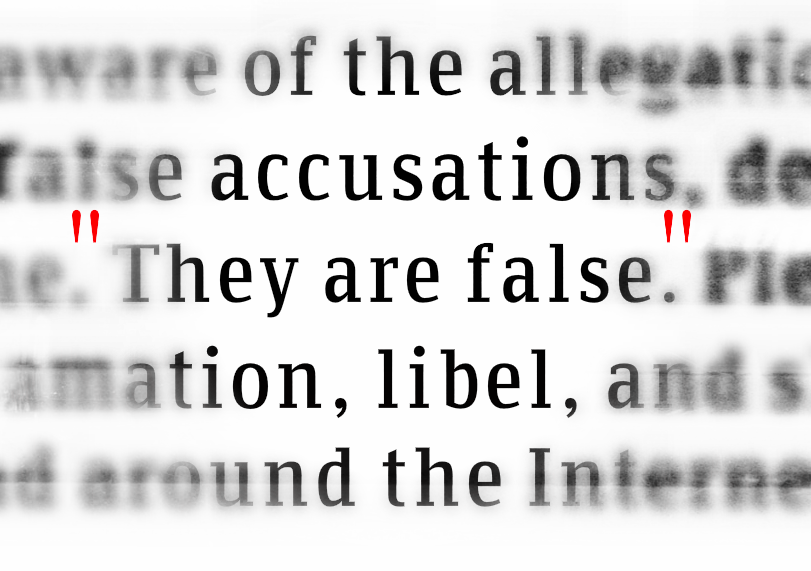
TOS and the Suarez family are aware of the allegations circulating online. They are false. Please be patient as we are in the midst of proceedings with legal and other advisors concerning false accusations, defamation, libel, and slander.  We trust that the Lord will expose it all in His time, and we feel hopeful that people who love Him will believe the best before assuming that something spread around the Internet is automatically true.

That’s all we can share at this time. Thank you for checking with us in the spirit of Proverbs 18:17and Proverbs 18:13.

This, then, is the Old Schoolhouse’s official company position on the allegations: that “they are false” and nothing more than “something spread around the Internet.” TOS also seems to insinuate the possibility of legal action by speaking of “legal and other advisors concerning false accusations, defamation, libel, and slander.”

One thing is true: truth shall be exposed in due time. And I do not advise placing any bets on the side of the Old Schoolhouse.

This is What Child Abusers Look Like in Homeschooling Communities

By R.L. Stollar, HA Community Coordinator

We like to think that we know what child abusers look like. That we can pick them out of the crowd based on their creepy mustaches, darkly-tinted cargo vans, or their giant, thick-rimmed glasses.

But those stereotypes are just that: stereotypes.

And like all stereotypes, they fall tragically short. The fact is, child abusers are not Others. They do not walk around with signs that say, “Monster.” They are able to violate our trust — and children’s lives and bodies and minds — because we trust them. Which means they have our trust, because they are a part of our community. They are friends and family and teachers and loved ones. Boz Tchividjian from G.R.A.C.E. (Godly Response to Abuse in Christian Environments) is spot-on when he says,

“Those who pose the greatest risk to our children are within our families, churches, and circle of friends.”

A month ago, news broke that demonstrates just how true this is. A homeschooling family — the Jackson family from North Carolina — was revealed to have hidden child sexual abuse for over a decade. Homeschooling’s Invisible Children reports,

A 16-year-old girl was repeatedly raped and sexually abused by the six Jackson brothers (Eric, 27; Jon, 25; Matthew, 23; Nathaniel, 21; Benjamin, 19; and Aaron, 18) from the time she was 4 until she was 14. Though the girl was not identified, it appears that she was the brothers’ younger sister. The boys’ parents, John and Nita Jackson, knew about the abuse and did nothing to prevent it.

You can read the original news report from WTKR here, which notes that “the Jackson brothers’ parents were charged in this case because they witnessed the abuse.” Furthermore, as Julie Anne Smith at Spiritual Sounding Board has pointed out, “At the time of the alleged abuse, they were living in North Carolina and two of the brothers were reportedly members of Scott Brown’s church, Hope Baptist Church in Wake Forest, North Carolina.” This would be the same Scott Brown who has “very close ties with the now defunct Vision Forum Ministries and recently fallen Christian Patriarchal leader, Doug Phillips. Brown also heads up National Centers for Family-Integrated Churches.”

I was intrigued to find out that the Jackson brothers still had their Facebook pages active. So I decided to go look at their pages and see what their public lives had looked like. I was interested — but not surprised — to find out that the Jackson brothers had mutual Facebook friends with me. Several brothers actually had quite a few. So these kids (some now adults) clearly had somewhat social lives. They weren’t growing up in a stereotypical compound in the middle of nowhere. They existed within groups — like homeschool speech and debate — that I used to exist in. And yet no one seemed to have any idea what was going on. No one, including some people I myself know.

But here’s the thing: their Facebook pages look normal. They look like the Facebook pages of conservative Christian homeschool students and graduates. And that is exactly the point here. If this case wasn’t being criminally prosecuted, how many people do you think would be defending these people as “godly” and “upstanding” men who would “never do something like that” because they “love Jesus”?

To make this point more salient, let’s look at what the average Facebook posts by the Jackson brothers look like. Because this will tell you what child abusers look like in homeschooling communities.

What Child Abusers “Like” on Facebook:

Eric Jackson

Screen Shot 2014-06-26 at 7.18.20 PM

Matthew Jackson

Screen Shot 2014-06-26 at 7.24.09 PM

What Books Child Abusers Read

Matthew Jackson

Screen Shot 2014-06-26 at 7.25.03 PM

Eric Jackson

Screen Shot 2014-06-26 at 7.37.31 PM

What Movies Child Abusers Watch

Aaron Jackson

Screen Shot 2014-06-26 at 7.26.19 PM

Nathanael Jackson

Screen Shot 2014-06-26 at 7.27.25 PM

What Child Abusers Post About on Facebook:

Nathanael Jackson

Screen Shot 2014-06-26 at 7.28.40 PM

Eric Jackson

Screen Shot 2014-06-26 at 7.30.17 PM

Screen Shot 2014-06-26 at 7.31.15 PM

Screen Shot 2014-06-26 at 7.32.20 PM

Aaron Jackson

Screen Shot 2014-06-26 at 7.33.33 PM

Matthew Jackson

Screen Shot 2014-06-26 at 7.35.07 PM

Screen Shot 2014-06-26 at 7.35.24 PM

Obviously one can “like” any of the above sites, people, books, or movies and not be a child abuser. One can post pictures of sunsets and attach Bible verses to them and not be a child abuser. But it’s the opposite mindset we need to focus on, isn’t it?

— The mindset that assumes people who love the Bible and share its wisdom and love respected homeschool leaders are somehow safe, or safer to “ungodly” people.

— The mindset that “good Christian boys” would never abuse anyone.

— The mindset that homeschooling will make better, more holy, children.

We will not be able to fight child abuse in homeschooling communities until we realize that the child abusers among us effortlessly blend right in. They might be our respected leaders (in fact, sometimes they have been our respected leaders, like Bill Gothard and Doug Phillips); they might be a homeschool celebrity that HSLDA publicly calls a “hero” (like Michael Gravelle); they might be the owners of our beloved companies or those owners’ children (like the son of Paul and Gena Suarez, owners of The Old Schoolhouse); they might even be some of the people claiming to be allies of abuse survivorsThere is no magic formula.

This means we must constantly be on our guard. It means we must know the warning signs and know how to report abuse to law enforcement and we must actually report the abuseWe cannot sweep it under the rug or turn a blind eye. We cannot shame those trying to bring it to light. We must start taking a stand, we must start raising a ruckus, and we must demand that our leaders and communities do so as well.

We must demand that our leaders and communities do more than write blog posts about not looking away and actually do the hard work of not looking away.

A *Real* Investigation into IBLP

iblp
IBLP’s Headquarters in Oak Brook, Illinois.

Jeri Lofland blogs at Heresy in the Heartland. The following was originally published by Jeri on June 22, 2014, and is reprinted with permission.

Thoroughness:

Knowing what factors will diminish the effectiveness of my work or words if neglected

–Bill Gothard

Bill Gothard’s buddy David Gibbs, Jr. has now completed his “investigation” into allegations made against Gothard by former IBLP staff members. According to the IBLP board earlier this week,

“…the Board sought the facts through a confidential and thorough review process conducted by outside legal counsel. Many people were interviewed, including former Board members, current and past staff members, current and past administrators, parents, and family members.

“At this point, based upon those willing to be interviewed, no criminal activity has been discovered.”

But according to the team at Recovering Grace,

“…not one of the women who have shared their stories on our site were personally contacted by Gibbs Jr. or his investigative team, including Charlotte, who alleged molestation.

Perhaps Gibbs Jr. needs to brush up on his Character Qualities.

It would seem that Gibbs’ investigation focused narrowly on certain allegations of sexual impropriety (some of which Gothard has admitted to, resulting in his resignation). However, this is but the sensational tip of the iceberg and ignores the broad scope of hurtful, unethical, and even illegal activities that have damaged numerous lives associated with the Institute in Basic Life Principles.

Gothard promoted his organization as “Giving the world a new approach to life” and following God’s “non-optional principles”. A ministry that prides itself on being “under authority” should have nothing to fear from the truth. And yet, the testimonies of some former students and staff members paint a disturbing picture. Some of these stories of life under the auspices of the Institute have been published on Recovering Grace. Others have been shared more privately. Some victims are willing to have their names attached to their experiences while others prefer anonymity, or pseudonyms.

Each of the incidents outlined below could likely be explained away on its own. But taken together they suggest a pattern that I believe is worthy of deeper examination. The Board of IBLP can write, “We dedicate ourselves to help build up families and individuals,” but if these situations actually took place, the Institute’s so-called “ministry” is a farce, with or without Gothard, and IBLP should be shut down to prevent further abuse of power.

real investigation of IBLP might look into allegations of the following:

OSHA and other code violations at all locations: Indianapolis, Oak Brook, Elms Plantation, Oklahoma City, Eagle Mountain, Eagle Springs, Northwoods, Big Sandy, Flint, South Campus, Little Rock, Nashville, and others

For example:

  • Lack of permits: illegal remodeling, dredging a lake without a permit, improper electrical wiring
  • Poor fire safety: hiding fire extinguishers and fire pulls behind paintings or décor items; silencing a monitored fire alarm to avoid disrupting conferences, not reporting fires to fire department
  • Improper supervision: letting teens work on upper-story building exterior or fire escapes without safety harness
  • Injuries: electrical shocks from unsafe practices, minors injured while operating power tools, carbon monoxide poisoning of kitchen volunteers
  • Faulty elevators
  • Violations of residential occupancy limits

Prayer rooms (especially at 2820 N. Meridian, Indianapolis):

  • locking minors in solitary confinement without notifying parents
  • locking minors in solitary without access to a restroom
  • withholding food or medication
  • spanking minors without parental consent

Failure to protect children by reporting abuse:

  • failure to report sex acts with or molestation or attempted sexual molestation of minors in IBLP’s care at the ITC (Rodger Gergeni)
  • failure to report sexual abuse of minors in ATI families (Bill Gothard)
  • pressure on homeschooled victims not to report physically abusive parents
  • shaming victims of sexual assault and neglecting to counsel them to contact police
  • pressuring ATI moms not to divorce abusive husbands who posed a danger to the children

Educational neglect:

  • failure to educate “homeschooled” minors who were sent to IBLP centers by their parents
  • using A.C.E. curriculum for children sent by the courts
  • violation of child labor laws
  • children (9-10 years old) working in the kitchen or cleaning bathrooms, sometimes rising as early as 4 or 5 a.m. to work
  • unpaid teenagers working 12-18 hour days in the hotels (cooking, industrial laundry, cleaning hotel rooms and public restrooms)
  • selling teens unaccredited degrees (Telos.edu) without adequate explanation of their value

Forced fasting:

  • on weekends, designated prayer days, and other times when meal preparation was inconvenient
  • though some children were sent there by the state and other students paid for room and board, only two meals were served on Saturday and only supper on Sunday
  • sometimes only two meals a day were served for weeks in a row
  • requiring students to turn in care packages
  • also mandatory weight checks (Weigh Down) for staff women, involuntary diets, forced exercise
  • failure to recognize eating disorders such as anorexia (even when girls were passing out)

Medical neglect:

  • withholding or confiscating prescription medication (including antidepressants, an asthma inhaler, post-surgery pain medication)
  • refusal to get prompt medical treatment for severe burns, broken bones, concussions, pneumonia, collapsed lung, high fevers, torn ligaments, acute food poisoning–many former students trace chronic health problems to untreated conditions that arose at training centers
  • treating injuries with alternative remedies such as sugar water injections (Dr. Hemwall)
  • letting doctors or dentists with revoked licenses treat students at training centers

Campaign ethics:

  • sending youth to campaign for Indianapolis judicial and mayoral candidates
  • providing private services to a public official (Lt. Gov. Mary Fallin) in Oklahoma

Employer issues:

  • pressuring employees not to record overtime on time sheets
  • advising employees that submitted overtime hours would not be paid
  • mandatory unpaid evening work teams for employees (washing dishes, cleaning carpets, scrubbing bathrooms)
  • paying less than minimum wage, paying minimum wage minus “rent”
  • firing employees without due process or notice
  • refusal to pay workers’ compensation
  • instructing employee to lie to hospital staff to protect the “ministry”
  • praising employees who gave up their paycheck to become volunteers
  • allowing children under 16 to work more than twenty hours a week
  • sexual harassment of junior staff or students by adult staff

ALERT:

  • physical abuse, medical neglect, solitary confinement, unsafe equipment, psychological abuse
  • refusal to contact parents regarding medical emergencies
  • keeping four teens tied together by the feet for an entire day, resulting in injury
  • a unit of under-dressed teen boys standing outdoors in sub-freezing temperatures at night until one confessed to a minor infraction
  • disregard for basic safety precautions
Mistreating Russian orphans in Moscow and at Indianapolis South Campus:
  • foster families spanking children and even teens
  • children spanked for minor misdeeds
  • English-speaker spanking Russian child without an interpreter present
  • withholding meals from children for disciplinary purposes or feeding them only dry rolled oats and water
  • child labor (reports of children required to clean toilets at 5 a.m.)
  • using orphans to “encourage” financial donors

Restricted communication from training centers:

  • limited access to public phones, email, fax, or internet
  • reading students’ outgoing or incoming mail, confiscating mail or making students open mail in presence of a leader
  • censoring outgoing email
  • telling students what to tell (or not tell) their parents about situations at the training center
  • limiting who a student or employee was allowed to correspond with outside
  • restricting conversation or interaction between fellow students

Psychological abuse:

  • lengthy, repetitive, or middle-of-the-night “counseling” sessions (berating and brainwashing)
  • restricting sleep
  • piping loud music into bedrooms
  • assigning staff to night duties on consecutive nights (along with their day jobs)
  • requiring student to wash clothing by hand until she had earned “privilege” of using the laundry facilities; requiring staff to recite extensive Bible passages before breaking a fast
  • confiscating clocks
  • hours of forced labor intended to “break will” or “conquer rebellion”

Violations of privacy:

  • not permitting students to take bathroom breaks or use the restroom alone, or with the door closed
  • confiscating personal items such as clothing, music, photographs, medication, and cell phones

Miscellaneous:

  • sending unreported cash through customs on staff member’s person
  • exaggerating or misrepresenting facts in newsletters
  • promotional video about ALERT describing a pilot “rescue” omitted the fact that it was ALERT’s own plane that crashed while taking aerial photos of the property)
  • personal gifts of cash or clothing from Gothard to his favorites
  • discrimination against males who appeared “too effeminate” and females who were overweight or not “feminine” enough
  • photoshopping hair, clothing, and landscaping for newsletter photos
  • selling overpriced plant kits to ATI families under fraudulent advertising
  • serving old (long-expired) donated food or insect-infested grain
  • transferring minors across state lines between “training opportunities” without parental permission or notification
  • insisting that Character First was not affiliated with Gothard

With former ATI students and IBLP staff reporting incidents like these, is it any surprise that so few choose to use Gothard’s materials with their own children?

Paul and Gena Suarez, Old Schoolhouse Publishers, Accused of Protecting Known Child Predators

Screen Shot 2014-06-23 at 4.56.27 PM

By R.L. Stollar, HA Community Coordinator

Paul and Gena Suarez, owners of the “global homeschooling company” The Old Schoolhouse, have been accused by a former key employee of allegedly protecting several known child predators. Furthermore, they are accused of shaming and silencing members of their community who tried to stand up and do the right thing.

About the Suarezes and The Old Schoolhouse

Paul and Gena Suarez are the publishers of The Old Schoolhouse (TOS), a Christian homeschool magazine and self-described “global homeschooling company.” TOS has been called “one of the largest homeschooling magazines in America, and indeed, the world.” TOS’s vision is “to continue to lift up the Lord in every endeavor, every action, and every word spoken or written,” and that “as homeschooling grows, so TOS grows, and concurrently, that as TOS grows, more families will be introduced to home education through our many and varied resources.”

Paul and Gena Suarez. Source: http://thehomeschoolmagazine.com

Begun in 2001, TOS has become immensely popular in the Christian Homeschool Movement. Their Facebook page has nearly 100,000 likes. Dr. James Dobson has endorsed and partnered with TOS, being “pleased to come alongside The Old Schoolhouse, an exemplary organization and magazine, in serving families that care so deeply for the nurturing and development of their kids.” In 2006 Doug Phillips was reported to say “that he really loved reading TOS, and that he didn’t read many homeschool magazines but The Old Schoolhouse Magazine was one that he did definitely read.” NHERI/HSLDA’s Dr. Brian Ray is one of their regular columnists.

TOS also has a Speakers Bureau, which “seeks to identify and introduce to the homeschool community speakers whose knowledge, experience, Christian faith, values, personality, commitments, and central message represent and promote the homeschool movement from a Biblical worldview and family-first perspective.” Their bureau includes popular homeschool speakers such as Heidi St. John, Skeet Savage, Israel Wayne, Jay Wile, and Hal Young. (In fact, Heidi St. John — who recently wrote an article about abuse in homeschooling communities entitled “Don’t Turn Away: Trouble in the Homeschool Movement” — appears to be family friends with the Suarezes, per this Instagram photo of their families together that St. John tweeted last January.)

TOS has actively promoted the works of R.J. Rushdoony, Kevin Swanson, and Vision Forum. Most disturbingly, TOS has a long history of adoration for and promotion of Michael and Debi Pearl and the “ministry” (read: child abuse advocacy) of No Greater Joy. Proverbs 22:6 (and also the title of the Pearls’ most well-known book) — “Train up a child…” — features prominently on the TOS website. In 2005 TOS’s devotional editor Deborah Wuehler interviewed a member of the Pearl family for TOS, in which she wrote the Pearls were “the pioneers of homeschooling in the early 1970s” who “helped countless numbers of parents with their child training questions.” A year later the Suarezes “team[ed] up” with Michael and Debi Pearl in 2006 for a Christian homeschool conference in Germany. TOS even went so far as to give away free copies of the Pearls’ book To Train Up a Child in their “welcome packages” to new homeschoolers. This, as well as other acts of promotion of the Pearls, led to a boycott of TOS in 2006 by gentle parenting bloggers.

TOS is currently both a sponsor of the Great Homeschool Conventions and an HSLDA-suggested resource promoted to HSLDA members at a special discounted rate.

Enter Jenefer Igarashi

Jenefer Igarashi is a “veteran homeschooling mother of six” with 20 years of homeschooling experience. She is a former employee of TOS.

Jenefer Igarashi. Source: http://www.pinterest.com/pin/22729173092429104/
Jenefer Igarashi. Source: Pinterest.

For 6 years Igarashi worked for TOS in a number of capacities, including (in 2002) as the Senior Editor of TOS and (in 2006) as the Vice President of Operations. She’s been in the thick of the Christian Homeschool Movement, writing enthusiastically in 2006 about her opportunities for TOS to interview both HSLDA’s Chris Klicka and Vision Forum’s Doug Phillips. She was a frequent speaker and exhibitor at homeschool conventions on the topic of Rosetta Stone curriculum, including Teaching Them Diligently conferencesMinnesota Association of Christian Home Educators (MACHE) conferences, and the Illinois Christian Home Educators (ICHE) conference. Igarashi is also a contributing writer for the Christian website Crosswalk.com.

In their 2006 book Homeschooling Methods: Seasoned Advice on Learning Styles, self-described as “a homeschool convention in a book,” Paul and Gena Suarez include — among essays by popular homeschool leaders such as Doug Wilson and Raymond Moore — an essay co-written by Igarashi. As 2006 they described her as “vice president of operations for The Old Schoolhouse Magazine.” The Suarezes also refer to Igarashi as one of several “personal friends who have given of themselves and blessed us abundantly with encouragement, love, and undying support.”

In 2007, however, Igarashi departed from TOS. In the Summer 2007 edition of TOS, Paul and Gena Suarez wrote the following (you can view a PDF archived on HA here):

The Old Schoolhouse – Summer 2007

With a heavy heart we announce that Jenefer Igarashi has moved on from TOS. We so appreciate the six years she poured into our magazine. We want to publicly bless the Igarashi family and we pray that the Lord will continue to bless and keep them near to Him.

Child Sexual Abuse Allegations

Over the last two months, Jenefer Igarashi has revealed that the “heavy heart” of the Suarezs might actually have been much heavier — and disturbing — than the 2007 announcement suggested.

Beginning in April of this year, Igarashi began writing on her personal blog Jeneric Jeneralities about abuse, homeschooling, and the Christian church. Her first post on the matter was on April 24, entitled “When the Body Cuts Itself to Pieces.” It was a vague, but intense, piece. Igarashi wrote the following:

Being a part of a local body is crucial for Believers. There is safety. There is counsel. Also, there are witnesses.

The Christian Homeschool Community is not a church. It’s a movement. It’s not a church.

Naturally, one would hope that it is able to regulate itself, but is that even possible? How does a ‘movement’ regulate itself? Who is responsible to keep the bad apples out? The Leaders? Who are the Leaders? What if the Leaders are bad apples?

Igarashi never says what is prompting these questions. But something is clearly pressing on her mind:

In most cases Titus 3:10-11 would answer, ‘Warn a divisive person once, and then warn them a second time. After that, have nothing to do with them. You may be sure that such people are warped.’ But what if there is a danger to others? What is the moral responsibility for those who have information? These are questions my husband and I are trying to work out right now. Likely you may soon hear about another huge and distressing ‘Homeschool Leader’ scandal.

A couple weeks later, on May 6, Igarashi writes another post, this one entitled “Mediation Attempt.” This post mentions names, but gives no indication as to the content. The entirety of the post is copied below:

May 5th, 2014 there was a mediation attempt, which involved Paul Suarez, Gena Suarez, Geoff Igarashi III, Jenefer Igarashi, Pastor Charlie ScalfPastor Ben Wright and Attorney David Gibbs.

The following ‘Joint Statement’ was put together then signed by all parties.

“About seven years ago we disagreed on how to handle a complex issue. Though we have not yet resolved the areas of disagreement, we have started the process of restoring our relationship. We love each other as a family and we have committed to rebuild that relationship and mutual trust in years to come. We desire to resolve any related division with other parties and to that end we ask that you contact whomever among us would be most appropriate. We pray that our work to reconcile with one another might reflect in some way the magnitude of God’s great mercy to reconcile with us through the sacrifice of His Son.”

There is no indication of what provoked this mediation process. However, note the involvement of “Attorney David Gibbs,” which is either the man known for defending accused child abusers (most notably, and recently, Bill Gothard!) or that same man’s son, know most recently for defending abuse victim Lourdes Torres-Manteufel against Vision Forum’s Doug Phillips. (Based on the above meditation statement, I would guess the former.) Either way, the fact that either one of these Gibbs would be involved in this mediation process is quite telling of the significance of this event.

Several weeks after this “Joint Statement,” Igarashi writes another post on May 18, this time entitled “Don’t Eat Plastic Apples.” Igarashi calls out people who would silence abuse survivors through words like “gossip” and “slander,” saying:

One of the classic tactics abusers use after they victimize a person is to further oppress them by condemning them as ‘gossips’  or ‘slanderers’ if they don’t cover up the abusers actions.

Abusers will create smoke and clamor to divert attention away from their abuse by pretending the ‘sin of gossip’ is the Sin of all Sins and is therefore sufficient grounds to discount any charge of real sin against them.

It is in this point that Igarashi first mentions the safety of children. She writes,

I’ll just speak plainly here. If there are men who have sexually abused children (or are being investigated as child predators) and you are told to keep your mouth shut about it, then it’s time to do something. Leaving with your children is a good first step.

If you feel children may be in danger and speak out about it, you are not a gossip. If somebody gives you a long biblical treatise about how their view on how to handle child predators within the church is the only biblical one (and their view protects offenders and demands that other parents are not to be made aware) know they are flat wrong.  If you’re told that you’re ‘possibly unsaved’ if you disagree with their views, you need to know that is a lie.

The Shoe Drops

Something went down on May 24, 2014, when Igarashi wrote a post entitled “An Apology.” Igarashi wrote a post, then retracted it into private status so that no one could read it. (An excerpt from the post, however, is visible here.) 3 days later, on May 27, Igarashi explains the retraction in the post “Pending”:

I have been asked to take the two posts down. I was asked to do this because we had signed an agreement to work through a different channel with the Suarez issue (part of that being we agreed not to go ‘public’ with the information) Whether or not that was a wise or proper thing for us to do is currently being debated.  But as it stands, since we did sign an agreement that outlined certain steps, we will honor it and stay silent regarding exposing things publicly for now.

However, I will say this. Geoff and I 100% stand behind  those who have been hurt and/or victimized.  Our eyes have been even more opened to the necessity of speaking out and the huge problem that currently exists in the church (at large) that hides divisiveness and the danger of silencing victims who speak up.  We’ve gotten such a huge response from people who have been suffering in the same, or similar, situation. Our hearts grieve over that.

We now find out that whatever provoked the mediation process guided by one of the David Gibbs’s, and whatever has inspired these thoughts about child abuse, homeschooling, and the Christian church — it has something to do with the “Suarez issue.” The Suarezes, remember, are the publishers of the “global homeschooling company” The Old Schoolhouse.

Finally, the entire shoe drops a month later, on June 19, 2014, in the post “It Just Needs to Stop.” Here Igarashi explains a truly disturbing story about the Suarezes and their alleged defense of know child predators — including one of their own sons — and how they gaslit, attacked, and silenced the families of the victims — one of those victims being Jenefer Igarashi’s son.

Igarashi explains that, when her son was only 6 years old, he was “repeatedly molested.” (The boy is now a week shy of 14, so this molestation happened approximately 7 years ago — the exact same time period in which Igarashi “moved on from TOS,” according to the Suarezes.) The person who molested him was “his older cousin,” who “had forced him to live with such disgusting memories.” Igarashi re-emphasizes this, saying the molester is her nephew:

We take issue with the practice of protecting a child molester (repentant or otherwise) at the expense of the victim and their family. I’ve been accused of ‘making my nephew out to be a monster’.

Then Igarashi reveals that the relative who molested her son is the “(then) teenage son” of Paul and Gena Suarez. (Gena and Jenefer are sisters, it turns out.) Yes, one of the sons of the Suarezes allegedly molested a 6-year-old child (and later two other children) and the Suarezes defended that son at the expense of their son’s victims.

More than One Predator

But then it gets worse.

According to Igarashi, the Suarez son is not the only known child predator that Paul and Gena Suarez have defended at the expense of victims. Igarashi writes,

There have been two other child predators (that we know of) who the Suarez’s actively protected. They demanded silence from those who knew and insisted on letting those predators have unfiltered access to family gatherings / child focused events. They insisted that families accept (what amounts to) a ‘zero accountability’ stance in regard to those men because they said the men had ‘repented’. And families who voiced concerned, or alerted other families to a potential danger, or who chose not to include the predators in their groups, were told they were in sin and were then condemned by the Suarez’s. One man, Roy Ballard, was later imprisoned for sexual assault against children. The other man they protected, Mike Marcum, was also imprisoned (for possession of child pornography).

Paul and Gena Suarez defended Roy Ballard, a convicted child abuser. Source: http://www.homefacts.com/offender-detail/ILE06B4985/Roy-W-Ballard.html

You can view Roy Ballard’s record here, where he is listed as a registered sex offender for “aggravated criminal sexual abuse.” Steve and Julie Hauser, who attended the same home church as Paul and Gena Suarez, give a detailed account of how the Suarezes refused to believe a young child claiming inappropriate touch by Ballard and instead belittled and shamed that young child, her family, and those trying to stand up to abuse.

This account alleges, therefore, that Paul and Gena Suarez — publishers of The Old Schoolhouse Magazines and owners of a global homeschooling empire and Speakers Bureau — have tried to hide and protect (1) a teenage child molester, (2) a convicted, known, and repeat child abuser, and (3) an adult in possession of child pornography. This account has also been corroborated by numerous members of the Suarezes’ company and community.

And this? All while the Suarezes make money off their public image, an image that they are experts in “raising godly children” and experts in avoiding the evil “sexual encounters” children experience in public schools — all while their own teenager allegedly abuses his 6-year-old nephew and they turn a blind eye. There is nothing but irony, therefore, in the fact that Paul and Gena Suarez were the 2009 recipients of the “Dr. Robert Dreyfus Courageous Christian Leadership Award” from Frontline Ministries and the Exodus Mandate Project. So much for “courageous Christian leadership.”

And again, I’ll repeat: TOS is currently both a sponsor of the Great Homeschool Conventions and an HSLDA-suggested resource promoted to HSLDA members at a special discounted rate.

To conclude, I’ll quote from Igarashi’s latest post:

I’ve been accused of trying to ‘vindictively take down The Old Schoolhouse Magazine’. I reject that accusation. Paul and Gena made the choice to habitually divide with believers over secondary issues. They have also made the choice to condemn (multiple) families who spoke out against child predators. They made the choice to continue pursuing the spotlight as national leaders after knowing their highschooler repeatedly molested more than one child.

The question now becomes: will Christian homeschool leaders stand together against this abuse to condemn — and refuse a future spotlight to — Paul and Gena Suarez?

The Psychological Cost Of Not Being Provided For

Screen Shot 2014-06-15 at 5.28.22 PM

HA note: The following is reprinted with permission from Sarah Henderson’s blog Feminist in Spite of Them. It was originally published on her blog on October 3, 2013.

Children not getting what they want certainly does not constitute child maltreatment, and historically isn’t uncommon. The societal construct of childhood has changed several times in last few centuries, with ebbs and flows in the level of freedoms, rights, and responsibilities children have at various ages.Children have not always had childhoods. However, children have always depended on their parents to provide for them. Sometimes children who are not cared for are removed from their parents, and historically some children who were not cared for died. Children who are not provided for, know.

It is a painful realization that through choices made by parents of their own free will, a child was not given what was needed.

My siblings and I had more responsibilities and less rights than is considered typical in current society. Part of this including not really having our own possessions, and not being given new belongings except for a few
notable occasions. We were not entitled to our own space, in fact having a right to possessions and space was contraindicated because of my parents’ belief that having too many rights would make a child feel entitled and cause corruption.

It isn’t the loss of possessions ‘that could have been’ that is the problem. The loss factor in not being “provided for” lies in the reason it happened. In the case of my family, there are several reasons that we lived an essentially impoverished lifestyle. My father did not work regularly, although he did have several different jobs for short periods of times over the years. There were simply too many children in the home to properly care for on the child tax credit. The choices my parents made, including various business attempts, meant that even when there was money, it was not spent in a way that contributed to the well-being of the individuals in the family, or the family as a whole.

My father believed that he should not have a job in an organization where a woman was in a position over him in the company hierarchy in any way, even if he never interacted with them. This belief came into play over time, as he further and further restricted his job options by becoming more strict over the years about what his interaction with women could be in the workplace. It had originally started with not being able to be a peer with a women or have an immediate supervisor who a women, and then expanded to include most organizations by default. Not having a job most of the time naturally resulted in not having enough money to provide for the family. My mother never worked because my parents believed that her place was in the home being a homemaker.

My parents disapproved of welfare, and in hindsight I realize that they would certainly have not been eligible for welfare, given that two able bodied people cannot sit at home and receive welfare.

They did receive the Canadian child tax benefit, and when you have 9 children under the age of 18, it turns out that that benefit is not an insignificant amount of money – still not enough to properly care for that many children, but there was more money than we were led to believe as children. This money was spent mainly on groceries and “business expenses”, and on housing costs, however my family never had very high housing costs because my parents owned properties and stacked many children into very small spaces. They also kept expenses under control by gate-keeping the use of heat and lights.

My parents had a number of businesses over the years, so many that it is difficult to keep track of all of them.  There was a furnace selling business, in which my father spent a great deal of money on pamphlets and a floor model and a trailer to pull the floor model (it was the size of a garden shed), entry fees to farm shows, and advertisements, and in the end sold less than half a dozen over two years. There was a wood selling business in which my father bought chain saws and other equipment like protective pants and helmets and gloves, and then piled firewood up near the road and behind the house and sold it to passersby. The money earned through this simply could never pay for the amount of labour (child labour and his own) and start up costs. We did not burn wood in our own house.

There were yearly attempts at market gardens. These were family exercises, in which we all went out in the spring (homeschooling did not interfere with this) and dug up the garden by hand and with a rototiller that my dad spent thousands of dollars on to maintain every year – for some reason it never worked and he had to take it for servicing literally several times per year. We then put about $100 worth of seeds in the ground. Most of it never came up. My sisters and I tried to water the garden with buckets, but we couldn’t water an acre of garden by ourselves. Depending on the year and what stage of child-bearing my mother was in, some of it was picked and some of it was left to rot in the garden – my father had always lost interest by this point and was off working on some other ‘home business’. We never really sold much. We sometimes paid for a farmer’s market booth and tried to sell there, however never earned as much as was spent on seeds. We also preserved some of it through canning and freezing.

Because of all these financial decisions, my parents did not provide the basic necessities to us. Instead they depended on the charity of acquaintances, even for such dubious items as hand-me-down underwear. Underwear for children, even 9 children, is very cheap, but my parents decided to ask other families to give us their underwear that was no longer wanted. And they did. They were also given ratty dresses and shoes and pants and shirts for the boys. We sometimes wanted new items, but we were shamed for not being grateful to the church families for giving us their castoffs, and were forced to wear the cast offs to church and thank the parent and the child who gave the clothes personally.

My parents always seemed to be able to provide for their own needs.

My mother wore hand me down clothes sometimes, but usually other women made clothes for her. My father always bought his own clothes, likely from Salvation Army, but it did not go unnoticed that he was allowed to not prostrate himself to others and beg for clothes. They also seemed to be able to squeeze in date nights, even when they were barely speaking to each other and we were on a steady rotation of oatmeal, rice, and rice. They sometimes bought steaks and had them after we went to bed. They always had coffee in the mornings, even when they couldn’t afford anything else.

It was very hard for us to see other children get some of what they wanted and everything they needed, and even to see our own parents have what they wanted, while we were not allowed to have what we wanted. When we did have treats or get new things, we hoarded them and saved them and bragged to our siblings. We would take as much as we could of free things. Our parents tried hard to make sure that we viewed desiring things as a sin. Even expressing a desire for something was enough to put it completely out of reach. We were taught to put ourselves down for wanting things. We were taught that others were entitled to what they wanted, but we were not. Because we had to take what others no longer wanted, we felt like the trash of the church. We were taught that what we wanted was not important.

The psychological cost of not being provided for was a loss of self-worth. It took many years to realize that we are worth the same as others. It was quite an experience going shopping for what we wanted in the mall. Now that I work full time, and I get cheques regularly, it is still a weird feeling to see that we have enough money for what I want – not to mention what I need. I sometimes have to force myself to see that it is ok to buy a few new shirts even if I still have some. The decision to withhold basic necessities of life and let children depend on the charity of others, by choice, is intrinsically harmful and teaches children that the world is a dangerous place.

Teaching children that they are not as important as others is self-serving and abusive. 

Christian Homeschooling and Child Abuse Denialism

Screen Shot 2014-06-03 at 3.18.35 PM

HA note: The following is reprinted with permission from Libby Anne’s blog Love Joy Feminism. It was originally published on Patheos on June 2, 2014.

If you’re a long-time reader, you’re likely aware my series on HSLDA and child abuse, which includes their fight against child abuse reportingtheir stonewalling of child abuse investigations, and their defense of child abuse. You’ve probably also read my viral “HSLDA: Man Who Kept Kids in Cages ‘a Hero.’” If you read Homeschoolers Anonymous, you probably know that Doug Phillips, former HSLDA attorney and founder of the now-defunct Vision Forum, stated in 2009 that “We understand that the core problem with Child Protective Services is its existence.”

What you may not be aware of is that in 1985 Mary Pride published a book titled The Child Abuse Industry: Outrageous Facts About Child Abuse & Everyday Rebellions Against a System that Threatens Every North American Family

Who is Mary Pride? If you’ve ever homeschooled, you’ve almost certainly heard of her. She has had so much influence in homeschooling circles that has been dubbed “the queen of the homeschool movement.” Historian Milton Gaither has dubbed Pride as one of homeschooling’s two most influential curriculum reviewers. Pride first published her Big Book of Home Learning in 1986 and has updated it regularly since. It now has four volumes. Pride is also the publisher of the “wildly popular” Practical Homeschooling magazine, with as many as 100,000 subscribers, and has published numerous other popular homeschooling how-to books. Pride is also the author of The Way Home, published in 1985 and credited with launching the Quiverfull movement (not to be confused with the Patriarchy movement).

And then, of course, there is The Child Abuse Industry. According to R.L. Stollar, the book is “a remarkable read that calls for a ‘Second North American Revolution’ — namely, having babies, abolishing no-fault divorce, going to church, eliminating foster care, homeschooling, re-instituting “biblical” executions of criminals, and getting rid of abuse hotlines.” Stollar is currently writing a multi-part review, which I will definitely promote when it comes out.

Here are ten quotes from Pride’s book, courtesy Stollar’s post on Homeschoolers Anonymous:

10. “The major problem is that the public has been convinced that child abuse is a major problem.”

9. “Are one out of four adult women (or one out of three, or two—the statistics keep getting wilder) really the victims of savage lust perpetrated in their youth?Isn’t it possible to organize a bridge party without staring at an abused woman across the table? Where do these wild statistics come from?”

8. “Never vote for a candidate whose campaign promises include ‘doing more for children.’”

7. “Child abuse hysteria is a self-righteous coverup for anti-child attitudes.”

6. “If [child abuse prevention programs] are allowed to proliferate, we will produce for the first time an entire generation of males who have been trained to consider raping their sons and daughters as passably normal behavior.”

5. “If sex has nothing to do with having babies, you can have sex with anyone or anything. Including children.”

4. “We need to stop allowing the unsupported testimony of childrenwho are of an age where they can barely distinguish fantasy and reality.”

3. “Don’t hotline anyone.”

2. “A retarded daughter told contradictory tales of sexual abuse by her step-brother and other male relatives… So here we have a girl who probably made up the story in the first place.”

1. “Age segregation increasingly alienates children and adults. Children are the ‘new n*****s.’” (not censored in Mary Pride’s version.)

My interest piqued by Stollar’s quotes, I cracked open my copy of HSLDA’s Chris Klicka’s 2006 book, Homeschool Heroes: The Struggle and Triumph of Homeschooling in America. I opened to the chapter on social workers.

At Risk from Social Workers

. . .  Homeschoolers are at risk. They are not at risk because they have big families or teach their children at home or neglect their children in any way. They are at risk because the child welfare system has lost control. Many social workers are trained in a philosophy that is antiparent, antifamily, and antireligious.

I can’t say I’m surprised, but here it is again. Look, I know that social services isn’t perfect, and that it’s badly in need of better funding. But that’s not what this sounds like it is about. According to Klicka, the issue isn’t that social services is underfunded and understaffed, but rather that social services is antifamily. This is the same sort of line Mary Pride was promoting in her book.

HSLDA is both a policy advocacy and legal defense group. HSLDA defends member families if they have any problems in their interaction with local public schools or social services. The organization’s website describes it like this:

Why does HSLDA help member families in the initial stage of a child abuse investigation?

HSLDA’s mission is primarily to advance homeschooling rights. Sometimes homeschooling parents get reported to CPS because people misunderstand homeschooling. They may see children playing outside during school hours and think that the parents are allowing them to be truant. Other times, families are reported for other types of suspected abuse or neglect. Investigations of all such allegations begin the same way: a social worker visits the family’s home, or contacts them requesting to set up a visit.

HSLDA advises our members in these initial contacts with social workers in order to ensure that their constitutional rights are protected. Once the allegations are revealed, we continue to represent our members if the allegations relate to homeschooling.

In other words, according to HSLDA’s website, they advise member families any time there is a social worker at the door, but only represent member families going forward if the allegations involve homeschooling. Along these same lines, an announcement on HSLDA’s facebook page last year asserted that “HSLDA does not and will not ever condone nor defend child abuse.” But some of the stories Klicka relates from his years working for HSLDA tell a different story.

There’s this one, for instance:

A homeschool father in Michigan picked up his two-year-old child by the arms, taking her into the house while she was crying and was reported for child abuse by a nosy neighbor. I set up a meeting with the social worker and counseled the family on what htey should say. I told themI told them to explain their religious convictions concerning raising their children from “a positive standpoint” avoiding Bible verses like if “you beat him with the rod, he will not die.” Or, if you “beat him with the rod,” you will “deliver his soul” from hell. Not a good idea. Social workers just don’t understand those verses.

Instead I told them to explain their beliefs by emphasizing verses such as Matthew 18:6 that states that if you harm or offend a child, it is better that a millstone be tied around your neck and you be thrown in the deepest part of the ocean. In other words, their religious convictions demand that they not do anything that will harm their children. When the family began presenting these religious beliefs to the agent, he became visibly uncomfortable, and suddenly announced that he would close the case.

And this one:

In Fairfax County, Virginia, a pastor gave a seminar on child discipline that included the requirement in the Bible to spank. A parishioner had to discipline her child while a neighbor was visiting a few days later. She spanked the child in the other room and then explained to the neighbor a little of what she had learned from the pastor.

The neighbor, who happened to be against spanking, reported the pastor to the child welfare agency for “bruising their children and for twenty-minute spanking sessions.”

To clarify, this suggests the pastor spoke in his sermon of bruising his children and carrying out twenty-minute spanking sessions.

The social worker who then initiated the investigation told me she thought she might have a religious cult on her hands that abuses children. I expressed my disbelief to the social worker that she was seriously investigating what an anonymous source claimed she heard from a person who heard it from another person. That is thrice removed hearsay. I told her that her evidence was flimsy and set the parameters for a meeting.

In preparation for the meeting, I told the homeschooling pastor and his wife not to recount any specific incidents of spanking since the social worker had nothing on the family that would stand up in court. I told them that they should emphasize again the positive verses such as Matthew 18:6. Since the social worker had no evidence, the only evidence she could acquire would be from what information she could gather from the pastor and his wife. Since the parents carefully avoided all specific examples and spoke in general terms, the social worker had nothing and had to close the case.

Perhaps those at HSLDA would argue that they never defended someone against child abuse in court. But in this layman’s eyes, this constitutes defending child abuse. I mean, did they even ask the pastor if it was true that he bruised his children and spanked them in twenty-minute sessions? Or did they de facto believe he was innocent and not bother checking, as seems to be their habit? I’ve expressed my frustration with this before.

And there is a similar distrust of children’s testimony with Klicka as with Pride:

Another family in Bradington, Florida, was visited by social workers. Allegations were made by one of their seven adopted children, who was the only one not being homeschooled. He had made up a story and told it to his science teacher, who had then passed the information to a social worker. I was able to talk to the social worker and keep them out of the home and away from the children. The case was finally listed as unfounded. The mom said, ‘This is why I spend twenty-six cents a day. People are crazy not to join HSLDA. I have an attorney ready to help me at a moment’s notice.’

There is also advice on how to hide abuse and avoid being reported:

Know Your Family Doctor

We have had numerous situations where doctors turned homeschoolers in to social workers because they found a bruise or mark on the child . . . I learned early on that each family needs to know their doctor well. If the doctor is familiar with the patients and trusts them, they do not have to turn them over to a child welfare agency, even if they have a mark or bruise. It is completely the doctor’s discretion.

The orientation toward social services is the same in Klicka’s book as in Pride’s—one of opposition. They are the enemy. In fact, Klicka began his chapter on social workers with I Peter 5:8-9—”Be sober; be vigilant; for your adversary the devil walks about like a roaring lion, seeking whom he may devour.” The assumptions about the veracity of the parents’ and children’s testimony is the same—parents’ word can be trusted, children’s cannot.

We need to be careful not to assume that all homeschoolers engage in this sort of denialism and defense of child abuse. I do not know whether the themes explored here extend beyond the leaders of the conservative Christian homeschooling subculture, and we should not assume that we do. But with that subculture, this is a problem. With these sorts of narratives, how can we expect those within this subculture to even self-police, much less report suspicions of abuse?

From Pride’s The Child Abuse Industry to Michael Farris’s thrill-horror novel Anonymous Tipthis is a problem. 

Oh, and also? If there are Christian homeschoolers out there who are upset by what I’ve said here, the correct response is to go about condemning the words of these Christian homeschool leaders and creating a new narrative, a narrative that affirms reporting suspicions of child abuse and doesn’t de facto trust parents’ word over that of their children. Condemning me for saying these things or arguing that I am anti-homeschooling would be the incorrect response.

The 10 Best (AKA, Worst) Quotations from Mary Pride’s “The Child Abuse Industry” (With Gifs)

Screen Shot 2014-04-20 at 9.52.11 PM

By R.L. Stollar, HA Community Coordinator

Most Christian homeschoolers know Mary Pride as “the queen of homeschooling,” one of the founders of the Quiverfull movement, the anti-feminism author of The Way Home, or the publisher of the wildly popular magazine “Practical Homeschooling.” But she also wrote a lesser known book in 1985 entitled The Child Abuse Industry: Outrageous Facts About Child Abuse & Everyday Rebellions Against a System that Threatens Every North American Family. It is a remarkable read that calls for a “Second North American Revolution” — namely, having babies, abolishing no-fault divorce, going to church, eliminating foster care, homeschooling, re-instituting “biblical” executions of criminals, and getting rid of abuse hotlines.

And that’s just scratching the surface.

I am currently writing an in-depth, multi-part review and analysis of The Child Abuse Industry, which I will publish on Homeschoolers Anonymous as soon as it is finished. But in the meantime, I want to share with you the 10 best — and by “best,” I mean most disturbing — quotations from this book. (And just to make this more tolerable, I added some gifs.)

Trigger warnings for abuse apologism, abuse denialism, and a racial slur.

Also: As a child abuse survivor myself, I find the gifs make reading these ideas more tolerable. However, another child abuse survivor told that, for him, the gifs make the ideas feel more intense. I want to respect everyone’s different ways of processing, so: if you’d like a gif-free version of this list, click here.

And now, without further ado, I will let Mary Pride speak for herself…

.

*****

.

10. “The major problem is that the public has been convinced that child abuse is a major problem.”

.

freshprince

.

*****

.

9. “Are one out of four adult women (or one out of three, or two—the statistics keep getting wilder) really the victims of savage lust perpetrated in their youth? Isn’t it possible to organize a bridge party without staring at an abused woman across the table? Where do these wild statistics come from?”

.

minniechicken2

.

*****

.

8. “Never vote for a candidate whose campaign promises include ‘doing more for children.'”

.

tumblr_inline_ml9p041ue71qz4rgp

.

*****

.

7. “Child abuse hysteria is a self-righteous coverup for anti-child attitudes.”


9072_a3a8

.

*****

.

6. “If [child abuse prevention programs] are allowed to proliferate, we will produce for the first time an entire generation of males who have been trained to consider raping their sons and daughters as passably normal behavior.”

.

niccage

.

*****

.

5. “If sex has nothing to do with having babies, you can have sex with anyone or anything. Including children.”

.

28681-nicki-minaj-Hell-no-gif-LuBd

.

*****

.

4. “We need to stop allowing the unsupported testimony of children who are of an age where they can barely distinguish fantasy and reality.”

.

No!

.

*****

.

3. “Don’t hotline anyone.”

.

oh-heeeell-to-the-no

.

*****

.

2. “A retarded daughter told contradictory tales of sexual abuse by her step-brother and other male relatives… So here we have a girl who probably made up the story in the first place.”

.

9GTPnhA

.

*****

.

1. “Age segregation increasingly alienates children and adults. Children are the ‘new n*****s.'”

(Not censored in Mary Pride’s version.)

.

nope-nope-octopus