Parents

Source: http://comic.kieryking.com/comic/assertion/

HA note: The following is reprinted with permission from Kierstyn King’s blog Bridging the Gap.  It was originally published on April 28, 2014.

I’ve had really vivid dreams lately, probably due to getting over the lingering effects of a cold (it was a horrible cold, and I’m mostly better but still dealing with minor sinus issues). My dreams have been weirdly stressful and tend to feature my family and I wake up feeling like I haven’t slept, but last night…last night I dreamt that my dad was shooting at me. A lot, constantly, I was trying to leave and he was just shooting and shooting and following me and shooting, and that’s the first time that’s happened. The last time I had a similar dream, my dad was a bear trying to eat Alex and me…

…This is the first time there were guns.

Which makes sense, my family has at least 3.

A few weeks ago I sent my family an open letter, addressing the things I knew they were upset about (my hair, my sexuality, my lack of pregnancy, telling them once and for all that I’m an agnostic), and telling them things about me that they probably didn’t care to know, and ending it by telling them to stop using me as a bat on my siblings, and to leave me alone (with the caveat of, if they ever get over themselves and decide to accept me as a human and get to know me and not just spy for creating-drama purposes, to talk to me instead of going through other people). Considering all my family really cares about is using me to create drama, I think that my letter shut everyone up about me like I thought it would.

My theory was that by giving everyone the same information about me they wouldn’t have anything to gossip or speculate about or reason to use whatever means necessary to spy – since I answered all their questions/issues and took the interestingness out of it.

It’s been radio silence and I hope it keeps. It’s weird, you know…my parents said they wanted nothing to do with me until I apologized to them in 2010, but then conveniently forgot that when it suited their purposes (I’m assuming, to make them look good in front of church people – it’s what they do). I unfriended everyone on my mom’s side in November and the family freaked out when they realized it, but I’ve never once been asked, genuinely, how I am, no one has tried to get to know me in five years, they’ve only been intent on spying and using me as a tool to inflict guilt on my siblings and that’s just wrong. Every contact I’ve had with them has been silently self-serving, done of obligation, or not-so-subtly implied that they wished I was who they wanted me to be and approved of and not who I am. I don’t have time for that.

I will never live up to what they want me to be, and sometimes that hurts a lot more than I want to admit.

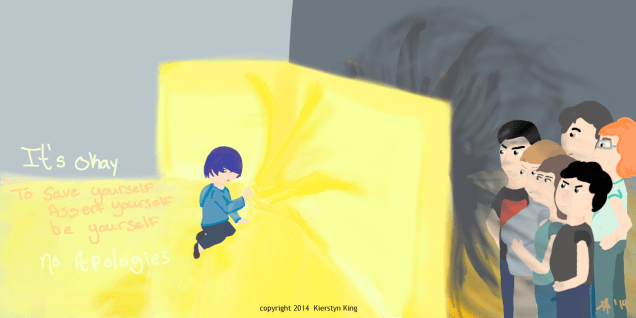
I put up a strong face – I throw up brick walls the way Elsa made her Ice Castle, bury the pain inside the mortar.
 kiery

It’s easier to be callous and cold and numb, than angry, and vulnerable, and hurt. So I act like it doesn’t bother me, Fuck them all is my mantra, but it does bother me and I wish that it wouldn’t.

I wish that I didn’t feel as though the most abusive people in my life mean something. Because I feel like they shouldn’t. I wish I didn’t feel sad because I know that by merely existing  I’m letting down the people who spent my entire childhood neglecting me and usingme.

Sometimes I feel like the Hulk and my secret is that I’m always angry.

Because I am angry.I’m angry at how they get off scot-free, I’m angry at how the world thinks we need to revere parents even when our parents are the bullies we couldn’t escape. I’m angry that they can keep on manipulating people and lying and living with no guilt or remorse, with aid from family, and keep people on their side and looking up to them – as people with Narcissism and Borderline are really good at doing.

My family is looked up to in churches, cited as examples, people seek out my parents to ask them advice about homeschooling and child-rearing (and other things), they think the fact that my mom has destroyed her body having kids is awesome and noble.

No one sees the dark underbelly of what it looks like to grow up with them and their life choices, no one registers the fake smiles, no one sees past the masks.

And I get to pick up the pieces.

I can’t look at an infant or pregnant person without feeling ill and stressed out. I panic every time I see a stroller, or an entitled parent at a restaurant. I get to be condemned for not having or wanting kids, for not doing anything for mother’s day, for doing what I need to do for my sanity and quality of life that involves cutting out the toxicity that is my family. I can’t leave my apartment without being bombarded by triggers, I can’t talk to any nosey old person without being patronized about my existence, the general consensus of the world does everything in it’s power to tell me that everything about me is wrong and flies in the face of what is approved of and wouldn’t it just be easier if I killed everything-that-is-me and conformed?

I’m planning out how to help my siblings after they reach adulthood because my parents thought it was unnecessary for half of my sisters to have identification, and everyone born after 1999 is unvaccinated.

This is the aftermath of growing up with abusive and neglectful parents and extended family who enable them. You bet your ass I’m angry.

And also crying.

Because no one fucking deserves this.

Hey Franklin Graham, Speak Out Against The Abuse In The Church.

Screen Shot 2014-04-27 at 5.46.19 PM

HA note: The following is reprinted with permission from Kathryn Brightbill’s blog The Life and Opinions of Kathryn Elizabeth, Person. It was originally published in March 2014.

Franklin Graham wants you to think he cares about child exploitation.

He doesn’t.

Franklin Graham is busy pretending he cares about child exploitation and that’s why he doesn’t want to let gay people adopt. He thinks gay people recruit children. Aside from pointing out the utter absurdity of this idea, I have one thing to say to Franklin Graham.

Speak out against the abuse in the church.

If you really care about children being harmed, then use your voice and your famous name to do something about the abuse and exploitation of children in evangelical and fundamentalist churches and institutions.

Speak out against the way churches protect child molesters while shaming their victims. Speak up for the children. Condemn the Bill Gothards, the Doug Phillipses, the Sovereign Grace Ministries, the Christian colleges that refuse to do anything about sexual harassment and assault and punish the victims. Speak against the system that enables the abuse and looks the other way when it happens.

Speak out.

Speak against the child abuse. Against the Pearls, the Ezzos, the parenting “experts” who tell parents that the way to create godly children is to beat them into submission. Speak out against the forces in the homeschool world who are fighting tooth and nail against any efforts to protect children from abuse and neglect.

Franklin Graham, you need to get your house in order. Instead of cozying up to the human rights-abusing quasi-dictator that is Vladimir Putin, just because he hates gay people as much as you do, take some of that effort and do something about the very serious and very real abuse problem in the church.

And as for me?

I’m too busy trying to do what you won’t do, working hard to keep any more children from being beaten or starved to death by “good Christian” parents to “recruit” anybody.

Then She Stood By the Brave

Screen Shot 2014-04-27 at 5.22.35 PM

HA note: The following is reprinted with permission from Caleigh Royer’s blog, Profligate Truth. It was originally published on April 8, 2014.

******

**DISCLAIMER: the situation you are about to read about is in good hands and I ask that you not try to contact any of my siblings. They are safe and things are being taken care of.

About a month ago I got a phone call letting me know one of my siblings was being admitted to the mental health ward. All I could think was when it is going to be enough, how many more of my siblings are going to suffer.

Their story is theirs to tell, not mine, but I want to tell you about a story that has continued to unfold over the past few weeks.

Phil and I went to visit my sibling in the psych ward, and I saw my sibling relaxed, a little medicated, but they were relaxed, peaceful, and they were safe there and they knew it. We brought one of my other brothers in to visit our sibling and I found out that he had been faithfully visiting his sibling the whole time during their psych visit. This brother is the one I have had my spats with growing up, and in fact, thanks to him I have a nice numb spot on my hand from one of our fights. This brother is also the one I see holding one of the biggest, caring hearts I have ever seen. The fact that he would purposefully take time out of his day to go visit his sibling in the psych ward every day they were is a huge indicator of just how big his heart is.

*****

I am now barely 2 months away from having this child of mine.

I am becoming more and more aware of how important it is to stand firm with my boundaries when it comes to my mom and my dad. I somehow found myself in a position last week where I was asked by my mom to “draw out” my sibling who had been in the psych ward. My sibling had been asking to be admitted again that morning and wouldn’t talk to mom or anyone else about what was going on. Inwardly I knew my sibling was only going to talk to me and that’s why my mom was pushing me to talk with them. After spending awhile chatting, I knew what I needed to know and just let my sibling know that I was there whenever they needed me. The rest of my visit over there ended in me putting my foot down and being completely blunt with my mom. I told her my exact thoughts on how her staying with my dad was at the expense of the kids and how he wasn’t changing, how I didn’t believe her when she said he was, and just watched her shut down as I refused to let her screwed up logic change my stance.

In that moment I realized I have changed.

I am no longer blinded by the manipulative logic my dad uses to control those around him.

I could see right through everything my mom said and was able to see things I had known were there but had never been able to put words to. I am stronger, I am clear headed, I have changed, and yet, it became painfully obvious she hasn’t changed. She is still toxic to me, she is still clinging to some delusion that my dad is changing, and until she can let go of that and actually protect her children from that man, I have to be careful to keep boundaries in place.

It was encouraging to see how therapy has really worked and I have been able to break so many chains that had previously greatly bound me. I am also in a position now where when a sibling needs help, I’m one of the first people they call, and hell, I’m out the door before they can even coherently say anything other than to beg me to come get them. Which is what happened recently, and which included a visit to my siblings’ school counselor who after hearing our story immediately called Child Protective Services to make a report. I have proven to my siblings, the ones who need it most, that I am not the mean, evil older sister my dad makes me out to be. I am who I say I am and I will drop everything for them if they need me.

I sat in that office and watched my siblings find their strength as they stood up to the abuse they have personally suffered from our dad. My heart bursting with pride, I backed up their stories, and watched as they willingly gave information that will hopefully make a difference. I watched my siblings make very brave and bold decisions despite the possibility of facing retaliation. They are doing what I wish I could have done years ago, they are brave enough to stand up and say enough is enough and it hopefully will truly be enough.

The little girl inside of me wept as I proudly stood by my brave siblings.

I felt like I watched my childhood come full circle. The shame of not being “strong enough” to stand up to my dad was put to rest as I stood there being my siblings’ support. I went through what I had to so that I could be there for my siblings when they needed me. I am stronger now, I have the strength they needed to be able to be brave themselves. I can validate their fears and tell them they’re not crazy despite what the man at home will say. I don’t know about you, but that’s quite a good reason to have gone through what I have if only to be the support my siblings need.

I’m feeling hopeful, I am full of pride, and so relieved I can be there for the siblings who call for help and I can be there to lift up their voices.

“We must always take sides. Neutrality helps oppressor, never the victim. Silence encourages the tormentor, never the tormented.” – Elie Wiesel 

Tylenol is Evil. Because Witchcraft.

Screen Shot 2014-04-22 at 2.16.20 PM

HA note: The following is reprinted with permission from Kierstyn King’s blog Bridging the Gap.  It was originally published on February 20, 2014 with the title, “I don’t know what to call this.”

I was going through the files on my laptop looking for something specific and I ran across a picture that I saved from 2007. I won’t post it here, because it makes my stomach turn, but content note: graphic descriptions of infections and medical neglect.

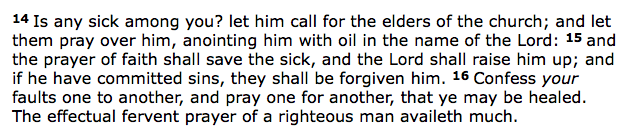
My parents stopped taking us to doctors before I was 10. They believed that god told them doctors were evil, to go to doctors was to not have faith in god’s ability and will to heal the sick. Along with that, came the belief that if you were sick, it likely had something to do with sin in your life. Both of these came from James 5.

k1

So, anytime we got sick, we did that. We’d have dad pray for us, literally anoint us with extra virgin olive oil, and then make sure we didn’t have any unconfessed sins. Ex: a cancer sore we could have because we “talked back”.

Because my parents didn’t believe in doctors, they also didn’t believe in medicine, because there is a greek word called Pharmakeia which is where the word pharmacy is derived from, but also means witchcraft. My parents made the jump to then decide that any medication, including ibuprofen and tylenol is evil, because witchcraft.

(side note: just writing this all out now is making me feel sick. First, I can’t believe I remember these arguments so well, and secondly, I just, I can’t, it’s so stupid)

We had one bottle of children’s chewable aspirin on hand, they reasoned THAT was okay because it’s from bark, not chemicals, and because one of my sisters was prone to migraines that resulted in vomiting – but that was only for dire emergencies.

My mom had “natural” remedies, like tea tree oil, oil of oregano, and Werther’s hard candies (for sore throats  << that one I’m not complaining about, actually, it was candy). Stuff that 1) doesn’t actually make sense and 2) is not located anywhere near the pharmacy area in the grocery store.

(side note: it took Alex so long to get me to take ibuprofen for migraines because of this.)

So, when I was 16 and a half, I had this horrible horrible infection on my leg. I could not move. It was swollen and oozing and painful, any movement at all was excruciating (and no painkillers), it swelled so much that my thigh didn’t look like part of my leg anymore, it was some weird mutated…thing.

My parents believed it was boils, like Job had (Job 2:7)

k2

So, they prayed for me, anointed me with oil, asked about my sins, which I couldn’t think of and then….the fun started.

Remember: no medicine, no doctors, nothing. My mom decided we had to keep the infection clean (makes sense), so, she would push and squeeze the abscess until puss came out of it (so. fucking. painful.), then she would put oil of oregano in and around the wound because it was a “topical pain reliever” and “antiseptic”, I’m pretty sure hydrogen peroxide happened too. Basically I just remember my siblings complaining that I smelled like spaghetti (maybe that’s why I hate it so much).

It was deep, and there was a good bit of blood – it was blue and swollen around the..head? I still have a visible scar from that first one. And the second one.

This went on from the time I was 16 and a half until I was 18 – it didn’t start fully clearing up until I left home, though it had gone down in intensity.

The second one, was right below the first, had two heads (which I think had more to do with my mom PHYSICALLY SQUEEZING THE ABSCESS than anything else) each wound was big enough you could put a pencil eraser in (I still have that scar too), and there was like, a flesh bridge between the two holes, so they were connected /open at the bottom/inside the wound, but on the top there was a little bit of skin that kept it from being a fucking gash.

After the first one though, my parents were less concerned, and I managed to move – while still in excruciating amounts of pain with no recourse – and do chores and go places and manage.

As time passed and I continued to get these and they continued to leave scars and I continued to function in large amounts of pain, my mom started commenting on how my legs looked.

Because, due to the scars – and random abscesses, they looked polka-dotted. So, I wore only jeans or ankle-length skirts (or tights) so as to hide the hideousness of my infected legs. (This continued well into my marriage, in fact I think it was around a year before I stopped wearing exclusively jeans and wore skirts/dresses that were above my knee, because of that reason.)

I walked for 10 hours in boots with an abscess on my knee (it was not fun and towards the end of the day I was having a really hard time walking/keeping up with the group, but being carried was not Teenpact Appropriate). Some of my skirts had stains from them.

I passed up an opportunity to intern with Teenpact after that trip because of my legs and knowing I wouldn’t have the stamina required to wear heels and walk all day.

They were frequent but became smaller – I started to be able to get to them before they developed into something bigger.

This whole time though, over a year and a half  – no one thought anything of it, no one thought to maybe get it checked out, this infection that didn’t go away – this thing that we’re calling boils and figure it has something to do with god, and not providing any kind of relief from the pain, I just had to suck it up and deal with it, and I did.

Our second year together, my legs and scars were healing and I was wearing shorts and short skirts and my parents would always comment on my legs – “oh, it looks like they’re clearing up!” which actually just reminded me that my legs might still be unseemly and polka dotted.

I realized, yesterday, after digging up that picture on accident, that my infection, much like my teeth, was something that they had the power to stop and chose not to. Instead they chose to shame me about it and give me the bare minimum of help (if oregano oil and being made fun of because of it counts as help) because of their religion.

The first two scars are shiny and feel weirdly smooth, but are fading.

k3

The Official Homeschoolers Anonymous “13:24” Giveaway!

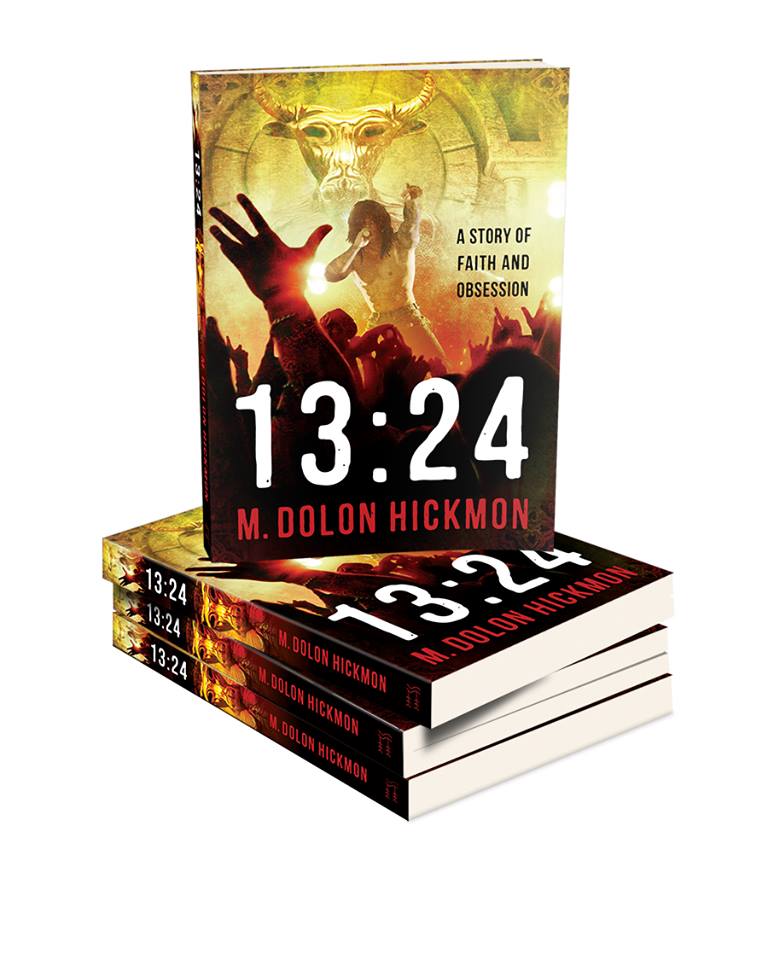
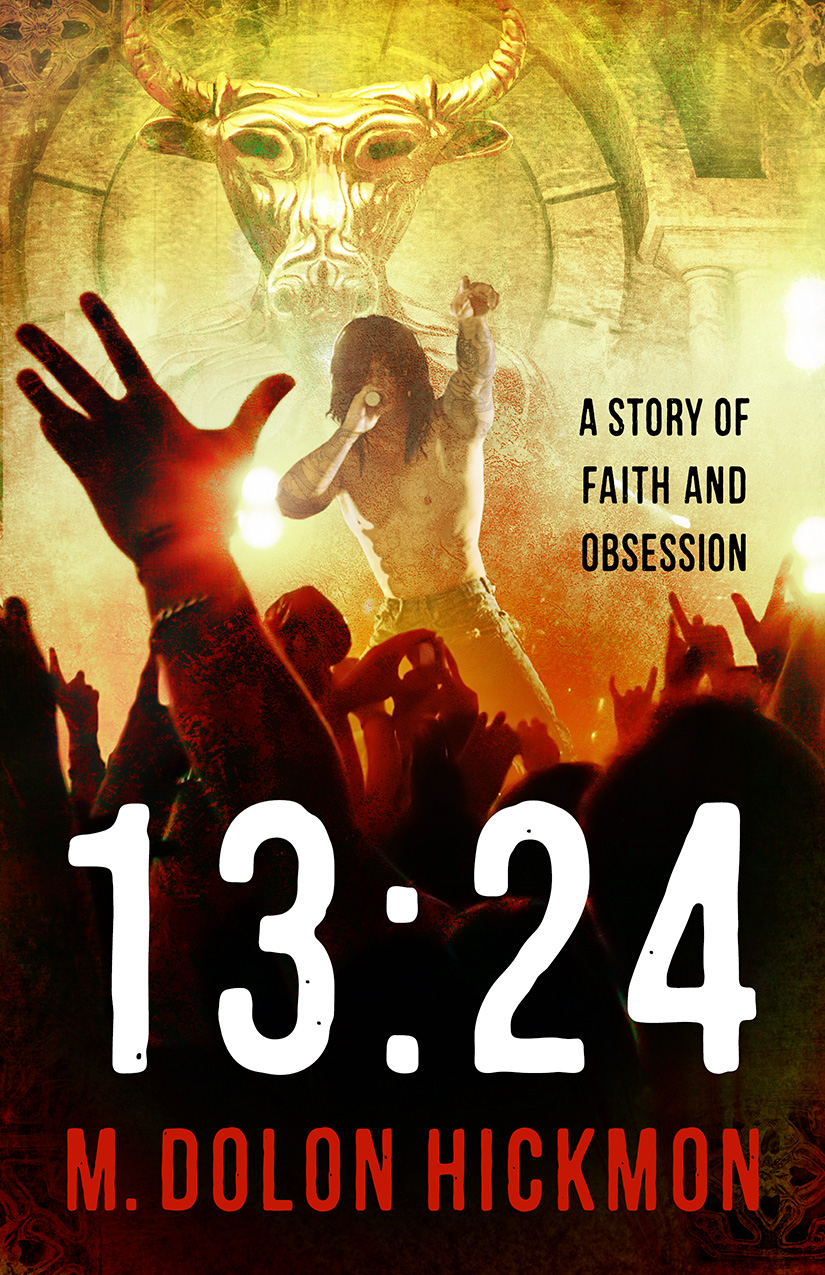
Homeschoolers Anonymous is pleased to announce that we are teaming up with M Dolon Hickmon to give away free copies of his powerful new novel, 13:24.

10248919_240082649530314_175848700_nCalled “a strange and effective debut novel about the powerful dynamics of father-son relationships and the casual violence of amoral subcultures” by Kirkus Reviews, 13:24 is of particular relevance to those interested in how abuse can arise within and hide behind the Christian Homeschool Movement. You can read our review of the novel here and our interview with Hickmon here. (We also featured a post from Hickmon during our “To Break Down a Child” series, which you can view here.)

We are giving away a total of 10 books, 4 via Facebook, 3 via Twitter, and 3 via Pinterest. We are also giving away one “grand prize” package, consisting of a special print edition (with a unique cover and limited edition artwork) and a “Rehoboam” t-shirt.

You can enter the giveaway 3 ways (and you are welcome to enter in all 3 ways):

1. Facebook

To enter the Facebook giveaway, you must do two things:

a. “Like” our Facebook giveaway post here.

b. After liking our Facebook giveaway post here, leave a comment on the same post about why you’d like to read 13:24.

2. Twitter

To enter the Twitter giveaway, you must do one thing: Retweet our giveaway tweet here.

3. Pinterest

To enter the Pinterest giveaway, you must do one thing: Re-pin any one of our 13:24 pins: this one or this one.

If you enter all three of our giveaways, you will be eligible for the “grand prize” drawing as well.

*****

 Official rules are as follows:

1) You must be at least 18 years old to enter.

2) You must be a resident of the United States.

3) You are welcome to enter all 3 of the giveaways (Facebook, Twitter, and Pinterest), HOWEVER…

4) You can win only one giveaway prize total.

5) Winners will be randomly selected from all entries.

6) To be eligible to win the “grand prize” package, you must enter all 3 of the giveaways.

The giveaway opens immediately and will close this Friday, April 18, at 12 pm PST. Winners will be announced via Facebook, Twitter, and Pinterest shortly thereafter.

Legal disclaimer: This giveaway is coordinated by Homeschoolers Anonymous and M Dolon Hickmon. Facebook, Twitter, and Pinterest neither endorse nor are sponsoring the promotion. No purchase is necessary to participate in this giveaway. All promotional material and images from 13:24 are shared with permission by Rehoboam Press. Homeschoolers Anonymous is receiving no compensation for promoting 13:24. If you lack access to Facebook, Twitter, and Pinterest and would like to nonetheless participate in the giveaway, please email us at homeschoolersanonymous@gmail.com for entry.

An Interview with “13:24” Author M Dolon Hickmon

Artwork courtesy of "13:24," http://1324book.com.
Artwork courtesy of “13:24,” http://1324book.com.

Note from R.L. Stollar, HA Community Coordinator: I am honored to interview M Dolon Hickmon, author of the brand new novel “13:24,” for HA You can read my review of his novel here. Hickmon is a child abuse survivor, a writer and an anti-abuse activist. He married his wife in 2007, and they have one daughter together. He dedicates his time and skills to advocating on behalf of mistreated children, often in cooperation with children’s rights groups and other advocates. Learn more about him at his book’s website here.

*****

M Dolon Hickmon is a child abuse survivor, a writer and an anti-abuse activist.

HA: Thank you for being willing to do this interview. Can you tell us a bit about your personal background?

MDH: My parents were ‘saved’ in an Independent Baptist church when I was between three and four years old. It was a high-control group, with a family model based on male dominance. My earliest memories are of beatings and of witnessing domestic violence. Our pastor’s solution to spouse- and child abuse was to call for perfect obedience, so that the family head would have no reason to be provoked. Fortunately my mother kept trying until she found a secular psychologist who helped convince our abuser to leave that church.

HA: 13:24 is an intense, brutal, and deeply personal — yet vastly accurate — read. What inspired you to write it?

MDH: The easiest way to answer that is with a comparison: Thirty years ago, child molesters were pictured as violent rapists, who attacked unwary strangers. Victims were expected to make an immediate outcry. Meanwhile, accusations against coaches, parents, or priests were met with disbelief, or dismissed as bizarre flukes. Today, we know that society had those percentages backwards; it was actually stranger attacks that were a vanishing minority. But it took decades for sexual abuse survivors to convince schools, churches, police officers, prosecutors and judges that their policies were based on bad assumptions.

Today, on the subject of physical abuse, society is where we were on sexual abuse fifty years ago. Our entire system of thought is based on a set of almost clownish stereotypes. 13:24 exposes our false assumptions. It is based on real crimes, on real science, and on real survivors’ experiences. But what makes it disturbing is that when people are exposed to the truth, they immediately realize that our entire culture is off in the woods, when it comes to dealing with this problem. We are fighting imaginary boogeymen, while the actual perpetrators walk free among us.

HA: There are so many different ways you could have written something powerful about your personal experiences and the impressive amount of research you have done of the subject of religiously-motivated physical abuse. What attracted you to a novel as your method of delivery?

MDH: Outside of therapy groups, discussions of physical abuse tend to be dominated by the opinions of people who have not experienced it. These people are often kindhearted and well intentioned, but their understanding of the problem is shallow. It’s hard to address their mistaken beliefs, because they hold the majority and agree with one another. The novel is unique because we remember what we’ve read as if it were a personal experience. I think this is the key—for the majority to have a way of adding the victims’- and survivors’ perspective to their pool of shared experience.

HA: It has been noted — by people who grew up in cultures similar to the ones you describe in your book — how uncannily accurate your descriptions are of certain thought-patterns and sociopolitical realities within conservative American evangelical worlds. You also go into great detail about police and social work. Can you describe what your research process was and how long it took?

MDH: Often, it was as easy as Googling a phrase that I recalled my abuser had said. I also consulted with quite a few authorities, including a psychologist and trauma researcher, a retired vice detective, an active Postal Inspector, a working dominatrix, a police dog trainer, and others.

HA: Even though you tell the story through words in a novel, you really paint a vivid picture of Rehoboam’s music — lyrics, rhythm, melodies, even what their live performances feel and sound like. Why did you place such an emphasis on music?

MDH: In several instances, readers see an instigating childhood experience, and then discover through Josh’s lyrics how his adult mind has processed that event. However, the music is also part of a much bigger social dilemma: When a teenager commits murder, society is quick to consider to the influence of music, television or videogames; but when innumerable parents discipline their children to death, people are reluctant to examine the claims that are being made in the parenting advice that all of them read. I don’t know the answer, but I found the double-standard interesting to consider.

HA: 13:24 ends on an emotionally somber note: neither prescriptively hopeful, nor necessarily hopeless. Without giving anything away, can you talk about why you chose to end on the particular emotional note you did?

MDH: People who overcome child abuse are remarkable, because they have accomplished something that is both difficult and rare. I think the media belittles that accomplishment by making it seem as if every child abuse victim overcomes and is stronger for that experience, in the end. The reality is that there are a lot of unhappy endings. Children die, and those who survive often wind up addicted, or in prison; they make messes of their marriages, and do regrettable things to their own kids. I think 13:24 offers readers a balanced ending, which reflects the range of responses that are normal for human beings.

HA: In your discussion of religiously-motivated physical abuse, both in the novel and elsewhere, you hold nothing back in pointing to how pervasive the relevant problems are: existing not only private schools and home schools, but also public schools. What are some facts you think are important for homeschool advocates in particular to know about parallel problems in private and public schools? And how can or should we work together to address these problems?

When it comes to sexual abuse, we now realize that it is not enough for adults to be watchful and protective; children must be taught to protect themselves, because when abuse occurs, it is usually only the victim and the perpetrator in the room. We need a similar revolution in our thinking about physical abuse. You can’t leave it to parents, because abusers are never going to willingly give victims advice on how to escape. So whether you are a pastor, a neighbor, or family member, the obligation is for all adults to appropriately discuss physical abuse with the children they come in contact with. Kids should know that discipline does not leave children injured or scarred, or feeling worthless or terrified.

HA: One of my favorite sections in 13:24 was the “group therapy” scene were characters talk about the real physiological impacts trauma can have on the body, particularly the brain. Do you think there’s any connection between religious fundamentalists’ fear of taking mental health issues seriously and their unwillingness to talk about child abuse?

MDH: The church is certainly not the only institution that is failing to fully address those two issues. But given that corporal punishment is no longer recommended by any group of secular experts, I think the responsibility is now on pastors to be proactive in educating very young church members about the difference between discipline that is constructive, and physical abuse, which only contributes to mental health problems, substance abuse and rebellion.

HA: What’s next for you? Are you writing another novel?

MDH: I am in the pre-planning stages for a second novel. This one will also deal with abuse and spiritual themes.

HA: Thank you once again for doing this interview. Any closing thoughts?

MDH: I would like to ask everyone to consider how your own conversations about child discipline might seem to a child who is being physically abused. Are you explaining correction so that a five- or nine year old abuse victim can understand when she needs help? Do your words convey that abuse is unacceptable and that other adults will believe and protect? Because if you are not teaching kids to protect themselves from physical abuse, who will?

*****

Homeschoolers Anonymous is pleased to announce that we are teaming up with M Dolon Hickmon to give away free hard copies of his powerful new novel, 13:24Click here for information on how to enter.

This Present Darkness: A Review of M Dolon Hickmon’s “13:24”

* Read our exclusive interview with M Dolon Hickmon and enter our 13:24 Giveaway. *

By R.L. Stollar, HA Community Coordinator

The highest praise I can give M Dolon Hickmon’s debut novel is a trigger warning: While I believe that everyone everywhere needs to read this book, I must urge those with a history of physical or sexual abuse to approach this title with care. I personally had a nervous breakdown after I finished it; I couldn’t breathe because it felt like someone had punched me in the gut. And I could not console myself by saying, “This is fiction.” It isn’t, as anyone who has experienced child abuse will recognize.

1324
Hickmon gives readers an uncommon gift: a brief look behind the curtain of tragedy, a fleeting chance to understand a little more than we did.

In his prologue, the author explains his intentional use of real-life parallels, based on his childhood experiences and research into religiously-motivated child abuse. Also examined are the intersections between child trafficking rings, physical and sexual abuse, and fundamentalist cults. Woven with fictional elements, these create the book’s complex, dark, and brutal narrative.

13:24 is the story of two young men: Josh, a rising rock star, and Chris, the neglected teenaged son of a drug addict. Their stories begin distinct and distant, but as the novel develops, their pasts—and futures—are revealed to be connected in ways that both shock and disturb.

The story opens on a gruesome murder. While the body count rises, questions multiply as a small-town detective chases Chris as a murder suspect. Along the way, readers encounter events and characters with uncanny real-life parallels: Josh has flashbacks of being abused by his minister father, who resembles Michael Pearl and advocates harsh physical punishment; in another thread, a controversial parenting manual is linked to a spate of discipline-related deaths, bringing to mind real-life cases, like those of Hana Williams and Lydia Schatz. Elsewhere, an imprisoned child abuser is freed through the efforts of a “homeschool legal defense fund”, reminiscent of the Home School Legal Defense Association. At the same time, an oily “Christian psychologist” heads a James Dobson-esque media empire, with tendrils in state and national politics.

13:24 may be fiction, but it describes the lives of any number of people I have known. In its imagery, I recognize moments that friends and colleagues have breathed and suffered through. That is what made this novel so hard for me to read.

The book exposes what many religious and homeschooled children experience every day. Readers witness their pain and hear their cries. We see their misery multiplied when it is justified in the name of God; we see their tragedies covered up to save face and preserve religious “freedom”. And unlike a Frank Peretti novel, there are no angels rushing in to the save the day. We must pick up the pieces and fight this present darkness.

Despite the darkness, 13:24 has a poetic beauty. That beauty is in the narrative symmetry: a murder begins it and a murder concludes it. While death marks where the story begins and ends, there is a profound shift in what those deaths mean. This is the power of Hickmon’s prose: he delves deep into pain, into what he has described in his subtitle as “faith and obsession,” and shows us the human faces behind news headlines’ “monsters.”

13:24 is not easy reading. It is neither uplifting nor redemptive. It will crack your heart open, set your blood on fire, and turn your screams into music. Most significantly, the characters’ actions are neither justified nor condemned by the author. He simply allows them to exist. In doing so, Hickmon gives readers an uncommon gift: a brief look behind the curtain of tragedy, a fleeting chance to understand a little more than we did.

How I Left My Parents’ Home

Screen Shot 2014-02-04 at 12.06.32 AM

HA note: The following is reprinted with permission from Sarah Henderson’s blog Feminist in Spite of Them. It was originally published on her blog on September 2, 2013.

Several people have asked me about actually leaving my parents. It’s kind of hard to explain exactly what happened, because there was not one day when I decided to leave.

When I was 16, I was still attending a conservative church with my parents. In my family we were still expected to wear head coverings all the time, but the church we attended only expected them in churches. So in December of 2004 (when I was 16) I decided to stop wearing one at all – to me you either follow that verse 100% or not at all, and I wasn’t going to be the only one. I also secretly purchased jeans and changed into them on rare occasions when I was allowed out with church friends.

The summer of 2005 around my 17th birthday, I went for a week to visit my very secular grandparents in another province. They asked me some questions about what I wanted to do for a career.

I had not been asked that question, as my destiny was to get married and be a homeschooling mom even though I didn’t want that.

My grandparents mentioned that I couldn’t go to university without a high school diploma, and explained that I probably couldn’t even get a GED with how little schooling I’d had. This was news to me since I’d always been told our way was the best way to do anything, but it had the ring of truth.

When I got home, I looked into schools. I found I needed to have parental signatures to attend at age 17, so I privately convinced and cajoled my mom to sign, which she did, although it is my belief that she thought I would give up. My father refused to sign when he found out, and no one told him my mom signed, and the school accepted one signature and none for the bus (as I recall) because by then my mom was too scared to sign anything else. What is confusing about this is that in the summer my father drove me to take an ACT test (useless in Canada) which seemed to encourage academia, but it was with a bunch of homeschoolers so maybe it was the in thing to do for homeschoolers.

Miraculously my parents did not physically prevent me from going to school on the first day, I think because they knew it would probably be noticed if I didn’t go after all the trouble to sign up and get placed into many different classes across all four high school grades. I was expected to wear dresses. That lasted for a few weeks, and then I pulled out the secret pants. My parents tried to force me to change but I refused, and I ran out to catch the bus in a whirlwind of shame.

I quickly made friends with Christian kids at school that were mostly my age, some a bit younger. Two friends I made were sisters, and I would go to their house sometimes for ‘homework projects’. We were on the same bus route so it was easy to do, and their parents drove me home if they asked.

I was invited by other friends to a youth group at a mainstream Pentecostal church. I asked my parents for permission and they said yes sometimes and no sometimes and sometimes would drive me and other times refused when it was too late to find another ride. This was about November.

During this time I opened up a bit to the family I mentioned above with the two sisters. Once at their house I mentioned how hopeless life was with my family and that I was very upset (I didn’t really know what depression was). They told their parents, and somehow I ended up staying at their house for the weekend and just never went home (about November or early December 2005). I know that their dad went to several meetings with my dad and his church friends, and the consensus from my dad’s angle was that at 17, CAS would not force me to return home and it was better not to get the police involved to try and get me back since I was too far gone in rebelliousness anyways, and CAS might take a hard look at seven younger children who were not attending school.

I was able to get a few things from my parents’ home, but my father didn’t waste any time to completely pack up my room, junking most of it and putting lots of my stuff into the damp garage. I basically started life over with the family, I continued going to school, getting decent grades, going to church and youth group, and spending time with friends.

I’ve never really talked publicly about this before, but I need to talk about mental health here. I believe that I spent my first 17 years in some kind of survival state of mind. When I got out and was living with another family, I experienced a whole different lifestyle. The parents worked and provided for the family. I had a few chores like some laundry and dishes, but my job as a student was to do school.

There was also this whole unconditional love bit, and for the most part the emotional state of others in the home was predictable.

Children got pats on the back for doing something well. There was a certain expectation for behaviour and no one really crossed it- it just wasn’t optional. There were no out of control behaviours, because they were taught how to behave when they were younger.

One big problem I had was that I was so used to being told no that I assumed that parents just said no to be nasty. I had to learn at 17, at home and at school, that some stuff was ok and other stuff wasn’t,  and how to tell the difference. I had to learn in a flash how to use judgement because I was never taught that. My philosophy had just been ‘do whatever you need to do to stay out of trouble and try to enjoy life’. But in school and normal family life there are rules to follow so that you don’t violate the rights of others and everything runs smoothly.

I didn’t know that.

It was very hard on me to experience this “culture shock” and to realize how bad I was at relationships.

I had to go to grade 9 math, which I found very shameful. I didn’t know what the bells meant at school. I didn’t know how to share tasks at home. I realized I was very selfish after years of looking out for myself for all those years, and it was impossible to just switch that off when I was in an environment where there wasn’t too many people competing for too few resources. I also realized by comparison how chaotic, unreasonable and toxic my home environment had been. I didn’t know. And then it hit me that I still had siblings there.

It was a very difficult few years. I fell into depression for a while, but I somehow continued school because in this family school wasn’t optional so thankfully if you weren’t sick you went. The family also supported me in making regular calls to CAS over the next two years, so by the fall of 2006 my next brother and sister were enrolled in school at CAS’s recommendation, and the following fall my father was forced to leave the home by CAS for non-compliance and all the siblings were enrolled in school.

I also had many excellent teachers over my three years in high school who seemed to look for the good in students and were compassionate as long as I was trying. Between being granted some credits and earning the rest in three years, I graduated at 20 with a real diploma and I was given a plaque from the principal at commencement – a student leadership award. After graduating high school I was able to go to university and get both a BA and a post graduate degree in four years, and graduate from university on the Deans list.

I no longer have any kind of relationship with my father at all, and my relationship with my mother is complex, as do many of my siblings still live with her.

There is no one reason why I left. Obviously I had quite a bit of help, and there must have been a certain obstinate streak for me to seek out that help.

I have been free for 8 years now. It’s great. 

Wifely Duties and Baseball Bats: Morgan Dawn’s Story

Screen Shot 2014-01-21 at 3.47.26 PM

HA note: The author’s name has been changed to ensure anonymity. “Morgan Dawn” is a pseudonym.

Trigger warnings: rape, extreme physical abuse.

At the age of 3, I was adopted by a Navy couple.

Life was great for about 6 weeks, when they adopted a baby boy. That was when the horror began.

I was pushed aside, because I was “just a girl.”  By the time I was 10, the couple had 3 biological kids, on top of myself and the other adopted boy. My adopted mother had lots of health issues, so she was either pregnant or sick.

My adopted father decided that since his wife wasn’t able to perform her “wifely duties,” that job would fall to me. The rapes were a weekly occurrence from then on. When I went to a DOD school official, my family decided that the “safest” thing for me was to be homeschooled. After all, I was a pathological liar.

Right there, my life changed.

They started reading everything they could about “To Train Up a Child” and proper disciplines for “obstinate children.”  Drop a glass on the floor?  I had to stand on that glass until my feet were bleeding badly.  Slam a door?  My hands were slammed in doors until I couldn’t help but pass out from pain.

I would sneak out of the house to see my boyfriend at night. One thing led to another, and by 13 I was pregnant. The father was killed in a drive-by shooting when I was 6 months along.  I managed to hide the pregnancy (my adoptive father was on deployment to the Middle East, so no one was close enough to tell) until he got home. He wanted sex, and I said no.

O, the pain that “no” would cost me.

He took a baseball bat to my body for hours.  By the time the paramedics were called, I was hanging by a thread, and in preterm labor.  They said I’d never walk or talk again.  My daughter was given (without my permission) to a family “friend” who let her drown in a pool on her 6th birthday.

Homeschooling hid everything.

No one really saw me anyways, so not seeing me at all because I was in body casts didn’t alert anyone. When my face had to be reconstructed for the 2nd time, everyone was told that my biological family had passed on defects that needed fixed. Schooling was “Here’s a book, read it and be prepared to debate on it”, but if the debate wasn’t “right” I’d get beat. It was hell.

By 18, I was ready to leave. By then, there were 10 kids total, and I was expected to sacrifice college to take care of them all. I couldn’t. So, one night, I left and never looked back. I’m now forbidden to talk to anyone in the family.

They were all told that all I was was a whore who left because I was pregnant.

I moved out of state with the help of a few friends that had known me before I was pulled from school. Apparently I was the only reason for homeschooling, as the other kids are all back in school. I was the evil sinner who needed punished.  And now, I love that title.

At least this “evil sinner” is now living life the way she wants. I’m currently in school for Social Work, living with my biological mother, engaged to a wonderful man, and happy.  The happy is so strange, but I like it.

There is hope out there.

Like Matthew Chapman, Duck Dynasty Star Endorsed Child Marriage

HA note: The following is reprinted with permission from Libby Anne’s blog Love Joy Feminism. It was originally published on Patheos on December 30, 2013.

It has just come out that Duck Dynasty star Phil Robertson, so recently suspended over homophobic and racist comments and then reinstated after backlash from his supporters, endorsed child marriage in a sermon in 2009.

At a Sportsmen’s Ministry talk in 2009, Robertson had some advice for a young man.

“Make sure that she can cook a meal, you need to eat some meals that she cooks, check that out,” he said. “Make sure she carries her Bible. That’ll save you a lot of trouble down the road. And if she picks your ducks, now, that’s a woman.”

“They got to where they’re getting hard to find,” Robertson remarked. “Mainly because these boys are waiting until they get to be about 20 years old before they marry ‘em. Look, you wait until they get to be 20 years old, the only picking that’s going to take place is your pocket.”

The Duck Commander company founder added: “You got to marry these girls when they are about 15 or 16, they’ll pick your ducks. You need to check with mom and dad about that of course.”

He went on to say that the Bible gave Americans the right to hunt.

And Robertson practices what he preaches. He began dating his wife, Kay, when she was only 14 and he was 18. They waited until Kay was 16 to get married.

Those who are regular readers will remember my coverage last month of Matthew Chapman, a homeschool father who runs a small ministry and has similarly endorsed child marriage.

I know that in my case, I cannot even begin to fully communicate the wonderful gift Maranatha’s father gave to me in his daughter on the day we married [Maranatha was 15 when she was married to 27-year-old Matthew]. All her life, he had called her to trust him and follow him, even when she didn’t understand or, perhaps, even agree with how he was leading her, and she did. A few nights before our wedding feast, when Maranatha was dressed and ready and waiting for me to come, the doorbell rang and it was her dad who showed up instead. He assured her the wedding feast was not that particular night, and asked her to change her clothes and join him for a special dinner. He took her to a nice restaurant where they had a wonderful evening talking and sharing and laughing and crying together. Then, at one point, he told her, “Sweetheart, all your life you have submitted to me, trusted me, and followed me, and you have done this well. But, when Matthew comes and takes you, all of that transfers over to him, even if that means he leads you in ways that vary from how I would do things.” And when I went to get her, she followed her dad’s final lead right into my headship of her. Wow! Did I walk into a good deal or what?!

Parents, I would also charge you to consider this. The way many Christian homeschooling parents raise their daughters, they mature rather quickly and develop significant capacities by a relatively young age. By their middle-teens, many daughters (but by no means all) possess the maturity and skills to run their own home. My point is to encourage you to be open to the Lord and take to heart that some of your daughters may be ready to marry sooner than your preconceived ideas have allowed for. And why not, if they are truly ready? What is the purpose of holding out for a predetermined numeric age if they are legitimately prepared and the Lord has brought His choice of a young man along for her? Don’t be surprised if this is some of the fruit of your good parenting in bringing forth mature, well-equipped, Godly young daughters. However, I seldom think this will be the case for most young men—it takes them (us) a lot longer to get to where they need to be. I have also seen that, oftentimes, a difference in age—even a significant one—with the man being older, helps make for a better fit.

Matthew married his own daughter off at weeks after her sixteenth birthday. In both cases, the reasons for endorsing child marriage are essentially identical: girls married off at 15 are children, not adults, and are therefore more pliable, less assertive, and more easily led. They do not have life experience or a fully developed sense of self.

It remains to be seen whether Robertson’s endorsement of child marriage will be defended by his loyal following.