HA note: The following is reprinted with permission from Kierstyn King’s blog Bridging the Gap. It was originally published on February 6, 2014.
I actually didn’t plan on writing anything about the Ham on Nye debate Tuesday night.
I planned on drinking and eating popcorn and watching everything implode in a talk-past-each-other kind of way. My mouth hurt (still does, I have even better numbing stuff now, but it makes my lips stick together), we ended up getting milkshakes because Ham is more triggering and milkshakes are more comforting.
The debate went as I suspected it would – more cathartic for me and those of us who have left the Young Earth Creationist camp we were raised with. Ham had all the same material, I’d heard everything he’d said before at VBS, in DVD’s, and his theology permeated my “science” books even though they weren’t exclusively AIG. I knew all his answers, I’d seen all of his graphics, he said absolutely nothing new, at all, I remembered everything verbatim from my previous encounters with AIG as a child. To Nye, this idea is so unfathomable that he had trouble grasping and understanding his audience and I don’t know that he knew what he was getting into. To the people in that room, YEC is more than a science…theory(?), it is, in a very real way, a (the) foundation of their religion. Believing in a Young Earth is somehow, essential to this brand of christianity, my whole family, I think, is Young Earth, my immediate definitely, if not my grandparents too.
None of the arguments made in the debate were really going to change anyone’s minds I don’t think. I don’t know how many people were listening to it like a presidential debate, being really on the fence about religiously-intoxicated creationism and mainstream science, but who knows.
During the Q&A session though, Nye said one thing, one groundbreaking thing, and I don’t know if he even realized it.
He said “I don’t know“.
What he probably didn’t know (or maybe did) when he walked into a room and an audience loaded with people who have been raised or told all of their lives and all of their childhood that they have to know all the answers to everything all the time and that “I don’t know” is not an answer and if you don’t know, something is wrong – saying “I don’t know” in a way that did not have defeatist or negative connotations is something that people raised in this sheltered and toxic environment have probably never heard. Their parents may have, but have denied themselves and their children that option, they’ve rejected the idea of not knowing for the burden of having to always know and have thrust that upon their children at very young ages.
Fellow homeschoolers have written about having to know the answers to all questions – even questions about the legality of homeschooling from the time they were like 6. This is true and this is devastating and this is too much, no one, let alone any child should be required to know the answer to everything. Yet this is what fundamentalists do – they require themselves and everyone they gather into their brand of religion (or non-religion) to have all of the answers to everything. They must always be able to back up a question with a pre-scripted answer that allows for no nuance. I don’t know is invalid.
People asked him the questions creationists are scripted to ask evolutionists (because they don’t know the answer but we do! HA!) and he answered, happily, excitedly, unashamed, and like he had been waiting to say it all night because it’s such a beautiful answer: I don’t know.
Ken Ham, and every entrenched creationist in the audience I’m sure scoffed at Nye’s reply. But what he said, in those three words, is something more powerful than he can know.
Because to the people who were watching who are tired of having to know everything because they realize they don’t know, who are maybe doubting, who are maybe thinking, who are maybe just trying to keep their head down to get by but secretly (even so secretly they may not realize it yet) want to taste something different, something not straight out of the book, Bill Nye just introduced the concept of freedom.
Because the freedom to not know (and that be an okay, even good thing) after coming from an environment where you must know is so so powerful. But one of those things, where you only realize it’s power once you’ve come to terms with the idea that it’s okay to not have the answers.
Bill Nye just introduced hundreds or thousands of people to the idea that “I don’t know” is valid, and okay, and not wrong.
That is the most important thing (I think) that happened in the debate, that’s what I haven’t been able to get out of my head. I don’t know. And it’s beautiful.
Elementary school and junior high were marked by a lot of experimentation with curriculum.
My mother got a homeschool catalog in the mail, and she’d sit down and go through it, highlighting anything she thought was interesting, and I’d pick out a few things that I thought were cool, and that’s what we’d end up doing for electives. However, once we hit high school, I was focusing pretty intently on my piano, as well as my writing, so I wasn’t very interested in electives besides those two. We stuck with the core high school curriculum, and for the most part only used A Beka and BJUPress.
I have very clear memories of my high school experience. I remember the way all the books looked, I remember specific passages and illustrations. I remember quizzes and homework problems.
10th grade was A Beka biology, grammar, and history, BJUPress geometry and literature.
The biology was absolutely ridiculous, in retrospect. They argued a few things about evolutionary missing links that when I did research years later were either exaggerations or misrepresentations. They spent a lot of time presenting their version of evolutionary theory, and what they did was give me nothing more than a straw man. They made assertions about what evolutionists think that make evolutionists look patently ridiculous– the problem is, modern evolutionists haven’t thought or expressed any of those ideas in over a century in some cases. The textbook spends an inordinate amount of time building a case for philosophical Modernism– it doesn’t really have much to do with science, but it has everything to do with conservative and fundamentalist religion.
The grammar and vocabulary books were fine, for the most part, except that A Beka has a very particular agenda to push when it comes to grammar. All of their books explicitly teach prescriptive grammar, and condemns all dictionaries past Webster’s 3rd as absolutely corrupt. The BJUPress literature book taught the same attitude, haranguing almost any author past the 18th century for their amorality and relativism. In fact, the only author I read that could at all be described as post-modern would be T.S. Elliot, and he barely qualifies. I also don’t remember much — if anything — written by someone who wasn’t a white man. So, while most of my peers read books like To Kill a Mockingbird and Catcher in the Rye or 1984, I didn’t read any of them until I got to graduate school.
Both the A Beka biology book and the BJUPress geometry book made it absolutely clear that the only way a scientist can discover anything is if God allows it.
Aside from it painting a dubious picture of God as well as leaving the impression that scientists are bumbling idiots stumbling around in the dark and God occasionally allows them to bump into something (a la endless lists of scientific discoveries that were made “by accident”), these books make it clear that the only possible way of finding truth is if you’re a Christian. Newton discovered his theory of gravity because he was a Christian (which, are you sure you want to claim this guy, A Beka?). There’s a whole chapter dedicated to “real Christian scientists” that is placed in direct opposition to their chapter of “evolutionist hacks.” I’m particularly bothered by this claim, because it’s feeding into Christian privilege and demeaning the hard work and abilities of most scientists.
And the history… well, calling A Beka textbooks “history” is almost laughable. I heard many of my professors and educators complain about “revisionist” history, but knowing what I know now about the material contained inside these textbooks just makes me shake my head. The Civil War is the “War Between the States” or “War of Northern Aggression,” and almost any discussion of the brutalizing horrors of chattel slavery is dismissed. They explain the concept of “Indian Giving” and paint the French-Indian War as something completely unprovoked by any of the English settlers. American history is completely white-washed. The chapter title for Africa in the World History book is un-ironically “The Dark Continent,” and the white-and-Western-centric point of view is hailed as the only truth and manifest destiny is praised. There are entire sections devoted to the evils of pluralism and multi-culturalism, and they call modern India “backwards.”
In short, the only real purpose of their textbooks is indoctrination.
11th grade was more of the same, except I tried both Algebra I and chemistry. I read the chemistry textbook, but it was largely useless outside of the labs and experiments, and we couldn’t do any of those. I ended up basically reading the textbook for the first week and then not having anything else to do. This is the year when I spent most of my time reading books written by young earth creationists– I’ve always been fascinated by science, and this was the year that my frustration with school shot through the roof. As I’d gotten older, I’d gone through whole periods of wanting to be a veterinarian, a vulcanologist, a marine botanist, a cancer researcher, an astrophysicist.
But this was the point when I started to realize that I couldn’t do any of that.
This was the year I realized that my dreams of becoming a scientist were absolutely futile. And I knew it, because I was never going to have the science or math education to survive college.
There were a few factors playing into this– one of them being that I was being told by friends, by family, by my church, by the books I read, that women are not just limited to homemaking by the Bible, we’re limited to homemaking because we’re incapable of being anything else. I couldn’t be a scientist because women are bad at science and math.
Throw that into the pot of not being able to teach myself chemistry and algebra, and you’ve got a problem.
I struggled through algebra every day, hiding in my room so I could cry in frustration because I didn’t understand anything the book was trying to teach me. I tried to ask my mother, but that turned out to be largely futile– my mother had to try to re-teach herself algebra from her foggy memories of high school every single time I asked her to help me, and she was incapable of teaching algebra to me in any other way except how she understood it. She didn’t understand algebra well enough to explain it to me in a way that I could understand.
She didn’t know how to teach math.
This isn’t a reflection on my mother. My mother is brilliant. The problem is my mother was constantly fed the lie that you don’t have to know anything about teaching in order to teach your children. She didn’t know any different, and when we realized that I’d already met the math requirements under the umbrella school to graduate, we both gave up. I accepted my place as a woman and started preparing for a music degree instead of the science I’d always wanted, and my mother accepted what it seemed like I suddenly “wanted.”
My last year in high school my focus switched almost absolutely to practicing piano. I was enrolled with an incredibly demanding teacher and entering competitions like crazy, so school just sort of… fell apart. I whipped through all my English and history classes, half-assed my way through physics (we got the A Beka video tapes, but I didn’t do any of the homework and crammed for all the tests and did very badly– giving up my most recent goal of becoming an astrophysicist hurt a little too much to deal with it), took a “consumer math” course, and got accepted to a fundamentalist college.
I realize that this is more of a literature review than anything else, but I decided to talk about this facet of my high school experience today because both A Beka and BJUPress are still some of the largest distributors for homeschool textbooks, even today. Other curriculum, like Sonlight, are becoming popular, as are people just using the same textbooks as their local public school.
But for the still-dominant religious homeschooling culture, A Beka and BJUPress are still popular.
My mother and I continued fighting over school– some weeks, on a daily basis. Part of this was due to the fact that I’ve always been ferociously independent. I’m what my husband calls a “dirty rotten little rule follower,” but part of what that means to me is that I like to be left alone. You can trust me to do what I’m supposed to be doing (most of the time), and I intensely dislike being monitored. That came to the forefront, and something my mother and I struggled with all through 7th grade was my insistence that I can do this by myself. She was also dealing with my younger sister hitting 4th grade, and this is when my homeschooling experience radically changed– and when, in my impression, many homeschoolers make the same transition.
Junior high or early high school is when homeschoolers start teaching themselves.
Granted, this is not always true, but in my experience, it almost always is. There are as many reasons for this as there are homeschoolers– some of us come from huge families, and it’s impossible for parents to give older children the attention they need. Sometimes it’s because of situations like mine, when we start feeling that we can handle it without our parents. I think my reaction is a natural part of child development– I was, after all, 13 in 7th grade. However, in homeschooling culture, rebellion is not permitted to exist, and the natural independence that children start exerting around 13 is conflated with rebellion. For many of us, our teenage years were incredibly stifling– although many of us didn’t recognize it at the time. I certainly didn’t. I was extraordinarily proud of how I wasn’t going to be “one ofthose teenagers” who “think they know better than their parents.”
The only way my “teenager” stage was allowed to come out was in this way– in taking over my education.
I started doing all of the work by myself and occasionally going to my mother with questions. This is enough of a pattern in homeschooling that some of the major homeschooling curricula distributors have created entire programs around it.
In 8th grade, we started using the A Beka Video school, although we chose not to use them for accreditation. It was insanely expensive and my parents could barely afford it, but it seemed to suit what I needed, and it had an incredibly good reputation among homeschoolers. At first it was amazing, and I ate the whole thing up. Toward the end of the year, though, the program was brutal and exhausting. The videos are not set up for homeschooling the way we were doing it. In order to really make the videos work, a teacher needed to be there with you– doing the reviews, checking homework, administering quizzes– or you’re just going to be sitting in front of a TV for six hours.
Eventually, I grew incredibly bored with the videos.
When I started fast-forwarding through all of the homework checks and the quiz grading on the tapes as well as the classroom work sessions, I realized that there was rarely anything on the tapes that was actually teaching me anything.
I stopped watching any of the videos for English and math, preferring to do the work on my own, and only watched the lecture portions of history and Bible (which, anyone remember Mr. McBride’s history classes? The day I met him I told him that I would save the best lessons and watch them during sleep overs. Seriously. We did that.). In short, by the spring quarter, the videos turned out to be a gigantic waste of money for us.
It also convinced me that I would absolutely hate school– that, along with taking the 7th grade standardized test, which I got extremely good marks on. My reading ability tested out of the park, and everything else was well above average. Those, combined, fed into what I believed about homeschooling compared to public schooling– homeschoolers are smarter, better educated, and more free-thinking than public school students. Public education can only result in stifling a child’s creativity, destroy their intellect beyond repair, and give them nothing more than socialist indoctrination.
So, we turned to Alpha Omega Switched on Schoolhouse for 9th grade. That turned out to be a disaster. The science for that year was physical science of some stripe, and they were trying to teach me how to convert units– except the units in the homework problems frequently weren’t measuring the same things– seriously, you can’t convert a unit of force into a unit of volume. I was so confused I asked my mother to look at it– she rolled her eyes and we stopped using the program in the middle of the year. My mother purchased other textbooks and I spent the rest of 9th grade playing catch-up.
I realized that one of the reasons why homeschooling is considered superior to all other forms of education is that homeschoolers are “better-educated” and “smarter.” We test better. We’re better-read. We’re more articulate. We can socialize with adults better. We spend a lot of time de-bunking homeschooling “myths” and “stereotypes“. We write whole tongue-in-cheek pieces answering “common questions about homeschooling.” And, in junior high, I became one of them. Suddenly, it was my job to convince everyone that I was fantastic. I had to get better grades. I had to read more books.
Every single time I left the house I had to be ready to mount a defense for homeschooling.
All of that convinced me more than it convinced anyone else. It wasn’t that homeschooling and public education have different strengths, different weaknesses. Homeschooling had to be better in every conceivable way.
Most of my elementary education was pretty amazing, I think.
I don’t have very many clear memories, but most of it is just this fuzzy sense that it was pretty awesome and I loved it, especially when we were living in Iceland. I had a huge group of friends, I could learn whatever I wanted– in fact, I think the years we spent in Iceland were the happiest of my childhood. Part of that was we were going to an overseas military church, and that is a unique experience. The lines between church and family blurred.
When we got back to the States, though, everything was different.
One of the first unfortunate things that happened, I think, was the church we attended in New Mexico ostracized my mother in many ways because she decided to continue homeschooling us instead of enrolling us in the church school. She faced some pretty intense push back for that, for reasons I didn’t understand. How it affected my life was that I didn’t make friends with anyone at church, which deeply disappointed me. They were all friends with each other at school, so breaking into the 10-year-old’s clique proved too difficult for me to manage.
I didn’t do myself any favors with that, though. I think part of it was that I was hurt and angry over being unconsciously rejected by the kids at church, so the “well, I don’t need you anyway!” attitude became part of the equation. At one point I got a scorpion shoved down the back of my dress and I was done. I sat by myself after church ended and refused to speak to any of them.
That was really my first taste of the “us against them” mentality I would accept as the incontrovertible order of things once I was older.
I was different because I was homeschooled. That was what made us separate.
When we transferred to Florida, one of the requirements my mother had for finding a church was other homeschool families. It wasn’t the only requirement, but I remember it being one of the biggest. We visited two churches, and I think one of the biggest reasons why we ultimately chose the church-cult was that a higher percentage of the families homeschooled. This also ended up being how we were cemented into the conservative Christian culture of homeschooling.
Let me make it clear: the conservative Christian/fundamentalist homeschooling culture was always present. In Iceland, many of the homeschooling families were extremely conservative. While the church was a far cry from fundamentalist, many of the people who attended it were. My mother began wearing skirts and destroyed all her Amy Grant and Steve Green CDs because the other homeschooling mothers she hung out with did. There was enormous pressure to conform, and we did. We were introduced to Michael and Debi Pearl in New Mexico, and the homeschooling families there helped inculcate in me many of the homeschooling stereotypes– especially a love for all things Pioneer and a Little House on the Prairie.
However, the church-cult was where I would spend more time than I have anywhere else, and it was where we got sucked even further into homeschooling culture. It was there that we started hearing the message homeschooling or bust, but messages like these weren’t being preached from the pulpit. It was in pamphlets and magazines that were being passed around by all the homeschooling moms. When I was in high school, I read a book called None Dare Call it Education, a book which spends a ridiculous amount of time wailing about how liberal Massachusetts is, and how public school is wrecking our great nation.
Almost all of the homeschooling material we received focused an awful lot of time on telling us how terrible every other kind of education is and how awesome we were for doing the “right thing.”
It seems like most of the messages we got were all about building public education straw men than they were about helping homeschoolers do a good job educating their children.
It didn’t help that just like I had been ostracized by the kids at church in New Mexico we started ostracizing all the kids who weren’t homeschooled. There were three families where the children went to public school, and all of them left– some more quickly than others. I have vivid memories of hanging out at one of the girl’s house and being curious about her math textbook. She was confused when I asked if I could look at her textbooks, but I remember being blown away when I saw what they looked like. I had somehow believed that public schools “dumb down” the material, but what I found in those textbooks was far more advanced than what I was learning even though we were in the same grade. I remember struggling to come up with something to say– and then being deeply troubled by how much looking at those books had wrecked my perceptions.
It didn’t take me very long to come up with plenty of plausible explanations to explain the difference away. That experience was the first time I deliberately denied evidence that public school might– just maybe– be totally fine in favor of believing that being a homeschooler meant that I was superior.
I was twelve.
*****
Middle school is where we first ran into problems with my education. Up until that point I remember being a pretty easy kid to homeschool. But when we hit middle school, all I can remember is either being incredibly bored or hating school. Eventually it got so bad that my mom decided that going through grade 5 was pointless since it was really just a re-cycle of grade 4, so I skipped from 4th grade to 6th grade.
That was the year my mom tried to mix things up. We tried Writing Strands and Saxon Math and I started studying Greek and Latin roots and logic. In some ways, it got me excited about school again, but that interest quickly faded. Me and my mother started struggling, and my frustration started increasing again, but this time it was because I couldn’t learn concepts as quickly as I’d become used to. Things like long division took me weeks to understand, and it made me an incredibly difficult student to deal with. There were days when my mother would throw up her hands and disappear into her bedroom, shouting “call me when you graduate from college!” I became resistant and stubborn, and both 6th and 7th grade were a struggle. I hated Saxon math so much I just refused to keep doing it.
At this point we fell into what I think is a pretty common homeschool trap. I don’t have a term for it, but it happens close to the end of the year. You spend the few months leading up to May or June barely doing any schoolwork at all because you’re sick of it and you don’t want to do it anymore, but you have to do something to finish so you throw together a quick compromise: if you do xyz, complete a few papers, and finish the last quarter of tests and quizzes you can be done for the year. So you spend the last few weeks cramming in all those tests and quizzes you forgot to take (grading many of them yourself and let’s be honest we usually cheated) and then hoo-ray it’s summertime.
Some homeschooling families are more disciplined than this, I know. But, from all the conversations I’ve had in the last eight years, disciplined homeschooling environments where projects were completed in a timely fashion and tests and quizzes were taken when they were supposed to, and you completed enough actual days? That is the exception, not the rule. The rule is much more haphazard and flexible– too flexible, really. And while the flexibility of homeschooling is one of the advantages, it’s also one of its drawbacks, too.
Positive and negatives in homeschooling are usually two sides of the same coin.
She loves to write, she loves to teach others how to write, and she loves attending workshops on how to write better. As far back as I can remember, she emphasized the importance of writing well to her children. My siblings and I grew up being encouraged to write short stories, book reports, poems, and — in my case — even musical productions.
Two decades ago, my mom brought Andrew Pudewa to Los Gatos Christian Church in the San Jose, California area to teach homeschool kids about good writing. Pudewa runs the Institute for Excellence in Writing (IEW). IEW describes itself as an “award-winning approach” that “will give you the tools you need to confidently teach your students to write well, think clearly, and express themselves eloquently and persuasively.” The cornerstone of the IEW program is “Teaching Writing: Structure and Style,” a course for parents and teachers on how to teach writing.
About Andrew Pudewa
Two decades ago, my mom brought Andrew Pudewa several times to Los Gatos Christian Church in the San Jose, California area.
Pudewa has been the principle speaker and director of IEW since the 1990’s. While he does not have a college degree, he does have two stated credentials: First, he is a “graduate of the Talent Education Institute in Matsumoto, Japan.” This means he has a “Suzuki Violin Teacher” certificate. Second, he has a “Certificate of Child Brain Development from the Institutes for the Achievement of Human Potential in Philadelphia, Pennsylvania.” (The Institutes for the Achievement of Human Potential is a non-profit organization whose programs for brain injured children have provokedsignificantcontroversy over the last few decades.)
While Pudewa primarily focuses on writing, his opinions on other matters have popped up online from time to time. Pudewa believes public schools are “temples of relativism.” He has argued that multiple-choice tests are “evil” and “part of a clandestine effort by the inner sanctum of social scientists.” He also calls the Civil War “the War of Northern Aggression.”
I vividly remember three things from attending Pudewa’s writing classes:
1) Pudewa’s notion of the ideal paragraph.
2) Group massages.
3) Rock music kills plants and hurts rats.
The first — Pudewa’s notion of the ideal paragraph — I remember with fondness. Pudewa has these strategies for making a paragraph interesting. Each paragraph is supposed to include different “types” of sentences — a sentence beginning with a declarative, like “There is…,” a sentence beginning with an “-ing” verb, like “Thinking he was late, the boy rushed…,” a “very short sentence” with five words or less, and so forth. I have heard from other homeschool graduates that they hated this part of Pudewa’s program, that it was stifling and led to poor writing habits that took years to overcome. I even found a homeschooling mom express this sentiment recently in such a spot-on way it was simultaneously humorous and heartbreaking:
“[My child’s] paragraph on Noah is all stilted and weird because she HAD to include that who clause and that ‘ly word.
While I understand those criticisms, I personally appreciated the idea of intentionally changing your sentence structure to make each paragraph more arresting.
The second — group massages — was just weird. Pudewa would make all the class attendees — homeschool kids and homeschooling mothers — stand up and give each other back massages. When you’re a kid and your teacher makes you give a back massage to not only strangers but much older adult woman, and vice-versa, it is… weird.
The third — Pudewa’s tangential lessons on the “effects of music on life” — are what I am interested in discussing here.
Pudewa has a fascination with music and its alleged effects on the human brain and children’s ability to learn. This fascination makes sense considering Pudewa is not only a writing teacher, but also a Suzuki-method violin teacher. In fact, it might interest homeschool graduates who disliked Pudewa’s writing instruction methods to know that Pudewa’s methods are an experiment in applying Suzuki’s method for teaching violin to something other than music — namely, writing.
The Profound (New Age) Effects of Music on Life
It wasn’t random happenstance that other children and I learned about the detrimental impact certain types of music can have on rats, plants, and students two decades ago. Pudewa has been teaching this lesson since the 1990’s.
Even today, the Institute for Excellence in Writing continues to sell Pudewa’s presentation on music, entitled “The Profound Effects of Music on Life.”
More important, he still is.
Just a couple years ago in 2011, Andrea Schwartz — who works with the Christian Reconstructionist organization the Chalcedon Foundation and who oversees the Chalcedon Teacher Training Institute — interviewed Pudewa. In that interview, Pudewa brings up the same plant and rat stories I heard as a kid.
As of today, in November of 2013, the Institute for Excellence in Writing sells Pudewa’s presentation on music, entitled “The Profound Effects of Music on Life.” The presentation description says the listener will “discover the fascinating effects that different kinds of music have on our brains,” a discovery that will “transform your thinking” and make you “never listen to music in quite the same way again.” How does Pudewa accomplish this? Well, “Dramatic evidence regarding potentially harmful music is introduced with both scientific data and spiritual insight.”
Yes, “dramatic evidence.”
You could spend $15 and buy his presentation to find out more. Or you can check out the presentation handout that IEW has available for free on their website. A quick perusal of this handout verifies for me that this is exactly the same presentation with the exact same “dramatic evidence” that I heard as a child, years and years ago at Los Gatos Christian Church.
So what is this “dramatic evidence” that leads Pudewa to teach young, impressionable children for two decades now that rock music could “potentially harm” their bodies and brains? Well, the evidence comes from a number of sources, the most notable being: Dorothy Retallack, Frances Rauscher, and Inge and Ron Cannon.
The New Age Pseudoscience of Dorothy Retallack
Rock music kills plants.
Andrew Pudewa’s primary source for his musical plant claim is Dorothy Retallack’s book “The Sound of Music and Plants.”
If there is anything for which I will forever remember Andrew Pudewa, it is this claim.
He made the claim almost two decades ago. He is still making the claim today.
In Pudewa’s aforementioned presentation outline, you can see this for yourself. He claims that, “Plants exposed to classical music flourished while those exposed to rock and heavily percussive music were less healthy and turned away from the source of sound, many finally dying.” He then provides a footnote to the “primary source” for this “research citation.”
Pudewa’s primary source for his musical plant claim is Dorothy Retallack’s book The Sound of Music and Plants.
Dorothy Retallack was a professional mezza-soprano who described herself as a “doctor’s wife, housekeeper, and grandmother to fifteen.” In 1964, after her last child graduated from college, she enrolled as a freshman at the now-nonexistent Temple Buell College. Note that she was a professional musician, not a scientist. In order to fulfill her basic general ed science requirements, Retallack took an Introduction to Biology course. Her teacher asked her to conduct an experiment — any experiment that would interest her. This experiment led to her claim to fame: the musical plant myth.
According to Dr. Daniel Chamovitz (Ph.D. Genetics, Hebrew University of Jerusalem), Director of the Manna Center for Plant Biosciences at Tel Aviv University, Retallack was “a unique mixture of a social conservative who believed that loud rock music correlated with antisocial behavior among college students and a New Age spiritualist who saw a sacred harmony between music and physics and all of nature.” She was inspired for her experiment by a 1959 book called The Power of Prayer on Plants. This book was written by the late Reverend Franklin Loehr, who founded the Religious Research Foundation.
Do me a quick favor, by the way, and go look at his “foundation” website. This will tell you all you need to know.
But just in case that doesn’t clue you in, let me add: Loehr was a “past life reader” who believed he channeled an “entity” that called itself “Dr. John Christopher Daniels.” This entity was a “research librarian” 4300 years ago.
So Retallack’s experiment on plants was inspired by the ancient librarian-channeling Reverend’s book about plants. In his book, Loehr claimed that plants bombarded with prayers fared better than plants bombarded with hateful thoughts. This claim caused Retallack to wonder if music could impact plants in the same way. She exposed a variety of plants to Bach, Schoenberg, Jimi Hendrix, and Led Zeppelin. Her experiments, she claimed, demonstrated that plants exposed to soft classical music (and even elevator music) were healthy, whereas plants exposed to rock music — in particular, the drum beats of rock music — died. She wrote up her conclusions in the 1973 book The Sound of Music and Plants.
And there you have it. This is the origin of the idea that rock music kills plants. This is the entirety of the evidence that Andrew Pudewa cites for the idea as well.
Retallack’s studies were drought with scientific shortcomings… The number of replicates in her studies was so small that it was not sufficient for statistical analysis. The experimental design was poor—some of the studies were carried out in her friend’s house—and parameters, such as soil moisture, were determined by touching the soil with a finger. While Retallack cites a number of experts in her book, almost none of them are biologists. They are experts in music, physics, and theology, and quite a few citations are from sources with no scientific credentials. Most important, however, is the fact that her research has not been replicated in a credible lab… Retallack’s musical plants have been relegated to the garbage bin of science.
What Dr. Chamovitz states is the universal scientific consensus. Because — spoiler alert — plants don’t have ears. Plants can technically see, smell, and feel. But they cannot hear. As Eastern Connecticut State University professor of Botany, Ross Koning, has stated:
Plants have no ears to hear and no brain to process or develop musical taste or music appreciation…so any attempts to show relationships between music forms and growth or other responses have met with total failure in the hands of true scientists. This explains the lack of literature you find to read on the subject.
The popular TV show MythBusters even had a segment on this myth, entitled “Talking to Plants.” Like Retallack, they too used bad scientific methods. But unlike Retallack, their conclusions were in favor of beat-driven music: the plants they exposed to intense death metal grew the most.
Dr. Linda Chalker-Scott, who has a PhD in Horticulture and is the Extension Urban Horticulturist at Puyallup Research and Extension Center at Washington State University, has also written a scatching review of Retallack’s “research.” Dr. Chalker-Scott points out that, among many other problems, Retallack’s book should not be considered valid because: (1) out of the 40 footnotes only two are relevant to the subject of plant growth and sound; (2) Retallack “anthropomorphizes,” comparing “plants to humans in terms of having ‘likes and dislikes, their feelings and idiosyncrasies'”; and (3) “the potting containers were Styrofoam drinking cups with no drainage.”
Most curiously, Dr. Chalker-Scott also makes the following observation: “The book is published by a company that specializes in New Age literature, not science.”
Yes, New Age literature. Dr. Chamovitz also points this out: “Her book was eventually published as New Age literature.”
Andrew Pudewa has been teaching New Age literature to Christian homeschoolers for two decades.
Misinterpreting Frances Rauscher
Andrew Pudewa cites studies by Dr. Frances Rauscher, widely considered to be the pioneer of the “Mozart Effect.”
It’s not just plants that rock music hurts, though, according to Pudewa. Rats are also negatively impacted; in contrast, Mozart can positively benefit — via the “Mozart Effect” — students and children. Again from his presentation handout:
College students temporarily improved spatial-temporal IQ scores by 8-10 points after listening to Mozart, when compared with relaxation music and no music… Preschool children given six months of keyboard instruction increased spatial-temporal IQ scores by an average of 46% over other supplemental instruction (singing, computer, free play)… Rats exposed to Mozart music from before birth to 60 days old were able to learn mazes over twice as fast as those with no music, whereas rats exposed to repetitive “minimalist” music were unable to navigate mazes at all.
For all of these claims, Pudewa cites studies by Dr. Frances Rauscher. Dr. Rauscher (PhD, Experimental Psychology, Columbia University) is widely considered the pioneer of the “Mozart Effect,” the idea that listening to Mozart can positively impact young children and students. But this is sort of like the case of Brian Ray and the state of homeschooling research: the research does not really prove what people think it proves. Here is NPR’s summary of what Rauscher demonstrated:
In the spring of 1993 a psychologist named Francis [sic] Rauscher played 10 minutes of a Mozart Piano Sonata to 36 college students, and after the excerpt, gave the students a test of spatial reasoning. Rauscher also asked the students to take a spatial reasoning test after listening to 10 minutes of silence, and, after listening to 10 minutes of a person with a monotone speaking voice.And Rauscher says, the results of this experiment seemed pretty clear. “What we found was that the students who had listened to the Mozart Sonata scored significantly higher on the spatial temporal task.”
While this seems simple enough, it got quickly and increasingly complicated. J.S. Jenkins (MD, Fellow at the Royal College of Physicians) explains: “Some investigators were unable to reproduce the findings,” while “others confirmed that listening to Mozart’s sonata K448 produced a small increase in spatial-temporal performance.” Rauscher herself “stressed that the Mozart effect is limited to spatial temporal reasoning and that there is no enhancement of general intelligence.”
She also cautioned that her test might have involved “inappropriate test procedures.”
Many attempts to replicate Rauscher’s studies were conducted, many of which were unsuccessful. According to Andrew Gorman, Research Associate at the Institute of Cognitive Science at University of Colorado, Boulder,
In an effort to replicate and extend the results from UC, Irvine [Rauscher’s study], Stough, Kerkin, Bates, and Mangan performed a similar study using 30 subjects… The results of their test showed that while there was a small mean difference in scores across conditions in the predicted direction, these differences were not significant… The researchers concluded that further research in this area would not be of any benefit.
…Citing other studies that failed to show a “Mozart Effect” (Kenealy, 1994; Stough et al., 1994), Newman, Rosenbach, Burns, Latimer, Matocha, and Vogt tried to duplicate the conditions of the original study by Rauscher et al… This showed no significant difference between condition group and thus did not support the Rauscher et al. experiments. In analyzing the scores using music training as the factor, no significant difference was found. Interest- ingly, the subjects who reported liking classical music scored significantly lower than those who did not.
Gorman canvasses a good number of other studies, some backing up Rauscher’s study and some undermining it. Gorman’s conclusion of all the contradictory studies is as follows:
It is clear that there is growing evidence that support the claims that music can enhance verbal and spatial-temporal ability. However, this is by no means a panacea. The short-term effects that have been found are so ephemeral and are confined to such a narrow range of tasks that it is questionable as to whether any practical applications will come from this research. Any hope that these results will directly influence educational policy seems misguided.
While Rauscher’s studies created a storm of arguments, Rauscher herself was surprised and confused by the ways people took the results. The results were often misinterpreted or misapplied. Rauscher states,
“Generalizing these results to children is one of the first things that went wrong. Somehow or another the myth started exploding that children that listen to classical music from a young age will do better on the SAT, they’ll score better on intelligence tests in general, and so forth.”
Ironically, Rauscher sees her study as supporting a love of music in general, not a love of any particular type of music. She says,
“The key to it is that you have to enjoy the music. If you hate Mozart you’re not going to find a Mozart Effect. If you love Pearl Jam, you’re going to find a Pearl Jam effect.”
Yes, the person that Pudewa cites in favor of “the Mozart Effect” actually believes “the Pearl Jam Effect” is just as valid a conclusion.
And what about those rats that listened to Mozart non-stop? Well, I could point out that Dr. Kenneth M. Steele (PhD, University of Tennessee-Knoxville), Professor of Psychology at Appalachian State University, conducted his own Mozart/rat experiments. He concluded that, “in the context of piano note frequencies,” rats were “deaf to most of the notes (69%) in the sonata.” Thus, “Whatever the rats hear, it is not the sonata written by Mozart.”
Rauscher, at age 42, hears more Mozart in the lab than she did 15 years ago when she burned out and abandoned a more traditional pursuit of music. Even now she has mixed feelings–at least about the ‘all Mozart all the time’ auditory diet that she feeds her research subjects. ‘I’m so sick of it I could die,” she says. “Sometimes I can’t get it out of my head. It’s so annoying.'”
I think the lesson here is (1) listen to music you love and (2) don’t listen to any type of music (whether you love it or hate it) for 12 hours a day, day after day after day.
The Cannons Strive for Excellence
Another “citation” that Pudewa provides on his presentation handout is this:
Striving for Excellence (audiotape set), IBLP, Box One, Oak Brook, IL 60522
Why is Andrew Pudewa citing material from Bill Gothard’s Institute for Basic Life Principles
Jeri Lofland at Heresy in the Heartland has already summarized the contents of the Cannons’ “Striving for Excellence” message. So I will cite a few highlights from her summary:
The Cannons began with some music theory that was way over our heads… Then there were some odd bits and pieces about rhythms causing riots or neural damage in mice… Another doctor translated DNA into musical scores. (Don’t ask me how.)… Now we came to the heart of the argument: rock music, the very beat itself, was equated with rebellion and unbridled sensuality. It would make listeners want to take drugs and have sex… And if we still weren’t convinced, the Cannons explained that rock songs were imbalanced, like asymmetrical architecture. The best forms of art or music were those from the Age of Classicism: a definite beginning, a climax point, and a satisfying conclusion. With echoes of David Noebel’s publications against rock music, this one deprecated Impressionism and Cubism while celebrating the Baroque and the Classical periods.
This series by the Cannons is chockfull of so much debunked pseudoscience and conspiracy theories that I am unsure why Pudewa would direct anyone in its direction. Furthermore, notice what Jeri says Striving for Excellence mentions: “neural damage in mice.” Yes, the Cannons themselves reference Rauscher’s studies — and like Pudewa, they do so haphazardly. Should someone tell me that the Cannons also reference Dorothy Retallack, I will not be surprised.
Andrew Pudewa, David Noebel, and Bill Gothard
Ultimately, my criticism here is much bigger than Andrew Pudewa. It absolutely does bother me that Pudewa — as an instructor of young, impressionable students — would perpetuate pseudoscience and alarmist myths through his teaching position.
That is bad enough.
But this is bigger than Pudewa.
Interracial concert audiences concerned Christian fundamentalists and the Ku Klux Klan.
The Retallack and Rauscher experiments have inspired a longstanding trend within evangelical circles — and the Christian homeschooling movement — to spread fear and panic about any music with a beat. Since the 1960’s, people like Bill Gothard — from IBLP and ATI— and David Noebel — from Summit Ministries — have spread inaccurate and unintelligent claims about rock music. Gothard has argued that rock music leads “to rebellion, drugs, immorality, and the occult,” associating just about every possible sin with the musical genre.
David Noebel’s first claim to fame is the 1965 book Communism, Hypnotism, and the Beatles, where he alleges — no joke — that “Rock ‘n’ roll is turning kids into gay, Communist, miscegenators.”
Miscegenators, people.
David Noebel, the founder of our beloved Summit Ministries, was against interracial marriage as much as he is against gay marriage. And rock music was the root of the evil that was interracial marriage. What, you ask, led him to such an asinine, racist conclusion? Well, according to Dr. James Kennaway, a Wellcome Trust Research Fellow at the Centre for the History of Medicine and Disease at Durham University, Noebel brought to light “a less common aspect of music’s dangers – the threat posed to plants. He reported an experiment conducted by Mrs Dorothy Retallack of Denver that demonstrated, he claimed, that avant-garde classical music made plants wilt and Led Zeppelin made them die.”
Yes, with David Noebel we have come full circle to Doroth Retallack.
A seventeen-year old girl, while undergoing a routine operation to cut a non-cancerous tumor from her finger, suddenly developed what appeared to be a heart problem. However, when the girl’s headset turned off, her heart returned to normal rhythm. She had been listening to the rock album “Beyond Belief” by Petra.
Cue the horror movie music.
Dr. Kennaway situates these fears of the Religious Right in the broader context of what he describes as “the development of fears that music can make listeners ill.” He explains that, “For the last two hundred years many doctors, critics and writers have suggested that certain kinds of music have the power to cause neurosis, madness, hysteria and even death.”
One of the most significant factors in this fearmongering, according to Dr. Kennaway, is racism.
“Race,” he explains, “has played a major role in most medical panics about music since ragtime. Already in 1904, an American critic commented on the popularity of the argument that the ‘peculiar accent and syncopated time’ of ragtime could have a ‘disintegrating effect on nerve tissue and a similar result upon moral integrity’.” One sees this unfortunate sentiment in Noebel’s miscegnation comment. Noebel gets even more upfront about his racism, saying that rock music is a Communist plot to replace classical music with, and I quote, “the beat of African music.” One also sees it — whether intentionally or not — in Andrew Pudewa, the Cannons, Bill Gothard, and David Noebel whenever they make comments about “beats.” Because, see, each and every musical type has a beat. What all these individuals are objecting to is what they abstractly refer to as “syncopated” or “tribal” beats — in other words, beats brought to the U.S. by Africans.
So not only is this shared narrative anti-intellectual and unscientific, it is also an inherently racist narrative. I think the most vivid example of this fact comes from Dr. Roger Chapman (PhD, American Culture Studies, Bowling Green State University), Professor of History at Palm Beach Atlantic University. Dr. Chapman states,
Interracial concert audiences concerned Christian fundamentalists and the Ku Klux Klan, who called for a ban on the “devil’s music” to prevent the spread of juvenile delinquency and the “mongrelization” of white teens.
Conclusion
For two decades, Andrew Pudewa has taught young students flawed science about music. But the science is more than merely flawed. It originated from a man who thought he channeled a 5000-year-old spirit and then promoted by a New Age spiritualist. Why is such pseudoscience being taught by Pudewa to Christian homeschoolers? Why is something so untrue — and something that is actually New Age literature — being repeated over and over for decades by evangelicals and Christian homeschool leaders so concerned about New Age literature and African spiritualism — by Bill Gothard, David Noebel, and others like Bob Larson, Jimmy Swaggart, Geoffrey Botkin, and “Little Bear” Wheeler?
This is not only the height of bad scholarship, it is the height of irony.
Growing up, Christian homeschoolers were cautioned about how listening to rock music could cause you to be demon possessed. Now come to find out, that very alarmism was inspired by a man who quite literally claimed to be possessed himself.
I could end this whole post with some conclusion that wraps everything up nicely and neatly. But that would be too classical, if you know what I mean. So I will conclude with the best critique of the whole “rock music kills plants” myth that exists, courtesy of Audio Adrenaline:
I was almost completely isolated, subject to my mother’s personal drama on a daily basis. She lost control of her hoarding behavior, eventually lining the walls of our home with piles of dusty books, magazines, and papers which seemed dearer to her than family living space and respiratory health. She instigated disputes with her siblings and raged about perceived injustices. She spent time planning parties that never happened. Until the last few years, she refused to work outside the home, even though her supplemental income would have enabled me to enroll in music or foreign language lessons. When she finally began working part-time, she spent the income on a new car. She fretted about falling behind in educating me, while doing nothing to improve the situation.
She instructed me to lie about our daily routine.
Despite her awareness that this situation had become quite terrible, she still believed keeping me at home was preferable to exposing me to the horrors of public school. HSLDA purports homeschooling is all but necessary to preserve a child’s decency. It was, no doubt, far easier for my mother to ignore the reality of the situation while consoled with this noble image.
Despite isolation, my mother continued to monitor my behavior, watching for signs of emergent “teenage behavior” and un-Godly beliefs which might have seeped into our household against her wishes. Laughing at the wrong joke in a movie, for example, might unleash a torrent of shaming rage. One day, wearing nail polish would be acceptable and “pretty” — another day, it would be shamefully worldly and warrant usage of the label “slut”. By the age of 16, I became severely depressed and had lost significant weight, but was not offered counseling or medical treatment.
My mother instead chastised me for exhibiting teenage rebelliousness.
For a while I was suicidal, high-risk given my secrecy and feasible plans. No adult in my life acknowledged that this stress and isolation might have negative effects on me. No one asked me if I felt I was being prepared to enter the adult world or to attend college. My father, despite living in the same house, never inquired about my education or wellbeing. Grandparents expressed concern and curiosity but were silenced by my mother’s convicted assertions. More distant family members inquired skeptically but were blown off with her combative resolve. I felt trapped and hopeless, unwanted and invisible.
*****
I did escape this situation at the age of 18.
My mother’s employment during the last few years enabled me to get out of the house more often and, in turn, my mental health improved. I earned my GED, began working in retail, attended community college, then moved to another city and supported myself through university. I somehow emerged with a strong sense of self and the ability to form healthy social relationships. Perhaps unsurprisingly, I have always had my doubts about Christianity. Today I follow a self-constructed spirituality stemming from Buddhist philosophy, yoga, and meditation, with occasional dabbling in occult divination via cartomancy.
However, there is a dark side of myself that only a close few know.
For years I have struggled with PTSD symptoms, depression, social anxiety, and low self-esteem. Often I cannot identify with my peers as the experiences of my first 18 years were so atypical and potentially stigmatizing. I mourn the loss of my childhood and the absence of positive parental figures.
These days I can’t imagine away the pain of this long-term isolation and having been physically abused.
I was thrown under the bus to fulfill my parents’ fantasies of the perfect family.
Nor can I align myself with my parents’ perspective that children and teenagers are indentured servants. I can’t stop caring about how poorly they treated me, nor suppress the feelings of disgust and unease that arise when I see them or imagine visiting them.
I am currently no-contact with my parents. My mother flatters herself with historical revisions, presenting my acceptance to a prestigious graduate program as the success of her home education efforts. They have not acknowledged the truth of our shared history, and I do not know how to relate to them as anyone other than authority figures. I have no emotional attachment to them, and for now their presence in my life merely reminds me of the horrible things they did to me.
But, gradually, I am feeling less shame about what happened to me. I am starting to feel less embarrassed by it and more proud of how I overcame the situation. I am beginning to empathize with my past self, appreciating the things I did then to help me survive into the present. Lately I feel more “human” in some vague sense. Specifically, I feel more capable of relating to other people and knowing what I want and need. On that note, my therapist of five years is a total rock star.
*****
At its core, this is clearly a story about growing up in a dysfunctional family and with an abusive mother failing to manage her mental health issues. However, several aspects of the Christian subculture homeschooling movement stand out as fueling the existing fire of my misfortune, or creating the perfect storm of an abusive, neglectful homeschooling situation.
Regulations on homeschooling may have discouraged my mother from wanting to homeschool, or brought outside attention to my terrible situation. Currently, in many states, future homeschool students silently fade away behind a vague letter of withdrawal and intent. Registration with the local school district would require parents to face school officials and engage in dialogue about their rationale and preparations. Annual lesson plan approval and testing would encourage earnest academic investment and would identify on-going cases of neglect. It has become apparent lately that, upon legal emancipation, many homeschooled teenagers no longer desire to attend Bob Jones University or marry into a Quiverfull movement. Documenting grades and filing transcripts with the local school district would expand higher education opportunities for these children. Such regulations would have imposed reality on my mother’s mostly unchallenged fantasy world, one which placed me at a severe disadvantage.
HSLDA’s promoted image of homeschooling provided an ideal fantasy for my mother to latch onto.
She saw herself most importantly as a warrior for Christ, less so a dedicated teacher. HSLDA propaganda, in fact, less heavily emphasizes the importance of proving quality education and social opportunities for children. One can walk away from an HSLDA forum thinking, “the most important thing is that I remove my child from the evil public school environment.” Dispassionate, research-based information about the work needed for legitimate homeschooling would place the value of teaching above “fighting the culture war”. Availability of such information may have undermined my mother’s romanticized image of the homeschool-mom as an anything-goes hero-by-default. HSLDA’s insistence to avoid regulations and legitimate research on homeschooling does nothing to protect or improve home education, only to help obscure appalling cases such as mine.
It’s clear from my description of family dynamics that one may not expect me to have had a “good-enough” childhood regardless of how I was educated. Sometimes I ask myself, “how would public (or private) school have improved my situation?” My parents failed to educate me; it would have provided a baseline education that was, at least, better than nothing. My parents believed that children should not be allowed a voice; it would have provided access to adult mentors who might have listened to and respected me. My parents were socially isolated, lacking friendships; it would have provided opportunities to acquire developmentally-appropriate social skills rather than learning it all at once as a working college student. My parents did not provide extracurricular activities for me; it would have provided a means to expand myself with arts or athletics.
Finally, my parents did not offer a structured means by which I could assess my personal changes and growth. Formal schooling, no matter how angst-ridden it might be for many young people, at the very least grants the student a sense of autonomy in deciding whether they love or hate school, admire or despise authority figures, agree or disagree with society at large.
My parents robbed me of that experience by imposing their selfish whims on me, unchecked by the isolation.
Although I survived with a fair bit of myself intact, going through this experimental phase while an employee and student, alone in a new city, was both risky and terrifying.
*****
A question I continue to grapple with — and perhaps will, for a while — is: who do you turn to when your own mother is trying to destroy your metamorphosis into a healthy, functional adult? When your father ignores your plight?
What do you do?
No adult in my immediate or distant family intervened, nor were child protective services ever alerted to my condition. Family members cannot be depended on to identify and report educational neglect and abusive behavior. Turning a blind eye is easier for many than dealing with a difficult person or sacrificing the perfect family image for a child’s so-called “rights”.
Homeschooling is a dangerous plan when abuse, isolation, and dysfunction already exist within a family. Homeschooling is also a unique challenge when parents or children already struggle to maintain mental health. A first step toward preventing tragedies similar to my own would be access to dispassionate home education information and enactment of regulations that screen for high-risk families.
Until stories like mine cease to appear, influential organizations such as HSLDA owe such efforts to the wellbeing of these particularly vulnerable children.
The HSLDA promotes a certain image of the average homeschool family, a cozy picture which convinces thousands of parents each year to withdraw their children from public school.
Parents in the conservative Christian subculture explicitly use homeschooling to shelter children from secular beliefs. Regardless of the degree of their sheltering, they often want to provide an emotionally and spiritually healthy educational environment for their child. While HSLDA propaganda acknowledges that homeschool parents experience a range of “ups and downs”, it neglects to provide critical, data-driven information on specific challenges. God will lead any willing parent to successfully homeschool, they say, avoiding the issue that some families could be considered high-risk for unsatisfactory, even abusive, homeschooling outcomes.
My experience as a neglected homeschool student growing up in an abusive, dysfunctional family is testimony that this scenario does not always unfold so neatly.
My mother was encouraged by HSLDA propaganda to homeschool me, and my parents were enabled by lack of regulatory oversight to proceed with little consideration for my needs.
*****
Over the past few years, the confusion and pain that has haunted me for over a decade has driven me to tease apart how my bizarre past came to be and how I managed to survive it. I grew up in a conservative, fundamentalist Southern Baptist family. True to form, my parents believed that children, relative to adults, lack basic rights of respect and agency. They bought into the Dobsonian authoritarian parenting philosophy that rose in popularity during the 1980s: parents are responsible for their children’s eternal salvation, a task best achieved by breaking the child’s willful inner core of sin through severe physical punishment and verbal shaming.
My mother, in particular, was extremely controlling and sheltering. As long as I can remember, I had to sit patiently and listen to her rants about “contemporary culture” and her demonization of public school, working moms, divorced couples, the existence of sexuality, almost all the music out there, and (of course) spaghetti-strap tank tops.
I later realized that her polarized perspective, especially her black-and-white thinking, relates to her poorly managed mental health issues, which most likely expand far beyond official diagnoses of major depression and anxiety disorder. She partially blamed these illnesses on energy lost in battling the devil — particularly in guarding her children against influences of the more liberal family members who were, in fact, instruments of the devil placed on earth to challenge her faith in the Lord Jesus Christ, her personal friend and savior.
My mother’s parenting decisions were driven by fear and paranoia. She lacked empathy, a psychological freedom that allowed her to place ideology above a child’s needs.
My father’s choices were driven by his desire to pacify my mother. He wanted peace and quiet, a need I was happy to comply with, as I had been trained to do since birth.
Life in public school grades K-3 was no picnic. My mother frequently initiated conflict with teachers and administrators. She confronted teachers over which G-rated secular movies were shown in class; she became incensed when her VHS cassette of a cartoon Christian Easter Story was not allowed to be shown due to religious content. Appeal to follow the norms of mainstream society means nothing to someone who is convinced they have discovered the one right way to live.
As I faced my entrance into junior high school, my mother grew terrified of my impending exposure to a more rigorous secular education, jealous of the increased time I would spend away from her during extracurricular activities, and paranoid of “worldly influences” from the more complex peer relationships I might form. She expressed alarm when I began budding as an independent person. I recall her rebuking me for my change in personality, blaming my new attitudes and opinions on peer influence, and shaming me for “becoming a different person”. No developmental change could be attributed to my unique thoughts and emotions; her shame- and fear-based authoritarian parenting creed declares children do not (or should not) have their own. Her need to use her child as a mirror to understand herself prevented her from acknowledging my identity.
My mother’s behavior created intense chaos and embarrassment for me as a child. I became fearful of her near-constant scrutiny of my tone, expressions, and reactions. In his passivity, my father did little to mitigate the negative impacts my mother’s intrusive, unpredictable behavior had on me.
*****
My journey down the rabbit hole begins when I was placed in a Baptist private school, which I actually liked because the 4th grade classes were small and intimate. But half-way through the school year, my mother once again generated conflict with school officials. The more “secular” aspects of an otherwise quite religious curriculum were questionable. She had taken a part-time job in the after school care program and developed irresolvable interpersonal problems with her co-workers. Suddenly everyone at this school was bad, dumb, not up to her standards. She abruptly moved us back to the local public school for the second half of the year.
I remember this mid-year move as a turning point in my childhood, when I first fully realized that my mother had serious problems which were not being addressed by other adults in my life. I realized that her selfish whims would be catered to at the expense of my needs. That I had to shut up and put up, as I would not be listened to nor respected. I silently grieved the departure, leaving friends I would likely never see again. My last few months in public school were disastrous. I struggled to cope with the change, was self-conscious of my mother’s erratic behavior, and developed behavioral problems. My grades fell from As to Cs. This shift strengthened my mother’s resolve to remove me from this “toxic environment” and teach me at home.
As a homeschooled child I would, presumably, learn how to become an adult through observing and imitating my mother in the home. As an emancipated 18-year-old, I would then either attend a Christian Bible-based private university (Pensacola and Bob Jones were popular ideas) or marry some family-approved fellow I had successfully courted under her supervision.
This was the reality I faced as a 10-year-old girl.
This might have all been faintly reasonable had my family been functional and my mother a healthy, responsible adult. Rather, my mother was increasingly overwhelmed by self-gratifying fantasies and obsessions. She became easily bored with reality, distressed by responsibility. Clearly, between her crises and my family’s financial struggles, even courtship and extracurriculars would not happen. My father was surely aware of these weaknesses and would have had compelling reason to question her competency, but he did not intervene. Even as a young child, I could see that I would not be taken care of in this bizarre world. And I would not have the childhood or education that would prepare me for a successful, fulfilling life in the real world.
This nightmare was my reality.
And so, beginning with 5th grade, I was “homeschooled”. I bracket this term in quotes, because without doing so would be an insult to families who legitimately home educate. At first my mother kept me involved with the local Christian home educators group. We attended meetings, field trips, and play dates. My mother purchased a years’ stock of A Beka, Bob Jones, and Saxon Math textbooks. She planned out a few months of lessons and graded my work for a few weeks.
She voraciously consumed every hyperbolic HSLDA-issued line about using homeschooling to save children in the “culture war”.
At first this seemed better than being in school because I suffered less conflict and chaos. But, predictably, over time the people in our homeschool group became bad, dumb, not up to her standards. My mother withdrew herself socially, effectively withdrawing me from the outside world except for trips to the public library and grocery store, occasional visits with extended family.
My mother’s mental health declined severely as my eight years spent “homeschooling” progressed. For much of this time, my mother slept all day in a depressive state while I cooked, cleaned, watched television, and read library books. My mother continued to purchase textbooks on an annual basis, but most remained uncracked until boredom drove me to fill out and “grade” workbooks on my own. Aside from the secular math curriculum, information I gleaned from the homeschool curricula was uselessly biased toward a fundamentalist Christian worldview.
Somehow I was aware of this and, when a particular subject interested me, I filled in gaps using the latest technological innovation we had acquired: the Internet.
Last week, in an approach founder Ken Ham described as “cordial and engaging”, the creationist organization Answers In Genesis sponsored billboards like this one in several major cities. I can’t help wondering who Ham’s atheist friends are, and how long they will remain his friends with engaging expressions of cordiality like these.
*****
I first encountered Ken Ham at an ICR conference in Michigan.
I was a young homeschooled kid and adored Ken Ham from the first time he opened his mouth. I loved his Aussie accent, his beard, his jokes. I retold his story about “nursing the baby” way too many times. Science was my least favorite subject, but I liked history and social studies and I believed his every word.
It never occurred to me then that Ham might be wrong about fossils, Cain’s wife, homosexuality, or the book of Genesis itself.
*****
In 1974, Ken Ham himself was searching for answers.
Ham taught science in a public high school in Australia, but apparently, teaching about evolution and millions of years presented a challenge to his faith. A church friend directed him to the book The Genesis Flood by Henry Morris (a hydrologist and founder of the Institute for Creation Research in California) and John Whitcomb (a theologian).
Morris viewed the Bible as a history book and was excited to share his notions of catastrophism and how a global flood a few thousands years ago could have shaped all the geological forms we see today. Morris was greatly influenced by a Seventh-Day Adventist named George McCready Price, who went searching for geological evidence to support the visions ofEllen White, who proclaimed that the fossils were “thus preserved as an evidence to later generations that the antediluvians perished by a flood. God designed that the discovery of these things should establish faith in inspired history“.
Morris, a Baptist, read Price’s book on “flood geology” in 1943, then quietly repackaged this novel approach to geology in his 1961 book The Genesis Flood. A decade later, Ken Ham was thrilled with Morris’ solutions that could simply do away with the “millions of years” question. He felt compelled to tell as many people as he could about these new answers.
Ham quit his teaching job in 1979 to start Australia’s Creation Science Foundation (CSF) with fellow schoolteacher and fundamentalist John Mackay. At first, CSF operated out of the Hams’ home. Ken Ham later wrote that Mackay had suggested on multiple occasions that he (Mackay) and Ham could be the two witnesses described in Revelation 11 (an idea Ham says he could not accept).
Dr. Carl Wieland, a medical doctor and former atheist, believed he had encountered the supernatural while playing at card tricks with his wife.
Recognizing that modern science and telepathy were incompatible, Wieland became a creationist and even founded a creationist magazine Ex Nihilo. When Wieland joined forces with the fledgling CSF, the young magazine’s name was changed to Creation.
In 1987, Ham moved to America with his wife Mally and their five children, first to work with Films for Christ on a creationist documentary, then to work for the Institute of Creation Research as a traveling speaker to popularize ICR’s creationist message. Ham continued to direct CSF from across the Pacific until 2004. Carl Wieland, still recovering from a near-fatal car accident that took his sight in one eye, served as CSF managing director in Australia. But the Creation Science Foundation was about to rip wide open.
Margaret Buchanan, a widow, and her disabled daughter, Debbie, joined the CSF staff in 1984. Margaret served as Ham’s personal secretary. Shortly after the Hams left Australia, John Mackay, angry about being replaced as editor of Creation magazine, called Buchanan at her home, told her not to come in to work, and made bizarre accusations.
Mackay claimed Buchanan practiced witchcraft and necrophilia and was a tool of the devil.
(Mackay told Ham that he had had to cast demons out of his dog and a black cat because of Buchanan’s satanic influence.) Another staff member then sprinkled Buchanan’s office space with grape juice to cleanse it of evil spirits. Buchanan agreed to take a four-week leave of absence while staff considered the whole affair.
When the board finally decided Buchanan was innocent, Mackay laid down an ultimatum. He would not stay unless she was dismissed. So Mackay left, with a handful of followers, to lead his own creationism organization. When Margaret and two other staff members tried to meet with Mackay at his home, he threatened them with police action if they did not leave his property. Mackay was later excommunicated from his Baptist church. CMI’s website includes more than 63 sordid pages of documents dealing with the allegations, investigations, witnesses, diary accounts, signed letters, and more.
In the stormy aftermath of Mackay’s departure, Dr. Andrew Snelling, a CSF scientist who later followed Ken Ham to ICR, admitted to having had concerns about Mackay’s “extremely sloppy research”:
I worked alongside Mr. John Mackay for some years when he was with the Foundation…
As a Christian and a scientist, I have become more and more concerned with some of the claims he has been making, particularly in the area of geology. Instances have come to my attention that are either totally untrue, or misleading, even to the point of deception. Even while working with him I was concerned about an emerging pattern of extremely sloppy research, coupled with a tendency to gloss over opposing facts, even when they were graciously brought to his attention by myself and others, which drew progressively closer to the borderline between honesty and dishonesty. My concern, then as now, was his growing potential for bringing discredit to the whole creation movement.
Warnings such as these are difficult to give about someone professing to exercise Christian ministry. Undoubtedly, if past experience is any guide, Mr. Mackay will skillfully seek to have them interpreted as further ‘persecution’.
(Meanwhile, Dr. Wieland ended up divorcing his wife and marrying Margaret Buchanan. Of course, this added to the tension within the organization as some staff members believed the Bible forbade remarriage after divorce.)
In 1994, the Hams left ICR to found their own layperson-oriented creation ministry (CSM), and moved to Kentucky with the Creation subscriber list. CSM (USA) and CSF (Australia) were closely tied and their leadership overlapped significantly. Before long, “the board decided to change the organization’s name to “Answers in Genesis,” to reflect the fact that the ministry was not just about “creation,” but the authority of all of Scripture—as well as about evangelism and equipping believers to build a biblical worldview.”
According to Ham, the Australian and American AiG organizations made a “mutual” decision to separate in 2005 over differences of philosophy and organization and met “cordially” to iron out the details. Other sources describe the split much less pleasantly, writing of a years-long “bitter power struggle”, “domination”, taped phone calls, and accusations “of deceptive conduct”. The Australian organization rebranded as Creation Ministries International (CMI). Still more friction arose over printing and distributing Creation in the U.S., with AiG introducing its own Answers magazine sometime after the Creation Museum opened in 2007.
Today, creationism has become a multi-million industry with AiG strongly dominating the market.
AiG materials are available in 77 languages. The organization conducts evangelistic campaigns and literature distribution at the Olympic Games. Plans are in place for the construction of an amusement park around a “replica” of Noah’s ark, partly to serve as a warning of God’s judgment for tolerating homosexuality.
Ken Ham and his brother Steve authored the parenting study Genesis of a Legacy, in which they teach that children are foolish sinners who are actually disobeying God when they disobey a parent. Instead of “reasoning” or allowing “questioning” or “delay”, the Hams advocate John MacArthur’s approach: “short, stinging strokes to the backside”, “painful enough to make the consequences of disobedience… unforgettable”.
Based on the story of Adam of Eve, Ham is a staunch opponent of gay marriage.
He has written an article suggesting that if homosexuality is to be deemed morally acceptable, then child sacrifice should have an equal status.
He also opposes efforts by schools to accommodate transgender students. His suggestion that transgender students are disguising their real motives betrays a truly painful ignorance of gender issues:
Sadly, these school authorities don’t recognize the sinful heart of man and what can come out from it. Surely schools officials have thought about the potential for high school boys to pretend to “identify” as a female just so they can have access to the girls’ restroom and, maybe, to their locker room—winking to their friends as they do it?
*****
AIG prayed for my request. 🙂
For years, I read Ham’s books, got his newsletter, sent him my money and my prayer requests. I was excited about the progress of the creation museum as they overcame the opposition of the community to build a temple to unchanging Truth.
Then, I had kids of my own. Before I knew it, they started to gravitate toward picture books about dinosaurs and stars at the library. My parents had always rejected books that mentioned “millions of years” or talked too much about biological “adaptations”. I didn’t want to discourage my kids with unnecessary censorship, and I didn’t want them to grow up feeling as uneasy around science as I was. So I started researching. As a homeschooling mom, it was important to me to be able to teach them accurately about dinosaurs and astronomy and geology. And as a Christian, I looked for trustworthy sources who shared my belief in the inspired truth of the Bible.
But what I learned shocked me, and sparked new questions.
The next time I visited my parents’ house, I pored over the latest book from AiG, studying their answers. And I felt lied to. AiG isn’t about the data, or the scientific method. AiG doesn’t offer scientific responses to questions about the rock strata or the age of the earth or fossils of whales with hips. They can’t offer plausible explanations for day and night and light and vegetation on Earth before the Sun appeared on the fourth day of creation. Most of their “answers” can be summarized as “Well, a global flood could have caused…” And they pretend there is no contradiction in the two Genesis creation accounts.
AiG is about one specific religious agenda — a fundamentalist approach to Biblical doctrine that assigns everyone who is “wrong” to hell.
Suddenly Ken Ham, my former idol, looked more like a bully.
*****
In 2010, Rachel Held Evans rocked many in the evangelical world with her book Evolving in Monkey Town, in which she considered the scientific validity of theistic evolution. When Ham shook his head sadly over the “indoctrination of our age” and “compromising church leaders”, dismissing the faith of Christians who also embrace modern science, Evans posted an articulate and heartfelt response on her blog:
“We are tired of fighting. We are tired of drawing lines in the sand. We are tired of Christianity being cast as a position in a debate when it is supposed to be a way of life. “What we are searching for is a community of faith in which it is safe to ask tough questions, to think critically, and to be honest with ourselves. Unfortunately, a lot of young evangelicals grew up with the assumption that Christianity and evolution cannot mix, that we have to choose between our faith in Jesus and accepted science. I’ve watched in growing frustration as this false dichotomy has convinced my friends to leave the faith altogether when they examine the science and find it incompatible with a 6,000-year-old earth. Sensing that Christianity required abandoning their intellectual integrity, some of the best and brightest of the next generation made a choice they didn’t have to make…. “Ken likes to frame his position as an unwavering commitment to the authority of Scripture, but in reality his is an unwavering commitment to one interpretation of Scripture.“
The following year, Ham was banned from speaking at a homeschool convention in Cincinnati after making “mean-spirited” remarks about another speaker, a Bible scholar and theologian who approaches the Old Testament very differently than Ham does. AiG also used its deep pockets and legal staff to bully a smaller Christian ministry with a similar name, threatening them with charges of trademark infringement.
And this month, AiG’s billboards appeared. Responding to criticism over his message to his “atheist friends”, Ham both defended and reiterated his satisfaction with his own belief that atheists will spend eternity in hell, while mocking the notion that dead people cease to exist. He described atheism as “sad” and “purposeless”.
*****
Many, many followers of Jesus doubt Young Earth Creationism, and even St. Augustine considered the Creation account to be allegorical.
Exhibit at the Denver Museum of Nature & Science.
But no one told me that. I swallowed the whole Ham sandwich: you couldn’t have faith, or sin, or Jesus, or heaven, or God… without Adam, Eve, Eden, a global flood, and less than 10,000 years. The only problem was, when I could no longer believe in a young earth, the rest of the story disintegrated, too.
Once upon a time, my meager tithe checks helped build Ken’s creation museum. Today I am one of his “atheist friends”, taking my kids to see dinosaur footprints and ancient rocks. Ham’s cartoons (the red “Abortion” balloons flown from the castle founded on Evolution) and his jokes (“God didn’t make Adam and Steve”, “fossils don’t come with labels!”) led directly to my atheism.
My life is neither sad nor purposeless.
But if it makes him feel better, Ham can thank his God that I’m finally wrong.
Sean-Allen Parfitt is a a gay software engineer, who dabbles in creative writing, music composition, and fashion design. He lives with his boyfriend Paul in Schenectady, NY. Follow Sean-Allen’s blog at Of Pen and Heart, or on Twitter: @AlDoug. The following post was originally published on Of Pen and Heart on August 9, 2013 and is reprinted with the author’s permission.
*****
HA note: The following is the first of a three-part series by Sean-Allen that we will be posting. This post explores the negative aspects of his homeschooling experiences; the other two posts will explore the positive aspects and will be included in next week’s positives series.
*****
Recently I wrote about how the church keeps us in, because we don’t know any better. This is a concept I call Control Through Ignorance (CTI). Today I’m going to approach it with more detail from a different perspective: homeschooling.
I am the eldest of 8 children, all who have been or are still being taught at home by my mother.
Our parents decided to teach me at home before I was in first grade, so I never went to public school. Everything I came in contact with was carefully selected for my growth and benefit. There are several areas I would like to address. These are places in my life where my access to outside influence was restricted or completely cut off.
The first area was social interaction. Just about the only friends I had were from our church, and that’s the only time I saw them. I never made any friends who had a radically different upbringing that I did. I never met Muslims, Jews, Hindus, or atheists. I never went over to my friends’ houses for sleepovers. We were often reminded why certain things my friends did were wrong. We were very much kept in the shelter of our own home and my parent’s rules.
Because of this, we actually learned to believe that almost everyone in the world was wrong about something. We were the only ones who had it all right.
Why would we spend time with people who might influence us to back-slide into some sort of sin?
Another way in which we were tightly controlled was through the prohibition of any kind of entertainment except that which my parents approved. Basically, this meant that we were allowed to read Mennonite stories.
Period.
The end.
Here is a list of story elements which were particularly banned, with examples.
Animals that talk/wear clothes
Winnie the Pooh
The Little Red Hen
Any sort of magic
Narnia
Lord of the Rings
Harry Potter
Any Fairy Tails
Anything violent
Oliver Twist
Anything non-Christian
The Bobbsey Twins
Sherlock Holmes
Good Night Moon
“the only reading material we had were story books published or sold by the conservative Mennonite publishing house Rod and Staff.”
There were a very few exceptions to the last rule, such as Children of the New Forest. Generally, though, the only reading material we had were story books published or sold by the conservative Mennonite publishing house Rod and Staff. I generally enjoyed them, but there was a very religious/indoctrinating theme in many of them.
In the last few years I lived at home, I saw the Mennonite teachings from these books make a serious impact on my mother and brothers.
When we lived in England,we studied British history as part of our home school curriculum. However, the books we used were all published before 1980, because our parents didn’t want us to be influenced by modern thinking and interpretation of the facts of history. Thus, we learned very little about the last few decades of history.
We were not allowed to watch TV or movies, either. We watched a few Christian movies till about 2003, when our TV/VCR broke. If we were at a friend’s house, or at a party with the cousins, we were forbidden to stay in a room with the TV or a movie playing. We were not allowed to play video games, because they supposedly teach violence, besides wasting time. Any time on the computer was closely monitored. When I was 24 and still living at home, I had to have my computer set up on a table in the living area, so that I could not visit any site that was not appropriate for school, work, or little children.
As you can see, we were very much isolated from everything around us. I did occasionally wish I went to school, but mostly because I wanted to play video games. We thought we were right and nobody else, so we even judged other conservative families at church.
Ours was one of the most conservative and uptight families.
I am so glad that I’m out of that now, but I ache for my siblings. They are still stuck in that environment, in which they have no opportunity to learn about who I am, that I’m not an evil person! That’s the hardest thing about this. I didn’t know that I was OK. What if one of my siblings is gay or lesbian? What if one is transgender? What about my siblings who want to go to college, but can’t because Mom won’t let them?
And I can’t go back and show them these things.
Why?
Because I no longer fit into the category of acceptance. Thus I am excluded from my family.
HA note: The following is reprinted with permission from Libby Anne’s blog Love Joy Feminism. It was originally published on Patheos on July 24, 2013.
When I was a teen, I did a lot of babysitting for other homeschool families. One day I babysat two families worth of children while their moms went out for lunch—I think there were about ten kids total that I was watching. I was in the kitchen cleaning up from lunch and the kids were in the living room putting on a play wedding as kids sometimes do. The nine year old was presiding over the wedding of the two five year olds, a girl from the one family and a boy from the other.
All of a sudden I heard the older child say “now you’re supposed to kiss each other” and I freaked out and ran into the living room to break it up.
I wasn’t about to let those two five year olds kiss, thus forever depriving each of the chance to save that first kiss for the altar.
Now, I was taught that part of the reason that the first kiss should be saved for the alter was that it was a gateway into other things. First comes kissing, and then, who knows? Making out, humping, sex—once you open the door, it’s hard to close it. It would seem, then, that five year olds kissing at a play wedding wouldn’t fit this category, given that we’re not talking about a kiss that comes as a result of sexual tension and mutual attraction.
And yet.
The literature I read didn’t make a distinction between preschoolers kissing and teens kissing.
Instead, it simply talked about the importance of saving “your first kiss” for your wedding day. And of course, we were regaled with stories of virtuous couples who had done just that—didn’t we want to be like them? And then there is The Princess and the Kiss,a book marketed to children as young as four.
The book is about a king and queen who help their daughter save her most precious gift, her first kiss, for the prince she will marry. The princess’s first kiss lives in a glass orb, something like the rose in the Disney version of Beauty and the Beast (you can see it on the cover). This book has become very popular in Christian homeschooling circles and beyond, and there are hundreds of thousands in print. This is the sort of thing I was raised on (though this particular book wasn’t around when I was little, lots of kids are growing up on it now).
All of this came rushing back to mind recently when [my daughter] Sally kissed a little boy at her preschool—or, as I would have seen it in the past, when Sally “gave away her first kiss.”
We had gotten together with the family for a play date, and Sally and her little friend did the whole pretend wedding ceremony thing that little kids spontaneously do (I presided over a few in my day myself). At the end Sally grabbed the little boy and planted a kiss on his face. Surprised and bemused, I couldn’t help but recall my reaction to the pretend wedding staged by the five year olds I was babysitting so many years ago. This time, of course, my perception and reaction was different.
Sally didn’t lose anything when she kissed her little friend. Instead, she simply gained a common life experience—something she will look back at and laugh about when she’s grown.
It’s the people who impute a cute childish action with so much meaning who are creating the problem, not my preschooler.




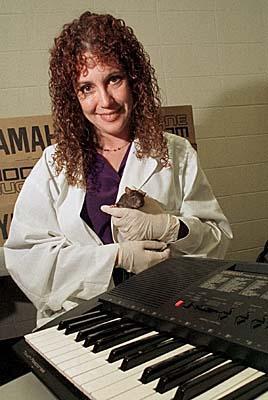
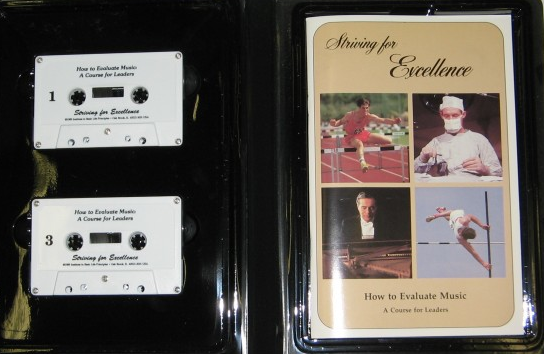




 Homeschoolers Anonymous