The Shell Game Revealed

Stacy McDonald and her husband James. Source: http://familyreformation.files.wordpress.com/2007/09/mediaphoto_large.gif

HA note: The following is reprinted with permission from Libby Anne’s blog Love Joy Feminism. It was originally published on Patheos on May 2, 2014.

I really didn’t expect to see Christian homeschool leaders out-and-out reveal that, in the wake of the Doug Phillips scandal, they’re dumping the word patriarchy but keeping the ideas behind it. I mean it’s pretty clear that a lot of them are doing that, but they’re generally doing it in a shell game sort of way as though no one will notice. But not all are taking that approach.

Commenting on her husband’s blog, homeschool author and speaker Stacy McDonald had this to say:

stacy1

Well then. That makes it easy, doesn’t it?

Stacy McDonald is right when she says “the term is not as important as the principle.” But she gets it exactly backwards. She is willing to drop the term but wants to keep the principle. Newsflash here—the principle is what I and so many others have a problem here.

stacy2I should be clear that Stacy McDonald is no marginal voice in the world of Christian patriarchy. She’s the author of Passionate Housewives Desperate for God and Raising Maidens of Virtue and Three Decades of Fertility. She runs the website Steadfast Daughters and blogs at Your Sacred Calling. She writes for Ladies against Feminism. Stacy McDonald is no stranger in the more general homeschool world either. She and her husband used to run Homeschooling Today magazine, and Stacy is a popular speaker at homeschool conventions.

So with all of those ties to the patriarchy movement within Christian homeschooling that Stacy McDonald writes of dropping the word patriarchy while keeping the principle because “we don’t have to use a word that provokes people or causes them to misunderstand us.” But what exactly is being misunderstood, here? If Stacy McDonald preaches patriarchy, as she very openly does does, we’re not “misunderstanding” anything at all when we call it out. As for “provoking” people, I’m pretty sure it’s the ideas that are doing the provoking, not the term. That is apparently lost on Stacy.

But I suppose I’m just glad someone is being honest.

Why the Distance Between “Christian Patriarchy” and “Complementarianism” Is A Sleight Of Hand: Rebecca Irene Gorman’s Thoughts


Screen Shot 2014-04-27 at 4.48.18 PM

Also by Rebecca on HA: “The No True Homeschooler Argument,” “I Was Beaten, But That’s Not My Primary Issue With Homeschooling” and “‘Fake Someone Happy’: A Book Review.” 

My pastor was the director of the Chalcedon Foundation and the other teachers I studied under were Mark Rushdooney, President of the Chalcedon Foundation, Doug Wilson, Howard Phillips (father of Doug Phillips) etc. Ground zero of the ‘Christian Patriarchy’ movement.

The context in which they use the word ‘patriarchy’: It’s not always capitalized. It’s not always typed as ‘Christian Patriarchy’. They don’t think of ‘Christian Patriarchy’ as the name of their movement. Yes, they do think that patriarchy is a good thing, and say so explicitly. They love to talk about the Biblical patriarchy, and are often happy to capitalize Patriarchy as a value essential to Biblical Christianity.

If you ask them what their movement is called, they’ll probably tell you ‘Biblical Christianity’. They might go on to mention the Reformers or covenentalism or Reconstructionism or postmillenialism or paedobaptism, because all of these things are central to their identity. Which ones they mention is purely personal preference. If you ask them what they believe about gender roles, they’ll say: ‘complementarianism’. NOT ‘Christian Patriarchy’.

For these people at ground zero of the ‘Christian Patriarchy’ movement, they talk about ‘Patriarchy’ as a positive thing, method behind taking dominion, the reason for quiverful beliefs, beliefs around baptism, communion, etc. While their promotion of this word is very telling about their objectification of women, it’s not what immediately comes to mind for them when they’re thinking about gender roles. What immediately comes to mind for them when thinking about gender roles are various Bible verses and stories that make up the culture’s dialogue about gender roles, and when they have to boil their gender role perspective down to a term, they think of it and talk of it as ‘complementarianism’.

It’s disingenuous to say ‘I’m not a Christian-Patriarchalist, I’m a Complementarian.’ Show me a person who claims to be a Christian Patriarchalist, or a Christian-Patriarchalist who doesn’t define their gender beliefs as ‘Complementarian’, and I’ll show you a fairy. NOBODY claims to be a Christian-Patriarchalist. Claiming to be a Complementarian ‘because that’s what the Bible teaches’ IS the definition of what we now-outsiders call Christian Patriarchy, end stop.

Saying ‘I’m not a Christian Patriarchalist, I’m a Complementarian’ is like saying ‘I’m not a giraffe, I’m a large African mammal with a very long neck and forelegs and a coat patterned with brown patches separated by lighter lines.’

What “Christian Patriarchy” Is Not

Screen Shot 2014-04-26 at 5.45.19 PM

By R.L. Stollar, HA Community Coordinator

“Patriarchy” has suddenly become a dirty word in the homeschooling movement. Whereas a short while ago it was a badge of honor, a symbol of pure righteous manliness, now leaders are scrambling to distance themselves from this word. They are swearing left and right that they aren’t “it” and they never were “it” and gosh, why are people saying they are? They have been so gracious about “allowing” their daughters the privilege of wearing pants — or the privilege to go to college — they, the men with the divine authority, have allowed this. How could anyone think poorly of them?

The sudden energy exerted by these leaders to claim they oppose Patriarchy has reached corners that are so actually patriarchical it has become almost humorous to observe. Kevin Swanson recently wrote a post on April 18 where he matter-of-factly declares, “I am not a patriarchal-ist. I have never been a patriarchal-ist, and I’ve never called myself a patriarchal-ist.” As evidence he offers the following statement: “It is no sin for a woman to take college level classes.”

Well, gee, that settles that. I eagerly await Bill Gothard’s declaration that he’s not a legalism-ist.

As news about the predatory conduct of Doug Phillips — one of the key figures in the Christian Patriarchy movement — and Bill Gothard — one of the most ardent advocates of Legalism — spreads into the mainstream media, this will become a more common occurrence. The problems plaguing the Christian Homeschooling Movement will be chalked up to “Christian Patriarchy” and “Legalism.” Leaders will swear they aren’t those things and therefore they’re safe. We will be tempted to become fixated on labels and forget that labels aren’t the problem. The problem, as Libby Anne points out, are “the beliefs [they’re] promoting.”

Furthermore, while I agree with Libby Anne that the beliefs should take central stage, I am mystified because few people seem to understand the words themselves. And I wonder whether that’s why the beliefs are getting the short end of the stick. We’ve turned “Christian Patriarchy” into this bizarre caricature — i.e., “not letting your daughters go to college” — that’s completely untrue. Go look at Vision Forum’s “Tenets of Biblical Patriarchy.” Not letting your daughters go to college is not on the list. We’re collapsing so many different categories — Quiverfull, Christian Patriarchy, general Patriarchy, Stay-At-Home-Daughter Movement, Complementarianism, etc. — that these words are becoming powerless.

A fundamental rule of communication is this: “The One Who Defines the Terms Controls the Argument.”

This is true.

But there is another fundamental rule of communication: “The One Who Employs the Definitions Sloppily Loses Control of the Argument.”

We’re at a point now where someone has claimed that Patrick Henry College is not patriarchical and “proved” it by describing the college in blatantly patriarchical terms. And the reason for that is simple: we’ve exchanged the phrase “Christian Patriarchy” for “Patriarchy,” when the former is simply a particularly extreme version of the latter. Patriarchy is any and every system based on male authority and dominance, one manifestation of which is Christian Patriarchy. We’re also at a point where Michael Farris is confusingly equating “Quiverfull” with “Patriarchy”: not only did he think “not sending your daughters to college” had something to do with “Quiverfull,” he also thought that “not sending your daughters to college” (a caricature of Christian Patriarchy) was the definition of Patriarchy (which is has nothing to do with whether or not your daughters go to college).

So I’d like to dispel a few myths about what Christian Patriarchy is. I’d like to emphasize that, by saying Christian Patriarchy isn’t these things, I’m not saying it cannot be. I am saying it is so much bigger than these things. To limit it to these things enables misdirection.

Myth #1: Christian Patriarchy is Patriarchy.

Christian Patriarchy is Patriarchy in one sense: insofar as Christian Patriarchy is a system based on male authority and dominance, it is a subset of Patriarchy. But as I stated previously, Patriarchy — being a system based on male authority and dominance — is huge. Any system grounded in male authority and dominance is Patriarchy. Thus even Complementarianism — however mild or extreme — is still Patriarchy because it still rests upon the foundational idea that males have a unique authority or right to dominance.

When we say that, “Oh, ____ isn’t into Patriarchy” — when we what we mean is, “Oh, ____ isn’t into Christian Patriarchy” — we are giving someone an opportunity to downplay the fact that they are still into Patriarchy. And the problem with the subset of Christian Patriarchy isn’t that its an extreme version of Patriarchy. The problem is that it is Patriarchy. Period.

So for example, Michael Farris does believe in and advocate for Patriarchy. Just observe any of the politicians he endorses or, simpler yet, read his 2004 book What A Daughter Needs From her Dad. Sure, Farris doesn’t believe in and advocate for the limited caricature of Christian Patriarchy where daughters can’t go to college. But again, as stated earlier, even that’s a caricature of Christian Patriarchy (as we’ll discuss shortly). Michael Farris agrees with Christian Patriarchy far more than he disagrees with it.

Myth #2: Christian Patriarchy is Quiverfull.

Quiverfull and Christian Patriarchy are often confused as the same thing. In fact, Michael Farris himself has confused these categories, when he said that he does “believe women should go to college.” Whether or not you let your daughters go to college has nothing to do with Quiverfull. Quiverfull is, more or less, a specifically Christian form of natalism — the idea of employing procreation as a tool of sociopolitical dominion and categorizing birth control as rebellion against God. Michael Pearl gave us a perfect embodiment of Quiverfull’s dominionist streak, when he recently stated,

“If you can’t out-vote them today, out-breed them for tomorrow.”

That is Quiverfull (albeit a distilled, intense version of it). And see, that sentiment could exist in a matriarchicial society. (In fact, Mary Pride — often considered “the Queen of Quiverfull” — personally insinuated that she believes in Matriarchy more than Patriarchy. Though she has a nonsensical definition of Matriarchy, she has harsh words for Christian Patriarchy advocates.)

Yes, there are many advocates of Christian Patriarchy who are Quiverfull. And by all means, speak out against the dehumanizing and toxic idea that your children are your weapons, and a woman’s vagina is a weapons-building factory.

But remember these are distinct, especially considering there are many advocates of Christian Patriarchy who are not Quiverfull. Take Doug Wilson, for example. Doug Wilson is considered one of the pillars of Christian Patriarchy but believes birth control can be useful to ensure you’re actually taking care of your current children. That’s outright heresy to the Quiverfull crowd.

Myth #3: Christian Patriarchy is Opposed to Daughters Going to College.

The Stay-At-Home-Daughter Movement rose out of Christian Patriarchy. Indeed, many of this movement’s advocates — for example, Voddie Baucham, Doug Phillips, and Geoff Botkin, who promoted or were featured in the film, “Return of the Daughters” — are giants in the Christian Patriarchy movement. But — and this is crucial — not all advocates of Christian Patriarchy believe daughters cannot go to college. In fact, the majority of them are okay with it, provided their daughters (1) are still at home while attending college, (2) do not go to a secular college, and (3) study something relevant to “domestic affairs.” There is plenty to critique about that criteria, but using this “can daughters can go to college” litmus test is a red herring. Case in point: Baucham’s daughter Jasmine — while still living at home — not only has a Bachelors degree but is currently pursuing a Masters degree.

And this isn’t a “new” development in Christian Patriarchy. John Thompson, writing in Patriarch Magazine (a cornerstone publication of the Christian Patriarchy movement during the 90’s), articulated over a decade ago that it was tolerable to let your daughter get college-educated provided that education is gender-oriented and via home study.

So, again — this college litmus test is a red herring.

Myth #4: Christian Patriarchy is two steps away from wearing a burka.

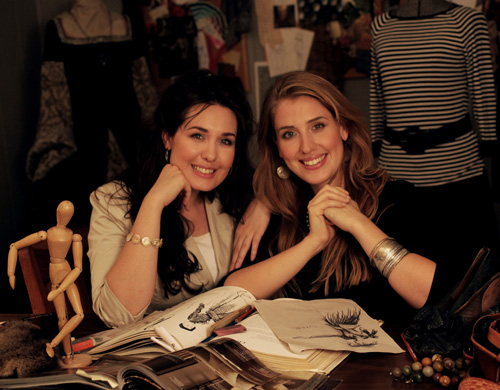
This myth was articulated a few days ago, and I couldn’t help but laugh. Seriously, let’s look at two images of the daughters of popular proponents of Christian Patriarchy:

Geoff Botkin’s daughters, Anna-Sofia and Elizabeth:
anna-sofia-and-elizabeth-botkin

Voddie Baucham’s daughter, Jasmine:

jasmine

Burkas? Seriously?

Look, there are many, many parallels and connections between Christian fundamentalism and Islamic fundamentalism that one can make. Likewise, there are many, many parallels and connections between Christian Patriarchy and Islamic Patriarchy that one can make. The parallels exist because fundamentalism and patriarchy as systems transcend people groups and cultures. Identifying and speaking out against those parallels and connections is important; it should be done frequently, passionately, and loudly.

However, to say that, “Christian Patriarchy is two steps away from wearing a burka” is an asinine argument. Christian Patriarchy is not defined by clothing. Yes, there are many people within the Christian Patriarchy movement who have swallowed Modesty Culture. In fact, the above two images do not disprove this. (“Modesty Culture,” like Christian Patriarchy, is not defined by how many “steps” it is away from wearing a burka.) But they do demonstrate that slapping Christian Patriarchy with “burka” confuses the issue.

Myth #5: Christian Patriarchy is Limited to Homeschooling.

This is the weirdest myth. Rumor has it that Christian Patriarchy advocates are only into homeschooling, whereas Christian Patriarchy opponents tolerate other forms of education — for example, classical education in a private Christian school.

This is pure nonsense. Doug Wilson adamantly and vocally prefers private classical Christian education to homeschooling. He personally founded a private school and did not homeschool his kids. In his 1991 book Recovering the Lost Tools of Learning, Wilson makes clear that he believes “classical private schools to be superior to classical homeschooling.” He states his case so strongly, in fact, that some say “he condemns home school as a viable option,” and one homeschooling parent demanded he “stop being asked to speak at homeschool events.” In his own words, though, it’s not so much homeschooling itself that he objects as much as it is “a radical home-centeredness” that “[insists] that the home can not only replace the school, but also the church and the civil magistrate.”

An appreciation of private Christian education among Christian Patriarchy advocates is not limited to Wilson. R.C. Sproul, Jr. — who co-wrote Vision Forum’s “Tenets of Biblical Patriarchy” with Doug Phillips — agrees to some extent with Wilson. In October 2011, Sproul Jr. said that, ultimately, what’s important is Christian education that teaches “day in and day out the Lordship of Christ over all things,” and thus “the real issue is the secular perspective of the public schools, more than the methodology of homeschooling versus Christian schooling.”

Similarly, Patriarch Magazine argued over a decade ago that, while homeschooling is “ideal,” “Christian schools are a commendable alternative to the degenerate state schools.”

*****

It is pretty amazing that “Christian Patriarchy” as a specific concept — and Patriarchy as a general system — is finally being widely discussed among Christian homeschoolers. Seriously. It is amazing. This is the first step towards wider awareness and change: our vocabulary is being adopted and we can point to that vocabulary to facilitate conversation.

However, we take a step backwards if we start equivocating between terms and diminish those terms’ potency. If you are new to this conversation, please take the time to educate yourself about what these words mean. Libby Anne has a great breakdown of what “Christian Patriarchy” is that she wrote in 2012. Read it. Think about it. Also read about what Patriarchy is and how it differs from the specific subset of Christian/Biblical Patriarchy. Educate yourself about how similar Christian Patriarchy and Complementarianism are (and arguably even identical), and why both are Patriarchy. (And while you’re at it, look up Kyriarchy, too.)

Then reassess this mass hysteria among homeschool leaders who are begging us to consider them anti-Patriarchy. Because they are not.

Sugar-coated Patriarchy is still Patriarchy.

What “Christian Patriarchy” Is

Screen Shot 2014-04-26 at 3.42.51 PM

HA note: The following is reprinted with permission from Libby Anne’s blog Love Joy Feminism. It was originally published on Patheos on February 19, 2012.

In a nutshell, Christian Patriarchy is the belief that God has ordained a specific family order, and that this family order must be followed. The husband leads, the wife submits, and the children obey.

There are two important aspects about Christian Patriarchy. The first is the belief in the importance of male headship or authority, and the second is the belief that men and women have vastly different roles to play. A third issue involves the role of children.

Male Authority

Christian Patriarchy holds that women must always be under male authority (or headship). A woman is never to be independent of male authority. First, she is under her father’s authority, and then under her husband’s authority.

(A widow would be under her son’s authority, or, if she had no sons or her sons were young, she would return to her father’s authority. If is not possibles possible, some argue that widow should place herself under the authority of a church elder or pastor.)

Many evangelicals use the rhetoric of “male headship” but see it as merely spiritual or figurative. For Christian Patriarchy, though, being under male authority includes obedience. This obedience is absolute; a woman is only excused from obeying if her male authority orders her to do something illegal and immoral (some dispute this, and argue that she is still required to obey, but that God won’t hold her accountable for any sins she commits at the order of her male authority).

I Corinthians 11:3 – But I want you to understand that the head of every man is Christ, the head of a wife is her husband, and the head of Christ is God.

Under Christian Patriarchy, the framework in this verse is extended to women in general. Every woman has a male authority, and that male authority looks to Christ as his authority. A woman is to obey her male authority, whether it is her father, husband, brother, or son, and he in turn is to obey Christ. By obeying her male authority, a woman is obeying God. This is seen as the natural and God-given order. 

Separate Roles

Christian Patriarchy holds that men are to provide and protect and women are to care for the home and the children. This is seen as the divine order for the family. The idea is that the two sexes are equal, but that they have different roles to play. Both roles are highly important, and neither sex can fulfill the role of the other. Men and women are simply different.

The man’s role is to hold a career and provide for his family, to protect his family, and to represent his family to the world in politics and in the church. The woman’s role is to bear children and raise them, to cook and keep house, and to support her husband, building him up as a man through her affirmation and obedience.

Hard core followers of Christian Patriarchy hold that women are never to work outside of the home in any capacity – even if their families desperately need the money. Yet just as with Quiverfull, there are plenty of families who are influenced by the ideas of Christian Patriarchy without being completely hard core. These families most often hold that married women, or married women with children, should not hold jobs outside of the home, and that it’s not women’s place to have “careers.”

Children 

Under Christian Patriarchy, all children are expected to offer their parents absolute obedience while they are minors. No disobedience is accepted, and children are taught that obeying their parents is obeying God, because God has placed them under their parents’ authority.

Daughters remain under their father’s authority until married to a man he approves of, generally through a parent-guided courtship. While under her father’s authority, it is the daughter’s duty to obey him and accept his will for her as God’s will. Many in the Christian Patriarchy movement reject college for girls, and the Stay At Home Daughter movement is growing.

Sons are under their father’s authority until they become men. The point at which this occurs isn’t so clear, but it definitely occurs sometime between when they turn eighteen and when they marry. Once he becomes a man, a son no longer need to be under male authority, and he becomes the male authority for his wife and children.

Some families in Christian Patriarchy have trouble completely letting go of their sons, however, and there is in some circles the idea that even an adult son should be obedient to, or at least highly respective of, his father’s desire. This is where you get Geoff Botkin’s 200 Year Plan (also known as Multigenerational Faithfulness).

Conclusion

The most important thing to remember about Christian Patriarchy is its emphasis on a hierarchical family order, which it regards as the natural order ordained by God. Men and women have different roles to play, the man as protector and provider and the woman as nurturer and homemaker. Women are always under male authority; daughters are to obey their fathers and wives are to obey their husbands. When everyone fulfills the role God has created for them, the family prospers.

The things I find most troubling about Christian Patriarchy are its emphasis on women offering absolute obedience to their male authorities – when you think about it, there is nothing really to differentiate this from slavery – and its emphasis on strict gender roles, which classes people by their sex rather than by their talents, interests, or abilities. Christian Patriarchy fails to recognize the huge diversity within each gender, and pushes people into prescribed slots based on their genitals rather than seeing people as individuals first.

The vast, vast majority of Christians do not hold to the teachings of Christian Patriarchy. In fact, many Christians actively fight against these ideas, arguing that they represent a fallen order of mankind and that Christ has ordained equality between the genders. However, it should be noted that even as some Christians fight these ideas others are unknowingly influenced by them, and that is what makes understanding the ideas behind Christian Patriarchy all the more important.

Oh Daughters of Fundamentalism, Take Upon Yourselves the Cloak of Self-Deception

Screen Shot 2014-04-16 at 10.28.56 PM

HA note: The following is reprinted with permission from Sarah Henderson’s blog Feminist in Spite of Them. It was originally published on her blog on August 28, 2013.

I recently witnessed a young girl who is struggling a bit who expressed that she was a bit unhappy with her life, being told that she just needs to take it one day at a time, and be happy with it. To me it is shameful to express to a child or a teenager that their discomfort or unhappiness with a difficult situation stems from their own inability to cope. What message is being given to girls when they are told that although they are not the creators of the bad situation, they must be the authors of the solution, but the solution must only be to swallow their feelings and smile.

This is a relatively common comment made to daughters in conservative families. The basic idea stems from the idea if you are unhappy with your life, it is important to change your attitude about your life. Girls are not taught that they can cause change in their own lives. Of course this serves the purpose of preventing girls from making plans to get out. If they are responsible for their own happiness, and they do not get to make their own choices, fundamentalism is able to produce a new generation of women who not only do not fight back and fall in line with whatever rules and tasks are assigned to them, in the ideal scenario they will actually start to enjoy the fact that they are fulfilling their purpose, and own their own oppression.

This is a very difficult concept to understand if you did not grow up in patriarchy. How can women not only agree and allow themselves to be oppressed, but also seem to be happy and flourish in their own oppression? How can women become party to their own oppression, and in fact add their own restrictions to their own activities and assign themselves even more responsibility for the physical and mental well-being of the men around them? Because they are taught to believe it.

They believe that women are created to complement their husbands. They believe that any unhappiness they experience is selfish and sinful. They in fact quench their own desires and resentment at being treated as chattel, and tell themselves they enjoy it. Today I had the misfortune of reading the story of a young woman who was picked up from work by her husband with an entourage of other people to celebrate her last day of work. There was a banner on the car stating that she was free at 27, but her exit interview read that her new employer was her husband, and she would be a house wife from then on.

Teenaged girls in quiverfull families are taught that their purpose it to serve as a daughter, and then as a wife and mother. They try to fulfill their purpose in life by working hard, taking care of younger siblings, and generally not trying to rock the boat. They do not ask for things that they want or need, they do not tell their parents if they are pain, and they do not ask questions about their futures or their bodies. I can tell you that there are probably many teenaged girls right now that are suffering from severe menstrual cramps or low energy due to health problems, that will not say anything because they do not want to cause shame to their families by not being a strong contributor to the family.

These girls are trotted out at family and church gatherings to showcase their homemaking and child-rearing skills. To fail at cooking a dish or to not be able to handle several children at a time would be an unbearable humiliation. No self-respecting girl would allow that happen, and after a girl has put all of her time and effort into being a homemaker and mother for a few years, she is taught to take pride in it, and also starts to take pride on her own. After all, how many girls of 13 are capable of running a household of 8 or 10 or more on their own. How many girls can feed a dozen people with very few ingredients? How many can juggle a house cleaning and cooking a dinner and calming a crying infant and changing a toddler at the same time?

Untold numbers of innocent teenagers are living this life every day, and they take pride in their ability. They put their own desires away and learn to run a family that isn’t even theirs to keep. They are encouraged to compare their accomplishments with other girls, and on a church day they will go to their mothers and offer to take care of the babies for their mothers. They plan for their own happy families and wash laundry and cook meals and put band aids on babies. They change diapers and administer assembly line baths to dirty children. They make beds and clean up toys and wipe noses and do not go to school. They teach phonics and math and sewing and read the Bible to little children and make sure they listen to the parts about obeying your parents and making sure you do not think bad thoughts.

They tell themselves that this is what they want and that they can’t wait to have their own families and carry on god’s plan. And now they will grow up and teach their own baby girls to serve men and god. To deceive themselves.

Michael Farris, Patriarchy, and Doug Phillips: An Expose

HSLDA President J. Michael Smith, Doug and Jubilee Phillips, and HSLDA board member Dick Honnaker at HSLDA's 2004 National Leadership Conference in Spokane, Washington.
HSLDA President J. Michael Smith, Doug and Jubilee Phillips, and
HSLDA board member Dick Honnaker at HSLDA’s 2004 National Leadership Conference in Spokane, Washington.

HA note: The following is reprinted with permission from Libby Anne’s blog Love Joy Feminism. It was originally published in a slightly longer version on Patheos on April 15, 2014.

Yesterday’s WorldNetDaily article on Lourdes Torres’s lawsuit against Doug Phillips quotes at length from Michael Farris’s reaction to Doug Phillips downfall. I thought it was worth going over that section specifically, and placing it within the context of other things I have written about Michael Farris, HSLDA, and Patrick Henry College, both to clarify the issues here and to reveal the serious dishonesty of Farris’s statements.

I will begin by quoting the section, and will then respond.

Before Phillips founded Vision Forum, he spent six years as an attorney for the Home School Legal Defense Association, or HSLDA, a nonprofit advocacy organization that defends the right of American families to homeschool their children.

HSLDA Chairman Michael Farris told WND, “The reason Doug left HSLDA is because [President] Mike Smith and I, who were his bosses, were growing more and more uncomfortable as he started developing his patriarchy theory. We started limiting his ability to speak on those things while traveling on our behalf. We basically made it clear that he could not pursue those things with his HSLDA hat on. So he eventually chose to leave us so he could do those things because we were not comfortable with where he was headed.”

As for the patriarchy movement, Farris said the teachings are not widely accepted in the broader homeschool community.

“It’s a minority of homeschoolers that believe in it,” he said. “But unfortunately, until very recently, they were getting a lot of visibility in certain places. We have sought to avoid inviting any patriarchy speakers to speak at our national conference.”

While state homeschool organizations run their own events and may choose to have such speakers, Farris said HSLDA has never promoted them.

“Doug has never been invited to speak at our national conference since he left,” Farris said. “We have tried, by example, to keep this stuff outside the mainstream of the homeschooling movement.”

He added, “Frankly, we think it’s time for us to stand up and publicly say this is just wrong.”

Background

And here we need some explanation. Within the Christian homeschooling movement, and by that I mean those Christians who choose to homeschool for religious reasons, whether in part or in whole, there is a range of belief on gender roles. In general, beliefs about gender roles fall somewhere on a spectrum between the following two camps:

Complementarianism: Many of those in the Christian homeschooling movement, including both Farris and my own parents, hold fairly conventional conservative evangelical views on gender roles. The wife’s role is to obey her husband, nurture her children, and serve ask a keeper at home. The husband’s role is to be the head of the family, provide for the family, and protect the family. Men are to be masculine and manly, women are to be feminine and womanly. God has laid out different and complementary roles for each gender, but all are equal before God.

Biblical Patriarchy: Some of those in the Christian homeschooling movement go farther. They proudly use the word “patriarchy” and teach that daughters are to be under their father’s authority until marriage, serving as “stay-at-home daughters.” They argue that daughters should not go to college, or hold jobs outside the home, and that daughters must obey their fathers even as adults. Only when daughters marry (through a courtship process controlled by their father) do they leave their father’s authority and transfer to their husband’s authority.

I don’t have numbers on how many Christian homeschoolers adhere to complementarianism versus how many adhere to biblical patriarchy, but I also don’t think it’s completely clearcut. Even those solidly in the complementarian camp will have noticed promoters of patriarchy speaking at homeschool conferences, will have seen their literature, and will have met those in its folds. My own family was fairly solidly in the complentarian camp, and yet they adopted some of the beliefs of the biblical patriarchy camp even as they rejected others (they sent me off to college, but believed I was still to obey my father, as an adult daughter under his authority).

Biblical patriarchy differs little from complementarianism except in its open embrace of the term “patriarchy” and its teachings about the role of adult daughters.

Michael Farris

So where does Farris fall, particularly? From what I’ve read of his writings Farris very much believes that wives must obey their husbands and that a woman’s role is in the home nurturing her children. But what of the rest? Farris’s strong rejection of the patriarchy movement as quoted above and his recent strong words for the stay-at-home daughter movement in a facebook comment would seem to indicate that he falls in the complementarian camp rather than the biblical patriarchy camp.

There is also this from a statement written in response to February’s article on sexual assault at Patrick Henry College and read aloud during chapel at Farris’s Patrick Henry College.

Some readers have wondered if the overall aim of the article is to associate PHC with a set of anti-women attitudes that we do not hold, and to insinuate that we are connected with outside movements that we positively reject (like the “Quiverfull/Christian Patriarchy Movement”). This philosophy, incorrectly attributed in the article to Dr. Michael Farris, Chancellor, espouses that college is inappropriate for Christians in general, and especially women. As his own life at PHC and with his own children reflect, Chancellor Farris has never agreed with such an offensive philosophy.

Farris rejects the word “patriarchy” and is not against daughters going to church. In fact, this statement from Farris’s Patrick Henry College indicates that Farris views biblical patriarchy as “anti-woman” and “inappropriate for Christians.”

But even as he rejects biblical patriarchy, Farris believes that wives should obey their husbands to the extent of not attending church if her husband so commands, and he believes that daughters, even as they go to college, should be preparing ultimately for motherhood rather than for careers. I think maybe this is why Farris’s continued refrain of “no no no, I’m not like him, he believes crazy things!” strikes so many as so odd. Farris is not as far removed as he would like us to think.

But there’s something else going on here too.

The Entanglement

Farris insists that he has long gone to great lengths to publicly distance himself and HSLDA from Phillips in particular and biblical patriarchy in general. Unfortunately for him, this is simply not true.

A quick search of HSLDA’s website reveals that the company was openly advertising for Vision Forum. From a 2010 email alert to HSLDA members:

—[ 20% Off at Vision Forum! 5 days left! ]————————–

Extra 20% Off at Vision Forum! Code: HSLDA. Toys, Books, Movies, More. Everything on sale for 5 Days only!

http://www.hslda.org/alink.asp?ID=282

Indeed, this sort of advertisement for Vision Forum has been a bit of a trend for HSLDA, complemented by positive recommendations of various Vision Forum products.

It’s also worth noting that Farris was at the very least being grossly misleading when he said of HSLDA that “Doug has never been invited to speak at our national conference since he left” and that “We have tried, by example, to keep this stuff outside the mainstream of the homeschooling movement.”

As R.L. Stollar wrote a year ago, before Phillips’ downfall:

1996 seems to be the last year that Phillips appears as an HSLDA attorney. But since then, HSLDA has made zero efforts to distance themselves from his viewpoints. In fact, almost a decade after Phillips left HSLDA to run Vision Forum, he was still featured by HSLDA as a peer. In 2007, HSLDA referred to Phillips as one of “the nation’s top leaders.” Also in 2007, Chris Klicka received an award from Doug Phillips and Vision Forum for his homeschooling advocacy. In 2008, HSLDA says of him that he is “one of the most popular conference speakers in the nation today because of his ability to encourage, inform, and inspire.” In fact, HSLDA proudly sponsored a reception at an event where he was the keynote speaker. The official relationship between HSLDA and Doug Phillips is thus one of continued mutual admiration.

I’m unsure of how Farris expected people to understand that HSLDA disapproved of either Phillips or biblical patriarchy when continually wrote of Phillips and his abilities as a homeschool speaker with such accolades. And this wasn’t the only time. HSLDA advertised Doug Phillips as a speaker at event after event. HSLDA member families were urged to attend. They also allowed Doug Phillips to advertise in their publication, the Home School Court Report, as recently as 2012.

Beyond this, HSLDA has also promoted other leaders whose teachings center on biblical patriarchy, including Voddie Baucham and Geoffrey Botkin. And to the best of my knowledge, HSLDA as an organization and Farris as an individual have never denounced any one of these leaders.

There was more, too. In 2007 Vision Forum published Passionate Housewives Desperate for God, by Jennie Chancey and Stacy McDonald. Jennie Chancey founded Ladies Against Feminism and Stacy McDonald founded Steadfast Daughters. Both are not just complementarian but fully embrace biblical patriarchy. Farris’s wife Vickie wrote a review of the book, which can be viewed on Amazon:

Jennie Chancey and Stacy McDonald have spoken the Truth with a capital ‘T’ in their wonderful book Passionate Housewives Desperate for God. Totally grounded in Scripture, this book winsomely presents the true picture of a godly homemaker. Prepare to be stimulated, challenged, and encouraged as a woman. This book is a real gem!—Vickie Farris, wife of HSLDA founder, Michael Farris, Esq.

Now maybe Chancey and McDonald tone it down in Passionate Housewives Desperate for God, or maybe Farris and his wife disagree here. But Farris has to be aware how these sorts of endorsements will come across to Christian homeschoolers.

My Question

Now I want to turn back to the recent article I began with.

After insisting that HSLDA has never collaborated with a supporter of patriarchy—an assertion I have here called into question—Farris added that ”Frankly, we think it’s time for us to stand up and publicly say this is just wrong.” And that is where I have to wonder—why didn’t Farris stand up publicly and say this prior to Phillips’ resignation and disgrace? Because he didn’t.

Further, Farris wrote that “Doug has never been invited to speak at our national conference since he left” and that “We have tried, by example, to keep this stuff outside the mainstream of the homeschooling movement.” Was Farris unaware that, regardless of whether he invited Phillips to speak at HSLDA’s national conference, if he spoke nary a negative word about Phillips in public and HSLDA wrote of Phillips only to promote him, the message that would come across to the homeschool community would be one of approval?

My sources tell me that Farris views Bill Gothard and Michael Pearl in the same negative light that he has long viewed Doug Phillips. Why, then, does he not publicly warn homeschool families against them? Why does he remain silent?

I think I know the answer. HSLDA operates off of membership dues. If Farris or HSLDA come out and publicly denounce toxic homeschool leaders, they will lose members. Farris has felt that Phillips was in error and dangerous for years, but only when Phillips was already defrocked and dethroned did he feel comfortable saying that out loud. Farris would rather tolerate patriarchy in the Christian homeschool movement than lose money for denouncing it.

Farris, it seems, is only willing to shoot patriarchy when it’s down.

Two Messages that Children Internalize that Contribute to Bullying in Patriarchal Church and Homeschool Groups

Screen Shot 2014-02-13 at 10.50.41 PM

HA note: The following is reprinted with permission from Sarah Henderson’s blog Feminist in Spite of Them. It was originally published on her blog on January 4, 2014.

Homeschooled children sometimes experience bullying from peers. Part of this stems from the messages that children absorb about themselves.

1. Children respond to the tiered authority by owning the message that they are the not as good as other people and exist to serve people who appear to be more powerful than they are;

2. Children respond to the opposite message that they are the best and brightest and most privileged and enact that power on others. 

I have mentioned the issue of bullying in homeschool groups in passing in a previous post, but bullying in homeschooling families and homeschool groups is a serious issue. In a well-meaning homeschooling family from a conservative background, there are several patterns, such as adherence to patriarchal family systems and the sense of responsibility held by the parents to teach their children to succeed in life and grow up to be adults with the same mindset and goals as the parents. There is also often a commitment to having a large family.

This creates unique family power dynamics.

Depending on how the family works, they will send a message to their children that corresponds with one of the point above: that the child is valued and special, or that the child is part of a plan that has nothing to do with the child.

Socialization has become almost a joke to both sides of the homeschooling debate, but the reality is that children who are homeschooled spend less time with other non-siblings, and sometimes this is even the goal of homeschooling. In patriarchal families, children are often authority-tiered in birth order, although preference in the ranking is sometimes given to boys. Sometimes this happens in large families due to the difficulty in parenting large numbers of children, and mothers bring in older daughters to take on various aspects of homemaking and parenting.

There is a large amount of anecodotal evidence that speaks to how damaging sibling parenting can be. There is a series posted by Heather Doney that tells the stories of sister-moms. Many of the personal stories shared on both No Longer Quivering and Homeschoolers Anonymous also outline the difficulties of being an adult who helped raise their own siblings. Children who are part of this tiered authority find themselves always as part of a ranked system, which is different from the experience of children who attend school, who are grouped with peers in spite of status struggles.

Homeschool groups and church “families” are touted as a significant source of socialization opportunities for homeschooled children. However, this means that children who spend most of their time in a tiered family structure are then tossed together as an artificial peer group and left to find their own status among themselves, which is one of the things that some homeschooling parents say they are attempting to avoid. The source for the information in this post is lived experience.

Children in homeschooling groups and church groups vie for status at the expense of each other, just as children do in public and private schools. They put each other down, and use similar ways of determining popularity as public schooled children do, including appearance, status of parents, ownership of desired items, and overall apparent confidence levels. They sometimes use physical strength to exert control as well. Parents do not always see the bullying but it does take place.

However, homeschooled children in these families are also subject to real responsibility/authority status and a tight social circle that is includes all available peers.

Girls sometimes compete to exhibit which is the more capable parent, and it is not uncommon to see these children carrying other children around, usually their own siblings or the young children of family friends. Because it is valued for girls to learn to perform homemaking tasks, girls are put on display to demonstrate proficiency in cooking and parenting, which creates resentment between peers. Financial struggles are a common problem among families with a stay-at-home mother and many children, so girls find themselves ranked in their peer groups according to whose parents have time to contribute to social activities and by common status symbols such as clothing. These families also share clothing, so children with a lower financial status have to wear the cast-off clothing of the more affluent families.

Very young boys in patriarchal families do not always realize that they are being groomed to take part in a power structure, but they do attempt to exert power over each other as much as public schooled boys do. The big difference here between public schooled children and homeschooled children is that since children tend to be part of a self-regulating system (and the parents are busy) there is not as much supervision and few complaints. As stated above, children either internalize that they exist to serve or exist to control. This results in children who are taught to stick to their ranking and do not usually object to unfairness.

Mental health problems are often not identified and treated in children in these circles, and some of the aspects of patriachal homeschooling life may contribute to the development of mental health disorders. This leaves suffering children even more vulnerable to bullying since children suffering from depression and similar struggles may only appear to be quiet and awkward, whereas in a public school they may have been identified as needing a teacher-mentor or recommended to see a mental health professional. An additional problem unique to church and homeschool groups that prevents children from being protected from bullying is that there is no central figure that children can turn to if their life isn’t working like a teacher or principal. Each parent usually has faith in their own children, and all parents in the church group or homeschool group has faith in their system, and it threatens their choices if the system doesn’t work, so there is simply no room for a bullied child to seek help.

Please share your input regarding the differences between bullying in public schools and patriarchal church and homeschool groups!

The Day I Left

Screen Shot 2014-02-10 at 8.44.52 PM

HA note: The following is reprinted with permission from Caleigh Royer’s blog, Profligate Truth. It was originally published on February 3, 2014.

February 6th three years ago marks the day I packed all of my meager belongings and left my family’s house.

It was almost exactly two weeks after my dad had kicked me out. He had walked into my room, told me I wasn’t worth his time anymore, he was tired of dealing with me, then proceeded to blame me for all of the issues he was having with my siblings. After his little speech, he told me I had two weeks to leave, if I needed help finding a place, I could ask, but basically I was on my own. He looked around my room and pointed out the pieces of furniture I could take or what had to stay behind. I was only allowed to take my trunk, my desk, and a dresser I had just happened to buy.

I left that house and never looked back. 

I believe my therapist was right in telling me I had cut ties with my family years ago, but leaving that day was the final string. My dad celebrated that night by taking my family out to dinner, a very rare occurrence. I was asked if I wanted to come as if I was already no longer part of the family. My siblings were confused, here was their dad telling them about how much of a rebellious and bad girl I was. I was an extremely bad example all because I had chosen the man I was going to marry and wasn’t going to back down no matter how much my dad abused me and tried to manipulate me.

I was finally standing up to his vicious anger and this was the consequences.

I fought for my siblings, it was me who held them together, only, no one saw that until I was no longer there. My siblings couldn’t see that, they couldn’t see what I had been protecting them from all of those years; the man behind the mask who grew more and more manipulative and abusive as the years passed. I have never really processed the emotions that went with this event. 

I often feel burning anger towards my dad and also great sorrow because I can see how blinded and truly sick he is.

*****

Recently my younger sister Emma has been starting to find her voice.

She is speaking out about what it was like to grow up, and I am proud of her for standing up to the man whose sperm just happened to be part of creating us kids.

She is calling the bullshit as she’s seen it and she is not skirting around the real issues.

It does my heart so good to see her taking the steps I have taken before her in what will hopefully be a healing journey for her.I am going to stand by her and lift up her words because more of us need to speak out.

It struck me the other day how often the abusers get a free pass. I see the discomfort cross faces when I bring up what my dad has done and how I’m working through it. I hear the sorrow in their voices and see it in their eyes when I say I will not allow my dad to go anywhere near this child of mine. It isn’t sorrow for me so much as it is sorrow that I don’t have the daddy-daughter relationship I’m somehow supposed to have. It’s sorrow and discomfort because my life hasn’t gone the way people would rather have seen it gone. Very very few people I have interacted with in regards to my dad’s abuse has actually had what I consider the right response. Very few people have actually gotten angry, upset because of what he has done. 

Abuse is not something to just brush over with “grace” and “pray for your persecutor.” 

Abuse in any form is worthy of anger and worthy of being stood up against.

I remember when I first started sharing my story and starting to peel back the layers of pain hardened emotions to find the wound holes. No one seemed to understand why I needed to speak. It was all “hush, hush, you shouldn’t say that, it’s slander.” By keeping silent I was allowing his abuse to continue, I, the victim, was being told my story didn’t matter, it wasn’t appropriate to share. 

“Protect the men and their egotistical reputations at all costs!” is apparently the unspoken mantra in the circles I grew up in.

Girls, families, I had spent a lot of time with no longer speak to me, I can’t stand going to reenactments because of running into those people and having to deal with the sad pitying looks they give me because I am the black sheep, I spoke out against the abuse I have suffered, I chose a good, good man to marry and all they saw was a rebellious girl thumbing her nose at the authority “God had placed over her life.”

I swore never to be silent whenever and wherever human beings endure suffering and humiliation. We must always take sides. Neutrality helps the oppressor, never the victim. Silence encourages the tormentor, never the tormented. – Elie Wiesel

A friend of mine wrote a post about “Rage and Grace” recently, and I really can relate to her words.

It is difficult to find the balance between not answering the abusers, the tormentors, with how they have approached us, and with being appropriately angry and upset about something we should be upset about. Abuse is never something you should brush off. Yes, the abusers are strong, they are used to getting their way and crushing us.

But just as a little flame can turn into a raging fire, so can our words and our taking stances about abuse, speaking out, and healing from our abuse make a difference.

*****

The day I left was a significant day.

That was the day I stood up and said no more. My mom kept telling me I could appeal to my dad, she seemed desperate to keep me at home. But my heart had already left, this was simply my body making it’s departure from the family I had grown up with. 

I will never stop defending my ground as a survivor and continuing to put up healthy boundaries to protect the fragile healing my heart is still undergoing.

I will never stop standing up and doing my best to aid the siblings who come to me for help. It has taken time, but I believe they are starting to see I am not the bad sister my dad has made me out to be. Not talking with my dad is my choice and it is not a sad choice. It is not something worth your sorrow. It is the choice I have made to protect myself, protect my marriage, and to protect my child. He is a dangerous man and it is not worth placing myself back until his toxicity just for the sake of making people feel like I am showing him “grace.”

I am content and very happy with my life, so please be happy for me?

My life is not about my family. My life is about me, Phil, and my little boy.

See those other survivors who are struggling with family relationships and friend relationships? Be happy for them with the life they have chosen. Be willing to set aside your preconceived ideas about what family relationships should look like, and be happy for us when we share an exciting discovery in our healing or our own personal ventures.

We need you to stand beside us and to be angry at the abuse and celebrate the good.  

My Father, An Enigma

HA note: The following is reprinted with permission from Libby Anne’s blog Love Joy Feminism. It was originally published on Patheos on November 21, 2013

“Libby, you could be an engineer. You have the mind for it.”

My dad made this comment while we were in the car, driving by a factory of some sort. I was probably around sixteen. My dad’s comment was completely offhand, and I didn’t bother to respond. Inside, though, I was baffled.

Why would my dad suggest such a thing?

Didn’t he realize that my lot in life, the lot God had designed for me, was to be a homemaker, raising children, caring for my husband, and tending the home? Couldn’t he see that engineering was not even remotely related to homemaking, and that if I were going to learn a trade it should be something feminine like teaching or nursing?

Why would he even suggest that I could be an engineer? It made no sense!

I wrote recently about something similar regarding my mother. I grew up seeing that Above Rubies magazine on the counter, in mom’s bedroom, or on the stool in the bathroom, and I myself read it voraciously. It was clearly approved reading material, and I never heard my parents contradict it or disagree with it, so I assumed that my parents believed everything in it. I adopted its beliefs myself, and it shaped my conception of myself as a woman and my dreams for my future. And yet, my mother told me several months ago that she had never believed everything in that magazine.

I had had no idea.

Every so often I am reminded of my father’s offhand comment and I am bothered. When I was growing up, I was immersed in the literature of the Christian homeschooling movement and was surrounded by the patriarchal ideas I found there. These ideas shaped my understanding of the world and the trajectory of my life. But did I miss something? Did my father not actually hold all of these beliefs?

Did he honestly think that being an engineer would have been a perfectly legitimate life choice for me?

The mothers and fathers of my parents generation of homeschooling had no idea what it was like to grow up homeschooled in the Christian homeschooling communities they saw as so safe and godly. They may not have realized how deeply we children were imbibing and embracing ideas the that flowed through the Christian homeschooling movement—ideas they may not always have agreed with. Perhaps our parents took many of these things with a grain of salt—but if they did, unless they were vocal about this we had no way of knowing it. And so we believed.

As for my father, I honestly cannot say for sure. When I was in college and things started going haywire, he very clearly expected me to obey him, and very clearly believed that he was my male authority and that I was bound by God to submit to him. But was this perhaps simply the way he responded in his fear of losing me? How deeply did he actually hold those ideas? At the time, I took his reaction as confirmation that he bought into the entire slate of patriarchal beliefs that so characterized the Christian homeschooling world of my childhood and youth.

Now, I’m not so sure.

Now, I wonder.

Feeling Empathy for Christian Patriarchy Parents and Leaders

HA note: The following is reprinted with permission from Heather Doney’s blog Becoming Worldly. It was originally published on November 13, 2013.

I did a couple things I never expected to do yesterday. I had a thought-provoking conversation that left me thinking about how it is easy to decide that someone is an enemy, a jerk, a selfish person. It is easy to determine that people are unworthy, undeserving, maybe even unclean. It is easy for them to decide that about you too.

Yesterday I found myself talking about my blog with my Dad. 

He’d found out about it a month ago. It hadn’t mattered to me. We hadn’t spoken since before Father’s Day. I expected we might never speak again and it might be for the better. But I got off the phone from that thought-provoking conference call and sat in my chair for a bit, thinking. Then I called my Dad.

Why? Well, sometimes you find out information that humanizes people a bit more, that explains why, and that makes you realize you attributed motives to them that weren’t exactly accurate or that didn’t contain some missing pieces of a bigger picture.

The more adults I talk to or learn from who are walkaways from the Quiverfull and Christian patriarchy stuff, or even ostensible leaders or former leaders within it, the more I see them as not abusers and power-grabbers per se, but also victims. They often had harsh upbringings filled with authoritarianism and loss or were constantly uprooted, never knowing what to expect next.

My Grandad, the man I looked up to and loved so much, was not the same man when my Dad and his siblings were kids. He’d just gotten back from Vietnam back then.

He was a tyrant.

He beat his kids, like his father before him.

Even my Grandad said it, telling me “I was a son of a bitch, and I was a son of a bitch to my kids.” He realized later in life that kids need something different then what he’d gotten and what he’d given. He told my Dad, “Don’t raise your kids like how I raised you.”  My Dad thought he had found a different way. Except it wasn’t really all that different.

Him and my Mom got sucked into extreme religion like a drug when they were just kids, each not yet 20 years old. They became true believers. They more or less still are. That sort of faith easily attracts young people from dysfunctional families who are looking for guarantees, assurances that family life will be different, better, and that heaven awaits if they follow what I have occasionally referred to as “the faith equivalent of the Nutrisystem diet.”

They were trying and failing and starving away on the inside and it was as hard growing up with them as if they had been on drugs.

I thought of Dr. David Gil, a social policy professor I had at Brandeis, in his late 80′s and a holocaust survivor, a man who had testified before Congress against corporal punishment of kids back in the 70′s and had spent much of his career working on fostering reconciliation after atrocities. He’d spoken of society’s ills all coming back to unmet human need. That we have kick the dog syndrome, we have substance abuse, we have wealth hoarding, we have people treating other people (generally weaker people) like objects, and almost all of it is due to stunting – people not being able to reach their full potential during their formative years because the previous generation has hurt them, and the fact that they were born into a society that did not meet their needs starting at a young age. Dr. Gil talked about how people-led movements for equality and social change were all that could alter this dynamic. That it was about interpersonal interaction, sharing, and giving, collaboration rather than competition.

I am not a Star Trek nerd, but this video really moves me. Patrick Stewart’s father was an abuser. He watched his mother get abused as a small boy and couldn’t do anything about it. Later on he learned that it was untreated mental health problems from wartime experiences that caused his father to have so many issues, and while it did not excuse the abuse (because nothing does) it did help him develop empathy for his father. So he is doing work to help veterans and work to help battered women, in order to honor them both, in order to help others avoid beingthem both. I thought it was so moving because this is someone who gets what the cycle really is like. Hurt people hurting people.

We can sit here loathing each other, re-wounding each other, blaming each other, but an eye for an eye truly does make the whole world blind.

I thought about how people often try to improve a dysfunctional world by creating little Utopias and about how people do what they can with the tools they have and sometimes when you have a hammer everything looks like a nail, and sometimes you get caught up in hammering away at everything only to get stopped in your tracks when you least expect it and find that you do have empathy for where someone is coming from simply because you see humanity there. Even if they’ve done things you think are shitty and even if you don’t agree with their outlook much at all. You remember that they are a person too, and if you remember that they are a person they just might remember that you are a person and then as two people you can do the hardest and most special thing that people can do, which is to be people, together.

So many homeschool parents who got sucked into the Quiverfull and Christian patriarchy stuff are still hurting. 

They secretly bear so much shame. So much self-loathing. So much guilt and fear and they are tired and worn down. They often have too many kids and not enough resources or answers. They are trying to pick up the pieces of their lives, decide where their boundaries are, figure out what’s right and what’s wrong and what’s bullshit. I don’t think a lot of them are doing as good of a job as I’d expect, but then again I do have pretty exacting expectations, very little tolerance for the sort of brokenness that reminds me of my childhood. It’s pretty triggering.

But I am trying to be more forgiving. I am trying to bear in mind that once safety has been ascertained, that forgiveness is an option and sometimes recovery, rehabilitation, and reconciliation are too.

I try to remember that at one time they were all babies – they were all cute and innocent little children making mud pies or pushing their peas around their plates. They were all pimply teens trying to figure out what to do with crushes and first loves and first kisses and broken hearts and whether their friends liked them and their clothes conveyed the right message about who they were on the inside. They were learning about education and vocations and how to pay the bills in a world where none of those things were simple (and still aren’t). They were learning how to be parents and what it meant when nobody had ever taught them how. None of it was easy.

They went through hardships, too.

Hardships that caused damage and misconceptions and harms that they passed down to the next generation and sometimes the people around them in one form or another.

I expect most of the time they didn’t mean to cause hurt, but they did and we can’t change the past. We can only look to the future and try to do what we can with what we’ve got. I’m not a fool. I know the odds of my Dad and I having the sort of quality relationship that I would desire in an ideal father-daughter sense is unlikely bordering on neigh impossible. But maybe our relationship can be more than nothing. Maybe it can be more than him getting old and dying and me not seeing him for years before that day. If it has to be nothing I’m ok with that. But something would be better.

And that’s why I called my Dad. I told him that he was worthy of forgiveness. I told him that I forgave him. I told him that I had two rules. He couldn’t tell me what to do and he couldn’t try to rewrite the past. He said ok. Then we talked.

We talked about an old family photo my sister had texted to all of us, when I was just a baby and my parents were young, starry-eyed, and impossibly good looking, and how the picture reminded him of when I was small and he took me to the University of New Orleans once. He said he remembered how happy I was there. I said yes, that I’d remembered that visit, walking up the liberal arts building stairs, him buying me a Coke (a rare treat) out of the vending machine, and seeing adults poring over their books and listening to lectures in classrooms.

He said, “I did good things too, you know. I did good things too.”

I said, “I know, Dad. I remember the good things too. I remember them.

He told me that when he watched the Al Jazeera video he agreed with Pat Farenga’s perspective more than mine, that he felt I did a good job but my framework was off, that he figured modern technology and online schools solved a lot of the homeschooling issues I was concerned about, and with my skills (and here he sounded proud) that I should work towards bigger issues, things that could do more for society, that homeschooling was small. I replied that Pat was a nice guy and we just disagreed about a few things, and I figured if I used my education anywhere, I should start close to home, in an area I know, and so that’s what I was doing.

I said I didn’t do it to shame him. I did it to help other kids.

So I’m gonna call my Dad again in a few days and see if we can start small, start with more good things, attempt to be family to one another, and meantime I’m gonna work on some child abuse prevention resources so that other families can stop the cycle before it gets as bad as it did in mine.

I’m not going to whitewash everything and act like its peachy keen now (because there has been a lot of damage done and a lot of work still needs to be done to bring things in a positive direction and it’s a pretty tall order) but I am hopeful. There is still room for redemption. There is still room for improvement. We are all still alive. Or most of us are anyway, and those who aren’t should be held in our memories, their stories and hardships learned from, their lives honored, the lessons not forgotten.

It is a punitive, careless, and authoritarian culture that hurts us.

This issue isn’t about Christianity. It isn’t about homeschooling. It isn’t about families. It isn’t about faith or love or loyalty. It’s about power. Power that the fearful grasp onto or lash out with. That is what we need to try so hard to end, to use our own power to do.

Sharing is still caring. There is still room to learn and grow and try to make the best of the present, using what we know from the past. There is room to accept broken people and wounded people and people who have done serious harms that are not able to be erased but who are trying to do better now, even if they don’t hardly know the way. We don’t have to do it. We don’t have to do anything. But we can. If we want to.

I’m still pretty early in my career, green in the public policy profession, but today I wanted to share this lesson that I learned, that hit home, that I hope to always remember.

We think we’re just working on metrics, policy issues, and stakeholders and then we run into raw humanity – unmet human need, trauma, and people trying to find a way to get by and make it better than they’ve had it. Maybe this shouldn’t change our goals but our methods. Remind us that it’s never “just business.” It’s always personal.

Everyone is a person.