HA note: The following is reprinted with permission from Libby Anne’s blog Love Joy Feminism. It was a guest post by Skjaere and was originally published on Patheos on January 27, 2013.
I was home schooled full time in eighth grade, and part time in ninth and tenth. Up until that time, I had been enrolled in our local public schools, where my dad was a teacher.
I’d been having problems with bullying at my middle school (both by my peers and by teachers, WTF?!).
When my mother asked me if I wanted to try home schooling, I jumped at the chance. It sounded almost too good to be true. I could choose my own reading lists and projects? Sign me up!
We were not a terribly religious family by any definition at that point. We attended the Episcopal church a block from our house because it was closest, and I had a lot of friends who went there. Our home school curriculum was not based on conservative politics either. We did things like visiting the local National Park and helping them plant seedlings. We went whale watching. I researched my family tree as a history project, and read Lewis and Clark’s journals.
It turned out the promise to pick my own reading list was too good to be true.
I loved to read, but my interest was mostly limited to fantasy fiction. I was allowed to choose books from a pre-selected list, however, which included such classics as 1984, Fahrenheit 451, To Kill a Mocking Bird, as well as various works by Mark Twain and William Shakespeare.
We also frequently got together with other home schooling families for Latin classes (our parents let us choose what language we wanted to take), and they all fell more into the hippie home schooler mold than the religious as well. One of my best friends was part of that groups, and we hung out together a lot. Many of us also took ballet classes together and participated in the Girl Scouts, so I don’t feel like I missed out on socialisation, especially when compared with the experiences I had suffered at my middle school. At the end of my ninth grade year, we organised a dramatic reading of “As You Like It” with an all-female cast and a five-year-old Duke. It was pretty awesome.
I was lucky to have two educated parents, and a mother who was able to stay home and teach my sister and me.
My dad was a math and science teacher at the local high school, and my mother had an English degree, so we have most of our major bases covered right there. I also took some correspondence courses through the University of Nebraska, did a year a our local community college through the Running Start programme, and then went to the high school full time my senior year. By the end of all that, my transcript was a confusing mish-mash, and it was pretty much impossible to calculate my GPA, but I did well on the SAT and was accepted to some wonderful univerisities.
After almost twenty years and some major shifts in my personal politics, I still feel pretty good about my home school experience.
It was the beginning of December last year when the words lit up my computer screen like lights on a Christmas tree:
“PATRICK HENRY COLLEGE CHANCELLOR MICHAEL FARRIS THREATENS TO SUE QUEERPHC!”
I had no idea what QueerPHC was. But I knew Patrick Henry College. It was that college I thought about going to back when I competed in NCFCA. Honestly, apart from a few friends from my debate days going to PHC, I hadn’t given as much as a passing thought to PHC in the years since.
In fact, I probably would still be unaware of happenings at PHC — still unaware of the existence of QueerPHC — if it were not for Michael Farris.
So in a sense, I need to thank Michael Farris for bringing QueerPHC to my attention. If Farris never threatened to sue the group, I — like a lot of people, probably — wouldn’t have known anything about it.
But threaten to sue he did. And that is why I am writing this story.
A little background information:
In July of 2012, a group of Patrick Henry College alumni got together and created a blog. Their very first blog post was on July 3, where they said:
“This is a collaborative blog produced by several Patrick Henry College (PHC) students, current and former. We, being a group of people, do have varying opinions and beliefs, but one thing we do share in common is our desire to help and encourage other Patrick Henry College students, current and former, in any way that we can.”
The purpose of the blog was to provide education and information about LGBT issues, because PHC itself did not offer such education and information:
“Patrick Henry College does not offer courses in Queer Studies, Sex Ed, or Gender Equality. However, these are issues that are of pressing importance in our culture today and are of importance to us personally. We hope to use this blog to provide information on those topics that are taboo at PHC.”
But then the proverbial shit hit the metaphorical fan.
Over the first weekend in December, Michael Farris, the college’s chancellor, used his own Facebook page to contact Queer PHC and threaten them with a lawsuit:
Photo from Queer PHC.
Text is,
This page is in violation of our copyright of the name Patrick Henry College. You are hereby notified that you must remove this page at once. On Monday we will began [sic] the legal steps to seek removal from Facebook and from the courts if necessary. In this process of this matter we can seek discovery from Facebook to learn your identity and seek damages from you as permitted by law. The best thing for all concerned is for you to simply remove this page.
Find another way to communicate your message without using the term ‘Patrick Henry College’ in any manner.”
The problems with what Farris said and did are astounding. Not only is this a completely nonsensical interpretation of copyright law, not only is it slightly outrageous that Farris would pretty much threaten to “out” the individuals behind the group, but Farris used a personal Facebook page to communicate a legal threat on behalf of an entire college. Did he consult with the college’s board before making a legal threat on behalf of the college? Did they approve of the Facebook message? (Were they even aware of it beforehand?) These are important questions, especially considering what happened next.
What happened next was the Streisand effect. So incomprehensible was Farris’ strategy of internet bullying and censorship based on false legal issues that his threat suddenly exploded — Gangnam style — across the Internet.
Of course, as soon as the controversy started (and probably once the PHC board realized what a bizarre and inappropriate action Farris had undertaken), Farris recanted — this time through a public comment on Queer PHC’s status:
Photo from Queer PHC.
But it was too late. The PR damage had begun.
When I heard about Farris threatening a perfectly legal Facebook group with an unfounded, frivolous lawsuit, I was floored. What better way to damage the credibility and reputation of not only PHC, but the homeschooling movement, by using abusive techniques like threatening fellow professed Christians with erroneous legal action? Not only fellow professed Christians, but your own former students?
But something about what Farris did to Queer PHC didn’t feel surprising. In fact, it felt familiar.
I couldn’t quite put my finger on it. But I was having a sense of deja vu.
Eventually, it struck me. And I went searching through my vast archive of saved emails from my old Hotmail account. And I found it.
In the early 2000s, when all of us homeschool speech and debate alumni were either still in high school or just beginning college, we socialized on Xanga. Xanga is to social media what Grandmaster Flash is to rap: really, really old school.Created in 1999, Xanga was around before Facebook, even pre-dating when most of us were on Myspace. Xanga was kind of like an public online diary: you could make posts, like other peoples’ posts, and subscribe to other people to stay connected. And that was about it.
(And yes, if you’re morbidly curious, my Xanga is still up. So feel free to search my teenage angst and amateur attempts at poetry, philosophy, theology, and public diary-writing for evidence you can use against me in the future.)
I created my Xanga profile on March 18, 2004. Most of my close friends from NCFCA and CFC had Xanga accounts as well. As this was really the beginning of social media, there weren’t really any parents using Xanga. It was primarily a teenage activity.
After a few months, two separate individuals created parody Michael Farris accounts. One was created on May 28, 2004. The other was created on July 26, 2004. (As you can see from these links, the accounts have since been scrubbed clean.) I don’t really remember much from the later account that was created, but I remember the first one because a friend of mine made it. It was clearly marked as a parody account, did not attempt to impersonate Farris to deceive anyone, and wasn’t even “offensive.” While a lot of us debaters were “punks” in one sense or another, we were still conservative Christian homeschoolers. So my friend’s parody account of Michael Farris did not involve things like dick jokes. I remember Fake Farris’s posts being along the lines of “I AM MICHAEL FARRIS AND OMG HOMESCHOOLING WILL SAVE THE WORLD!!!”
You know, immature attempts at ironic comedy that failed miserably. But again, nothing that even came close to slander. Nor identity theft. As it clearly stated it was a parody account, it didn’t even violate Xanga’s technical terms of use.
In 2004, on Xanga, you could “subscribe” to other peoples’ accounts. This would be the equivalent of “liking” or “following” a Facebook page today. Since I was one of the only people that used my real name on Xanga, and I was subscribed to the michael_farris parody account, I was the only person that Farris could recognize to contact about the account.
Oh yes, he contacted me about the parody account! Perhaps I just got ahead of myself. In 2004, Michael Farris — President of Patrick Henry College — was apparently monitoring what high school homeschool debaters were doing on a social media site. And as soon as he saw a parody account of himself, he went into militant mode.
On Wednesday, July 28, 2004, nearly a decade before he employed erroneous legal threats against Queer PHC, Michael Farris emailed me. In another way that this parallels the QueerPHC debacle, Farris contacted me with his official “PHC Office of the President” email address. The following is a screenshot of what he said, along with the text:
Text is,
From: “PHC Office of the President” <president@phc.edu>
To: <suavedrummerboy@hotmail.com>
Subject: Ryan is this you?
Date: Wed, 28 Jul 2004 17:17:34 -0400
Ryan,
This is Mike Farris–the real one from Patrick Henry College.
I see you as a subscriber to a xanga website named Michael_Farris. Your posts there seem to indicate that you know who this is who is running this.
I just went through a difficult time shutting down another xanga site called “michaelfarris”.
I am prepared to take civil and criminal legal action against this person. Identity theft is a crime. It is also subject to civil action (if for no other reason) than it violates Xanga’s terms of use. I want your acquaintance to save himself a lot of legal grief.
Here’s what he needs to do. Delete absolutely everything from the site. Then, send me the password to the site so that I can take control of it so that neither he nor anyone else can ever steal my identity in this manner again. If he does this I absolutely promise I will take no action of any kind against him. If he does not do so (and do so promptly) I will go after him with vigor.
It may seem funny to some, but it is not funny in the least to me. I will turn this over to the FBI if I have to. But seems it seems pretty obvious that this person is or was an NCFCA debater I wanted to try to quietly end the problem without the need for drastic measures.
Can you help?
Mike Farris
Yes, almost a decade before Michael Farris tried to bully and threaten Queer PHC with a frivolous lawsuit because he didn’t like what they were doing, Farris also threatened a Christian homeschool kid with civil and criminal action — even going so far as to invoke the FBI. As if the FBI would’ve given a @#$% about some kid’s Xanga account in 2004. But we were young. We had no idea. I was terrified. I immediately told my friend. He was terrified as well. What Michael Farris hoped to accomplish — using inaccurate legal concepts to coerce a highschooler into turning over the account information to a perfectly legal parody account — was successful.
A decade later, Farris apparently still uses the same tactics.
The funny thing is, this email I received would’ve likely slipped away into oblivion, covered by the dust of my long-forgotten memories. But in the same way that Queer PHC’s existence occurred to me because of Farris’ threat against the group, my remembrance of the email was likewise resurrected. To some, the very fact that I am bringing it into the open might seem petty and vindictive. But I do not reveal it for those purposes.
I am publicizing this email because of the trend I have repeatedly seen from the leaders of the Christian homeschooling movement. I am remembering the censorship employed by NCFCA leaders when forensics alumni, coaches, and students attempted to protest BJU’s history of institutionalized racism. I am remembering a personal censorship, which I will talk about next week during our Resolved: series. I am remembering how Farris went after Queer PHC. I am remembering how HSLDA chose to block former homeschool students from its Facebook page for speaking up about abuse during our #HSLDAMustAct campaign.
What I experienced a decade ago, what Queer PHC experienced last year — these are not isolated incidents. They are symptoms of a problem: the problem of how this movement chooses to interact with its whistleblowers. It has groomed us to “take back the culture.” Yet when we try to do so, the movement suddenly realizes “the culture” we want to take back is not the Evil Candyland of Liberalism, but our very own home — homeschooling itself.
If you are not toeing the line, if you question the movement’s assumptions, if you even dare to make parody accounts — the movement wants to shut you down and silence you. And Michael Farris led the way, is leading the way, by the choices he made and continues to make.
Considering Farris’ railings against Obama’s “tyranny” as of late, I cannot help but wonder: how exactly does bullying and censorship of young people demonstrate the ideals of freedom?
HA note: The following is reprinted with permission from Libby Anne’s blog Love Joy Feminism. It was originally published on Patheos on June 5, 2013.
The homeschool literature that my parents read promised them that homeschooling would create perfect sibling relationships among us children, and make us all especially close and really good friends with each other—unlike those public school kids’ distant relationships with their siblings, and rivalries rather than friendships, of course. I want to take a moment, then, to talk about sibling to sibling relationships in my family. This is kind of embarrassing, to be honest—I’m not going to come off so well here.
It’s true that we kids played together all the time growing up. We sort of had to—there wasn’t usually any other option. I mean sure, we had people over, but most of the time it was just us, and so we were each other’s playmates. I have so many memories of exploring creeks, building lego cities, and chasing each other across the pond. I could go on and on—we really did have great times. But here is my first caveat—I’ve found that most of my friends today who were public schooled also had great adventures with their siblings. Sure, they weren’t around each other for quite as many hours of the day, but it’s wrong to think that they didn’t also explore creeks together, build lego cities together, and chase each other across a pond or pool. In fact, come to think of it, I had cousins growing up who went to public school (and lived far away so we very rarely saw them), and I know for a fact that they did all of those things regularly.
Now, anyone who thinks that homeschooling magically eliminates sibling rivalry is sorely, sorely confused. I’m having troubles thinking of how to easily describe it, but we had sibling rivalries, and lots of them. There were literally three years when one of my brothers and I fought every time we had to spend more than half an hour together (which meant it happened multiple times a day, of course). We just set each other off, somehow. One of my sisters and I just had such completely different outlooks that we ended up permanently at odds—she resented me for being a goody-goody, and I resented her for not being the picture perfect Christian homeschool kid. There were several sisters in a row at one point, and this didn’t always work out that well—there were plenty of times when some of them tore down the others, continually, and with no real explanation. But beyond all this, as I’m going to explain, I actually think that in our case homeschooling served to exacerbate sibling rivalry.
For one thing, we kids fought over friends. See, rather than having individual friends our family generally got together with other like-minded homeschool families as families. So, say, the Smiths and their five kids would come over, or the Joneses and their nine kids, and we’d just play with whoever was somewhere around our age. In this process, I stole friends from my close-in-age-sister. Twice. And once I took a friend who by age probably should have been hers, but I got to her first and monopolized her. And no, this didn’t make for much happy-making between my sister and I. But, well, there were a limited number of friends available to us, so we fought with each other over them, and I usually won. If we’d been in school, we would have been in separate classes and had our own individual pools of friends.
In addition, because we were homeschooled we siblings had to spend 24 hours a day together. Sometimes this worked out great, but sometimes we got on each other’s nerves. A lot. A very, very lot. I suspect that if we had had more time apart from each other we might have grated on each other less. It would have given us a break. It would have meant that we could each have our own space and our own things—something we didn’t really have, and something we often sorely needed.
Next, bullying. Talking about bullying is rather difficult because, well, I was the bully. My parents followed the Pearls’ child training methods, which they came to after another homeschool family recommended them. Based on these methods, they gave us older kids the authority to spank the younger ones. I was never sadistic or anything, but I sure wasn’t very nice about it, and I learned after coming of age and leaving home that many of the younger ones saw me as a bully and had come to hate me. Only, in this case I had been a bully they couldn’t get away from. Normally, kids who are bullied at school have a respite at home. Not so my siblings. Sadly, I’ve seen this same pattern copied by others of my siblings, and even today, among those of my siblings still living at home, the older ones are authorized to spank the younger ones. In some ways, it’s rather like parent-approved bullying. As I’ve written before, I deeply regret my involvement in this. Sure, this pattern can exist without homeschooling, but in our case it was a pattern my parents implemented based on the literature and teachings of the homeschool movement, and not something I think they would have adopted had they not homeschooled.
There’s another issue I should probably discuss as well—as junior mom, I had my favorite among the younger kids. I favored her, and the other kids knew it. In fact, more than once when I was presiding as judge over an altercation the other children accused me of taking my favorite’s side just because she was my favorite. And it was probably true. What’s saddest to me about this is actually what happened after I left home—that special relationship didn’t last. My favorite felt I’d abandoned her when all I’d done was left for college—but she was too young at the time to understand. And then things blew up between myself and my parents and there was a long gap when I didn’t visit home at all, and was afraid to have too much contact with my siblings for fear of risking my parents’ disapproval. I wish I still had a special closeness to the girl I mothered as a teen, but it’s gone now and rebuilding it is hindered by a lack of trust. Perhaps this is something specific to me, but I think it suggests that the junior mother-favored little sibling dynamic common in so many homeschool families I knew growing up wasn’t really so healthy as we thought it was.
And now we come to today.
Today, I’m extremely close to several of my adult siblings—but I’m close to them not because of being with them 24/7 growing up but rather because we were bound together by adversity as young adults. These specific siblings also went through problems with my parents when they became adults and started making their own choices, and during this time we cried on each other’s shoulders, blew off steam in long phone conversations, talked about out our backgrounds have affected us, and just generally were there for each other—and we still do this today. The interesting thing is that these aren’t even necessarily the siblings I was closest to as a kid. As for the kids still at home, my relationships with each of them are weird because if I actively try to undermine what my parents are teaching them, my parents will likely limit my contact with them, and avoiding things that will undermine what my parents are teaching them means avoiding talking about basically everything I’m interested in.
I don’t think homeschooling enhanced sibling to sibling relationships in our family. I’m not saying there weren’t some good things—I did spend more time playing with my siblings than public schooled children do, and I have lots of positive memories from these times—but rather that I think the downsides outweighed what we gained. So when I read the following quote by homeschool pioneer Mary Pride, I just had to laugh. With this background, let me offer the quote and some thoughts I had on reading it.
However, in one respect these books do get it right. In school, kids learn to segregate themselves by age. Older kids learn to be embarrassed about spending time with younger kids. Schoolkids also quickly learn the art of the putdown, and all about “ganging up” on the victim of the day. When all these social fighting skills – which clueless folks refer to as “socialization” – are brought home, it can take sibling rivalry to a new level of meanness.
Does she seriously think sibling rivalry only turns mean when kids attend public school and thus learn bullying techniques and bringing those techniques home? Or, conversely, that public school kids naturally have troubled sibling-sibling relationships? Or, to ask a third question, that homeschooling can’t in certain ways serve to increase sibling rivalry? Because my experience and the experiences of friends I now have who were public schooled very much suggests otherwise.
Does she seriously think that homeschooled kids don’t learn how to put each other down or gang up on each other? Goodness, don’t get me started on the ganging up on each other bit—for a long time, my siblings and I were split into two groups and automatically took opposite sides when there was a fight. Sometimes one faction would gang up on one kid in the other faction, and the rest of that child’s action would rush to her rescue. Each faction viewed the other with some degree of suspicion.
Does she seriously think that homeschooled kids never get annoyed by kid siblings and, yes, even at times come to resent them? Let me tell you right now—they do! I wouldn’t say I ever felt actual resentment—though the same cannot be said of all of my siblings—but I did find some of the younger ones quite annoying at times. And sometimes we older ones—some more than others—wished we could get the little kids out of our hair so we could have some space, but when the little kids share a room with you, it’s rather hard to do that.
When it comes to sibling to sibling relationships, my parents would have done better here if they had sought to read about and learn techniques for fostering positive sibling relationships rather than simply assuming that the act of homeschooling would turn us all into singing cherubs. But then, they bought what Mary Pride was selling hook line and sinker.
I want to be clear that I’m not trying to generalize from my experience—while there may be some similar patterns, I think the dynamics of sibling relationships will vary greatly from homeschool family to homeschool family (just as they vary greatly from public school family to public school family). I’m simply saying that the promise my parents were given that homeschooling would create close and blissful sibling relationships—and also would mean that none of us would face bullying—turned out to be false and grossly misleading. And yet, homeschool speakers and organizations are still out there making this same promise to unsuspecting homeschool parents today. Perhaps, in some small way, my story can help.
If you were homeschooled, I’d like to invite you to use this space to talk about how sibling relationships went in your family. And if you weren’t homeschooled, feel free to talk about your own experiences with sibling relationships and how they compare and contrast with the things I talk about here.
Crosspost: When Fred Butler Thinks Abused Kids Deserve A Beatdown
HA note: The following is reprinted with permission from Julie Anne Smith’s blog Spiritual Sounding Board. It was originally published as “Christian Homeschool Dad Takes on LGBT Former Homeschooler” on June 11, 2013.
“Why is Fred Butler proposing Pastor J.D. Hall do a ‘beatdown’ of a group of kids who are really struggling with life right now and trying to come to grips with some real abuses?”
It’s not always easy growing up in a Christian fundamentalist homeschool environment. I have been seeing an increasing number of homeschool graduates “coming out” in more ways than one. Speaking as a Christian homeschooling mom of over 20 years, we didn’t think about our own kids coming out sexually. That just was not an option that was discussed in our fundamentalist circles. A lifestyle other than heterosexual was not a consideration. Well, it’s happening. Some former homeschool kids (HKs) are in fact coming out. Some are doing it quietly, others are more bold and telling their stories publicly or online. They are experiencing responses from their Christian fundamentalist parents, some not so positive.
Some background for consideration: I am a homeschool graduate, now in college. I identify (right now) as queer and [transgender]. I no longer practice my parents’ religion, but I grew up in a conservative-evangelical Christian community. Certain aspects of that culture have not only made it difficult for me to understand and accept myself, but also deeply harmed my relationship with my parents.
I realize that Christian/homeschooling parents may not be eager to take parenting advice from someone like me, someone who turned out very differently than my own parents expected and hoped I would, but…my parents did their best to give me a Christian education. To raise me to serve Jesus. I became who I am anyway, in spite of their efforts to control my future. I hope that parents in this culture can try hard to listen to the stories my peers are bravely sharing, so they can learn healthier ways to love and parent their kids.
As a Christian homeschooling parent, I understand it would be a challenge to read those words. Out of our brood of seven, three are adult children. We have seen our adult children make mistakes that sometimes make us cringe. This parenting thing is tough. One adult daughter has spoken publicly about leaving her faith and walking away from her conservative Christian upbringing. Does this bother me? You bet it does. It’s difficult to see a child abandon the faith/morals/convictions we as parents tried to instill in our children. Do her choices make us love her any less? Of course not. Is it difficult to maintain a relationship with someone so different from us? Yes, it can be.
How do we bridge that gap? In Theo’s article, he speaks directly to parents. He is attempting to give us insight into what will draw homeschool kids like him to us. Don’t we want our children to be able to have a relationship and connect with us? After our children become adults, that concept is not a given, it is a privilege. I repeat – it is a privilege and a gift to have our adult children be a part of our lives.
Here are a few of the ways Theo mentioned that we can support LGBT adult children:
• Create an environment of approachability.
• When you tell us that you love us “no matter what,’’ prove it.
• Treat other LGBT people in your life with kindness and respect.
• Don’t interpret any point of divergence as a personal attack.
Those ideas seem reasonable, don’t they? Actually, they would line up with Jesus’ basic command for Christians to love. This seems almost too basic. Parents should be able to handle these suggestions, shouldn’t we?
Well, sadly, this is not so obvious or important to others. I was disappointed to read an article written by a homeschooling father who did not have kind words to say about Theo’s ideas. This article comes from Fred Butler. Butler’s Hip and Thigh blog is rated #244 in Jared Moore’s yearly top 250 Christian blogs. Here is Fred Butler’s bio:
My name is Butler. I’m a graduate of Arkansas State University and The Master’s Seminary. I currently live in the LA area and work at Grace to You, the radio ministry of John MacArthur, where I have the honor of coordinating and directing the volunteer ministries. My wife and I have five kids and we are all actively involved at Grace Community Church.
I began this blog in 2005 to have an outlet for my opinions both theological and secular. I don’t have any particular emphasis with my blog except for promoting a high view of God, the authority of Scripture, and a biblically grounded worldview.
I have another website called Fred’s Bible Talk where you can listen to some of my devotional teaching I give to my volunteers and I have a secondary blog called Biblical Premillennialism.
If you must get a hold of me my personal email isfivepointer (@) gmail (dot) com.
Butler begins his article by saying he is responding to Theo’s article. When reading the following quoted paragraph, try to pretend you are Theo, an LGBT former homeschool kid who was raised in a fundamentalist Christian environment. Tell me if you’re feeling the love from this Bible teacher and homeschooling parent. Butler describes Theo’s article:
It’s one of those cathartic rants dripping with emotion that complains about how “my life has been ruined because I was homeschooled by crazy Fundamentalist parents.” The Homeschool Apostates, I mean, Anonymous blog also cross-posted it at their place. I thought I would use it as a spring board to offer a rebuttal and response to the author.
and then this:
Look it. We all understand that you were raised in a wacky, Fundamentalist atmosphere. You’re ashamed and embarrassed about your past. Now that you have freed yourself from the shackles of your Fundy upbringing, you believe you have ascended to a fuller life. We get it, okay.
Apparently in an attempt to build a bridge between himself and the LGBT author, Butler then gives his religious background from childhood to adulthood, saying he started off in the United Methodist church and then in high school, moved to Arkansas where he attended a Baptist church. All niceties come to an abrupt stop there.
Here is the new tone:
You seriously need to keep in mind that your so-called new found “faith journey” is just as warped and twisted as your parents[sic] Fundamentalism.
If I may, let me offer seven truths I think you need to seriously ponder. I warn you now that they will sting; but you need to read them.
Butler condescendingly shares with Theo seven truths of his own. Here is a quick sampling:
• Consider the fact that you may be wrong – fatally so.
• If you are actively involved with a “faith community” now, you are blindly being led to the destruction of your soul.
• Treat the Evangelical Christians in your life with mutual love and respect.
• Don’t interpret any pointed criticism as an ignorant, bigoted attack against you.
You get the idea of the tone. Did he say treat Christians with love and respect? Ok. Just checking. Here’s more love and respect from Mr. Butler. Oh wait, I forgot, Butler wasn’t talking about himself loving and respecting, but the LGBT kid.
You believe your shunning of your parents and their ways is sophisticated, so if they shun you in return, then the feeling is mutual.
Maybe Butler doesn’t realize that many of these fundamental homeschool parents actually shunned their adults children long before their kids shunned them. How do I know? I have read their stories online.
It is nothing new for adult children in their late teens and early twenties to separate from their parents physically, emotionally, and spiritually, and begin to question how they were raised, what they believe, and question what the future holds for them. But I question the heart and attitude displayed by Butler, a current homeschooling father. By the tone reflected in the article, it does not appear that Butler is really trying to build any relationship or reach anyone’s heart. His attitude would probably push any homeschool kid further away. We’ll know more in a few years, if/when perhaps some of Mr. Butler’s grown children eventually distance themselves from their dad.
But that doesn’t seem to matter to Butler. As long as the truth is told, that’s love, right? Butler forgets that these adult kids already know the truth. They have the scripts memorized. Remember, their parents taught them the way in which they should go spiritually. This is nothing new to them. They have all the verses still memorized from childhood. The old scripts aren’t going to work for them anymore.
But then again — is Mr. Butler really interested in souls after all? Maybe that list of seven truths is just all talk. Why, you ask?
In the first tweet at the top, there is the hyperlink to a website (bit.ly/109CVyu) that Butler refers to as asking for a “beatdown.” The link takes you to a blog called Homeschoolers Anonymous — a blog community interested in “sharing our experiences growing up in the conservative, Christian homeschooling subculture.”
If you spend some time reading some of the former homeschool kids’ stories there, you will probably read some heart-wrenching personal accounts of abuse and neglect by Christian homeschool parents. Many of the stories are not pretty. Up until now, there was no specific gathering place for former HKs to share their experiences, so this may be the first time HKs have come to realize they are not alone in their challenging and sometimes painful upbringing. Connecting with other with shared backgrounds can begin the process of healing for some. This community is an attempt to do just that.
So what do you suppose this tweet means? Why is Butler proposing that PulpitAndPen aka Pastor J.D. Hall do a “beatdown” of a group of kids who are really struggling with life right now (some even having attempted suicide) and trying to come to grips with some real abuses? You tell me, but it sure doesn’t sound appropriate for a Bible teacher and popular Christian blogger to treat hurting people in such a manner. I really can’t picture Christ behaving in such a way. I just cannot.
I’ve come to the conclusion that those seven truths may have some element of truth in them, but I seriously question the heart behind the entire article. Yes, Mr. Butler, what you did was a “snarky beatdown,” and this homeschool mom is calling it as she sees it: R.U.D.E.
I Feel Like I’m Getting Crap From Both Ends: Amy Mitchell’s Thoughts
HA note: The following post by Amy Mitchell was originally published on April 25, 2013 as “About that homeschooling thing” on her blog Unchained Faith. She describes herself on her blog as a “family woman, feminist, LGBT ally, reader, writer, and nerd. Progressive Christian skewering church and culture one blog post at a time.” This post is reprinted with her permission.
“The fact that a web site like Homeschoolers Anonymous even exists–out of necessity–cuts me deeply.”
I don’t talk about homeschooling very often. Part of the reason is my kids–I prefer not to discuss them without their permission. Since homeschooling is, by nature, about my daughter, I tend not to write much. When something general comes up, however, I find myself wanting to respond.
The latest is a series of posts written by former homescholars. I don’t begrudge them needing their space to talk about the frightening world from which they came; I believe safe space is vital. My problem is not with Homeschoolers Anonymous, or even with some of what they’ve written. My problem is with the response it has generated.
Before I begin, let me go on the record saying that as a homeschooling parent, I do not feel like an oppressed minority. I may be in the actual minority, but that doesn’t make me oppressed. We love our school district (our son is a public school student, and our daughter will likely be one eventually). We have a great working relationship with them. We’ve borrowed materials, including text books, and the teachers are always more than willing to give us suggestions. Later this morning, I will be dropping off my daughter’s third quarter report and staying a few minutes to chat with the security guard who accepts it for transit to the office. I can’t stress enough how much we appreciate what they’ve done for us. Keeping that relationship good is what enables us to enjoy homeschooling our daughter.
That said, it makes me angry when I feel like I’m getting crap from both ends. Many of my fellow homeschooling parents have been critical of the fact that we are working so closely with the district–they believe we’ve somehow given up our “rights.” Others find it distasteful that we don’t use a specific, prepackaged curriculum. A few even turn up their noses at our lack of “faith-based” instruction. And among those who don’t care about any of those things, we’ve taken heat for not living a more “organic” lifestyle to go along with our homeschooling. It hurts, but as a result, we’ve never found a homeschool group that felt like home. We’ve stuck with individual friendships (I’m so beyond blessed that one of my best friends also homeschools her daughter) and have enrolled our daughter in other activities. She’s a Girl Scout, takes two dance classes, and participates in other activities as we find time.
On the flip side, there are the Angry Ex-Homescholars. Again, I don’t want to take away from their very real pain. But comments about how people can “spot a homeschooled kid a mile away” and rants about how it’s “damaging” to the kids make me unbelievably angry. What makes me angry is not so much that people think those things but that a certain subset of the population has given them reason to think them.
When I hear about the way the Homeschool Legal Defense Association (the legal activists) have put pressure on families to refuse to comply with social workers or the way that some parents have used homeschooling as a tool of abuse, I want to scream. I want to cry when I hear from adults who were homeschooled that they never learned proper math or that their parents, for religious reasons, refused to teach them about human sexuality. I want to punch something when I see some of the crap that passes for science in “Christian” homeschool materials. The fact that a web site like Homeschoolers Anonymous even exists–out of necessity–cuts me deeply.
When we began our journey more than five years ago, we had a purpose in mind. Our son, who came out of the womb with the energy of a lightning storm, was reading at a third grade level at age four and a half. The combination, we knew, would be lethal in a classroom. The original plan was to keep him home until middle school. When first grade rolled around, we had already discovered that he didn’t fit in well with other homeschooled kids (he was bullied, believe it or not, for being a dancer). As a family, we’re pretty different from most. On top of that, he needed to be around other people almost constantly–he’s the definition of an extrovert. So we sent him off to a great public school, where he has continued to thrive.
We offer our daughter the option every year. So far, she has chosen to remain at home. I have maintained my drive to ensure that she develops high-level skill in reading and math (so far, so good) and that she finds ways to pursue her passions. I refuse to use Christian materials, because they are long on religion and short on actual science. I have a girl who is interested in keeping our natural world and our animal friends safe–if I want to draw her back to her faith, what better way to do it than to help her understand that God made all these beautiful things? We don’t need Bob Jones or A Bekka to help us do that.
We can’t afford private school full-time, and the only schools offering a la carte classes are the Christian schools–which for us is a big no. I won’t allow my daughter to be taught science by a teacher who denies evolution, believes in a literal 6-day creation, and insists that humans and dinosaurs must have co-existed. So if my daughter decides to stay home longer than middle school, we will be searching for ways to supplement what I can do so that she isn’t behind in any way come graduation.
There are several things I need people to understand about homeschooling:
1. We are not all families that believe a woman’s place is barefoot and pregnant. 2. We are not all like the HSLDA folks. 3. Not all of us weave religion into every aspect of our day. 4. Many of us want our kids–especially our girls, who may or may not experience this even in public school–to study math and science. 5. Our children are not all easily recognizable as homeschooled kids. People are constantly surprised to learn that my daughter is homeschooled. I guess they don’t expect her to be socially or academically competent, or perhaps they think she doesn’t fit their stereotype of “weird.” 6. Not all of us think education is one size fits all. Being a half-n-half family works well for us; it’s different for other families. 7. When anti-homeschooling people and HSLDA members alike fight over this, it hurts everyone. Many of us don’t want to be civilian casualties in your war; please don’t use us as pawns.
I write often on my blog about how we need to get to know the people we are judging. Please don’t make assumptions about me or my family without knowing us. When you make sweeping statements about what homeschooling families are like (or about what public schooling families are like), you are causing pain to those who don’t share that view. Work to make it safer for all kids; work to get legislation in place so that abuse can’t be covered (including among public- and private-schooled kids). But don’t do it by saying nasty things about what you think we’re up to in our household. Chances are, you will be wrong.
Some background for consideration: I am a homeschool graduate, now in college. I identify (right now) as queer and trans*. I no longer practice my parents’ religion, but I grew up in a conservative-evangelical Christian community. Certain aspects of that culture have not only made it difficult for me to understand and accept myself, but also deeply harmed my relationship with my parents.
I realize that Christian/homeschooling parents may not be eager to take parenting advice from someone like me, someone who turned out very differently than my own parents expected and hoped I would, but — my parents did their best to give me a Christian education. To raise me to serve Jesus.
I became who I am anyway, in spite of their efforts to control my future. I hope that parents in this culture can try hard to listen to the stories my peers are bravely sharing, so we can work together to build healthier, respectful relationships.
Speaking as a member of the LGBT community, a child of evangelical Christians, and a homeschool grad, the best advice I can give parents struggling to come to terms with their child’s differentness is to listen without condemning. Even if it goes against what you’ve been taught. If you want to maintain a relationship with your kid, you’re going to have to learn how to let go of your expectations for them. They’re going to be who they are anyway, with or without your acceptance.
This is in no way an exhaustive list of things you can do as a Christian/homeschooling parent to actively support LGBT youth in general and your kids specifically, however they identify — just a few things that would have dramatically improved my self-image and my relationship with my parents.
(2) When you tell us that you love us “no matter what,’’ prove it.
Don’t undermine our trust by simultaneously expressing hateful views of others. If we catch you lining up at Chik-Fil-A to protest federal protection of LGBT employees or cracking transphobic jokes, we will determine that your love for us is very conditional indeed.
(3) If you want to raise us with a knowledge of Christianity, do some research into textual criticism.
If it’s not consistently encouraging you to love more, if it’s sending mixed messages or advocates a systemic hierarchy wherein queer people are “rightly” treated as subpar humans, even in subtle ways, it’s not a safe community for us.
(5) Thoroughly research Christian textbooks before you purchase them.
(6) Treat other LGBT people in your life with kindness and respect.
Make our home a safe zone for our queer friends. Stand up for us. When we’re bullied, when we’re discriminated against, when “authority” figures in our world act with arrogance and hate. Be proactive in supporting political policy, at all levels of government, that seeks to protect LGBT people from discrimination and hate crimes.
(7) Don’t interpret any point of divergence as a personal attack.
We love you, but we are not you, just as you differ from your own parents. Everyone has the right to express themselves and make their own life choices. If we grow into happy, healthy, functioning adults, you should see that as a sign of success! You’ve done your job well.
HA note: Melissa, Haley’s spouse, will be sharing her thoughts tomorrow. Their courtship and coming out stories have been shared by Melissa on Patheos.
I grew up homeschooled from age 8-16 when I started taking classes at community college. I am the oldest of five with four sisters younger than me. My dad was a pastor and my mom stayed home to homeschool all of us. We were very conservative politically and religiously. Almost all of our friends went to the church pastored by my dad and another pastor homeschool dad. Almost every child in the congregation was homeschooled. It was a very conformist place. Diversity was measured in curriculum of choice, whether Abeka, Bob Jones, Sonlight, etc. Almost all of my social outlets happened at church under the control and observation of the homeschool parents. If you didn’t like that control, tough luck, you didn’t have access to anything else.
As a means of survival growing up, I figured out that agreement with the system was the only way to survive. I watched some other kids try to buck the system and suddenly they had no homes or they lost the ability to drive a car, or their parents stopped supporting their education. I also observed families where kids were given very little academic education in favor of gender role based education for girls to become wives and mothers while the boys were taught how to learn handy practical physical labor skills. I lived in a family that tolerated higher education as long as you kept saying the right thoughts. I was part of a forensics class in community college that I enjoyed but my parents seemed to dislike the gay professor who coached the team and they worried about influences over my life. I quit forensics after only one semester because of their worries.
The gender bias towards men becoming big earners with power while women were supposed to tend home and hearth and be a man’s helpmeet was kinda weird to observe for me. You see, ever since I was a child I’d wished I was a girl (at birth I was assigned male and raised by my folks that way). When I was 11 I read a history book (a secular one that sneaked into the home) about Christine Jorgenson the first American to publically transition from male to female and I immediately thought, “Someone else like me.” But I already had heard the denouncements of gay people. I had been hearing the strict, strict, strict conceptions of gender all my life. I knew that this awareness was something I should never ever talk about. In fact, I spent my adolescence on a roller coaster of simply hating myself for my sin and perversion. I accepted the lie that there was something seriously wrong with me. I plowed myself into my religious faith in an attempt to save me from my “sinful” desires to be female. No amount of repressing would put it out of my mind for long. I’d look in the mirror and wonder what I’d look like as a woman. I’d sneak moments of untraceable internet access to look up transgender people and information about them. I’d secretly hide elements of women’s clothing in my room, and then often feel super guilty and throw them out only to buy more later. As I considered a career, I felt that the ministry was the highest calling, it was all that I knew growing up as a preacher’s kid, and it was a career that I could never gender transition in because that wouldn’t be possible. I needed to protect myself from myself or so I thought.
Oddly, homeschooling in some ways had a couple of upsides to being transgender. And here is why. It was easier keeping up appearances around your peers when you only saw them at most a few times a week. I didn’t suffer some of the bullying that my trans sisters experienced in public school settings. Also the exclusive homeschool setting gave me opportunities to day dream and imagine. During these times I would often image myself as a woman. However, the homeschool setting was a terrible place to be transgender overall. You couldn’t meet other people like you and if they started giving clues they might be like you, they’d be kicked out of the church and the community. It has been fascinating as an adult to meet other queer homeschooled adults. We were there the whole time, it was just we all knew that saying anything about our identity would get us thumped and humiliated. I feared my parents somehow figuring out I was trans, I had read in Christian publications like World about therapies to try to make people straight. I knew these therapies sounded awful and I didn’t want to ever be subjected to them.
Basically, growing up homeschooled I had had no access to life on the outside. I didn’t know anything about jobs, taxes, how the government actually worked, basically nothing. The closet was an act of self preservation while homeschooled. You couldn’t let that get known. There were times when I got very mad about not being able to change my feelings so that I wanted to be a male. I would get depressed and contemplate suicide over feeling frustrated that I couldn’t change and not wake up wanting to be female. I also had severe anxiety about everything. I developed an ulcer when I was 17 and a college student. My parents were very focused on my grades. I performed well gaining magna cum laude in community college, and summa cum laude for my undergraduate degree at a local Christian College. When I went off to seminary, working for my dad’s ministry, and with him holding the purse strings, I poured my life into school and work. When I was excessively busy it would reduce the amount of thoughts about being a woman. But it would never go away or even let up for whole days. I could maybe have an afternoon of work where I didn’t think about trans people and being a woman but never more than that.
And for those who might argue being trans is a choice that isn’t the case because women in the homeschooling community are less than men. I understand that now as a liberal participant of society today. There is no reason for a homeschool “boy” to want to be a “girl.” And I knew it even back then. If I was a girl, my options in life would be reduced by the community. If I got married and had a baby, I would never have a career, I would have to obey my husband. I would have very little autonomy. Being a guy which felt all wrong to me had so many benefits compared to the women I’d known growing up that it kinda made it a little bit easier at that time pretending to be a guy to retain that level of control over my life. As I started meeting women outside the homeschooling community and saw how they could live their own lives, I realized that I could be a woman and live a good life and have personal autonomy. Patriarchy is a terrible teaching and it degrades women. It was oozing everywhere in the homeschooling community I grew up in.
But when I was hiding who I was, I was still steeped in the homeschooling community and I started courting this other homeschooled girl named Melissa from a family that then numbered nine siblings and today numbers 11. I was almost 20 and she had just turned 20 when we married. After a quick supervised courtship I proposed to her and we married. Within a few months of our marriage we had already suffered a miscarriage and were just waiting for children to be given to us. I went to seminary the summer I was married and plowed myself into my studies. We tried to live up to the ideology we’d been raised in. Melissa had been denied higher educational opportunities and due to my dad’s “job” for me which taxed me heavily working 80+ hours a week of school and his projects, she didn’t work and was my stay at home wife until our first baby was born. She got pregnant and had our first baby when we were 21.
When I was twenty-three I was burned out working for my dad, trying to start another homeschooler church in the city I’d gone to seminary in, finishing seminary, and becoming a parent to two. I was in crisis. My gender issues were still raging, I was getting disillusioned by the ideology I’d grown up with but didn’t know any alternatives. After a tumultuous summer, I took a call to serve a church in Canada over 1000 miles away from both of our families in Illinois. I served that congregation for three years and it was during that time that I finally was far enough away from the craziness of the Christian Homeschooling Movement to live my own life. We had two children born in Canada. I started reading things I never had before. I started meeting more normal people where women worked jobs. I discovered some of the stuff I’d heard in the U.S didn’t seem all that relevant in Canada. Finally, I came out to my wife as transgender when I was 24 and we started a two year journey to acceptance.
During that journey Melissa realized she was more lesbian than straight and I had always known I was attracted to both sexes and our relationship deepened and grew more intimate than ever before. Instead of being play actors doing our “roles”; we were two people living our lives together. During that time period our marriage became a real partnership. When I was 26 I started the process of gender transition and left the ministry. I was so proud of that day when I legally became Haley. In the 18 months since then, I went back to school to be a cosmetologist and am now employed as a stylist. Melissa entered the workforce for really the first time and she has thrived. Our parents took things badly but really they controlled our lives for long enough. Homeschooling is the ultimate tactic to retain control of children who should be developing into autonomous adults. I am very proud that my oldest child attends public school and will be joined by her sister next year.
Being transgender and homeschooled wasn’t cool. I think everyone deserves to have teachers and people other than their parents who invest in them. I gained so much from the teachers I’ve had in higher education and it was huge that these people were outside of my family system. I also believe that experiencing diversity is awesome. I didn’t knowingly meet in person another trans person than myself until after I was already in the process of gender transition. That is how isolated and homogenous my circle of contact was. I had very little exposure during homeschooling to the outside world. Even ethnic minorities were quite mysterious. This is not okay!
I am so glad that I have met so many vibrant LGBT homeschooled young people who got out. We are okay just the way we are. Growing up homeschooled we had every reason to hide our identity but now that we are adults, we can be ourselves finally. I am the happiest I’ve ever been. I love being me. I no longer feel like an actor in my own life. I am glad to be a woman, wife, mother, friend, and cosmetologist! I love raising my four kids and having them know me for who I really am. I am glad to have the truth out there.
I was probably 5 or 6 when a neighborhood kid who attended public school first articulated the idea that me being homeschooled was “gay.” Of course, nothing about my parents’ decision to teach me at home had anything to do with homosexuality. Plus I’m straight. But that’s not what the kid meant, was it?
What that kid meant was that homeschooling was stupid, and stupid things are gay things, thus equating gayness with stupidity. That kid was also 5 or 6. I have not had contact with him since we played games in the middle of our quiet, suburban street in San Jose, California so many years ago. For all I know, he might now be an outspoken straight advocate for marriage equality, or even gay himself. His use of “gay” at the age of 5 or 6 was probably cultural, something he picked up on in school or maybe from a homophobic parent. Pop culture — then and and today — has often associated “gay” with negativity.
As an awkward homeschool kid who had occasional interactions with kids from public schools (we were allowed to play with them after school in our neighborhood), I always encountered one of two reactions from my friends: either (1) homeschooling was awesome to them because they thought it meant we just got to stay home and play video games all day, or (2) homeschooling was gay. I don’t really remember why they would think homeschooling was anything less than awesome (usually I would pretend that, yeah, we did get to play video games all day, just so they would think I was cool). But it’s possible they saw I was a total dork and deduced that, if total dorks are usually called “gay” and I was a total dork who was homeschooled, then homeschooling must be gay, too. That’s kid logic for you. (Ironically, many adults today still use kid logic.)
The numerous times I heard “homeschooling is gay” stick so lucidly to my mind because it was the first time I ever heard about “gayness.” It wasn’t until years later, when I learned from the conservative Christian homeschooling curriculum and worldview programs that homosexuality was evil and political nefarious, that I consciously thought about LGBT things. But from that one moment through probably half way through my undergrad program, both mainstream and homeschool cultures reinforced this idea that “gay” was synonymous with bad.
This idea, this deeply rooted hatred and desire to discriminate, is by no means unique to the conservative Christian homeschool movement. Yes, you have followers of Rushdoony who actively call for LGBT individuals to be stoned. Yes, you have people like Michael Farris who actively campaign against Prop 8 and the simple right of people of any gender to have a foundational relationship based on legal equality. But at the same time, it seems like almost every other day that I read some heartbreaking story of a gay kid in public school who was bullied to the point of suicide. Every time I turn on the radio I hear a hip hop star throwing gay slurs left and right.
The fact is, LGBT individuals face almost insurmountable discrimination and dehumanization on a daily basis. They experience this in their home life, in home schools, in private schools, in public schools, at work, and when they try to do something as simple as hold hands in public at a restaurant.
In creating this week’s focus on LGBT homeschool awareness, it needs to be clear that the pain and hurt that LGBT individuals experience happens universally. It is not unique to homeschooling. Indeed, with the significant amounts of bullying that these friends and peers of ours can experience in public schools, homeschooling can actually be a safe haven. Sex advice columnist Dan Savage minced no words that homeschooling as an educational option could save lives. When a gay 15-year-old boy from La Grande, Oregon hung himself earlier this year on account of being bullied, Savage noted that the boy, Jadin, had begged his parents to home school him to get him away from the cruelty. Savage said,
My heart breaks for Jadin’s parents and I don’t doubt that they’re filled with regret and I don’t want to make their pain worse. But I’m going to repost my advice for parents of bullied gay teenagers because there are other Jadins out there who haven’t harmed themselves but who may be at risk of doing so:
If you know your gay kid is being bullied at his school err on the side of overreacting. Err on the side of doing something drastic. Err on the side of turning your own life upside down. Because you don’t want to find out the abuse was more than your kid could bear when it’s too fucking late to do anything about it.
Straight parents: If you know your gay kid is being brutalized in his school and you’ve complained and it’s gotten worse, get him the fuck out of there. Homeschool him. Homeschool him and sue the school. Move away. Move someplace more tolerant. Move someplace better. If you can’t move away—or if you can’t move right away—send your son or daughter to live with relatives in another city, a better city…. And straight parents? Once you realize your kid is gay—which parents of gay kids usually realize long before their gay kids realize it themselves—take a long, hard look at the community in which you live. Take a long, hard look at the church where you worship. Take a long, hard look at the schools your kid will be forced to attend.
Then decide if staying put is worth your child’s life.
My heart goes out for Jadin, and for every kid that felt or feels so scared of being him or herself that suicide seems the only option. My heart goes out for all the kids that are hiding who they are, because of this fear. Savage makes a really good point, people: when our communities cease to be unsafe, we need to get out. When public schools cease to be safe for bullied LGBT kids, homeschooling can be an ally to the LGBT movement.
That being said, many of us in conservative Christian homeschooling subcultures know that not all homeschooling communities are safe for LGBT individuals. Growing up gay or trans or even asexual in a world where the loudest voices demonize gay marriage and advocate stoning can be gut-wrenching and brutal. We who have been through this world know the horror stories: the kids that were kicked out of their homes, that were rejected by nearly everyone who knew them, that were forbidden from ever contacting family and friends again.
This week, Homeschoolers Anonymous honors the voices of our LGBT friends and peers. We are giving a platform to the stories of those homeschoolers who weathered the storm: the ones that are still terrified of coming out, the ones that have come out and experienced rejection, the ones that have come out and found acceptance, and the ones that are still processing everything and putting their selves’ pieces back together.
This week is for everyone that has felt different. The L’s, B’s, G’s, T’s, A’s, Q’s — ah hell, this week is for the whole alphabet of humanity!
Homeschoolers are gay. And so many other things, too. And all of us at HA — regardless of our identities and orientations — stand together in solidarity in the affirmation of each other’s humanity, beauty, and worth.
*****
Update, 05/21/13:
The heart and soul of this week’s LGBT homeschool awareness series is to stand in solidarity with our friends and peers of all sexual identities and orientations. I came up with the title, “Homeschoolers Are Gay,” based on consultation with some personal friends who are LGBT homeschoolers. The goal was to use a title that was inclusive, catchy, and poked fun at pop culture’s perjorative use of “gay” and tendency to otherize. That being said, a concern was raised yesterday that this title can feel alienating to some members of the LGBT community. And if even one person feels alienated, that is one person too many. The whole purpose of this week is to include everyone.
So, after further consultation with several of this week’s writers, I am choosing to rephrase this week’s series as “Homeschoolers Are Out.” I would also like to stress that, whenever I say “LGBT,” I am not limiting the week to those specific letters. All identities and orientations are welcome. I will be changing the main graphic for the series to reflect this rephrasing.
My sincerest apologies to anyone that felt excluded.
On another note: thanks, everyone, for the amazing support yesterday as this series begins. The stories we will be hearing this week are near and dear to my heart, as they are the stories of people I care about and love.
HA note: The author’s name has been changed to ensure anonymity. “Noah” is a pseudonym.
“There is a homeschooling machine, whether some people want to admit it or not. There is a Man Behind The Curtain.”
My family started homeschooling because they didn’t like the public schools.
This had nothing to do with God or the feared specter of Marxism. There was no prophetic mandate from above, no urge to add more offspring to Michael Farris’ cultural Illuminati. No, my parents’ reason for homeschooling was really that simple: they didn’t like the public schools. They thought the public schools were a failure.
But my story is a common one. It has a theme mirrored in so many of my friends’ stories. As time went by, my family got slowly but surely sucked into the vortex that is a particular type of homeschooling: the conservative Christian type. While a lot of people want to lay the blame at my parents’ feet, that’s not really fair. And it’s disingenuous. Because the people wanting to blame my parents are specifically not wanting me to blame homeschooling. But those people don’t know my parents. And they don’t know what my early homeschooling looked like. Those people don’t want to acknowledge that it was the homeschooling machine that changed my parents.
There is a homeschooling machine, whether some people want to admit it or not. There is a Man Behind The Curtain. Or, rather, many men (and women). Call me crazy or a conspiracy theorist. But why do all our stories bring up the same names? Gregg Harris. Michael Farris. Mary Pride. David Barton. Ken Ham. Little Bear Wheeler. Michael Pearl. Josh Harris. Etc. Etc. Etc.
You do realize that that a shit ton of money is being made by all these people, right? There is literally a homeschooling industry that is profiting off these peoples’ ideas. Their ideas are being pedaled at homeschooling conventions all over the country, month after month, year after year. Their books are being promoted in every edition of every homeschooling magazine (well, the conservative Christian magazines, but I think you know I’m talking about a particular subsection). Their ideologies are reinforced in state and local support groups, where parents that don’t follow the line get ostracized, just like the so-called “Four Pillars of Homeschooling” have long ostracized the secular homeschooling movement.
It’s really, honestly, a type of bullying. My parents experienced this from the beginning, when they tried to get into a local homeschool group when we were young. We weren’t “Christian” enough (even though we were Christians!). The other homeschooling moms talked shit about my mom until, in tears, she almost gave up on homeschooling us entirely. She eventually found a more supportive homeschooling group, but, as the years went by, she started turning into the moms she originally hated. It’s, strangely enough, just like peer pressure. As one “cool thing” like courtship became a fad, as soon as the “cool” family picked it up, everyone else had to as well. If you didn’t, if you weren’t into courtship, you became that kid in public school who got his shoes at Goodwill. You were ostracized and made fun of, rejected and abused. It’s no wonder that my parents slowly became what originally almost turned them off from homeschooling.
That’s not to say people aren’t responsible for their own actions. But my parents have honestly tried to do their best for me. I respect them and love them. But they respected and loved me not because of the homeschooling community. They respected and loved me despite the homeschooling community.
It’s really ironic, that homeschoolers hold up their practice as this alternative to the evils of bullying and peer pressure in the public schools. Because there is so much bullying and peer pressure between homeschooling parents, it’s ridiculous. Watching homeschool moms tear each other apart with their words is really scary. They’re brutal to one another.
I’m deeply grateful that I had parents that stood up for me. And I’m glad finally people are standing up for people like my parents (and in a sense, against what my parents later became), by standing up against the systematic bullying, peer pressure, and brainwashing that pervades the homeschooling world.
The conservative Christian homeschooling world, that is. I know I already said that.
I was talking with a homeschooled friend the other day who was raised fairly similar to how I was, with a more structured and less impoverished environment, and we were sharing stories. This and a few other things got me thinking. We both went on to higher education, got our masters degrees. The conversation between us turned to whether homeschooling was preferable to public schooling. While the homeschooling environment was very oppressive and abusive for us both, we each had access to classic literature and read voraciously as a coping mechanism. Favorite books would be read 3, 4, 5, sometimes 6 times over. I think this intensive, almost obsessive, consumption of the written word is one reason why a number of former homeschoolers who have had neglectful educational environments can often write eloquently, in an almost old-fashioned way.
Still, I am sure there are many more who did not get into reading like this and whose voices are not being heard. I knew a homeschooled kid who could barely read or write when he was a preteen, but could repair everything from lawnmowers to electronics just by self-taught tinkering. I often wonder what became of him. I would like to find some of those people too, and feel that those of us who write stories should help them write theirs, share theirs. (Then maybe they can help us fix that jammed door or the broken old-school Nintendo game set in the basement.)
Anyway, so my homeschooled friend and I discovered that despite the problems and the loneliness, we both cherished certain aspects of what we learned as homeschoolers, largely left to our own devices, and we both felt that if we had been sent to public school as little kids, we would not be who we are today, that we wouldn’t value the same things. He was homeschooled the whole way through, so he also expressed concern that he would have been bullied for a health condition in a public school. I told him that I was bullied when I started high school initially, not for any health condition, just for being socially backwards. A few aspects of the bullying I experienced were rather bad (like someone putting gum in my hair once), but most of it was just incredibly awkward. There were many gaps where I tried to connect and failed painfully, many awkward and lonely times before I found friends to eat lunch with and learned social norms. (See Lindsay Lohan’s movie Mean Girls, which accurately captures the feeling on homeschool to high school culture shock.) It lasted almost a year and by then I was seen as properly integrated so it stopped.
So I told my friend that I thought the bullying would have been a bearable phase for him and that the main risk I saw from public school was absorbing the lack of enthusiasm about learning and knowledge endemic to a typical middle-of-the-road public school. He would have learned a lot of different things, but he wouldn’t have likely read all those books that have informed his hopes and dreams because they would not have been assigned, and if they had, depending on what kind of school he went to, by then he might have already been trained into not caring.
Most people I knew in public school only did the assigned work and the bare minimum at that. I guess this is normal, but it was shocking to me – I fought so hard to get an education, then ran into others’ lethargy about learning, an expressed desire for good grades without putting in the work, and widespread dependence on the grade book and teachers’ expectations for self-worth. I think it was much more a problem with the system than the people, although some people certainly stood out in both good and bad ways.
I took honors and advanced placement classes because I had the drive and ability to, so I met and became close with friends who felt similarly about the value of knowledge as I did. I had some good teachers who taught me a lot and who I still love and respect, and a principal and an assistant principle who supported me and tried to integrate me as much as they were able. I also had a terrible guidance counselor, one who knew I grew up poor, and after I’d taken the ACT and made a 25 (a good score), crisply noted that being on the B+ honor roll didn’t mean I was in the top of my class, and then she told me “college isn’t for everyone. There’s community college and trade schools.”
I sent my guidance counselor’s negative comments into the same mental trash bin I reserved for my parents’, so I naturally assumed other people wouldn’t take her seriously either, only later realizing they might not have had a lovable old military grandfather talking to them about degrees and high-powered careers, counteracting her negative message.
Maybe it should not have surprised me back then that certain classmates of mine who also grew up poor but were by all standard metrics very good students (certainly better students than me), went on to work at Wal-Mart, or Waffle House, or enlist in the military, and forgo college altogether. It did come as a pretty big shock to me though, as I’d absorbed the idea of a “meritocracy,” the idea that your skills and abilities are what set you apart. Whenever I see it being something else that sets people apart it still sucks. It just plain and simple sucks.
It also makes me angry when I reflect that I wasn’t the only one who heard this not-so-subtle tune of low expectations while in the guidance counselor’s office. I feel that my fellow students from low-income families deserved better. The truth is maybe she was right though, since the statistics indicate that only 11% of students who grow up below the poverty line complete college. However, the fact is I am now one of that 11%, and I expect that if I’d been in public school the whole way through, absorbed more of the social values on what being poor meant, perhaps the bar for my own dreams would have been set a bit lower.
Overall I am really glad I got to have my Grandad’s intensive tutoring (a form of homeschooling) and I am glad I got to attend public school. Attending public school helped me to familiarize myself with social norms, connect with classmates and make friends (a number of whom I still have), and do all those lovely things like go to prom and have an awkward 10 year class reunion. I have good memories of passing notes in class, volunteering in the concession stand, and cheering my high school football team as they won the state championships.
However, there are a lot of things that do make me want to hold my nose when I consider the entire public school system across our nation, with all the inequality, discrimination, busywork, and reinforced social stratification it brings. That’s why people like John Holt advocated homeschooling as an “underground railroad” away from it in the first place. He saw this and he felt that highly structured authoritarian classrooms were generally not the best learning space and I think in many ways he is right.
Considering where I am today, a person with a master’s degree who is kicking around the idea of going for a PhD, I also realize I need to take a fuller view beyond my own experience. I could say “oh, it turned out fine for me. No harm no foul.” However, although I can speak to what educational neglect is like, ultimately my experience has not been that of the average educationally neglected homeschool kid. My trajectory drastically changed. If I had been left there without outside help, I doubt I’d be writing here today, plain and simple. It would be beyond my sphere of knowing. I would be keeping my head down, working a low-wage job somewhere. That’s what too many kids from poorly run, under-resourced, low-performing public schools also do. The neglected homeschool kids and the neglected public school kids are both neglected kids. They are ultimately the same group.
So this debate of public school versus homeschool that keeps cropping up seems really silly and often rather irritating to me. Homeschool and public school are both options — chicken and fish, apples and oranges, paper and plastic. Sometimes, given the circumstances or personal preference, one option is obviously better than the other, sometimes it isn’t. It is important to have the best versions you can available so people can make the most of the choices.
So why do people keep talking about homeschool or public school being better or worse when the real question is, “How do we get kids, including kids from families living in poverty, to reach their full potential?” I don’t know. But I think we need to think about why we do it and then think how we can fix it.
Like I said in my recent guest post for Libby Anne (which I am pleased to say was chosen as an Editor’s Pick for the whole Patheos website), I think it ultimately comes down to children’s rights. If the needs of children are seen as being important and the voices of children are seen as being important then both homeschooling and public schooling must work to improve the experience of kids who struggle, live with few resources, and who have seen and dealt with hardship beyond their years. There are cracks in both systems and there should be no “throwaway” children in either. Pointing fingers does nothing to erase what is going on for these kids.
So if you want to pick a dichotomy, if you really need one, then think about the “haves versus the have-nots,” the kids who have people in their lives who truly care about their education and wellbeing and have high expectations for them versus the ones who don’t. Those groups exist in both homeschool and public school and they are pretty serious problems in both worlds. That is the variable that educational success is dependent on, not whether you are sitting in a classroom or a living room.

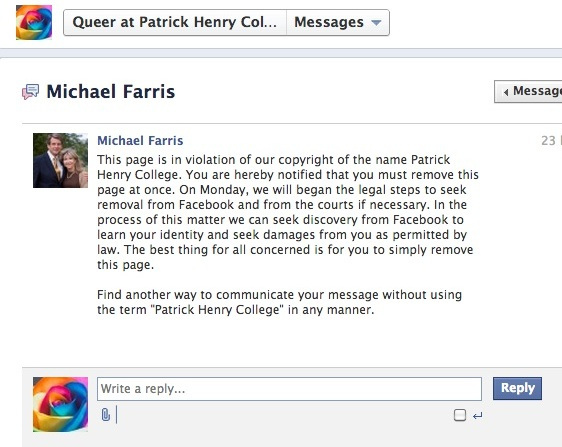
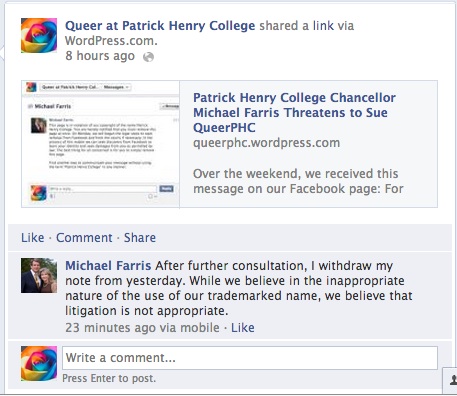


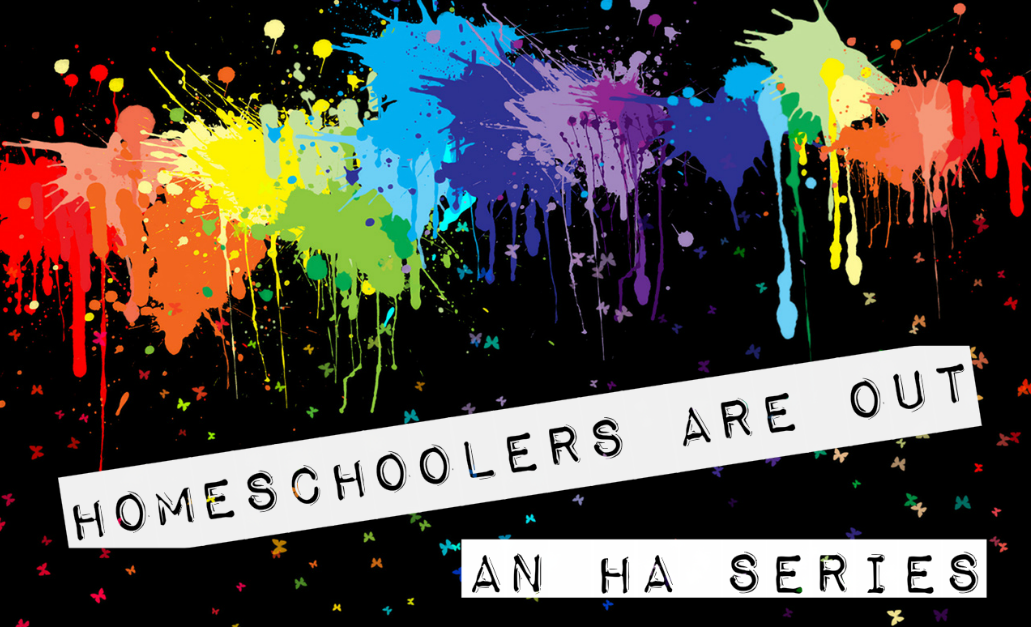


 Homeschoolers Anonymous