Rewriting History — The History of America Mega-Conference

Rewriting History — The History of America Mega-Conference: Part One, First Impressions

HA note: This series is reprinted with permission from Ahab’s blog, Republic of Gilead. For more information about Ahab, see his blog’s About page. Part One of this series was originally published on July 3, 2013.

*****

Also in this series: Part One: First Impressions | Part Two: Doug Phillips on God in History | Part Three: “Religious Liberalism” And Those Magnificent Mathers | Part Four: Kevin Swanson Is Tired Of Losing | Part Five: Messiah States and Mega-Houses | Part Six: Doug Phillips Rages Against the 20th Century | Part Seven: Christian Vikings, Godly Explorers, and Strange Bacon | Part Eight: Closing Thoughts

*****

On the evening of Tuesday, July 2nd, I observed the History of America Mega-Conference at the Radisson Hotel Harrisburg in Camp Hill, PA. The event is sponsored by Vision Forum, a ministry with a strong Christian Patriarchy slant that focuses strongly on “Biblical education” for children. The History of America Mega-Conference features workshops on the past four-hundred years of American history, filtered through a conservative Christian lens. (More here.) The description of the event at the Vision Forum website left no ambiguity about the conference’s agenda.

“Are you and your children equipped to answer the politically-correct, historical revisionism that dominates higher academia and the mass media today — to defend our nation’s godly heritage with nuance and precision against the fierce onslaught of secular skepticism?

Antagonists to the Christian faith are stealing our history, and it’s time we take it back. The engaging messages given at this conference will arm your family with the truth to combat the lies of the Left — to have a sure foundation for the 21st century.”

This week marks the 150th anniversary of the Battle of Gettysburg, and given the proximity of Camp Hill to Gettysburg, many attendees dressed in Civil War era costumes. The costumes, while lovely, made navigation tricky. I almost fell over a woman’s enormous hoop skirt, then got accidentally whacked in the knee by a scabbard swinging from a passing man’s belt. When did Religious Right events become this hazardous!? I thought.

"The New Geneva Christian Leadership Academy table was stocked with books by Christian Reconstructionist author R. J. Rushdoony."
“The New Geneva Christian Leadership Academy table was stocked with books by Christian Reconstructionist author R. J. Rushdoony.”

About a dozen vendors were manning tables at the conference — mostly books, DVDs, and homeschooling curricula — and their titled amused me. The National Center for Family-Integrated Churches seemed keen on gender roles, judging by book titles such as Preparing Boys for Battle and Feminine By Design. At the Vision Forum merchandise table, alongside toy guns, toy swords, and books such as Large Family Logistics were DVDs with titles such as Tea with Michelle Duggar and Birth Control: How Did We Get Here?, a video on the evils of “child prevention”. I chuckled at the title of a video on food culture, Food Heresies: How to Reform Our Theology of Food Without Becoming a Selfish Marxist, a Radical Environmentalist, or an Imbalanced Vegan.

The New Geneva Christian Leadership Academy table was stocked with books by Christian Reconstructionist author R. J. Rushdoony, such as the colorfully named Noble Savages: Exposing the Worldview of Pornographers and Their War Against Christian Civilization. 

However, one display made my blood run cold. In the hotel’s grand ballroom was a display from Heritage Defense that read, “NO, YOU MAY NOT TAKE MY CHILDREN!” Sitting in the display were free DVDs such as CPS vs. the Family and How to Handle a Social Worker Visit. Upon reading the flyers at the foot of the display, I realized that Heritage Defense was casting child protective services as an opponent to Christian families. On its flyer, Heritage Defense claimed that it empowers Christian families by “uncovering social services abuses” and “holding abusive social workers accountable”. The flyer also celebrated the organization’s efforts to protect families from the following “threats” from social services:

  • Corporal Punishment
  • Sanctity of Life Decisions
  • Medical Choices like vaccinations and midwifery
  • Mandatory Reporters such as doctors, nurses, dental care providers, law enforcement, child-care services, nursery workers, coaches, counselors, and others…
  • Accidents in which children are injured
  • Premature Births or special-needs children
  • Anonymous Tips by those who wish to harm families
  • Harassment by extended family, neighbors, or mere acquaintances regarding disagreements concerning philosophical/religious direction and training of children
  • False reports generated by rebellious, disobedient, or indiscreet children within the home
  • Targeting of Profiling of Christian families because of faith, number of children, or other family dynamics
"Heritage Defense was casting child protective services as an opponent to Christian families."
“Heritage Defense was casting child protective services as an opponent to Christian families.”

Suggesting that mandatory reporters and anonymous tipsters are “threats” casts child abuse reporters as troublemakers rather than responsible citizens. To boot, the branding of children who seek help from CPS as liars or “rebellious, disobedient, or indiscreet” made me shudder. When child abuse occurs in fundamentalist families, where can victims find refuge if they’ve been taught that CPS is monstrous and that those who report are wrongheaded? When fundamentalists witness or suspect child abuse, could rhetoric like this make them reluctant to do the right thing? CPS is by no means perfect, but it does protect children from abuse and neglect, and thus this kind of demonization benefits no one.

Opening ceremonies for the conference began at 6 p.m., and hundreds of participants streamed into the grand ballroom. As the crowd filed in, I noticed several things about the attendees. First, the gathering was overwhelmingly made up of white families. Second, practically all of the women were wearing casual dresses or skirts, which I assumed had something to do with Christian patriarchy subculture. Finally, many of the families I saw had at least three children, often more, and babies were a common sight.

To be fair, everyone I met was gentle and helpful, and the families I observed treated their children with warmth. I struggled to reconcile these kindly people with the jarring messages I would hear from workshop speakers. It wasn’t just the workshop content that gave me pause — although polemic workshop titles such as “Why 19th Century American Literature Was at War with God” and “The Rise of Religious Liberalism” left me scratching my head — but the presenters of those workshops as well. I wondered how the women felt about a conference with only male presenters, or how anyone felt about a conference with all white presenters.

Stay tuned for posts on Doug Phillip’s opening speech and Wednesday’s workshops!

For more information on Vision Forum’s History of America Mega-Conference, visit the conference’s website.

*****

To be continued.

I Was An Abusive Homeschooling Mother: Jane Doe’s Story

Lustrous Wooden Cabinet with Regret File Label in Dramatic LIght.

Trigger warning: this story contains a detailed description of physical abuse.

I was an abusive homeschooling mother.

I can’t change that fact by writing about it.

I’m hoping to raise awareness about the higher potential for abuse in a family that homeschooling makes possible and the dangers of the Pearl child raising methods by speaking out about it, as one who has first hand experience. And partly I’m speaking up because I am still trying to recover a sense of myself in the aftermath, which is still unfolding in our lives like a years-long train wreck from which we can’t escape.

My husband and I were fervent Pearl followers, which is strange considering that he was a non-believer.  However he used other arguments to come to the same conclusions.  After a devoutly religious friend sent us some No Greater Joy newsletters we ended up buying and reading, and re-reading, almost all of Michael Pearl’s books concerning child raising.  We also bought his book To Train Up a Child by the box load and gave it away to people at every opportunity.

I was a young and uncertain college student when I met my husband to be. He was 16 years older and had been living alone for many years.  He was set in his ways and could be described, by a generous description, as eccentric. At first it seemed we both wanted the same kind of life: that of being semi-self-sufficient on a small farm.  He had the land and skills to make that life possible.

Most pertinent to this story, he has the soul of a lawyer.  He loves argument more than anything in the world, and spends much of his time devoted to it’s study and practice.  Esoteric disputation, definitions, shades of meaning, debate techniques, and hard-core allegiance to “principles” over relationships is what made it so easy for him to adopt the Pearl techniques, blowing away any objections I, or my mother, might put forth.

I must accept blame however.  I must make clear that I chose, in the face of conflict with my husband, to submit myself to his will in all things.  I made that choice.  No one else made it for me.  I felt that it was a good choice at the time, for I could not stand up to him in argument, and I could not stand conflict.  I wanted to have a real home for the kids, with a real dad, like I never had as a girl.  As time went on I was baptized and accepted that being a submissive wife was my calling from God, as preached by Debi Pearl.  I was determined to make it work and keep my husband happy at whatever the cost.

It turned out that the cost was very, very high.  Accepting his will in everything meant living without electricity or running water while living in a small decrepit single wide trailer, having a baby every two years, not going to the dentist ever or doctor regularly, wearing dresses, not wearing make up, not cutting my hair, doing all the cooking,gardening, food preservation, never buying anything, not celebrating any holidays or birthdays, not leaving the house without permission, and forbidding my mother to come visit on any occasion whatsoever.  I essentially lost contact with the outside world and became completely consumed with the vast number of everyday chores that were my duty.

For the children it meant that they had no birth certificates, no social security number, no vaccinations, and no friends.  It meant being spanked regularly, without mercy, until their “wills were broken”, as the Pearls’ say.  To do anything less would have been to allow “evil” to flourish in their very souls, and what a bad parent one would be then.  When the children got older, it meant they were “homeschooled”, which also became my job.

I loved my children.  Being a housewife with kids on a farm had been my ambition since I was a little girl.  I was never spanked as a child.  I never thought that was a good idea.  Our family’s exposure to the Pearls’ child raising ideas came along when our first child was two years old.  I was appalled.  But my husband, devouring the Pearl’s books, found many arguments to use on me.  Eventually I simply came to the point I always came to with him.  I gave up and let him have his way.

According to the Pearl philosophy however, I could not choose to be an innocent bystander.  No, it would not do to let dad do all the spanking.  The children would notice.  Mom must also do her part so that the children would know there was in essence, no escape.  I too must hit my children with sticks for the slightest disobedience or even tardiness of obedience.

And hit them I did.  The change in parenting hit my poor two year old daughter like a brick wall.  The first spanking was at least an hour long.  She, of course, did not ‘submit’ at all, never having experienced anything like it.

I believe the first command I gave her was over something relatively minor.  The second was to stop crying after her first spanking.  Of course she wasn’t going to stop.  According to the Pearls’, to stop crying was a command I was supposed to be able to give and get obedience.  I am here to tell you, it takes a long time to spank a child until they stop crying.  Their bottom gets red, welts start appearing.  You take breaks and waste your breath on endless explanations between the hitting about how you are not going to stop until they obey.  Eventually, they start trying to hold their breath while they sob, making a sort of hiccuping gasp with moans and gurgling in between, while the demanding parent tried to decide what point really constitutes “stopped crying”.

It is a horrendous thing to witness, to perpetrate.  It makes my blood boil to think of it now.  It was completely mentally and physically and emotionally exhausting at the time.  Both myself and my now ex-husband deserve jail time for what we did.  We really do.  But that really would not take the past back.

The beatings (can I now call them what they really were?) continued almost everyday.  The Pearls’ say that you should be able to spank less and less.  That the children will come to joy and peace and trust through this method, over time.  But this much awaited magic never happened.  Our oldest two children as time went on, became angrier and angrier.  According to the books, this was because I was not being diligent enough in my applying of discipline.  So, we spanked more and more as time went on.

More and more beatings.

More and more screaming.

The oldest girl got spanked over school lessons too, the few we had time to fit in.  It was especially bad in areas of math and Spanish.  Dad would butt into our lessons, and ask her if she understood what he was telling her.  If she said yes she did, but then she could not demonstrate understanding, she was spanked for “lying”, for saying she understood when in fact she had not.  Of course, she wanted to stay out of trouble and was trying to say what she thought he wanted to hear but became trapped in a no-win situation. She was also spanked for not being able to correctly pronounce Spanish words, he said she was simply “not trying”.

To this day, our girl cannot learn math or Spanish due to her emotional block to those subjects which were the setting for some of her worst tortures.

Our second child, a boy, was not so much under my attention where school was concerned.  His dad toted him around with him all the time.  This meant that instead of learning to read and write, he was standing around most of the time with nothing to do, no one to talk to, with frequently not enough warm clothes on and nothing to eat or drink.  His only task was to stay quiet and out of the way.  He had night time sleep walking episodes which involved peeing on the floor, for which he was severely whipped with the belt.

I could go on about the abuses that myself and their dad handed out to them, but it becomes tedious.

Occasionally we would go out as a family.  When in public we were always praised for the good behavior of our children. They were very quiet. They did not make scenes. What good children we had. It makes me sick!  My ex-husband points to these praises as evidence of how righteous our treatment of the kids was back then.  Our friends and neighbors never saw the terror our children were experiencing.

Five years ago I left that whole situation.  I moved into a modern house in a town.  I put the kids in school.  I got them birth certificates, social security numbers and vaccinations.  I stopped hitting them.

He fought me on all these things.  However, he too was forced to stop hitting his children.  He was also forced to put in running water and a septic tank.  After significant and extremely drawn out legal machinations, the oldest two children were given the choice to visit him or not.  They never want to see him, or talk to him, and now live with me full time.  He insists that I am the one who alienated them from him by telling them lies about him.  He cannot forgive me for “taking away his authority”.  He makes no effort whatsoever to contact the older two and seems to have completely given up an them.

When they first went to school, the oldest girl was put in seventh grade, according to her age, the boy in fifth.  Our youngest was two at the time, so she did not go to school.  However our other three children also entered school according to their ages: kindergarten, first grade, and third.  It was a stressful time for all concerned.

The oldest girl spent her first year in school crying because she did not know what to do.  She also got pneumonia and had to be hospitalized.  She repeated seventh grade the next year.  She will probably never be able to do math.  She displays PTSD like symptoms, with constant anxiety, rage, and feelings of low self-worth.  She threatens to commit suicide and goes to therapy regularly.

Despite not being able to read, write or do math when our oldest son first arrived in fifth grade, he was barely promoted to sixth the next year.  Now he has almost caught up to his grade level in his academic subjects, though his hand writing is still horrible and his reading is still slow.  He has anger issues on occasion and can be a bit of a bully.  He is aware of this and really wants to do better.  He spurns his father, yet suffers from a lack of a father.  He is in boy scouts.

In contrast, the younger four kids are making straight ‘A’s and winning writing, art and science awards.  They excel in everything they try.  They do not suffer from low self esteem.  They have friends.

Yet their father still wants to homeschool them, and has told them that homeschooling is better than public schooling, based on the results of studies.  He has got some of the kids convinced that they want to be homeschooled by him by using his powerful arguments.  He and I are going to go to court soon regarding this issue.

He is a member of HSLDA.  I was interested to read from the site of Homeschoolers Anonymous the transcripts of speeches given by [former HSLDA attorney] Doug Phillips at the 2009 Men’s Leadership Summit.  His vision of having CPS abolished, and homeschooling girls to be housewives instead of considering having a career is truly terrifying, and made me realize that this whole thing is of a scope that goes far beyond my family.  I had previously thought we were strange exceptions.

What happened to me and my children could happen to anyone who becomes isolated and vulnerable, and if homeschooling is allowed to occur with such little oversight.  Unfortunately abusive parents will exploit that opportunity for everything it is worth.

Abusive parents, like me.

I Feel Like I’m Getting Crap From Both Ends: Amy Mitchell’s Thoughts

I Feel Like I’m Getting Crap From Both Ends: Amy Mitchell’s Thoughts

HA note: The following post by Amy Mitchell was originally published on April 25, 2013 as “About that homeschooling thing” on her blog Unchained Faith. She describes herself on her blog as a “family woman, feminist, LGBT ally, reader, writer, and nerd. Progressive Christian skewering church and culture one blog post at a time.” This post is reprinted with her permission.

"The fact that a web site like Homeschoolers Anonymous even exists–out of necessity–cuts me deeply."
“The fact that a web site like Homeschoolers Anonymous even exists–out of necessity–cuts me deeply.”

I don’t talk about homeschooling very often.  Part of the reason is my kids–I prefer not to discuss them without their permission.  Since homeschooling is, by nature, about my daughter, I tend not to write much.  When something general comes up, however, I find myself wanting to respond.

The latest is a series of posts written by former homescholars.  I don’t begrudge them needing their space to talk about the frightening world from which they came; I believe safe space is vital.  My problem is not with Homeschoolers Anonymous, or even with some of what they’ve written.  My problem is with the response it has generated.

Before I begin, let me go on the record saying that as a homeschooling parent, I do not feel like an oppressed minority.  I may be in the actual minority, but that doesn’t make me oppressed.  We love our school district (our son is a public school student, and our daughter will likely be one eventually).  We have a great working relationship with them.  We’ve borrowed materials, including text books, and the teachers are always more than willing to give us suggestions.  Later this morning, I will be dropping off my daughter’s third quarter report and staying a few minutes to chat with the security guard who accepts it for transit to the office.  I can’t stress enough how much we appreciate what they’ve done for us.  Keeping that relationship good is what enables us to enjoy homeschooling our daughter.

That said, it makes me angry when I feel like I’m getting crap from both ends.  Many of my fellow homeschooling parents have been critical of the fact that we are working so closely with the district–they believe we’ve somehow given up our “rights.”  Others find it distasteful that we don’t use a specific, prepackaged curriculum.  A few even turn up their noses at our lack of “faith-based” instruction.  And among those who don’t care about any of those things, we’ve taken heat for not living a more “organic” lifestyle to go along with our homeschooling.  It hurts, but as a result, we’ve never found a homeschool group that felt like home.  We’ve stuck with individual friendships (I’m so beyond blessed that one of my best friends also homeschools her daughter) and have enrolled our daughter in other activities.  She’s a Girl Scout, takes two dance classes, and participates in other activities as we find time.

On the flip side, there are the Angry Ex-Homescholars.  Again, I don’t want to take away from their very real pain.  But comments about how people can “spot a homeschooled kid a mile away” and rants about how it’s “damaging” to the kids make me unbelievably angry.  What makes me angry is not so much that people think those things but that a certain subset of the population has given them reason to think them.

When I hear about the way the Homeschool Legal Defense Association (the legal activists) have put pressure on families to refuse to comply with social workers or the way that some parents have used homeschooling as a tool of abuse, I want to scream.  I want to cry when I hear from adults who were homeschooled that they never learned proper math or that their parents, for religious reasons, refused to teach them about human sexuality.  I want to punch something when I see some of the crap that passes for science in “Christian” homeschool materials.  The fact that a web site like Homeschoolers Anonymous even exists–out of necessity–cuts me deeply.

When we began our journey more than five years ago, we had a purpose in mind.  Our son, who came out of the womb with the energy of a lightning storm, was reading at a third grade level at age four and a half.  The combination, we knew, would be lethal in a classroom.  The original plan was to keep him home until middle school.  When first grade rolled around, we had already discovered that he didn’t fit in well with other homeschooled kids (he was bullied, believe it or not, for being a dancer).  As a family, we’re pretty different from most.  On top of that, he needed to be around other people almost constantly–he’s the definition of an extrovert.  So we sent him off to a great public school, where he has continued to thrive.

We offer our daughter the option every year.  So far, she has chosen to remain at home.  I have maintained my drive to ensure that she develops high-level skill in reading and math (so far, so good) and that she finds ways to pursue her passions.  I refuse to use Christian materials, because they are long on religion and short on actual science.  I have a girl who is interested in keeping our natural world and our animal friends safe–if I want to draw her back to her faith, what better way to do it than to help her understand that God made all these beautiful things?  We don’t need Bob Jones or A Bekka to help us do that.

We can’t afford private school full-time, and the only schools offering a la carte classes are the Christian schools–which for us is a big no.  I won’t allow my daughter to be taught science by a teacher who denies evolution, believes in a literal 6-day creation, and insists that humans and dinosaurs must have co-existed.  So if my daughter decides to stay home longer than middle school, we will be searching for ways to supplement what I can do so that she isn’t behind in any way come graduation.

There are several things I need people to understand about homeschooling:

1. We are not all families that believe a woman’s place is barefoot and pregnant.
2. We are not all like the HSLDA folks.
3. Not all of us weave religion into every aspect of our day.
4. Many of us want our kids–especially our girls, who may or may not experience this even in public school–to study math and science.
5. Our children are not all easily recognizable as homeschooled kids.  People are constantly surprised to learn that my daughter is homeschooled.  I guess they don’t expect her to be socially or academically competent, or perhaps they think she doesn’t fit their stereotype of “weird.”
6. Not all of us think education is one size fits all.  Being a half-n-half family works well for us; it’s different for other families.
7. When anti-homeschooling people and HSLDA members alike fight over this, it hurts everyone.  Many of us don’t want to be civilian casualties in your war; please don’t use us as pawns.

I write often on my blog about how we need to get to know the people we are judging.  Please don’t make assumptions about me or my family without knowing us.  When you make sweeping statements about what homeschooling families are like (or about what public schooling families are like), you are causing pain to those who don’t share that view.  Work to make it safer for all kids; work to get legislation in place so that abuse can’t be covered (including among public- and private-schooled kids).  But don’t do it by saying nasty things about what you think we’re up to in our household.  Chances are, you will be wrong.

What Happened When I Called the Cops on Dad

HA note: The following is reprinted with permission from Heather Doney’s blog Becoming Worldly. It was originally published on April 26, 2013.

I’ve been reading these stories of homeschool kids who were so scared of CPS. They were told that CPS were evil, would find any excuse to take them away, and that they would wind up in foster care situations where they would be horribly abused, physically and sexually, and where people hated them because they believed in God. They were told that the worst thing the foster care people would try to do was force you to reject Jesus and if you did, you would go to hell with them when you died.

Sadly, that fearmongering anti-CPS indoctrination was my story too. I was told the same thing. I was also not allowed to go outside in the yard on weekdays until we saw the Catholic schoolgirls through the window, walking down the sidewalk in their matching skirts, signifying that “school hours” were over. My parents were careful to keep us hidden from truancy police even if they weren’t careful to have us do any actual schoolwork.

Given all these years of instilled fear and propaganda, and how much I honestly believed a lot of it back then, I ended up doing something surprising as a teen, something that is still to this day the bravest thing I’ve ever done, and I figured I’d share it here.

Just to give you the background, I was 14 years old, my grandparents had recently forced my parents to put all of us in public school (I went into 9th grade), and my Dad still regularly did things like hit us with belts; slap, kick, and body slam us; yank our hair; drag us out of bed or out of the shower; and repeatedly slap us in the face. Often it looked and sounded a lot like this. As we got older and he increasingly lost control of us, as we started to question and oppose things more, the abuse just seemed to escalate. It was bad enough that today I have a “bum knee” and a pinched nerve in my upper back, both developed in my mid teens and neither attributable to any other cause than getting physically abused by my Dad, as I did not play sports.

The worst part of it all was seeing my siblings get hit (I either “tuned out” or fought back when I got hit) and I was concerned that one of them might get maimed or killed, particularly my younger brother, the eldest son, who always got it the worst. At public school I had recently learned that most people figured you were supposed to call 911 if something real bad was happening. I decided to give it a shot.

“I’m gonna call the police!” I said, but nobody seemed to notice. Dad was too busy hitting and shoving my brother and calling him names, and my brother was too busy curled up on the livingroom floor, trying to make himself as small and unhittable as is possible for a nine year old to do. I don’t know where anyone else was. It was a small old house with all the rooms pretty much connected to all the other rooms, but people still seemed to find ways to quickly disappear at times like this, except for me. I never seemed able to pull off the escaping thing very well, and by now I was thoroughly sick of it. I had also been told I was responsible for my siblings often enough that I believed it. I had decided I was going to do something radical and crazy. Even if foster care got us it couldn’t be worse than this, right?

I shouted about calling the cops again and again no one paid me any attention. I went into my parents’ bedroom and picked up the phone. I pushed the 911 buttons quickly so I wouldn’t lose my nerve. I could barely hear the sound of the operator’s voice over my own heartbeat. I told her “my Dad’s hitting my brother and won’t stop.” She calmly asked for the address and said “ok, we’re sending someone out there right away.” She asked me if I wanted to stay on the phone until they got there and I said no and then thanked her. It seemed I only had a moment to wait and then suddenly there were sirens. The police arrived and then two young men in blue were standing in the living room. I came out and sat on the old gold-colored couch in the living room in my ratty nightgown, stifling sobs. I suddenly felt embarrassed as I hadn’t brushed my teeth or washed my hair since waking up, and my face was red and stained with tears. I felt ugly and by the looks on their faces they seemed to think I was ugly too. They looked at my brother, standing there, bug-eyed, and then let him go in the other room, which he was in a hurry to do. Dad turned on the charm and told them a story of how he was disciplining his son, who had misbehaved and that I had just lost it and interfered. He told them I was wayward, and willful, and disrespectful and had cursed at him.

One cop took my Dad outside to hear more of this yarn, and the other one stayed to look at me sternly and lecture me on how I needed to be respectful to my father, accept punishment for bad behavior, and not curse at adults. I sat there, seething, saying nothing. You just don’t talk back to a cop, especially when you’re a 14 year old girl and he’s obviously taken sides and ignored all evidence that didn’t fit with what he wanted the situation to be. They didn’t even check my brother for bruises or marks (which he had). The cop looked only a few years older than me, not much taller. He apparently knew nothing about this type of situation and obviously didn’t want to learn more.

Mom was standing there in her nightgown, nervous and sinewy, arms folded tightly, with purple lips and a crazy, almost baffled expression. Her usual look when fights happened. The policeman tried to include her in the conversation about what I should and shouldn’t do. I glared at her and said “you know what was going on, and you never do anything.” Now it was time for her to play the victim. She looked at the cop with big child eyes and said that she believed children should be disciplined in a Godly manner and her husband was the head of the household, blah blah blah, but that she didn’t like it when he slapped the kids in the face and when he would get mad she just didn’t know what to do.

The cop then directed all of his attention at Mom, trying to ask her questions, probe deeper into this. He quickly discovered what everybody else already knew, that asking Mom any kind of yes or no question and expecting any kind of direct or conclusive answer was an exercise in futility. She gave him a few long, indirect run-on sentences about nothing. He became bored and joined the other cop outside with Dad. I looked out the window and saw them talking on the gravel driveway, just along the fence line. Dad was standing inside the gate and they were standing outside. His body language showed that he probably wanted to kick them off the property altogether but instead was being submissive and deferential and thinking he might be in trouble. I looked at my brother, who’d come back in the living room, still bug-eyed, to look out the window with me. He said “you shouldn’t have done that, Heather.” I turned away from him as my heart sank and I sobbed. I’d done this for him. I didn’t want him to get killed. I looked back out the window.

The two policemen looked comfortable, chatting with Dad easily. One of them came back up to the door to tell Mom that they’d spoken to him and told him that corporal punishment was ok, but that slapping your kids in the face is not included or allowed. They said they’d also told him that if they had to be called back out here, he’d be arrested. They were leaving now. That cop didn’t even look at me again, still sitting on the couch. I didn’t matter. I felt so alone, terrified. I figured I was probably going to end up dead. Dad would kill me and I would be buried in the ground somewhere and no one would ever find me! They were leaving and he was coming back inside and I knew he was furious, and…suddenly I wasn’t scared anymore. I was a ghost, floating up above my left side, looking down at the ugly gold couch with the ugly teen girl on it, saying “hmmm, I wonder what’s gonna happen to that girl, Heather?”

Dad walked into the house and I stopped dissociating. I wasn’t a ghost anymore. I was me and all I could hear was my heartbeat. I wasn’t afraid. I would meet death straight on and show no emotion. I would look expressionless. He would not get any begging for anything from me. He stepped into the kitchen and instead of showing anger, he looked over at me with the saddest betrayed eyes I had ever seen him look at me with. He seemed like a little child that someone had punched. He slowly looked at me again and then averted his eyes, seeming to not bear to even see me anymore. He spoke to Mom in a sad voice and said “I can’t believe you didn’t support me. I don’t even have a good Christian wife that supports me.” He brushed off her attempts at conversation and sadly shuffled into the bedroom to lay down. Mom tried to go in and talk to him but he said “just leave me alone,” in the same sad resentful voice, and she ended up coming out and cleaning the kitchen table instead. I couldn’t believe it. I wasn’t smacked or yelled at or killed! I was still on the couch and nothing had happened to me.

The next day at school I felt exhausted and mentioned to the boy I liked in computer science class that I’d called the cops on my Dad. He looked at me, shocked, and said “Wow, that’s terrible!” He didn’t ask any questions and kept playing Doom, so I kept playing Oregon Trail, feeling worse than usual every time my pioneer family drowned in a creek or starved to death. I felt guilty. Maybe it was terribly wrong to call the police on a parent. It sure felt wrong, but so did a lot of things. Was it more wrong to treat your own kids like that? Was it wrong to be a cop that’s stupid and doesn’t pay attention when it’s your job? What was I supposed to do? Accept that it was corporal punishment and it was ok, we deserved it? I just couldn’t. Getting hit had just always felt wrong, disrespectful. I decided I wouldn’t say anything else to people at school though. Apparently that just wasn’t a good idea. Still, the more I thought about what happened when I called the cops, the more I felt angry. I was still afraid and on guard the next few days, thinking there was a chance I might still have it coming from Dad.

All that week he didn’t speak to me or interact with me, except once to tell me “Grammy wants to talk to you,” and hand me the phone. I picked it up and she started yelling on the other end. She was attempting to tell me what a terrible child I was for calling the police on Dad. I tried to explain to her what was going on, because she’d listened and tried to help when I’d told her stuff before, but she just couldn’t hear me over all of her own yelling. I finally told her I knew I did the right thing and she just didn’t know. She got me to promise her that next time there was a problem, I’d call her, not the police. It was an easy promise to make because after what had happened and how those cops were, I didn’t plan on ever calling them again anyway.

After that everybody stopped mentioning that I’d called the cops on Dad. The only reminder was that he seemed to try and show more self control. He stopped getting the belt or the red stick, even if he still threatened to use them. If we did something he didn’t like, he would put us “on restriction,” his term for grounded, in back-to-back two week increments (which would usually end up being extended for months on end), and when he did lose it, he was more likely to only corner or intimidate us, and if he did hit us, only leave bruises where clothes or hair would cover them up. Also, now he had to be careful because every time he lost it on somebody, Mom would scream “I’m gonna call the police! I’m gonna call the police!” She never did call on him though.

The abuse ended for me when I moved out at age 17 after Dad knocked me over in a chair, chipping my front tooth. The abuse ended for my siblings two years later when Dad moved out and my parents divorced.

Two years ago my brother, now 25, and I finally talked about the time I called the police, our first time ever discussing it since it had happened. He said he was sorry for telling me I shouldn’t have called back then, that he had thought what was happening to him was just routine, normal, and that what I did was what was out of line, extreme. He said looking back he was glad that I called, that he felt it was a “wake up call” to Dad and while things still weren’t ok after that, they got better. I cried when he said that.

There was certainly no need for him to say sorry for anything he’d said as a little boy, but his words now, as a grown man affirming that I’d done the right thing, meant so much to me. Nobody had ever told me that. Back then everyone had acted like I was very much in the wrong, a person who betrayed my family.

I look back and feel so very thankful that I somehow had the guts to fight that fight, that my siblings and I all survived it, and that the younger ones can just be kids and don’t have to go through any such stuff.

I Can’t Tell My Story Without A Trigger Warning: Elizabeth’s Story

I Can’t Tell My Story Without A Trigger Warning: Elizabeth’s Story

HA note: The author’s name has been changed to ensure anonymity. “Elizabeth” is a pseudonym.

*****

Trigger warnings: this story contains graphic and detailed descriptions of rape, physical abuse, the physical results of abuse, and religious apologisms for both physical and sexual abuse of children.

*****

I can’t tell my story without a trigger warning. I try writing it without describing physical and sexual abuse and it just doesn’t work. It could get graphic.

I just spent the last half an hour sitting in the corner, hugging my knees, and bashing my head into my wall because I dared to post a link to the HSLDA petition. I’m nearly 40, but I’m terrified of getting into trouble.

I can’t use my name–call me Elizabeth. This name I write with isn’t mine. I picked a name that I think is the sort of name that a typical white, protestant American would have. I hope that some homeschooled kid with that name and a similar story won’t be tortured or shunned on account of my speaking out. I just hope that anyone who reads this and sees someone they know knows that it wasn’t really them. It’s just an eerie similarity. Please don’t punish them for speaking out, because I’m someone else.

I can’t tell my story exactly. I’m afraid my family will recognize that it’s me writing. I only feel safe writing anything at all, even vagueing up the details, after reading the lawsuit filed by survivors of abuse covered up by sovereign grace ministries. It’s sad when the text of a lawsuit reads like your biography, but there you have it. It made me realize that this culture of abuse is sufficiently widespread that my parents could just read my personal story of our nightmare family and assume it comes from any anyone anywhere.

It at least gives me some plausible deniability. Not that I need plausible deniability–I have no contact with my family or anyone from my childhood. I won’t even be setting foot in a church again. But I’m so terrified of repercussions that I need a crutch. The brainwashing runs deep. I know I’m safe intellectually, but the rest of me doesn’t believe that safety is possible.

What lets me comment on the differences between homeschooling and other kinds of schooling? I’ve done it all. We started in a religious homeschooling coop–we did PACES first, later A Beka. Then my parents homeschooled us by themselves in a Northern European country–the rest of my education was in the United States. When we homeschooled in Europe there was no curriculum: it was closer to unschooling. Then they sent us to a private fundamentalist Christian school. Then they sent us to public school.

My parents’  reason for homeschooling us was ostensibly religious. We never heard that we’d get a better education than in public school. That wasn’t the issue. The issue was that public school would corrupt us. There’d be peer pressure. We’d risk getting caught up in a bad crowd and imperiling our immortal souls.

This seemed plausible at the time. After all, our church was very isolationist. You know that Emo Philips joke about the Baptists on a bridge? That was us. Everyone else was wrong. We spent hours learning about other denominations and how they got it wrong. Maybe some other Christians would still get into heaven, if God was extra merciful, but we were the only ones who actually had it right!

Did I mention that I basically had zero friends?

We were taught that children had to obey all adults unconditionally and instantly. We were taught that good Christian children who don’t want to burn in hell submit to their parents. They submit to discipline from their parents, other adults, or older children. They submit to spankings. They do not talk back. And so on. If you are wrongly accused you should still accept your punishment because you are a worthless sinful being and the punishment is probably good for you anyway. If you don’t accept punishment when you’re wrongly accused, that’s a sin, so you need to be punished for that now. Catch 22.

And we were taught that good, Christian children do not ever let anyone find out that they aren’t completely thrilled with their lives. We should never complain to secular authorities (or anyone, for that matter, but especially secular authorities) about anything. It makes us bad witnesses. It makes us bad Christians. And we might also be selfishly risking the destruction of our families because CPS will come and take us away. And there isn’t anything better, so after CPS destroys our families, we’ll still be disciplined so destroying our families and our parents’ good names will have been for nothing. If your bottom is sore from a spanking, you’d better not wince as you sit down. If you’re in pain down there, you’d better not let it keep you from walking normally. Don’t talk about your punishment. Don’t let anyone see you cry.

And we weren’t taught about sex, or wrong touching, or children’s rights. Most kids would get this in public school. At a young age, they’d learn that there are things adults aren’t allowed to do to them. They’d learn that they have the right to say ‘no.’ They’d learn that if something is wrong they can tell their teacher or call the police or something. Later, they’d have sex education and learn what sex is.

Here’s what I thought the word “spanking” meant when I was a kid: if your dad is home, usually it happens right away in your bedroom or his. If your dad isn’t home, you get sent to the guest room, where there’s nothing to do in the meantime, to wait for him to get home. Then the spanking commences. Maybe he’ll go for the big wooden paddle. Maybe he’ll pull off his belt. Sometimes he gets them both out and makes you chose. If he makes you choose, he’s feeling particularly sadistic.

Just the paddle is better. Then he sticks to your unclothed bottom and thighs. The pain is excruciating, but it’s a good sign if he doesn’t take his belt off at all. He’ll probably just finger you a bit when he’s done. Ditto if he bends you over his lap instead of over the edge of the bed. If he just breaks out the belt, he’s lost his temper. You’ll get hit everywhere that can be covered by clothes. The individual strikes aren’t as hard as with a stick, but the beating goes on forever. Sometimes your body just shuts down. Maybe that’s better; if you wet yourself the spanking might stop there because you’re now too gross and dirty to rape. But usually he’s going to finish the “spanking.” The whacks stop coming and then he’s inside you, crushing you with all his weight and ramming into you over and over until he’s done with his business.

I was told that all kids got spanked. I didn’t understand that ‘spank’ meant a bit of a beating for most people and not an extreme beating followed by rape. I didn’t even know what rape was, as I knew nothing about sex. I had no idea what was going on.

Spanking was how my dad got access during the day. If he wanted it and I hadn’t done anything wrong, he would make up something wrong. Notably, he’d wait for me to look at the telephone. Mind you, I was too short to actually reach the telephone up on the wall, but he needed to make sure the message was ingrained. He’d wait for me to look at the phone then punish me for thinking about making a phone call. For thinking about lying to people that I was being abused. It was part of his way to drill into my mind that there was no way out. That this way of life was all there was or ever could be.

I only remember a few instances of explicit training. I remember a gruesome rape when I was too young. I can see my baby fat hands in my memory. I can taste blood. I wonder if that was the first time. I think the ripping might have caused some nerve damage. I can’t actually feel much on the surface, which might have made me the perfect victim in the future. He could do whatever they wanted and I wouldn’t react much. I remember one day when I was older–maybe 3ish–getting taught to relax properly, to stretch out, to be able to take in something larger. Being told that this is what big girls are supposed to do. This is what good girls are supposed to do.

Compared to a spanking, simple molestation didn’t mean much. There was a ‘monster’ that came at night and did his thing. I was told that I had nightmares. And I had to comply instantly with any demand made by an adult. I had to do whatever they wanted, whenever they wanted. So if I was running around at church and an adult said I had to come give him a hug, I had to. And if his hand slipped up under my skirt, I was supposed to relax like a good girl and ignore the uncomfortable pressure filling me up. I guess it got out to anyone who was interested that I was groomed for complete submission and wouldn’t make a scene. I don’t know if he shared me on purpose or if all the perverts attracted to the good cover of a patriarchal church found me independently.

The violence was most extreme when we were at the cooperative homeschool. The school and the church reinforced the message. We only came into contact with other kids in the same situation. The probably weren’t all being seriously abused, but some of them sported regular bruises–new dark blues and purples in a new pattern over the fading browns and yellows from last week. Even the ones who weren’t abused weren’t told that they had rights. None of us was going to compare notes and discover that rapes weren’t a standard part of spanking. It was Orwellian. We didn’t have the words or concepts to address any of it.

No one at church would question my dad’s authority. He was a well respected member of the community. He was all godly and stuff. The benefit of the doubt extended to someone in his position was endless. By homeschooling us through this crucial period, my dad normalized abuse and kept me from finding out that I had rights. I literally had no idea until I was an adult that there was anything else out there, that this was not the natural order of things, that everyone wasn’t raised with this sort of abuse. Insofar as I ever heard about child abuse, I was taught that abuse was something that happened to other people.

When we homeschooled in another country, the abuse stopped almost completely. My dad was away from the comfort and safety of being an established pillar of the community. The monster still came at night, but the daytime abuse was drastically curtailed. I spent huge amounts of time being free and happy. The only punishment I recall was being yelled at.

I was only punished for one thing: speaking the other language. Somehow I’d picked it up, although my parents and other siblings hadn’t. My dad could use English at work and didn’t need to know it. Everyone spoke English in the shops anyway. My mom didn’t have a problem with it, but my use of the other language outraged my dad. If I uttered a word in front of him, his face would turn red and he would explode with anger.

How dare I speak another language. I couldn’t know what I was saying if it wasn’t English. I could be insulting someone and not know it! Because I couldn’t possibly know what I was saying if he didn’t know what I was saying. I couldn’t guarantee to him that I wasn’t saying something inappropriate because he couldn’t speak the language. So the act of speaking the other language was deceptive: I was hiding things from my parents by not speaking English. I never knew that I wouldn’t be spanked after these outbursts; I only connect the dots with the illegality of spanking in the other country now, as an adult. Looking back, I realize that he was afraid of getting caught in a country that cared about its children. He needed to make sure that I didn’t trigger any alarm bells there and get rescued by their child protection agencies.

When we returned to the US, we went to a fundamentalist Christian school. The ‘spanking’ resumed but it was much less frequent. Partly the training had kicked in and I was a good little robot. It was very difficult to find a reason to spank me. Partly we now lived in a bigger house. I had my own room and was far enough away from my parents room that it was unlikely for it to wake anyone up when he came in at night. Partly he couldn’t assume that he’d get a free pass at the new school. Teachers were from other denominations who might be just as distrustful of us as we were of them. Some students were just there because their parents thought they’d get a better education at a private school. Some students were even there because they’d been expelled from every other school and their parents couldn’t find anywhere else to take them. While I was guaranteed to not get any sex education or get told I had rights by the school, it was less clear that I wouldn’t exchange information with peers who knew stuff.

The fundamentalist Christian school went bust over doctrinal differences (surprise, surprise) and I was allowed to finish out high school at the local public school. It was the most supportive and loving environment I’d experienced in my life. No one made fun of me, as they had at the Christian school, for having zero social skills. People, not just teachers but students as well, put up with horrific ideas from my upbringing and gently taught me tolerance. Even people who didn’t like me were still patient and cordial with me. And my dad had to stop the ‘spankings’ altogether.

He still came in at night. He suffocated me so I wouldn’t wake up. I only woke up to absolute terror a few times. Rape is a thousand times more terrified when you fade in and out of consciousness from lack of oxygen. When I asked the youth pastor at church he said it was a demonic attack. I tend to trust my gut; I don’t know if that’s good or bad. But he wasn’t the brightest bulb in the box. I think he was just gullible and never got any sex education himself either. He was a relatively young adult who had never dated. I don’t think he had any idea that he was passing on a lie used to conceal abuse.

Unfortunately, I got to public school too late to get sex education. It would have been covered in junior high. I’d learned about periods the day my first one started (I was at the Christian school at the time). A neighborhood girl who went to public school found out how little I knew about it and tried explaining the facts of life to me, but she was several years younger than me and hadn’t learned all the details herself yet. I am grateful that she noticed something was wrong with my complete lack of education and did her best to step in and fill in my educational gaps. But there was so much she couldn’t tell me.

So I didn’t know that periods were supposed to happen regularly, about once a month. I didn’t understand that it wasn’t normal to go months between periods. I didn’t understand that that much pain and that much blood was abnormal. I didn’t understand that something was very wrong if you had to spend several hours bleeding into the toilet and passing chunks. I didn’t put two and two together until I had my first miscarriage as an adult. Then it hit me that my period got regular after I got married. I wasn’t in so much pain. The flow was lighter – a pad was enough instead of having to spend time on the toilet because it was too much. And it hit me that while I’d had a few odd periods in high school, I’d mostly just had a succession of miscarriages. I still can’t have kids. I wonder if it’s from too much violence to my reproductive organs at such a young age. It’s not something I can face having a conversation with my doctor about.

I didn’t understand that I was experiencing rape until we had to read a short story in 12th grade advanced English about a girl being raped. That’s when I learned that that’s what rape was and, by extension, that’s what sex was. But I was too afraid to tell anyone. The programming to pretend everything was fine persisted. Teachers and counselors noticed and asked if something was wrong and I instinctually lied every time. I didn’t know how to do anything else. I didn’t believe anyone could help me, just that it would get back to my parents that I’d told someone. And then I’d be in for another spanking; I’d rather have died than risk another spanking.

I tried reporting my abuse to the authorities once as an adult but the law wasn’t on my side. If I’d been a minor, they could have gotten CPS involved. But as an adult, the law is written for specific instances. You can’t charge someone with years of violence and rape where there are so many memories jumbled together. You need a report of a specific instance. And remembering a specific instance with all its details when it happened all the time is like remembering what you had for dinner on March 12, 1986. What time was dinner? What did you eat? Did you have company? How was the food arranged on your plate? Who sat where at the table? Good luck with that.

Having been rebuffed, I tried getting out but it didn’t take. The economy was in shambles and I couldn’t find steady employment. The U.S. has a patchy safety net. One of the things that we as a society assume is that people’s parents don’t suck. If you’ve very lucky and your abuse is caught and you end up in the system, there are programs for young adults who have aged out of foster care. These programs aren’t perfect, but it beats the hell out of choosing between starvation and going back to an abusive family. After you’re an old enough adult (I think it varies by state), you are eligible for things on your own. But there’s an awkward gap between 18 and 20 something where your eligibility is determined by your parents income. Long story short, I ended up homeless. I had to go crawling back to my parents, tail between my legs, and enduring several more years of abuse before I married my husband and escaped.

I firmly believe that if public school teachers had gotten to me before the brainwashing set in that I might have told them the truth. I think the brainwashing would have been harder if I’d been getting a counterbalancing affirmation from public school that I was a human being with rights of my own. And you know what? Maybe my dad still would have found a way to abuse me, but he either would’ve had to pull me out of public school to keep the abuse hidden or he would’ve had to abuse me a heck of a lot less.

That’s what bugs me the most when homeschool parents bring up the fact that kids in public school get abused too. They act like that’s evidence that regulating homeschool is pointless. From where I’m sitting, that’s hogwash. I’d take rare beatings over frequent beatings. I’d take beatings severe enough to leave obvious marks during just summer vacation over getting those beatings several times a week around the year. I’d take just being raped over having the crap beaten out of me then being raped. I’d take being brutalized for the first 7 years of my life over being brutalized for the first 20 years of my life. I could go on down the line.

It’s clear to me how the abuse I received changed with the amount of control my parents had over the other adults in my life. When it was just them and church, the abuse was horrific. When it was public school teachers who weren’t going to give them a pass just for being Good Christians, the abuse was relatively minimal. I guess it reads as pretty extreme still, but that level of abuse required that they already have the prior controlled environment in which to make sure I never found out about my rights. And it’s way less than the baseline level of abuse they established when they had complete control of my environment.

But the more I think about my upbringing, the more I think the church and homeschooling were just convenient. In the wake of the ohio kidnap victims’ escape, an article in the guardian addressed the issue of girls and women being trapped in long-term situations where they were kept as prisoners and raped repeatedly. It quotes Prof. Sherry Hamby of Sewanee and journal editor of Psychology of Violence as saying “I don’t think there is any question there are other victims in similar situations. We are only catching the dumb ones.” It’s the first time in, well, ever, that I’ve felt like I wasn’t invisible. Usually situations like mine are invisible to mainstream media that is usually so desperate to maintain our societal illusion that abuse is a rare thing that is done to and by people we don’t know.

There are victims in similar situations. And we do only catch the dumb ones. My dad is extremely intelligent. It doesn’t matter what his personal beliefs might be: the perfect place to isolate his prey was in a patriarchal religious sect. The perfect way to avoid letting his kids encounter mandated reporters is through homeschooling. The perfect way to keep me from going to authorities was to lie to me about my rights and to surround me by other kids who didn’t know their rights. I don’t think I’m special. I don’t think I’m unique. I think odds are high that there are plenty of other people who grew up just like me.

End Child Protection: Doug Phillips, HSLDA, and the 2009 Men’s Leadership Summit

picture-11

 By R.L. Stollar, HA Community Coordinator

In 2009, an exclusively male group of conservative Christian leaders in the homeschooling world descended upon Indianapolis, Indiana. The event was the Men’s Leadership Summit. While its purpose was to draft a unifying vision for what they called “the Christian home education movement,” it included speeches on a variety of topics that were part of the vision.

These topics included the necessity of patriarchy: girls needing to have an entirely home-focused education,  the need to defeat “feminism” in homeschooling, and the concern that “the female sin of the internet” (framed as equal to “the male sin of pornography”) was blogging. Indeed, blogging could be the kryptonite to the homeschool Superman, the patriarchal Ubermensch. Men needed to take back their rightful place as head of their own households and as members of churches and homeschool groups through a new vision. Speakers at the summit claimed that, in doing these things, they could change the world. To the end of world-changing, submission of women and children was mandated and homeschooling was to be reframed as “discipleship,” the specific tool to accomplish world-change for generations to come.

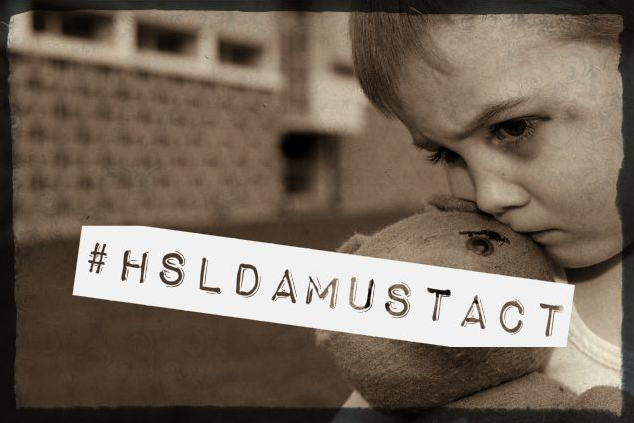
This post is long and detailed and will include all of the information currently available about the Men’s Leadership Summit. This post will also focus on how this event’s goals transcended the narrow confines of entrenching Christian male superiority in the homeschooling world. In fact, it extended to their dream of ending public education entirely and and implementing their expansive conception of “parental rights.” It was at this summit that a former HSLDA attorney articulated a disturbing call: a call to end child protection as we know it. This call places the recent controversy between Libby Anne, the HSLDA, and Homeschoolers Anonymous’ #HSLDAMustAct campaign into an entirely new and much more urgent context.

A Brief History of the 2009 Men’s Leadership Summit

The Christian Home Educations of Colorado (CHEC) is a state homeschool organization founded in 1985. Directed by Kevin Swanson since 1999, CHEC hosted a “National Leadership Summit”  in 2006. This was a men’s only event, described by Generations With Vision as “a men’s leadership meeting…for home school leaders across the nation, in order to encourage home school dads to fully embrace the vision, and to launch a vision for the future of a movement.” There is nothing of particular interest on the Internet about this first summit. The same, however, cannot be said about its sequel.

In December 12, 2008, Kevin Swanson announced on the Generations With Vision blog a new summit, a “National Leadership Summit with Kevin Swanson, Doug Phillips, Chris Klicka, Voddie Baucham, Dr. Brian Ray.”

According to CHEC, this event — even though it was in another state — was officially hosted by the Colorado organization: “CHEC host[ed] a 2nd National Leaderhip Summit in Indianapolis.” It was allegedly co-sponsored by HSLDA, but I cannot find any verification of that from the little original source material that is available. The Men’s Leadership Summit had five headlining speakers, according to Generations With Vision: “Chris Klicka (HSLDA), Dr. Brian Ray (NHERI), Douglas Phillips (Vision Forum), Voddie Baucham, and yours truly [Kevin Swanson].”

Swanson believed this summit to be remarkable because, “We have [never], in the history of the movement drawn so many visionary leaders into one room at one time to discuss the home school vision.” Furthermore, he says, everyone is attending on their own accord, because they want to: “Every leader represented (including speakers) are volunteering their own time to this meeting.”

And what was the purpose of this historical summit of exclusively male homeschooling leaders? Swanson says, “The objectives of this 2009 Men’s Leadership Summit are first, to define a vision for the future of the Christian home education movement.” Not just a “vision,” though. There is another, more important objective of the summit: “the development of a Christian Education Manifesto statement.”

This, then, should be the most important, defining moment in the entire history of the conservative, Christian homeschooling movement. All of the movement’s visionary leaders will be there, he says, and they will be creating the movement’s very own vision and manifesto. As that is the explicit, publicized purpose of this summit, all these speakers — Klicka from HSLDA, Phillips from Vision Forum and previously from HSLDA, Ray from HSLDA’s NHERI, Baucham, and Swanson — will be attending to (1) create a vision and (2) create a manifesto.

It is curious, however, that — up until two days ago — I never heard of this summit. Even more surprising is that, apart from some serious digging, this seemingly most-important homeschooling summit of all time barely exists on the Internet. The website for the event, 2009leadershipsummit.com, no longer exists. There are no recordings, no mentions of this summit on Generations With Vision (save the one I just cited), or Vision Forum, or HSLDA. I had to go a good, old fashioned web archive service just to view archives of the original event website.

To save you the hassle of finding the right archive, I will detail what the now-expired 2009 Men’s Leadership Summit website said. But I will also provide links to the archived versions for your own perusal.

The 2009 Men’s Leadership Summit was held on March 5-7, 2009. It had a mission statement: “Defining a Vision for the Christian Home Education Movement.” The website’s home page explicitly stated the purpose of the event:

“In March of 2009, Christian Home Educators of Colorado will host homeschool leaders from around the country at a national gathering in Indianapolis. The Purpose? To lay out a vision for home education in the 21st Century.”

The About page of the website goes into further detail about the summit’s “vision”:

The homeschooling movement has entered challenging times . . .Challenging times require extraordinary leadership . . .Extraordinary leadership requires dynamic vision.

The time has come to define the vision. With the explosion of school choice and the increased accessibility of state-funded options for home educators, the time has come to define the vision that characterizes the Christian Home Education movement, thus unifying both national and state leadership and solidifying the vision for generations to come. As George Washington said at the Constitutional Convention, “Let us raise a standard to which the wise and the honest can repair; the event is in the hand of God.”

For Such a Time as This, in a Changing Political and Socio-Economic Climate . . .

Home education is poised to bear significant effects on the how we do education, economics, church, and politics in the years to come. As leaders, we feel it is important that we be self-aware of the direction we are headed.

The goal of the 2009 Leadership summit is to define a vision for the future of the Christian home education movement. Together, we must lay down a rock-solid, biblically-based vision for home education that will withstand the attacks of our current generation and preserve this precious vision for future generations. To accomplish this goal, we are assembling the key national leaders, authors, researchers, speakers and advocates who have framed the homeschool vision over the past generation (1979-2009).

Another objective for the leadership summit will be the development of a Christian Education Manifesto statement.

The speakers listed are identical to what Kevin Swanson said on the Generations With Vision blog: Chris Klicka, Doug Phillips, Voddie Baucham, Brian Ray, and Kevin Swanson.

Finally, the accommodations: As already stated, even though the Men’s Leadership Summit is “hosted” and “sponsored” by a Colorado organization, it is interestingly held in Indianapolis. Even more interesting is where: it is not held a normal convention center. Rather it is held “at the Indianapolis Training Center in Indianapolis, Indiana,” a facility “owned by the Institute for Basic Life Principles.”

Yes, the Men’s Leadership Summit was held at one of Bill Gothard’s IBLP/ATI training centersSpecifically: Indianapolis Training Center, 2820 N. Meridian St., Indianapolis, IN 46208. Although now that center appears to be a new IBLP project, the “Verity Institute,” a college created by Gothard and ATI’s Trent Thompson to “help students obtain a college degree without…losing their faith.”

So in 2009, an exclusive group of male homeschool leaders got together at a conference held at Bill Gothard’s training center, to be inspired by talks by frequent HSLDA guest Kevin Swanson, then-current (now deceased) HSLDA attorney Klicka, former HSLDA attorney Phillips, current HSLDA-affiliated researcher Ray, and Heritage Defense ally Baucham. And all of this was to culminate in one thing: a grand vision, or manifesto, for the future of what they themselves term “the Christian Home Education Movement.” And none of these organizations ever mention it happening.

Shall we take a look at what happened, then?

The “Manifesto” of the Men’s Leadership Summit

There is very little primary source material available for determining what happened. However, two bloggers — John Holzmann and Karen Campbell — have preserved a few items, which are extraordinarily important. 

A Manifesto for Christian Education

The first item is “A Manifesto for Christian Education,” which was handed out by Kevin Swanson at the end of the summit. That manifesto, as recorded by Campbell, is as follows:

A MANIFESTO FOR CHRISTIAN EDUCATION

The Basic Elements

First Proposition

The beginning of wisdom and knowledge in the education of our children is the fear of God.

The Worldview

All education assumes and presents a basic worldview, and Christian education is based on a biblical, God-centered worldview.

The Purpose

The primary purpose of education is to equip our children to live to the glory of God.

The Sphere

It is the family – not the state or the church – whom God has assigned the responsibility and attendant rights to educate their children.

The Teachers

Parents are the principal and primary instructors for their children.

The Content

The training in humility -and fear, faith and character is preeminent and inseparably integrated in the intellectual development of a child.

The Core Curriculum

The Word of God is the primary textbook for our children’s education.

The Summary

Therefore, we affirm that education is discipleship, and Christian Education is Deuteronomy 6:7. And thou shalt teach them diligently unto thy children, and shalt talk of them when thou sittest in thine house, and when thou walkest by the way, and when thou liest down, and when thou risest up. Deuteronomy 6:7

The main observation to be made about this manifesto is that, according to Swanson, education should utilize the Bible as its primary textbook. Not science books, history books, or mathematics books, but the Bible. Education equals discipleship. This demonstrates that education should not only be primarily religious, but — it seems — exclusively so. Children are also to be trained in “humility” and “fear.” And making one’s children humble and fearful is a task God has assigned not to state schools or private schools (or even church-based private schools) but to parents.

Cindy Kunsman from Under Much Grace has a good summary of this “Manifesto”: “I think it’s been another lesson in the wisdom of Solomon that there is nothing new under the sun, and there is nothing really new in patriocentricity and the Vision Forum driven CHEC…The MCE is essentially an outline of major points already contained in the Tenets of Biblical Patriarchy.” 

Transcripts of Swanson, Baucham, and Phillips presentations

The only copies of speeches from the Summit, that I can find, are preserved on John Holzmann’s blog. The Summit’s site is not up anymore; HSLDA, Vision Forum, and Generations With Vision do not have audio recordings or transcripts. At one point in time, there was a website — Resounding Voice — that sold the original audio recordings of the talk. (Resounding Voice is run by Joshua Erber, a homeschool graduate and Patrick Henry re-enactor.)

Holzmann purchased the recordings of the presentations of the Summit. He then linked to Resounding Voice so that others can also obtain the recordings. However, the links to the recordings now lead to “database errors.” And if you go on Resounding Voice’s website, there are no mentions of a Men’s Leadership Summit, there are no talks by Phillips or Ray or any of the speakers from the Summit, and — of especial note — there is not a single recording from Chris Klicka on that site in general.

So all we have to go off of to determine what was said at the Summit are presentations by Swanson, Baucham, and Phillips transcribed by John Holzmann. These presentations are divided into five parts. I will summarize Holzmann’s findings under each part’s link:

2009 Christian Home Educators of Colorado (CHEC) “Men’s Leadership Summit,” Part I

In Part One, Holzmann summarizes some of the themes throughout the conference: the Reformation; fathers are responsible for family discipline; homeschoolers should use “home discipleship not home education,” because “we out not be preparing our children for Harvard… but (instead for heaven”; gender roles via “biblical manhood and womanhood”; countering the rise of “feminism” in not just the culture at large but also within the homeschooling movement; the need to integrate religion into every school subject; the need to train daughters to be moms and supportive spouses, not leaders.

Of particular concern is this observation: “In an open forum Friday night, one of the participants at the conference asked three questions of Doug Phillips related to this obvious missing piece. One of the questions specifically asked for Phillips’ views concerning a woman’s ability to have a career in addition to being a great mom and a great spouse. Phillips’ response indicated that he believes it is unbiblical for a woman to have a career.

Holzmann ends Part One with this: “Bill Roach, CHEC’s president, introduced each speaker at the Summit. According to my source, before he introduced Kevin Swanson for Thursday Evening Session I, he said, ‘This weekend is to define what Christian Home Education is and to strategize our next moves.'”

CHEC “Men’s Leadership Summit,” Part II–“For Such a Time as This — The 1000-Year Battle Over the Hearts and Minds of the Next Generation”

Part Two is Kevin Swanson’s speech, “The 1000-Year Battle Over the Hearts and Minds of the Next Generation.” Swanson begins his speech by referencing the Father of Reconstructionism, RJ Rushdoony, and then claiming that the “Pillars of Homeschooling” — Harris, Klicka, and Farris — were the foundation for what he is about to say:

Let’s thank God for the men and women who went before us–the R.J. Rushdoonys, the Gordon Clarks, the Cornelius Van Tils–who created the materials that we are using today. I’ve also read some great materials written by Gregg Harris and Chris Klicka and Mike Farris. These guys were writing things in the 1980s that we are saying today. . . .

We here, today, stand on the shoulders of guys who went before us 20 and 30 years ago who started The Reformation of the 20th Century.

Swanson then goes to detail the problems with our world, including gems such as, “Men are not being men.” He also then says that the “Manifesto” — which, remember, was the point of this whole thing? — was going to be “put off.” But it is still necessary, for some rather bleak reasons:

By the way, we are going to put off the publishing of the Manifesto. We’re not doing it this week, because we don’t think we have cultivated it enough. We’re going to give you an outline, a preview of that Manifesto…

I think it’s about time we had such a manifesto because, number one, education is falling apart in America. Our culture is falling apart. And the culture, the social system, is a derivative of the educational system. And the political system is a derivative of the social system. And it’s all falling apart… Our world is falling apart!

…Call it what you will, existentialistic, humanistic, materialistic, whatever it is, it is enveloping our culture, our academic system, our universities, our economic system. It is raging. And if our little children even get one little toe in that river, it will suck them through and [make] them join the millions upon millions of Christian children who have been taken into this river.

To Swanson, our world is on the brink of extinction. But not just any extinction. It is the exinction of “The City of Man,” as opposed to “The City of God”:

I think we’re coming to the end of an about 1000-year project of building the City of Man.The City of Man is built by the Cains of this world, the humanists, those that refuse to fear and love and worship the living God. It is their project. And this project has been worked on for the last 1000 years.

The root of this is that we, I guess, have not integrated God into every school subject:

Guys, if you teach science, if you teach chemistry, . . . don’t you dare to do it without stopping from time to time and saying, ‘. . . Children, let’s worship [the God who made these things]. Get down on your knees and worship the God who made these things.

…Universities haven’t taught that way in hundreds of years. I’ll tell you, that’s what’s ruining chemistry and biology and science in our modern age. It’s a scary thing what’s happening. You teach science without the fear of God for a hundred years, I fear what they will do to that science. They’ll destroy it.

Swanson’s solution, naturally, is the Christian home education movement:

God says, “I want you to teach your children My truth as you sit in your house. You see, I want you to take the truth, the reality, the absolute truths, the ethics of God, the laws of God, the perspectives of God, and teach them My worldview, My truth, in the womb of relationship.” And I say we call that discipleship.And that, brothers, is the Manifesto.We are going to bring back the relevance of God. We’re going to bring back worship, bring back confessions, bring back relationships in the education of our children.

…We need to call [Christians] to use words like discipleship and nurture. Stop talking schools with me. Don’t talk about education with me. Let’s not talk about home education and Christian education, Christian schools. Let’s talk about discipleship. Let’s talk about a focus on faith and character. Let’s focus on the discipling of a child.

…So, brothers, let’s restore the concept of discipleship in our homes and in our families. Let’s take the arms of those little children and say, “Let me lead you to Jesus. Let me teach you about Christ.” Let’s nurture them in these relationships. Let’s nurture them in the algebra class. Let’s disciple them in the chemistry class. Let’s worship God in the physics class. And then we’ll shock everybody when we begin confessing our sins in the geography class.

That’s education!

CHEC “Men’s Leadership Summit,” Part III – “The Battle for Faith and Family”

Part Three is Voddie Baucham’s speech, “The Battle for Faith and Family.” Baucham begins by identifying himself with the family-integrated church movement, which is a movement, he explains, that is “committed, absolutely committed–in our structure, in our doctrine, in our practice, in our philosophy–to a very simple principle: we look men in the eye and say, “I double-dog dare you to disciple your family and we are not going to do anything structurally to put a net under you. It’s your job.”

Baucham then lists off all the normative statistics that so many of us in the homeschooling world grew to fear: how few Christians “possess a biblical worldview,” how few Christians say there is absolute truth, how the youth today are disenfranchised from Christianity, and so forth. And the zinger: “We are currently losing 70 to 88% of [the youth] by the end of their freshman year in college!”

Baucham says that questions people, including Christians, have about homeschooling — like “What about socialization?” — are rooted in evil:

They all ask the same questions. It’s a running joke in the homeschool community because nobody asks any other questions. And their questions all go back to certification, permission, and instruction. Why? Because they’re Marxist, secular humanists to the core disguised as Christians. That’s why. . . . The homeschool movement is now rife with parents who do not know their roles; do not have a vision for their families; are afraid to lead.

And then there is his ending:

When [people] say they can’t do [some]thing, I say, “You racist, you!”

And they look at me: “Wha-?!??”[

And I answer,] “If I took you to Africa or Asia or South America, and we preached the gospel and some people got saved, you’d spend two weeks there and find one of the guys with God’s hand on him, and you’d say, ‘Now, you’re the pastor and this is your church.’

“But you’re saying that God is not good enough for you. –You racist!”

CHEC “Men’s Leadership Summit,” Part IV – “A Vision for the Family”

Parts Four and Five are the most important to this exploration. They are the speeches from Doug Phillips, an HSLDA attorney for six years and the director of Vision Forum. Phillips begins his first speech, “A Vision for the Family,” by identifying the other speakers as his comrades:

They are my paisanos. They are men that we have had the privilege of being in many battles together, traveling around the country and sharing a synchronous message. Our hearts are linked together.

Phillips thus begins with identifying his message as synchronous with the messages of Swanson, Baucham, Klicka, and Ray. And what is this message? The heart of it is that his version of God is the beginning of knowledge:

The fear of the Lord not only gives us wisdom and knowledge, but it is true faith that tells us to believe when all the empirical data seems to be pointing us in the opposite direction. We must believe what God says when you cannot taste, touch or smell the victory, simply because God said it.

Phillips believes this is important because, he, like Swanson, sees our current time as an apocalypse due to very specific events:

You and I are presiding over the worst international cultural apostasy of the West in more than a thousand years. There [have] been terrible wars, terrible evil. Horrible things have happened…

Never have we had major nations, major cultures that once claimed to be Christian, fundamentally questioning whether marriage is one man and one woman for life…

It is on your watch, it is on my watch that the sodomites are redefining marriage in our land. Never before in history. First time…

More professing Christians want to thwart the womb, to pervert the natural function of the body, to separate life from love, than don’t. First time ever….

This is a judgment on our land. It’s not that America is about to have judgment; it’s that America is in the midst of judgment. This is a judgment. It is perverse. It is evil. It is wrong. And where is all this pointing to? The family!

…these judgments and horrors are the product of our worship of the false gods of our day, our idolatries . . . of self, of materialism; philosophical idolatries: evolutionism, social Darwinism, feminism, statism, Marxism, and hundreds of -isms…

In contrast to all this evil, Phillips brings up Jim Bob and Michelle Duggar as shining role models: “Jim Bob just radiates Christ.”

CHEC “Men’s Leadership Summit,” Part V – “Visionary Fathers”

In his second speech, Doug Phillips brings it all home. This is where Phillips sets forth his vision for the future of the Christian home education movement:

One of the most important things we can do is to have God’s panoramic presentation for us, looking at the past, standing in the present, with our eyes focused on the future. This is a critical component of preparing the next generation for leadership.

What does this future look like?

It involves a future where men take the reins of homeschooling back from women:

The birth of the modern homeschool movement gave us a generation of mighty ladies–ladies that fear the Lord, ladies that wanted to see great things happen to their families, ladies that walk beside their sons and their daughters and their men as well. But it was predominantly a woman’s movement.

Something must be done, before… we become like Massachusetts?

If we do not continue to grow and advance further on toward where God would take us next, we will become worse off, we will become like Massachusetts, like Boston, like New England, which, having had the glory and the blessing of the Gospel, ultimately rejected it and became one of the darkest places imaginable.

The solution is heavier doses of ideology:

Is every homeschooler that goes through a state conference getting a heavy dose of vision and presuppositional apologetics in the area of education? Because if they’re not, we are actually training them to be apostate…

I remember a day when we talked about fundamentals. And we need to be speaking about them again.

…Every subject from math to history needs to be reformed to incorporate distinctively biblical presuppositions about facts and the interpretation of facts.

We should be explaining to people that mathematics makes no sense in an atheistic universe. We should be telling them that Genesis 1 is the very first primer on basic arithmetic…

And now begins Phillips’ comments that are particularly concerning for those of us in the homeschooling community that are trying to represent moderate voices as well as stand up to child abuse:

We need to realize the state has zero jurisdiction in education. None!

….We understand that the core problem with Child Protective Services is its existence.

…At the end of the day, the problem isn’t simply Child Protective Services to get better; it is eliminating it altogether.

…It is the fathers who have a duty of lovingly leading their family, and fathers, not moms, will be overseeing the home education discipleship of their family.

…the movement within home education circles of creating an androgynous educational system where we view boys and girls as having the very same outcomes of careerism and world independence is contrary to the principles of the Word of God, which teaches that we should be training our daughters, ultimately to prepare themselves for the assumption . . . –and the assumption is, they will be married, they will be keepers at home.

…if we are not willing to talk about this, what it means is, we have been usurped by feminism.

Phillips at this point references Chris Klicka:

I’m quite confident that Chris [Klicka], my brother in HSLDA, . . . We all stand unified in recognizing that the greatest threats are not legal. Those are real and they have to be addressed, but they are not the biggest ones.

And then Phillips veers into something entirely bizarre:

We will lose this movement and this work of God, men, if we do not govern our households. And that means lovingly shepherding our wives. The less you love your wife and the less you shepherd your wife, the more you create an open door for the female sin of the internet. The male sin of the internet is pornography. The female sin of the internet is gossip-mongering…

…We don’t live in the type of communities where our wives tend to go from house to house gossiping. They tend to go from blog to blog gossiping. And they spend their day going from blog to blog gossiping. And some of you are letting them.

…The world is watching. When the lesbian, feminist, transgender publishing house Beacon Press decided to release their exposé this month on families that believe in large households, they knew exactly who to go for. Go to the internet assassins. Go to the blogosphere gossips and get the information to denounce and divide the homeschool movement directly from the wives who live on the internet, gossiping 24/7.

Phillips ends his speech by calling for casting out from the homeschooling movement those who disagree:

The homeschool movement can no longer tolerate, it can no longer handle, unassociated Christian members that are simply not willing to be part of formal biblical associations.

Why? Well, because of anthrax:

If we ever find ourself in a state of martial law; if somebody puts anthrax in one of our major water supplies; if there is a suitcase nuke, which is opened up in a major city, we could very well see panic break out.

So there you have it: the agenda of the 2009 Men’s Leadership Summit. Karen Campbell provides a helpful summary of what the “Manifesto” would look like based on the presentations:

1. Destroy the entire government-run school system and abolish Child Protective Services.

2. Reject and bring an end to church-based or church-run schools.

3. Reject college or any training for daughters that might lead to them being outside of the home.

4. Kick out homeschoolers that are not willing to be part of formal biblical associations.

5. Ensure mothers are not leaders in their homes and protect them from women internet bloggers who see godly womanhood in a different light and who speak out against patriocentricity.

HSLDA’s Doug Phillips on the CPS

In light of the recent controversy between Libby Anne, HSLDA, and Homeschoolers  Anonymous’ #HSLDAMustAct campaign, I’d like to refocus now on what Doug Phillips said at the 2009 Men’s Leadership Summit:

….We understand that the core problem with Child Protective Services is its existence.

…At the end of the day, the problem isn’t simply Child Protective Services to get better; it is eliminating it altogether.

Doug Phillips, a former HSLDA attorney, explicitly called for the destruction of child protective services as they currently exist. This should concern not only the homeschooling community, but also the entire United States. Phillips’ call did not go unnoticed. In fact, Karen Campbell — in writing recently about the #HSLDAMustAct campaign — references this fact:

I am not surprised in the least that this has been the posture of HSLDA. In 2009 they co-sponsored the Homeschool Leadership Summit where one of the goals listed in their manifesto was to get rid of Child Protective Services which I discussed in this podcast series on august 15 and 21, 2010. From the first time I saw that on the list, I was dumbfounded. While I do not believe the government is the solution to all of society’s ills, I do believe there are times when it must step in to protect children who are genuinely being abused. I know many godly parents who do understand this and have become involved in the foster care system in order to provide good homes for little ones in these situations. But to me, the message HSLDA is sending is that protecting the rights of parents to homeschool trumps protecting children (any children) from abuse.

Unlike Karen, I was sadly surprised to read Libby Anne’s series on the relationship between HSLDA and child abuse. While I grew up in the “Christian home education movement” and am intimately familiar with the fears we homeschoolers had of the CPS, and while I witnessed first-hand a lot of abuse experienced by fellow homeschoolers, I was oblivious to the specifics of the relationship. I never knew, for example, that HSLDA was moving from homeschool advocacy to the dismantling of some of the cornerstones of our child welfare laws: anonymous tips, mandatory reporting, and mainstream definitions of child abuse. I never knew the details of the Michael Gravelle case — that he had a history of abuse, and later divorced his wife after he assaulted her — and I did not know that Scott Somerville, an HSLDA attorney, called Gravelle a “hero.”

It is in this context of sad surprise, then, that I encounter the words of Doug Phillips and others at the 2009 Men’s Leadership Summit. Phillips, an HSLDA attorney (though not any longer, since he left HSLDA to run Vision Forum), made a direct threat against child protection and advocated a dystopian —almost Orwellian — dream of what homeschooling can “achieve” for him and other adherents to Christian patriarchy.

Doug Phillips spoke of wanting to gut the egalitarian goals of our society and destroy child protection as we know it.

Does Doug Phillips Speak for HSLDA?

When you have a national event like the 2009 Men’s Leadership Summit, it is difficult to determine how like-minded the speakers are. I remember that, during the California Home Education Association (CHEA) conventions that my dad ran in the Bay Area when I was a kid, there would be speakers of all sorts of ideological leanings. I particularly remember Reb Bradley, a courtship proponent, mercilessly tearing into Jonathan Lindvall, a betrothal proponent, for being “extreme.” Of course, everyone at these conventions shared a common vision for conservative Christian homeschooling. But doctrinal disagreements were everywhere.

But here is the difference between CHEA conventions and the 2009 Men’s Leadership Summit: CHEA conventions did not explicitly state their purpose was to create a grand, unifying vision and manifesto for the entirety of the Christian home education movement. The speakers attending did not agree to that; the speakers attending did not constantly reference each other as ideological comrades; and the speakers attending did not have their speeches mysteriously disappear after the fact.

The question then arises, when Doug Phillips calls for the destruction of child protective services in the United States — or really, any of the other extreme positions he has — where does HSLDA stand on that?

This is particularly important with the CPS question right now. HSLDA has — to this day — not condemned another one of their attorneys, Somerville, for calling Gravelle (an incestuous child molester and self-appointed warden of his own caged children) a hero. Also, HSLDA has visibly chosen to target child protection laws instead of focus on homeschool advocacy.

To determine the relationship between Doug Phillips and HSLDA, the best thing to do is just look at what Doug Phillips and HSLDA themselves say. According to Vision Forum’s website, Phillips “served for six years at the Home School Legal Defense Association in multiple capacities including staff attorney and Director of the National Center for Home Education.”

Phillips was thus not only an HSLDA attorney. He was the Director of HSLDA’s National Center for Home Education, now called the Federal Relations Department and run by William Estrada, former director of HSLDA’s Generation Joshua program.

A quick search of HSLDA’s website shows a number of results for Doug Phillips. In 1992, Phillips was a legal staffer for HSLDA who traveled to Ontario to speak at one of Gregg Harris’ workshops. By 1993, he was the Director for Government Affairs for the National Center for Home Education, tasked with lobbying against things like the UN Convention on the Rights of the Child, “all child rights bills,” and corporal punishment restrictions. In fact, when President Clinton signed the Religious Freedom Restoration Act (which Michael Farris drafted), Phillips attended the signing ceremony in Farris’ place when latter could not attend.

In 1995, when the extraordinarily divisive controversy in the homeschooling community over H.R. 6 erupted, Doug Phillips was at the center. It was Phillips who received the alert from Dick Armey’s office. According to HSLDA’s timeline of the H.R. 6 situation,

Doug Phillips assembles the team of ten staffers to blanket Congress, personally delivering the letter to each of the 435 Congressional offices….Doug Phillips meets with Martin Hoyt, the Washington, D.C., representative of the American Association of Christian Schools, to discuss the dangers of the Miller Amendment… Doug Phillips meets with Horace Cooper and Dean Clancy of Armey’s staff to strategize on how to obtain broad support for the “Home School/Private School Freedom Amendment.” …Christopher Klicka and Doug Phillips hold a press conference in Houston, Texas, attended by 100 home school support group leaders and three television networks.

And if you read Phillips’ own account of the fiasco, he is almost entirely the one responsible:

I was the person who received the phone call from the office of Congressman Dick Armey alerting the Home School Legal Defense Association of a threat posed by bill H.R.6…I was given the honor of serving as Director of the National Center for Home Education…I launched a national e-mail alert and physically gathered a brigade of valiant home educators to descend upon the Capitol en masse.

If this was not clear, then: Doug Phillips was the man behind one of HSLDA’s most important legislative moments in their history of advocacy.

Also in 1995, Phillips worked alongside Farris and Klicka “with a broad coalition of pro-family groups, including Concerned Women for America and Eagle Forum, to ensure that the freshmen of the 104th Congress will fulfill their promise to completely eliminate the federal role in education.” 1996 saw Philips training homeschool lobbyists as well as featured in HSLDA’s Court Report as one of “The Dads of HSLDA.”

He also was part of HSLDA’s National Legislative Strategy Day. Along with Farris and Klicka, Phillips “briefed the home school leaders on the latest developments and strategies concerning a host of federal issues. The topics included the Parental Rights and Responsibilities Act, the national registry and identification system in the Immigration bill, the United Nations Convention on the Rights of the Child, abolishing the federal role in education, and the Careers Act.”

1996 seems to be the last year that Phillips appears as an HSLDA attorney. But since then, HSLDA has made zero efforts to distance themselves from his viewpoints. In fact, almost a decade after Phillips left HSLDA to run Vision Forum, he was still featured by HSLDA as a peer. In 2007, HSLDA referred to Phillips as one of “the nation’s top leaders.” Also in 2007, Chris Klicka received an award from Doug Phillips and Vision Forum for his homeschooling advocacy. In 2008, HSLDA says of him that he is “one of the most popular conference speakers in the nation today because of his ability to encourage, inform, and inspire.” In fact, HSLDA proudly sponsored a reception at an event where he was the keynote speaker.

The official relationship between HSLDA and Doug Phillips is thus one of continued mutual admiration. There are several debates online about whether this “official” admiration is real or not. I have heard rumors that HSLDA considers Phillips to be “radical” or “extreme,” or that leaders in HSLDA consider things like ATI and Vision Forum to be “cults.” But in terms of official statements that are publicly verifiable, at no point has HSLDA distanced itself from Phillips’ ideas, and in fact on many accounts they are the same: ending public education, keep their ideas of corporal punishment legal, and so forth.

If HSLDA really was concerned with preserving child protection services, they have made no efforts to counter Phillips’ call for ending the CPS — a call made at the exact same summit where HSLDA’s research guru Brian Ray and fellow HSLDA attorney Chris Klicka spoke at, the same Klicka that Libby Anne has so well documented as being zealously dedicated in his own right to dismantling child welfare laws.

Conclusion

It has already been pointed out by Kathryn Brightbill that what Phillips said about child protective services is a sentiment shared on many levels by other HSLDA attorneys:

HSLDA seems to be arguing that even parents who are already known to law enforcement and CPS as abusive should still be allowed to homeschool. And here is another article where Christopher Klicka argues that the child abuse prevention system is too aggressive. Here is Scott Summerville claiming that parents who withdraw their kids from school to hide abuse already have social services on their trail. No suggestion that these parents should be prohibited from homeschooling if they’re withdrawing their kids to hide abuse, just an assertion that CPS will be watching.I am unable to find an instance where HSLDA has indicated that they believe that abusive parents should be prevented from homeschooling.

Brightbill wonders whether this might be part of some overarching legal strategy on HSLDA’s part:

The only thing that makes sense to me is that HSLDA is doing what they’re doing with abusers as part of a well thought out legal strategy with the end game being the Supreme Court ruling that homeschooling is a fundamental right that is subject to virtually zero regulations…The idea that HSLDA would be using children who have been abused by their parents as pawns to expand the right to homeschooling is too horrific for me to really want to contemplate. But yet, it’s also the strategy that makes logical sense if an expanded fundamental right to homeschooling is the goal.

Whether or not this is HSLDA’s intention, here is what we know: Two HSLDA attorneys attended the 2009 Men’s Leadership Summit, which included some of the most dystopian, nightmarish language about the future of homeschooling that I have ever encountered. The evidence of this fact has almost gone entirely unnoticed, and all the original evidence apparently has vanished. At that conference, Doug Phillips, a former HSLDA attorney, called for the destruction of the United States’ child protection system. A then-current (now deceased) HSLDA attorney, Christopher Klicka, was there. He never repudiated Phillips’ statement, and his career indicates that he, too, desired a similar dismantling of child welfare laws. Another current HSLDA attorney, Scott Somerville, called Michael Gravelle, a child and wife abuser, a hero.

This is no longer about homeschooling. The vision and manifesto laid out at the 2009 Men’s Leadership Summit should surely worry anyone with a vested interest in countering the extreme voices in the Christian home education movement. Laid out were misogynistic, educationally neglectful, and frankly dangerous ideas. And as Heather Doney points out, “This kind of perverse ideology has hurt too many unsuspecting families, too many men, women, and children already, including my own family. ”

But also laid out there was a vision that entails a fundamental redefinition of how our society thinks about child abuse. That fundamental redefinition would have extraordinary ramifications for all children in this country, just not homeschooling children. That redefinition, articulated so explicitly by a former HSLDA attorney, has only been echoed and enhanced by other representatives of HSLDA through their own words and actions.

If HSLDA fundamentally disagrees with Phillips and fundamentally disagrees with Somerville’s choice of words, then now is the time for them to speak up. For too long their silence has been complicity.

“We understand that the core problem with Child Protective Services is its existence.”

This is no longer about homeschooling and child abuse in homeschooling communities. This is about protecting every child in this country.
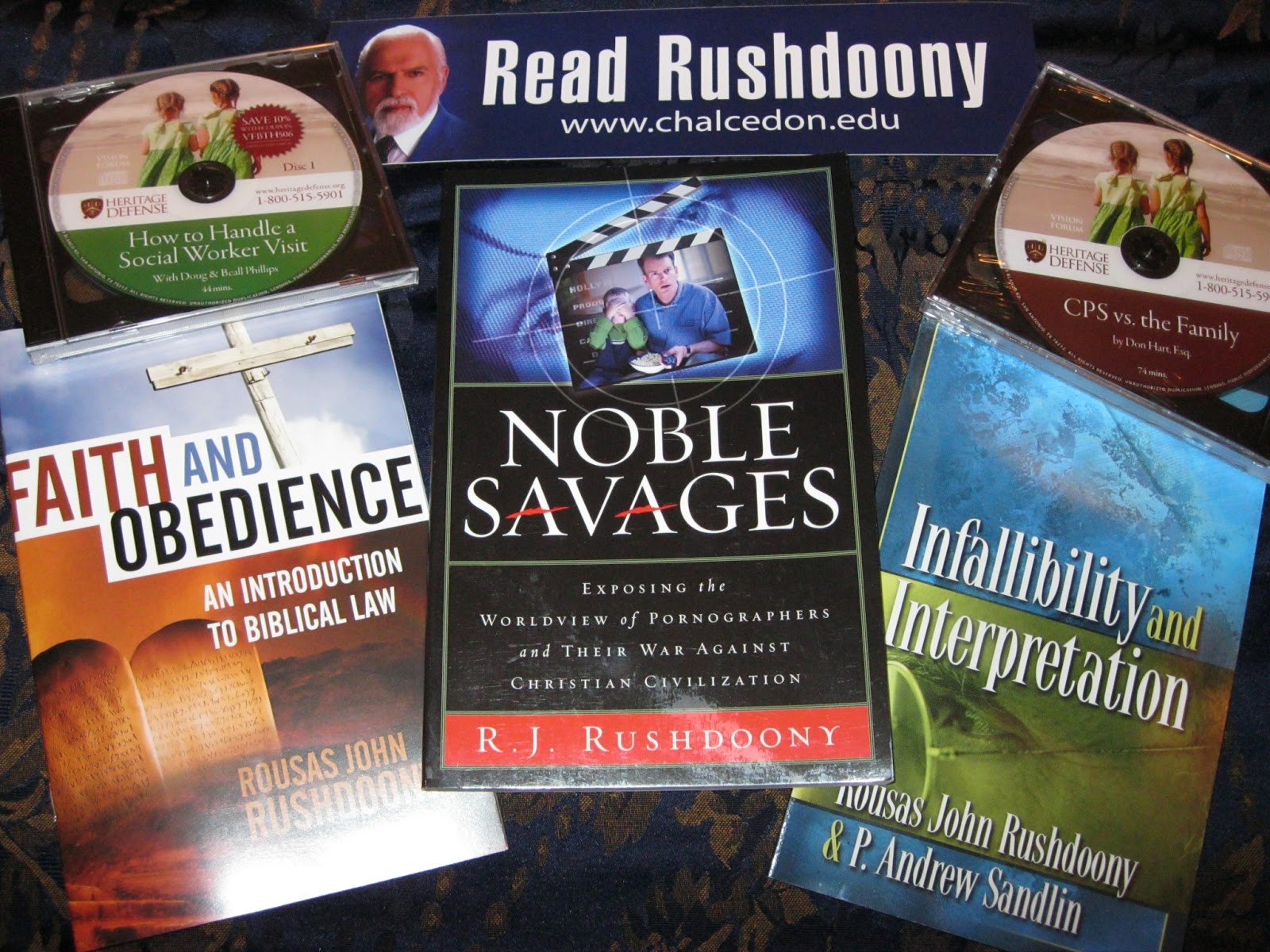
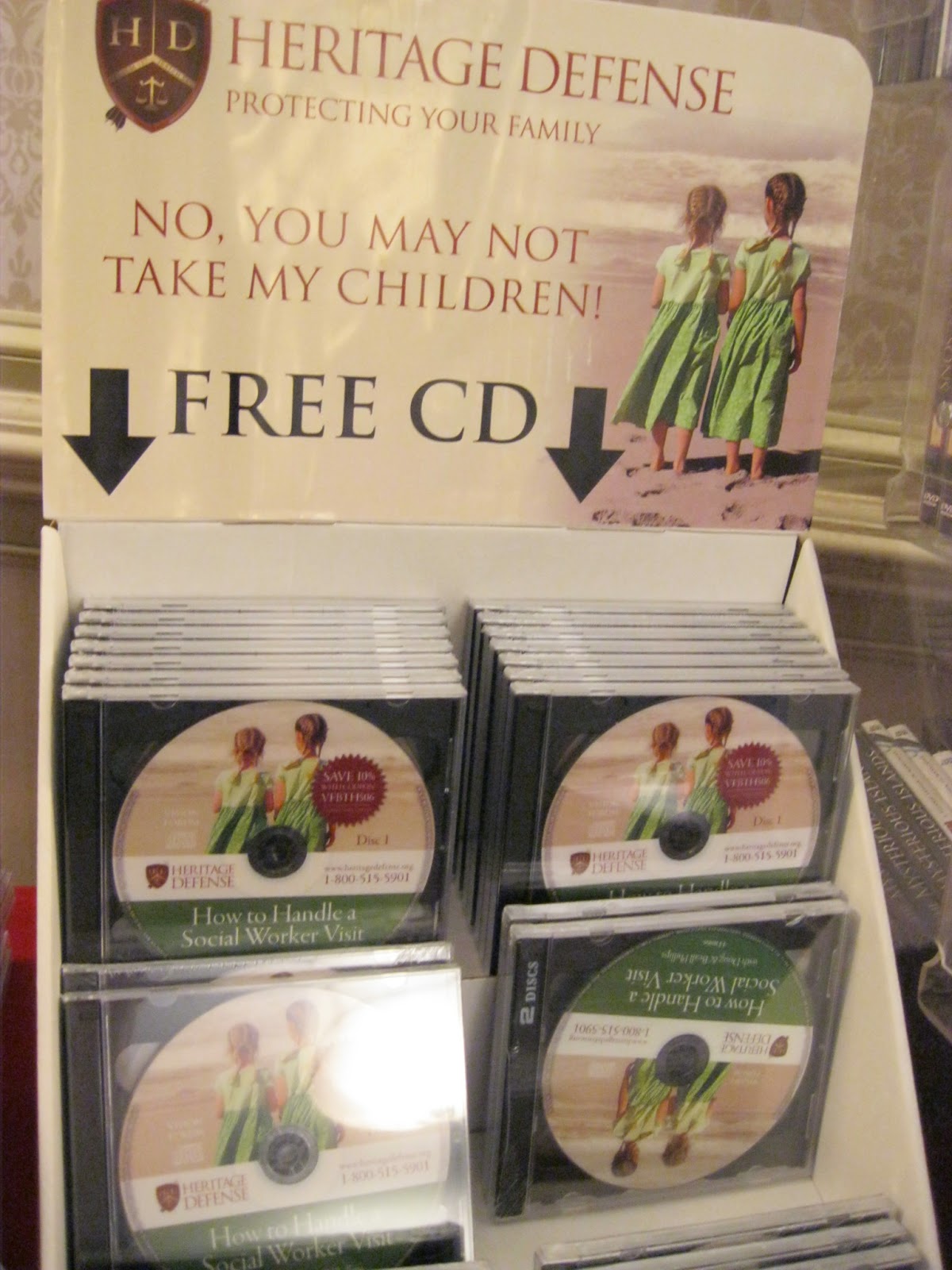
#HSLDAMustAct: History and Related Media

Screen Shot 2014-06-26 at 1.20.57 PM

April 17, 2013

On April 17, Love Joy Feminism’s Libby Anne — a former homeschool student, former attendee of Patrick Henry College’s summer camp on Constitutional Law taught by Michael Farris, and now-parent of two children; also, one of HA’s blog partners — began a five-part series looking at the relationship between HSLDA and child abuse. Of particular concern to many people who have read this series is that HSLDA has slowly but surely moved from homeschool advocacy to — by their own admission — reform of child welfare laws, including opposing anonymous tips, mandatory reporting, and mainstream definitions of child abuse. The five parts to this series are: (1) HSLDA and Child Abuse: An Introduction; (2) HSLDA’s Fight against Child Abuse Reporting; (3) HSLDA’s Stonewalling of Child Abuse Investigations; (4) HSLDA’s Defense of Child Abuse; and (5) HSLDA and the Deregulation of Homeschooling. Part five of the series was published on April 24.

April 20, 2013

The blogger from the Eighth and Final Square, inspired by Libby Anne’s series on HSLDA and child abuse, writes a post about her own homeschooling experience. It is entitled, “we were taught to fear the people who could help.” The author says she, too, was “instilled with a fear of CPS.” As a survivor of abuse herself, she says, “I wonder what would have happened if HSLDA wasn’t around, and the kids had been allowed to talk to CPS workers alone.”

April 22, 2013

Homeschoolers Anonymous started crossposting Libby Anne’s series on HSLDA in conjunction with a week of personal stories that explored the relationships between homeschooling, HSLDA, and the CPS: fears of the CPS, failures of the CPS, and how the CPS could have actually helped those who suffered abuse in homeschooling.

April 23 – May 2, 2013

After finishing her series on HSLDA and child abuse, Libby Anne continues to focus on issues of homeschooling, abuse, and HSLDA. She creates a legislative alert about one of HSLDA’s legislative alerts, urging people to counteract HSLDA’s efforts to stop SB 32, a bill “designed as a way to monitor and protect the well-being of children who are known to be at risk for child abuse or neglect based on prior incidences.” She argues that it is “simply false to suggest that there is nothing about homeschooling that might be attractive to neglectful or abusive parents.” She cites a plethora of horrific stories to explore the idea that, while “most homeschool parents are dedicated, responsible and loving,” “when abusive parents homeschool, the consequences for their children can be absolutely disastrous.”

May 6, 2013

On May 6, Libby Anne writes a post entitled, “HSLDA: Man Who Kept Children in Cages ‘a Hero.'” In this post, she points out that Scott Somerville, an HSLDA attorney, called Michael Gravelle, a man charged with molesting his biological daughter, putting his adopted kids in cages, and later punching and shaking his own wife, a “hero.”

Later that day, someone posts Libby Anne’s article on HSLDA’s wall:

Picture 12 May 7, 2013

The very next day after someone posts Libby Anne’s article on Somerville’s hero comment on HSLDA’s Facebook page, HSLDA chooses to respond via a Facebook status:

Picture 13

The full text of their response is as follows:

It has come to our attention that HSLDA has recently been accused of condoning child abuse. HSLDA does not and will not ever condone nor defend child abuse. 

HSLDA receives hundreds of calls each year from parents who are under investigation by CPS, often based on false, anonymous, trivial, or malicious reports. The vast majority of these are determined by CPS or a court to be unfounded and are dismissed. Because of this, we do not immediately assume that everyone who is the subject of an investigation is guilty of child abuse or neglect. 

As a service to our members, we help homeschool families navigate the legal landscape in the early stages of an investigation before all the facts come to light. This could include helping families know their constitutional rights, helping them understand the legal process, or referring them to a local attorney. If the allegations include homeschooling, we generally will either assist their local attorney to defend homeschooling or represent the family on homeschool matters.

Of the three examples mentioned in a recent article, we did not represent two of the families and in the third we were involved on the question of homeschooling alone after the other issues were resolved by the court. 

We believe that every child deserves a healthy upbringing and that parents have the high honor and duty to meet that child’s needs. For 30 years we have been zealously advocating for the right of thousands of parents to responsibly homeschool their children. To the extent that any statements we may have made could be misunderstood to suggest that we condone the abusive actions of some we repudiate them wholeheartedly and unequivocally.

Libby Anne promptly responded to HSLDA’s response: “I’ve Had Enough: My Reply to HSLDA’s Response”.

Also in response to HSLDA’s response, R.L. Stollar, co-creator of Homeschoolers Anonymous, issued a challenge to HSLDA on their Facebook page: “HSLDA, will your leaders take a public and universal stand against child abuse and launch a public awareness campaign for your members on how to recognize and report child abuse in homeschooling?”

Stollar’s challenge to HSLDA was quickly mirrored by others. Heather Doney, one of HA’s blog partners, wrote, “Demanding an Answer from HSLDA,” where she says, “We deserve to know where the HSLDA stands. We deserve to know that they are thinking about this issue and that they are doing something about it. I, for one, am requesting an answer. Don’t make us wait too long, HSLDA.”

May 7 – 11, 2013

Homeschoolers Anonymous officially launches the #HSLDAMustAct campaign on May 8.

Rebecca Gorman, a former homeschooler, creates the official Change.org petition for the #HSLDAMustAct campaign.

A new website, Homeschooling’s Invisible Children, was launched by former homeschoolers to “to raise awareness of the horrific abuse and neglect that can take place when unfit caregivers use homeschooling as a cover for criminal child maltreatment.”

On May 9, HA announces the official petition in the post, “25 Reasons To Sign The #HSLDAMustAct Petition.”

Here is a full list of posts from bloggers covering the whole Libby Anne/HSLDA issue and the #HSLDAMustAct campaign since May 7:

Wide Open Ground: “Dear HSLDA and Homeschool Parents, What About My Friend Who Died?” and “HSLDA: Discourse Problem Between Fundamentalist and Outsiders”

Anthony B. Susan: “The HSLDA and Abuse: More Denial and Deflection”

Becoming Worldly: “S***t HSLDA’s Homeschool Parents Say”

Ramblings of Sheldon: “HSLDA: We Would Rather Stand Behind Abusers Than Their Victims”

The Home Spun Life: “Homeschoolers, Christians, HSLDA: We Must Do Better, Kids Are Being Abused”

No Longer Quivering: “Petition: HSLDA Address the Problem”

ThatMom: “HSLDA accused of turning blind eye to child abuse: you decide”

Kathryn Brighbill: “HSLDA and Child Abuse” and “Of Fundamental Rights, HSLDA, and Homeschooling”

Anonymous Wonderings: “On Homeschooling”

On May 10, the Christian Post took on the issue but framed it only as a Libby Anne vs. HSLDA issue: “Home School Legal Defense Association Accused of Protecting Child Abusers.” The Christian Post did not attempt to contact Libby Anne; they tried to contact HSLDA, but HSLDA did not respond. They also did not mention the petition.

May 12, 2013

As of Sunday, May 12, the #HSLDAMustAct petition has over 300 signatures from around the world. The signees are almost entirely from the homeschooling community itself. Former homeschool students, former and current members of HSLDA, and former and current homeschooling parents have all signed it. Signees are from everywhere from California to Louisiana to Pennsylvania, from the U.S. and Canada to Germany and Spain.

Also as of Sunday, May 12, HSLDA has still not responded to the #HSLDAMustAct campaign.

Conclusion

We will leave you with these thoughts from Lisa from The Home Spun Life:

“I have been a financial supporter of HSLDA for many years now and I am asking that they become more transparent with how they practice law, how they defend homeschooling, AND how they protect children in a homeschool that is abusive.

I know children are abused in a variety of types of homes. From poor to wealthy, from Christian to atheist, from public school to homeschools. Abuse happens. It’s tragic! We can’t only speak up about abuse when it happens in a public school. We have to speak up no matter where it happens. And we have to learn how NOT to respond to abuse allegations in the homeschool community.

Defending our freedom to choose our children’s education should never trump their freedom to live in a healthy and safe environment.

To the HSLDA,

As a supporter of yours, I am asking for you to clarify your mission to defend homeschool freedom. I am asking that you inform us and SHOW US how you are defending this freedom WHILE defending children in an abusive homeschool environment. HOW do you separate the defense to protect homeschool freedom WHILE NOT enabling abusive parents to further their abuse under your “protection”? HOW are YOU holding abusive parents accountable? HOW are YOU cooperating with local authorities to HELP victims?

We must do better. We must speak up.”

Why We Fear the Child Snatchers: An Anonymous Story

Why We Fear the Child Snatchers: An Anonymous Story

HA note: The author of this piece has asked to go nameless to ensure anonymity.

I decided to write this post anonymously, to respect my family’s privacy regarding the subject I will be addressing.

*****

I wrote a post for Homeschoolers Anonymous. My parents know. They are supportive. They understand, after years of homeschooling, that there are some crazy people who believe some really crazy things in homeschooling.

I love that they not only understand that, but readily acknowledge it. My parents, like many other homeschooling parents, got sucked into the system. But they broke free, as I did as well.

We’ve been talking a lot lately about HA, in fact. It’s been good. Healing, really. It’s one thing to get affirmation from your peers that you’re not crazy (a watershed moment). But getting affirmation from your parents?

Priceless.

Anyways. So word got around that I contributed to HA. I was never secretive about it. But some people assumed that, since I contributed to HA, I was accusing my parents of child abuse.

Which is weird, because I never said that. I would never say that.

Sure, my parents got sucked into an abusive culture. But I would never say they abused me.

But some people started talking. And that talk got around to my mom. Someone approached her and asked her if she was doing ok.

“What do you mean?”

“You know, with your kid accusing you of child abuse.”

My mom freaked out. She immediately came to me and told me about this.

“I support what you’re doing, but I am terrified!”

“Terrified of what?”

She told me about the previous conversation.

I said, “I never accused you of abuse.”

She said, “I know. But they could take away your brother!”

I have a younger brother, still a minor, thought almost legally an adult.

“What do you mean?” I asked. “Who would take him away?”

“The CPS! Someone who doesn’t like us could read what you wrote and the CPS could take him away!

I was confused.

“But I don’t understand. I only wrote one thing for HA, and I said you were good parents. I said I found the culture abusive, not you.”

“But they could misinterpret that and use it against us! I support HA, but I need to protect your brother, too!”

“Who is they this time? I don’t understand.”

“The CPS!”

“But… All us kids love you. I would defend you in court. Why would it even go to court? You have one kid at home who isn’t even being homeschooled anymore. And he hasn’t been spanked in probably half a decade. And he’s the most socially adjusted kid in the family. Seriously, there’s nothing to worry about.”

“You don’t know the CPS like we do.”

At this point I was no longer confused. I was simply not following. My family has never interacted with the CPS during my homeschooling experience.

“What do you mean, know the CPS?”

“You might not be aware of this, but the CPS hates homeschoolers. They take kids away.”

Well, I was aware of that line of thinking. But in my entire life of being homeschooled from K-12, we never knew a family that got threatened by the CPS on the grounds of homeschooling. All we knew about such situations was from HSLDA’s e-lerts and Court Reports. In my adult years, I know CPS employees. I even know former homeschoolers that work for the CPS.

But my mom was nonetheless terrified. Despite all her kids but one being graduated with undergraduate (and even graduate) degrees, and the last kid not even being homeschooled, despite the fact that none of us were abused, despite the fact that the CPS wouldn’t even bother with an allegation based on an anonymous tip based on a misinterpretation of a blog post based on general issues not specific to my family, my mom was terrified.

My mom was not terrified because she is gullible. My mom is very thoughtful and perceptive. In all honesty, I understand her fear. See, we were daily bombarded by HSLDA e-lerts telling people the CPS had it out for homeschoolers. CPS workers were the minions of Satan — even worse, they were the minions of secularism. We were trained by my parents how to answer “worried” (read: secular, Satanic busybodies) individuals — neighbors, distant relatives, the grocery store clerk who saw us with our mom during “school hours.” Everyone I knew, universally, feared the CPS. If homeschoolers actually had campfires and told ghost stories in the dark of night, they would tell stories of the CPS — those diabolical child snatchers who rose from the pits of Hell to eat the souls of Christian youth. 

This isn’t by any means an experience unique to me. Consider this post from The Eighth and Final Square, entitled, “we were taught to fear the people who could help”:

When we were kids, we heard the horror stories…the kids who were taken away from their parents because they were spanked; the kids who were taken away from their parents because they were playing outside during school hours; the kids who were taken away from their parents because they were Christians; the kids who were taken away from their parents just because they homeschooled. Even Frank Peretti wrote a book about a single dad whose children were taken away because he was a Christian and the demon possessed people thought he molested them.

From a very young age (actually, probably when I started school), we were instilled with a fear of CPS. We were told we had to make our beds or CPS would take us away because we had no sheets. We were told we had to keep our rooms clean because CPS would take us away if our rooms were messy. When those threats didn’t work, my dad took further measures.

This blogger’s dad even preyed upon that fear as a manipulation tactic:

He was trying to get us to do something better or more than we were doing already. We were in the living room. I’m sure he had lectured us, and I don’t even remember what led up to it, but he said something like “because you didn’t do ‘x’ I’m going to call CPS on you and they’re going to take you away.” We were immediately terrified, but I thought he was making a sick joke. Then he went into the other room, to get the phone off mom’s desk. By then, Ben, Joe, and I were completely freaking out and sobbing. One of the boys, I think it was Ben, hid behind the couch. I don’t remember what mom was doing, and my memory of looking at dad is a little fuzzy because of my terror and the tears, but I think I remember him laughing, or at least smiling.

It’s hard to shake this sort of fear when it is daily reinforced from all the people you look up to in life. Years later, it still leaves residue on your brain:

At the end of August (I escaped July 4/5th), an anonymous tipster called CPS on my parents and when I heard about it the terror came rushing over me again. Even though I had just escaped from all sorts of abuse and toxicity, I was terrified my younger siblings would be taken away from my parents and would be separated. Of course my parents followed standard HSLDA procedure (don’t let them in, call HSLDA right away, don’t let them talk to the kids individually alone), and nothing came of it. I wonder what would have happened if HSLDA wasn’t around, and the kids had been allowed to talk to CPS workers alone. Probably still nothing, because even if they hate it, they are still brainwashed to defend my parents. I was.

This fear that so many of us share is not based on reality.

This is based on HSLDA consistently and vehemently telling us to fear the CPS.

Feel free to call the CPS extremists and vigilantes. But the CPS is extreme and vigilant about one thing: protecting kids. And we do them no good by vilifying them. The business of protecting kids is one of the most complicated, intense, and bureaucratic jobs out there. From my experience, the CPS is more in danger of being inadequate than it is of being overreaching. Even HSLDA attests to this, painting (accurately or not) the more publicized “homeschool abuse” stories as CPS failures rather than homeschooling failures.

And for the record, HSLDA has done good stuff, too. So don’t worry about telling me they’ve done good stuff. I know. I’ve read just about every HSLDA e-lert and Court Reports that exists. HSLDA does good stuff, too. There. I said it.

But this is one of the not-so-good legacies HSLDA is leaving — convincing innocent families that the CPS is a bunch of marauding child snatchers. Convincing kids that their potential lifelines are the stuff from which nightmares are made.

So thank you, Michael Farris, for inadvertently convincing my parents that me speaking out about my homeschooling struggles could get my brother taken away.

HSLDA and Child Abuse: HSLDA’s Defense of Child Abuse

Picture 1

HA note: The following series will run each weekday this week. It is reprinted with permission from Libby Anne’s blog Love Joy Feminism. Part four of the series was originally published on Patheos on April 22 2013.

*****

Also in this series: Part One, Introduction | Part Two, HSLDA’s Fight Against Child Abuse Reporting | Part Three, HSLDA’s Stonewalling of Child Abuse Investigations | Part Four, HSLDA’s Defense of Child Abuse | Part Five, HSLDA and the Deregulation of Homeschooling

*****

4. HSLDA’s Defense of Child Abuse

This post is part of a series examining the role of the Home School Legal Defense Association (HSLDA) in aiding and abetting child abuse. I have previously looked at HSLDA’s efforts to prevent the reporting of child abuse and their efforts to stonewall child abuse investigations. In this post I will turn to HSLDA’s defense of child abuse.

HSLDA has made a name for itself defending parents’ right to spank their children and spends a good bit of its time and energy monitoring and opposing new child abuse legislation—an odd activity for an organization nominally devoted to protecting the legality of homeschooling. While HSLDA literature continually talks about the importance of defending parents’ use of “reasonable” corporal punishment, the organization has never taken the time to define just what constitutes“reasonable” corporal punishment. Similarly, while HSLDA occasionally makes statements condemning child abuse, I’ve noticed a bit of a pattern—these statements are always followed with the word “however.”

Hiding and Ignoring Child Abuse

In its literature, HSLDA (to my knowledge) never defines “reasonable” corporal punishment, never warns its member families not to abuse their children, and never tells its member families how to handle child abuse they might see in other families in their homeschooling communities. HSLDA’s attorneys are not pioneers in stopping child abuse in homeschooling families; they are pioneers in disabling child abuse protections. Never once does HSLDA touch on how to solve the child abuse problem, perhaps because they don’t see it as a significant problem or perhaps simply because they see it as something “other” people do, not problem some of their own member families might have. While you could argue that HSLDA sees child abuse detection and prevent as important but not as a homeschooling issue, this makes no sense when you consider the amount of time HSLDA spends working to disarm protections for abused children.

Let me give an example of the sort of advice HSLDA gives regarding child abuse and child protective services—In a document titled “The Social Worker at Your Door: 10 Helpful Hints,” HSLDA attorney Christopher Klicka advised parents as follows:

a. Avoid potential situations that could lead to a child welfare investigation.

b. Do not spank children in public.

c. Do not spank someone else’s child unless they are close Christian friends.

In other words, Klicka is aware that HSLDA member families physically discipline their children in ways many people would consider abusive, and even find concerning enough to actually call Child Protective Services. But instead of addressing where the line between “reasonable” corporal punishment and child abuse is located, he merely advises HSLDA member families to avoid the use of corporal punishment in public. This displays a remarkable lack of care about the very real problem of child abuse, as well as an inability to consider that any of its member families might actually discipline their children in ways that are abusive and should be stopped.

Further, Klicka advises HSLDA member families to restrict their use of corporal punishment on children outside their families to the children of “close Christian friends.” This statement seems to imply that without this suggestion, HSLDA member parents might spank children outside of their families without their parents’ permission and be reported to Child Protective Services for doing so—and also that close Christian friends will de facto be okay with them spanking their children without asking first. After all, why not say “Do not spank someone else’s child unless you have their permission“? Or even, why not say “Do not spank someone else’s child” and leave it there?

There is also the problem of omission—for all of the advice HSLDA gives on how its member families can recognize, avoid, or stonewall child abuse investigation, the organization never takes two seconds to inform its member families how to recognize and avoid child abuse or even how to handle or deal with child abuse in their homeschooling families or communities. One wonders if there are any circumstances at all in which HSLDA would ever recommend that its member families involve CPS.

What Is Child Abuse?

HSLDA’s member manual states that “HSLDA believes that child abuse is a terrible crime and that true abusers should be prosecuted to the fullest extent of the law.” Note the use of the word “true.” The more I read, the more convinced I become that HSLDA does not define child abuse in the same way as most Americans. For example, HSLDA is on record defending foster parents’ rights to use corporal punishment on their foster children, something most Americans would find disturbing. Further, it’s worth noting that the sentence above is one of the many times HSLDA briefly condemns child abuse and then starts the next sentence with the word “However” (see page 3, column 2 of the link).

The only time anyone at HSLDA comes close to discussing what actually counts as child abuse is in discussing a 2008 California law that would have added to the penal code a list of actions for jurors to consider when determining if a form of discipline is “unjustifiable.” In a Washington Times op ed, HSLDA president J. Michael Smith explained that HSLDA had no problem with most of the items on the list—stating that these things were indeed child abuse—and that the organization only opposed the law because it took exemption to the listing of hitting children with objects. Here are his words:

This bill amends Penal Code section 273(a), which makes it a crime to cause unjustifiable pain, harm or injury to any minor child. If the bill passes, spanking with an object such as a stick, rod or switch would be lumped in with throwing, kicking, burning, or cutting a child.

Striking a child with a fist. Striking a child under 3 years of age on the face or head. Vigorously shaking of a child under 3 years of age. Interfering with a child’s breathing. Brandishing a deadly weapon upon a child. These are all factors that a jury could use to conclude that a defendant in a criminal case has inflicted unjustifiable physical pain or mental suffering.

What the bill would do is to equate discipline administered via an implement with the above conduct, which obviously is abusive behavior toward a child.

Now of course, this is no actual laying out of a comprehensive definition of child abuse—Smith merely goes down the items listed in the bill. Further, I’m less than willing to trust what HSLDA spokespeople say in public forums given that Farris claimed in an article for popular readership that requiring social workers to have either parental consent or a warrant to enter a home was be no biggie because the vast, vast majority of people voluntarily let social workers in, even as the organization advises its members to never never never let a social worker into their homes without a warrant, ever. Still, it does appear that HSLDA does view some actions—such as violently shaking a small child or striking a child with a fist—to be child abuse. Whether it warns its member families against these actions or ever takes the time to define “reasonable” corporal punishment, however, is another story.

For the record, I am personally against any form of physical punishment of children, and am raising my two young children without laying a hand to them. In contrast, many conservative Christians, including those who founded and run HSLDA, believe strongly that the Bible demands that parents use corporal punishment on their children (they take “spare the rod, spoil the child” stuff literally). Most Americans fall somewhere in between these two positions: they believe that some form of corporal punishment can be employed without crossing the line into child abuse, but also that spanking should consist merely of swatting a child’s buttocks with an open hand and that this form of punishment is usually unnecessary. The question I want to ask here is not whether or not corporal punishment is acceptable but rather where HSLDA draws the line between “reasonable corporal punishment” on the one hand and child abuse on the other. The reason I titled this post as I have is that HSLDA appears to define child abuse differently from the average American.

Given that HSLDA never defines “reasonable corporal punishment” or gives any sort of comprehensive definition of child abuse, I want to take a look at the organization’s positions regarding three different proposed state child abuse statute changes over the past five years. Their positions and advocacy on these bills represent a small fraction of HSLDA’s monitoring of child abuse statute changes across the nation—something the organization watches very closely and doesn’t hesitate to use its e-alert system to mobilize its members in lobbying—but should give us a sample of how HSLDA talks about and defines “reasonable” corporal punishment and what it does or does not include as child abuse.

HSLDA in California: Don’t Restrict Disciplining with Objects!

We’ll start with the HSLDA’s opposition to the proposed 2008 revision of California’s child abuse statute referenced above. At the time, the state’s statutebanned causing children “unjustifiable physical pain or mental suffering.” The new bill kept this same language but added the following:

In a prosecution under this Section in determining whether or not a defendant willfully caused any child to suffer, or inflicted unjustifiable physical pain, or mental suffering, a jury may consider any of the following:

a) The use of an implement, including, but not limited to, a stick, a rod, a switch, an electrical cord, an extension cord, a belt, a broom, or a shoe.

b) Throwing, kicking, burning, or cutting a child.

c) Striking a child with a closed fist.

d) Striking a child under the age of three on the face or head.

e) Vigorous shaking of a child under the age of three.

f) Interference with a child’s breathing.

g) Brandishing a deadly weapon upon a child. However, the above conduct is not sufficient by itself to prove guilt, and its weight and significance, if any, is for the jury to decide.

HSLDA explained its opposition to this change as follows:

The instructions to a jury which are mandated by the current version of A.B. 2943 would state that a jury may consider that physical pain or mental suffering inflicted upon a child is unjustifiable if it is caused by any of the seven kinds of actions…. The first of the seven actions listed is “the use of an implement, including, but not limited to, a stick, a rod, a switch, an electrical cord, an extension cord, a belt, a broom, or a shoe.” This first action includes the act of spanking with an object other than using one’s hand.Because these items would be listed in the Penal Code, the police and district attorney would likely consider all spanking with an implement grounds for bringing charges against the parents. Then a court trial would determine if the parents are guilty of criminal child abuse. Parents would have the difficult task of proving that the spanking was justifiable to the satisfaction of the court in order to avoid being sent to jail for up to one year or receiving other penalties. The case also could be referred to Child Protective Services (CPS) and Juvenile Court, which could result in the possible temporary or permanent loss of custody of their children.

In other words, HSLDA opposed this bill because it listed beating child with a stick, rod, or electrical cord as a factor the jury should take into account when determining whether or not the actions of a parent accused of child abuse were justifiable. Indeed, HSLDA has a pattern of opposing laws that would ban hitting children with objects, even without banning spanking itself. We can safely conclude that HSLDA does not consider hitting children with objects to be child abuse.

But there’s another reason I started with this example, and that’s because of the way HSLDA uses this sort of case in an attempt to induce fear in its member families, distorting the facts and engaging in hyperbole in order to do so. I mean just look at the title of HSLDA president J. Michael Smith’s Washington Times op ed’s title: “California May Ban Spanking.” This bill absolutely would not have banned spanking, and it would not have even banned the use of a paddle—it would instead have merely stated that when determining whether the pain a parent inflicted on a child was unjustifiable, the jury should consider whether an implement should be used. But none of that mattered to HSLDA, which saw a chance to hold the specter of a complete ban on spanking over the head of its member followers.

HSLDA in Mississippi: “Reasonable Discipline” Exemption Not Enough

Next we move to the Deep South. In January of 2012 HSLDA opposed a change to Mississippi’s child abuse statute. Let’s start by looking at the original text of this section of Mississippi’s code:

(2) (a) Any person who shall intentionally (i) burn any child, (ii) torture any child or, (iii) except in self-defense or in order to prevent bodily harm to a third party, whip, strike or otherwise abuse or mutilate any child in such a manner as to cause serious bodily harm, shall be guilty of felonious abuse of a child and, upon conviction, shall be sentenced to imprisonment in the custody of the Department of Corrections for life or such lesser term of imprisonment as the court may determine, but not less than ten (10) years. For any second or subsequent conviction under this subsection, the person shall be sentenced to imprisonment for life.

In other words, if you burn or torture a child, or whip or strike a child so as to cause that child serious bodily harm, you can be prosecuted for child abuse. Brice Wiggins, a Republican state senator, became convinced that the statute did not do enough to penalize child abuse, and introduced a bill to entirely rewrite this section of the code. So let’s look at how his 2012 bill would have amended the code:

(2) (a) (i) A person shall be guilty of felonious abuse of a child if the person intentionally and in a manner causing bodily harm shall:

1. Burn any child;

2. Torture any child;

3. Strangle or choke any child;

4. Disfigure, scar or mutilate any child; or

5. Whip, strike or otherwise abuse any child except as a result of reasonable discipline, in self-defense or in order to prevent bodily harm to a third party.

(ii) A person who is convicted of felonious abuse of a child shall be sentenced to imprisonment in the custody of the Department of Corrections for life or such lesser term of imprisonment as the court may determine, but not less than ten (10) years. For any second or subsequent conviction under this subsection, the person shall be sentenced to imprisonment for life.

(iii) Reasonable discipline shall be a defense to any criminal charge brought under this subsection.

The new statute would prohibit striking or whipping a child so as to cause “bodily harm,” rather than “serious bodily harm” as in the previous statute, but would also insert an exception to this prohibition for “reasonable discipline.” Or to put it another way, while parents before could legally strike or whip their children so as to cause bodily harm whether or not it was done as part of “reasonable discipline” (just so long as they didn’t cause serious bodily harm), under the new revisions parents could only strike or whip their children so as to cause bodily harm as part of “reasonable discipline.”

HSLDA opposed this revision, explaining as follows:

Summary: This bill would make it a felony to “whip, strike or otherwise abuse any child,” thereby causing bodily harm to the child. The maximum penalty would be life in prison. “Reasonable discipline” would be an exception to this offense, but what is reasonable would be left up to judges to decide.

HSLDA’s Position: This bill has the potential to send a parent to prison for life for spanking a child. This bill should be opposed.

First note the fear mongering: “This bill has the potential to send a parent to prison for life for spanking a child.” This makes absolutely no sense—listing a “reasonable discipline” exemption to a law that banned striking a child so as to cause bodily harm clearly indicates that striking your child so as to cause harm can be reasonable discipline. Else why the exemption? In other words, contrary to what HSLDA told its member families, the bill would actually have codified spanking as “reasonable discipline.” HSLDA’s actions here were nothing short of lying and conniving fear mongering—and HSLDA did kick up a good bit of fear as conservative media outletspicked up the story, quoting HSLDA spokespeople and running alarmed headlines like “Miss. Bill Could Mean Life Imprisonment for Parents.” Given that HSLDA makes its money off of selling legal insurance, scare mongering is where it’s at its best. In fact, some have suggested that the organization may intentionally beef up the legal alerts it sends out right around the time it does its membership drive.

HSLDA claimed to oppose the bill because “reasonable discipline” was not defined and would be left up to judges to interpret. What this indicates to me is that HSLDA is aware that its member families define “reasonable discipline” appreciably differently from most Americans—or at least differently from Mississippi judges. What HSLDA wanted was for the law to allow its members to strike or whip their children so as to cause bodily harm without having to prove to judges that their actions constituted “reasonable discipline,” or at the very least an expansive and detailed definition of what constituted “reasonable discipline.” And HSLDA got its way when a new version of the bill was introduced early this year—a bill HSLDA did not oppose. Here is how this bill amended the statute to read:

(2) Any person shall be guilty of felonious child abuse in the following circumstances:

(a) Whether bodily harm results or not, if the person shall intentionally, knowingly or recklessly:

(i) Burn any child;

(ii) Physically torture any child;

(iii) Strangle, choke, smother, or in any way interfere with any child’s breathing;

(iv) Poison a child;

(v) Starve a child of nourishments needed to sustain life or growth;

(vi) Use any type of deadly weapon upon any child;

(b) If some bodily harm to any child actually occurs, and if the person shall intentionally, knowingly, or recklessly:

(i) Throw, kick, bite, or cut any child;

(ii) Strike a child under the age of fourteen (14) about the face or head with a closed fist;

(iii) Strike a child under the age of five (5) in the face or head;

(iv) Kick, bite, cut or strike a child’s genitals; circumcision of a male child is not a violation under this subpagragraph;

(c) If serious bodily harm to any child actually occurs, and if the person shall intentionally, knowingly or recklessly:

(i) Strike any child on the face or head;

(ii) Disfigure or scar any child;

(iii) Whip, strike, or otherwise abuse any child;

The new bill banned striking or whipping a child so as to cause them “serious bodily harm” but made a broad allowance for causing a child bodily harm, excepting only bodily harm caused by throwing, kicking, biting, or cutting, striking a child under 14 in the face or head with a closed fist, striking a child under 5 in the face or head, and kicking, biting, cutting, or striking a child’s genitals. Or to put it another way, under the new bill it would be legal to cause your child bodily harm without having to prove that doing so constituted “reasonable discipline,” so long as that bodily harm was not caused by things like biting, kicking, punching in the face, or trauma to the genitals. With this change, HSLDA no longer saw this law as a threat to its members’ “right” to discipline their children using “reasonable” corporal punishment.

Just how did the law define “bodily harm” and “serious bodily harm”?

(e) For the purposes of this subsection (2), “bodily harm” means any bodily injury to a child that includes, but is not limited to, bruising, bleeding, lacerations, soft tissue swelling, and external or internal swelling of any body organ.

(f) For the purposes of this subsection (2), “serious bodily harm” means any serious bodily injury to a child and includes, but is not limited to, the fracture of a bone, permanent disfigurement, permanent scarring, or any internal bleeding or internal trauma to any organ, any brain damage, any injury to the eye or ear of a child or other vital organ, and impairment of any bodily function.

With these definitions, then, the new bill left it legal for parents to beat their children so as to cause “bruising, bleeding, lacerations, soft tissue swelling, and external or internal swelling of any body organ” without even having to pass any sort of “reasonable discipline” standard. The reason HSLDA had opposed the 2012 version of the bill—but not this one—was that the former version only allowed parents to strike or whip their children so as to cause bodily harm if it was done as part of “reasonable discipline,” a standard they did not want their member families burdened to meet. HSLDA was successful in opposing the original bill and this travesty of a child abuse statute is the result.

HSLDA in Florida: Significant Bruising and Welts are A-Okay

Finally we turn to Florida. In 2010, HSLDA sent out a legislative alert about Florida’s Senate Bill 1360, urging its members to oppose the measure. Here is the text:

Summary: Includes inappropriate or excessively harsh corporal discipline in the definition of “criminal conduct” for purposes of protective investigations. Prohibits parents, legal custodians, or caregivers from inflicting such corporal discipline. Provides penalties and applicability. Includes offenses involving inappropriate or excessively harsh corporal discipline within the offense severity ranking chart of the Criminal Punishment Code, etc.

HSLDA’s Position: Oppose.

This one had me scratching my head. Why would HSLDA oppose a bill outlawing “excessively harsh corporal discipline”? Isn’t their typical line that they defend “reasonable” corporal punishment (which they never define)? Doesn’t that make them de facto against excessively harsh corporal punishment? Just what “inappropriate or excessively harsh” corporal punishment did SB 130 add to the criminal code? Let’s have a look at the text of the actual bill. The bill begins as follows:

Section 1. Paragraph (b) of subsection (2) of section 39.301, Florida Statutes, is amended to read:

(2) (b) As used in this subsection, the term “criminal conduct” means:

1. A child is known or suspected to be the victim of child abuse, as defined in s. 827.03; or of neglect of a child, as defined in s. 827.03; or of inappropriate or excessively harsh corporal discipline, as defined in s. 827.032.

In other words, the statute originally listed “child abuse” and “neglect” as “criminal conduct” and this bill would have amended it to also include “excessively harsh corporal discipline” alongside “child abuse” and “neglect.” How does the bill define “excessively harsh corporal discipline”?

Section 2. Section 827.032, Florida Statutes, is created to read:

827.032 Inappropriate or excessively harsh corporal discipline; penalties.—

(1) As used in this section, the term “inappropriate or excessively harsh corporal discipline” means an act of discipline that results or could reasonably be expected to result in any of the following or other similar injuries:

(a) Sprains, dislocations, or cartilage damage.

(b) Bone or skull fractures.

(c) Brain or spinal cord damage.

(d) Intracranial hemorrhage or injury to other internal organs.

(e) Asphyxiation, suffocation, or drowning.

(f) Injury resulting from the use of a deadly weapon.

(g) Burns or scalding.

(h) Cuts, lacerations, punctures, or bites.

(i) Disfigurement.

(j) Loss or impairment of a body part or function.

(k) Significant bruises or welts.

(l) Mental injury, as defined in s. 39.01.

The bill defines excessively harsh corporal discipline, then, as that which results in bone fractures, suffocation, burns, cuts, disfigurements significant bruises and welts, etc. HSLDA did not explain its opposition to this bill. The only thing that makes any sense to me is that HSLDA opposed it because it listed “significant bruises or welts” as “excessive corporal discipline.” HSLDA’s concern must have been that banning discipline that resulted in significant bruises and welts infringed on parents’ rights to use “reasonable corporal punishment” on their children. It seems, then, that disciplinary actions that leave “significant bruises or welts” fit within HSLDA’s definition of “reasonable corporal punishment.”

Concluding Thoughts

Given the lack of any word from HSLDA on what constitutes “reasonable” corporal punishment, we have to piece together HSLDA’s definition of that term by examining its positions on bills revising state child abuse statutes, which HSLDA monitors closely. What we find when we do this is that HSLDA opposes laws that would ban hitting children with physical objects, striking or whipping children so as to cause bodily harm in a manner that judges would not consider “reasonable discipline,” and disciplining children in a manner that leaves significant bruises or welts. It would seem that all of these things fit within HSLDA’s definition of “reasonable corporal punishment.” And, beyond that, it appears that HSLDA is aware that its members use corporal punishment that many if not most Americans would consider child abuse.

If HSLDA’s view of child abuse reporting and child abuse investigations as bad things that need to be cut down on or obstructed was disturbing, HSLDA’s actions and views regarding child abuse itself are more so.

HSLDA seems to see child abuse as something that happens “out there” and to “other people,” not something that happens within its own member families and needs to be treated seriously. Further, HSLDA appears to view child abuse as something that always exists in extremes, in children with broken bones and starved bodies—and if its member families aren’t engaging in those sorts of activities, then they can’t be abusers, right? But what the organization refuses to admit is that it is a continuum, and that much of what it considers “reasonable” corporal punishment is considered by most Americans to be child abuse. And through all of this, HSLDA makes no attempt to draw a line between reasonable corporal punishment and child abuse or advise its member families on anything other than how to hide abuse—and by not speaking, they are complicit.

Finally, HSLDA seems oblivious to the fact that its opposition to bills criminalizing child abuse might actually aid and abet abusers to continue their abuse. After all, thanks to HSLDA it is now perfectly legal in Mississippi for a parent to whip a child bloody, or beat a child with a rod until he is covered with welts, all without even having to justify this activity as “reasonable discipline.” This sort of thing affects real people, real children, real lives.

To be continued.

HSLDA and Child Abuse: HSLDA’s Stonewalling of Child Abuse Investigations

Picture 1

HA note: The following series will run each weekday this week. It is reprinted with permission from Libby Anne’s blog Love Joy Feminism. Part three of the series was originally published on Patheos on April 20 2013.

*****

Also in this series: Part One, Introduction | Part Two, HSLDA’s Fight Against Child Abuse Reporting | Part Three, HSLDA’s Stonewalling of Child Abuse Investigations | Part Four, HSLDA’s Defense of Child Abuse | Part Five, HSLDA and the Deregulation of Homeschooling

*****

3. HSLDA’s Stonewalling of Child Abuse Investigations

This is the third post in a series on the role the Home School Legal Defense Association (HSLDA) plays in aiding and abetting child abuse. In the last post I wrote about HSLDA’s efforts to decrease the reporting of child abuse; in this post I will write about the role HSLDA has played in encouraging the obstructing of child abuse investigations. In a nutshell, HSLDA encourages its member families to do whatever they have to to prevent social workers from talking to their children alone, has pioneered legal strategies aimed at enabling parents to stonewall child abuse investigations, encourages children and parents alike to regard social workers with fear and suspicion, and portrays child abuse investigations themselves as abusive.

Standard Bearers of the Fourth Amendment

The fourth amendment protects citizens against unreasonable search and seizure; it is because of this amendment that law enforcement must have a warrant to enter your house. HSLDA is adamant in its insistence that the fourth amendment gives parents the right to deny Child Protective Services workers access to their homes and children without a warrant. In fact, HSLDA has been so dogged in pursuing litigation to extend parents’ fourth amendment rights that a legal comment published in UMKC Law Review in 2004 was titled “Standard Bearers of the Fourth Amendment: The Curious Involvement of Home School Advocates in Constitutional Challenges to Child Abuse Investigations.”

Just what is HSLDA’s line on the fourth amendment? Well, in his 2001 testimony urging that the Child Abuse Prevention and Treatment Act (CAPTA) be amended, HSLDA’s Christopher Klicka made the following suggestion:

Specific Declaration of the 4th Amendment Probable Cause Standard: Social workers must be held accountable to the same 4th Amendment standards as the police and other law enforcement authorities. As a condition of receiving federal funds, states should be mandated to declare in their state code that a warrant, supported by probable cause, must be obtained before a social worker can enter the home without consent of the parents.

HSLDA was actually partially successful in its attempt to amend CAPTA: As a result of their efforts, a provision requiring that social workers be trained regarding the requirements of the fourth amendment was added to the bill. Now while HSLDA’s laser focus on the fourth amendment as a way to protect homeschooling families against child abuse investigations may seem fishy, it is true that the fourth amendment does protect families against intrusions of law enforcement without a warrant, so applying this same standard to CPS workers, who serve as government agents, is not really that out there (whether or not I agree with it, of course, is another matter). Where it gets strange is what comes next.

Don’t Let the Social Worker In!

HSLDA insists that requiring social workers to get either the parents’ consent or a warrant before entering a home and interviewing children won’t actually get in the way of child abuse investigations, explaining as follows:

Obviously, nothing in the Constitution prevents a social worker from going to a home and simply asking to come in. If the parent or guardian says “yes”, there is no constitutional violation whatsoever provided that there was no coercion.

This covers the vast majority of investigations. The overwhelming response of people being investigated is to allow the social worker to enter the home and conduct whatever investigation is reasonably necessary.

This is very odd given what HSLDA advises its members:

Never let the social worker in your house without a warrant or court order. All the cases that you have heard about where children are snatched from the home usually involve families waiving their Fourth Amendment right to be free from such searches and seizures by agreeing to allow the social worker to come inside the home. A warrant requires “probable cause” which does not include an anonymous tip or a mere suspicion

In the Stumbo case, when a social worker came to the door to investigate suspected child abuse after a tipster made a report about an unattended naked two year old in the family’s driveway, HSLDA advised the family not to let the social worker in. The Stumbos followed HSLDA’s advice, denying social workers access to their children, and as a result what might have been a simple investigation revealing no suggestions of child abuse and leading to the tip being unsubstantiated and the case dismissed instead turned into a drawn-out court battle that lasted for years.

Growing up in an HSLDA member family, I remember what I was taught was the number one most important thing to remember in case of a social worker coming to the door: Never, never, never let a social worker into the home, and never let the social worker talk to any of the children alone. The reason for this, I was told, was that social workers would fake evidence and plant false memories in children, meaning that if even the most innocent homeschooling family let a social worker into the house they would end up losing custody of their children. I never thought about the reality that, in practice, urging parents against allowing CPS workers into their homes or access to their children might both make the families appear extremely suspicious and serve to impede the investigation and discovery of real and devastating child abuse.

Just What Is Probable Cause?

If HSLDA member families follow HSLDA’s advice, social workers will always have to get warrants to investigate child abuse complaints against homeschooling families. To get a warrant the social worker will have to establish probable cause, and HSLDA is adamant in wanting the strictest standards used in determining just what constitutes probable cause—and that means anonymous tips or “mere suspicion” of child abuse, however earnest or dire, are out.

In the Stumbo case the social worker responded to the parents’ refusal to allow access to their home or children by going to a judge and getting a warrant. HSLDA responded by taking legal action to challenge this warrant—and ultimately won.

In one article, HSLDA offers an example of probable cause: A grandmother calls CPS, providing her name and personal information, and reports that her grandson has been locked in his room for days without food and that she has seen him and he looks pale and weak. HSLDA states that in this case, if the CPS worker can verify the identity and relationship of the caller, he would then have probable cause and could get a warrant. Later, the article states that “It is not enough to have information that the children are in some form of serious danger. The evidence must also pass a test of reliability that our justice system calls probable cause. … Anonymous tips are never probable cause.”

Let’s take a look at how things would work if HSLDA has its way: When a tipster calls CPS to expresses concerns about a homeschooling family, a social worker will be dispatched to the family’s home in an attempt to ascertain whether there is any justification for these concerns. On HSLDA’s advice, the family will turn the social worker away without allowing her access to their home or children in order to investigate the allegations. The social worker can then go to a judge, and must present some form of information that will pass the “test of reliability” and serve as “probable cause”—and this information must all be obtained and presented without any access to the family’s home or children. If the tip is anonymous or the repost rests on “mere suspicions” or the allegations are not deemed to pass the “test of reliability,” regardless of the severity of the accusations, the judge will deny the warrant and the case will be dismissed, all without the social worker ever having any contact with the family’s children. Seen in this way, it’s not hard to see that HSLDA is intent on throwing up any possible roadblock in the path of child abuse investigation.

Don’t Let Them Talk to the Kids!

Perhaps this is the most disturbing part: HSLDA does whatever it has to to keep CPS workers from contact with homeschooling children, rejoicing every time they successfully keep children from private interviews with the social workers sent to investigate child abuse tips a family. In one article in its Home School Court Report, an article that is extremely representative of the stories recorded there, HSLDA exults over a successful case against child abuse investigations as follows:

A Home School Legal Defense Association member family in Jackson County recently contacted us for assistance in a Department of Social Services investigation alleging physical abuse.

The investigation was prompted by a report to DSS alleging inappropriate discipline of their child approximately two years ago. Although the report just covered one child, the social worker insisted that she be allowed to interview all of the children in the home.

HSLDA contacted the social worker, explaining that our members were eager to address the allegations made against them and were prepared to meet with the social worker to respond to questions about the report. However, we clarified that the parents would not discuss any matters beyond the specific allegations, and that they would strenuously oppose subjecting their children to the trauma of any interrogation by social workers.

The family recently received a letter stating that the investigation was terminated as “unfounded.”

In case after case after case after case after case after case, HSLDA makes it clear that allowing social workers to speak with children alone is the absolute worst thing a parent can do, and is something to be avoided at all costs. This is the thing a parent must never do. HSLDA seems completely unaware that sometimes a private interview with a social worker is the only chance an abused child has to speak out about her abuse, and that having a parent or other relative present often impedes abused children’s ability to speak openly of their abuse. But then, HSLDA also seems unaware that any of its member families could possibly abuse their children.

In fact, here is a statement by HSLDA directly addressing the importance of opposing private interviews between children and social workers:

Private interviews with a social worker can be extremely traumatic for a child. Social workers sometimes ask inappropriate, personal, and offensive questions which can destroy a child’s innocence or security. HSLDA works hard to avoid such traumatic interviews wherever possible.

HSLDA isn’t shy, then, about its opposition to letting social workers speak privately with children. In case after case listed in their Court Report and on their website, they crow over how they cowed social workers out of being able to meet one-on-one with homeschooling children. HSLDA may insist that social workers plant stories of abuse and traumatize children during these private interviews, but the simple reality is that HSLDA is working its hardest to cut off any chance abused children might have of actually speaking to social workers about their abuse.

For more on how HSLDA teaches parents to deal with CPS workers—and more on the fear and suspicion with which HSLDA encourages parents to view CPS workers—take a minute to read this play in two acts involving “Mr. Innocent,” “Mr. Wise,” “Little Eager,” and “Orwell,” the social worker. This play is an excellent peek into exactly how I was taught growing up to view social workers and deal with CPS investigations. And you may have guessed it already—the goal is to avoid allowing CPS to speak privately with the children.

Child Abuse Investigations as Abusive to Children

HSLDA also has a track record of arguing that children must be protected from child abuse investigations. For example, in explaining opposition to mandatory reporting laws HSLDA has said the following:

HSLDA has seen firsthand how malicious or ignorant child abuse and neglect allegations have destroyed innocent families. A family has few protections against the power of CPS agencies. And even if a CPS investigation is closed as unfounded, the trauma to a young child, to an innocent family as a stranger (albeit maybe a well-intentioned stranger) enters the home and threatens to remove the children, is lasting and profound.

And, after winning one case, HSLDA reported as follows:

Elated by this sudden victory after months of worry, the Willittses returned to normal life. Their refusal to back down – even in the face of relentless intimidation – had protected their children from a traumatic interview and their family from any further invasion of privacy. We thank God for the positive resolution of this case.

HSLDA often describes CPS investigations as abusive toward families, thus co-opting the rhetoric of abuse. I’m unsure of whether HSLDA is aware of how insensitive this makes them look—or if they’re aware that even HSLDA member families can be abusive. Either way, the idea that child abuse investigations are this horribly abusive thing that families and children must be protected against at all costs serves in practice to aid abusive parents seeking to hide the evidence of their abuse and minimizes the abuse that many children suffer every day at the hands of their parents.

Teaching Children (and Parents) to Fear Social Workers

I would suggest that whatever “trauma” is in fact suffered by homeschooled children interviewed by CPS workers is the result of HSLDA literature urging children to be afraid of social workers. When I was a child, I was terrified of CPS workers, viewing them as an evil boogeyman out to take me away from my parents at the drop of a hat. Where did I get this fear? From HSLDA. In spades. HSLDA sows fear among homeschooling parents and children because that fear is what keeps its coffers full—after all, if homeschooling parents are not afraid, they will not buy HSLDA’s legal insurance.

In fact, HSLDA founder Michael Farris even wrote a horror novel called Anonymous Tip, which detailed the story of a woman whose daughter was removed from her custody by a conniving social worker who faked evidence after a child abuse tip called in by the woman’s deadbeat ex. I’m sure I’m not the only homeschooler who read Farris’s novel and took it very, very seriously—and the play I referenced earlier was likely taken similarly seriously.

Through its books, email alerts, and magazine, HSLDA plants a fear of social workers and CPS investigations deep in the heart of both parents and children—even leading them to believe that CPS workers commonly remove children from their parents without justification, and that this could happen to them too—and then crows to the rooftops about the trauma that results from child abuse investigations. If HSLDA wasn’t sowing this fear in the first place, parents and children wouldn’t be frightened to death when social workers show up at the door to investigate a complaint and make sure everything is alright.

But there’s more to this, too. When HSLDA teaches children to be afraid of social workers, it is teaching them to see their helpline as the enemy. CPS workers ought to be seen as friends and supporters of children, there to listen to kids and help protect them from abuse. Sure, there may be the random bad social worker, but by and large social workers are dedicated individuals who believe deeply in helping children. Social work isn’t something you go into for the money. And yet, HSLDA is busy teaching children to view social workers as objects of terror, which of course means that homeschooled children won’t see social workers as people they can trust and go to when they need help.

This Isn’t Hypothetical

I think it’s important to realize that this isn’t some abstract hypothetical we’re talking about. In early 2012 a fifteen year old homeschooled Wisconsin girl was found starving, walking alone along the side of the road, having escaped the prison cell her basement room had become.

The girl, now 15, was found by a passerby earlier this month as she walked in her pajamas and barefoot along a McFarland road. Authorities said the girl weighed 70 pounds.

The complaint states the girl’s face appeared sunken with her collarbones sticking out, and that she was”gorging” on food after authorities got her to care. The complaint states the girl gained 17 pounds in a matter of days.

According to the complaint, the girl told authorities Drabek-Chritton often denied her food, while Chritton claimed food would trigger diabetic reactions and render the girl prone to violence. Court documents state Drabek, two small children in the household, and Chritton and Drabek-Chritton would eat normally, while the girl would scavenge for food from garbage and go days at a time without eating. Her stepmother, Drabek-Chritton, was listed in court records as 370 pounds. Authorities said there was no evidence to support family claims of the girl’s alleged medical conditions, including eating disorders.

It seems there had been child abuse tips lodged against this family in the past:

“It also appears that the family in the past was not cooperative with the department of human services or the city of Madison police department,” Moeser said. Court documents state Chritton and Drabek-Chritton refused social workers access to their home during at least one investigation, and refused staff access to Drabek and the girl at times when both were minors. State and county officials were unavailable to comment on whether court actions were considered or attempted to overcome parental objections during investigations, with officials citing confidentiality rules.

I don’t know whether this homeschooling family was an HSLDA member family, but I do know that they step by step followed the course of action HSLDA recommends families follow in dealing with child abuse investigations, and that following HSLDA’s advice enabled them to hide their abuse of their daughter, abuse that only came to light when the girl physically escaped the hell her home had become. HSLDA’s policies for the handling of child abuse investigations aren’t just hypothetical—they have real world implications and affect real children’s lives in profoundly negative ways.

Conclusion

HSLDA may not see itself as doing everything in its power to obstruct child abuse investigations, but that is in practice what it is indeed doing. HSLDA urges its members against allowing social workers to investigate allegations of child abuse without a warrant and at the same time is working to increase the standards of what counts as “probable cause,” thus making it harder for social workers to get warrants to investigate abuse. At the same time, HSLDA does everything in its power to avoid letting social workers personally interview children, thus cutting off any possibility children who are being abused by their parents have of speaking out about that abuse. Meanwhile, HSLDA keeps homeschooled children so scared silly of social workers that it is more than likely that many abused homeschooled children wouldn’t report their own abuse if they had the chance. Meanwhile, HSLDA paintsthe child abuse investigations themselves as the problem, and as a dire threat to children.

Instead of doing its utmost to obstruct child abuse investigations, why doesn’t HSLDA instead urge its members to comply with investigations in order to dispel allegations of abuse? Why not focus on ensuring that CPS follows their own best practices and rules, thus minimizing false positives in child abuse investigations, rather than viewing CPS as the enemy to be opposed and obstructed? Or for that matter, why deal with child abuse allegations in the first place? Why not stick with the accusations that deal directly with homeschooling, such as ensuring that local officials know state law and that member families comply with those laws?

There are many possible responses to these questions, of course. Perhaps protecting parental rights against any limitations whatsoever is HSLDA’s primary goal, with homeschooling merely a tool to this end, and perhaps this has led to HSLDA defending parents against investigations of child abuse. Perhaps HSLDA’s definition of child abuse does not elide with the CPS’s definition of child abuse. Perhaps many HSLDA member families do have something to hide, and HSLDA knows it. Perhaps HSLDA’s focus on the primacy of parental rights means that the organization is not actually interested in doing things to protect children against abuse at the hands of their parents.

As one last example of how HSLDA views child abuse accusations and investigations, let me quote from an HSLDA article on Japanese homeschoolers:

Recent revisions to the Juvenile Law have strengthened child abuse reporting laws. There is now the possibility for neighbors of homeschool families to give notice to the Child Consultation Center (Zidoh-Sohdan-shyo in Japanese) that homeschooled children are abused by their parents. Regrettably, the Child Consultation Centers in each district are now required to investigate each and every abuse notice. Unsubstantiated abuse claims are expected to increase and to affect homeschool families adversely.

“Regrettably.”

In case it is not already clear, HSLDA considers Child Protective Services investigations simply annoyances homeschoolers should not have to deal with rather than seeing them as important means of locating and helping abused children. Once again, it’s like HSLDA is completely unaware that some homeschooling families might actually physically abuse their children, or that some homeschooled children might be in need of help. HSLDA would probably deny these allegations, of course, and would point to statements deploring child abuse, calling for “true” child abusers to be prosecuted, and arguing that the corporal punishment parents employ should be “reasonable.” In the next segment of this series we will examine HSLDA’s ideas about just what actually constitutes child abuse.

To be continued.