Notes From a Homeschooler: Michelle Hill’s Story, Part Three

Notes

You can follow Michelle Hill at her blog notesfromahomeschooler.blogspot.com

At best my mother is toxic, at her worst, she’s been emotionally abusive.  I’ve now come to realize that during my childhood, along with self-harm and restrictive eating, I also suffered from depression.

My parents are now more controlling than ever since I’ve moved away to college.

Not in the physical way, but in the worst possible way, though emotional control.  The guilt that they’ve put on me for not going home has led me to tears more times than I can count.  Nothing I do is good enough, and I always wonder “Why? What am I doing that’s so bad?”  I am an A student on scholarship, always find my own employment, never ask for money, just this year I filed my taxes by myself, I’ve also gotten help for my depression against their wishes.

Ah depression, the beginning of the end with my parents.  I saw the school’s counselor last September because something was wrong.  I was always mad at the world for everything, I was having problems adjusting to the new school year, and I had overwhelming anxiety.  I was diagnosed with moderate depression. After some research, I saw that it made sense that I did have depression all along, and I probably had it as a child.  After some research, I decided that I needed a strong emotional support base from family and friends. So I called my mother and told her the news.

 I was met with denial and her making me promise not to see a therapist and especially not to take any medications. 

She said, “Don’t go see those people. They don’t know you like me. Remember that one time you cried about getting a bad grade in government class, and I told you that it was going to be alright?  You’re just having a bad week. You just need to trust yourself.”  From that day on, I started hiding more and more things from them because I knew I wasn’t going to get any support.  I saw a therapist against their wishes; I started taking Prozac on a low dosage, and things started getting better emotionally – just not with my family.

Since then, I’ve had an emotional disconnect with my family.  They no longer feel like immediate family; they are more like the ones that you see once a year and you put on a happy face for.  Thanksgiving break ended with me self-harming myself for the first time in almost four years.  Christmas break ended in tears and me coming back to the dorms because I was happier being myself that with my family.

Before I left, I remember my dad telling/asking me if I was having one big pity party with the impression that my depression was all in my head and made up.

It still hurts today.  Spring break ended with me thinking about cutting them off and never going back again.  Easter weekend ended with a revelation that my parents are controlling and that I now need to look out for my own happiness and stop caring about what they think is best for me.

Now I just worry about my siblings that I left behind.

My little brother has dyslexia, though has never been tested because my mother is worried about the school investigating.  He is years behind and will probably never reach a level high enough to pass a GED let alone going to college.  They talk about him building a house on their property for him to live in and later take care of my parents in their old age.  I wonder if he will ever find a wife. I wonder if he is happy.  As of right now, he only has one friend and only leave the house once or twice a week to go into town with my mom shopping.  My little sister has Down syndrome.  I don’t know how she compares educationally because there’s no way to really compare.  My bright, sweet, little blonde-haired sister has no friends and hardly ever gets out.  She does not even attend a Sunday school.  Her socialization includes watching TV and seeing my brother play with his one friend he sees occasionally.  I wonder how she will turn out and it makes me deeply sad.  She is the only thing that keeps me from cutting off my parents completely.

I feel no love for my parents anymore, but her isolation makes me ache deep inside.

The Story of an Ex-Good Girl: Part Eleven

Barn

HA Note: The following is reprinted with permission from Exgoodgirl’s blog The Travels and Travails of an Ex-Good Girl. It was originally published on September 12, 2014 and has been slightly modified for HA.

<Part Ten

Part Eleven: The Good Girl Who Couldn’t be Good

The first few years we were a part of the LaQuiere cult, it was fairly easy to meet expectations.

Everyone viewed me as one of the “good” kids…I was a rule-follower by nature, and that made me a perfect fit for Joe LaQuiere’s legalism!

I got in some small difficulties over the rule to “never argue”, because my dad had taught me from an early age the delights of debate.  He gave me books on detecting logical fallacies, and my favorite game (though maybe not his) was to debate issues with him, and, if possible, win my point through rock-solid logic.  If I could use logic to prove to my dad that I was right, then he would concede, and I would get my small victory!  I’m not sure Joe LaQuiere knew my dad allowed this…if he did, he would have been very disapproving (as he was already very disapproving of my dad for trying to debate with him).  When I disagreed with my dad, it was called debating, and we both understood the rules and appreciated the game.  With my mom, it was called “arguing”, and she expected (understandably) not to have to logically defend every instruction she gave me!  So I was often in trouble with my mom, but that was pretty much the only crack in my “goodness”.

My sister R, by contrast, had plenty of trouble until she was about twelve.  She was very stubborn…she liked to contradict…and she did not like to follow rules!  Joe LaQuiere believed she just needed strong enough motivation and she would “snap to”.  He was right.  Turns out, what she needed was a strong enough personality to win her allegiance, and Joe succeeded at this around the time she turned twelve.  I’m not sure what he said or did that caused her to change, but she did an astonishing about-face, and from then on, Joe LaQuiere had her complete loyalty.  She was now his biggest fan: she started scrupulously following rules, and was determined to live up to his expectations and please him.  When we eventually left a few years later, she went to bat as Joe LaQuiere’s model pupil–she begged and pleaded and argued with my dad to no avail to convince him to let us stay in the group.  Both she and my mom had extremely strong ties of loyalty to Joe, and it was very difficult for them to let go when we left.

To this day, both of them (but especially my sister R) have a difficult time hearing Joe LaQuiere spoken of poorly.

They don’t like to hear his following called “a cult”, and my sister will still talk about his “wisdom” and how much of what he taught was “really good”.  She raises her children using many of his training methods.

Meanwhile, I didn’t have my sister’s advantage of a flattering conversion story to endear Joe LaQuiere to me, but he still seemed to approve of me for being the small rule-follower that I was, and I eagerly lapped up the crumbs of his approval like a starving puppy.  As one of the younger children, I would vie for the coveted opportunity to sit on his lap while he taught – the ultimate place of privilege.  It made me feel special and noticed. On one very special occasion, I was sitting at Joe LaQuiere’s feet while he was talking to the adults, just quietly listening to him, while Mrs. LaQuiere was getting ready for dinner, setting the table, and handing out related small chores.  My sister R was enlisted to help from whatever she was doing, and after a minute, she or perhaps my mom tried to pull me away to come help too.  Joe intervened, comparing me to Mary sitting at the feet of Jesus, and my sister to Martha.  He said he wasn’t going to send me away.  I had chosen “the better thing” by sitting at his feet listening to him, and that was where I could stay.  I couldn’t believe it: it was one of the huge moments in my young life where I felt of value.  I never forgot that moment.  Occasionally Joe LaQuiere would also use me as an example of a “good child”, or say to someone, “S would never think to do that, would you?  She’s a good girl.”  And I would duck my head shyly, but inside I was beaming.  It felt so incredibly good to earn his approval!  I lived for those moments.

Like my sister, I too had found in Joe LaQuiere someone to hero-worship: someone to fill the yawning hole left in my heart by my shamed failure to make my own father proud of me.

Years later, when we left the cult, I joined with my sister and mom in trying to convince my dad to change his mind.  I didn’t want to leave behind the only source of approval I had.

Even though I was a veteran rule-follower, it was still more difficult than you’d imagine to earn an “A” in Mr. LaQuiere’s class.

He taught us that God had given all of us “everything we need for life and godliness” – which meant everything we needed to be perfect.

In fact, we were called to “be perfect” – it was right there in black-and-white in Mr. LaQuiere’s King James Bible: Be ye therefore perfect, even as your Father which is in heaven is perfect.  Joe reasoned that God would never call us to do something that we weren’t perfectly (ha, see what I did there?) capable of doing!  Therefore, we could be perfect: we could live our lives and never sin, not even so much as one bad attitude or snarky look.  It’s pretty clear that if you can be perfect, and yet, you’re not perfect, it’s because you are choosing not to be.  Because of this, we were berated for any and every misstep, because our goal was to live perfect lives, and so win God’s pleasure and approval of us.

As a part of these impossibly-high standards, our parents used a system of public praise/shame to encourage all the children to work harder at correcting character flaws.

Every week, all the parents in the group would announce what character fault each child needed to work on, and then the following week, our “scores” would be publicly announced.  Those who did well…90%…93%…held their heads high!  Those who squeaked by with something in the high 80s could at least heave a sigh of relief and jump off the figurative hot seat until next week.  But those with bad scores had nothing but public shame to look forward to.  They would be reminded that not only were they required to please their parents and God in everything in all their outward actions, but to be perfectly obedient inside as well, in their every attitude.  Nothing less would satisfy a holy God.

As a champion rule-follower, (with no small amount of pride in the fact, I may add!) nothing less than a perfect score satisfied me.  But it was surprisingly difficult to achieve, even for someone like me.  I did get a perfect 100% the first few weeks…but as Mr. LaQuiere would have said, pride goeth before a fall.  The very next week I was supposed to work on “not arguing”…and on “doing everything I was asked without question, with a good attitude”.  Not only did I scrupulously avoid arguing with my mom, giving ingratiating smiles and being sickeningly cheerful while I followed out every instruction she could think up, but I even swore off debating with my dad!  Finally Wednesday night came around, and before we left for our weekly meeting at Joe’s house, my dad tallied up our scores and averaged out percentages.  He told us what we had earned, and I waited eagerly to hear that coveted “100%”.  I knew I hadn’t argued even once – I didn’t trip up a single time all week – I had been perfect!  Then my dad gave me my score…99%.  I gulped at the unfairness of it, and had to stop myself from arguing with him (talk about pouring salt in the wound!), which would have been punished by my dad lowering my score even more.  I carefully asked him why I only got 99%, and what I had done wrong.  He informed me, my mom nodding in agreement, that the 99% was because he wanted me to learn that I was not perfect, and that I could not be perfect, and that a 100% would be puffing me up with sinful pride.  And that was that.  I never got 100% again, even though plenty of other parents gave their children perfect grades.  I gritted my teeth every time another child got what I was sure in my youthful arrogance was an undeserved perfect score, while my own dad refused to give me the scores I felt I earned.

I’m not sure how I was supposed to reconcile Joe’s teaching that we could be and must be perfect to earn God’s approval with my dad’s insistence that I could never reach perfection.

Of course, I now realize that my dad was closer to the mark than Joe was.  We can never reach perfection on our own – but we don’t need to, because we have Jesus’ perfect score applied to us every day!  I wish I had been taught that as a child, instead of being pushed further and further into harsh perfectionism that exhausted my soul and set me up for a life of spiritual defeat.

In my quest to reach perfection, and finally feel God was pleased with me, my failures loomed far larger than my small triumphs.

There was the time that I said something wrong while working construction together with the rest of the families…I can’t even remember what it was I said.  I have a feeling I gave an adult a sarcastic answer (my gift of sarcasm was definitely not appreciated!) and I remember my parents, Joe LaQuiere, and my Aunt C discussing my crime while I sat unnoticed or ignored beside them on the floor in Joe’s office (a place I hated because it was always associated with shame and punishment).  I wasn’t spanked for being disrespectful, but Joe LaQuiere told me he was very disappointed in me, and that I had lost his respect, and my Aunt C said, not to me, but meant for me to overhear, “If I knew she was like that, I would rather have seen her dropped in the foundation we’ve been digging, and buried up to her neck.”  I’ve never forgotten those words.  I’m not entirely sure why she came up with that theoretical punishment, exactly…but she was quite fond of hyperbolic half-serious threats of things she’d “rather see” or “would do” if the occasion warranted.  She once told my sister R that if she ever caught her painting her toe-nails like worldly girls (what shameless harlotry!), she would rip her nails out by the roots!  And then she laughed, so we would know it was (at least partly) a joke.

My other failure that haunted me for a long time was of “carelessness”.  My mom’s best friend, Mrs. W, had a proof-reading business where she would scan and then proof manuscripts or articles for spelling errors.  She had the bright idea to include my sister R and me in her business.  She would send us some of the work to proof and would pay us a small amount per hour that we worked.  It was exciting!  I got to sit at a computer and read for hours – my ideal job!  I was about 12 at the time, and R was 14.  We finished our work, corrected all the spelling errors we found, and sent it back, delighted that we got to do real, grown-up work!

A few days later, Mrs. W called us in to talk to her in private.  She was frowning, and I didn’t know why.  She said she was seriously disappointed in us.  We hadn’t done a good job – they had sent the work back with spelling errors that we had missed, and she had to redo it all herself.  She told us she would pay us for what we had already done, but she was firing us for being careless.  She thought she could trust us, but she couldn’t.  She was sorry, but she no longer wanted our help.  I walked around all that day in a haze of shame and humiliation.  I felt that everyone’s eyes were on me, knowing what a disappointment and failure I was.  When we got home that night, I found a private place to go and cried there for a long time.  These moments still loom large in my memory…I can still feel the crush of humiliation, the painful knowledge that despite my constant efforts, I was a failure.

Each ugly incident seared itself into my little soul, pushing me deeper into the abyss of perfectionism and reinforcing my deep inner conviction that, hard as I tried, God would not accept me.

Part Twelve>

photo credit: Joel Dinda via photopin cc

Home for the Holidays: Salome’s Story

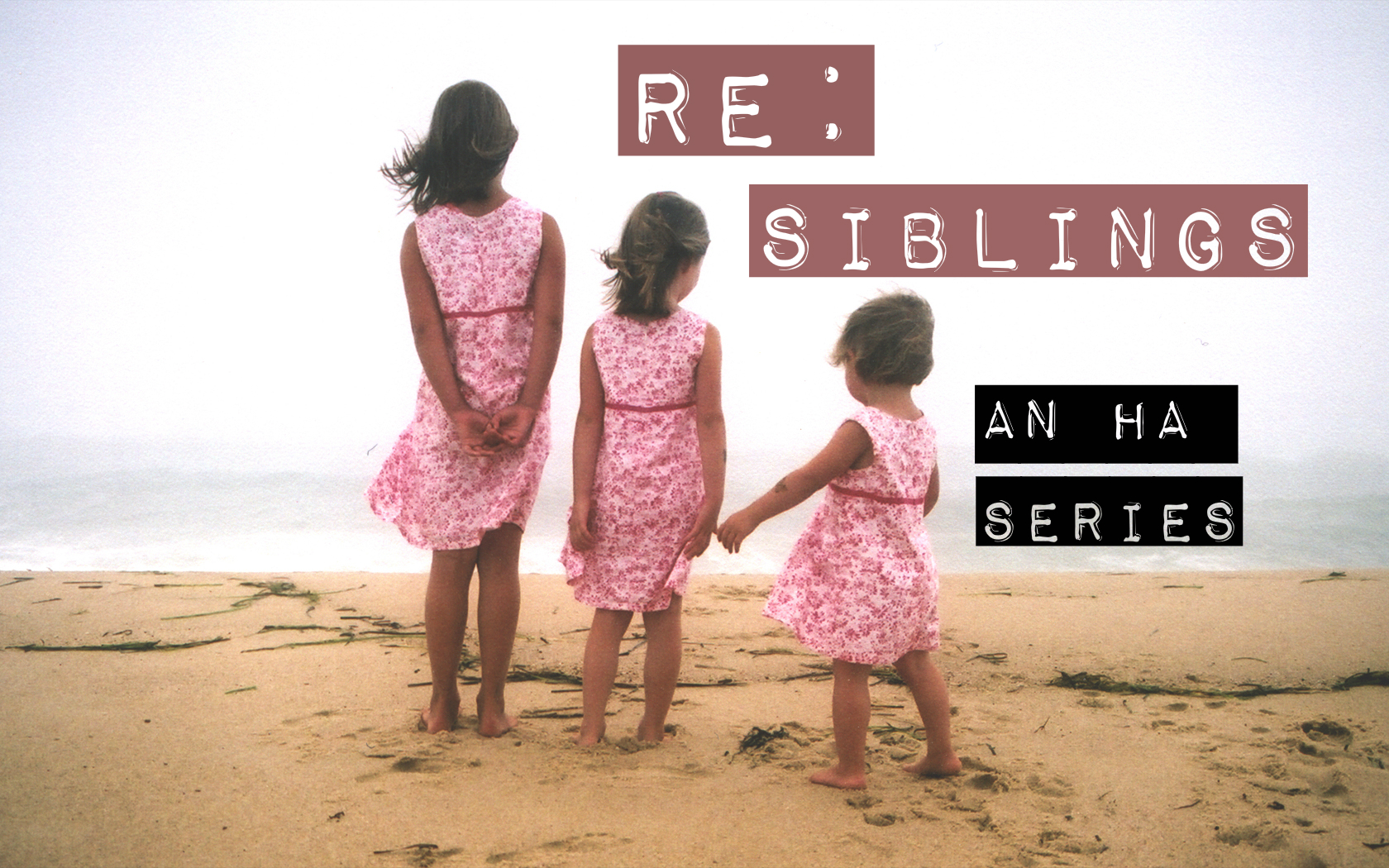
siblings

Pseudonym note: The author’s name has been changed to ensure anonymity. “Salome” is a pseudonym.

Dear Homeschoolers Anonymous,

First, thank you so much for giving us a voice. It’s so important that we speak — and are heard. Just telling our stories has value, and you’ve done a phenomenal job. We are watching. We are listening. We are learning. And we are healing.

I’ve tossed around the idea of telling you my story for some time now — but I couldn’t figure out how, and I’m such a goddamn private person that writing about my childhood is like prying my teeth out with a crowbar. I’m finally writing because I don’t often get the chance to brag safely about my brother, and I think it’d be foolish not to take the chance.

We’re all home for the holidays, and I find myself struggling to reconcile the emotional manipulation, patriarchal ideas (which BTW have completely screwed my life up — I can’t even get married, because I can’t seem to shake my patriarchal conditioning — so thank you for speaking up about patriarchalism too), and sometimes simple cruelty that I remember as a kid and the relatively stable family who jokes around (at my father’s expense — which would have been heresy when I was a kid), allows my teenage sister to wear normal clothes, and practically force-feeds me some weird herbal goop my mother concocted to soothe my raw throat.

IDK what changed. 

I can’t forget all of the horrible things they said and did (I’m still keeping my recent decision that I don’t think I can be a Christian anymore, as well as the surrounding circumstances, from them, just in case). I can’t forget the constant friction that comes from being the oldest child in a cookie-cutter family whose inner rot was concealed beneath our conditioned responses. We were punished when we made our parents look bad, not when we actually did bad things. The incongruity was hardest on me — and I tried hardest to conform for awhile, until I set out on a campaign to break my father’s heart when I got into high school.

That made me target #1.

My brother bucked their rules from a very early age. Let’s be clear: he is objectively a good man, and was a good kid then. No drugs, no sex, no porn (that I know of… Mom did put a lock on the computer pretty inexplicably once, and gave me the password with instructions not to give it to my brother, so I guess it’s possible). Both my brother and I developed an appreciation for heavy metal (the raw honesty speaks to me), and have anger issues (I have a host of other emotional issues, but I haven’t talked to him about it, so I don’t know if he shares any more of them), but considering what we went through, I think we’re justified. Mom was convinced he was a terrible person, not a Christian, morally lax – the list goes on.

I apologize for the long and garbled introduction.

The point I was leading up to was this: my brother and I fought like the world was gonna end if the other person got their way, but we also stuck together.

We warned each other in hushed tones when our mother was in a particularly vicious mood, and helped each other skulk around outside her sight. We spent long hours outside, because she was likely to forget us if we were out there, but in the times that she did remember us and screamed our names in that tone of voice that said we were in for a rough day, we gave each other looks of pity as we walked back to meet our fate. We didn’t tattle on each other. In the times that the emotional abuse turned into physical abuse, after my brother got bigger and stronger than both my parents, he stepped in.

When our little sister came along, we made an unspoken pact to protect her too.

I’m a little jealous of her sometimes, honestly. She missed the worst of it, and we shielded her from much of the rest. She joined me in my campaign to break Dad’s heart — and succeeded to a degree I could not. Our joint efforts may have something to do with the change in my family, actually. I hope so. That call to protect my siblings has affected me hugely — I still find myself staying in dangerous situations just to protect the people who are still too naive to protect themselves.

Sacrificing my safety for theirs comes naturally. I’ve always done it. 

One incident is firmly lodged in my mind. My parents had decided that it was a good day to sit me down and lecture me (more like screaming cherry-picked Bible verses at me and telling me I was worthless) — for hours (I don’t remember just how long. It may have been anywhere from 2-4 hours). It had something to do with my campaign, although it quickly spread to include anything and everything my mom could think of, whether it was true or not.

Think Communist China Cultural Revolution-era denunciation meetings.

I was an emotional wreck, because I had been trying to ease into a closer relationship, which meant that my normal policy of emotional numbness was not in effect. I was crying, they were screaming, and then my brother swooped in to my rescue. He said, “Stop. Just stop. Can’t you see what you’re doing to her? Stop.” When they turned their ire on him, he explained further — he was intervening because he loved me. I didn’t stick around much longer — he had given me an out, and I spent the rest of the day outside (this time beyond earshot). That day remains both one of my best memories and worst memories — it was one of the only times I can remember my stereotypically strong and silent brother telling me he loves me without any coaxing.

I’ll never forget that.

I’m sure there’s more I could say, but sifting through all of these memories, trying to remain true to the story, while leaving out the shit I’m not ready to deal with, is kind of exhausting and painful. I feel bad criticizing the people who are showering me with love and gifts, but I’ve got to deal with at least some of the memories rattling around in my mind.

Thank you for listening. That’s more than can be said about most.

Paper Swords: Mahalath’s Story

siblings

Pseudonym note: The author’s name has been changed to ensure anonymity. “Mahalath” is a pseudonym.

I have one precious little sister. Let’s call her Susannah.

When I was nine, I decided I’d had enough of my parent’s rules, belittling, and humiliations. It was time for a rebellion. In my childish ignorance, I fashioned a sword and shield out of paper to fight them. My isolated little brain convinced me that these were effective weapons. At nine years old, I had no real concept of reality because I’d never seen it.

My little sister Susannah came along and saw what I was doing. Seven at the time, she wanted to help her older sister out. So I made her her own sword and shield, coloring with red markers along the edges of the blade. “That’s blood. So they’ll be afraid of us,” I explained. She nodded solemnly.

Our eight o’clock bedtime was deemed the perfect time for our small coup. When summoned upstairs for our mandated bedtime prayers, we charged up to our bedroom with weaponry at hand. Our parents watched us approach with a sort of bored amusement. But I meant business, and I said so: “This is a revolution! You have to do what we say or we’ll kill you!” Pointing my flimsy sword at their noses, I gave them fearsome glares.

My dear, darling little sister was unfazed by all of this. She ran up to our mother and sat in her lap. “See, Mommy! I have a sword! See all of the blood!”

“Susannah,” I shrieked, “get back here! We’re rebelling!”

Fortunately for us, our parents saw this display as a cute little historical reenactment and laughed it off and put us to bed. Indeed, as I look back on the incident, I find it sort of funny. But I was serious at the time. I was deadly serious.

My sister Susannah was sometimes my greatest enemy, sometimes my only friend.

At times we helped each other survive the isolating, emotionally abusive environment that was our home. Yet at other times we turned on each other, every girl for herself, and used the other as a tool to gain at least a little sanity. But she will always be my sister, and I will always love her.

I whispered her stories at night that I made up myself to help her fall asleep. We created word games and did shadow puppets, always listening for the footsteps at the door so we could duck under the covers and pretend we were asleep.

When our parents demanded confessions for real or imagined offenses, we’d whisper in our room again, this time to decide who would take the fall. Often I would bear the burden as the oldest, but both of us sacrificed months of television and rare social events so that the other would walk free.

When my parents would fight, my sister Susannah would run to me. She would sob and I would rub her back. I’d tell her it was all okay when it all was horribly wrong. When they came with their fake apologies and forced grins, I’d wrap my arms around her and have to be pried off.

I taught her how to sneak food from the fridge when we were hungry and steal answer keys when our mother refused to give us help with our schoolwork. We sneak-watched forbidden TV shows and cracked computer passwords to search the internet. When I got a job and was denied access to my money, I figured out a way to sneak money out. I’d ride to the gas station just outside our subdivision on my bike when my parents were at work and buy sweets. We’d eat them in secret and hide the wrappers. I’d also visit the library box in the next subdivision over and obtain precious books. Books that didn’t have the swear words whited out, books with magic, books with African American protagonists. We’d devour them eagerly and then hide them in a secret drawer.

It wasn’t always smiles and games, however. It was true that we knew each other’s secrets, but they were often used as blackmail material in our spats. That I had read Harry Potter in secret, Susannah had a crush, I was cheating my way through French and she through science: these were often whispered in each other’s ears to get our way. But we never told these secrets, because we knew if one of us let a precious secret out, our own would be forfeit.

It was an endless stalemate.

We were both very good at manipulation. I would threaten her dolls if she didn’t let me copy off her history, she would call me names and poisonous insults for a turn at the forbidden cable show while I kept watch. I remember both of us hitting, damaging possessions, and stealing money from each other at ages when we should have known better. She went through a phase in her teen years where she enjoyed biting me. Later she switched to having me lie down and jumping on my back. I yelled at her, “forgot” to include her in hidden pleasures, and gave her the wrong answers for geography on purpose.

Today we are on good terms. I love her, and have come to a greater knowledge of this since moving across the country for college (and to get away from home). She, in turn, loves me in a sort of distant way. I fear a lot of the good feelings she has toward me are due to the presents I send in copious amounts and the valuable cultural information I pass on. (I can hardly blame her. I had that survival mindset, too!) But she does love me for more than that. I know it.

Many times at night I lie awake and worry. Is she okay? What does she do when our parents are fighting? Does she remember to change the channel to where it previously was before our parents return home? Can she make it through her science course? Will she even get out of there (I barely managed, and it was a huge fight.) ? Someday, will I have to rescue her?

Someday, my dear Susannah will be free. Whether she breaks out on her own or not, she’ll get to taste the real world, and I’m excited for that day. I’ll do whatever it takes to help her. I’m not going to wave paper swords around, but I will let her live with me if she wants, help her find a job, teach her how to make it in the world.

Susannah, if you ever read manage to read this, take heart. It gets better.

Dear Big Sister: E’s Story

siblings

HA note: E shared this open letter with HA and said, “I wanted to offer a contribution to the Siblings series regarding what I can only call emotional incest.”

Dear Big Sister,

You were my first and often my only friend.  In the early days of our lives it was just you and me.  Homeschooling was new in our community, there were few other children for us to play with and we lived in the country with acres of woods and pastures all to ourselves.  We built castles in the trees, picked mulberries behind the house, blazed trails through the weeds, gathered up our skirts and waded through creeks, climbed, fell, scraped, bruised, laughed, ran, and lived together.  We were dinosaurs, runaways, horses, lions, detectives, unicorns, secret agents.  We were always together, every day, every hour.

Sometimes I wonder if that togetherness is what hurt you.  Sometimes I wonder if that’s why you never learned to let go.

We grew up.  Still, we were together.  Grandpa said that we were amazing because we never fought.  That was not completely true, but fights were rare.  We were very different people but sometimes I think we forgot that.  Our personailties, our interests, our feelings were different, but people rarely saw that.  We were still “the girls” we still mostly went to the same activities and were in the same places.  Now we had more opportunities and friends to be with, but still, apart from a few hours each week, we were always together.  Always, always together.

And then you went to college.  Yes, it was hard for me at first.  You had always been there.  Now you rarely called, you rarely came home, you had new friends and a new life.  But I adapted, I had my own friends and I developed my own interests and I learned to be with myself.  Two years later, I went across the country to my own college and I realized I was happy for you that you had your own life, that I had my own life, that we could be apart and still be close.  It was okay.  We didn’t have to be together all the time.  Right?

Isn’t that right?

I don’t know when your grip on me started to tighten.  I can’t put my finger on when you changed or if you had always been this way.  It seemed to start slowly.  I would call you and you would be angry with me for not calling you sooner.  I was confused; we were both busy with our own lives.  If you had wanted to talk why hadn’t you called?  How was I to know that you were expecting me to call more often?  You brushed my confusion aside, demanded an apology.  I gave it.  I was sorry.  I hadn’t meant to hurt you.

But it didn’t end there.  It happened again.  And again.  And then it started to spread.  When I would come home, you would demand my time.  Talking to anyone else, spending time with anyone else made you angry.  You needed to be included in absolutely everything.  Time with just friends, personal outings, none of that was allowed.  My dates with my boyfriend even became a point of contention… you wanted to be invited along.  Again and again, apologies were demanded.  I was being callous, cruel, insulting for living a life that didn’t involve you at every second.  That wasn’t how it was supposed to be.

I was confused, but I apologized.  I was an unsocialized homeschooled dweeb.  What did I know about social etiquette?  Surely I was in the wrong.

Soon, you were angry with me for even having a phone conversation with my significant other without conferencing you in.  You were angry with me for inviting you to an outing with friends because I hadn’t allowed you to pick the activity.  You were angry with me for accepting invitations to social events from friends that hadn’t included you.  You were angry with me for not hanging up on my significant other immediately when you decided you wanted to go do something with me.  And you were always, always angry with me for initiating contact with you by email or over the phone because it was never soon enough, it was never good enough, it was never the specific way that you had wanted me to contact you.

And you demanded your apologies over and over.  And I tried to explain myself over and over, but nothing would satisfy you.  So I would abase myself, I would apologize, I would wonder why I could never do things right.

Sister, I love you, but we are not the same person.  Our lives are separate.  Our personalities are separate.  We are not two isolated, lonely homeschooled children anymore.

When I came out as gay to you, I had hoped to find an ally.  I knew our parents would not accept it, but you had long been questioning the morals of our upbringing.  I hoped that I could trust you.  And at first, you seemed open, accepting, welcoming.  You encouraged me, you told me that you would protect my secret.

I wonder if it was your jealousy and your possessiveness that led you to change your mind.  When you changed, it was sudden and vicious.  Your possession of me escalated as you found an ultimate enemy in my same-sex partner.  You tried everything to prevent me from spending time with her or even mentioning her around you.  Open hostility, passive-aggressive behavior, the cold shoulder, emotional manipulation, shouting, lying, poisoning friends and family against me, and spiritual abuse were your tactics.  At the time, I thought it was about morality and homosexuality.  I no longer think it was.

I think, in your opposition to my same-sex relationship, you found what you believed to be a moral high-ground and a justification for your possessive, destructive behavior.  Suddenly, your controlling tendencies were applauded and supported by your family and the community around you.  Even today, you say that homosexuality “isn’t that big of a deal.”  At first that confused me.  It seemed like a complete reversal of your opinion.  But no, I don’t think this was ever really about me being gay.  It wasn’t about me at all.  I think it is about you and how you never learned to let go.

But Sister, I finally learned to be wise.  I finally realized that our relationship was not normal, not healthy, and not my fault.  I stopped apologizing.  I stopped abasing myself.  I stopped playing your game.  And oh, how angry that made you.  Every phone call, every attempt to talk to you, to have a relationship resulted in shouting, anger, and emotional abuse.  You lashed out at me when I drove across state lines to see your Masters degree graduation because I did not agree to stay overnight at your apartment.  You lashed out at me when I invited you to my wedding, not because you were opposed to the gender of my partner, but because I had not previously demonstrated enough devotion to you for you to want to attend.

You are the reason that there is only silence between us now.

I don’t know what made you the way you are.  I don’t know if it could have been different.  I don’t know if you would have been healthier and happier if we had been able to grow up with a little more separation and distance between us.  I can only speculate.

But I want you to know, I’m not that lonely, dependent little girl anymore, who was attached to your hip, who followed you everywhere, who was always with you.

I love you, Sister. But we can’t be together anymore.

Love, E

Wisdom Homeschooling and Child Abuse: Mahlah’s Story

Screen Shot 2015-05-04 at 5.13.26 PM

Pseudonym note: The author’s name has been changed to ensure anonymity. “Mahlah” is a pseudonym.

I grew up in Alberta, Canada with a single mom and three siblings. We were low-income and we moved around a lot, from rural Alberta to cities like Calgary.

In highschool, my oldest sister experienced some bullying and so my mom decided to homeschool her. Since my mom worked full time, often two jobs, my sister was expected to keep on top of her studies by herself. In elementary school, my brother and I experienced some minor bullying as well. So my mother pulled us out and homeschooled us as well.

I was only in the first grade.

We were homeschooled through the group Wisdom Homeschooling, a faith-based group whose credentials are not recognized by Canadian Universities and whose credits are not convertible to standard provincial diplomas. Essentially, it sets you up to fail because you are not a holder of any recognized high school diploma when you are 18.

The majority of our school books came from US publishers such as Apologia Educational Ministries, which taught everything from how evolution is a lie to how great manifest destiny is. Often my mother had not ordered all the books we needed, so when I should have started grade 4 math, I started grade 6 instead.

Every year we would have a program facilitator from Wisdom Homeschooling come and do a review to see how we were making progress. It should have been clear that we did not have appropriate school books, that our mother was too absent to properly administer any supervision, and that on any given year myself or my siblings were not doing sufficient work that children in public education would be completing.

By the time I was a teenager I began realizing how dire the situation was.

My two older siblings technically did not graduate, even by Wisdom Homeschooling’s standards. I was very worried. I knew I wanted to go to university, but nothing I had done up until that point would be accepted by any university, except private Christian schools.

Except, I didn’t know that.

My program facilitator told me I could compile a “portfolio” of my work, essentially self-testing that I had completed and kept a record of, some of my art work, a list of books I’d read. Clearly that was a lie. Universities would not accept that.

I wanted to go to public school and finish highschool. I begged to go to public school. But my mother said no.

By 14 I was working full time. I spent more time working than completing my totally useless fundamental Christian studies. I used my money to help pay for groceries and save for university.

Again my facilitator was willfully ignorant of the fact that I was not doing nearly enough work on my school books.

At 16 I called him to ask more questions about university. The conversation took a turn when he asked me about my mother. He asked me if she had been drinking the last time that he had come for his scheduled visit. I said yes.

During that visit, my mother had an outburst at me. She yelled in front of the facilitator and it was extremely awkward. She always yelled at me when she had been drinking.

She had a problem. I wanted to get out so badly.

On the phone with the facilitator, I broke down crying. I told him everything. I told him about the drinking, I told him about the emotional abuse I had been enduring. And my fears for my education. I didn’t want to end up like her. Poor with 4 kids.

I basically asked him for his help. The facilitator told me he can’t confront her, because she will feel attacked and may feel that she should pull us out of homeschooling and put us into public school.

That was his biggest concern. 

That we stayed in homeschooling. 

That we didn’t tarnish the name of Wisdom Homeschooling. 

A year later I moved out. I took American SATs to use as entry into Mount Royal University in Calgary and the process was complicated and daunting.

Homeschooling ruined my life. Even today I am struggling to overcome social anxieties and awkwardness due to lack of socialization.

I have no math skills and I struggle to understand basic science.

When I wanted to join the military, they denied me because I didn’t have a high school diploma, even though I am a university student.

Somehow, I have managed to get control of my life. Today I am working for the government and I am about to graduate from university. I have not spoken to my mother in years.

I did not receive a real education. In the face of flagrant child abuse, I was ignored.

The Nightmares

CC image "Nightmare" courtesy of Fernando Rodríguez.
CC image “Nightmare” courtesy of Fernando Rodríguez.

HA note: The following is reprinted with permission from Darcy’s blog Darcy’s Heart-Stirrings. It was originally published on October 19, 2014.

I keep having these dreams that my parents are keeping my husband away from me, or me away from him, like they did 12 years ago, only worse. Sometimes they have me locked up somewhere, sometimes they deny he ever existed. Always I’m trapped and defenseless and frantically searching for him, trying to find him, to get back to him. Always I can’t find him, or he can’t hear me, and my parents gain control and drag me away from him.

In the last dream I had, I woke up and was back in my childhood home near Seattle. I was scared, I ran upstairs from my basement room, asking where my children were, where my husband was. Everyone looked confused and didn’t know what I was talking about. They treated me like I was mentally unstable and insane and making stuff up. They said I didn’t have any children, that we’d never moved to eastern WA, and that I’d never been in love or married. I became frantic, begging them to let me out, to go search for my family. They refused and locked me in the basement, saying it was for my own good, that I was sick. I started to think they were right, but something happened to make me sure that I did have children, that I was married, that I had a life, and that I had to fight with everything I had to get out of that house and away from those people who claimed to be my family and claimed to love me. I knew that my kids were missing me and my husband was probably looking for me, they probably all thought I’d run off and didn’t love them anymore and that broke my heart. I sat in the basement room, screaming, bloodying my knuckles trying to escape. I knew I wasn’t crazy but….what if I was? What if they were right and there is no husband, no children, and I am truly sick, trying to escape walls that keep me safe?

I hate these dreams.

I hate that 10 years after I won and took control and chose my own way in my life, I still fear being controlled.

I still fear losing control over my own life and losing the man and children who are mine. I can still feel the agony and helplessness of being trapped, even though the cage was really in my own mind and theirs and nothing physical was keeping me from walking away back then, only spiritual manipulation and fear. I wonder when these dreams will ever stop. I wake up from these dreams in a panic, reaching for my husband, putting my hand on my baby son in his crib next to me, tangible evidences that I am in my own bed, in my own home, in my own life.

And I try to reconcile in my mind the parents I know now who come to visit to bring gifts to their grandkids and have coffee in the mornings and do a little bit of life with us, with the parents back then who controlled and manipulated and who had convinced me they had power over me and my choices and whom I believed. And I wonder how long I can keep saying “my parents weren’t abusive, they weren’t like those horror stories you read about. They loved us” as I wake up in a cold sweat from these dreams. Do motives really matter in the end? Because it was the actions that broke me; their motives can’t fix that. I wonder if we are ever going to talk about it, to go back there and expose all the ugliness that was my life 12 years ago, and if I will ever stop having these nightmares if we don’t.

I am 30 years old, a successful mother and student and advocate. I control my life and my choices. I am loved deeply by the man I share my life with, the man who fought for me. I have four children whose lives I nurture and guide. I chose to live every day with a whole heart, with vulnerability, with honesty, with empathy, with authenticity, with deep joy in my amazing life and my beautiful family. Yet one dream every few months with the same theme over and over again, touching a very broken place in my soul, and I am completely undone. I have to fight yet again to convince myself that no one controls me but me. That I am free and no one can take that from me.

This is the power of childhood psychological abuse, emotional abuse, and spiritual abuse.

It breaks parts of us that no one can see. That often even we can’t see. But that are evident in the panic attacks, the recoiling from normal things, the nightmares.The rage that comes out of nowhere as an instinctual defense. The feeling of being a helpless child again. The confusion when presented with two differing stories of the same incident and being told yours is the incorrect version.

This story isn’t over. But as dark and unfinished as it is, it’s a necessary one to tell right now, in this moment, so others living the same story don’t feel quite so alone. We fight and we win. I know we win. I have already won so much. And I’m not finished yet.

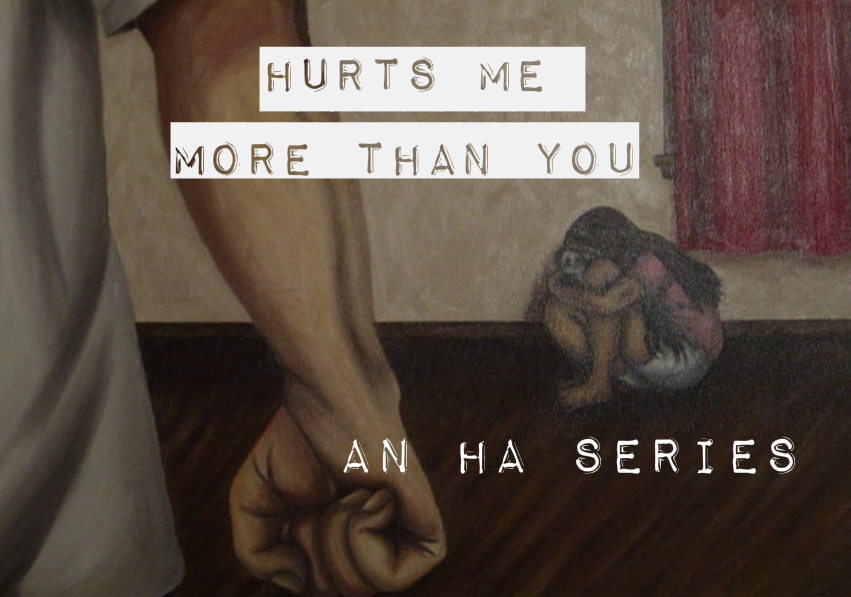
Hurts Me More Than You: Alice and Beth’s Stories

Screen Shot 2014-09-23 at 10.15.16 AM

*****

Trigger warning for Hurts Me More Than You series: posts in this series may include detailed descriptions of corporal punishment and physical abuse and violence towards children.

*****

Alice’s Story

I knew that I could get spanked for things I wasn’t even involved in, like my 3 year old brother talking and shouting when we were all supposed to be asleep. If he didn’t confess, or if Mom just didn’t care who was talking, we all got spanked.

Mom didn’t stop spanking me until I was about 9 years old. Even then, I still had moments of Oh my God, is she going to hit me this time too? When she’d burst into the bedroom I shared with my siblings, I very quickly tried to tell her that I wasn’t the one talking, or I just pretended to be asleep. Sometimes that worked and my ass would be spared.

I don’t remember all of Mom’s punishments. My sister claims that we were sometimes whipped with switches from our forsythia bush. I remember plucking the switches to bring to my mom to whip my sister with, but I never remember being whipped with them. Probably because those memories were a lot more painful, physically and mentally.

I know I’ve blocked stuff out, because my memories from 6 to 9 years old are patchy and it just feels like there’s stuff missing.

But there are things I’ll always remember, like the plastic black spatula my mother used (and broke in a fit of rage one night when she walked in, slammed it up against the dresser, and yelled at us). I’ll always remember the rage etched on her face when she stormed into the room. I’ll always remember silently seething when she brought us in later, apologized, and hugged us. I’ll always remember hating her as a child, because she showed little patience for us.

Even as I transition in adulthood, I’ll still live with what she’s done to me. It’ll stay with me for the rest of my life, but at least it’ll teach me to never inflict violence on my own children, God willing I have some. Through the pain, there is a lesson for both my mother and I, and for me it is this:

Violence breeds respect based on fear, but true respect is born out of mutual love.

And that’s a mindset I hope to practice when I have my own kids. With my partner’s help, I’ll be gentle and kind towards our children and not hurt them like my mother hurt me.

*****

Beth’s Story

My dad made “spankers” out of conveyer belt that he cut and sanded. He even put a hole in one end so you could hang it on a hook. We had two of them and my parents would warn us not to ever try to hide them. He gave some to my friends’ parents and I liked to make fun of my friends who were only hit with wooden spoons. Conveyer belt stings, but leaves no welts because of its surface area. It is blunt force but not as blunt as a baseball bat.

It is the perfect way to hit your children and leave no evidence.

My dad hated spanking me and so did my mom. And so, when I had a rebellious attitude, they usually told me they would “have mercy” on me, as Jesus had mercy on our souls, and that though I deserved a spanking, I wasn’t going to get one. But when I did get a spanking, they were very very angry with me. My dad has apologized, now that I am an adult, for only ever “spanking in anger.” He was the child of an alcoholic and was determined to do everything right, to be the best and most responsible dad there was. That makes him easier to forgive than other childrens’ parents, who spanked with cold detachment.

But I got older and stopped being spanked, and my parents did not understand why I cringed when they raised their voices. It was a reflex. My guts seemed to drop out and my legs turned to jelly when I knew they were angry at me. They got angry when I was secretive and moody and I flinched when they came up too suddenly behind me. That made them angrier. They weren’t abusive parents and I shouldn’t treat them like it.

I have forgiven them for spanking me, but not for hitting my little brother, who used a wheelchair because cancer paralyzed his legs.

He died when he was five.

I don’t know what he could possibly have done to merit a beating. I don’t want to ever ask them. I tread around the subject now, because I no longer live at home and want to keep the peace. The momentary act of hitting or being hit is small potatoes compared to the aftershock. I am afraid I will be cringing my whole life.

P.S. The relief I feel after writing this is huge.

Hurts Me More Than You: Jessie’s Story

Screen Shot 2014-09-23 at 10.15.16 AM

*****

Trigger warning for Hurts Me More Than You series: posts in this series may include detailed descriptions of corporal punishment and physical abuse and violence towards children.

*****

Jessie’s Story

Childhood Recollection

You know where the best place to color is? The walls. You know where the biggest canvas in all of creation? The walls.

You know where you get punished for coloring?

The walls!

Can you guess where your stubborn, imaginative baby’s gonna draw anyway? You guessed it baby. The temptation’s too strong. Even when your parents tell you not to, even when you know a spanking will follow. The urge to fill those empty dull spaces with the marks of your creative genius are too powerful to be denied.

Pain is a baffling thing, how it’s subjective and personal and always in flux, and apparently always “your own fault.” As the blows fall, some tiny voice in the brain braces against the sting with the mantra of “only have to make it to ten.”

Experience has taught that around the 10th you stop feeling the pain. The sting won’t bite so hard and the following burn won’t scorch so badly. “Hold your breath,” I tell myself… sometimes it doesn’t hurt so badly if you hold your breath, and with face down in their scratchy comforter I try to hang on. But then I’m betrayed by my own body. I was expecting a sensory overload and a full shutdown to see me through this ordeal. But I’ve never been swatted so many times, and at the thirteenth strike I’m ambushed by the pain again. The walls of ‘otherwhere’ I’ve built to protect me in this moment collapse inward and I’m drug under the burning blinding pain. Everything’s on fire, I’m on fire, in fact in that moment I could believe I’m made of fire.

That’s when the screaming truly starts. To her credit, my mother doesn’t shush me. She goes about her work of discipline as I go about mine of endurance. All told, there are twenty blows- accumulated for each time I draw on the walls. If I disobey again, there will be twenty-one in store for me. She has me sit beside her on the bed when it’s done, on my newly scorched flesh. We pray and she looks grim but determined to win this struggle. She reminds me that “we” agreed to this and I nod still crying.

I am seven years old, and I agreed this.

I’m seven years old, and I agreed to this… apparently.

Adult Retrospection

When you’re a strong-willed child you learn so many things about spanking, about discipline in general. It becomes both the axis and guiding star to nearly every aspect of your life and your parents. Everything’s a battle of wills that your parents are going to win, no matter the cost.

I was spanked so many times growing up, and for so many reasons. I can say it was usually done in an emotionally restrained fashion. But I also can recall times I was hit from a state of rage. Once I was picked up by my lapels and shook. While my mother screamed that she wanted to throw me through the screen door onto the hood of our family car. I reminded her of that incident in my adult years … she didn’t remember, and chuckled as she hoped I had forgiven her. The worst spanking I ever received was for drawing on the walls. She set down an arrangement with me when I was seven, for every instance of vandalism I would receive an extra swat. I took twenty (20) blows before I plain stopped drawing altogether.

The chief instrument was a series of hard plastic cooking spoons. They sat next to the stove in a large wooden vase, like a bouquet of pain. To this day the sound of a spoon being drawn from the bunch causes my brothers and I to visibly flinch. My mother used to complain that I never wanted to learn to cook, but I wanted to be as far from those spoons as possible. Once I spoke to a school councilor about the spankings. It felt surreal, and when I told my mother, I had to spend the rest of the day comforting her.

As an adult I can actually withstand her screaming now. It’s easy to drift away and not care if she yells herself hoarse.

Though I spend a fair amount of time wondering if she’ll slap me … and if this time I’ll actually slap her back.

To the Students of PHC: Talitha’s Story

Homeschoolers U

HA note: The author’s name has been changed to ensure anonymity. “Talitha” is a pseudonym.

I came to Patrick Henry College as a girl with big dreams and a go-getter attitude. Maybe my dreams were too big, but I was prepared to work hard to get where I wanted to be. After surviving a life of poverty, I realized that nothing comes free in life. During my high school years, I never knew if I was going to have food on the table the next day. My experiences with being low-income motivated me to do well in life — both for me as well as for the people I loved and left behind to attend school.

It was ironic, then, when I stepped on campus and people automatically labeled me: “Oh… that rich girl.”

At first I was flattered that people thought my thrift-store business casual wardrobe was akin to designer fashion. But I soon realized it wasn’t about my clothes at all. Sure, they judged me by the color of my hair and the fact that I wore high heels. But eventually it became clear it was more about my attitude than anything. I was too assertive. I raised my hand in class when I had something to say. I ran for student senate. I actually talked during senate meetings. I attended all sorts of club meetings. I helped run several clubs, in fact.

I did these things because, for me, this was a second chance at life. I had an opportunity to be a part of something regardless of my financial status. Through good grades and test scores, a crap ton of volunteer hours, and demonstrated dedication to several part-time jobs, I was able to attend PHC alongside the sons and daughters of millionaires. I was thrilled to get the educational opportunity of those in the top bracket. I dove in head first, because I was so grateful to be a part of the campus community. I wanted to make the most of my time there.

But apparently, people (especially boys) didn’t like that.

Be involved in the community, but not too involved, otherwise by default you’ll be smeared by people envious of your success.

Something PHC people don’t realize is that the moment you say something bad about someone behind their back, it’s as if you’ve said it to that person’s face. The gossip travels so quickly that it’s bound to get back to the person you smeared. I can’t tell you how many times I heard, “hey, guess what so-and-so said about you?” and “oh, you wouldn’t believe how she talked about you.” “Guess what he said about you during coffee??” I lived with the rumors every day, and I was called atrocious things by people who said they were my friends.  They thought I didn’t know, but the echo of the rumor mill ensured that I heard the same things they did.

I was called vain, a flirt, a suck up, a fake, a slut, bulimic, insecure, too ambitious, and disingenuous.

There finally came a point where I couldn’t believe they were “just rumors.” Something about them had to be true, right? Even though sometimes — when I walked into a room — I could see people look at me and start to whisper, I just tried to push on. Success never comes easy.

I couldn’t keep my head up, though. Despite all my efforts. I began living constantly terrified of what people thought of me. Without realizing it, I allowed the rumors to isolate me. People didn’t understand me, because I didn’t let a lot of people in. Although I looked okay, I had a wall up — and instead of getting to know me, people were quick to make accusations and judgments.

The next year wasn’t much better.

Why?

Because my professors recognized that I yearned for more responsibility, and gave it to me. I was put in charge of numerous projects and clubs, but with that, a level of authority my peers were unwilling to accept. I had “Christian” classmates calling me a “bitch” because they didn’t want me in a position over them. I had close friends call me “unapproachable”, one going so far as to personally smear me to professors so they could get the position they wanted. It was unbelievable, and I was deeply wounded.

I struggled severely with depression the entire year. But my classmates were too busy resenting my work-ethic that they didn’t notice.

Everything I did, someone questioned my motives, or called me a name. It got to the point that I could barely ask a question in class, without someone rolling their eyes at me or looking at me strangely. Every day, I wanted to crawl in a hole, and disappear. No one came to me to ask if the rumors were true. I felt completely isolated and alone.

RAs, tasked with enforcing dress-code, seemed to take a special liking to me. I would get dress coded at least once a day, and I lived in fear of “sending the wrong message” that I was a rebel. I wanted acceptance, but I began realizing that it would never happen at this place.

There comes a time when success in school isn’t enough to get you through the day. It’s not worth losing friendships over. It’s not worth the pain of people’s jealousy. At the point where I spent three days in bed, not getting up to eat or do anything, I realized I was done trying.

Congratulations, PHC, you broke my spirit.

The girl who was once confident, secure in herself, and goal-oriented is now confused, shaken up, and alone. She feels like the world is against her, simply because she wanted to make something of herself and make the world a better place for those who come from similar backgrounds of poverty and abuse.

On a campus that encourages excellence, I am, to this day, shocked at the hate people get when they succeed. The name calling is like they’re still in high school.

To the students of PHC: You, and your small comments and judgments, could be pushing someone deeper into depression every day. The person you see as an object of gossip also has feelings. The person who looks successful is actually torn apart inside because of your mean words.

I guess I was an easy one to pick on, but I hope no one else has to go through this. As I return to PHC this fall, I’m still wrestling with isolation and depression. I have panic attacks thinking about returning and I worry about what dramas await when I walk through the doors into my first class of the year. I will not be participating in the clubs, events, and senate that I have in years past. I’m withdrawing, but not altogether. I am crushed, but I’m not a quitter.

I need a semester to heal.