HA note: The author’s name has been changed to ensure anonymity. “Mercy” is a pseudonym.
Homeschool Moms (Present, Past, and Future), this post is for you.

I’ve thought a lot about how conservative, Christian (in my case, not fundamentalist) homeschooling has shaped my life, but it wasn’t until last year that I took the time to think about how it impacted my mother. My sister had just called home to tell me that her and her husband of a short time were divorcing. I broke the news to my mom before my sister did, to soften the blow a little bit. My mom’s face went grey and she said, “How could this happen to your sister? I did everything right.” There was little consoling her, she thought that she had failed as a parent.
Why would the divorce of a child who married at a young age, in a country with a high divorce rate come as such a shock to a parent? Because the homeschool movement told my mom that they had given her the magic formula to make her children’s lives perfect. They give her a list, and promised her that if she followed the rules that her children would be perfect, Godly, and never experience life’s pain. How could that not be a tempting promise to any parent who cares about their children?
Homeschool moms, I want to tell you that promise is false, and that believing it is going to hurt you. Your child is a sovereign individual, and no matter how carefully and lovingly you arrange every part of their upbringing, education, and socialization, you cannot control their future. You can’t control it because you don’t have total control over your child or other people. If you’re stressing yourself out, afraid you’re doing it wrong, and a constant bundle of nerves, I want you to take a moment and think about whether or not you have set unrealistic expectations for yourself as a parent, and your child as a child. You probably have, and I want to tell you to give yourself a break.
Also, a lot of you have commented on these posts explaining that you’re different from the “crazy” homeschool moms, and I do believe you, but chances are if you’re Christian and homeschooling, you and your kids will be interacting with fundamentalists and you may be gradually sucked into parts or the whole of their ideology over time. These are some warning signs that could cause you to be more susceptible or signal that you’re already being sucked in:
1. You have deep regrets about your past. Perhaps you were raised non-religious like my mother, and then converted later in life, causing you to view your earlier years as sin-filled and in need of atonement. Maybe you were raised in a religious home and just think that you made some stupid, sinful decisions. Either way, if you are feeling guilt about your past, and like you need to make up for it, I want to tell you that homeschooling perfectly isn’t the solution. Don’t let people lead you into thinking that this is your path to forgiveness and the way to prove that you have become good. Additionally, many homeschool conventions, talks, gatherings will involve long lectures and speeches about the evils that your kids are supposed to avoid and that are taking over America (divorce, abortion, pre-martial sex, drinking, drugs, etc…). If these are things in your past, that you have regrets about, I want you to step out of those talks and lectures and stop punishing yourself. By sitting through those demonizing speeches you are tearing yourself down emotionally. You’re forgiven, now move on.
2. You find yourself becoming increasingly judgmental of other’s “walk with God” and parenting choices. Perhaps you were always fairly even keel, easy to get along with, not too judgmental, etc… and then lately you’ve noticed just how few people seem to truly be Christians, and how other parents are not really raising their kids to be Godly enough. Stop right there. You are treading into dangerous water. I remember there was a stage in my mother’s homeschooling where she felt that she was dressing more modestly, using more Christian curriculum, and going to a Godlier church than most other people. My dad sat her down one day and said, “Do you remember where you came from? You look at everyone and judge them, like you’ve forgotten that you’re human, too.” Was my dad harsh? Yes, but it opened up my mom’s eyes to the fact that she, a woman who had always been a fair-minded free spirit, was becoming fundamentalist. My mom dumped her jumpers and added a good dose of charity and compassion to her assessment of other’s (including her children), and her assessment of herself.
3. You find other homeschool moms criticizing you and your children, as “sisters in Christ.” It feels like they’re just being mean, but everyone says that they’re being Godly… True story, they’re probably just being mean. If you are a more relaxed, liberal homeschooler, and you are involved in homeschool activities where you are around fundamentalist homeschoolers, they will judge you and your children. Other homeschool moms were constantly telling my mother about my “slutty” dressing and “immoral” ways. They sought to demonize me, punish me, and slander me because I was not a cookie-cutter Christian homeschooler. My mother always defended me, but what makes me sad is that she never defended herself. I noticed that the longer we were involved in certain homeschool activities populated by more fundamentalist homeschoolers, the more fragile my mom was becoming. She went from outgoing and smiley, to frighteningly quiet, she stopped telling jokes, she got sick almost every time we went to a homeschool gathering, and her head started shaking. It was like all of her bottled up anxiety and hurt couldn’t be kept in, so a barely perceptible shake would start as soon as we pulled up to a homeschooling event. I found out why my mother was acting this way my senior year of high school: other home school parents were bullying her. I overheard them openly confront her about how prideful, how unloving, how assertive, how terrible, and how unchristian she was. My mom never stood up for herself. To any mom who is being treated this way, and is afraid to stand up to it because you either think that a). you deserve this, or b). what’s being done is Godly I want you to be strong and call it like it is. Some homeschool moms are bitches. If they treat you and your kid terribly, tell them that it’s not Godly. It’s rude, and get out of there.
4. You’re told that the answer to parenting/homeschooling is ________________. There is no perfect way to parent. If you’ve come across a group, speaker, pastor, or curriculum that promises that they have the one and only way to good parenting and God then you know you’ve run into a nut job. They may have great success stories, and a bevy of perfectly mannered children at their beck and call to demonstrate their effectiveness, but you shouldn’t fall for it. There is not one way.
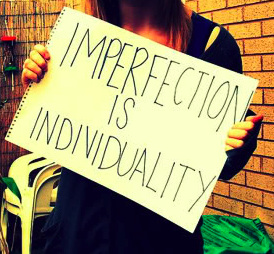
5. You feel like other homeschool families are always so much more perfect. You see these glowing, wholesome families who encourage you to homeschool and sell you curriculum, and then when you start homeschooling your kids don’t magically change. They don’t want to do their school, they fight with each other, they back talk, they may even turn into teenagers. And, you get frustrated, mad, tired, and say mean things. You might look at these other families and ask, “What am I missing?” What you’re missing is the whole picture. No family is perfect, nor are their children. Even the most well-mannered exemplars of homeschooling virtues have kids that misbehave and days where they feel frustrated, too. As you can see from this blog, a lot of these kids that may seem so much more virtuous than yours are actually deeply hurting and will eventually turn their parent’s perfect world upside down. So, be patient with yourself and your children, and don’t let other family’s public veneer make you feel like a bad parent.
And, please, please don’t feel like if you try homeschooling, and hate it, that you’re bad and must work through it. If you really hate it, are unhappy, and struggling, then maybe homeschooling isn’t for you and that is just fine. Keep your options flexible and your mind open. You don’t have to homeschool to have happy, well-educated, respectful kids. Look out for them, and look out for yourself. Don’t let other people force you into any lifestyle or belief system that you feel uncomfortable with, and if you feel as though that might be happening, be strong and get out now.
 Homeschoolers Anonymous