In which my genitals mean I don’t learn math or science

Screen Shot 2014-07-05 at 2.28.15 PM

HA note: The following is reprinted with permission from Kierstyn King’s blog Bridging the Gap.  It was originally published on February 9, 2014.

Alright, you have my attention. Anyone who can wield a soldering iron like that is worth some attention. […]

– youtube commenter (comment since removed by author – creepy part, also removed…by me)

I was denied physics because I was born female. I had been taught all my life leading up to that point that girls don’t use power tools, that girls don’t build, that girls can’t understand higher math, that girls can’t hammer straight, that girls can’t and don’t understand science or engineering, and that all of those things are for boys.

So when we moved and joined science olympiad and I was partnered with people who needed partners, and one of them was a dude and our project was to make an egg-car thing and get the egg to go so far and hit a tiny wall without breaking, I was unable to assert myself. I was told to sit on the sidelines because this was boy stuff, all the boys – my dad, brother, grandpa, and my partner, took over the project while I was a mere bystander.

Anytime I did try to help, I was laughed at and ridiculed because I couldn’t hammer a nail straight – because I was never allowed to build – my entire life, I was never allowed to build – I could hammer a nail into a wall to hang something, but not into two pieces of wood, that was boy stuff. They took my inability as an excuse to continue to take over the project and leave me out of it.

My job, in my science project was to put the rubber bands on the plexiglass wheels that the boys decided were best, and load the weights into the pulley that held the car-holder door shut and released the car/opened the door when it dropped (because weight). The only enjoyment I had was to call them tiny footballs because they were fishing weights and looked like footballs and everyone ridiculed me for that. I was so devastated about the entire project that I was just like, THIS IS THE ONE JOY I HAVE OKAY, LET ME CALL THEM THAT.

It was horrible. The entire time no one bothered to give me anything but cursory detail about what they were doing or how it worked. No one bothered to teach me physics, because I was a girl and wouldn’t need to know anyway, I was just there so my partner could enter. No one taught me the math or told me about the calculations or why they decided on plexiglass wheels and a twist system besides “this would work best because you (not me, my partner) can calculate how many turns you need for the distance”.

My entire life I have been afraid of power tools and under the impression that I would never be able to use them effectively because of my genitalia (like a vagina is power tool kryptonite). I was convinced that somehow something world ending would happen were I to try – or maybe not world ending, but it at least would break and not work. I was never allowed to touch anything, only told to stay away, barely allowed to watch, never taught.

I am angry that because I was born in this body I was not allowed to learn how to build, to learn about physics, but instead I was only told I was bad at it and ridiculed every time I made the slightest attempt to understand.

I would never need to know these things to be a wife and mother, so why bother wasting the energy, right?

Sexism and gender roles ruined my math and science education – they denied me either, and instead lied to me, tying my mental ability to my genitalia, and my life’s purpose to bodily functions.

This is why building ikea furniture, and houses in minecraft, and learning how to solder, and making little electronics work is so huge to me.

This is me standing up against my parents – who were my teachers – and learning SCIENCE because I CAN, because it is WORTH LEARNING, because I am SMART and I HAVE ALWAYS LOVED SCIENCE and was never allowed to try, never given the math skills or the time of day to learn it because I was told my entire life it was pointless for ME to learn it. I was relegated to the sidelines when I was supposed to be being educated, but I’m not anymore.

I am building things and I am soldering and I am damn good at it. 

I hate it when I’m made out to be magical because I both have boobs and enough dexterity to solder. It’s not magic, I am not a unicorn, and thinking that it’s somehow remarkable for a person with female genitalia to hold a soldering iron is sexist. It’s the same kind of sexism that kept me from learning math and science in high school, and it is not okay.

Go ahead and be impressed that I can do things, but be impressed because I’m fighting against my past, because I’m carving my way out of the cage my parents tried to place me in, not because I have boobs and dexterity.

Fuck the Patriarchy.

Why the Distance Between “Christian Patriarchy” and “Complementarianism” Is A Sleight Of Hand: Rebecca Irene Gorman’s Thoughts


Screen Shot 2014-04-27 at 4.48.18 PM

Also by Rebecca on HA: “The No True Homeschooler Argument,” “I Was Beaten, But That’s Not My Primary Issue With Homeschooling” and “‘Fake Someone Happy’: A Book Review.” 

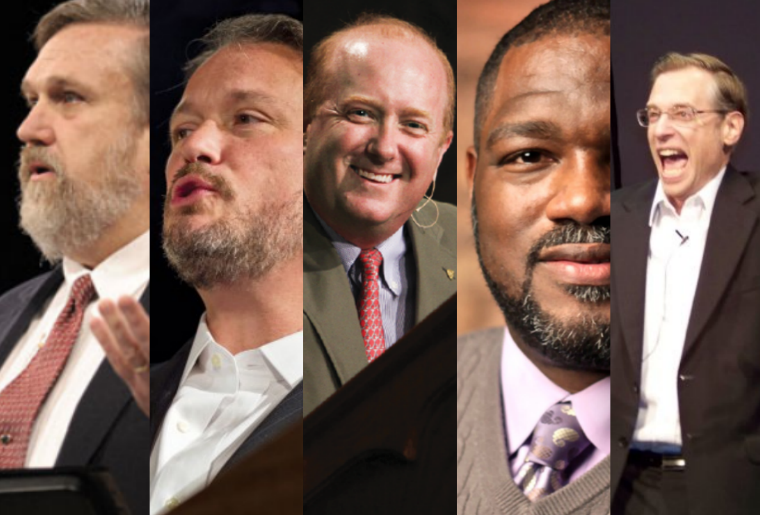
My pastor was the director of the Chalcedon Foundation and the other teachers I studied under were Mark Rushdooney, President of the Chalcedon Foundation, Doug Wilson, Howard Phillips (father of Doug Phillips) etc. Ground zero of the ‘Christian Patriarchy’ movement.

The context in which they use the word ‘patriarchy’: It’s not always capitalized. It’s not always typed as ‘Christian Patriarchy’. They don’t think of ‘Christian Patriarchy’ as the name of their movement. Yes, they do think that patriarchy is a good thing, and say so explicitly. They love to talk about the Biblical patriarchy, and are often happy to capitalize Patriarchy as a value essential to Biblical Christianity.

If you ask them what their movement is called, they’ll probably tell you ‘Biblical Christianity’. They might go on to mention the Reformers or covenentalism or Reconstructionism or postmillenialism or paedobaptism, because all of these things are central to their identity. Which ones they mention is purely personal preference. If you ask them what they believe about gender roles, they’ll say: ‘complementarianism’. NOT ‘Christian Patriarchy’.

For these people at ground zero of the ‘Christian Patriarchy’ movement, they talk about ‘Patriarchy’ as a positive thing, method behind taking dominion, the reason for quiverful beliefs, beliefs around baptism, communion, etc. While their promotion of this word is very telling about their objectification of women, it’s not what immediately comes to mind for them when they’re thinking about gender roles. What immediately comes to mind for them when thinking about gender roles are various Bible verses and stories that make up the culture’s dialogue about gender roles, and when they have to boil their gender role perspective down to a term, they think of it and talk of it as ‘complementarianism’.

It’s disingenuous to say ‘I’m not a Christian-Patriarchalist, I’m a Complementarian.’ Show me a person who claims to be a Christian Patriarchalist, or a Christian-Patriarchalist who doesn’t define their gender beliefs as ‘Complementarian’, and I’ll show you a fairy. NOBODY claims to be a Christian-Patriarchalist. Claiming to be a Complementarian ‘because that’s what the Bible teaches’ IS the definition of what we now-outsiders call Christian Patriarchy, end stop.

Saying ‘I’m not a Christian Patriarchalist, I’m a Complementarian’ is like saying ‘I’m not a giraffe, I’m a large African mammal with a very long neck and forelegs and a coat patterned with brown patches separated by lighter lines.’

What “Christian Patriarchy” Is

Screen Shot 2014-04-26 at 3.42.51 PM

HA note: The following is reprinted with permission from Libby Anne’s blog Love Joy Feminism. It was originally published on Patheos on February 19, 2012.

In a nutshell, Christian Patriarchy is the belief that God has ordained a specific family order, and that this family order must be followed. The husband leads, the wife submits, and the children obey.

There are two important aspects about Christian Patriarchy. The first is the belief in the importance of male headship or authority, and the second is the belief that men and women have vastly different roles to play. A third issue involves the role of children.

Male Authority

Christian Patriarchy holds that women must always be under male authority (or headship). A woman is never to be independent of male authority. First, she is under her father’s authority, and then under her husband’s authority.

(A widow would be under her son’s authority, or, if she had no sons or her sons were young, she would return to her father’s authority. If is not possibles possible, some argue that widow should place herself under the authority of a church elder or pastor.)

Many evangelicals use the rhetoric of “male headship” but see it as merely spiritual or figurative. For Christian Patriarchy, though, being under male authority includes obedience. This obedience is absolute; a woman is only excused from obeying if her male authority orders her to do something illegal and immoral (some dispute this, and argue that she is still required to obey, but that God won’t hold her accountable for any sins she commits at the order of her male authority).

I Corinthians 11:3 – But I want you to understand that the head of every man is Christ, the head of a wife is her husband, and the head of Christ is God.

Under Christian Patriarchy, the framework in this verse is extended to women in general. Every woman has a male authority, and that male authority looks to Christ as his authority. A woman is to obey her male authority, whether it is her father, husband, brother, or son, and he in turn is to obey Christ. By obeying her male authority, a woman is obeying God. This is seen as the natural and God-given order. 

Separate Roles

Christian Patriarchy holds that men are to provide and protect and women are to care for the home and the children. This is seen as the divine order for the family. The idea is that the two sexes are equal, but that they have different roles to play. Both roles are highly important, and neither sex can fulfill the role of the other. Men and women are simply different.

The man’s role is to hold a career and provide for his family, to protect his family, and to represent his family to the world in politics and in the church. The woman’s role is to bear children and raise them, to cook and keep house, and to support her husband, building him up as a man through her affirmation and obedience.

Hard core followers of Christian Patriarchy hold that women are never to work outside of the home in any capacity – even if their families desperately need the money. Yet just as with Quiverfull, there are plenty of families who are influenced by the ideas of Christian Patriarchy without being completely hard core. These families most often hold that married women, or married women with children, should not hold jobs outside of the home, and that it’s not women’s place to have “careers.”

Children 

Under Christian Patriarchy, all children are expected to offer their parents absolute obedience while they are minors. No disobedience is accepted, and children are taught that obeying their parents is obeying God, because God has placed them under their parents’ authority.

Daughters remain under their father’s authority until married to a man he approves of, generally through a parent-guided courtship. While under her father’s authority, it is the daughter’s duty to obey him and accept his will for her as God’s will. Many in the Christian Patriarchy movement reject college for girls, and the Stay At Home Daughter movement is growing.

Sons are under their father’s authority until they become men. The point at which this occurs isn’t so clear, but it definitely occurs sometime between when they turn eighteen and when they marry. Once he becomes a man, a son no longer need to be under male authority, and he becomes the male authority for his wife and children.

Some families in Christian Patriarchy have trouble completely letting go of their sons, however, and there is in some circles the idea that even an adult son should be obedient to, or at least highly respective of, his father’s desire. This is where you get Geoff Botkin’s 200 Year Plan (also known as Multigenerational Faithfulness).

Conclusion

The most important thing to remember about Christian Patriarchy is its emphasis on a hierarchical family order, which it regards as the natural order ordained by God. Men and women have different roles to play, the man as protector and provider and the woman as nurturer and homemaker. Women are always under male authority; daughters are to obey their fathers and wives are to obey their husbands. When everyone fulfills the role God has created for them, the family prospers.

The things I find most troubling about Christian Patriarchy are its emphasis on women offering absolute obedience to their male authorities – when you think about it, there is nothing really to differentiate this from slavery – and its emphasis on strict gender roles, which classes people by their sex rather than by their talents, interests, or abilities. Christian Patriarchy fails to recognize the huge diversity within each gender, and pushes people into prescribed slots based on their genitals rather than seeing people as individuals first.

The vast, vast majority of Christians do not hold to the teachings of Christian Patriarchy. In fact, many Christians actively fight against these ideas, arguing that they represent a fallen order of mankind and that Christ has ordained equality between the genders. However, it should be noted that even as some Christians fight these ideas others are unknowingly influenced by them, and that is what makes understanding the ideas behind Christian Patriarchy all the more important.

The Ideal Homeschool Girl

Screen Shot 2014-01-29 at 8.55.03 PM

HA note: The following is reprinted with permission from Faith Beauchemin’s blog Roses and Revolutionaries. It was originally published on January 29, 2014.

There’s a sick little article floating around the homeschool/ex-homeschool blogosphere right now.  It’s basically one college professor’s gross fetish fantasy about “homeschool girls” (meaning, his formerly homeschooled students who are actually presumably grown women).  He likes them so much because they’re so feminine (“just like a Jane Austen character,” he says repeatedly, leading me to wonder how drastically this English professor has misread Austen and other groundbreaking female writers) and not like those ugly mean selfish feminists.

My most creepy-crawly feeling while reading the article came from the total objectification and dehumanization of women who have been homeschooled.

Mr. Markos, you revel in interactions with homeschooled women because homeschooled women were brought up specifically to please men like you. What goes on behind the scenes to craft that “glorious and unashamed femininity”?  You see the finished product, a woman poured into the mold of a conservative Victorian ideal and seemingly content there (“enthusiastic”, you say, and I am trying to remember any of the legions of homeschool girls I’ve ever known who was truly enthusiastic about performing any part of traditional femininity that was not already rooted in her own personality).  You don’t see how many girls are brainwashed, shamed, abused on a daily basis before they are finally broken down to the point where they can be thus remade.

You would admire my sewing skills, but you would never know about that winter day when me and all my homeschool girl friends were stuck inside learning to quilt while our brothers played in the snow.  You wouldn’t know how badly I longed to be outside, sledding and throwing snowballs, instead of inside learning the traditional feminine arts.

Performing traditional Victorian femininity can be fun….

You might be impressed that I can draw, until you learned that most of my drawing was used to illustrate a fantasy universe that was populated by women having adventures, going on quests, fighting battles side by side with men.  Or used to illustrate my Star Wars fanfic, where I piloted a space ship and spied for the Rebels.  Or used to design dresses not to be sewn by me, but as part of a secret dream to move to New York City and be a fashion designer.

You’d have praised my “razor-sharp wit” when it was parroting Ann Coulter or whatever I’d learned at church that week, but now that I use it to eviscerate folks like you, it is “marred and twisted by the politics of identity and victimization.”  (And see here you set yourself up to win against all critics, because if I argue that our original identities, pre-brainwashing, are not like the “femininity” you describe, I am now playing the victim card and am therefore “unfeminine” and undeserving of your time).

You might not know, Mr. Markos, anything real about these formerly homeschooled women you interact with.  

Because do you know what we learn above all?  We learn to hide.  

We learn that our real selves are not acceptable.  Anything within us that does not fit into the mold doesn’t necessarily go away, we just have learned not to show it to authority figures or, many times, to potential suitors.  Those in authority over us are the ones enforcing the “ideal girl” model, so the quickest way to avoid punishment and shaming is to perform femininity as we have been taught to.  Because we aren’t taught to be feminine.  Where someone falls on or off the gender spectrum is, I believe, something that is found on one’s own, inside, not something that is taught (gender does not really make sense in my head, but I think that’s probably a side effect of growing up with such strict gender roles).  A person can learn to perform gender traits that have no real resonance with who they are.

And wouldn’t you?  If you were constantly under threat, continually told that god, your parents, and your future husband (who is The Most Important Person You’ll Ever Meet) would all hate you and shun you and turn up their noses in disgust at you if you didn’t fit this particular mold, wouldn’t you force yourself to fit it?  If you were constantly told that “this is what a good woman is,” by everyone around you, wouldn’t you think that you were the problem, that you were a thing to be fixed?

You don’t know these “homeschool girls” you’re talking about, Mr. Markos.  

You don’t know the actual story of their lives, possibly because the real world of homeschool women is kept very segregated from the world of men.  And you don’t know how many of them will join me and my friends in the feminist camp before too long.

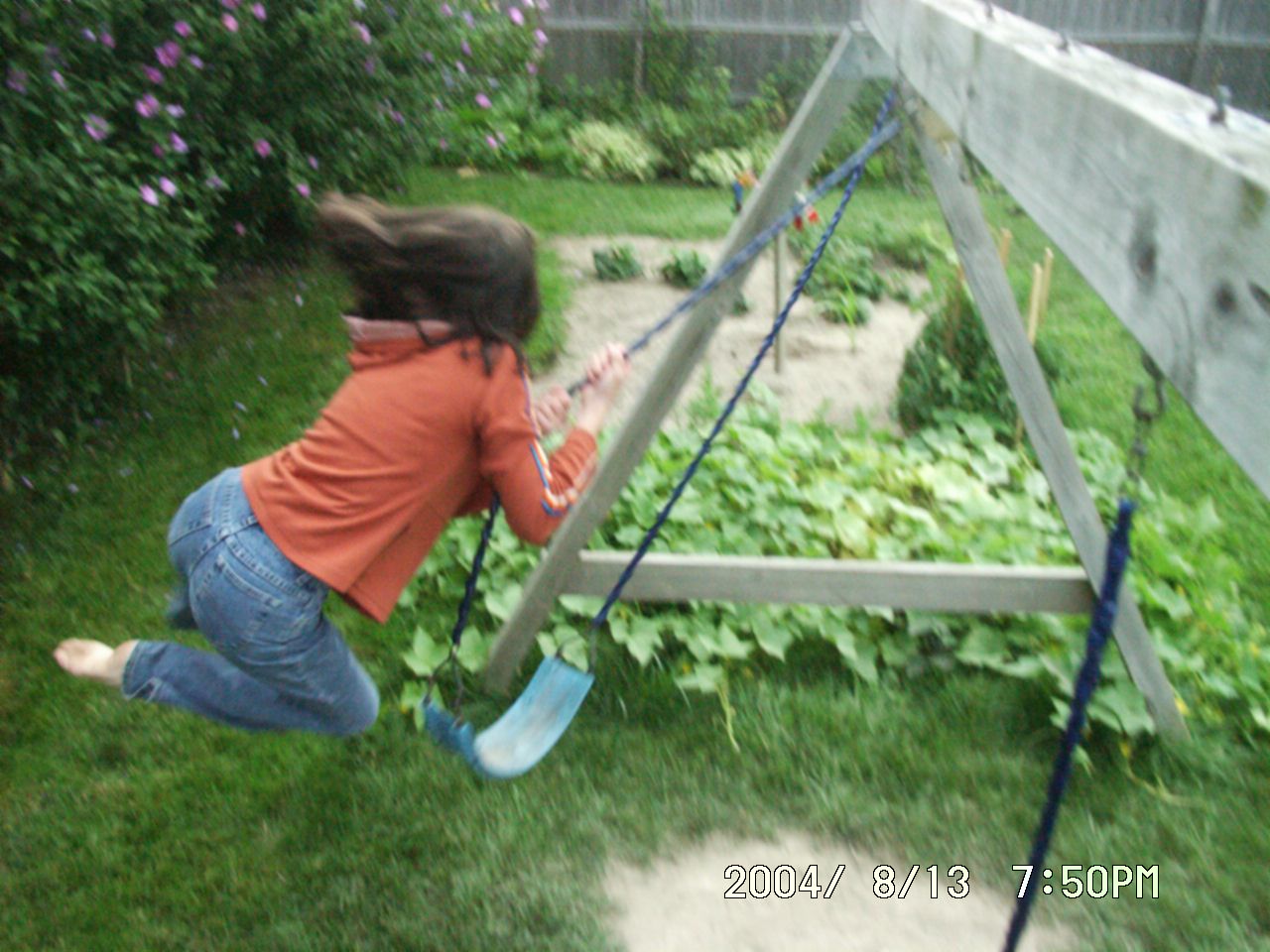
…but then, swinging on a vine across a chasm to escape Stormtroopers is pretty fun too.

So stop fetishizing my pain.  

It is distressing to see you and so many other Christian men drooling over a neo-Victorian mold of “femininity” (that you label it “Austen-esque” just adds insult to injury).  Drooling selfishly over the idea of a woman whose only purpose in life is to keep your home and to keep you happy.  Drooling over the thought of a woman whose only thought is to please and serve you and maybe oh-ha-ha-ha take you down a peg or two if you are being too “bombastic” but only because she respects you so much.

Women who fit the classic “feminine” mold aren’t less human than women who don’t.  I have never, and will never, think so.  But you’re not saying your personal romantic/sexual preference is women who are quietly intelligent and skilled in the arts.  Many people have romantic/sexual preferences, and that’s completely acceptable.  What’s not acceptable is generalizing your personal and oh-so-weirdly-specific preference and turning it into what everyone born with a particular genital configuration “should be.”  You’re saying that all women, in order to be true women, in order to be truly “feminine” (feminists, you say, are more “masculine” than even you! *gasp*) have to be like this.  And you’re looking at homeschooled women, who were brought up in a culture that thinks like you do, and praising them for being, as you think, monolithically “feminine.”  That perception is not true, not fair to homeschooled women, and insofar as it does bear resemblance to reality, is because of cultural pressures and religious threats, not because of any innate “feminine” qualities.

I’ve seen too many women (and too many people who were assigned female at birth but, surprise, aren’t female, because yes Mr. Markos gender is not the same thing as what you consider biological sex, and conflating the two as you do causes untold damage), myself, my friends, my sister, unspeakably harmed and psychologically and physically abused all for the sake of fitting into that false ideal mold.  I’ve seen peoples’ vibrant personalities little by little give way, squashed into the mold.  I’ve seen other friends who weren’t brought up this way torture themselves, briefly, to go from independent woman to some Christian boy’s submissive ideal, and fortunately escape before any lasting harm was done.

Any man who marries a woman because she fits the “ideal homeschool girl” mold is only perpetuating oppression.  And maybe that’s why they all think feminists are “mean”:

Because we’ll never stop calling you out on this.

Mr. Markos, you can go home and rub one out to Lizzy Bennett as many times as you want, but please stop reducing real human beings to nonconsensual players in your little fetish game.

My Father, An Enigma

HA note: The following is reprinted with permission from Libby Anne’s blog Love Joy Feminism. It was originally published on Patheos on November 21, 2013

“Libby, you could be an engineer. You have the mind for it.”

My dad made this comment while we were in the car, driving by a factory of some sort. I was probably around sixteen. My dad’s comment was completely offhand, and I didn’t bother to respond. Inside, though, I was baffled.

Why would my dad suggest such a thing?

Didn’t he realize that my lot in life, the lot God had designed for me, was to be a homemaker, raising children, caring for my husband, and tending the home? Couldn’t he see that engineering was not even remotely related to homemaking, and that if I were going to learn a trade it should be something feminine like teaching or nursing?

Why would he even suggest that I could be an engineer? It made no sense!

I wrote recently about something similar regarding my mother. I grew up seeing that Above Rubies magazine on the counter, in mom’s bedroom, or on the stool in the bathroom, and I myself read it voraciously. It was clearly approved reading material, and I never heard my parents contradict it or disagree with it, so I assumed that my parents believed everything in it. I adopted its beliefs myself, and it shaped my conception of myself as a woman and my dreams for my future. And yet, my mother told me several months ago that she had never believed everything in that magazine.

I had had no idea.

Every so often I am reminded of my father’s offhand comment and I am bothered. When I was growing up, I was immersed in the literature of the Christian homeschooling movement and was surrounded by the patriarchal ideas I found there. These ideas shaped my understanding of the world and the trajectory of my life. But did I miss something? Did my father not actually hold all of these beliefs?

Did he honestly think that being an engineer would have been a perfectly legitimate life choice for me?

The mothers and fathers of my parents generation of homeschooling had no idea what it was like to grow up homeschooled in the Christian homeschooling communities they saw as so safe and godly. They may not have realized how deeply we children were imbibing and embracing ideas the that flowed through the Christian homeschooling movement—ideas they may not always have agreed with. Perhaps our parents took many of these things with a grain of salt—but if they did, unless they were vocal about this we had no way of knowing it. And so we believed.

As for my father, I honestly cannot say for sure. When I was in college and things started going haywire, he very clearly expected me to obey him, and very clearly believed that he was my male authority and that I was bound by God to submit to him. But was this perhaps simply the way he responded in his fear of losing me? How deeply did he actually hold those ideas? At the time, I took his reaction as confirmation that he bought into the entire slate of patriarchal beliefs that so characterized the Christian homeschooling world of my childhood and youth.

Now, I’m not so sure.

Now, I wonder.

Homeschool to Public School

school

HA note: The following is reprinted with permission from Heather Doney’s blog Becoming Worldly. It was originally published on December 23, 2012.

I figured since I am one of the rare former Quiverfull kids that was both homeschooled and public schooled, I’d talk about my experience. First off, though, I want to say that I find the debate about whether homeschool or public school is inherently better to be the educational equivalent of arguing whether Coke or orange soda is better. It’s utter foolishness when people act like their personal preference is the only one that counts. Overall I believe that human beings are resilient and adaptable creatures, capable of learning in many different environments if given the opportunity and some quality mentoring. If I was choosing how to educate my own kids, I’d want mixed methods, the best of both worlds.

I realize looking back that I have had two different kinds of homeschooling and two different kinds of public schooling, so figured I’d share my experience with each.

Neglectful Unschooling

The first kind of homeschooling I had was unschooling without the very necessary cultivation and introduction to resources aspect.

Basically it was educational neglect.

This is a pretty common problem in the unschooling world from what I understand. I also got intensive religious messages and was forced to submit to rigid and oppressive gender roles. The bits of educational instruction I got were often pretty abusive too because every now and then, when my Dad got it in his head to formally teach me something, the session would generally end with me getting a spanking, grounded, or having the papers thrown at me in disgust because I was “being stupid,” “obstinate” or “stubborn and difficult.” Unsurprisingly, all that did was leave me with a pretty decent math phobia and worries about my mental capabilities. My parents also often told my sister that she was just stubborn and didn’t want to learn to read.

Thing is, my Mom said she didn’t really teach me how to read. She just read me books out loud when I was small and soon I was reading them back to her. That pattern didn’t happen with my sister or any other siblings because it isn’t typical. Yet my parents expected it to work that same way somehow.

They had little understanding of how kids actually learn, or what motivates them, or that it simply isn’t the same for each kid.

I was a self-directed learner who ate up the few books that had been donated to us by other homeschoolers and the boxes full of classic literature that my Grandad sent me. I didn’t get to go to the library. I just read these books and sometimes when I got too absorbed and forgot to wash dishes or change diapers, my Dad came in, snatched my book from me, hit me with it, and yelled at me. My Mom went from claiming that my book reading was “constructive” to saying that it was “selfish.”

Classic Home Tutoring

After this first kind of homeschooling experience had been thoroughly put to shame by my grandparents and the Sylvan standardized testing they secretly got for me and my sister, I started the second kind of homeschooling. It generally involved sitting at a desk every day at the same time, working through problems, diagramming sentences, having problem sets to solve and a row of sharpened pencils, with regular interspersed “field trips.”

Now I had to answer to my tough, tattooed up old Grandad, a former Navy commander who’d never homeschooled anyone or previously had the desire to.

He had flown me out West to stay with them for a few months and to give an excellently intensive if sometimes harsh go of his brand of tutoring, motivated by his love and concern for me.

My Grandad and I drove each other crazy at times but ultimately bonded for life. He loved being a homeschooling grandfather. He would go on to do the same with my other school age siblings, and later told me that he found his role in his grandchildren’s education to be one of the most satisfying things he’d done in retirement.

He was not motivated by any sort of religious instruction goals, but rather valued and had respect for classical curriculums that connected history to current events, modern life, and a versatile skill set. He also said being cosmopolitan and well-rounded was the primary goal of education.

It wasn’t just about finding a job or about knowing stuff, but making yourself question and think, being a world citizen.

He introduced me to books on Native American history, and Greek and Roman mythology. He brought me outside at night to point out the Seven Sisters of the Pleiades among the stars and tell me the story, and recount what these constellations had meant to sailors of old. He and my Grammy took me to museums and national parks and to go try sushi, fried rattlesnake, and spanikopita. They brought me to see Phantom of the Opera. They got me once a week snow-skiing lessons with teens my age. I was encouraged to find pen pals among them and to practice penmanship, and so I did. I was told to keep a diary and a scrapbook where I wrote down my experiences and saved mementos from events.

I still have those things and they are some of my most valued belongings.

My Grandad continually said, “The world needs lerts, so be alert!”

At the end of our intensive tutoring sessions or a day walking in the redwoods, or a day learning about volcanic activity while swimming at Mammoth Lakes hot creek, my brain would feel tired in a satisfied sort of way. I knew without a doubt that I was learning and it made me much happier about life. I loved it.

When I went back home to my parents, my Grandad gave me a self-study schedule written out on a yellow legal pad so I could hopefully somewhat replicate this rapid rate of absorption. I wish I could say I kept up with the books like he’d had me doing at his house, but I didn’t. No one was pushing me at home, so I only studied what I liked, and what I liked were novels that I could become totally absorbed in and ignore the stressful reality of a family situation I now loathed even more.

Cliquey Public School

Because my parents still weren’t teaching us and my Mom had pretty much given up, the next year we all got sent to public school.

I was both excited and scared. The local high school was known as the “bad school in the good district.” Over a third of the kids (including me) got free lunch because their parents were poor, and it was about half white, half “people of color” — mostly black and creole, a few Hispanic and Vietnamese. My school did really well in sports, less so in academics.

At registration nobody checked to see if I was up to grade level or oriented me to what public school would be like, instead simply assigning me to 9th grade based on my age.

The first week of classes were absolutely overwhelming.

I got laughed at on the bus for handing the driver the paperwork and saying, “My Mom said to give you this.” After being isolated so much, now I was constantly surrounded by people my own age, hundreds of conversations going on in the lunchroom at once, but nobody wanted to sit by me. They already had friends. I was an unwelcome stranger. Someone even threw my backpack on the floor and told me to go sit somewhere else. Finally I got invited to sit at a lunch table by a guy who had a lisp and I gratefully shared eating space with him, a “super-senior,” a pregnant girl, and a tall skinny gamer who wore his backpack on one shoulder and ran to lunch when the bell rang in order to be first in line. They were nice to me, the first friends I made, and I will be forever grateful. They reassured me and gave me hints after I got lost going to my home room class, received a detention for lateness, and got glared at often because I apparently unknowingly stared at people. I’m sure I did stare.

These teenagers were fascinating and I’d never seen anything like it.

Then there was the weirdness of learning how to do homework and study for tests and figure out when and how you are or aren’t supposed to ask questions in class while surrounded by people who’d done these things their whole lives. Everybody assumed I should just know this stuff and was from another planet when I didn’t.

By the end of the first week I was pretty much singled out as a weird kid, by both teachers and students.

One teacher thought I might have a learning disability and scheduled a parent-teacher conference. Classmates made fun of my Walmart shoes. Some boy asked me for a blow job and got people laughing when it was obvious I had no idea what that was. A group of girls walked by and one put gum in my hair. A boy hit me in gym class, I hit back, and we both got suspended for fighting under the “zero tolerance” rules. That’s how for a short time I became one of the “bad kids.”

I had to attend three nights of “PM school” with other suspended kids from around the district, some who’d thrown chairs at teachers, had sex in the bathrooms, set things on fire, or brought vodka to school hidden in Sprite bottles. We all sat around in a circle and talked about what we did wrong and what we should do better next time. Most of them were pretty disrespectful and said school was stupid and they couldn’t wait to drop out when they turned 16.

I really hit the culture shock head on right there.

Why didn’t they want an education? I’d had to fight so hard to get mine and I had no intention of letting anything take it away from me.

Around that time I discovered that high school was two-tiered. There were the regular and remedial classes and then the honors classes and advanced placement classes. The kinds of people who took either of the latter were treated better. Honors and AP classes also had people who were more invested and were given more in-depth information, but nobody else in that classroom seemed to feel as enthusiastic about learning as me. I was absorbing everything all at one time — the coursework was only part of it. How to walk, how to talk to people, what were appropriate topics of conversation, what to wear, what not to say seemed even more crucial.

Often it seemed there were more important things I was missing in my education than book learning, and I just made social mistake after social mistake. I was made fun of ruthlessly about them, remembering even one of the coaches laughing when some boys threw balls of paper at me in civics class.

I told my parents about the bullying once.

When my Dad’s response was, “Well, it’s ok with me if you drop out.” I never said another word about it.

I didn’t want them to have any excuse to pull me out. I just soldiered through. I made up my mind I would not be one of the dropout crowd. Here’s the thing about bullying though — it often just happens to new kids. Once your quirks and social status have been thoroughly made fun of, then you start to become accepted. The hazing (however wrong it is) is over. Girls start to give you tips about how to dress and talk and ask if you want a cigarette (no thanks), and guys start to flirt and ask to copy your homework (um, no. Well…maybe an exception for that cute one).

The learning curve that first year and a half was quite steep and I was stuck between different educational worlds where I had to know very different things to get by. I failed my first algebra class (what on earth were those letters doing in the math problems?!) and so sophomore year I took remedial math and honors English and history. I got invited to work on the school newspaper and the literary publication due to my work in honors English, and I got suspended again for getting in another fight (in the middle of class, no less) in remedial Algebra. This time I knew what these school fights required, so when the girl called me out and threw a punch, I grabbed her by the hair and hit her in the head a bunch of times until some guys pulled us apart. Now I figured people would get the message and nobody was going to threaten or try to fight me again.

I was also going to make her pay for ruining my perfect attendance record.

After serving my suspension, I apologized profusely to my poor math teacher (she was this nice Pentecostal lady who patiently tutored me during free time in math class and at lunch), and about six months later I made peace with the girl I’d fought.

I’d listened to the principal talk to her Mom and realized her home life was harder than mine.

Still, what would have once seemed counterintuitive to me — fight harshly to avoid more fights — had worked. Nobody tried fighting me again and the bullying subsided.

College-Bound Academic Track

By the time junior year came around I pretty much had the high school thing down. I was now one of the “smart kids” due to being in honors and AP classes. I rarely got detentions and never got suspended again. I found myself being nice to new people and often befriending exchange students, giving them the same tips I’d needed myself. I made a number of good friends, had lots of acquaintances, got good grades, passed notes in class, had a couple short-term boyfriends, and went to a number of high school dances.

I was passing for normal, working at the local grocery store, and feeling like my life was headed in the right direction.

Except for how awful it often was at home.

Quiverfull Values vs. Public School Values

My parents were still ideologically attached to the Quiverfull stuff even though their marriage was disintegrating and it was plain to see that actively living it was no longer doable. I had thoroughly rebelled against all of it and my younger siblings were now oriented in a similar direction. According to my Mom I was a bad example — disrespectful, a negative influence, and I had a poor attitude.

When I was given a Good Attitude Award at school for all my Key Club volunteer work, I waved it at her as vindication.

It was ignored though. Her criteria were different. I faced one perspective at school and another at home. At home I had to help care for a bunch of younger siblings in addition to homework, and was still hit by my Dad as “punishment,” (even though I fought back) right up until I moved out at age 17. After that I tried to throw all of it in the past, start college, and successfully “pass as normal.”

So do I think homeschooling can be great?

Yes.

Do I think public school can be great?

Yes.

Can they each be mediocre and uninspiring? Yes.

Can they both be awful and hurtful and soul sucking and practically the worst thing ever? Yes.

Can you work to overcome the bad stuff? Yes.

It’s all about implementation and setting goals and neither can be successfully done in a vacuum, ignoring what else is going on around you.

When people just look at the labels and decide whether it’s good or bad based on only that, they are being incredibly shortsighted. Education has so much more to do with mentorship, respect, and access to a challenging and inspiring curriculum.

I loved the type of homeschooling my Grandad did, and I loved my AP high school classes and the friends I made (some of whom I am still close to).

But most of all I loved going to college. It was like the best of the homeschooling and public school worlds combined. I could choose my classes, topics, and schedule, yet I had people guiding and supervising my work, helping me improve it.

I value my education and expect to always be committed to lifelong learning, no matter the setting.


Good Homeschooled Girls: Hide the Real You

Screen Shot 2013-10-21 at 3.20.26 PM

HA note: The following is reprinted with permission from Kierstyn King’s blog Bridging the Gap.  It was originally published on October 21, 2013 with the title, “On Femininity.”

Good Homeschooled Girls are supposed to be perfect.

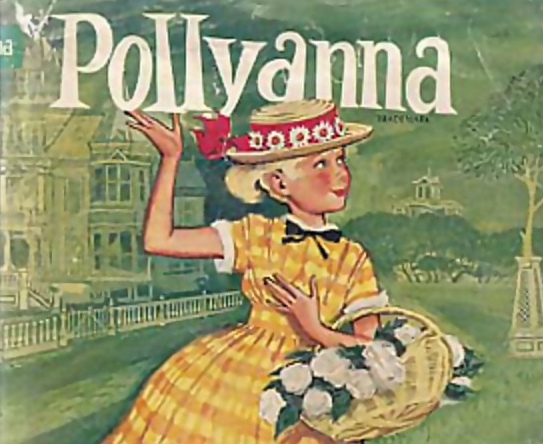
They’re supposed to be Pollyanna, Elsie Dinsmore, and Jane Bennet.  They’re supposed to be completely innocent, unnoticed, modest, graceful, but still look beautiful and unblemished (while not thinking too hard about it).

Good Homeschooled Girls are impossible. All of us are wearing masks, we’re all acting feminine, we’re all hiding ourselves, because none of us are that perfect.

Instead, we are berated — we are told we are never enough, that we’ll never be good enough, that we don’t measure up. We’re told we need to fix our hair and only wear makeup to cover our acne, we’re told we need to look just so — but not focus on it. Our appearance and personalities are shamed, muted. We are turned into china dolls — empty, silent, porcelain — while we die slowly inside.

Our unique identities are stripped — told to be sinful.

Our independence is denied, and to fight for it is to abandon all that we were raised to be.

Our dreams — if they exist outside the chosen path — are cast aside, scoffed at, or allowed under very specific circumstances and made to end upon marriage and/or pregnancy.

And if we abandon this dream, or if we seem to have a particularly hard time measuring up to this standard? We are broken, and there is something wrong with us. To base our worth in who we are instead of when our uterus is used flies in the face of this ideal.

Elsie DinsmoreBeautiful Girlhood, and Jane Austen are the books that are handed to us as examples of femininity and how we should conduct ourselves. Good Homeschooled Girls are supposed to be quiet, demure, masters in the art of domesticity — never raising their voices or asserting themselves, never doing heavy lifting (unless it’s babies or laundry baskets), always walking with poise, always graceful, always innocent and perfect, never loud.

The first two emphasize the devaluing of self as godly and feminine. I can’t speak to Jane Austen because I’ve never been able to make past the first chapter.

Innocent, all with Hayley Mills and a yellow house in Maine and everything, harmless. Right?

If we leave it at the movie, sure (?). I didn’t know at the time, but the out-dated standards they sing about are things that are invisibly expected of all Good Homeschooled Girls.

The line hide the real you (while it was probably meant to be funny and absurd) was essentially my way of life.

I’ve always been stubborn, strong-willed, and independent. When it worked in my parents favor, this was a good thing. Otherwise it was something to be squelched.

I was never really a tom-boy. Sports bored me and seemed pointless — which, I suppose naturally meant I was a good candidate for the social experiment of super-girly-femininity. I was given books — Elsie Dinsmore, Beautiful Girlhood, Pride and Prejudice or Emma or Northanger Abbey (I don’t remember which ended up in our collection), and etiquette 101 for tweens (I can’t remember the name). I had to learn to be hospitable and submissive, though my parents never (or rarely) used the word feminine.

Submissive and feminine are often synonymous here.

I read them, dutifully, internalizing the expectations (well except Austen. I just couldn’t, but that comes in later). My parents never really talked with me about this. They had a tendency to just give me the books and expect I learn from them. Elsie is less fiction and more a not-so-subtle way of giving young girls impossible and unhealthy expectations and telling them they’re worthless if they can’t master it as Elsie did.

It didn’t take long for me to realize Elsie is an impossible set of standards that I was never going to meet. Though the real line was when she married her father’s best friend. I couldn’t bring myself to do it anymore, arranged marriages to a man who’s old enough to be your father who was creepy as hell to you when you were 8, and you’re too perfect and ideal to even exist or be relatable.

Just, no.

The appeal of the civil war/regency era vanished — because I saw through what they were trying to do and I think it was my own secret form of rebellion, sort of. Good Homeschooled Girls are given these books as guidelines – Beautiful Girlhood literally is a guideline for femininity and social conduct.

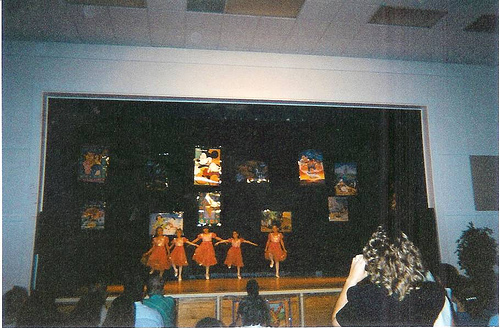
My first ballet recital to “Femininity” from Summer Magic.

As much as I tried to mask my nature, to hide the real me, I was never able to do it well enough to be the pinnacle of femininity that I felt I was supposed to be.

Austen bored me, because I couldn’t get into the obsession with ribbons and dresses and who’s-courting-who. Elsie and Beautiful Girlhood just made me more painfully aware of the inadequacies I was already painfully aware of.

I felt broken. I felt broken because I didn’t live up to this idealized standard of godly womanhood (or girlhood).

I felt broken because I am not delicate, and no amount of silencing myself was going to re-write the core of my DNA. I come from a line of stubborn women, you can’t demure you’re way out of it. Or maybe you can, but I couldn’t. I felt like that meant I was less desirable (the end-goal of being female being married and having kids).

Being born female meant that I had my entire life and code of conduct set in front of me, no personality required. I was required to follow the program. I felt wrong because the very fiber of my being was in direct opposition to it.

It still is. 

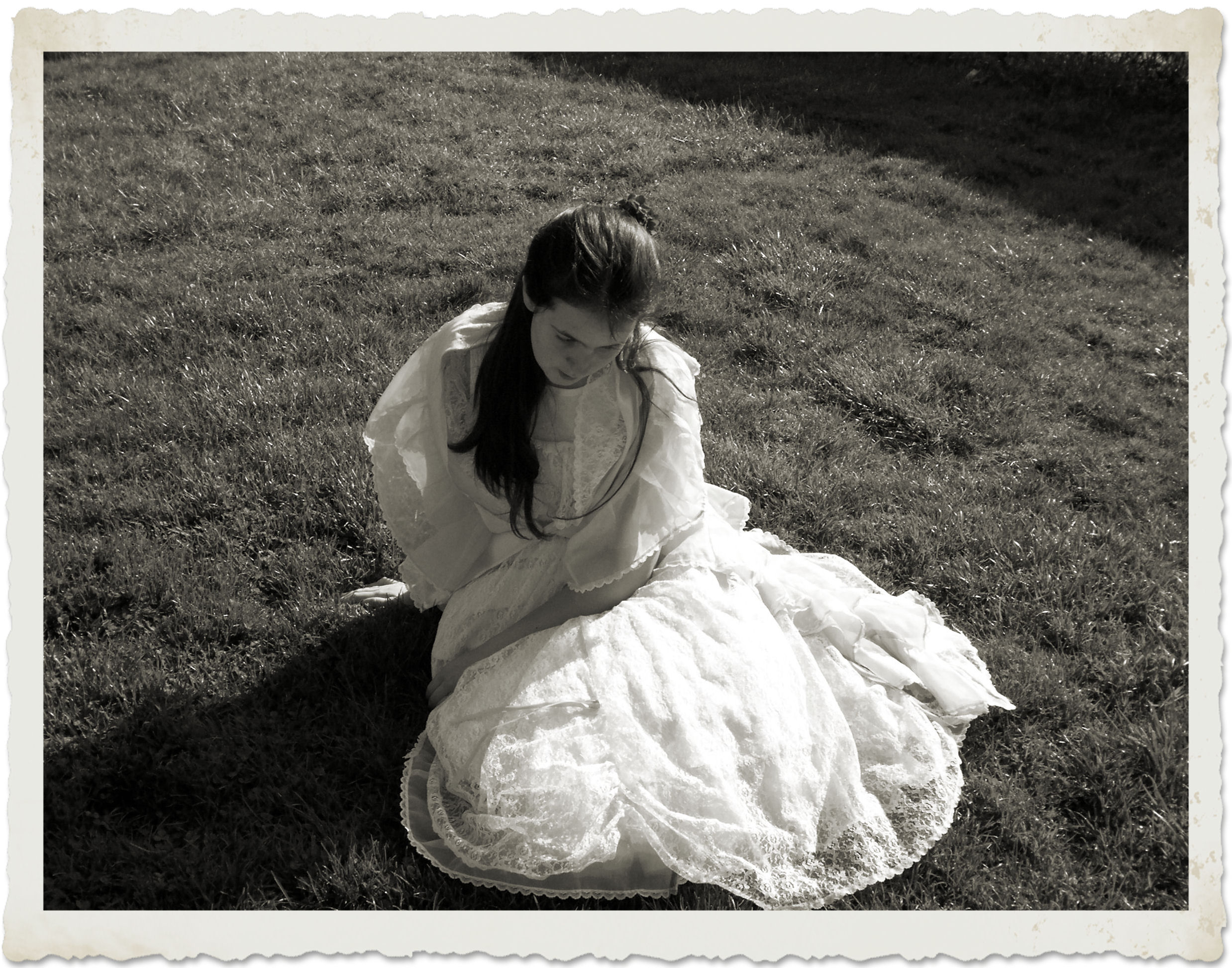
I remember when I was 11 or 12 trying painfully to write fiction about an edwardian-era girl (instead of my book about the secret society of women who fought in the Revolution via spying because the Quartering Act) who sat in a garden in her frilly dresses and waited for suitors. I think I got maybe 4 paragraphs and then became frustrated because it was impossible for me to even write about that without getting bored.

The idea of being locked up, spending my life in waiting for someone to whisk me away, and then to spend the rest of my life locked up birthing and raising children horrified me. No matter how hard I tried to make it not, or how hard I tried to make it seem…a s ultimate as people were telling me, no matter how hard I tried to convince myself it wasn’t certain death.

I couldn’t escape the feeling of the futility and meaninglessness of my life if all I was allowed to do was wait, and then have kids, and hope that one day they’d grow up to do the great things that I wanted to spend my life doing.

That meant something was wrong with me. I was too independent and god wouldn’t like that.

I remember being told, on several occasions, when I chose to fight for my autonomy, “independence is bad [for a woman], how do you think God feels about that [me being autonomous]?”

I was wrong and broken because I was not, am not, could not be demure, quiet, and feminine. I would never live up to the standards that Good Homeschooled Girls are supposed to live up to – no matter how many masks I put on, or how hard I tried to hide myself.

I may never have been a tom-boy, but I was never the epitome of girlishness either.

Masks could only cover so much. I found ways to let myself be stubborn in subtle and approved ways. I was compliant to a point.

The things is, I know now that those books are poison to my rose-soul, but I still feel the need to embody all that is wispy delicate and feminine.

I still feel broken because I don’t fit  the mold when other people project it onto me. Because it is impossible for me. It would require giving up my autonomy and a complete change of taste.

*****

I can’t watch Pride and Prejudice without raging, I generally hate dramas (there are exceptions to this), I’d rather read a good fantasy or scifi novel or comic than a book about amish courtship (don’t get me fucking started), I love a good action movie — Give me robots fighting monsters any day.

None of my most basic preferences are even considered in the world of Godly Womanhood and Good Homeschooled Girls. It is assumed that I LOOOOOOOVE anything by Austen, that cooking, courtship, and children appeal to all of my tastes and interests, that robots and monsters and other-worlds are boring and unnecessary, and action movies are for boys.

When I express otherwise, it’s all but laughed at or ignored.

*****

I watched the Lizzie Bennet Diaries without raging (loved it, even). I know Austen was groundbreaking for her time (a woman author? *gasp*), but I can’t read her – not just because I find it dry, but because of homeschool culture.

Good Homeschooled Girls are supposed to be looking waiting for their Mr. Darcy (an asshole, really?). Good Homeschooled Girls are supposed to be Jane Bennet (Lizzie is far too independent) which doesn’t make sense because Jane marries Mr. Bingley? I know too many people who are trying to hack the 21st century into a Jane Austen novel and it frightens and sickens me. Wouldn’t it be nice if there were balls and you married the person you danced with? I feel like that can’t be the point of Pride and Prejudice, but you wouldn’t know it in this particular subculture.

^ Don’t start thinking about it too hard, it’ll hurt your brain.

It is the obsession with denying women humanity — autonomy — and worth that pervades this whole idea. 

Good Homeschooled Girls have no needs. Good Homeschooled Girls are whatever they are told to be. Good Homeschooled Girls must gracefully and perfectly meet and fulfill contradictory requirements (look perfect, but don’t obsess about it! learn things, but don’t use your brain!), while never having a bad day or a human moment.

Good Homeschooled Girls aren’t allowed to be.

All in the name of femininity.

Learning Together: Emily

positives

Learning Together: Emily

HA note: The following is reprinted with permission from Libby Anne’s blog Love Joy Feminism. It was a guest post by Emily and was originally published on Patheos on February 24, 2013.

My parents didn’t set out to homeschool.

The fluke of my birthdate put me either the youngest or the oldest of my class, and after being the youngest in kindergarten my parents decided to homeschool for a year before first grade. That year went so well that they homeschooled for another, then another, reevaluating each year. My mom thoroughly enjoyed the experience and my dad supported it wholeheartedly, though was not often involved in hands-on teaching. I have one younger homeschooled sibling, but I’ll focus on my experience.

In 4th grade I started doubting my academic competency due to lack of comparison. I spent a half a year in public school for 5th, and after discovering that I was, indeed, on track academically, begged to come home. We homeschooled through middle school and I entered public high school in 9th grade. I went to a private Christian university and a public university for a master’s and PhD. I’m midway through my PhD.

First, I want to point out some social-location factors that positively frame my homeschooling experience. The big ones include my family’s upper middle class economic status, my parents’ education, our family size (2 kids), large suburban location, and Christian faith.

Had those variables been different I would be telling another story.

My mom homeschooled as a Christian but I missed out on the quiverfull/CP, Vision Forum, etc. My parents decided to avoid those circles. There is a family story of going to a homeschooling event where a couple of the other dads talked seriously to my dad (whom they had just met!) about the small size of his quiver.

His snarky response was, “Actually, my quiver is full! It’s a two-arrow-holding quiver.”

Early on, we used some Bob Jones and Abeka history, but that got ditched, especially as more homeschool resources were made available each year. I got my fair share of gender roles at church, but it wasn’t Christian Patriarchy as such.

I will start with what I see as strengths of my homeschooling experience. First, we were often not at home. We had season passes to the aquarium, the zoo, amusement parks (yep – when other kids were at school!), tickets to anything appropriate for kids at the city’s performing arts center, state parks, library programs, art, science, music camp. Plus, my dad’s work requires travel to cities around the country and we would all go along and tour each city’s historical and cultural landmarks during the day. My parents’ approach was “180 school days per year, distributed as necessary,” so we didn’t follow the public school calendar and continued through summer.

I thrived in self-directed, participatory learning.

I’m reading Freire’s Pedagogy of the Oppressed this week and I missed out on what he terms the banking model of education, where the student is an empty account into which the expert teacher makes deposits (till high school and college, at least). In contrast, my mom always talked about how we all learned together.

I often participated in setting the agenda, and she provided the resources and helped guide the investigation. It was that way as far back as I remember. Clearly, there was stuff I just had to learn, like cursive and long division. Still, I had the freedom to say if a method wasn’t working and I wanted to try it a different way. I read like a girl possessed, mostly uninterrupted, completely uncensored. If it was at the library or Barnes and Noble, I had access to it. I was well-prepared for honors and AP classes in high school, the SAT, then the honors college, on the GRE, and now in a PhD.

No academic regrets.

Socially, I largely avoided some challenges and my parents orchestrated good opportunities to form relationships. I got a very low dose of the girl-on-girl relational violence of adolescence. Given my social location, this was a real threat. Since I was relatively chill during the day I had lots of energy for after school activities. I participated in competitive soccer, Girl Scouts, a children’s chorus, church activities, and community theater. When I did enter public school in 9th grade, it was new and fresh. I didn’t develop senioritis and I wanted to get to know all kinds of people. I didn’t have as many labels to apply to others as my peers did. Also, with our homeschool peers, there was no age hierarchy for building friendships.

There were some things I had to compensate for later. In a word: algebra.

Saxon Math was awesome for word problems, critical thinking, and the basics. Except later, I really needed someone to explain how to solve for X and my mom’s skill set didn’t extend there. Math in high school was a battle. That said I am now proficient in statistics, which I am constantly using in my PhD studies. I will never catch up from missing the peer-to-peer sexual education that happens during middle school.

For example, I only know, like, four words for semen and I realize there are about a thousand in current use.

I don’t consider this a deficiency. I know I miss some social queues.

Transitioning to a 2,300 student high school was a big adjustment. Here’s what was hard: asking permission to go to the bathroom and having requests denied, stopping in response to the bell, even if the algebra question on the board was left unanswered, the sheer noise of the lunchroom, hallways, etc., bomb threats and lockdowns (this was Columbine-era), learning how to respond to different teachers’ expectations and methods, academic competition, watching discrimination happen, being “made” to do stuff by authorities (like fundraise for a new football field house), and the amount of wasted time. I came home really tired each day.

That said, I’m so glad I did it. I really enjoyed many of my teachers and the new subjects I took, as well as the friendships I developed. Playing soccer was fantastic, as was my involvement with the FFA.

Reading Voraciously in a Land of Books: DoaHF

positives

Reading Voraciously in a Land of Books: DoaHF

HA note: The author’s name has been changed to ensure anonymity. “DoaHF” is a pseudonym.

As far as the best parts of my homeschooling: I had a very solid education.  My mother had a college degree and she took pride in her work.   Once my father convinced her to homeschool she threw herself in whole-heartedly.  Even in a foreign country she bought or shipped over textbooks and taught us daily with dedication and passion.

I learned to learn and to love learning.

Her approach to certain subjects was different from traditional education, but she required us to complete everything with excellence and had us correct and re-correct our work until we fully understood issues.  She usually helped me with problems on lower grades until she had so many different grades that she couldn’t find the time.

I thrived under her verbal approach to history. Once I learned to read, I began voraciously devour the large stock of tame classics and children’s books that she collected and continued to expand as we got older (she hid some of the other classics like The Good Earth and Dr. Zhivago from me, as well as Rilla of Ingleside, but not Les Miserables or A Tale of Two Cities).

She even included my habit as school credit, giving me special allowance to read more when I wanted to further engross myself in an imaginary book land.

She kept detailed records of our work and made sure that we were competent before moving on.  She gave me a break inbetween Saxon pre-algebra and Algebra 1 to do Abeka Consumer Math because I was struggling with the concepts. She made sure I completed my work and made sure I did not just cheat or guess.  I remember loving school as a pre-teen.  Science was covered by Wyle and while she could not help me much, she spent time with me looking over the answer key and the module in order to find out how they arrived at their answer.

While we never had a positive personal relationship, she encouraged my love for herbs and baking by letting me have seeds and do extensive research into uses and cures and teas.  She also encouraged me to bake bread, pizzas, biscuits and desserts for my 8 siblings and friends and guests.  She coached me past my stages of not-hair-brushing, wearing dirty and/or stained clothing all the time, bed-wetting, and I think she really understood my struggle to be accepted

My father and I were very similar.  He always stood against the tide that shut women up and encouraged us to speak our minds and to think boldly.  He did not believe in women preachers, but he taught us theology and koine and told us not to be intimidated by any hot-shot divinity student who thought they knew the Bible.  He refused us independence and further education like college, but he modeled hard work and dedication every day for us and he truly wanted us to be intelligent and capable of being progeny he could be proud of.

I learned my fierce independence and tenacity from him, as well as my money habits which have stood me well on my own.

My grandparents insisted on being part of our family’s lives no matter how many thousands of miles away we lived.  They made an effort to spend quality time with each of us and I still remember their lessons and examples to this day.

My favorite part of homeschooling in the US was my last three years at home where, even though I had graduated school, I was involved in a homeschooled Square Dance program.  A local caller realized the potential and lack of time constraints that we kids as a group had and he organized us in practice for a local talent competition which we entered each year.

The social scene and the physical activity made a huge difference to my mental health, and I made two very close friends whose friendship I cherished and miss.

For Science in grade school my mother put together elaborate unit studies.  We spent a whole summer learning about the seas in Oceanography.  We then went on to memorize the Animal Kingdom as we studied Horses.  Finally, after learning everything we could about Volcanoes, our whole family went on a week-long trip to see, climb, and learn about one volcano in specific, even speaking with someone who lived through a volcanic eruption.

I am, and always have been the gregarious, outgoing, bubbly one in our family. Even though I went through abuse and trauma, I loved being homeschooled. My brain thrived on the literature-based approach that my mother took.

If I could afford to not work and stay at home, I might homeschool my future children if they wanted me to.  

Even so, I want to teach my children to read voraciously and to love information more than a method of learning. That is a positive one can gain anywhere.

Voices of Sister-Moms: Part Five, Samantha Field’s Story

Screen Shot 2013-08-19 at 5.21.49 PM

HA note: This series is reprinted with permission from Heather Doney’s guest series on her blog, Becoming Worldly. Part Five was originally published on July 11, 2013. Samantha Field blogs at Defeating the Dragons about her experiences with and life after Christian patriarchy and fundamentalism. If you have a Quiverfull “sister-Mom” story you would like to share, email Heather at becomingworldly (at) gmail (dot) com.

*****

Also in this series: Part One: Introduction by Heather Doney | Part Two: DoaHF’s Story | Part Three: Maia’s Story | Part Four: Electra’s Story | Part Five: Samantha Field’s Story | Part Six: Mary’s Story

*****

Part Five: “Barren,” Samantha Field’s Story

My mother was in labor with me for almost three days, and by the time she finally delivered, she was nearly dead.

If it hadn’t been for my father, she probably would have died. But, in 1987, no one was familiar enough with my mother’s medical condition to tell her what her safe options were. When my sister was born, my mother’s uterus prolapsed. Doctors warned her against getting pregnant again. Within a year, she ended up needing a complete hysterectomy.

My mother used to refer to herself as barren.

However, I never remember hearing her use that word to describe herself until we had been attending an Independent Fundamental Baptist Church Cult (IFB) for a few years. When we first began attending, the Quiverfull teachings weren’t readily apparent. Quiverfull ran underneath the surface of almost anything having to do with women, but not obviously. However, when I was thirteen years old, my cult-leader’s wife became pregnant with twins when she was already past 50 years old.

At that point, Quiverfull ideas jumped to the forefront.

Other members joined, many with large families, and I remember families coming through our church (usually to perform music) that the cult-leader held up and praised. These honored families usually had at least a dozen children, and one family in particular had 20. Women in our church were first encouraged, then compelled, and then ordered by the “word of God” to have as many children as possible, from whence comes their salvation.

One day, when I was fourteen years old, I remember asking my mother if she had ever wanted more children than just me and my sister. Her response was an automatic “of course.” And she cried for the rest of the afternoon.

That was the first time I heard the word barren.

When I was fifteen years old, I sat in a cold doctor’s office, shocked and trying to constrain myself from breaking down in front of my doctor. She was telling me that I had poly cystic ovary syndrome, possibly endometriosis, and it was bad enough that I would probably struggle with having children and I would likely need a hysterectomy before I was 30. She offered what I’m sure she thought were assurances– that women who have hysterectomies today have plenty of options to delay menopause and that there wasn’t anything to be concerned about.

Barren.

I might be barren.

When I was attending a fundamentalist college, I formed a friendship with another young man in my major. At the end of our sophomore year together, when my PCOS was causing me severe enough problems that even the faculty in my department was aware of it, I confessed that I might not be able to have children.

“Oh, Samantha. You’re never going to be able to get married. That’s so sad.”

The sliver of me that had always known this wilted inside. “Wait… what… what do you mean I’ll never be able to get married?”

“No Christian man will want to marry a woman who can’t have children.”

I went back to my dorm room and sobbed.

*****

Growing up in the intensely fundamentalist environment not only taught me that my value — not as a person, but as a woman — was largely based on my ability to bear children. The fact that my anatomy threatened that ability terrified me because becoming a wife and mother had been what I had been trained to do. The only thing that I was allowed to do.

Because the leaders at my church-cult knew that I would not have younger siblings, many of the women took me under their wing. While I was not permitted to baby sit for money — only the cult leader’s daughters had that privilege — I was assigned to work in the nursery during services far more often than any other “young lady” at my church-cult. I was frequently tasked with managing the children in a variety of capacities and at different functions when others were given the freedom to play and roam.

All of this was done in the name of “preparing me for motherhood.”

Everything I did around children was sharply monitored and harshly criticized. Other “young ladies” who had the experience of looking after younger siblings at home were not watched as closely, and were trusted to perform basic tasks like bottle feeding and diaper changing while I was not allowed to do any of those things on my own for months. It was humiliating that I couldn’t be trusted to change a diaper on my own, that I had to do every single task with the utmost perfection or risk a lecture.

I was mocked because I didn’t know how to operate a diaper genie the first time I tried to use one. The first time I burped a baby, the older nursery worked literally held my hand and patted the baby’s back with it. Every experience was degrading because I wasn’t lucky enough to have had younger siblings to look after. I was given the most onerous, tedious tasks. Even when I grew older and other “young ladies” were coming up underneath me, I was still considered their inferior because these young teenage girls were considered more “domestic” than I was. I was not lady like enough. I was not as interested in the feminine arts like everyone else was. I was considered an unfortunate aberration.

The barren daughter of a barren woman.

******

Sometime after I started dating my now-husband, I was kneeling in the middle of my hallway at home, talking with him over the phone. Because of my medical conditions, my periods had steadily grown worse over the years– to the point where now they are almost unendurable.

In the environment I’d been raised in, the very idea of considering a hysterectomy (the only real long-term ‘cure’ for me, although it has its own set of problems that may or may not be better) was anathema, blasphemy.

Heresy.

It was not to be considered.

I would do everything humanly possible to preserve my fertility, and that was it. No other option was available.

It was fertility or ruination.

But, that day, on the phone, talking with the man who I was already becoming certain I would marry, I asked him the question. What would he think if I decided to have a hysterectomy. If we never had children together. If I gave all of that up, all these years of “protecting my fertility” because I couldn’t stand the pain anymore? If I wasn’t willing to do whatever it took?

“You need to do whatever is best for you, beautiful. If we never have kids, we never have kids. I love you and I want to be with you. You matter more to me than anything else. And this is your decision, not mine. It’s your body, and you get to decide what happens.”

My decision. Mine.

He’d made it clear over the course of our relationship that he was open to all the options– childlessness, adoption, fostering, or pursuing fertility treatments if that was what I wanted.

What I wanted.

Not what I was expected to do. Not what I’d been trained to do. Not what I’d been taught was my ultimate and best purpose.

What I wanted. For the first time, that mattered to me. And, for the first time, when I again decided not to pursue a hysterectomy, I made that choice not because it was what I believed was the “only right thing,” but what I decided I wanted. I looked at my husband’s twinkling eyes and mischievous grin, his mop of red hair, his cleverness, motivation, loyalty, and empathy, and decided I wanted to have children with that man. Someday.

After I’ve written a book or two, after we can buy a house . . . when I’m ready.

*****

To be continued.