HSLDA’s Core Agenda: Abolishing Compulsory Education

HA note: The following is reprinted with permission from Libby Anne’s blog Love Joy Feminism. It was originally published on Patheos on December 22, 2014.
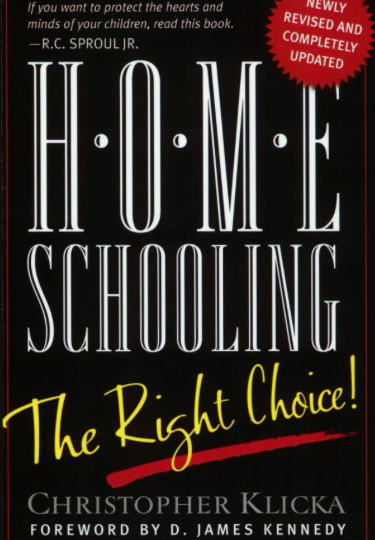
Screen Shot 2014-12-28 at 8.25.20 PMProminent HSLDA attorney Chris Klicka elucidated on HSLDA’s agenda in a 2001 book, and frankly, when I read it I found even myself slightly surprised, not so much by what their agenda is as by how willing they are to publicly admit it.

The framers of the Constitution, unfortunately, never specifically mentioned in the Constitution the right of parents to educate their children. They took it for granted that parents alone had this right and could choose whatever form of education they saw fit. Since biblical theism was dominant in early America, this right of parents was recognized as a God-give right derived from the Bible and codified in English common law.

In the last fifty years, however, the U.S. Constitution has been so twisted in many areas that it no longer reflects the intent of the framers. The most devastating example of the perversion of the original intent of the Constitution is the creation of the “right” to an abortion, which has resulted in the deaths of millions of babies. This has happened in spite of our Bill of Rights which clearly protects life.

Similarly, the right of parents to chose their child’s education, as held sacred by the framers, has also been gradually eroded in favor of state intervention and control. The parents are no longer solely responsible for the education of their children as established in the Bible and common law. Now the courts recognize the state having an interest in education and the power to regulate that interest. As a result, prior to the 1980s, home schooling was virtually stifled by the state.

However, the tide is slowly being reversed through the application of the various Constitutional or technical defenses in the courts as described in this section or by the legislatures as seen in chapter 19. The ultimate victory will not be reached until the compulsory attendance statues are repealed in every state. However, at this time, repeal of such laws is a long way off. Therefore, the strategy of this author and the Home School Legal Defense Association, in the meantime, is to push back the interest of the state further and further in education, limiting its power to regulate, until that interest finally evaporates. This will take time, relentless efforts, and a great deal of education of our judges, law enforcement officials, and legislators.

If you don’t read anything else of that excerpt, read that last bit in bold. HSLDA’s ultimate goal is to get rid of compulsory attendance. And in the other bit that I made bold, Klicka makes it clear that he believes (and by extension HSLDA believes) that parents should have the right to choose what sort of education their children would get—to choose any form of education they saw fit. Klicka claims that this is what the founding fathers believed, and therefore it should still be so today.

Now first of all, if we did everything like the founding fathers did I wouldn’t be typing this. For one thing, I’m using technology that didn’t exist, and for another thing, I’m a woman, and at the time women were expected to confide their thoughts in private journals or to other women rather than in public. But more than that, Klicka’s claim that compulsory education laws were foreign to the founding fathers, and that the founding fathers took for granted that it was the parent’s god-given right to choose how to educate their children, is simply false.

Check out the Massachusetts Bay School Law of 1642:

Forasmuch as the good education of children is of singular behoof and benefit to any Common-wealth; and wheras many parents & masters are too indulgent and negligent of their duty in that kinde. It is therfore ordered that the Select men of everie town, in the severall precincts and quarters where they dwell, shall have a vigilant eye over their brethren & neighbours, to see, first that none of them shall suffer so much barbarism in any of their families as not to indeavour to teach by themselves or others, their children & apprentices so much learning as may inable them perfectly to read the english tongue, & knowledge of the Capital Lawes: upon penaltie of twentie shillings for each neglect therin. . . .

Yes, you read that right. Massachusetts Bay Colony, as it was then called, authorized officials to go check whether parents were teaching their children to read, and to fine those who were not. Somehow this does not sound like allowing parents to educate their children “however they see fit”—it rather sounds like the state deciding the minimum education children must receive. Why? “Forasmuch as the good education of children is of singular behoof and benefit to any Common-wealth.” Yes, that’s right, for the good of the state. Methinks HSLDA has their history a bit off.

There’s more, too. The Northwest Ordinance contained provisions for creating schools because the founding fathers believed that education was critical to a healthy democracy. Have a look:

George Washington: The best means of forming a manly, virtuous, and happy people will be found in the right education of youth. Without this foundation, every other means, in my opinion, must fail.

Thomas Jefferson: If a nation expects to be ignorant and free, in a state of civilization, it expects what never was and never will be.

James Madison:  Learned institutions ought to be favorite objects with every free people. They throw that light over the public mind which is the best security against crafty and dangerous encroachments on the public liberty.

Noah Webster: It is an object of vast magnitude that systems of education should be adopted and pursued which may not only diffuse a knowledge of the sciences but may implant in the minds of the American youth the principles of virtue and of liberty and inspire them with just and liberal ideas of government and with an inviolable attachment to their own country.

Benjamin Franklin: A Bible and a newspaper in every house, a good school in every district—all studied and appreciated as they merit—are the principal support of virtue, morality, and civil liberty.

This sounds literally nothing like Klicka’s claims about the founding fathers in the paragraphs quoted from his book above.

And now back to Klicka:

Although you will see in this chapter that parental liberty historically was held to be virtually absolute, many state courts and the passage of compulsory attendance laws in the 1900s have gradually eroded this right. These states have used the language of the United States Supreme Court which recognizes that the states have an “interest” in education. During the past seventy-five years, the power to regulate that interest of the state has steadily expanded.

Home schools have been involved on the cutting edge in pushing back the interest of the state. In 1983, the Home School Legal Defense Association was established for the purpose of shackling the interest of the state by gradually limiting the state’s power over parents. Eventually, I would like to see the interest of the state totally erased, but that may take some time while we educate the judges and legislators.

Meanwhile, it is important for us to master the history of parental rights, especially as established in the courts, so that we are better prepared for the battle for our children that is presently taking place. We need to work to reestablish the historic foundations of parental rights in our country and restore respect of the parents’ right to choose and control the education of their children.

Klicka does not think the state should have an interest in education. Indeed, Klicka would like to see the state’s interest in education “totally erased.” Education, then, would be solely and completely up to a child’s parent.

What I am unclear on is whether Klicka wants public schools abolished, or simply compulsory attendance laws. Regardless, he makes it clear that parents should have the sole and final say on their children’s education and even whether their children receive an education, and that he doesn’t think the state should have any interest at all in ensuring that its citizenry is educated. Ironically, this places him soundly at odds with the very founding fathers he earlier cited as supposedly supporting his position.

So next time HSLDA comes out against this homeschool law or that homeschool bill, bear in mind that they’re not just interested in keeping homeschooling legal, or in reducing oversight of homeschooling. They’re interested in abolishing compulsory education altogether.
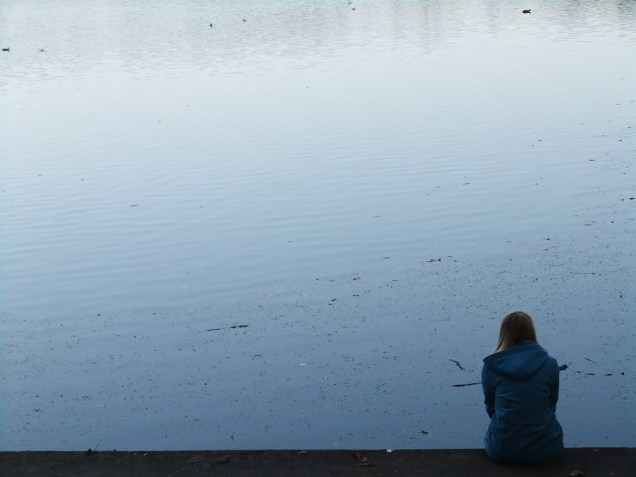
It’s Not Just the Religious Homeschoolers: Alianne’s Story

CC image courtesy of Flickr, Lee Haywood. Image links to source.

Pseudonym note: The author’s name has been changed to ensure anonymity. “Alianne” is a pseudonym.

We’re both in our twenties now, but my brother and I were homeschooled from elementary school through high school graduation. To put it simply, the entire experience was an absolute nightmare. However, it didn’t appear that way to other people nor did it appear like that on the surface of the image our mother and father tried to present to everyone.

When I was a child, people would comment on my writing or math skills and would give credit to homeschooling or my parents who happily bragged about it. But the reality was that my mother taught me absolutely nothing. She wasn’t even remotely skilled in either math or essay writing. I taught myself how to be very skilled with math and writing techniques, without any help from my parents whatsoever.

In my older brother’s case, the “education” he received was also absolutely zero and he didn’t fare as well as I did. Our parents rarely tried to help him, and hardly mentioned him or any skills he had to anyone, let alone bragged.

Our mother and father epitomized the braggadocio of homeschool parenting:

Always mention the “good” side that’s beneficial to them, and lie and stretch the truth of anything negative that would prove the opposite of the image they’re trying to present to everyone as truth.

Now that we’re older and we’re more capable of understanding what our mother and father really did to us, we’ve both realized that many of the common phrases and rationalizations that homeschoolers use simply aren’t true. To keep it simple, I’ll only post the main three misconceptions we came to realize:

1. Socialization:

Homeschool parents will use the excuses that their children are socialized because they join groups, have many activities, even have friends from public school, etc. However, parents will often neglect to mention the fact that in many families these activities only happen occasionally or just a few times per week. Many children don’t have any real interaction on a daily basis with other children and are only allowed to interact at the parent’s convenience, not in the way what the children really need.

My main point aside from that, though, is that many children are not being socialized properly or learning how to deal with regular social situations, or aka the “real” world. For example, the majority of the people my brother and I grew up around (we lived in a middle class, nice neighborhood, not a terrible one) had addictions, and were dangerous people who had many issues (although neither of us really recognized that until we were in our teens). Being surrounded by dangerous and unsafe people all day isn’t what I would call a safe, healthy, or normal environment for a child to grow up in, let alone the “real” world. Public school may be bad in some instances, but at least the kids will be surrounded mostly by other children (and also, not all public schools are huge terrible places of bullying or drugs/alcohol/sex, now that I’ve heard the stories of people who actually went to public school, I understand that) and not grown adult men and women coming off drug and alcohol highs first thing in the morning.

2. The parents know their children better than anyone:

No, many parents think they do, but they certainly don’t, and neither did our parents. I had anxiety issues and anxiety attacks all throughout my childhood, and was very shy until my late teens. In my brother’s case, although he was very social, he was bullied in elementary school, and had been a target for other children since the day he started. However, once we both reached late teens/adulthood, our issues went away for the most part. Why? Because we were away from our parents’ influence for longer periods of time than before, so their own anxiety and emotional issues no longer had any effect on us. We were both able to act normally for the first time in our lives.

So while our parents would have said that they knew we both had different issues and that’s why we had to stay at home, our issues came directly from being around them. So their decision to homeschool the two of us did absolutely nothing to benefit our lives. We honestly would have been far better off in public school and with two working parents.

In other words,  forcing the child to become the main focus of the parents doesn’t necessarily help them to grow.

It may temporarily stop the problems and it may even help their education to an extent, but it won’t really help the child to deal with situations on their own terms. How can you have your own terms, when the belief system you have and everything surrounding you is dominated by your mother and father?

To be fair, I’m aware of the fact that public school can have the same negative effects on children. However, I’ve met plenty of people who went to public school and who aren’t monsters, drug/alcohol addicts or terrible people by default. Public school doesn’t force every child on the planet to have issues and problems. There are many kids who go to regular school and turn out perfectly fine, don’t have bullying issues, are extremely intelligent, very self-motivated, etc.

I realize people use those same justifications to homeschool, but what I’m trying to say is this: When a child goes off by themselves and isn’t surrounded by the parents’ influences all the time, they will be exposed to different points of view, not just their parents’ main dominating viewpoint. They’ll also have the opportunity to develop their own selves when they are away from their parents. Thus they have the opportunity to choose by themselves to not do dangerous and unhealthy things. By finally being away from our mother and father, my brother and I were able to make safe and healthy choices and set boundaries with other people by ourselves, finally, and for the first time in our entire lives.

Also, I’ve read horror stories online about children who want nothing more than to be homeschooled because the bullying is so severe. Some of their stories actually sounded very similar to what my brother went through. I’ve also seen firsthand the emotional and physical effects of what he endured from other kids. So I’m not naive regarding what can happen to children in public school systems, or dismissive of what happened to my brother in the slightest. However, I’ve also talked with him about it, and as a grown man in his twenties he completely agrees with me that the homeschooling was a horrible idea that helped neither of us. It was all for our parents’ emotional benefit.

Furthermore, as an adult he’s now perfectly able to stand up for himself and will tell people exactly how he feels about something, even if it’s rude, might incite people, etc. He’s able to do so because as he got older he handled people by himself, without our parents influencing everything 24/7 and learned how to deal with it. Our mother and father were both very weak people emotionally, and that definitely rubbed off on both me and my brother.

3. Homeschooled children are almost always better, more educated, and amazing awesome kids — especially compared to public school children:

No, that’s not even remotely true. There are sites and forums where you can read many of the stories from homeschooled kids who had miserable and dysfunctional childhoods. And to make it clear, I’m not just referring to the religious families. My family was semi-Christian and semi-New Age. My brother and I had never attended a church or sermon a day in our lives. My parents never forced religion on us in the slightest manner.

Also, most of the Homeschool/Unschool blogs you see on the internet are written and promoted by the parents. There aren’t very many positive blogs written by the children, because whether anyone wants to admit it or not, the majority of homeschooled kids aren’t happy or well adjusted in society, so they can’t write something that isn’t true. Yes, I have read stories from graduated homeschooled kids who say they were happy the entire time they were homeschooled. Yes, they might honestly have been.

However, to have the audacity to deny and pretend that there aren’t many, many homeschooled children living and interacting in dysfunctional families is absolutely ridiculous.

Of course, you could say the same for public school, but at least in that situation the children can actually get away from their households. Contrary to popular belief, they aren’t always places where the families get along wonderfully well, or the children are always happy to be around them. Homeschooling may seem to work very well for a young child, but I’ve never in my life met a homeschooled teen who was happy. Some of them would put on a facade and pretend they were, but once I got to know them… Well, I’ll just say drugs/alcohol/having sex at a young age/depression isn’t only for public school kids, not even remotely.

The parents might not be aware, but that doesn’t mean it’s not happening.

Many of the blogging parents will exaggerate how awesome the homeschooling is and leave out all of the negative effects, or how the children really feel about everything. In our case, my brother and I were miserable 24/7, but our mother and father never mentioned that to anyone. We didn’t mention it, because we were afraid at how angry our parents would have been if we told the truth about how we really felt. Also, we felt very isolated; we interacted with public school kids too, but for the most part we knew that anything we said would eventually get back to our parents. Having a close knit community, or living where your parents schedule everything doesn’t exactly give a good opportunity to be honest about anything. And for the record, our parents weren’t extremists who did the forms of abuse found in many of the stories on Homeschoolers Anonymous. For the most part, they acted fairly normally and mainly just had social anxiety issues.

Yet my brother and I weren’t more educated in the slightest. The only reason I was able to even graduate highschool was because I used an online school program. My brother wasn’t able to get past highschool level, and so he suffered a lot academically as well. One thing I can’t stand more than anything else I see parents write on the homeschooling blogs, is how homeschooling takes so much effort. That’s not true in every case, and it’s certainly not true by default of being a homeschooling parent.

Both of our parents didn’t put in much effort at all for our education. Our father put in absolutely zero of any kind of effort, and left everything to our mother. She stayed at home, and I can honestly say that she would spend 8-10 hrs of her day watching television, and taught us absolutely nothing. Also, there are many other homeschooled kids with similar stories, who suffered a lot academically due to being homeschooled/unschooled.

On the other hand, I have read stories of successful unschool graduates who made it through college. So, I’m not denying the fact that it can be done. However, my point is that if a child can survive being homeschooled/unschooled and still make out okay, and doesn’t have any severe issues to deal with, then public school would be effortless for them, and in my opinion that’s where they should stay.

Finally, I understand that public school doesn’t work for children with special needs, or who have more extreme issues to deal with. However, I absolutely believe that (aside from children in very complicated situations), homeschooling should only be used very temporarily, and not ever seen as a permanent solution. You can solve some issues with homeschooling, but that doesn’t mean you should just stick to it for the rest of the child’s life. Whatever issues the children have will need to be dealt with eventually.

Hiding them from the world and people for the rest of their childhood doesn’t solve or fix anything.

Public school may not be seen as the “right” environment, but it’s the main environment the majority of people grew up in. So if they haven’t dealt with their issues, when they finally reach the adult world people will still be acting and functioning the same way they were before, so trying to pretend that doesn’t have any impact later on isn’t realistic. Most importantly, it keeps the children away from other opportunities and situations that could have actually been good, and far better than the homeschooling.

A Quickie on “Defrauding”

CC image courtesy of Flickr, Photo Monkey. Image links to source.

HA note: The following is reprinted with permission from Darcy’s blog Darcy’s Heart-Stirrings. It was originally published on January 3, 2013.

It was a popular teaching by Bill Gothard that clothes on women could “defraud” their brothers. He used a verse in 1 Thess. 4 to prove this:

“3 For this is the will of God, even your sanctification, that ye should abstain from fornication: 4 That every one of you should know how to possess his vessel in sanctification and honour; 5 Not in the lust of concupiscence, even as the Gentiles which know not God: 6 That no man go beyond and defraud his brother in any matter: because that the Lord is the avenger of all such, as we also have forewarned you and testified.” (A better interpretation of verse 6 says: “and that in this matter no one should wrong or take advantage of a brother or sister.”)

He took this verse to mean that all women should be careful how they dress so as not to “defraud” their brothers in Christ with their clothing, which he defined as causing them to stumble or lust. Besides the obvious stretching of the context and content of this verse, there are a few problems with this definition of “defraud.”

de·fraud 

verb (used with object)

to deprive of a right, money, or property by fraud

Some synonyms of “defraud” are: “bamboozle, beguile, burn, chouse, circumvent, clip, con,  deceive, delude, do number on, dupe, embezzle, fleece, foil, hoax, jive, outwit, pilfer, pull fast one, rip off, rob, shaft, sucker into, swindle, take to the cleaner’s, take, trick, victimize”

In order to say that a woman’s clothing can “defraud” a man, you would have to prove that

1. A woman’s body is the right or property of another person

2. A woman is wrongfully offering her body to any man who gazes on her

3. A woman is lying by offering her body to another without intent to follow through with the deal

4. A woman is taking something from any man who looks at her, just by the piece of clothing she is wearing.

5. A woman is responsible for a man being deprived his rights any time he thinks something immoral about her

I really hope I wouldn’t have to detail why all of the above is wrong, but in case I do, here goes:

I am not anyone’s property or right. No one owns me except myself. I am not offering anything by the clothes I wear. If you think I am offering you something by my clothing, I am not responsible for your wrong thoughts.

I cannot steal anything from you by the clothes I wear, especially not something that is owed to you, since I owe you nothing.

I cannot control the thoughts of everyone who sees me, as I do not expect everyone else to control my own thoughts. I am not responsible for your thoughts or actions, as you are not responsible for mine. You are not a victim of my clothing if you desire me sexually. I have not bamboozled you out of your property by wearing a short skirt. I cannot dupe, hoax, trick, or rob you of anything by the jeans I wear. It doesn’t even make logical sense.

Quite simply put, one cannot “defraud” anyone else by one’s clothing. Or, as another wise person once said, “I do not think that word means what you think it means”.

Giving Too Much, Part Two

Photo from Kierstyn King: "Grandma, Me, and Mom – Dance Recital Circa 2003."
Photo from Kierstyn King: “Grandma, Me, and Mom – Dance Recital Circa 2003.”

HA note: The following is reprinted with permission from Kierstyn King’s blog Bridging the Gap.  It was originally published on December 12, 2014. Read Part One here.

When I was 11 we came home one day to find someone we’d met at a homeless shelter/food kitchen/church thingy on our doorstep, with her infant. We’ll call her Missy.

I don’t know how she got our address, or why she was there.

But she was.

And I gave up my bedroom and moved in with my sisters and Missy stayed with us for a very long time.

She stayed with us through the aforementioned foreclosure, where my parents stopped paying their mortgage in lieu of paying someone else’s.

She stayed with us so she could get her two other kids (and nephew?) back in her custody.

*****

Our house was foreclosed on and we were facing homelessness – not just for our family, but for Missy’s as well.

My parents traveled all over the city, and even a few hours north of where we lived, trying to find some place to live, but because we were being foreclosed on, no one was taking my parents + another family, because they didn’t trust they’d pay.

On the day we had to be out (the people who bought our house granted us an extra week or two on account of they were nice and we had a shit ton of people to move – although, Missy did most of the packing because….I think mom and dad were busy looking for houses and also hanging on to “god saving our home”) we had nowhere to go, we were looking at being homeless, and Missy was still going to follow us around.

The plan was for me and my siblings to stay at my grandparents while my parents continued to travel anywhere to find somewhere who’d let a two-family-one-income household rent from them. It was a really terrifying day. Not knowing where we were going to sleep, or live, or if I’d see the people in my homeschool group ever again…

But then my grandparents mentioned that the house next door just went up for rent, and so my parents went over and the guy who bought the place just wanted the land, so he didn’t ask questions and said as long as we’d paid the rent we could stay there. So we did.

And the house was a 3 bedroom + bonus room, and one of the bedrooms had it’s own private bathroom and entry, so that was where Missy stayed with her 9 year old and infant (the timeline is fuzzy, because it was around the time we moved there that she got partial custody of her kids, but I don’t know if it was simultaneously, or a little later), and I eventually shared a room with Missy’s 15 year old. My dad put up a false wall in the bonus room because it was connected to the master bedroom and my sisters slept there, and my brother literally slept in a closet.

When Missy’s nephew joined our party, he slept on a futon outside my bedroom, in the dining room.

*****

When I was 12 mom got pregnant again, which meant that pubescent Kiery got to take over everything again, except this time….not only was my mom telling me what to do, and having me run the house, but Missy was too.

I was cooking and doing chores not just for my family, but hers as well.

Let me mention this again: I was 12 years old.

I was taking care of two families single handedly.

I was not okay.

Eventually my parents confronted Missy about using me as her slave too, and set up a chore list so other people had to also cook and clean and do laundry. Mostly, just that Missy had to take care of her family’s stuff, and we alternated cooking days. Zero introspection on the part of my parents regarding…I don’t know, placing too much responsibility on a twelve year old.

My parents got mad at me for my “attitudes” (because I was adolescent, exhausted, run ragged, burnt out, and barely keeping up with everything, including school), and blamed it on Missy’s 15 year old daughter’s influence (because I shared a room with her – even though we weren’t close). Very little came of this besides my trying extra hard to be totally happy all the time.

It was Missy’s older child who alerted me to the fact that my period had started when I was studying in a tree with my brother, her cousin, and some of the other kids. My brother was very concerned, and I panicked. Missy had then asked me, at random, if I was pregnant or not because I would sometimes wrap my arm around my abdomen (because cramps and no meds.), and I was mortified. Half because I didn’t know what sex was or how to do it, and half because that’s not something you ask an isolated twelve year old who just started having periods.

*****

My parents paid Missy $40 a week to stay with us and homeschool her kids. That way, she could say she had a job to the CPS people, while still fulfilling her god-ordained plan to be a stay at home mother and educator. I…don’t remember this going well. To be honest I’m not sure if she even did anything more to educate her kids than through books at them, like my mom did with me, but I don’t remember. I was otherwise occupied.

Missy was, however, a far superior cook than my mom, and fish and frog-legs aside, she made some really good food. This is the only pleasant memory I have of her. Graham cracker cake and home-made Chinese food.

*****

Shortly before/after my 13th birthday, my parents discovered that Missy had been abusing pharmaceuticals and kicked her and her family out.

I’d be lying if I said I wasn’t relieved that I only had one mom around any more, and my own room. Also, my brother got to move out of the closet and into Missy’s alcove, which was nice…and I was maybe jealous.

The second stillborn happened two weeks before my 13th birthday.

*****

After Missy, my parents decided not to let random families live with us again. Turns out my mom didn’t like having another lady in the house either.

*****

My mom got pregnant almost instantly after the stillborn and I had to get my own rides to ballet (which meant asking my teacher to pick me up and coming home with my grandma). My ballet teacher was a wonderful adult to have in my life at the time. She made me feel valued and cared for at a time when I really needed it, because I wasn’t getting that from my mom.

In fact, that was often one of the things that hurt me so much as a child – I never had time with my mom, and I’d get upset and we’d have a mother-daughter day, but that would happen all of three times before she would get pregnant again and it would end and I just became an object. I tried to explain this to her once, but she never really understood it.

She spent so much time talking to and being there for other people, acting like she knew all the things about being a good wife (helpmeet), homeschooling, and parenting – but was never there for me, never there for her kids.

I never doubted my parents’ heart for giving.

I’ve always doubted their love for me. 

Our Top 20 Most Viewed Posts of 2014

topposts

As 2014 comes to a close, we want to look back and remember the 20 posts that received the most attention on HA this year. So here they are, our top 20 most viewed posts of 2014!

20. IBLP’s Statement Is A Disgrace — 5,186 views

19. Four Reasons Why I Believe Cynthia Jeub — 5,365 views

18. IBLP Board Places Bill Gothard on “Administrative Leave” — 5,795 views

17. Dear Michael Farris, Sexual Abuse Isn’t a “Basic Strength” That “Can Get Out of Control” — 5,855 views

16. “He Couldn’t Breathe”: Old Schoolhouse Owners Accused of Waterboarding, Child Abuse — 6,359 views

15. Melting Memory Masks: Cynthia Jeub’s Story — 7,033 views

14. Beall Phillips, Wife of Doug Phillips, Accuses HSLDA’s Michael Farris of “Gross Error,” “Bully Pulpit” — 8,416 views

13. Bill Gothard, Sexual Predator — 8,429 views

12. Here’s To Girls Who Have Been Made Ashamed Of Their Bodies: Pearl’s Story — 8,449 views

11. 11 Homeschool Celebrities Explained With GIFs — 8,865 views

10. 4 Reasons Conservatives Should Join Liberals in Opposing the Duggars — 11,599 views

9. Michelle Duggar’s Hypocrisy Regarding Sexual Predators — 12,626 views

8. Paul and Gena Suarez, Old Schoolhouse Publishers, Accused of Protecting Known Child Predators — 14,808 views

7. Bill Gothard Resigns from IBLP — 17,816 views

6. The Many Valuable Lessons I Learned in ATI: Laura’s Story — 19,336 views

5. Biblical Erotica — 21,361 views

4. When Homeschool Leaders Looked Away: The Old Schoolhouse Cover-Up — 28,814 views

3. How the Teachings of Emotional Purity and Courtship Damage Healthy Relationships — 49,191 views

2. 50 Shades of Grey or Contemporary Christian Music Lyrics? A Quiz — 87,075 views

And the most viewed HA post of 2014 was…

1. Christian Homeschool Dads Lust After 17-Year-Old Girl, Get Her Kicked Out of Prom — 190,783 views

Thank you to everyone for your support of HA in 2014! May your holidays be happy and we look forward to continuing our work in 2015.

Things I Wish My Younger Self Knew: Sarah Morgan’s Thoughts

CC image courtesy of Flickr, Vincepal. Image links to source.

Pseudonym note: The author’s name has been changed to ensure anonymity. “Sarah Morgan” is a pseudonym.

I wish I had known they did not have to stay in my world.

I wish I had known that answers can be found for the very real problems I was begging god to fix.

I wish I had known that the threat of hell is illegitimate.

I wish I had known that, if I wanted, I could succeed at getting away: because, no, god was not on their side. I didn’t learn to drive because it was hell to try, with one of my parents in the passenger seat telling me my every wrong move. If I had known that driving is a ticket out, I could have pushed through that or gotten driver’s ed. I wish I had known that out is doable.

I wish I had known that it is okay to both earn and spend money on the things important to me, and that loving things simply because I love them is okay.

I wish I had known it is okay to be beautiful on purpose, and that putting effort into looking pretty does not make me stupid.

I wish I had known that strangers are some times much, much kinder than my family. (Strangers often don’t know differently than to threat you like a person. They also can have the capacity to act more objectively towards you, unlike the family friend whose vested interests include staying in your dad’s good graces by disbelieving you. It was another six years before I started to realize how it felt for someone who didn’t know my parents to hear my story.)

I wish I had known that sex has the potential of being good and non-painful, and can be had without jailing yourself in a submissive relationship for life or trampling on the Only One who truly defines true love. I wish I had some inkling that said One was made up by people to control me, and that this was unhealthy.

I wish I had known that it was okay for me to exist, and that being me was an appropriate goal to strive for, rather than a bad thing to extinguish.

I wish I had known that it was okay to find a boyfriend. I wish I had known to calculate my risks based on the things I could see and perceive, rather than factoring in the supernatural things I had been taught to fear. I wish I had known that my body was my own, and understood my options when it came to birth control and hair styles. I wish I had known I didn’t have to let my parents control me, that the terrible darkness I fought was not my fault, and that it was possible to find something different.

I wish I had known that college can be a ticket out. I wish I had known it was okay to plan a career based on a practical job combined with my passion, and the sooner the better.

I wish I had known that it was okay to love what I love, and hate what I hate, and that I don’t have to announce it to anyone or trust this information to anyone I don’t feel safe around. I wish I had known that I knew both far more and far less than I thought, and I could be wrong about significant things without my value as a human decreasing. I wish I had known that, as a girl, I could have as many options and was at least as smart as my brothers.

I wish I had known it was okay for me to have friends, and to pursue hobbies and interests and adventures; that time has the value we humans give it, and none of my activities were inherently a “waste of time” — except perhaps exerting effort whose sole return is the pleasure of people who didn’t even like or want to know me. I wish I had known that I deserved respect.

I wish I had known that what I grew up with was messed up; that I was not crazy, but my surroundings may have been. I wish I had known to see my anger and discomfort with my upbringing as a sign it was drastically skewed, and that there is zero merit in lying to say a parent is a better person than their behavior has shown them to be. I wish I had known that I had far more power in my own life, and far less in the broader sphere of my family, than I had the capacity to comprehend.

In summary:

I wish I had known that, if I wanted a hero, it was going to have to be me.

No one, human or divine, was coming to my rescue. I wish I had known that I was capable, that escape was morally okay, and that it was up to me.

The Impact of Parental Values and Opinions on Educational Outcomes

CC image courtesy of Flickr, Our Lady of Disgrace. Image links to source.

HA note: The following is reprinted with permission from Sarah Henderson’s blog Feminist in Spite of Them. It was originally published on her blog on December 17, 2014.

The impact of attitudes towards education, especially higher education, and its impact on adult life, has recently come up in discussion in the home school survivor community. We all have different experiences and heard variations of different messages while growing up in homeschooling families. Here is my experience:

My parents didn’t place much value on education. We were homeschooled in a way, meaning we were at home and some effort was made to buy books and teach lessons. But the underlying organization and structure wasn’t there, and they didn’t have the motivation or follow through to make it happen. We received a relatively decent education in the first few grades, I assume; we learned to read and do basic math in those years. But no one received any education past about grade 6-8, depending on the subject.

They taught that you didn’t need college or university to succeed in life. They said that because we were homeschooled, we were special, and people would understand that and recognize the extraordinary intelligence we were gifted with, without needing a diploma to prove it. They talked about the bullying and abuses that were perpetrated by public school and high school teachers. My mother described at length times that she was publicly humiliated in class by her teachers, and how she could not stand the public schools and that they were protecting us from those abuses.

As a girl though, there were really no plans for me to have a future at all.

Other than vague mentions of a husband and kids in my future, it wasn’t discussed. Even the emphasis on me needing to be able to cook, clean, and help raise my siblings was mainly openly rooted in my parents’ need for my help, and it was not even masked as ‘training for the future’ except to outsiders (conservative fundamentalist outsiders). Oddly, sometimes when I talked about wanting a career, it wasn’t really shot down, and my parents told me to trust their education system and I would get where I wanted. They brought back the line that I was incredibly smart and special, and that satisfied me and I believed it.

My brothers were told they could  have any career they wanted, without college. They were told that someone would hire them or they could have their own businesses, all without college or even finishing high school. They said that years of education was part of the new age government control system and we needed to break free.

Due to the chaos in my childhood home, both of my close in age brothers did not achieve more than an average of a grade 8 or 9 education. They have spent time as adults earning a GED, with various rates of success. They most certainly were not granted excellent careers on the basis of being special and homeschooled.

Because I attended high school against my parents’ wishes and also went to university, my story is different, however I can still speak to the impact of the anti-college attitude.

Because there was no direction in my life, with no real hopes and dreams, until I was 17, I didn’t see the point of pursuing much education at all. What line should be drawn on when to end the homeschooling process when the goal is not college? So I did not resist when my parents stopped making an effort to educate me. I did not advance at all academically between age 10 and age 12. I made some more progress at age 12, but once I was 13 or 14 their impact on my education was pretty much over. I continued to read Bob Jones textbooks until I was 15, and wrote down answers on my own, but it was for myself, no one checked them.

I did not complete a grade 8 education at that time. I was not taught math past grade 6 until I went to high school at age 17. I never had any intention of pursuing a high school education until the year I turned 17, although I had a vague plan to go to university. The year I turned 17, my grandparents told me that I wouldn’t be able to go to university without a secondary education.

So I went to school, and I struggled. I struggled with ambivalence, knowing that it wasn’t what my parents wanted me to do, and some doubt because of the message I had received that I was special and shouldn’t have to prove it. But the courses were hard and unlike my experience with the Bob Jones textbooks, guessing didn’t work, especially with math. I had two dear math teachers who did a phenomenal job, but it’s hard to describe the crushing feeling of inadequacy you experience when you find out at age 17 that the 14 year old students are more educated than you.

The ambivalence followed me into university. I was only at the highschool for two and a half years, not nearly long enough to reverse all the messages about how unnecessary higher education was. I still tried for a while to guess and at least prove to myself that I already knew everything and didn’t need to learn. Because I didn’t learn how to build and maintain a career from my parents, since they did not do this, I felt guilty about having that as a goal. I felt guilty because it somehow felt arrogant, and I still had some feelings of inadequacy. I felt guilty because I was also proud of myself and felt guilty about the pride. I was also a bit afraid, because people warned me that higher education corrupts; although they seemed just as worried about the high school being corrupting as they were about university.

I finished university, and it turns out I was quite academically inclined. But not special. I still needed to learn, and to do that I had to learn how to learn first. I think that some people who are believers in homeschooling might read this and think that I needed to learn how to learn to fit into the public school mold, but that is not what I mean. I was able to learn as much as my mother was able to teach me; basic reading, writing and arithmetic. I believe there is such a thing as academically successful homeschooling, and in those cases those students continue to learn how to learn as their ability to process increasingly more complex information progresses. When children are not taught how to learn, or when there are other circumstances that disrupt that process, such as abuse, their progress can become stalled.

Growing up with parents who have negative attitudes towards education can remove motivation from bright young students, when there is nothing to strive towards.

It can create confusion when students do decide to pursue education. And for those that internalize those messages, and do not pursue education, the cost is high. Without an education, it is hard to get jobs. Where I live, even Subway and McDonald’s ask that you either have a high school diploma or show that you are working on one. Getting into a trade can also be difficult, as most of the trades jobs eventually require you to get a “ticket” which means going to school, and if you haven’t learned how to learn and test, you won’t be able to succeed in the trade program either.

Although some workplaces look at experience, moving up in companies and getting promotions can be heavily based on education as well, meaning that even those with experience can stay in entry level positions (at entry level wages) because of lack of education. Saying that one was homeschooled will not get someone a job or a promotion, and if people have not excelled in the learning process and become critical and reflective thinkers, their people skills and self management will also suffer.

Even a girl who is raised in a conservative home and wants to be a homeschooling mother needs to know how to learn, and has to have learned enough to effectively homeschool her children. She needs to be reflective and a critical thinker in order to manage a home and a family, and to juggle the responsibilities of teaching and parenting effectively. She will need to be able to learn how to parent, and how to deal with it if a child has special needs.

The stakes are high, and an education holds more weight than just a piece of paper. 

Freeing Self-Deceived Fundamentalists

CC image courtesy of Flickr, Eric Magnuson. Image links to source.

HA note: The following is reprinted with permission from Cynthia Jeub’s blog CynthiaJeub.com. It was originally published on November 24, 2014. 

Trigger warnings: Christian martyr culture, child abuse

“Maybe I’m mistaken, expecting you to fight
Or maybe I’m just crazy, I don’t know wrong from right
But while I am still living, I’ve just got this to say
It’s always up to you if you want to be that
want to see that
want to see that way.” -Supertramp

“Do you remember wanting to die?” My housemate asked.

“Yep,” I replied. “After Columbine, they made all those kids heroes, and we 90s kids grew up just wanting someone to hold a gun to our heads and ask if we believed in Jesus. It should have just been what it was – a tragedy. They made it into an aspiration.”

“I always wanted to go to China, and for them to kill me for my faith. That was the best thing that could possibly happen to you.”

“I thought for sure I’d be killed for being a Christian by now. I never thought I’d reach adulthood.”

The other people in the room were shocked, and her boyfriend had lost his appetite.

The thing is, we were being mild. I could easily have gone into detail about the books I read and loved from very young – I read Joan of Arc when I was five, Samuel Morris when I was nine, Foxe’s Book of Martyrs, Jesus Freaks, and Tortured for Christ as a teenager. The Left Behind: The Kids series, which I read at age ten and eleven, described Christians being lined up to be guillotined after the Mark of the Beast appeared. My family never subscribed to the Voice of the Martyrs magazine, but I still found enough of those to mix the fictional Left Behind stories with real life.

The best literary example I’ve ever seen of the fundamentalist child’s mindset is in Orson Scott Card’s book A War of Gifts. While it’s disappointingly inconsistent with the book Ender’s Game, it’s worth the read as its own story. The main character, Zechariah, is seven years old when the government takes him to train for space warfare. He hates the government, and pushes his religion on everyone in the space school. When the other kids complain, Zech says he’s being persecuted. His father beat him, and he thinks he deserves it because of his rebellious spirit.

I remember being that seven-year-old who wanted to be persecuted and to die. It’s hard to describe what the dedication is like. I was spanked, and I thanked my parents for it. I wanted to die, and I thought that made me a hero. I thought I was happy. I thought I was doing the right things. I was willing to suffer and die for what I believed. Today, remaining a Christian is something so rife with conflicted emotions that I can’t even talk about it. My Christianity and the Infinite One can wait for me to process the manipulation and self-deception, no matter how long it takes.

When you’re willing to die for something, it’s very hard for people to reach you. That’s why I don’t know what would have worked when I was younger. Getting out was a process. The “breakthrough moment” couldn’t happen until I learned how to recognize what was wrong.

My sister Alicia tried to reach out to me many times, but I could not be reached. That’s the power of living in a manipulative household. I believed that she was a bad influence, and that she had abandoned me.

Now, looking back, I understand why my siblings have the same mistrust for me as I did for her.

If anyone tried to tell me that it wasn’t normal to set aside my schoolwork to bathe seven kids, or to dedicate my weekends to scrubbing all the floors in the house on my hands and knees, I would have just said they didn’t understand. My family life was different, so outsiders would of course be judgmental. When I found people with genuine concerns about my family online, my parents would write them off as “the haters,” and I believed that’s what they were.

If anyone had told me it wasn’t my job to keep everyone in my house happy, I wouldn’t have listened. I was an empowered, virtuous girl. I hated the phrase “it’s not your job.” I was capable of making the house relatively peaceful, so why shouldn’t I? It’s not like anybody else was going to do it. Meekness and self-deception gave me small comforts.

When people tried to tell me there was something wrong, it was always in a condescending tone. I was told I’d understand when I was older. I was dismissed as naïve, and my choice to embrace my lifestyle was treated like stupidity. Condescension never worked. You can’t tell someone who’s willing to die that they’re stupid or misled. The persecution complex plays into that perfectly: you’re insulting me, good for me, I’m suffering for doing what is right.

If you know anyone who’s immersed in fundamentalism, you need to know that we’re not stupid. We’re surviving, and we don’t know it. We will dismiss your condescension and shut you out, and honestly, you’ll deserve it. We’re told that we can fight and lose, or we can succumb and survive, and the latter is only acceptable if it’s convincing. And the easiest way to be convincing is to convince yourself.

People asked if I felt abused. I said no. People asked if my family felt like a cult. I said no. People asked if my life was bizarre because I was one of fifteen kids. My answer was always, “This is normal for me. What’s it like to be one of two kids?”

What did work was being recognized for who I was, and that happened when I made friends in college. Before that, I was praised all the time for the right things: I was great at cooking, cleaning, baking, sewing, caring for children.

When I got to college, I didn’t have to fear losing friends because I liked rap music and symphonic metal. Instead, my friends said I had good taste. When I got to college, my friend Cynthia saw a rebel in me because I was constantly criticizing the education system.

My old friends were “exhorters and encouragers,” who helped me on rough days. This life was holier, it was supposed to be difficult, it was the narrow path. It never occurred to me that maybe the difficulty of my life was an indication that something was wrong. It wouldn’t have helped if someone told me it shouldn’t be so hard.

I got out because people knew me for me, not what I was supposed to be. They didn’t talk about what was wrong with my lifestyle, they just encouraged what I didn’t know was okay.

So if you know someone who’s still in the world of self-deceived fundamentalism, please, please don’t condescend or even try to convince them that there’s something wrong with the world they know. Criticism is easy and it makes sense, but it doesn’t work.

Just listen and find out what makes us individuals, the part of us that’s not accepted in the world we know. Prize that. Nurture it. Let us be ourselves. We carry intense shame for it and we’re afraid to show it. We’re very good at hiding it. Help us be ourselves, and the pressure to be what we’re not will help us find freedom.

3 Ways Homeschoolers Actually Socialize Differently than School Kids

CC image courtesy of Flickr, Patrick Gannon. Image links to source.

HA note: The following is reprinted with permission from Libby Anne’s blog Love Joy Feminism. It was originally published on Patheos on November 10, 2014.

I recently came upon a post titled 3 Ways Homeschoolers Socialize Differently than School Kids. Curious, I clicked. I should have known better. Predictably, the post was written by a homeschooling mother who has no idea what it’s like to actually be a homeschooled child. In this post I will respond to the points made by blogger Jennifer Fitz, speaking from my experience as a homeschool alumna.

1. Homeschool kids break their own ice.

I picked up my son from his Confirmation kick-off event, a true microcosm of suburban 9th grade living.  We were delayed in departing, and I noticed he was chatting with a boy I’d never met before, who had “Chris” written on his name tag.  We got in the car.  “So I saw you were chatting with, um, Chris? Is it?  Nice kid?”

Usually the boy has a few interesting stories to share about the people he meets. This time he shrugged.  “I don’t know.  I just started talking to him when you showed up. We were so busy doing ice breakers we didn’t get to actually meet anybody.”

Yeah, homeschool kids don’t get ice breakers.  You show up at a new event with people you’ve never met, and your parents leave you to the wolves.  “Go find some kids.  Or make yourself useful somewhere.”

They always do.  It can take as long as five or ten minutes, if it’s a large group event the kids are joining midstream.  But my kids never sit in a corner neglected.  They are in the habit of introducing themselves, striking up a conversation, and finding something, anything, in common with whomever is tossed their way.

Some children are more extroverted and others are more introverted. What exactly does this have to do with homeschooling? My public schooled daughter walks right up to other kids and introduces herself. My shy homeschooled little sister does not, preferring to hang back much longer until she feels comfortable. Trust me when I say that this isn’t about homeschooling.

2. Homeschool kids spend the bulk of their time with people different from themselves.

Sitting at a lunch table with the same five friends every day, exactly the same age, same academic track, same clubs, and same fashion tastes?  Yeah, that never happens in homeschooling.  Mixed-age, mixed-neighborhood, mixed-ability social circles are the norm among homeschoolers.  Cliqueishness is a no-go, because 1) the parents lose patience with that nonsense fast and 2) on any given day, you might have to be friends with exactly that one person you would have happily excluded if only this were the lunchroom and you had the choice of your favorites.

Growing up, I never, ever had a friend who was not also able bodied, middle class, white, evangelical, and the child of two married heterosexual parents. Heading off to college came as a huge shock because I was suddenly thrown in with people who were completely different from me. But this makes sense, if you think about it. When you are homeschooled your social world is whatever your parents choose to give you. Some homeschooling parents will expose their children to a wide diversity of people, but others will keep their children in a homogenous bubble.

My daughter is only in kindergarten, but already she has been exposed to more different people than I was through high school. There are black and white kids in her class, middle class and poor kids, children with Christian and atheist parents, children with single parents and children with parents who never married, and disabled children. My public schooled daughter is experiencing more different people in kindergarten than I experienced until college.

Jennifer adds this:

From there, it only gets more different: Homeschool kids spend a lot of time with grown-ups.  Not just their parents.  Not just teachers.  (As a kid writing fiction, I could only ever think up “teacher” for a profession for my adult characters, because that was the only profession I was ever exposed to enough to have an idea of what the job entailed.)  Homeschool kids spend their formative years going wherever their parents go, doing all the adult chores that grown-ups do.   The people who live and work in their community aren’t stage hands for a me-centered teenage drama; they are the community.  Homeschool kids get used to having spur-of-the-moment adult conversation with grown-ups of every age, profession, and cultural background.

Actually, socializing with adults is very different from socializing with other children. As a homeschooled child, I never had a problem socializing with adults—I knew they would praise me for how mature and smart I was, how hard working and diligent. Other children, on the other hand? Haha, nope. I got on fine with the other homeschooled children in my social circle, but I was literally afraid of public school children. They were so different from me that I had no idea how to relate to them. They were scary. I had to enter a public high school to take the PSAT, and I was so anxious I was sick that morning—not because of the exam, I wasn’t worried about that in the least, it was the entire idea of being surrounded by public school kids. I couldn’t handle it.

Now I am not saying that every homeschooled child is afraid of public school children, or that this is the natural product of being homeschooled. Absolutely not! But Jennifer makes a mistake in generalizing from how she is socializing her son to how every other parent out there socializes their children. What kind of socialization homeschooled kids get is almost entirely dependent on their parents. Some parents are absolutely crippled by the lack of socialization they have in their homeschooled upbringing while others thrive and develop healthy social skills.

You cannot look at one homeschooled child and predict another’s experience, because the only thing different homeschooling families have in common is that the parents are in sole control of their children’s academic and social development.

3. Homeschool kids form deep, lasting relationships with the people they treasure most.

A reality of homeschool life is that you might have certain very dear friends you only see a few times a year.  Of all the many friendly-acquaintances you gather everywhere you go, a few really resonate.  They’re ones who understand you.  They’re the ones you could spend hours talking to, and when you pick back up again six months later, it’s like you just saw each other yesterday.

School friendships are a little bit like this, in that you socialize all year with whomever is at hand, but very few of those friendships carry forward once you’re no longer in the same class or club. It’s easy to imagine at school you’ve got a real friendship going, when really those friends will drop you as soon as they find something better.

The homeschooling difference is that there’s never any illusion that you’ve got five best friends sitting next to you at lunch each day.  You have to be intentional about cultivating your friendships, and you’ve got the mental space to do it in.  When you find that one good friend, you make an effort to stay in touch.  You learn to use whatever resources you have at hand to arrange a way to get together more often.  Sometimes you discover that the friendly acquaintance was only ever just that, or the friendship wanes as your values and interests diverge later in life.  But it’s not uncommon for homeschoolers to have multiple deep, lasting relationships that endure for years despite distance and long separation.

Does Jennifer have any idea how hard it was to be 16 and only see one of my closest friends four or six times a year? It wasn’t even that they lived far away, it was just that we weren’t in any of the same activities and we were completely dependent on our parents for transport. Jennifer thinks this is some sort of positive benefit of homeschooling? Does she have any idea how hard it was to go on stating that this person was one of my best friends even as I had no clue what was going on in her life because I hadn’t seen her in months? I just can’t here. Jennifer may look at the five best friends she had at lunch in middle school as only temporary friends, but at least she actually had friends she saw regularly. I didn’t.

Jennifer seems to be applying “absence makes the heart grow stronger” to children’s friendships. It does not work like that.

It’s absolutely true that out of a large group of people you will only resonate with a few. The problem was that, as a homeschool kid, I didn’t have a large group of people to draw from. I had to take whatever I got. Now yes, I had some good, solid friendships. I had to, because if I didn’t I would have had no one. But there were also times I hung on to a friendship with someone who didn’t really fit because, well, they were the only option I had. I read one study that said that homeschooled children have fewer friends than their peers, but that they value the ones they have more. Well duh, I thought.

So what if my public schooled daughter has five best friends sitting by her at lunch who will move on and change and grow different and branch off in different directions as they grow? At least she sees them more often than once every three months. And you know what? My friends from childhood grew and changed too, as did I. Being homeschooled didn’t magically make all of my friendships last forever.

If I had to come up with a list of how homeschoolers actually socialize differently than school kids, what would I include on the list?

1. They more dependent on their parents. While children who attend school see other children daily as a matter of course, homeschooled children only see other children as a result of involvement in various activities or making plans to get together with another family. These things rest solely in the hands of the parents.

2. Keeping up friendships takes more effort. I cannot even begin to count the number of times my siblings and I begged to have a friend over or to become involved in an activity so that we would see a friend. Public school children may be able to fall into friendships, but we didn’t have that option.

3. They can’t afford to be as picky. Mostly, I was friends with the children of my parents’ friends. After all, if our parents weren’t friends it was unlikely we would see each other often enough to have anything you could give the label “friendship.” In other cases, homeschooled children are forced to turn to the internet to find friends.

“What about socialization?” Homeschooled parents have been asked this question over and over again for decades. I understand finding it annoying to get this question so many times, but it’s a good question, and one homeschooling parents should take seriously. I’m really tired of reading blog posts by homeschooling parents arguing that homeschooled children are actually better than public schooled children. Trust me, I heard this growing up, too! Hearing this didn’t make me any less afraid of public schooled children, and it didn’t magic me more friends.

Look, if you are a homeschooling parent, your children’s socialization is up to you. If you do your job right, your children will have a large pool to draw their friends from, have close friends they see regularly, and be comfortable around a wide range of different people. But this is not guaranteed. It’s something you have to work for.

As a final note, I am aware that not all children who attend school simply fall into friendships, and that there are children who attend public school and are still profoundly lonely. I don’t think parents of children who attend school should assume they don’t need to pay attention to their children’s social needs. All I’m saying is that when parents homeschool, they take their children’s social needs solely into their hands, and that’s not a responsibility they should take lightly.

On Our Biology: Starshine’s Thoughts

CC image courtesy of Flickr, Macroscopic Solutions. Image links to source.

Pseudonym note: The author’s name has been changed to ensure anonymity. “Starshine” is a pseudonym.

The war that our parents waged was not just on our selfhood or security or sexuality—it was on our biology. Things we couldn’t change; physical survival and reproduction patterns that couldn’t be completely or permanently killed unless we died too.

We fought—some internally, some externally. Some broke. We’re still trying to find pieces of ourselves, pieces that our parents beat or rejected or threw away. Some we will find. Others seem gone forever.

But ultimately our parents failed. We are not what they planned for us to be. Our biology reacted and protected ourselves once we could and once we knew we could. They didn’t win, even if we carry evidence of their war for the rest of our lives.

We won. And we are free forever.