Trigger warning for Hurts Me More Than You series: posts in this series may include detailed descriptions of corporal punishment and physical abuse and violence towards children.
*****
A Poem by HomeschooledinGA
In slow motion I watch the belt land blow after blow.
I hear my sister’s screams as time goes slow.
I feel the terror slowly sink in,
As I realize it’s my turn again.
Try to control the urge to tremble,
The urge to cry and beg for mercy,
But this is just a preamble,
To a never ending struggle with
Love for me.
I try my hardest you see
To not let him have control of me
But
To be a person with singular thoughts
Is to be a kid with an irregular walk.
To be a kid who’s always fought
Is to be a person who’s too afraid to talk.
To be a girl with bruises down her legs,
Is to be a girl with that gait
Peg legged.
To be too scared to cry
Is the moment I realize I want to die.
In quick motion blooms the notion
That I will be nothing more than a notation
On my death certification.
As the belt lands blow after blow,
I keep my breathing going slow.
I feel the peace flood within
I realize he’ll never make me cry again.
Try to control the urge to turn around
Take his weapon seize control
Beat him until he’s the one on the ground
But now it’s time to pay the toll.
I try my hardest you see
To not let him have control of me
But
to be a person with singular thoughts
Is to have a mind full of guarded locks.
To be a kid who’s always fought
Is to be a person who’s too shell shocked.
And to be that girl with bruises down her legs
Is to be the girl who will never beg
In this never ending struggle of
Love for me.
To be too happy to feel the blows
Is the moment that I know
That I will be nothing more that a notation
On my death certification.
HA note: The following is reprinted with permission from Libby Anne’s blog Love Joy Feminism. It was originally published on Patheos on October 13, 2014.
Growing up in an evangelical home, I read World Magazine regularly.
Today, I’m honestly not sure World knows what direction it is headed. Over the past year or so, the publication has been simultaneously distancing itself from the patriarchy movement within Christian homeschooling and promoting that same movement, and simultaneously calling for the self-policing of child abuse in Christian communities and allying itself with organizations actively involved in child abuse coverups.
This past April, in the wake of Lourdes Torres-Mansteufel’s lawsuit against prominent Christian homeschool figure Doug Phillips, World took the occasion to distance itself from the patriarchy movement, differentiating between Phillips’ views and those of more mainstream evangelicalism and stating that: “For evangelicals, these may seem like obvious distinctions, but they’re important to emphasize when a scandal erupts within Christian circles that grabs the attention of those outside the church.” Just last month, World published a piece titled “Drop the Movement and Back Slowly Away.” In it senior writer Janie Cheaney was highly critical of Christian homeschooling’s patriarchy movement, urging readers to focus on Jesus rather than a movement.
Given all of this, it seems a bit odd that World Magazine ran this ad in its latest edition:
The Gen2 Leadership Conference is being put on by Kevin Swanson’s Generations with Vision. Kevin Swanson is a major figure in Christian homeschooling’s patriarchy movement. If World believes this movement’s view of gender and women’s role is in serious theological error, and if World would like to see people “drop the movement and back slowly away,” running this ad—which in a publication like this implies some level of endorsement—represents some serious hypocrisy.
As you may remember, earlier this year Great Homeschool Conventions is alleged to have actively participated in a child abuse cover-up, defending child abusers and silencing those seeking to bring the abuse to light. It is rather horrifying that World would partner with a group accused of involvement in covering up child abuse while calling for Christian communities to deal with child abuse rather than turning a blind eye. This is not okay.
It’s honestly not that I’m surprised. It’s just that I’m fed up with the hypocrisy of it all.
I would like to see World Magazine held accountable. They should not be able to get away with saying they believe the patriarchy movement is bad theology while simultaneously promoting leaders of that very patriarchy movement, or with saying child abuse should be called out and dealt with while simultaneously partnering with an organization actively involved in covering up child abuse.
Trigger warning for Hurts Me More Than You series: posts in this series may include detailed descriptions of corporal punishment and physical abuse and violence towards children.
*****
Alexandria’s Story
I was never told the words, “This hurts me more than you.” But I did hear, “This grieves my soul, but more importantly, it grieves God,” “Spare the rod; spoil the child,” “This is for your own good,” or my personal favorite from Mom, “I’m yelling – that must mean I’m not spanking enough,” many times.
As the fifth of seven, my parents were set in their disciplining ways by the time I came along. The Pearls’ books were scattered throughout our house. While my parents did not take all of their recommendations, there were enough implemented. I was spanked from the time I was a year old until the age of 17; with a threat of spanking even after I started college at 18. “You know, you’re not too old to spank,” was said more times than I would like to admit during the summer I was home after my freshman year.
Needless to say, I did everything in my power to not spend another summer at home until I finished college.
Some of my earliest memories are of being spanked. We could distinguish the distinct squeal of the spoon drawer from the furthest parts of the house and we knew we had to scatter, or at least distance ourselves from the offender or risk being painted with that infamous “broad brush.” I was not a bad child. But I was a child. I was sometimes willful. I made mistakes. I was clumsy. I didn’t understand math. All of these things could earn you a trip to Mom and Dad’s bedroom or the laundry room.
They were always terrifyingly calm when they spanked us. They would wait the necessary 10 minutes to cool down (while making me wait cowering and scared shitless in the laundry room or their bedroom) so they weren’t “spanking out of anger.” They may not have been visibly angry, but they were seething inside. The force that was applied and the length of the spanking correlated, not with what we had done, but with how angry it made them.
There was one spanking Dad gave me when I was about 8 that went on for 87 swats – one for each answer I had gotten wrong as I was trying to memorize my times tables. I was required to count them out as they rained down on my bent-over backside. I was immensely grateful for the skirts I had to wear because I could hide the fact that I wasn’t locking my knees out and therefore could clench as I heard the rod whistling toward me. The pause between swats was the worst – the anticipation killed me, and I’m fairly certain his timing was inconsistent on purpose so I wouldn’t know when it was coming. This particular spanking was earned because I couldn’t understand math; because no one had the patience to actually explain it to me, and because a third grader should not be teaching herself any of her own subjects.
This was also during a three day period in which I was not allowed to eat for the same reason I was earning the nightly marathon spankings.
That was not the only time they took away food as a form of punishment. There were several occasions when I and usually two of my brothers would have food taken away while also being spanked repeatedly until one of us confessed to whatever heinous act our 12, 9, and 6 year old selves had done – like leaving a door open, or turning the heat up.
My parents used wooden spoons (that were constantly breaking) when we were small, but when we got to be about 5 or 6, we graduated to the rod. The rod was a wooden paddle that was about 2’ long, 3” wide, and about ¾” thick.
Mom had carved “in love” into it.
I still snort when I think of that.
That thing packed quite a wallop! The first few times it was used on me, I wasn’t prepared for how much power it had and it knocked me over. I learned to brace for it so I didn’t lose my balance. It must have made a satisfying sound as it smacked into our backsides… until my older brother took it into the back yard and broke it when he was about 14 and sick of everything. I remember hearing it from across the house as my older siblings were in the laundry room with the door shut. After that, we went through a series of objects, such as arrows with the tips taken off (those shattered too easily and weren’t cost-effective) until they settled on a fiberglass rod that one of my brothers found somewhere that was about 30” long and 1/2” in diameter. That thing stung so bad! As it started to splinter, it would leave tiny cuts on my hips and butt. Mom and Dad didn’t believe me until I showed one of my sisters the welts and scabs after one particularly long spanking when I was about 12. Dad apologized and said he would be more careful next time. Then he duct taped that end, started using it as the handle end, and didn’t hold back. It was much more ergonomic that way! The better grip must have made it easier to get a good back-swing.
Spankings became less frequent as I began to reach puberty, but then they picked up as I moved into adolescence because I started to have my own ideas. The shame I felt every time I was spanked over the age of 11 was terrible. I was very proud of the fact that it had been weeks since I was last deserving of a spanking, but then something would happen and I would have a visit to the laundry room with Mom or Dad and my world and self-worth would come crashing down.
I am not a proponent of spanking.
I am fine in spite of my spankings; not because of them.
Trigger warning for Hurts Me More Than You series: posts in this series may include detailed descriptions of corporal punishment and physical abuse and violence towards children.
I was putting lotion onto the eczema on my toddler’s back when without warning she flopped onto my lap, lying over my knees completely relaxed. Instantly panic rose in my throat, and I flashed back to a memory.
I was 9 or 10 and asking my mom for help with my clothes. The zipper on the back of my dress was stuck and I couldn’t reach it with enough strength to pull it open. It proved difficult for my mom too, and when she couldn’t get it open she asked me to bend over so she could see what she was doing better.
My body couldn’t do it. I heard what she was asking me to do, and my head told my body to bend over so she could get to the zipper, but my back went rigid.
I was afraid.
My mom repeated her request and I tried to stiffly move forward a little bit, she realized what was happening and laughed “I’m not going to spank you, just bend over so I can see the zipper.”
Rationally, I guess I knew she wasn’t going to spank me, I hadn’t done anything to disappoint her. But my body still fought. I did the best I could, but I could hardly move and the whole time she was fixing the zipper. Every muscle in my body was clenched in anticipation of being hit.
My mind told me that I SHOULD trust my mom, but the muscles in my body told me that I COULDN’T.
In contrast, my toddler trusted me completely. When she flopped over my knee I went stiff from the memory of many spankings from long ago. She, on the other hand, was relaxed, knowing that I was going to help her and not hurt her.
I have many memories of my parents.
I remember my Mom making me a birthday cake. She taught me how to do a backbend and how to brush all the knots out of my hair. Sometimes she sang “Home! Home on the range!” And sometimes when she was happy she danced a goofy little dance. I remember watching my Mom curl her bangs with a hot curling iron and put on blue eyeliner with a little pencil.
I also remember her hitting my bare skin with a flexible switch from the magnolia tree. She taught me that I was wrong, and she was right and that I had no power, no right to protect myself from harm. Sometimes she made me hold up my own skirt while she spanked me, sometimes if I moved she hit me again. I remember watching my mom break an orange spatula on my sister’s bottom.
I remember my Dad making us omelets on the weekends. He taught me how to tie a square knot and let me watch while he changed a tire. Sometimes he gave us a piggyback ride up the stairs to bed and sometimes he got out crackers and spreadable cheese and shared it with us. I remember watching Dad kiss my mom in the hall and bring her flowers for no reason other than he loved her.
I also remember his calm cold voice as he told me I must bend over and touch my toes and hold perfectly still while he spanked me. He taught me that he was bigger and stronger and more powerful than me and that I deserved to be hit when I made mistakes. Sometimes he squeezed my arm really hard to hold me in place while he hit me, sometimes he made me hug him afterwards. I remember cowering in a corner, hands planted firmly over my ears, trying to drown out the sound of him spanking my siblings again and again and again. I wished desperately that they would just say whatever dad wanted to hear, like I did, because I knew my dad would never ever “let them win”.
I know my parents did good things for me. I know they worked hard to care for me and provide for me. I know spanking doesn’t seem like that big of a deal to them. I was just a child after all, and what child enjoys being punished? I sometimes wish I could forget the bad, but I can’t help the way my back tenses if they use that tone of voice. I can’t help feeling somewhat panicky whenever they don’t agree with me. I can’t help but worry about ever leaving my kids with them alone. I can’t change the many memories of conflict, I can’t erase the fact that they are the people that hit me for the first 16 years of my life.
I can’t change how wrong and bad they made me feel. And I can’t change the fact that they disagree with and discredit my experience.
Susan’s disclaimer: the claims made in this article are drawn only from a Christian homeschool background and thus only pertain to similar such circumstances. Because this article responds to information found in this post, it may be useful to view it before resuming.
Cynthia Jeub’s claims of parental abuse on her blog have caused an uncomfortable stir in the Christian homeschooling community and beyond. Some people offer comfort to her and her sister, Lydia, who were both kicked out of their house, while others, obviously less moved by the story, are demanding reasons. Reasons for why Cynthia’s claims are true, and then, even if they are true, reasons why she feels the need to publish them.
This made me angry. I asked myself why an audience so detached felt the need to demand such technical answers of abuse victims like Cynthia. Why wasn’t her word good enough? Interestingly, I was actually able to get a partial answer.
A large portion of the people who hear Cynthia’s story may already know of her family—with sixteen kids, it’s hard not to get some press. And what most people (at least speaking for the Christian homeschool world) have been educated to believe is that the Jeubs are all reputable people up there with names like the Duggers and the Pearls. Consequently, due nearly only to the fact that Cynthia’s parents gave us our first impression of the family, Cynthia’s unexpected claims are now being weighed against a reputation toward which we have already been biased.
It’s been estimated that physical first impressions are made in one-tenth of a second. First impressions are hard to change. But imagine this—the tables turned. What if Cynthia presented to the world everyone’s first impression of her parents as abusive, hypocritical people? How much harder of a time would it be for Mr. Jeub to come along and retrieve his reputation? You see, it’s not a question of credibility as much as it is our subconscious bias. And our bias requires logic to supersede it. Therefore, it cries out, give us reasons.
I do understand this. But I’m also still convinced that there ARE reasons. The reputations of those who came before Cynthia may be uncomfortable to question, but I believe they are worth braving in the name of open-mindedness. After having done this myself, I have even been surprised—with four reasons why I believe Cynthia Jeub.
1)The Jeub’s Response to Cynthia
An article and a podcast were recently put up by Cynthia’s father, Chris Jeub, which were interestingly removed by him days later. While the article was eventually reposted, the podcast is now only available due to the initiative of those who believe, contrary to the podcast’s original intentions, that it supports Cynthia’s case. Here are a few reasons why.
In the article so appropriately entitled Responding to Heartache, Chris makes a bold statement meaning for it to prove that humans respond inadequately in the flesh to heartache. The statement he actually makes, however, gives a very different vibe.
“I envy the abusive parent whose kids never lip off, or the hot-tempered boss whose employees just do as they say, or the fire-breathing pastor who beats their congregation from the pulpit. Everyone seems to behave. I don’t know how they manage it, because I have not had good results with the response of the flesh.”
I do not intend to twist what Chris is saying to mean something it blatantly does not. I believe his train of thought was that this is the wrong attitude to have. He mistakenly assumes, however, that this power-hungry attitude is normal amongst the rest of us. And yet, somehow, I do not envy the abusive parent whose children never speak up for themselves, or the position of a hot-tempered boss whose employees just obey, or the fire-breathing pastor of a seamlessly behaving congregation.
It seems to have slipped Chris’ mind that even in the flesh we shouldn’t wish to be monsters. Certainly our flesh is weak, but a desire for complete and utter authority isn’t assumed, it’s developed. This is an attitude that is not healthy, which—if Chris took abuse seriously, for the crime that it is—he would know not to take lightly.
This is evidently not the case, because the podcast put up in defense of the Jeub’s reputation attempts to make a laughingstock of Cynthia’s first blogpost as four of her siblings attempt to debunk her claims.
It is my personal opinion that the reason the podcast was hastily removed was because it comprised of too much evidence in Cynthia’s favor. Below are the paraphrased alibis the Jeub children provide to disprove the abusive events disclosed by their sister.
“This always happens—this is normal.”
“Mom only hit him because I hit him first and she took my side.”
“He wasn’t bleeding; mom and Micah only gave him a bruise.”
“Mom said she was sorry and she’d never do it again, so it’s irrelevant.”
“I don’t remember this happening but my siblings said it did, and it sounds like abuse—but mom would never abuse us kids. It can’t be abuse.”
“Why wouldn’t mom be upset if she didn’t do the dishes while cleaning and cooking and caring for ten kids? It’s her job to do the dishes. Cynthia’s an adult, she should just grow up and do the dishes.”
“Cynthia’s only mentioning this one part of the conversation. Dad didn’t only ask her ifthe reason she was cutting was to follow the trends of her college friends.”
“I doubt this even happened, but if it did, mom didn’t ORDER Cynthia to not tell her counselor she was self-harming…she just suggested it. Besides, that makes no sense.Why would she be in counseling and not tell her counselor she was self-harming? Cynthia totally is contradicting herself.”
“Mom and dad used to think spanking was a really good thing like ten years ago, but they don’t do that anymore.”
“Mom blew it that one time and threw silverware at me, but that’s just what moms do when their kid doesn’t do the dishes, right?”
“Remember, mom was in the middle of a miscarriage. She was having a hard time. We have to cut her some slack.”
“She was so sorry, and you’ve forgiven her, so it doesn’t matter anymore.”
These statements do NOT justify what happened to Cynthia. In fact, if you read her blogpost and then listen to the additional information explained in the podcast, the abuse becomes even more evident. If you have any doubts about what’s been paraphrased here, I encourage you to go listen for yourself. I’ve also transcribed the entire podcast, which you can read here.
2) Brainwashing
Brainwashed Children Don’t Know They Are Being Abused.
Cynthia’s first post claimed three main things. Physical abuse—abuse her siblings did not deny happened, and instead trivialized by normalizing it or saying it was forgiven; psychological abuse—which her siblings responded to by doubting; and emotional abuse—which her siblings made fun of.
Before I go on, I want to make it clear that I relate closely to Cynthia, as I grew up in a family that was—not physically, but—psychologically, spiritually and emotionally abusive. I therefore feel that I understand where she is coming from.
From growing up with such abuse, I also know that the most confusing part of it can be that you don’t know you are being abused. If you grew up in a successfully abusive family, you would’ve been taught from the earliest age possible that your life as a victim was normal. To you, the world outside was a dark, scary place that wanted you to be miserable…unlike in the house where you lived, in the loving arms of your abusers: Your Christian homeschooling parents, who tell you they love Jesus more than anything else.
When you do something wrong or that makes your family look bad…that is your fault. When you don’t want to obey your parents because it hurts…that is your sinful spirit, which must be broken. You suffer from guilt and shame and the constant, crippling fear of inadequacy.
The reason why most children who are being abused don’t realize it is because they have been brainwashed. I know I was. In fact, I am out of school, and it was only last year that I began to realize my parents hurt me a lot more than the world has, or can. This is because, as an independent adult, I choose who hurts me by choosing how I live my life; but under my parents’ authority, I had no control over what I could do, say, or believe. I was not only withheld from being myself, but I was pushed into a mold that I was not designed to fit in.
Siblings Are Willing to Stand By Their Parents Even When Their Siblings “Rebel.”
Cynthia, Lydia and their two older sisters all agree that they have been abused, and yet the younger siblings make no such claims. Likewise, my older brother, Ryan, and I know that we have been abused as children. But our two younger brothers? They angrily have been pitted against us, believing we’ve rebelled against our parents.
In the comments of one of Cynthia’s blog posts, her younger brother, Micah, blatantly denies any abuse. Jumping on top of this, people immediately asserted that he was only brainwashed. In Micah’s defense, someone realistically pointed out that he was far too sharp to be brainwashed. And I have to agree. At the age of seventeen, it would be difficult to brainwash anyone. But…what if it had started at the age of two?
I don’t think a genius could stand a chance.
The brainwashed are simply people whose worlds have been painted inaccurately, in a way that causes them to function on someone else’s terms. It’s harmful for our independence to be denied for the same reasons that the American Revolution is considered just.
Seeing Micah repeatedly insist that his sister was the one to blame reminded me of myself years ago.
My older brother, Ryan, as a legal adult, had gotten into a relationship against our parents’ wishes. This was the situation that I firmly believe God used to get him out of my family’s abusive home. But in the wake of the moment, and for the next two years, our family was in shambles “because of his mistake.” It broke my mother’s heart, it pissed my dad off to the point of swearing in front of me for the first time in my life, and I and my younger brothers became very bitter at him—all because we believed he was sinning by dating instead of courting. I have many memories of talking with people who disagreed with me about Ryan’s situation, but I held fast, and never for a moment did I question whether my parents were right or not. That’s just how powerful brainwashing can be.
Perhaps this explains why Cynthia’s younger siblings are all standing with their parents—they simply do not yet have the unveiled eyes to see the truth.
Parents Can Be Brainwashed Too.
I am not here to proclaim that Mr. and Mrs. Jeub are evil, although I definitely feel that what they’re doing is not right. Instead, I sincerely believe that parents can be brainwashed too. Brainwashed to believe that what they’re doing is best for their kids. Brainwashed like mine were to believe that the man who tells them what is right is representing God. Brainwashed families quite often aren’t self-invented. Sometimes they’re hoodwinked by their leaders. This doesn’t justify anything abusers do—but it’s helped alleviate my perspective toward my parents, and people like them. Therefore I don’t look upon the Jeubs as monsters; instead, I see them as terribly, tragically misled people who—for the sake of their children—must be corrected.
3) Similar Testimonies
Cynthia’s story sounds like a plethora of others posted on Homeschoolers Anonymous, a blog dedicated to telling the stories of homeschool alumni who hope others can learn from their negative experiences. I have found the same behavioral patterns in her story that are evident in many preceding hers, and they all point to the same tragic idea: the misled continue to mislead others. Maybe it’s believing that God teaches them to beat the wickedness out of their children; perhaps it’s the simple idea that obedience trumps all else, regardless of the expense. There are many different patterns of abuse each with its own unique effects, but in every situation regarding parental abuse the children pay the consequences—often long after they’ve left childhood behind.
Cynthia’s story is one of many—too many to turn a blind eye toward. I can’t just reason stories like hers away, like I did with Ryan. They are becoming too loud and too real for me to continue to justify.
4) Track Record
Cynthia is not the only Jeub to leave the nest with less than stellar relationships with her parents. She is one of four—the oldest four—to not only leave with different beliefs than her parents, but to be kicked out of the house for refusing to be controlled. I really wonder how Mr. and Mrs. Jeub can fall asleep at night without wondering what they did wrong. Really, how can you parent and watch as 100% of the children who move out leave as disowned rebels without questioning your tactics?
Cynthia’s parents and siblings claim that Cynthia is mentally ill. I don’t argue that struggling with self-harm and suicidal thoughts is the epitome of emotional stability. Having struggled with self-harm and suicidal thoughts myself, though, I quote my counselor when I say that “emotions serve as an internal thermometer; so when our emotions tell us death is the best option, we know something is terribly wrong.”
But not wrong with us.
When people want to die, they’re not crazy—they’re being seriously oppressed. When I wanted to die, it wasn’t because I was losing it. I have never been diagnosed by anyone but my parents with madness; instead, what I have been told, and what I have grown to believe, is that the way my parents were treating me was threatening my mental well-being.
Suppose with me for a minute that Cynthia was mentally ill once (loosely defined according to whatever extent you may believe it); and by the way, she says she’s gone to therapy since moving out. Now ask yourself why she might be mentally ill. After all, there is no effect without cause. Perhaps she was in an unhealthy, abusive environment. Perhaps she was so oppressed that her only coping mechanism turned out to be the dream of a better reality, which—in her sheltered world—turned out to be none at all.
I don’t know this for sure.
But here is what I do know.
Cynthia’s track record is the same as her three other sisters. Interesting that her family is claiming that only Cynthia is mentally ill… And yet all three sisters support her words. All four sisters claim the same growing up experience. Clearly, we have few choices to be choosy with. Either:
These sisters are telling the truth, or
All four of them happen to be insane.
I believe each of these reasons stand alone as evidence that Cynthia is simply sharing her heart. I can’t blame her—her siblings are still living in the abusive conditions she’s clearly spent so much time recovering from. Besides, the whole idea behind blogging is to share opinions and experiences. The people who condemn Cynthia for sharing her story should likewise be condemned for telling her how they feel about it.
I, for one, think Cynthia is doing a really brave thing by sharing the truth. I hope that her story will someday feel worth the pain living through it has caused her. I hope she inspires people to be courageous and honest, as she has inspired me. I hope she educates people about the reality behind Christian homeschooling. And dear God, I really hope she helps her siblings.
“Easy for a good girl to go bad
And once we gone
Best believe we’ve gone forever
Don’t be the reason
Don’t be the reason
You better learn how to treat us right.” -Rihanna
Want to know what it’s like to be a Jeub? If you check my dad’s Facebook, you’ll see smiling faces and positive talk.
Let me tell you a story.
Dad walked into the bedroom I shared with my sister, Lydia. To consolidate space, Lydia had taken to hanging up most of her thrift-store clothes in the closet. We didn’t have room for another dresser in addition to my dresser, a bookshelf, the bunk bed we shared, and our two desks.
Lydia was 19 and I was 21. It was normal for dad to walk into our bedroom without knocking. Our door handle’s lock was broken – when you have fifteen rough brothers and sisters, most things don’t last, including bedroom door locks. We didn’t have curtains hanging in our window, so I usually changed in the bathroom, carrying my clothes with me each time I showered. The bathroom door was broken, too, and I shared it with six sisters, so I’d been dressing myself behind the shower curtain since I was eleven.
“Girls, get in my office.” He was yelling. “We need to talk.”
“Dad, will you please close the door behind you?” I asked, knowing he wouldn’t. In winter, the open door would chill the basement room, with a thin layer of carpeting protecting us from the icy concrete floor. We used spot heaters to warm our rooms during the colder months. It wasn’t cold today, but dad always left our door open after waking us up.
It was Labor Day, 2013. I’d just started my fifth semester of college, and I was working three jobs: my part-time desk job, editing a section of the school newspaper, and working for my dad. My best friend often said it was too much for me to do, when there could be five to ten kids in my bedroom at any given time. I told her it was fine, and this was normal for me.
Most of what Lydia and I owned was already in boxes. We’d planned to move into our own apartment that week. There was just one problem: we needed proof of income to take over an apartment lease. Lydia had just interviewed for a store that was about to open, and I’d just started my part-time job. The newspaper didn’t record many hours, and my new employer quickly produced what I needed to prove income. We just needed dad to show that, as our main employer, we were making enough to move into our apartment.
When we asked our dad to help us show proof of income, he refused. He said we couldn’t make it on our own, and we wouldn’t be able to afford an apartment on our own. We were confused, seeing as we both had jobs and incomes, but you couldn’t argue with dad.
So this morning, Lydia and I shuffled into his office. Mom was sitting in the corner, the two of us took seats in front of the desk, and dad shut the door behind the four of us.
“I’m upset.” He said. “You drain our resources, you eat our food, you live in our house, you drive our cars, and you were supposed to be moved out by now.”
He was worked up, pacing and glowering down at us in our chairs. For the first time in my life, my dad started cussing at me. He said we didn’t help out around the house enough, and we were ungrateful, and we were wasting his money. Mom sat in the corner and approved the whole episode with her silence and nodding.
If we stayed, dad told us, we would need to pay for everything: the printer, the Internet, the SUV we already fueled whenever we drove it, and rent to sleep in our bedroom.
I’m not sure why I was determined not to cry. I know dad had made me cry many times in these kinds of exchanges, but this was too far. He’d never used swear words, and I had done nothing to bring this on, and I needed to protect my little sister. “Dad, you’re not making any sense. We are literally packed and ready to leave.”
My training in competitive forensics let me see the status dynamics. He was standing, and when I stood up, this threatened his power over me. He demanded that I sit back down, or leave his house immediately. My mind raced. Where would I go? He’d already taken away my ability to get an apartment. I only had a few thousand dollars to survive, and with me being enrolled in school, I didn’t have time to try for more income.
I finally sat back down. “Now, see, why did you sit down?” Dad jeered. “Because you’re admitting that you can’t make it on your own. You need me. You need my resources, everything I pay for and can’t afford. Now, since you’ve chosen to stay, I’m going to charge each of you $500 per month for rent.”
I stood up again. “That’s it. You’re being completely unreasonable.” I walked out, and, as soon as the door was closed, started shaking uncontrollably. I frantically texted a handful of friends. I was afraid dad might disconnect my cell phone, since we were on the same plan. I told my friends to show up if they didn’t hear back from me in half an hour, because I might lose my ability to contact them.
I still had paperwork to print for school, but dad had yelled at me for using the network and printer. I was in a double bind: I could ask to use the printer, and have my request denied. I could print without permission, and risk him confiscating or tearing up my papers – which I sincerely thought was a real possibility in his current mood. I could also hand him twenty-five cents, which would cover the cost of a few sheets of paper in his industrial printer, purchased for the family business’ publishing needs. The last option seemed the least risky, but I also knew my dad would probably be offended. I gathered two dimes and a nickel from my wallet, brought it into his office, and said I was paying for sheets of paper and ink. I went back in my room, and began loading the last of my belongings into boxes.
Dad slammed my door open and threw the coins at me. “Take your damn money!” he yelled.
I yelled back at him, saying I thought he wanted me to pay for using his things.
Lydia and I have twelve younger siblings, and the kids looked frightened and worried. I asked mom if I could take a shower before I left, or if I should pay them for it. She seemed surprised that I even asked, and said, “of course you can.”
I cried in the shower, knowing it would be my last day living in my family’s house, I was being kicked out, and I hadn’t done anything. Mom came in the bathroom while I was toweling off, and she said I should apologize to dad for rudely offering him change. My brother Micah, age 16, just wanted peace, so he begged me to hug my dad and say everything was okay. Five little kids stood around and watched while we obliged him begrudgingly.
One of my friends was still living with her parents, and they said they could come pick us up. I informed my parents that I had a place to go.
Lydia went for a walk and angrily processed what was happening for two hours. When she came back, mom and dad were opposed to letting the two of us have a private conversation. “Don’t think that if you leave, your sister will want to go with you,” dad told me.
We ignored their wishes and talked briefly anyway, before meeting in the office again. Dad smiled widely. “You guys found a place to go, and we’re so proud of you guys!”
Lydia and I exchanged glances at the heel-face turn.
Dad said, “We just have some finances to sort out, and then we’ll send you on your way.”
In our family, we never really tracked finances. Most of our work for the family business was contracted, so extra hours weren’t paid. Most of those contracts were spoken, not written or signed. Dad controlled all our bank accounts, so he just transferred agreed-upon amounts when we finished projects. Lydia and I often thought he changed his rates before and after, but we had no way to track it, and besides, he would ask, aren’t we committed to the business? When we did get paid by the hour, it was supposed to be minimum wage, but filling out timesheets wasn’t a priority.
We talked about cell phone charges and other expenses. Lydia and I forced dad to look at his bills and do the math, and this always meant we owed him less than he said at first. When we finally figured out what we all owed each other, he paid us for the past six months of our work, and we paid him for utilities and phones. He came out ahead and transferred the difference from our accounts.
Then he said, “I’m so proud of both of you. We gave you options, to stay and rent from us, or to find a place of your own. So you’re moving out, and we don’t want you to go around to all your friends and complain about us. We didn’t kick you out, so don’t say we did.”
The next hour was perhaps the most awkward of my life. My friends came to get us, and my parents showed smiles and invited them in for dinner. We hadn’t gotten so much as an apology, but now everything was fine. As Lydia and I left, dad stopped us at the front door to take a picture. Of everything that happened that day, this is the Facebook post people saw:
That’s the difference between Jeub home life and what you see of my family online or on TV.
Trigger warning for Hurts Me More Than You series: posts in this series may include detailed descriptions of corporal punishment and physical abuse and violence towards children.
*****
The Mask of Modesty: Jerusha’s Story
HA note: Jerusha’s story originally appeared on her blog on October 8, 2014 and is reprinted with permission.
When I was a girl, my mother made modesty a top priority. She discarded all my shorts, all my pants. God had made me female, so I needed to look like the woman on the restroom sign. Dresses it would be from then on.
I was never quite sure if Mom reached this conclusion on her own, or if it was Dad’s decision for us, or if they worked it out together. I wasn’t happy about it, but then, I wasn’t consulted.
There were no more pajama outfits, only nightgowns. The sunsuit that had replaced my swimsuit was not replaced with a calico dress. Yes, I wore a dress in the lake. A dress on my bike. A dress in the sandbox and on the swings. I wore a dress in the garden, to the orchard, on a hike. When I went sledding, I wore a long flared wool coat over my snowpants. Later, I wore snowpants or sweatpants under a long, loose, flapping skirt. After a few runs down the hill, the snowy skirt would stiffen around me like a bell.
For warmth, I wore cable tights.
For modesty, I wore homemade knee-length bloomers over the tights.
They were usually white, longer than shorts, and they had eyelet ruffles below the elastic cuffs. The woman who first showed my mom how to make them called them “pettipants“. We quickly shortened that to petties. The petties were so modest that I would often strut around my bedroom in them.
“I could go out like this and most people would think I was already fully dressed,” I must have said to my sister a hundred times as a teen–before pulling a skirt or jumper over my loose-fitting shirt. No way would I leave my room in just my petties. They were a secondary undergarment, like a camisole. They should never be missing, but they weren’t meant to be seen.
If Mom told it once, she told it a hundred times–the story about an evil man who had tried to molest a young girl in her neighborhood.“He asked if he could see her underwear!” The girl had refused him, she said, but the situation had been traumatizing. Knowing that such predators existed was motivation for us to stay covered.
Once at a hotel, Mom was anxious that we close the drapes because some of the girls were already in their nightgowns. “Bad men might see me?” my little sister inquired sweetly.
Over the years, I spent many hours sewing dresses and petties. Mom bought elastic by the yard and I fished it through the casings with a safety pin. Those little girls’ diapers and underpants must never show, no matter how hard they played. My brothers must never see how their sisters’ bodies were different. (We girls could change diapers of either sex, a privilege not permitted to the boys.)
By two years old, my sisters were no longer dressed in rompers–they wore dresses and jumpers and pinafores. When they went outside in the snow, we shoved the handfuls of fabric down the legs until the girls looked like pink or green marshmallow people. But the downside of dresses was the risk of accidental exposure. So petties were ubiquitous. Rarely visible, but ubiquitous, nevertheless.
My sex education was spotty at best, but one message I got loud and clear was, “Keep men away from your underwear.”
Whether playing outdoors or sitting on church pews, our bodies were kept hidden under layers of cotton. At IBLP training centers, we joked about boys not knowing that girls’ legs separated before the knee. When I started wearing shorts on occasion as an adult, I felt a twinge of betrayal, pondering whether God intended for my thighs to be displayed in public. Would they, as my friend’s grandma warned her, “make men think bad thoughts”?
Even when I married, I took my petties with me, accustomed to the secure and familiar feeling of soft cotton wrapped around my legs. And as Mom and I sewed dresses for the four sisters who were flower girls in my wedding, I never questioned that coordinating petties were an essential part of the ensemble.
And yet…
What I didn’t realize then was that there was one glaring exception to the inviolable rule of modesty:
Spankings.
I have many memories of being spread across Dad’s lap and struck with a belt or stick of wood. But my memories are always fully clothed. It was bad enough (and much more painful) when Mom hit me, but as the modesty rules tightened, something felt increasingly dissonant about a part of my body that was never supposed to be seen or talked about suddenly becoming a man’s target. (The last time he hit me, I was about 13. I had the body of a young woman and was wearing a long wool skirt. Being ordered to lie across his legs, I felt violated. Since it never happened again, I assumed it made him uncomfortable, too.)
However… when my father took one of his younger daughters into a bedroom and closed the bedroom or bathroom door, many times he would lift that modest dress. He would pull down her petties, exposing her panties. (I am uncertain when my parents adopted this invasive approach to “discipline”, but their pastor, also an ATI dad and a certified character coach, taught it in detail during a Sunday service years ago.) Sometimes Dad would pray aloud for “Satan to be bound”.
Only then would he raise the wooden spoon that was the implement of choice, bringing it down hard against her thinly-clad flesh again and again. I heard the cries of anger and pain, and later saw the dark bruise lines when I bathed the girls and helped wash their hair. I didn’t like the reminder of my own younger experiences, but I believed it was necessary. I had survived spanking, and now I was a responsible young lady. It never once occurred to me that our patriarch, the “priest of our home”, might be looking at his little girls’ backsides in their knickers.
The petties protected us all, didn’t they? They were a kind of magical garment, shielding us from prurient men and guarding men from lustful thoughts. Allowed too close to the natural shape of our bodies, any male might be overwhelmed with desire sufficient to become a pedophile. That was what we feared.
Though Dad slowly relented on parts of the family dress code, permitting his daughters to wear slacks, pajamas, and modified swimsuits, I had already absorbed the modesty mantra into the warp and woof of my being. So much so that it took a decade to silence my mother’s voice in my head every time I went shopping or opened my closet door.
But these days, I think very differently about those who would dictate how females dress.
I also think differently about inflicting intentional pain on children’s bodies to root evil out of their hearts.
And I feel more strongly than ever that if parent-teachers, in the sanctity of a child’s home, are permitted to remove her clothing at their whim for the purpose of making her good, they put a hurdle in the way of her learning self-respect.
Let me take a moment to unpack all the harm I see in this scenario.
1) Our parents rigidly defined our roles as females. We were subject to rules and dangers that didn’t apply to our brothers.
2) In our home, everything was sexualized. Books, from our encyclopedia set to our Bible storybooks, had white stickers covering illustrations that were deemed indecent. We left the beach if a bikini showed up. The dining room seating was arranged so that the boys would not see the teen girls across the street washing their car.
3) Threats of physical violence by adults against young children were normalized in our home. We called it “spanking”. It involved a weapon, and it left marks.
4) As if being painfully punished on the bottom with a stick was not enough, having one’s required covering forcibly removed was a special humiliation.
5) We were told constantly to be “modest”, but as soon as we were perceived as “independent”, “rebellious” or “talking back”, our modesty was no longer valued. Indeed, our value as females was directly linked to our obedient, submissive, and chaste spirits.
6) That my father, in our insular world, had the privilege of exposing his own daughter’s panties underscored his tremendous authority. He was the top dog. The rules that applied to others did not apply to him, at least not when we had been defiant or lazy, or had spoken out of turn.
7) On occasion, my parents also spanked their daughters on bare buttocks. When Mom was particularly upset (she was often very cool while she beat us), she threatened to call Dad in to spank a girl’s already-bare bottom. That girl still remembers the horrible threat.
So tell me,
If a young child is made to feel dirty when she says “no”,
Or if her resistance to pain is met with threats of something worse,
How can she be expected to enforce healthy boundaries in relationships when she is grown?
In Mom’s story, the would-be molester asked a young girl to show herself to him. But our parents made this sound shameful, and then demanded it of their own daughters.
Sorry, Mom and Dad, you can’t have it both ways. You abused the “blessings” that filled your quiver. And you wonder why we struggle to respect ourselves now.
Eric Novak, a former employee of Paul and Gena Suarez’s company The Old Schoolhouse, recently went public with concerns over an alleged abuse cover-up within the Christian homeschooling world. He has now released a video entitled, “Why I’m Speaking Out About The Old Schoolhouse Cover-Up,” where he explains his motivations.
“A lot of people have asked why I’m doing this,” Novak says in the video. He contends that while he loves homeschooling and that Christian and homeschool communities “don’t need help looking good,” “what we do need is people who are willing to actually expose abuse and people who are willing to stand up for what’s right.”
You can watch his video below:
Novak also wrote a blog post highlighting specific action steps people can take to help bring awareness to the situation, including using the hashtag #HoldThemAccountable on social media channels.
“We are thrown away in the house you made of every stolen moment.
Don’t pretend, I know how this ends, and who you are in secret.” –Blue Stahli
When I read Libby Anne’s article, “Then why didn’t you tell us that, mom?” it resonated with me. My parents had been doing the exact same thing with me for years.
“I want you to know that I never believed everything in Created to be His Help Meet.” My mom told me recently, after having taught Bible studies from it for years.
I was 18, and in my super-senior year of high school for another season of debate. Throughout my teens, I wasn’t allowed to read the Harry Potter books. I was okay with that, though, because I knew why. I argued with everybody because I’d done my research: Harry Potter had real spells in it and kids had gotten into witchcraft because it made devil worship attractive.
One of my friends said I should read the books for myself. I thought that was a reasonable request, so I went to my parents for permission. I was careful in presenting my case: I was just going to read the series critically, so I could tell my friends that I’d read them when I had arguments.
When I’d finished, my dad said, “Harry Potter was never not allowed.”
I replied, “Oh. I thought it was.”
My parents were both offended. “We would never be so controlling as SOME parents!”
I felt guilty for assuming, so I quickly apologized for my oversight. My parents were forgiving, and I went on to read and enjoy the series of children’s books, and my mom and siblings also read and enjoyed Harry Potter. It wasn’t a set of instruction books for devil worship; it was an intriguing, well-written, and powerful story.
The problem is, I remember the books being prohibited. My older sister read the first Harry Potter book in the early 2000s, and my mom read an article talking about how evil they were. She proceeded to tell us countless stories of people who’d gotten into the occult through Harry Potter. We had friends who hosted book burnings at their churches for anyone who, as my mom put it, wanted to repent of their sin: reading Harry Potter.
It would take me a few more years to realize that my parents made a habit of denying any unfavorable memories I had of them. They also denied anything that made them look uncool by the standards of whatever crowd they wanted to blend with.
I have a good memory. I was only four when Michael and Debi Pearl stayed at our house, but I remember what changed.
The Pearls were treated like royalty. My mom was pregnant with her fifth child, and all the kids believed, because our parents taught us to, that the Pearls were magnificent people.
My older sister, perhaps ten at the time, was terribly afraid of hell. She told Debi that she wanted to make sure she was saved, and Debi prayed the sinner’s prayer with her to make sure.
When my parents found out, they did two things: they forced my ten-year-old sister to write an apology letter to the Pearls, saying she’d lied about her salvation.
Then they started beating her with a belt every day, no matter what she did. She got additional “spankings” if she did something wrong.
This physical punishment was never predictable. Sometimes she’d endure five swats, other times forty. Sometimes she was allowed to keep her pants on, other times she was not. I was also spanked, but not with a belt, and I could expect punishment for specific disobedience. It frightened me to see my big sister suffering, but I didn’t have the words to identify my own emotional reaction at the time.
If any of us had known what anxiety attacks and survivor’s guilt were, it might have partially explained why my sister jumped and lost her breath every time my parents called her name, and why I started self-harming at age four.
Five years ago, while my sister was living in another country, she tried to ask my parents why they beat her every day for some part of her childhood. They said it had never happened. She thought it was a problem with her own memory until I mentioned that I remembered it, too.
Abusers deny and minimize what they’ve done, and if they can’t deny it, they’re so sorry, and once you’ve expressed forgiveness, you can never bring it up again.
Because bringing it up again is keeping a record of wrongs. That’s not love, according to the Bible, and we’re all about love around here.
Only when I started researching patterns of abusive people, did I recognize this pattern in my parents. They didn’t give explanations at the time, because they could deny it later:
“Your sister was never physically abused.”
“You were always allowed to read whatever you wanted.”
“You’re not being fair to us when you say otherwise.”
So Libby Anne, about your post: “Then why didn’t you tell us that, mom?”
For a long time, I didn’t know why our moms never told us that things were different than we remembered them. I think it’s because they didn’t disagree with what we were taught. It’s easier to make your kids believe every new version of the narrative than to see the problem and change it.
By Hännah Ettinger (Wine & Marble) and R.L. Stollar (Homeschoolers Anonymous). Several updates and corrections made on 10/16/2014 are highlighted at the end of the story.
American Christianity is actively facing a sexual abuse crisis. This crisis is more than just the evangelical community’s time to face their failings and follow in the steps of the Catholic church. It is a crisis of power and of children’s rights. It is a story about protecting abusers in order to preserve existing power structures in evangelical communities. Sexual abuse in Christian homeschool communities continues to be uncovered as leaders and organizations like Bill Gothard, Doug Phillips, C.J. Mahaney, Bob Jones University, and Patrick Henry College have faced heat for either their own sexual abuse of those under their spiritual authority (Gothard, Phillips), or protecting sexual predators in their communities (Mahaney, BJU, PHC). Each of these names is closely linked to the Christian homeschool community. What began as a trickle of stories about abuse is quickly becoming a flood.
Photo from The Old Schoolhouse. Image links to source.
Over the last few years, a number of stories have come to light about children violently abused by their parents and caregivers in the name of “biblical” parenting practices. Some, like Hana Williams, have even died. This abuse is often linked to the parenting teachings of Christian authors Michael and Debi Pearl. The Pearls’ teachings are especially loved in the conservative Christian homeschooling community. Homeschooling’s Invisible Children documents many of the cases where abuse has been directly connected to use of the Pearls’ book To Train Up A Child, which teaches parents to use corporal punishment to break the spirits of their children to make them submissive to God’s will.
During Novak’s time as an employee of TOS (and later, as he became a close friend to the Suarezes’ oldest son, who we’ll call “Jake”), he discovered that the Suarez and Igarashi families (the mothers of both families are sisters) are embroiled in an intense feud over physical and sexual abuse that has allegedly occurred in the family.
Hope Chapel
It all began at Reb Bradley’s church. Situated in Citrus Heights, California, Hope Chapel Christian Fellowship was pastored for 17 years (until 2004) by Reb Bradley. Bradley, a zealous advocate of courtship and “child training,” was a common fixture at California Christian homeschool conventions. Like other homeschool lumineers such as Henry Reyenga, Voddie Baucham, Doug Philips, and Scott Brown, Bradley was a promoter of “family integration,” believing age segregation in churches goes against the Bible. Through his company, Family Ministries, Bradley made a name for himself by calling for sexual “purity” and family-led courtship as an alternative to dating for love-struck teenagers. His teachings on corporal punishment closely resembled those of Michael and Debi Pearl. Ethiopian adoptee Hana Williams’ parents, Carri and Larry, who “disciplined” Hana to death, attended Hope Chapel for several years before they moved to Washington, the state in which Hana was tragically killed by her parents’ use of “child training.”
Around 2004, Hope Chapel struggled with internal controversy: Bradley’s daughter and the son of Paul and Mary Schofield (also important figures in the California Christian homeschool scene) began courting. But the process unraveled into a bitter, chaotic mess. A number of other church attendees, disillusioned with Reb Bradley’s ideals, broke away and formed their own church. These attendees included Steve Hauser and his wife Julie, Paul and Mary Schofield, Roy Ballard, Geoff and Jenefer Igarashi, Richard and Deb Wuehler, and Paul and Gena Suarez. The rabid anti-gay activist Scott Lively and Hope Chapel attendee, previously known for violently assaulting a woman and currently being sued for crimes against humanity, decided to take Bradley’s side in the controversy.
Today the Suarezes stand accused of protecting know child predators. You can read the background story here. Their accusers include not only their own family—two of Gena Suarez’s sisters, Jenefer Igarashi and “Megan” (her name has been changed to protect her privacy)—but also some of the same people who once joined them during the Hope Chapel church split, including the Hausers. Furthermore, one of the known child predators they are accused of protecting is Roy Ballard, also once a member of their new splinter church, and now in prison for criminal sexual assault. All of the events that follow, in fact, originally began in this church that splintered off from Reb Bradley’s Hope Chapel.
“Cinderella”: the Physical Abuse of Megan
What Eric Novak learned about the Suarez family involved alleged physical abuse of their children as well as alleged sexual abuse within the family. According to the various accounts, the Suarezes 22-year-old son, Luke, sexually abused two of his younger siblings and his young cousin, the son of Jenefer Igarashi. Luke currently has continued access to his siblings, as he lives at home with his parents. He is regularly in contact with children in the homeschool community, thanks to his family’s business. According to Novak, the Suarezes often get put up in the homes of other homeschool families when they travel. Novak relates:
“They continued going to conventions and such, and I know that for a fact that at conventions, they’ll like stay with homeschool families, and he’ll like, sleep in the younger kids’ rooms. And that’s what I’m most concerned about.”
The physical abuse allegations involve the abuse of all of the Suarez children, as well Gena’s youngest sister, “Megan.” When Gena’s mom died, Paul and Gena took in Megan, Gena’s third sister. Megan was 13 years old and Gena was around 26. Megan claims that once she joined their family, Gena turned into a fairy-tale worthy evil surrogate mother, turning Megan into house help and depending on her for her primary childcare support. It got to the point where even the neighbors jokingly called Megan “Cinderella,” according to a written statement by Megan (given to Hännah by Eric Novak):
Even friends and neighbors of Gena and Paul would refer to me as “Cinderella.” It was evident to all who knew us what my role in the family was: babysitter, house cleaner and servant… and physically or mentally abused (instead of properly disciplined), when I would act childish or foolish.
…I was left in charge and instructed to care for and discipline the younger children in the home – even told to strike them in the face when ‘disobedient’ or ‘disrespectful’ (they’d give me ‘slapping privileges’), which still haunts me today. They also immediately took and used every penny of nearly $10,000 that my mother had left for me when she passed away (…When I moved in with the Suarez’ [sic], they got access to that account and spent every bit of the money).
Megan alleges that the Suarezes didn’t just use her for free labor and steal the money her parents left her. She says they physically abused her and their other children and claimed that the abuse was God’s will. It seems like they employed the Pearls’ parenting methods quite studiously. This is also from Megan’s written statement:
I witnessed and was a victim of physical and mental abuse while in the home. I watched Gena as she would strip her youngest son down (around 4 yrs old), put him in the bathtub and run cold water over his face so that he couldn’t breathe. They would have their second oldest son strip down naked and repeatedly douse him with cold water. Gena would brag that she “finally found a punishment that would get them to obey”. She would also have her children stand in the corner so long they were forced to wet their pants. I also remember seeing her boys be made to ‘make up from a fight’ by inappropriately kissing various parts of each other’s body to the point of everyone in the room feeling awkward and uncomfortable… except for Gena, who would laugh. I remember the way she once used me to ‘teach [Jake] a lesson’ by convincing him to run away and then telling him it was a ‘test’ and then proceeding to give him 100 spankings when he packed a bag. Again, remembering back on these things makes me sick almost to the point of throwing up. She would pinch us and pull our hair on a regular basis. I remember having her grab my hair and walk me down the hallway. Punishments for ‘bad behavior’ were cruel and unusual things like sleep depravation (having to get up in the middle of the night and clean the house or run up and down a hill on the property in the dark), or being told to get in my bed and pull the sheets over my head and stay there the entire day. Regularly I would beg to be allowed to correspond with my father, who lived in Alaska. I was always given a firm “no” and would have to sit for about 3 hours and listen to all the reasons why I could not have a relationship with my biological dad… because he was ‘in sin’. Instead I was forced against my will to call Paul ‘dad’ and refer to him as my father- or I’d be punished. I was also instructed to refer to Gena as my ‘mom’ and again, would be ‘dealt with’ if I refused. I was 13 when I moved in with them, and 17 when I fled.
…Paul also could be, and often was, very cruel. I remember being seated in front of him on the couch (him in a chair very close to me), and he would be lecturing me. Each time I would speak, he would kick me hard in the shins with his steel-toed boots. There were also numerous times when he would slap me in the face or push me up against a wall as he yelled and repeatedly poked my chest over and over with his finger.
Close to the time I finally fled, it had gotten to the point that I didn’t want to live anymore. I would fantasize about dying. I couldn’t please them no matter how hard I tried. I was literally a slave in the home and punished as such when I couldn’t meet their impossible standards. What hurt the most after I fled was knowing the abuse that would continue in the lives of the children.
After Megan escaped, she found support in her other older sister, Jenefer Igarashi, and has thrived. She is now married and mentors in her community and is herself a homeschool mom. She remains a devout Christian.
Suarez Teenager Molests 6-Year-Old Igarashi Kid
In the spring of 2007, the Igarashis and the Suarezes had a falling out over a church-related disagreement, and then 6 weeks later, according to a plethora of corroborating accounts, it was discovered that Luke, the then-teenage son of Paul and Gena Suarez, “repeatedly molested” the 6-year-old son of Geoff and Jenefer Igarashi. The Igarashis discovered this when the 6-year-old began frantically grabbing his own neck one evening and acting erratically. He began tearfully describing the “sexual attacks” his older cousin had inflicted on him.
Jenefer immediately contacted the Suarezes. According to a now-private statement by Jenefer on her blog, the nephew “admitted everything”. He and his parents assured the Igarashis they would “self report” to the CPS and would see a “Christian counselor”. Two separate emails obtained by us verify that: (1) on July 5, 2007, in response to an email sent by Jenefer Igarashi describing the sexual assault of her son, Paul Suarez admitted “Luke’s sins” were “horrible”; and (2) on May 30, 2008, Paul Suarez again admitted his son was guilty of committing “shameful sin” against the Igarashi boy. “What our son did was so shameful,” Paul wrote, “that it brought my wife and I to tears”.
Excerpt from Paul Suarez’s May 30, 2008 email.
Eric Novak was close with the family during the time the Igarashis discovered their son’s alleged sexual abuse at the hands of Luke. According to Novak, the most help the family got was a few counseling sessions:
“The sheriff got involved—here’s the thing. Only one instance of sexual abuse was ever reported. So his siblings were never reported. Only the Igarashi’s son was one that was reported. So, in that instance, the sheriff got involved and they were like, well he’s a minor—cause he was 14—so now we need to take him to counseling and he’ll go through three sessions of counseling and at the end of it, if he’s fine, then we’ll be done. And so he went through three sessions of counseling and they were like, that’s it”.
The Igarashis suggested they resolve their differences with Christian mediation via Peacemakers, a Christian mediation group headed up by homeschool leadership confidant Ken Sande. But the Suarezes refused. They wrote an email to the Igarashis on September 7, 2008, and said “utilizing Peacemakers” was “an absurd idea” and suggest that they (the Igarashis) “may not even be saved”. They said Jenefer and Geoff had to first “repent” of their own sins–a reference to the initial falling out over church politics—before the Suarezes would consider talking to them about the 6-year-old’s molestation allegations.
Excerpt from a September 7, 2008 email sent by the Suarezes to the Igarashis.
The Suarezes also promised the Igarashis that they would step down as publishers of their magazine and relinquish their leadership roles. The following is from a July 4, 2007 email sent by Paul Suarez to Jenefer Igarashi:
Excerpt from a July 4, 2007 email sent by Paul Suarez to Jenefer Igarash.
The pertinent text is:
We have no intent of compounding this offense by remaining on as the leaders [sic] of TOS. Obviously we are not qualified to continue on as publishers of a Christian magazine. We are already in talks with handing the magazine over to someone more suitable than ourselves. Please keep this business decision confidential as there are more people’s livelihoods at stake than our own. This is not to say that you should not report this incident to whomever you feel necessary. However, spreading this misfortune by talking or blogging to others not involved or directly related to this incident would serve no purpose. Please know that we certainly don’t intend on playing the hypocrite by sweeping this mess under the rug. Again, we have no interest in protecting our own reputations, only the livelihoods of those who depend on TOS.
This never happened. California business records demonstrate that The Old Schoolhouse Magazine, LLC has remained active since 2005 and its principals remain Paul and Gena Suarez. Furthermore, the Suarezes continue to this day to represent themselves as reputable leaders (both publishing and otherwise) in homeschooling communities.
More Cover-Ups and One Last Attempt
Since 2008, the Igarashis felt their hands were tied in exposing the abuse to the public. But earlier this year, after watching the Disney movie “Frozen,” Jenefer was overwhelmed with a desire to try at reconciliation again. The Igarashis also learned in March of this year that their son was not the only sexual predator allegedly protected by the Suarezes.
The Igarashis learned about Mike Marcum, whose father (according to Novak) is Paul Suarez’s “right hand man in all things TOS-related.” Mike was arrested, and pleaded guilty in 2010 for possession of child pornography. According to Jenefer’s now-private statement, Mike was welcomed into community gatherings by the Suarezes despite them knowing he was being investigated for the child pornography charges. “When one of the families in their group found out,” Jenefer wrote, “the husband alerted other families that they knew had been exposed to the perpetrator. Their goal was simply to protect all children involved and make sure each parent had the opportunity to talk to their children and ascertain safety”. Instead of encouraging this family’s actions to protect children, Paul and Gena Suarez berated them. Jenfer wrote that the family was “called to a meeting with my sister and her husband and were ‘beaten with scripture, pulled completely out of context’ for about three hours. They were told they were gossips and were sowing discord and acting unbiblical”.
In addition to Mike Marcum was Roy Ballard, one of the individuals who originally joined the church that splintered off from Reb Bradley’s Hope Chapel. Ballard was convicted of criminal sexual abuse against children. According to Julie and Steve Hauster, also members of the splinter church, the Suarezes refused to believe a young child claiming she had been inappropriately touched by Ballard and instead belittled and shamed her and her family.
Reinvigorated with the desire to bring these stories of abusers to light, the Igarashis began counseling with their new pastor in February 2014. Desiring to abide by the principles of Matthew 18, the Igarashis enlisted a large number of fellow homeschool parents and drafted a group letter (involving several well-known leaders in the Christian Homeschool Movement) in the drafting process. The Igarashis sent a draft of the letter to the Suarezes on April 4. A copy of the letter was also sent to Heidi St. John, one of the most popular speakers for the Great Homeschool Conventions and a longtime family friend of both the Suarezes and Igarashis. The so-called “Super Mom of Homeschooling” who hosts “mom PJ parties”, St. John was informed by Jenefer that a third child molestation cover up (the case of Mike Marcum) had been discovered.
The Igarashis Appeal to HSLDA’s Michael Smith
Jenefer also decided to contact another friends: HSLDA President Michael Smith. Jenefer called Smith on his personal mobile phone 3 times as well as emailed him with her plea for help.
Email sent by Jenefer Igarashi to HSLDA President Michael Smith.
An excerpt from her April 8, 2014 email to HSLDA’s Smith reads as follows:
It’s been a while since we’ve talked.
My husband asked me to email you. I don’t know if you remember that Gena Suarez.(The Old Schoolhouse Magazine) is my sister. We had a (very) difficult split 7 years ago.
Last month we put together another effort to call them to repentance. 20 people have given testimony against them (including [name redacted], [name redacted], [name redacted], and others)
The document we’ve sent them has been ignored.
…we were told that *morally* we had some decisions to make since we know there have been recent cover ups (dealing with convicted sex offenders — Suarez’s pushing to allow access within family settings and bullying people who spoke out). I have testimony and direct proof of this. The men are listed on sex crime registers. Both men were convicted of crimes against children. This is in addition to their son (a highschooler at the time) who repeatedly victimized our little son.We are trying to make a decision whether or not to let convention leaders know about this issue.
The [name redacted]/Teach Them Diligently are our friends and know about this issue and so does [name redacted] (also our friend), who helps run CHEA of California. But as of yet, we’ve not informed anybody else.
My husband asked me earlier today if I would contact you and ask your advice. HSLDA has been the watchdog/protectors of the homeschool movement since the early 80s. You all have not only protected legitimate homeschoolers but have made sure the Homeschool Community (at large) was not used as a haven for abusers.
We really are not sure what should be done in this case. On one hand we are nervous about knowing about their patterns/ keeping children safe, but on the other hand we are talking about my sister who I love. After the Doug Phillips tragedy I feel like the homeschool movement could be damaged with another high profile scandal. This is a horrible position any way you look at it.I know you are a very busy man, but any light you could shed on this would be very appreciated.
Enter Heidi St. John, Brennan Dean, and the Great Homeschool Conventions
The joint letter the Igarashis sent to the Suarezes (and copied to Heidi St. John) on April 4 was not received well. According to Novak, the Suarezes “ignored both the letter that had been crafted by the individuals (list of 20) and also Jenefer’s pleas to her sister to work with her”.
Heidi St. John, however, was dismayed by the fact that Jenefer involved her in the situation. St. John sent a number of emails to Jenefer in response. In one of those emails, St. John wrote, “This is a huge distraction for us in the middle of the busiest season of the year. We have neither the time nor desire to be part of it”. St. John also told Jenefer that she had talked to HSLDA’s Michael Smith and Smith told her that, “HSLDA will not be getting involved in it.”
According to Novak, the Suarezes then attempted to strong-arm Jenefer. Novak says, “They got the letter from Jen on April 4th — and never emailed back. Instead, their move was to rope in Heidi St. John and have GHC call Jenefer’s workplace and request that she be kept out of the GHC event, the weekend of April 24th”. Allegedly pressured by St. John, the GHC leadership agreed to block Jenefer from the convention. This happened on April 23 when Jenefer Igarashi was at the airport, about to board a flight to the Great Homeschool Convention in Ohio. Jenefer is an employee for a well-known company that exhibits at homeschool conventions around the United States. While waiting to board, Jenefer received a call from her employer. That employer had received a phone call from Kim McMillan, Exhibitor Coordinator for the Great Homeschool Conventions. According to Novak, McMillan told Jenefer’s employer she was calling on behalf of GHC president Brennan Dean requesting that Jenefer not be sent to the convention because of her “threatening emails” to the Suarezes.
It is important to note that the emails in possession of the authors indicate that Heidi St. John was entirely aware of the allegations that the Suarezes had ignored child abuse and—according to Jenefer and other collaborating accounts—decided to look away, despite writing the blog post “Don’t Look Away” a mere month before. In that post, St. John declared that,
What’s more troubling to me is the lack of concern that the homeschool community seems to have for the victims of Gothard’s and Phillips teachings. There seems to be more concern for protecting these men and their “ministries” because it may have a negative impact on homeschooling than for the lives of the people who have been hurt and abused.
What in the world are we thinking?
Her own words appear to be self-indicting.
David Gibbs III Offers to “Help”
Two days later, on April 25, Jenefer received a call from someone she did not know: David Gibbs III. Gibbs seemed to appear out of nowhere. He had been in the news earlier this year as the defender of another abuse victim—Lourdes Torres-Mantufuel, the target of Doug Phillips’s alleged sexual molestation.
Gibbs appeared to be a godsend, a knight in shining armor. Gibbs allegedly told Jenefer that he “didn’t even really know” the Suarezes and was simply told by Heidi St. John and Brennan Dean that there was an “issue” with which he could help by arranging an “unbiased mediation” with the Suarezes. After trying to years to arrange that very thing, this seemed like a break in the dam to Jenefer. So on April 25, 2014, Jenefer sent Gibbs a slew of private documents for him to examine before the mediation effort. Most notable was the aforementioned private testimony by Megan, detailing her horrific abuse at the hands of Gena and Paul from the years of 1995-2001—abuse so intense that she became suicidal.
Jenefer sent the testimony with the understanding that it would be confidential and believing that she could trust Gibbs. But that trust began eroding when one of Jenefer’s children realized Gibbs was a part-owner as well as a corporate sponsor and organizational partner of the Great Homeschool Conventions—the company that just banned Jenefer from their convention and featured Heidi St. John. GHC has only three corporate sponsors: one is The Old Schoolhouse and another is David Gibbs’ National Center for Life and Liberty. Jenefer also found out Gibbs was a columnist for The Old Schoolhouse.
David Gibbs III is a columnist for the Old Schoolhouse Magazine.
Jenefer’s trust in Gibbs vanished entirely when Gibbs, the Suarezes, and the Igarashis met on May 5, 2014 for a final mediation attempt. At the beginning of the meeting, Paul Suarez pulled out a document: the confidential testimony of Jenefer’s sibling. Somehow the confidential testimony of an abuse victim — given only to Gibbs — had fallen into the hands of the victim’s alleged abusers: the Suarezes.
The Mediation
The mediation attempt was a grueling process, lasting around 10 hours. According to a written report of the meeting, Paul Suarez attempted to use the mediation to lecture people, and was consequently asked to leave the room along with Jenefer’s husband. When Jenefer confronted Gibbs about whether he would advise Lourdes Torres-Manteufel to sign such a mediation agreement, Gibbs allegedly grew irate and declared, “You’re no Lourdes Torres!” According to this report, Gibbs eventually pushed Jenefer and Geoff to sign a mediation agreement he drafted. The agreement declared that the Suarezes agreed to stop “shunning” the Igarashis but on the condition that Jenefer was to cease talking about all the potentially damning information they had. It was also insinuated that they could be sued if they chose to speak up. We have a copy of the mediation agreement but are not at liberty to publicize more than the following image from it.
Excerpt from the Suarez/Igarashi mediation agreement.
The Suarezes’ pastor in Tennessee was involved in the meeting, and has not yet reported the Suarezes for child abuse, despite having read Megan’s statement and voicing concern for the remaining children at home. The following is from an email by Jenefer to Novak (and given to Hännah by him) debriefing the meeting in May:
And then her PASTOR (they brought a pastor who drove up with them from TN) said, “I’m concerned about the child abuse” and then he said, “How about we write up an agreement that states the Suarez’s were wrong for dividing with the Igarashis and then I will personally begin monitoring the Suarez’s with our board of elders, examine their household and interview their children and then periodically report to you directly, Jenefer.” Then he said, “the Suarez’s are in the process of joining my church and if we let them be members we are definitely going to want to keep an eye on this. We don’t want them in our church if they are going to behave like that.”
The pastor, Charlie Scalf of Roan Hill Baptist Church, didn’t return our call inquiring about the Suarezes’ membership standing at their church. Days after signing the agreement, something inside Jenefer snapped. She finally had the chance to be un-shunned after 7 years. But it was not worth the cost to her: the cost of pretending she agreed with a philosophy that protects child abusers and punishes those who speak out.
So on May 24, 2014, she violated the terms set by Gibbs’s mediation agreement and wrote a public blog post revealing both the alleged sexual assault against her son and the Suarezes’ alleged roles in covering up both that assault and other child predators in their communities. This blog post caused an outrage among the other parties involved in the mediation agreement. Jenefer eventually made the post private and password-protected. But several weeks later, she again decided to go public—despite pressure by Gibbs to not do so. On June 19th, she wrote a second blog post about the abuse. Novak suggests that her reasons for doing so were because she believed that Paul and Gena had breached their side of the agreement as well. In the July 19th post, Jenefer writes:
I’ve been accused of trying to ‘vindictively take down The Old Schoolhouse Magazine’. I reject that accusation. Paul and Gena made the choice to habitually divide with believers over secondary issues. They have also made the choice to condemn (multiple) families who spoke out against child predators.
They made the choice to continue pursuing the spotlight as national leaders after knowing their highschooler [sic] repeatedly molested more than one child. In my opinion, they should have stepped down and dealt with their family issues. Instead, they built an audience and created a following. I feel no obligation to protect their leadership position in the homeschooling community. It was their choice to push this issue public.
They refused to deal with us privately (we tried repeatedly) and then seven years later, when they finally met with us (with a supposed ‘unbiased mediator’) they refused to acknowledge any error over their unbiblical belief of shunning Christians over secondary issues. Nor did they see a problem with condemning families who refused to accept what amounts to a ‘zero accountability’ stance for child sex predators. It is because of their choices that this is now playing out in front of an audience that they, themselves, created.
Here’s a helpful motto: Don’t do things that you don’t want people to find out about. It’s not the job of the ‘abused’ to protect their abusers ‘popularity’.
Now 14 years old, the Igarashi’s son wants people to know what happened to him (taken from a June 19th blog post written by Jenefer):
…he told me he wanted to speak plainly. He told me that he was angry — really angry — that his older cousin had forced him to live with such disgusting memories. He also told me that he hated the idea of being known as the kid who had ________ happen to him. He said he was fearful of having a tainted reputation and was nervous about being kept out of certain circles of friends who might look at him weird if they knew. I sat quietly and just listened to him as he spoke. And then what he said surprised me. He said, “I think that being concerned about how I’m viewed is selfish, though. I don’t want my reputation to be more important to me than knowing we might be able to help prevent others from having to live through what I have to deal with”.
This child is right to be worried that others will have to deal with this same stuff. If these allegations are true, the statistical probability that the Igarashi son and the two Suarez siblings are not Luke’s only victims is high—the “average” pedophile will have many, many victims have before getting caught (numbers vary, but most sources estimate between 100-200). So much time has been wasted because these families have delayed legal action by years of attempting Christian “reconciliation”. Jenefer and her husband initially left their jobs at TOS shortly after their son’s abuse, but felt they had to keep quiet due to years of alleged threats and intimidation from Gena. Gena is alleged to have further attempted to squash Jenefer professionally by going behind her back to request that Christian media outlets like Crosswalk.com remove pieces Jenefer wrote for them while she was a TOS employee. The Suarezes have even threatened Eric Novak with a libel lawsuit over his Facebook posts warning about their abuse.
Everyone who spoke to both of us is terrified of Paul and Gena.
The Suarezes have controlled the narrative thus far, and Gena’s sisters (both of whom evidence passion to see Luke, Paul, and Gena brought to justice) both initially spoke with us in extensive detail about the situation. However, they later took our conversations off the record out of fear of retaliation. While Eric Novak expressed similar hesitations, he decided that exposing the alleged abuse was worth the risk. These fears evidence the power alleged abusers have to control the narrative by keeping their victims silent and afraid of punishment. Eric says he hopes the Suarezes see justice for their alleged physical abuse of their kids and for Luke’s alleged sexual abuse of his siblings and cousin.
To date, the Suarezes and The Old Schoolhouse have not responded to these allegations with a public statement. Rather, as reported on Homeschoolers Anonymous on July 2, 2014, TOS has been stating privately—via emails—that all of these allegations are false. “TOS and the Suarez family are aware of the allegations circulating online”, TOS declared. “They are false”. In light of the fact that the authors have emails on file from the Suarezes themselves admitting several of the allegations are true, these current statements by TOS appear intentionally and maliciously false.
Even more disturbing is the revelation—again, verifiable—that some of the biggest names in Christian homeschooling (HSLDA’s Mike Smith, GHC’s Brennan Dean, GHC’s Heidi St. John, and NCLL’s Dave Gibbs III) have known about both the child abuse allegations and the alleged cover-up of the abuse for substantial periods of time and have chosen to ignore it, remain silent, or bully others into silence.
This might be the most widespread, institutional cover-up of child and sexual abuse allegations among homeschool leaders and communities to date.
Note: The authors reached out to HSLDA, GHC, TOS, Heidi St. John, and David Gibbs III for comments. None of them replied by the time of publication.
*****
Updates, 10/16/2014:
HSLDA, GHC, TOS, Heidi St. John, and David Gibbs III have yet to respond to any of our requests for comments. However, both HSLDA and Heidi St. John issued statements yesterday, October 15. Read HSLDA’s statement here; read Heidi St. John’s statement here. Jenefer Igarashi responded today here.
Corrections, 10/16/2014:
* The original story incorrectly implied that Jenefer Igarashi directly contacted Anne Miller, President of the Home Educators Association of Virginia. The contact was made via a third party.
* The original story stated that, during the mediation attempt, “Paul Suarez stormed out of the room at one point and never returned.” Paul did not storm out; rather, he was asked to leave the room along with Jenefer’s husband after creating difficulties during the mediation.
* The original story said David Gibbs III said “You’re no Lourdes Torres!” to Jenefer Igarashi in response to him allegedly giving the testimony of her younger sibling to the Suarezes. This has been corrected to reflect that Gibbs allegedly said that in response to Igarashi asking if Gibbs would make Lourdes sign a mediation agreement with Doug Phillips.
* The original story said that the GHC leadership allegedly agreed to block Jenefer Igarashi from the convention due to pressure from Heidi St. John and Paul and Gena Suarez. Igarashi’s public statement today says,
When I accused Gena of punishing me by having me blocked from this convention, Mr. Gibbs stopped me and said, “Gena didn’t ask to have you blocked. Heidi St John did.” There were a total of five witnesses to that statement. When I asked why in the world Heidi would have anything to say about it, my sister began quoting, verbatim, from a private email I had sent Heidi.
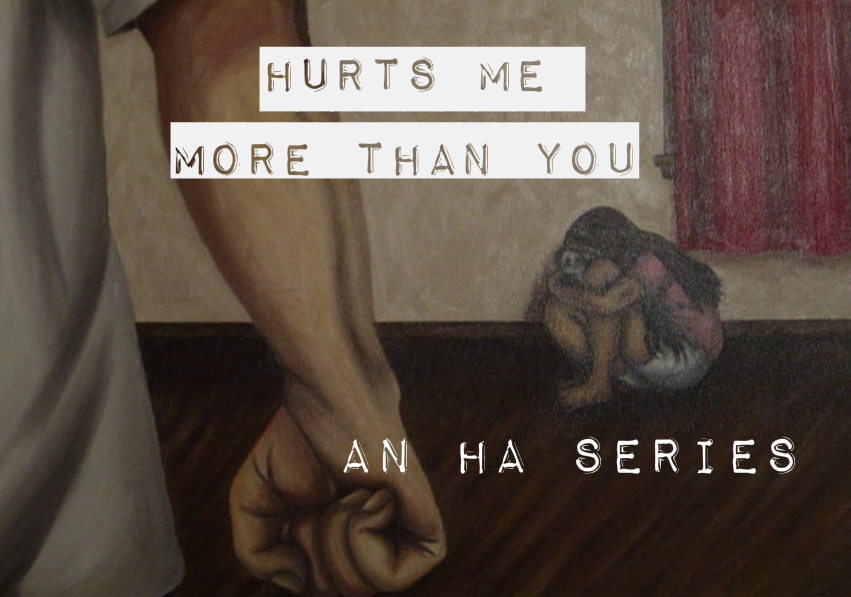






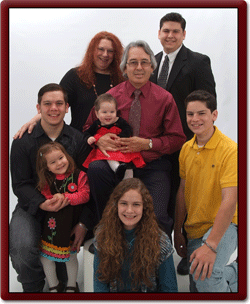
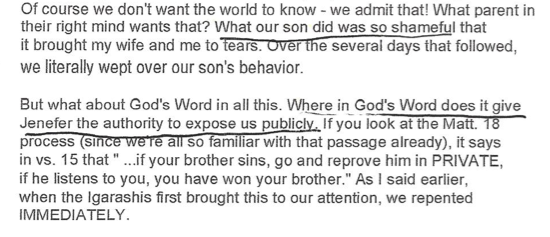


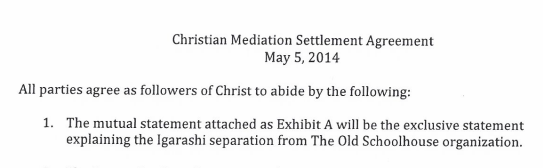
 Homeschoolers Anonymous