TeenPacters Speak Up: Part Four, My Experience And A Lot Of Parantheses

TeenPacters Speak Up: A Series by Between Black and White

HA note: This series is reprinted with permission from Between Black and White. Part Four was originally published on May 21, 2013.

*****

Part Four: My Experience And A Lot Of Parantheses, by DoaHF

DoaHF blogs at Out of the Chrysalis.

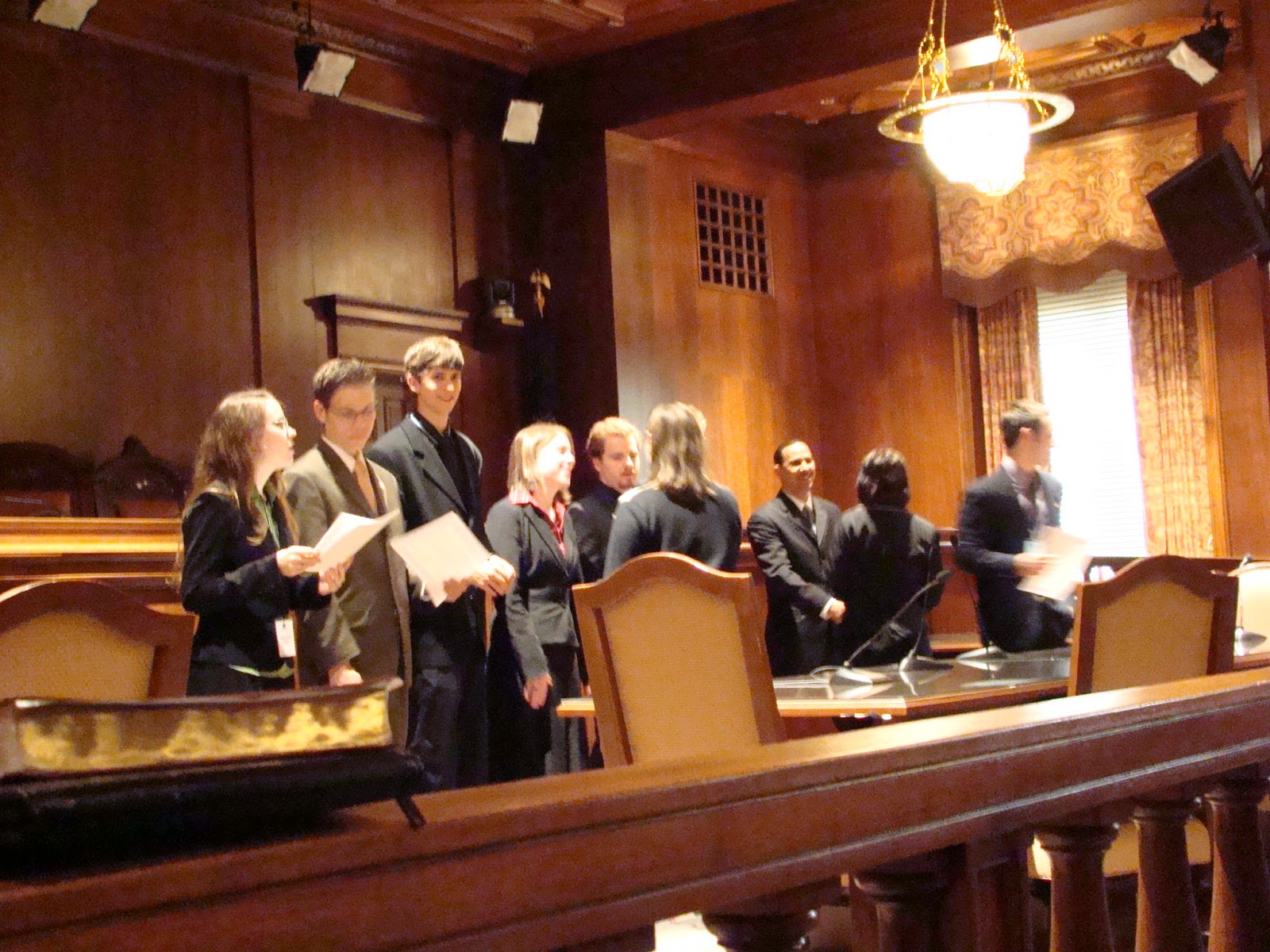
Photo gallery courtesy of DoaHF.

My mom saw a poster for it on the homeschool group’s website. It was being promoted a lot since it was the first year that they gained access to our State. I think I was the only student there who wanted to attend. Amid all the testimonies of hating the fancy (and modest) clothes, hating civics, and it being a struggle to not listen to music or watch television all week, I wondered what was wrong with all these other homeschoolers.

Yes, I had a lot of pride, but I was raised thinking that homeschooling was better than public school and it was unfortunate that public schoolers could not get a 4 day crash-course of in-depth politics training on a state level. I reveled in the homework and the required modest clothing and I had no problem with the rule about media because my media consumption was already incredibly minuscule. The rules about guy-girl interactions was not a problem because of how strict my father was, and all of the guys there were younger than me and not that appealing.

I also had a family background in politics (2008 was an election year and my grandparents and older sister were so caught up in the whirlwind that my leaving for so many days was a big deal around the house) which made me the student who knew it all.

And that was a problem. My whole TeenPact experience I was either patronized by staffers and administrators, or I was the problem that they had to deal with and work around.

One of the staffers inserted a rabbit trail push for John McCain votes/support (we were all too young to vote anyway) and I piped up (in the middle of class) about his immigration bill and his history of non-conservatism. That got me an extremely dirty look from all staffers and I was ignored every time I raised my hand after that — except when no one else knew the answer. (I was down for a couple in-kind contributions to a campaign, so I knew what they were. None of the other students did.)

I definitely stood out in the class as the only student to ask the Aide to the First Lady (She was also a high-level judge) what (the Judge/First Lady’s) stand was on abortion and how she would deal with cases to repeal Roe v. Wade. (I was also very ignorant about how the real world worked. I spouted what I was taught with passion and sincerity.) I was the only one who knew what an “ex-post facto” law was and my team won the Constitution Game because of my knowledge of the Constitution. (Literally, a staffer had to help the other two branches because Congress blew them out of the water.) (Both years!)

And, when I went and visited the 3rd year (I was unable to attend due to financial constraints – and more on that later) the whole alumni class asked that I be allowed to participate on their team. Their requests were turned down by the less-than-amused staffers.

I was completely gung-ho about TeenPact after my experience. I was effusive in my praise and I thought it was the best thing I had ever experienced and I wanted to attend all their other offerings.

Unfortunately, TeenPact is a rich, middle class thing. You pay your own way for everything. And “everything” is not cheap. You get an experience, the opportunity to meet friends, meals, and a T-Shirt. Often the events are far away and even staffers have to pay their own transportation. Housing is an extra cost on top of the $200-$300 event. (Unless it it its own event, like Endeavor or National Convention, which raised the price tag to $400 or more.)

The first year I was in TeenPact I won a scholarship to go to National Convention and found a last-minute ride from Maryland. It was a 750-1000 word essay on What Does it Mean to Be a Conservative.” Reading over it now it is a huge mess of right-wing idealism, including a rant about government distribution of wealth. Back then, I was so excited that I could hardly contain myself.

I spent the week in a mix of pride, boredom, and frustrated anger. There was an obvious problem with popularity. The kids who had staffed multiple places had a huge edge over people who had staffed only their home state or not staffed at all. Their actual personalities were often sickening, but they still received the most votes and applause (or the elections were rigged in their favor). While there is a lot of discipleship and depth in the core groups, a lot of the event was fluffy and I was bored by the big speeches, only broken by the funny skits and attempts at making me play“The Game” (you just lost). Huge promotion of the Ultimate Frisbee tournaments annoyed me, as I was never that in to sports, and all attempts I made at throwing Frisbees resulted in everyone laughing and pointing. I would spend the afternoon wandering the camp looking for people in my group who might not be already with their cliques and might want to do something with me than gawk at Adam whats-his-name in a pink shirt playing with “The Bojangles.”

Because it was the first year that my state had ever had a TeenPact class, I was the only one from my state in attendance. I made a laughable attempt at running for Congress (and was one of the few late entries who actually paid my $10, to my knowledge). My contribution to much talked about and poorly attended silent auction was a necklace set that I hand-made.  It was made fun of for not having a more political or state relevance. (I think, I hid and refused to tell them that I made it.)

The only other person I found who was really a “kindred spirit” was a guy, and as I was not “allowed” to crush on him or spend any time with him without someone else there (I didn’t know anyone except staffers, and I followed the rules that I saw many of the “regulars” breaking) we never really got to know each other very well. Interestingly enough, he is the only one of any of them that I still keep in Facebook contact. And, through him I got to know a couple who are now some of my good friends.

I came home from National Convention tired emotionally. I felt suddenly like TeenPact was not the marvelous place I had once thought it to be. I felt left out and unwanted by the very group I would have given my talents to willingly and eagerly. Unable to afford any other event that year, I began saving what little money I had in order to attend the State Class next year. I also applied to Staff, but I was turned down, which I almost expected. After all, I had spoken up and contradicted a staffer and made myself stick out. I paid for my alumni class all by myself, as my quiverfull father did not have the funds to spend on me for a second year. This is notable in that I was not allowed a job and made this money over the course of a year of saving odds and ends that came my way from neighborhood cleaning or babysitting jobs or from family members. I had no way to make money, so spending that much meant a lot to me.

I aced the alumni class, again proving to have put the most into the assignments and again leading my branch to victory in the Constitution Search. (When teams were picked everyone asked to switch to my team.) I made an effort to work my hardest and to not cause any issues. I was trying to prove myself as a competent person who was a good candidate to staff her own state. I was also at the upper age limit and I knew that this would be my last class.

I wanted to attend Endeavor that year, but I was not able to make enough money and instead looked at the perfectly lit pictures of the other girls having a High Tea and shooting guns in a field thinking about how nice it would be to be able to have that kind of an experience. But their middle class families could afford the airfare or gas, the dresses, the makeup, the scones and high teas, and the price of the event.  My father made about $40,000 a year for a family of 11.

The last year I spent in my home state I applied again to be a staffer and I was turned down again. One of my fellow classmates was accepted, though, as he had gone to National Convention and Survival. He also said that one of that year’s staffers had pushed really hard for him. It figures, the staffer I had interrupted my first class was now an Intern (albeit he never came back to my state).

Now, over 5 years later, I look back on it all with a sigh and a shake of my head. I was young and passionate. I had a lot to give and they turned it down. But in the end, I was the one better off for it. I left that state and have since been able to mediate my passion with real knowledge of the world and the incredible amount of variety and complexity in it. I no longer have “pat” answers to everything and I think I am all the better for it. I also refuse to accept their misogynistic belittling of women. I believe I have the right to wear a pair of dress pants instead of being relegated to a skirt. I think that I have just as much ability and knowledge as any male, as they refused to allow women to be an Intern for more than one year. Men could do it for two years and then if they excelled, they could go on to be a program director and have their own gavel made for them. I acknowledge that I could definitely be a Mayor or a President, which position they never elected a woman into. It was an interesting coincidence, if it really was a coincidence.

I refuse to think of myself less because I did not have the money that the “TeenPact Families” (ie. the blue bloods) had to host events and send their kids to staff 5 states and run expensive presidential campaigns with the paraphernalia, candy, and free T-shirts.

I have saved only my first state class t-shirt with all the names on it. The names are mostly faded and can hardly be seen. I have de-friended most of the Interns (or been de-friended) and have since hidden most of my TeenPact pictures and videos. It is a chapter in my life that I do not regret, but do not like to announce. I prefer that no one remember me or pick me out as one of them. I regret being so conservative and blind. I do not regret getting away and changing.

And I hope that people who read this think twice about endorsing a misogynistic group that exists for the wealthy middle class republicans to indoctrinate their children. They also get together groups of students to do grunt work for HSLDA.  Read about that scandalous mess here.

To be continued.

Burn In Case Of Evil: Cain’s Story, Part Four

Burn In Case Of Evil: Cain’s Story, Part Four

HA note: The author’s name has been changed to ensure anonymity. “Cain” is a pseudonym.

*****

In this series: Part One | Part Two | Part Three | Part Four

*****

My Home “Education”

A lot of people read this site and remark on how accomplished, out-spoken, and well-educated we all seem.  Many have remarked that it was obviously homeschooling that made us who we are.  The answer to that question is complicated because I am what I am because of, and despite of, homeschooling.  When your entire social life and community K-12 is homeschooled, of course these influences significantly impacted my life.  But much of my adult life has been spent “re-learning” everything (from social skills, to history, to biology, to relationship etiquette).  I was taught about all of these things through homeschooling.  Some subjects I was never taught properly in high school and my insufficiency handicapped my educational opportunities.

My mother was the primary instructor and, bless her heart, she only had a GED and a few college classes.  It’s not that my mother is not smart, or stupid; it’s that she was not qualified to give me a high school education.  I consider most of my educational experiences before 8th or 9th grade to be generally positive.  I excelled in spelling, math, science, and language arts.  I really had an interest in science at an early age – I can remember enjoying earth science, nuclear science, and astronomy/space.  As I entered high school, a few things happened.  First, we got involved in ATI (a homeschooling cult) when I was about 10, but by my high school years the “Wisdom Booklets” became my primary textbooks (other than math).  Second, I became involved in NCFCA/CFC when I was 13 – started debating at 14.  Third, I started liking girls and “rebelling” by falling for them and having innocent phone and text conversations.

We used Saxon math as a supplement to the Wisdom Booklets.  I excelled at geometry, basic algebra, and word problems.  I’ve always enjoyed problem solving.  As I got involved with advanced geometry and algebra II, my mother simply could not keep up.  I would call my older sister, who was pursuing an engineering degree, and she would try to help me through it.  But math-by-phone is no substitute for a math teacher.

I think about 15 or 16, when I got involved heavily in debate, my mom stopped requiring me to do math.  Debate literally took over my life and I spent about 40 hours a week researching, writing speeches, and talking to friends in homeschool debate.  I consider my friends from CFC/NCFCA as the closest thing to a “high school class” because they were the only social group that I interacted with somewhat limited parental oversight.  I excelled at debate and it fed my father’s interest in history and politics.  So for three years all I did was debate, which was vastly superior to Wisdom Booklets.  My education with Wisdom Booklets made me think that AIDS was a gay disease and my sex mis-education was downright reckless.  I “learned” about logarithms intertwined with the tale of Jesus multiplying the loaves and fishes.

When it came time to submit my high school transcript for college (and to apply for state scholarships) my parents sat down at the computer and literally made up my transcript.  Debate-related activities and research were labeled under lots of different titles (American History, Composition, Logic, Civics, Public Speaking, English, etc).  Of course, I got A’s in all of these categories.  Now, my parents had some semblance of ethics and they decided I needed to complete some science courses to qualify for the state’s college entrance requirements.  My science courses in high school were pathetic, with the exception of computers because my dad worked in the industry for his entire adult life.

During most of my junior and senior years, I worked full-time and debated.  There was a long-distance Latin course from PHC, chemistry, and biology course interlaced with working and debate.  I got C’s in all of these classes and I’m pretty sure I had to cheat on two of the finals just to pass.

Technically, I took a chemistry and biology course, but in reality, I learned nothing about those subjects.  My mom wasn’t that knowledgeable in sciences. I used the Apologia biology textbook.  I remember bumbling through the biology book, not understanding anything I was reading.  Mostly because there was no grand narrative, like evolution, to make sense of all the different species.  I excelled in college biology, but not until I understood the topics from an evolutionary perspective.  My chemistry course was me and my homeschooled friend learning from his father, who was a doctor.  The “classes” lasted for maybe a month or two, but then life got busy and I stopped going.  He didn’t really follow-up, for whatever reason, and my parents didn’t seem that interested either.  So I taught myself chemistry?  Nope, I suck at chemistry – on a very basic level.

As a side note, I’m great with computers because of my father, but I never took a programming class beyond Visual Basic.  He tried to teach me about things, but it always seemed like I was missing part of the story – like he wasn’t “dumbing it down” enough.  Looking back, I realize it’s because my father was trying to teach me only the practical applications of computers while never learning the scientific theory.  I know he knows all about it, but I don’t know that he was qualified to teach it to a child.  It’s not like I gained marketable skills from my computer education.

I was also a huge asshole when I began college. I’m sure you know the type: fundamentalist Christian debater.  I had no idea how to navigate relationships with non-homeschooled people and it took a year or two, many broken friendships, and loneliness to find friends.  I was also encouraged through programs like Summit to challenge my “evil, secular humanist” professors in class – to “stand up” for Jesus in the public classroom.  I was prepared to enter an atmosphere that antagonized Christians and Christianity.

College was fantastic, but difficult and filled with substance abuse.  I realized that I had ADD, but self-medicated for sometime with cannabis.  Alcohol and cannabis helped with the anxiety –social, existential, spiritual, school and parent-related – and helped me to socialize with big groups.  I still can’t socialize with big groups of people easily and I lucked into taking a lot of Honors classes with small class sizes.  I almost lost my big scholarship (which required me to keep a 3.5) in my sophomore year because I got terrible grades in science and foreign languages.  I didn’t know how grades or tests worked, let alone how to study.  I excelled in political science and history, so that’s where I stayed.  I didn’t take biology until my senior year.  I finally understood it and, since then, I’ve developed a keen interest in neurobiology, psychopharmacology, psychology, and health care issues.  At this point, I’d love another two or three years of school to get a B.S. and another three to get an M.S., but that part of my life is over now.

I remember a time in middle school when I really wanted to be an engineer and I still think I could have excelled at it, if it wasn’t for my homeschooling.  Yes, I have an MA, but I’m confident I could have a stable, well-paying job in a science-related field.  My liberal arts education came easily to me, but I would have relished the challenge of advanced science and math.  Almost every public school student has a somewhat competent math teacher and most have access to AP calculus.  Yes, debate is a great skill and it has made me successful, but I’ve always been jealous of people who excelled in math or science – like I once did – and moved seamlessly into the job market.

To be continued.

Hope For A Better Tomorrow: Matthew Gorzik’s Story

Hope For A Better Tomorrow: Matthew Gorzik’s Story

Hello, my name is Matthew Gorzik.

I’m a 19 year old from Missouri, recently liberated from my parents and my homeschool. I was taught via the curriculum offered by Alpha Omega Academy, a YEC-oriented set of curricula which taught the wrong things and didn’t even teach them well. I learned that Pi = 3, that the Earth is 6,000 years old and that the *only* way fossils could possibly exist is if a great flood happened. It also tended to use History class as indoctrination, and tried to teach 9 and 10 year olds that they should only vote for Christians in elections because ‘otherwise, we’d have to live by Man’s law, and not God’s.’ All of this, of course, paled in comparison to the largest problem this caused.

I was completely isolated from civilization for most of my life, with the exception of the internet.

My parents were extremely sheltering, to the point that they demonized things like public school. Because of this, I only knew my family. I knew some of my extended family, but only got to see them on a monthly basis. Otherwise? I didn’t know a single person that I did not share a blood relation with.

And my family? They were not nice people.

My father was emotionally abusive, constantly reminding you that everything you had was his, that he could take it away at any time. He would threaten to kick me out of the house for speaking against him, and would openly say to my mother that I was lucky that he didn’t slap me into submission. My mother, of course, was a parent of the same vein. She would use my father as a mouthpiece when she didn’t want to get her own hands dirty, and would basically lie you into doing what she wanted. If the lies didn’t work, she would basically say “I’m the parent. I run barter town. You don’t get to question me, you get to do what I tell you to.” Failure to comply would result in having things taken away from you, or being slapped if you didn’t apologize for daring to question her authority.

I lived in the belief that this was normal.

I lived thinking it was normal to obey your parents without question. I lived thinking it was normal for someone of my age to not even be considered a person in their own home, thinking that it was normal for a parent to be nothing but a fear-monger to the child, demanding respect and complete obedience under threat of physical abuse or being kicked out. It drove me to a deep depression for a time, to the point that I considered myself completely without worth.

Then the internet found me, so to speak.

I had been online for a few years at this point. I had made friends – good friends. Friends that still stick with me to this day. They helped me realize that life wasn’t meant to be full of fear, and they helped me find a voice for myself. They helped me find my own personality – something that I would be completely lacking without their influence. I didn’t realize, though, the true extent to which they would help me. I found a forum for a site devoted to poking fun at the overtly religious and downright insane people of the internet. My boyfriend poked me into showing them some of my schoolwork, and telling them about my family.

They did not like what they heard.

My family situation, and their anger about it, escalated to the point that they banded together, raising $1,000 for a rescue operation. One of the members of that forum literally drove out to MO with a friend and picked me up in the morning without my parents even noticing until I called, I even got out with most of my belongings. We then drove for three days straight into Salem, OR.

Nowadays? I’m living with the family of the member that saved me. They have done more for me than anyone could possibly know, and they have been more of a family to me than my own. I’m going to a community college – trying to get my GED – and they’re doing everything they can to help me make up for lost time.

Where my life before was left empty — and I wondered if I would ever amount to anything more than just another person forgotten by time — my life is now filled with hope. Hope for a better tomorrow and, with the fact that the word is getting out about this kind of behaviour, hope that nobody will ever have to suffer my yesterday.

TeenPacters Speak Up: Part Three, She’s Not TPA

TeenPacters Speak Up: A Series by Between Black and White

HA note: This series is reprinted with permission from Between Black and White. Part Three was originally published on May 21, 2013.

*****

Part Three: She’s Not TPA, by Alessandra

To any TeenPacter, there are three words that represent ultimate ruling at any event – Teen Pact Appropriate. Oft abbreviated to the acronym TPA, it was bandied about concerning clothing, actions, and topics of discussion. It was the vague final standard that floated over attendees, replacing a popular evangelical choice of WWJD with, “Is that TPA?”

It was easy to tout it as well as ay other… during my first year. TPA was presented as hip, cool, and in to a sect of the population who often made their friends and had the most socialisation at TeenPact. I saw no problem deeming ankle length skirts and blouses a size or two too large as professional attire to wear to the capitol when I started out. I listened intently to the “girl talk” about causing en to lust. I very carefully kept any talk of Lord of the Rings or other such subjects to nothing more than hushed whispers.

My second year, I ran for governor of TeenPact Maine on the slogan “Vote AJK, She’s TPA.” Even so, there were tendrils of doubt forming in my mind. There were rebukes given to women who dared hold the door open instead of waiting–or letting–a man do it. I wondered what really happened during the “guy talk,” and why all the responsibility for men’s lust was being placed on the women. I had spent more time at the capitol between the two state classes, and didn’t understand why pantsuits for women were not allowed — something that came up again later in my TeenPact history. Then, of course, came the comments that shook my faith in my gubernatorial victory: the number of people who remarked that they didn’t know how I could have won, when they all voted for the other candidate.

I tried not to worry about it, but, for an organisation that promotes integrity above all else, there should never be any doubt.

I tried not to let my concerns shake my faith in the organisation, and proud of my newfound determination to prove the equality of women, I set off for my second National Convention on the presidential campaign trail. The historical inauguration of the first female governor of TeenPact Maine was fresh in my memory, and I was determined to make TeenPact history once more. My running mate and I knew we had our work cut out for us as the first girl/girl team, but, we were more than willing to embrace it.

What I was not prepared for ere the incredulous looks on the faces of boys and girls as they stopped by our campaign booth. Riding in a van with Mr. Echols on the way to a church service was not the first time, nor the last, that a fellow TeenPacter asked me how a girl running for president was TPA. After all, women should never be in positions of leadership over men!

The first time I was asked if it was TPA, I was flabbergasted. Still, my answer did not change. If Deborah could do it, so could I. Besides, I was just as capable as every other guy there, at the very least – why shouldn’t I run? In the end, though, I was the one with questions. The popular vote recorded for my state did not match the number of votes from my supporters. I wasn’t the only one with doubts that election, but, who were we running against?

Popular vote doesn’t matter when determining whether someone is TPA enough.

That same year I had an interview for staffing state classes the following year. I was very excited about the chance to do it, and was counting down the time until my interview. Things seemed to go well, up until my interviewer put her pencil down and looked me straight in the face. “How do you reconcile the TeenPact statement of faith with being Orthodox?”

I blinked.

I wasn’t sure if she was concerned because I had been running for president, or she just didn’t know what being an Orthodox Christian meant. The result of the interview was that I could staff the one-day class for 8-13 year olds, but that they weren’t comfortable with me staffing the four-day class.

From there, however, I turned to another side of TeenPact, and the hypocrisy therein: TeenPact Judicial…

To be continued.

(Not) An Open Letter To The Pearls: Samantha Field’s Thoughts

Samantha Field blogs at Defeating the Dragons, and she was recently featured in a Christianity Today story entitled, “Finding Faith After Spiritual Indoctrination.” This piece was originally published on her own blog, and is reprinted with her permission. Also by Samantha on HA: “We Had To Be So Much More Amazing” and “The Supposed Myth of Teenaged Adolescence.”

So, a friend of mine sent me this post by Michael and Debi Pearl the other day. I encourage you to go read it, just so that you have some context for the following rant and can follow along. There’s a bunch of stuff that’s wrong with this article, and I’m just going to unload both barrels here. Also, in case I get something wrong, because that is totally possible. I’m ranting, but that doesn’t mean I don’t want clarity or cogency or accuracy. If you think that I’ve blown something out of proportion, and you would like to point out a subtlety or nuance, feel free. Or, you can get up here on my soapbox and rant with me. That’s cool, too.

Every family emits its own light. After viewing a family for just five seconds, I know so much about them. After being introduced to each member of the family, they are an open book.

This is from Michael, and all I have to say is No. Just — no. Five seconds? Really? Everyone is just an open book to you? I shouldn’t be shocked anymore at the unbelievable arrogance and condescension Michael Pearl emits, but somehow, every time, it’s like someone slapped me in the face with a fish. Yes, some people are perceptive, and are capable of accurate first impressions– but this claim goes right along with Micheal’s exalted view of himself as a self-proclaimed “prophet.”

The man was about fifty, certainly not a looker.

Now we’re in one of Debi’s sections, and all this does is remind me of Debi’s rather extensive story about the “one ugly hillbilly” woman in Created to be his Help Meet. This observation has absolutely no bearing on the story she’s about to relate — except as possibly to judge the “Old Dude” (what a demeaning way to refer to someone) for not conforming to her physical standards, and to judge the young woman who appears later for having an emotional connection with someone who isn’t a “looker.” There’s no logical explanation for this — it’s just more of Debi’s self-righteous judgment spilling out of her. Both Michael and Debi have demonstrated, throughout the sum total of their careers, an astonishing lack of compassion and simple human empathy.

Right here, at our church, among all these righteous families! I stood amazed at the audacity of the human race.

In other words, how dare people with actual real-life problems dare show themselves in our church! How dare someone who doesn’t conform to our little universe of perfection! How dare you come in here, and violate our incomprehensibly narrow view of the world!

I tried to ask the girl questions to ascertain the cause of this odd arrangement, but he answered as if the questions were directed to him, and the young lady deferred to him as if he were her voice of conscience. I thought that unless her father had truly been abusive, she should return to her family, but I was making no progress engaging her to consider her options.

Back to Michael. This is where I agree with him — this interaction shows that something about their relationship is off. The married man (I refuse to refer to him as “Old Dude”) is forbidding this young woman to even speak, and that seems to be something that is the standard for them. Either because of the married man in this situation, or because of her abusive home, she’s been silenced. She’s literally voiceless here. But this is the only time anyone even mentions this. It stands out to them as a little odd, but not that odd. Because women are expected to let men “lead.” If you’re going to be a “good Christian woman,” silence is expressly demanded by people like the Pearls. So it’s only a little weird, instead of the gigantic flaming red flag it should have been.

And this is one of the places where Michael builds on a long-standing understanding in these types of circles, and you can see it in the words “truly abusive.” This is so incredibly loaded. Because, to Michael, who endorses extreme physical punishment that borders on the sociopathic, “true abuse” would have to be on the level of breaking bones before he was convinced. Emotional and psychological trauma– don’t even exist. Because the ramifications of emotional abuse are just “bitterness” and “un-forgiveness” to the Pearls. Michael would voluntarily send an adult woman back into an abusive situation in order for her to be “under her father’s protection” than ever admit that a “Christian father” is capable of abusing his children. Psychological trauma– just spiritual and heart issues. And her “options”? This girl doesn’t have options. She’s not even allowed to speak for herself– which could indicate that she’s being manipulated into believing she doesn’t have options. When a woman can’t even talk how can she make an actual decision?

At this point in the story, Debi has burst in with an unexplained prophecy, declaring that she’d heard from God, and was speaking with his authority. She gives no context, and disappears as quickly as she came. Then, she sits down the woman for a talk. She does seem to give the married couple and the abused woman some benefit of the doubt– at first.

Undoubtedly his relationship with his wife was already barren before the girl came along, but the old wife had now become the second woman.

What the. Crap on a cracker. Debi– seriously?! You hear this from God, too? A voice come booming out of heaven to tell you that their marriage was “undoubtedly barren”? Which, if you’ve read Debi’s book is without exception always the woman’s fault. If this married man is developing a emotionally intimate connection, it’s obviously because his wife doesn’t smile enough, or doesn’t know how to put her makeup on. Clearly.

I had to try to help Little Miss see the error of her ways.

To most young brides the husband appears clumsy and unfeeling. But as the wife continues to obey and reverence her young husband, he will grow in appreciation for her soul, and in time learn to care for her emotional and spiritual needs.

I explained to Little Miss that having even a small part of this “mysterious relationship” with another woman’s husband, especially in her own home, in front of her, is exceedingly cruel and evil.

Already touching her spirit, I knew what the answer would be, but I wanted the girl to understand she was indeed not innocent.

If there was ever going to be any change to this situation then she had to understand the full ugliness of her actions, so I drove homehow depraved and self-centered she was to do such a thing as to interfere with the sacredness of marriage.

Being cloistered might have been bad for her, but now she was partyto damaging the sacred.

Girlie, it will come to you soon enough, and you will need a place to flee.Don’t come here. The invitation for a place to stay is closed. I would not trust a ‘regret’ girl around this ministry.”

This should speak for itself.

Debi doesn’t care about the abuse this woman has experienced. It doesn’t even matter– it only enters as a “but” statement. The fact that the married man in this situation talks about being “highly skilled in the art of caressing souls” straight to Micheal’s face doesn’t matter. They’re not even capable of picking up on the GIGANTIC BILLBOARD-SIZED RED FLAGS that should tell them that the man in this situation is taking advantage of a tender, fragile, desperate and abused young woman.

Because it’s the wife’s fault for not reverencing her husband, or not fulfilling him, or not having sex with him enough, or not keeping herself pretty enough. And then it’s the abused woman’s fault. Her fragility, the fact that this married man deliberately chose a woman sheltered enough to not understand exactly how he was going to “caress her soul.” He’s vulnerable because of his wife, and the abused woman is preying on his vulnerability. No, he’s not emotionally manipulative, or taking advantage of this situation at all. It’s all the woman’s fault, because being abused by her parents and then manipulated by another man (which she’s probably been taught since infancy is a legitimate authority over her, simply because he’s a man) doesn’t make a lick of difference.

And then comes the hammer. Debi tells her that she will absolutely not help an abused woman when this woman eventually realizes that she traded the frying pan for the fire. Because she’s responsible for the married man manipulating her. She’s cruel, evil, depraved, and self-centered. She’s not hurting, she’s not lost, she’s not desperate for someone to realize that she’s a person, and that she needs help.

Michael and Debi Pearl– YOU are cruel, evil, depraved, and self-centered. You’ve been blinded by the power you’ve wrested from innocent people by being false prophets. You are completely and desperately lacking of any form of common sense or sound judgment.

The article goes on (with Michael inserting an insignificant caveat about how holy and righteous he was, and how men should stay away from women, because, well, women will seduce them away from God), but the story is over. They switch into analysis mode, and I just . . . can’t.

If you are a young woman in a cloistered situation, beware of jumping from the frying pan into the fire. Staying in the frying pan is much to be preferred, for you can always jump when a clean alternative shows itself.

Samantha hits her head on her desk repeatedly at the sheer idiocy and ignorance.

Do they never even stop and listen to themselves? Are they so blind to reality that they’re incapable of understanding how ridiculous a statement like this is? When you’ve grown up in a “cloistered” home– by their definition, a family so sheltered they can’t tell “right from wrong,” how the hell do you think an infantalized woman (or man, for that matter) is capable of being aware of the difference between “clean” and supposedly “unclean” alternatives? They’ve been purposely and deliberately shielded from having that kind of power.

Micheal and Debi Pearl are dangerous.

People listen to them, people respect them, people make excuses for them when their teachings are responsible for the slaughter of innocent children. Their loyal followers say that reactions like mine are exaggerated, that I’m just not giving the benefit of the doubt. If I’d really read all of their books, if I’d actually paid attention to what they advocate, I’d be fine with them. I’m just not understanding their true message, which is obviously of love and directly from God.

No.

have read their books– I’ve read every single last one of their books multiple times. I idolized them as a child. They were just so brazenly honest, so overwhelmingly clear– how could Michael be anything but a prophet sent from God to teach the fundamentalists how to raise their children up in the nurture and admonition of the Lord?

But as I got older, I started realizing, with a mounting horror, just how clearly evil their teachings are. What they advocate fosters and nurtures abusive homes. They explicitly encourage women to stay with physically abusive husbands and utterly dismiss the existence of marital rape and don’t even acknowledge that men emotionally and verbally abuse their wives.

Debi repeatedly tells women that if their husbands are abusing them, it’s clearly their fault. They’re just not reverencing their husbands enough. Reverence your husband, and he won’t yell. Reverence your husband, and he won’t beat you. Reverence your husband, and ignore the fact that he’s raping you when you don’t want to have sex– because you’re not even allowed to say no. If you say no, he’ll just go sleep with someone else.

And Michael– spank your child until he obeys. Spank your child with an ever-increasing-in-size pipe until he instantaneously submits to your every uttered command. Spank your children until they are cowed. Spank your children until they would never even think of disobeying you. Because that’s what’s going to teach them about how to obey God.

The only language the Pearls are capable of speaking is a language of violence and abuse.

The Breaking of a Child, A Story of Near Disaster

HA note: The following is reprinted with permission from Libby Anne’s blog Love Joy Feminism. It was originally published on Patheos on April 25, 2013.

*****

The next day was Tuesday. Hope did not say please and so did not have breakfast, lunch, or her bottle. By late afternoon Hope had gone for forty-eight hours—two straight days—with nothing to eat or drink but a single six ounce bottle of milk. By that time she was beginning to act strangely. Her usual vivaciousness had disappeared, replaced with a sort of melancholy. She lay on the couch listlessly, uninterested in playing or even reading books. 

*****

I’ve hesitated from sharing this story because of how personal it is, but I think it needs to be told because it illustrates perfectly the danger of the Pearls’ teachings. See, when I first read about the death of Lydia Schatz, my immediate thought was that I understood how something like that could have happened. The Schatzes followed the discipline methods of Michael and Debi Pearl, who teach parents to view their relationship with their children as a battle for dominance that they must win. Once a contest is started, the Pearls say, you can’t back down. You can’t blink. My parents are also Pearl followers, and there was one time when a situation got similarly out of hand, but in their case, mercifully, they blinked. Their basic humanity got to them and overrode the Pearls’ advice; they got scared by what was happening, by what they were doing to their child, and they backed down.

My parents didn’t follow the Pearls’ discipline methods because they wanted to do us harm—they followed them because they wanted what was best for us. When the Pearls’ discipline manual came to them highly recommended by their Christian homeschooling friends, they read it and found its reliance on Bible verses and (simplistic) theological arguments convincing. The Christian homeschooling movement puts parents under intense pressure to turn out perfect children, and in that environment books like this seem to make sense. But even the best of intentions can have disastrous results—and that is what the Pearls’ book does, it takes parents’ best intentions and spins them into something twisted.

In general, my parents’ adherence to the Pearls’ discipline methods meant that we children were not allowed to show a spark of defiance toward them and were expected to be 110% obedient 110% of the time. Bad attitudes were not allowed, and obedience was expected to be immediate, complete, cheerful, and without complaint—anything short of that was disobedience. When we were disobedient or defiant—or were seen as being disobedient or defiant—we were spanked with a wooden paddle until we were sorry, repentant, and compliant. We learned quickly that things were easiest for us if we just rolled over quickly, so we generally did.

But the story I want to tell here is the time my parents ended up in a battle of the wills with one of my sisters, Hope, who was only eighteen months old at time—a contest of the wills that quickly spun out of control. Now I say that there was a contest of the wills, but I actually think it was a one-sided contest—I think my sister was confused and bewildered, not defiant or rebellious. But it didn’t matter. Her actions were interpreted as rebellion and that was all that mattered. This story is illustrative of the danger of the Pearls’ child rearing methods.

It all started one Sunday at supper time. Hope had recently gained the ability to lisp a little “peez,” so my parents held her plate of food out to her as she sat in her high chair and asked her to say please before they would give it to her. They weren’t trying to make any special sort of point or anything, just to teach her to be polite and ask nicely for things. But for some reason, she wouldn’t do it, and my parents interpreted that as a sign of willfulness on her part. They told her she couldn’t have her supper unless she said please—so she sat and went without, watching us eat our warm spaghetti, steaming garlic bread, and fresh spinach salad as the delicious smells wafted over her high chair.

Hope no longer breastfed, but my parents still gave her bottles of milk. That evening my mother bathed Hope along with the two or three siblings closest in age to her, and then dressed her in her warm footie pajamas. Then, as usual, she prepared a bottle, this time asking her to say please. But Hope would not say please. After some cajoling, my mother reluctantly snuggled her into bed in her crib, empty stomach and all.

In order to explain the mindset my parents were operating on here, I’m going to quote directly from Michael Pearl’s To Train Up a Child (p. 11):

Be Assured of Two Things

First, almost every small child will have at least one time in his life when he will rebel against authority and attempt to take hold of the reins…. This act of stubbornness is profound—amazing—a wonder that one so young could be so dedicated and persevering in rebellion. It is the kind of determination you would expect to find in a hardened revolutionary facing enemy indoctrination classes. Parents who are trained to expect it, and are prepared to persevere, will still be awed at the strength of the small child’s will.

Second, if you are consistent in training, this attempt at total dominance will come only once in a child’s life, usually around two years old. If you win the confrontation, the child wins the game of character development. If you weaken and allow the child to dominate, the child loses everything but his will to dominate. You must persevere for the sake of the child. His will to dominate must be dominated by the rule of law (that’s you.)

Based on the Pearls’ teachings, my parents believed that they were now engaged in a contest of wills with Hope, a contest of wills that revolved around her refusal to say “please.” If they gave in and let her get away with that refusal, they believed, all would be lost, and much damage done. On the other hand, if they won the contest, they would put Hope on the path to a happy, healthy, and productive life. They could not lose. They could not back down. They had to conquer Hope’s will and refuse to let her dominate them.

The next morning at breakfast, Hope was put in her high chair, dressed in fresh clothes and hair tied up in a bow, and offered food—a warm bowl of oatmeal topped with brown sugar—if she would say please. But for whatever reason, Hope would not say please. So once again, she watched us eat while getting nothing for herself. And later that morning she was once again offered a bottle on the condition that she must say please, and once again she did not say it, so once again she went without. Lunch came and passed—peanut butter jelly sandwiches with pretzels and carrots—still without a please.

We children began to see it as a challenge—a challenge to do whatever we could to get Hope to comply and say please. We kept her bottle handy and again and again over the course of the day we offered it to her, urging her to comply and say please. In between our attempts we got out her toys and played with her, enjoying her babyish smiles. Finally, sometime that afternoon, Hope lisped out something that sounded vaguely like a little “peez” and was therefore given the bottle. She drank it down—all six ounces of milk—as though she was famished, which of course she was. By that time she hadn’t had anything to eat or drink in twenty-four hours.

But then supper came and Hope once again would not say please for her food. Once again she sat in her high chair and watched us eat, unable to avoid the aroma—and my mom is a very good cook. Once snuggled into her pajamas, Hope was again offered a night time bottle—and again she would not say please. My parents concluded that while they may have won one battle—she had surrendered her will and had said please for a bottle that afternoon—the war was still on, and they must win it. And so Hope went to bed hungry, having only had a single six ounce bottle of milk that entire day. As she read a bedtime book to my small siblings, Hope among them, I could tell that my mom was concerned—but determined.

My parents did not feel that they were starving Hope, because they were quick to offer her food—and tasty, tempting food—if she would only say please. Their interpretation of what was happening was that Hope had gone on a hunger strike, a hunger strike she could end at any time by simply obeying and saying please. The problem wasn’t with them or their actions, it was an internal battle within Hope. All Hope had to do was to stop being rebellious and submit her will to theirs, and it would be over.

The next day was Tuesday. Hope did not say please and so did not have breakfast, lunch, or her bottle. By late afternoon Hope had gone for forty-eight hours—two straight days—with nothing to eat or drink but a single six ounce bottle of milk. By that time she was beginning to act strangely. Her usual vivaciousness had disappeared, replaced with a sort of melancholy. She lay on the couch listlessly, uninterested in playing or even reading books. I sat and held her in my arms, worried. My siblings were worried too, but Hope seemed barely aware of our attempts to coax her to say please, offering a bottle as a reward.

I knew nothing other than the Pearls’ discipline methods, and had been taught since I was small that if parents didn’t break their children’s wills while small, those children would grow up to be miserable and unhappy. I believed all of this. This entire situation, then, was confusing for me, because I saw the pain my sister was in but I still believed in the system, still believed that her pain was justified and necessary. If only she would just say please, I thought. But another voice nagged me: Is she even able to anymore? What happens if she doesn’t? When will this end? And yet, I didn’t do anything. I wish now that I had—that I had secreted her some food and water, or attempted to intercede with my parents. I wish that my sense of compassion had overridden my brainwashing and belief in the system. But it didn’t.

That evening Hope didn’t say please for either supper or a bottle. She acted tired and didn’t make eye contact, so mom put her to bed early. By this time, my parents were becoming extremely concerned about the situation. In some sense, they were stuck. They believed, based on the Pearls, that if they gave in and gave Hope food or a bottle they would be allowing her to conquer them—they would be submitting their will to hers rather than the other way around. The Pearls teach that even giving in once—just once—will set back everything that had been gained and even threaten to ruin the child forever. And yet, here was their eighteen-month-old daughter, still toddling and barely starting to lisp words, wasting away before their eyes. The atmosphere was tense, and I think in retrospect that they were frightened.

The next morning, everything was different.

See, that night my mother had a dream. She dreamed that Hope died, and that Child Protective Services was called to investigate, and that they took the rest of us children away. They say that dreams are our subconscious processing and regurgitating, and I think this was an obvious case of that. But my mother’s interpretation was different. She told us that the dream was sent by God, sent to tell her to give in and feed Hope, give her her bottle, and end the contest. Thankfully, Hope was still strong enough to eat and take a bottle, and her recovery didn’t take long.

My mother’s dream gave my parents an out—an opportunity to give in and cede what they saw as a contest of wills even though the Pearls strongly advised parents against ever doing this. Yet my parents did not reject the Pearls wholesale. Believing they couldn’t end the contest entirely, they instead changed the requirement—they now asked that Hope say please only for snacks or dessert, withholding them if she did not. About three days after they ended the main contest, Hope lisped “peez” for a Popsicle, and regularly did so for snacks and desserts after that. Part of me wonders if it was a developmental thing, and if my parents assumed she was able to say please on command a week or so before she was actually able to.

This story illustrates the way the Pearls’ teachings can lead parents to become caught up in real or perceived contests of the will with their children, and result in those contests spiraling out of control. When parents believe that they can’t back down ever, no matter what, without threatening their children’s temporal and eternal well-being, we shouldn’t be surprised when some parents, like the Schatzes, refuse to back down and instead persist in continuing the battle until the contest escalates to a disastrous end. It doesn’t even take bad parents for this to happen, it simply takes well-meaning parents following toxic advice. And this, perhaps, is the most dangerous thing of all about the Pearls’ teachings.

My own parents continued to endorse the Pearls’ discipline methods even after this incident, but nothing like it ever happened again. I think maybe this incident frightened my parents, and shook a little bit of common sense into them. Perhaps it took a small edge off of the infallibility they imputed on the Pearls, or perhaps it simply awoke a little nagging doubt in the back of their mind, doubt that served as a check on things getting out of control. Either way, when I recall this incident and look at my sister Hope, now in her teens, I am reminded of the danger the Pearls’ teachings pose to both parent and child. And even after all these years, telling this story hasn’t been easy.

A Call for Contributions to HA’s Upcoming Self-Injury Awareness Series

A Call for Contributions to HA’s Upcoming Self-Injury Awareness Series

 By R.L. Stollar, HA Community Coordinator

*****

Update, 06/04/2013: We will be starting this series on Monday, June 10. So if you are interested in contributing, please try to get your submissions to us by Saturday, June 8. The series will be running for all of the following week, so that’s not a “it must be in by then or you can’t contribute” deadline. Just send us an email and let us know if you need more time beyond Saturday.

*****

I vividly remember the day when cutting struck close to home.

The year was 2004. I was a junior in college, and visiting a friend at Point Loma Nazarene University in San Diego, California. I remember the evening when he started telling me who among the debate clubs we coached cut themselves. Actually, I should rephrase that: he did not tell me who; rather, he gave me the list. Because there was a list. There were that many.

I remember what I was eating. Because I was eating In N Out. Living in Oregon where In N Outs do not exist, I looked forward to eating it as much as possible while in San Diego.

I remember what I was eating because I instantly lost my appetite. My stomach clenched into a knot of pain. I would describe that pain as dull chainsaws hacking at my insides.

My stomach clenched not only into a knot of pain, but a knot of fury.

I could not articulate to anyone at that time why the pain mingled with fury.

But I can tell you now: I was furious that we had grown up, and were growing up, in a culture that tried so hard to be perfect but failed miserably and could not admit its failures. I was furious that homeschooling was paraded around as this children-first movement when in fact children were so often subjugated to the ideologies of their parents, to the point that children’s needs were being ignored. I was furious that these children did not feel safe enough to express their needs to their parents. I was furious that I knew I could do nothing — that I was powerless to help.

I cannot think about homeschooling without thinking about self-injury. I know they are not inherently related, but they are psychologically related in my own mind because of my personal experiences. I think about my friends who cut themselves because they had no other outlet to express their pain; I think about my friends who drank themselves into stupors, or overdosed, because the pain was overwhelming; I think about my ex-girlfriend, who would regularly lock herself in the bathroom to bang her head repeatedly against the wall or access her razors while I would beg her to please come out, that I would do anything I could to help — but again, I was rendered helpless.

I know there are many stories out there, many more than the ones I know. I know from my relationships with my friends how difficult it can be to struggle with self-injury, and how hard it is to overcome. But I also know that it can be done. I have seen people find strength to overcome and find healing for their pain.

This is honestly one of the most important subjects for me, personally, to bring awareness to. So I would like to do a self-injury awareness series at HA. This series would welcome contributions on any form of self-injury/abuse awareness. I know this can be a very difficult subject to talk about, but I am hoping that, in talking about it, we can shed light on this issue and maybe bring hope and healing for other homeschoolers.

If you are interested in contributing, here are some ideas for what you could write about:

1) Your personal story of struggling with self-injury

2) Your personal story of being a friend to someone struggling

3) Your thoughts on the relationship between your homeschooling experience and self-injury

4) Your advice, as someone who personally struggled with self-injury, to other homeschool kids who are currently struggling

5) Your advice, as a parent to a kid who personally struggled with self-injury, to other parents who have a kid currently struggling

You do not have to pick just one topic. You could combine several of these ideas, or bring your own ideas to the table, or — if you have a lot to say — contribute several pieces on a variety of these topics. There is no deadline as of yet. We are just putting out feelers to see if people would like to be a part of this and share their stories. At some point soon we will come up with a concrete deadline.

As always, you can contribute anonymously or publicly.

If you interested in participating in this, please email us at homeschoolersanonymous@gmail.com.

TeenPacters Speak Up: Part Two, TeenPact And Me

TeenPacters Speak Up: A Series by Between Black and White

HA note: This series is reprinted with permission from Between Black and White. Part Two was originally published on May 20, 2013.

*****

Part Two: TeenPact and Me, by Kierstyn King

Kierstyn King blogs at Bridging the Gap.

TeenPact is a christian conservative/evangelical organization that organizes government and civics classes and camps throughout the country. Their goal is to raise a generation of christian leaders (teens) to go and bring the country back “for christ” by encouraging activism and male leadership.

When I think about TeenPact and my time there, I don’t feel anger – like I do with most of my other past experiences. I feel confusion. Because I have so many good memories and experiences that are entrenched in environments that perpetuated the lies that enabled an abusive environment to thrive.

The thing about organizations like TeenPact and NCFCA is that their goal is to raise a new generation of leaders – thinkers, even – to do one specific thing: Take the nation back (for god!). What they don’t count on, is that by giving us the tools and resources to think critically, we’ll actually, you know, think critically and carry that on throughout our adulthood. Which is awesome and I’m really happy that I was allowed to learn that, because it’s served me well and enabled me to become the person I am today. Funny thing though, our parents and the people who head up these organizations get extremely grumpy and upset when we do what they taught us to do (or at least you know, the thinking part of that) without doing the rest of what they wanted us to do.

They teach us how to think, but then, they don’t actually want us to think, they want us to do their bidding.

And this, in a nutshell, is my beef with TeenPact. I’m going to be splitting this into parts instead of writing a book of a blogpost – because some things need to be fleshed out more, so for today, I’m going to concentrate on one particular event that happened while I was staffing.

I staffed one of the GA State classes in 2007. As staff, I helped oversee the voting process – a process which is designed to teach students about how elections work (assuming everyone is honest). The votes were tallied and my friend was a clear winner. I was pleased with this, and a little proud because he had really gone out of his comfort zone to even run. I was appalled, confused, and maybe a little angry when in that back room the Program Director turned to us and said, well, I don’t think he’d make a good governor, we should choose someone else. The founder was there and the high ranking staff wanted to impress him (by discarding the process?) and decided that my friend wouldn’t do it.

So in that back room, the Program Director, and the higher ranking staff decided to choose someone else from the 3 candidates to be governor and told us to be quiet about it. I was 15 (2 weeks before my birthday) and I had no idea how to respond – I was too shocked to say anything and too surprised to complain or dissent, so I stood there quietly, feeling as though my mouth was gaping.

When we left the room with the new results, and with the Program Director deciding that his vote overruled all, I was full of shame and guilt. We announced who won and there were many questions – because in the other room, everyone tells everyone who they voted for, so everyone actually knows who won. People asked me questions and I couldn’t respond. My friend asked me and I was crushed and had to give him the same line I had given everyone else:

“It’s just what the votes were”.

I felt helpless because everyone who I would have talked to about it, was in that room and made that decision. They didn’t expect dissent – honestly, I don’t even think dissent is allowed, though it’s never directly stated – it’s a very homogenous group and anyone who does dissent is instantly cast as weird/strange/anything you don’t really want to associate with.

The staff did what they did because they didn’t want to get in trouble with Mr. Echols. I don’t know what the staff meetings are like, but I imagine that choosing a good face was enough of a requirement to strike fear into the hearts of the interns.

To be continued.

Call For Help: A Quiverfull / Patriarchy Rescue

Call For Help: A Quiverfull/Patriarchy Rescue

HA note: The following call for help is written by Hännah Ettinger, who blogs at Wine & Marble. “Jennifer” is a pseudonym. Her name has been changed to protect her identity. Jennifer turned 18 recently and graduated high school the weekend of this rescue. She is currently in a safe home. HA has personal confirmation of this story from the involved individuals.

Update, 05/31/2013: Over $10,000 raised so far! Read Hännah Ettinger’s update here.

Last Sunday night, I got a call from one of my post QF/CP buddies–we’re both the oldest from big homeschooling families with some unhealthy dynamics, and we both left that world when we got married (which torqued both of our fathers, for different, but similar reasons). She and I have been discussing with some of our post-QF/CP peers the needs of new adults trying to get out of borderline abusive or codependent or controlling family situations.

“Hännah,” she said. “I need advice.”

And then she spilled a story about her family’s downward spiral into isolation, fear, and control (increasing after she left and got married as a reaction against how “bad” she turned out), about how her sister “Jennifer” was demeaned by daily screaming from her mom, Bible-based lectures from her dad on why her interest in being vegan and an animal rights activist were rebellious and wrong. Despite many requests to be allowed to make herself vegan food, she was never given permission to even make herself a salad. She wasn’t allowed to touch fruit or vegetables unless given permission, which sometimes meant that food would rot in the fridge even though she wanted to eat it. Jennifer’s parents also threatened her pets, telling her that if she did not eat meat for dinner, she would wake up the next morning to find one of them gone.

The final crushing moment came last weekend, after her high school graduation, when she wasn’t singing in church (out of self-consciousness) and so, in a fit of anger, her parents removed all of her access to the outside world, taking away the power cord to her computer and her cell phone charger. She managed to get a few calls out, begging for help, with the battery power left on her phone.

She called her sister, and asked her to come get her out.

Her sister called me. “What should I do?”

But we knew there was really only one option, and so she and her husband put in 28 hours of driving in three days and went to rescue Jennifer. They got her out after a confrontation with her parents that required police backup, and cost Jennifer her three pets, her graduation gift iPad, her computer, her art supplies, her summer clothes, and her life savings of nearly $3,000.

Jennifer plans to become a concept artist for computer games, and wants to start college classes in the fall in order to pursue her art, but she will need a computer and art supplies and a number of other essentials to start life over in a new state with little to her name.

So, dear readers, I’ve never done this before, but I think this is a worthwhile cause. Would you be willing to chip in $10-15 to help raise money for Jennifer to get back on her feet and start school in the fall?

*****

To donate to Jennifer’s fund: Please go to Hännah Ettinger’s original post and click on the PayPal button at the bottom.

7 Ways Christian Homeschooling Parents Can Support LGBT Kids: Theo’s Thoughts

picture-91

Theo blogs at The Neon God They Made.

Some background for consideration: I am a homeschool graduate, now in college. I identify (right now) as queer and trans*. I no longer practice my parents’ religion, but I grew up in a conservative-evangelical Christian community. Certain aspects of that culture have not only made it difficult for me to understand and accept myself, but also deeply harmed my relationship with my parents.

I realize that Christian/homeschooling parents may not be eager to take parenting advice from someone like me, someone who turned out very differently than my own parents expected and hoped I would, but — my parents did their best to give me a Christian education. To raise me to serve Jesus.

I became who I am anyway, in spite of their efforts to control my future. I hope that parents in this culture can try hard to listen to the stories my peers are bravely sharing, so we can work together to build healthier, respectful relationships.

Speaking as a member of the LGBT community, a child of evangelical Christians, and a homeschool grad, the best advice I can give parents struggling to come to terms with their child’s differentness is to listen without condemning. Even if it goes against what you’ve been taught. If you want to maintain a relationship with your kid, you’re going to have to learn how to let go of your expectations for them. They’re going to be who they are anyway, with or without your acceptance.

This is in no way an exhaustive list of things you can do as a Christian/homeschooling parent to actively support LGBT youth in general and your kids specifically, however they identify — just a few things that would have dramatically improved my self-image and my relationship with my parents.

______________________________________________________________________________

(1) Create an environment of approachability.

Employ positive parenting techniques so we can learn how to be confident and capable from a young age. If you teach us to conform or else, you’re teaching us to shut ourselves off from you in order to protect ourselves from what we perceive to be a real threat, regardless of your actual intentions. Our relationship with you will suffer, and we may also suffer long-term emotional consequences.

(2) When you tell us that you love us “no matter what,’’ prove it.

Don’t undermine our trust by simultaneously expressing hateful views of others. If we catch you lining up at Chik-Fil-A to protest federal protection of LGBT employees or cracking transphobic jokes, we will determine that your love for us is very conditional indeed.

(3) If you want to raise us with a knowledge of Christianity, do some research into textual criticism.

Catch up on the latest theological scholarship. Educate yourself so you can distinguish between what’s good and helpful, and what’s overly simplistic, lacking in nuance, or downright harmful. If this is uncomfortable for you, remember that many Christians — in fact, entire denominations — have found that being open to new information has led to a richer, more vibrant faith.

(4) If attending church is important to you, make sure our church home is a loving, accepting community, in theology, theory, and practice.

If it’s not consistently encouraging you to love more, if it’s sending mixed messages or advocates a systemic hierarchy wherein queer people are “rightly” treated as subpar humans, even in subtle ways, it’s not a safe community for us.

(5) Thoroughly research Christian textbooks before you purchase them.

Don’t blindly accept curricula just because it has “godly” and “biblical” stamped all over the cover. (This might require you to confront other assumptions, like theories of origins or structures of society.) Unfortunately, many of the big names in Christian-homeschool publishing are pushing a very specific political agenda that does kids a big disservice by discouraging and suppressing critical thinking skills.

(6) Treat other LGBT people in your life with kindness and respect.

Make our home a safe zone for our queer friends. Stand up for us. When we’re bullied, when we’re discriminated against, when “authority” figures in our world act with arrogance and hate. Be proactive in supporting political policy, at all levels of government, that seeks to protect LGBT people from discrimination and hate crimes.

(7) Don’t interpret any point of divergence as a personal attack.

We love you, but we are not you, just as you differ from your own parents. Everyone has the right to express themselves and make their own life choices. If we grow into happy, healthy, functioning adults, you should see that as a sign of success! You’ve done your job well.