Reflections of a Homeschool Graduate: Part Two

Homeschool

HA Note: The following is reprinted with permission from Kallie Culver’s blog Untold Stories. It was originally published on June 16, 2014 and has been slightly modified for HA.

<Part One

Homeschooling: The Girl Behind the Mask

For my family, homeschooling was both a calling my parents felt and a practical venture for a season. I am the only child, in my family of nine children, who was homeschooled from Kindergarten through 12th grade. My parents initially started homeschooling my older sister and I for practical reasons. At first it was because the Christian school my older sister attended did not have room for both of us the year I was supposed to enter – so, rather than put us into two different schools, my mom chose to school us at home that year.

At that time, we lived in California, where my father was completing his Master’s in Divinity with the Master’s Seminary under the leadership of John MacArthur. It was also during this time that my parents befriended and came under the mentorship of Gary and Ann Marie Ezzo, the founders of Growing Families International, the authors of the well- known parenting book Baby Wise, and subsequent parenting curriculum Growing Kids Gods Way. After graduating from seminary, my father took the position of Texas State Director for Growing Families International, which allowed us to move back home to our family ranch in the Texas panhandle. For the three years my father held that job, it required him and my mom to travel all over the state of Texas and to surrounding states for numerous leadership and parenting conferences, often on a weekly basis. Given how extensive their travel schedule was, my parents found that homeschooling was a practical choice to continue.

However, after my Father resigned from that position and settled into life at the ranch permanently, the decision to homeschool moved from just being a practical one to something my parents felt God was calling our family to continue. Some of my parents’ best friends in the area were already homeschooling as well, and through them we had discovered an active homeschool group in the Texas and Oklahoma panhandle area, known as the Santa Fe Trail Homeschool Association. We soon joined this group and met many family friends in the area who also homeschooled. Many of these families were also members of ATI, (Advanced Training Institute, under the leadership of Bill Gothard) so although we never officially joined ATI, we soon began to actively participate in several of their events, programs, and social networks. As we began to get more deeply involved with these homeschool circles, adopting the mindsets, teachings, social norms, and beliefs became second nature. The more time we spent and the deeper relationships we formed, the more natural it became.

Never for a moment did I ever think I would leave that community, much less question it, feel betrayed by it, or have aspects of it haunt me for years after I left it.

One of my greatest struggles in life stems from the fact that I have been a people pleaser from a young age. For a long time I believed my worth as a person and happiness in life were determined by the number of friends I had, making people happy, keeping the peace, and fitting in. I see now how that drive and belief affected everything about my young life. I can even see it intricately interwoven into my choice to adopt my family’s faith at eight years old.

For years, if someone asked me to put Jesus or my faith into one word – it was the word “Friend.” I remember, as a child, watching my friends and other members of my family go to the front of the church every first Sunday of the month for communion, but I was never allowed to go. So one Sunday when my father came back to the pew, I asked him, “Why can’t I take communion?” His response was that communion involved having a relationship with Jesus, and this was a way for those who wanted and lived out a relationship with Christ to remember Him and commune with Him. Of course he put that message in words that an eight year old would understand, but the heart of what I remember him saying was that you had to be friends with Jesus to take communion. That was something I could understand and was something I did not want to be left out of. So that day, right there in that pew I asked my dad if he could pray with me. In my simple understanding, I asked Jesus into my heart and to be my friend that would never leave me. That friendship is what I have clung to for years.

From then on, for many years, prayer for me was talking to my best friend. I could pray about whatever I was really feeling and I was never rejected or admonished for that. This is also what led to my first love for writing, as I began journaling at the age of nine, where I wrote to Jesus instead of in the common Dear Diary format. I have numerous journals saved in a box under my bed telling the saga of my childhood in letters to Jesus. That tradition stayed with me well into college, until I began to doubt whether even that friendship I trusted for so long would survive. Even then the journaling habit remained, while I just left the salutation off and continued writing in a conversation style wondering some days if the God I had been writing to for so long was really listening or had ever actually listened for that matter.

Through these years of being in a spiritual wilderness questioning everything, it has also been that foundational friendship that I keep coming back to. I know from both friends and others with similar backgrounds that, once they found the courage and were willing to strip away every aspect of their faith adopted because of family expectations, the community, a sense of obligation, or a lack of knowledge about any other alternative – for many there was nothing left. For those who have chosen to walk away from faith altogether, I value and respect them just as much as those who I know have wrestled to find new understandings of faith, because I know that, growing up the way we did, to make that decision is probably one of the hardest they will ever make. Choosing to hold up our beliefs to the light of truth and be deeply honest about what we can really stand behind with integrity is no small feat.

It would be so much easier in many cases to just be silent about how you really felt and keep up a mask for appearance’s sake. For me, when I strip everything away that I am holding onto just for loyalty, for loved ones, or for fear of the truth – I could never completely dismiss the relationship I have felt and built with God from a young age. It’s not for a lack of questioning the idea; it’s more that I know now, through countless sleepless nights wrestling over it with gut wrenching sobs, or laying there in the blackness with silent tears coursing down my cheeks, that despite all my confusion, my anger, my deepest fears, or my unanswered questions, I still can not deny that a relationship of a lifetime is there.

What makes me believe that? It’s not the numerous hours I spent in church, reading scripture, memorizing scripture, studying or debating doctrine, or living the quintessential Christian life. It’s the comfort I found as a child in believing I had a friend who actually cared. It’s the peace I grasped for as a teenager, who spent years hiding a paranoid fear of the dark and of rape. I can never forget the number of nights that I spent with a lamp on knowing that God was the only one listening and how prayer was often the only means for finding any sleep. It’s the faith and expression of God my husband saw in me that I couldn’t even see myself. Even though my faith and how I daily experience a relationship with God have changed, and even though there have been many days questioning its very existence – I know it is still there. Christ’s life still draws me with his exemplary compassion to serve and love people around him. There is a mystery, a silence, a peace, a love, and a source of life beyond me that still beckons me to rediscover faith on my own.

When it comes to honestly evaluating my thoughts, feelings, beliefs, and experiences concerning homeschooling, however, I see now that it was a perfect mask. It was a place where my people-pleasing personality, self-doubt, and self-hatred made me readily embrace the more legalistic homeschooling culture I was surrounded by.

I was twelve when I attended my first ATI Basic Seminar, and I went home vowing to never listen to music with a drum beat in it and to memorize all of Romans 6, 7, and 8. Next came the Advanced Seminar, followed by the Anger Resolution Seminar, both of which I came home from with lists of notes and new resolutions to follow. It frustrated me to no end at the time that my dad would never commit to actually joining ATI, and so I did my best to be a loyal follower without actually being a member. My sister and I excitedly signed up for the King’s Daughter Magazine, which we looked forward to every month to read about other girls out there living just like us learning how to be godly young women preparing to be godly wives and mothers.

I lived and breathed teachings on purity, modesty, and courtship, making sure I was a pristine example with every outfit, action, word, and thought. I watched the Character First! videos countless times, memorized the poems and songs, learned how to play them on the piano, and began to dream of the day I could go to a training center to teach it myself. That dream would later come true when I was seventeen and moved to the Oklahoma City ATI Training Center for my spring semester to work with the Character First team. The list of experiences I had and the norms I adopted are too many to list.

So what began as a lifestyle and calling for my parents, for me became a lifestyle and mantra of my own.

Homeschooling was the only right form of education, because even considering the alternative would mean admitting my doubts, questions, and envy of other kids my age that went to school. Those emotions I felt were weak and selfish, so I hid behind judging them for being different and felt sorry that they didn’t have parents who heard God like mine did. Judging them, preaching at them, pitying them, and praying for them became second nature, hiding the honesty of my envy and confusion. Just writing that makes my heart ache, when I think about the girl that I was back then. I think of the friends and extended family that I know who put up with me, while I pushed them further and further away with my arrogant self-righteousness. A girl so desperate to hide the world of fear I lived in. A girl who touted the good girl routine like her life depended on it, because to ever put down that mask was unthinkable.

Emily Freeman could not have worded my life more perfectly when she wrote, “I was a good girl and I wanted to be a good girl, but it often kept me from saying what I really meant.” In fact, my desire to be good even kept me from exploring my own opinion, and I grew up to believe that my opinions didn’t actually matter much anyway. I avoided vulnerability for fear of being rejected or being labeled as needy. Good girls aren’t needy; they are needed. And so instead of living free, I lived safe.

To admit I wanted or needed something different meant I questioned God and my parents. To be myself was something I was convinced no one wanted or cared to even notice. I gobbled up legalism, rules, and doctrine like they were food for my soul. A list to perform… Perfection and routine… I could do that. It would take years before I realized I was on a train headed for nowhere but endless heartache. It would take my entire world being shattered before I would come to understand that not only was God not looking for me to be perfect, but also people who really loved me weren’t looking for that either. In reality, all I wanted was to feel I belonged, but instead all I knew how to do was to try to fit in, and my efforts continually left me wanting.

Brene Brown so poignantly states, “We either own our stories (even the messy ones), or we stand outside of them— denying our vulnerabilities and imperfections, orphaning the parts of us that don’t fit in with who/what we think we’re supposed to be, and hustling for other people’s approval of our worthiness. Perfectionism is exhausting because hustling is exhausting. It’s a never-ending performance.”

This was my world.

Homeschooling for me was a never-ending, exhausting performance.

Part Three>

Man Shares Personal Testimony of How Bill Gothard Used Bible Verses Which Led to the Abuse of Children: Part Two

Belt

<Part One

HA note: The following is reprinted with permission from Julie Anne Smith’s blog Spiritual Sounding Board. It was originally published on March 31, 2015 and has been slightly modified for HA.

The following is Part 2 of Dash sharing how the teachings of Bill Gothard influenced his parents to “spank” his siblings. Although I know Dash’s identity, he has asked to remain anonymous. Dash’s account shows that they were not spankings, but abuse:

I am a survivor of Gothard’s cult. I experienced unspeakable physical, sexual, and emotional abuse from my mother and father, who were at one point among Gothard’s “model parents.” Gothard is not human. Gothard does not deserve compassion. Gothard is not a man, and he does not have the slightest shred of decency or humanity within him. Bill Gothard is a monster in human form, and as far as I am concerned, he can’t die soon enough.

I asked Dash questions about his childhood and more specifics about how he was disciplined. Again, I must issue a trigger warning to those who have experienced abuse.  There may be some parents reading who used to follow Gothard’s teachings and have now left that behind. This, too, might be difficult for you to read.

triggerzone1

In the following, Dash responds to my questions. My questions are in green:

What kinds of things did you and your sister do that resulted in “spankings?”  Can you give an example of what disobedience looked like, i.e, talking back, not doing what you were told to do, etc.?

It’s hard to dredge up specific examples of behaviors that resulted in beatings (I’m going to use the term “beating” rather than “spanking,” because that’s what they were), because frankly my recollection of the events leading up to the beatings are hazy. However, punishable offenses included: Not getting a chore done on time, or to the required degree of perfection (chores included dusting, vacuuming, taking out the trash). Arguing or fighting with my siblings (to clarify, I have an older sister and younger brother), and I mean trivial things like arguing over which record we were going to listen to or who got to play with which stuffed animal. Arriving home late from a friend’s house, arriving home late after school, not getting out of bed promptly in the morning, complaining about going to church. The list is endless.

As our family began to seriously decay and slide toward doom, punishments extended to include: making a salad incorrectly, accidentally dropping a dish or a milk bottle, getting the bathroom floor wet during a bath, not setting the table for dinner quickly enough, forgetting to put clothes in the laundry basket, putting a book back on the bookshelf in the wrong place.

In other words, any trivial perceived imperfection became grounds for beatings.

One of the worst beatings of my life was administered by my mother around nine years old when we were making chocolate chip cookies. I was given the task of running the hand-held mixer, which I was happy to do because then I might get one of the detachable beaters with cookie batter on it after. I was standing on a stool, and I turned to ask my mother a question. Being an absent-minded kid, when I turned I unconsciously lifted the mixer out of the batter and cookie dough flew all over the wall. My mom went livid and slapped me full in the face, knocking me sprawling off the stool. She then dragged me bawling upstairs and beat me with the 3/4″ dowel rod for almost 30 minutes.

What made them stop the beatings after an hour or however long?  Was there something you or your sister did that helped them to stop? Were your parents looking for signs of remorse?  Did they finally give up?

The stipulation was that we had to hold still and submissively accept the beating, and we had to stop crying and be silent and not make a sound. This was a specific part of Gothard’s beating protocol, found in one of his pamphlets: the silent, limp submission to a beating was his metric for a “repentant spirit.”

To this day, I cannot show normal emotional responses to my environment as a result of this aversive conditioning; I reflexively suppress every emotional response.

I cannot maintain a long-term relationship with a woman because of this emotional dysfunction, which is why I am still single at 44. I have had therapists hint that I might be a sociopath because of the superficial appearance of this emotional dysfunction, which I know not to be the case. I have emotions; I just cannot show or express them properly. It makes me want to kill myself.

Did your parents talk to you while you were getting spanked?  How was their tone of voice? Were they yelling or did they use a normal tone of voice?  Did they use scripture while “spanking?”  Did they pray with you after?

They would yell and scream and bellow. They would tell us what bad, awful, evil, horrible, sinful children we were. In the beginning, there was no pretext of spiritual context; later on as I got older and the beatings continued, my father began making attempts to pray with us after a beating, as if it was a spiritual exercise. For the most part, however, the beatings took place in an atmosphere of apoplectic, psychotic rage, especially when my mother was administering them. I use the term “psychotic” because my mother has been diagnosed as bipolar, and her fits of apoplexy were probably manic fugues. It was terrifying. To this day I have nightmares about it.

Did they realize you were bruised?  Did they ever acknowledge they went overboard or apologize?

The bruising and other injuries (which at one point for me included a broken finger, and for my brother once included a broken forearm) were never acknowledged by my parents. It was implied that we deserved it.

“That’s what you get for your sinful disobedience” was the message.

My parents have never really acknowledged the specific details of what they did. Both of them have acknowledged that hitting us was wrong, but we can’t discuss details properly because they are so horrified and humiliated by the recollection of what they did to us. My mother has sobbing fits when I try to bring any of this up. Both my parents have tried to make amends through financial reparations: paying for therapists, occasionally helping with rent or medical bills. But I’m still broken, so everyday life is a constant struggle. I wake up every morning and look in the mirror, and I have to find a reason not to kill myself.

I have a cat that I adopted 13 years ago who snuggles with me and is my little buddy. Having a cat is the only thing that keeps me going; I have to take care of my cat, so I can’t kill myself. I have to focus on something other than myself in order to go on living. It’s pretty bleak.

I’d like to state again for the record that Gothard apologists are remorseless sadists, and this includes that Alfred character who comments on your blog. These people KNOW THAT THESE THINGS ARE HAPPENING IN THE IBLP/ATI PROGRAM, AND THEY ARE FINE WITH IT. They are sociopaths.

And Gothard is a monster, because he knows about these events and he ENCOURAGES THEM.

photo credit: bark via photopin cc

Bill Gothard’s Brother Accused of Racketeering, Stealing Millions from the Elderly

Bill Gothard (l), David Gothard (r).

By R.L. Stollar, HA Community Coordinator

Bill Gothard, who resigned last year from the Institute for Basic Life Principles (IBLP) on account of sexual abuse and harassment charges, is not the only member of the Gothard family to face accusations of illegal activity. Florida State Attorney General Pam Bondi filed a lawsuit last December against Gothard’s brother,  David Locke Gothard. The lawsuit alleges that David engaged in racketeering and fraud, stealing millions of dollars from his victims — primarily elderly people — by means of a Ponzi scheme. According to Naples Daily News,

The state’s lawsuit alleges that since 2003, David Locke Gothard and his companies engaged in racketeering and other illegal activity in Florida that continues today. The defendants transferred patents between themselves, solicited investors by using false representations about patents, their “alter ego” companies and products, which produced no sales, the lawsuit says, alleging they then created bogus documents to operate a “patent assertion entity,” collecting millions in illegally-obtained funds.

 Roger Nixon, an alleged victim of David’s Ponzi scheme, told Naples Daily News that David used his brother Bill’s ministry — IBLP, which created a popular homeschooling curriculum, the Advanced Training Institute (ATI) — to attract potential targets. Nixon says Gothard defrauded him out of his entire savings:

“He’s defrauded us out of our life savings,” said Nixon, adding that he lost $285,000 after meeting Gothard through his church a decade ago. “We’re flat broke. We didn’t have hot water for a year.” Nixon said Gothard used his brother’s church ministry “to lure victims in the name of Christianity.”… “David Gothard makes Bernie Madoff look like a kid playing in a sandbox,” Nixon said.

This is not the first time that David Gothard has been in trouble with the law. He was sentenced to 2 years in a California prison in 1986 for illegally selling over a million dollars in securities. David is also not the only Gothard brother to be in trouble. Another brother of Bill’s, Steve Gothard, was accused in the 1980’s of sexually preying on his employees.

You can read the full story from Naples Daily News here.

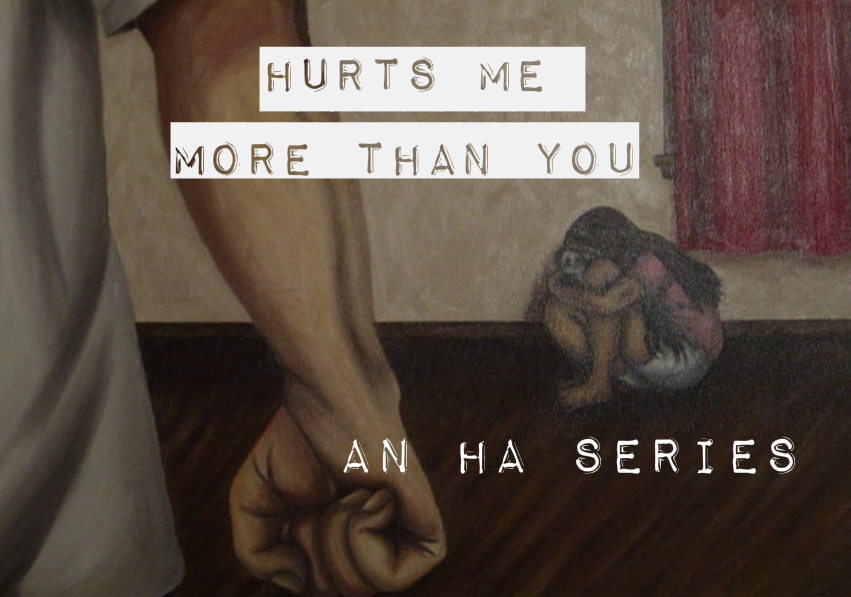
Hurts Me More Than You: Jerusha’s Story

Screen Shot 2014-09-23 at 10.15.16 AM

*****

Trigger warning for Hurts Me More Than You series: posts in this series may include detailed descriptions of corporal punishment and physical abuse and violence towards children.

*****

The Mask of Modesty: Jerusha’s Story

HA note: Jerusha’s story originally appeared on her blog on October 8, 2014 and is reprinted with permission.

When I was a girl, my mother made modesty a top priority. She discarded all my shorts, all my pants. God had made me female, so I needed to look like the woman on the restroom sign. Dresses it would be from then on.

I was never quite sure if Mom reached this conclusion on her own, or if it was Dad’s decision for us, or if they worked it out together. I wasn’t happy about it, but then, I wasn’t consulted.

There were no more pajama outfits, only nightgowns. The sunsuit that had replaced my swimsuit was not replaced with a calico dress. Yes, I wore a dress in the lake. A dress on my bike. A dress in the sandbox and on the swings. I wore a dress in the garden, to the orchard, on a hike. When I went sledding, I wore a long flared wool coat over my snowpants. Later, I wore snowpants or sweatpants under a long, loose, flapping skirt. After a few runs down the hill, the snowy skirt would stiffen around me like a bell.

IMG_3831For warmth, I wore cable tights.

For modesty, I wore homemade knee-length bloomers over the tights.

They were usually white, longer than shorts, and they had eyelet ruffles below the elastic cuffs. The woman who first showed my mom how to make them called them “pettipants“. We quickly shortened that to petties. The petties were so modest that I would often strut around my bedroom in them.

“I could go out like this and most people would think I was already fully dressed,” I must have said to my sister a hundred times as a teen–before pulling a skirt or jumper over my loose-fitting shirt. No way would I leave my room in just my petties. They were a secondary undergarment, like a camisole. They should never be missing, but they weren’t meant to be seen.

If Mom told it once, she told it a hundred times–the story about an evil man who had tried to molest a young girl in her neighborhood.“He asked if he could see her underwear!” The girl had refused him, she said, but the situation had been traumatizing. Knowing that such predators existed was motivation for us to stay covered.

Once at a hotel, Mom was anxious that we close the drapes because some of the girls were already in their nightgowns. “Bad men might see me?” my little sister inquired sweetly.

Over the years, I spent many hours sewing dresses and petties. Mom bought elastic by the yard and I fished it through the casings with a safety pin. Those little girls’ diapers and underpants must never show, no matter how hard they played. My brothers must never see how their sisters’ bodies were different. (We girls could change diapers of either sex, a privilege not permitted to the boys.)

By two years old, my sisters were no longer dressed in rompers–they wore dresses and jumpers and pinafores. When they went outside in the snow, we shoved the handfuls of fabric down the legs until the girls looked like pink or green marshmallow people. But the downside of dresses was the risk of accidental exposure. So petties were ubiquitous. Rarely visible, but ubiquitous, nevertheless.

My sex education was spotty at best, but one message I got loud and clear was, “Keep men away from your underwear.” 

Whether playing outdoors or sitting on church pews, our bodies were kept hidden under layers of cotton. At IBLP training centers, we joked about boys not knowing that girls’ legs separated before the knee. When I started wearing shorts on occasion as an adult, I felt a twinge of betrayal, pondering whether God intended for my thighs to be displayed in public. Would they, as my friend’s grandma warned her, “make men think bad thoughts”?

Even when I married, I took my petties with me, accustomed to the secure and familiar feeling of soft cotton wrapped around my legs. And as Mom and I sewed dresses for the four sisters who were flower girls in my wedding, I never questioned that coordinating petties were an essential part of the ensemble.

And yet…

What I didn’t realize then was that there was one glaring exception to the inviolable rule of modesty:

Spankings.

I have many memories of being spread across Dad’s lap and struck with a belt or stick of wood. But my memories are always fully clothed. It was bad enough (and much more painful) when Mom hit me, but as the modesty rules tightened, something felt increasingly dissonant about a part of my body that was never supposed to be seen or talked about suddenly becoming a man’s target. (The last time he hit me, I was about 13. I had the body of a young woman and was wearing a long wool skirt. Being ordered to lie across his legs, I felt violated. Since it never happened again, I assumed it made him uncomfortable, too.)

However… when my father took one of his younger daughters into a bedroom and closed the bedroom or bathroom door, many times he would lift that modest dress. He would pull down her petties, exposing her panties. (I am uncertain when my parents adopted this invasive approach to “discipline”, but their pastor, also an ATI dad and a certified character coach, taught it in detail during a Sunday service years ago.) Sometimes Dad would pray aloud for “Satan to be bound”.

Only then would he raise the wooden spoon that was the implement of choice, bringing it down hard against her thinly-clad flesh again and again. I heard the cries of anger and pain, and later saw the dark bruise lines when I bathed the girls and helped wash their hair. I didn’t like the reminder of my own younger experiences, but I believed it was necessary. I had survived spanking, and now I was a responsible young lady. It never once occurred to me that our patriarch, the “priest of our home”, might be looking at his little girls’ backsides in their knickers.

The petties protected us all, didn’t they? They were a kind of magical garment, shielding us from prurient men and guarding men from lustful thoughts. Allowed too close to the natural shape of our bodies, any male might be overwhelmed with desire sufficient to become a pedophile. That was what we feared.

Though Dad slowly relented on parts of the family dress code, permitting his daughters to wear slacks, pajamas, and modified swimsuits, I had already absorbed the modesty mantra into the warp and woof of my being. So much so that it took a decade to silence my mother’s voice in my head every time I went shopping or opened my closet door.

But these days, I think very differently about those who would dictate how females dress.

I also think differently about inflicting intentional pain on children’s bodies to root evil out of their hearts.

And I feel more strongly than ever that if parent-teachers, in the sanctity of a child’s home, are permitted to remove her clothing at their whim for the purpose of making her good, they put a hurdle in the way of her learning self-respect.

Let me take a moment to unpack all the harm I see in this scenario.

1) Our parents rigidly defined our roles as females. We were subject to rules and dangers that didn’t apply to our brothers.

2) In our home, everything was sexualized. Books, from our encyclopedia set to our Bible storybooks, had white stickers covering illustrations that were deemed indecent. We left the beach if a bikini showed up. The dining room seating was arranged so that the boys would not see the teen girls across the street washing their car.

3) Threats of physical violence by adults against young children were normalized in our home. We called it “spanking”. It involved a weapon, and it left marks.

4) As if being painfully punished on the bottom with a stick was not enough, having one’s required covering forcibly removed was a special humiliation.

5) We were told constantly to be “modest”, but as soon as we were perceived as “independent”, “rebellious” or “talking back”, our modesty was no longer valued. Indeed, our value as females was directly linked to our obedient, submissive, and chaste spirits.

6)  That my father, in our insular world, had the privilege of exposing his own daughter’s panties underscored his tremendous authority. He was the top dog. The rules that applied to others did not apply to him, at least not when we had been defiant or lazy, or had spoken out of turn.

7) On occasion, my parents also spanked their daughters on bare buttocks. When Mom was particularly upset (she was often very cool while she beat us), she threatened to call Dad in to spank a girl’s already-bare bottom. That girl still remembers the horrible threat.

So tell me,

If a young child is made to feel dirty when she says “no”,

Or if her resistance to pain is met with threats of something worse, 

How can she be expected to enforce healthy boundaries in relationships when she is grown?

In Mom’s story, the would-be molester asked a young girl to show herself to him. But our parents made this sound shameful, and then demanded it of their own daughters.

Sorry, Mom and Dad, you can’t have it both ways. You abused the “blessings” that filled your quiver. And you wonder why we struggle to respect ourselves now.

Gothard’s Sex Rules: Marital Consent? What’s That?

Screen Shot 2014-07-22 at 4.37.57 PM

HA note: The following is reprinted with permission from Libby Anne’s blog Love Joy Feminism. It was originally published on Patheos on May 13, 2014.

My family never attended one of Bill Gothard’s seminars, and we didn’t use Gothard’s curriculum. We children were, instead, raised on the outskirts of Gothardism. We knew people who were followers of Bill Gothard, and we imbibed a few of his teachings (umbrella of authority, anyone?), but that was the extent of it. As things began to snowball over the past months and Gothard was exposed as a sexual predator and ultimately relieved of his leadership position, I wanted to learn more about what Gothard actually taught, in his own words. So I purchased Gothard’s “Advanced Seminar Textbook,” which was published in 1986 and can be found used on Amazon. I’m not going to blog through it page by page, but I do plan to write some posts on various sections. Today I offer my first of these posts.

In his textbook, Gothard covers his rules for periodic abstinence during marriage, which centers on a woman’s menstrual cycle (pages 175—185). Of all of Gothard’s teachings, this may be the one I’m most unfamiliar with, as it is foreign to anything taught in the evangelical church my family attended. In this post, I will cover the first pages of this section and then finish with a letter Gothard received from a follower.

To start out, here are the rules Gothard lays out as “God’s laws on abstinence”:

What Are God’s Guidelines for Times of Abstinence? 

  1. During the menstrual cycle—Ezekiel 18:5-6
  2. Seven days after the menstrual cycle—Leviticus 15:28
  3. 40 days after the birth of a son—Leviticus 12:2-4
  4. 80 days after the birth of a daughter—Leviticus 12:5

Gothard’s critics tend to do two things: they call him a “legalist” and argue that his teachings in this area come from the Old Testament and are therefore invalid, as the Old Testament is superseded by the New Testament. Here, on the first page of this section, Gothard directly counters both of these arguments.

First, Gothard urges his readers to “distinguish between legalism and godly living” and states that: “(1) Legalism is trying to earn salvation; (2) Legalism is trying to live the Christian life with the energy of the soul; and (3) Legalism is following ‘the letter,’ not ‘the spirit.’” Gothard uses Bible verses to back all of this up, focusing especially on II Corinthians 3:6. Gothard argues that he is not teaching legalism but rather godly living.

Second, Gothard pulls up each time the New Testament references “uncleanness” and uses that to claim that the Old Testament teachings regarding a woman’s menstrual uncleanness is still valid. This is a fascinating attempt, but it does not actually work, as it’s pretty clear he’s proof texting and he comes across as being unaware that the New Testament was written in a different language from the Old Testament. Still, that he at least tried is fascinating.

Now I want to turn to the first of the “Benefits of Abstinence” Gothard lays out.

1. It builds self-control.

When sex drives are misused, they become self-consuming and can never be satisfied. Burned-out lusts call for new forms of perversion, which become even greater tyrants of unfulfillment.

Okay, so here’s the thing. If I’m overeating and I know I’m overeating, and it’s making me feel unhealthy, I can fix that by moderating what I eat. I don’t need to spend time fasting to do that. In fact, fasting in order to lose weight can easily lead to binge eating when the fast is over. I guess what I’m saying is that there are better ways to foster a healthy and balanced sex life than abstaining and then (presumably) binging.

But what’s actually going on here becomes more clear with the letter Gothard prints from one of his followers, and it’s not pretty.

How a Commitment to Abstinence Transformed a Marriage

I am writing to report what has happened in our marriage since our decision to follow God’s guidelines for abstinence. To be honest, I was waiting to see if the changes in our lives were short-lived or permanent. Now after a third of a year and five menstrual cycles, I am encouraged that our decision was correct, Biblically-based, and that the Lord is blessing our marriage more than ever before.

Let me start at the beginning. Our dating relationship was based on the physical, not on the spiritual. It ended in pregnancy and then marriage. She was sixteen, I was twenty.

Depending on the state, this might not have been legal.

After we married, our sex life became a shambles. My physical drives were impossible for her to satisfy, and even with a daily physical relationship, I became involved in pornography and other impure habits.

If you’re having sex daily and yet you’re not sexually satisfying, it’s probably worth seeing a doctor or a therapist.

After ten years of marriage we attended our first Basic Youth Seminar. When you went over the consequences of defrauding in dating, I suddenly realized my problem and our marriage problem.

And exactly how do we explain all of the couples who had sex before marriage and are currently in healthy, sexually fulfilling relationships?

I asked God to forgive me for defrauding her before marriage, and for the first time in my life, I began exercising self-control.

Also for the first time in ten years of married life, we began to experience true sexual intimacy. Our relationship continued to improve, but my wife still felt forced to submit to me, and she worried daily about whether or not she would have to ‘make love’ that night.

Wait. Wait wait wait. So the whole time this guy was having sex daily, his wife was only participating because she believed her role, as his wife, was to submit to him and be sexually available. You know, the fact that she felt she had to have sex with him whether she wanted to or not might just play some part in why their sexual relationship wasn’t fully satisfying him.

I began having difficulty exercising self-control.

I really want to know what this means. Was he raping her?

Then we attended your Corporate Leaders Seminar and learned about abstinence during the menstrual period and for seven days after the period. I knew immediately that this is what God wanted me to commit to, and it scared me to death! I couldn’t picture myself being committed to anything like that!

However, God gave me the strength and encouragement to talk to my wife. We discussed it and that day, with her permission, I made a commitment to follow that principle.

Now he’s concerned about getting his wife’s permission?

The relief within my wife was almost visible. The “fear” is gone from our marriage.

Well of course her relief was almost visible! His poor wife knew she would have have two weeks of blessed relief from her husband’s constant (and unreciprocated) sexual demands!

We now have a freedom we never experienced before. We are blessed to the point that we almost feel guilty when we are around our Christian friends who are completely loaded down with problems. Our lives have been transformed by applying this and other principles from God’s Word.

You replaced consent with biblically-mandated periodic abstinence, you asshole.

A Confirming Report from the Wife

I cannot tell you how much the material on abstinence has meant to me and our marriage. I have never experienced what has been happening in our marriage since we began following the principle of abstinence.

It is indeed a miracle!!!! Through the power of the Holy Spirit, my husband has exercised real self-control in the area of our sex life. I feel so loved, cherished, and protected! I have been able to respond to him as seldom before. The difference in our relationship is difficult to describe, but very wonderful to experience. Thank you again for motivating us to choose God’s best.

Someone tell this poor wife about consent and marital rape.

I didn’t expect to be this frustrated when I opened the volume to these pages, but I am. I am really, really frustrated. It appears that Gothard is using abstinence during the period and for seven days after the period as a replacement for consent within marriage. With these teachings, women who find themselves forced to submit to sex they do not want—forced by their believe that that is the wife’s biblical role—can find relief in two solid weeks of freedom from those demands.

This is sick.

“Everyone is Forgiving”: Bill Gothard’s Bold-Faced Lies

Screen Shot 2014-07-05 at 1.20.37 PM

Jeri Lofland blogs at Heresy in the Heartland. The following was originally published by Jeri on July 3, 2014 with the title “When Apologies Make It Worse,” and is reprinted with permission.

Since Bill Gothard had to resign from leading his Institute in Basic Life Principles amid allegations of inappropriate behavior toward female staffers, he has made few public statements. But in private, he has been far from silent.

An article published last week by Mother Jones stated:

These days, Gothard says, he is busy “contacting people I’ve offended and asking them to forgive me.” Asked how this process is going, he chirpily replies, “Wonderful. People are very grateful and everyone is forgiving.”

However, some former IBLP staff members take issue with Gothard’s version of the facts. Gothard has made efforts to contact them, they say, and “grateful” was not a word that came to mind.

One woman, who has had contact with Gothard since his resignation from IBLP, dismissed his attempted “apologies” as unethical and disingenuous. As this woman has requested anonymity, I will refer to her here as “Sally”. After her story was published on the website Recovering GraceGothard sought to engage Sally in an email correspondence. She has given me permission to share the content of those emails here. Gothard did not reply to the last message included below.

******

Sally,

I was grateful for my talk with ***** and he told me of his contact with you. It would be an answer to prayer to be able to be reconciled with you and I would appreciate any direction you would have towards this goal.

Sincerely, Bill Gothard

******

Bill,

As a starting point, I would like to know why you have resigned as president of IBLP?

Sally

******

Thank you, Sally, so much for your response. I resigned from the Institute because I have finally realized that relationships with the Lord and others are far more important than the work I do for Him. I have offended many individuals including you and it is my desire to be reconciled with as many as possible in the years to come.

Sincerely, Bill

******

Bill,

You say that you have offended many individuals including myself.

I would like you to be specific regarding the manner in which you believe you have offended me.

Sally

******

Sally,

I apologize for the delay in getting this message to you. For many years I have treasured the memories of the friendship that we had. I am praying that this can be restored. Some of my actions were inappropriate and offensive. Is it possible to hear your perspective on these wrong actions so that I can more precisely understand and acknowledge my fault and seek your forgiveness?

Sincerely, Bill

******

Bill,

I should not have to explain to you what was “inappropriate and offensive” about your actions towards me. It is very wrong of you to ask me to recount them for you, and I do not intend to do so.

If you sincerely desire my forgiveness and you wish for reconciliation, then you need to acknowledge your offensive behavior in an honorable, fearless and truthful manner. If you are not willing to do this, then please do not contact me again.

Sally

******

Readers of the accounts on Recovering Grace will recall that Gothard commonly groomed his victims of sexual and/or emotional abuse by urging them to confide to him all the sexual details of previous relationships. It would appear from this series of emails that even at nearly eighty years old, he still takes a voyeuristic interest in hearing his victims describe the shame he sought to burden them with.

“He consistently asks the girl to tell him what it is she thinks he has done. Then he apologizes for ‘her perceived’ grievances. There is no ownership of his behavior. He’s putting it all back on the the victim.”

And once again, Gothard is breaking his own fundamental rules–this time for apologies. In his Basic Seminar textbook, he wrote a whole chapter on the right way to clear one’s conscience by asking forgiveness.

bsFor example, Gothard’s text points out:

It does little good to ask forgiveness for a small offense when in reality that offense is only a fractional part of a much greater offense.

Also:

There are several ways to ask forgiveness which are guaranteed not to work–such as, “I was wrong, but you were too”; “If I was wrong, please forgive me”; “I’m sorry”, etc. There is one genuine statement which reflects true sincerity and humility: “God has convicted me of how wrong I have been in (my attitude and actions). I know I have wronged you in this, and I’ve come to ask, will you forgive me?”

Carefully choose the right wording

  • Your words must identify the basic offense
  • Your words must reflect full repentance and sincere humility

 …One of the hardest statements for any person to make is, “I was wrong.” It is a lot easier to say, “I’m sorry about .. ” It is also much easier to say, “Please forgive me” than it is to ask, “Will you forgive me?” and wait for the answer.

Gothard then gives examples of wrong wording:

“If I’ve been wrong, please forgive me.”

And right wording:

“God has convicted me of how wrong I’ve been in ______ (Basic Offense). I’ve called to ask will you forgive me?”

This request, spoken in the right attitude, is certain to be well-accepted by the one to whom it is directed. This approach must include correction of any attitudes or actions which caused the offense and also restitution for any personal loss which was suffered by the one offended.

Oh, yes, restitution. Did you see that mentioned in the emails to Sally? No, I didn’t, either.

But let us go on. The seminar manual taught that one should not go into too much detail, and emphasized the principle with a verse from the New Testament:

In Scripture we are warned that, “It is a shame even to speak of those things which are done of them in secret.” (Ephesians 5:12) This warning definitely applies when asking for forgiveness. It is neither important nor appropriate to review impure details of an offense. This only tends to stir up the mind of the hearer to the past. 

And yet Gothard needs more details so he can “more precisely understand and acknowledge” his fault? Hmmmm.

Of course Gothard wrote the seminar text long before email, but he recommends making apologies only by phone or in person, not by correspondence. I have highlighted some relevant points in Gothard’s explanation:

Please don’t write a letter. Most people are tempted to use this method because it is so easy and the least painful to their pride. But it is not effective for many reasons. First, it documents your past offenses and your purpose is to erase them. Second, a letter can be misused by the one receiving it. This only complicates the problem. Third, it often embarrasses the one receiving it, and they may never reply to it. Fourth, a letter doesn’t allow you to gain their verbal assurance of forgiveness. That is a very important factor for you and for the one you have offended. A verbal forgiveness allows him to become free of his bitterness.

Oh, yes, bitterness! So we ask forgiveness in order to help our victim “become free of his bitterness”? No wonder these women are frustrated!

Let me give you a tip, Bill. Forgiveness alone is not enough to erase your many offenses. And the women you used for your own sexual or emotional gratification are wiser and more self-protective now. This is not about restoring a friendship, it is about your manipulative abuse of your position.

“I am not trying to reconcile – I am trying to bring to attention a problem that has been ongoing for forty years. I forgive him, but I have no wish to reconcile with him.” 

–“Sally”

Perhaps most interesting of all, though Gothard’s attorney friend-turned-investigator failed to contact any of the women who spoke out on the Recovering Grace website, Gothard himself is contacting them. He is even contacting other women who have not publicly spoken about their IBLP experiences but who were indeed mistreated by him. Would he possibly be working from memory here? And if his memory is that sharp, why would he need to ask for more details?

This is, after all, a man who taught millions exactly how to ask forgiveness for the offense of “Behaving improperly on a date“:

Wrong Confession: “I realize that I was wrong in necking with you on our date. Will you forgive me?” 

Right Confession: “I realize that I have been wrong in my selfish actions and attitudes toward you when we were dating. It would mean a great deal to me if you would forgive me. Would you forgive me?”

…be as brief and as clear as possible…. Talking too much will not only “sidetrack” the whole purpose of your coming, but may give the impression that you are trying to justify or explain your offenses in order to minimize them. 

You don’t say, Bill? You don’t say.

A *Real* Investigation into IBLP

iblp
IBLP’s Headquarters in Oak Brook, Illinois.

Jeri Lofland blogs at Heresy in the Heartland. The following was originally published by Jeri on June 22, 2014, and is reprinted with permission.

Thoroughness:

Knowing what factors will diminish the effectiveness of my work or words if neglected

–Bill Gothard

Bill Gothard’s buddy David Gibbs, Jr. has now completed his “investigation” into allegations made against Gothard by former IBLP staff members. According to the IBLP board earlier this week,

“…the Board sought the facts through a confidential and thorough review process conducted by outside legal counsel. Many people were interviewed, including former Board members, current and past staff members, current and past administrators, parents, and family members.

“At this point, based upon those willing to be interviewed, no criminal activity has been discovered.”

But according to the team at Recovering Grace,

“…not one of the women who have shared their stories on our site were personally contacted by Gibbs Jr. or his investigative team, including Charlotte, who alleged molestation.

Perhaps Gibbs Jr. needs to brush up on his Character Qualities.

It would seem that Gibbs’ investigation focused narrowly on certain allegations of sexual impropriety (some of which Gothard has admitted to, resulting in his resignation). However, this is but the sensational tip of the iceberg and ignores the broad scope of hurtful, unethical, and even illegal activities that have damaged numerous lives associated with the Institute in Basic Life Principles.

Gothard promoted his organization as “Giving the world a new approach to life” and following God’s “non-optional principles”. A ministry that prides itself on being “under authority” should have nothing to fear from the truth. And yet, the testimonies of some former students and staff members paint a disturbing picture. Some of these stories of life under the auspices of the Institute have been published on Recovering Grace. Others have been shared more privately. Some victims are willing to have their names attached to their experiences while others prefer anonymity, or pseudonyms.

Each of the incidents outlined below could likely be explained away on its own. But taken together they suggest a pattern that I believe is worthy of deeper examination. The Board of IBLP can write, “We dedicate ourselves to help build up families and individuals,” but if these situations actually took place, the Institute’s so-called “ministry” is a farce, with or without Gothard, and IBLP should be shut down to prevent further abuse of power.

real investigation of IBLP might look into allegations of the following:

OSHA and other code violations at all locations: Indianapolis, Oak Brook, Elms Plantation, Oklahoma City, Eagle Mountain, Eagle Springs, Northwoods, Big Sandy, Flint, South Campus, Little Rock, Nashville, and others

For example:

  • Lack of permits: illegal remodeling, dredging a lake without a permit, improper electrical wiring
  • Poor fire safety: hiding fire extinguishers and fire pulls behind paintings or décor items; silencing a monitored fire alarm to avoid disrupting conferences, not reporting fires to fire department
  • Improper supervision: letting teens work on upper-story building exterior or fire escapes without safety harness
  • Injuries: electrical shocks from unsafe practices, minors injured while operating power tools, carbon monoxide poisoning of kitchen volunteers
  • Faulty elevators
  • Violations of residential occupancy limits

Prayer rooms (especially at 2820 N. Meridian, Indianapolis):

  • locking minors in solitary confinement without notifying parents
  • locking minors in solitary without access to a restroom
  • withholding food or medication
  • spanking minors without parental consent

Failure to protect children by reporting abuse:

  • failure to report sex acts with or molestation or attempted sexual molestation of minors in IBLP’s care at the ITC (Rodger Gergeni)
  • failure to report sexual abuse of minors in ATI families (Bill Gothard)
  • pressure on homeschooled victims not to report physically abusive parents
  • shaming victims of sexual assault and neglecting to counsel them to contact police
  • pressuring ATI moms not to divorce abusive husbands who posed a danger to the children

Educational neglect:

  • failure to educate “homeschooled” minors who were sent to IBLP centers by their parents
  • using A.C.E. curriculum for children sent by the courts
  • violation of child labor laws
  • children (9-10 years old) working in the kitchen or cleaning bathrooms, sometimes rising as early as 4 or 5 a.m. to work
  • unpaid teenagers working 12-18 hour days in the hotels (cooking, industrial laundry, cleaning hotel rooms and public restrooms)
  • selling teens unaccredited degrees (Telos.edu) without adequate explanation of their value

Forced fasting:

  • on weekends, designated prayer days, and other times when meal preparation was inconvenient
  • though some children were sent there by the state and other students paid for room and board, only two meals were served on Saturday and only supper on Sunday
  • sometimes only two meals a day were served for weeks in a row
  • requiring students to turn in care packages
  • also mandatory weight checks (Weigh Down) for staff women, involuntary diets, forced exercise
  • failure to recognize eating disorders such as anorexia (even when girls were passing out)

Medical neglect:

  • withholding or confiscating prescription medication (including antidepressants, an asthma inhaler, post-surgery pain medication)
  • refusal to get prompt medical treatment for severe burns, broken bones, concussions, pneumonia, collapsed lung, high fevers, torn ligaments, acute food poisoning–many former students trace chronic health problems to untreated conditions that arose at training centers
  • treating injuries with alternative remedies such as sugar water injections (Dr. Hemwall)
  • letting doctors or dentists with revoked licenses treat students at training centers

Campaign ethics:

  • sending youth to campaign for Indianapolis judicial and mayoral candidates
  • providing private services to a public official (Lt. Gov. Mary Fallin) in Oklahoma

Employer issues:

  • pressuring employees not to record overtime on time sheets
  • advising employees that submitted overtime hours would not be paid
  • mandatory unpaid evening work teams for employees (washing dishes, cleaning carpets, scrubbing bathrooms)
  • paying less than minimum wage, paying minimum wage minus “rent”
  • firing employees without due process or notice
  • refusal to pay workers’ compensation
  • instructing employee to lie to hospital staff to protect the “ministry”
  • praising employees who gave up their paycheck to become volunteers
  • allowing children under 16 to work more than twenty hours a week
  • sexual harassment of junior staff or students by adult staff

ALERT:

  • physical abuse, medical neglect, solitary confinement, unsafe equipment, psychological abuse
  • refusal to contact parents regarding medical emergencies
  • keeping four teens tied together by the feet for an entire day, resulting in injury
  • a unit of under-dressed teen boys standing outdoors in sub-freezing temperatures at night until one confessed to a minor infraction
  • disregard for basic safety precautions
Mistreating Russian orphans in Moscow and at Indianapolis South Campus:
  • foster families spanking children and even teens
  • children spanked for minor misdeeds
  • English-speaker spanking Russian child without an interpreter present
  • withholding meals from children for disciplinary purposes or feeding them only dry rolled oats and water
  • child labor (reports of children required to clean toilets at 5 a.m.)
  • using orphans to “encourage” financial donors

Restricted communication from training centers:

  • limited access to public phones, email, fax, or internet
  • reading students’ outgoing or incoming mail, confiscating mail or making students open mail in presence of a leader
  • censoring outgoing email
  • telling students what to tell (or not tell) their parents about situations at the training center
  • limiting who a student or employee was allowed to correspond with outside
  • restricting conversation or interaction between fellow students

Psychological abuse:

  • lengthy, repetitive, or middle-of-the-night “counseling” sessions (berating and brainwashing)
  • restricting sleep
  • piping loud music into bedrooms
  • assigning staff to night duties on consecutive nights (along with their day jobs)
  • requiring student to wash clothing by hand until she had earned “privilege” of using the laundry facilities; requiring staff to recite extensive Bible passages before breaking a fast
  • confiscating clocks
  • hours of forced labor intended to “break will” or “conquer rebellion”

Violations of privacy:

  • not permitting students to take bathroom breaks or use the restroom alone, or with the door closed
  • confiscating personal items such as clothing, music, photographs, medication, and cell phones

Miscellaneous:

  • sending unreported cash through customs on staff member’s person
  • exaggerating or misrepresenting facts in newsletters
  • promotional video about ALERT describing a pilot “rescue” omitted the fact that it was ALERT’s own plane that crashed while taking aerial photos of the property)
  • personal gifts of cash or clothing from Gothard to his favorites
  • discrimination against males who appeared “too effeminate” and females who were overweight or not “feminine” enough
  • photoshopping hair, clothing, and landscaping for newsletter photos
  • selling overpriced plant kits to ATI families under fraudulent advertising
  • serving old (long-expired) donated food or insect-infested grain
  • transferring minors across state lines between “training opportunities” without parental permission or notification
  • insisting that Character First was not affiliated with Gothard

With former ATI students and IBLP staff reporting incidents like these, is it any surprise that so few choose to use Gothard’s materials with their own children?

IBLP’s Statement Is A Disgrace

Screen Shot 2014-06-17 at 8.04.15 PM

By R.L Stollar, HA Community Coordinator

Earlier today, the Institute in Basic Life Principles (IBLP) released a statement by their board concerning the resignation of Bill Gothard and the many allegations against him concerning sexual misconduct and abuse. You can view the statement in entirety on IBLP’s website here. We have also archived a PDF of the statement on HA here.

The statement begins, unsurprisingly, with praise for IBLP itself. The board speaks glowingly of their own ministry, saying “each of us has been positively impacted by the relationships, teachings, and opportunities available through the Institute in Basic Life Principles.” That this is how the board chose to begin a statement on such a serious matter is rather telling.

The board then discusses the results of their “investigation” into Bill Gothard’s actions. They say the following:

In response to allegations against Bill Gothard, the Board sought the facts through a confidential and thorough review process conducted by outside legal counsel. Many people were interviewed, including former Board members, current and past staff members, current and past administrators, parents, and family members. At this point, based upon those willing to be interviewed, no criminal activity has been discovered. If it had been, it would have been reported to the proper authorities immediately, as it will be in the future if any such activity is revealed.

The fact is, the “thorough review process” was not conducted by “outside legal counsel.” It was, rather, conducted by David Gibbs, Jr. — a longtime associate of Gothard’s ministry. As Jeri Lofland at Heresy in the Heartland has pointed out,

Gibbs, whose Christian Law Association has been described as “the Fixers for fundamentalism”, gave three sermons at last year’s ATI training conference in Nashville and is slated to address this year’s conferences, too.

Considering not only Gibbs’s relationship with Gothard and his own history of defending child abusers, as Jeri also detailed, I have little faith in the legitimacy of the “review process.” It is entirely unsurprising that “no criminal activity has been discovered,” and I have no reason to believe that, was it discovered, that the IBLP would actually report it. The board has been aware of sexual abuse by both Bill Gothard and his brother for decades, and their track record on reporting it has been dismal. Earlier this year, Recovering Grace told Charlotte’s story, which included disturbing details about Gothard’s “long hugs” and sexually charged questioning of a young woman. And as Libby Anne at Love Joy Feminism pointed out,

The IBLP Board knew that Bill was acting in appropriately toward her when she was a 16-year-old secretary at headquarters in 1992, and yet they simply sent her home and kept things quiet.

In 1992. And nothing was done. Nor was anything done as early as 1980:

Even before this, people knew and chose to cover for Gothard. There was a sex scandal in 1980 that involved Gothard’s indiscretions (it seems he made a habit of visiting the female staff in their beds at night), and yet people were willing to ignore, overlook, cover for, and outright lie about what happened.

Now, in today’s statement, the IBLP board has sadly chosen to continue their history of whitewashing and denialism. It may be a new board, but the actions remain the same.

The most tragic part of this, to me, is that while IBLP is willing to admit wrongdoing on the part of Gothard —

The review showed that Mr. Gothard has acted in an inappropriate manner, and the Board realizes the seriousness of his lack of discretion and failure to follow Christ’s example of being blameless and above reproach.

— there is not a single moment where the IBLP board takes the time to say what should be most obvious:

“We’re sorry.”

Not once.

If he acted in such an inappropriate manner that “the Board unanimously agrees that Mr. Gothard is not permitted to serve” in any IBLP role, could you maybe, you know, apologize?

Nope. Not once.

Not once does IBLP take a long, serious look at the devastation their ministry’s leader — and his twisted false gospel — have had on thousands of young people and families. Not once do they say, “We’re sorry about that.” Not once do they take seriously their role as stewards of a ministry that allowed a man in power to take advantage of young women under his authority — be it criminal or simply “in an inappropriate manner,” as they spin it. Not once do they say, “We’re sorry,” to those young women and their siblings and families for the broken hearts and hurting souls.

I mean, seriously, IBLP? Was it that difficult for you? Did you not know how to say a simple, “I’m sorry”? Here, let me Google that for you.

The board needs to take full responsibility for their leader’s actions and sincerely apology for those actions, whether criminal or simply “inappropriate.” They need to make amends to every individual grieving and suffering. They need to reassess their own organizational structure and teachings and consider how to ensure that such actions never happen again, nor get swept under the rug for decades. As it stands, IBLP’s latest statement is a disgrace to the name of the God they claim to serve.

Not On Your Side, Debi: Jeri Lofland’s Thoughts

pearls_1

Jeri Lofland blogs at Heresy in the Heartland. The following was originally published by Jeri on April 27, 214, and is reprinted with permission.

This week, embattled IBLP founder Bill Gothard received aid from an unexpected quarter–homeschool mom and popular author Debi Pearl.

In the past, self-confessed “old hillbilly” Michael Pearl has sometimes himself been critical of Bill Gothard for helping create the excesses of the homeschooling patriarchy movement–a highly ironic observation coming from the father of patriarchs! But this week, Debi came out swinging against IBLP victims who have gone public with their stories on “Recovering Grace” and other websites.

Beginning her post with the question, “Whose side are you on?” Debi attacks those who have dared to publish accounts of how Gothard lied to, molested, or otherwise mistreated them. According to Debi, these “critics” are “bitter” (that’s the ultimate pejorative in IBLP circles, remember?), they are “foolish”, and they have joined a “Satanic attack on God’s people”.

On the one hand, Debi describes Gothard as a “man who put his whole life into doing a work for God”. On the other, she denies having any connection to IBLP’s beleaguered “ministry” which, she claims, helped “set thousands of people free from bitterness”.

Gothard and the Pearls have, in fact, had a symbiotic relationship for years.

They attended a Basic Seminar in the late 1970’s. IBLP promoted and distributed the Pearls’ parenting book To Train Up a Child. The website for IBLP Australia still offers at least two of the Pearls’ numerous books. At least one of the Pearl girls worked at Gothard’s orphanage and training center (South Campus) in Indianapolis and the Pearls kept several Russian orphans at their home over the summer. Michael solicited donations for IBLP from his followers. Several of the Pearl children’s spouses were raised in Gothard’s ATI program. (I say “spouses”, but Michael Pearl made it clear years ago that his children do not need any such thing as marriage licenses. A ceremony and their parents’ blessing is apparently good enough.*)

Besides being given to racist and homophobic remarks, the Pearls are somewhat obsessed with sex. It gives Michael hope to envision homeschoolers “outbreeding” progressives. He counsels the wife of an angry man to “make love” to improve her husband’s mood. Debi often suggests that being sexually available is a wife’s primary responsibility. Michael even wrote a book on erotic pleasure for fundamentalist Christian couples.

And then there are the Pearls’ highly controversial child training methods, which have now been linked to three child deaths. There is currently a petition circulating to ask Amazon.com to remove To Train Up a Child from its website in the interest of protecting children from parental abuse. According to a BBC report last year, To Train Up a Child has sold over 800,000 copies and boxes of the Pearls’ books have been shipped for free to U.S. troops overseas. “No Greater Joy” pulls in over $1 million a year, with Debi functioning as “the financial brain of the company”, according to her son Gabriel.

Last year, Rachel Held Evans wrote a blunt piece about Michael and Debi Pearl and their abusive “ministry”. First, she quoted Pearl himself describing how to handle a rebellious child:

If you have to sit on him to spank him then do not hesitate. And hold him there until he is surrendered. Prove that you are bigger, tougher, more patiently enduring and are unmoved by his wailing. Defeat him totally.”  -Michael Pearl

And Evans added her own warning:

But it’s not just children who suffer from No Greater Joy‘s ministries.When I was conducting research for A Year of Biblical Womanhood, I read Debi Pearl’s popular book, Created to Be His Helpmeet…which I threw across the room a total of seven times.

The writing is awful, the biblical exegesis deplorable, but what troubles me the most is that the book reads like a manual for developing abused wife syndrome.

In their story “The Real Michael Pearl” a few years ago, Religious Child Maltreatment pointed out the peculiar rush Pearl appears to derive from seeing small children spanked into silence, and his sense that he has “come upon the holy grail of childrearing”.

To Pearl, and many parents who follow his teachings, the primary goal of parenting is not to support children by fulfilling their needs to feel safe and experience appropriate autonomy, but to control children.

In April 2011, Cindy Kunsman, a nurse explained the physical dangers of Pearl’s teachings in a post on the No Longer Quivering blog. Homeschoolers Anonymous reposted the piece in September of last year:

Due to the severity of the spankings with [Michael Pearl’s recommended] plumbing line, both Zariah and Lydia Schatz suffered renal failure because of rhabdomyolysis.

…[W]e may never learn the details about new cases of Pearl-related kidney disease unless it is reported by the families of the survivors.

Kunsman went into much more detail about rhabdomyolysis in another post at Under Much Grace. This article convinced me that the Pearls are not just cranks, they are dangerous.

If the children are aggressively spanked on a chronic basis, …it is possible that chronic damage could occur in children that is not bad enough to cause kidney failure but bad enough to cause damage.Unless a child undergoes blood tests at some point, “renal insufficiency” (inefficient kidney function that is lower than a normal, healthy level) could be present and no one would be the wiser. It is conceivable that at least some children have experienced some damage, but not enough to produce symptoms of kidney failure.

In October 2011 Rachel Stone wrote about Pearl in for Christianity Today. Her article included sadistic passages from To Train Up a Child and described the Pearls’ methods as “a program of calculated cruelty”:

One child suffering under this training is too many; it’s my hope that the Pearls will be widely discredited, and soon.

In a November 2011 post, a Chicago blogger pointed out that the popular Duggar family, who are still members of Gothard’s homeschooling cult, not only endorse but actively promote the Pearls’ materials on their own website:

www.NoGreaterJoy.org  Features some of the finest in family-friendly, value-based books, audios, videos, and articles on parenting, husband and wife relationships, ministry and more! Materials include, To Train Up A Child, Jumping Ship, Created To Be His Help Meet, Preparing To Be A Help Meet, Only Men, the Good and Evil graphic novel in over 20 languages and a FREE bi-monthly magazine.

Samantha at Defeating the Dragons and Libby Anne at Love, Joy, Feminism have both written boldly about the dangerous and abusive teachings of Michael and Debi Pearl. Author and mother of five Elizabeth Esther, whom Anderson Cooper interviewed alongside Michael Pearl late in 2011, has been both outspoken and tearful about the horrors perpetrated against children when parents follow Pearl’s advice. You can watch the interview for yourself here.

2011 New York Times article quotes Michael likening childrearing to training “stubborn mules” and explores links between child deaths and the teachings in Pearl’s book.

Dr. Frances Chalmers, a pediatrician who examined Hana’s death for the Washington State Department of Social and Health Services, said of the Pearl methods: “My fear is that this book, while perhaps well intended, could easily be misinterpreted and could lead to what I consider significant abuse.”

This video shows Michael and Debi Pearl in action at a child training seminar, apparently at the Cane Creek church that meets on Pearl’s property in a Tennessee hollow. Michael would much prefer to be known through his books than through these clips, but there he is on his own turf:

With his wife smiling and nodding beside him, Michael Pearl laughingly advocates cruelty against children. He encourages hitting children, even infants, with implements. He recommends luring young children with tempting objects and then swatting them to teach them obedience and self-denial. He teaches parents to instill fear in their children on purpose. Michael Pearl seems to get off on asserting his domination of a much younger, smaller human being:

” A proper spanking leaves children without breath to complain. If he should tell you that the spanking makes him madder, spank him again.”

The Pearls have long pointed to the supposed happiness of their own trained and obedient children as evidence of the efficacy of their methods. However, Michael and Debi have not taken well to being called out by adults whose parents followed this couple’s advice. Earlier this month, Michael became defensive against vocal homeschool graduates such as those of us who post at “Homeschoolers Anonymous” and posted his response at “No Greater Joy”. But even as he blasts those who speak the truth about their experiences, Michael must admit that homeschooling is no panacea:

“Not every homeschool experience will be a great success. Some will be total failures; others will be good but not altogether good. In some cases, out of six children a family may lose one or two to the world, but they will have two or three that are exceptional human beings.”

Alas for a child who turns out to be a less-than-exceptional human being! Pearl chalks such failures up to satan at work and recommends people buy more of his books, just to be safe.

I really should not be surprised to see Debi Pearl defending Bill Gothard and his ministry against what she considers defamation. But I look at her daughters, their body language, and I wonder what stories they could tell and what they would say about their famous parents if they felt completely safe.

It speaks volumes that the Pearls feel compelled to hitch their ministry to Gothard’s falling star.

*****

*Michael Pearl on marriage licenses:

“None of my daughters or their husbands asked the state of Tennessee for permission to marry. They did not yoke themselves to government. It was a personal, private covenant, binding them together forever—until death. So when the sodomites have come to share in the state marriage licenses, which will eventually be the law, James and Shoshanna will not be in league with those perverts. And, while I am on the subject, there will come a time when faithful Christians will either revoke their state marriage licenses and establish an exclusively one man-one woman covenant of marriage, or, they will forfeit the sanctity of their covenant by being unequally yoked together with perverts.”


When Homeschoolers Turn Violent: Joshua Komisarjevsky

Screen Shot 2014-03-02 at 5.36.11 PM

Series note: “When Homeschoolers Turn Violent” is a joint research project by Homeschoolers Anonymous and Homeschooling’s Invisible Children. Please see the Introduction for detailed information about the purpose and scope of the project.

Trigger warning: If you experience triggers from descriptions of physical and sexual violence, please know that the details in many of the cases are disturbing and graphic.

*****

Joshua Komisarjevsky

According to friends and family, Joshua Komisarjevsky was “a brilliant but troubled young man” who was “very loving, very caring.”

Joshua Komisarjevsky (right) was homeschooled under Bill Gothard's ATI curriculum.
Joshua Komisarjevsky (right) was homeschooled under Bill Gothard’s ATI curriculum.

Joshua was adopted at two-weeks-old by fundamentalist Christians. His father Benedict has been described as “critical, cold, and controlling”; the mother Jude, “quite submissive.”

Jude homeschooled Joshua using material from the Advanced Training Institute (ATI), the homeschooling curriculum developed by Inge Cannon (the former Director of HSLDA’s National Center for Home Education) for Bill Gothard’s Institute in Basic Life Principles. Jude said that she and her husband Benedict “had tried to instill Christian values in the boy by pulling him out of public school and educating him at home,” but he had nonetheless “wallowed in depression” due to the death of his grandfather a year earlier and had “come under ‘satanic’ influences through other youths” in his hometown of Cheshire, Connecticut. Jude said her son “was easily manipulated and controlled by others,” and she recalled going into his room at one point and “he had written over and over again on the walls: ‘death’ and ‘die’ and ‘suicide.’”

At some point during his childhood, Joshua was raped by “someone he trusted,” allegedly a teenage child that the Komisarjevsky family had fostered. Several years later, Joshua molested his younger sister Naomi. The church that the Komisarjevsky family attended “rejected psychology, psychiatry, or any kind of mental health treatment, and so did Komisarjevsky’s parents.” When Benedict and Jude discovered the sexual abuse in the family, they did not seek any mental health treatment for either Joshua or Naomi.

Right before turning 15, Joshua set fire to a gas station. Since police recognized he had serious mental health issues, he was briefly hospitalized in a mental health hospital and given medication. However, his father did not want him on any medication, and instead sent him to a “faith-based” treatment program.

On July 23, 2007, Joshua and his friend Steven Hayes broke into the home of the Petit family — William, Jennifer, and their daughters, 17-year-old Haley and 11-year-old Michaela. Joshua and Steven held the family hostage for hours. They forced Jennifer to drive to the family’s nearby bank and withdraw $15,000 — on the threat of killing the entire family otherwise. They raped and strangled Jennifer and then sexually assaulted Michaela. William was severely beaten and tied to a post in the basement. Joshua and Steven then doused the house with gasoline and set fire to the house. Haley and Michaela died from smoke inhalation. William managed to escape.

Joshua had specifically targeted the Petit family. A day prior to the killings, he noticed Jennifer and Michaela at a grocery store. He followed them from the store home and made plans to come back the next day with Hayes.

Joshua was found guilty of murder. Evidence of “his strict Christian upbringing, his disturbed behavior as a youth and his parents’ decision not to get traditional psychological treatment for him because of their Christian beliefs” was a significant matter of discussion during his trial. In January 2012, Joshua was sentenced to death. His accomplice, Steven Hayes, was also sentenced to death.

View the case index here.