Ken Ham — The Evolution of a Bully: Jeri Lofland’s Thoughts

Screen Shot 2013-10-22 at 11.51.43 PM

Jeri’s post was originally published on her blog Heresy in the Heartland  on October 16, 2013. It is reprinted with her permission. Also by Jeri on HA: “Generational Observations”, “Of Isolation and Community”“His Quiver Full of Them”“David Noebel, Summit Ministries, and the Evil of Rock”“The Political Reach of Bill Gothard”, and “Bill Gothard on Education”.

Last week, in an approach founder Ken Ham described as “cordial and engaging”, the creationist organization Answers In Genesis sponsored billboards like this one in several major cities. I can’t help wondering who Ham’s atheist friends are, and how long they will remain his friends with engaging expressions of cordiality like these.

aig1

*****

I first encountered Ken Ham at an ICR conference in Michigan.

I was a young homeschooled kid and adored Ken Ham from the first time he opened his mouth. I loved his Aussie accent, his beard, his jokes. I retold his story about “nursing the baby” way too many times. Science was my least favorite subject, but I liked history and social studies and I believed his every word.

It never occurred to me then that Ham might be wrong about fossils, Cain’s wife, homosexuality, or the book of Genesis itself.

*****

In 1974, Ken Ham himself was searching for answers.

Ham taught science in a public high school in Australia, but apparently, teaching about evolution and millions of years presented a challenge to his faith. A church friend directed him to the book The Genesis Flood by Henry Morris (a hydrologist and founder of the Institute for Creation Research in California) and John Whitcomb (a theologian).

Morris viewed the Bible as a history book and was excited to share his notions of catastrophism and how a global flood a few thousands years ago could have shaped all the geological forms we see today. Morris was greatly influenced by a Seventh-Day Adventist named George McCready Price, who went searching for geological evidence to support the visions of Ellen White, who proclaimed that the fossils were “thus preserved as an evidence to later generations that the antediluvians perished by a flood. God designed that the discovery of these things should establish faith in inspired history“.

Morris, a Baptist, read Price’s book on “flood geology” in 1943, then quietly repackaged this novel approach to geology in his 1961 book The Genesis Flood. A decade later, Ken Ham was thrilled with Morris’ solutions that could simply do away with the “millions of years” question. He felt compelled to tell as many people as he could about these new answers.

Ham quit his teaching job in 1979 to start Australia’s Creation Science Foundation (CSF) with fellow schoolteacher and fundamentalist John Mackay. At first, CSF operated out of the Hams’ home. Ken Ham later wrote that Mackay had suggested on multiple occasions that he (Mackay) and Ham could be the two witnesses described in Revelation 11 (an idea Ham says he could not accept).

Dr. Carl Wieland, a medical doctor and former atheist, believed he had encountered the supernatural while playing at card tricks with his wife.

Recognizing that modern science and telepathy were incompatible, Wieland became a creationist and even founded a creationist magazine Ex Nihilo. When Wieland joined forces with the fledgling CSF, the young magazine’s name was changed to Creation.

In 1987, Ham moved to America with his wife Mally and their five children, first to work with Films for Christ on a creationist documentary, then to work for the Institute of Creation Research as a traveling speaker to popularize ICR’s creationist message. Ham continued to direct CSF from across the Pacific until 2004. Carl Wieland, still recovering from a near-fatal car accident that took his sight in one eye, served as CSF managing director in Australia. But the Creation Science Foundation was about to rip wide open.

Margaret Buchanan, a widow, and her disabled daughter, Debbie, joined the CSF staff in 1984. Margaret served as Ham’s personal secretary. Shortly after the Hams left Australia, John Mackay, angry about being replaced as editor of Creation magazine, called Buchanan at her home, told her not to come in to work, and made bizarre accusations.

Mackay claimed Buchanan practiced witchcraft and necrophilia and was a tool of the devil.

(Mackay told Ham that he had had to cast demons out of his dog and a black cat because of Buchanan’s satanic influence.) Another staff member then sprinkled Buchanan’s office space with grape juice to cleanse it of evil spirits. Buchanan agreed to take a four-week leave of absence while staff considered the whole affair.

When the board finally decided Buchanan was innocent, Mackay laid down an ultimatum. He would not stay unless she was dismissed. So Mackay left, with a handful of followers, to lead his own creationism organization. When Margaret and two other staff members tried to meet with Mackay at his home, he threatened them with police action if they did not leave his property. Mackay was later excommunicated from his Baptist church. CMI’s website includes more than 63 sordid pages of documents dealing with the allegations, investigations, witnesses, diary accounts, signed letters, and more.

In the stormy aftermath of Mackay’s departure, Dr. Andrew Snelling, a CSF scientist who later followed Ken Ham to ICR, admitted to having had concerns about Mackay’s “extremely sloppy research”:

I worked alongside Mr. John Mackay for some years when he was with the Foundation…

As a Christian and a scientist, I have become more and more concerned with some of the claims he has been making, particularly in the area of geology. Instances have come to my attention that are either totally untrue, or misleading, even to the point of deception. Even while working with him I was concerned about an emerging pattern of extremely sloppy research, coupled with a tendency to gloss over opposing facts, even when they were graciously brought to his attention by myself and others, which drew progressively closer to the borderline between honesty and dishonesty. My concern, then as now, was his growing potential for bringing discredit to the whole creation movement.

Warnings such as these are difficult to give about someone professing to exercise Christian ministry. Undoubtedly, if past experience is any guide, Mr. Mackay will skillfully seek to have them interpreted as further ‘persecution’.

(Meanwhile, Dr. Wieland ended up divorcing his wife and marrying Margaret Buchanan. Of course, this added to the tension within the organization as some staff members believed the Bible forbade remarriage after divorce.)

In 1994, the Hams left ICR to found their own layperson-oriented creation ministry (CSM), and moved to Kentucky with the Creation subscriber list. CSM (USA) and CSF (Australia) were closely tied and their leadership overlapped significantly. Before long, “the board decided to change the organization’s name to “Answers in Genesis,” to reflect the fact that the ministry was not just about “creation,” but the authority of all of Scripture—as well as about evangelism and equipping believers to build a biblical worldview.”

According to Ham, the Australian and American AiG organizations made a “mutual” decision to separate in 2005 over differences of philosophy and organization and met “cordially” to iron out the details. Other sources describe the split much less pleasantly, writing of a years-long “bitter power struggle”, “domination”, taped phone calls, and accusations “of deceptive conduct”. The Australian organization rebranded as Creation Ministries International (CMI). Still more friction arose over printing and distributing Creation in the U.S., with AiG introducing its own Answers magazine sometime after the Creation Museum opened in 2007.

Today, creationism has become a multi-million industry with AiG strongly dominating the market.

AiG materials are available in 77 languages. The organization conducts evangelistic campaigns and literature distribution at the Olympic Games. Plans are in place for the construction of an amusement park around a “replica” of Noah’s ark, partly to serve as a warning of God’s judgment for tolerating homosexuality.

Ken Ham and his brother Steve authored the parenting study Genesis of a Legacy, in which they teach that children are foolish sinners who are actually disobeying God when they disobey a parent. Instead of “reasoning” or allowing “questioning” or “delay”, the Hams advocate John MacArthur’s approach: “short, stinging strokes to the backside”, “painful enough to make the consequences of disobedience… unforgettable”.

Based on the story of Adam of Eve, Ham is a staunch opponent of gay marriage.

He has written an article suggesting that if homosexuality is to be deemed morally acceptable, then child sacrifice should have an equal status. 

He also opposes efforts by schools to accommodate transgender students. His suggestion that transgender students are disguising their real motives betrays a truly painful ignorance of gender issues:

Sadly, these school authorities don’t recognize the sinful heart of man and what can come out from it. Surely schools officials have thought about the potential for high school boys to pretend to “identify” as a female just so they can have access to the girls’ restroom and, maybe, to their locker room—winking to their friends as they do it?  

*****

AIG prayed for my request. :)
AIG prayed for my request. 🙂

For years, I read Ham’s books, got his newsletter, sent him my money and my prayer requests. I was excited about the progress of the creation museum as they overcame the opposition of the community to build a temple to unchanging Truth.

Then, I had kids of my own. Before I knew it, they started to gravitate toward picture books about dinosaurs and stars at the library. My parents had always rejected books that mentioned “millions of years” or talked too much about biological “adaptations”. I didn’t want to discourage my kids with unnecessary censorship, and I didn’t want them to grow up feeling as uneasy around science as I was. So I started researching. As a homeschooling mom, it was important to me to be able to teach them accurately about dinosaurs and astronomy and geology. And as a Christian, I looked for trustworthy sources who shared my belief in the inspired truth of the Bible.

But what I learned shocked me, and sparked new questions.

The next time I visited my parents’ house, I pored over the latest book from AiG, studying their answers. And I felt lied to. AiG isn’t about the data, or the scientific method. AiG doesn’t offer scientific responses to questions about the rock strata or the age of the earth or fossils of whales with hips. They can’t offer plausible explanations for day and night and light and vegetation on Earth before the Sun appeared on the fourth day of creation. Most of their “answers” can be summarized as “Well, a global flood could have caused…” And they pretend there is no contradiction in the two Genesis creation accounts.

AiG is about one specific religious agenda — a fundamentalist approach to Biblical doctrine that assigns everyone who is “wrong” to hell.

Suddenly Ken Ham, my former idol, looked more like a bully.

*****

In 2010, Rachel Held Evans rocked many in the evangelical world with her book Evolving in Monkey Town, in which she considered the scientific validity of theistic evolution. When Ham shook his head sadly over the “indoctrination of our age” and “compromising church leaders”, dismissing the faith of Christians who also embrace modern science, Evans posted an articulate and heartfelt response on her blog:

We are tired of fighting. We are tired of drawing lines in the sand. We are tired of Christianity being cast as a position in a debate when it is supposed to be a way of life.

“What we are searching for is a community of faith in which it is safe to ask tough questions, to think critically, and to be honest with ourselves. Unfortunately, a lot of young evangelicals grew up with the assumption that Christianity and evolution cannot mix, that we have to choose between our faith in Jesus and accepted science. I’ve watched in growing frustration as this false dichotomy has convinced my friends to leave the faith altogether when they examine the science and find it incompatible with a 6,000-year-old earth. Sensing that Christianity required abandoning their intellectual integrity, some of the best and brightest of the next generation made a choice they didn’t have to make….

Ken likes to frame his position as an unwavering commitment to the authority of Scripture, but in reality his is an unwavering commitment to one interpretation of Scripture.

The following year, Ham was banned from speaking at a homeschool convention in Cincinnati after making “mean-spirited” remarks about another speaker, a Bible scholar and theologian who approaches the Old Testament very differently than Ham does. AiG also used its deep pockets and legal staff to bully a smaller Christian ministry with a similar name, threatening them with charges of trademark infringement.

And this month, AiG’s billboards appeared. Responding to criticism over his message to his “atheist friends”, Ham both defended and reiterated his satisfaction with his own belief that atheists will spend eternity in hell, while mocking the notion that dead people cease to exist. He described atheism as “sad” and “purposeless”.

*****

Many, many followers of Jesus doubt Young Earth Creationism, and even St. Augustine considered the Creation account to be allegorical.

Exhibit at the Denver Museum of Nature & Science.

But no one told me that. I swallowed the whole Ham sandwich: you couldn’t have faith, or sin, or Jesus, or heaven, or God… without Adam, Eve, Eden, a global flood, and less than 10,000 years. The only problem was, when I could no longer believe in a young earth, the rest of the story disintegrated, too.

Once upon a time, my meager tithe checks helped build Ken’s creation museum. Today I am one of his “atheist friends”, taking my kids to see dinosaur footprints and ancient rocks. Ham’s cartoons (the red “Abortion” balloons flown from the castle founded on Evolution) and his jokes (“God didn’t make Adam and Steve”, “fossils don’t come with labels!”) led directly to my atheism.

My life is neither sad nor purposeless.

But if it makes him feel better, Ham can thank his God that I’m finally wrong.

Bill Gothard on Education: Jeri Lofland’s Thoughts

advanced_seminar_0

Jeri’s post was originally published on her blog Heresy in the Heartland  on September 8, 2013. It is reprinted with her permission. Also by Jeri on HA: “Generational Observations”, “Of Isolation and Community”“His Quiver Full of Them”, “David Noebel, Summit Ministries, and the Evil of Rock”, and “The Political Reach of Bill Gothard”.

My parents began homeschooling me in third grade, and enrolled in Gothard’s Advanced Training Institute, a curriculum exclusively for alumni of his Advanced Seminar, before I started seventh grade. Our family was part of ATI until I reached my mid-twenties.

The following statements are the main points from a session of Bill Gothard’s Advanced Seminar. They can be found on pages 88-91 of the accompanying workbook and on his website. Looking back, these “principles” explain so much of my educational experience.

Advanced Seminar Session 16: Successful Education

(Bill Gothard)

  • The ultimate goal of education is not to produce a degree, but to produce many godly generations.
  • God charges parents and grandparents, not teachers, with the responsibility to train their sons and daughters.
  • God established the home, not the school, as the primary learning center; the school and church must be recognized as extensions of it.
  • The most destructive force in school is peer dependence, and parents must constantly work to protect their children from it.
  • God wants the priorities of every family to be built around daily engrafting of Scripture, rather than accumulating man’s knowledge.
  • The ability of sons and daughters to stand alone is the result not of rules, but of principles that assure a superior way of life.
  • When knowledge is learned before godly character, it produces pride and arrogance.
  • Parents who teach sons and daughters at home must be accountable to a local church (Christian school and the government).
  • Sons and daughters thrive with appropriate responsibility, and it is God’s goal that they be mature in their youth.
  • God gave boys and girls differing aptitudes; when children are taught together, boys are programmed for failure.
  • When schools group children by ages, older examples are cut off and rebels usually rise to leadership.
  • When the Bible is separated from courses, the contents come under the control of human reasoning.
  • True socializing takes place not in the arbitrary groupings of school, but in the real world of children-to-adult relationships.
  • Valuable learning time is lost in school; two hours of home teaching is equivalent to six hours of school teaching.
  • The key to effective education is not just a trained teacher and a professional curriculum, but a concerned parent and a motivated child.

God has set a limitation on learning; thus, academic freedom is no justification for studying the details of evil.

Inge Cannon (pictured here with her husband) helped Gothard develop the ATI curriculum in the early 1980's. She later directed HSLDA's National Center for Home Education.
Inge Cannon (pictured here with her husband) helped Gothard develop the ATI curriculum in the early 1980’s. She later directed HSLDA’s National Center for Home Education.

As an ATI student, I attended numerous conferences that became pep rallies for volunteerism with the Institute or urged us to study our favorite topics from the safety of our homes. (I even spent eighteen months enrolled in IBLP’s unaccredited correspondence law school!)

Inge Cannon was one familiar conference speaker. Cannon holds a master’s degree in education and helped Gothard develop the ATI curriculum in the early 1980’s. She later directed the National Center for Home Education, a division of HSLDA.

At an opening session of the 1990 ATI training conference held at the University of Tennesee in Knoxville, Inge Cannon warned us against the dangerous “High Places” of education. As she talked, I took careful and enthusiastic notes. I was just fourteen, and excited about this chance to sit with the adults.

In the Bible, God repeatedly told the ancient Israelites to tear down the idolatrous “high places”. Cannon thus defined a high place as:

“any goal or objective so commonly accepted that it is validated and esteemed as good, even though it violates the will and word of God”.

According to Cannon, the following “high places” are educational myths for home-educating parents to avoid.

The High Places of Education

(Inge Cannon–June 23, 1990)

  • Comparison–i.e., SAT tests and bell-shaped curves, parents should not base their curriculum on these; also pluralism that pressures those with strong beliefs to “give in to those who believe nothing”
  • Grading–earning a teacher’s certificate, for example, merely means one has passed the right courses, not that one is “qualified to produce results”
  • Completion–filling in all the blanks or answering all the questions or taking the final exam does not mean the educational task is complete; the object is to “know” the material, not merely to “cover” it
  • Equivalency–“believing that a curriculum is proper and right when it matches the academic sequence and requirements of traditional, formal education”
  • Tangibility–“believing only what I can see or touch is real, thereby de-emphasizing those elements that require faith or minister to the spirit of my child”
  • Self-expression–“believing that the arts are too personal to be governed by absolute standards”; the arts can never be amoral
  • Methodology–“believing there is only one right way to teach a lesson”
  • Socialization–“Children don’t learn anything good from one another!”
  • Exposure–exposing children to all kinds of knowledge is unnecessary for a well-rounded education; children should be ignorant of evil, they shouldn’t understand dirty jokes, they shouldn’t study false religions; “There are some things God doesn’t want us to know.”
  • Statistical Verification–believing [the Bible] “needs to be verified  by scientific measurements before choosing to obey its instructions”

During my time in ATI, I was just one of thousands of young people who were told that we didn’t need college credits, that college would corrupt our minds with “vain philosophies” and threaten our faith, that there are some things “God doesn’t want us to know”, and that employers would come looking for us because of our diligence, obedience, and virtue. So, many of us dutifully eschewed degrees in favor of home-based study.

Gothard, incidentally, later changed his mind and now even touts the Ph.D. degree Lousiana Baptist University conferred on him in 2004, much to the chagrin of those of us for whom the new dispensation came too late. Hundreds of former ATI students live today with the socioeconomic consequences of what we were taught, even as we struggle to catch up to our college-educated peers.

The Political Reach of Bill Gothard: Jeri Lofland’s Thoughts

Bill Gothard, Mike Huckabee, and the Leiningers at a 2007 Huckabee for President fundraiser.

Jeri’s post was originally published on her blog Heresy in the Heartland  on September 5, 2013. It is reprinted with her permission. Also by Jeri on HA: “Generational Observations”, “Of Isolation and Community”, “His Quiver Full of Them”, and “David Noebel, Summit Ministries, and the Evil of Rock”.

With Bill Gothard’s ceaseless emphasis on authority, obedience, and chain-of-command, it should be no surprise that he is compulsively attracted to men (and more rarely, women) whom he perceives to be in a position of power. He believes without question that his organization has answers that can solve the problems faced by any public official, if they can only work together to promote Gothard’s vision.

This characteristic has resulted in an extensive mycelial network whereby Gothard silently influences public policy across the country.

Its reach is difficult to measure, however. While Gothard loves to privately advertise his latest affiliations, he always exaggerates their scope or significance. And he frequently drops an old project when something shinier comes along.

Below I list some of Gothard’s better-known political alliances*. Since I left the organization in 1999, there are undoubtedly more fibers of connection now than I am able to trace here. As time passes, however, we can also see more clearly whether his “new approach” has yielded “lasting solutions” for those who have advocated them.

*There is no doubt that Gothard favors conservative political causes. I once heard him describe Rush Limbaugh as “our man on the radio”.

INDIANA

During his two terms as mayor of Indianapolis, Stephen Goldsmith partnered with Gothard to create the Indianapolis Training Center, selling a city-owned building to IBLP for a token $1 around 1993. During Goldsmith’s unsuccessful bid for Governor, ITC staff (many of them minors, most from other states, some salaried by the non-profit IBLP and others paying for the educational opportunity of working there) assisted the mayor’s campaign, running a mailing center from the top floor of the hotel and handing out campaign literature at polling places on Election Day. Some even registered to vote in Marion County to support him.

George W. Bush later made Goldsmith his chief domestic policy adviser. 

Goldsmith “helped formulate the president’s ‘faith-based initiatives’, which give tax dollars to churches.” In 2010, New York City Mayor Michael Bloomberg chose Goldsmith to be his deputy mayor of operations, a position which included oversight of law enforcement agencies.

Goldsmith’s domestic policy came into question when he was arrested for assaulting his wife, Margaret in their home. Though Margaret later recanted her story, Goldsmith was pressured to resign. According to Mr. Bloomberg, “I think that domestic violence is a phenomenally serious scourge on our society. We work very hard to attack the problem of domestic violence and the implication — the accusation — unfortunately made it untenable for him to continue to work for the city.” Stephen Goldsmith filed for divorce earlier this year.

Back in Indianapolis, Margaret Goldsmith had worked for juvenile court judge James Payne, who used his court to send delinquent Marion County youth to the Indianapolis Training Center as an alternative juvenile detention facility. Despite investigations into allegations of child abuse at the ITC, Judge Payne was made Director of Indiana Department of Child Services, a post from which he resigned last year after charges of interference with a DCS neglect case involving his grandchildren.

FLORIDA

With support from followers Rep. Steven Wise (R-Jacksonville) and now-Congressman Dan Webster (R-Orlando), Gothard considered opening a similar youth training center in Jacksonville, Florida in 1997. Though that never materialized, Jacksonville children were sent by the court system to the correctional residential program at ITC.

Delinquent youths were designated “Leaders-In-Training” and spent their days studying the Bible, watching Bill Gothard lecture videos, doing the chores necessary to run a hotel, filling in homeschooling workbooks from Accelerated Christian Education, memorizing character qualities, and dressing up for dinner. Denim, television, and rock music were strictly forbidden. Discipline reportedly included solitary confinement in “prayer rooms” and spanking without parental notification.

According to The Cult Education Institute, former Florida governor Jeb Bush “implemented Gothard’s controversial character education program, Character First!, at his charter school in Liberty City.

The governor also publicly encouraged the Palm Beach County School Board to approve Character First!, which is also listed as a model program in state law.”  (Watch for more on the Character Training Institute in a future post.)

ARKANSAS

Gothard touts former governor of Arkansas Mike Huckabee‘s name on materials promoting his “Character Cities” initiative. The two were photographed together at a private campaign luncheon in Houston in late 2007.

For years, Gothard cultivated close ties to Huckabee, an alumnus of Gothard’s “Basic Seminar”, and to Jim Dailey, mayor of Little Rock. With encouragement from Mayor Dailey, Gothard opened his Little Rock Training Center in an empty VA hospital purchased by Hobby Lobby and donated to Gothard’s Institute.

Despite Gothard’s grandiose vision, the enormous structure was in poor repair and was never utilized as fully as the Indianapolis facility. Still, it served as a base for the Institute’s prison ministry. Gothard quotes Governor Huckabee’s support for conducting his seminars for Arkansas inmates: “I am confident that these are some of the best programs available for instilling character into the lives of people.”

Having gotten his foot in the door in Arkansas, Gothard combined forces with CCA, the nation’s largest operator of privatized correctional institutions, to promote his intense lecture-based seminars inside more prisons.

Gothard was enthusiastic about character education being made mandatory in Arkansas schools and visualized schools restructured into age-integrated “learning teams” instead of age-segregated classrooms. The Institute also operated a secretive character-building Eagle Springs program for youth in rural Altheimer, Arkansas. (The Eagle Springs program was later moved to Skiatook, Oklahoma. Many allegations of corruption and abuse have been made by girls who participated in the program involuntarily.)

Another Gothard devotee is Jim Bob Duggar, a Springdale Republican who served two terms in the State House, now best known for the reality show “Nineteen Kids & Counting“. Not only are the Duggars enrolled in Gothard’s homeschooling program, the Advanced Training Institute, their family website links to at least twenty Institute programs and calls Gothard’s organization their “#1 Recommended Resource“. Jim Bob and wife Michelle are featured speakers at ATI national conferences.

Though Duggar lost his last two election bids, he hasn’t abandoned politics. During the 2012 presidential primary, Jim Bob and his well-known family campaigned for candidate Rick Santorum. Duggar’s oldest daughter has worked closely with the current IBLP indoctrination program for girls, while his oldest son now directs political lobbying for the conservative Family Research Council.

OKLAHOMA

The Family Research Council was founded by Jerry Regier* in 1983. He was succeeded as president by Gary Bauer and eventually became a versatile member of Oklahoma Governor Frank Keating’s administration. Regier was Keating’s Cabinet Secretary of Health and Human Services as well as Acting Director of the State Department of Health, tasked with reinventing “the scandal-ridden” agency. Like Mayor Goldsmith in Indianapolis, he is a proponent of partnerships between government departments and the faith community. Under his leadership, Oklahoma became inundated with materials from the Institute’s character training program, which was largely created at Gothard’s training center campus in the heart of Oklahoma City.

According to an article in the St. Petersburg Times, “Regier brought Character First! management training to the Department of Juvenile Justice [in Oklahoma]. In this program, employees are recognized on their anniversaries and birthdays for certain character traits they exhibit. He encouraged the use of several of Gothard’s programs with juvenile offenders before a U.S. Senate subcommittee in 1996, including a “log cabin ministry” that places juvenile offenders in cabins in the wilderness with peers who are trained by Gothard’s Advanced Training Institute.”

Like the Indianapolis Training Center, the Oklahoma building was formerly a hotel. It was purchased by Kimray, Inc. and leased to IBLP for $1 a year. Kimray is run by Tom Hill, who served on Gothard’s Board of Directors for over a decade and piloted the secular adaptation of Gothard’s “character qualities” in his company.

Gothard gathered support from numerous state and local officials prior to establishing operations in Oklahoma. A 1994 news article lists several:

Several local officials wrote letters to Mayor Ron Norick supporting Gothard’s program, including state Rep. Carolyn Coleman, R-Moore, and Sen.Howard Hendrick, R-Bethany. Both joined other local officials in a visit to Gothard’s juvenile education center in a renovated Indianapolis hotel last spring.

With them were Richard DeLaughter, assistant Oklahoma City police chief, and John Foley, director of Oklahoma County’s juvenile division.

DeLaughter said… the facility emphasizes the Bible “so it obviously is not for every kid and every family. ” “I don’t think anybody thought it was the end all and be all answer for every one of our juvenile problems,” he said. “As an option, it was pretty good. “

Rep. Joan Greenwood (R-Moore) was a homeschooling mom who used Gothard’s curriculum. Howard Hendrick later served as Director of Oklahoma’s Department of Human Services. At Hendrick’s retirement, he was replaced by former Oklahoma City prosecutor Wes Lane, who has been a speaker at Gothard’s “Character Cities” conferences. On the DHS Commission, Lane was responsible for investigations into cases of child abuse and neglect.

Congresswoman Mary Fallin (now Governor of Oklahoma) joined Tom Hill and Oklahoma City Mayor Mick Cornett in welcoming attendees at a Character First! conference. That 2009 conference was held at the refurbished hotel where I served as an ATI student volunteer in 1999. I remember the character posters on the walls in the lobby, and reciting Bible passages to one of the “adults” (I was in my twenties) before dinner–the only meal offered on Sundays–was served in the dining room.* (Governor Keating later recommended Jerry Regier for a post in Florida Governor Jeb Bush’s administration. When Bush made Regier his Secretary of Children and Families, Regier quickly implemented the CharacterFirst! program within the department. Regier now works in the U.S. Dept. of Health and Human Services.)

GEORGIA

Sonny Perdue, former governor of Georgia, has spoken at national IBLP conferences. The Insurance Commissioner for the State of Georgia, Ralph Hudgens, is not only an ATI homeschooling dad but also sits on the Institute’s mostly harmless Board of Directors.

TEXAS

Another “advisory board” member whose name no longer appears on the IBLP website is San Antonio billionaire Dr. James Leininger, a shrewd investor described as “one of the most powerful people in Texas politics”. Leininger and Rick Perry have had a rewarding symbiotic relationship for many years as Perry rose through Texas state politics. See a photo of Bill Gothard and Mike Huckabee with Dr. Leininger at his Houston home on Flickr.

Congressman Sam Johnson (R-TX) formerly chaired the IBLP board and has recognized Gothard’s Institute from the House floor.

David Noebel, Summit Ministries, and the Evil of Rock: Jeri Lofland’s Thoughts

Screen Shot 2013-08-02 at 12.26.23 PM
Summit Ministries’ Jeff Myers and David Noebel on James Dobson’s radio show.

Jeri’s post was originally published on her blog Heresy in the Heartland with the title “Time Makes Ancient Good Uncouth.” It is reprinted with her permission. Also by Jeri on HA: “Generational Observations”, “Of Isolation and Community”, and “His Quiver Full of Them.”

*****

New occasions teach new duties, time makes ancient good uncouth,
They must upward still and onward, who would keep abreast of truth.

~James Russell Lowell, 1845

I ordered David Noebel’s booklet “Christian Rock: A Stratagem of Mephistopheles” from Summit Ministries in Manitou Springs as a teenager sometime in the early ’90’s.

I needed to know that Gothard and my parents weren’t crazy, that other intelligent adults had reasonable arguments with which to oppose Christian rock.

From the back cover: “It is The Summit’s purpose to arm Christian young people with facts and information concerning God, home and country so they will be able to hold fast to the true and the good in building their lives for the future.” I wanted facts; I wanted information.

And it turned out that Noebel supported my parents’ position:

“The church is beset with a relentless beat which weighs on the nerves and pounds in the head. And the syncopation evokes a most basic sensuous response from the body, since it is purposely aimed at the physical and sensual.”

“Squeezing in a few ‘thank you, Jesus’ or ‘Hallelujah, it’s done’ in rock music does not cleanse rock of its evils. Indeed, the lyrics were not its main sin for some time. The beat of the music was its evil.

Noebel presented 30 reasons, plenty of Bible verses, a study involving houseplants, and claims about applied kinesiology by a John Diamond. He quoted Henry Morris (a civil engineer and ardent young-earth creationist also opposed to modern art) and had a lot to say about sex and Marxism. Additionally, he linked the rock beat to atheistic Soviet communism and objectionable art styles like cubism and surrealism.

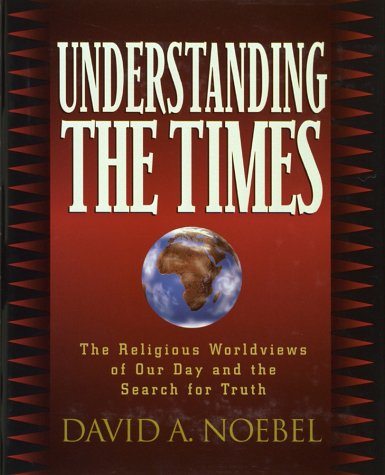
David Noebel is the author of "Understanding the Times," a book popular in evangelical and homeschool circles.
David Noebel is the author of “Understanding the Times,” a book popular in evangelical and homeschool circles.

I knew nothing about David Noebel.

I was not familiar with his much earlier work Communism, Hypnotism, and the Beatles, published in 1965–long before my birth–by Billy James Hargis’ Christian Crusade.

In one reviewer’s words: “Noebel is compelling because he’s intelligent, coherent, and well-researched, despite being absolutely paranoid and utterly mad. Aside from some inconsistent use of the Oxford Comma, he has a clear, if discursive thesis:

“Rock ‘n’ roll is turning kids into gay, Communist, miscegenators.”

Billy James Hargis was a right-wing evangelist and radio and television ranter long before Rush Limbaugh. He saw communist plots everywhere: in the NAACP and the civil rights movement, in the assassination of JFK, in water fluoridation. According to TIME magazine (Feb. 16, 1976), he founded American Christian College “to teach ‘antiCommunist patriotic Americanism'” from the city he called the “Fundamentalist Capital of the World”. From there, he promoted a hard line against drugs, homosexuality, sex education, abortion and the Beatles and toured with the college choir.

David Noebel was an aide to Hargis for twelve years, speaking around the country, founding The Summit in 1962 as a Christian Crusade program to combat anti-Christian teachings from secular universities (like the University of Tulsa) and contributing to Hargis’ television show where together they decried marijuana use and rock music. Later, Noebel became Vice President of Hargis’ new American Christian College in Tulsa.

In 1974, Noebel was staggered when students confided to him that Hargis, ardent promoter of traditional morality and father of four, had had sex with several of them.

Eventually four men and one woman exposed Hargis’ sexual abuse and manipulation over a period of years. TIME reported on the scandal in 1976, Hargis was forced to resign, and the school closed its doors the following year. Noebel went on to effectively “fold” Christian Crusade into Summit Ministries, building it into a successful international worldview training/brainwashing center targeting all ages, but teenagers in particular.

Noebel was an aide to Billy James Hargis, a right-wing evangelist and radio and television ranter who saw communist plots everywhere.

Postmodernism has replaced communism as the bane of our times. According to an article by Summit’s Steve Cornell,

“[The] pre-modern era was one in which religion was the source of truth and reality…. In a postmodern world, truth and reality are understood to be individually shaped by personal history, social class, gender, culture, and religion…. Postmoderns are suspicious of people who make universal truth claims…. Postmodern thinking is full of absurdities and inconsistencies.”

As a postmodern myself, I find it ironic that the decades have softened Noebel’s hardline position on Christian rock.

Apparently Mephistopheles has released it for other uses. Students at Summit’s youth conferences speak of the meaningful “corporate worship“, which now includes rock songs like “How Great Is Our God” by Chris Tomlin and “Jesus, Thank You” from Sovereign Grace Music.

The teens attending the worldview lectures today were not yet born when David Noebel penned Stratagem and would likely be surprised to learn that the religious anthems they find so powerful are actually “estranging them from traditional values”. According to the now retired, but still involved and revered, “Doc” Noebel, “although the lyrics might acknowledge the concept of true worship, the music itself expresses the unspoken desire to smash it to pieces.”

Summit’s John Stonestreet writes, “Truth does not yield to popular opinion. Unlike postmodernism, the biblical worldview can withstand all challenges and still speak to the dominant culture.” This belief is at the core of Summit’s “worldview” training.

And yet, Lowell’s line rings more true: time does make ancient “good” uncouth. Morality and truth are, in fact, shaped by history and culture.

As Summit’s stance on Christian rock illustrates so well.

Maybe, in another 30 years, Noebel’s successors will stop fighting same-sex marriage and even give up warning kids about “the gay agenda” as they “keep abreast of truth”? One can always hope…

His Quiver Full of Them: Jeri Lofland’s Thoughts

His Quiver Full of Them: Jeri Lofland’s Thoughts

Jeri’s post was originally published on her blog Heresy in the Heartland. It is reprinted with her permission. Also by Jeri on HA: “Generational Observations” and “Of Isolation and Community.”

Decades ago, I cross-stitched a scripture motto for my parents from Psalm 127, the favorite psalm of large families.

“Lo, children are a heritage of the Lord: and the fruit of the womb is his reward.”

The psalmist goes on to say: “As arrows are in the hand of a mighty man; so are children of the youth. Happy is the man that hath his quiver full of them…”

The term “quiverfull” is now used as both a noun and an adjective to describe a theology and lifestyle that glorifies human fertility while maintaining that God will provide the resources to raise as many children as he allows a couple to conceive. Contraception is held to be “playing God” and a violation of the command to be “Be fruitful and multiply”. The ideal Quiverfull couple are always open to “more blessings”, regardless of financial situation, health concerns, housing limitations, or needs of existing children.

I’m not certain when my parents decided that contraception was immoral. As a high schooler, Mom was an advocate of zero population growth and intended to adopt rather than bear children. A few years later, she graduated from a strict Catholic nursing school and married my dad. I was born a year later, my brother two years after that, and so on for the next 20 years.

Mail would arrive periodically from the Couple to Couple League and my parents had a couple of books by Catholic authors John & Sheila Copley explaining the practice of abstinence and/or breastfeeding as a means of birth control. Of course, even “natural family planning” (NFP) sounded too much like the evil “Planned Parenthood” so it was usually referred to as “child spacing”. Somewhere along the line my parents abandoned NFP (turns out it’s not all that effective at preventing pregnancy!) and the babies began to come even closer together.

Certainly Mom was influenced by Mary Pride’s 1985 book The Way Home, a story of the author’s journey from feminism to what she calls “reality”. Mary had just three young children when she wrote the book, in which she blasted away at contraception, lingerie, Marabel Morgan’s The Total Woman, and even Christian schools.

All forms of sex that shy away from marital fruitfulness are perverted. Masturbation, homosexuality, lesbianism, bestiality, prostitution, adultery, and even deliberate marital barrenness–all are perverted.”

“Since the word used for female is connected so strongly with the idea of nursing babies, whereas it has no connection at all with the idea of sexual activity, I believe that God is saying here that when women exchange their natural function of childbearing and motherliness for that which is ‘against nature’ [that is, trying to behave sexually like a man], the men tend to abandon the natural sexual use of the women and turn to homosexuality. When men stop seeing women as mothers, sex loses its sacredness. Sex becomes ‘recreational’, and therefore the drive begins to find new kicks.”    (Mary Pride, The Way Home, 1985)

(Pride’s position against family planning was more extreme than even the Catholic Couple-to-Couple League’s, prompting a correspondence between her and John Kippley, president of CCLI, and leading Pride to grudgingly endorse NFP in some situations in her sequel to The Way Home.)

Pride went on to birth six more babies and became a powerful force in the new homeschooling movement. My mom used to share The Way Home with all her friends and donated it to church libraries when she could. (When she encouraged me to read it, I was confused. Especially by the story about the lady wearing saran-wrap. Sexually naive young women raised in patriarchal, homeschooling isolation were definitely not Pride’s target audience.)

Mary Pride’s views fit rather well with the teachings of Bill Gothard–a middle-aged bachelor who handed out plenty of sexual and parenting advice at his seminars and encouraged couples to have surgeries to reverse previous vasectomies and tubal ligations. One of Gothard’s books informs us, “Labor in childbirth… was given to the woman for her spiritual benefit…” and points out that the God of the Old Testament “cursed several women by closing their wombs.” Attendees of Gothard’s conferences learned to associate infertility with God’s judgement. A full quiver, on the other hand, was a sign of God’s favor, a spiritual status symbol.

In 1990, a Nebraska couple published A Full Quiver: Family Planning and the Lordship of Christ. In this book, Rick and Jan Hess (homeschooling parents of ten) invite the reader to imagine a world where no one has ever had more than two or three siblings, effectively eliminating many historical figures. This exercise concludes with visualization of a future where enormous families are normal and God provides spacesuits for a missionary family moving their brood to evangelize a colony on the moon. My parents had this book, probably purchased at an IBLP seminar and still available on Gothard’s website.

Then there was Nancy Campbell’s occasional magazine for moms, Above Rubies. Nancy is a fierce promoter of anti-feminism from her compound in Tennessee. Her website includes multiple articles by women who felt guilt and regret over “the biggest mistake” of their life. After they repented, they went on to expand their families by four, five, six more babies. What mistake is reversed by more pregnancies? An abortion, perhaps? No, as it turns out, the biggest mistake of these women’s lives was a tubal ligation. Nancy also sells a book, A Change of Heart, encouraging couples to have surgeries to reverse both vasectomies and tubal ligations.

Vickie Farris, whose husband Mike is president of the Home School Legal Defense Association, homeschooled their ten children and lived to write a book about it. She encourages other women to reject birth control methods and embrace motherhood. Quiverfull women like Farris, and Michelle Duggar of “Nineteen Kids and Counting”, have built their lives on the mantra “God won’t give anyone more than they can handle”, sometimes phrased as “What God orders, he pays for”.

My parents were opponents of both birth control and sterilization. They even encouraged some of their friends to have reversal surgeries, resulting in many more babies. My mom had eleven children over 24 years, including ten [unassisted home]births. Pregnancy was not easy for her–she often referred to herself with the phrase from St. Paul, “a living sacrifice”. She spent most of my childhood breastfeeding, diapering, potty-training, and homeschooling on top of that. I understood that this was not culturally normal, but sought to convince myself that God was pleased with this self-sacrifice. I spent my teen years watching my mom’s body swell and deflate, and changing thousands of diapers.

In my twenties, as I waited for my turn to become a wife and mother, I quietly ticked off how many children I could have in years. I may have been ideologically persuaded that contraception was wrong, but I didn’t want to spend twenty years lactating either. When I got impatient for God to bring me a husband (no boyfriends on the horizon), I consoled myself by guessing how many fewer children I would bear in a shorter window of fertile sexual activity.

Fortunately, when I did get married, my husband and I quickly began to realize that many aspects of Quiverfull thought and practice were contradictory to our values. Not before taking NFP classes from a Catholic certified trainer, though. When we got pregnant anyway, we were told the method worked fine–we’d just had sex when [it turned out!] we were actually fertile. Well, what do you know?

I think my relationship with the Quiverfull movement finally ended a few years ago as I was perched on the end of an exam table in my doctor’s office. Looking up from my chart, she compassionately observed, “You’ve been raising kids for a long time,” and I burst into unexpected tears.

These days, stories of ex-Quiverfull moms and their “quivering daughters” are multiplying on the Internet like rabbits in the spring. The fruit of the movement has not turned out to be sweet; we deal with health problems, poverty, anxiety, depression, PTSD, eating disorders, cutting, sexual abuse, emotional incest, and divorce. (You can read far more than you want to know at the Homeschoolers Anonymous blog.)

In spite of these firsthand horror stories, Quiverfull continues to enjoy wide support in America and is gaining traction in other nations. Earlier this year, the BBC reported on the movement’s growth in the United Kingdom. You can listen to more, including scary-sounding clips from Nancy Campbell, here.

Meanwhile here in the States, Hobby Lobby and Catholic hospitals gnash their teeth over their employees’ rights to use birth control. Texan teenagers are taught that contraceptives don’t work. (The result? Texas has more than 10% of America’s teen births.) And TLC continues to profit from shows like “Nineteen Kids and Counting”, promoting Quiverfull ideology to some unsuspecting viewers.

The show should include a disclaimer: For your own safety, don’t try this at home.

Of Isolation and Community: Jeri Lofland’s Story, Part Two

Jeri’s story was originally published on her blog Heresy in the Heartland. It is reprinted with her permission. The first part of Jeri’s contribution to HA is “Generational Observations.”

I took the bus to Willow Hill Elementary for kindergarten and first grade. At recess my friends and I would play hopscotch, jump rope, explore, or make-believe together. Occasionally, they would invite me to their homes to play or for a birthday party. I was active in Sunday School, too. Though I was too shy to say much to them, I knew many adults at church and in my neighborhood. My parents were part of a small fellowship group and the families did lots of things together: picnics, fireworks, a hayride, swimming at the lake.

When my parents became homeschoolers, our social circle tightened. Mom was afraid the state might “take us away” if anyone reported us. One sunny morning she hauled all of us to the grocery store at what seemed like the crack of dawn to get her shopping done before “school hours”. I still played with the kids next door, but only on designated “play days”. We had the same church friends for a while, and I looked up to my Sunday School teachers, but we left our church because some people there were displeasing God. Yes, it was confusing. I rarely attended Sunday School (or youth group) after that, even when we were in churches with other kids my age. Most of my socialization now was with other homeschoolers: sledding parties, picnics, occasional field trips and converging on fields and orchards to glean free produce.

As homeschooling gained popularity, we became less concerned about being put in foster care. But then my parents joined a new group: ATIA. The Advanced Training Institute (of America) was an elite level of membership for followers of Bill Gothard and his Institute in Basic Life Principles (formerly Institute in Basic Youth Conflicts). My parents had attended his seminars for years. Now his homeschooling program offered a way to get the loyal, loving, godly family you always wanted. Financial freedom, stronger character, better health, and fulfilling family relationships included! Plus, all the educational materials, from math to language arts, were based directly on the Bible!

We moved across town that summer, to a farmhouse in the country. My dad started his own business: it was different to have him working from home all day. And we embarked on the new ATI adventure. Our social circled narrowed even more from that point, consisting of church acquaintances (we changed churches every few years) and conservative homeschooling friends. We saw my grandparents twice a year at most; while skeptical of many of our religious quirks, they tried not to rock the boat or criticize my parents to us kids. There were no trusted adults in my life that didn’t defend my parents’ beliefs and lifestyle choices.

We joined a larger evangelical church and my parents were admired for their dedication. With six children now, we could really fill up a pew.  Now in my mid-teens, I longed to make friends but had little in common with my peers there. Many of their activities (movies, concerts, parties, sports, even jobs) were forbidden in my family. There were hardly any other homeschoolers.  I looked forward to ATI conferences where I could meet others my age that dressed, behaved, and thought like I did. A few became penpals and are still friends today.

Later, we moved to even more conservative churches where homeschooling was the norm.  At home, there were babies to change, toddlers to feed, and children to educate; my help was sorely needed, and often appreciated. I had a friend at church, and meeting for lunch together was a rare and special treat.  There were no boyfriends, no dates. St. Paul said we should be content with food and clothing. I had a bed and three meals a day and could earn a little spending money from my dad besides. Now in my 20’s, I tried to use my loneliness to push me closer to God. I tried to mentally prepare for a life of singleness if necessary, while yearning for a soulmate of my own.

I was 22 when I moved out of state to work (unpaid) for one of Gothard’s “ministries”. My social network was limited to other cult members (we attended only churches that had been “approved” by the leadership and shopping outings were on an as-needed basis). Chores at the center were mandatory, as was scripture memory and attendance of daily morning Bible studies. Still, I made new friends from all over the country and savored the chance to live and work with peers.

After six months of volunteering for room and board, the law dictated that the Institute put me on the payroll. With only $13 left in my checking account, I was relieved to hear this! I was a minimum-wage employee for one year, moving from the Oklahoma center to the Indianapolis compound to the “Headquarters” campus in Illinois, working in three different departments before I was summarily fired because Gothard felt my 20-year-old brother threatened his authority. My parents called me late one night to tell me that Bill Gothard wanted them to pick me up the next morning and take me home to Michigan. He didn’t tell me himself, nor did my boss. Being ignorant of life “on the outside”, I had no idea how abnormal this was, but it hurt like hell. I started packing my belongings. My dad arrived at noon, I shook hands with the man I would marry two years later, and we headed “home”.

After a year and a half of full-blown work for the cult, this trip was surreal—like going back in time. I sipped my Arby’s Jamocha shake and tried to sort out what was happening.  I felt discarded, displaced, separated from friends without a chance to say goodbye. For weeks, I cried myself to sleep. I was in a place I did not want to be, and I’d had no say in the decision. In my grief, I found comfort in stroking one of the new barn kittens; it died. My mom miscarried what would have been a 12th baby. We heard that another young man who had also been exiled from the cult had drowned on the Fourth of July. The ATI director left his wife for his secretary. The whole world was going crazy and it was taking me with it.

Over the next year, I started taking more responsibility for my own life. I had my first job interview, worked part-time, visited other church groups, began to consider college courses, and applied for short-term placement with an overseas missions organization (Wycliffe Bible Translators). I spent a summer studying linguistics at the University of North Dakota and meeting all kinds of cool people from around the world. I loved college, even the exams! Away from my parents and the cult for the first time in my life, I bought my first pair of jeans, my first pair of shorts. I went to the movie theater with friends! I had my first sip of wine, my first taste of beer. I explored different churches, and enjoyed music that had once been forbidden. I spent time with guys who intrigued me, and turned down a guy who didn’t. I played my heart out on the piano. When my parents tried to exert control over my [male] friendships from hundreds of miles away, I was conflicted. I cried, but I complied.

In the fall, I flew to the Philippines where I spent ten difficult yet glorious months learning from the best mentors I could have asked for. The Wycliffe base at Nasuli was a humming multi-cultural haven set in a natural paradise. Though I assisted the missionary-linguists in their work, mostly I was being healed. From the security of friends and coworkers who loved and accepted me, I began dissecting my past and daring to think for myself. Tentatively, then with greater confidence, I let myself question the cult. I let go of deeply-embedded fears. I allowed myself to grieve over my experience with the Institute. I saw what a respectful, caring community looked like.

Nasuli was so unlike the churches and training centers I’d been part of. Here, individuality was valued; the group drew strength from diversity of opinion and expression. Instead of pasting a smile on the surface, these men and women spoke honestly of their emotional experience, both positive and negative. Rather than demanding perfection and informing on those who failed to measure up, these people tolerated each other, quirks and all, often making excuses for a neighbor’s idiosyncrasies. And nobody ever minded having fun.

Generational Observations: Jeri Lofland’s Story, Part One

Generational Observations: Jeri Lofland’s Story, Part One

Jeri’s story was originally published on her blog Heresy in the Heartland. It is reprinted with her permission. The second part of Jeri’s contribution to HA is “Of Isolation and Community.”

Someone asked me about the long-term effects of homeschooling vs. public education, and it got me thinking. I won’t consider secular private education in this article, mostly because I don’t have firsthand experience.  I have enjoyed teaching my young children at home, but we have decided to send them to public school while they are still in the elementary grades because of our observations over a generation of homeschooling.

Effects on Society

Certainly homeschooling promotes elitism. Even without religious motivation, announcing that you can get a better education from your mother than from certified degreed professionals has an air of snobbery. Socially, the kids can hardly escape the inference that they are too good (or smart, or rich) to rub shoulders with the inferior proletariat, especially when they are repeatedly told their home experience is superior. Latin for kindergarteners, anyone?

Public school introduces children to others who are like, yet unlike, them at the same time. It broadens their understanding by allow them to work and play alongside real people of other races, other religions, other languages and backgrounds. When conflicts arise, involved parents have an opportunity to encourage cooperation, sensitivity, and compassion, as well as personal boundaries. My children are learning to respect diversity in a way that would be impossible if they only played with kids from their own neighborhood. And they see that excellence is a personal choice independent of circumstances.

Our public school welcomes parental involvement. Teachers are thrilled to have parents volunteer in the classroom and the principal has always had an open door when I stopped in with a question or concern. When I spend an hour helping my daughter’s classmates practice multiplication, I multiply the teacher’s efforts and support the cause of education far beyond my own children. Our school truly belongs to the community and it is what the community makes it.

Government policies and education budgets now affect my children directly, so I have heightened interest in the issues. I better understand what educators do, helping me relate to a much larger group of society. When teachers and professors in my book club begin to discuss particular stresses on public education, I can participate. Rather than supporting divisions based on class and ideology, I can connect differing perspectives to broaden people’s view of the big picture.

Effects on Students

I maintain that it is neither normal nor traditional for boys to spend their days under the tutelage of their mother after they reach double digits. In the days of the pioneer, a boy might grow up isolated and self-taught. He was prepared to explore the frontier, self-reliant and independent. Those are hardly the skills needed by adults today.

It would be interesting to hear from men how they think homeschooling affected them emotionally. My hunch is that all that time at home with Mom often stunted their decision-making and negotiating skills and either increased their susceptibility to manipulation or their ability to manipulate, or both.

Boys–and girls in contemporary society–need to learn goal-setting and negotiating skills. School exposes them to a range of leadership styles and personalities and varied levels of accountability. It helps them build a portfolio of social skills (and coping mechanisms) that can serve them in the work force when they have to deal with cranky managers, lazy teammates, and charting their own professional course.

Even in modern homeschooling, with its drama groups, advanced math co-op classes, and sports teams, families tend to be overly flexible, to lack commitment to schedules, and to make sacrifices for one child at the expense of the others. In spite of its flaws, the school system does allow for a more level playing field that offers individual choice and rewards accordingly.

Effects on Family Dynamics

Family dynamics are the primary reason I decided against long-term homeschooling. Put simply, my daughter appreciates me much more when she doesn’t have to spend all day with me! Though we spend less time together, we use that time more efficiently, deepening our relationship and helping her develop emotionally and socially. Homeschooling strains the parent-child relationship unnecessarily. It is unfair to a teenager for one or two adults to hold the keys to his education and grades as well as his: social life, access to transportation, food choices, access to employment, daily schedule, recreation, healthcare, and moral guidance. This absolute power tends to corrupt parents, or simply exhaust them.

How many moms have “burned out” on homeschooling, devoting themselves to their children’s needs or success while ignoring their own? If she has her own dreams, the teaching parent may resent the inefficiency of spending so many years as a caregiver and educator for a handful of children, when she could be pursuing a satisfying career while sharing the educational responsibility with professionals who chose the job. The early homeschool movement seems to have coincided with an era when technology and a stronger economy had recently reduced the load on stay-at-home moms. Homeschooling may be a healthy alternative to watching soap operas, but it can be a real financial hardship for some parents–contributing to marriage and family stress.

Adolescence is a time for widened horizons, a time to experiment with choices and learn specific cause-and-effect sequences, with the home as a physical and emotional safety net. When teachers reinforce what parents have been telling their kids, the whole family benefits. Feedback at regular intervals gives kids a chance to test different approaches to learning and meeting goals. When they struggle in one area (academics, social relationships, or family issues, for example), they can lean on other networks for support and hopefully build confidence by succeeding in something else.

As the product of homeschooling, and a homeschooling parent myself, I think the benefits of homeschooling are usually overstated. Certainly religious motivations have driven the movement’s growth, but weighing the social and educational results does not convince me that homeschooling prepares people to better thrive in their society.