A Few Leave, But Others Stay

Screen Shot 2013-09-09 at 1.43.33 PM

HA note: The following is reprinted with permission from Libby Anne’s blog Love Joy Feminism. It was originally published on Patheos on August 29, 2013.

I recently read a post by Lana that made me think about everyone I left behind when I left my conservative evangelical patriarchal homeschool upbringing.

With all the [ex] conservative homeschooler blogs out there nowadays, people may be under the impression that homeschool fundamentalism has virtually disappeared among homeschool alumni. To be sure, this Christian movement among homeschool graduates is dying a very slow and painful death. But it is so far from over, and I have so many friends still trapped in the ideology that I constantly feel the tension with old friends and old hangouts.

I don’t spend as much time in my old hangouts as Lana, so I don’t feel quite as much of the tension that she feels, but I’d like to echo what she says about not assuming that the thriving ex-conservative-homeschooler blogosphere means there’s some sort of mass exodus going on.

Sure, there’s an exodus — but in my experience most stay.

Out of the half dozen girls I was closest to in high school, only one has left. You know her as Kate. Two others are still living at home, under the authority of their father, having never left home even as they are now in their mid- to late twenties. One married young, going straight from her father’s home to her husband’s and has begun to fill her husband’s quiver with arrows. The final two left home with their fathers’ blessings and attended college in traditionally feminine pursuits, only to return home to live once again under their fathers’ authority afterwards.

Both were Gothard girls.

One now attends Vision Forum conferences with her family.

When I widen the net to the dozen or so girls I knew as acquaintances and saw only from time to time, the numbers don’t get any better.

Of the four girls who were in a Gothard Bible study with me, only one has questioned and left. Others I don’t know about—they just drifted away after I left. Two girls I knew are divorced, having married early to men who turned out to be abusive. Others, I really can’t say.

When I widen the net still further, to the teens I participated in debate with or saw at homeschool camps, I can point to a few more. One girl I met at a homeschool camp left home and wound up pregnant. Things were hard with her family for a time, but she made it through and questioned some things along the way. Another girl I met at a homeschool camp also questioned and left. One guy I knew through debate turned out to be gay. He came out and headed for the big city. But of the dozens and dozens others I knew through these venues? I have very little idea.

Of the guys, it’s really hard to say, and for a very interesting reason.

It’s easy to tell when a girl leaves. There are angry sparks and an extremely visible rift is torn. When a guy leaves? In my experience, the process is generally not quite so fraught with trouble, and is sometimes invisible on the outside. No one is going to be telling that guy that he is supposed to submit to his father, or that it’s his role to follow, or that he shouldn’t be pursuing a career. The family expects him to go off on his way and forge his own way, even if they also expect him to maintain a specific ideological viewpoint.

When a guy leaves, 4 times out of 5, it just looks like he’s doing what he’s supposed to do—leaving home, going to college, getting a job, and starting his own life. When a girl does those things, she’s often seen as stepping outside of the box she was supposed to contentedly inhabit.

There really isn’t any way to get at exact numbers, but Lana is right.

We left plenty of people behind when they didn’t walk the same path we did, and some of them are now repeating our parents’ patterns.

Then Why Didn’t You Tell Us That, Mom?

HA note: The following is reprinted with permission from Libby Anne’s blog Love Joy Feminism. It was originally published on Patheos on September 1, 2013.

"My mother subscribed to Above Rubies and read each issue thoroughly."
“My mother subscribed to Above Rubies and read each issue thoroughly.”

“I want you to know that I never actually believed everything in those Above Rubies magazines,” my mom told me when I was visiting home a while back.

“Then why didn’t you tell us that, mom?” I asked. “I read every issue of that magazine cover to cover, and I always thought it was completely approved material.”

I don’t know why my mother made that admission to me when she did.

It was before the Mother Jones article about Kathryn Joyce’s new book on evangelical adoption, which sheds light on the Above Rubies/Liberian adoption scandal. My mother knows I identify as a feminist and that I’m critical of at least some aspects of the culture of the Christian homeschool movement, but that’s about it. Beyond that, we have a strict Don’t Ask Don’t Tell policy. Except, I suppose, for the Pearls child training methods—that we’ve discussed on more than one occasion. But the Pearls don’t run Above Rubies magazine. Nancy Campbell does.

Regardless of what prompted my mother’s admission, I think there is something incredibly important to be learned here.

Kate and I were talking a few months ago, and she told me she doesn’t think her parents realized quite how many extreme patriarchal/purity ideas she picked up and took to heart through Christian homeschooling culture. Her parents, she said, were always quick to condemn reading material, organizations, and leaders they believed promoted ungodly ideas or false doctrine. Because of this, she always assumed that materials that entered the house under the banner of Christianity and without condemnation were things they approved and endorsed.

My experience was very much the same.

My mother subscribed to Above Rubies and read each issue thoroughly. The ideas contained within the magazine aligned at least generally with beliefs I heard my mother espouse. When my parents disagreed with a religious leader, they were quick to say so. In fact, I grew up hearing James Dobson described as too wishy-washy and soft. Yet, I never heard my mother call Nancy Campbell or her magazine into question, so I assumed that the messages contained therein were approved, and that it was something I should read, take to heart, and learn from. And read, take to heart, and learn I did.

I’ve talked to many homeschool graduates—some I knew growing up, some I’ve met in person since, and others I’ve connected with over the internet or through facebook. This thing I’m talking about? This thing is important. Once homeschool parents enter the Christian homeschool subculture, if they don’t vocally and openly condemn, question, or contradict what that subculture teaches, their children will assume that the ideas and ideals of that subculture are approved—something they should listen to, take seriously, and imbibe.

I’ve talked to more than my fair share of homeschool graduates who grew up in this culture and took to heart things they later found out their parents never even realized they were learning.

Christian parents who choose to homeschool their children but do not ascribe to the ideals of the Christian homeschool subculture, especially things like Christian Patriarchy or Quiverfull, need to be on guard against this. It’s not uncommon for homeschool parents who happen to be Christian to find themselves in the same homeschool circles with Christian parents who homeschool out of religious conviction. And it’s also not uncommon for their children to find themselves in those circles whether their parents actively frequent them or not. In this kind of situation, parents may not realize the toxic ideologies their children taking in through osmosis from the Christian homeschooling culture around them.

In my mother’s case, it’s not that she disagreed entirely with the Above Rubies magazine. My mother was more mainstream than many, but she definitely ascribed to the outer circles of Christian Patriarchy and Quiverfull ideology. To be honest, I don’t actually know what parts of what Above Rubies she takes issue with—I was too surprised by her admission to think to ask.

There is one thing I was not too shocked to make sure to tell her, though:

“You need to tell the girls, mom,” I said. “They read Above Rubies just as I did at their age. You need to tell them you don’t agree with all of it, because if you don’t, they’ll think you do.”

Can’t You Say Anything Good About Homeschooling?: Libby Anne

positives

Can’t You Say Anything Good About Homeschooling?: Libby Anne

HA note: The following is reprinted with permission from Libby Anne’s blog Love Joy Feminism. It was originally published on Patheos on March 31, 2013.

I’ve been fairly critical of homeschooling in a good number of blog posts over the past two years.

One thing I’ve been asked a number of times is whether, looking back, there was anything about my homeschooling experience that was positive. It’s true that Sierra of the Phoenix and the Olive Branch and Lana of Wide Open Ground, while generally critical of many things about homeschooling and their own homeschool background, have both written posts outlining the things they found positive about their homeshooling experience. Can’t I do the same? So here it is, my attempt to write about the positives side of my homeschool experience.

But I’m going to warn you up front that I don’t think this is going to go all that smoothly.

1. Self motivation.

I’ve always been a very self-motivated person. There were some years I worked ahead in my subjects and finished all of my schoolwork for the entire year by the end of March. I was always extremely hard working and driven, and this followed me into college as well. No one had to make me study. My parents have always chalked my self motivation up to the fact that I was homeschooled—and I used to do the same. Indeed, self-motivation is one thing I always see listed as a benefit of having been homeschooled. But I’m afraid I no longer buy this—at the very least, it’s not this simple.

Even as I was self-motivated, many of my siblings weren’t. I watched many of my siblings procrastinate and drag their feet and sometimes flat out lie about whether or not they were doing their work. I watched them work all summer trying to catch up for everything they’d fallen behind on during the school year. There were several years when my siblings literally finished their math textbooks for the previous year a week or two before the next school year started. Even today, I see this same thing happening with some of my siblings who are still at home, being homeschooled. Some of them seem to lack self motivation entirely, and will only do their work when there is the threat of losing some privilege over their head.

Now after high school I attended a state university on scholarship. Because of my grades, I was enrolled in the university’s honor college and lived in the honors dorms. I suddenly found myself surrounded by a cohort of extremely self-motivated public school graduates. This confused me. I honestly had not expected to see that level of self motivation in the products of public schools. I had thought they all just did the bare minimum to pass standardized tests, because of the way public schools were set up, and that they weren’t self motivated like us homeschoolers. I was wrong. Yes, I know that these kids were honors kids, and thus not representative of the public school population as a whole, but still, they proved to me that you absolutely didn’t have to be homeschooled to be self-motivated.

So did homeschooling make me self-motivated? After thinking about it, I doubt it. Some homeschoolers are self-motivated. Some aren’t. Some public schoolers are self-motivated. Some aren’t. I have no idea what makes people self motivated, or what part is simply innate, a chance of birth. But I can say with confidence that, if the family and homeschool community I grew up in is any indicator, being homeschooled does not automatically make someone self-motivated. So yes, I was homeschooled and I ended up being self-motivated. But does that really mean anything? Probably not.

2. Love of Learning

As a child, I loved learning. I checked out books from the library, explored the fields beckoning from my back door, and taught myself to knit. The world was my textbook, and I loved it. At the time, I was taught to chalk my love of learning up to being homeschooled. And for a long time, I thought there was a connection. But I don’t anymore, and for—I think—good reason.

For one thing, being homeschooled does not guarantee that you will end up with a love of learning. I know a guy who was homeschooled K-12, and his experience actually stunted his love of learning. For him, homeschooling consisted of sitting at the kitchen table, or at a desk in his room, filling out workbooks. And that’s it. Every day for twelve years—thirteen if you count kindergarten. Nothing interactive, nothing collaborative, just workbooks. To this day, thinking of school or any sort of formal learning gives him mild PTSD symptoms. So this idea that being homeschooled automatically makes one love learning? Yeah, that’s absolutely false.

Further, the friends I made in my honors college dorm in college all shared the same passion and love for learning that I had—even though almost every one of them had attended public school. They didn’t just study what they had to for their classes, or just do their homework because they were required to. They went above and beyond and loved learning for its own sake, whether it was required or not. And they didn’t limit learning to their academic coursework, either. For them, learning was a part of life, as natural as breathing. Once again, this confused me. I had been taught that public schools stunt children’s love of learning, and also that attending public school causes a person to divide their life into learning—i.e. formal school—and not learning—i.e. everything else. But I found that, for these honors kids at least, this was absolutely not the case.

So did homeschooling give me a love of learning? In the end, I don’t think so. I think my love of learning came from my parents, not from being homeschooled.

They made it obvious that they loved learning, and they sought to make every moment a teachable moment—and in a fun way.

We were always learning things, whether it be gardening or carpentry or zoology or the culinary arts, and my parents encouraged us to love learning, and worked to make learning fun. If I’d attended public school, my parents still would have taught me to love learning. They wouldn’t have suddenly stopped making every moment of life interesting and teachable. They wouldn’t have stopped encouraging us to learn, and teaching us to see learning as enjoyable and just a part of life.

In the end, I honestly don’t think gaining a love of learning is determined by the method of education.

3. Freedom

One thing both Sierra and Lana hammered on in their discussion of the positive aspects of homeschooling was the sense of freedom it gave them—freedom to follow their own interests and study at their own paces, and freedom from the constriction of a public school schedule.

When I look back on being homeschooled, this is indeed what I look on most fondly.

In elementary school, my mom set my schedule, including what I studied and when I studied it. However, homeschooling did allow the flexibility for spontaneous trips to the zoo, or spur of the moment park dates. In middle and high school my mom still set the subjects I studied each year—always asking me for input first—but I was free to determine when to study and for how long. I wasn’t required to have fixed hours, I was merely required to complete the textbooks I’d been given by the end of the year.

I loved this—like I said above, I sometimes rushed through and finished some or all of the subjects early.

I loved the flexibility of choosing when to study, and in what order to study. I frequently got up early in the morning and would set myself the challenge of finishing all of my seatwork—meaning things like math and science and vocab, but not things like free reading or debate research or music—by breakfast time. I wasn’t usually able to fit quite everything into that time, but I was always finished by lunch time, leaving me the afternoon free for reading or sewing projects or digging for medicinal herbs or baking a pie.

But—and this but is important—this freedom was limited to choosing when and at what speed and in what order to do my academic work. I wasn’t free to go to the mall with friends, or free to have a part time job, or free to randomly go over to a friend’s house. I wasn’t free to go anywhere at all. Because I was homeschooled I didn’t have an outlet away from my family. Instead, I was home all of the time, both home to have my comings and goings and friendships micromanaged and home to be on call as a junior mom 24/7. As I’ve mentioned before, my parents didn’t believe in teenagers. They expected me to go straight from child to adult, and I wasn’t allowed to do the sort of things normal teenagers do.

In some sense, was given the freedom of a two year old and the responsibility of a thirty year old.

I grew up as the oldest of twelve children. There was always a baby in the house, and there were always toddlers and preschoolers who needed constant attention and help. When I think back on my time spent doing school work, the image I get is of sitting at the desk in my room doing math problems while also supervising two or three toddler and preschool age siblings playing nearby, because mom needed them out of her way so that she could teach the middle ones. For several years I was also in charge of all of the laundry for the family, and for a while I was in charge of all—yes, all—of the cooking. I was also expected to teach some subjects to my younger siblings, as a sort of tutor. My mom figured that teaching the subjects would help cement them in my mind, and also that helping with the children and housework was good practice for my future, when I would be a homemaker and stay at home homeschool mom.

All of this responsibility also meant that I rarely got to actually spend time alone with friends, or out of the house—in fact, when I think back on hanging out with friends, the image I get is of chatting with a friend while making mountains of peanut butter sandwiches and watching our 15+ collective younger siblings, our mothers having gone out for lunch together. I don’t want to give the impression that I begrudge my mother these lunches out—she needed them for her sanity! And besides, by that time watching kids came as second nature, and I savored what time I did have with friends, so the memories I have of chatting over mountains of sandwiches and quick roll counts of children to make sure we hadn’t lost any are actually pleasant ones.

So did homeschooling give me more freedom? In the end, I think it was a wash.

Yes, I had more freedom to set my academic schedule—when to study and what to study and how to study—and I thoroughly enjoyed that. But at the same time, because I was always at home under my mother’s watchful eye and able to be on call to help with whatever needed doing, be it children or food or housework, I had much less personal freedom than I would have had I attended public school. And when I compare my thoughts here to those of Sierra and Lana, I am reminded that Sierra was an only child and Lana was one of only four. So it’s not surprising that my experience here might be a bit different.

Conclusion

So, are there positive things I can say about my homeschooling experience? Sure. But every time I locate one, I end up finding a negative flip side. And maybe that’s why I haven’t spend a lot of time trying to draw out the positives.

I simply don’t feel that I can discuss them outside of the more nuanced context.

Homeschooling can help students develop self-motivation and a love of learning—or it can limit both of these. Some kids simply work best with formal teachers for each subjects, and with the firm academic deadlines formal schools provide. I’ve also seen cases where homeschool kids end up well educated in the subjects their parents find interesting, and not well educated at all in other subject—and this is something having the variety of teachers formal schools offer serves to counteract.

Homeschooling frees kids from the formal schedule of the public school—but it also places them 24/7 under the complete control of their parents, who may give them personal freedom or may, well, not. And besides that, some homeschool parents—like the parents of the young man I mentioned—simply reconstruct the formal schedule of the public school at home, just without the same level of peer interaction.

In the end, it’s complicated.

Learning Together: Emily

positives

Learning Together: Emily

HA note: The following is reprinted with permission from Libby Anne’s blog Love Joy Feminism. It was a guest post by Emily and was originally published on Patheos on February 24, 2013.

My parents didn’t set out to homeschool.

The fluke of my birthdate put me either the youngest or the oldest of my class, and after being the youngest in kindergarten my parents decided to homeschool for a year before first grade. That year went so well that they homeschooled for another, then another, reevaluating each year. My mom thoroughly enjoyed the experience and my dad supported it wholeheartedly, though was not often involved in hands-on teaching. I have one younger homeschooled sibling, but I’ll focus on my experience.

In 4th grade I started doubting my academic competency due to lack of comparison. I spent a half a year in public school for 5th, and after discovering that I was, indeed, on track academically, begged to come home. We homeschooled through middle school and I entered public high school in 9th grade. I went to a private Christian university and a public university for a master’s and PhD. I’m midway through my PhD.

First, I want to point out some social-location factors that positively frame my homeschooling experience. The big ones include my family’s upper middle class economic status, my parents’ education, our family size (2 kids), large suburban location, and Christian faith.

Had those variables been different I would be telling another story.

My mom homeschooled as a Christian but I missed out on the quiverfull/CP, Vision Forum, etc. My parents decided to avoid those circles. There is a family story of going to a homeschooling event where a couple of the other dads talked seriously to my dad (whom they had just met!) about the small size of his quiver.

His snarky response was, “Actually, my quiver is full! It’s a two-arrow-holding quiver.”

Early on, we used some Bob Jones and Abeka history, but that got ditched, especially as more homeschool resources were made available each year. I got my fair share of gender roles at church, but it wasn’t Christian Patriarchy as such.

I will start with what I see as strengths of my homeschooling experience. First, we were often not at home. We had season passes to the aquarium, the zoo, amusement parks (yep – when other kids were at school!), tickets to anything appropriate for kids at the city’s performing arts center, state parks, library programs, art, science, music camp. Plus, my dad’s work requires travel to cities around the country and we would all go along and tour each city’s historical and cultural landmarks during the day. My parents’ approach was “180 school days per year, distributed as necessary,” so we didn’t follow the public school calendar and continued through summer.

I thrived in self-directed, participatory learning.

I’m reading Freire’s Pedagogy of the Oppressed this week and I missed out on what he terms the banking model of education, where the student is an empty account into which the expert teacher makes deposits (till high school and college, at least). In contrast, my mom always talked about how we all learned together.

I often participated in setting the agenda, and she provided the resources and helped guide the investigation. It was that way as far back as I remember. Clearly, there was stuff I just had to learn, like cursive and long division. Still, I had the freedom to say if a method wasn’t working and I wanted to try it a different way. I read like a girl possessed, mostly uninterrupted, completely uncensored. If it was at the library or Barnes and Noble, I had access to it. I was well-prepared for honors and AP classes in high school, the SAT, then the honors college, on the GRE, and now in a PhD.

No academic regrets.

Socially, I largely avoided some challenges and my parents orchestrated good opportunities to form relationships. I got a very low dose of the girl-on-girl relational violence of adolescence. Given my social location, this was a real threat. Since I was relatively chill during the day I had lots of energy for after school activities. I participated in competitive soccer, Girl Scouts, a children’s chorus, church activities, and community theater. When I did enter public school in 9th grade, it was new and fresh. I didn’t develop senioritis and I wanted to get to know all kinds of people. I didn’t have as many labels to apply to others as my peers did. Also, with our homeschool peers, there was no age hierarchy for building friendships.

There were some things I had to compensate for later. In a word: algebra.

Saxon Math was awesome for word problems, critical thinking, and the basics. Except later, I really needed someone to explain how to solve for X and my mom’s skill set didn’t extend there. Math in high school was a battle. That said I am now proficient in statistics, which I am constantly using in my PhD studies. I will never catch up from missing the peer-to-peer sexual education that happens during middle school.

For example, I only know, like, four words for semen and I realize there are about a thousand in current use.

I don’t consider this a deficiency. I know I miss some social queues.

Transitioning to a 2,300 student high school was a big adjustment. Here’s what was hard: asking permission to go to the bathroom and having requests denied, stopping in response to the bell, even if the algebra question on the board was left unanswered, the sheer noise of the lunchroom, hallways, etc., bomb threats and lockdowns (this was Columbine-era), learning how to respond to different teachers’ expectations and methods, academic competition, watching discrimination happen, being “made” to do stuff by authorities (like fundraise for a new football field house), and the amount of wasted time. I came home really tired each day.

That said, I’m so glad I did it. I really enjoyed many of my teachers and the new subjects I took, as well as the friendships I developed. Playing soccer was fantastic, as was my involvement with the FFA.

I Was Born With A Severe Immune Disease: Attackfish

positives

I Was Born With A Severe Immune Disease: Attackfish

HA note: The following is reprinted with permission from Libby Anne’s blog Love Joy Feminism. It was a guest post by Attackfish and was originally published on Patheos on February 3, 2013.

I was “homeschooled” (and I’m not sure I am comfortable calling it that) for absolutely non-ideological reasons, and in fact, there was only ever a brief time during my schooling in which I was not enrolled in public school, at the very end, a few weeks before I took my GED.

I was born with a severe immune disease, and along with making me extremely prone to infection, it also causes me to have seizures, narcolepsy, fainting spells, asthma, and circulatory problems, all of which grow worse when my body is run down. This made just getting to school, a building with two thousand people and all of their pathogens, a real challenge for me, and in my freshman year of high school, my family and I convinced the school district to send a teacher home to teach me, as part of a program usually used for students with less chronic illnesses, like pneumonia. I was enrolled in six periods of classes, and the teachers from those classes would send me assignments through the home hospital teacher, so the academics of my schooling were identical to the ones at the local high school, aside from the fact that I was allowed to pace myself.

Every year, I did attempt to go back to attending school, and every year I lasted a couple of months before admitting that no, I wasn’t magically better this year.

We knew that the home hospital program existed, because my elementary school had begged us to take advantage of a similar system when I was in kindergarten, because they were unable to handle my “strange behavior” which would much later be diagnosed as seizures. My seizures aren’t what most people think of as seizures. During them, I lose all awareness of myself, and run around, glaze-eyed and utterly non responsive for up to several hours, looking for a place to hide, attacking anyone who physically tries to stop me.

They happened at least once a week before I was diagnosed and received treatment, and sometimes, they happened several times a day, almost always at school. Before I was diagnosed, the school and my teachers assumed it was some kind of emotional problem, and the other students were terrified of me. Even once I had a diagnosis, the teacher and principal I had at the time both refused to believe they were anything other than a brat’s tantrums.

As I stopped having them, they encouraged the other students to bully me mercilessly as punishment, and I eventually had to change schools because of the abuse.

Although we moved to another state when I was in middle school, the social anxiety, low self esteem, and poor grasp of social cues the earlier bullying, and falling prey to my first of two stalkers, had left me with, marked me out as easy prey for more bullies and another stalker, right up until I withdrew from high school.

My bisexuality having somehow become common knowledge to the student body didn’t help matters.

For years, my family and I had battled bullies and an administration dead set against helping me end the torment I was enduring. I had switched schools, moved, and done everything I could to blend in and keep my head down.

I was out of options and out of hope.

I remember this tremendous sense of relief at the idea of leaving school, and once I had, I felt truly safe for the first time in years.

For the first time, my illness presented the solution. I really was too sick to go to school. The bullies and my stalkers hadn’t driven me out, I could leave school guilt free. Learning at home for me was an overwhelmingly positive experience, giving me space to breathe, heal, and gather my strength. I had become so used to living in fear that I didn’t realize how afraid I had been until I wasn’t any longer. Later I would be diagnosed with PTSD, most likely from the two stalkers, and it took me years to be able to admit to myself that I wasn’t just weak, or a wimp, or an overdramatic teenage girl, that school for me was bad.

It was ugly, and it was bad

Escaping it was a Good Thing.

And it was medically necessary. Given how vital the chance to lick my wounds and put myself back together was, it’s sometimes hard to remember the real reason I left high school was that I kept ending up in the hospital.

I don’t fit in well in the pro-homeschooling camp, because I don’t think it’s the best thing ever and everybody should do it. In my case, it was a last resort, but most students aren’t as horrifically unlucky as I was. It’s more that I believe in everyone’s right to protect themselves and to leave abuse.

For me, that meant learning at home. I’m grateful for it.

From Bullying to As You Like It: Skjaere

positives

From Bullying to As You Like It: Skjaere

HA note: The following is reprinted with permission from Libby Anne’s blog Love Joy Feminism. It was a guest post by Skjaere and was originally published on Patheos on January 27, 2013.

I was home schooled full time in eighth grade, and part time in ninth and tenth. Up until that time, I had been enrolled in our local public schools, where my dad was a teacher.

I’d been having problems with bullying at my middle school (both by my peers and by teachers, WTF?!).

When my mother asked me if I wanted to try home schooling, I jumped at the chance. It sounded almost too good to be true. I could choose my own reading lists and projects? Sign me up!

We were not a terribly religious family by any definition at that point. We attended the Episcopal church a block from our house because it was closest, and I had a lot of friends who went there. Our home school curriculum was not based on conservative politics either. We did things like visiting the local National Park and helping them plant seedlings. We went whale watching. I researched my family tree as a history project, and read Lewis and Clark’s journals.

It turned out the promise to pick my own reading list was too good to be true.

I loved to read, but my interest was mostly limited to fantasy fiction. I was allowed to choose books from a pre-selected list, however, which included such classics as 1984, Fahrenheit 451, To Kill a Mocking Bird, as well as various works by Mark Twain and William Shakespeare.

We also frequently got together with other home schooling families for Latin classes (our parents let us choose what language we wanted to take), and they all fell more into the hippie home schooler mold than the religious as well. One of my best friends was part of that groups, and we hung out together a lot. Many of us also took ballet classes together and participated in the Girl Scouts, so I don’t feel like I missed out on socialisation, especially when compared with the experiences I had suffered at my middle school. At the end of my ninth grade year, we organised a dramatic reading of “As You Like It” with an all-female cast and a five-year-old Duke. It was pretty awesome.

I was lucky to have two educated parents, and a mother who was able to stay home and teach my sister and me.

My dad was a math and science teacher at the local high school, and my mother had an English degree, so we have most of our major bases covered right there. I also took some correspondence courses through the University of Nebraska, did a year a our local community college through the Running Start programme, and then went to the high school full time my senior year. By the end of all that, my transcript was a confusing mish-mash, and it was pretty much impossible to calculate my GPA, but I did well on the SAT and was accepted to some wonderful univerisities.

After almost twenty years and some major shifts in my personal politics, I still feel pretty good about my home school experience.

Hana Williams Abuse and Murder Trial Ongoing

Hana-Williams1
Hana Williams.

HA note: The following is reprinted with permission from Libby Anne’s blog Love Joy Feminism. It was originally published on Patheos on August 6, 2013.

Hana Williams died two years ago, in May 2011, of hypothermia after her mother banished her from the house as punishment for being “rebellious.” Hana was already overly-thin from starvation—her parents withheld food as punishment—and she had often been forced to sleep in the barn, use an outdoor port-a-potty, and shower outside.

Hana Williams had been adopted from Ethiopia in 2008 by a conservative Christian homeschooling couple who followed the child training methods of Michael and Debi Pearl.

Her trial is currently taking place, including testimony from some of the children’s seven biological children and Hana’s adopted Ethiopian brother.

I’m going to offer some excerpts from recent articles covering the trial. If you want to see video news reports, click through, as most of these articles include news footage. For what I’ve previously had to say about Hana Williams’ death, read this post from two years ago, written right after the news of Hana’s death surfaced.

Jurors See Before and After Photos of Starved Girl, August 1, 2013

For the first time, jurors saw what Hana Williams looked like as a healthy girl–and her shocking deterioration before her death.

Video taken in 2007 before she left Ethiopia shows Hana smiling as she looks at the camera.  A photo taken closer to her death in 2011 shows her thin teen and shaved head.

Hana’s adopted brother, Immanuel, who is deaf, testified she was always told to stay outside by her adoptive parents, Larry and Carri Williams.

“They didn’t let her into the house to warm up,” said 12-year-old Immanuel, through an interpreter.

Immanuel says he and Hana were treated very differently from the Williams’ own seven children.

Hana’s Adopted Brother Testifies about Abuse, August 1, 2013

During the third day of witness testimony yesterday in the trial of Larry and Carri Williams, a mental health therapist from Seattle Children’s Hospital testified that Hana’s 12-year-old brother suffers from post-traumatic stress disorder because of the abuse he endured under the hands of his adoptive parents.

The mental health expert, Dr. Julia Petersen, said that the boy, who was also adopted from Ethiopia, started meeting with her last winter, when he had been in foster care for more than a year, local media reported. The couple have pleaded not guilty.

Per the Skagit Valley Herald: “Petersen said the boy fit the diagnostic criteria for PTSD based in part on his nightmares about being physically harmed and the fact he was constantly afraid of making mistakes or expressing himself lest he be “punished.” Discipline the boy experienced in the Williams home, plus seeing Hana in pain and dying, is traumatic enough to lead to PTSD, she said.”

Dr Petersen pointed out that the brother’s upbringing in Ethiopia or his stay at foster care in the U.S. do not appear to be the reason for the post-traumatic stress disorder. “Losing his parents caused the boy sadness and grief, but not the same kind of anxiety brought on by what he said happened in the Williams home,” Petersen said.

Latest from the Williams Trial, August 4, 2013

An expert on torture testified Friday in the homicide-by-abuse trial of Larry and Carri Williams who are accused of abusing their two adopted children from Ethiopia, Hana and Immanuel, and causing the death of Hana.

13-year-old Hana Alemu (Hana Williams) was found dead on May 12, 2011 in the family’s backyard in Sedro-Woolley, Washington. She died of hypothermia, which doctors say was hastened by malnutrition and a stomach condition.

“In my judgment, it’s not a close case,” said John Hutson, taking the witness stand on day-six of the trial. The law school professor and dean, who had previously testified before Congress about military prisoner abuse, added: “They both were unquestionably tortured.”

Kids Testify in Abuse and Murder Trial, August 5, 2013

Cara, one of Larry and Carri’s seven children, says Immanuel, a brother, and Hana ate outside and slept in a closet when they broke the rules in the gated, conservative Christian home.

The parents claim they cared for the adopted pair—like shaving Hana’s hair when she had lice. But Cara says Hana’s braids were shaved as punishment.

“Because she was clipping grass around the house and she was clipping it down to an inch instead of leaving a couple of inches,” said Cara.

The Williams could face life in prison and are charged with assaulting Immanuel and abusing Hana to death.

A witness told investigators the couple followed a controversial book called “Train Up A Child”. The author tells parents to use a switch, cold baths, withhold food and force children outside in cold weather as punishment. Cara says her father, a Boeing worker, and her stay-at-home mother hit all of the kids.

“In your family you call the swats and spanking “training” correct?” asked Larry’s attorney, Cassie Trueblood.

“Yes,” said Cara.

But Cara says the adopted children were the only ones who had to shower outside with a garden hose.

“Did you ever take a shower out there?” asked prosecutor Rich Weyrich.

“No,” said Cara.

Prosecutors want jurors to hear from the couple’s oldest sons. But a judge ruled the pair will not testify without immunity—because they are also accused with abusing their adopted siblings. Prosecutors say they are willing to give immunity from any future charges which should clear the way for the boys to testify this week.

It will be interesting to see where things go from here.

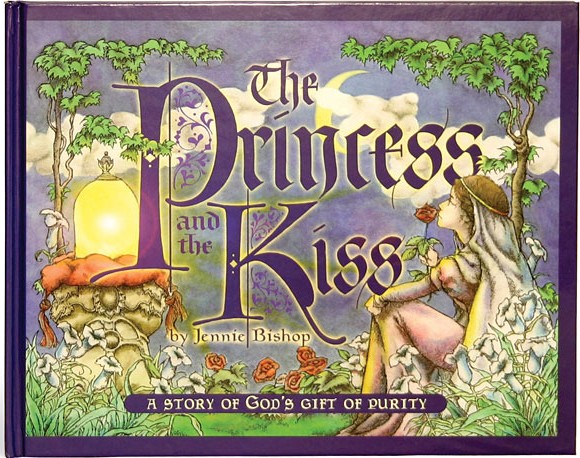
Crosspost: Sally’s First Kiss and The Princess and the Kiss

The-Princess-and-the-Kiss1-e1373847077493

HA note: The following is reprinted with permission from Libby Anne’s blog Love Joy Feminism. It was originally published on Patheos on July 24, 2013.

When I was a teen, I did a lot of babysitting for other homeschool families. One day I babysat two families worth of children while their moms went out for lunch—I think there were about ten kids total that I was watching. I was in the kitchen cleaning up from lunch and the kids were in the living room putting on a play wedding as kids sometimes do. The nine year old was presiding over the wedding of the two five year olds, a girl from the one family and a boy from the other.

All of a sudden I heard the older child say “now you’re supposed to kiss each other” and I freaked out and ran into the living room to break it up.

I wasn’t about to let those two five year olds kiss, thus forever depriving each of the chance to save that first kiss for the altar.

In the conservative Christian homeschooling community in which I grew up, a person’s first kiss was incredibly important. Even today, the products of this culture debate this question with great energy, arguing about whether forbidding the first kiss until the altar is a form of legalism or the preservation of a precious gift.

Now, I was taught that part of the reason that the first kiss should be saved for the alter was that it was a gateway into other things. First comes kissing, and then, who knows? Making out, humping, sex—once you open the door, it’s hard to close it. It would seem, then, that five year olds kissing at a play wedding wouldn’t fit this category, given that we’re not talking about a kiss that comes as a result of sexual tension and mutual attraction.

And yet.

The literature I read didn’t make a distinction between preschoolers kissing and teens kissing.

Instead, it simply talked about the importance of saving “your first kiss” for your wedding day. And of course, we were regaled with stories of virtuous couples who had done just that—didn’t we want to be like them? And then there is The Princess and the Kiss, a book marketed to children as young as four.

The book is about a king and queen who help their daughter save her most precious gift, her first kiss, for the prince she will marry. The princess’s first kiss lives in a glass orb, something like the rose in the Disney version of Beauty and the Beast (you can see it on the cover). This book has become very popular in Christian homeschooling circles and beyond, and there are hundreds of thousands in print. This is the sort of thing I was raised on (though this particular book wasn’t around when I was little, lots of kids are growing up on it now).

All of this came rushing back to mind recently when [my daughter] Sally kissed a little boy at her preschool—or, as I would have seen it in the past, when Sally “gave away her first kiss.”

We had gotten together with the family for a play date, and Sally and her little friend did the whole pretend wedding ceremony thing that little kids spontaneously do (I presided over a few in my day myself). At the end Sally grabbed the little boy and planted a kiss on his face. Surprised and bemused, I couldn’t help but recall my reaction to the pretend wedding staged by the five year olds I was babysitting so many years ago. This time, of course, my perception and reaction was different.

Sally didn’t lose anything when she kissed her little friend. Instead, she simply gained a common life experience—something she will look back at and laugh about when she’s grown.

It’s the people who impute a cute childish action with so much meaning who are creating the problem, not my preschooler.

Excerpt: 10 Things I Plan to Tell My Daughter About Sex That Aren’t That Purity Movement Crap

Screen Shot 2013-08-07 at 3.20.14 PM

Note from Nicholas Ducote, HA Community Coordinator:

I have often wrestled with what I will tell my children (when my wife and I decide to have children) when they start becoming “sexually aware.” It’s easy for me, as a newly married twenty-five year old to critique the way I was raised.

I feel that this article by “Jef With One F,” recently published by the Houston Press, is one that I would pass on to my daughters when the time came.

It offers succinct, practical advice for sex and sexual relationships in the twenty-first century. The Houston Press gave me permission to provide an excerpt here on Homeschoolers Anonymous.

*****

10 Things I Plan to Tell My Daughter About Sex That Aren’t That Purity Movement Crap

By Jef With One F

Against my better judgment I’ve been doing a lot of reading on the purity movement. If you’ve never been exposed to it, then I’ll explain. The idea is basically that you, as a father, are supposed to serve as the sole male influence in your daughter’s life until she gets married. You “guard her heart (and vagina)” because only you can be trusted with it…

…Better writers than I, like Libby Anne, have tackled the subject in depth, and you should spend an afternoon reading her work. She went through it as a daughter of movement, though. I’m a dad, and I am perfectly aware that the sexual health of this child is going to be part of my job…

Here are the ten things I know I need to tell a modern girl about sex once she matures enough to roll her eyes throughout the conversation.

10. That sex is beautiful and fun as hell, but so is driving a car and a bunch of other things that come with responsibilities. You need to ask yourself if you can handle those. I knew I couldn’t be trusted with a car at 16, so I didn’t ask for one. Same with sex. I waited until I knew I was with someone that wouldn’t use me wrong and knew what they were doing. You shouldn’t be afraid of it, but you should respect its possible consequences, such a pregnancy, disease, and just the general mess that sometimes come from sleeping with someone you shouldn’t have.

9. That someone that feels the need to lie, trick, or force you into sex is never going to be the slightest bit interested in your enjoyment of it. You might as well be a gym sock as far as they’re concerned. Don’t be a trophy.

8. That you should never do anything that will make you hate yourself to gain another person’s approval. You are not defined by the approval of others, and anyone who says you are wants to control you. You are your own person with your own unique value to yourself.

7. Your body belongs to you. Anyone that doesn’t respect that is an enemy. Run if you can, fight if you can’t, and never let someone convince you asked for or deserved it if all else fails. If a person makes you feel that they can fire you or fail you in a class or something if you don’t return their affections then they are just a rapist that doesn’t like to go out. Leave and tell someone immediately, because if it wasn’t you it will be someone else…

Check out the full article here.

Where Is Your Sense of Compassion, HSDLA?

Screen Shot 2013-07-31 at 2.48.45 PM

HA note: The following is reprinted with permission from Libby Anne’s blog Love Joy Feminism. It was originally published on Patheos on July 31, 2013.

*****

Josh Powell wanted to go to school so badly that he pleaded with local officials to let him enroll. He didn’t know exactly what students were learning at Buckingham County High School, in rural central Virginia, but he had the sense that he was missing something fundamental.

By the time he was 16, he had never written an essay. He didn’t know South Africa was a country. He couldn’t solve basic algebra problems.

So starts a recent Washington Post article about Virginia’s religious exemption.

Powell was taught at home, his parents using a religious exemption that allows families to entirely opt out of public education, a Virginia law that is unlike any other in the country. That means that not only are their children excused from attending school — as those educated under the state’s home-school statute are — but they also are exempt from all government oversight.

School officials don’t ever ask them for transcripts, test scores or proof of education of any kind: Parents have total control.

. . .

Josh Powell eventually found a way to get several years of remedial classes and other courses at a community college.

Now he’s studying at Georgetown University.

. . .

Josh Powell, now 21, wonders how much more he could have accomplished if he hadn’t spent so much time and effort catching up.

“I think people should definitely have the freedom to home-school as long as it’s being done well and observed,” he said. “I don’t see any reason for there not to be accountability.”

Most of all, he worries about his siblings: There are 11. One, old enough to be well into middle school, can’t read, Josh Powell said.

Now he’s trying to get his brothers and sisters into school, to ensure that they don’t have to work as hard as he did to catch up — or get left behind.

Go read the whole thing—the article is excellent. The long and short of it is that Josh’s parents used Virginia’s religious exemption clause to get out of any requirement to teach him anything, and then proceeded to give him what he knew was a substandard education, despite his desire to learn more than they were teaching him. In the end, Josh overcame all of that and managed to obtain remedial classes at a community college (without his parents’ help, I should add) and then gain admission to Georgetown. And now, he wants to see the law changed so that other children will not find themselves in his situation.

What I want to turn to now is HSLDA’s response. Before I do that, I should mention that the article includes a quote from Michael Farris. It’s not long:

The law is completely clear, said Michael Farris, chairman of the Home School Legal Defense Association, who has claimed the exemption for his family. It doesn’t make sense to have the public school system regulate home schools, he said, because he thinks home schools are far more successful.

As to whether there could be children getting an inadequate education, he said: “Well sure, it’s possible. But there are whole public school districts that are slipping through the cracks.”

Dear Mr. Farris: What you said is called “tu quoque.” It is a logical fallacy. You are a lawyer, you should know that.

Now with that out of the way, what I really want to look at is the official response HSLDA issued the day after the Washington Post article came out.

“Oh, my God, I have a chance to learn!” The Washington Post’s recent article about Virginia’s religious exemption statute includes this fascinating quote from Josh Powell, the young man who never attended public school because his parents obtained an exemption on religious grounds.

The article criticizes the law that allows the exemption and lobbies for its change. But let’s slow down and think this through.

How many public school teachers ever hear their students say, “Oh, my God, I have a chance to learn”? Very few. Because sadly, public schools crush many kids’ desire to ever learn again. And this has been documented.

The largest study comparing homeschool students to others (by Dr. Lawrence M. Rudner, University of Maryland) amazingly revealed that homeschool 8th grade students score the same as 12th grade public school students!

Why do homeschool students score an almost unbelievable four grade levels ahead of others by 8th grade? It’s very simple. It’s not that homeschool kids or their parents have higher IQs—I suspect they don’t. It’s simply that homeschools don’t crush a kid’s inborn desire to learn.

What is HSLDA’s evidence that public schools crush children’s “inborn desire to learn” while homeschooling doesn’t? The Rudner study.

Let’s review, shall we?

Somehow I feel like we’ve been over this before. (Also, if you haven’t, you should read this excellent article as well.) What did Rudner’s study say and how does he feel about the way HSLDA uses it?

Rudner’s study was funded and sponsored by the Home School Legal Defense Assocation.  It analyzed the test results of more than 20,000 home schooled students using the Iowa Test of Basic Skills, and it was interpreted by many to find that the average home schooled student outperformed his or her public school peer.  But Rudner’s study reaches no such conclusion, and Rudner himself issued multiple cautionary notes in the report, including the following: “Because this was not a controlled experiment, the study does not demonstrate that home schooling is superior to public or private schools and the results must be interpreted with caution.” Rudner used a select and unrepresentative sample, culling all of his participants from families who had purchased curricular and assessment materials from Bob Jones University.  Because Bob Jones University is an evangelical Christian university (a university which gained a national reputation in the 1980s for its policy of forbidding interracial dating), the sample of participating families in Rudner’s study is highly skewed toward Christian home schoolers.  Extrapolations from this data to the entire population of home schoolers are consequently highly unreliable.  Moreover, all the participants in Rudner’s study had volunteered their participation.  According to Rudner, more than 39,000 contracted to take the Iowa Basic Skills Test through Bob Jones, but only 20,760 agreed to participate in his study.  This further biases Rudner’s sample, for parents who doubt the capacity of their child to do well on the test are precisely the parents we might expect not to volunteer their participation.  A careful social scientific comparison of test score data would also try to take account of the problem that public school students take the Iowa Basic Skills Test in a controlled environment; many in Rudner’s study tested their own children.

Rudner himself has been frustrated by the misrepresentation of his work. In an interview with the Akron Beacon Journal, which published a pioneering week-long investigative series of articles on home schooling in 2004, Rudner claimed that his only conclusion was that if a home schooling parent “is willing to put the time and energy and effort into it – and you have to be a rare person who is willing to do this – then in all likelihood you’re going to have enormous success.”  Rudner also said, “I made the case in the paper that if you took the same kids and the same parents and put them in the public schools, these kids would probably do exceptionally well.”

In other words, the Rudner study doesn’t say what HSLDA says it says, and Rudner himself is frustrated about how HSLDA is misusing and misinterpreting his study. In other words, HSLDA’s supposed “proof” that public school stifles a child’s “inborn desire to learn” while homeschooling does not is proof of no such thing.

Back to HSLDA’s response to the Washington Post article:

When he hit community college, Josh attended remedial classes designed to serve public high school graduates, then zoomed ahead. Now he attends one of the nation’s top 25 universities, earning good grades while working part time and carrying a heavy academic load. Not too bad for a kid who thought he had a bad secondary education!

If Josh had attended public schools, he would have statistically had a 1-in-5 chance of growing into an illiterate adult. The National Assessment of Educational Progress revealed that 21.7% of adults in Josh’s native Buckingham County are illiterate. This is the wreckage of thousands of young people whose desire to learn has been crushed in the public schools.

I wonder if any of the other kids in Josh’s remedial classes went on to attend one of the nation’s top 25 universities. I doubt it.

Maybe Josh didn’t learn that South Africa was a country while he was being homeschooled. But he arrived at the gates of young adulthood with his inborn desire to learn fully intact, and that has served him very well indeed. The Virginia religious exemption statute deserves its place of respect.

The HSLDA response is, in essence, “your bad homeschool experience is nothing to complain about, because you could have a fate worse than receiving an incompetent homeschool education while begging to learn—you could go to public school!” Is HSLDA completely incapable of saying “we’re sorry your situation was so bad, we feel that it is a terrible thing for any child to slip through the cracks”? Are they incapable of hearing “that hurt me” and responding with “we’re sorry”?

All I have to say is this: Where is your sense of compassion, HSLDA?