HA note: The following is reprinted with permission from Libby Anne’s blog Love Joy Feminism. It was originally published on Patheos on August 29, 2012.
When I was eight or ten, my mom was really interested in finding a particular geography book to use in homeschooling us. Frequently when we would go to a historical home or a museum, she would see it on a shelf and say “There! That’s the book I want!” It was published in 1902, you see. Frye’s Geography. She’d heard it promoted somewhere, at a conference or in a homeschool magazine. She eventually found it used somewhere and was thrilled.
She began using it with us, and while the images were beautiful, it wasn’t hard for me to pick up on the blatant racism it contained.
For some reason, the homeschoolers I came in contact with – fundamentalist and evangelical Christians homeschooling for religious reasons – always seemed to have this idea that anything that was old must be better than what we have now. But, as Frye’s Geography made clear to me, just because something is old doesn’t mean it’s better.
Frye’s Geography is only one example. When it came female advice, I read Stepping Heavenward and Beautiful Girlhood, both also over a hundred years old. I was assigned chapters of Beautiful Girlhood as punishment sometimes, when mom decided, I suppose, that my girlhood was not being “beautiful” enough.
I also spent years and years studying Latin. And you know what? I really haven’t used it, and I don’t really foresee myself using it in the future. Sure, word roots and all that, but you can get a lot of that from studying a language like Spanish as well, or from taking just a year or two of Latin, as opposed to ten. Honestly? I wish I’d studied Spanish. But Latin, you see, was old, and back in the nineteenth century every school child studied Latin, so Latin it was.
It seemed like recreational reading was similar – anything that was published a hundred years ago or more, or even fifty years ago, was more approved and smiled on than something published today. We grew up reading dozens of Elsie Dinsmore books and G. A. Henty books, most purchased from Vision Forum. Once again, these books were racist. The Elsie Dinsmore books idealized the Old South while G. A. Henty books were wrought through with British imperialism. But they were old, dag namit! They were written over a hundred years ago, so they must be good and godly!
I think that’s what it comes down to, really. In Christian homeschooling circles there’s this idolization of the past and this demonization of the present to the extent that anything that’s old is almost as default seen as good and anything that is new is by default held as suspect. Given that reality, it’s really not a surprise that companies like Vision Forum not only live in the past but also market the past, or that companies like Lamplighter operate by republishing old books and marketing them to homeschoolers.
The thing is, the “olden days” were not some sort of wonderland without divorce, sexual promiscuity, or violence. The faults of the present day that Christian homeschoolers are so quick to point to existed then too. Believe it or not, New York City already had a gay subculture. Prostitution thrived. Divorce rates may have been lower, but the trade off was abusive marriages. Women still got pregnant out of wedlock, and people still had premarital sex. And even more than all that, racism was rampant, the poor starved to death, and children died early deaths working in the coal mines.
The reality is that the “good old days” Christian homeschoolers look at so wistfully didn’t exist, and that just because something is old doesn’t mean it was better.
Unfortunately, plenty of Christian homeschoolers are more than willing to go on idolizing a myth, and part of that idolization means buying up all the old books companies like Vision Forum and Lamplighter can find space to print.
Lisa is a homeschool graduate currently attending Patrick Henry College.
I was homeschooled my entire life. I’m the oldest in a large family. I’m also a second-generation immigrant kid. My parents are both immigrants from India.
Indian homeschoolers are very rare, and in 15 years of being homeschooled, I’ve only met about 3 other Indian homeschooled families. I must say that I have never been discriminated against because of my race. However, in my experience, the general attitude of the homeschool community towards non-white cultures leaves much to be desired.
Fitting into American society as a first or second-generation immigrant presents its own dilemmas. In my experience, not many in the homeschool community seem interested in understanding these challenges. When explaining this to a friend, she began to complain about (in her words) “hyphenated Americans.” Indian-American, African-American, and Japanese-American were terms that bothered her. She asked, “Why the prefix? Why can’t they just be Americans?” When I wondered whether I could wear a sari for a formal school even, someone said, “But you’re American, right?”
It doesn’t help that the majority of homeschooling material seems to bear a “West is best” mentality.
It often feels as if only exports from Europe and America merit careful study. My parents did a great job teaching us about our own culture, but there was a time when I accepted the idea that America must be inherently better than any other place in the world. It wasn’t until I had the opportunity to live in India that I truly appreciated my heritage. My brother takes online video classes from a prominent homeschool curriculum provider. In his World History and Geography class, the teacher wrote three things about India on the whiteboard: Hinduism, socialism, caste system. (None of those things are necessarily false, but if that’s all you can teach about one of the world’s oldest civilizations, something’s wrong.) The subsequent teaching made it obvious the only positive things about India are the Western missionaries that came there.
It would be unfair to act as though these experiences completely defined my experienced as a non-white homeschooler. For example, I only considered wearing the sari because another homeschooled friend suggested it. At Patrick Henry College, I wear Indian outfits on occasion and no one seems to mind. The history professor who teaches Western Civilization talks to me about Indian politics and his love of South Indian food. Throughout my homeschool experience and even more so at college, I have met many homeschoolers who are genuinely interested in learning about other cultures. At the same time, I have heard many fellow students wholeheartedly defend Western colonization and dismiss accusations of imperialism as part of a liberal, anti-Western agenda.
While I’m certainly not asking that every homeschooler be an expert in non-Western cultures, some respect, appreciation, and understanding would be welcomed. I think that this is even more vital as society becomes increasingly globalized. This does require exposure, for how can you appreciate something that you’ve never experienced? Non-Western cultures have history, music, art, and literature as rich as any European country and equally worth studying. Today, this is as easy as a library run, a Google search, or a field trip. If it considered important, Tagore and Japanese haikus can easily fit in a homeschooled lesson plan alongside Wordsworth and Austen.
I think that fostering multi-cultural appreciation can, and should be, encouraged in the homeschool community.
In my personal experience, it has not been a priority for homeschoolers in general. If it were, homeschooling would be more attractive to an increasingly diverse range of people. Kids, parents, and the movement as a whole would only benefit.
Late last year, Doug Phillips, the president of Vision Forum Ministries, publicly admitted to an inappropriate extramarital relationship and resigned. Shortly afterward, the Vision Forum board of directors decided to shut down the San Antonio ministry. In the months since then, World Magazine has reported additional terrible details about Phillips’s alleged behavior toward a woman under his care.
The story made even secular news. For years, Vision Forum and Doug Phillips had enjoyed oversized influence in homeschooling circles as leaders of the “Quiverfull” movement, encouraging Christians to have (and homeschool) large families as a way of exercising influence in the world.
They were champions of “biblical patriarchy,” the principle that family life (and ultimately society at large) should be organized under the authority of divinely ordained fathers and husbands. According to one manifesto prepared by Vision Forum, “the erosion of biblical manhood and leadership,” caused by modern ideologies that undermine God’s authority, “leads to the perversion of the role of women, the destruction of our children, and the collapse of our society.”
To be fair, Vision Forum’s view originated in a specific theological tradition to which most members of the “Religious Right” probably do not belong. And it leads to some conclusions that many Christian conservatives find repellent. Yet some of Vision Forum’s teachings have been disproportionately influential in the American homeschooling movement. And they are especially important for understanding the movement’s relationship to the painful history of American racism.
*****
What sorts of conclusions did Vision Forum draw from its theology? First, there are the obvious ones.
Vision Forum advocated very well-defined gender roles. Through its for-profit merchandise catalog aimed at homeschooling families, it distributed books like an updated version of William Gouge’s Of Domesticall Duties, a 1622 treatise on family life. (A sample of the original wording: “Mildness in a wife hath respect also to the ordering of her countenance, gesture, and whole carriage before her husband, whereby she manifesteth a pleasingness to him, and a contentedness and willingness to be under him and ruled by him.”) The online store sold a two-DVD set called “Tea and Hospitality with Michelle Duggar,” inviting viewers to “celebrate the fruit of the womb with [mother-of-nineteen] Michelle!”
Vision Forum also sold homeschooling families highly gender-specific toys like an “all-American boy’s crossbow” and a “Princess Virginia” dress meant to encourage a girl as she “identifies with Mommy and experiences how unique and wonderful it is to be a girl, to be a daughter of the Most High King—to be His little princess!” Vision Forum’s entire merchandise catalog encouraged as much differentiation as possible between boy leaders and girl followers.
Interestingly, there was also a pronounced nationalistic dimension to gender in this catalog. Vision Forum boys and girls were always American boys and girls. Although many evangelical bloggers and journalists have been highly critical of Vision Forum’s attitudes toward gender, they have often overlooked this.
Vision Forum promoted American nationalism on the basis of their brand of Calvinist covenant theology, which implied that an authoritarian family structure would regenerate God’s special covenant with the United States of America. Yet militant identification with the United States—and especially with its early history—is evident everywhere in Vision Forum’s catalog, especially in its merchandise for boys.
*****
Even more important, however, is that Vision Forum promoted a vision not just of male leadership in the family and the nation, but more specifically a vision rooted in an ideology of white male mastery. And it promoted not just American nationalism, but Southern nationalism—the nationalism of the Confederacy.
To be clear, Vision Forum was not an avowedly racist organization. It did not directly or consciously advocate white supremacy. But it did deliberately promote nostalgia for the white supremacist social order of the Old South.
In fact, one of Doug Phillips’s first books, published in 2003, was a short edited collection of writings by Robert Lewis Dabney, a Southern Presbyterian theologian. Its subtitle is The Prophet Speaks. Dabney, though technically an opponent of secession, was an enthusiastic defender of southern slavery. He served in the Confederate army as a chaplain and as an aide to Stonewall Jackson, and after the war, he published A Defence of Virginia, and through Her, of the South. This book defended human slavery, endorsing the notion that God instituted black slavery through the “curse upon Canaan” after Noah’s flood. Dabney also published an admiring Life of General Jackson and later a pamphlet denouncing racial integration in Presbyterian churches.
None of this meant that Doug Phillips consciously endorsed white supremacy. In his collection, instead, Phillips printed excerpts of Dabney’s later diatribes against public education and feminism. Yet Phillips was clearly enamored of Dabney as a person and as a cultural figure.
“Perhaps no Christian leader of the nineteenth century,” Phillips wrote about Dabney, “filled the role of prophet with greater proficiency.” He even wrote that “for those individuals who long for the days in which a gentleman could hold the door for a lady without some indignant feminist snorting at him, Dabney’s writings will seem refreshingly virile.” As for Dabney’s pro-slavery views? Phillips just coyly asked his readers to consider “the context of the War itself.”[1]
Indeed, the depth of Phillips’s personal admiration for Dabney—and for Stonewall Jackson—was evident in several of the items for sale by Vision Forum. They included a reprint of Dabney’s biography of Jackson, a collection of Jackson’s letters, and even a doll meant to remind girls of Stonewall Jackson’s “godly wife.”
With this doll, Vision Forum strayed deep into what I call “Plantation Chic”—nostalgia for the prewar, slaveowning South. “Stately homes, horse-drawn carriages, and beautiful dresses were special delights for Southern young ladies,” sighed the catalog. “Now you can attire your doll in the feminine and delightfully flouncy styles of the mid-1800s!”
Even more revealing was the Vision Forum “Beautiful Girlhood” doll collection. It featured four dolls—two black and two white. The white dolls were both named after the ideal of freedom; Vision Forum called them Liberty and Jubilee. One of the black dolls was simply named Abigail. And the other black doll? Her name was Fidelia, helpfully translated as “Faithful One.”[2]
*****
Meanwhile, Vision Forum sold various history books and audio albums that discussed the Civil War itself. The online descriptions were vague, but these materials had the usual earmarks of what historians call the “Lost Cause” interpretation of the war—the discredited claim that secession was not about slavery, that the North was oppressive, and that most African Americans actually preferred to be slaves.
For example, Vision Forum’s books sometimes referred to the war as “the War between the States,” a term preferred by many Confederacy defenders. They fixated on the supposed nobility of southern “Christian warriors” like (of course) Stonewall Jackson and Robert E. Lee. And they seemed to imply that slavery’s role in the war was not what most historians say. (One blurb in Vision Forum’s print catalog warned that “most of what we ‘know’ about it is actually revisionist history.”)
As an American historian, I can say with confidence that Vision Forum was wrong about this. In the 1860s, Confederate leaders said without any hesitation that their goal was to protect slavery.
According to its official secession declaration, South Carolina left the Union because northerners called slavery “sinful” and had elected a president (Abraham Lincoln) “whose opinions and purposes are hostile to slavery.” My home state seceded because its leaders thought the federal government was “destroying the institutions of Texas and her sister slave-holding States”—specifically, the institution of slavery. Mississippi seceded in order to defeat “negro equality,” declaring that “our position is thoroughly identified with the institution of slavery.”
Confederate leaders talked a lot about how the federal government was supposedly taking away their rights. But the key right they had in mind, according to their own words, was the right to own black people. They insisted that white men had this right not only in their own states but also in free states and territories, even if the whites there objected. To protect this “right,” they not only decided to leave America but also deliberately fired on a U.S. military post. In the American Civil War, the Confederacy formed to defend slavery, and then it fired the first shot.
But Vision Forum’s pro-Confederate position probably shouldn’t be surprising, given Vision Forum’s close resemblance to (and relationship with) the better-known ministry of Idaho pastor Douglas Wilson.
Douglas Wilson, an unbelievably prolific writer, may be the best-known advocate today of a conservative Calvinist vision for patriarchal family life and gender roles. He is still quite influential in the homeschool movement. He’s also notorious for writing two books on slavery, Southern Slavery: As It Was and Black & Tan, both of which are available online.
These two books about the Old South include condemnations of racism. But they deny that slavery is wrong. “Was slave ownership malum in se, an evil in itself?” Wilson asks at one point in Black & Tan. “The answer to that question, for anyone who believes the Bible, is that it was possible for a godly man to own slaves, provided he treated them exactly as the Scripture required.” Wilson also calls proslavery theologian Robert Lewis Dabney a “virtually prophetic” man, just as Doug Phillips did. Wilson acknowledges and condemns Dabney’s racism, but he apparently has almost nothing to say about Dabney’s views on slavery itself.[3]
*****
All of this leaves us with an important question. Why would Christian homeschooling advocates who claim not to be racist promote this kind of nostalgia for the antebellum South? Why would they encourage us to idolize the Old South’s slavery-based plantation culture, its slaveowning white men, and its self-serving views about the federal government?
Oddly enough, it seems fairly clear that racism isn’t the place to start. Although fondness for the antebellum South often does result from racism, I don’t think it would be helpful to assume that’s the key reason for Vision Forum’s views. There is little direct evidence that Vision Forum was consciously racist, and there’s quite a bit of evidence that they didn’t want to be racists. If nothing else, blaming racism is the least interesting thing we could say about what was going on in their ministry.
But we need to recognize that in real-life America, slavery is inextricable from racism, and so is the history of the Confederacy. The association between slavery and racism isn’t accidental or irrelevant. When you claim the right to own an entire category of people as slaves, you cannot see them as equal human beings.
And we also need to see that Vision Forum’s nostalgia for a white slaveowning society was directly related to its nostalgia for an authoritarian code of sexual ethics. The right to own slaves may not have been the point of Vision Forum’s preaching, but the nearly absolute authority of the male householder, commanding all other members of the family, certainly was.
No amount of talk about “complementary” roles for men and women can conceal what Vision Forum was actually eager to announce: that its key concern was patriarchy—a system of governance, not just a distribution of responsibilities. From that perspective, the Old South represented a convenient image of white manhood and womanhood. To Vision Forum, the Confederacy’s fate served as perhaps a hint of why authoritarian manhood seems endangered today.
In addition, the failure of the Confederacy may be a convenient explanation for the supposed decline of Christian civilization in what Vision Forum claims was a providentially founded Christian nation. For them, the Civil War can serve as the moment when God chastised his people in America (just as he did the ancient Hebrews) for straying from their appointed course. It also seems to represent what can happen when a society fails to cohere—when its authority structures, and thus its values, fail. It explains what went wrong in God’s own nation.
We need to recognize that this authoritarianism is a vision of slavery and death. We can empathize with people who yearn for a lost culture. We can try to understand their anxiety and alleviate their fears. But we must call their vision what it is and offer another way.
_________________________
See the introduction, especially pages 8-10.
Though this name has highly offensive proslavery implications, Vision Forum seems not to have realized it. In fact, the doll seemed to be designed with freedom in mind. Fidelia, the online catalog said, “can brave the voyage to New England as Priscilla Mullins, help Lewis and Clark find the Northwest Passage as Sacagawea, serve tea at the White House as Dolley Madison, and stroll the deck of the Titanic as Nan Harper.”
Here’s Wilson’s comment in fuller context: “The issue is whether a Christian man could have lawfully owned a slave in 1850 America without being necessarilyguilty of a moral outrage. Was slave ownership malum in se, an evil in itself? The answer to that question, for anyone who believes the Bible, is that it was possible for a godly man to own slaves, provided he treated them exactly as the Scripture required. In a sinful world, slave ownership generallyis sinful, and it is a system that invites abuse. Over time the gospel will overthrow all forms of slavery. But again, the kingdom arrives like yeast working through the loaf, and not like a coup de main. In the meantime, to have the likes of the abolitionist Charles G. Finney (who said that it is impossible to be on the right side of God and the wrong side of the slavery issue) hurling his taunts at Abraham and Philemon is a bit thick.” Douglas Wilson, Black & Tan: A Collection of Essays and Excursions on Slavery, Culture War, and Scripture in America(Moscow, Idaho: Canon Press, 2005), 69. For Wilson’s remarks about Dabney, see pp. 79-94.
HA note: The following is reprinted with permission from Libby Anne’s blog Love Joy Feminism. It was originally published on Patheos on January 22, 2013.
I grew up reading copious amounts of literature from Answers in Genesis and attending conferences where Ken Ham and other leading creationists were speakers. I’ve been to the Creation Museum, and I’ve been reading Answers in Genesis’ Answers Magazine for close to a decade now. And one thing that was drilled into me over and over again is that racism is rooted in the theory of evolution and that creationism, which teaches that all humans are descended from Adam and Eve, is the antidote to evolution.
One Blood: The Biblical Answer to Racism is Ken Ham’s contribution to efforts to mend racial prejudice.
One Blood: The Biblical Answer to Racism is Ken Ham’s contribution to efforts to mend racial prejudice, and I do think Ham is genuine in his efforts. He believes that the understanding that all humans are descended from Adam and Eve, and ultimately from Noah’s three sons, is what is needed to curb racism. He also believes that the roots of racism are found in the theory of evolution, and that it was this theory of the races that inspired such atrocities as the Holocaust. Ham’s ideas – that racism stems from evolution and that creationism is the antidote – are echoed by other prominent creationists, including creationist heavyweight Henry Morris.
I grew up reading this literature and firmly rejecting both (overt) racism and the theory of evolution.
Here is an image from the Creation Museum, an image which describes a theory of human origins that I accepted as gospel truth until college:
I was taught, and Answers in Genesis teaches, that Africans are the descendants of Ham, that Europeans are the descendants of Japheth, and that Asians and Middle Easterners are the descendants of Shem. I’m not surprised, then, to learn that some public school classrooms in Texas are using creationist textbooks that contain the following image:
Growing up in a Christian homeschool family, the textbooks we used for subjects like history and science were suffused with religion, and this theory of racial origins is exactly what I was taught – and what Answers in Genesis teaches. What I didn’t realize, and what Answers in Genesis seems weirdly oblivious to, is this:
This theory of racial origins is actually, well, racist.
Somehow this flew over my head growing up – which is weird, given my familiarity with the Bible – but the story of Noah’s three sons is not somehow equal or without preference or value judgment.
Genesis 9: 18-27
The sons of Noah who came out of the ark were Shem, Ham and Japheth. (Ham was the father of Canaan.) These were the three sons of Noah, and from them came the people who were scattered over the earth.
Noah, a man of the soil, proceeded to plant a vineyard. When he drank some of its wine, he became drunk and lay uncovered inside his tent. Ham, the father of Canaan, saw his father’s nakedness and told his two brothers outside. But Shem and Japheth took a garment and laid it across their shoulders; then they walked in backward and covered their father’s nakedness. Their faces were turned the other way so that they would not see their father’s nakedness.
When Noah awoke from his wine and found out what his youngest son had done to him, he said,
“Cursed be Canaan!
The lowest of slaves
will he be to his brothers.”
He also said,
“Blessed be the Lord, the God of Shem!
May Canaan be the slave of Shem.
May God extend the territory of Japheth;
may Japheth live in the tents of Shem,
and may Canaan be his slave.”
“The curse of Ham” was used by antebellum Americans as a justification for slavery.
Africans, after all, were descended from Ham, and Ham was cursed by God and ordered to serve his brothers Shem and Japheth. (For more background, I highly recommend Sylvester Johnson’s The Myth of Ham in Nineteenth-Century American Christianity: Race, Heathens, and the People of God.) In other words, in spite of what Answers in Genesis maintains, racism both long predates the theory of evolution and has frequently sprung from the Bible and from the creation account itself.
Am I saying that the theory of evolution has never been used to justify racism? Of course not. Am I saying that modern creationists are of necessity racist? Not at all. What I am saying is that Answers in Genesis’ insistence that racism stems from the theory of evolution and that creationism is automatically anti-racist is both overly simplistic and factually incorrect. While I am very glad Ham wants to combat racism, I don’t think he completely understands that he is working to do so by promoting a theory of origins – that all men descend from Shem, Ham, and Japheth – that has long been seeped in racism. While this idea may hold no racist implications for him, it does for many others, especially in the American South.
(After writing the above I read this excerpt from One Blood, and I suddenly wonder if I am giving Ham too much of the benefit of the doubt. I clearly need to reread the book. Ham argues that “the curse of Ham” was actually only meant to be a curse on Canaan, but he somehow does that without making things much better at all.)
I never realized what an anomaly my family was at homeschool conventions or homeschool co-ops until recently we ran into another Indian family at one. The first I have ever met. And they were only looking into homeschooling. They weren’t even homeschooling yet!
See, my family is not your typical homeschooling family. We’re brown. But more than that, we’re Indian. Like, from India.
And we are still the only Indian homeschool family to date that I know.
For years I’ve felt like an outsider at homeschool conventions because I would look around and every single other person was white, with either brown or red hair neatly tucked into a bun, a traditional jean jumper or skirt, and a nicely demure aura, and there I was with my brown skin, long straight black hair hanging loose, jeans, and gauzy shirt. You can imagine the looks I got.
And here’s where it gets personal.
Race is a very big thing in the homeschool community, I’ve discovered. Douglas Wilson has been skyrocketed into the spotlight for his classic white supremacist views, and his book excusing slavery in the American South, but before I even read his book I started having problems with a class I was taking at the time: Gileskirk Christendom, based on the beliefs of a certain Dr. George Grant. He portrayed Western Civilization, and, most notably white people, as the “greatest flowering of Christianity”, and descrys the rest of the world as pagan, primitive, and ungodly.
It’s as if Christianity equals White.
When I was 12 and 13 I had a mad crush on a young man who was a personal friend of our family. I thought he was fantastic. I adored him pretty much. But he was a good 7-8 years older than me and never realized my hopeless obsession. Before long I realized that there was no way he would ever fall for me, and I remember my mom telling me that it was hopeless because his mom would decide who he courted, and the girl he married would have to be white. (His mom was just that kind who read all the “white supremacy couched as christian” homeschool literature, and raised her kids on Westerns where white = good and dark = bad).
After all, good upstanding white Christian homeschooled guys want a “clean” girl. They want someone with white skin and brown hair, who’s tall and fair and a poster child for homeschooling. They don’t look for shorty curvy brown girls who have way too much passion and poetry in their veins.
And believe me, I’d read all the books. On how you had to be meek and quiet and not rebel or listen to secular music; and all the books made a white southern lifestyle seem equatable with Christianity. You know, where you didn’t go to college, and waited for the perfect Prince Charming. What particularly impacted my view, though, was that the books said that being seductive or sexy was “the sin of Bathsheba” therefore it was considered taboo.
Now, one considers white skin inherently “seductive” or “exotic”, yet those are exactly the stereotypes which come with having copper colored skin. I was convinced that had I only been white, he may have cared for me and it broke my heart and plunged me into extreme self-hatred.
I can remember writing a teary-eyed journal entry begging God to make me white because if I was white, then he would love me. Well, he turned out courting a girl who is just that: white. tall. fair. with brown – blonde hair and who’s pretty much perfect.
And while we all have ideas of what our first heartbreak will be, little did I think that it was my skin color which would break my heart.
I came across a small homeschool pamphlet on courtship yesterday which listed a number of factors which would disqualify a person as a potential spouse. One of them was entitled “race”.
My eyes filled with tears and I threw the book across the room.
It’s just that mindset which is so contrary to the Word of God which says that in Christ there is neither “Jew nor Greek” and that God is no “respecter of persons”, that frustrates me so much. Perhaps this is because I personally have experienced it. I know firsthand the destructive consequences.
It has taken me years to see anything beautiful in my skin color. It’s still a struggle. There are days I’m ok with it, and days I hate it because it’s so…. brown.
If race is something I have no control over, then what makes a white girl more christian simply because she, through no superiority or fault of her own, was born with less melanin in her skin than me?
And after years spent with SPF 100, whitening creams, etc. I give up.
I’m me and that has to be enough.
But I can 100% assure you that those books aren’t helping anything. It’s stupid to hold one skin color up as “better” than another. Because in the eyes of God we are all equal, no matter.
It’s about time the homeschool community discards the religious baloney and heads back to Scripture on this one.
First I think the sensitive nature of this topic demands me to explain what this piece is not about. It is not intended as a litany of racial incidents I saw or a list of microaggressions allegedly inflicted upon me. It isn’t some blanket condemnation of the society home education creates, painting it as a reborn White Citizens’ Council. Nor is it intended to be a condemnation of identifying as American, being of European background, middle class, Christian or conservative. Lastly, I am not going to pretend like I was oppressed by any means. (Sidenote: For those who are far more learned in this subject, I would like to note that my subject of study has not been critical race theory, postmodernism or even sociology but rather was rather early modern European political theory and the Near East. So, mea culpa, if I use imprecise terminology. By all means let me know.)
That being said, I feel like my experience in home education can possibly provide a helpful perspective. My experience in homeschooling has slowly taught me how race operates in our society. It’s rarely some KKK bogeyman but rather is often unconscious and structural rather than personal, and is usually unthinking. In particular it’s made worse by what theorists call whiteness.
Now what do I mean by “whiteness”? By this I do not mean simply being of a European background but rather a society system in which being labeled as “white” (a constantly changing definition with several criteria such as light skin, European background/features, English speaking, Judeo-Christian and being seen as “respectable” and middle class) is the unconscious presumed default in society and is seen as best, where one is given the benefit of the doubt. The more checkboxes you can list off the more benefit of the doubt you will be given (throw in American born, and male in there and you won the bingo game). Today that has often meant:
1. Not being classed as a criminal.
Pastor Matt Chandler, of the Acts 29 network, made a really helpful insight when he stated that his son, blonde and blue eyed, would never be followed around in a store with the assumption he was up to no good.
2. Historically seen as more accepted in society and those people of color who do conform to what we see as respectable are labeled as “courageous” or peculiar.
3. Thanks to the mistakes and outright misdeeds of history, someone who is white is more likely to be better off, better educated and safer.
This does not discount personal success or personal failure but it does mean that history does play a role into where in society we start. Historically being white has afforded economic privileges such as not being redlined, being considered acceptable for credit, being shown houses that were often denied to people of color. This meant that their children could use equity to build more opportunities such as college education and business loans, which creates more opportunity. There is nothing inherently wrong with this ladder of opportunity itself, but the fact that the rungs have been traditionally denied to people of color.
4. Lastly, and most powerfully with recent news, it means that, being white, you will not be inherently defined as suspicious or a threat.
For instance, even the rate of drug usage, possession and sale is the same across the board among ethnic and racial groups, people of color will find themselves targeted for prosecution more often and, when equally prosecuted given harsher sentences for the same crime o the same severity.
Now how did my experience play into this? Specifically I saw how the way we racially and ethnically construct identities is a game in which whiteness determines the rules and gets to decide what identity you have. For instance my family’s identity is not monolithic. English is my language, I have an Anglo sounding surname and my mother’s family is pretty stock European Midwestern-southern white folks. On the other hand, my father’s family is entirely from Mexican from South Texas and Los Angeles and I usually identified most with the Latino community, especially growing up in a neighborhood dominated by this demographic and going to Catholic school in which I was certainly the whitest there.
In my old neighborhood I was certainly an anomaly perhaps but not totally unheard of as “gueros” (“blondies” or “whiteys”) can be more common in some parts of Latin America. Thus my friends didn’t really question what I called myself (although I do remember parents laughing when I had told my class my father was born in Mexico. I simply assumed, “We’re Mexican, he must be from Mexico.”). However once we moved and I began to homeschool, I noticed a subtle shift in how the identity game was played. If you don’t even fit into one identity, one will be chosen for you. Period. I can’t remember the amount of times I’ve explained to folks, “Yes, my skin is very light. Yes, I am Latino. No, I am not joking.” (This could turn into an Abbot and Costello routine as one father literally refused to believe me.) My particular favorite was during our testing and a mother witnessed me filling in the “Latino/Hispanic” bubble. She quickly pulled me aside and noted that if I was mixed I needed to put mixed. No exceptions.
However, I won’t pretend that being white didn’t bring privileges. Besides those listed above, I didn’t have to act as the spokesman for all things Latin. What was also interesting was, as my hand was stamped, I got to see how history and society is shaped by the default of being white.
In particular I saw that a self-reinforcing narrative is created when being white isn’t just assumed to be the default, but it often is the default in homeschooling (especially when you get to subsume everyone else’s identity into the team). Which means seeing the events of history and issues in society entirely through the eyes of one “side.” Every other narrative is conveniently ignored because it is assumed to not exist.
This occurred most notably in the NCFCA and in the wider homeschool debate scene.
Having to combat civil war revisionism (Did you know that it was just over tariffs and slavery was just totally incidental to the entire war? Yeah, me neither), or even remind some students that slavery was not a “win-win” for everyone involved, became a full time occupation as a competitor and coach. But by being white, no one would think twice about sharing their fairly one sided opinion with you as they unwittingly reinforced whiteness by engaging in a host of presumptions about undocumented immigrants or why democratic governance “can’t work” in Arab society. Around me, there was no self aware look over the should to see if any of “them” might hear but rather the opinions about how Latin immigrants will “balkanize” America and how a “Euro-American majority” is needed for society to work could be shared freely.
The catalyst for this realization came when the BJU protest occurred. To recap, NCFCA chose Bob Jones University, a school associated with racial segregation, discrimination combined with a virulent fundamentalism combined with a healthy dose of violent anti-Catholicism (if you don’t believe that last one ask why Northern Irish loyalist demagogue Ian Paisley has an honorary doctorate). Many, in particular coaches, competitors and families of color objected to associating a multiracial, multiethnic and multiconfessional organization with a tainted institution.
The response was total tone deafness from some. We were asked why we were so bitter about “ancient history”, why we can’t bring ourselves to forgive BJU (I was unaware institutions have souls to absolve) and why it was acceptable to let historically black colleges exist but there were “no colleges for whites.” I finally realized that whiteness meant not only getting to decide the rules of identity, not being afraid of spouting off nonsense about race, but also never having to acknowledge the legacy of racism today and in the past.
This is not to say that I experienced a culture of open bigotry or one filled with racial strife. More often I saw a loving, tranquil multiracial group that genuinely enjoyed each other’s company. However I also saw implicit racial assumptions and privilege reinforce itself through a lack of acknowledgement and understanding in a way that was somewhat unique to the home education scene.
So how do we move forward? I think the obvious way is to rely on what unites us and it’s not our identity as homeschoolers, as Americans or as conservatives, but rather our common faith identity, which clearly rejects such constructs (Acts 10:34-35).
The first way we do this is by listening to each other.
This is some basic advice given from James as we are told to be “quick to hear.” However unfortunately our lack of hearing has created a huge perception gap. Last year the Association of Religious Data had a telling study which demonstrated a wide gap in how different groups in America viewed the interaction between race and society. The first step to overcoming our empathy gap is to overcome our perception gap. That is going to take listening. In particular that is going to take hearing narratives on race and how it effects us from others that don’t include ourselves. Rather than get defensive and jump to meaningless tropes such as “What about black on black crime?” or “What about affirmative action?” maybe we should be quicker to hear and slow to speak.
But we need to take this further.
Pastor Scott Williams, author of Sunday: The Most Segregated Day of the Week, pointed out how the institution homeschoolers are most likely to share in common is also the institution that is most racially segregated. Roughly 90% of American churches are dominated by 90% of one ethnic or racial group. Now part of this trend reflects simple demographics and part of this trend reflects the effects of historic exclusion of people of color for mainline Protestant churches. However it should give us a reason for concern. How can we understand each other and start to break down the toxicity of race in America if part of our lives that is most significant to us is the one that is the most racially segregated? Movements like Church Diversity and Operation: Desegregation are the beginnings of something that could be truly healing.
I’m not saying this will solve everything. Homeschoolers who aren’t Christian or are excluded in other ways, such as gender or sexuality, may not find much solace in this. But it could be a start.
The general principles of listening and engaging in community with The Other hold real promise to ameliorate the problem of racism and white privilege in homeschooling.
By R.L. Stollar (HA Community Coordinator) and Lauren Dueck (HARO Board Chair)
For our next open series, Homeschoolers Anonymous is inviting current and former homeschool students to talk about their experiences of race, racial identity, and racism, whether blatant or subtle. As the Christian Homeschool Movement tends to be dominated by white voices, we aim to give the floor first and foremost to people of color in this series. We want to elevate their voices and hear their stories.
Old-school racism has thrived in homeschooling institutions. For example, Bob Jones University (creators of BJU Press homeschool curriculum) banned interracial dating on campus until the 2000’s, and their curricula taught that racial categories came from Ham’s sin. Many homeschooling communities featured constant debates about the Civil War and the morality of slavery. As a person of color: how did these messages impact you? What was it like existing in the Christian Homeschool Movement? Did you feel welcomed? Harassed? How did your families engage similarly or differently in Christian Homeschool culture because of your ethnic identity? What words of advice do you have for other people of color going through the homeschooling world now? What suggestions or pleas do you have for current homeschoolers to address the realities of race and racism in their own communities?
We will also welcome submissions from white homeschool alumni. What messages did you receive about people of color from your homeschooling curriculums and communities? What moments of racism did you observe? What was the process by which you are coming to understand your racial identity? How do you wrestle with white privilege? How would you encourage other homeschool alumni — and current homeschoolers — to face that privilege in their daily lives?
Also welcome are critical analyses of different homeschool leaders and homeschool texts about race and racism. For example, numerous Vision Forum publications are noted for their overt racism and certain white supremacy movements — like Christian Identity — are ardent fans of homeschooling. Potential questions to explore could include: Is there a connection between patriarchy and racism? Why are homeschooling communities historically overwhelmingly white? How do the dominant culture and politics of the Christian Homeschooling Movement reinforce (or ameliorate) racism and racialization? What is the relationship between racial privilege and economic privilege within the context of homeschooling? We would love to receive historical, sociological, or political pieces on such leaders, texts, movements, and questions for this series.
* Deadline for “Homeschooling and Race” submissions: Friday, August 29, 2014. *
Please put “For Homeschooling and Race” as the title of the email.
As always, you can contribute anonymously or publicly.
Trigger warning: If you experience triggers from descriptions of physical and sexual violence, please know that the details in many of the cases are disturbing and graphic.
*****
Johan Nel
In January 2008, 18-year-old Johan Nel from Swartruggens — a small farming town in North West Province, South Africa — murdered 4 black South Africans in a racially motivated shooting spree.
In January 2008, 18-year-old Johan Nel from South Africa murdered 4 black South Africans in a racially motivated shooting spree.
On the day of the attack, Johan took a bolt-action rifle and more than 100 rounds of ammunition to a squatter camp near his city. While shouting “kaffir” (a racial slur in South Africa), he murdered 4 people: 31-year-old Anna Moiphitlhi and her 3-month-old daughter Elizabeth; 10-year-old Enoch Motshelanoka; and 36-year-old Sivuyile Peyi. He also injured 11 other people. At one point during the attack he took time to ask a neighboring farmer for more bullets. When the farmer refused, Johan shot one of his ostriches. His victims were “defenseless,” some of them “were relaxing under a tree, others were gardening or just walking down the road.”
After the attacks, the editor of South Africa’s Times newspaper noted that, “Nel was born after the release of Nelson Mandela and the unbanning of the ANC. He was schooled while Mandela was president under a curriculum reformed to properly reflect South African history.” However, Johan’s education was primarily through homeschooling. His parents, Hennie and Corrie Nel, took him out of public school to homeschool him and he never was “exposed to others’ cultures.” Johan was reported to be a “young, brainwashed racist” who had “no regard for black people’s lives.” Johan began equating black people with baboons and birds at the age of 15.
According to reports, Johan showed signs of PTSD, anxiety, and destructive disorders. He was himself assaulted 5 years prior in 2003 by someone with a sickle. Johan also harbored immense anger towards the world. After the attacks, Johan told his mother that, “Something just snapped inside me.”
In November 2008, Johan pleaded guilty to 17 charges, including numerous murder charges. He was sentenced to 4 life sentences in maximum security.
She loves to write, she loves to teach others how to write, and she loves attending workshops on how to write better. As far back as I can remember, she emphasized the importance of writing well to her children. My siblings and I grew up being encouraged to write short stories, book reports, poems, and — in my case — even musical productions.
Two decades ago, my mom brought Andrew Pudewa to Los Gatos Christian Church in the San Jose, California area to teach homeschool kids about good writing. Pudewa runs the Institute for Excellence in Writing (IEW). IEW describes itself as an “award-winning approach” that “will give you the tools you need to confidently teach your students to write well, think clearly, and express themselves eloquently and persuasively.” The cornerstone of the IEW program is “Teaching Writing: Structure and Style,” a course for parents and teachers on how to teach writing.
About Andrew Pudewa
Two decades ago, my mom brought Andrew Pudewa several times to Los Gatos Christian Church in the San Jose, California area.
Pudewa has been the principle speaker and director of IEW since the 1990’s. While he does not have a college degree, he does have two stated credentials: First, he is a “graduate of the Talent Education Institute in Matsumoto, Japan.” This means he has a “Suzuki Violin Teacher” certificate. Second, he has a “Certificate of Child Brain Development from the Institutes for the Achievement of Human Potential in Philadelphia, Pennsylvania.” (The Institutes for the Achievement of Human Potential is a non-profit organization whose programs for brain injured children have provokedsignificantcontroversy over the last few decades.)
While Pudewa primarily focuses on writing, his opinions on other matters have popped up online from time to time. Pudewa believes public schools are “temples of relativism.” He has argued that multiple-choice tests are “evil” and “part of a clandestine effort by the inner sanctum of social scientists.” He also calls the Civil War “the War of Northern Aggression.”
I vividly remember three things from attending Pudewa’s writing classes:
1) Pudewa’s notion of the ideal paragraph.
2) Group massages.
3) Rock music kills plants and hurts rats.
The first — Pudewa’s notion of the ideal paragraph — I remember with fondness. Pudewa has these strategies for making a paragraph interesting. Each paragraph is supposed to include different “types” of sentences — a sentence beginning with a declarative, like “There is…,” a sentence beginning with an “-ing” verb, like “Thinking he was late, the boy rushed…,” a “very short sentence” with five words or less, and so forth. I have heard from other homeschool graduates that they hated this part of Pudewa’s program, that it was stifling and led to poor writing habits that took years to overcome. I even found a homeschooling mom express this sentiment recently in such a spot-on way it was simultaneously humorous and heartbreaking:
“[My child’s] paragraph on Noah is all stilted and weird because she HAD to include that who clause and that ‘ly word.
While I understand those criticisms, I personally appreciated the idea of intentionally changing your sentence structure to make each paragraph more arresting.
The second — group massages — was just weird. Pudewa would make all the class attendees — homeschool kids and homeschooling mothers — stand up and give each other back massages. When you’re a kid and your teacher makes you give a back massage to not only strangers but much older adult woman, and vice-versa, it is… weird.
The third — Pudewa’s tangential lessons on the “effects of music on life” — are what I am interested in discussing here.
Pudewa has a fascination with music and its alleged effects on the human brain and children’s ability to learn. This fascination makes sense considering Pudewa is not only a writing teacher, but also a Suzuki-method violin teacher. In fact, it might interest homeschool graduates who disliked Pudewa’s writing instruction methods to know that Pudewa’s methods are an experiment in applying Suzuki’s method for teaching violin to something other than music — namely, writing.
The Profound (New Age) Effects of Music on Life
It wasn’t random happenstance that other children and I learned about the detrimental impact certain types of music can have on rats, plants, and students two decades ago. Pudewa has been teaching this lesson since the 1990’s.
Even today, the Institute for Excellence in Writing continues to sell Pudewa’s presentation on music, entitled “The Profound Effects of Music on Life.”
More important, he still is.
Just a couple years ago in 2011, Andrea Schwartz — who works with the Christian Reconstructionist organization the Chalcedon Foundation and who oversees the Chalcedon Teacher Training Institute — interviewed Pudewa. In that interview, Pudewa brings up the same plant and rat stories I heard as a kid.
As of today, in November of 2013, the Institute for Excellence in Writing sells Pudewa’s presentation on music, entitled “The Profound Effects of Music on Life.” The presentation description says the listener will “discover the fascinating effects that different kinds of music have on our brains,” a discovery that will “transform your thinking” and make you “never listen to music in quite the same way again.” How does Pudewa accomplish this? Well, “Dramatic evidence regarding potentially harmful music is introduced with both scientific data and spiritual insight.”
Yes, “dramatic evidence.”
You could spend $15 and buy his presentation to find out more. Or you can check out the presentation handout that IEW has available for free on their website. A quick perusal of this handout verifies for me that this is exactly the same presentation with the exact same “dramatic evidence” that I heard as a child, years and years ago at Los Gatos Christian Church.
So what is this “dramatic evidence” that leads Pudewa to teach young, impressionable children for two decades now that rock music could “potentially harm” their bodies and brains? Well, the evidence comes from a number of sources, the most notable being: Dorothy Retallack, Frances Rauscher, and Inge and Ron Cannon.
The New Age Pseudoscience of Dorothy Retallack
Rock music kills plants.
Andrew Pudewa’s primary source for his musical plant claim is Dorothy Retallack’s book “The Sound of Music and Plants.”
If there is anything for which I will forever remember Andrew Pudewa, it is this claim.
He made the claim almost two decades ago. He is still making the claim today.
In Pudewa’s aforementioned presentation outline, you can see this for yourself. He claims that, “Plants exposed to classical music flourished while those exposed to rock and heavily percussive music were less healthy and turned away from the source of sound, many finally dying.” He then provides a footnote to the “primary source” for this “research citation.”
Pudewa’s primary source for his musical plant claim is Dorothy Retallack’s book The Sound of Music and Plants.
Dorothy Retallack was a professional mezza-soprano who described herself as a “doctor’s wife, housekeeper, and grandmother to fifteen.” In 1964, after her last child graduated from college, she enrolled as a freshman at the now-nonexistent Temple Buell College. Note that she was a professional musician, not a scientist. In order to fulfill her basic general ed science requirements, Retallack took an Introduction to Biology course. Her teacher asked her to conduct an experiment — any experiment that would interest her. This experiment led to her claim to fame: the musical plant myth.
According to Dr. Daniel Chamovitz (Ph.D. Genetics, Hebrew University of Jerusalem), Director of the Manna Center for Plant Biosciences at Tel Aviv University, Retallack was “a unique mixture of a social conservative who believed that loud rock music correlated with antisocial behavior among college students and a New Age spiritualist who saw a sacred harmony between music and physics and all of nature.” She was inspired for her experiment by a 1959 book called The Power of Prayer on Plants. This book was written by the late Reverend Franklin Loehr, who founded the Religious Research Foundation.
Do me a quick favor, by the way, and go look at his “foundation” website. This will tell you all you need to know.
But just in case that doesn’t clue you in, let me add: Loehr was a “past life reader” who believed he channeled an “entity” that called itself “Dr. John Christopher Daniels.” This entity was a “research librarian” 4300 years ago.
So Retallack’s experiment on plants was inspired by the ancient librarian-channeling Reverend’s book about plants. In his book, Loehr claimed that plants bombarded with prayers fared better than plants bombarded with hateful thoughts. This claim caused Retallack to wonder if music could impact plants in the same way. She exposed a variety of plants to Bach, Schoenberg, Jimi Hendrix, and Led Zeppelin. Her experiments, she claimed, demonstrated that plants exposed to soft classical music (and even elevator music) were healthy, whereas plants exposed to rock music — in particular, the drum beats of rock music — died. She wrote up her conclusions in the 1973 book The Sound of Music and Plants.
And there you have it. This is the origin of the idea that rock music kills plants. This is the entirety of the evidence that Andrew Pudewa cites for the idea as well.
Retallack’s studies were drought with scientific shortcomings… The number of replicates in her studies was so small that it was not sufficient for statistical analysis. The experimental design was poor—some of the studies were carried out in her friend’s house—and parameters, such as soil moisture, were determined by touching the soil with a finger. While Retallack cites a number of experts in her book, almost none of them are biologists. They are experts in music, physics, and theology, and quite a few citations are from sources with no scientific credentials. Most important, however, is the fact that her research has not been replicated in a credible lab… Retallack’s musical plants have been relegated to the garbage bin of science.
What Dr. Chamovitz states is the universal scientific consensus. Because — spoiler alert — plants don’t have ears. Plants can technically see, smell, and feel. But they cannot hear. As Eastern Connecticut State University professor of Botany, Ross Koning, has stated:
Plants have no ears to hear and no brain to process or develop musical taste or music appreciation…so any attempts to show relationships between music forms and growth or other responses have met with total failure in the hands of true scientists. This explains the lack of literature you find to read on the subject.
The popular TV show MythBusters even had a segment on this myth, entitled “Talking to Plants.” Like Retallack, they too used bad scientific methods. But unlike Retallack, their conclusions were in favor of beat-driven music: the plants they exposed to intense death metal grew the most.
Dr. Linda Chalker-Scott, who has a PhD in Horticulture and is the Extension Urban Horticulturist at Puyallup Research and Extension Center at Washington State University, has also written a scatching review of Retallack’s “research.” Dr. Chalker-Scott points out that, among many other problems, Retallack’s book should not be considered valid because: (1) out of the 40 footnotes only two are relevant to the subject of plant growth and sound; (2) Retallack “anthropomorphizes,” comparing “plants to humans in terms of having ‘likes and dislikes, their feelings and idiosyncrasies'”; and (3) “the potting containers were Styrofoam drinking cups with no drainage.”
Most curiously, Dr. Chalker-Scott also makes the following observation: “The book is published by a company that specializes in New Age literature, not science.”
Yes, New Age literature. Dr. Chamovitz also points this out: “Her book was eventually published as New Age literature.”
Andrew Pudewa has been teaching New Age literature to Christian homeschoolers for two decades.
Misinterpreting Frances Rauscher
Andrew Pudewa cites studies by Dr. Frances Rauscher, widely considered to be the pioneer of the “Mozart Effect.”
It’s not just plants that rock music hurts, though, according to Pudewa. Rats are also negatively impacted; in contrast, Mozart can positively benefit — via the “Mozart Effect” — students and children. Again from his presentation handout:
College students temporarily improved spatial-temporal IQ scores by 8-10 points after listening to Mozart, when compared with relaxation music and no music… Preschool children given six months of keyboard instruction increased spatial-temporal IQ scores by an average of 46% over other supplemental instruction (singing, computer, free play)… Rats exposed to Mozart music from before birth to 60 days old were able to learn mazes over twice as fast as those with no music, whereas rats exposed to repetitive “minimalist” music were unable to navigate mazes at all.
For all of these claims, Pudewa cites studies by Dr. Frances Rauscher. Dr. Rauscher (PhD, Experimental Psychology, Columbia University) is widely considered the pioneer of the “Mozart Effect,” the idea that listening to Mozart can positively impact young children and students. But this is sort of like the case of Brian Ray and the state of homeschooling research: the research does not really prove what people think it proves. Here is NPR’s summary of what Rauscher demonstrated:
In the spring of 1993 a psychologist named Francis [sic] Rauscher played 10 minutes of a Mozart Piano Sonata to 36 college students, and after the excerpt, gave the students a test of spatial reasoning. Rauscher also asked the students to take a spatial reasoning test after listening to 10 minutes of silence, and, after listening to 10 minutes of a person with a monotone speaking voice.And Rauscher says, the results of this experiment seemed pretty clear. “What we found was that the students who had listened to the Mozart Sonata scored significantly higher on the spatial temporal task.”
While this seems simple enough, it got quickly and increasingly complicated. J.S. Jenkins (MD, Fellow at the Royal College of Physicians) explains: “Some investigators were unable to reproduce the findings,” while “others confirmed that listening to Mozart’s sonata K448 produced a small increase in spatial-temporal performance.” Rauscher herself “stressed that the Mozart effect is limited to spatial temporal reasoning and that there is no enhancement of general intelligence.”
She also cautioned that her test might have involved “inappropriate test procedures.”
Many attempts to replicate Rauscher’s studies were conducted, many of which were unsuccessful. According to Andrew Gorman, Research Associate at the Institute of Cognitive Science at University of Colorado, Boulder,
In an effort to replicate and extend the results from UC, Irvine [Rauscher’s study], Stough, Kerkin, Bates, and Mangan performed a similar study using 30 subjects… The results of their test showed that while there was a small mean difference in scores across conditions in the predicted direction, these differences were not significant… The researchers concluded that further research in this area would not be of any benefit.
…Citing other studies that failed to show a “Mozart Effect” (Kenealy, 1994; Stough et al., 1994), Newman, Rosenbach, Burns, Latimer, Matocha, and Vogt tried to duplicate the conditions of the original study by Rauscher et al… This showed no significant difference between condition group and thus did not support the Rauscher et al. experiments. In analyzing the scores using music training as the factor, no significant difference was found. Interest- ingly, the subjects who reported liking classical music scored significantly lower than those who did not.
Gorman canvasses a good number of other studies, some backing up Rauscher’s study and some undermining it. Gorman’s conclusion of all the contradictory studies is as follows:
It is clear that there is growing evidence that support the claims that music can enhance verbal and spatial-temporal ability. However, this is by no means a panacea. The short-term effects that have been found are so ephemeral and are confined to such a narrow range of tasks that it is questionable as to whether any practical applications will come from this research. Any hope that these results will directly influence educational policy seems misguided.
While Rauscher’s studies created a storm of arguments, Rauscher herself was surprised and confused by the ways people took the results. The results were often misinterpreted or misapplied. Rauscher states,
“Generalizing these results to children is one of the first things that went wrong. Somehow or another the myth started exploding that children that listen to classical music from a young age will do better on the SAT, they’ll score better on intelligence tests in general, and so forth.”
Ironically, Rauscher sees her study as supporting a love of music in general, not a love of any particular type of music. She says,
“The key to it is that you have to enjoy the music. If you hate Mozart you’re not going to find a Mozart Effect. If you love Pearl Jam, you’re going to find a Pearl Jam effect.”
Yes, the person that Pudewa cites in favor of “the Mozart Effect” actually believes “the Pearl Jam Effect” is just as valid a conclusion.
And what about those rats that listened to Mozart non-stop? Well, I could point out that Dr. Kenneth M. Steele (PhD, University of Tennessee-Knoxville), Professor of Psychology at Appalachian State University, conducted his own Mozart/rat experiments. He concluded that, “in the context of piano note frequencies,” rats were “deaf to most of the notes (69%) in the sonata.” Thus, “Whatever the rats hear, it is not the sonata written by Mozart.”
Rauscher, at age 42, hears more Mozart in the lab than she did 15 years ago when she burned out and abandoned a more traditional pursuit of music. Even now she has mixed feelings–at least about the ‘all Mozart all the time’ auditory diet that she feeds her research subjects. ‘I’m so sick of it I could die,” she says. “Sometimes I can’t get it out of my head. It’s so annoying.'”
I think the lesson here is (1) listen to music you love and (2) don’t listen to any type of music (whether you love it or hate it) for 12 hours a day, day after day after day.
The Cannons Strive for Excellence
Another “citation” that Pudewa provides on his presentation handout is this:
Striving for Excellence (audiotape set), IBLP, Box One, Oak Brook, IL 60522
Why is Andrew Pudewa citing material from Bill Gothard’s Institute for Basic Life Principles
Jeri Lofland at Heresy in the Heartland has already summarized the contents of the Cannons’ “Striving for Excellence” message. So I will cite a few highlights from her summary:
The Cannons began with some music theory that was way over our heads… Then there were some odd bits and pieces about rhythms causing riots or neural damage in mice… Another doctor translated DNA into musical scores. (Don’t ask me how.)… Now we came to the heart of the argument: rock music, the very beat itself, was equated with rebellion and unbridled sensuality. It would make listeners want to take drugs and have sex… And if we still weren’t convinced, the Cannons explained that rock songs were imbalanced, like asymmetrical architecture. The best forms of art or music were those from the Age of Classicism: a definite beginning, a climax point, and a satisfying conclusion. With echoes of David Noebel’s publications against rock music, this one deprecated Impressionism and Cubism while celebrating the Baroque and the Classical periods.
This series by the Cannons is chockfull of so much debunked pseudoscience and conspiracy theories that I am unsure why Pudewa would direct anyone in its direction. Furthermore, notice what Jeri says Striving for Excellence mentions: “neural damage in mice.” Yes, the Cannons themselves reference Rauscher’s studies — and like Pudewa, they do so haphazardly. Should someone tell me that the Cannons also reference Dorothy Retallack, I will not be surprised.
Andrew Pudewa, David Noebel, and Bill Gothard
Ultimately, my criticism here is much bigger than Andrew Pudewa. It absolutely does bother me that Pudewa — as an instructor of young, impressionable students — would perpetuate pseudoscience and alarmist myths through his teaching position.
That is bad enough.
But this is bigger than Pudewa.
Interracial concert audiences concerned Christian fundamentalists and the Ku Klux Klan.
The Retallack and Rauscher experiments have inspired a longstanding trend within evangelical circles — and the Christian homeschooling movement — to spread fear and panic about any music with a beat. Since the 1960’s, people like Bill Gothard — from IBLP and ATI— and David Noebel — from Summit Ministries — have spread inaccurate and unintelligent claims about rock music. Gothard has argued that rock music leads “to rebellion, drugs, immorality, and the occult,” associating just about every possible sin with the musical genre.
David Noebel’s first claim to fame is the 1965 book Communism, Hypnotism, and the Beatles, where he alleges — no joke — that “Rock ‘n’ roll is turning kids into gay, Communist, miscegenators.”
Miscegenators, people.
David Noebel, the founder of our beloved Summit Ministries, was against interracial marriage as much as he is against gay marriage. And rock music was the root of the evil that was interracial marriage. What, you ask, led him to such an asinine, racist conclusion? Well, according to Dr. James Kennaway, a Wellcome Trust Research Fellow at the Centre for the History of Medicine and Disease at Durham University, Noebel brought to light “a less common aspect of music’s dangers – the threat posed to plants. He reported an experiment conducted by Mrs Dorothy Retallack of Denver that demonstrated, he claimed, that avant-garde classical music made plants wilt and Led Zeppelin made them die.”
Yes, with David Noebel we have come full circle to Doroth Retallack.
A seventeen-year old girl, while undergoing a routine operation to cut a non-cancerous tumor from her finger, suddenly developed what appeared to be a heart problem. However, when the girl’s headset turned off, her heart returned to normal rhythm. She had been listening to the rock album “Beyond Belief” by Petra.
Cue the horror movie music.
Dr. Kennaway situates these fears of the Religious Right in the broader context of what he describes as “the development of fears that music can make listeners ill.” He explains that, “For the last two hundred years many doctors, critics and writers have suggested that certain kinds of music have the power to cause neurosis, madness, hysteria and even death.”
One of the most significant factors in this fearmongering, according to Dr. Kennaway, is racism.
“Race,” he explains, “has played a major role in most medical panics about music since ragtime. Already in 1904, an American critic commented on the popularity of the argument that the ‘peculiar accent and syncopated time’ of ragtime could have a ‘disintegrating effect on nerve tissue and a similar result upon moral integrity’.” One sees this unfortunate sentiment in Noebel’s miscegnation comment. Noebel gets even more upfront about his racism, saying that rock music is a Communist plot to replace classical music with, and I quote, “the beat of African music.” One also sees it — whether intentionally or not — in Andrew Pudewa, the Cannons, Bill Gothard, and David Noebel whenever they make comments about “beats.” Because, see, each and every musical type has a beat. What all these individuals are objecting to is what they abstractly refer to as “syncopated” or “tribal” beats — in other words, beats brought to the U.S. by Africans.
So not only is this shared narrative anti-intellectual and unscientific, it is also an inherently racist narrative. I think the most vivid example of this fact comes from Dr. Roger Chapman (PhD, American Culture Studies, Bowling Green State University), Professor of History at Palm Beach Atlantic University. Dr. Chapman states,
Interracial concert audiences concerned Christian fundamentalists and the Ku Klux Klan, who called for a ban on the “devil’s music” to prevent the spread of juvenile delinquency and the “mongrelization” of white teens.
Conclusion
For two decades, Andrew Pudewa has taught young students flawed science about music. But the science is more than merely flawed. It originated from a man who thought he channeled a 5000-year-old spirit and then promoted by a New Age spiritualist. Why is such pseudoscience being taught by Pudewa to Christian homeschoolers? Why is something so untrue — and something that is actually New Age literature — being repeated over and over for decades by evangelicals and Christian homeschool leaders so concerned about New Age literature and African spiritualism — by Bill Gothard, David Noebel, and others like Bob Larson, Jimmy Swaggart, Geoffrey Botkin, and “Little Bear” Wheeler?
This is not only the height of bad scholarship, it is the height of irony.
Growing up, Christian homeschoolers were cautioned about how listening to rock music could cause you to be demon possessed. Now come to find out, that very alarmism was inspired by a man who quite literally claimed to be possessed himself.
I could end this whole post with some conclusion that wraps everything up nicely and neatly. But that would be too classical, if you know what I mean. So I will conclude with the best critique of the whole “rock music kills plants” myth that exists, courtesy of Audio Adrenaline:
Did you know that demons can be sexually transmitted? That many Vietnam veterans’ problems are caused by demons picked up from prostitutes? That a person can be “demonized” through listening to music, watching TV, or by playing Dungeons & Dragons?
Welcome to the world of Dr. James Logan, “the demon whisperer”, “the Stephen King of ATI“, pastor, adviser to missionaries, and conservative fundamentalist exorcist.
Logan told one audience that he gets calls about house hauntings every day: “We dedicate the ground. Many people miss the ground.” He tells about a missionary in Vienna, Austria who had to leave Europe because his “fourteen-year-old son got full of demons from listening to rock music”. Logan claims parents in Missouri are teaching fourth and fifth graders to call up demons in the mirror and he believes government officials have demons assigned to them to influence them to oppose Christianity.
Jim Logan.
I would not know Jim Logan’s name were it not for Bill Gothard. Gothard’s signature teaching on the “Umbrella of Authority” taught followers that obedience and submission to the will of “authorities” (husbands, parents, employers, pastors, law enforcement officers, and government officials) would protect them from the attacks of Satan, which could not penetrate the “umbrella”. Thinking for one’s self or acting against the wishes of authorities was venturing beyond the safety of the umbrella and would expose one to the invisible danger of demonic influences.
But the Umbrella of Authority teaching would have had no teeth if we had not been convinced that demons were real, and scary. And that‘s where Jim Logan comes in.
Jim grew up in an “ungodly” home; years later his stomach still knotted at the sight of his father. Logan was drafted during the Korean War; he converted to Christianity when he was 19, through the ministry of Dawson Trotman and the Navigators. He attended Biola University, and then Biola’s seminary, Talbot School of Theology. But he received his training in “deliverance” straight from Fred Dickason at Moody Bible Institute. Dickason, a professor and theologian, authored Angels: Elect and Evil and other books on demonology and “warfare”.
In 1987, Dr. Mark Bubeck founded the International Center for Biblical Counseling (ICBC International) in Sioux City, Iowa. (Read more about Bubeck’s belief in demons here.) Jim Logan joined the ICBC staff in 1989 and stayed for sixteen years. Eventually, new centers were started in Indiana, Colorado, and Texas, becoming independent over time. (ICBC International has since merged with Deeper Walk Ministries to become Deeper Walk International.) Logan started his own Biblical Restoration Ministriesin Sioux City in 2005. According to Logan’s website, none of the counseling staff or their associates are “professional or licensed counselors, therapists, psychiatrists, medical or psychological practitioners.” Logan has carried his “expertise” to numerous countries counseling missionaries, working especially with CEF, Navigators, and J.A.A.R.S.
Somewhere along the way, Logan became pals with Bill Gothard. Gothard was stuffy compared to the irrepressible Logan. Logan liked to tell how he was the last member of his family to give up television, watching his favorite shows alone in the garage after his wife and kids refused to have anything to do with it anymore. Logan like to joke and tease (behavior that would earn IBLP staff a rebuke for “folly”), and he would frequently interrupt himself with loud laughter, releasing the tension in an auditorium made anxious by tales of noises in shadowy rooms and men’s voices coming out of small children.
The two men had at least one thing in common: a love of stories. Gothard soon invited Logan to speak at numerous Institute in Basic Life Principles seminars around the country, addressing homeschooling parents and pastors. Logan and Gothard frequently told each other’s stories and recommended each other’s teachings and materials. Logan helped Gothard write an IBLP publication (Life Purpose Journal Vol. III) that is no longer available. More recently, Logan helped lead IMI, an IBLP program developed to train young men to be pastors.
Gothard and Logan shared similar views of “iniquity”, “warfare”, and “ancestral spirits”.
A fetus conceived out of wedlock, for example, had to be prayed over to break the ancestral demons passed on by his/her conception. The brightness of the eyes were supposed to reveal an individual’s spiritual state: “The eyes show me if Satan’s clouding your mind” (Logan). While Gothard tended to avoid talking about demons directly, he had a lexicon of coded terminology hewas comfortable with: carnality, evil, spirit of rebellion, heaviness, darkness, principalities, ground, hedge, attacks, tormentors, protection, and deception. Logan didn’t beat around the bush; he was matter-of-fact about strange voices coming out Christian missionaries who had been invaded by demons.
Logan became a fixture at Gothard’s ATI conferences. After listening to his tales of hallucinations, seizures, and demons being let loose in homes because of Cabbage Patch Kids or evil art objects received as white elephant gifts, or even “twin beds gotten from homosexuals”, families would go home frightened. Some parents burned their children’s toys, even putting dolls on barbecue grills while the kids watched in anguished terror. Parents like mine cleansed our home of Winnie-the-Pooh and all other “talking animals”. Others banished Cabbage Patch dolls, My Little Ponies, clowns, superheroes. We knew our parents were dead-serious about our welfare: they were willing to make burnt offerings to keep us safe.
Notes from a lecture by Gothard, 1992
Despite having no credentials, Logan was frequently sought out by ATI parents at a loss to “fix” their rebellious or depressed sons and daughters, who must be affected by demonic influences. But he could be contradictory. Despite recommending Gothard’s book against Christian rock music, calling it “awesome“, Logan still found some Christian artists acceptable. He told one family that he listened to Amy Grant, and recommended Michael Card’s “Sleep Sound in Jesus” album of lullabies at an ICBC conference, saying that the songs would keep children from having nightmares. Far more disturbing is the allegation that he failed to report claims of sexual abuse made by those he “counseled”.
Gothard had been teaching his “Umbrella of Authority” for decades, when he had a new breakthrough. In 1992, Gothard introduced his Strongholds concept. He soon developed it into a fancy new package complete with diagram illustrations explaining how any sin or disobedience or “bitterness” could “give ground” to Satan in a person’s soul. And if Satan had enough “ground” on this imaginary chessboard in the mind/heart, the victim would be plagued by temptations and troubles.
For years, Logan says, he helped people gain freedom from demons using the “direct confrontational method”: he would speak to the evil spirits and command them to speak back. With the discovery of Strongholds, he could switch to a “less invasive” approach, helping people pinpoint the acts of disobedience whereby “the enemy” had been given permission to invade their inner being. By confessing and renouncing these “sins”, a Christian could be “freed” from cross-dressing, anorexia, depression, “bondage” to masturbation, or any number of “torments”.
In 1995, Moody Press released a book by Jim Logan entitled Reclaiming Surrendered Ground. Though written by a ghostwriter (provided by Moody), it was based on Logan’s messages, with a foreword by Baptist preacher Charles Stanley. The book, along with some of Neil Anderson‘s writings, is still a standard resource recommended by Gothard for those who want to conquer “lust”. It also received endorsements from Erwin Lutzer and Warren Wiersbe.
In 1995, Moody Press released a book by Jim Logan entitled Reclaiming Surrendered Ground.
That same year, Dr. Kenneth Copleyjoined Jim Logan and Mark Bubeck to open an ICBC branch in Carmel, Indiana. In 2001, Moody published Copley’s book on spiritual warfare, The Great Deceiver. Jim Logan himself wrote the foreword. Besides offering “counsel” in spiritual warfare, Copley was an instructor for teenagers in Gothard’s EQUIP program at the Indianapolis Training Center. The ITC worked closely with Judge James Payne of the Marion County Juvenile Court, who sent young offenders to the ITC to be mentored by graduates of the EQUIP training.*
In one talk available on YouTube, Logan addresses a group of young people at an unspecified IBLP Training Center. Uninhibited as usual, he rambles about “helping” counselees with anorexia, who can never have “victory” as long as they have pride in their life, because God resists the proud. “If God himself is resisting you, you’re doomed.” Likewise with rebellion: “When I push away authorities, God will push me away,” says Logan. However, Logan then turns to complaining about the food served at the training center, seeking support from his listeners who dare not express their “rebellion” for fear of unpleasant consequences.
“If I’m nasty, it’s for fun. If I didn’t like you, I wouldn’t be nasty… I’ve earned it,” Logan bluntly reassures his nervous audience.
One minute he is claiming that he came upon an altar where human sacrifices had been made in the woods on on the JAARS campus (“human bones, that used to have meat on them”), and minutes later he is mocking the modesty of Islamic women.
Logan seems to find Hell particularly amusing. At one point he chuckles, “Look at all the brilliant people going to hell”. At another conference he breaks out in a loud belly laugh describing a small child being threatened with eternal torment in flames. Could it be that, deep down, this “good news of the Gospel” is just a joke?
The people who come to Logan may be suicidal, homicidal, depressed, or mentally ill. His office provides a data sheet where they are instructed to mark if they have hostility toward those in “deliverance work”, if they gossip, if they have practiced any martial arts, and if they have desires for bestiality or premarital or lesbian sex.
While he may not come across as especially bright, Logan captivates audiences with his rambling yet spellbinding yarns of what he describes as encounters with demons. And far from being politically correct, Logan can sound downright racist, warning against the “animism” inherent in native American, African, and Filipino culture. He has a story of demons “throwing dishes out of cupboards” because a house was built over an Indian burial ground and another of an African musical instrument causing a child to threaten a sibling with a butcher knife. The sister of the Ambassador from Togo asked Logan to come pray for her children and bless their new home. Logan says his interpreter saw Chinese spirits in the house, which had formerly housed a family from China.
Sometimes, Logan progresses from simply rambling to incoherent, weaving yarns that don’t even make sense. For example:
In Indiana, they wrap an egg with yarn and put the egg in fire but the yarn doesn’t burn and they bury it; “…and that group of people has the highest suicide rate of teenagers in America”.
“The same spirits that stalked the Philippines walk in the Caribbean and terrorize the people on the island of Maui.”
Logan claims one of his CEF missionaries, Larry, was a “self-styled Satanist” before converting and going to Indonesia. To break ties with his old life, Larry got rid of a glass pendulum he had used in Satanism, throwing it into a city dump near Seattle–but it beat him home, sitting back in its box at his house when he returned. So Larry and his family took it back in the dump and prayed that God would keep it there and this time it stayed. According to Logan, Larry still has “spooky eyes” from his previous occult involvement even though he is “clean”.
These stories, and many others like them, are what I grew up on.
When I ask myself how I could ever have accepted some of Gothard’s most egregious “principles”, I think of Logan. That’s how. Because Logan claimed to have evidence that the spirit world existed, that Satan wanted to kill me, that there were real unseen dangers I needed to be kept safe from, that obeying my parents would keep strange voices from coming out of my mouth, or books from flying off my shelves. That the name of Jesus was my talisman against evil (unless God wanted me to learn a larger lesson from suffering).
My parents believed it, too. To them, Logan was just another Christian voice telling the truth, like Hal Lindsey (author of Satan is Alive and Well on Planet Earth) and Mel Tari (author of Like a Mighty Wind). That’s why we turned the placemats upside down when we ate at a Chinese restaurant (don’t read the zodiac!) and asked the waiter for almond cookies instead of fortune cookies. In the Merriam-Webster dictionary that I’ve owned since I was twelve, the chart of zodiac signs is scribbled out in black marker. We never took a newspaper because it would be too easy for someone to read a horoscope.
Mom chose to give birth without assistance rather than trust midwives who might be into “Eastern religions”. We left church services when demonic music was played under the guise of worship. We did not acknowledge Halloween.We said a prayer for safety before each and every road trip, even we were only headed to the post office. And Mom refused to consider using the Saxon math curriculum (popular with other homeschoolers) because she had seen “ghouls” in a word problem.
So it was huge for me to reconsider the nature of Satan. Ultimately, my faith in God required a cosmic enemy–an evil being trying to snatch my soul and longing to drag me into hell. My theism rested on a belief in a “personal” devil, and when I lost my fear of the demonic, my fear of god went tumbling after! My husband, who sat under Ken Copley’s instruction for an entire week in the EQUIP program, lost a lifelong fear of the dark after finally reaching the conclusion that the “spirit world” is nothing more than a fantasy of human imagination.
Jim Logan has spent his life alternately frightening people of, and presuming to rescue people from, a phantom menace.
Despite his lack of credentials, many badly hurting individuals have unfortunately been led to believe that Jim Logan’s teaching could provide the help they sorely needed, and many more children and teens were further scarred in the process.
*****
*Last year Dr. Copley’s adopted daughter came forward, accusing him of sexually abusing her even while the family lived at the Training Center. Another victim has come forward accusing Copley of sexually abusing her while she was seeing him for counseling at ICBC. By the time Copley’s daughter decided to seek legal action, Indiana’s Department of Child Services was being run by Judge James Payne himself. Dr. Copley is currently a pastor at The Cross in Fort Wayne, Indiana.

 For some reason, the homeschoolers I came in contact with – fundamentalist and evangelical Christians homeschooling for religious reasons – always seemed to have this idea that anything that was old must be better than what we have now. But, as Frye’s Geography made clear to me, just because something is old doesn’t mean it’s better.

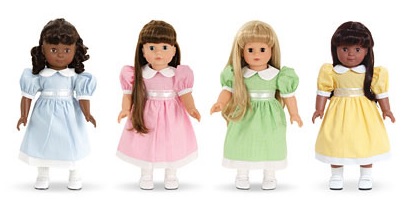

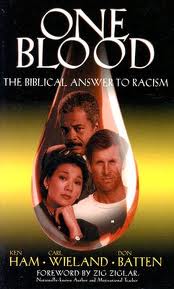
 is Ken Ham’s contribution to efforts to mend racial prejudice, and I do think Ham is genuine in his efforts. He believes that the understanding that all humans are descended from Adam and Eve, and ultimately from Noah’s three sons, is what is needed to curb racism. He also believes that the roots of racism are found in the theory of evolution, and that it was this theory of the races that inspired such atrocities as the Holocaust. Ham’s ideas – that racism stems from evolution and that creationism is the antidote – are echoed by other prominent creationists,

 .) In other words, in spite of what Answers in Genesis maintains, racism both long predates the theory of evolution and has frequently sprung from the Bible and from the creation account itself.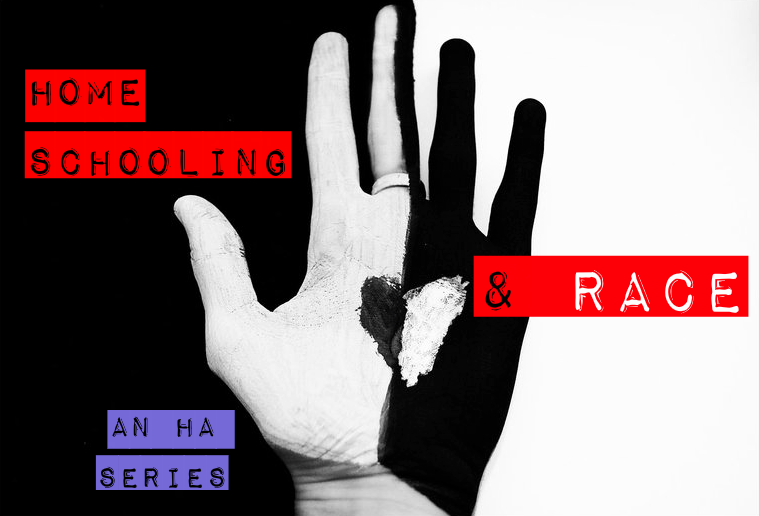





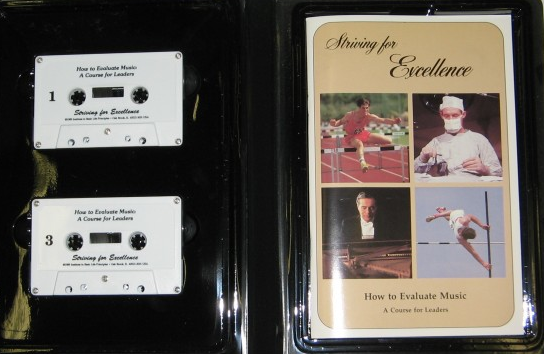


 Homeschoolers Anonymous