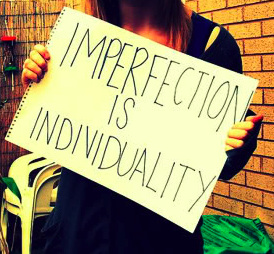
An Average Homeschooler: Part One, Introduction

Samantha Field, first year of homeschooling.

HA note: This series is reprinted with permission from Samantha Field’s blog, Defeating the Dragons. Part One of this series was originally published on December 5, 2013. Also by Samantha on HA: “We Had To Be So Much More Amazing”“The Supposed Myth of Teenaged Adolescence”“(Not) An Open Letter To The Pearls”,  “The Bikini and the Chocolate Cake”, and “Courting a Stranger.”

*****

Also in this series: Part One, Introduction | Part Two, The Beginning | Part Three, Middle School | Part Four, Junior High | Part Five, High School Textbooks | Part Six, College

*****

I’ve been avoiding writing about this. Even once I started planning out the series, I debated with myself for weeks over whether or not I wanted to write it out– and then post it. I’ve talked a lot about some of the other aspects of growing up in fundamentalism, but I’ve avoided talking about my experience with homeschooling for a few reasons. I’ve touched on it a few times, and I’ve even written posts for Homeschoolers Anonymous and for Leaving Fundamentalism. Even as I wrote those posts, I was hesitant about sharing them here, although I did eventually.

First of all, one of the reasons why I haven’t written about homeschooling is that my experience was nothing like what you can read about at HA. My life was complicated, and the cult-church I grew up in made many things worse, but it was certainly not even approaching the nightmare of parents who could have refused to teach me to read or those who pull their kids out of school so that they can hide their abuse.

I would describe my homeschooling experience as fairly average.

One of the beauties of homeschooling is that no one experience could be called truly average or representative, but in the past nine years since I’ve graduated I’ve been able to interact with hundreds of homeschoolers from all over the country. There are different sub-sets in homeschooling, with the conservative Christian/fundamentalist sub-set probably being the largest, even today (although other movements, like secular and unschooling, are gaining ground).

Since conservative homeschooling environments are probably the largest and the most dominant (see: every single state-level homeschooling conference ever), I’m comfortable with viewing my experience as pretty middle-of-the-road. There are a few patterns – in how homeschooling is experienced, in how it is talked about by its advocates – and some of those are what this series is going to focus on.

My “average” experience is actually why I’ve decided to write this series, though.

HA has hundreds of stories now of educational neglect, of spiritual and physical abuse, and one of the very common arguments that people like R.L. Stollar and Heather Doney are running into all over the place is that yes these experiences are awful but it’s not really homeschooling you’re talking about you’re really just talking about abuse and that’s present anywhere.

So while my church experience was definitely abusive, and while some of the things that were taught at church caused my parents to do some harmful things, my homeschooling experience was slightly detached from all of that. Up until this year, I would have described it in glowing terms. I believed my education was… well, superior. And while I haven’t completely changed my mind about that, I’ve come to realize that my “average” experience was lacking in some pretty big ways that do seem to be common among homeschoolers– religious and conservative homeschoolers, especially.

The second– and biggest– reason why I’ve hesitated writing about this was that talking about homeschooling inevitably means talking about my parents. If there were problems with my education, my educators were responsible. And while many of those problems can be shifted onto the myths and lies my parents were being fed by the homeschooling culture (which I’m going to talk about at length), I don’t have multiple teachers, principles, school boards, or lack of money to blame. I do my best not to drag my parents or my family into my blog, because this blog is about my journey, but I can’t talk about homeschooling in the same way that I can talk about my church-cult.

I love and respect my parents. They were doing what they honestly believed– thanks to the HSLDA, Vision Forum, and the endless homeschooling catalogs and flyers and books and magazines– to be the best thing for their children, and they did their research. They rejected a lot of the more damaging concepts you can find in Homeschooling Today. We rejected the form of homeschooling we laughingly referred to as “the goat-raisers” (incredibly large families, “homesteader” approach). They bought the highly-recommended curriculum, and they sacrificed a great deal of money to get it. They celebrated my successes and encouraged my dreams.

I value everything my parents gave up in order to get me a good education, and this series in no way is meant to criticize them.

There were some very good things about my education that you can hear from a lot of other homeschoolers– a love of reading, unbridled curiosity, and plenty of time to explore. However, even those incredibly positive, valuable things have their downsides.

I’m going to be brutally honest, and sharing my experiences is going to be complicated, and messy, but as nuanced and balanced as I can make it. Hopefully, talking about my “average” experience will help open the door to a conversation about homeschooling that hasn’t really happened yet.

To be continued.

Courting a Stranger: Samantha Field’s Thoughts

Ben Seewald and Jessa Duggar.

Samantha Field blogs at Defeating the Dragons. This piece was originally published on her own blog on September 19, 2013, and is reprinted with her permission. Also by Samantha on HA: “We Had To Be So Much More Amazing”“The Supposed Myth of Teenaged Adolescence”, “(Not) An Open Letter To The Pearls”, and “The Bikini and the Chocolate Cake”.

This week, the Duggars announced that their daughter, Jessa, had begun a “courtship” with Ben Seewald. News articles have been floating around in my facebook feed about this, and as I read a few of them . . . my heart sank. Many people are mocking the family, Jessa, Ben, her parents, for how they’ve chosen to handle this.

I can’t get behind the mocking.

All I can feel right now is compassion for Jessa and Ben.

It’s an emotion they might dismiss as completely unwarranted– from all appearances, they’re blissfully happy, and this courtship is what they’ve always envisioned for themselves. I don’t know about Ben, but everything I’ve seen from Jessa is familiar territory– she’s carefully “guarded her heart” so one day she could date with “intent and purpose.” The way she’s been taught to respond to romantic relationships probably feels very mature and sensible. It’s designed to be safe. Everything about it is carefully vetted, monitored, and controlled. There won’t be any unexpected surprises for them. This process will help ensure a happy, Spirit-filled marriage.

But, if I could sit down with Jessa over a cup of tea and talk with her, there’s a few stories I would share.

*****

The eldest daughter of my “pastor,” Leah*, was in her early twenties when an evangelist that came to our church every year suggested a young man, Steve*, to her father. Over the next month or so, her father carefully vetted this young man. The first time Steve came to visit, he didn’t even meet Leah. Her father took him out to dinner, then they sat in his truck for hours while he grilled him from pages of notes and questions. Barely any stone was left unturned– but I remember my father commenting offhand that it’s not likely that Steve was really honest about most of those questions.

The next time Steve came, he and Leah were never given a moment’s privacy. They were never allowed to be more than a few feet away from another member of the family. When he left, they were not allowed to talk on the phone, and could only communicate through letters that were read, out loud, in front of the entire family.

They did, eventually, get married. The next thing I heard about her was that she and Steve had not yet consummated their marriage, not even after being married for months. They were complete strangers when they got married. They didn’t know anything about the other– the only person they had gotten to know had been the person her parents expected to see. Without any private moments, without the ability to talk without being constantly monitored, they didn’t really know anything real.

They’d “courted” a performance, not a person.

*****

When I was in college, one of my best friends got married.

Their courtship story was perfect– charming, adorable, romantic in a Victorian sense. Her parents called him her “suitor” and his visits were “calls.” They had no physical contact– her father put the engagement ring on her finger when he proposed on the beach, in the moonlight– in front of their families. When they went through the wedding rehearsal, they held a handkerchief instead of holding hands. Their first kiss was at the altar, and Charity* looked like she was about to burst with happiness for the rest of the day.

It’s been a few years now, since they got married, and they’ve experienced some significant marital “bumps” in that time. There were a few moments when no one was sure if their marriage would make it. My mother was trying to give hers some comfort and advice during one of those hard times, and I remember hearing her start crying:

“I don’t understand, I just don’t understand. We did everything right. None of this was supposed to happen.”

*****

My own courtship experience was . . . ugly.

We “talked,” getting to know each other strictly in group settings, just like we were supposed to. I asked my parents to come meet him, and we all went out to dinner. I made sure that my father had plenty of time to talk with him, to get to know him. John* asked their permission to “court” me, and we did under the supervision of both our parents. By the end of the summer, he laid out his plan for them, what he planned to do and how he planned to accomplish it, and asked their permission to marry me. When he proposed at a fancy restaurant, my parents were sitting at a table directly across the aisle. For the first six months, everything seemed perfect. It was all going exactly how I’d been taught it should.

But, after I had that ring on my finger and I was in the middle of planning a wedding, and after all our families were on board and we’d announced it to everyone we knew… that was when the abuse began in earnest. It was abuse he kept carefully concealed from anyone– abuse I was promised I was protected from, because, after all, we were courting. We’d done everything exactly how we were supposed to.

And I was trapped.

Because I’d been told to guard my heart, that once I give my heart away, I won’t have my whole heart to give to my husband.

Because I’d been taught that it was my duty, my responsibility, to make sure our relationship was perfectly chaste. He knew that– he sexually assaulted me, he raped me, and he used what I’d been taught against me. I was a cup full of spit. I was a half-eaten candybar. I was that rose with all the petals torn off.

No one would want me, I wasn’t good enough for any other man.

*****

That’s what I’d tell you, Jessa, if I could talk to you.

I’d tell you that courtship doesn’t guarantee that you’ll actually get to know that person. I’d tell you that yes, you have to know how a person interacts with people who aren’t you, but you also have to know how he’ll interact with you when no one is watching.

I’d tell you that courtship doesn’t guarantee a happy marriage. There’s no magical promise that is impossible for either one of you to break. Following all the courtship procedures and rules means nothing when you realize that life has changed around you, and you might not believe everything you always did– and he hasn’t changed with you. Courtship doesn’t automatically grant you the ability to communicate without fighting or to have patience with each other. Most of the things you need for a healthy marriage you don’t get through having your parents monitor all your texts and never touching each other longer than a 30-second side hug.

I’d tell you that courtship doesn’t guarantee you won’t get hurt.

People are very capable of hiding. People can be very good at cloaking everything about themselves– especially when they are given an insanely precise checklist to follow. The roadmap, the rules, the procedure– they’re not going to shield you from a man using those rules to get close to you so that he can hurt you.

You might be getting to know this person on an honest, deep level– I don’t know. It’s possible that he’s a genuinely wonderful man and both of you are being completely, bluntly honest. It’s probable that you were raised with the understanding that you never hide anything from your parents– and up to this point, why should you? But, it’s also just as possible that you’re both innocently unaware that you’re not really getting to know each other.

Courtship, you’ve been told, promises a safe adolescent experience, free from the trauma and heartache of a thousand “crushes.” Courtship holds the sweet sanctuary of your parents’ blessing and God’s promises. Courtship is about commitment, and honor, and responsibility, and those are the things that will keep your marriage strong.

And maybe– maybe it will.

But, in the end, if you make it, it won’t be because you courted. It won’t be because of all the questions your father asked him or all the times you wanted to be alone but suppressed the desire. It won’t be because you kissed for the first time after the pastor said “you may.”

It’ll be because of who you are, Jessa, and who he is.

The Bikini and The Chocolate Cake: Samantha Field’s Thoughts

The Bikini and The Chocolate Cake: Samantha Field’s Thoughts

Samantha Field blogs at Defeating the Dragons, and she was recently featured in a Christianity Today story entitled, “Finding Faith After Spiritual Indoctrination.” This piece was originally published on her own blog, and is reprinted with her permission. Also by Samantha on HA: “We Had To Be So Much More Amazing”“The Supposed Myth of Teenaged Adolescence”, and “(Not) An Open Letter To The Pearls.”

[trigger warning for rape culture]

I feel that we need to sit down with a cup of coffee or tea and just chat about something. If you move in the same circles I do, you’ve probably heard about this post from Made in his Image. There’s a lot of good things being said about how destructive the modesty culture can be, so I’m not going to rehash a lot of that here. I wanted to shine some light on the biggest problem with this specific post.

I got sunburned on my ass a few weeks ago, when nothing else on me got sunburned at all. We were only at the beach for an hour, and I ended up having to spread aloe vera all over my butt for a week and sit down funny for a few days. Why did I only get sunburned on my bottom?

Because it’s the only part of me that’s never, ever, seen the light of day.

I grew up in Northwest Florida– the part of Florida known as the Emerald Coast. It is a stunningly, breathtakingly beautiful beach. We rarely ever went– only when family came to visit, usually, and those visits were sparse– because it was considered ungodly to go the beach. And if we went, I wore a t-shirt and culottes. My mother made swim-culotes out of a really light, swimsuit-type material.

Even in college, when I’d left a lot of those childhood beliefs behind, I couldn’t bring myself to wear a swimsuit to the beach. I bought an amazingly cute tankini– I still think it’s cute, even today– and it generously covered my badonk-adonk, but I still felt incredibly nervous wearing it. I ended up wearing cute-off shorts on top of it when I went to the beach with some friends, and faked being asleep when I overheard them making fun of me for that choice.

Yup. “Modesty” is a sacrifice. It’s a sacrifice I made for most of my life, and paid for my standards with humiliation and embarrassment.

But, when I went to the beach with my husband a few weeks ago, I wore a bikini for the first time. It wasn’t “skimpy,” not that it matters, and I was able to take off my cover-up without shame, without the sharp knife in my gut telling me that I was dressing as the “strange woman” from Proverbs. It was a victory for me– a small triumph over the shame and oppression I’d known for over half my life.

That’s the only thing the modesty culture does.

It doesn’t stop men from ogling us– not even Christian men. I’ve gotten cat calls, jeers, shouts, obscene gestures, propositions, and whistles all while “modestly” dressed. I’m talking full-blown “modesty.” High-necked t-shirts, a-line and loose knee-length skirts. Sometimes I looked cute, sometimes I looked dumpy. It doesn’t matter. How I’ve been dressed has never made a difference whatsoever in how men have treated me. I was raped while wearing a knee-length skirt and a long-sleeved, loose and flowing top that covered my collar bone. Modesty has never, in my experience, stopped a man from doing whatever he wanted to do with my body– whether it was physically manhandle it, goosing me or grabbing my vagina through my skirt in the middle of chapel, or simply objectify it.

Let me say it again: men could not give a flying f*** how a woman is dressed. She’s a woman. She has boobs and a vagina, and that makes her public property in a world where I’ve been screamed at, cursed at, for refusing to even acknowledge a cat call from a car.

When I started dressing however I wanted, modesty be damned– when I started wearing shorts and tank tops, for example, none of that sort of behavior increased. It stayed exactly the same.

But, this article, like every other article I’ve read on modesty, emphasizes that it a woman’s obligation to help protect men from our bodies. It’s our duty to make sure that we make it possible for men to forget that we’re a woman– which is, frankly, impossible. I don’t care how loose your clothes are– if you have T&A, there’s no getting rid of it, there’s no hiding it.

So what happens?

We have articles where the author has to stubbornly insist that she’s not “insecure about her body,” and clarify that she is “independent in her swimwear choices.”

We have articles where the author compares women to an ooey-gooey chocolate cake.

And let’s look at that for a second. Rachel has this to say about her metaphor:

Now, let’s pretend that someone picked up that chocolate cake and followed us around all the time, 24/7. We can never get away from the chocolate, it’s always right there, tempting us and even smelling all ooey gooey and chocolate-y. Most of us, myself included, would find it easy to break down and eat the cake. And we would probably continue to break down and eat cake, because it would always be there. Our exercise goals would be long gone in no time.

I’m going to try to be fair here: Rachel was probably, in her head, only referencing masculine lust here. When she wrote out this dandy little metaphor, she was probably only thinking that “breaking down” didn’t mean anything besides a man thinking less-than-platonic thoughts about the woman in the bikini.

However, regardless of what I’m positive were the best of intentions, Rachel has just contributed to rape culture.

Because, in this metaphor where a woman is a chocolate cake, the woman has no choice. A woman, plain and simple, just is a chocolate cake, and the fact is that, as a woman, there’s nothing she can do to change that.* She doesn’t have a say in the matter. She’s a woman. She’s ooey-gooey and smells like heaven, and so she gets eaten. No one asks her if that would be ok. No one asks her if that’s what she wants.

Because she’s a cake.

She exists to be eaten.

*I would like to point out that gender and sexuality are a sliding scale– I’m not trying to exclude transgender people, just dealing with the essentialist and gender binary nature of the article.

(Not) An Open Letter To The Pearls: Samantha Field’s Thoughts

Samantha Field blogs at Defeating the Dragons, and she was recently featured in a Christianity Today story entitled, “Finding Faith After Spiritual Indoctrination.” This piece was originally published on her own blog, and is reprinted with her permission. Also by Samantha on HA: “We Had To Be So Much More Amazing” and “The Supposed Myth of Teenaged Adolescence.”

So, a friend of mine sent me this post by Michael and Debi Pearl the other day. I encourage you to go read it, just so that you have some context for the following rant and can follow along. There’s a bunch of stuff that’s wrong with this article, and I’m just going to unload both barrels here. Also, in case I get something wrong, because that is totally possible. I’m ranting, but that doesn’t mean I don’t want clarity or cogency or accuracy. If you think that I’ve blown something out of proportion, and you would like to point out a subtlety or nuance, feel free. Or, you can get up here on my soapbox and rant with me. That’s cool, too.

Every family emits its own light. After viewing a family for just five seconds, I know so much about them. After being introduced to each member of the family, they are an open book.

This is from Michael, and all I have to say is No. Just — no. Five seconds? Really? Everyone is just an open book to you? I shouldn’t be shocked anymore at the unbelievable arrogance and condescension Michael Pearl emits, but somehow, every time, it’s like someone slapped me in the face with a fish. Yes, some people are perceptive, and are capable of accurate first impressions– but this claim goes right along with Micheal’s exalted view of himself as a self-proclaimed “prophet.”

The man was about fifty, certainly not a looker.

Now we’re in one of Debi’s sections, and all this does is remind me of Debi’s rather extensive story about the “one ugly hillbilly” woman in Created to be his Help Meet. This observation has absolutely no bearing on the story she’s about to relate — except as possibly to judge the “Old Dude” (what a demeaning way to refer to someone) for not conforming to her physical standards, and to judge the young woman who appears later for having an emotional connection with someone who isn’t a “looker.” There’s no logical explanation for this — it’s just more of Debi’s self-righteous judgment spilling out of her. Both Michael and Debi have demonstrated, throughout the sum total of their careers, an astonishing lack of compassion and simple human empathy.

Right here, at our church, among all these righteous families! I stood amazed at the audacity of the human race.

In other words, how dare people with actual real-life problems dare show themselves in our church! How dare someone who doesn’t conform to our little universe of perfection! How dare you come in here, and violate our incomprehensibly narrow view of the world!

I tried to ask the girl questions to ascertain the cause of this odd arrangement, but he answered as if the questions were directed to him, and the young lady deferred to him as if he were her voice of conscience. I thought that unless her father had truly been abusive, she should return to her family, but I was making no progress engaging her to consider her options.

Back to Michael. This is where I agree with him — this interaction shows that something about their relationship is off. The married man (I refuse to refer to him as “Old Dude”) is forbidding this young woman to even speak, and that seems to be something that is the standard for them. Either because of the married man in this situation, or because of her abusive home, she’s been silenced. She’s literally voiceless here. But this is the only time anyone even mentions this. It stands out to them as a little odd, but not that odd. Because women are expected to let men “lead.” If you’re going to be a “good Christian woman,” silence is expressly demanded by people like the Pearls. So it’s only a little weird, instead of the gigantic flaming red flag it should have been.

And this is one of the places where Michael builds on a long-standing understanding in these types of circles, and you can see it in the words “truly abusive.” This is so incredibly loaded. Because, to Michael, who endorses extreme physical punishment that borders on the sociopathic, “true abuse” would have to be on the level of breaking bones before he was convinced. Emotional and psychological trauma– don’t even exist. Because the ramifications of emotional abuse are just “bitterness” and “un-forgiveness” to the Pearls. Michael would voluntarily send an adult woman back into an abusive situation in order for her to be “under her father’s protection” than ever admit that a “Christian father” is capable of abusing his children. Psychological trauma– just spiritual and heart issues. And her “options”? This girl doesn’t have options. She’s not even allowed to speak for herself– which could indicate that she’s being manipulated into believing she doesn’t have options. When a woman can’t even talk how can she make an actual decision?

At this point in the story, Debi has burst in with an unexplained prophecy, declaring that she’d heard from God, and was speaking with his authority. She gives no context, and disappears as quickly as she came. Then, she sits down the woman for a talk. She does seem to give the married couple and the abused woman some benefit of the doubt– at first.

Undoubtedly his relationship with his wife was already barren before the girl came along, but the old wife had now become the second woman.

What the. Crap on a cracker. Debi– seriously?! You hear this from God, too? A voice come booming out of heaven to tell you that their marriage was “undoubtedly barren”? Which, if you’ve read Debi’s book is without exception always the woman’s fault. If this married man is developing a emotionally intimate connection, it’s obviously because his wife doesn’t smile enough, or doesn’t know how to put her makeup on. Clearly.

I had to try to help Little Miss see the error of her ways.

To most young brides the husband appears clumsy and unfeeling. But as the wife continues to obey and reverence her young husband, he will grow in appreciation for her soul, and in time learn to care for her emotional and spiritual needs.

I explained to Little Miss that having even a small part of this “mysterious relationship” with another woman’s husband, especially in her own home, in front of her, is exceedingly cruel and evil.

Already touching her spirit, I knew what the answer would be, but I wanted the girl to understand she was indeed not innocent.

If there was ever going to be any change to this situation then she had to understand the full ugliness of her actions, so I drove homehow depraved and self-centered she was to do such a thing as to interfere with the sacredness of marriage.

Being cloistered might have been bad for her, but now she was partyto damaging the sacred.

Girlie, it will come to you soon enough, and you will need a place to flee.Don’t come here. The invitation for a place to stay is closed. I would not trust a ‘regret’ girl around this ministry.”

This should speak for itself.

Debi doesn’t care about the abuse this woman has experienced. It doesn’t even matter– it only enters as a “but” statement. The fact that the married man in this situation talks about being “highly skilled in the art of caressing souls” straight to Micheal’s face doesn’t matter. They’re not even capable of picking up on the GIGANTIC BILLBOARD-SIZED RED FLAGS that should tell them that the man in this situation is taking advantage of a tender, fragile, desperate and abused young woman.

Because it’s the wife’s fault for not reverencing her husband, or not fulfilling him, or not having sex with him enough, or not keeping herself pretty enough. And then it’s the abused woman’s fault. Her fragility, the fact that this married man deliberately chose a woman sheltered enough to not understand exactly how he was going to “caress her soul.” He’s vulnerable because of his wife, and the abused woman is preying on his vulnerability. No, he’s not emotionally manipulative, or taking advantage of this situation at all. It’s all the woman’s fault, because being abused by her parents and then manipulated by another man (which she’s probably been taught since infancy is a legitimate authority over her, simply because he’s a man) doesn’t make a lick of difference.

And then comes the hammer. Debi tells her that she will absolutely not help an abused woman when this woman eventually realizes that she traded the frying pan for the fire. Because she’s responsible for the married man manipulating her. She’s cruel, evil, depraved, and self-centered. She’s not hurting, she’s not lost, she’s not desperate for someone to realize that she’s a person, and that she needs help.

Michael and Debi Pearl– YOU are cruel, evil, depraved, and self-centered. You’ve been blinded by the power you’ve wrested from innocent people by being false prophets. You are completely and desperately lacking of any form of common sense or sound judgment.

The article goes on (with Michael inserting an insignificant caveat about how holy and righteous he was, and how men should stay away from women, because, well, women will seduce them away from God), but the story is over. They switch into analysis mode, and I just . . . can’t.

If you are a young woman in a cloistered situation, beware of jumping from the frying pan into the fire. Staying in the frying pan is much to be preferred, for you can always jump when a clean alternative shows itself.

Samantha hits her head on her desk repeatedly at the sheer idiocy and ignorance.

Do they never even stop and listen to themselves? Are they so blind to reality that they’re incapable of understanding how ridiculous a statement like this is? When you’ve grown up in a “cloistered” home– by their definition, a family so sheltered they can’t tell “right from wrong,” how the hell do you think an infantalized woman (or man, for that matter) is capable of being aware of the difference between “clean” and supposedly “unclean” alternatives? They’ve been purposely and deliberately shielded from having that kind of power.

Micheal and Debi Pearl are dangerous.

People listen to them, people respect them, people make excuses for them when their teachings are responsible for the slaughter of innocent children. Their loyal followers say that reactions like mine are exaggerated, that I’m just not giving the benefit of the doubt. If I’d really read all of their books, if I’d actually paid attention to what they advocate, I’d be fine with them. I’m just not understanding their true message, which is obviously of love and directly from God.

No.

have read their books– I’ve read every single last one of their books multiple times. I idolized them as a child. They were just so brazenly honest, so overwhelmingly clear– how could Michael be anything but a prophet sent from God to teach the fundamentalists how to raise their children up in the nurture and admonition of the Lord?

But as I got older, I started realizing, with a mounting horror, just how clearly evil their teachings are. What they advocate fosters and nurtures abusive homes. They explicitly encourage women to stay with physically abusive husbands and utterly dismiss the existence of marital rape and don’t even acknowledge that men emotionally and verbally abuse their wives.

Debi repeatedly tells women that if their husbands are abusing them, it’s clearly their fault. They’re just not reverencing their husbands enough. Reverence your husband, and he won’t yell. Reverence your husband, and he won’t beat you. Reverence your husband, and ignore the fact that he’s raping you when you don’t want to have sex– because you’re not even allowed to say no. If you say no, he’ll just go sleep with someone else.

And Michael– spank your child until he obeys. Spank your child with an ever-increasing-in-size pipe until he instantaneously submits to your every uttered command. Spank your children until they are cowed. Spank your children until they would never even think of disobeying you. Because that’s what’s going to teach them about how to obey God.

The only language the Pearls are capable of speaking is a language of violence and abuse.

The Supposed Myth of Teenaged Adolescence: Samantha Field’s Thoughts

The Supposed Myth of Teenaged Adolescence: Samantha Field’s Thoughts

Samantha Field blogs at Defeating the Dragons, and she was recently featured in a Christianity Today story entitled, “Finding Faith After Spiritual Indoctrination.” This piece was originally published on her own blog, and is reprinted with her permission. Also by Samantha on HA: “We Had To Be So Much More Amazing.”

I’ve talked a lot about the fundamentalist cult I was raised in, but something I don’t very frequently talk about here is my experience with the conservative religious homeschooling movement. For many people, the conservative religious homeschooling movement was what sucked their families into fundamentalist and cult-ish mental frameworks, but that’s not what happened for my family. My mother started homeschooling me because my kindergarten teacher held a séance in class, and the DoD school was the only educational option besides homeschooling. By the time we moved back Stateside and had more options, my mother realized that homeschooling was allowing me to excel academically in ways that other options wouldn’t– academically, that remained true through high school and college, although academic success came with its own drawbacks.

However, homeschooling was an integral part of the cult (those who didn’t homeschool received horrible condemnation), and the ideologies we embraced are consistent with a more mainstream homeschooling experience. Even for families that didn’t have children, or didn’t homeschool, the ideologies of the movement found its way into everyday interactions.

One of the popular elements of the conservative religious homeschooling movement that appeared in the church-cult was the belief that “teenage adolescence” is a modern societal construct and is a completely unnecessary stage. I can remember all the arguments for this vividly– how men and women married extremely young; in “fact,” women in early America very frequently married as soon as they got their periods at twelve or thirteen (this is false: the average age of marriage for a Puritan woman was 23, as young as 20 in South Carolina). Indentured servitude and apprenticeship were exalted as prime examples for how young men ought to behave– by learning a trade as young as 10 or 12 (and we were supposed to ignore the exploitative and abusive nature of child labor).

While teenage adolescence and the “delayed adolescence” seem to be results of our modern age, the concept that because it hasn’t been in practice since the Medieval ages makes it unhealthy…  bothers me, for what I hope are obvious reasons.

Being a teenager, for me, was a difficult experience. I was not an “adult,” so I was therefore not permitted to interact with or engage with adults except as an inferior child, so the other option was to interact with children– but as an adult. In my environment, this forced me to sit at the “children’s table” during social gatherings, acting as a monitor or babysitter, but neither was I permitted to act as a child in other settings. I was expected to behave as an adult, was given the responsibilities of an adult, but was not allowed to have any privileges of an adult. I was not permitted to go anywhere on my own, without my parents having explicit knowledge of exactly where I was going and when I was returning. The only time I was not with my parents I was being closely monitored by other parents.

I was not allowed to exercise the ability of making my own decisions about what I would wear (all clothing had to be tried on and approved by my father immediately following its purchase), how I would style my hair, if I could wear make-up, or when I would go to bed (I had a “bed time” of 9 o’clock until I was 16, and 10 o’clock until 18). I was not allowed to have a private space– my bedroom door was to remain open at all times, and I was discouraged from being in my room for extended periods. I could not “disappear” to my room when upset or hurt– it was considered a cowardly withdrawal, and I was forced to immediately control and dismiss my hurt feelings and interact with my family as if nothing had ever happened. There were many moments that I would curl into the fetal position on my bed and desperately wish that I could just get in my car and drive for an hour or two without explaining where I’d be going or when I’d be back.

Perhaps one of the most demeaning elements of my teenage experience was a nickname I earned during one of the few times I was allowed to interact with adults. We were playing cards, Phase 10, I think, and I did something that seemed “uppity” or arrogant to the adults at the table. I don’t remember what it was, but, the response of one of the adults at the table, a woman I admired greatly, was to call me “sub-adult.”

Unfortunately, this nick-name made the rounds among the other adults at church, and it continued to haunt me well into my twenties. The people who used it probably did so unthinkingly, and they had no idea how much it stung, how much it hurt, and how I had to fight back tears every time I heard it. It was used to remind me of my place– I was not an adult, but neither was I child, and neither was I allowed any of the attitudes, practices, relationships, or experiences of a teenager.

To me, being called “sub-adult” represented absolute failure because my success as an individual was measured by how “adult” I could be. I was well-behaved when I acted how an adult was expected to act. I was articulate because I could talk like an adult. I was responsible because I could shoulder the burdens of an adult. I was “good” in as much as I behaved as neither adult nor child nor teenager. I could not have angsty, emotional moments because that was what a “teenager” would do. I could not disagree with any adult, because that was perceived as “teenage rebellion.” “Teenagers” were the ones who thought they “knew better,” but they were obviously wrong. “Teenagers” made destructive decisions. Teenagers had crushes. Teenagers argued. Teenagers talked back. Teenagers disagreed. Teenagers wore outlandish clothes. Teenagers didn’t practice discernment. Teenagers were naïve. Teenagers were heedless, directionless, purposeless. Teenagers thought they were capable of being autonomous and independent. Being a “teenager” equaled being incomplete and unhealthy.

I had a childhood– a healthy, amazing childhood. My parents were, and are, amazing parents– I love them, and have a good relationship with them today. The problem is that by the time I was a teenager, we’d been in the fundamentalist cult for four years, and we had collectively bought into this idea that “being a teenager” was somehow a sub-standard way of approach to those years between twelve and twenty. I was immeasurably proud of my status in this environment– I can’t tell you how many times I parroted the line that “I already knew that my parents know more than me,” or that I’d never had a “rebellious phase.” I could take care of myself– I did all my own schoolwork with practically no supervision by highschool, I could cook, I could clean, I was amazingly dedicated to practicing piano, all with little or no pressure from my parents. But, somehow, perversely, I was also proud of the fact that I was inferior to adults and knew my place, and knew better than to question those who God had placed in authority above me. I respected the “hoary head.”

The biggest problem with all of this is that because I never practiced any sort of rebellion whatsoever, I was actively discouraging myself from developing my own thoughts and opinions about things. Oh, I would have told you that my beliefs were my own, that I knew what I believed for myself, but I would have been lying. I didn’t have individuality or autonomy. I listened to the music my parents listened to, or the music expressly approved by them. I watched the movies they watched. I held the political opinions they did. I argued what they argued. I didn’t have access to any of these things as myself, but as a “sub-adult” version of my parents.

We Had To Be So Much More Amazing: Samantha Field’s Story

Samantha Field blogs at Defeating the Dragons, and she was recently featured in a Christianity Today story entitled, “Finding Faith After Spiritual Indoctrination.”

I’ve been reading the stories Homeschoolers Anonymous has published since it launched, and at first didn’t feel comfortable sharing my own experience with homeschooling, since it was unlike most of what I was reading. But, through reading these stories, it’s helped me come to grips with some of what I went through.

I’d like to start out by clarifying that my experience was fundamentally different– and yet, somehow, eerily the same. I spent most of my childhood in an Independent Fundamental Baptist (IFB) Church, and for that reason we were never part of the larger homeschooling movements — at least not organizationally. We didn’t use PACES, I’d never even heard of ATI until I went to Pensacola Christian College, we never went to any conferences, I didn’t travel in debate. In fact, reading about these stories made me slightly jealous; because of the cult-like environment of the church I was raised in, I never had the opportunity to interact with anyone outside of my church. I had one friend — one — from the time I was 9 until I left for college at 17.

But, until recently, I would have said that my experience with homeschooling was a favorable one. I started studying logic in third grade, I started studying Latin and Greek in fourth grade, I started reading the classics of the literary canon at nine. I skipped fifth grade entirely — fifth and sixth grade in math. I always tested extraordinarily well — I started testing on the graduate level in seventh grade, and I got a nearly-perfect score on the verbal portion of the SAT (I deliberately answered one of the questions “wrong” because I felt that the question was asking for a “liberal” political opinion). When I went to college, I maintained a 4.0 GPA my freshman year, and made the Dean’s List for every semester thereafter. I never needed to study — in fact, attending classes always felt like I was being “spoon fed” my education, when I had grown used to learning everything I needed to know simply from the reading. I went to graduate school and got a Master’s degree in English — and, again, did very well academically.

It took me a long time to realize that the academic excess I experienced had its good and ugly moments. The good was that I was an excellent reader, and I became a fairly decent writer and editor. It also gave me a lot of time to study music, and that paid for my first year in college.

There are a few ugly sides, and the first was the extraordinary amount of pressure I felt academically. I imagine many, if not most, homeschoolers can attest to the unbelievable amount of expectations we had to live up to. We had to be so much more amazing than any other kind of education. My parents were immeasurably proud of my achievements, and they lovingly wanted to “show me off,” but the constant pressure to perform resulted in a sense that the pressure followed me everywhere– even into college. I felt like I was constantly and unceasingly being evaluated by everyone I knew. I became an overachiever — to the point where several of my professors repeatedly had to tell me to calm down, relax, and do less work or I was going to kill myself.

Another facet of how homeschooling failed me was in mathematics, and I think my experience is fairly standard. Both of my parents are incredibly intelligent — my father works in a STEM field, and my mother did very well in math. However, while I was in high school, neither of them had a college education (a sacrifice my mother made, ironically, in order to stay at home and homeschool us) — and I was surrounded by an attitude that women didn’t belong in STEM fields because we’re just not suited for it. Our brains aren’t wired that way. So, I grew up believing that part of my identity of being a “good, godly, Christian woman” was being terrible at math. This became a self-fulfilling prophecy, even though I excelled in geometry and musical theory (which somehow were “artsy” so I was “allowed” to be good at them). When I met my husband, some of our conversations centered on his insistence that I would be good at math if I ever tried — and my insistence that no, I wasn’t. Until, one day, he explained algebra to me on a road trip. And it made perfect sense– so much sense, in fact, that I wondered why it had seemed like complete gibberish before.

And some of the things that get so heavily praised in the homeschooling movement ended up being unhealthy for me in the long run. We were isolated– we called it “being called out” and “separate,” and we laughed at people who asked us about “socialization.” We went to Wal-Mart in the middle of the day, and someone would inevitably ask what I was doing there. I would say that I was homeschooled, and without exception they would ask if I was “special needs.” And then, inevitably, I’d have to mount a defense for homeschooling.

As I’ve moved into my adult life, I’m beginning to see how deep the influences go. While we weren’t involved in any type of official organization, I grew up familiar with the Pearls, the Wilsons, and the Vision Forum. I read Beautiful Girlhood and believed that daughters should stay at home until they’re married. Now, I find it incredibly difficult to interact with people in a group setting, and it has nothing to do with not being familiar with “pop culture” (although that is occasionally a factor). I am completely hopeless at reading people, I don’t understand basic social interactions, I can’t navigate basic things like class discussions — even though I am articulate and outgoing. I’m frequently disabled by self-consciousness and nerves, and find it difficult to find a balance between silence or speaking too much. I don’t know how to do simple things like create boundaries with people.

I’m moving toward healthiness, slowly. It’s difficult, and hard going, but it’s happening. And part of my recovery is recognizing that even though I pretty much had the “ideal” homeschooling experience, it was still unhealthy.