HA note, October 3, 2014:
In light of recent allegations by Cynthia Jeub (one of Chris Jeub’s daughters), the HARO board is uncomfortable with hosting Chris’s content. You can view the original post and comments as a PDF here.
HA note, October 3, 2014:
In light of recent allegations by Cynthia Jeub (one of Chris Jeub’s daughters), the HARO board is uncomfortable with hosting Chris’s content. You can view the original post and comments as a PDF here.

Also by Jessica on HA: “Copy Kids—The Immorality of Individuality.”
*****
Trigger warning: graphic description of physical abuse.
*****
Awaking from a fitful slumber, I turn over and squint to see the clock.
It’s 2 am, dad is home.
Who will it be tonight? If I hear one of my brother’s screaming, it probably won’t be me. I close my eyes, clasp my hands. “Dear God, I know you’re busy and I know this is selfish, but please just let dad go to bed tonight.”
I hear boots in the hallway and I curl into the fetal position under my blanket, shaking. Please not me. Please not me. Please not me and click, my door knob turns. It’s me. I pretend to be asleep.
“Get up.”
No explanation. I do not know what I did. It does not matter. I stand up, shaking. Dad slings me over the side of the bed and I sob, “Please dad, please don’t.”
Swat. 1….2….3…
I make the mistake, I put my hands over my buttocks.
“Daddy please stop”
Crack!
A heavy leather mechanics belt slices into my hands, instantly excruciating and yet numb. I move them quickly or he will hit them again. Painfully slowly, biting my cheek until it bleeds. I count in my head. 4…5…6….7……..18….19…20…21….22…. and it ends.
I collapse on the bed.
Dad says “I love you.” Then he turns and walks out shutting my door behind him.
I listen to the boots walk down the hall and disappear. Silently, I walk into my bathroom, vomit into the toilet, clean it up and then run my hands down my 10 year old lower back, backside and thighs.
I have welts.
Some of them are bleeding.
My hands are already purple. I need a story, how did I get that shape mark on my hands… I’ll think of it in the morning. I go back to bed and finally allow myself to cry and think about how good life would be if my father were dead. Simultaneously, though, sad that he would be gone.
He is my dad after all.
Tomorrow my classmates will know he hit me. I won’t tell them, they won’t see the bruises, they’ll just know. They’ll see how awful I must be to make my dad hit me like that. Why am I so awful?
I know I deserved it God, that’s why you didn’t stop him.

HA note: The following is reprinted with permission from Julie Anne Smith’s blog Spiritual Sounding Board. It was originally published on October 15, 2013 with the title “Are Daughters the Biggest Threat to the Christian Patriarchy Movement and Reconstructionism?”
Whether they say it publicly or not, I believe that Christian leaders in the Reconstructionist and Homeschool Movements view adult daughters to be the biggest threat to their agenda in furthering their ideologies.
In this video trailer of The Return of the Daughters, you can hear the urgency of this movement, the fear-mongering blaming the feminists as the primary cause of the destruction of the idolized godly family image.
Stay-at-home daughters — it’s a matter of choice
I want to be clear what my beef is with this movement.
It is not the idea of daughters staying at home if they choose to stay at home. It’s about an adult daughter not being allowed to make choices for herself. It’s the idea that if daughters don’t stay at home under their father’s “protection,” they are not being biblical – that the only right way is if a daughter has her father’s blessing on all of her choices, including marriage – and that marriage is very selective as the father wants to make sure that his future son-in-law holds to the same Patriarchal beliefs as he.
I am sick and tired of the implication that young ladies who go to college are trying to perpetuate the feminist agenda and destroy families, simply for making the adult choice to further their education.
In studying the patterns of abuse in churches, the control tactics the proponents of this movement use are similar.
Why does this issue have to be so black and white? Because it’s about control. We see love-bombing of daughters, building her up in her femininity, her homemaking skills, but there is no allowance for an adult daughter to question of authority, to have differing viewpoints, to have a mind of her own.
If adult daughters are not sold on the concept of first being comfortable at being stay-at-home daughters, and then stay-at-home moms, the authoritarian position of the Patriarch, and thus, the entire Movement, is diminished. Any diminishing of their role as Patriarch by a daughter challenging or questioning them would be looked at as disobedience and sin and divisive, just as in spiritual abuse patterns, any questioning of a pastor’s authority would be labeled as divisive. Do you see the parallels?
Their ideology is that husbands will be spiritual heads of the home, will rule over their wives and families and wives will humbly submit without question to everything they say. They will be reproducing babies and raising them with the same ideologies: boys will grow up to be men and heads of households and will rule their families spiritually. Daughters will grow up and embrace their “biblical role” as submissive wives/mothers.
But ask these folks what happens when abuse enters the picture?
Does the wife and children get support? Or what about a death of a husband or disability or unemployment? Does the church assist these families in real and practical ways? Or is the family abandoned and the wife accused of sin when she attempts to earn income for her impoverished and broken family?
…O, treason of the blood!
Fathers, from hence trust not your daughters’ minds
By what you see them act. ~ Othello
Daughters who are allowed to think for themselves, make their own choices, are viewed as a threat
It is my belief that daughters who go against this system, who go to college, learn how to think for themselves, are viewed as a threat. It is wrong to challenge, to question, undermine, speak out against this destructive movement.
I’m certain that Patriarchs know this real threat and that is why we are seeing so much building up daughters positively by glorifying the godly wife role and encouraging the relationships with fathers and daughters.
Patriarchal fathers must win their daughter’s heart at a very young age, win her approval and trust, in order to successfully perpetuate this cycle.
I am now convinced that for many Patriarchs, the agenda is not to honestly build the relationship between the father and daughter. Rather, fathers are using their daughters to instill in them what they believe to be the godly ideology and sell the daughters on their role in continuing and supporting this ideology. This is accomplished through purity balls, purity covenants, books, videos, conferences or retreats like this:
God’s Word speaks volumes to the relationship between fathers and daughters: His most sacred duty is her protection and preservation from childhood to virtuous womanhood. He leads her, woos her, and wins her with a tenderness and affection unique to the bonds of father and daughter. Success in his life mission is directly related to the seriousness and compassion with which he seeks to raise her as an industrious, family-affirming, children-loving woman of God.
She, in turn, looks to her father as a loving picture of leadership, of devotion, and of care. Her relationship with her father will help to define her view of the worth of a woman, the meaning of fulfillment and contentment, and her vision for virtue. When these relationships are realized and cultivated, the generational mission of the Christian family is secure.
Is it any wonder that Satan is on the prowl seeking to tear the hearts of daughters from their fathers, and driving wedges of indifference between them — fathers with no time for their little girls, and young ladies who have replaced the love of their fathers with the acceptance of peers and inappropriate romantic relationships? The Vision Forum Ministries Father & Daughter Retreat is one step on the journey of recovering the preciousness of this relationship so crucial to the kingdom-building work of the Church. (from Father & Daughter Retreated Sponsored by Vision Forum)
Sadly, I also think that some fathers are unknowingly climbing aboard this fast train of destruction.
They don’t understand the system in which they are caught.
They believe what they are doing is good for their families and daughters and don’t understand the price it will have on their family. It really is not about a relationship for many. It is about an agenda.
As I have been following trends in the Homeschool Movement, what I am seeing is that those fathers who tightly control their daughters and their lives — do not allow them to have educational and work choices, do not allow them to make important life decisions, do not allow them to think for themselves spiritually or own their own faith — will likely lose their daughters in adulthood.
They may in fact lose a relationship with their daughters forever.
HA note: The following is reprinted with permission from Sean-Allen Parfitt’s blog Of Pen and Heart. It was originally published on August 26, 2013.
Recently there has been a series over at the Homeschoolers Anonymous blog, called “Voices of Sister-Moms”. I began reading the introductory post, but could not finish. My entire body was having a negative reaction. I mentioned this to some of my fellow LGBT Homeschooled friends, and they wisely suggested that I step away from the article till I could calm down. I was seriously angry, and had beginning symptoms of a minor panic/anxiety attack.
I was surprised at my reaction to the article.
After all, I am a male, the eldest in my family, who, in the patriarchal/quiverfull system, is in a position of privilege. It’s true that I was expected to do a lot of housework and helped homeschool the kids (see last Friday’s post), but I went to college, got a job, and was allowed to live my own life. (And by “my own life” I mean going to work and coming back home and going to church with the family and sometimes hanging out with friends.)
Well, in the last two years, I’ve come out of the closet, left the fundamentalism my family calls Christianity, meet many new kinds of people, and discovered that what I was taught isn’t necessarily the truth. I am in a relationship with another man, which is for me a clear illustration that the traditionally taught family dynamics are not the one true way. I have even begun to question Christianity itself.
But I couldn’t put my finger on either my anxiety when reading about the mistreatment of Christian girls or my strange negative reactions to other generic mentions of Christianity.
Why did I cringe when I saw a post on Twitter recommending a book about God’s love? Why do I skim past the tweets with Bible verses and references to good times at church?
I believe I got my answer in a dream I had Saturday night.
In my dream, I was visiting my father’s childhood church, which my family had begun re-attending. Mom was in a small-group discussion, and brother T was in the main sanctuary. I walked up to T, but he distinctly turned away without acknowledging me. Once Small Groups was over, Mom came back into the sanctuary. I began following her as she straightened the pews, talking to her. She was upset with me for living openly gay, and I was getting more and more angry with her as the conversation continued.
Then I exploded at her. This is very much out of character of me, as I have only raised my voice at her on a few occasions. I almost tremble is reverent fear of my mother, who has power to unleash unheard-of retribution. Or at least, that’s how I feel. So for me to yell at her actually took me by surprise in retrospect. But what I said to her showed me exactly what I had been feeling but had been unable to express before.
It was the very innermost turmoil that I had not been able to understand.
“Do you know what I hate about Christianity?” I shouted at my mother, standing in the very sanctum of the religion I was at that very moment criticizing. “Do you know what it is that makes you unable to accept the fact that ‘I’m gay, and it’s OK’?” My mother just stood there, not replying. And then I said the word. Just one word, a simple 8 letters that encompass the root of my dissatisfaction with the religion in which I was raised, and which has caused irreparable pain to so many people. I opened my mouth, and with conviction, the word thundered through the church:
“Misogyny.”
According to Wikipedia, “Misogyny /mɪˈsɒdʒɪni/ is the hatred or dislike of women or girls.” When used in a religious context, it usually refers to the belief that women are the “weaker sex” (see I Peter 3:7) and are under the authority of men (see I Corintians 11:3and I Timothy 2:12). In practice, this means that women and girls are to be humble servants to men. Girls are groomed to become wives and mothers, and should not aspire to be successful on their own. They are to submit, never questioning their fathers, husbands, or pastors.
When I awoke form my dream, I was surprised at what my mind had expressed while I slept. However, upon reflection, I realized how so very true it is. Misogyny is at the heart of much of the pain I have experienced in my life.
It is the root of the pain that countless other women and gay men have felt.
Wait, sure, you can see how misogyny has caused incredible pain and discrimination for women, but how dare I include myself and other gay men in that category? This is the question I asked myself. But even though I did not express it verbally in my dream, I knew what the answer was.
One major argument used against unions between two men is the call to remember God’s biblical definition of marriage. Thus, marriage is commonly interpreted as a union between one man and one woman. Traditionalists maintain that the proper balance of power places the man in the position of leader and the woman in a submissive position. Women are expected to take care of the home, cleaning, cooking, shopping, teaching, raising children, making life easier for men, and providing sex on demand. Men are expected to go to work, provide money and housing, spiritually lead the family, and lead the family into ministry work.
With this in mind, it’s not hard to extrapolate the effects of misogyny onto gay men. If two men are in a relationship, who has what duty? Men aren’t supposed to do the women’s work. Who leads the family and makes the decision? Which one goes to work and which one cleans the house? In short, which one is the man and which one is the woman?
So many straight fundamentalists can’t grasp the idea that gay men are still men.
A flamboyant gay man is called effeminate and looked down on. When I came out to my mother over the phone, she prayed for me. In that prayer, she cried, saying that she didn’t want me to be her daughter; she wanted me to be her son. I have had several people ask me who is the man in Paul’s and my relationship.
Besides being entirely misguided, such notions and comments are very hurtful. I have been completely cut off form my family. My old friends have told me that we cannot fellowship anymore. They see me as a deviant from the natural order and desires. Because I don’t want to be with a woman. Because I don’t want to exercise headship over my partner. Because I like to engage in “feminine” pursuits such as sewing. Because I care what I look like and plan my outfits to coordinate. Because I wear earrings. Because I am “acting like a woman”, when I am really a man.
I admit I am not sure where I stand on the issue of Christianity. The pain and hurt I have received from the church has made me very wary of the religion of the Bible. When I see others facing the same discrimination I have, I become enraged. It is hard not to be bitter against the very religion that brought me up.
It’s a world of pain, hurt, and rejection, all because of one word: misogyny.
Jeri’s post was originally published on her blog Heresy in the Heartland on October 16, 2013. It is reprinted with her permission. Also by Jeri on HA: “Generational Observations”, “Of Isolation and Community”, “His Quiver Full of Them”, “David Noebel, Summit Ministries, and the Evil of Rock”, “The Political Reach of Bill Gothard”, and “Bill Gothard on Education”.
Last week, in an approach founder Ken Ham described as “cordial and engaging”, the creationist organization Answers In Genesis sponsored billboards like this one in several major cities. I can’t help wondering who Ham’s atheist friends are, and how long they will remain his friends with engaging expressions of cordiality like these.

*****
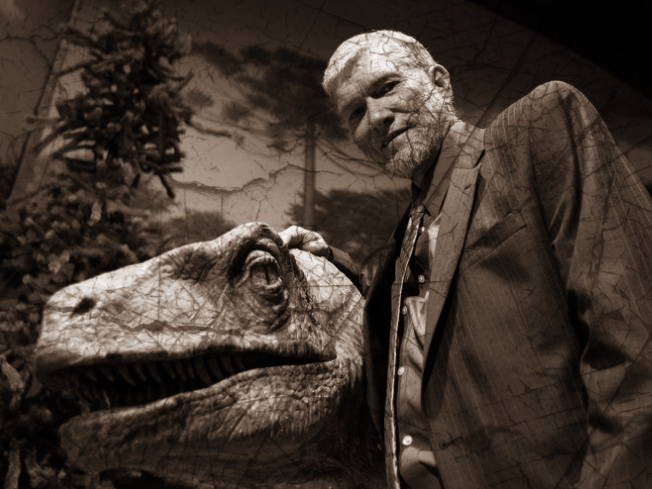
I first encountered Ken Ham at an ICR conference in Michigan.
I was a young homeschooled kid and adored Ken Ham from the first time he opened his mouth. I loved his Aussie accent, his beard, his jokes. I retold his story about “nursing the baby” way too many times. Science was my least favorite subject, but I liked history and social studies and I believed his every word.
It never occurred to me then that Ham might be wrong about fossils, Cain’s wife, homosexuality, or the book of Genesis itself.
*****
In 1974, Ken Ham himself was searching for answers.
Ham taught science in a public high school in Australia, but apparently, teaching about evolution and millions of years presented a challenge to his faith. A church friend directed him to the book The Genesis Flood by Henry Morris (a hydrologist and founder of the Institute for Creation Research in California) and John Whitcomb (a theologian).
Morris viewed the Bible as a history book and was excited to share his notions of catastrophism and how a global flood a few thousands years ago could have shaped all the geological forms we see today. Morris was greatly influenced by a Seventh-Day Adventist named George McCready Price, who went searching for geological evidence to support the visions of Ellen White, who proclaimed that the fossils were “thus preserved as an evidence to later generations that the antediluvians perished by a flood. God designed that the discovery of these things should establish faith in inspired history“.
Morris, a Baptist, read Price’s book on “flood geology” in 1943, then quietly repackaged this novel approach to geology in his 1961 book The Genesis Flood. A decade later, Ken Ham was thrilled with Morris’ solutions that could simply do away with the “millions of years” question. He felt compelled to tell as many people as he could about these new answers.
Ham quit his teaching job in 1979 to start Australia’s Creation Science Foundation (CSF) with fellow schoolteacher and fundamentalist John Mackay. At first, CSF operated out of the Hams’ home. Ken Ham later wrote that Mackay had suggested on multiple occasions that he (Mackay) and Ham could be the two witnesses described in Revelation 11 (an idea Ham says he could not accept).
Dr. Carl Wieland, a medical doctor and former atheist, believed he had encountered the supernatural while playing at card tricks with his wife.
Recognizing that modern science and telepathy were incompatible, Wieland became a creationist and even founded a creationist magazine Ex Nihilo. When Wieland joined forces with the fledgling CSF, the young magazine’s name was changed to Creation.
In 1987, Ham moved to America with his wife Mally and their five children, first to work with Films for Christ on a creationist documentary, then to work for the Institute of Creation Research as a traveling speaker to popularize ICR’s creationist message. Ham continued to direct CSF from across the Pacific until 2004. Carl Wieland, still recovering from a near-fatal car accident that took his sight in one eye, served as CSF managing director in Australia. But the Creation Science Foundation was about to rip wide open.
Margaret Buchanan, a widow, and her disabled daughter, Debbie, joined the CSF staff in 1984. Margaret served as Ham’s personal secretary. Shortly after the Hams left Australia, John Mackay, angry about being replaced as editor of Creation magazine, called Buchanan at her home, told her not to come in to work, and made bizarre accusations.
Mackay claimed Buchanan practiced witchcraft and necrophilia and was a tool of the devil.
(Mackay told Ham that he had had to cast demons out of his dog and a black cat because of Buchanan’s satanic influence.) Another staff member then sprinkled Buchanan’s office space with grape juice to cleanse it of evil spirits. Buchanan agreed to take a four-week leave of absence while staff considered the whole affair.
When the board finally decided Buchanan was innocent, Mackay laid down an ultimatum. He would not stay unless she was dismissed. So Mackay left, with a handful of followers, to lead his own creationism organization. When Margaret and two other staff members tried to meet with Mackay at his home, he threatened them with police action if they did not leave his property. Mackay was later excommunicated from his Baptist church. CMI’s website includes more than 63 sordid pages of documents dealing with the allegations, investigations, witnesses, diary accounts, signed letters, and more.
In the stormy aftermath of Mackay’s departure, Dr. Andrew Snelling, a CSF scientist who later followed Ken Ham to ICR, admitted to having had concerns about Mackay’s “extremely sloppy research”:
I worked alongside Mr. John Mackay for some years when he was with the Foundation…
As a Christian and a scientist, I have become more and more concerned with some of the claims he has been making, particularly in the area of geology. Instances have come to my attention that are either totally untrue, or misleading, even to the point of deception. Even while working with him I was concerned about an emerging pattern of extremely sloppy research, coupled with a tendency to gloss over opposing facts, even when they were graciously brought to his attention by myself and others, which drew progressively closer to the borderline between honesty and dishonesty. My concern, then as now, was his growing potential for bringing discredit to the whole creation movement.
Warnings such as these are difficult to give about someone professing to exercise Christian ministry. Undoubtedly, if past experience is any guide, Mr. Mackay will skillfully seek to have them interpreted as further ‘persecution’.
(Meanwhile, Dr. Wieland ended up divorcing his wife and marrying Margaret Buchanan. Of course, this added to the tension within the organization as some staff members believed the Bible forbade remarriage after divorce.)
In 1994, the Hams left ICR to found their own layperson-oriented creation ministry (CSM), and moved to Kentucky with the Creation subscriber list. CSM (USA) and CSF (Australia) were closely tied and their leadership overlapped significantly. Before long, “the board decided to change the organization’s name to “Answers in Genesis,” to reflect the fact that the ministry was not just about “creation,” but the authority of all of Scripture—as well as about evangelism and equipping believers to build a biblical worldview.”
According to Ham, the Australian and American AiG organizations made a “mutual” decision to separate in 2005 over differences of philosophy and organization and met “cordially” to iron out the details. Other sources describe the split much less pleasantly, writing of a years-long “bitter power struggle”, “domination”, taped phone calls, and accusations “of deceptive conduct”. The Australian organization rebranded as Creation Ministries International (CMI). Still more friction arose over printing and distributing Creation in the U.S., with AiG introducing its own Answers magazine sometime after the Creation Museum opened in 2007.
Today, creationism has become a multi-million industry with AiG strongly dominating the market.
AiG materials are available in 77 languages. The organization conducts evangelistic campaigns and literature distribution at the Olympic Games. Plans are in place for the construction of an amusement park around a “replica” of Noah’s ark, partly to serve as a warning of God’s judgment for tolerating homosexuality.
Ken Ham and his brother Steve authored the parenting study Genesis of a Legacy, in which they teach that children are foolish sinners who are actually disobeying God when they disobey a parent. Instead of “reasoning” or allowing “questioning” or “delay”, the Hams advocate John MacArthur’s approach: “short, stinging strokes to the backside”, “painful enough to make the consequences of disobedience… unforgettable”.
Based on the story of Adam of Eve, Ham is a staunch opponent of gay marriage.
He has written an article suggesting that if homosexuality is to be deemed morally acceptable, then child sacrifice should have an equal status.
He also opposes efforts by schools to accommodate transgender students. His suggestion that transgender students are disguising their real motives betrays a truly painful ignorance of gender issues:
Sadly, these school authorities don’t recognize the sinful heart of man and what can come out from it. Surely schools officials have thought about the potential for high school boys to pretend to “identify” as a female just so they can have access to the girls’ restroom and, maybe, to their locker room—winking to their friends as they do it?
*****

For years, I read Ham’s books, got his newsletter, sent him my money and my prayer requests. I was excited about the progress of the creation museum as they overcame the opposition of the community to build a temple to unchanging Truth.
Then, I had kids of my own. Before I knew it, they started to gravitate toward picture books about dinosaurs and stars at the library. My parents had always rejected books that mentioned “millions of years” or talked too much about biological “adaptations”. I didn’t want to discourage my kids with unnecessary censorship, and I didn’t want them to grow up feeling as uneasy around science as I was. So I started researching. As a homeschooling mom, it was important to me to be able to teach them accurately about dinosaurs and astronomy and geology. And as a Christian, I looked for trustworthy sources who shared my belief in the inspired truth of the Bible.
But what I learned shocked me, and sparked new questions.
The next time I visited my parents’ house, I pored over the latest book from AiG, studying their answers. And I felt lied to. AiG isn’t about the data, or the scientific method. AiG doesn’t offer scientific responses to questions about the rock strata or the age of the earth or fossils of whales with hips. They can’t offer plausible explanations for day and night and light and vegetation on Earth before the Sun appeared on the fourth day of creation. Most of their “answers” can be summarized as “Well, a global flood could have caused…” And they pretend there is no contradiction in the two Genesis creation accounts.
AiG is about one specific religious agenda — a fundamentalist approach to Biblical doctrine that assigns everyone who is “wrong” to hell.
Suddenly Ken Ham, my former idol, looked more like a bully.
In 2010, Rachel Held Evans rocked many in the evangelical world with her book Evolving in Monkey Town, in which she considered the scientific validity of theistic evolution. When Ham shook his head sadly over the “indoctrination of our age” and “compromising church leaders”, dismissing the faith of Christians who also embrace modern science, Evans posted an articulate and heartfelt response on her blog:
“We are tired of fighting. We are tired of drawing lines in the sand. We are tired of Christianity being cast as a position in a debate when it is supposed to be a way of life.
“What we are searching for is a community of faith in which it is safe to ask tough questions, to think critically, and to be honest with ourselves. Unfortunately, a lot of young evangelicals grew up with the assumption that Christianity and evolution cannot mix, that we have to choose between our faith in Jesus and accepted science. I’ve watched in growing frustration as this false dichotomy has convinced my friends to leave the faith altogether when they examine the science and find it incompatible with a 6,000-year-old earth. Sensing that Christianity required abandoning their intellectual integrity, some of the best and brightest of the next generation made a choice they didn’t have to make….
“Ken likes to frame his position as an unwavering commitment to the authority of Scripture, but in reality his is an unwavering commitment to one interpretation of Scripture.“
The following year, Ham was banned from speaking at a homeschool convention in Cincinnati after making “mean-spirited” remarks about another speaker, a Bible scholar and theologian who approaches the Old Testament very differently than Ham does. AiG also used its deep pockets and legal staff to bully a smaller Christian ministry with a similar name, threatening them with charges of trademark infringement.
And this month, AiG’s billboards appeared. Responding to criticism over his message to his “atheist friends”, Ham both defended and reiterated his satisfaction with his own belief that atheists will spend eternity in hell, while mocking the notion that dead people cease to exist. He described atheism as “sad” and “purposeless”.
*****
Many, many followers of Jesus doubt Young Earth Creationism, and even St. Augustine considered the Creation account to be allegorical.

But no one told me that. I swallowed the whole Ham sandwich: you couldn’t have faith, or sin, or Jesus, or heaven, or God… without Adam, Eve, Eden, a global flood, and less than 10,000 years. The only problem was, when I could no longer believe in a young earth, the rest of the story disintegrated, too.
Once upon a time, my meager tithe checks helped build Ken’s creation museum. Today I am one of his “atheist friends”, taking my kids to see dinosaur footprints and ancient rocks. Ham’s cartoons (the red “Abortion” balloons flown from the castle founded on Evolution) and his jokes (“God didn’t make Adam and Steve”, “fossils don’t come with labels!”) led directly to my atheism.
My life is neither sad nor purposeless.
But if it makes him feel better, Ham can thank his God that I’m finally wrong.

HA note: The following is reprinted with permission from Lana Hobbs’ blog Lana Hobbs the Brave. It was originally published on April 12, 2013.
*****
Be careful
if you plan to raise an army
from birth
whip them into shape and drill them
Issue uniforms
Issue thoughts
Until they run like a machine
Yes drill sergeant
No drill sergeant
You may raise soldiers
and full of fire in their hearts
But there’s a chance, if you want to raise an army
That you will not keep the soldiers
Because these clever, brave soldiers
will one day make their own decisions
And choose their battles
They must answer the call of the fire
Burning hot in their souls
So be careful when you raise an army
HA note: The following is reprinted with permission from Kierstyn King’s blog Bridging the Gap. It was originally published on October 21, 2013 with the title, “On Femininity.”
Good Homeschooled Girls are supposed to be perfect.
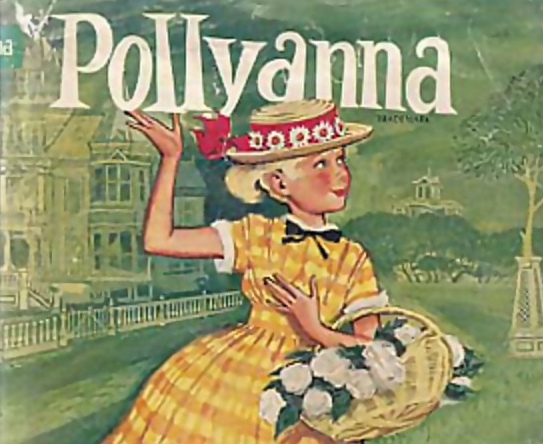
They’re supposed to be Pollyanna, Elsie Dinsmore, and Jane Bennet. They’re supposed to be completely innocent, unnoticed, modest, graceful, but still look beautiful and unblemished (while not thinking too hard about it).
Good Homeschooled Girls are impossible. All of us are wearing masks, we’re all acting feminine, we’re all hiding ourselves, because none of us are that perfect.
Instead, we are berated — we are told we are never enough, that we’ll never be good enough, that we don’t measure up. We’re told we need to fix our hair and only wear makeup to cover our acne, we’re told we need to look just so — but not focus on it. Our appearance and personalities are shamed, muted. We are turned into china dolls — empty, silent, porcelain — while we die slowly inside.
Our unique identities are stripped — told to be sinful.
Our independence is denied, and to fight for it is to abandon all that we were raised to be.
Our dreams — if they exist outside the chosen path — are cast aside, scoffed at, or allowed under very specific circumstances and made to end upon marriage and/or pregnancy.
And if we abandon this dream, or if we seem to have a particularly hard time measuring up to this standard? We are broken, and there is something wrong with us. To base our worth in who we are instead of when our uterus is used flies in the face of this ideal.
Elsie Dinsmore, Beautiful Girlhood, and Jane Austen are the books that are handed to us as examples of femininity and how we should conduct ourselves. Good Homeschooled Girls are supposed to be quiet, demure, masters in the art of domesticity — never raising their voices or asserting themselves, never doing heavy lifting (unless it’s babies or laundry baskets), always walking with poise, always graceful, always innocent and perfect, never loud.
The first two emphasize the devaluing of self as godly and feminine. I can’t speak to Jane Austen because I’ve never been able to make past the first chapter.
Innocent, all with Hayley Mills and a yellow house in Maine and everything, harmless. Right?
If we leave it at the movie, sure (?). I didn’t know at the time, but the out-dated standards they sing about are things that are invisibly expected of all Good Homeschooled Girls.
The line hide the real you (while it was probably meant to be funny and absurd) was essentially my way of life.
I’ve always been stubborn, strong-willed, and independent. When it worked in my parents favor, this was a good thing. Otherwise it was something to be squelched.
I was never really a tom-boy. Sports bored me and seemed pointless — which, I suppose naturally meant I was a good candidate for the social experiment of super-girly-femininity. I was given books — Elsie Dinsmore, Beautiful Girlhood, Pride and Prejudice or Emma or Northanger Abbey (I don’t remember which ended up in our collection), and etiquette 101 for tweens (I can’t remember the name). I had to learn to be hospitable and submissive, though my parents never (or rarely) used the word feminine.
Submissive and feminine are often synonymous here.
I read them, dutifully, internalizing the expectations (well except Austen. I just couldn’t, but that comes in later). My parents never really talked with me about this. They had a tendency to just give me the books and expect I learn from them. Elsie is less fiction and more a not-so-subtle way of giving young girls impossible and unhealthy expectations and telling them they’re worthless if they can’t master it as Elsie did.
It didn’t take long for me to realize Elsie is an impossible set of standards that I was never going to meet. Though the real line was when she married her father’s best friend. I couldn’t bring myself to do it anymore, arranged marriages to a man who’s old enough to be your father who was creepy as hell to you when you were 8, and you’re too perfect and ideal to even exist or be relatable.
Just, no.
The appeal of the civil war/regency era vanished — because I saw through what they were trying to do and I think it was my own secret form of rebellion, sort of. Good Homeschooled Girls are given these books as guidelines – Beautiful Girlhood literally is a guideline for femininity and social conduct.
As much as I tried to mask my nature, to hide the real me, I was never able to do it well enough to be the pinnacle of femininity that I felt I was supposed to be.
Austen bored me, because I couldn’t get into the obsession with ribbons and dresses and who’s-courting-who. Elsie and Beautiful Girlhood just made me more painfully aware of the inadequacies I was already painfully aware of.
I felt broken. I felt broken because I didn’t live up to this idealized standard of godly womanhood (or girlhood).
I felt broken because I am not delicate, and no amount of silencing myself was going to re-write the core of my DNA. I come from a line of stubborn women, you can’t demure you’re way out of it. Or maybe you can, but I couldn’t. I felt like that meant I was less desirable (the end-goal of being female being married and having kids).
Being born female meant that I had my entire life and code of conduct set in front of me, no personality required. I was required to follow the program. I felt wrong because the very fiber of my being was in direct opposition to it.
It still is.
I remember when I was 11 or 12 trying painfully to write fiction about an edwardian-era girl (instead of my book about the secret society of women who fought in the Revolution via spying because the Quartering Act) who sat in a garden in her frilly dresses and waited for suitors. I think I got maybe 4 paragraphs and then became frustrated because it was impossible for me to even write about that without getting bored.
The idea of being locked up, spending my life in waiting for someone to whisk me away, and then to spend the rest of my life locked up birthing and raising children horrified me. No matter how hard I tried to make it not, or how hard I tried to make it seem…a s ultimate as people were telling me, no matter how hard I tried to convince myself it wasn’t certain death.
I couldn’t escape the feeling of the futility and meaninglessness of my life if all I was allowed to do was wait, and then have kids, and hope that one day they’d grow up to do the great things that I wanted to spend my life doing.
That meant something was wrong with me. I was too independent and god wouldn’t like that.
I remember being told, on several occasions, when I chose to fight for my autonomy, “independence is bad [for a woman], how do you think God feels about that [me being autonomous]?”
I was wrong and broken because I was not, am not, could not be demure, quiet, and feminine. I would never live up to the standards that Good Homeschooled Girls are supposed to live up to – no matter how many masks I put on, or how hard I tried to hide myself.
I may never have been a tom-boy, but I was never the epitome of girlishness either.
Masks could only cover so much. I found ways to let myself be stubborn in subtle and approved ways. I was compliant to a point.
The things is, I know now that those books are poison to my rose-soul, but I still feel the need to embody all that is wispy delicate and feminine.
I still feel broken because I don’t fit the mold when other people project it onto me. Because it is impossible for me. It would require giving up my autonomy and a complete change of taste.
*****
I can’t watch Pride and Prejudice without raging, I generally hate dramas (there are exceptions to this), I’d rather read a good fantasy or scifi novel or comic than a book about amish courtship (don’t get me fucking started), I love a good action movie — Give me robots fighting monsters any day.
None of my most basic preferences are even considered in the world of Godly Womanhood and Good Homeschooled Girls. It is assumed that I LOOOOOOOVE anything by Austen, that cooking, courtship, and children appeal to all of my tastes and interests, that robots and monsters and other-worlds are boring and unnecessary, and action movies are for boys.
When I express otherwise, it’s all but laughed at or ignored.
*****
I watched the Lizzie Bennet Diaries without raging (loved it, even). I know Austen was groundbreaking for her time (a woman author? *gasp*), but I can’t read her – not just because I find it dry, but because of homeschool culture.
Good Homeschooled Girls are supposed to be looking waiting for their Mr. Darcy (an asshole, really?). Good Homeschooled Girls are supposed to be Jane Bennet (Lizzie is far too independent) which doesn’t make sense because Jane marries Mr. Bingley? I know too many people who are trying to hack the 21st century into a Jane Austen novel and it frightens and sickens me. Wouldn’t it be nice if there were balls and you married the person you danced with? I feel like that can’t be the point of Pride and Prejudice, but you wouldn’t know it in this particular subculture.
^ Don’t start thinking about it too hard, it’ll hurt your brain.
It is the obsession with denying women humanity — autonomy — and worth that pervades this whole idea.
Good Homeschooled Girls have no needs. Good Homeschooled Girls are whatever they are told to be. Good Homeschooled Girls must gracefully and perfectly meet and fulfill contradictory requirements (look perfect, but don’t obsess about it! learn things, but don’t use your brain!), while never having a bad day or a human moment.
Good Homeschooled Girls aren’t allowed to be.
All in the name of femininity.

HA note: The following is reprinted with permission from Libby Anne’s blog Love Joy Feminism. It was originally published on Patheos on October 17, 2013 with the title, “Kevin Swanson on ‘Apostate Homeschoolers.'”
It seems Homeschoolers Anonymous has made an increasingly large splash in the homeschooling world.
Prominent Christian homeschool leader Kevin Swanson himself felt the need to address the group in a recent broadcast on his Generations with Vision radio show. He gave it the title “Apostate Homeschoolers.” If you click the link to listen, the section on Homeschoolers Anonymous starts at 5:00 and goes until 10:40, when Swanson moves on to the Boy Scouts.
What does Swanson blame for the growth of the “homeschool apostates” and their increased networking and online activism? NCFCA homeschool speech and debate. Oh yes. NCFCA was started by Christian homeschool leaders to equip a generation of homeschooled children to be culture warriors, fighting against the godless secularists and working to establish a Christian America. But apparently, according to Swanson, it’s gone awry, and too many of its homeschool participants have left God’s Truth for the faulty world of man’s intellect and reason.
In other words, Swanson has stumbled upon the very real truth that indoctrination fails when you teach children how to think instead of what to think.
But if ensuring that your young people retain your beliefs requires teaching them what to think without ever teaching them how to think, the problem is with your beliefs, not with the fact that certain of your young people figure out how to think and then walk away. That this is the response of the Christian homeschooling world—that perhaps teaching kids how to think was a bad idea—then what they have to offer is very sad indeed.
And just so we’re clear, this is what Kevin Swanson is now apparently afraid of:



Look how scary we are, with all of our researching and talking and thinking and socializing!
Be Excellent To Yourself: By Rene
HA notes: The author’s name has been changed to ensure anonymity. “Rene” is a pseudonym.
I’ve been reading Homeschoolers Anonymous since the very beginning and really love this community. Perhaps now I can give a little back! I want to tackle the writing prompt number five: “Practices, techniques, etc. that you have found helpful for managing your mental illness.”
My background in mental illness involves a family riddled with various mental health challenges, all exacerbated by the isolation of homeschooling, poverty, and living in another country.
My personal “mental health profile” includes OCD, Tourette Syndrome, general and social anxiety, recurrent episodes of depression that at one point led to several months of being suicidal, and many years of disordered eating. I’ve never had access to therapy, but the last few years have seen steady progress toward greater and greater quality of life for me. There are so many variables and things you can try and I love the way the internet gives access to so much support and knowledge and research, though it can be overwhelming at times!
The things that have been most helpful for me personally have been:
*****
1. I realized that a lot of the problems I was having were normal reactions to extreme stress and trauma.
It was okay for me to be in pain and not functioning well, just like it would be okay for me not to be capable of running with a broken leg.
2. I started learning to celebrate small, even minuscule, victories.
It might seem ridiculous in the grip of depression-fueled cynicism, but keeping a daily gratitude journal or literally patting yourself on the back for, say, going outside on a one-minute walk, can over time add up to big improvements in self-care habits. As a former fundamentalist, I had to get over the habit of bashing myself for my deficiencies and weaknesses. Instead, I just recognize that if I am struggling and still manage to do something beneficial, then that is awesome and time to celebrate!
3. I learned some things about diet and what my body needed.
Vitamin D3 supplementation is what I credit with getting me out of the suicidal hole I was in. Since then I have learned a lot more about what my body needs, including that I can’t do gluten and that as long as I eat a balanced, no-grain diet I no longer struggle with binge eating. It turned out that most of my eating disorder was physiologically-based and getting over that has had many ripple effects on my happiness.
4. Living simply but in a consciously hedonistic way, that is, simple living in order to promote pleasure, not deprivation, has been and continues to be one of the ways I care for my mental and physical health.
It has helped a lot with my OCD and Tourette Syndrome, though leaving my parents’ house several years ago and no longer being constantly on edge from emotional abuse also helped erase most of my symptoms.
5. I consciously try to treat myself well.
If I would not yell at a stranger or child or friend for doing something, then why yell at myself for doing it? This helps a lot with my social anxiety and the guilt I tend to feel when I make faux pas, which has in turn helped me gain more and more confidence and make a lot more and better relationships.
*****
These are the main things that have helped me.
It’s been four years now since I hit rock bottom and thought life would never get any better, four years since everything looked black and despairing, and now I’m pretty damn happy. I never knew it was possible to be so consistently happy and resilient — and I purposely am not using the Christianese “joyful” here — I mean happy, not gritting-my-teeth-determined-to-be thankful.
I hope that if you are struggling my story gives you a little bit of hope.
Be excellent to yourself.
Help is Worth Getting Because You Matter: By Kierstyn King
HA note: The following is reprinted with permission from Kierstyn King’s blog Bridging the Gap. It was originally published on July 17, 2013. This is the third of Kierstyn’s three-part series on mental health. Read Part One here and Part Two here.
It’s worth mentioning, in 2010, my parents all but disowned me and I spent 2 weeks crying, in my room, with the lights out, dealing with an amount of intense pain that I had only dealt with once before. That was in 2008 when my parents told me that I couldn’t see or talk to my husband anymore. This time, they cut off my relationship with my siblings. I came out stronger on the other end, but that reminded me, acutely, of my previous bout with near suicidal depression and thankfully, I wasn’t suicidal this time, because I was (for the first time) in a loving relationship with someone who cared.
After getting off the pill (health reasons) in 2011, my hormones started raging and I had horribly debilitating bouts of depression every 2 weeks (thanks, ovaries). I was angry and volatile and mean (which I’m not usually) – it started affecting every detail of my life and how I interacted with the people I most cared about. I tried every herbal supplement I heard helped with PMS and hormones. I eventually came to the conclusion that I had PMDD (like PMS but with depression and on steroids) which, upon thinking about it, and my relationship with myself – especially my menstruating self – made sense.
I struggled for a year, taking herbal supplements every day with no help.
I talked to self-proclaimed herbal experts who said progesterone was a good bet – it wasn’t (but I did get one lotion that smelled nice and helped on that level).
Last August I’d had enough. It was hard – working up the nerve to talk to my doctor about this weird phenomenon was really hard, I was terrified. I’d been told my entire life that doctors were evil and that they just handed out antidepressants like candy, and also, those were bad. But I couldn’t keep living with that, every two weeks being trapped within myself, being a shell, and trying to not hurt the people I loved because of things I couldn’t control.
So I talked to my nurse, I told her about how debilitating my periods were, how I hated myself, how I felt it hurting my relationships. She suggested wellbutrin.
She said it may be a drastic step and I said, no, I’m ready to try medication.
Shortly after that talk with my nurse, Wil Wheaton wrote about his depression on his blog – which really helped normalize it for me. Because for the first few weeks following the start of my medication I felt a little afraid and a little ashamed because of the stigma that comes from treating depression/mental illness and having it. The shame from my past because I was one of “those” people now.
Wil Wheaton’s story helped me feel better about it. Then Hyperbole and a Half’s Adventures In Depression was so spot on (so is part two), I realized that I wasn’t alone. That it’s a real thing (not a spiritual one) and that it’s okay, and that also —
— I don’t have to live in suffering like I thought for so long.
I didn’t realize that I had been depressed since puberty, with bouts of really really bad rounds of it, until I started taking antidepressants and was introduced to actual emotions and feelings. It was overwhelming at first – I had so many emotions, all of them, I didn’t know what they were, how to name them, or how to deal with them. I just had to sit there and wait and learn what they were.
I feel things now.
People think that if you’re depressed you just feel sad all the time. But what happens is you just eventually feel numb, melancholy. You miss the actual feelings.
Negative ones stick and make homes in your brain and never go away.
Now I know, when I feel sad, angry, or depressed even (yes, I still feel depressed sometimes) that they are only emotions and they. will. pass. I will feel happy – actual happiness, and then I’ll feel normal – which is not melancholy, but a perfectly okay everything is fine feeling.
The difference between my emotional and mental state now, a year later, and last year is huge. I can’t start to describe how many ways it’s changed, helped, and made me feel more in control. It’s just so nice to be able to live outside of my head, to not feel trapped inside of my brain, or inside of my body.
Help is worth getting because you matter. Intrinsically.
 Homeschoolers Anonymous