UnBoxing Project: Ashley’s story

Eleanor Skelton blogs at eleanorskelton.com, is the news editor of the UCCS student newspaper, and is majoring in English and Chemistry. The following was originally published on Eleanor’s blog on March 9, 2015, and is reprinted with permission. 

< Part Five

Source: Ashley
Source: Ashley

This is Ashley’s story.

Content warning: victim-blaming, religious manipulation.

Do you know what it’s like when
You’re scared to see yourself?
Do you know what it’s like when
You wish it were someone else
Who didn’t need your help to get by?
Do you know what it’s like
To wanna surrender?
I don’t wanna feel like this tomorrow
I don’t wanna live like this today
Make me feel better, I wanna feel better
Stay with me here now and never surrender
Never surrender
– Surrender, Skillet

“Mama! Mama! Look at the butterfly!” I squealed in delight at the wonder perched on my shoulder.

“Don’t move, Lovey! It’ll fly away.”

I stood as still as possible as my mom snapped a picture of this beautiful creature, and watched as it flew away. I remember thinking as I watched the butterfly float into a beautiful, summer day, how amazing it would be to be able to just whisk yourself away whenever you chose… I had no idea how much I would pine for that fantasy to become a reality.

I always remember my parents being there. No matter what the occasion was. Pajama day at school, Grown-up day, Job day, doctor’s appointments, they were always present. I can’t remember an important event they were not in attendance for. I went to them with everything, no matter how strange, and they were always brutally honest with me. I liked it that way. Being a straight forward person, I needed that to grow. Things were always so comfortable…and then 2001 came and everything changed. Drastically.

My mom had gotten involved with a church when she was 15, and the experience had always stayed with her. She had visited a Pentecostal holiness church and had received what they call The Holy Ghost, which to them is the basis of salvation. You cannot attain Heaven without it, and once you have received it, even if you walk away from God, you are marked and you will be a target for Satan. My dad, on the other hand, is Irish /German and was raised Catholic. He was actually an altar boy growing up and wanted to become a priest. However, he grew out of that sometime in high school.

While living in Louisiana, my mom met a girl named Billie Jo, and they went to a Pentecostal church together. My mom converted all the way this time (lost the pants, threw away the jewelry, chucked the TV and music) and as soon as my dad joined, we essentially became Amish with microwaves.
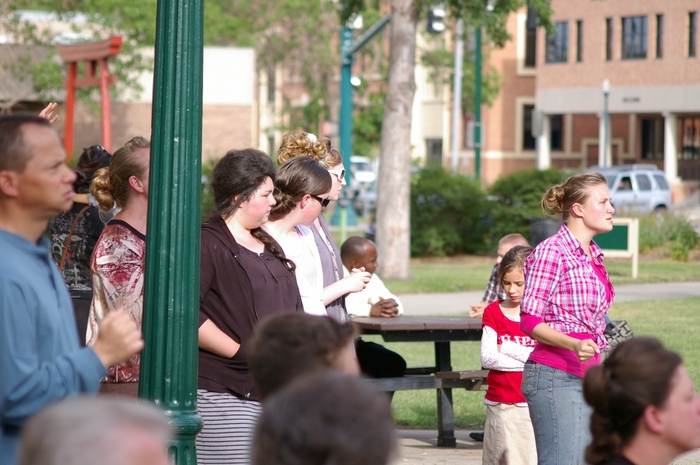
Source: First United Pentecostal Church of Colorado Springs

But even then, my parents broke me in slowly. As an only child, I had practically every Disney movie known to man, and they allowed me to hand over my Disney movies in exchange for Veggie Tales. From there, it was my Veggie Tales traded in for either a trampoline, or a puppy. My daddy bought me both.

They introduced me into that world slowly, and with ease. I appreciated that, even then. I knew they could have completely ripped everything away from me and made the transition harder than it already was. But they didn’t. I never thanked them for that. I guess it kind of got buried under every other emotion that surfaced after.

At first, things weren’t so bad. The family environment was great. Having no family in Colorado, the church appeared to be exactly what we needed. I started going to the church school which consisted of about 50 kids. I made friends quickly, and it seemed so easy at first. We were accepted as new converts and everything was cool. My parents also made friends, and were treated like family by the pastor. They were like their kids.

I believe this is what started the depth of my parents’ relationship with the ministry. Around 2006, the pastor decided he wanted to evangelize and ended up electing a man from Mississippi to pastor the church. I’ve never seen a man so hell bent on changing people for the worst.
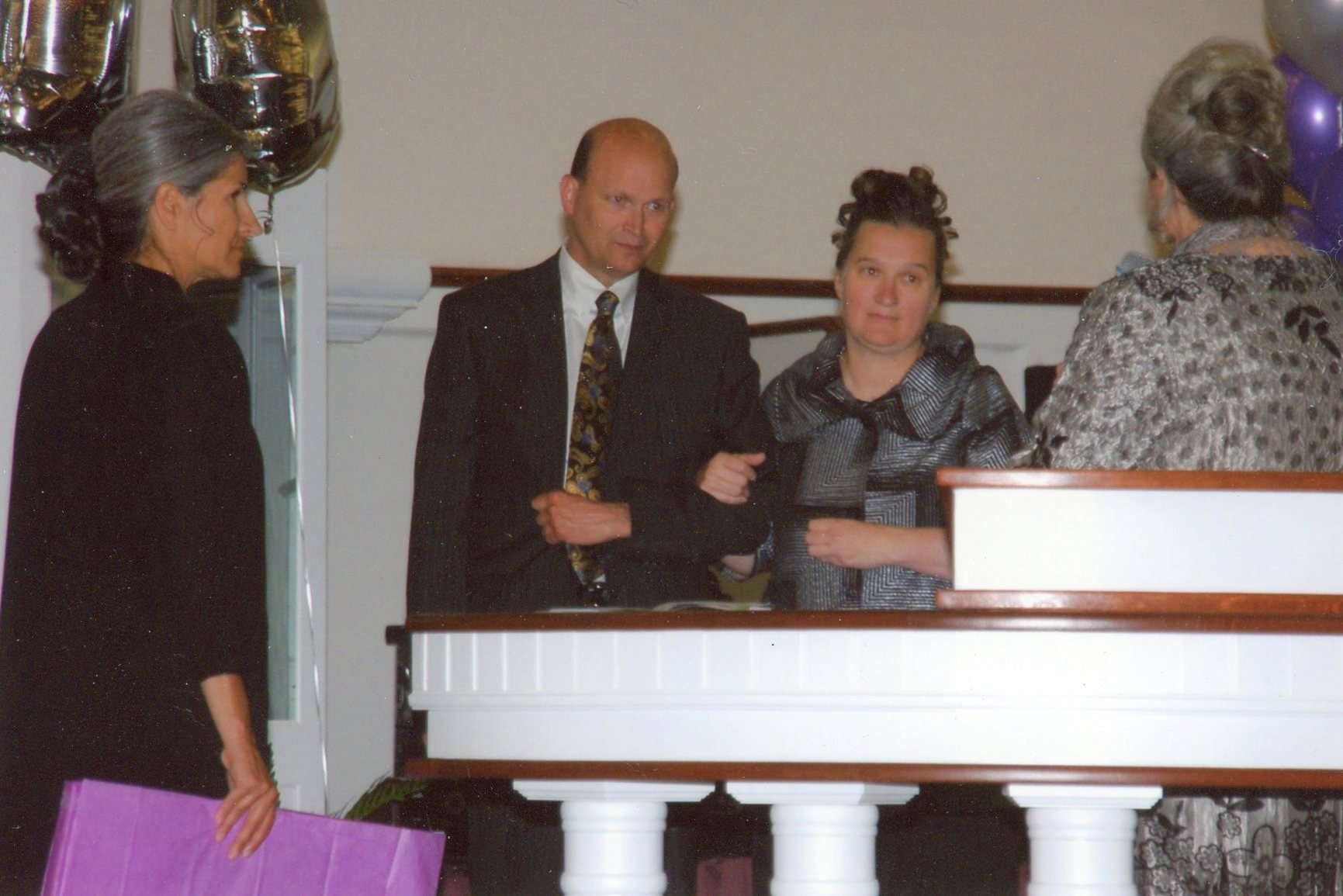
Brother and Sister Burgess | Source: Ashley

To my parents, this couple took the place of God. I have literally heard my dad say that if John Burgess asked him to stand on his head for 6 hours a day, in the middle of I-25, that he would do it without hesitation.

They believe that he is the voice of God, that even if he is wrong, and they sin because of his advice, that God would honor their obedience and look past their own wrongdoing.

The church services are filled with hype and the sermons are mostly guilt, especially directed at young people. They warn us of the wrath of God if we choose to walk away and almost every service we are reminded of the horrors that have happened to backsliders all through Pentecostal history, including those from our own youth group.

One instance in particular was one of my close friends Sharonda. She grew up with me, my mom babysat her and her older sister, and I looked up to this girl. She was my idol for a long time. She was my piano inspiration, she was cool, and she loved people. I’ve never met a heart as big as Sharonda’s. She was shot and killed late summer 2012. The case was never solved, and the Burgesses made not only her death, but her funeral an omen and message to all of us, that we should not run from God, for he is a jealous God, and his vengeance is strong. She is seldom mentioned among the young people. It just hurts too much.
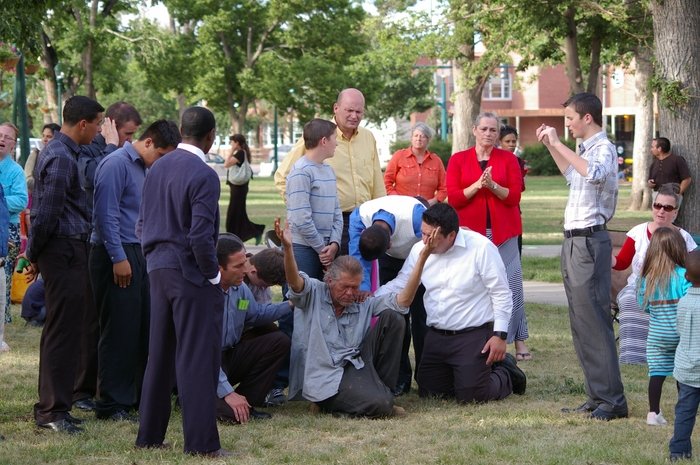
IMGP0627
Source: First United Pentecostal Church of Colorado Springs

The Burgesses continued to push their way into the minds of the church, and more and more young people have been driven away from God. Most of the “backsliders” that I know, don’t even believe in a benevolent God anymore. This started to become my opinion very young. I couldn’t see how any of this made sense. I thought the God of Abraham, Isaac, and Jacob was just and honorable? Not malicious and manipulative.

After my parents began to blindly follow the Pastor, I started to lose control. I shut off all emotions because I just couldn’t handle them anymore. I began to get more and more reclusive, and eventually began to blame myself for the guilt and pain that my parents were dealing with due to the controlling ways of the church. Everyone feels this way. It’s their modus operandi.

I didn’t know how to help and I began to fall into a deeper depression. I began to self harm. This was done is so many ways, I cant even begin to explain it all. Eventually, the self harm wasn’t enough. I attempted suicide six times starting at the age of 11.

I tried everything. Nothing worked.

My mom caught me cutting once and literally dragged me in to Shanna Burgess (the pastor’s wife), who promptly told me as I lay on the floor. bleeding profusely, that it was all in my head and I needed to stop being so angry at God.

She told me I was the one to blame.

After coming to her weeks before with my heart wide open and breaking in pieces, I explained one reason why I felt so alone. I was raped when I was 6 years old and had no way to express my feelings. She, of course, immediately took this information to my mother who denied it profusely. My parents have never believed me. She told me I needed to stop feeling sorry for myself because come on, it never happened! I hated them before but after this? I could never forgive them.

They had and still have a hold on my parents like nothing I’ve ever seen.

Source: Ashley
Source: Ashley

When I turned 18, things started to look up. I was finally allowed to have a phone because I had turned 18 (pastor’s rules for youth), I was finally granted rights to a car (that I bought, of course) and everything was going good. I had been in good graces with the Burgesses and my family and I was following the rules to perfection.

And then after a falling out with my best friend at the time, I started to become close friends with a girl named Racquel. We began to grow closer and closer as the months went on, and before you knew it, we were opening up to each other. I told her things I had never told anyone ever.

Eventually, our concerns about the church and their doctrines, the Burgesses and all sorts of other questions came to the forefront of our conversations and we began to discuss them. We grew even closer after learning about some of the abuse that the other one had endured.

We got caught discussing these topics, and we were separated and forbidden to speak to one another. This happened four times. Each time we grew closer and closer and eventually, we started to go to extreme lengths to see each other. My parents and the Burgesses resorted to lying to both of us, trying to force us to hate each other.

After another six months of not speaking, we once again rebelled and talked about what had happened. We realized they had lied to both of us, obtaining information by hacking email and bank accounts. My parents forced me to stop attending my college classes because Racquel might try to visit me there.

We communicated to each other through Eleanor for about 3 weeks, and then we started to sneak out again. We had contemplated running away many times before, but something was different this time. When two adults aren’t allowed to talk because they get caught listening to One Direction, there’s some serious malfunction going on. It had reached an all time idiocy and we had had enough. We both left home, and the night I did that was the hardest decision of my life.

Three days later, my dad was going to throw my stuff on the sidewalk. My mom, who was out of town at the time, convinced him to let me come pack my stuff, so he left for a few hours. Racquel and Eleanor went with me. The first thing I noticed when I came in was that all my pictures were facing down and some sat in piles on the floor. I almost lost it then.

I just remember feeling like my parents died, and I was cleaning out their house.

A little later, Cynthia Jeub and Aaron also came over. I’ll never forget the look on Cynthia’s face when I saw her. I walked outside to greet them, and she just looked so disturbed. But there was also pride in her eyes. She hugged me for a good ten minutes. I’ve never expressed how much that hug meant to me.

They helped me pack up and I decided last minute to check my mom’s car. I went to look for any remaining items, and when I opened the door, I saw that the inside of the car was destroyed. I can only assume my dad went crazy and trashed the car. It was really scary.

Everyone was panicking because we didn’t know when he was coming back, and he has guns so people were starting to freak out. We left not long after. It didn’t really hit me until then, how drastic the change was going to be.

Since then, I have gone through a lot. I’ve put myself through an abusive relationship, made myself be something I wasn’t, lost connection with my family for months at a time because of “religious differences,” moved around a lot, found out I was adopted by my dad, been through a ton of counseling, self-harmed, ran from my home state, even shut my humanity off a few times.

But one thing I can say I haven’t, nor will I ever do, is forget who I am and where I came from.

I can’t express how hard it has been. The sleepless nights, the thousands of times I’ve cried myself to sleep, and woke up screaming. I wouldn’t wish this on anyone.

But you know what? I don’t regret it. I can’t. I’ve invested too much into this decision to fault it. To those of you trying to escape, its not impossible. It’s not easy, but I promise its worth it. We have helped more people come out since my decision to leave, and the feeling is so liberating, knowing you are a voice and a model for them.

To those of you who have siblings that are still in captivity, don’t give up hope. They will make it. YOU are their light, no matter how dark you feel sometimes. Because sometimes the darkest shadows have been cast by the brightest lights.

And no matter what bad choices you make long the way, I’ve found that I don’t have to be ashamed of them. Because they are finally my decisions. So while wading through your red river of screams just as we have, remember you do not fight alone. You can make it.

And never surrender…. the battle will be worth it, and we will win the war.
I don’t wanna feel like this tomorrow
I don’t wanna live like this today
Make me feel better, I wanna feel better
Stay with me here now and never surrender
Never surrender

Ashley attended public school and later homeschooled online. She finished her senior year at the pentecostal church’s school. She was the first person on her mom’s side of the family to finish high school and attend college. She is interested in psychology, forensics, and criminal justice.

Part Seven >

UnBoxing Project: Defecting from a cult

Eleanor Skelton blogs at eleanorskelton.com, is the news editor of the UCCS student newspaper, and is majoring in English and Chemistry. The following was originally published on Eleanor’s blog on March 8, 2015, and is reprinted with permission. 

Source:  Wil C. Fry, creative commons use.  Image links to source.
Source: Wil C. Fry, creative commons license. Image links to source.

< Part Four

Liz helped our network assist Racquel and Ashley. Here is her perspective.

Nearly two years ago, I received text messages from Eleanor about a friendship between two girls that had been recently forbidden by their religious leader.

I was asked to attempt to sneak a cheap TracFone to one of the girls at her school because I would not be recognizable to her parents, who had confiscated all her means of communication. Unfortunately, she wasn’t in class that day.

Eventually, they acquired their freedom by leaving their church behind and living with friends.

Most people assume their own community has only good intentions in mind for members. Why would we believe otherwise if an overwhelming majority of us were taught that strangers are the ones who seek to hurt us? In reality, data suggests that most cases of violent crime and sexual assault occur between people who are at least acquainted with each other or in regular physical proximity.

In spite of statistical and factual realities, we teach our children to fear strangers. We teach them to avoid the rare anomalies but fail to teach them to look for warning signs in the mundane. This contributes to the denial in identifying abusive communities when people are a part of one.

Instead, people taught to fear the outside world might think that to leave would be worse.

The philosopher Hannah Arendt says that evil is banal. It is predictable, common, and is generally perpetuated by unremarkable people motivated by their own, typically material needs. An intense, outward adherence to a particular ideology or manifestation of a psychological condition might be present but neither are enough to explain why communities as a whole behave a certain way.

In other words, abusers are regular people and not the monstrous caricatures we see on TV or evil stepmothers in children’s fairytales. There might be a few narcissists and sociopaths at the upper echelons dictating the orders, but several people who are afraid of seeking out other dissenters within the group.

With hierarchy and scale, diffusion of guilt and responsibility is inevitable. Diffusion of guilt is generally paired with resistance to collective guilt that should logically follow the diffusion. The lower end claim to be following orders, the higher ups claim they didn’t personally do it. It’s the same garbage that makes none guilty for abuse that many participated in. It is as if people hope that with sufficient diffusion, the amount of culpability per person is rendered insignificant. Dilution of active ingredients in homeopathic “remedies” operates this way.

Abuse as a phenomena doesn’t become significant simply because the perception of responsibility among abusers is thinly spread out because there is always someone else to blame in the eyes of the guilty such that their victims somehow become responsible for their own abuse.

What I’ve gleaned from my studies in history and politics is that there is a tendency to conceal or otherwise diminish the significance of abuses as a means of trying to protect the legitimacy and reputation of an organization such as the Catholic church, many American universities, collegiate and professional sports teams, the entertainment industry, among many other examples.

When an organization cares more about protecting its own reputation than removing abusers or helping victims, there is a reason to question the validity and value of such an institution and the complicity of people within afflicted organizations.

Even if an individual abuser recognizes the harm they cause, to reject the cultural norms is to risk being socially ostracized and possibly, their standard of living. Obedience experiments by Milgram and replicated by others show that people are generally submissive to figures of authority up to a certain point. It is likely that people from more isolated communities would escalate punishments further when commanded by members of their community than people from the general population being instructed by a stranger because of a greater sense of obligation and desire to belong in the former.

Defection is complicated. It comes with a high price tag in both an absolute and perceived sense.

People in deliberately isolated communities are generally taught that outsiders are evil, that its their own fault for being mistreated or that victims deserve it, and that the victims aren’t being treated badly in the first place. If maltreatment is believed to be normative and benevolent it tends to make victims attempt to justify what is going on as a means of internalizing conflicting messages.

The more isolated people are, the harder it is for them to recognize their own condition and the more complex the logistics of leaving becomes.

Liz was trained at a local college in her hometown to teach freshmen at her high school about how to avoid and recognize dating violence, local resources for victims, and statistics regarding the frequency of rape and lack of conviction. She was also a student teacher assisting adult education courses in rape escape and self-defense in evening courses offered by her school to the community.

Part Six >

UnBoxing Project: Racquel’s story

Eleanor Skelton blogs at eleanorskelton.com, is the news editor of the UCCS student newspaper, and is majoring in English and Chemistry. The following was originally published on Eleanor’s blog on March 7, 2015, and is reprinted with permission. 

20131130_165428
Source: Eleanor Skelton

< Part Three

This is Racquel’s story.

Content warning: forced starvation, religious manipulation.

Somehow I never imagined the inner peace and joy I felt as a 5 year old girl after being filled with the Holy Ghost would disgust and scare me. I am writing this because I believe my voice should be heard. I hope that by telling my story it will help my healing and others with similar stories as well as prevent more stories like mine from happening.

The music was loud and the atmosphere was pulsing with energy. I wanted to show how much I loved God, so I went up to the front of the sanctuary and danced with all my might, letting my tears flow. I had been taught that I should dance before the Lord and not let anyone’s opinion stop me.

Often I was the first one or the only one at the front of the church. This was good. It meant I was a leader, and that I was fighting spiritual warfare. It would also show my pastor, who was God’s voice in my life, how my walk with God was and what a good apostolic young person I was. I remember night after night where this was my mindset.

Source: First United Pentecostal Church of Colorado Springs

I was isolated from other members of the youth group because I would refuse to do things that the Pastor had commanded us not to such as ride in a car with a guy unless it was approved or there was a married approved chaperone was in the car. However, then there were the many many times where I sat or knelt at the alter weeping feeling the guilt of my many sins because yet again I simply failed to uphold the standards because again I had listened to unchristian music, watched a tv show, or could not stick to a daily prayer life.

For years I went through a cycle of getting trouble with my best friend for questioning the pastoral authority or why we held to some of our standards or had completely disregarded the rules, and then being told that I and my best friend Ashley should not talk or hang out because our personalities did not complement each other. Meanwhile, I stood by as she was abused in so many ways by both the pastoral authority and her parents because the only thing I could do was be there for her.

In January 2013, my best friend and I had come to the conclusion that we did not and could not agree with the church. However, we were discovered yet again and were ripped apart. This time, the Pastor lied to both of us, trying to turn us against each other by saying that the other one had ratted us out.

At the direction and guidance of the Pastor, my friend’s parents were punishing her for not losing weight because it was said that God could not use her unless she lost the weight. Because of her inability to meet their demands, she had begun starving herself. I texted her in absolute caring compassion for her to “FUCK (written politely as $@##) what they [her parents] think” to drive home to my friend that starving herself was not the answer, and that her parents and pastor were wrong.

During one of the long sessions in the Pastor’s office after getting caught, I discovered the Pastor had hacked into my best friend’s phone and found my text. I was questioned about my lack or respect for authority. My hands were tied as I seethed in anger not able to tell the pastor the context of the text, lest the abuse she suffered would increase because the Pastor was part the abuse. My best friend was far too scared of losing her parents and being kicked out to do anything other that play along with them. So at the age of 19, she had every form of communication, transportation, and even her means of education stripped from her. She was not even allowed to be alone in her own home.

Source: First United Pentecostal Church of Colorado Springs

In March, the deception worked and the pressure had finally broken me to the point that I gave in and did exactly as the church (i.e. the Pastor) wanted me to do. I felt helpless and that the reason for my insanity was that I was not submitted. I continued to not talk to my best friend and tried to force myself into the mold they had created for me with my approved Christian friends and my guilt-ridden prayer life.

I still had all of the same questions. Why must a man my pastor dictate to me what God wants and God not talk to me directly? Why must I not be allowed to talk to my best friend who was still the most important person in my life? How could so many injustices and abuse be what a loving God wanted? So when my little sister decided to leave suddenly and move in with a guy I had never met, and I had no idea were she was or if she was safe, when my approved friends failed, I reached out to the one person I knew who would be there: my best friend.

10553500_802766489755823_1022764128682957679_n
Source: Eleanor Skelton

Within two weeks of resuming secret communication, we had both discussed in detail what we saw wrong with the church, and had stated that no matter what we were going to keep communicating, even if it had to be hidden. Almost immediately, my best friend started to date a coworker.

On December 15, 2013, her dad followed her to her boyfriend’s house, and that night he kicked her out. I received a text saying, “they know everything can you come and get me.” I immediately drove to her house and picked her up. From there we were housed in a friend’s apartment who had also recently escaped an abusive fundamentalist home.

There has been a lot of healing and learning since then and now. Learning to live outside of the box has not been easy, nor do I think it ever will.

I now have the wonderful freedom of choice and with that comes both what I would describe as the beauty of a rainbow and the burden of the rain cloud.

Making these choices is the scariest and most exhilarating thing that I have ever done. I have learned and accepted more of who I am.

I can only hope that healing will come in time and the scars will become less painful.

Racquel graduated with a bachelor’s in psychology in May 2014. She struggled with undereducation from inadequate homeschooling and private education in her church throughout her college career. Racquel hopes to pursue a graduate degree in counseling, and her job involves assisting troubled teens.

Part Five >

Why the name The UnBoxing Project?

Eleanor Skelton blogs at eleanorskelton.com, is the news editor of the UCCS student newspaper, and is majoring in English and Chemistry. The following was originally published on Eleanor’s blog on March 6, 2015, and is reprinted with permission. 

< Part Two

Why did you informally call yourselves the UnBoxing Project?

Right after I moved out, several others came to me, and I’d provided emotional support or physically helped them to move out. I’d alert the same network of friends who supported me, enlisting their aid.

My friend Cynthia Barram, who also happens to be African-American, started calling it “Eleanor’s Underground Railroad.”

The name stuck. I think this was for a couple of reasons.

1.) Homeschool kids often read a lot of history.

I researched the Underground Railroad for a 6th grade project, and I often reenacted what I read, playing “slaves” and “overseer” with my siblings. Several of my homeschooled alumni friends that I met in college played the same games in childhood.

Before bedtime, my mom used to read us Laura Ingalls Wilder books and the Between Two Flags series, set during the Civil War. I read biographies of Harriet Tubman and historical fiction like Jip, His Story, and the patriarchal Elsie Dinsmore series. My friends Kathleen and Rebekah wrote their own Civil War historical fiction novel in late middle school, distributing serialized chapters after church each Sunday.

I think homeschool subculture really connected with this narrative.

We weren’t immersed in popular culture, so we tended to identify more closely with people from before our time.

2.) It became a model for social action.

No, we weren’t actually enslaved.

We were controlled, some of us were abused. My friend Kyle, who works at a non-profit to prevent human trafficking, says that the number of young adults from this background being denied agency by overbearing parents is troubling.

But we didn’t adopt the name as a direct comparison. I don’t pretend to understand what others before suffered. It was just a model, a template.

The original Underground Railroad worked because it was subtle. A secret, subversive organization for social justice, involving Quakers, escaped former slaves, and other religious or politically motivated people who couldn’t tolerate the injustices they observed.

So they hid people, moved them from house to house until they reached freedom.

And that’s what my friends and I did.

We took people escaping oppression into our homes, fed them, gave them a place to sleep until they were ready to move on to their next station. We told them it was okay to be themselves, to follow their dreams and desires.

Harriet Tubman and the others became like our patron saints, our guides. We followed the model because it worked for those before us.

And by following in their footsteps, we also sought to honor them.

Part Four >

UnBoxing Project: The trouble with freeing people

Eleanor Skelton blogs at eleanorskelton.com, is the news editor of the UCCS student newspaper, and is majoring in English and Chemistry. The following was originally published as “The Underground Railroad: Intro” on Eleanor’s blog on March 5, 2015, and is reprinted with permission. 

tumblr_nbyckjuMaB1qe90hso9_1280
Source: Hunger Games: Mockingjay (part one).

< Part One

Continued from Being an angel with a shotgun.

“Eleanor, does your church teach the doctrine of pastoral authority?” my friend Racquel asked.

She was waiting with me in the classroom for my Organic Chemistry review session to start.

“What is that exactly?”

Racquel attended an apostolic Pentecostal church in Colorado Springs that taught a person wasn’t saved unless they had been baptized and spoken in tongues at that particular church, not another Pentecostal church in the area.

A long list of offenses such as watching movies and television or wearing short skirts and jewelry could grieve the Holy Spirit, and then you’d lose your salvation and have to “pray through at the altar” again.

“Pastoral authority means that Brother Burgess prays and decides if it’s God’s will for us to talk to a guy in the church, date him, get engaged, or marry. And whether or not we can move out of town and attend another apostolic church,” she explained.

“Other apostolic churches allow social media and let their young people listen to CCM [contemporary Christian music], but our pastor has decided it’s not spiritually good for our congregation.”

Racquel didn’t see the harm in what her church banned, but believed her pastor had good intentions.

“I can tell my pastor cares about the people in the church, the way he walks around and prays for us during the service.”

I hadn’t moved out of my parents’ house or begun dealing with the unhealthy cycles in my own life, but I knew something wasn’t right. A church should support my friend, not make her miserable.

Over the next few months, Racquel and I had many theological discussions, and I argued that Jesus was about freedom and grace, not rules. I said her church had the tendencies of a cult. But she couldn’t see it yet.

—————————

I’d started texting Racquel’s best friend Ashley. She’d just gotten permission from her parents to own a cellphone and drive the car again, even though she was nearly 20 years old and attending massage therapy school full time as well as a part time job.

I had moved out in August 2012, and felt even more strongly that Ashley’s family situation was toxic since my escape from fundamentalism.

In January 2013, I lost contact with Ashley when her parents and Brother and Sister Burgess discovered she and Racquel had watched movies again and listened to rock music, including Skillet. Brother Burgess declared Skillet was demonic after listening to their song “Monster.” Ashley finally bought her own iPhone with parental and pastoral permission eight months later.

Now it was late October. Ashley and I were meeting for coffee that evening. She taught me Search for Truth Bible study lessons, intended for potential converts, as an excuse so her parents would allow us to hang out.

I was driving down south towards Starbucks when I got a text message from her.

“I’m sorry, Eleanor. I can’t come meet u. My parents are now not letting me use their car for anything.”

“Stay calm, see if I can pick you up in a bit,” I replied.

“I’ll try. Don’t know if I can last that long. Cya.”

“You can make it. I believe in you. You still ok?”

“No I’m not. I’m done Eleanor, I’m sick and tired of this. I can’t do it anymore. I’m too tired and can’t keep this facade up. I’ve fought for 13 years against this and am too tired to continue fighting this. I have no control and no choice. I’m fed up and there’s no way out. I realize that now. I just don’t know what to do now.”

“Do you want out? Do you want to make the jump?”

“Yes I do. But I can’t.”

The church and Brother and Sister Burgess trapped both girls in an awful double bind, using manipulation and lies. I knew they needed out.

I organized a network of friends to be prepared when they asked for help. We informally called ourselves the Underground Railroad, in honor of the Civil War stories most homeschooled kids read over and over.

But when would they be ready?

As Cynthia Jeub wrote in The Trouble with Freeing People that fall on the Huffington Post, describing Ashley’s situation, I couldn’t force them to leave.

“Helping her feel ready to take freedom for herself is the only way to make her free,” Cynthia wrote.

Only they could decide.

Part Three >

UnBoxing Project: Being an Angel with a Shotgun

Eleanor Skelton blogs at eleanorskelton.com, is the news editor of the UCCS student newspaper, and is majoring in English and Chemistry. The following was originally published on Eleanor’s blog on March 4, 2015, and is reprinted with permission. 

2479
Source: Konachan.com. Image links to source.

Get out your guns, battle’s begun,
are you a saint, or a sinner?
If love’s a fight, then I shall die,
with my heart on a trigger.

– The Cab, Angel with a Shotgun (Nightcore remix)

These are the stories they told me.

“Eleanor, my best friend’s parents told her she can’t drive the car unless she loses weight consistently every week.

I’m really worried about her. Yeah, she could lose some weight, but it’s not that bad, and I don’t think that’s healthy. What do you think I should do?”

My insides went cold, feeling the familiar rigidity and control descend, but this time for someone else.

They say before you start a war,
you better know what you’re fighting for…
if love is what you need, a soldier I will be.

“Eleanor, I’m 26 years old and my mom wants me to get married. She says she’ll send out the word among the [Indian] community to find a man for me. But I don’t want an arranged marriage.”

My friend already had a bachelor’s degree from an ivy league college, wasn’t enjoying her post-baccalaureate pre-med classes, and knew her parents wouldn’t understand her adoption of American culture.

She asked for help in moving her things out of her parents’ house. I rounded up a few friends and she got out.

I’m an angel with a shotgun,
fighting ’til the war’s won,
I don’t care if heaven won’t take me back.
I’ll throw away my faith … just to keep you safe…
and I wanna live not just survive tonight.

“Did you know Mike died?”

“No, I just talked to him last week. He was trying to start a chapter of the F.A.S.T. club at his graduate school.”

The coroner ruled Mike’s death a suicide. Mike grew up in the Colorado Springs homeschool community, although I didn’t meet him until college.

Questions about his death still linger with me and my friends.

Sometimes to win, you’ve got to sin,
don’t mean I’m not a believer...
Yeah, they still say I’m a dreamer.

Text messages from Cynthia Jeub, September 2, 2013.

“I need help. My dad is angry because he’s not making enough money. Can you help Lydia and me get out and find a place to sleep until our apartment paperwork goes through?”

“Dad was yelling at me when you tried to call. I never thought this would happen. We have a friend who will help, we might need help from you when we get back.”

“Dad says he might turn off my phone and Internet. Tell [a friend] to come if you don’t hear back again.”

I was five hours away up in the mountains and couldn’t come get her on the day that they were kicked out.

They say before you start a war,
you better know what you’re fighting for…
if love is what you need, a soldier I will be.

Google chat conversation, June 2013.

“I just want to go Home and be with Him. It’d be so easy… one bullet, one noose, two cuts, but I can’t bear to think of facing Him when I got there… For being a coward. For not trusting him enough… I really just want to escape. Wouldn’t you eventually get over it [grieving for me]. Death is a natural part of this life.”

A younger friend was suicidal again. She’d done this off and on since she was 13, and a couple of friends and I had talked her out of it, over and over.

“As long as I’m in class, getting A’s and studying all the time without a boyfriend or any other distractions, no one really pays me much mind. A fight’s brewing. So I’ll let you know after it happens if it does happen.”

Once again, her parents crushed her with unrealistic expectations.

I’m an angel with a shotgun,
fighting ’til the war’s won,
I don’t care if heaven won’t take me back
.
..and I wanna live not just survive tonight.

I didn’t become an activist because it was another hobby. Friends came to me with their wounds, their struggles. And I couldn’t just let them keep bleeding.

This is a series on helping isolated homeschoolers and religiously oppressed young adults escape cults and abusive households.

These are the ones I fight for.

…and I’m gonna hide, hide, hide my wings tonight.

Part Two >

#WhyILeft Fundamentalism, Part 6: Why My Parents Aren’t Villains

Source: 40ozheroes.com. Image links to source.

Eleanor Skelton blogs at eleanorskelton.com, is the news editor of the UCCS student newspaper, and is majoring in English and Chemistry. The following was originally published on Eleanor’s blog on January 17, 2015, and is reprinted with permission. 

Part Five

The morning I moved out, I texted my research professor who was helping me leave that my parents weren’t letting me take the heirloom violin, but left me an old laundry basket, a case of canned green beans, and a pot they didn’t like.

She replied, “That sounds like Harry’s birthday presents from the Dursleys.” Yep. The crazy relatives who made Harry Potter live in the cupboard under the stairs.

Sometimes my parents act like the Dursleys. Or even Miss Minchin in A Little Princess. It’s easy to compare my parents to fairy tale bad guys. And even helpful sometimes in predicting their behavior.

But villainizing anyone denies the psychological complexity at work.

My parents are more like the mature antagonists in classical literature. They’re more similar to Javert in Les Miserables, whose sense of justice and punishment for lawbreakers overrides any compassion, rendering him incapable of giving or accepting mercy.

And the pastor at my old church isn’t a villain either.

Sometimes I feel like fundamentalism was like living in Wise Blood, one of Flannery O’Connor’s Southern Gothic novels. The story is riddled with variations of extreme street preachers proclaiming damnation, but unable to uphold their own rigid moral standards.

My parents paid tuition for the A Beka Academy video curriculum, which was more than other families at our church could afford and made sure I graduated with an accredited high school diploma so I didn’t have to take the GED like my other homeschooled friends.

In 3rd grade when I was diagnosed with ADHD and prescribed Ritalin and a depressant, my mom saw how unbalanced I was. She told the doctors she’d make our home quiet so I could focus. She copied my long division problems lengthwise on lined notebook paper so I’d keep the columns straight.

My parents noticed I wasn’t on the growth percentile charts at the pediatrician’s office. They appealed for insurance coverage for my growth hormone therapy when I was 12 to 16.  Female growth plates between bones fuse around menarche, so my parents worked with my endocrinologist for an experimental combined treatment that delayed puberty and gave me more growing time.

My dad was even going to sell our more expensive car to afford a year of treatment without insurance.

If not for the daily Nutropin and monthly Lupron injections, today I’d be a real-life dwarf. I wouldn’t be able to drive a regular car or reach dishes in kitchen cabinets.

And they did pay for my first three years of college. My dad always said he wanted to give me “every advantage in life.”

I know deep down my parents love me.

Even if they don’t believe I am an adult yet. Even if they try to control what I believe and what I do.

Their beliefs dictate that they should shun me because I don’t measure up to what they think God wants.

Back in high school, the pastor at my old church talked me through why the King James Version isn’t an inspired translation or the only valid Bible to read. It was one of the first conversations that helped me to recognize the fear and control inherent in legalism.

And now he too believes I should be ostracized.

The summer I moved out, I borrowed the graphic novel Watchmen from my punk friend Kat. It’s about the second generation of a group of superheros blended into American history. But the first generation wasn’t as perfect as the press advertised.

“Who watches the Watchmen?” the book asks over and over. Who makes sure the good guys don’t become bad guys? What happens when authority is corrupted?

And (SPOILER) at the end the “villain” is one of their own. Disaster is sort of averted, they save the planet, but there is no real hero, either. Life just continues.

It’s not black and white.

Like Cynthia Jeub wrote, of course it wasn’t all bad.

My parents did many good things. And many hurtful things. I’m not obligated to give into their demands, I don’t have to lose my freedom. The bad doesn’t void the good and the good doesn’t cancel out the bad.

But if I don’t recognize their human complexity, then I am refusing to see the raw reality. And I will blind myself from the truth.

End of series.

#WhyILeft Fundamentalism, Part 5: Why Fundamentalism?

Source: Eleanor Skelton.

Eleanor Skelton blogs at eleanorskelton.com, is the news editor of the UCCS student newspaper, and is majoring in English and Chemistry. The following was originally published on Eleanor’s blog on January 15, 2015, and is reprinted with permission. 

Part Four

The biggest question that surfaced during this week’s series was: “What do you mean when you say you left fundamentalism?”

I’m mostly referring to the definition that Homeschoolers Anonymous used in their 2014 alumni survey:

Christian Fundamentalism includes, but is not limited to, the following ideologies: Christian legalism, Quiverfull, young earth creationism, anti-LGBT rights, Christian Patriarchy, modesty and purity culture, betrothal and/or courtship, stay-at-home daughter movement, Dominionism, and Christian Reconstructionism. It is not limited to Protestantism and can also be seen in Catholic, Mormon, and other subcultures.

Does it mean I stopped believing core doctrines of the faith? No.

Have I wrestled with what to believe now? Yes.

I actually wrote a post on it called help my unbelief.

But many of the fundamentalist ideologies listed above are recent inventions, reacting against the hippie movement and supporting the conservative boom of the Reagan administration.

These are not central tenets of the faith, at least traditionally. My Catholic and Orthodox friends have showed me as much.

The trouble is that we mean different things when we use terms like fundamentalism. Or legalism. My sister told me her freshman seminar at Bob Jones University discussed how to avoid legalism. But from my perspective, the BJU student handbook is legalistic (check out the dress codes) and doesn’t allow college students to formulate opinions.

Why did I leave fundamentalism? Because those belief systems taught me to fear the outside, helped me to think that only people who believed the exact same set of things I did were safe to associate with.

This is why I refer to it as “the box.”

I realized purity culture can make women feel like their virginity determines their worth, and I stopped wearing my purity ring. I replaced it with different rings, rings that matched a new understanding of my worth.

I stopped believing in courtship because I realized my dad may never approve who I would want to marry.

I sold my copy of the Botkins sisters’ book So Much More during freshman year of college, because well. The Botkins said girls were more easily tainted by the college experience and should not seek out higher education.

Rebecca Davis wrote about why being a stay-at-home daughter is not a Biblical mandate in her post For Shame, Beautiful Botkins. She defends single female missionaries the Botkins condemned.

I read about how many were hurt by Bill Gothard’s teachings and abuse at Recovering Grace.

One of my chemistry professors reminded me that I didn’t have to believe in young earth creationism because “it’s not a salvation issue.” Now my answer is simply: I don’t know. I don’t care whether the universe came about in 6 days or 6 billion years. It’s a beautiful place to live, and I like to think someone awesome created it somehow.

Oddly, the Pearls’ articles against patriarchy in 2011 convinced me that my family was unhealthy: Cloistered Homeschool Syndrome and Patriarchal Dysfunctional Families, Part 2. Although their child rearing methods advocate breaking childrens’ spirits and enable abuse.

In my teen years, I knew several Quiverfull families, although my family only had us three. I loved hanging out with the family with 13 kids we knew in Dallas, and the Jeub kids made me feel almost one of them at their birthday bash in 2013. But I always wondered if they were really happy or if they hid their problems.

I read books like The Children Are Free arguing that Christianity and LGBT lifestyles aren’t incompatible. And my friend Cynthia Jeub wrote a defense of equal marriage rights.

I now support making all marital unions contract-based, with a divorce clause built in so breakups could be more amicable. Then religious organizations wouldn’t be forced to perform ceremonies, and my LGBT friends would have equality with any other couple.

My parents didn’t believe all of the fundamental philosophies I’ve described here. Many of them I found in Focus on the Family’s Clubhouseor Brio magazines and devotional / Christian living books I received for Christmas or birthdays.

Other ideas seeped in through guilt and fear-based devotionals like Leslie Ludy’s Set Apart Thot YouTube videos, which argue that “even the good things in our life [example: Starbucks] can become idols” and “the only true beauty comes from a life totally surrendered to Jesus Christ.”

For those who believe Christian theology, valuing anything to the point of worship would be idolatry. I believe that I give over my darkness and am healed by the light, and for me, I think it comes from Jesus. But videos and sermons like Ludy’s seem to encourage excessive self-denial and an obsession with sacrifice.

This is the problem with words like fundamentalism.

And other church buzzwords like surrender or take up your cross. (I took that last one literally in my self-harm.)

For one person, the words capture a beautiful release or fulfillment. For another, the same words trigger being crushed by guilt and self-hatred.

In leaving fundamentalism, I left behind a cult-like system of beliefs that caged me.

My friend Rebecca M. sent me an article last fall on recovery from religious abuse, which recommends: “Take a breather from organized religion for about three to nine months, at least.  Deal with your questions about religion, ethics, and philosophy in an honest and challenging manner.”

This is why I only attend church services and events sporadically. Many familiar things are still painful. Rachel Held Evans described this in her post this week Post-Evangelicals and Why We Can’t Just Get Over It.

This is why it’s taken me over two years to hope I can find welcome in a church again.

This is what I left.

Part Six >

#WhyILeft Fundamentalism, Part 4

Source: invisigoth88, Deviant Art. Image links to source.

Eleanor Skelton blogs at eleanorskelton.com, is the news editor of the UCCS student newspaper, and is majoring in English and Chemistry. The following was originally published on Eleanor’s blog on January 13, 2015, and is reprinted with permission. 

Part Three

Can You meet me in my room?
A place where I feel safe
Where I don’t have to run away
Where I can just be me. – TFK, In My Room

I was like a kid on an adventure the first night in the new apartment.

The second or third night, I called Cynthia B. crying and homesick. She said it was normal and part of growing up.

Until 2012, I never spent a night away from home without my parents. Then I stayed at a friend’s house one weekend in June before leaving.

And I had no idea how to cook.

My first roommate taught me how to make ramen in the microwave.

Dad always worried I’d burn myself on the stove or slice open my finger. Or spill something. I begged them to teach me throughout my teen years. I even planned a dinner when I was 14 and brought Mom the recipes, but Dad didn’t let me.

I started seeing through the cracks, saw how much fear had controlled all of our lives.

I biked to school and rode the bus for the first three months. Then my parents gave me back part of the money so I could buy a car in November 2012.

My second roommate taught me how to live paycheck to paycheck, how to find cheap, gluten-free food when I discovered I was allergic like her.

In April 2013, I found Spiritual Abuse Survivors blog network through a friend and soon after, Homeschoolers Anonymous.

I read about more gentle parenting methods at Permission to Live.

Through reading blogs and talking to friends, I learned it’s not normal to spank your children until they stop crying because crying is “rebellious” and leaving bruises and teaching your child to cover them is also considered abuse.

Most people, even those who grew up in church like me, weren’t spanked until they were 14 and threatened with a belt until age 18.

I started dealing with my dark side, confronting why I self-harmed.

A school counselor helped me through the first year, and my Christian counselor later came out of retirement briefly and my parents and I went to group counseling summer 2013.

Because… my parents did not back down because I left.

The first Sunday after leaving, I went down the street to visit a new church.

My family drove by while I was walking down the sidewalk, rolled down the car windows, and shouted, “Just remember, Bob Jones is still available!”

My dad sent me advertisements for cars he would buy for me if I went to Bob Jones. And a deluge of letters and text messages and emails and phone calls pleading for me to reconsider the first year I was away. My parents dropped by the Science Center on campus while I was tutoring, bringing gifts and asking me to come back.

My anxiety issues spiraled, but my professors understood, giving me extensions.

Heart and brain argued on where to draw the line. I loved my parents, but I wasn’t a child anymore. I didn’t want to have to choose between my family and my adulthood.

Which is why I identified with Tirzah’s story on Homeschoolers Anonymous last week: “Only in my mom’s sad world of jumbled theology would moving out be akin to losing one’s family.”

Everyone told me that my freedom would have a price.

But some days, I ache, wishing my family understood me. Understood my heart.

Understood that I don’t write to condemn them, I write because I’m in pain. I write because I want our relationship to change and heal. I write, pleading with other homeschool parents, “Please, don’t do this to your kids.”

I’m told that blogs are biased, I’m accused of not showing both sides.

So I’m including three open letters between me and my parents and one of the more impersonal ones my sister sent. Quotes can be taken out of context, so here is the entire conversation.

Letter from my parents 11-12-2012
(After the 2012 election. I had voted to legalize marijuana in Colorado after researching studies on the chemical effects of THC.)

My letter 7-9-2013

Mom’s response letter 7-16-2013

Letter from sister 10-27-2013
(Mostly an essay arguing that my actions require the church discipline in Matthew 18.)

Right now, my relationship with my family is inconsistent. We talk sometimes. They help in a pinch, but I fear control creeping in again.

But I know they don’t accept me or approve of me. Nothing seems to count now. Not being self-sufficient, not holding steady jobs, not graduating college this spring. Not my passion for journalism or theater.

It’s like my leaving was an earthquake, and now a canyon lies between us.

But I found others on this side of the canyon, too.

Friends who later asked me to help them escape their own boxes. Professors who encouraged my independence, who had life phase changes of their own in college. My pastor friend in Texas who listened to my story and made me want to try church again.

In July 2013, I told Lissi on G-chat:

You know what?
I realized something yesterday.
I don’t think my family is my family anymore.
I mean, I will always love them, and they are blood.
They are my kin.
But they are not the family I grew up with anymore. That is now changed forever.
My “family” now emotionally is more like Ducky [my second roommate], you, the two Cynthias, other close friends, and my professors.
You all treat me more like family and support me more than my own family does.
I think this realization makes me more okay with emotionally separating from my family, too.
Because at least I have you all. 

She replied, “Ahhh… the Chosen Family realization.”

Yes, the fight was worth it. Now I am free. Free indeed.

eleanorquote

Part Five >

#WhyILeft Fundamentalism, Part 3

Source: invisigoth88, Deviant Art. Image links to source.

Eleanor Skelton blogs at eleanorskelton.com, is the news editor of the UCCS student newspaper, and is majoring in English and Chemistry. The following was originally published on Eleanor’s blog on January 11, 2015, and is reprinted with permission. 

Part Two

That’s why I hide here in the dark
So no one has to see my pain…
But can You bring the keys to my heart
And help me find the way? – TFK, In My Room

My growing independence unsettled my parents.

The fear crept in subtly.

I buried myself in 15 credits fall 2011. Several nights of the week, I stayed in the Math Center on campus doing calculus homework with tutors.

But Dad freaked if I didn’t respond to his texts or calls right away, threatening to call campus police to check on me. I explained I got absorbed in study and didn’t check my phone often.

He taped an index card that said “Campus Police: 719-255-3111″ to the kitchen microwave.

The landslide started. I was 22 years old.

December 2011: I started seeing a Christian counselor because Mom took my sister.

I told him how controlling my parents were, and he encouraged me to set boundaries. I wrote in my journal that he told me to stop thinking in terms of “shoulds” and “musts” and more in terms of “wants” and “your reasonable heart’s desires,” because the former is living under the law, and the latter is “where freedom is and where Christ wants you to be.” We met regularly until his retirement in April.

After finals, my parents raided my room, confiscating all Harry Potter books I owned and other fantasy they found objectionable. And two Harry Potter DVDs I’d checked out of the library.

Mom opened my bank statements. Said I spent too much money at Christmas. Opening any mail or packages addressed to me became a requirement for living in their house.  I objected. They grounded me from attending a white elephant gift exchange party with my online writers’ group. Dad drove my sister instead.

January 2012: Dad said my hair had to be cut off because women with longer hair are more likely to get raped according to a book Mom read on self defense. I fought him for three weeks, gave in and donated 14 inches to Locks of Love.

My parents took away internet and cellphone access and driving privileges the last two weeks of winter break. I chatted with my friend Anna G. in Dallas on my mom’s iPad in the morning and on the landline with Cynthia B. so I didn’t hurt myself. I felt so trapped.

They threatened to prevent me from driving to campus for classes and work unless I signed a written contract. I didn’t like being manipulated, so I agreed to the chore list and asked them not to pay me.

My curfew was 7:30 p.m.

February 2012: I discovered my study buddy Racquel and Cynthia B.’s numbers were blocked on my cellphone. My mom said Dad told her to block them on our family plan since they’d encouraged me to move out. So I called them using campus phones.

March 2012: Dad and I fought at midterms because he wouldn’t let me study. I was enrolled in 17 credits (Organic Chemistry 2, Chaucer, Bacteriology, an English senior seminar, and a Merck honors research lab class) and tutoring on campus part-time.

I told him I wanted to move out after finals. He cried and told me he wanted to be a hedge of protection around me as long as possible.

April 2012: I bought tickets to go to New Life Church’s Easter production, the Thorn, for the first time. My dad said he didn’t approve, I went anyway.

May 2012: After finals, we took our last family vacation together to Camden, Maine. Mom and Dad said they had an idea. They would send me to Bob Jones University.

I didn’t want to leave UCCS after three years and attend an unaccredited school. I read the 2012 BJU student handbook and told my parents I wasn’t comfortable with rules like “on and off campus, physical contact between unmarried men and women is not allowed” and “Headphones may be used for educational purposes only and may not be used to listen to music” because it sounded Orwellian.

I didn’t want to leave one box for another.

They allowed me one phone call to Nia, a writing mentor. She said prepare to move out ASAP.

June 2012: Mom and Dad laid hands and prayed over me, saying I had been given to them as a loan when I was born and they were giving me back to God. They said determining God’s will for my life was up to me now.

I went with my writer’s group buddies to a 10:30 pm showing of Snow White and the Huntsman. I texted my parents before going. I came home, everyone was asleep. I woke up and the car keys were gone for a week as punishment.

July 4, 2012: I visited the Bob Jones campus with my family. I wasn’t allowed my laptop or cellphone so friends couldn’t sway me. I still didn’t want to transfer, even though Dad said I didn’t have to be a dentist if I went.

July 22, 2012: Met with my parents and my pastor after church. My pastor asked if I was being physically or sexually abused. I said no, my dad was just controlling and I wanted freedom to follow God on my own. He said the only way to honor my parents was to transfer to BJU.

July 23, 2012: I told an English professor and my chemistry research professor, Dr. Owens, what was happening. They listened to me, helped me sort my thoughts. Told me independence was part of growing up, that virtue in a closet is not virtue. Said to listen to my heart.

I told my parents to give me another week to decide. The next day, I got an email from BJU saying my registration fee had been paid. I called my mother and asked her to explain. She said they figured I’d go.

My parents tracked my location using the GPS on T-Mobile’s Family Anywhere feature. They checked multiple times a day and knew from the satellite map of the building if I was working in the research lab or standing in my professor’s office. So I was scolded for driving to a mentor’s house for advice.

July 27, 2012: I walked to investigate apartments near campus since my parents took the car. My mom told me they’d emptied my savings account of nearly $10,000. The funding I was using to leave. Money I earned working for Dad and money they gave me as my college savings.

July 29, 2012: Another meeting with the pastor. I said God’s will seemed muddled. He said I was letting Satan confuse me. He said BJU was the only Scriptural way to honor my parents. I twisted my hands in my lap, said I couldn’t do it. He said, “Then I’ve got nothing more to say to you,” and walked out.

I sat in the pew sobbing. My mom came in.

I said, “Do you realize I can never come back here for church now?”

July 30, 2012: Dr. Owens picked me up and took me to the bank so I could remove my parents from my checking account, which only had $200. I drove her car from campus to a downtown branch, but the bank couldn’t transfer the money back to my account.

I signed up for my own cellphone plan. And my friend Mary W. and her mom gave me one of their bikes, a helmet, and gloves for transportation.

August 1, 2012: I signed a lease for an apartment with my roommate. Dr. Owens gave me $500 towards the deposit.

Mom and Dad said my possessions must be out of the house by 5 p.m. Around 3 p.m., I texted friends for help. I dragged furniture and boxes out onto the front porch in pouring rain.

Five carloads of friends came, carrying my punk pink-haired friend Kat, Ivy, Adaeze, Elsie, the Peveto twins, and Kristi and John.

Mom took my housekey, but she couldn’t kick me out in front of all my friends. We pulled up at the apartment complex around 7 p.m.

And I was out.

Or so I thought.

Part Four >