Crosspost: My Advice on How to Cope with the Outside World Post-Fundamentalism

Screen Shot 2013-09-12 at 2.32.43 PM

HA note: The following is reprinted with permission from Sheldon, who blogs at Ramblings of Sheldon. It was originally published on September 6, 2013.

Recently, I ran across a post from Lana Hope of Wide Open Ground about her struggles in trying to deal with the outside world. Here’s an excerpt:

When I write about cultural disconnect or socialization problems, I am not just talking about some short painful period after high school, where I went to college, experienced intense culture shock, and then got over myself and became a regular adult. If only that were true.

I am bombarded weekly with mainstream cultural references and ideas, and 90 times out of 100, it’s met with a blank “What The Heck Are You Saying?” from me. In other words, my childhood stabs me in the back, constantly.

She then goes on to talk about an incident with a neighbor where the neighbor mentioned the fact that the 70’s band, the Eagles, grew up in a town not far from her hometown, and the neighbor’s astonishment at the fact that she didn’t realize who the Eagles were.

Reading the entire post, I just wanted to reach through the computer screen and hug her (though I don’t know if she would be comfortable with that, lol). I’ve been there, it makes you feel like an idiot sometimes when you don’t know what someone else is talking about, or makes you feel so disconnected and out of touch from everything around you. I’ve had a double dose of that feeling, both because of my fundamentalist upbringing, and the way that my mind works, it can make communication with people in person difficult enough, then to throw in the cultural disconnect makes it far worse.

There is so much that you miss out on being so isolated from the outside world. It can be embarrassing sometimes to not know what someone is talking about. My biggest problem was the lack of proper sexual education in an environment like that.

It’s embarrassing to say that I wasn’t even familiar with what masturbation was until I was 18 years old.

I’m sure that are more people out there who are dealing with this right now.

Though I’m definitely not the shining example of fitting into society, here are a few things that I have learned, and maybe, I hope that it will be able to help others who are dealing with this same problem.

Here are my biggest tips on trying to adjust:

When trying to learn about modern music, to better understand its influence on culture, YouTube is your best friend.

Just immerse yourself into music, dive into it. It’s especially important to familiarize yourself with classic rock, because it has had quite a bit of influence on American culture, especially among people from the baby boomer generation. YouTube now has entire albums and full concert recordings up on the site. Get familiar with groups like AC/DC, the Rolling Stones, and yes, even the Eagles. You will be surprised just how much their music influences various cultural references.

Learn more about sex and sexual health from reliable, sex-positive sources.

I can’t stress this enough, this is one thing you will need to catch up on. I suggest for a start, the Sex + Show with Laci Green on YouTube, and the Loveline radio show with Dr. Drew Pinsky.

Familiarize yourself with good comedy.

This may not seem very important, but it is. It will help you to understand people a little better in conversations, not necessarily because of cultural references, (though that does help), but it will help you understand speech patterns that people often have, and the way they try to joke around. Growing up in a closed fundamentalist environment, you were likely not made very familiar with things like intentional double meanings, sarcasm, etc.

Fundamentalists tend to not use such mannerisms; they tend to be very literal about most everything that they say. I suggest for a start, sarcastic comedians like George Carlin, the rather deadpan humor of David Sedaris, and watching a lot of sitcoms like The Big Bang Theory, Two and a Half Men, How I Met Your Mother, etc. Sitcoms tend to use a lot of humor with double meanings, in a more conversational style.

Realize that many aspects of mainstream culture will make you uncomfortable at first.

Rock music will sound like senseless noise to you at first, a racy line from a comedian may make you cringe (especially if it’s something sexual, or poking fun at Christianity), it will be hard for you to handle, but you will get used to it, and even enjoy some aspects of it, some of it you may feel awkward about, but then grow to love.

Also, it may happen that you may actually feel some guilt over watching/listening to all of this. Voices of disapproval may echo in your head, the old guilt machine embedded into you by parents, your minister, and even just the fundamentalist culture in general may spring up to haunt you. Ignore them as best as you can, and keep going.

Immerse yourself in the culture, but give yourself a break at times, take time to be alone.

There will be times it will feel too overwhelming, and that’s OK, it’s normal, allow yourself time once in a while to shut it all out to keep from becoming completely unraveled.

Take a cue from my namesake, the character Sheldon from The Big Bang Theory. This clip is from the episode “The 43 Peculiarity”  Howard and Raj were desperately trying to figure out what exactly Sheldon was doing in a storage room during his lunch break at the university that they all work at.

Communicating with people primarily online may be easier, but you have to practice in person as well.

It maybe easier, and more comfortable to only communicate online, because it is so much easier to understand simple text without reading tone of voice, body language etc, but you need the practice of speaking to people in person.

I’ve gotten this practice because of my job, getting out in the workplace forces you to interact with people in person constantly. Dealing with 80-150 truckers in a 12 hour period several days a week was uncomfortable, and frustrating, but it sharpened what little ability I had to carry on basic conversations.

Realize that you may understand the outside culture intellectually, but it will never fully feel like home to you.

This may seem like a depressing piece of advice, but once you learn to accept it, you will have more peace of mind. You will often feel like a foreign in a strange land, or a cultural anthropologist studying a native culture somewhere, and that’s OK.

To use the example of the anthropologist, you can learn the habits and practices of the culture around you, learn plenty about the behavior of people around you, understand what they are doing, maybe a little of why they do it, but you will not understand everything about the culture, because it is not truly your home culture. There will always be gaps in what you understand about it, even if you can advance to the point to where you can blend in and become rather accepted by the outside culture.

Trying to hard to understand everything will result in plenty of unneeded frustration, and will end up with you stressing yourself out trying to overanalyze everything and everyone. Here’s a secret: Most people don’t understand themselves why they do the things that they do, or why they act a certain way.

Like Winston Smith in 1984, you may understand how but not why. You may learn how our culture works, but not why it operates that way.

Reach out to fellow former fundamentalists.

It’s essential, they are the only people that can understand what you have been through, and can tell you what they have done to help get them through these struggles, learn from them, reach out for support from them.


When Mennonite Stories Are Your Only Literature: Sean-Allen Parfitt’s Story

Screen Shot 2013-08-23 at 2.22.40 PM

Sean-Allen Parfitt is a a gay software engineer, who dabbles in creative writing, music composition, and fashion design. He lives with his boyfriend Paul in Schenectady, NY. Follow Sean-Allen’s blog at Of Pen and Heart, or on Twitter: @AlDoug. The following post was originally published on Of Pen and Heart on August 9, 2013 and is reprinted with the author’s permission.

*****

HA note: The following is the first of a three-part series by Sean-Allen that we will be posting. This post explores the negative aspects of his homeschooling experiences; the other two posts will explore the positive aspects and will be included in next week’s positives series.

*****

Recently I wrote about how the church keeps us in, because we don’t know any better. This is a concept I call Control Through Ignorance (CTI). Today I’m going to approach it with more detail from a different perspective: homeschooling.

I am the eldest of 8 children, all who have been or are still being taught at home by my mother.

Our parents decided to teach me at home before I was in first grade, so I never went to public school. Everything I came in contact with was carefully selected for my growth and benefit. There are several areas I would like to address. These are places in my life where my access to outside influence was restricted or completely cut off.

The first area was social interaction. Just about the only friends I had were from our church, and that’s the only time I saw them. I never made any friends who had a radically different upbringing that I did.  I never met Muslims, Jews, Hindus, or atheists. I never went over to my friends’ houses for sleepovers. We were often reminded why certain things my friends did were wrong. We were very much kept in the shelter of our own home and my parent’s rules.

Because of this, we actually learned to believe that almost everyone in the world was wrong about something. We were the only ones who had it all right.

Why would we spend time with people who might influence us to back-slide into some sort of sin?

Another way in which we were tightly controlled was through the prohibition of any kind of entertainment except that which my parents approved. Basically, this meant that we were allowed to read Mennonite stories.

Period.

The end.

Here is a list of story elements which were particularly banned, with examples.

  • Animals that talk/wear clothes
    • Winnie the Pooh
    • The Little Red Hen
  • Any sort of magic
    • Narnia
    • Lord of the Rings
    • Harry Potter
    • Any Fairy Tails
  • Anything violent
    • Oliver Twist
  • Anything non-Christian
    • The Bobbsey Twins
    • Sherlock Holmes
    • Good Night Moon
"the only reading material we had were story books published or sold by the conservative Mennonite publishing house Rod and Staff."
“the only reading material we had were story books published or sold by the conservative Mennonite publishing house Rod and Staff.”

There were a very few exceptions to the last rule, such as Children of the New Forest. Generally, though, the only reading material we had were story books published or sold by the conservative Mennonite publishing house Rod and Staff. I generally enjoyed them, but there was a very religious/indoctrinating theme in many of them.

In the last few years I lived at home, I saw the Mennonite teachings from these books make a serious impact on my mother and brothers.

When we lived in England,we studied British history as part of our home school curriculum. However, the books we used were all published before 1980, because our parents didn’t want us to be influenced by modern thinking and interpretation of the facts of history. Thus, we learned very little about the last few decades of history.

We were not allowed to watch TV or movies, either. We watched a few Christian movies till about 2003, when our TV/VCR broke. If we were at a friend’s house, or at a party with the cousins, we were forbidden to stay in a room with the TV or a movie playing. We were not allowed to play video games, because they supposedly teach violence, besides wasting time. Any time on the computer was closely monitored. When I was 24 and still living at home, I had to have my computer set up on a table in the living area, so that I could not visit any site that was not appropriate for school, work, or little children.

As you can see, we were very much isolated from everything around us. I did occasionally wish I went to school, but mostly because I wanted to play video games. We thought we were right and nobody else, so we even judged other conservative families at church.

Ours was one of the most conservative and uptight families.

I am so glad that I’m out of that now, but I ache for my siblings. They are still stuck in that environment, in which they have no opportunity to learn about who I am, that I’m not an evil person! That’s the hardest thing about this. I didn’t know that I was OK. What if one of my siblings is gay or lesbian? What if one is transgender? What about my siblings who want to go to college, but can’t because Mom won’t let them?

And I can’t go back and show them these things.

Why?

Because I no longer fit into the category of acceptance. Thus I am excluded from my family.

And that really hurts.

*****

Part Two: Not Well-Rounded, But Excellent >

Let’s Talk About Christian Culture and Consent

we-need-to-talk

Note from R.L. Stollar, HA Community Coordinator: The following post does not mention “homeschooling” in any way. It is more about the Christian culture in which many of our homeschooling experiences occurred. But since many of our particular homeschooling experiences occurred within this culture, this post is very relevant. After reading Kathryn’s thoughts, I, too, tried to remember when any of the modesty or purity teachings I received about relationships — in both my church and homeschooling environments — included any discussion about consent. Like Kathryn, I was at a loss. In retrospect, I find this omission rather disturbing.

HA note: The following is reprinted with permission from Kathryn Brightbill’s blog The Life and Opinions of Kathryn Elizabeth, Person. It was originally published on August 1, 2013.

*****

Let’s Talk About Christian Culture and Consent

A friend made a comment on one of my Facebook posts today that got me thinking.

The comment was about how a lot of people in the Church don’t have any kind of sexual ethic, just a bunch rules that they follow. I think that’s a good description of how it is that people buy into slippery slope arguments—the old, “if we allow people to gay marry, then what’s to stop them from toaster marrying?” logic.

If you’ve got a sexual ethic based on consent, then the answer is obvious: because toasters are incapable of consent.

If you are just operating by rules, then it makes sense that you’d think that if one of your rules gets tossed then what’s to stop all your rules from going out the window.

The comment on my Facebook post made me realize that in all of the years of growing up in the Church, of getting lectures about abstinence in Sunday school and youth group and True Love Waits, I cannot remember a single mention of consent. I remember Dawson McAllister coming to town to a True Love Waits event and telling us that anal sex was still sex and not a way to remain a virgin (which is not a bad piece of information, incidentally, though really rather stupid if the only reason you’re telling them is to make sure they remain more than just technical virgins), but for all of the talk about what you couldn’t do, the only talk about saying “no” was about not sinning.

I’ve racked my brain trying to remember even a single time that I’ve ever heard consent mentioned in a church-related setting growing up and I can’t remember a single one. 

By not teaching about consent, you produce girls who don’t know that they can refuse consent for any other reason than “it’s a sin,” and you produce boys who have never been taught that no means no. That’s a recipe for disaster. Is conservative abstinence education turning boys into accidental rapists and girls into easy victims because neither one has been educated about consent being an inviolable element in a sexual encounter?

I put this question out there on Facebook and Twitter and I’ll ask it here as well. For those of you who grew up in the church and were lectured about abstinence in youth group/Sunday school/True Love Waits/etc.:

Do any of you remember being taught about consent?

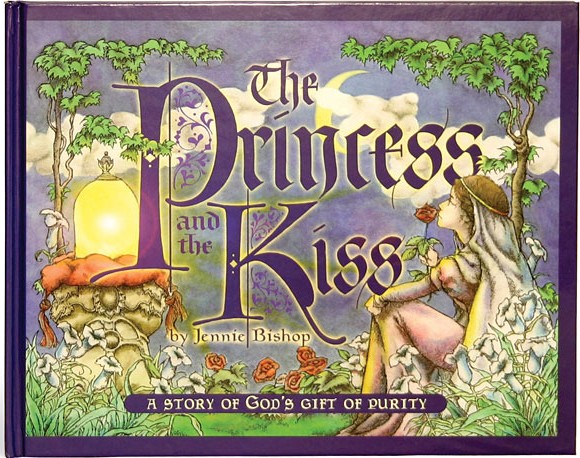
Crosspost: Sally’s First Kiss and The Princess and the Kiss

The-Princess-and-the-Kiss1-e1373847077493

HA note: The following is reprinted with permission from Libby Anne’s blog Love Joy Feminism. It was originally published on Patheos on July 24, 2013.

When I was a teen, I did a lot of babysitting for other homeschool families. One day I babysat two families worth of children while their moms went out for lunch—I think there were about ten kids total that I was watching. I was in the kitchen cleaning up from lunch and the kids were in the living room putting on a play wedding as kids sometimes do. The nine year old was presiding over the wedding of the two five year olds, a girl from the one family and a boy from the other.

All of a sudden I heard the older child say “now you’re supposed to kiss each other” and I freaked out and ran into the living room to break it up.

I wasn’t about to let those two five year olds kiss, thus forever depriving each of the chance to save that first kiss for the altar.

In the conservative Christian homeschooling community in which I grew up, a person’s first kiss was incredibly important. Even today, the products of this culture debate this question with great energy, arguing about whether forbidding the first kiss until the altar is a form of legalism or the preservation of a precious gift.

Now, I was taught that part of the reason that the first kiss should be saved for the alter was that it was a gateway into other things. First comes kissing, and then, who knows? Making out, humping, sex—once you open the door, it’s hard to close it. It would seem, then, that five year olds kissing at a play wedding wouldn’t fit this category, given that we’re not talking about a kiss that comes as a result of sexual tension and mutual attraction.

And yet.

The literature I read didn’t make a distinction between preschoolers kissing and teens kissing.

Instead, it simply talked about the importance of saving “your first kiss” for your wedding day. And of course, we were regaled with stories of virtuous couples who had done just that—didn’t we want to be like them? And then there is The Princess and the Kiss, a book marketed to children as young as four.

The book is about a king and queen who help their daughter save her most precious gift, her first kiss, for the prince she will marry. The princess’s first kiss lives in a glass orb, something like the rose in the Disney version of Beauty and the Beast (you can see it on the cover). This book has become very popular in Christian homeschooling circles and beyond, and there are hundreds of thousands in print. This is the sort of thing I was raised on (though this particular book wasn’t around when I was little, lots of kids are growing up on it now).

All of this came rushing back to mind recently when [my daughter] Sally kissed a little boy at her preschool—or, as I would have seen it in the past, when Sally “gave away her first kiss.”

We had gotten together with the family for a play date, and Sally and her little friend did the whole pretend wedding ceremony thing that little kids spontaneously do (I presided over a few in my day myself). At the end Sally grabbed the little boy and planted a kiss on his face. Surprised and bemused, I couldn’t help but recall my reaction to the pretend wedding staged by the five year olds I was babysitting so many years ago. This time, of course, my perception and reaction was different.

Sally didn’t lose anything when she kissed her little friend. Instead, she simply gained a common life experience—something she will look back at and laugh about when she’s grown.

It’s the people who impute a cute childish action with so much meaning who are creating the problem, not my preschooler.

Excerpt: 10 Things I Plan to Tell My Daughter About Sex That Aren’t That Purity Movement Crap

Screen Shot 2013-08-07 at 3.20.14 PM

Note from Nicholas Ducote, HA Community Coordinator:

I have often wrestled with what I will tell my children (when my wife and I decide to have children) when they start becoming “sexually aware.” It’s easy for me, as a newly married twenty-five year old to critique the way I was raised.

I feel that this article by “Jef With One F,” recently published by the Houston Press, is one that I would pass on to my daughters when the time came.

It offers succinct, practical advice for sex and sexual relationships in the twenty-first century. The Houston Press gave me permission to provide an excerpt here on Homeschoolers Anonymous.

*****

10 Things I Plan to Tell My Daughter About Sex That Aren’t That Purity Movement Crap

By Jef With One F

Against my better judgment I’ve been doing a lot of reading on the purity movement. If you’ve never been exposed to it, then I’ll explain. The idea is basically that you, as a father, are supposed to serve as the sole male influence in your daughter’s life until she gets married. You “guard her heart (and vagina)” because only you can be trusted with it…

…Better writers than I, like Libby Anne, have tackled the subject in depth, and you should spend an afternoon reading her work. She went through it as a daughter of movement, though. I’m a dad, and I am perfectly aware that the sexual health of this child is going to be part of my job…

Here are the ten things I know I need to tell a modern girl about sex once she matures enough to roll her eyes throughout the conversation.

10. That sex is beautiful and fun as hell, but so is driving a car and a bunch of other things that come with responsibilities. You need to ask yourself if you can handle those. I knew I couldn’t be trusted with a car at 16, so I didn’t ask for one. Same with sex. I waited until I knew I was with someone that wouldn’t use me wrong and knew what they were doing. You shouldn’t be afraid of it, but you should respect its possible consequences, such a pregnancy, disease, and just the general mess that sometimes come from sleeping with someone you shouldn’t have.

9. That someone that feels the need to lie, trick, or force you into sex is never going to be the slightest bit interested in your enjoyment of it. You might as well be a gym sock as far as they’re concerned. Don’t be a trophy.

8. That you should never do anything that will make you hate yourself to gain another person’s approval. You are not defined by the approval of others, and anyone who says you are wants to control you. You are your own person with your own unique value to yourself.

7. Your body belongs to you. Anyone that doesn’t respect that is an enemy. Run if you can, fight if you can’t, and never let someone convince you asked for or deserved it if all else fails. If a person makes you feel that they can fire you or fail you in a class or something if you don’t return their affections then they are just a rapist that doesn’t like to go out. Leave and tell someone immediately, because if it wasn’t you it will be someone else…

Check out the full article here.

Enough Already with the Modesty and Purity Hype

HA note: The following is reprinted with permission from Julie Anne Smith’s blog Spiritual Sounding Board. It was originally published on June 27, 2013.

The other day my 18-yr old daughter posted this picture on my Facebook with the comment, “What I tell you every time”:

modesty

It cracked me up. But what was interesting to me was noticing the large amount of Facebook friends, also former homeschool kids, who were clicking the “like” button. It was as if they were saying, “Yea, what she said!” I loved some of the exchange in the comments.

Our good friend who acts like our adopted son, who opens our front door without knocking, and raids our fridge commented:

Was he a beautiful black man like myself?

His comment got a few likes. I laughed. My 23-yr old son replied:

Yet when guys do that it’s looked down upon…sinful…creeper status…et cetera. Oh the irony.

Ouch! I think he’s right. There does seem to be a distinction that it’s semi-okay for girls to look at guys, but not the other way around.

Several years ago in 2007, there was a modesty survey put out by homeschoolers, Brett and Alex Harris (Brett and Alex’s dad is Gregg Harris’ son, homeschooling pioneer and ther older brother is Pastor Josh Harris, of Covenant Life Church in MD).

Here’s an excerpt from the survey page:

The Modesty Survey is an exciting, anonymous discussion between Christian guys and girls who care about modesty. Hundreds of Christian girls contributed to the 148-question survey and over 1,600 Christian guys submitted 150,000+ answers, including 25,000 text responses, over a 20-day period in January 2007. For more information, click here.

It has been endorsed by Shaunti Feldhahn (best-selling author of For Women Only), Nancy Leigh DeMoss (author,Revive Our Hearts radio host), Albert Mohler (The Southern Baptist Theological Seminary), Shannon Ethridge (best-selling author ofEvery Woman’s Battle series), and C.J. Mahaney (Sovereign Grace Ministries).

TheRebelution.com is the home of Alex and Brett Harris and online headquarters for the Rebelution, defined as “a teenage rebellion against low expectations.”

This survey started out in homeschool circles and quickly spread throughout young teens and adults in Christendom all over the internet, denominations, states, and even the world. I believe the modesty survey was well-intentioned, but the results have not been all positive. Instead, we have discovered a host of other issues that lie beneath the church’s sometimes over-emphasis on modesty and purity.

In the aftermath of the modesty survey, some young men policed the clothing of their female friends and graded the way she dressed by a modesty scale in their head. The way she dressed became a distraction, interfering with relationships. Young ladies were told that they might cause a man to stumble by the way she dressed and this created a lot of pain for young ladies who were burdened with a responsibility they really had no business carrying. And then we had the issue of what to do with young ladies who had curvy figures and no matter what clothes were worn, the curves could not be hidden. Some young ladies resorted to changing eating habits which led to eating disorders to lose weight in order to minimize those curves. Didn’t God create those beautiful curves? Wow, this modesty thing was now crossing the lines into intentionally altering one’s appearance because of not passing a “modesty” scale.

I don’t want to get into all of the problems that came out of this survey because it is very easy to do a Google search and you could spend days reading blog articles and sometimes hundreds of comments on particular popular articles. I really was hoping that after 6 years and hundreds of articles that this subject would die down.

Wouldn’t you know it, the same authors of the infamous modesty survey at the Rebelution blog just last week published a new article: The Other Side of Modesty, this time dealing with guys and how they dress. Really? Do we need to go there? I suppose maybe the young ladies might appreciate a little pushback or balance from their sisters in Christ, but come on. Can we be done with this already?

At our former church, there was almost an obsession on modesty and the topic of sexual immorality came up quite a bit. This was a common verse we heard and probably most of us have it memorized just because we heard it so often:

“You have heard that it was said to those of old, ‘You shall not commit adultery.’ But I say to you that whoever looks at a woman to lust for her has already committed adultery with her in his heart.” Matthew 5:27-28

I think sometimes we confuse looking with lusting. And that is important to note.

I have a funny story from several years ago. Now, this is “my” version because my young adult kids have a slightly different version. But until they have their own blogs, you get to read my version.

My daughter, Hannah, was probably around 19 yrs old or so and driving with her learner’s permit, so I was in the passenger seat, and my other daughter who was around 12 years old was in the back seat. A police officer pulled us over because of a burned out brake light. Let me be straight up. The police officer was a fine-looking human specimen and while my kids were used to hearing from the pulpit about how evil and lustful our eyes are, after the police officer went back to his patrol car, I said aloud to my daughters that I wouldn’t mind being pulled over again by that officer. If I remember correctly, there was a pause and then some surprised laughter coming from the girls. Their mother, a married woman said that? They were not expecting that comment from me and frankly, I don’t know if I was expecting that comment to slip out, either. Oh well, it came out loud and clear.

Did I cross the line? Some might think so. I don’t agree. You see, there seems to be a fuzzy line that brings confusion and can start to border on legalism, if not into full-fledge legalism. We were created in God’s image. God saw that what He created was good. At that moment, when I noticed that cop, and acknowledged what God had created was good and called it as such, some people have a problem with that because they think of verses like this:

“But I say to you that everyone who looks at a woman with lustful intent has already committed adultery with her in his heart.” Matthew 5:28

Was I looking at this guy with lust? No! He was just nice looking guy. Don’t you think everyone from teens all the way through adulthood know when we are looking at someone with lust? Everybody knows what that feels like — you know – – those feelings we get in our body, the places our mind goes. It’s a no-brainer. My brain did none of those things when I looked at that fine specimen.

I have read of men being physically attracted to women dressed in full Muslim attire with burqa and head coverings. Isn’t that something? We need to realize that women and men, no matter how they dress, will be eye candy for someone. We’ve got two issues going on and I think if we look at these two issues in a non-legalistic way, we can find some helpful guidelines.

• Looking is not the same as lusting. It’s okay to appreciate God’s creation. The key is to do it without lusting. We all know when we have crossed that line. It does not take a rocket scientist to tell us those signs that are happening in our body. If you happened to cross that line, acknowledge it, ask God to forgive you, and move on knowing that His grace is sufficient for you and me.

• Dress modestly. I think most of us can figure out what that means and I also think that as we mature in Christ, the boundary lines may change from time to time. We all know when we are dressing with the intent to attract the opposite sex and we all know what it’s like to dress when we are going to see grandma and grandpa. This is pretty simple. We can figure this out.

As a homeschooling mom of 20+ years, I fell into the modesty/purity hype and created all sorts of rules for my kids. I regret that it had negative consequences in my family. I’ve stopped obsessing about hemlines, etc. When I stopped obsessing about my boys walking past Victoria’s Secret at the mall and turning the television channel when we saw a young lady wearing a bikini on television, amazingly, my children stopped obsessing.

So, in conclusion, I hope we can learn to treat one another with love and grace on this topic… and appreciate God’s creation

What Do Presents, Chocolate Bars, Roses, Chewing Gum, and Packing Tape Have in Common?

HA note: The following is reprinted with permission from Libby Anne’s blog Love Joy Feminism. It was originally published on Patheos on June 6, 2013.

*****

Question: What do presents, chocolate bars, roses, chewing gum, and packing tape have in common?

Answer: Nobody wants them when they’re used.

Presents, chocolate bars, roses, chewing gum, and packing tape have all been used by abstinence educators and various Christian leaders and teachers to illustrate to young people how having sex before marriage will ruin them and leave them disgusting and unwanted. Those who grew up in the purity culture probably knew the answer to the question asked in the title before even opening this post.

I was reminded of this when reader Laura left this comment on my blog:

I had to go through the True Love Waits program. The “activity” I remember the most was a wrapped present. I held the package and stood at the front of the room. Then, the youth leaders lined up the guys and each of them tore off some of the paper. Then I had to read some paragraph about how virginity is like a gift – no one wants a present that was “meant for them” to have already been opened by someone else.

Because of that one activity, I never told anyone I was raped at 15 until years later. I can’t even imagine the rest of the damage that was done to the other girls in the group.

Laura’s comment reminded me of Samantha’s post from several months back. In her case, the teachings she received about purity led her to stay in an abusive relationship long after she should have left—because she believed that, having given up her virginity, she was ruined for anyone else. Here is why Laura’s comment reminded me of Samantha’s post:

When I was fourteen, I went to a month-long summer camp at the college I would later attend. Like most Christian summer camps, this one involved going to a chapel service twice a day. Most of the time they were fun, lighthearted– until one evening they split up the girls and the boys. Great, I remember thinking, because I knew exactly what was coming. Segregation can only mean one thing– they were going to talk about sex. I sighed when they made the announcement. Again? I thought wearily.

That evening, when the camp counselors had shooed all the men and boys out of the building, the speaker got up to the podium. She didn’t even beat around the bush, but launched right into her object lesson. Holding up a king-size Snickers bar, she asked if anyone in the audience wanted it. It’s a room full of girls– who doesn’t want chocolate? A hundred hands shot up. She picked a girl close to the front that wouldn’t have to climb over too many people and brought her up to the stage. Very slowly, she unwrapped the Snickers bar, splitting the package like a banana peel. She handed it to the young woman, and asked her, very clearly, to lick the chocolate bar all over. Just lick it.

Giggling, the young lady started licking the chocolate bar, making a little bit of a show of it. At fourteen, I had no idea what a blow job was, so I missed the connection that had a lot of girls in the room snorting and hooting. The young lady finished and handed it back to the speaker. As she was sitting down, the speaker very carefully wrapped the package around the candy bar, making it look like the unopened package as possible.

Then she asked if anyone else in the room wanted a go.

No one raised her hand.

And Samantha gives a second example, too:

My sophomore year in college, another speaker shared a similar object lesson– ironically, in the exact same room, also filled exclusively with women. She got up to the podium carrying a single rose bud. At this point I was more familiar with sexual imagery, and I knew that the rose had frequently been treated as a symbol for the vagina in literature and poetry– so, again, I knew what was coming.

This speaker asked us to pass the rose around the room, and encouraged us to enjoy touching it. “Caress the petals,” she told us. “Feel the velvet.” By the time the rose came to me, it was destroyed. Most of the petals were gone, the ones that were still feebly clinging to the stem were bruised and torn. The leaves were missing, and someone had ripped away the thorns, leaving gash marks down the side.

This reminds me too of something teen kidnap victim Elizabeth Smart said, explaining one reason she stayed with her captor and didn’t try to run sooner.

Rescued kidnapping victim Elizabeth Smart said Wednesday she understands why some human trafficking victims don’t run.

Smart said she “felt so dirty and so filthy” after she was raped by her captor, and she understands why someone wouldn’t run “because of that alone.”

Smart spoke at a Johns Hopkins human trafficking forum, saying she was raised in a religious household and recalled a school teacher who spoke once about abstinence and compared sex to chewing gum.

“I thought, ‘Oh, my gosh, I’m that chewed up piece of gum, nobody re-chews a piece of gum, you throw it away.’ And that’s how easy it is to feel like you know longer have worth, you know longer have value,” Smart said. “Why would it even be worth screaming out? Why would it even make a difference if you are rescued? Your life still has no value.”

And finally, Ariel Levy has reminisced similarly:

To illustrate his not terribly complex point, Worley called a stocky young man from the audience onto the stage and then pulled out a length of clear packing tape.

“This is Miss Tape. She looks pretty good, right? She’s tall, right? She’s … what else is she?” Worley raised his eyebrows at us encouragingly.

“Thin!” someone shouted out.

“Right! She’s thin,” he said, and wiggled the piece of tape so it undulated in the air. “And she has nice curves!” Worley winked. “So they have sex.”

To illustrate the act of coitus, Worley wrapped the piece of tape around the volunteer’s arm. After a few more minutes of make believe, we came to the inevitable bump in the road when Worley said the volunteer had decided to move on to other chicks. Worley ripped the piece of tape off his arm.

“Ouch,” said the volunteer.

“How does she look now?” Worley asked, holding  the crumpled Miss Tape up for inspection.

I fought back the urge to yell, “like a dirty whore?”

Presents, chocolate bars, roses, chewing gum, packing tape—these sorts of metaphors abound in circles where what I call “purity culture” is strongest, and each one is used to illustrate how having sex before marriage will ruin you, rendering you dirty and potentially even unable to bond or form real relationships for the rest of your life. In the effort to keep young people from having sex before saying marriage vows, Christian leaders, pastors, and parents resort to threatening their youth, doing their utmost to scare them out of having sex and slut-shaming like crazy in the process.

In case you were wondering, no, this isn’t healthy, and the result of these teachings has been a generation of Christian youth with warped and toxic ideas about sex, dating, and even their own bodies. And in the process, these very teachings have led young women like Laura, Samantha, and Elizabeth to leave their rapes unreported, remain in abusive relationships, and stay with their abductors. This is not okay. 

How about you? What similar metaphors have you encountered, and how have they affected your life?

Making My Own Way: Matthew’s Story, Part Two

HA note: The author’s name has been changed to ensure anonymity. “Matthew” is a pseudonym.

*****

In this series: Part One | Part Two

*****

High School Years

My first year in high school was wonderful for me. Finally, I was out of the house! I made friends and felt like I could finally breathe. I won’t go into great detail about my high school experience, since that isn’t the point of this story. However, I will point out a few things that I noticed over those four years:

• I discovered that I had a real problem with social anxiety. I’m not sure if this is hereditary or caused by my childhood. After reading some of the stories on this site, I’m thinking that it was a little of both.

• I was plagued by feelings of inadequacy. I thought I was not good enough, smart enough, athletic enough, witty enough… none of it. I did come to the realization that there are things that I’m good at, but it took years. In high school, I wound up trying everything since I had no idea where I fit in – I’d never had other kids around for me to gauge my own ability.

• I was plagued by guilt. Even if I hadn’t done anything wrong, I was often overcome by guilt over my (imagined and real) transgressions. This tied a lot into the messages we were receiving at church, which at this point were downright toxic.

• I had little-to-no self-confidence. As a homeschooler, you become so used to your parents’ authority, that you don’t really know how to make your own decisions, or when you do, you constantly second guess yourself.

So while getting out of the house was a welcome relief, I still felt like I was trying to overcome my upbringing.

At Home – Part 2

While I was off enjoying my high school experience, the “shit was hitting the fan” at home… oh, and how! My oldest younger sister had started hanging out with this girl she met at the homeschooling coop, and they decided they weren’t going to let being at home slow them down. I noticed one night that my sister and this girl, who was sleeping over, were acting really strange and goofy. Turns out, they were drunk! But how did they get the alcohol? After all, my parents didn’t drink. I later learned that my 12-year-old, shy-as-can-be sister stole it from a convenience store!

For my little sister, this would kick off what would become a six year blur of cigarettes, alcohol, promiscuous sex, drugs, and whatever else. To this day, I am convinced that the combination of home schooling and extreme Christian Fundamentalism destroyed her confidence. I remember her telling me, at 11, that she had given up and could never live up to the standard — I really think that she cracked under the pressure of that atmosphere.

She got pregnant at 17, got married, moved out, and hasn’t had issues with drugs or alcohol since. She and her husband now have 5 kids, all of whom are in public school, and her oldest daughter (13) is an exemplary student. All of her kids appear to be doing well.

Because of my sister’s meltdowns, I ended up getting away with a lot that I probably wouldn’t have otherwise. So in a roundabout way, I owe her a “thanks” for taking the pressure off me and humbling our parents. I did take advantage of her recklessness and flew under the radar as I started drinking at 15.

College

The drinking continued on into college. I could never shake the idea that I wasn’t good enough and that I was in a perpetual state of sin, so the alcohol helped me to ease the anxiety and mentally “check out” for long periods of time.

Then I’d get sober, feel horrible, and go cry to my Christian friends about how I was going to hell. My secular friends would shake their heads and wonder why I was so conflicted. This pattern continued until I got sober at about 26 years old.

Other things happened in college as well. My drinking habits combined with my lack of any sort of sex education made me a sitting duck when it came to STDs and unexpected pregnancy.

But despite all that, I managed to graduate.

Adulthood

Today, I don’t harbor any resentment over my upbringing, as I realize it could have been a whole lot worse! There were actually several good things that came out of it:

• Since much of my learning was from reading books and not in the classrooms, I’m very good at figuring things out on my own. This has been a very beneficial skill to have as an IT specialist.

• I don’t mind being alone. This is something I’m starting to see as a blessing. During my four year marriage (yes… I’m divorced) I was miserable most of the time. I always had to come home to a spouse who was either angry with me or trying to drag me to some function that I didn’t really feel like attending. Once I realized that marriage is not for me, I’ve been able to enjoy being a single dad, making my own way. Since as a kid, I often went out and about to do things on my own, it isn’t really much of an adjustment to do things and go places on my own today. I don’t need a large social circle.

• I’ve seen the damage that religious extremism causes and I can spot the warning signs a mile away. While I still attend church, it’s a seeker-sensitive, theology-lite congregation that just loves everyone. I take my kids on the weekends when I have them, but I don’t preach at them. Their faith is between them and God. I expect them to make mistakes and refuse to hold them to a higher standard than the one I hold for myself. I have no idea if God is real or if the Bible is completely true. If he is and his word is true, then I’m sure he’ll get my attention one way or another. But after years of unanswered prayers, a failed marriage, kids from multiple relationships, and alcoholism, I find it hard to believe that he is actively involved in our lives.

• I witnessed first-hand the despair and hopelessness of many disillusioned homeschooling parents. These are people who, by and large, poured their hearts and souls into raising Godly men and women. Seeing this convinced me that it’s best to adopt a “live and let live” parenting model and to love your children unconditionally! Even if my son winds up marching in the local gay pride parade with his boyfriend and my daughter ends up working overtime at the Diamond Club, I will still love them and welcome them in my home with open arms. Life is too short for fallouts over lifestyle choices.

Summary

Homeschooling was really just one piece of the whole dysfunctional puzzle. I’m sure that if other factors had been different, but I was still homeschooled, I might feel differently about it than I do now. That said, it is very encouraging to read accounts from other homeschoolers to confirm that many of my experiences are shared by others.

End of series.

Homeschooled Girls and Trash Cans: Latebloomer’s Story, Part Seven

Homeschooled Girls and Trash Cans: Latebloomer’s Story, Part Seven

HA note: The author’s name has been changed to ensure anonymity. “Latebloomer” is a pseudonym. Latebloomer’s story was originally published on her blog Past Tense, Present Progressive. It is reprinted with her permission.

*****

In this series: Part One | Part Two | Part Three | Part Four | Part Five | Part Six | Part Seven

*****

Part Seven: The World — (Not So) Evil and Dangerous!

"In some ways, I felt like my gay boss was a better example of love than many of the Christian people that I knew."
“In some ways, I felt like my gay boss was a better example of love than many of the Christian people that I knew.”

From hanging around with people such as Scott Lively in my fundamentalist Christian homeschooling community, I understood the danger that America was facing from the gay agenda.  I believed that the gay lifestyle was depraved and corrupt and a sign of rebellion against God.  I believed that God expected me to use political activism to stand up for righteousness and his design for the family.  I believed that my “pro-family-values” activism was actually me being loving to the deceived people around me, people who were just taking the easy way out by accepting every type of lifestyle.

Then one day I accidentally met a gay person.

It was at my first real job, when I was 23 years old.  My favorite manager, Chris, called the store one day while he was off-duty.  He chatted with the on-duty manager Katie for a few minutes; when she hung up, she remarked to me, “He’s so funny!  Why did he call me from a gay bar? haha!”

I was extremely confused.  “Yeah, that’s weird,” I said, trying to process the information, “Why would he be at a gay bar?”  Her jaw dropped, and she stared at me for a minute.  Then she said slowly, “Um…..because he’s gay.  Didn’t you know that?”

It was a huge moment for me, but a million panicked thoughts flooded my mind at once.  How was it that I hadn’t noticed anything “different” about him?  He seemed so normal and sweet, not at all detrimental to society!  He had always been so thoughtful to me, even from the first day I walked in the store in my awkward unstylish clothes and shyly handed him my resume.  He was the first guy to tell me that I was pretty, that I looked like his favorite childhood actress Molly Ringwald (he couldn’t believe that I had never heard of her).  But he was gay??  What was I supposed to do now??

I started to feel a huge spiritual burden for him, the feeling that I had a responsibility to help him get out of that damaging lifestyle somehow.  But how should I approach that topic with him?  Should I try to talk to him about turning away from that lifestyle and starting to follow Christ?  Or should I just invite him to church and let God speak to him through the sermons and the pastor?  I couldn’t really see either scenario playing out very well, so I waited and thought and prayed.

The more I thought about it, the more I realized that I had no idea what was inherently wrong with gay sex and gay love!  Why was it not equally valid?  It started to seem a very arbitrary thing to forbid, and reality didn’t match what I had been taught about it in Christian culture.  In some ways, I felt like my gay boss was a better example of love than many of the Christian people that I knew.  After all, he had hired me willingly, even though he knew that I was a very conservative homeschooler and very likely to be strongly anti-gay.  I knew he would not have gotten the same treatment from many conservative Christian employers.  Cautiously, I started to think to myself, “Maybe homosexuality is ok after all.”

And that was just one of many cracks that formed as my Christian worldview hit reality.  For the first time in my life, I was hearing about other worldviews directly from their source, instead of a filtered, watered-down version presented merely to strengthen my own worldview.  And, for the first time in my life, I realized it was possible to hold different opinions from my own without being “blind”, “deceived,” or “in rebellion against God” — my worldview was not so obvious, and “unsaved” people were not so bad after all.

But what were the implications for the Bible?  I had always tried to approach it simply, ready to believe the literal interpretation even when it required personal sacrifice.  To me, it was a timeless book, orchestrated by God, without contradiction, the only reliable source of truth.  But as cracks formed in my carefully-constructed Biblical worldview, in the end I had to decide what I thought about the Bible.  I had always avoided my natural curiosity about how the Bible came to us in its current state–it certainly didn’t fall from the sky in its present form!  Acknowledging my questions about it was terrifying, but ultimately necessary.  If it were really from God, and if I really genuinely wanted to know the truth about it, I shouldn’t have anything to fear.  So, very gradually, I looked at my beliefs and asked the hard questions.

My worldview said, “The Bible is the source for morality!”  — But then why does it condone things like genocide, and call men “godly” when they offer their daughters to be gang raped, and advocate forced marriages between a girl and her raper?  Why doesn’t it condemn slavery and child sacrifice and polygamy with child brides?

My worldview said, “The Bible is written by eyewitnesses, and their accounts don’t contradict each other!”  — Then why was I afraid to look at the supposed contradictions?  They are there, after all, and just saying they don’t exist isn’t a valid argument.  The Bible has internal contradictions on theology and history, and there are significant variations between historic manuscripts.  Also, many of the books have unknown authors and were first written sometimes hundreds of years after the events took place. In its present form, the collection of books we call the Bible doesn’t have even more contradictions because those other books were thrown out as “uninspired” simply because they contradicted too much.

My worldview said, “The Bible is the source of truth about salvation through Jesus!” — Then why are there over 2,000 language groups in the world today that have no way to access that truth?  Why have billions upon billions of people lived and died without ever having a chance to hear it?

I was rooting for my Biblical worldview to win, I really was.  It was comfortable because it was all I knew, and I really don’t like change.  However, in the end, it didn’t hold up very well against reality.  In the end, there were too many cracks, and my worldview shattered.  And when it shattered, I finally saw what a tiny box I had been living in, and what a huge, beautiful, and interesting world was out there to discover.

Since much of my personal growth happened while I was in college, some have said that my changing opinions were the result of “liberal college brainwashing”.  To those people, I doubt that I could say anything to change their opinion about that.  However, the fact is that at no time during my education at community college or Christian university were my opinions mocked or belittled.  At no time did anyone tell me what to believe or not to believe.

Unfortunately, the same cannot be said of the fundamentalist Christian homeschooling environment.  That is where you are told what to believe.  That is where other opinions are belittled.  That is where even questions are dangerous.  I don’t want to be part of that culture anymore.  To me, a worldview is not worth keeping if it requires ignoring or twisting reality to fit the worldview, pushing down your questions and doubts, and only listening to those who already agree with you.

These thoughts took a very long time to process, and my ideas are still a work in progress today.   For now, I am finding that many of my new ideas fit within a looser interpretation of the Bible, one where I don’t completely abdicate my responsibility to think about what’s right in today’s world.  I see that morality was a work in progress in the Bible, and I accept that it still is today too, and that I have a role to play.

*****

End of series.

Homeschooled Girls and Trash Cans: Latebloomer’s Story, Part Three

Homeschooled Girls and Trash Cans: Latebloomer’s Story, Part Three

HA note: The author’s name has been changed to ensure anonymity. “Latebloomer” is a pseudonym. Latebloomer’s story was originally published on her blog Past Tense, Present Progressive. It is reprinted with her permission.

*****

In this series: Part One | Part Two | Part Three | Part Four | Part Five | Part Six | Part Seven

*****

Part Three: Sexuality, the Elephant in the Room

"At Reb Bradley's church, my family found a culture of people who were also trying to ignore the elephant in the room."
“At Reb Bradley’s church, my family found a culture of people who were also trying to ignore the elephant in the room.”

My mom walked into my bedroom and handed me a heavy biology textbook. “Read chapter 13,” she told me, breathless and blushing. Then she rushed out. I opened to the appropriate chapter: “The Reproductive System”. That was my entire sex education; I was 17 years old.

I think we can all agree: sex education should probably be done by people who have said the word “sex” out loud at least once in their lives.

My parents’ denial of sexuality couldn’t stop puberty, and couldn’t stop our curiosity about sex. Instead, their attitude clearly showed us kids that we could never go to our parents with any questions or concerns that were related to our sexuality or genitals. For me, I found some answers around age 11 when I looked up “sex” and “puberty” in the encyclopedia. Later, a hidden copy of “What Solomon Says About Love, Sex, and Intimacy” in my parents’ closet provided hours of heart-throbbing reading.

Not every homeschooling family is so repressed about sex, but at Reb Bradley’s church, my family found a culture of people who were also trying to ignore the elephant in the room. A favorite theme of Reb Bradley was sexual purity and “Biblical courtship”. He was fond of referring to 1 Timothy 5:2, which says, “Do not rebuke an older man but encourage him as you would a father, younger men as brothers, older women as mothers, younger women as sisters, in all purity.” According to his interpretation, all young men were to treat all young women as sisters, absent of sexuality.

Paradoxically, Reb Bradley also taught that these single “siblings in Christ” should not be allowed to mingle freely with each other because of temptation…..wait, what? How are you supposed to treat someone as a brother or sister if you’re not allowed to spend time with them? I guess Reb really didn’t believe that platonic friendships were possible between the genders after all.  I think even Jesus himself would have gotten disapproving looks like the mingling teens in the back row if he came to Hope Chapel.  After all, “Jesus loved Martha and her sister and Lazarus” (John 11:5)–if Jesus was close friends with single women even in ancient Jewish culture, then why was it forbidden at Hope Chapel?

So how could an honorable young man find himself a wife in this gender-segregated culture? Ideally, he had to notice a girl from across the room–for her godliness, mind you, not her body–and approach her dad to ask permission to court her. Without knowing much about her, he would have to prove to the dad that he was serious about a relationship with the daughter.

If the dad thought the young man was suitable, he would inform the young man of the physical boundaries of the relationship, such as when/if they could start to hold hands. The dad could also control the frequency of contact, monitor emails and phone calls, and require all interaction happen in the presence of other family members. It was encouraged but not Biblically necessary for the father to ask his daughter for her opinion of the young man, regardless of the age of the daughter.

I saw this courtship process attempted once in Reb Bradley’s own family. However, even with his courtship “expertise,” Reb’s involvement was not able to prevent a lot heartbreak, drama, and broken friendships when the courtship ended.  And even Reb’s involvement and teaching couldn’t prevent at least three of his six children from having premarital sex, including one unwed pregnancy. I am not saying this because I think his kids are bad people–they certainly are not. I’m only saying these things because Reb Bradley is still trying to sell himself as an expert on family relationships and courtship. His materials give other parents false expectations of the outcome; people who take his advice should not expect better results than the man himself has been able to achieve.

When I started college at age 22, I determined to give male friendship and dating a try.  It was very difficult at first.  Because I was paranoid about flirting or being attractive, I had trouble relaxing and just being myself.  However, I was encouraged to persevere because I could see the benefits right away.  Long conversations with guys helped me see the world differently and let me experience a different style of communication.  Once I could interact freely with guys, I stopped developing crushes on every boy I saw.  I started to gain confidence about myself, and I started to see what type of guys I got along with the best.

Compatibility, not just character and beliefs, is important to consider when selecting a spouse. This is something that the couple can only determine for themselves by spending lots of time together, not only in groups but also alone.  No wonder Reb Bradley tries to downplay compatibility; he wants to keep the father in charge and he wants the father to control the sexual aspect of the relationship as well. That’s why he teaches singles that they can make a marriage work with anyone, and it’s better for their sanctification to marry someone really different from themselves.

In case anyone cares, even though I dated a few different people in college, I was still a virgin when I married.  However, I was surprised to learn that my virginity wasn’t the “gift to my husband” that I was led to believe.  My amazing husband, himself a virgin at marriage, honestly didn’t care about whether or not I’d had sex before.  Additionally, we both found that physical closeness helped us maintain emotional closeness and openness with each other throughout our dating relationship.  The process of getting to know each other mentally and emotionally is gradual, so why should getting to know each other physically be so abrupt?  We were both very happy that we allowed some sexual progress in our dating relationship, and we both feel it has helped us to have a healthier sex life in our marriage.

For me, what I’ve learned is that there is no use in denying that we are sexual beings, and no benefit to fearing it or trying to hide it.  Accept yourself, take responsibility for yourself, and make your own choices.  You’ll find that sexuality is not such a scary and powerful monster when you stop treating it like one.

*****

To be continued.