
Results of HA Basic Survey, Part Five: Fundamentalism as a Factor in Educational Quality, Abuse, and Other Areas
Whether or not respondents were homeschooled in a fundamentalist Christian environment made the most dramatic differences in both educational quality and abuse. The results are fascinating. There are also interesting differences between fundamentalist environments and non-fundamentalist environments concerning HSLDA membership, parental education, and the current level of respondent education.
Before continuing, it is important to note once again that this survey is self-selected and should not be construed as representative of anything other than the 242 respondents that took this survey.
Fundamentalism and HSLDA Membership
While the Home School Legal Defense Association claims to defend any and all homeschoolers, it has a reputation as a conservative fundamentalist organization. There is a plethora of documentation concerning HSLDA’s projects that fall outside mere advocacy for the legality of homeschooling. Those projects are traditional, conservative fundamentalist projects, such as opposition to same-sex marriage and UN treaties as well as support for candidates like Mike Huckabee and Rick Santorum.
Considering that context, it is interesting to note that — for respondents — membership in HSLDA did not rise or fall according to whether a family was fundamentalist or non-fundamentalist.
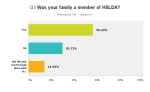
For respondents who grew up in fundamentalist Christian families, the following was true:
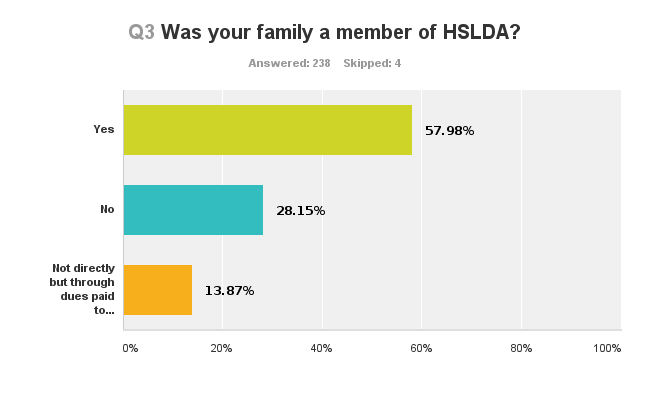
- 56.22% said their families were directly members of HSLDA.
- 14.05% said their families were indirectly members of HSLDA through dues paid to a homeschool organization.
- 29.75% said their families were not members of HSLDA.
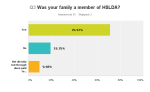
For respondents who grew up in non-fundamentalist Christian families, the following was true:
- 70.97% said their families were directly members of HSLDA.
- 9.68% said their families were indirectly members of HSLDA through dues paid to a homeschool organization.
- 19.35% said their families were not members of HSLDA.
In our pool of respondents, therefore, there was not that much of a difference in HSLDA membership (approximately only 5%) between fundamentalist and non-fundamentalist families. Furthermore, the percentage of HSLDA members among non-fundamentalist families was slightly higher.
Fundamentalism and Parental Education
The level of education achieved by the primary teachers of respondents was slightly higher among non-fundamentalist Christian families compared to fundamentalist ones.

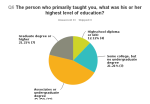
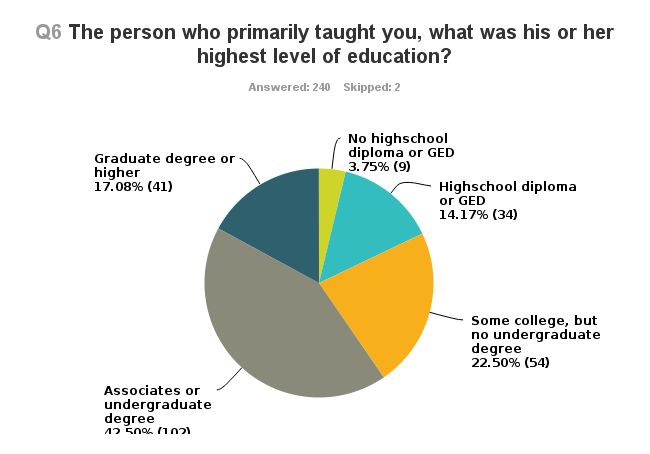
For respondents who grew up in fundamentalist Christian families, the following was true concerning the highest level of education of their primary teacher:
- 4.32% had no high school diploma or GED.
- 15.14% had a high school diploma or GED.
- 23.78% had some college but no degree.
- 41.62% had an associates or undergraduate degree.
- 15.14% had a graduate degree or higher.
For respondents who grew up in non-fundamentalist Christian families, the following was true concerning the highest level of education of their primary teacher:
- 12.12% had a high school diploma or GED.
- 21.21% had some college but no degree.
- 45.45% had an associates or undergraduate degree.
- 21.21% had a graduate degree or higher.
Whether respondents grew up in fundamentalist or non-fundamentalist families, that did not seem to significantly increase the highest level of parental education of the primary teachers.
There are a few differences — for example, all respondents that grew up in non-fundamentalist families had a teacher that at least had a high school diploma or GED (compared to 4.32% without them in fundamentalist families). Also, the level of education did increase slightly: there were more teachers with college or graduate degrees in non-fundamentalist families, but only by a few percentage points.
Fundamentalism and Respondent Education
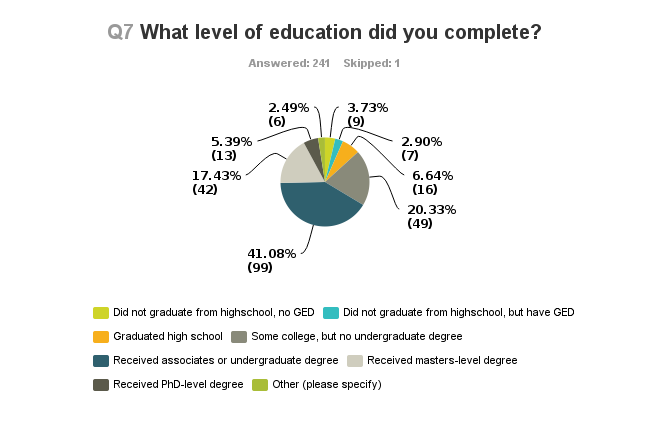
Whereas the level of parental education did not change much between non-fundamentalist and fundamentalist Christian families, the highest level of education that respondents personally achieved did change in noticeable ways.
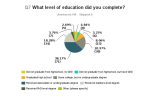

For respondents who grew up in fundamentalist Christian families, the following was true concerning the highest level of education they personally achieved:
- 4.84% have no high school diploma or GED.
- 3.23% have a GED but no high school diploma.
- 8.06% have a high school diploma.
- 23.66% have some college but no degree (this includes the 2.69%, or “Other,” which fit the “some college” category).
- 38.17% have an associates or undergraduate degree.
- 18.28% have a masters-level degree.
- 3.76% have a PhD-level degree.
For respondents who grew up in non-fundamentalist Christian families, the following was true concerning the highest level of education they personally achieved:
- 18.18% have some college but no degree (this includes the 3.03%, or “Other,” which fit the “some college” category).
- 54.55% have an associates or undergraduate degree.
- 12.12% have a masters-level degree.
- 15.15% have a PhD-level degree.
This means that 100% of respondents from non-fundamentalist families have some level of college education, compared to 83.87% of respondents from fundamentalist ones.
Indeed, among respondents from non-fundamentalist families, the first three categories — (1) no high school diploma or GED, (2) GED but no high school diploma, and (3) high school diploma — disappeared. All numbers began with at least “some college.”
This also means that 81.82% of respondents from non-fundamentalist families have a college degree or higher, compared to only 60.21% of respondents from fundamentalist ones.
Fundamentalism and Educational Quality
How respondents rated the quality of their educational experiences dramatically changed when results were filtered by fundamentalist versus non-fundamentalist environments. Indeed, the changes are striking.
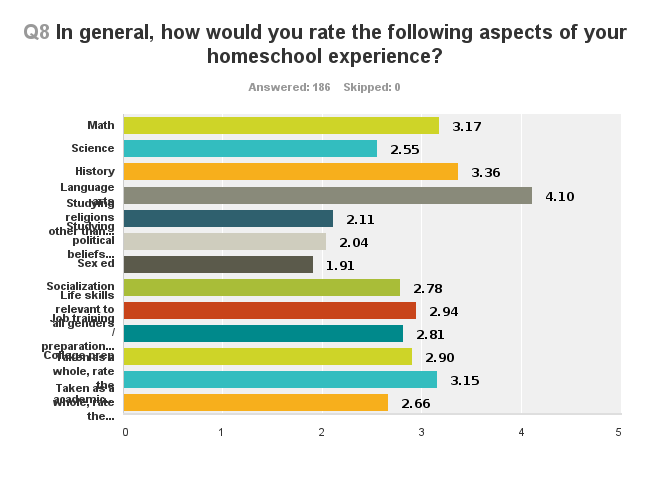
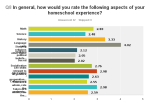
Respondents from fundamentalist Christian families gave their homeschool experiences — in totality — an average score of 2.81, less than the median score of “So-so”:
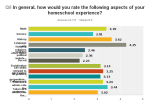
Respondents from non-fundamentalist Christian families their homeschool experiences — in totality — an average score of 4.2, higher than the base score for “Adequate.” The visual difference here is striking:

This is an increase of almost one and half points between fundamentalist and non-fundamentalist respondent groups. This is one of the most significant increases seen in this survey yet.
Fundamentalism and Abuse
While the difference in educational quality between respondents from fundamentalist families and non-fundamentalist families was striking, the difference in experiences of abuse is even more so. Indeed, the difference in experiences of abuse is the most glaring of all of the results from this survey.
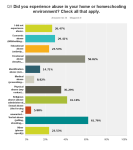
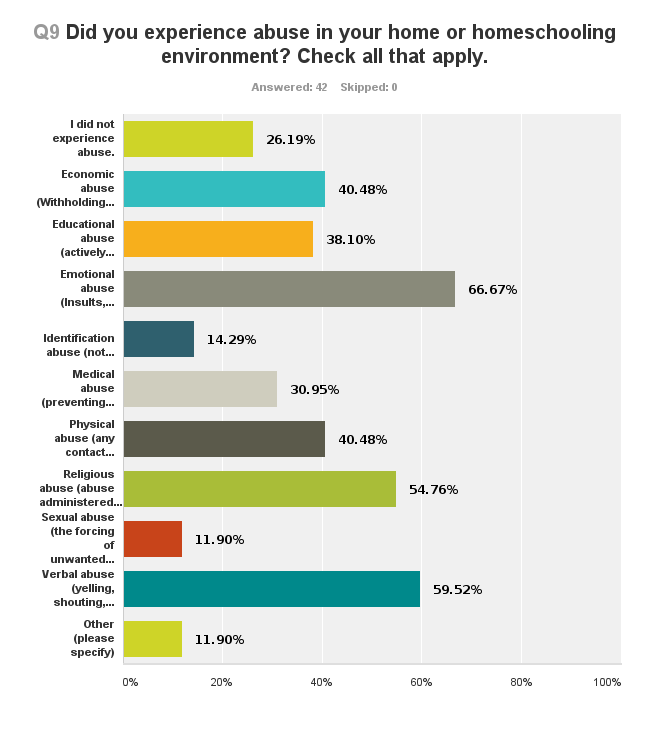
The majority of respondents from fundamentalist Christian families (71.2%) experienced one or more forms of abuse.
The most common forms were emotional abuse (61.41% experienced this), verbal abuse (52.72%), religious abuse (46.74%), and physical abuse (33.70%). This means that the majority of respondents from fundamentalist Christian families experienced emotional and verbal abuse.

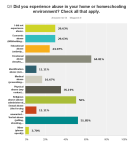
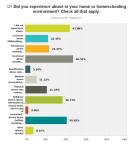
The overwhelming majority of respondents from non-fundamentalist Christian families (93.55%) did not experience abuse.
Whereas 61.41% of respondents from fundamentalist Christian families experienced emotional abuse, only 6.45% of respondents from non-fundamentalist families did. Whereas 46.74% of respondents from fundamentalist Christian families experienced religious abuse, only 3.23% of respondents from non-fundamentalist families did. Whereas 33.7% of respondents from fundamentalist Christian families experienced physical abuse, only 3.23% of respondents from non-fundamentalist families did.

As this is — once again — a self-selected survey, these results do not accurately represent the frequency of educational quality and abuse in fundamentalist or non-fundamentalist Christian homeschool families. The results do suggest, however, that fundamentalism is a highly significant factor in the quality of education and the experiences of abuse for the adult graduates of the Christian homeschool movement that took this survey.
In fact, fundamentalism is the most significant factor thus far.
*****
< Part Four: Parental Education as a Factor | Part Six: HSLDA Membership as a Factor >











 Homeschoolers Anonymous