You’re just “spiritually sensitive,” they told me at six years old, my young mind racing with anxiety. As my parents entered further into the labyrinthian maze of fundamentalism, they took my mind with them. My parents were convinced that Gothardism held the solution to my issues. If religious options and doctrines were a grocery store, my parents plopped down on the Gothard Aisle and expected me to also enjoy their strict diet of Gothardism. Instead, the doctrines on spiritual warfare, the Umbrella of Authority, and Strongholds increased my anxieties – sending me into a state of hyper-vigilance at night as I waited for the demons.
For years, I confused invasive thoughts, which everyone has, with a Satanic assault on my mind.
I began conceptualizing my mental illness as spiritual warfare very early on, probably by the time I was 7 or 8. Recently converted, it was the only paradigm my parents accepted so they explained things to me through that lens. When I had nightmares night after night, my parents told me it was the rock music I could hear through the walls that my sister listened to – certainly not our rapidly changing family dynamic as my parents tried to apply fundamentalism to my older sisters when they had already begun high school.
I remember one night, perhaps after attending the Basic Seminar a second time, my parents decided we should burn all the things in our house that possessed “demons” or a “demonic influence.” This included books and movies and music – especially my dad’s vast collection of rock and roll from his youth. We had to purge our home. As time went on, I was sucked further into this idea of spiritual warfare causing mental, and even spiritual, issues. My education in creationism only further complicated science and confused me about how my body worked. It was not until college at a public university that I began to understand how the brain worked. I slowly realized that many “mysterious” feelings and thoughts, which supposedly originated from God or Satan, were really my own brain simply working.
There were a number of Gothard’s doctrines that caused a great deal of fear.
One of the most problematic doctrines is the Umbrella of Authority.
In this model of communication with God, divine inspiration and guidance flows from God, to the male parent, then to the female parent. It’s clear in this model that wives are subordinate to their husbands and ATI leaders preach that a woman’s first duty is to submit to the male leadership in her life. For wives, that means their husband. For daughters it means their fathers. In this model, the father is the only person in the family unit that has a sort of “direct connection with God.” By this, I mean that if a child believed God was calling them in a certain direction, the child could only pursue that option if their father “confirmed” it with God. This model profoundly impacts a child’s conception of themselves.
If you disagree with your parents, you are disobeying God.
If you are outside of your parents’ Umbrella of Authority, then you are literally opening your mind to Satan and demons.
This brings me to what, in my life, was the most abusive and damaging belief. Gothard rejected the idea of mental illness and replaced it with a concept of “Strongholds” in your mind. Gothard preached that when humans disobeyed God, or their earthly authorities, they allowed Satan to “build a stronghold in your mind.” From this Stronghold, Satan could tempt you and further lead you down the path to darkness and evil. One of the most common weaknesses for teenagers was rock music and dating, which Gothard believed was one of the fundamental reasons why teenagers rebelled and became perverse. In another giant leap of logic, Gothard argued that physical ailments could be caused by Strongholds. Literally almost every cause in your universe stemmed from your spirituality, which included everything from Christian Contemporary music, to apparently demonic Cabbage Patch dolls, and of course Disney.
So over my teenage years, I gradually developed intense anxiety, insomnia, and panic attacks. I would lay awake in my bed, staring at my door waiting for demons to come and get me. This very real fear was stoked by Jim Logan, who would tell his Real Life Ghost Stories. Logan would preach about his many exorcisms, how African masks would literally scream and cry out if lit on fire, and how children’s misdeeds attracted demons into a Christian home. Especially rock music! I prayed incessantly, sometimes screaming with eyes filled with tears, for God to take away my fear and anxiety – but nothing ever happened.
It was because the cause of my mental anguish was not demons and spiritual warfare.
In fact, the further I get away from my internalized fear of demons and possession (taught to me exclusively through ATI), the better I sleep, the less afraid I am of what’s behind the shower curtain, the more confident I am to walk through a room with the light off, and it is because my brain no longer feels like its survival is threatened by the invisible forces of evil.
In my teenage years, some of the only relief I could manage to muster came from listening to a local modern rock radio station. First, it connected me with the outside world and gave me hope that one day I could be in that world and not the one I was trapped in. Second, it allowed me to enter all the conversations my peers had about their favorite music. Third, it gave me something to focus on that took my mind off spiritual warfare, demons, etc. Unfortunately, I was also taught to believe that rock music would open my mind to Satan. I struggled with the cognitive dissonance for a year or two until I decided that the peace I received from rock music was far more important than risking demonic possession (which I was starting to believe less and less). I figured, with all my rebelling as a teenager, if I hadn’t been attacked by demons yet I was probably alright.
It’s not uncommon for precocious, smart children to develop anxiety – as I now know my “sensitivity” is really just anxiety – but my parents only worsened it by focusing on solely spiritual causes and solutions. When we prayed, when I prayed, when we “cried out” – whatever Gothardist ritual we preformed – it never made me feel any less anxious. As a result, I felt like I must not be a real Christian or must have some sin in my life stopping God from helping me. I don’t know how many times I prayed the sinner’s prayer, afraid that whatever I had done before wasn’t “sticking.” I started finding a way out of the anxiety, and sometimes intense panic attacks, by learning about my brain. Not from fundamentalists, but from scientists who studied the brain – neuroscientists.
In the back of my mind, after I left the house, was always a voice warning me that my actions would attract Satan – that he would ruin my life because I chose to live outside my father’s Umbrella, to reject the concept of Strongholds, and I listened to rock music. For quite awhile, I struggled to find out who I was, beyond my fearful subordination to a fundamentalist God.
I now know that I have a form of complex PTSD, which is triggered by my parents and their fundamentalism, especially when they judge my “sinful lifestyle.”
For the longest time, I didn’t know why certain things they said or did would “launch” me into an irrational, emotional state. Sometimes it was something inanimate, like the American flag covering my old bedroom wall or the library of fundamentalist literature I was pressured to read and apply to my life. It doesn’t affect my life much anymore, but it did quite a bit into my early-20s. Part of the reason is because I rarely communicate with my parents anymore. Despite my best efforts, most of our interactions end with me being triggered by their lack of acceptance or the cultic doctrines they still try to evangelize me about. This isn’t a story that takes place wholly in my past.
The third and final part of my story discusses how (as a 25 year old) I am still impacted by my parents’ fundamentalism.
During the 1990s, ATIA/ATI had annual conferences in Knoxville at the University of Tennessee. Mega-families crowded the hotels and university facilities to hear Bill Gothard and other staff and lecturers tell us God’s will for the upcoming year. During the daytime, adolescents and unmarried young adult men and women were separated from their parents for apprenticeship sessions.
My family and I attended Knoxville in the years 1993-1995, although we were in ATIA/ATI longer. During one of those years, I remember a particular afternoon apprenticeship session. Although it isn’t unusual for young adults to be taught in schools separate from their parents, Gothard was a tremendous proponent of family togetherness, except during his apprenticeship programs.
I noticed during the week that, when I would tell my parents about the often unusual content of the apprenticeship sessions, they had a ready answer such as “I don’t think you understood what the speaker really meant,” or “that speaker came to the parents’ session and explained the topic differently,” or even, “I don’t believe anyone would say that.”
One particularly muggy afternoon, the young ladies and young men loaded up into different vehicles for transportation to separate facilities on the university campus for our sessions. I remember the room was very cold and had bluish drapes around the stage. The seats were angled upwards, and there was a mezzanine, so we must have been in a theatre. We were a sea of navy and white, modestly dressed young ladies, with long hair and bright eyes. I can’t remember who spoke first, but Gothard was the main speaker of the afternoon.
As difficult as it is for an outsider to understand, Gothard was a real celebrity in our world.
Teenage girls became giggly and nervous around him. Conference attendees were in awe of him. For him to be the speaker to a young ladies’ apprenticeship session was impressive. Although we initially whispered among ourselves at the wonder of it all, Gothard was able to silence us when he began speaking.
I don’t remember how he began, but I know the topic was moral purity. Gothard frequently spoke to women about purity, so this was not a surprise. In his mind, men lusted after physical things and women lusted after emotional things. For this reason, he often encouraged us not to read romance novels, or any books including romantic ideas.
Books such as Anne of Green Gables were even considered too romantic and defrauding in Gothard’s eyes.
He taught us to save our hearts for the one man we would marry, and to be sure to let God and our fathers pick that man for us.
On the afternoon in question, Gothard began to discuss divorce. To me, this was odd, because, as a prerequisite for being an apprentice, none of us had been married. He continued to convince us of how damaging divorce was in God’s eyes. I tuned out, as I often did. I was young, why did I care about this? Besides, I knew divorced people, and they were not damaged. My aunt was engaged to a man who was divorced. I was the only one of my siblings who even knew that, because my parents were so anti-divorce, but my future uncle didn’t seem damaged to me.
As Gothard brought his talk to a close, he asked us to do something. He wanted us to make a promise for our fathers, our future husbands, and ourselves.
He asked all the young ladies in the room to commit to never marry a divorced man.
All of a sudden, I was paying attention again. This wasn’t one of the regular commitments! Did that mean there was no end to the number of commitments we could be asked to make? Did we have to make this one? As I waited in my seat, assuming that I could just be quiet and avoid unwanted attention, Gothard asked all of us to close our eyes and stand quietly to indicate our agreement with the commitment. He said that the commitment would be personal and no one would know, because everyone would have her eyes closed. We needed to stand to indicate our commitment to God. At first I thought I would just sit unobtrusively, but I soon realized that I could feel and hear my friends standing around me. Could they tell I was not standing?
Of course I peeked. I saw male ushers walking up and down each row, looking at who was sitting and who was standing. I also saw other girls, standing girls, peeking at me. I quickly stood and redeemed my good name, but as I did I said, “God, I don’t mean it. Don’t hold it against me. I am not promising this. I am just doing it so I don’t get punished.”
Late that afternoon as I rode back on the bus with my five friends from home, I brought up the afternoon session. I tried to talk about how some people can be really great and still be divorced, but none of the girls understood. I had to drop it, or I would be out of the group, the one morally compromised adolescent who had never even kissed anyone. Something didn’t seem right, though.
I knew that marrying a divorced person couldn’t be wrong.
Everyone was seeing the world in navy and white, but I saw shades of blue.
ITC was a tall drab brick building surrounded by a parking lot, not much to look at. But that didn’t matter. As I soon learned, the people staying there rarely ventured outside. I personally only went outside about once a month during my few months there. In order to leave, as a legal adult, I had to sign out, state my purpose for leaving, and verify that I was not leaving alone or with a male peer. For a walk in a parking lot or a view of a run-down part of town, the hassle wasn’t worth it.
Inside the building was where all the excitement and drama played out. For me, my time at ITC was a huge social challenge. I had almost no experience participating in conversations, eating meals with non-family members, or learning in a class setting. As a result, my stress level was nearly unmanageable from the challenge. Mealtimes were the worst; I would try to eat when no one at the table was looking at me, and I would have a panic attack if anyone directed a question at me when I was chewing. I was always the last one at the table, with a plate still full of food, wishing for privacy.
It didn’t help that, even though I was surrounded by hundreds of other fundamentalist homeschoolers like me, I was still the odd one out, because my family was not part of Bill Gothard’s homeschooling program, ATI. Many of the rules of ATI were new to me, and I’d had lots of trouble finding clothing that fit the extreme and very specific modesty standards, even though my own wardrobe was incredibly conservative. One of the biggest challenges had been finding a long navy skirt and a plain white button-up shirt, Bill Gothard’s required “uniform” for special sessions.
At ITC, lost in a sea of people with years of experience dressing to ATI standards, I felt even more hideous than normal.
However, I found that many of the other girls in attendance were incredibly sweet, considerate, and fun people, and I considered many of them friends by the end of our time there. We bonded over late-night candy binges (smuggled in! candy was against the rules!), hallway races with *gasp!* no nylons or shoes (we weren’t allowed to leave our rooms without nylons and close-toed shoes!), and gossip about the “flirtatious” girls who dared to have a conversation with a guy.
We couldn’t stay up too late though, because every morning we were woken at dawn by two songs from the speakers near our beds: first a classical instrumental piece, followed by a boisterous march. That signaled us to get up and get ready for a day of learning.
The music program was, in my opinion, fairly well done. I learned a lot about music theory and composition, including how to write 4-part harmony! But there were definitely some strange reoccurring themes that made an impression on me. We were taught, for instance, that heavy drum beats in music was demonic because it originated in African music, which was demon worship. Additionally, we heard that syncopated rhythms, which emphasize the offbeat, would affect our brains and cause us to have a strange shuffling gait. The “scientific” proof of this was drawings of plants gradually wilting and dying next to a radio–killed by prolonged exposure to rock music.
The emphasis on authority and submission in ITC culture meant that not a single student ever challenged the teachers or expressed doubt at such bizarre, racist, arbitrary, and unsubstantiated teachings.
This attitude affected me too, even though I was an ATI outsider, and I did not spend any time mentally refuting the ideas that were presented. Gradually, these ideas began to seem “wholesome” to me, associated with the wholesome image that ATI maintains (now, most famously through the Duggarfamily’s TV show and blog). The clothing standards, the early rising, the music standards, the sea of smiling white faces–it all began to feel normal and right, and I wondered what was wrong with me that I felt deeply unhappy and “unwholesome” most of the time, under my forced smile.
The authority culture had another dark side as well. ITC had what it called a “Leaders in Training” program, separate from its music program. An ITC young adult volunteer would be paired with a juvenile delinquent from the “outside world”. These two were never allowed to be apart, and the volunteer was supposed to model good character while making sure the juvenile delinquent followed the ITC rules. People pointed out to me the “prayer rooms”, with doors monitored by cameras, where “rebellious” juvenile delinquents would be held in solitary confinement until they were repentant. While I was at ITC, one of them tried to jump off the roof. It was unsettling, but at the time I couldn’t identify the reason. Now I realize that it must have been incredibly dehumanizing for them to be forced to accept Bill Gothard’s version of Christianity, which gave them a painfully rigid exterior of rules and no tools for dealing with their inner turmoil.
When my time at ITC came to an end, re-entering the outside world felt incredibly strange and foreign.
Almost all music felt oppressive and stressful, which is ironic for having just spent a few months studying music. People wearing typical clothing looked strange and dangerous, after a few months of seeing nothing but a strict “wholesome” dress code. And there was so little smiling! It took quite awhile to acclimate to my regular life again, and to begin to question the culture and the teachings from ITC.
Once I let myself question it, one of my first thoughts was, “Why do people think so highly of Bill Gothard??” He visited ITC a few times while I was there, and I found him to be a strange, short little man with a judgemental face, jet black dyed hair, and a creepy vibe. At no time did I ever wish to meet him or talk to him, which was very unusual for me, since I typically had to resist idolizing spiritual leaders.
Now I just have distant memories of this experience. It feels like another life and another person, not me. I wonder what happened to the others girls I studied with. I wonder what happened to the “leaders in training”. I wonder if ITC is the same now as when I was there 10 years ago.
Nightmare in Navy and White — Experiencing the Dark Side of ATI: Selena’s Story
HA notes: The author’s name has been changed to ensure anonymity. “Selena” is a pseudonym.
*****
Trigger warnings: graphic descriptions of sexual abuse and sibling abuse.
*****
Part One: A Childhood Destroyed
It was the early 1990’s. My family was fairly happy, and attended a church full of vibrant, hopeful people excited about Christ. Everything felt so alive. Even as a child, I never felt like church was drudgery, and every service was full of excitement with a very down-to-earth approach to Christianity that made everyone feel right at home. When I remember those days it is shocking to see how much has changed. How did we get this far? Where did it start?
It’s difficult to answer that fully. I was so young, I only remember the little things. I remember my mother and father having meetings with other members of the church. Quiet meetings – sad meetings. I remember my mother crying. As I was told years later, they were having trouble in their marriage and looking for any answers to keep this family together. My mother was hospitalized after having a breakdown, and for a time, we were sheltered at my grandmother’s house, kept safely unaware of the strange trouble that had befallen our home – circumstances nobody has really spoken of since. I remember someone telling my parents about a ‘seminar’ that seemed to give them hope. I remember the desperation in my mother’s eyes.
I remember when my parents came home with arms full of books and papers – and then, what seems like a short time later, they announced that we were going to start homeschooling.
The transition was difficult. My siblings and I were yanked out of school without any real explanation, and told never to speak of it to anyone, not even other family members. Our house immediately turned into a prison. Suddenly we were watched more and more closely if we played outside. It felt like the whole world collapsed into just the square of our yard, and everything outside of that suddenly became terrifying. It all happened so fast, but felt like a train wreck in slow motion. And it was just the beginning.
I don’t remember when my father took a turn for the worst, exactly; it was a progression more than a singular event.
When we were little, he had a remarkable temper – in an instant he could go from calm to screaming. He’d threaten to beat us, to leave us outside, to kill us; over time, though, the threats and behavior got stranger and stranger, more and more disturbing. Specifics on how exactly he’d kill us and make it look like a hunting accident; strange punishments, like being told to pick up a piece of wood swarming with fire ants and carry it around; working beside him and being left without relief or hydration in temperatures over 100 degrees. Throughout all of this, the teachings of Bill Gothard were being fed to us non-stop. We jumped in headfirst, and my father was quite happy to take the role of Umbrella over us – the hammer that pounded us into submission and into a “diamond” for Christ.
Around those early days, my father began sexually abusing me. He had hand-picked a few verses from the Bible that he felt gave him the permission to do so. He’d had a revelation from God, that it was his right, perhaps even his duty. Several nights a week, he would take what he thought was his. I learned how to keep my eyes open at bedtime, and started throwing fits (even if it meant being called ‘rebellious’) until a light was left on in the hallway – his shadow appearing in my doorway would stir me from sleep and give me enough time to try and turn over. I started staying awake at night, for hours on end. Sometimes I even put things haplessly in front of my door to make it more difficult for him to enter, trying to make it look like an accident or just a messy room.
Most days I had precious little sleep.
And if it wasn’t terrifying enough that my father was doing this – it was worse to think of an angry God who would send misfortune, curses, danger, even demons from Hell to torture me if I dared step out from under my father’s tyranny. I was told that this was what God, omnipresent, infinitely powerful, wanted.
How could I ever dream of escaping that?
My mother worried about her daughters. She was, perhaps, nearly as much of a victim as we were. She knew she was expected to submit to his will, and they, too, had left behind most of their friends. In retrospect, I believe she put on a brave face and tried to help us when she could – until she, too, became brainwashed into believing she was inferior, that she must answer to my father and to Bill Gothard’s angry God. I don’t believe she knew about the sexual abuse; if she did, she certainly never spoke of it. And, truth be told, I don’t think she would have stopped it if she knew – at the time, she was as much under my father’s iron fist as we were. She became quiet, sad, afraid – and then, she painted on a big vacant smile, and forced a cheery laugh.
We were expected to be cheerful, after all. Enthusiastic!
By the time I was about 11 years old, I had developed the best system I could think of to try and gain some semblence of safety from my father. I would come up with an issue, any issue at all, just before bedtime (after all, we were taught never to let the sun go down on your anger – always resolve all issues before bedtime!), and try to drag it on into the night. I’d make it as dramatic and urgent as I could; I needed prayer and I needed it now! I was bitter and really really had to confess something! Hey, maybe we can pray a hedge around the house! As long as it kept my father awake well past his bedtime, to the point of all but cursing at me – it sometimes meant one more night safe from his sexual advances.
Still the guilt burned inside me that I was going against God’s will by trying to keep my father at bay.
I was torn between guilty shame, and desperation. Some nights desperation won out, and my act would resume; I would sleep safely, but worn down by my guilt. Other nights I would accept my fate, even going to bed early in the hopes it would be over with soon. Unfortunately, he got downright vengeful about trying to break me down in response, often calling family meetings or trying to humiliate me in front of everyone. I was too afraid to tell anyone what was going on and he certainly didn’t mention it, so the only thing they got out of it was that I was the trouble child who had a real problem with the almighty patriarch of our family.
It was a daily war between myself and my father, and he usually won out.
I was the youngest in our household. Under Gothard’s strict sense of hierarchy, and because of my efforts to stave off some abuse and their interpretation as ‘rebellious’, my family readily interpreted these teachings to mean that I was the very bottom of the totem pole. As such, when I was about 7 or 8, my two older sisters began to abuse me as well. The middle sibling was hesitant, sometimes going along in fear with the oldest, and other times secretly trying to protect me. Quite in fact, she taught me how to open my eyes just a little bit so that it looked like they were closed but I could keep an eye out. She taught me places to hide, what to say, what to do. She tried to stop me from fighting it so hard, feeling that it was better to play along than to create problems and receive more abuse. She would often shush me or try to rein me in. She made fun of me when others were around, but in secret, she was my best friend and ally.
Caught literally in the middle, she took it all quietly and kept it all inside.
The oldest of us tried to stay out of the house a lot, but when she was home, she did a lot of her own abusing. I think her way of coping was to feel powerful by abusing those she saw as being beneath her, while claiming to be their best friend to keep them close. Using her rank as the oldest, she would order us to humiliate ourselves, perform sexual acts, or tell her embarrassing details of our lives, or divulge inappropriate details of her own sex life and make us swear to secrecy, all the while laughing and pretending it was all a joke or a game or just normal girl talk. She babysat frequently and turned the same pattern of abuse outward onto those children as well.
She liked to get others to gang up with her on her abuse – so when the middle sibling didn’t want to go along, she pressured me into going with her to babysit.
I was far too uncomfortable to join in on teasing and bullying the kids while pretending to be a nice person…it gave me a sick feeling in the bottom of my stomach. I usually stuck to the corner of any given room and quietly whined that I just wanted to go home.
Since all three of us slept in the upstairs portion of the house (a portion often neglected by our parents), most of this went on up there where they were blissfully unaware. I believe Gothard’s teachings of authority gave my oldest sister the feeling that she, too, had the right and perhaps even the duty to treat us in this way.
Every year, our family attended Knoxville conferences religiously. We would make it into a family trip, veering off into Colorado for a while (our other favorite vacation spot) or just sightseeing along the way. Each time we returned home, for a while we were high on Gothard’s teachings and on our best behavior. The abuse would sometimes stop for a while, but other times seemed to be worse. Knoxville was something I simultaneously dreaded and anticipated.
The Knoxville conference in either 1998 or 1999 really changed everything for us. During the side-seminar reserved for fathers, Bill Gothard revealed what I can only guess was some kind of new teaching about the dangers of demonic attacks. (I don’t really know much – my father was very secretive about any material reserved for men-only or fathers-only.) A checklist was handed out to each father. If your child exhibited a certain number of traits, the fathers were told, it was safe to say they were being targeted by Satan. There were specific steps to take, of course, to rid your home of these demonic influences – most notably, burning possessions.
That night, my father was wearing a big grin on his face.
He reached for his binder and pulled out the checklist. He described the teaching in brief, went through each item on the checklist, and then sat back looking at me over his glasses as if to say, “What now?” I was floored. I started to cry. Well on my way to being brainwashed, I wasn’t even sure what scared me worse: That demonic influences had taken over my soul, or that my father made a vague promise to bring ‘big changes’ into our house after we returned home. What was he going to do?
As soon as we returned home, my parents went to work. They started burning dozens and dozens of things in our home. About half my possessions were taken and burned, my sisters’ left virtually untouched; I was forced to watch the few shreds of joy I had go up in flames. Even a couple of my favorite shirts – just polos I liked – were burned away. I was prayed over. There were exorcisms with the help of the leader of the local fathers’ meeting and some local church and ATI members – hands laid on me, men shouting, my mother weeping for my soul. I shook in terror. My whole world was collapsing around me.
I felt something from those hands pressed on me, but it wasn’t love. It was hate and fear and punishment.
Weeks stretched into months that passed in a blur of numbness. It was October 1999. Y2K was looming, and my father had sunk into paranoia, vowing to prepare us for the worst. We were almost completely stocked with foodstuffs, guns, supplies. I stopped my attempts at safety; it was reduced to the occasional weeping reluctance to go to bed, and nothing more. I had been broken. The night of October 4th was one of the few nights I put up a fight. Dad had picked me up from basketball practice and driven me home, and when bedtime came, I sat at the top of the stairs saying I wouldn’t sleep. He looked up at me in disgust from the bottom of the steps, shook his head, sighed and went to bed.
I wasn’t even worth it anymore. Finally, I went to sleep in relative peace.
I woke to the sound of my mother calling tearfully up to me and my sister. She frantically told us to come downstairs, “your Dad’s not breathing!” She said she was afraid he might be having a heart attack, and she’d called the paramedics. She tried to assure us, and gathered us into a circle where we clasped hands and prayed. I looked up into her eyes, screwed shut and full of tears, and somehow I knew we would never be the same again. I knew Dad was never going to wake up. He was gone.
At the hospital, the news finally came. They couldn’t revive him, and he had passed away. My mother and sister wept. I sat there in stunned silence. Was it really over? That night we returned home, and for the first time, I broke down completely. Years of emotions and trauma came rushing to me at once, and I spent the entire night crying and violently sick.
After that, things were very different.
What little activities we did outside the house were clamped down. My mother received direct help from a few members of the ATI board of directors at Bill Gothard’s direction. I still don’t understand how it happened – she just received a phone call one day and that’s how it began. My best guess is that it had something to do with Bill Gothard’s teachings about caring for the “fatherless” and “widows”. The idea that a family would be without their powerful patriarch was almost taboo – we were more open to sin and Satan’s attacks, they said. The tone people took was one of pity, but often condescending.
It felt like we had become second-class members of ATI.
She loves to write, she loves to teach others how to write, and she loves attending workshops on how to write better. As far back as I can remember, she emphasized the importance of writing well to her children. My siblings and I grew up being encouraged to write short stories, book reports, poems, and — in my case — even musical productions.
Two decades ago, my mom brought Andrew Pudewa to Los Gatos Christian Church in the San Jose, California area to teach homeschool kids about good writing. Pudewa runs the Institute for Excellence in Writing (IEW). IEW describes itself as an “award-winning approach” that “will give you the tools you need to confidently teach your students to write well, think clearly, and express themselves eloquently and persuasively.” The cornerstone of the IEW program is “Teaching Writing: Structure and Style,” a course for parents and teachers on how to teach writing.
About Andrew Pudewa
Two decades ago, my mom brought Andrew Pudewa several times to Los Gatos Christian Church in the San Jose, California area.
Pudewa has been the principle speaker and director of IEW since the 1990’s. While he does not have a college degree, he does have two stated credentials: First, he is a “graduate of the Talent Education Institute in Matsumoto, Japan.” This means he has a “Suzuki Violin Teacher” certificate. Second, he has a “Certificate of Child Brain Development from the Institutes for the Achievement of Human Potential in Philadelphia, Pennsylvania.” (The Institutes for the Achievement of Human Potential is a non-profit organization whose programs for brain injured children have provokedsignificantcontroversy over the last few decades.)
While Pudewa primarily focuses on writing, his opinions on other matters have popped up online from time to time. Pudewa believes public schools are “temples of relativism.” He has argued that multiple-choice tests are “evil” and “part of a clandestine effort by the inner sanctum of social scientists.” He also calls the Civil War “the War of Northern Aggression.”
I vividly remember three things from attending Pudewa’s writing classes:
1) Pudewa’s notion of the ideal paragraph.
2) Group massages.
3) Rock music kills plants and hurts rats.
The first — Pudewa’s notion of the ideal paragraph — I remember with fondness. Pudewa has these strategies for making a paragraph interesting. Each paragraph is supposed to include different “types” of sentences — a sentence beginning with a declarative, like “There is…,” a sentence beginning with an “-ing” verb, like “Thinking he was late, the boy rushed…,” a “very short sentence” with five words or less, and so forth. I have heard from other homeschool graduates that they hated this part of Pudewa’s program, that it was stifling and led to poor writing habits that took years to overcome. I even found a homeschooling mom express this sentiment recently in such a spot-on way it was simultaneously humorous and heartbreaking:
“[My child’s] paragraph on Noah is all stilted and weird because she HAD to include that who clause and that ‘ly word.
While I understand those criticisms, I personally appreciated the idea of intentionally changing your sentence structure to make each paragraph more arresting.
The second — group massages — was just weird. Pudewa would make all the class attendees — homeschool kids and homeschooling mothers — stand up and give each other back massages. When you’re a kid and your teacher makes you give a back massage to not only strangers but much older adult woman, and vice-versa, it is… weird.
The third — Pudewa’s tangential lessons on the “effects of music on life” — are what I am interested in discussing here.
Pudewa has a fascination with music and its alleged effects on the human brain and children’s ability to learn. This fascination makes sense considering Pudewa is not only a writing teacher, but also a Suzuki-method violin teacher. In fact, it might interest homeschool graduates who disliked Pudewa’s writing instruction methods to know that Pudewa’s methods are an experiment in applying Suzuki’s method for teaching violin to something other than music — namely, writing.
The Profound (New Age) Effects of Music on Life
It wasn’t random happenstance that other children and I learned about the detrimental impact certain types of music can have on rats, plants, and students two decades ago. Pudewa has been teaching this lesson since the 1990’s.
Even today, the Institute for Excellence in Writing continues to sell Pudewa’s presentation on music, entitled “The Profound Effects of Music on Life.”
More important, he still is.
Just a couple years ago in 2011, Andrea Schwartz — who works with the Christian Reconstructionist organization the Chalcedon Foundation and who oversees the Chalcedon Teacher Training Institute — interviewed Pudewa. In that interview, Pudewa brings up the same plant and rat stories I heard as a kid.
As of today, in November of 2013, the Institute for Excellence in Writing sells Pudewa’s presentation on music, entitled “The Profound Effects of Music on Life.” The presentation description says the listener will “discover the fascinating effects that different kinds of music have on our brains,” a discovery that will “transform your thinking” and make you “never listen to music in quite the same way again.” How does Pudewa accomplish this? Well, “Dramatic evidence regarding potentially harmful music is introduced with both scientific data and spiritual insight.”
Yes, “dramatic evidence.”
You could spend $15 and buy his presentation to find out more. Or you can check out the presentation handout that IEW has available for free on their website. A quick perusal of this handout verifies for me that this is exactly the same presentation with the exact same “dramatic evidence” that I heard as a child, years and years ago at Los Gatos Christian Church.
So what is this “dramatic evidence” that leads Pudewa to teach young, impressionable children for two decades now that rock music could “potentially harm” their bodies and brains? Well, the evidence comes from a number of sources, the most notable being: Dorothy Retallack, Frances Rauscher, and Inge and Ron Cannon.
The New Age Pseudoscience of Dorothy Retallack
Rock music kills plants.
Andrew Pudewa’s primary source for his musical plant claim is Dorothy Retallack’s book “The Sound of Music and Plants.”
If there is anything for which I will forever remember Andrew Pudewa, it is this claim.
He made the claim almost two decades ago. He is still making the claim today.
In Pudewa’s aforementioned presentation outline, you can see this for yourself. He claims that, “Plants exposed to classical music flourished while those exposed to rock and heavily percussive music were less healthy and turned away from the source of sound, many finally dying.” He then provides a footnote to the “primary source” for this “research citation.”
Pudewa’s primary source for his musical plant claim is Dorothy Retallack’s book The Sound of Music and Plants.
Dorothy Retallack was a professional mezza-soprano who described herself as a “doctor’s wife, housekeeper, and grandmother to fifteen.” In 1964, after her last child graduated from college, she enrolled as a freshman at the now-nonexistent Temple Buell College. Note that she was a professional musician, not a scientist. In order to fulfill her basic general ed science requirements, Retallack took an Introduction to Biology course. Her teacher asked her to conduct an experiment — any experiment that would interest her. This experiment led to her claim to fame: the musical plant myth.
According to Dr. Daniel Chamovitz (Ph.D. Genetics, Hebrew University of Jerusalem), Director of the Manna Center for Plant Biosciences at Tel Aviv University, Retallack was “a unique mixture of a social conservative who believed that loud rock music correlated with antisocial behavior among college students and a New Age spiritualist who saw a sacred harmony between music and physics and all of nature.” She was inspired for her experiment by a 1959 book called The Power of Prayer on Plants. This book was written by the late Reverend Franklin Loehr, who founded the Religious Research Foundation.
Do me a quick favor, by the way, and go look at his “foundation” website. This will tell you all you need to know.
But just in case that doesn’t clue you in, let me add: Loehr was a “past life reader” who believed he channeled an “entity” that called itself “Dr. John Christopher Daniels.” This entity was a “research librarian” 4300 years ago.
So Retallack’s experiment on plants was inspired by the ancient librarian-channeling Reverend’s book about plants. In his book, Loehr claimed that plants bombarded with prayers fared better than plants bombarded with hateful thoughts. This claim caused Retallack to wonder if music could impact plants in the same way. She exposed a variety of plants to Bach, Schoenberg, Jimi Hendrix, and Led Zeppelin. Her experiments, she claimed, demonstrated that plants exposed to soft classical music (and even elevator music) were healthy, whereas plants exposed to rock music — in particular, the drum beats of rock music — died. She wrote up her conclusions in the 1973 book The Sound of Music and Plants.
And there you have it. This is the origin of the idea that rock music kills plants. This is the entirety of the evidence that Andrew Pudewa cites for the idea as well.
Retallack’s studies were drought with scientific shortcomings… The number of replicates in her studies was so small that it was not sufficient for statistical analysis. The experimental design was poor—some of the studies were carried out in her friend’s house—and parameters, such as soil moisture, were determined by touching the soil with a finger. While Retallack cites a number of experts in her book, almost none of them are biologists. They are experts in music, physics, and theology, and quite a few citations are from sources with no scientific credentials. Most important, however, is the fact that her research has not been replicated in a credible lab… Retallack’s musical plants have been relegated to the garbage bin of science.
What Dr. Chamovitz states is the universal scientific consensus. Because — spoiler alert — plants don’t have ears. Plants can technically see, smell, and feel. But they cannot hear. As Eastern Connecticut State University professor of Botany, Ross Koning, has stated:
Plants have no ears to hear and no brain to process or develop musical taste or music appreciation…so any attempts to show relationships between music forms and growth or other responses have met with total failure in the hands of true scientists. This explains the lack of literature you find to read on the subject.
The popular TV show MythBusters even had a segment on this myth, entitled “Talking to Plants.” Like Retallack, they too used bad scientific methods. But unlike Retallack, their conclusions were in favor of beat-driven music: the plants they exposed to intense death metal grew the most.
Dr. Linda Chalker-Scott, who has a PhD in Horticulture and is the Extension Urban Horticulturist at Puyallup Research and Extension Center at Washington State University, has also written a scatching review of Retallack’s “research.” Dr. Chalker-Scott points out that, among many other problems, Retallack’s book should not be considered valid because: (1) out of the 40 footnotes only two are relevant to the subject of plant growth and sound; (2) Retallack “anthropomorphizes,” comparing “plants to humans in terms of having ‘likes and dislikes, their feelings and idiosyncrasies'”; and (3) “the potting containers were Styrofoam drinking cups with no drainage.”
Most curiously, Dr. Chalker-Scott also makes the following observation: “The book is published by a company that specializes in New Age literature, not science.”
Yes, New Age literature. Dr. Chamovitz also points this out: “Her book was eventually published as New Age literature.”
Andrew Pudewa has been teaching New Age literature to Christian homeschoolers for two decades.
Misinterpreting Frances Rauscher
Andrew Pudewa cites studies by Dr. Frances Rauscher, widely considered to be the pioneer of the “Mozart Effect.”
It’s not just plants that rock music hurts, though, according to Pudewa. Rats are also negatively impacted; in contrast, Mozart can positively benefit — via the “Mozart Effect” — students and children. Again from his presentation handout:
College students temporarily improved spatial-temporal IQ scores by 8-10 points after listening to Mozart, when compared with relaxation music and no music… Preschool children given six months of keyboard instruction increased spatial-temporal IQ scores by an average of 46% over other supplemental instruction (singing, computer, free play)… Rats exposed to Mozart music from before birth to 60 days old were able to learn mazes over twice as fast as those with no music, whereas rats exposed to repetitive “minimalist” music were unable to navigate mazes at all.
For all of these claims, Pudewa cites studies by Dr. Frances Rauscher. Dr. Rauscher (PhD, Experimental Psychology, Columbia University) is widely considered the pioneer of the “Mozart Effect,” the idea that listening to Mozart can positively impact young children and students. But this is sort of like the case of Brian Ray and the state of homeschooling research: the research does not really prove what people think it proves. Here is NPR’s summary of what Rauscher demonstrated:
In the spring of 1993 a psychologist named Francis [sic] Rauscher played 10 minutes of a Mozart Piano Sonata to 36 college students, and after the excerpt, gave the students a test of spatial reasoning. Rauscher also asked the students to take a spatial reasoning test after listening to 10 minutes of silence, and, after listening to 10 minutes of a person with a monotone speaking voice.And Rauscher says, the results of this experiment seemed pretty clear. “What we found was that the students who had listened to the Mozart Sonata scored significantly higher on the spatial temporal task.”
While this seems simple enough, it got quickly and increasingly complicated. J.S. Jenkins (MD, Fellow at the Royal College of Physicians) explains: “Some investigators were unable to reproduce the findings,” while “others confirmed that listening to Mozart’s sonata K448 produced a small increase in spatial-temporal performance.” Rauscher herself “stressed that the Mozart effect is limited to spatial temporal reasoning and that there is no enhancement of general intelligence.”
She also cautioned that her test might have involved “inappropriate test procedures.”
Many attempts to replicate Rauscher’s studies were conducted, many of which were unsuccessful. According to Andrew Gorman, Research Associate at the Institute of Cognitive Science at University of Colorado, Boulder,
In an effort to replicate and extend the results from UC, Irvine [Rauscher’s study], Stough, Kerkin, Bates, and Mangan performed a similar study using 30 subjects… The results of their test showed that while there was a small mean difference in scores across conditions in the predicted direction, these differences were not significant… The researchers concluded that further research in this area would not be of any benefit.
…Citing other studies that failed to show a “Mozart Effect” (Kenealy, 1994; Stough et al., 1994), Newman, Rosenbach, Burns, Latimer, Matocha, and Vogt tried to duplicate the conditions of the original study by Rauscher et al… This showed no significant difference between condition group and thus did not support the Rauscher et al. experiments. In analyzing the scores using music training as the factor, no significant difference was found. Interest- ingly, the subjects who reported liking classical music scored significantly lower than those who did not.
Gorman canvasses a good number of other studies, some backing up Rauscher’s study and some undermining it. Gorman’s conclusion of all the contradictory studies is as follows:
It is clear that there is growing evidence that support the claims that music can enhance verbal and spatial-temporal ability. However, this is by no means a panacea. The short-term effects that have been found are so ephemeral and are confined to such a narrow range of tasks that it is questionable as to whether any practical applications will come from this research. Any hope that these results will directly influence educational policy seems misguided.
While Rauscher’s studies created a storm of arguments, Rauscher herself was surprised and confused by the ways people took the results. The results were often misinterpreted or misapplied. Rauscher states,
“Generalizing these results to children is one of the first things that went wrong. Somehow or another the myth started exploding that children that listen to classical music from a young age will do better on the SAT, they’ll score better on intelligence tests in general, and so forth.”
Ironically, Rauscher sees her study as supporting a love of music in general, not a love of any particular type of music. She says,
“The key to it is that you have to enjoy the music. If you hate Mozart you’re not going to find a Mozart Effect. If you love Pearl Jam, you’re going to find a Pearl Jam effect.”
Yes, the person that Pudewa cites in favor of “the Mozart Effect” actually believes “the Pearl Jam Effect” is just as valid a conclusion.
And what about those rats that listened to Mozart non-stop? Well, I could point out that Dr. Kenneth M. Steele (PhD, University of Tennessee-Knoxville), Professor of Psychology at Appalachian State University, conducted his own Mozart/rat experiments. He concluded that, “in the context of piano note frequencies,” rats were “deaf to most of the notes (69%) in the sonata.” Thus, “Whatever the rats hear, it is not the sonata written by Mozart.”
Rauscher, at age 42, hears more Mozart in the lab than she did 15 years ago when she burned out and abandoned a more traditional pursuit of music. Even now she has mixed feelings–at least about the ‘all Mozart all the time’ auditory diet that she feeds her research subjects. ‘I’m so sick of it I could die,” she says. “Sometimes I can’t get it out of my head. It’s so annoying.'”
I think the lesson here is (1) listen to music you love and (2) don’t listen to any type of music (whether you love it or hate it) for 12 hours a day, day after day after day.
The Cannons Strive for Excellence
Another “citation” that Pudewa provides on his presentation handout is this:
Striving for Excellence (audiotape set), IBLP, Box One, Oak Brook, IL 60522
Why is Andrew Pudewa citing material from Bill Gothard’s Institute for Basic Life Principles
Jeri Lofland at Heresy in the Heartland has already summarized the contents of the Cannons’ “Striving for Excellence” message. So I will cite a few highlights from her summary:
The Cannons began with some music theory that was way over our heads… Then there were some odd bits and pieces about rhythms causing riots or neural damage in mice… Another doctor translated DNA into musical scores. (Don’t ask me how.)… Now we came to the heart of the argument: rock music, the very beat itself, was equated with rebellion and unbridled sensuality. It would make listeners want to take drugs and have sex… And if we still weren’t convinced, the Cannons explained that rock songs were imbalanced, like asymmetrical architecture. The best forms of art or music were those from the Age of Classicism: a definite beginning, a climax point, and a satisfying conclusion. With echoes of David Noebel’s publications against rock music, this one deprecated Impressionism and Cubism while celebrating the Baroque and the Classical periods.
This series by the Cannons is chockfull of so much debunked pseudoscience and conspiracy theories that I am unsure why Pudewa would direct anyone in its direction. Furthermore, notice what Jeri says Striving for Excellence mentions: “neural damage in mice.” Yes, the Cannons themselves reference Rauscher’s studies — and like Pudewa, they do so haphazardly. Should someone tell me that the Cannons also reference Dorothy Retallack, I will not be surprised.
Andrew Pudewa, David Noebel, and Bill Gothard
Ultimately, my criticism here is much bigger than Andrew Pudewa. It absolutely does bother me that Pudewa — as an instructor of young, impressionable students — would perpetuate pseudoscience and alarmist myths through his teaching position.
That is bad enough.
But this is bigger than Pudewa.
Interracial concert audiences concerned Christian fundamentalists and the Ku Klux Klan.
The Retallack and Rauscher experiments have inspired a longstanding trend within evangelical circles — and the Christian homeschooling movement — to spread fear and panic about any music with a beat. Since the 1960’s, people like Bill Gothard — from IBLP and ATI— and David Noebel — from Summit Ministries — have spread inaccurate and unintelligent claims about rock music. Gothard has argued that rock music leads “to rebellion, drugs, immorality, and the occult,” associating just about every possible sin with the musical genre.
David Noebel’s first claim to fame is the 1965 book Communism, Hypnotism, and the Beatles, where he alleges — no joke — that “Rock ‘n’ roll is turning kids into gay, Communist, miscegenators.”
Miscegenators, people.
David Noebel, the founder of our beloved Summit Ministries, was against interracial marriage as much as he is against gay marriage. And rock music was the root of the evil that was interracial marriage. What, you ask, led him to such an asinine, racist conclusion? Well, according to Dr. James Kennaway, a Wellcome Trust Research Fellow at the Centre for the History of Medicine and Disease at Durham University, Noebel brought to light “a less common aspect of music’s dangers – the threat posed to plants. He reported an experiment conducted by Mrs Dorothy Retallack of Denver that demonstrated, he claimed, that avant-garde classical music made plants wilt and Led Zeppelin made them die.”
Yes, with David Noebel we have come full circle to Doroth Retallack.
A seventeen-year old girl, while undergoing a routine operation to cut a non-cancerous tumor from her finger, suddenly developed what appeared to be a heart problem. However, when the girl’s headset turned off, her heart returned to normal rhythm. She had been listening to the rock album “Beyond Belief” by Petra.
Cue the horror movie music.
Dr. Kennaway situates these fears of the Religious Right in the broader context of what he describes as “the development of fears that music can make listeners ill.” He explains that, “For the last two hundred years many doctors, critics and writers have suggested that certain kinds of music have the power to cause neurosis, madness, hysteria and even death.”
One of the most significant factors in this fearmongering, according to Dr. Kennaway, is racism.
“Race,” he explains, “has played a major role in most medical panics about music since ragtime. Already in 1904, an American critic commented on the popularity of the argument that the ‘peculiar accent and syncopated time’ of ragtime could have a ‘disintegrating effect on nerve tissue and a similar result upon moral integrity’.” One sees this unfortunate sentiment in Noebel’s miscegnation comment. Noebel gets even more upfront about his racism, saying that rock music is a Communist plot to replace classical music with, and I quote, “the beat of African music.” One also sees it — whether intentionally or not — in Andrew Pudewa, the Cannons, Bill Gothard, and David Noebel whenever they make comments about “beats.” Because, see, each and every musical type has a beat. What all these individuals are objecting to is what they abstractly refer to as “syncopated” or “tribal” beats — in other words, beats brought to the U.S. by Africans.
So not only is this shared narrative anti-intellectual and unscientific, it is also an inherently racist narrative. I think the most vivid example of this fact comes from Dr. Roger Chapman (PhD, American Culture Studies, Bowling Green State University), Professor of History at Palm Beach Atlantic University. Dr. Chapman states,
Interracial concert audiences concerned Christian fundamentalists and the Ku Klux Klan, who called for a ban on the “devil’s music” to prevent the spread of juvenile delinquency and the “mongrelization” of white teens.
Conclusion
For two decades, Andrew Pudewa has taught young students flawed science about music. But the science is more than merely flawed. It originated from a man who thought he channeled a 5000-year-old spirit and then promoted by a New Age spiritualist. Why is such pseudoscience being taught by Pudewa to Christian homeschoolers? Why is something so untrue — and something that is actually New Age literature — being repeated over and over for decades by evangelicals and Christian homeschool leaders so concerned about New Age literature and African spiritualism — by Bill Gothard, David Noebel, and others like Bob Larson, Jimmy Swaggart, Geoffrey Botkin, and “Little Bear” Wheeler?
This is not only the height of bad scholarship, it is the height of irony.
Growing up, Christian homeschoolers were cautioned about how listening to rock music could cause you to be demon possessed. Now come to find out, that very alarmism was inspired by a man who quite literally claimed to be possessed himself.
I could end this whole post with some conclusion that wraps everything up nicely and neatly. But that would be too classical, if you know what I mean. So I will conclude with the best critique of the whole “rock music kills plants” myth that exists, courtesy of Audio Adrenaline:
Jonathan Lindvall is the president of Bold Christian Living. He has spoken at many homeschooling conferences and organized “Bold Christian Youth Seminars” as well as “Bold Parenting Seminars.” He also presented “New Testament House Church Seminars” in the U.S. and beyond.
I remember Lindvall from the homeschool teen track at a CHEA homeschool conference in California. Lindvall and Reb Bradley taught the teens about “godly” relationships — Bradley emphasizing courtship, Lindvall emphasizing betrothal. I distinctly remember Bradley making fun of Lindvall for “being extreme.” Which Lindvall would actually consider a badge of honor. According to Vyckie Garrison, who years ago also attended one of his “Bold Christian Living” conferences, Lindvall teaches that Jesus finds balanced people “repulsive.” “Don’t shy away from extremism,” Lindvall admonished.
I recently came across a quotation from Lindvall on No Longer Quivering suggesting young women should be “shielded” from jury duty and that women should not vote. I was pretty shocked to read this. I was not shocked that a leader in the Christian homeschool movement would express this, mind you. I am just shocked at how unapologetic and fervent Lindvall is in his dismissal of the women’s suffrage movement.
Here is what Lindvall said:
I obviously share your conclusion that young women serving on a jury is a very vulnerable, potentially damaging experience we should be able to shield them from. Let me share some thoughts of how we can protect our daughters from this particular emotional/mental threat.
You noted that “never allowing her to become a registered voter” is something you have learned the hard way. This is definitely one of the ways we express our “individuality” in our culture. Early in the republic’s history, only heads of households voted. Sadly, today even in very conservative households most of us have embraced the philosophic underpinnings of the women’s suffrage movement. Of course women should vote! Therefore even Christian couples occasionally “split” their vote, canceling one another’s vote.
But since women are allowed to vote in our society, doesn’t this mean Christians must compromise with the cultural mores and have our wives vote, so we can double our impact? This assumes that God NEEDS our help in appointing His choice of leaders (Romans 13:1 makes it clear that all “authorities that exist are appointed by God”). Especially if registering to vote creates greater vulnerability for our families, perhaps we should rethink this question.
HA note: The following is reprinted with permission from Caleigh Royer’s blog, Profligate Truth. It was originally published on January 20, 2013.
For awhile now, I have been wanting to write a background for everything that I am working through… I want to write about myself, and who I really am.
Exactly two years ago, I found out that one of my dearest friends passed away from two brain aneurysms. Not only that, Phil’s guitar mentor passed away, the day before my friend, from ALS. Two days later, my dad kicked me out of the house. All through this time as well, Phil and I were trying to get married and get my dad’s blessing. This time was the climax of many years of hurt, emotional, verbal, and spiritual abuse, and it was the climax of Phil’s and my relationship. That January of 2011 was a train wreck for both of us, and since then I have been deconstructing my faith, my past, and my broken heart.
I am the oldest of 9, 10 technically, with 3 sisters and 5 brothers. Being the oldest has given me heavy responsibility and has made me “old” before my time. I half jokingly say at times that I am an old soul in a young body. As with many typical Patriarchal and Quiverfull families, I — as the oldest — got the brunt of the house work. I took care of the children, made almost all of the meals, and all while trying to keep up with my school work for homeschool. I love all of my siblings, and I could never imagine life without them, but I will never have that large of a family. I don’t blame my parents, but when there are major issues that screw up the family, a lot of the love and togetherness that a “normal” family experiences ends up greatly lacking.
I don’t ever want to put my children through what I have been through growing up.
My husband Phil and I recently left Covenant Life Church for the purpose of finding a smaller church. But that wasn’t really my only reason for leaving. I needed to get out of an environment that told me that I had to forget and forgive, I had to not say anything negative, nor could I be angry over something that I should be angry about. For years, all of my life in fact, I have tried to block out, tried to forget, purposefully felt nothing (this didn’t really work though) whenever I saw my dad yell at my siblings, manipulate my mom, or whenever he got mad enough and started throwing things or getting in the kids’ faces. Getting kicked out two years ago, after all of the years I was my siblings’ protector to the best of my ability, all of the years that I have helped raise my youngest siblings, or made dinner consistently to feed the 11 mouths in the house, was the pinnacle of tolerance for me. I knew from a very young age that something wasn’t right in my family, and that something wasn’t right with my dad.
As my family bounced around over the years with dad being in the military, we have been in many different churches. And at each church, we would get a verbal beating from my dad on the way to church, but as soon as we pulled up, all of the fake smiles would go up, and the family would act like nothing was wrong. I could never do this. I could never put the fake smile on and pretend that I hadn’t watched my dad throw the breakfast dishes in the sink that morning because someone dared to speak back to him.
I couldn’t stand by and watch my siblings suffer while no one knew what happened behind the doors of my family’s home.
I don’t remember when my parents got introduced to Bill Gothard’s patriarchy ideas, but I have seen this stuff totally mess up my family, myself, and many other families. One of my biggest griefs with his version of patriarchy is that it enables narcissistic, controlling, manipulative, and abusive men to continue their abuse under the name of “God-given authority as the husband and father to rule over the wife and children.” Fathers who are abusive are enabled through this ideology by basically being “God” for their family.
There is no one above them, and they are the ultimate rulers.
God speaks through them, and never to the wife or children. It’s no wonder that I have seen, read, and watched so many children who were raised under this mindest leave the faith because of the hypocrisy they had seen in their dad.
Bill Gothard’s “patriarchy” says that women are simply baby-making machines who bow down to their husband’s rule, and who aren’t allowed to have a voice. “Patriarchy” says that young women are their father’s property and are to be traded to off to the father-chosen men when the times comes. ”Patriarchy” seems to have this unspoken rule that even if it is a living hell at home, you don’t tell anyone else. “Patriarchy” told me that when I questioned something dad said, with the purpose of understanding better, I was not honoring him, or respecting him. “Patriarchy” said that when I fell in love with Phil, I was being idolatrous, lustful, and that I wasn’t honoring my dad. “Patriarchy” says that when I talk about the pain, the truth, the real life that I have experienced, I am not being forgiving, I am bitter, I am angry.
Well, “patriarchy,” I am angry.
I am angry that there are so many men out there taking advantage of this so called right to hold abuse over their wives and families and not being held accountable for the pain they inflict. Forgiveness is a difficult animal to deal with. It is not a one time deal, nor is it something I am always dealing with, or never dealing with. Writing these things out are just barely touching the surface. These are the truth, and these are not things I am bitter about, nor are these not forgiven. Patriarchy says that once you forgive, you must go on living life as if nothing happened.
I say hell no, and that is never the case in forgiveness.
When I wrote about reading my bible, and I wrote about how difficult it is for me to open my bible without being triggered, I meant that I can’t open my bible without hearing my dad’s hypocrisy, or without hearing the gut wrenching sobs that I had when my dad told me that he didn’t have time for me, that I was a bad influence on my siblings, that he wanted me to leave as soon as possible, and that he had had enough of me. Even though I have done my best to honor my dad, to initiate time and time again daddy-daughters dates so that we could have an actual father daughter relationship, he tossed all of that out when he told me to leave. I can’t open my bible without hearing the verses that have been thrown at me with the means of showing me how my pain is sin. I can’t open my bible without having flashbacks that start bringing on a panic attack. It’s hard enough opening the app on my phone to look up verses when I do make it out the door to church.
I can’t open my bible without feeling guilty of sin I did not commit and remembering the people who felt obligated to tell me about that so called sin.
The more that I have acknowledged the pain that is hidden in my heart, the harder it’s become to go to church, read my bible, sing worship songs, hear certain phrases, or even speak the lingo. Why? Because in all of those things I have been hurt, I have been burned, I have been broken.
I am eager to get to the place where I can once again enjoy all of those, but I am not there yet.
I am still rifling through the ashes trying to find the burning embers that are still burning me. I will, I promise, be able to open my bible again one day, but the promises that comfort so many of you, bring cries of pain and panic attacks for me right now. I find comfort in knowing that my salvation is never in question, and Jesus is always by my side. Through the uncovering of my broken heart, I am finding peace. But it takes a long time. The number of pieces that my heart has been shattered into time and time again makes it even more difficult to make sure that I have each shard back into place. I don’t think I will ever fully heal, but fully healing is not my goal right now.
My goal is to be able to admit to myself that yes, I have been hurt, and yes, it’s okay to cry.
This I believe is the step I need to take right now towards healing.
My story is an uncomfortable one. It sucks, it hurts, it has made me dissolve into a puddle of tears and totally forget entire weeks at a time because the pain is too great. I have learned great tolerance, compassion, and understanding for those who have been where I have been, and still are.
I can weep with those who are weeping, and I cheer the bold and brave who are finding their voice and stepping forth with their story.
Did you know that demons can be sexually transmitted? That many Vietnam veterans’ problems are caused by demons picked up from prostitutes? That a person can be “demonized” through listening to music, watching TV, or by playing Dungeons & Dragons?
Welcome to the world of Dr. James Logan, “the demon whisperer”, “the Stephen King of ATI“, pastor, adviser to missionaries, and conservative fundamentalist exorcist.
Logan told one audience that he gets calls about house hauntings every day: “We dedicate the ground. Many people miss the ground.” He tells about a missionary in Vienna, Austria who had to leave Europe because his “fourteen-year-old son got full of demons from listening to rock music”. Logan claims parents in Missouri are teaching fourth and fifth graders to call up demons in the mirror and he believes government officials have demons assigned to them to influence them to oppose Christianity.
Jim Logan.
I would not know Jim Logan’s name were it not for Bill Gothard. Gothard’s signature teaching on the “Umbrella of Authority” taught followers that obedience and submission to the will of “authorities” (husbands, parents, employers, pastors, law enforcement officers, and government officials) would protect them from the attacks of Satan, which could not penetrate the “umbrella”. Thinking for one’s self or acting against the wishes of authorities was venturing beyond the safety of the umbrella and would expose one to the invisible danger of demonic influences.
But the Umbrella of Authority teaching would have had no teeth if we had not been convinced that demons were real, and scary. And that‘s where Jim Logan comes in.
Jim grew up in an “ungodly” home; years later his stomach still knotted at the sight of his father. Logan was drafted during the Korean War; he converted to Christianity when he was 19, through the ministry of Dawson Trotman and the Navigators. He attended Biola University, and then Biola’s seminary, Talbot School of Theology. But he received his training in “deliverance” straight from Fred Dickason at Moody Bible Institute. Dickason, a professor and theologian, authored Angels: Elect and Evil and other books on demonology and “warfare”.
In 1987, Dr. Mark Bubeck founded the International Center for Biblical Counseling (ICBC International) in Sioux City, Iowa. (Read more about Bubeck’s belief in demons here.) Jim Logan joined the ICBC staff in 1989 and stayed for sixteen years. Eventually, new centers were started in Indiana, Colorado, and Texas, becoming independent over time. (ICBC International has since merged with Deeper Walk Ministries to become Deeper Walk International.) Logan started his own Biblical Restoration Ministriesin Sioux City in 2005. According to Logan’s website, none of the counseling staff or their associates are “professional or licensed counselors, therapists, psychiatrists, medical or psychological practitioners.” Logan has carried his “expertise” to numerous countries counseling missionaries, working especially with CEF, Navigators, and J.A.A.R.S.
Somewhere along the way, Logan became pals with Bill Gothard. Gothard was stuffy compared to the irrepressible Logan. Logan liked to tell how he was the last member of his family to give up television, watching his favorite shows alone in the garage after his wife and kids refused to have anything to do with it anymore. Logan like to joke and tease (behavior that would earn IBLP staff a rebuke for “folly”), and he would frequently interrupt himself with loud laughter, releasing the tension in an auditorium made anxious by tales of noises in shadowy rooms and men’s voices coming out of small children.
The two men had at least one thing in common: a love of stories. Gothard soon invited Logan to speak at numerous Institute in Basic Life Principles seminars around the country, addressing homeschooling parents and pastors. Logan and Gothard frequently told each other’s stories and recommended each other’s teachings and materials. Logan helped Gothard write an IBLP publication (Life Purpose Journal Vol. III) that is no longer available. More recently, Logan helped lead IMI, an IBLP program developed to train young men to be pastors.
Gothard and Logan shared similar views of “iniquity”, “warfare”, and “ancestral spirits”.
A fetus conceived out of wedlock, for example, had to be prayed over to break the ancestral demons passed on by his/her conception. The brightness of the eyes were supposed to reveal an individual’s spiritual state: “The eyes show me if Satan’s clouding your mind” (Logan). While Gothard tended to avoid talking about demons directly, he had a lexicon of coded terminology hewas comfortable with: carnality, evil, spirit of rebellion, heaviness, darkness, principalities, ground, hedge, attacks, tormentors, protection, and deception. Logan didn’t beat around the bush; he was matter-of-fact about strange voices coming out Christian missionaries who had been invaded by demons.
Logan became a fixture at Gothard’s ATI conferences. After listening to his tales of hallucinations, seizures, and demons being let loose in homes because of Cabbage Patch Kids or evil art objects received as white elephant gifts, or even “twin beds gotten from homosexuals”, families would go home frightened. Some parents burned their children’s toys, even putting dolls on barbecue grills while the kids watched in anguished terror. Parents like mine cleansed our home of Winnie-the-Pooh and all other “talking animals”. Others banished Cabbage Patch dolls, My Little Ponies, clowns, superheroes. We knew our parents were dead-serious about our welfare: they were willing to make burnt offerings to keep us safe.
Notes from a lecture by Gothard, 1992
Despite having no credentials, Logan was frequently sought out by ATI parents at a loss to “fix” their rebellious or depressed sons and daughters, who must be affected by demonic influences. But he could be contradictory. Despite recommending Gothard’s book against Christian rock music, calling it “awesome“, Logan still found some Christian artists acceptable. He told one family that he listened to Amy Grant, and recommended Michael Card’s “Sleep Sound in Jesus” album of lullabies at an ICBC conference, saying that the songs would keep children from having nightmares. Far more disturbing is the allegation that he failed to report claims of sexual abuse made by those he “counseled”.
Gothard had been teaching his “Umbrella of Authority” for decades, when he had a new breakthrough. In 1992, Gothard introduced his Strongholds concept. He soon developed it into a fancy new package complete with diagram illustrations explaining how any sin or disobedience or “bitterness” could “give ground” to Satan in a person’s soul. And if Satan had enough “ground” on this imaginary chessboard in the mind/heart, the victim would be plagued by temptations and troubles.
For years, Logan says, he helped people gain freedom from demons using the “direct confrontational method”: he would speak to the evil spirits and command them to speak back. With the discovery of Strongholds, he could switch to a “less invasive” approach, helping people pinpoint the acts of disobedience whereby “the enemy” had been given permission to invade their inner being. By confessing and renouncing these “sins”, a Christian could be “freed” from cross-dressing, anorexia, depression, “bondage” to masturbation, or any number of “torments”.
In 1995, Moody Press released a book by Jim Logan entitled Reclaiming Surrendered Ground. Though written by a ghostwriter (provided by Moody), it was based on Logan’s messages, with a foreword by Baptist preacher Charles Stanley. The book, along with some of Neil Anderson‘s writings, is still a standard resource recommended by Gothard for those who want to conquer “lust”. It also received endorsements from Erwin Lutzer and Warren Wiersbe.
In 1995, Moody Press released a book by Jim Logan entitled Reclaiming Surrendered Ground.
That same year, Dr. Kenneth Copleyjoined Jim Logan and Mark Bubeck to open an ICBC branch in Carmel, Indiana. In 2001, Moody published Copley’s book on spiritual warfare, The Great Deceiver. Jim Logan himself wrote the foreword. Besides offering “counsel” in spiritual warfare, Copley was an instructor for teenagers in Gothard’s EQUIP program at the Indianapolis Training Center. The ITC worked closely with Judge James Payne of the Marion County Juvenile Court, who sent young offenders to the ITC to be mentored by graduates of the EQUIP training.*
In one talk available on YouTube, Logan addresses a group of young people at an unspecified IBLP Training Center. Uninhibited as usual, he rambles about “helping” counselees with anorexia, who can never have “victory” as long as they have pride in their life, because God resists the proud. “If God himself is resisting you, you’re doomed.” Likewise with rebellion: “When I push away authorities, God will push me away,” says Logan. However, Logan then turns to complaining about the food served at the training center, seeking support from his listeners who dare not express their “rebellion” for fear of unpleasant consequences.
“If I’m nasty, it’s for fun. If I didn’t like you, I wouldn’t be nasty… I’ve earned it,” Logan bluntly reassures his nervous audience.
One minute he is claiming that he came upon an altar where human sacrifices had been made in the woods on on the JAARS campus (“human bones, that used to have meat on them”), and minutes later he is mocking the modesty of Islamic women.
Logan seems to find Hell particularly amusing. At one point he chuckles, “Look at all the brilliant people going to hell”. At another conference he breaks out in a loud belly laugh describing a small child being threatened with eternal torment in flames. Could it be that, deep down, this “good news of the Gospel” is just a joke?
The people who come to Logan may be suicidal, homicidal, depressed, or mentally ill. His office provides a data sheet where they are instructed to mark if they have hostility toward those in “deliverance work”, if they gossip, if they have practiced any martial arts, and if they have desires for bestiality or premarital or lesbian sex.
While he may not come across as especially bright, Logan captivates audiences with his rambling yet spellbinding yarns of what he describes as encounters with demons. And far from being politically correct, Logan can sound downright racist, warning against the “animism” inherent in native American, African, and Filipino culture. He has a story of demons “throwing dishes out of cupboards” because a house was built over an Indian burial ground and another of an African musical instrument causing a child to threaten a sibling with a butcher knife. The sister of the Ambassador from Togo asked Logan to come pray for her children and bless their new home. Logan says his interpreter saw Chinese spirits in the house, which had formerly housed a family from China.
Sometimes, Logan progresses from simply rambling to incoherent, weaving yarns that don’t even make sense. For example:
In Indiana, they wrap an egg with yarn and put the egg in fire but the yarn doesn’t burn and they bury it; “…and that group of people has the highest suicide rate of teenagers in America”.
“The same spirits that stalked the Philippines walk in the Caribbean and terrorize the people on the island of Maui.”
Logan claims one of his CEF missionaries, Larry, was a “self-styled Satanist” before converting and going to Indonesia. To break ties with his old life, Larry got rid of a glass pendulum he had used in Satanism, throwing it into a city dump near Seattle–but it beat him home, sitting back in its box at his house when he returned. So Larry and his family took it back in the dump and prayed that God would keep it there and this time it stayed. According to Logan, Larry still has “spooky eyes” from his previous occult involvement even though he is “clean”.
These stories, and many others like them, are what I grew up on.
When I ask myself how I could ever have accepted some of Gothard’s most egregious “principles”, I think of Logan. That’s how. Because Logan claimed to have evidence that the spirit world existed, that Satan wanted to kill me, that there were real unseen dangers I needed to be kept safe from, that obeying my parents would keep strange voices from coming out of my mouth, or books from flying off my shelves. That the name of Jesus was my talisman against evil (unless God wanted me to learn a larger lesson from suffering).
My parents believed it, too. To them, Logan was just another Christian voice telling the truth, like Hal Lindsey (author of Satan is Alive and Well on Planet Earth) and Mel Tari (author of Like a Mighty Wind). That’s why we turned the placemats upside down when we ate at a Chinese restaurant (don’t read the zodiac!) and asked the waiter for almond cookies instead of fortune cookies. In the Merriam-Webster dictionary that I’ve owned since I was twelve, the chart of zodiac signs is scribbled out in black marker. We never took a newspaper because it would be too easy for someone to read a horoscope.
Mom chose to give birth without assistance rather than trust midwives who might be into “Eastern religions”. We left church services when demonic music was played under the guise of worship. We did not acknowledge Halloween.We said a prayer for safety before each and every road trip, even we were only headed to the post office. And Mom refused to consider using the Saxon math curriculum (popular with other homeschoolers) because she had seen “ghouls” in a word problem.
So it was huge for me to reconsider the nature of Satan. Ultimately, my faith in God required a cosmic enemy–an evil being trying to snatch my soul and longing to drag me into hell. My theism rested on a belief in a “personal” devil, and when I lost my fear of the demonic, my fear of god went tumbling after! My husband, who sat under Ken Copley’s instruction for an entire week in the EQUIP program, lost a lifelong fear of the dark after finally reaching the conclusion that the “spirit world” is nothing more than a fantasy of human imagination.
Jim Logan has spent his life alternately frightening people of, and presuming to rescue people from, a phantom menace.
Despite his lack of credentials, many badly hurting individuals have unfortunately been led to believe that Jim Logan’s teaching could provide the help they sorely needed, and many more children and teens were further scarred in the process.
*****
*Last year Dr. Copley’s adopted daughter came forward, accusing him of sexually abusing her even while the family lived at the Training Center. Another victim has come forward accusing Copley of sexually abusing her while she was seeing him for counseling at ICBC. By the time Copley’s daughter decided to seek legal action, Indiana’s Department of Child Services was being run by Judge James Payne himself. Dr. Copley is currently a pastor at The Cross in Fort Wayne, Indiana.
Friends of mine and readers of Homeschoolers Anonymous may notice that, despite my involvement in HA from the beginning, I’ve yet to tell “my story.”
At first, I wasn’t sure what my story was or what information I wanted to make public, so I waited. I also hoped my gentle public criticisms of homeschooling would start a dialogue with my parents. Quite the opposite: they talk to everyone but me about HA.
I do not want a bad relationship with my parents, but I am no longer willing to limit my expression in an effort to try and appease them.
It’s sad because my parents no longer participate in ATI, but they still hold to the most radical and cultic beliefs promoted exclusively through Gothard and his allies in IBLP and ATI. Sometimes I see glimpses of the loving, fun people that my parents are, but the religious fundamentalism preached by ATI hijacked our relationship.
To put it simply, I was raised in a homeschooling cult (ATI) and my parents were/are emotionally manipulative and spiritually abusive. It has taken me a long time to be able to write that, and for the longest time I didn’t want it to be true. But my time reading others’ stories and talking about our complicated parental relationships, patterns began to emerge. I hope that telling my story can help other troubled young adults to find ways to assert, defend, and express themselves with their parents. As for me, I’ve given up waiting for the fun, loving version of my parents to take over the fundamentalist version.
Many people will call me embittered, angry, or any number of pejorative terms to delegitimize my story, but I am not telling my story in an attempt to lash out and hurt my parents. I am telling my story because I now know that my story is not unique. All across America, former homeschoolers are dealing with convoluted and dysfunctional relationships with their parents. Sometimes parents give up the rigid legalism of Gothardism as they age. But my parents did not.
All too often I see the scared little boy (me) that my parents created — cowering in fear of reprisal, instead of confidently asserting my thoughts and beliefs.
This may seem odd to the people that know me because I am far from meek in debates about politics and religion. I debated competitively for eight years, which makes me good at finely tuning my advocacy to avoid conflict. Over the past few years, I’ve carefully avoided answering questions about my religion because I was too afraid of the reactions my immediate family would have.
It was easier to lie to them than to deal with being their “project.”
So for all the people who wonder where I am coming from — and I know religion is prima facie to many Christians when weighing an argument’s or source’s validity — here is it all laid out.
I am a non-Christian Theist.
I believe that there is something in the universe that is omnipresent and supernatural — unexplainable by modern scientific knowledge — but it certainly is not some father-God-Lord-Universe-Creator. I believe the universe originated at the Big Bang, which may have been triggered by aforementioned supernatural being, and life evolved. I believe humans have consciousness that is equivalent to a soul. I arrived at these beliefs through years of study, exegesis, and weighing of all sides. I don’t need evangelizing.
As far as the Old Testament of the Christian holy scriptures, I view them as a typical ancient history where a cultural group claims some supernatural justification for their conquest. I do not believe a loving God would order genocides, but I believe a group would commit genocide in the name of God and defend their actions with “God told us so.” I view Muslims, Christians, and Jews as essentially the same monotheistic religion, relying on ancient incorrect history to prop up a modern religion. That said, I believe the modern forms of these religions look nothing like they did in their original form. All religions evolve substantially over time, often changing core tenants or relying on arbitrary man-made decisions as Divine Truth (i.e. Council of Nicea, Papal Ex Cathedra, etc.).
When it comes to the New Testament, I believe that the historical Jesus was nothing like he was portrayed in the epistles and NT outside of the Gospels. Jesus was likely a real person, but the historical Jesus and verifiable source texts do not reflect the modern Biblical interpretation of Jesus’ divinity. That said, I believe Christianity, like Islam, Judaism, and many other religions, introduced many great moral codes to humanity.
When I traveled to Afghanistan to teach debate, I could not believe how similar the rural orthodox Muslims were to patriarchal fundamentalist American homeschoolers. (I’m sure some of you are incensed reading that, but remember I’m just being honest). Women were treated as second-class citizens, many were forced into a form of “stay-at-home daughter,” and laws discriminated against them. It was the exception for a young Afghan girl to attend as much school as her male peers, and certainly to attend a university.
Modesty is also rigidly enforced in both cultures, to an obsessive degree. Only in Afghanistan and American homeschooling have I seen so many arbitrary rules regarding modesty only for women. Granted, the level of modesty required of American homeschoolers does not reach the level of the burqa, but the philosophy and its outcome is relatively the same thing.
Just like many of the rural Orthodox Muslims, patriarchal fundamentalist American homeschoolers want their version of Christianity enforced through the government. Afghans also revere and respect their elders – a tradition that thrives in patriarchal fundamentalist American homeschooling. Even as a married adult, my advocacy in America faces the “you’re just a rebellious bitter child” line all too often.
The similarities were haunting and during my month there I started writing what would become a catalyst for the stories that built HA.
My mind made so many connections and being in the repressive atmosphere brought back so many memories. Even teaching Afghans debate mirrored my experience teaching patriarchal fundamentalist American homeschoolers. At first, they could not grasp the idea of arguing both sides — since they had been raised to only believe in one side. But as the light bulbs went off they lit up and they were so excited by debate. One thing that struck me was how religiously devout the Muslim students of the universities remained. Although they were among a very small cohort of their peers who attended secular universities, they all left the debate tournament after lunch to pray. The entire tournament halted because they needed time to pray.
Something like that would never happen at an NCFCA tournament!
My next essay will focus on the impact of ATI on my childhood and teenage years. And the terminal third essay will explain how ATI’s toxic teachings continue to poison my relationship with my parents.
It is time for Homeschoolers Anonymous to talk about Bill Gothard.
It is time to speak up about Gothard, the Institute for Basic Life Principles (IBLP), and Gothard’s homeschooling cult, the Advanced Training Institute (ATI).
IBLP was founded in 1961 and it grew consistently over the next two decades as hundreds of thousands were exposed to Gothardism. At first, the seminar was called Basic Youth Conflicts and Gothard focused on the causes of, and solutions to, teenage rebellion. He expanded with the Institute of Basic Life Principles (often called the Basic Seminar), which covered more general life advice and expanded on themes of forgiveness, the wrath of God, and other ways to apply fundamentalist interpretations of Scripture to your life. Gothard told stories about wooden “African masks” screaming when families to burned them (to release the demons). Bill Gothard built a vast multi-million dollar ministry with many facilities and programs across the United States, Asia, Australia, and Europe.
Some Terminology
IBLP is the parent organization, headquartered in Illinois on a vast campus. IBLP has a plethora of different organizations within it. I will explain some of the terminology that you will see in this series. IBLP refers to Bill Gothard’s seminar series — usually given in churches or in home for those who cannot access a conference.
Gothard founded a series of training centers, youth “retreats,” and international orphanages (in Russia, the Philippines, Romania, Ukraine – usually on property gifted to him by devoted followers, and thousands of young people in ATI spent months – sometimes years – volunteering or serving at these “ministries.”
ATI was Gothard’s homeschooling cult, founded in 1984, sold Wisdom Booklets as the primary curriculum. Wisdom Booklets were a set of 54 booklets with sections on science, math, history, English, and course, ancient Greek. ATI describes the Wisdom Booklets like this on their website:
In most educational systems today, the curriculum divides learning into academic subjects that are studied independently of one another. In some schools, the Bible is added as merely another subject to be studied. The ATI curriculum however, begins with Scripture and then combines valuable information with character training and life principles.
Each of the fifty-four Wisdom Booklets was based on a verse from Matthew chapters five through seven. The Wisdom Booklets were divided into linguistics, history, science, law, and medicine sections, the subjects were not taught in any sort of order. Rather, the subject or issue being covered was related back to the Bible verse. Jeri Lofland wrote a fantastic article about Gothard’s philosophy on education, available here.
Jim Logan, one of Gothard’s closest friends and ideological allies, told stories (at all sorts of IBLP events and programs) of exorcisms and demonic possessions, which bolstered Gothard’s message about spiritual warfare. If you want to see the sort of thing he teaches, watch this sermon about the “Manifestations of Demons.”
One of the most troubling IBLP affiliations is Joel’s Army, which uses a disturbingly militaristic tone (there are two good investigative features here and here).
But not all of Gothard’s non-profits organizations are strictly focused on promoting Gothard’s brand of fundamentalism. In fact, he has made a concerted effort to gain influence in secular circles domestically and internationally (especially in Romania, Russia, and the Ukraine).
The Character First! program, which I helped lead in Baton Rouge, Louisiana, taught character qualities to public school children gathered in an auditorium. The sessions were never overtly religious.
Jeri Lofland published another great article on the political reach and influence of Bill Gothard available here. Mike Huckabee is one of the most prominent politicians adhering to Gothardism.
The Umbrella of Authority
Central to Gothardism is the “Umbrella of Authority,” which explains how God reveals his will and why people can be exposed to evil.
Gothard believed the nuclear family unit to be the central unit in proper Christian living and all divine inspiration flowed through the male head of household – typically the father. All members of the household should subordinate themselves to the male head, or risk attack from Satan. Because if you stray outside the Umbrella of Authority, God allows Satan to have his way with you. If it was God’s will for you to, say go and be a missionary, your father would agree with you. His disagreement would be a sign that it was not God’s will. Gothard also preached that music with a “backbeat” was literally opening up young people’s minds to Satan and causing rebellion, which he justified with some creative racism.
Through the IBLP video seminar, the Advanced Seminar, the preaching of Bill Gothard and his disciples, hundreds of thousands were exposed to his teachings. In the early-1980s, Parents who wished to apply Gothardism in a more radical manner to their lives could enroll in the Advanced Training Institute. There was a yearly conference in Knoxville, which eventually spread to half a dozen satellite locations across the US, and all the youth were required to wear navy and white. Once a year the people of Knoxville would joke about the cult that descended on the University of Tennessee campus
My family joined ATI in the mid-1990s and we quickly became eager devotees to the teachings of Bill Gothard. My parents were first exposed to Gothard’s teachings at an IBLP seminar, which consisted of Bill Gothard covering all the things you needed to know to live happy and healthy. Nuggets of wisdom like most mental health problems were caused by Satan building strongholds in your mind, that Rock and Roll music especially opened up young people to Satanic influence because the African-Americans brought their demon-worshipping beats from Africa, or that spiritual authority in a house flowed through the father, then to other members of the family.
To summarize Gothard’s view on music, when the Africans were brought to America as slaves, they brought with them their music. The African music was built around complex beats and rhythms, which Gothard claimed were used in their Satanic rituals. The African-American slaves continued their tradition of “rhythmic demon worship,” but it slowly morphed into what we know as the blues. Gothard argued that early blues musicians literally “sold their soul to the devil” to expertly play the guitar. Gothard traced these Demon Beats through their development into Elvis’ rock and roll. He made it very clear that the Africans corrupted “white music” with their Demon Beats.
In my discussion with alumni of Bill Gothard’s Advanced Training Institute and reading through stories of alumni, I have discovered a number of troubling patterns and trends in parent-child relationships. I believe that ATIs doctrines and ideology promote spiritual abuse and dysfunctional families.
HA’s Current Stories on Gothard and ATI
HA has featured some stories about ATI and the impact on families of involvement in Gothardism. Ralph discussed his experience with ALERT, the quasi-paramilitary force trained in the Upper Peninsula of Michigan and Big Sandy, TX. One of our most shocking stories of physical and sexual abuse, Mary’s “Home is Where the Hurt Is,” occurred in a well-known ATI family.
Two of our anonymous posters, “Cain” and “Thomas” (friends during their time in ATI), wrote about some of their spiritual and emotional abuse as a members of ATI, which included book burnings. Cain recalled an instance of when a specific rock and roll song stopped him from considering suicide, despite the depression and desperation imposed by ATI’s ideolgies. “Esperanza” wrote about how the forced veneer of being a “perfect ATI girl” led her to self-injury. “George,” raised in ATI, tells of his journey to homosexuality and freedom. “Susannah” wrote about her complex PTSD and how ATI’s toxic teachings on mental health impacted her life.
Jeri Lofland discussed the impacts on her life of ATI’s teachings on her life. Adam O’Connor published two poems about ATI’s encouraged book burning and their miseducation through the Wisdom Booklets (“Bonfire Chorus,” and “homeskooled )q.e.d.)” Lana Hope wrote about ATI’s arcane doctrines on sexuality and why she rejected them.
Submit Your Story!
You might think, “Wow! HA already has a lot of stories about ATI, why have more?” Trust me — we have only scratched the surface. I have been blown away by the response to my initial discussion among our alumni community. People are excited to tell their ATI stories. If you want to contribute, but don’t know what to write, simply read through these stories and let the memories come back to you. Try to capture the memories, and your more mature perspective now, in writing. Not all of your memories may be negative, so feel free to submit positive stories. We do not want to present a one-sided story, just the truth.
The deadline for submission is Sunday, December 8, 2013.
As always, you can contribute anonymously or publicly.



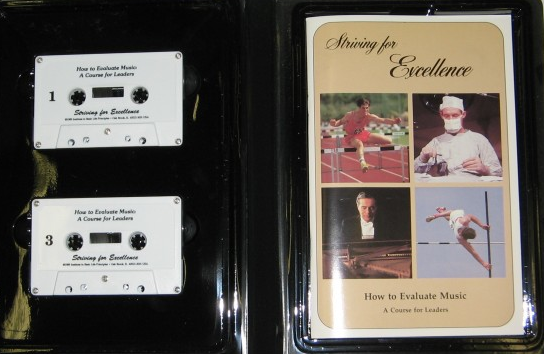





 Homeschoolers Anonymous