How I Left My Parents’ Home

Screen Shot 2014-02-04 at 12.06.32 AM

HA note: The following is reprinted with permission from Sarah Henderson’s blog Feminist in Spite of Them. It was originally published on her blog on September 2, 2013.

Several people have asked me about actually leaving my parents. It’s kind of hard to explain exactly what happened, because there was not one day when I decided to leave.

When I was 16, I was still attending a conservative church with my parents. In my family we were still expected to wear head coverings all the time, but the church we attended only expected them in churches. So in December of 2004 (when I was 16) I decided to stop wearing one at all – to me you either follow that verse 100% or not at all, and I wasn’t going to be the only one. I also secretly purchased jeans and changed into them on rare occasions when I was allowed out with church friends.

The summer of 2005 around my 17th birthday, I went for a week to visit my very secular grandparents in another province. They asked me some questions about what I wanted to do for a career.

I had not been asked that question, as my destiny was to get married and be a homeschooling mom even though I didn’t want that.

My grandparents mentioned that I couldn’t go to university without a high school diploma, and explained that I probably couldn’t even get a GED with how little schooling I’d had. This was news to me since I’d always been told our way was the best way to do anything, but it had the ring of truth.

When I got home, I looked into schools. I found I needed to have parental signatures to attend at age 17, so I privately convinced and cajoled my mom to sign, which she did, although it is my belief that she thought I would give up. My father refused to sign when he found out, and no one told him my mom signed, and the school accepted one signature and none for the bus (as I recall) because by then my mom was too scared to sign anything else. What is confusing about this is that in the summer my father drove me to take an ACT test (useless in Canada) which seemed to encourage academia, but it was with a bunch of homeschoolers so maybe it was the in thing to do for homeschoolers.

Miraculously my parents did not physically prevent me from going to school on the first day, I think because they knew it would probably be noticed if I didn’t go after all the trouble to sign up and get placed into many different classes across all four high school grades. I was expected to wear dresses. That lasted for a few weeks, and then I pulled out the secret pants. My parents tried to force me to change but I refused, and I ran out to catch the bus in a whirlwind of shame.

I quickly made friends with Christian kids at school that were mostly my age, some a bit younger. Two friends I made were sisters, and I would go to their house sometimes for ‘homework projects’. We were on the same bus route so it was easy to do, and their parents drove me home if they asked.

I was invited by other friends to a youth group at a mainstream Pentecostal church. I asked my parents for permission and they said yes sometimes and no sometimes and sometimes would drive me and other times refused when it was too late to find another ride. This was about November.

During this time I opened up a bit to the family I mentioned above with the two sisters. Once at their house I mentioned how hopeless life was with my family and that I was very upset (I didn’t really know what depression was). They told their parents, and somehow I ended up staying at their house for the weekend and just never went home (about November or early December 2005). I know that their dad went to several meetings with my dad and his church friends, and the consensus from my dad’s angle was that at 17, CAS would not force me to return home and it was better not to get the police involved to try and get me back since I was too far gone in rebelliousness anyways, and CAS might take a hard look at seven younger children who were not attending school.

I was able to get a few things from my parents’ home, but my father didn’t waste any time to completely pack up my room, junking most of it and putting lots of my stuff into the damp garage. I basically started life over with the family, I continued going to school, getting decent grades, going to church and youth group, and spending time with friends.

I’ve never really talked publicly about this before, but I need to talk about mental health here. I believe that I spent my first 17 years in some kind of survival state of mind. When I got out and was living with another family, I experienced a whole different lifestyle. The parents worked and provided for the family. I had a few chores like some laundry and dishes, but my job as a student was to do school.

There was also this whole unconditional love bit, and for the most part the emotional state of others in the home was predictable.

Children got pats on the back for doing something well. There was a certain expectation for behaviour and no one really crossed it- it just wasn’t optional. There were no out of control behaviours, because they were taught how to behave when they were younger.

One big problem I had was that I was so used to being told no that I assumed that parents just said no to be nasty. I had to learn at 17, at home and at school, that some stuff was ok and other stuff wasn’t,  and how to tell the difference. I had to learn in a flash how to use judgement because I was never taught that. My philosophy had just been ‘do whatever you need to do to stay out of trouble and try to enjoy life’. But in school and normal family life there are rules to follow so that you don’t violate the rights of others and everything runs smoothly.

I didn’t know that.

It was very hard on me to experience this “culture shock” and to realize how bad I was at relationships.

I had to go to grade 9 math, which I found very shameful. I didn’t know what the bells meant at school. I didn’t know how to share tasks at home. I realized I was very selfish after years of looking out for myself for all those years, and it was impossible to just switch that off when I was in an environment where there wasn’t too many people competing for too few resources. I also realized by comparison how chaotic, unreasonable and toxic my home environment had been. I didn’t know. And then it hit me that I still had siblings there.

It was a very difficult few years. I fell into depression for a while, but I somehow continued school because in this family school wasn’t optional so thankfully if you weren’t sick you went. The family also supported me in making regular calls to CAS over the next two years, so by the fall of 2006 my next brother and sister were enrolled in school at CAS’s recommendation, and the following fall my father was forced to leave the home by CAS for non-compliance and all the siblings were enrolled in school.

I also had many excellent teachers over my three years in high school who seemed to look for the good in students and were compassionate as long as I was trying. Between being granted some credits and earning the rest in three years, I graduated at 20 with a real diploma and I was given a plaque from the principal at commencement – a student leadership award. After graduating high school I was able to go to university and get both a BA and a post graduate degree in four years, and graduate from university on the Deans list.

I no longer have any kind of relationship with my father at all, and my relationship with my mother is complex, as do many of my siblings still live with her.

There is no one reason why I left. Obviously I had quite a bit of help, and there must have been a certain obstinate streak for me to seek out that help.

I have been free for 8 years now. It’s great. 
Child Marriage: I Dodged the Bullet

HA note: The following is reprinted with permission from Kierstyn King’s blog Bridging the Gap.  It was originally published on January 12, 2014.

I don’t know that I’ve written much about the process of the relationship Alex and I had before we got married. I started my blog after the fact and before I had even begun to process the hellmouth that was my childhood.

With three creepy-as-fuck-patriarchs coming out in favor of child marriage – something they’d always been in favor of, I suppose, but just now coming to light – I keep remembering how close I was to that being my story, our story.

This might be timey-wimey.

*****

Ever since I can remember, my mom really really really wanted to be pregnant at the same time as me.

I don’t know why, I just remember her telling me this, often, and it creeping  me out before I was 10 — and after I was 10, but I remember being really damn young when she was telling me this. I feel like I was 8.

When we started homechurching, my mom become obsessed, I mean obsessed with jewish culture. Like everything about it was perfect and not at all weird, and by jewish culture, I guess I should clarify, I mean old testament jewishness, and whatever of that was referenced in the new testament. Yes, how women were property and bought/traded for dowries, and how they were surprised for when they were getting married, and their parents picked out their husbands (my mom is also obsessed with betrothal), and then how they wait for the couple to do it, and then they bring out a sheet that had better have a bloodstain on it to prove…virginity – because, obv’s everyone bleeds (<nope).

(HA note: Kiery’s mom was not just wrong in a moral sense, but wrong in a religious sense; for an accurate description of how Jewish weddings work, please see Rachel’s comment here and Petticoat Philosopher’s comment here.)

She had, before I was a teenager even, basically planned out my wedding to be like that. Complete with my future husband building an apartment attached to their house, and even as a kid who knew nothing, this was the thing I fought against, this was the battle I always chose, I was not going to allow my mom to pick out my husband, and dictate my wedding and create the most humiliating ceremony I could imagine – just so she could get her jewish fix and fulfill her dream of carrying children simultaneously.

For context: She had also decided that I would marry at 18 to ensure that pregnancy thing would be feasible.

She was pregnant when I was 18 (I’m 18 years and one-week older than my youngest sibling) and I did end up getting married at 18, but the simultaneous pregnancy hasn’t happened (and never will, thanks to my own birth control and my grandparents stepping in after the last baby and paying for my mom’s sterilization).

Anyway, back to the story…

So, my childhood was already riddled with disturbing fantasies from my mom in relation to my future love-life, and I had been fighting this battle for as long as I can remember. Thankfully, my dad was on my side here, and also thought that my mom’s whole wanting to control all of that thing was ridiculous, which made it easier to just look at her and say no whenever she mentioned it (that was the only thing I was ever able to do that with) even though she ignored it.

I had read too much Elsie Dinsmore to be cool with the idea of betrothal.

Anyway, after we moved to Atlanta I went to TeenPact State Class and then TeenPact National Convention where I met Alex and we became fast friends over the course of the year. Later that year my parents told me they were done teaching me/had taught me everything I needed to know when I was 15 and they said I’d graduated. It was 2006. I turned 16 in February of 2007, had my graduation ceremony at the state homeschool convention in May, and Alex came down for camp, and that fall we started courting (which is, in our case, another kind of hell). Because he lived in Maine, our relationship was Long Distance and we saw eachother less than a handful of times a year – which means most of our relationship involved lots and lots and lots of talking and getting to know each other over IM/Email/Phone calls.

Nonetheless, as soon as my dad said “okay” to us courting in September of 2007, my parents – especially my mom- heard wedding bells. Courting is basically like, “dating with the intent to marry” but with everyone sticking their hands and ideas into the situation but without actually caring about or getting to know the two people involved – they just want power and think they can because they’re parents, so they must be right, right? (no)

My mom, at this time, had just had my second brother, and so, my broom services weren’t as desperately needed.

By december they were pushing Alex to propose, made him buy me a promise ring, and kept asking about when we were getting married, anddon’t you love him? (yes) don’t you want to marry him? (sure) but why not NOW? (because I’m 16) We’ll sign the paperwork! eventually I just looked at them and told them, I feel like you’re pushing me out, and I don’t know why. They were like, we’re not pushing you out! and I forget what else they said, but in retrospect, that conversation, and me not coming home engaged after visiting and meeting his family for the first time after christmas changed things.

But one thing remained, they wanted me married. Stat. They wanted him to propose like, right away, and when he didn’t propose by my birthday, in February (because we both decided it wasn’t a good idea to get married at like, 17 and 19) they got pissed and over the course of the summer of 2008, decided to do everything they could to sabotage our relationship.

It was brutal and nasty and deserving of more than one post because it was fraught with verbal and emotional abuse, withholding, and bribery – complete turns of opinions and demeanor’s, saying one thing and then the next morning saying something else, the last pregnancy that ruined everything, and the reason I had to run away.

If I had complied, as I did in every other thing, my relationship with my parents would have been less strained for a short time, but neither Alex or I would be in a healthy place. 16 is too youngMuch too young.

So when people talk about child-marriage proponents, I remember being 16 and pressured, unbelievably pressured by my parents, to make my boyfriend propose and marry me.

because it’s better to marry than to burn with passion 

I wonder if some of the logic of Swanson, Maranatha’s dad and husband, and Creepy Duck Guy wasn’t part of the logic my parents had too: female independence is bad, marry them off young so they can do what god commanded women to do – be fruitful and multiply.

Oscar Nominated “Alone But Not Alone”: A Product of the Doug Phillips / Michael Farris Empire

alone

HA note: The following is reprinted with permission from Libby Anne’s blog Love Joy Feminism. It was originally published on Patheos on January 19, 2014.

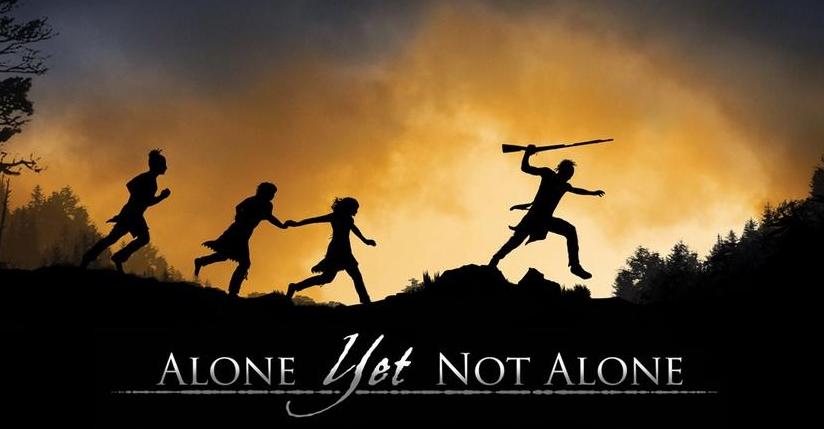
Alone Yet Not Alone, based on a book about two children who were kidnapped by Native Americans during the French and Indian War, was released as a movie in 2013 by Enthuse Entertainment. It showed in select theaters for only one week. This month, to everyone’s surprise, it was nominated for an Oscar. I’m not interested in talking about how it got nominated, which seems to be the focus of most articles on its surprise nomination. I’m more interested in something else, and that is the connections between this film and some major players in the dominionist/reconstrucitonist segment of the Christian homeschool movement, most notably Doug Phillips and Michael Farris.

My first tipoff to these connections was when I learned that Doug Phillips’ daughter Jubliee Phillips is in the film. She plays a Native American girl. Her older brother Joshua Phillips plays a “tall white brave,” according to the cast listing. Doug Phillips is the disgraced founder of Vision Forum, an influential but now defunct Christian homeschool organization.

Phillips himself was originally slated to be in the film, though he is no longer listed.

Other Vision Forum attaches, including Lourdes Torres, also play leading roles in the film. According to one blogger, “the full cast list of the movie reads like a partial who’s who of dominion-mandate Christian entrepreneurs.”

It seems the list of those involved also reads like a who’s who of Patrick Henry College graduates. (Patrick Henry College was founded by Home School Legal Defense Association founder Michael Farris in an effort to train up a new generation of Christian leaders to “retake America for Christ”). Alone Yet Not Alone was written by Tracy Leininger, a graduate of Patrick Henry College. Patrick Henry College alum and The Rebelution founder Brett Harris (brother of I Kissed Dating Goodbye author Joshua Harris and son of prominent Christian homeschool leader Gregg Harris) plays a leading role in the film. Several other Patrick Henry College graduates—including Ben Adams and Peter Forbes—were also involved. Not surprisingly, Michael Farris and HSLDA promoted the film heavily.

Advent Film Groupfounded on the campus of Patrick Henry College in 2007, was heavily involved in producing Alone Yet Not Alone from the very beginning.

The group’s co-founders, George Escobar and Michael Snyder, acted as the film’s co-producers, and Escobar acted as co-writer and co-director. Michael Farris endorsed Advent Film Group and has at times contributed to its screenplays.

There are more Vision Forum connections too. Tracy Leininger is the daughter of James Leininger, the money behind Vision Forum. Enthuse Entertainment, the film company that turned the book into a movie, is listed as the same address as all of Leininger’s other San Antonio enterprises, including Vision Forum Inc. Alone Yet Not Alone was slated to be unveiled at the 2012 San Antonio Film Festival, run by Vision Forum, but it appears that the film wasn’t ready in time. The film was instead screened at the 2013 San Antonio Film Festival. Not surprisingly, Vision Forum both sold the book and promoted the film heavily.

Alone Yet Not Alone appears to be the creation of a collaboration between Doug Phillip affiliates and Michael Farris affiliates. Given that Doug Phillips once worked for Michael Farris as a lawyer at HSLDA, this shouldn’t be surprising. I’m curious how many Patrick Henry College graduates have gone on to work for Doug Phillips affiliated organizations.

I have not seen the movie and I have not read the book, so while I’ve heard concerns about racist portrayals and bad acting, I don’t feel I can confidently speak to the content of either. I will say I’ve found pulling these connections together fascinating.

This film, with its surprise Oscar nod, is a product of the culture I grew up in.

I’ll finish with the trailer, so you can take a look for yourself.

Wifely Duties and Baseball Bats: Morgan Dawn’s Story

Screen Shot 2014-01-21 at 3.47.26 PM

HA note: The author’s name has been changed to ensure anonymity. “Morgan Dawn” is a pseudonym.

Trigger warnings: rape, extreme physical abuse.

At the age of 3, I was adopted by a Navy couple.

Life was great for about 6 weeks, when they adopted a baby boy. That was when the horror began.

I was pushed aside, because I was “just a girl.”  By the time I was 10, the couple had 3 biological kids, on top of myself and the other adopted boy. My adopted mother had lots of health issues, so she was either pregnant or sick.

My adopted father decided that since his wife wasn’t able to perform her “wifely duties,” that job would fall to me. The rapes were a weekly occurrence from then on. When I went to a DOD school official, my family decided that the “safest” thing for me was to be homeschooled. After all, I was a pathological liar.

Right there, my life changed.

They started reading everything they could about “To Train Up a Child” and proper disciplines for “obstinate children.”  Drop a glass on the floor?  I had to stand on that glass until my feet were bleeding badly.  Slam a door?  My hands were slammed in doors until I couldn’t help but pass out from pain.

I would sneak out of the house to see my boyfriend at night. One thing led to another, and by 13 I was pregnant. The father was killed in a drive-by shooting when I was 6 months along.  I managed to hide the pregnancy (my adoptive father was on deployment to the Middle East, so no one was close enough to tell) until he got home. He wanted sex, and I said no.

O, the pain that “no” would cost me.

He took a baseball bat to my body for hours.  By the time the paramedics were called, I was hanging by a thread, and in preterm labor.  They said I’d never walk or talk again.  My daughter was given (without my permission) to a family “friend” who let her drown in a pool on her 6th birthday.

Homeschooling hid everything.

No one really saw me anyways, so not seeing me at all because I was in body casts didn’t alert anyone. When my face had to be reconstructed for the 2nd time, everyone was told that my biological family had passed on defects that needed fixed. Schooling was “Here’s a book, read it and be prepared to debate on it”, but if the debate wasn’t “right” I’d get beat. It was hell.

By 18, I was ready to leave. By then, there were 10 kids total, and I was expected to sacrifice college to take care of them all. I couldn’t. So, one night, I left and never looked back. I’m now forbidden to talk to anyone in the family.

They were all told that all I was was a whore who left because I was pregnant.

I moved out of state with the help of a few friends that had known me before I was pulled from school. Apparently I was the only reason for homeschooling, as the other kids are all back in school. I was the evil sinner who needed punished.  And now, I love that title.

At least this “evil sinner” is now living life the way she wants. I’m currently in school for Social Work, living with my biological mother, engaged to a wonderful man, and happy.  The happy is so strange, but I like it.

There is hope out there.

The Difficulty with Admitting Trauma: Kandice’s Story

Screen Shot 2015-04-25 at 1.02.37 PM

HA note: The author’s name has been changed to a pseudonym at the request of the author.

My name is Kandice, and I grew up being homeschooled.

My parents were and are members of HSLDA (Home School Legal Defense Association) but in our part of Massachusetts, there weren’t too many other homeschoolers.

My seven siblings and I were all home-schooled together; initially started using a mix of curriculum including Christian Liberty, but my parents quickly switched over to Pensacola Christian College’s (PCC) ABeka Book program. I was homeschooled from 2nd grade through 12th.

My siblings and I were raised with very clearly defined social, political, and religious ideology. Strict Calvinism, coupled with the dogma of Independent Fundamental Reformed Baptist theology was the religious perspective; politically, my father is rabidly conservative – huge fan of the NRA, Newt Gingrich, and Rush Limbaugh etc. Socially, we were taught children to follow Biblical principles as my parents saw them.

We were taught the world is full of sin, and you can’t trust anyone other than fellow Christians as all others are under Satan’s sway.

Curiously enough, unlike many in Fundamental circles, my parents are not racist at all. In fact, they harbor great frustration and confusion over racism – we were taught all people are created in the image of god and therefore physical differences don’t matter; my parents explained differences in appearance and language are stemming from the tower of Babel (Genesis Ch. 11).

I have a B.A., which I got from Bob Jones University, which is private and religious.

I was raised by educated parents who valued learning highly – my mother has a B.A. in English and my father has both a B.A., and his M.Div. My father was a minister at an Independent Fundamental Reformed Baptist church – although his religious views didn’t start out there, they progressed to that point. In my early childhood we were traditional ABC Baptists, but after my father got his own church, things began to change.

My political beliefs changed before high school, largely because I knew I was gay, and then continued transforming.

My dad is an extremely conservative Republican and we were raised with that ideology. My biggest passion in life has been reading, I can’t remember not loving words, and this drove change for me. I started reading literature that changed how I saw things – several authors were powerful in this for me: John Steinbeck, Upton Sinclair, Sinclair Lewis, Pearl S. Buck, Thomas Hardy, and Fyodor Dostoevsky.

By the time I entered high school I already disagreed with my family/father on social justice and equality matters – reading literature made me explore history and social science which really helped to broaden my view.

I knew I was gay from a young age, and in college, in my Ethics class, we were taught “facts” about homosexuality that didn’t connect at all with my experience. Such things as, people become gay through being recruited, usually at a bar (I’d never been to a bar and as far as I knew, I’d never met a gay person); or that Jesus and the Bible condemned homosexuality – well, I read everything Jesus said and he did not ever speak out against the LGBT community; the OT references to Sodom and Gomorrah are referencing the sin of lack of hospitality, not being gay. So in college, my political beliefs opened up still further to be able to fully accept myself as gay, and to be able to say that all people, regardless of religion/gender/orientation etc. should have the same rights and freedoms.

My religious beliefs went through transition as I grew older.

I stopped believing in any way that Jesus was more than a man – he existed, but he is not god or any deity. My view of god changed – I don’t have a definition for the power that some of us use the word god to describe. That power exists, and that power is more than me, but beyond that, I don’t have definitions or rules about religion. I learned to see people in light of who they were and what they do, rather than what the claim to believe – beliefs are only as significant as we let them be, and they’re so tied in to our perceptions of reality that they are often wildly flawed. And contrary to what I was raised with, I don’t think it’s my job or duty to try to “convert” anyone. I think my responsibility today is to live the most spiritual life I can, following the path I’m on, and do my utmost to not cause harm but to be of service to others.

These changes occurred because I was reading, and learning. I took what I read and compared it to what I experienced and saw in the world around me and it didn’t align. Teaching I had been taught in the Bible didn’t match up to my experience, or what I experienced from people who were deemed “sinners” or “apostate” or “lost”. And in fact, what some Christians did to me, and others, was distinctly un-Christlike; there was no logic in saying that their behavior was acceptable because they called themselves Christians, while the person who doesn’t believe in god but does amazing good is going to hell.

I would have to say homeschooling was a traumatic experience for me.

I don’t like admitting that. Because admitting trauma means addressing it beyond the bleak recitation of the facts of what occurred. Diving into how it makes me feel, or affects me, is challenging.  I think that unless homeschooling is done in conjunction with an outside schooling process, it leads to isolation, control issues, lack of contact with reality, social discomfort, low self-esteem and self-confidence, poor communication skills, and significant challenges building healthy relationships.

Homeschooling did have some lasting psychological effects on me. While this is not as powerful as it has been in the past, the scars still remain. My journey involved alcohol use that became alcoholism… that was one of the ways I coped with what I was experiencing/had experienced. I also suffered from severe depression and anxiety, leading to suicidal ideation, and this started around age 11. In college I actually attempted suicide because I just had no coping mechanism, and I didn’t know enough to know there were supports available.

Additionally as an adult, I learned that a lot of the behaviors I had as a kid that my parents labelled as “sin” and tried to punish/discipline out of me, were actually tied in to having Asperger’s and having an IQ/mind that naturally asks questions, and that needs to be challenged. It was actually hard to learn that because it hit me really hard to realize that I had spent so many years and so much time trying to change something that was neurobiologically programmed and that couldn’t be changed. Also, it didn’t need to change – it wasn’t wrong.

But the concept of Autistic persons as being sinful is very prevalent in the community I come from.

My father has repeatedly told me he would do the same thing over again, and that it’s [the way I process things] sin, not the way my brain functions.

Guilt over leaving my younger siblings behind to go to college and then leaving them again when I came out as LGBT is something I’m working through. It’s not as bad as it was, by far, because my siblings hold no animosity towards me. I just felt very responsible for them because as their older sister, I always had been responsible for them. And in big families in these environments, you sometimes feel more like a protector or caretaker than a sibling and that changes things.

Had I been in a public school setting, these experiences would have been very different.

I know this for sure since I was in public school for kindergarten and 1st grade – and in 1st grade, when teachers and administrators began to have concerns over what they saw in me, as well as my siblings, my parents shut the door on the world and began homeschooling. Getting diagnosed at a younger age, having supports in place, learning healthy coping mechanisms – yes I definitely believe this would have made a difference. I can truly say I like myself today, though, so I don’t know that I would want to not experience what I experienced because I don’t know who I would be if I hadn’t gone through that.

In conclusion, homeschooling was a mixed bag for me, very much so.

I enjoyed not being held back or slowed down by anyone else, I enjoyed having no homework, and I felt comfortable (translate – safe/understood) being around my siblings. I’ve been told, as an adult by a psychologist who had done a series of IQ tests on me, that homeschooling was actually a very good thing for me in terms of my intellectual development. So I’m grateful for being homeschooled in the sense that it allowed me to really develop my mind.

Emotionally, socially, psychologically, spiritually – homeschooling was extraordinarily damaging. Not knowing how to interact with anyone comfortably that wasn’t from my family, being raised to not trust other people, not having healthy psychological supports in place or anyone in place who could say, “Wait. This is not ok” – that wasn’t good at all. Being able to learn to reach out to people for help has taken years.  And it’s also taken a lot of work. It’s still not easy. Knowing that’s it is ok to feel something other than gratitude for being one of god’s elect was another learning process; the reality that feelings of sorrow, anger, depression, grief, loneliness – these are ok, also they’re normal and they are not sin was definitely not something I was raised with. Most emotions and thoughts were deemed sinful; learning how to first say “sin is man-made, in fact it’s not real” and then say “feelings are feelings, not good or bad unless I want to assign them so”, that also took many years.

If I were a parent, I would not home school my child.

I think we exist as part of a community, a whole, and that community is so much more than a family or small homogenous group.

I think removing the opportunity for children to learn, from a young age, about differences is unacceptable. It stunts growth emotionally, mentally, and socially. I think raising children in rigid, rule-oriented, controlling and judgmental environments is harmful. Not knowing who you are, not being able to develop your own views through experiences and feelings, is not healthy and it leads to damaging behavior and unhealthy practices in adulthood.

I’m not angry or resentful that I was homeschooled; as I mentioned above I like myself and this is a part of who I am. But I can’t in good conscience recommend or advocate for homeschooling.

Two Upcoming Series: Sex Education and Media Memories

Screen Shot 2014-01-19 at 6.03.44 PM

By R.L. Stollar, HA Community Coordinator

For the first time since we started our topical series, we are going to announce two series at once. If you are interested in writing something, you are welcome to do so for either one (or even both, if you desire).

February Series: Let’s Talk About Sex (Ed)

For many Christian homeschoolers, sex education is one of the top reasons why we were homeschooled — specifically, so that we would either not get any or get a very religious version of it. It remains a motivating factor to this day, which makes sense since “religious or moral instruction” is still the most common reason parents choose to homeschool their children.

For the “Let’s Talk About Sex (Ed)” series, please feel free to submit any stories and thoughts you have about homeschooling and sex ed. Ideas could include (but should be not limited to):

  • What your sex education (or lack thereof) consisted of
  • How better sex education could have helped you
  • How you received a good sex education and how that helped you
  • How you received a bad sex education and how that harmed you
  • What your sex education (or lack thereof) communicated to you about body- and sex-positivity
  • How a lack of sex education kept you silent about abuse
  • Some variation of “What I Wish 16-Year-Old Me Knew About Sex and Sexuality”
  • How sex education (or the lack thereof) that focused only on straight sexuality alienated or harmed you as an LGBT* individual
  • Humorous, embarrassing stories as you went about educating yourself about sex
  • Resources for others on sex education

Deadline for submission for Sex Ed series: Thursday, February 13, 2014.

Please put “For Sex Ed Series” as the title of the email.

As always, you can contribute anonymously or publicly.

If you interested in participating in this, please email us at homeschoolersanonymous@gmail.com.

******

March Series: Media Memories

Being homeschooled makes you part of a cohort. You share a common language and culture with other homeschooled individuals that seems like a foreign language to others outside that cohort. It’s like a variation on the “third culture kid” concept.

As Christian homeschoolers, we also are a part of the larger “American evangelical” cohort. We are the Jesus Freaks: the children of the flannel graph, raised on a healthy diet of Psalty, Veggie Tales, Donut Man, and Carmen.

That culture we were raised in? Many of us (though not all) have mentally burned it to the ground. Yet we find ourselves circling back to where it burned and sifting through the ashes for memories to redeem. Inside that whole culture’s remains — homeschooling in particular, American Christianity in general — we have found solace, peace, and transformation. Maybe you found hope for your depression in Jars of Clay’s Much Afraid; maybe you found stress from the “seriousness” of the church in Veggie Tales; maybe, maybe not.

But for the “Media Memories” series, we want to remember those pieces of media — whether videos (Buttercream Gang, anyone?), music, TV, books, etc. — that were a part of our culture and impacted us deeply. Consider this nostalgia week, basically. Pick something that you loved, or hated (maybe even hated vehemently), or (probably most commonly) have a love/hate relationship with, and talk about it. It can be a song that got you through hard times, a book that helped you break free from the culture, a movie that prompted a new stage in your recovery process — or a creative conspiracy theory about Psalty.

Or even just something you remember lightheartedly with a smile.

Deadline for “Media Memories” submission: Saturday, March 15, 2014.

Please put “For Media Memories Series” as the title of the email.

As always, you can contribute anonymously or publicly.

If you interested in participating in this, please email us at homeschoolersanonymous@gmail.com.

If I Could Wave a Magic Wand: Arachne’s Story

Screen Shot 2014-01-17 at 11.22.37 AM

HA note: The author’s name has been changed to ensure anonymity. “Arachne” is a pseudonym. Arachne blogs at Past, Present, and Future.

A new year is about to start. I am looking forward to it.

This is a new development. I spent years making suicide plans for New Years Eve. The holidays were the worst time of the year for me. That has changed. I survived. I never thought I would, but I did. The hell is over. Gone. Done. I can look forward now and I can be happy. Breathe, even. I guess all the therapy, psychiatric medications, hard decisions, tearful conversations with friends, and general struggles have finally paid off.

I started praying again.

It doesn’t hurt anymore. Of course, my idea of prayer is now very different from what I was raised with. Not so much with the trying to atone for my innumerable sins and the sins of the world. I feel like I have a relationship and connection to Divinity. I am loved and accepted.

I have plenty of anecdotes I could relate. There was the semi-cult at a super traditional Catholic church with a whole gaggle of denim jumper wearing homeschoolers. There was being the eldest child and being female in a strictly patriarchal large family. There was the father who broke the dining table chairs into pieces when he was angry. An emotionally manipulative and unstable mother overwhelmed with the life she believed God commanded her to live. The leather belt they both used. It goes on, but for me, those days are over and those people are no longer in my life. So what comes next?

I don’t know. There’s no plan. It’s terrifying.

If I could wave a magic wand and erase the past, I would.

Trust me. In a heartbeat.  I think about it over and over. What would I have been like if I’d had a decent education? If I hadn’t been abused and controlled by the people who had total power over me, where would I be? Did I ever have a chance at being “normal”? What the fuck is normal? I will never know. At some point, I have to step away and live my life now while accepting who I am and how I was shaped.

There’s only so much I can leave behind, and I’m not saying I’ve moved on. I doubt I ever truly will. I can’t forget my entire childhood. My body is covered in scars from my struggles with self-injury. Depression and anxiety will likely stick with me, even though they are managed now. Catholic guilt fades but doesn’t seem to ever quite go away. There will be many more times when I break down and cry over the past.

All I can do now is figure out how to work with what I have now, and when I take inventory it feels incredible.

I have two wonderful kids who are being raised totally different from how I was, wonderful people in my life, a brain that has some quirky wiring but that still works pretty well, physical health, a spiritual path that has taken me places I never dreamed of going, and so much more.

I have strength. I have freedom.

Don’t let the bastards grind you down.

A Call for Inclusion in the Survivor Community: Sarah Henderson’s Thoughts

Screen Shot 2014-01-12 at 10.27.18 PM

HA note: Sarah Henderson blogs at Feminist in Spite of Them about her journey from Quiverfull to Feminist. The following post was originally published on her blog on January 11, 2014 and is reprinted with her permission. Also by Sarah on HA: “An Open Letter to My Former Highschool Teachers.”

There has been a bit of a ripple this weekend regarding a post that was published on Homeschoolers Anonymous. This post is written by someone who was homeschooled in a positive way, and has attained a higher level of education. He gave some recommendations for how survivors should be writing their stories. His main points are not false, he gives a solid explanation of the difference between narratives, philisophical statements, and empirical evidence. From a casual reading, his content is solid. However he goes on to explain that these claims need to be kept separate, or the movement will suffer.

We need to recognize that everyone who self-identifies as an abusive/neglectful homeschool survivor is in a different place.

If a requirement is made that people who wish to tell their stories must write them to an academic standard determined by someone who is not an abusive homeschooling survivor, we as a community run the risk of restricting possession of a voice to those who meet an academically rigorous standard. Many bloggers start out by writing their story for their own cathartic benefit, and then share it on the internet to help build the narrative.

Many bloggers, including myself, try very hard to avoid making statements without evidence, and try to differentiate between what part is our narrative, and what part is empirical evidence. Personally I do use empirical evidence in my posts, and cite it appropriately. I do not necessarily avoid making philosophical statements, because I believe that people have the right to their own opinion in matters of philosophy. Certainly the bloggers and advocates who are radically pro-homeschooling present their philosophy as truth, but I think it still clear when a statement is philosophical in nature. Some of them do sometimes present guesses and statements as empirical evidence (like this, as Heather posted on HA).

Not everything on my blog is empirically based, and I have grown in my understanding of the past since I started blogging. I have gone back and put some author’s notes in place, but I am not editing out statements and opinions that I presented early in my blogging, because this blog represents my story and understanding across time. Some other bloggers present their ideas with more and less clarity and empiricism. I do not think that these different styles and levels of accuracy take anything away from our community, but introducing the specter of the red pen might result in fewer stories being told by those who may experience new fear about their own story because they have been denied their story for their whole lifetime.

Telling a survivor story of this type goes against a lifetime of teaching to comply, conform, and protect the status quo.

We need be purposeful in our inclusion of stories, whether they match an arbitrary standard or not. People need to be able to start telling their stories no matter where they are in their healing, and it would be good to be mindful of the fact that some survivors of educational neglect may not meet an academic rigor and polish standard, but it is these stories that really really need to be added to the plethora of narratives.

A plural of narratives does not add up to empirical data. But it does add up to a plethora of narratives.

As more survivors come forward and share their narrative, it will become harder and harder to reject each narrative as an anomaly. Denial of abusive homeschooling survivorship is a serious issue, and becoming elitist and selective about sharing stories contributes to the denial. For whose benefit should all the stories be empirical and polished? A number of polished empirical articles will not in and of itself change the face of abusive homeschooling, just like a large number of narratives would not change it. But an abundance of both types of posts (usually not divided into such tidy categories) bring the need for a closer look to the attention of the survivors, and hopefully, at some point, to the attention of lawmakers.

Let’s reach out as a community for more stories that need to be told.

A Call for Precision: Benjamin Keil’s Thoughts

precision

Benjamin Keil is a husband, father of three, and Ph.D. Candidate in the University of Kansas’ Philosophy Department.  The views expressed in this article are his own; his personal website can be found here.

Like St. Paul of old, I come to you today with two things: My bona fides and a message.  

In case you’re not quite up to speed on your pretentious archaic phraseology, bona fides are just testimonials.  If you’ve got bona fides, they show that you are an authentic messenger and that what you say is true.

Whereas St. Paul’s bona fides were meant to show that he was an authentic Hebrew (Phil. 3:4-6), my bona fides are much narrower.

I want you to know that I’m one of you.  

I was homeschooled K-12.  I did both NCFCA debate (as well as HSLDA debate before the change) back in high school.  (For those of you who care, my first year was the campaign finance resolution and my last last year I did that awkward LD topic about restricting economic liberty for the general welfare in agriculture.)  I even co-coached our local debate club for the “trade policy with Africa and the Middle East” topic.

Unlike some of you, though, my homeschool experience was positive.  My parents never abused me, encouraged me to go to college (I’m now finishing graduate school), and let me listen to all kinds of music.  They never made my younger sister only wear skirts and encouraged her to go to college also.  (She’s in graduate school now too!) But, like most of you, fundamentalistic-style beliefs weren’t entirely absent from my homeschool years: My parents believed in 7-day Creationism, emphasized a hermeneutic of Biblical literalism, and chose the usual sorts of homeschool curricula to help pass on their values.

All of which is to say that I come to HA as an insider, not an outsider.  

I recognize commonalities between many of the articles here and my own story.  And many of the goals expressed by HA are ones I share.  All of which, hopefully, gives me the credibility necessary to offer an admonishment:

Our movement makes three separate types of claims, and the evidence we offer for the three claims needs to be kept separate.

Let me explain the differences I’m getting at.

One type of claim that can be made is empirical – claims about the larger world or interrelationships between significant parts of the larger world.  The second type of claim involves stories.  Personal testimonials are smaller slices of the world but not less valuable – stories are how we make sense of our small and short lives.  (Perhaps that’s why autobiographies are one of my favorite non-fiction genres?)  The third type of claim is philosophical – claims about beliefs or belief systems which inform how we live our lives.

All of these are valuable and all have a significant place in our movement.  

It is important (essential!) that we have empirical evidence to bolster our movement’s claims.  It is important (essential!) that we have stories and we tell them to each other.  And it is also important (essential!) that we present and defend philosophical arguments to demonstrate the insufficiency of belief systems.  All of these types of claims are important and our movement would suffer if any one type were missing or overemphasized.

But although all three types are valuable, they are nonetheless distinct and thus should be distinguished from each other.  To demonstrate an empirical claim, you need good empirical research (replicable research from a representatively large randomized sample where the methodology is designed to block confounding effects).  To demonstrate a story, you need to convey it accurately.  And to demonstrate a philosophical claim, you need to give arguments.

Let’s look at some examples.

Suppose one claims that child abuse occurs more frequently in homeschooling contexts than in public schools.  That’s an empirical claim and to demonstrate it you’d have to operationally define homeschooling and child abuse, conduct empirical studies on the child abuse rates in homeschooling, and compare those rates with the child abuse rates in public schools.  Then you’d know where abuse occurs more frequently.

Or suppose you claim that being raised in a fundamentalistic homeschool lifestyle harmed you.  That’s a narrative story claim, and to show its truth you’d explain your upbringing and truthfully relate its negative effects on your life.

Or suppose you claim that parts of your parents’ belief system is wrong.  To demonstrate this you’d have to accurately describe your parents’ belief system, describe the best possible arguments in its favor, and then show why those arguments are incorrect.

All of this is fairly straightforward.

But our movement will suffer if we’re not clear about the kinds of claims we’re making and the evidences we’re giving for those claims.

For example, if you claim child abuse rates are higher among homeschoolers than public schoolers, you can’t demonstrate that claim by telling your life’s story.  In fact, you can’t take your life story, combine it with the life stories of ten other people from HA, and conclude that child abuse rates are higher among homeschoolers than public schoolers.  That’s anecdotal evidence, and anecdotal evidence (while very valuable in its own right!) isn’t scientific evidence and can’t be used to establish empirical claims.

If you think parts of your parents’ belief system is wrong, what you ultimately need to provide are philosophical arguments to make that case.  Relating your life story, by itself, doesn’t show that your parents’ belief system is wrong – although your life story might relate arguments, it’s the arguments themselves and not the story that does all the philosophical work.  (After all, there’s an obvious difference between an autobiographic story of how you discovered an argument, and what your reasons are for thinking the argument itself is true.)

(All of this obviously oversimplifies for the sake of clarity – a story is almost certainly going to contain philosophical arguments [whether implicit or explicit], and empirical claims often rely on philosophical notions [for example: what, precisely, is child abuse?]  So I am aware that any one type of claim will have some interactions with the other two types.  But if one’s primary purpose is to make an empirical claim, then empirical evidence is called for.  And if one’s primary purpose is to tell a story, then no larger empirical claims can be drawn solely on the basis of that story alone or that story combined with other people’s stories.)

My goal, obviously, is to strengthen the true parts of our movement – not to detract from any one person’s story, or empirical claim, or philosophical argument.  

All are valuable and all have their place.  But unless we clearly identify the type of claim we are making, and unless we are clear on what type of evidence would support our claim, our claims will be weak.  And if there’s one thing I learned from homeschool debate, it’s that weak claims are inevitably discovered and, when discovered, should be discarded.

In Their World, But Not Of It — My Years on the Periphery of ATI: Giselle’s Story

Screen Shot 2013-11-18 at 12.57.25 PM

We were never really one of “those families.” 

I felt out of place at the annual conferences because we only had two kids.  We might even put on shorts and watch TV when we got back to the hotel room.  We had a car, not a 15-passenger van, and we only drove two hours to get there, unlike many families who spent days traveling, their windows painted with pithy slogans like, “Knoxville or Bust.”  We evaluated the people we met at those conferences carefully.  Were they “real” ATI people, or were they renegades like us, who wouldn’t shun us when they learned we were blue jean-wearing, movie-watching, pizza-eating radicals?

We were definitely misfits.

However, I, too, donned conservative white blouses and flowing navy skirts each summer of my high school years (and several years after) for a week of training and choir rehearsals.  I will not lie, there was something invigorating and powerful about it all—particularly when we sang—thousands of voices raised together…. It was easy to get swept up in the moment, for sure.

But deep down, I think I knew that something wasn’t right.

Perhaps the full effects of those years on my psyche are still unknown, but for the most part, I emerged fairly unscathed.  My father was not controlling.  We were never abused.  We always had a voice and were allowed, even encouraged, to share our opinions.  My parents wanted me, as well as my brother, to graduate prepared for college, if we chose to go.  My teen years were mainly self-directed, with my parents supporting and encouraging me in my own interests and pursuits.

Strangely enough, in reflecting back on those years, I have come to the realization that it may have been me, not either of my parents, who was most indoctrinated by the ATI mindset. 

I remember reading countless books on courtship and buying into the “facts” that dating was stupid and rock music was somehow evil.  I dressed “modestly” at all times and memorized most of Matthew 5, along with countless other Scriptures that I self-selected during my own devotional times.  I chose to work on (but never completed) the faith, wisdom, and virtue journals, teach in Children’s Institutes, and even attend a short training in Indianapolis and a two-month training at EXCEL.  But even through all of this, my discernment told me that something was wrong.

I went to the Indianapolis training center when I was about 16.  I remember very little except enjoying spending time with a couple friends, but I do very clearly recall a session when a fairly prominent ATI mother spoke to us about her children.  She shared about her older son with disabilities and two adopted daughters of another race.  I think she was teaching about demonic influences and spiritual sensitivity in children.  I remember that the woman seemed tired, perhaps even defeated.   She said, “If I had it to do over again, I don’t think we should have adopted the girls.  It wasn’t God’s first choice for our family.”  After adopting them, they had conceived several children naturally, and their family was somewhat disjointed.  I was horrified.  What in the world was this woman thinking?!  Her teenage daughters were somewhere at the training center, and she had just admitted to dozens of girls that she wished she hadn’t adopted them!  What if they found out?

It was unbelievable to me.

Another talk that stunned me was during one of the Knoxville sessions for women and “apprenticeship ladies”—basically age 12 or above.  My mother was not with me (it may have been the year she was sick & didn’t go…) but there was a panel of mothers teaching us about child training.

I remember being fairly shocked as they described something called “blanket training” for infants. 

Basically the goal was to train your baby to stay on a blanket, so that no matter where you went, you could pull out the blanket and put your kid down and not have to worry about baby-proofing the area or your child crawling off into harm’s way.  In order to do this, you had to spend some time rather intensively “training” your child by administering spankings every time they touched the floor off of the blanket.  A great way to do this, they said, was to “spank” all around the edges of the blanket—perhaps even pulling a child’s hand off the blanket and administering a swat or two to get the point across before they even had a chance to “disobey.”  They told us that mothers who were “mercies” often had trouble doing this.  (Women with the spiritual gift of mercy were always looked down on as weaker and more vulnerable, it seemed to me.)

Keep in mind that these children were infants! They were not even toddling around yet! (Although they said older babies could be left on blankets, too, once they were “trained.”)

I remember thinking (and even saying to some people that week), “I’d like to know if these children are less curious or more fearful of exploring the world around them—isn’t that the reason babies crawl around and touch things?  They’re supposed to!”

During that same session, during a discussion on discipline, we were taught that biblical chastisement involved swatting your child at least six times—if it wasn’t that many, it was only a reproof, not true chastisement.   (Personally, I had never been swatted that many times, and I thought these requirements were pretty creepy!)  I remember a mother on stage sharing about how sweet their naptimes were now with her little child since she had taught her to lie down as soon as she was placed in the crib by giving her “six switchies” every time she put her head up.  I was sickened.  I was only a teenager, but I knew something was terribly wrong.

My 8-week trip to EXCEL when I was 21 was…well…strange. 

In a lot of ways.  I was still living at home but was largely autonomous in most of my daily activities.  I was working 30 hours a week and involved in church and ministry activities which I had to leave completely for two months.  For me, EXCEL was a step into an ultra-controlling environment, the likes of which I had never experienced before, but I tried to adapt and make the best of it because I was a pleaser and never wanted to be in trouble.  Although I absolutely loved to learn and looked forward to gleaning a lot from the sessions, the dozens of rules and regulations were tough.  I remember the look on a close guy friend’s face when I told him, “No, you can’t write to me.  It’s against the rules.”

Our relationship was never the same again after that.

At EXCEL, we were only allowed to call home once or twice a week, unless we had “something to confess.”  We had a strict “lights out” time, and my stickler roommate turned me in for using a flashlight to journal after 9:00 p.m.  Living with her was a bit of a challenge because she was often depressed and terribly homesick.  I never knew how to help her when she would lie on her bed during free time and refuse to engage in conversation or anything remotely fun.

I was frustrated because this made me feel even more lonely and strange about being there.

At home, I spent most of my time with adults or with the children I worked with in my job and volunteer work.  There were no kids at EXCEL, and that was very difficult for me.  There were also very few adults—just a whole bunch of teenage girls.  My “team leader” was the age of my younger brother, and it was difficult to submit to her as an authority.

Sundays were also very difficult.  We attended various churches in the mornings and then had “free time” in the afternoons, but we weren’t allowed to work on our academic projects since it was the “Sabbath.”  We couldn’t really read (books weren’t allowed at EXCEL except for Bibles and a few approved books for our assignments.)  We also weren’t allowed to eat anything until dinner—every Sabbath was a 24-hour fast.  Those were realllllllly long afternoons. I learned that you can feel pretty unloved and uncared-for when your blood sugar drops and you are away from the people who care about you.  

I think I’ve taken that with me because I am pretty conscientious now about making sure anyone in my care is well-fed and comfortable.  Although I learned many things at EXCEL, some of which come back to me at the strangest times, reflecting back on those weeks fills me with an eeriness that seems from another lifetime.

When I returned from EXCEL, I was grateful to be home, but somewhat more indoctrinated.  I don’t think I wore pants for almost a month, even though my parents had never in my life suggested that I shouldn’t wear them.  I was even more dead-set against “rock music” than I had been before leaving.

In fact, I remember visiting a church with my family and ending up in tears because they added a backbeat to a hymn. 

My poor parents didn’t know what to do with me, but they were very patient, and after several weeks, I came around.  That was the beginning of the end of ATI’s influence in our family, because the following year my brother and I both started college, so we weren’t really eligible for the program anymore.

When I began preparing this article, I thought it would be easy.  I planned to write about my experiences and impressions throughout my years in the ATI program.  However, as I delved into my old notebooks, I found pages and pages from sessions with titles like these: “How to Conquer Food Addictions and Avoid Degenerate Diseases,” “7 Reasons Why This Is the Most Important Conference,” “A Way of Life the World Will Want to Copy,” “Why Not to Marry a Divorced Man,” “How to Prove God’s Existence Without Faith in 2 Minutes!”

It has been more difficult to process through all this than I had thought it would be.

I even called my dad to ask him if he had felt pressured in his men’s group meetings to follow certain commitments or act a certain way, since he never seemed to fit the ATI mold for controlling fathers.  He said no, it wasn’t like that in his group.  He even told me that he viewed ATI as just another program to help us reach our goals, and he basically selected the parts that he felt would help us while leaving the rest alone.

We were taught at the ATI conferences that there are three types of smiles: a joyful smile, a ministry smile, and an obedient smile.  You should always be able to pull out one of the three, they said.  This concept makes me wonder now: how many of those bright, cheerful faces were never joyful at all…?  Although I am a bit shaken by all the memories I’ve sifted through over the past few weeks and by the adult realization of what was going on during those impressionable years of my life, I think I’ve emerged fairly healthy with an ability to coexist in the world I once believed to be evil.

After all, I am now a public school teacher.