Please know that there is so much more to know about the Nauglers than meets the eye in this case: allegations of theft, illegal transportation, fleeing the law, threatening neighbors with death, child neglect, and more. Homeschoolers and unschoolers that actually know the family are cautioning people that this family is troubled. HA blog partner Kathryn Brightbill is working on a summary of the situation that we will crosspost and share once it is complete. (It is complete! Read it here.) In the mean time, please exercise caution (and encourage your friends on social media to do so as well) before promoting their story and/or giving them money.
Update, 05/08/2015, 2:41 pm Pacific: The following image was shared by the family’s mother, Nicole Naugler, on Facebook. Nicole described it as the intake call against them:
Furthermore, Nicole has revealed that her children do not have identification documents:
Update, 05/08/2015, 5:23 pm Pacific: Kathryn Brightbill has finished her excellent synopsis of what’s going with Joe and Nicole Naugler. The situation is highly complicated and, as Kathryn points out, “What these things do demonstrate, at the very least, is that this family desperately needs help and they ought not be lifted up by homeschoolers as martyrs for the movement.” Read Kathryn’s synopsis here.
HA Note: The following is reprinted with permission from Michelle Hill’s blog Notes From a Homeschooler. It was originally publishedon January 18, 2015 and has been slightly modified for HA.
Why Families Homeschool
Why families homeschool has always been an interest to me. I grew up in a rural small town just north of Austin. My family had decided that all of us kids should be homeschooled after I had just finished Kindergarten at the local public school.
It started out with good intentions.
Their daughter, that’s me, had almost failed the end of year reading test and the school had recommended to my mother that I be put in summer school so that I could catch up. Instead, my mother had opted to keep me at home for the summer and teach me herself using a phonetic program and audio tapes. In the following fall, my parents didn’t send my other brother and me back to school. Instead, they send a letter to the school stating that they were withdrawing us from school so that we may be homeschooled.
That was the start of our long homeschool career.
My parents had decided that the small local school was incompetent in educating their children, so they opted for homeschooling.
At the time, I was in 1st grade, my older brother was in 5th grade, and my younger brother was two. This was actually an abnormal reason to choose to homeschool. The majority of homeschoolers choose to homeschool for religious or moral reasons (mommyish.com). My parents had simply decided that they could do a better job of educating us.
The second reason why my parents home-schooled us was because my little brother, Jason, had dyslexia. My mom had tried to homeschool him though Kindergarten. It didn’t go well. At the time, my mom didn’t know that he had dyslexia. Jason had problems remember his letters, the names of colors, and had a hard time with handwriting. The next year, she enrolled him in Kindergarten at the local public school to see if they could teach him better. When that didn’t go as planned, she pulled him out of school for 1st grade. Since then, my mother figured out that he has dyslexia, but has not officially tested him.
Now he is so far behind in school because of his difficulties with reading and math, that she refuses to send him to public school for fear that he will be placed grades behind.
Along the way, my parents had a fourth child, my younger sister, Elizabeth. Elizabeth was born with Down syndrome. When she was a baby, she had many complications and was in speech, physical, and occupational therapy. When she became old enough to go to pre-school, my family enrolled her in the public school’s preschool program. Elizabeth completed pre-school and then moved onto Kindergarten the following year. That’s was diagnosed with Legg-Calve-Perthes disease. It’s a disease that affects the ball and socket joint of the hip and essentially causes the ball of the joint to deteriorate. The disease causes pain and inflammation of the hip joint which leads to a limp and loss of mobility. After this, my little sister was pulled out of school so that she could take it easy at home. My mother also decided that the school was not doing enough for my sister. She was kept in the special education program that integrated the children into the classroom during recess and P.E. The school’s special education program had many flaws, but I will not go into that now.
So there was my parents’ three reasons to homeschool their children. They believe that they could do a better job than the local public school could. Jason had dyslexia and has fallen behind in school, and so now my parents keep him at home in fear that they will be judged for him being so far behind. Finally, little sister has Down syndrome, and my parents believe that they could provide a more specialized individual education plan.
In upcoming additions, I will discuss how homeschooling affected me personally, why I don’t think it’s a great idea and would never home-school my children, what flaws I have personally seen in other home-school families, and what I think should be done about it.
The following is a historical timeline of the modern U.S. homeschooling movement from 1904 through the present. It details the various and divergent aspects of homeschooling — from the leftist unschooling movement pioneered by John Holt to the conservative Christian takeover masterminded by Michael Farris, Gregg Harris, Mary Pride, and Brian Ray, the so-called “Four Pillars of Homeschooling.” The purpose of this timeline is to educate the public about how homeschooling has evolved over the years and also reveal divisions that have plagued it since its beginnings. Please feel free to make suggestions for changes or additions in either the comments or by emailing us at homeschoolersanonymous@gmail.com.
1904
In the Indiana Appellate Court case State v. Peterman, the Court defines a school as “a place where instruction is imparted to the young” and holds that “a school at home counts as a private school.”[i]
1949
Influenced by the Catholic Worker movement, Norbert and Marion Shickel begin subsistence farming. They homeschool their 13 children and call their homeschool “Mary Hill Country School.” Their local school district is not only impressed by their homeschooling, but also “actively sought [Marion] out to deal with some of their problem cases.”[ii]
1950
In Illinois, Marjorie Levisen and her husband Lincoln are convicted of truancy for violating the state’s compulsory attendance law. Marjorie had decided to not enroll her daughter in public school and instead enrolled her in the Home Study Institute, a Seventh Day Adventist correspondence course.[iii] The Levisens are Seventh Day Adventists who believe “that the child should not be educated in competition with other children because it produces a pugnacious character, that the necessary atmosphere of faith in the Bible cannot be obtained in the public school, and that for the first eight or ten years of a child’s life the field or garden is the best schoolroom, the mother the best teacher, and nature the best lesson book.”[iv] In the Illinois Supreme Court case People v. Levisen, the truancy conviction is overturned and the Court rules that Levisen’s homeschooling via correspondence course “did qualify as private schooling under Illinois law.”[v]
Marjorie Levisen and her children. In 1950, the Illinois Supreme Court ruled that Levisen’s homeschooling via correspondence course qualified as private schooling under Illinois law.
1961
Paul Goodman writes Growing Up Absurd.
R.J. Rushdoony writes the book, Intellectual Schizophrenia, a critique of tax-funded, public education.”[vi]
Bill Gothard incorporates Campus Teams, the organization that will later become the Institute in Basic Life Principles (IBLP).[vii]
1962
Many conservative Protestants pull their children out of public schools on account of Supreme Court decisions that force racial desegregation and ban school-officiated religious activities (such as school-sponsored Bible reading). Their complaint is that the Court “put the Negroes in the schools—now they put God out of the schools.”[viii]
1963
Raymond Moore cofounds the Hewitt Research Foundation with Carl Hewitt.[ix]
R.J. Rushdoony writes The Messianic Character of American Education, a critique of the educational philosophies of over two dozen of the major founders and philosophers of American progressive education, from Horace Mann to John Dewey.[x]
1964
Paul Goodman writes Compulsory Miseducation. Between this and Growing Up Absurd, Goodman argues “that compelling children to attend school is not the best use of their youth, and that education is more a community function than an institutional one. This idea was developed and amplified over the years by many authors, but most forcefully by John Holt.”[xi]
John Holt writes How Children Fail. This book “created an uproar with his observations that forcing children to learn makes them unnaturally self-conscious about learning and stifles children’s initiative and creativity by making them focus on how to please the teachers and the schools with the answers they will reward best, a situation that creates a fake type of learning.”[xii]
Francis Schaeffer first encounters the writings of R.J. Rushdoony. He makes Rushdoony’s book, This Independent Republic, the basis of a seminar for students at L’Abri in Switzerland.[xiii]
Wheaton College, Bill Gothard’s alma mater, invites Gothard “to design and teach a course based on his work with youth.” The course is given the name “Basic Youth Conflicts.”[xiv]
1965
R.J. Rushdoony founds the Chalcedon Foundation.[xv] The Foundation affirms homeschooling as not only one of the most important institutions for implementing Rushdoony’s ideology of Christian Reconstructionism,[xvi] but also “the only model for education given in the Bible.”[xvii]
1966
In New Jersey, Barbara and Frank Massa remove their daughter from public school to homeschool her. This action leads to the 1967 New Jersey Superior Court decision State v. Massa.[xviii]
1967
The New Jersey Superior Court rules in State v. Massa that homeschoolers satisfy the “elsewhere than at school” portion of New Jersey’s compulsory school attendance statute. The Court declares not only that “a child may be taught at home,” but also that the homeschooling teacher “need not be certified by the State of New Jersey to so teach.”[xix] This vindicates Barbara and Frank Massa’s decision the previous year to remove their daughter from public school to homeschool her.
In response to school authorities demanding Amish children attend public school, the Iowa legislature passes SF 785, establishing “an exemption from compulsory school attendance for members of religious denominations which profess ‘principles or tenents [sic] that differ substantially from the objectives, goals, and philosophy of education embodied’” in public school.[xx]
John Holt writes How Children Learn.
1968
Paul Lindstrom founds the Christian Liberty Academy as a result of dissatisfaction with government schools. From this academy is developed a homeschool curriculum known as CLASS. Many of the early seminal court decisions that helped to win the right to homeschool involved homeschoolers who were affiliated with CLASS.[xxi]
1970
Dr. Henry Morris founds the Institute for Creation Research.[xxii]
1971
Ivan Illich writes Deschooling Society, which influences Holt. After Deschooling Society appears, Holt studies and corresponds with Illich at length.[xxiii]
Everett Reimer writes School is Dead: Alternatives in Education.
Edith Schaeffer writes her book, The Hidden Art of Homemaking, which later inspires Mary Pride in her writings.[xxiv]
1972
Raymond Moore writes “The dangers of early schooling” for Harper’s Magazine.[xxv]
Reader’s Digest publishes a condensed version of Moore’s piece for Harper’s as “When Should Your Child Go To School?”,[xxvi] which “distributed it to millions more readers.”[xxvii]
Shamanist/writing coach Hal Bennett writes No More Public School, which “explains how you can take your child out of public school and educate him at home.”[xxviii]
The U.S. Supreme Court, in Wisconsin v. Yoder (a court case frequently cited by later homeschooling advocates and leaders), rules that Amish children could not be placed under compulsory education past the 8th grade. The Court affirms “the fundamental interest of parents, as contrasted with that of the State, to guide the religious future and education of their children.”[xxix]
After Iowa school authorities try to force Amish children to attend public school, the U.S. Supreme Court rules in the 1972 case Wisconsin v. Yoder in favor of religious exemptions from compulsory school attendance.
1973
The Colorado legislature revises its compulsory attendance law to exempt from school attendance any student “being educated at home by a parent under an established system of home study approved by the state board [of education].”[xxx]
In Marion, Utah, noted white supremacist John Singer removes his children from public school after his daughter comes home one day with a textbook that celebrated Martin Luther King, Jr. and showed a picture of black and white people together. While Singer is initially arrested for doing so, a Utah court rules that he is “permitted…to homeschool his kids so long as they were tested twice a year and received an annual psychological evaluation at the Singer home.”[xxxi]
R.J. Rushdoony writes his book, The Institutes of Biblical Law. Gary North says that this book, which “took the Ten Commandments as the ordering principle [to] be applied to modern life” and “that civil government must be shrunk drastically to meet biblical standards,” “launched the Christian Reconstruction movement.”[xxxii]
1974
John Holt becomes a public advocate for the children’s rights movement with the publication of Escape from Childhood: The Needs and Rights of Children.[xxxiii]
Bill Gothard’s organization Campus Teams is re-named the Institute in Basic Youth Conflicts.[xxxiv]
1975
Raymond Moore coauthors Better Late Than Early with his wife Dorothy.
Mormon homeschooling pioneer Joyce Kinmont begins homeschooling[xxxv] because her “6-year-old daughter had become ‘engaged’ to a boy at school.”[xxxvi]
1976
The State of Virginia passes a religious exemption from compulsory school attendance. The exemption states that, “A school board shall excuse from attendance at school…any pupil who, together with his parents, by reason of bona fide religious training or belief is conscientiously opposed to attendance at school.”[xxxvii]
In Instead of Education: Ways to Help People Do Things Better, John Holt proposes “a new Underground Railroad to help children escape from schools.” This proposal inspires current homeschoolers to contact Holt, which in turn inspires him to create a newsletter for homeschoolers.[xxxviii]
1977
John Holt starts Growing Without Schooling, a bimonthly magazine for those who desire educational activities outside a traditional school framework.[xxxix]Growing Without Schooling is “the nation’s, and probably the world’s, first periodical about homeschooling.”[xl] The magazine is “filled with citations of trial court rulings home schoolers had won. These cases gave parents confidence and helped the home school movement grow.”[xli]
John Holt coins the term “unschooling” in the second edition of Growing Without Schooling.[xlii]
Manfred Smith, who was previously involved with the “radical reform school movement” that embraced free schools, discovers the writings of John Holt and becomes a homeschooling advocate.[xliii]
Nancy Campbell begins publishing her Quiverfull magazine Above Rubies, “seeking to fill a void in the encouragement of women who resisted the lures of feminism and careers.”[xliv]
In Amherst, Massachusetts, Peter and Susan Perchemlides decide to homeschool their son and submit a curriculum proposal to their local superintendent, Donald Frizzle. Frizzle repeatedly rejects their proposal, leading to the 1978 Massachusetts Superior Court case Perchemlides v. Frizzle.[xlv]
In 1977, John Holt starts Growing Without Schooling, the first-ever periodical about homeschooling.
1978
In Perchemlides v. Frizzle, the Massachusetts Superior Court rules that Peter and Susan Perchemlides, who removed their son to homeschool him and are represented in court by the Western Massachusetts Legal Services and the Cambridge Center for Law and Education, have a constitutional “right to privacy” that includes the right to homeschool. The Court declares, “Parents must be allowed to decide whether public school education, including its socialization aspects, is desirable or undesirable for their children.”[xlvi]
Bob and Linda Session are tried in Iowa Magistrate Court for allegedly “failing to obtain equivalent instruction for their homeschooled 7-year-old.” However, the Sessions are ultimately victorious on appeal. The Iowa District Court rules that, “The state had failed to make its case that the Sessions’ homeschooling program was not equivalent to the instruction provided by a certified teacher.”[xlvii]
Time Magazine runs an article on the homeschooling movement,[xlviii] “the first of its kind in a major American weekly.”[xlix]
1979
John Holt and Bob and Linda Session appear on The Phil Donahue Show,[l] which has “an immediate and dramatic impact on the scope and prestige of homeschooling.” This show is profoundly influential on later homeschoolers, as “many of the first wave of homeschooling families trace their inspiration back to that first Donahue show.”[li]
Steve Gothard, Bill Gothard’s brother and an employee of the Institute in Basic Youth Conflicts, is discovered to be having sexual relationships with numerous IBYC employees. Bill Gothard “did nothing officially about it.”[lii]
Beverley LaHaye founds the Concerned Women for America, an organization that “opposes the Equal Rights Amendment, abortion, comparable pay legislation for jobs of equal worth, unisex insurance and the 1984 Civil Rights Act.”[liv]
Catholic educator Pat Montgomery becomes a fan of homeschooling. She is asked by a family “to help them teach their nine-year-old at home using the same approach she designed for the students of the campus school.”[lv] Montgomery consequently creates the Home Based Education Program administered through her private school, Clonlara School, in Ann Arbor, Michigan. It becomes “a popular correspondence program designed specifically to meet the needs of homeschooling families.”[lvi] It also technically allows parents to obey state laws requiring certification of homeschool teachers (since Montgomery herself is certified).[lvii]
1980
Raymond Moore does his first radio show with Focus on the Family, prompting James Dobson to later say, “I consider Dr. Raymond Moore to be the father of the modern home school movement. The avalanche of mail we received at Focus on the Family after our initial broadcast with Ray in 1979 confirmed that his pioneering theories on education had found a receptive audience.” Note: email correspondence with Milton Gaither indicates that Moore first appeared on Focus on the Family on May 3 and 10, 1980, during a two-part show called “School Can Wait,”. [liii]
Manfred Smith founds the Maryland Home Education Association.[lviii]
Bill Gothard announces his resignation from the Institute in Basic Youth Conflicts due to, among numerous charges, sexual harassment accusations against him as well as accusations that he ignored his brother Steve’s sexually inappropriate relationships with IBYC employees. However, Bill “return[s] to power shortly thereafter”[lix] and technically “never left the function of IBYC president.”[lx]
Pat and Sue Welch begin publishing The Teaching Home magazine.[lxi]
Laurence Popanz of Avoca, Wisconsin withdraws his 3 daughters from public school. Popanz informs his district school administrator that he is a member of “The Agency for the Church of the Free Thinker Inc.” and that this church administers “The Free Thinker School,” his own private school in which his daughters are now enrolled. This leads to a conflict that results in the 1983 Wisconsin Supreme Court case Wisconsin v. Popanz.[lxii]
Dr. Anne Carroll creates the first Catholic homeschooling curriculum, Seton Home Study School.[lxiii]
1981
Michael Farris becomes head of Washington State’s Moral Majority, “the largest Moral Majority affiliate in the nation.”[lxiv] As the affiliate director, Farris debates Timothy Leary at Whitman College on LGBT rights.[lxv]
R.J. Rushdoony starts being an “expert witness” in school court cases.[lxvi]
Francis Schaeffer writes his book, A Christian Manifesto, making him “the leading theorist of the ‘religion’ of secular humanism,” against which “the practice of Christian schooling increased.”[lxvii]
Tim LaHaye creates the Council for National Policy, once dubbed “the most powerful conservative group you’ve never heard of.”[lxviii]
Bill Gothard writes his book, Institute in Basic Youth Conflicts: Research in Principles of Life.
Ken and Laurie Huffman create the Utah Home Education Association. Joyce Kinmont organizes the Association’s first conference and features John Holt as the keynote speaker.[lxix]
In 1981, Bill Gothard writes his seminal book, Institute in Basic Youth Conflicts: Research in Principles of Life.
1982
After a school board denies homeschooling parents Denise Pierce and Christopher Rice their request to homeschool, the parents appeal to the New Hampshire Supreme Court. In Appeal of Pierce, the Court rules in favor of the parents, saying that, “While the state may adopt a policy requiring children to be educated, it does not have the unlimited power to require they be educated in a certain way or place.”[lxx]
Michael Farris attends a pastor’s seminar taught by Bill Gothard and is converted to the Quiverfull movement.[lxxi]
Michael Smith hears Raymond Moore on James Dobson’s Focus on the Family radio program and he and his wife Elizabeth decide to start homeschooling. As he was professionally a lawyer, Smith “quickly found himself inundated with requests to defend homeschooling families in Southern California.”[lxxii] According to Smith, Moore’s interviews with Focus on the Family “laid the foundation for the early explosion of the home-school movement.”[lxxiii]
Michael Farris travels from Washington to Utah to tape a radio program with Tim and Beverly LaHaye. HSLDA says, “Raymond Moore, a guest on the program, was there to discuss homeschooling. By the end of the day, Dr. Moore had convinced Mike, as well as the LaHaye’s daughter, to homeschool.”[lxxiv] Many other notable homeschool leaders credit these interviews as foundational.[lxxv]
1983
Michael and Vickie Farris and Michael and Elizabeth Smith found the Home School Legal Defense Association (HSLDA).[lxxvi]
Michael Farris moves from Olympia, Washington to Washington, D.C. to become the general counsel of the LaHayes’ organization Concerned Women for America.[lxxvii] He helps Beverly LaHaye defeat the Equal Rights Amendment.[lxxviii]
Mark and Helen Hegener begin publishing Home Education Magazine.[lxxix]
Cathy Duffy begins her career as a “curriculum specialist” for the homeschooling movement.[lxxx]
Francis Schaeffer’s daughter, Susan Schaeffer Macaulay, writes her treatise on Christian education, “For the Children’s Sake.” Cathy Duffy considers Macaulay’s book “foundational reading for those beginning to homeschool”[lxxxi] and the book causes the work of Charlotte Mason to experience “a resurgence among Christian homeschoolers.”[lxxxii]
The Wisconsin Supreme Court, in Wisconsin v. Popanz, supports Laurence Popanz’s decision in 1980 to withdraw his 3 daughters and enroll them in his home-based private school, “The Free Thinker School.” The Court overturns “the state’s compulsory school attendance law by holding that the attendance law could not be enforced against parents or guardians who sent their children to an unrecognized private school because the statutory phrase ‘private school’ was so vague that it was impossible to determine whether or not children were attending a private school.” In response, the Wisconsin legislature passes the 1983 Wisconsin Act 512, providing that “instruction in a home-based program may be substituted for attendance at a public or private school only if the home program meets all the criteria required of a private school.”[lxxxiii]
1984
Manfred Smith’s Maryland Home Education Association organizes the legal defense for Kathleen Miller, a Maryland homeschooling parent charged with truancy. According to Smith, “The trial lasted two days, and the defense team overwhelmed the prosecution. The trial proved that Mrs. Miller was in full compliance of the law and that anyone could homeschool in Maryland so long as they provided regular and thorough instruction to their children.”[lxxxiv]
The Coalition on Revival is formed “to form a united, spiritual army willing to help mobilize the Body of Christ.”[lxxxv] The original steering committee includes Gary DeMar, Michael Farris, Duane Gish, Timothy LaHaye, Josh McDowell, Gary North, R.J. Rushdoony, and Edith Schaeffer.[lxxxvi]
Beverley LaHaye’s Concerned Women for America applies for — and is denied — $85,000 in federal funding “to survey the nation’s 16,000 school districts for school policies, textbooks and classroom activities that Beverly LaHaye believes violate parental rights.”[lxxxvii]
Bill Gothard, Dr. Larry Guthrie, and Inge Cannon begin development of the Advanced Training Institute (ATI),[lxxxviii] a homeschooling program in which “the core curriculum is the Wisdom Booklets, a 3,000-page amplification of the Sermon on the Mount.”[lxxxix]
Jordan Lorence is hired as a part-time attorney for HSLDA.[xc]
1985
The North Carolina Supreme Court rules in Delconte v. State that, “Homeschools should be permitted to operate under the rules governing private schools.”[xci]
Chris Klicka becomes HSLDA’s first full-time attorney.[xcii]
Francis Schaeffer’s son, Frank Schaeffer (who was himself homeschooled[xciv]), is a literary agent and discovers an author named Mary Pride.[xcv] Mary Pride writes her seminal book, The Way Home, detailing “her post-college embrace of evangelical Christianity, which led to her repudiation of what she saw as anti-biblical feminist ideals.”[xcvi] Starting with this book, Pride is considered by some to be “the Spiritual Mother of the Quiverfull Movement.”[xcvii]
The number of homeschooled children reaches 50,000.[xcviii]
Large-scale homeschooling conferences (with 1,000 or more attendees) begin to spring up across the nation.[xcix]
Conservative Christian homeschoolers become the dominant force within homeschooling, changing “the nature of homeschooling from a crusade against ‘the establishment’ to a crusade against the secular forces of modern-day society.”[c]
Michael and Vickie Farris and Michael and Elizabeth Smith found HSLDA in 1983. Pictured, left to right: Michael Smith, Michael Farris, David Gordon, and Chris Klicka.
1986
Kirk McCord and Brad Chamberlain establish the Texas Home School Coalition as a political action committee “because of the numerous lawsuits against home schoolers across [Texas] and harmful legislation being introduced in Austin.”[ci]
Michael Farris begins working full time with HSLDA.[cii]
Michael Farris allegedly signs the Coalition for Revival’s 1986 manifesto, which declares, “We believe American can be turned and once again function as a Christian nation.” Farris later denies signing it.[ciii]
Mary Pride publishes The Big Book of Home Learning, “the first mass-market homeschool how-to book.”[civ]
1987
Michael Smith moves from Santa Monica, California to Washington, D.C. to work full time with HSLDA.[cv]
1988
Gregg Harris writes The Christian Home School. Harris’s “early Homeschooling Workshops inspired thousands of families to begin homeschooling and many state homeschool organizations to launch annual state conferences.”[cvi]
1989
Bill Gothard’s organization, the Institute in Basic Youth Conflicts (originally called Campus Teams in 1961), is renamed the Institute in Basic Life Principles, the name which it continues to have today.[cvii]
David Barton launches WallBuilders,[cviii] an organization dedicated to “educating the nation concerning the Godly foundation of our country” in order to inspire “public policies which reflect Biblical values.”[cix]
Cheryl Seelhoff starts her homeschooling magazine Gentle Spirit, “a small magazine for (mostly) Christian women living the simple life at home.”[cx]
1990
Brian Ray creates the National Home Education Research Institute (NHERI).[cxi]
HSLDA founds the National Center for Home Education “to serve state leaders by providing information about state and federal legislation of concern to home schoolers.”[cxii]
Joyce Kinmont founds the LDS Home Educators Association.[cxiii]
Christian Home Educators of Colorado is founded.[cxiv]
After creating ATI’s Wisdom Booklets and directing Bill Gothard’s ATI program for 6 years, Inge Cannon is invited by Michael Farris to head up HSLDA’s National Center for Home Education.[cxv]
HSLDA membership reaches over 15,000 families and spans all 50 U.S. states.[cxvi]
Cheryl Seelhoff appears on a Focus on the Family radio program, an appearance that “brought mounting attention to Gentle Spirit.”[cxvii]
Rick and Jan Hess publish A Full Quiver: Family Planning and the Lordship of Christ, a foundational text of the Quiverfull movement.
1991
During the 1990-91 school year, fewer than 2,000 homeschoolers sought assistance from HSLDA.[cxviii]
HSLDA goes international with the formation of HSLDA Canada.[cxix]
Jordan Lorence becomes a full-time attorney for HSLDA.[cxx]
Doug Phillips begins working for HSLDA as their first law clerk.[cxxi]
Inspired by the work of John Holt, Grace Llewellyn publishes her book The Teenage Liberation Handbook: How to Quit School and Get a Real Life and Education. The book “speaks directly to teens, encouraging them to consider the unschooling option”[cxxii] and embrace youth rights.
Sociologist Jane Van Galen classifies homeschoolers into two groups: ideologues and pedagogues.[cxxiii]
1992
Homeschooling is officially recognized as a legal option in every state.[cxxiv]
John Taylor Gatto publishes Dumbing Us Down, the central argument of which is that “schools are not failing,” rather, they are “explicitly set up to ensure a docile, malleable workforce to meet the growing, changing demands of corporate capitalism.”[cxxv] This book puts him in “heavy demand as a speaker to groups ranging from principals’ associations to software companies to homeschool conferences.”[cxxvi]
1993
Michael Farris runs unsuccessfully for Lieutenant Governor of Virginia.[cxxvii]
Mary Pride and her husband Bill appear on the first edition of Wired Magazine, promoting the use of computer software in homeschooling.[cxxviii]
Doug Phillips becomes the Director of Government Affairs for HSLDA’s National Center for Home Education.[cxxix]
President Bill Clinton signs the Religious Freedom Restoration Act, a bill drafted by Michael Farris. Farris is unable to attend the signing ceremony so Doug Phillips attends in his place.[cxxx]
1994
Michael Farris establishes the Madison Project.[cxxxi] The organization “raises money for conservative candidates through [its] network of grassroots conservatives”[cxxxii] and currently has a budget of over $5 million.[cxxxiii] The group becomes known for evading federal election laws regarding donation limits by engaging in a fundraising practice called “bundling.”[cxxxiv]
Gregg Harris’ son, Josh Harris, creates New Attitude, a magazine aimed at teenage homeschoolers.[cxxxv]
H.R. 6 sends cataclysmic divisions throughout the U.S. homeschooling movement.[cxxxvi] Doug Phillips plays a central role in HSLDA’s efforts against the bill.[cxxxvii]
In October, Raymond Moore vehemently attacks not only HSLDA for how it handled the H.R. 6 situation but also all four of the “Pillars of Homeschooling” (Farris, Harris, Pride, and Ray) in his White Papers, or “The Ravage of Home Education Through Exclusion By Religion.” [cxxxviii] Moore accuses Gregg Harris of property theft, saying Harris “raped our Foundation program in the crudest, boldest, most dishonest spree ever.” He also lambasts all the “Pillars” for a “form of bigotry” he labels “Protestant Exclusivism.”[cxxxix]
Larry and Susan Kaseman argue in Home Education Magazine that HSLDA is undermining (via federalization) the entire homeschool movement and its rights, placing homeschooling freedoms at risk.[cxl]
HSLDA successfully lobbies against the U.S. ratification of United Nations Convention on the Elimination of All Forms of Discrimination Against Women.[cxli]
Cheryl Seelhoff’s magazine Gentle Spirit reaches approximately 15,000 subscribers and generates a gross income of $300,000.[cxlii]
Ken Ham launches Creation Science Ministries in the U.S., later renamed Answers in Genesis.[cxliii]
In 1994, Doug Phillips played a central role in HSLDA’s efforts against H.R. 6, a bill that sent cataclysmic divisions throughout the U.S. homeschooling movement. Pictured, left to right: HSLDA President J. Michael Smith, Doug and Jubilee Phillips, and HSLDA board member Dick Honnaker at HSLDA’s 2004 National Leadership Conference in Spokane, Washington.
1995
The number of homeschooled children is between 500,000 and 750,000.[cxliv]
Christopher Klicka writes his book The Right Choice: Home Schooling. The book contends that “sending our children to the public school violates nearly every biblical principle” and homeschooling is the “biblical form of education.” Klicka includes a chapter by Gregg Harris that argues against interfaith homeschool support groups because “biblical methods of discipline may be reported by fellow group members to authorizes as ‘child abuse’” Klicka’s also includes a section written by R.J. Rushdoony, in which it is argued that a child’s will “must be broken.” [cxlv]
IBLP and HSLDA stakeholders (including Bill Gothard, Michael Farris, and Jordan Lorence)[cxlvi] launch Oak Brook College of Law, a “law school for homeschoolers.”[cxlvii]
1996
HSLDA joins (and pays membership dues) to Tim LaHaye’s Council for National Policy.[cxlviii]
Michael Farris’s daughter, Christy Farris (now Christy Shipe), starts a homeschool debate league through HSLDA.[cxlix]
Tim Echols incorporates TeenPact, “with a mission to train youth to understand the political process, value their liberty, defend the Christian faith, and engage the culture.”[cl]
Mary Pride’s sales of The Big Book of Home Learning reach close to a quarter million copies.[cli]
Grace Llewellyn founds the Not Back to School Camp. The camp is for “unschoolers & homeschoolers ages 13-18” and “aspires to create a sanctuary that affirms, inspires, and mentors unschoolers” through normative outdoor camp activities and crafts.[clii]
1997
Cathy Duffy presents John Taylor Gatto with the “Alexis de Tocqueville” Award from the Alliance for the Separation of School and State.[cliii]
13-year-old Rebecca Sealfon of Brooklyn, New York wins the National Spelling Bee, bringing “new attention to the growing phenomenon of homeschooling” as she is “the first homeschooled child to win the National Spelling Bee.”[cliv] Sealfon, however, is not entirely positive about homeschooling, noting that, “One disadvantage is that many of your friends are not at your same age, and there is not the same socialization quite like I would have in school.”[clv]
Josh Harris writes I Kissed Dating Goodbye, which “singlehandedly made the word ‘courtship’ popular in mainstream evangelical circles.”[clvi]
Cheryl Seelhoff, publisher of the Gentle Spirit homeschooling magazine, sues 3 of the “Pillars of Homeschooling” — Sue Welch, Gregg Harris, and Mary Pride — as well as others for “defamation, slander, intentional infliction of emotional distress, intentional interference with commerce, and violation of the Sherman Antitrust Act.”[clvii] Michael Farris provides counsel to the defendants.[clviii]
HSLDA holds the very first national homeschool debate tournament at Loudoun Valley High School in Purcellville, Virginia. Christy Farris (now Christy Shipe) is the tournament organizer.[clix]
David and Teresa Moon launch Communicators for Christ (CFC), a nationwide tour teaching homeschooled students public speaking and debate. CFC is later renamed the Institute for Cultural Communicators, with the goal “to equip Christians to shape the future through authentic leadership and cultural communication. “[clx]
HSLDA successfully lobbies against HB 211, a New Hampshire bill that would have included “psychological injury” and “isolation” as forms of child abuse.[clxi]
The Homeschool Sports Network is launched, a national non-profit organization dedicated to promoting homeschool sports events and teams.
1998
Doug Phillips leaves HSLDA and founds Vision Forum Ministries with the aim “to facilitate the restoration of the Biblical family.”[clxii]
Cheryl Seelhoff is victorious in her lawsuit against Sue Welch, Gregg Harris, and Mary Pride. In the court case Seelhoff vs. Welch, the jury “returned a verdict saying the defendants Welch entered into an illegal conspiracy in restraint of trade in violation of the Sherman Act, that damages were caused and determined the damages to Cheryl’s business were in the amount of $445,000. In antitrust actions, awards are automatically trebled, so Cheryl was entitled to receive in excess of 1.3 million dollars from Sue Welch.”[clxiii] Prior to the trial, “Welch’s co-defendants Gregg Harris, Christian Home Educators of Ohio and its then-chairperson, and Bill and Mary Pride settled with plaintiff Gentle Spirit publisher and editor Cheryl Lindsey Seelhoff.”[clxiv]
HSLDA has 45 employees and reaches 53,000 member families.[clxv]
California homeschool activist Mary Griffith publishes The Unschooling Handbook: How to Use the Whole World As Your Child’s Classroom, a book that becomes immensely popular among unschoolers. The book is “focused on the idea that children learn best when they pursue their own natural curiosity and interests.”[clxvi]
1999
Kevin Swanson becomes the Executive Director of Christian Home Educators of Colorado.[clxvii]
HSLDA holds its “Proclaim Liberty” conference in Washington, D.C., where many Republican presidential candidates show their support for homeschooling.[clxviii]
Then-Senator John Ashcroft honors “home schoolers throughout America by presenting Mike Farris with Senate Resolution 183—recognizing September 19-25, 1999, as ‘National Home Education Week.’”[clxix]
HSLDA admits using member dues to pay for Michael Farris’s membership in the Council for National Policy.[clxx]
The National Home Education Network (NHEN) is launched as an inclusive, interfaith alternative to HSLDA. Founded by homeschoolers frustrated with HSLDA’s exclusivism,[clxxi] NHEN declares it “espouses no one particular political agenda or homeschooling philosophy”[clxxii] and “formed in order to expand the general public’s image of homeschoolers to what we truly are, an enormously diverse group which cannot be neatly categorized.”[clxxiii] The founding Board of Trustees include Lisa Bugg, Laura Derrick, Carol Moxley, Sue Patterson, Pam Sorooshian, and Barb Weirich.[clxxiv] The organization’s regional contacts include Linda Dobson, Barbara Weirich, David H. Albert, Elizabeth Bernard, and Holly Furgason.[clxxv]
In 1997, 13-year-old Rebecca Sealfon of Brooklyn, New York becomes the first homeschooled student to win the National Spelling Bee.
2000
The Texas Home School Coalition incorporates as a 501(c)(4) advocacy organization “to serve and protect home school families in Texas.”[clxxvi] The organization represents “home-schoolers disenchanted with the HSLDA Texas affiliate.”[clxxvii]
John Holzmann, co-founder of the Christian homeschool curriculum company Sonlight, announces that Sonlight will “dissociate from HSLDA” because of HSLDA’s tactics against supporters of Cheryl Seelhoff.[clxxviii]
Michael Farris and HSLDA launch Patrick Henry College[clxxix] “with the primary goal of training conservative, fundamental leaders who will work for legislators and think tanks.”[clxxx]
Salon covers the internal conflicts within homeschooling between “conservative” homeschooling groups (HSLDA, the “Four Pillars”) and others. Mark Hegener, co-founder of Home Education Magazine, declares that HSLDA is “part of a socially conservative constituency network using home schooling as a way to further its political goals.”[clxxxi]
In partnership with German homeschoolers, HSLDA creates Schulunterricht zu Hause, a Germany-based homeschool legal defense association.[clxxxii]
Eric and Joyce Burges found the National Black Home Educators Resource Association, later renamed National Black Home Educators. The organization is “affiliated with HSLDA” and “has grown to become the premiere national organization for Black homeschooling families in this country.”[clxxxiii]
HSLDA’s homeschool speech and debate league becomes a separate organization, the National Christian Forensics and Communications Association (NCFCA). NCFCA’s original seven-member board of directors includes Christy Shipe, Teresa Moon, Todd Cooper, Michael Farris, Skip Rutledge, Deborah Haffey, and Terry Stollar. [clxxxiv]
The number of homeschooled children reaches 1.7 million.[clxxxv]
Attorneys meeting at the annual Homeschool of California Conference decide to launch the Association of Home School Attorneys, an HSLDA alternative with the goal of “helping homeschooling families negotiate legal issues that are unique to homeschoolers, including the legality of homeschooling, obtaining services from the public schools, custody issues, and contacts from child protection agencies.”[clxxxvii]
Homeschooling baseball coaches Lori Cochran and Jeff Hartline launch the Homeschool World Series Association, a national homeschool baseball tournament.[clxxxviii]
FLDS leader Warren Jeffs calls for all FLDS families to remove their children from public schools in order to homeschool them with his own FLDS curriculum.[clxxxix]
The National Household Education Survey finds that 70 percent of homeschoolers cite a nonreligious reason as the top motivator in their decision to home school.[cxci]
2003
National and state homeschool leaders across the U.S. join together to launch the National Alliance of Christian Home Education Leadership, Inc., otherwise known as “The Alliance.” The organization is “dedicated to the support of Christian statewide home education organizations”[cxcii] and hosts an annual training conference that allows leaders of Christian state homeschooling organizations to train and network. The Alliance has an approximate annual income of $100,000.[cxciii] Its original staff includes Kenneth R. Patterson, Bruce Eagleson, Susan Beatty, and David Watkins.
HSLDA creates Generation Joshua, a youth civics program with the goal “to ignite a vision in young people to help America return to her Judeo-Christian foundation.” Generation Joshua founding director Ned Ryun says, “In another ten or fifteen years, we may see a disproportionate number of homeschoolers in positions of highest leadership.”[cxciv]
Michael Farris files a brief with the U.S. Supreme Court defending a Texas law that makes it a crime for two people of the same sex to engage in consensual sexual activity.[cxcv]
HSLDA membership reaches over 70,000 families internationally.[cxcvi]
HSLDA commissions NHERI’s Brian Ray to conduct “the largest research survey to date of adults who were home educated.”[cxcvii] While Ray’s study “is widely cited to support the claim that graduates of homeschooling are well-socialized and go on to lead successful lives,” it unfortunately “has so many methodological problems that we can draw few conclusions from it.”[cxcviii]
Homeschooling parent and lawyer Deborah Stevenson founds the National Home Education Legal Defense (NHELD). Stevenson creates the organization as an alternative to HSLDA because she believes HSLDA aims “to actively promote the adoption of federal regulation of homeschooling.”[cxcix]
The number of black homeschoolers reaches 103,000.[cc]
Jennifer and Michael James found the National African-American Homeschoolers Alliance,[cci] “the only nonsectarian organization for African-American homeschooling families.”[ccii]
Mitchell Stevens publishes Kingdom of Children: Culture and Controversy in the Homeschooling Movement, a sociological study of the modern homeschooling movement. Stevens divides homeschoolers into two camps, the “inclusive” unschoolers and the religious “believers.”[cciii]
African American scholar Paula Penn-Nabrit publishes Morning by Morning: How We Home-Schooled Our African-American Sons to the Ivy League. Penn-Nabrit receives “a lot of open hostility” due to detailing “accounts of the discrimination her sons allegedly faced in public school” and her emphasis on “an Afrocentric approach to education.”[cciv]
Noticing her local Islamic school does not offer “a comprehensive Islamic Studies and Arabic curriculum,” Cilia Ndiaye founds the Al-Duha Institute.[ccv] The Institute offers the first-ever Islamic homeschooling curriculum. Thousands of copies of the curriculum are sold to Islamic homeschoolers around the world.[ccvi]
SecularHomeschool.com is created in 2003 “to provide information, resources, and a place to share and connect with secular homeschoolers across the world.”[ccvii]
2004
Tim and Beverly LaHaye present Michael Farris with the “Alexis de Tocqueville” Award from the Alliance for the Separation of School and State.[ccviii]
HSLDA backs an amendment to the U.S Constitution to ban both same-sex marriages and civil unions.[ccix]
Homeschool alumna Lila Rose creates LiveAction, an organization that conducts hidden camera stings on Planned Parenthood. Rose is a former NCFCA debater.[ccx]
Jolene Irving founds the National LDS Homeschool Association.[ccxi]
Unschooling advocate Sandra Dodd coins the phrase “radical unschooling” to signify the erasure of the division between academic and non-academic activities.[ccxii]
In 2003, African American scholar Paula Penn-Nabrit publishes Morning by Morning: How We Home-Schooled Our African-American Sons to the Ivy League. Her homeschooling story causes waves among many African American and educational communities.
2005
The number of homeschooled children reaches 1.9 to 2.4 million.[ccxiii]
Gregg Harris’ kids, Alex and Brett Harris, create “The Rebelution,” a blog aiming to “’wake up’ other teenagers.”[ccxiv] The Rebelution becomes immensely popular, currently boasting “more than 40 million page views.”[ccxv] Alex and Brett are former NCFCA debaters.[ccxvi]
2006
The National African-American Homeschoolers Alliance reaches 3,000 member families.[ccxvii]
Reb Bradley pens an article called “Solving the Crisis in Homeschooling,” which later goes viral with the name “Homeschool Blindspots.” Bradley describes the “crisis” in the following way: “Parents have graduated their first batch of kids, only to discover that their children didn’t turn out the way they thought they would. Many of these children were model homeschoolers while growing up, but sometime after their 18th birthday they began to reveal that they didn’t hold to their parents’ values.”[ccxviii]
HSLDA creates ParentalRights.org, a parental rights advocacy group.[ccxx]
Alex and Brett Harris’s Rebelution launches “The Modesty Survey,” described as “an exciting, anonymous discussion between Christian guys and girls who care about modesty.”[ccxxi]
The National Household Education Survey finds that homeschooling parents list religious or moral instruction as the most important reason why they homeschool.[ccxxii]
The homeschool industry generates $650 million in sales annually.[ccxxiii]
Unschooling advocate Dayna Martin and her husband Joe appear on the Dr. Phil Show,[ccxxiv] introducing 50 million viewers to Martin’s philosophy of “radical unschooling.”
HSLDA creates its Lifetime Achievement Award and names it after Gregg Harris. The “Gregg Harris Award for Leadership” is first awarded to its namesake.[ccxxv]
2008
HSLDA awards NHERI’s Brian Ray its Lifetime Achievement Award, the Gregg Harris Award for Leadership.[ccxxvi]
The National African-American Homeschoolers Alliance disbands.
Dayna Martin founds Unschooling United, a non-profit organization dedicated to unschooling advocacy.[ccxxvii]
After homeschooled speech and debate competitors protest NCFCA’s national tournament being held at Bob Jones University on account of the University’s history of legalism and racism, California separates from NCFCA and forms a new speech and debate league, STOA.[ccxxviii]
Nancy Campbell’s Above Rubies magazine reaches a readership of 150,000.[ccxxix]
Milton Gaither publishes Homeschool: An American History, “the first scholarly book-length treatment of its theme.”[ccxxx]
The Texas Department of Family and Protective Services removes 437 children from FLDS leader Warren Jeffs’s Yearning for Zion Ranch in Eldorado, TX due to allegations of widespread child abuse. This removal leads to “the largest child custody battle in U.S. history.”[ccxxxi] While the children are eventually returned, numerous cases of child sexual abuse are substantiated.[ccxxxii]
2009
Kevin Swanson resigns as Executive Director of Christian Home Educators of Colorado in order to become the full-time Director of Generations with Vision and its radio program, Generations Radio.[ccxxxiii]
HSLDA awards Focus on the Family’s James Dobson its Lifetime Achievement Award, the Gregg Harris Award for Leadership.[ccxxxiv]
Kevin Swanson’s Christian Home Educators of Colorado hosts the 2009 Men’s Leadership Summit at IBLP’s Indianapolis Training Center. The Summit features Kevin Swanson, Doug Phillips, Chris Klicka, Voddie Baucham, and Brian Ray and aims to “define a vision for the future of the Christian home education movement” and develop “a Christian Education Manifesto statement.”[ccxxxv]
Dayna Martin publishes her book Radical Unschooling – A Revolution Has Begun.
Unschooling advocate Sandra Dodd publishes her book Big Book of Unschooling.
Robert Kunzman publishes Write These Laws on Your Children: Inside the World of Conservative Christian Homeschooling, a study of six conservative Christian families who have decided to homeschool. Milton Gaither calls it “one of the most important books on homeschooling ever written.”
The Christian Law Association, run by David Gibbs Jr., launches a homeschool legal defense organization alternative to HSLDA. The organization is called Homeschool Legal Advantage (HLA) and is run by Gibbs Jr. and his son, David C. Gibbs III.[ccxxxvii] Gibbs III says HLA is “on track to have over 10,000 member families by the Spring of 2010.”[ccxxxviii]
2010
HSLDA invites IBLP’s Bill Gothard to be a special guest speaker at the 2010 National Leadership Conference.[ccxxxix]
HSLDA awards Bill Gothard its Lifetime Achievement Award, the Gregg Harris Award for Leadership.[ccxl]
Tim Echols and his organization TeenPact are accused on engaging in legally questionable campaign practices after Echols directs “150 home-schooled Christian teenagers” to potentially “violate two tenets of laws requiring nonprofits to avoid political campaign work.”[ccxli]
Brennan and Mary Jo Dean launch the Great Homeschool Conventions, a national, for-profit homeschool conference company[ccxlii] that they describe as “a conservative organization and avowedly ‘young-earth.’”[ccxliii]
2011
Former students of IBLP and ATI launch Recovering Grace, “an online organization devoted to helping people whose lives have been impacted by the teachings of Bill Gothard, the Institute in Basic Life Principles (IBLP), and the Advanced Training Institute (ATI).”[ccxliv]
The Association of Home School Attorneys ceases operations.[ccxlv]
Brennan Dean’s Great Homeschool Conventions company withdraws their invitation to Ken Ham of Answers in Genesis, who was to speak at four of their upcoming conventions. The invitation withdrawal is due to Ham publically criticizing another one of GHC’s speakers.[ccxlvi]
Buddhist homeschooling parent Tammy Takahashi writes Zenschooling: Living a Fabulous & Fulfilling Life Without School, a book about weaving together Buddhist teachings and the homeschooling experience.
2012
CNN’s Anderson Cooper 360° features Michael Farris as a leading opponent of U.S. ratification of the United Nations Convention on the Rights of Persons with Disabilities.[ccxlvii] Due to the efforts of HSLDA members and others, the Convention’s ratification fails.[ccxlviii]
David Barton’s book The Jefferson Lies is voted “the least credible history book in print” by the History News Network.[ccxlix] The book’s publisher, Thomas Nelson, ceases publication because “basic truths just were not there.”[ccl]
A group of international scholars (including Milton Gaither and Robert Kunzman) found the International Center for Home Education Research. They contrast themselves with Brian Ray’s HSLDA-affiliated NHERI by saying, “We are not an advocacy group.”[ccli]
The Liberated Minds Black Homeschool and Education Expo is founded “for the strong purpose of providing quality culturally based resources, educational training, and support to Black/Afrikan homeschooling & non-homeschooling parents as well as educators.”[cclii]
Muslim homeschooling mothers in Southern California join together and form the non-profit organization Muslim Homeschool Network. The Network exists “to support Muslim homeschoolers on a larger scale in areas such as Islamic, educational, social, and parent growth, and at the same time outreach to the larger Muslim community and increase awareness and education on homeschooling.”[ccliii]
In 2012, CNN’s Anderson Cooper 360° features Michael Farris as a leading opponent of U.S. ratification of the United Nations Convention on the Rights of Persons with Disabilities.
2013
Homeschool alumni launch Homeschoolers Anonymous “to bring awareness to, and healing from, different forms of abuse in extreme homeschooling subcultures.”[ccliv]
Gay rights advocate and sex advice columnist Dan Savage recommends homeschooling in cases of gay kids being bullied.[cclv]
The National Home Education Network, intended as an inclusive, interfaith alternative to HSLDA, disbands.
David C. Gibbs III separates Homeschool Legal Advantage from his father’s Christian Law Association and re-launches it[cclvi] as the National Center for Life and Liberty (NCLL)’s Center for Homeschool Liberty.[cclvii] The Center intends to compete with HSLDA as “a fresh approach to homeschooling legal help.”[cclviii] NCLL’s Center for Homeschool Liberty is, like HSLDA, explicitly Christian.[cclix]
Brett Harris partially apologizes via The Rebelution for his and Alex’s “Modesty Survey.” Brett says they sent “the message that modesty is a female issue and lust is a male issue.”[cclx] (The Modesty Survey is later pulled offline a year later in Fall 2014.)
In October, Doug Phillips resigns as president of Vision Forum Ministries and discontinues future speaking engagements. Phillips claims “a lengthy, inappropriate relationship with a woman” led to these actions.[cclxi]
In November, the board of Vision Forum Ministries declares the organization is closing.[cclxii]
Homeschool alumni create the Coalition for Responsible Home Education (CRHE), “the first-ever non-profit public policy organization to advocate on behalf of the interests of homeschooled children.”[cclxiii]
NHERI’s Brian Ray and Generations with Vision’s Kevin Swanson announce the Gen2 Survey, allegedly “the largest Christian study ever conducted on the Millennial generation.”[cclxiv] While claiming to be notable in its survey of homeschool alumni, it is criticized for “severe limitations”: “it is a non-random sample that strongly attracted similar-minded homeschoolers.”[cclxv]
2014
Homeschoolers Anonymous incorporates as a non-profit organization, Homeschool Alumni Reaching Out (HARO). HARO’s mission is “to advocate for the wellbeing of homeschool students and improve homeschooling communities through awareness, peer support, and resource development.”[cclxvi]
HARO announces the 2014 Survey of Adult Alumni of the Modern Christian Homeschool Movement, the first-ever survey of its breadth to be conducted by alumni for alumni.[cclxvii] Brian Ray criticizes it for “tell[ing] the public very little about adults in general who were home educated”[cclxviii] and Milton Gaither criticizes its method of distribution.[cclxix] Shawn Mathis, however, praises it in comparison to the Brian Ray and Kevin Swanson’s Gen2 Survey, saying, “The substantial amount of data offered by the HARO study renders this study a more transparent and interesting read about homeschoolers.”[cclxx]
In February, Patrick Henry College is rocked with allegations that the college administration mishandled numerous cases of campus sexual assault.[cclxxi]
In February, the Institute in Basic Life Principles places Bill Gothard on administrative leave “while the board investigates claims that he years ago engaged in sexual harassment and other misconduct.”[cclxxii]
In February, Scott Brown’s National Center for Family Integrated Churches (NCFIC), which was originally part of Vision Forum Ministries, launches an intern program using the exact same material from Vision Forum Ministries’ intern program.[cclxxiii]
In March, Bill Gothard resigns from the Institute in Basic Life Principles and its affiliated organizations in the wake of the sexual harassment and molestation accusations against him.[cclxxiv]
Cynthia Jeub, child of nationally renowned Christian homeschool speech and debate coach Chris Jeub, accuses her parents of child abuse.[cclxxv]
In May, Lourdes Torres-Manteufel — the woman with whom Doug Phillips claimed he had “a lengthy, inappropriate relationship” — comes forward with her story and files a lawsuit against Phillips in Kendall County District Court in Texas. The lawsuit alleges Phillips used Torres-Manteufel as “a personal sex object” over a period of five years; Torres describes Phillips’s actions as non-consensual, abusive, and predatory. National Center for Life and Liberty attorney David C. Gibbs III serves as Torres-Manteufel’s attorney.[cclxxvi]
In August, Michael Farris publishes via the HSLDA Home School Court Report a white paper, “A Line in the Sand,” in which he publically condemns the actions of Bill Gothard and Doug Phillips. Farris also states his opposition to the ideologies of legalism and patriarchy.[cclxxvii] Doug Phillips’s wife, Beall Phillips, issues a public and emotional retort.[cclxxviii]
In October, Paul and Gena Suarez, publishers of the popular homeschool magazine The Old Schoolhouse, are accused of both physical and sexual child abuse as well as protecting known child predators. Homeschool leaders also accused of covering up or ignorance the Old Schoolhouse abuse situation include: Michael Smith from HSLDA, Heidi St. John from the Busy Mom, Brennan Dean from the Great Homeschool Conventions, and David C. Gibbs III from NCLL.[cclxxix]
Godly Response to Abuse in the Christian Environment (GRACE) publishes a scathing report on how Bob Jones University responded to campus sexual assault cases. GRACE’s report finds that the University “urged sexual abuse victims not to go to the police and counseled them to repent for the blame it said they share” for decades.[cclxxx]
In November, Doug Phillips is publicly excommunicated today from his former church, Boerne Christian Assembly.[cclxxxi]
Unschooling United disbands.
Ben Hewitt breathes new life into the unschooling movement with his book Home Grown: Adventures in Parenting off the Beaten Path, Unschooling, and Reconnecting with the Natural World. In an NPR interview, Hewitt declares that, “Unschooling isn’t merely an educational choice. It’s a lifestyle choice.”[cclxxxii]
Ben Hewitt breathes new life into the unschooling movement with his book Home Grown: Adventures in Parenting off the Beaten Path, Unschooling, and Reconnecting with the Natural World.
2015
Homeschool alumna Alecia Pennington’s story of identification abuse goes viral.[cclxxxiii]
The number of African American homeschoolers reaches 220,000,[cclxxxiv] making up about 10 percent of all homeschooled children.[cclxxxv]
Scott Brown’s National Center for Family Integrated Churches issues A Declaration on the Complementary Roles of Church & Family. Most notable in the declaration is the allegation that sending children to Sunday School or public school are sins necessitating repentance.[cclxxxvi]
The shocking, grisly deaths of Stoni and Stephen Blair — 2 homeschooled children whose bodies were discovered in a freezer — inspire Michigan Representative Stephanie Chang to propose a bill requiring annual notification and homeschooled children to have contact with mandatory reporters twice a year.[cclxxxvii] HSLDA opposes the bill;[cclxxxviii] CRHE supports it.[cclxxxix]
Lourdes Torres-Manteufel’s lawsuit against Doug Phillips is expanded to include former Vision Forum board directors Don Hart, Scott Brown, and James Zes. Torres-Manteufel’s lawyer David C. Gibbs III says, “Trial is set for March of 2016.”[ccxc]
Sources
[i] Coalition for Responsible Home Education, “A History of Homeschooling in Indiana,” link, accessed on May 1, 2015.
[ii] Milton Gaither, Homeschool: An American History, Palgrave Macmillan, 2008, p. 83-4.
[iii]Chicago Tribune, “Woman Gives Up Savings to Aid 2 Adventists,” May 8, 1949.
[iv] Supreme Court of Illinois , The PEOPLE of the State of Illinois, v. MARJORIE LEVISEN et al., January 18, 1950.
[vi] Gary North, “R. J. Rushdoony, R.I.P.,” LewRockwell.com, February 10, 2001, link, accessed on April 29, 2015.
[vii] Institute in Basic Life Principles, “IBLP History,” link, accessed on April 29, 2015.
[viii] Gaither, 2008, p. 107: “The 1962 and 1963 Supreme Court decisions outlawing organized school prayer and school-sponsored Bible reading shocked and devastated many conservatives. Coming on the heels of the Court’s desegregation decisions, many conservative Protestants were simply appalled. Alabama Representative George Andrews spoke for many when he said on national television that the Supreme Court had ‘put the Negroes in the schools—now they put God out of the schools.’ With minorities in and God out, many conservative Protestants left.”
[ix] HSLDA, “The Passing of a Pioneer,” Home SchoolCourt Report, September/October 2007, link, accessed on April 29, 2015.
[x] Gary North says, “This book became the academic touchstone for leaders of the independent (non-parochial) Christian school movement, which was just beginning to accelerate in 1963. It provided them with both the theological foundation and the historical ammunition for making their case against compulsory, tax-funded education.” See Gary North, “R. J. Rushdoony, R.I.P.,” LewRockwell.com, February 10, 2001, link, accessed on April 29, 2015. William Edgar also credits this book as early inspiration for homeschooling: “Many have credited Rushdoony with being an early inspiration behind the home school movement. He certainly was the strongest possible advocate of religious education, consistently favoring private over public schooling. In The Messianic Character of American Education (1963) Rushdoony decried the American public school system, tracing its ideology back to John Dewey and other secular thinkers who believed in the natural goodness of children and the role that education could play in liberalizing society.” See William Edgar, “The Passing of R.J. Rushdoony,” First Things, August 2001, link, accessed on April 29, 2015. Furthermore, Joseph McAuliffe says, ”One of his early books, The Messianic Character of American Education, was a major influence in the fledgling home school movement in California. During the 1960s, Rushdoony was called upon in court cases as an expert historian on home schooling as a legitimate alternative to public education.” See Joseph McAuliffe, “An Interview with R.J. Rushdoony,” The Second American Revolution, link, accessed on April 29, 2015.
[xi] Pat Farenga, “John Holt and the Origins of Contemporary Homeschooling,” PATHS OF LEARNING: Options for Families and Communities, May, October, and January Catalog Number 4004, 1999, reprinted by the Massachusetts Home Learning Association, link, accessed on April 29, 2015.
[xvi] Chalcedon Foundation, “Our Ministry,” link, accessed on April 29, 2015: “Chalcedon’s activities include foundational and leadership roles in Christian reconstruction. Our emphasis on the Cultural or Dominion Mandate (Genesis 1:28) and the necessity of a return to Biblical Law has been a crucial factor in the challenge to Humanism by Christians in this country and elsewhere. Chalcedon’s involvement in and commitment to Christian education began with its inception when founder Rousas John Rushdoony pinpointed the Christian and home schools as the most important institutions in reversing the influence of secular Humanism.”
[xvii] Lee Duigon, Chalcedon Foundation, “Why You Should Homeschool Your Christian Child, Part IV: Ten Reasons Why You Should Homeschool Your Child,” August 8, 2006, link, accessed on April 29, 2015.
[xviii]State v. Massa, Superior Court of New Jersey, Morris County Court, Law Division, June 1, 1967, link, accessed on May 1, 2015.
[xx] Coalition for Responsible Home Education, “A History of Homeschooling in Iowa,” link, accessed on May 1, 2015.
[xxi] Wayne S. Walker, “The History of Homeschooling,” HOMESCHOOL EDUCATORS ON ACTIVE DUTY, SENDING UPWARD PRAISES, Volume 8, Number 4, November 2005: “One man who was one of the earliest to build upon that foundation by calling for Bible believers to take their children out of the public schools and homeschool them if necessary was the late Dr. Paul Lindstrom, a fundamentalist Protestant minister with the Church of Christian Liberty in Prospect Heights (now located in Arlington Heights), IL. He founded the Christian Liberty Academy, a church-related day school in 1968 as a result of dissatisfaction with government schools. Around 1970, from this was developed a homeschool curriculum known as CLASS (Christian Liberty Academy Satellite Schools, now Christian Liberty Academy School System). Many of the early seminal court decisions which helped to win the right to homeschool, such as the 1979 Nobel case in Michigan, the 1982-1985 Budke case in Minnesota, and the famous 1993 DeJonge case also in Michigan all involved homeschoolers who were affiliated with CLASS.”
[xxii] Institute for Creation Research, “Who We Are,” link, accessed on May 1, 2015.
[xxiii] Farenga, 1999: “Holt studied and corresponded with Illich at length, and was deeply influenced by Illich’s analysis, particularly with his analysis that school serves a deep social function by firmly maintaining the status quo of social class for the majority of students.”
[xxiv] Kathryn Joyce, “Wifely Submission and Christian Warfare,” Religion Dispatches, March 25, 2009, link, accessed on April 29, 2015.
[xxv] Raymond S. Moore, Dennis R. Moore, “The dangers of early schooling,” Harper’s Magazine, July 1972,
[xxvi] Raymond S. Moore, Dennis R. Moore, “When Should Your Child Go To School?” Reader’s Digest, Vol. 101, No. 606, October 1972, p. 143-147.
[xxvii] Michael Smith, “Honoring Moore’s achievements,” Washington Times, August 20, 2007, link, accessed on April 29, 2015.
[xxxiii] Farenga, 1999: “One tactic Holt wrote about was to fight for children’s rights — which he thought would not only help kids escape bad schools, but also help them escape bad social situations — by granting children the full protection and responsibilities of US citizenship. Holt’s Escape from Childhood: The Needs and Rights of Children (1974) continues to stir passions on both sides of the argument, particularly now that some of the scenarios Holt discusses, such as giving children the right to choose their own legal guardian, the right to control their own learning, and the right to legal and financial responsibility, have come into our courts twenty- five years later.”
[xxxiv] Institute in Basic Life Principles, “IBLP History.”
[xxxv] Darla Isackson, “Joyce Kinmont, Homeschooling Pioneer,” Meridian Magazine, October 6, 2005, link, accessed on May 1, 2015.
[xxxvi] Susan Saiter, “The Learning Society; Schooling in the Home: A Growing Alternative,” New York Times, April 14, 1985, link, accessed on May 1, 2015.
[xxxvii] Coalition for Responsible Home Education, “A History of Homeschooling in Virginia,” link, accessed on May 1, 2015.
[xxxviii] Farenga, 1999: “Holt proposed removing children from school legally or as an act of civil disobedience. While the education establishment barely recognized this particular book of Holt’s, it struck a chord with some parents. Some wrote to Holt explaining that they were teaching their children at home legally, others that they were doing so underground. Some were rural families, some city dwellers, others were in communes. Intrigued, Holt corresponded with them all and decided to create a newsletter that would help put these like-minded people in touch with one another.”
[xli] Scott W. Somerville, “The Politics of Survival: Home Schoolers and the Law,” HSLDA, link, accessed on May 1, 2015.
[xlii] Pat Farenga, “What is Unschooling?”, JohnHoltGWS.com, 2013, link, accessed on April 29, 2015.
[xliii] Manfred Smith as interviewed by Michelle C., “An Interview with Homeschooling Pioneer Manfred Smith,” The Atlasphere, December 5, 2004, link, accessed on May 1, 2015.
[liv]The Spokesman-Review, “Farris now is lobbyist in capital,” January 3, 1985.
[lv] Clonlara School, “Mission & History,” link, accessed on May 1, 2015.
[lvi] Mitchell Stevens, Kingdom of Children: Culture and Controversy in the Homeschooling Movement, Princeton University Press, 2009, p. 49.
[lvii] Somerville, “Politics of Survival”: “She formed the Home Based Education Program at the Clonlara School in Michigan. Michigan law, at that time, required every child to be taught by a certified teacher, but the law did not specify how much time that teacher had to spend with each child. Clonlara made it possible to comply with the letter of the law while keeping the spirit of unschooling.”
[lviii] Manfred Smith, “A Lifelong Journey: Twenty Years of Homeschooling,” link, accessed on May 1, 2015.
[lix] Libby Anne, “Bill Gothard: When People Know . . . and Do Nothing,” Love Joy Feminism, February 13, 2014, link, accessed on May 1, 2015.
[lxi]The Teaching Home, “Our Purpose,” link, accessed on April 29, 2015.
[lxii]State v. Popanz, 1983, published by Justia, link, accessed on April 30, 2015.
[lxiii] Seton Home Study School, “Our Story,” link, accessed on April 30, 2015.
[lxiv] John Clifford Green, Mark J. Rozell, Clyde Wilcox, The Christian Right in American Politics: Marching to the Millennium, Georgetown University Press, 2003, p. 238.
[lxv]Spokane Daily Chronicle, “Moral Majority chief, Timothy Leary debate,” April 16, 1981, p. 7.
[lxvii] Paul Maltby, Christian Fundamentalism and the Culture of Disenchantment, University of Virginia Press, 2013, p. 1992.
[lxviii] John Sugg, “A Nation Under God,” Mother Jones, December 2005, link, accessed on April 29, 2015: “The Council for National Policy—a group that holds meetings for right-wing leaders, once dubbed ‘the most powerful conservative group you’ve never heard of’—was founded in 1981 as a project of top John Birch Society figures (see ‘The Fountainhead’). Its members included Rushdoony, Gary North, Tim LaHaye, former Reagan aide Gary Bauer, and activist Paul Weyrich, who famously aimed to ‘overturn the present power structure of this country.’”
[lxxv] Three examples: (1) Susan Beatty, founder of CHEA of California, “God’s Homeschooling Tapestry: A Memoir,” The California Parent Educator, Summer 2007: “I turned on the radio. This simple act changed the course of my life and my family’s life. It was also one slender thread in the tapestry of history that God was weaving. It was February 1982. The program was Dr. James Dobson’s ‘Focus on the Family,’ and the subject was early childhood education. Dr. Raymond Moore, author of Better Late Than Early and School Can Wait, was describing a typical third grade child who, because he’d been attending formal education from age two or three, was suffering from educational burnout. Dr. Moore was describing my first grade son. Resonating in my heart and head, the idea of keeping children out of formal education until their minds and bodies were mature enough to handle it, took hold of me as I shared it with my husband and as I read Dr. Moore’s books. But this was only the beginning.” (2) Beth Wolsey and Marcia Mantel, co-founders of CHEO, “CHESCA History,” link, accessed on April 29, 2015: “Beth Wolsey and Marcia Mantel, co-founders of CHESCA and the state organization, CHEO, did not know one another when the year of 1983 dawned; but the Lord had already set them on a course that would change their lives, and ours, forever. The prayers of three women asking for direction about an organization to support families interested in home educating were to be answered in God’s perfect timing. Beth, a college-trained teacher, and Marcia, already quietly home educating two children, both heard Dr. Raymond Moore on a ‘Focus on the Family’ radio broadcast. He espoused his ‘better late than early’ beliefs, and a Gregg Harris homeschooling workshop was announced that was to be held in Wooster in the fall of 1982. Both Marcia and Beth attended the workshop.” (3) Mary Pride, founder of Practical Homeschooling, “What’s Our Next Step? The Future of Homeschooling,” Practical Homeschooling, Number 50, 2003: “That famous radio interview catapulted homeschooling into the Christian mainstream. Prior to that time, homeschooling had been growing quietly behind the scenes, as parents from all parts of the political and religious spectrum had become increasingly concerned about their children’s future in both the public and private school systems.”
[lxxvi] Tyler, 2003: “By 1982, Mike Farris had already developed a regional reputation both as a political activist and as a Christian lawyer engaged in fairly high-profile constitutional cases. Mike Farris’ work took him to Sacramento, California, where he met Mike Smith for the first time. Mike [Farris] explained to Mike [Smith] his idea of starting a legal defense association for homeschooling families. His idea embraced the notion that if the education establishment attacked one homeschooling family, the whole homeschooling community would effectively come to their defense…In March of 1983, Mike and Vickie Farris and Mike and Elizabeth Smith became the founding board members of Home School Legal Defense Association.”
[lxxviii] Michael Farris, The Joshua Generation: Restoring the Heritage of Christian Leadership, B&H Publishing Group, 2005, p. 102.
[lxxix]Home Education Magazine, “About Us: History,” link, accessed on April 29, 2015.
[lxxx] CathyDuffyReviews.com, home page, accessed on April 29, 2015: “Since 1984, Cathy Duffy has been reviewing curriculum for the homeschool community.”
[lxxxi] CathyDuffyReviews.com, “For the Children’s Sake,” updated 2009, link, accessed on April 29, 2015.
[lxxxii] Patrick Farenga, “Homeschooling: Main theories, theorists, and methods,” Encyclopedia Brittanica, link, accessed on April 29, 2015.
[lxxxiii] Wisconsin Legislative Reference Bureau, “Home Schooling in Wisconsin,” August 24, 2000, link, accessed on April 30, 2015.
[lxxxiv] Manfred Smith, “A Lifelong Journey: Twenty Years of Homeschooling.”
[lxxxv] Coalition on Revival, “History of COR,” link, accessed on May 1, 2015.
[lxxxvi] Coalition on Revival, “National COR Steering Committee,” link, accessed on May 1, 2015.
[lxxxvii] Russell Chandler, “Religious Right Makes Political Arena Its Major Battleground,” Los Angeles Times, March 29, 1986, link, accessed on April 30, 2015.
[lxxxviii] Institute in Basic Life Principles, “Wisdom Booklets,” link, accessed on April 30, 2015: “A group of educators, ministers, scientists, historians, and engineers worked under the direction of Bill Gothard, Dr. Larry Guthrie, and Inge Cannon to develop this curriculum, which comprises over 3,000 pages in 54 Wisdom Booklets.”
[lxxxix] Institute in Basic Life Principles, “Educational Programs: Advanced Training Institute International,” link, accessed on April 30, 2015.
[xc] HSLDA, “Marking the Milestones: 1983-1998,” 1998, link, accessed on April 30, 2015.
[xci] Coalition for Responsible Home Education, “A History of Homeschooling in North Carolina,” link, accessed on May 1, 2015.
[xciii] Farenga, 1999: “In 1985, John Holt died of cancer at the age of 62.”
[xciv] Mark Oppenheimer, “Son of Evangelical Royalty Turns His Back, and Tells the Tale,” New York Times, August 19, 2011, link, accessed on April 30, 2015: “’I had been home-schooled,’ Mr. Schaeffer told me. ‘I had no education, no qualifications, and I was groomed to do this stuff. What was I going to do? If two lines are forming, and one has a $10,000 honorarium to go to a Christian Booksellers Association conference and keynote, and the other is to consider your doubts and get out with nothing else to do, what are you going to do?’”
[xcv] Oppenheimer, 2011: “As a literary agent, he discovered Mary Pride, the Christian home-schooling guru.”
[xcvi] Mark Oppenheimer, “A Christian Pioneer of Home Schooling Looks to Its Future,” New York Times, January 18, 2013, link, accessed on April 30, 2015.
[xcvii] Hopewell, “Midwife at the Birth of Quiverfull,” No Longer Quivering, June 2, 2011, link, accessed on April 30, 2015: “Way back in the Day, when he was still styled ‘Franky Schaeffer’ (to distinguish him from from his same-named father), Frank was literary agent to a new Christian author named Mary Pride. With the Schaeffer name attached, Pride’s book was a shoe-in. Today we know her, and her (in)famous book, The Way Home: Beyond Feminism, Back to Reality as the Spiritual Mother of the Quiverfull Movement. Frank(y) then, was her midwife.”
[xcviii] Isabel Lyman, “Homeschooling: Back to the Future?”, Cato Institute, Policy Analysis No. 294, January 7, 1998, link, accessed on April 30, 2015.
[c] Lyman, 1998: “In the 1970s the countercultural left, who responded more strongly to Holt’s cri de coeur, comprised the bulk of homeschooling families. By the mid-1980s, however, the religious right would be the most dominant group to choose homeschooling and would change the nature of homeschooling from a crusade against ‘the establishment’ to a crusade against the secular forces of modern-day society.”
[ci] Texas Home School Coalition, “THSC History,” link, accessed on April 30, 2015.
[ciii] Mark J. Rozell, Clyde Wilcox, Second Coming: The New Christian Right in Virginia Politics, John Hopkins University Press, 1996, p. 103-4: “Farris’s name appears among ninety-seven Christian intellectuals who signed the Coalition for Revival’s 1986 ‘manifesto’ which declares, ‘We believe America can be turned around and once again function as a Christian nation as it did in it’s earlier years.’ The document lists Farris and Virginia C. Armstrong as co-authors of the section entitled ‘The Christian World View of the Law,’ which states, ‘We affirm that a society must inevitably choose between conflicting legal foundations and views of law and should choose Christian views and a Christian foundation because the Christian system is vastly superior to all alternatives.’ Farris denies ever signing the document or co-writing the section on a Christian view of the law although Armstrong recalls that she and Farris wrote different parts of the section and ‘he certainly seemed to be in general agreement’ of the finished version.”
[civ] Milwaukee-Wisconsin Journal Sentinel, “All About Reading and All About Spelling Ranked #1 by Practical Homeschooling Readers,” April 7, 2014, link, accessed on April 30, 2015.
[cxxii] Cathy Duffy, “Review Of: The Teenage Liberation Handbook,” CathyDuffyReviews.com, 2009, link, accessed on April 30, 2015.
[cxxiii] Rachel Coleman, “How Have Scholars Divided Homeschoolers into Groups?”, Politics of Childhood, May 22, 2013, link, accessed on May 1, 2015: “In her 1991 article ‘Ideologues and Pedagogues: Parents Who Teach Their Children at Home,’ Jane Van Galen, a sociologist, argued that homeschooling parents were divided into two camps, which she called ‘ideologues’ and ‘pedagogues.’ According to Van Galen, the ideologues, which comprise the larger group, were Christian fundamentalists who objected to what they believed the public schools were teaching and wanted to instill their conservative political and religious beliefs in their children. Pedagogues, in contrast, homeschooled because they believed that children learned more naturally apart from formal schooling, which they believed stifled children’s innate curiosity and creativity.”
[cxxiv] Mary Pride, “What’s Our Next Step? The Future of Homeschooling,” Practical Homeschooling, Number 50, 2003, link, accessed on April 30, 2015:
[cxxv] David Albert, “The Success of Public Education,” Home Education Magazine, March/April 2002, link, accessed on April 30, 2015.
[cxxvi] Mary Pride, “Interview with John Taylor Gatto,” Practical Homeschooling, Number 37, 2000, link, accessed on April 30, 2015.
[cxxvii] John Clifford Green, Mark J. Rozell, Clyde Wilcox, Prayers in the Precincts: The Christian Right in the 1998 Elections, Georgetown University Press, 2000, p. 82: “In 1993 it was the Christian home-schoolers that dominated Republican politics. The 1993 convention nominated Michael Farris for lieutenant governor…Farris won the nomination easily against a pro-choice moderate woman and longtime GOP activist, Bobbie Kilberg…Farris, however, lost, running an extraordinary twelve percentage points behind the top of his ticket. Don Beyer, his Democratic opponent, characterized Farris as a Christian Right extremist who would ban books from public schools and whose ideas were dangerously out of the mainstream. Farris was a prolific writer and public speaker, and a number of passages from his writings and published statements gave Beyer ample and credible ammunition.”
[cxxix] HSLDA Home School Court Report, “Announcing the Congressional Action Program,” January/February 1993, link, accessed on May 1, 2015.
[cxxx] HSLDA Home School Court Report, “Religious Freedom Restored: President Clinton Signs RFRA Into Law,” November/December 1993, link, accessed on May 1, 2015.
[cxxxi] People for the American Way, “Madison Project,” Right Wing Watch, link, accessed on April 30, 2015.
[cxxxii] Madison Project, “14 in 2014,” link, accessed on April 30, 2015.
[cxxxiii] Center for Responsible Politics, “Madison Project: 2014 PAC Summary Data,” link, accessed on April 30, 2015.
[cxxxiv] Erika Niedowski, “A Bundle From Virginia,” CNN, January 17, 1998, link, accessed on April 30, 2015.
[cxxxv] Tim Challies, “The Bestsellers: I Kissed Dating Goodbye,” Christian Post, March 30, 2014, link, accessed on April 30, 2015: “Beginning in 1994, he began publishing New Attitude, a magazine targeted at fellow homeschoolers, and one that quickly gained a substantial readership. He was now the second generation of Harris’s to make a mark in homeschool circles.”
[cxxxvi] Walker, 2005: “In the 1970’s and 1980’s, it seems as if homeschoolers from both of these wings of the movement generally presented a united front to support homeschooling freedoms. However, an underlying tension between the two groups has always been present and in more recent years a lot of public disagreement has been noted, especially after the H. R. 6 incident in 1994.”
[cxxxvii] HSLDA Home School Court Report, “The Anatomy of a Victory,” May/June 1994, link, accessed on May 1, 2015.
[cxxxviii]Home Education Magazine, “HSLDA touting Raymond Moore?”, August 23, 2007, link, accessed on April 30, 2015: “One of the lesser-known items authored by Dr. Moore was a white paper he wrote in October of 1994, The Ravage of Home Education Through Exclusion By Religion. Part of the white paper is about the nationwide alarm HSLDA set off in early 1994. The alarm was to stop the danger that only HSLDA saw from an amendment to the House portion of the then-Congressional bill H. R. 6, a $12 billion reauthorization of the Elementary and Secondary Education Act (ESEA).”
[cxxxix] Raymond S. Moore, “The Ravage of Home Education Through Exclusion By Religion,” October 1994, link, accessed on April 30, 2015.
[cxl] Larry and Susan Kaseman, “HR 6 and the Federalization of Homeschooling,” Home Education Magazine, 1994, link, accessed on April 30, 2015: “HSLDA was unwilling simply to have the Miller amendment removed from H. R. 6. Instead it worked for and was clearly pleased with the Armey amendment that is increasing the risk of federalization of homeschooling. Homeschoolers have worked out agreements in all 50 states and in over 15,000 school districts as to how they will homeschool, agreements that are now working well in most cases (of course, there will always be a few problems, and in some cases the agreements include non-compliance or civil disobedience). But by supporting the Armey amendment, HSLDA appears willing to exchange these carefully worked out agreements for one federal statute that could disrupt these agreements and give the federal government power over homeschools that it does not now have.”
[cxli] HSLDA, “Marking the Milestones: 1994,” link, accessed on April 30, 2015: “In response to an alert from HSLDA, home schoolers from around the nation bombarded their senators’ offices with phone calls and letters opposing the U.N. Convention on the Elimination of All Forms of Discrimination Against Women and the 1994 Lobbying Disclosure Act. Following widespread public opposition, the Lobbying Disclosure Act was defeated and the Convention was put on hold for the rest of the 103rd congressional session.”
[cxlv] Christopher J. Klicka, The Right Choice: Home Schooling, Noble Publishing Associates, 1995, p. 112-3, 181, 188, 422.
[cxlvi] R.L. Stollar, “Oak Brook College of Law Distances Itself from Bill Gothard and IBLP,” Homeschoolers Anonymous, February 20, 2014, link, accessed on May 1, 2015: “When OBCL was launched in 1995, it was done so as a joint effort between Gothard’s Advanced Training Institute (ATI) and HSLDA stakeholders. Bill Gothard served as the law school’s Chancellor, Michael Farris served on the Board of Trustees, and former HSLDA director and staff attorney Jordan Lorence served as the school’s Constitutional Law Professor as well as Chairman of Oak Brook’s Board of Advisors.”
[cxlvii]Practical Homeschooling, “Law School for Homeschoolers,” Number 15, 1997, link, accessed on May 1, 2015.
[cxlviii] Sarah Posner, “Secret Society,” Alternet, February 28, 2005, link, accessed on April 29, 2015: “CNP’s tentacles also reach into a community of well-connected activists who advocate for the imposition of fundamentalist Christian ideology in public life and have succeeded in forcing their agenda in the Bush administration. Besides the well-known affiliation of Dobson and Hodel, just one example is the Home School Legal Defense Association, which has paid CNP dues so that Michael Farris, its executive director, could attend the meetings.” The years of HSLDA’s membership are listed as 1996, 1998, and 1999 at “THE COUNCIL FOR NATIONAL POLICY: Past/Present Officers & Prominent Member Profiles,” link, accessed on April 29, 2015: “Michael P. Farris – CNP Membership Directory (1996, 1998, 1999).”
[cxlix] Michael Farris, “Using debate to learn valuable skills,” Home School Heartbeat, Volume 41, Program 3, December 10, 2002, link, accessed on April 30, 2015.
[cl] TeenPact, “History, Vision, and Mission,” link, accessed on April 30, 2015.
[clv]Practical Homeschooling, “Rebecca Sealfon Knows How To Spell ‘Success’: Interview with Rebecca Sealfon, homeschool student and winner of the 1997 Scripps Howard National Spelling Bee,” Number 19, 1997, link, accessed on April 30, 2015.
[clvi] Libby Anne, “What I Learned from Joshua Harris,” Love Joy Feminism, October 25, 2012, link, accessed on April 30, 2015.
[clvii] Home Education Information Resource, “Jury Finds Teaching Home Editor Conspired to Restrain Trade: Defendants Gregg Harris, Mary Pride, Sue Welch Settled,” July 3, 1999, link, accessed on April 30, 2015.
[clviii] Dobson, “News Watch Special Report”: “Four defendants with varying degrees of memory lapses will testify to Michael Farris’ involvement and/or reveal telephone notes indicating involvement in the preparation of the letter of discipline.”
[clix] HSLDA Home School Court Report, “First Annual National Home School Debate Tournament: October 3-4, 1997,” November/December 1997, link, accessed on April 30, 2015.
[clx] The Institute for Cultural Communicators, “The Mission of the Institute for Cultural Communicators,” link, accessed on April 30, 2015.
[clxi] HSLDA Home School Court Report, “NEW HAMPSHIRE: Homeschoolers Block Bad Legislation,” July/August 1997, link, accessed on April 30, 2015.
[clxii] Doug Phillips, “Vision Forum’s Quest for Family Renewal,” link, accessed on May 1, 2015.
[clxiii] Shay Seaborne, “The Truth About Sheryl,” Home Education Magazine, link, accessed on April 30, 2015.
[clxiv] Home Education Information Resource, 1999.
[clxviii] Andrea Billups, “GOP rivals all praise their efforts and urge an era of responsibility,” Washington Times, September 25, 1999, republished by HSLDA, link, accessed on April 30, 2014.
[clxix] HSLDA Home School Court Report, “Teach Them to Dream Big Dreams: A Look at HSLDA’s Conference at the Capitol,” November/December 1999, link, accessed on April 30, 2015: “The resolution was initiated by the Missouri Home Educators Association and drafted by the National Center for Home Education.”
[clxx] E-mail letter from Michael Farris to John Holzmann, December 21, 1999, published by HomeschoolingIsLegal.info, “Does HSLDA Mix Causes?”, link, accessed on April 29, 2015: “We [HSLDA] pay dues to the Council for National Policy so that I may attend the meetings.”
[clxxi] Helen Cordes, “Battling for the heart and soul of home-schoolers,” Salon, October 2, 2000, link, accessed on April 30, 2015: “Frustrated home-schoolers have in the past several months decided to fight fire with fire, launching a new national inclusive group called the National Home Education Network, which will focus only on home-schooling issues and resources.”
[clxxii] National Home Education Network, “About NHEN,” link, accessed on April 30, 2015.
[clxxiii] National Home Education Network, home page, link, accessed on April 30, 2015.
[clxxiv] National Home Education Network, “NHEN Board of Trustees,” link, accessed on April 30, 2015.
[clxxv] National Home Education Network, “NHEN Regional Contacts,” link, accessed on April 30, 2015.
[clxxvi] Texas Home School Coalition, “THSC History.”
[clxxvii] Cordes, 2000: “In Texas, which boasts the highest number of home-schooled kids at 150,000, a state home-school lobbying organization will debut in November, representing home-schoolers disenchanted with the HSLDA Texas affiliate, which is headed by Republican National Committeeman Tim Lambert.”
[clxxviii] Ibid: “John Holzmann is another stalwart Christian who felt the righteous rage of HSLDA when he asked its leaders to respond to issues raised by Seelhoff, the HEM report and many customers of the Christian curriculum publishing firm he co-founded, Sonlight. Sonlight materials had enjoyed great popularity in HSLDA circles and Holzmann offered HSLDA membership discounts to customers. But when Holzmann spoke up, HSLDA struck back. At a meeting with the group’s representatives, Holzmann says he got the bottom line: Don’t ever speak out against HSLDA publicly or you will face HSLDA charges of ‘gossip, slander and failure to observe the requirements of Matthew 18:15-17.’…In January, Holzmann announced that Sonlight would dissociate from HSLDA.”
[clxxix] Sarah Pride, “Patrick Henry College: A College for Homeschoolers (and Others),” Practical Homeschooling, Number 76, 2007, link, accessed on April 30, 2015.
[clxxxii] HSLDA, “HSLDA Attorney Visits Germany, Legal Defense Organization Established,” October 1, 2001, link, accessed on April 30, 2015: “In August 2000, German home schoolers asked HSLDA for additional assistance. We provided support and encouragement to them in establishing their own national legal defense association: Schulunterricht zu Hause (School Instruction at Home).”
[clxxxiii] National Black Home Educators, “About Us,” link, accessed on April 30, 2015.
[clxxxiv] HSLDA Home School Court Report, “An Affirmative Plan: National Home School Debate Tournament,” November/December 2000, link, accessed on April 30, 2015: “HSLDA has recognized that it is time for a separate organization to take on the support of the national home school speech and debate community. This new organization, the National Christian Forensics and Communication Association (NCFCA), was formed in 2000.”
[clxxxvii] Linda Conrad, “AHSA Moves to A to Z!”, Association of Home School Attorneys, August 24, 2011, link, accessed on May 1, 2015.
[clxxxviii] Homeschool World Series Association, “History of the HWSA Organization,” link, accessed on May 1, 2015.
[clxxxix] Milton Gaither, “The FLDS (Fundamentalist Church of Jesus Christ of Latter-Day Saints) and Homeschooling,” Homeschooling Research Notes, February 1, 2010, link, accessed on April 30, 2015: “In 2000, when much of the Church lived along the Arizona-Utah border near Colorado City, AZ, the Church made headlines when leader Warren Jeffs called for a massive exodus of the Church’s children from the public schools, urging them to be homeschooled using a FLDS curriculum instead.”
[cxci] Milton Gaither, “Home Schooling Goes Mainstream,” Education Next, Volume 9, Number 1, Winter 2009, link, accessed on April 30, 2015.
[cxcii] National Alliance of Christian Home Education Leadership, home page, link, accessed on May 1, 2015.
[cxciii] Faqs.org, “National Alliance Of Christian Home Education Leadership Inc in Brooks, Georgia (GA),” link, accessed on May 1, 2015.
[cxciv] Robert Kunzman, Write These Laws on Your Children: Inside the World of Conservative Christian Homeschooling, Beacon Press, 2009, p. 100-1.
[cxcv] Tom Strode, “High court could be poised to overturn sodomy law,” Baptist Press, March 27, 2003, link, accessed on April 30, 2015: “Michael Farris, who wrote a brief defending the law, acknowledged he was ‘discouraged.’ While an oral argument ‘doesn’t make or break a case,’ it can provide ammunition for the justices, said Farris, whose friend-of-the-court brief came on behalf of the Center for the Original Intent of the Constitution.”
[cxcviii] Dr. Chelsea McCracken, “Homeschooling Outcomes or Sampling Problems? A Look at Ray 2003,” Coalition for Responsible Home Education, May 8, 2014, link, accessed on April 30, 2015.
[cxcix] National Home Education Legal Defense, “Background,” link, accessed on May 1, 2015.
[ccii] National African-American Homeschoolers Alliance, “About,” link, accessed on April 30, 2015.
[cciii] Nicholas Ducote, “Home Education Ideologies and Literature: Review, Part 1,” Homeschoolers Anonymous, April 23, 2013, link, accessed on April 30, 2015.
[cciv] Jessica Huseman, “The Rise of Homeschooling Among Black Families,” The Atlantic, February 17, 2015, link, accessed on May 1, 2015.
[ccv] Shannon Espelien, “Interview with Founder of Ad Duha Islamic Studies Curriculum,” Middle Way Mom, link, accessed on May 1, 2015.
[ccvi] Daniel Jackson, “Muslim families turn to home-schooling,” Washington Times, February 21, 2012, link, accessed on May 1, 2015.
[ccvii] Secular Homeschool, “About SecularHomeschool.com,” link, accessed on May 1, 2015.
[ccviii] Alliance for the Separation of School and State, “History of the Alexis de Tocqueville Award.”
[ccix] Michael Farris, “Questions and Answers Regarding a Constitutional Amendment on Same-Sex Marriage,” HSLDA, April 15, 2004, link, accessed on April 30, 2015.
[ccx] Alex and Brett Harris, “Lila Rose: Fighting for the Unborn,” The Rebelution, May 16, 2007, link, accessed on April 30, 2015.
[ccxi] National LDS Homeschool Association, “Jolene Irving,” link, accessed on April 30, 2015.
[ccxii] Sandra Dodd, “Is there a difference between a Radical Unschooler and just an Unschooler?,” link, accessed on April 30, 2015: “I think if people divide their lives into academic and non-academic, they’re not radical unschoolers.”
[ccxiii] Lori Arnold, “Popularity of homeschooling rises nationwide, curriculum concerns, safety cited,” Christian Examiner, September 2, 2007, link, accessed on April 30, 2015.
[ccxiv] Aaron Mesh, “New Kids In The Flock,” Willamette Week, June 18, 2008, link, accessed on April 30, 2015: “Gregg told his sons to embark on an ‘intense’ summer reading program ranging from books by New York Times pundit Thomas Friedman to right-wing talk-radio host Hugh Hewitt. The goal: to familiarize the twins with global trends. They say their reading sparked their desire to ‘wake up’ other teenagers, which led them to start the Rebelution blog in 2005. It is a forum for Christian teens to discuss issues from Third World slavery to women’s modesty.”
[ccxv] Sarah Eekhoff Zylstra, “Alex and Brett Harris are Doing Hard Things,” The Gospel Coalition, November 5, 2014, link, accessed on April 30, 2015.
[ccxviii] Reb Bradley, “Solving the Crisis in Homeschooling: Exposing the 7 major blindspots of homeschoolers,” Family Ministries, 2006, link, accessed on April 30, 2015.
[ccxix] The Moore Foundation and Academy, “Death of Homeschooling Pioneer Dr. Raymond S. Moore,” link, accessed on April 30, 2015: “Dr. Raymond S. Moore, author of Better Late than Early, the book that launched the modern homeschooling movement in the United States, passed away on July 13, 2007, at the age of 91.”
[ccxx] HSLDA, “Parental Rights Amendment,” link, accessed on April 30, 2015: “The grassroots organization, ParentalRights.org, was established in 2007 to pass this amendment.”
[ccxxi] The Rebelution, “Modesty Survey,” link, accessed on April 30, 2015.
[ccxxii] National Center for Education Statistics, “1.5 Million Homeschooled Students in the United States in 2007,” December 2008, link, accessed on April 30, 2015: “In the 2007 NHES, parents also were asked which one of their selected reasons for homeschooling was the most important. The reason reported by the highest percentage of homeschoolers’ parents as being most important was to provide religious or moral instruction.”
[ccxxiv] Sara McGrath, “Concerns about unschooling family on Wife Swap TV show,” Examiner.com, April 15, 2013, link, accessed on April 30, 2015.
[ccxxv] HSLDA Home School Court Report, “Dr. Brian Ray Receives Award,” January/February 2009, link, accessed on April 30, 2015: “First given to Gregg Harris in 2007, this award honors a leader who has demonstrated valuable leadership to the homeschool community, inspired and motivated others to effective action, overcome hardships and obstacles to succeed, demonstrated a servant’s heart while exhibiting the qualities listed above, and maintained a clear witness concerning Jesus Christ and the Gospel.”
[ccxxxii] Carolyn Jessop, Triumph: Life After the Cult–A Survivor’s Lessons, Three Rivers Press, 2011, p. 23: “They did find other children that were being abused, and that, either way, having sex with a sixteen-year-old in the state of Texas is a felony. They found—they found felony cases of child abuse.”
[ccxxxiv] Jim Daly, “Two Tributes to Dr. James Dobson,” Focus on the Family, October 5, 2009, link, accessed on April 30, 2015: “On Friday, September 25, 2009 the HSLDA presented Dr. Dobson with its Lifetime Achievement Award during its annual National Leaders Conference here in Colorado Springs.”
[ccxxxv] R.L. Stollar, “End Child Protection: Doug Phillips, HSLDA, and the 2009 Men’s Leadership Summit,” Homeschoolers Anonymous, May 14, 2013, link, accessed on May 1, 2015.
[ccxxxvi] HSLDA, “In Memoriam: Christopher J. Klicka,” October 12, 2009, link, accessed on April 30, 2015.
[ccxxxvii] Homeschool Legal Advantage, “Our History,” link, accessed on May 1, 2015.
[ccxxxviii] Homeschool Legal Advantage, “Newly Launched Homeschool Legal Advantage is Experiencing Rapid Growth from Homeschooling Families throughout the United States,” Christian News Wire, November 25, 2009, link, accessed on May 1, 2015.
[ccxxxix] R.L. Stollar, “HSLDA Gave This Man Their Prestigious Lifetime Achievement Award Just 4 Years Ago,” Homeschoolers Anonymous, August 31, 2014, link, accessed on April 30, 2015.
[ccxl] Kiri Kincell, “HSLDA Leadership Conference 2010,” The Kincell Family, October 12, 2010, link, accessed on April 30, 2015: “During [Saturday] evening, the Greg Harris [sic] award (named after it’s first recipient) was awarded to Bill Gothard for his huge contributions to the early homeschooling movement.”
[ccxli] Aaron Gould Sheinin and Margaret Newkirk, “TeenPact kids’ campaign efforts raise questions,” Atlanta Journal-Constitution, July 1, 2010, link, accessed on April 30, 2015.
[ccxlii] Brennan and Mary Jo Dean, “About,” Great Homeschool Conventions, July 15, 2010, link, accessed on May 1, 2015.
[ccxliii] Sam Blumenfeld, “The Homeschool Convention Season Is On,” The New American, March 26, 2012, link, accessed on May 1, 2015.
[ccxliv] Recovering Grace, “Our Mission,” link, accessed on May 1, 2015.
[ccxlvi] Sarah Eekhoff Zylstra, “Creation Museum Founder Disinvited from Homeschooling Conferences,” Christianity Today, March 25, 2011, link, accessed on May 1, 2015.
[ccxlvii] Anderson Cooper, “Farris: U.N. treaty ‘is a law’,” CNN, December 11, 2012, link, accessed on April 30, 2015.
[ccxlviii] Michael Smith, “Senate Rejects Ratification of UN Disabilities Treaty,” HSLDA, December 4, 2012, link, accessed on April 30, 2015.
[ccxlix] Jennifer Schuessler, “And the Worst Book of History Is…”, New York Times, July 16, 2012, link, accessed on May 1, 2015.
[ccl] Elise Hu, “Publisher Pulls Controversial Thomas Jefferson Book, Citing Loss Of Confidence,” NPR, August 9, 2012, link, accessed on May 1, 2015.
[ccli] International Center for Home Education Research, “About ICHER,” link, accessed on April 30, 2015.
[cclii] Liberated Minds Black Homeschool & Education Expo, “About The Liberated Minds Black Homeschool & Education Expo,” link, accessed on April 30, 2015.
[ccliii] Muslim Homeschool Network, “About MHN,” link, accessed on May 1, 2015.
[ccliv] Homeschoolers Anonymous, “For the media: Former homeschoolers rally against abuse,” March 16, 2013, link, accessed on May 1, 2015.
[cclv] Dan Savage, “If Your Gay Kid Is Being Bullied At School And He Begs You To Homeschool Him…,” Portland Mercury, January 29, 2013, link, accessed on April 30, 2015: “Straight parents: If you know your gay kid is being brutalized in his school and you’ve complained and it’s gotten worse, get him the fuck out of there. Homeschool him. Homeschool him and sue the school. Move away. Move someplace more tolerant. Move someplace better.”
[cclvi] Sonlight Curriculum, “Homeschool Legal Advantage is now the Center for Homeschool Liberty,” link, accessed on May 1, 2015.
[cclvii] National Center for Life and Liberty, home page, link, accessed on May 1, 2015.
[cclviii] Center for Homeschool Liberty, home page, National Center for Life and Liberty, link, accessed on May 1, 2015.
[cclix] National Center for Life and Liberty, “About National Center for Life and Liberty,” link, accessed on May 1, 2015: “This nonprofit legal ministry—NCLL—will serve to protect and defend the Bible-based values upon which our nation was founded.”
[cclx] Brett Harris, “The Other Side of Modesty,” The Rebelution, June 22, 2013, link, accessed on April 30, 2015.
[cclxi] Doug Phillips, “Statement of Resignation,” Vision Forum Ministries, October 30, 2013, link, accessed on April 30, 2015.
[cclxii] Vision Forum Ministries Board of Directors, “The Closing of Vision Forum Ministries,” Vision Forum Ministries, November 11, 2013, link, accessed on April 30, 2015.
[cclxiii] Coalition for Responsible Home Education, “Homeschool Graduates Launch Nonpartisan Organization to Advocate for the Legal Interests of Homeschooled Children,” December 18, 2013, link, accessed on April 30, 2015.
[cclxiv] Gen2 Leadership Conference, “The Vision,” link, accessed on May 1, 2015.
[cclxv] Shawn Mathis, “A tale of two surveys: the continued polarization of homeschooling,” Examiner.com, March 18, 2015, link, accessed on May 1, 2015.
[cclxvi] Homeschool Alumni Reaching Out, “Our Vision and Mission,” link, accessed on May 1, 2015.
[cclxvii] Homeschool Alumni Reaching Out, “Announcing the Results from HARO’s 2014 Survey of Homeschool Alumni,” December 2, 2014, link, accessed on May 1, 2015.
[cclxviii] Brian Ray, “A Thorny Survey of Homeschool Graduates,” National Home Education Research Institute, December 11, 2014, link, accessed on May 1, 2015.
[cclxix] Milton Gaither, “The HARO 2014 Survey of Homeschool Alumni,” International Center for Home Education Research Reviews, January 1, 2015, link, accessed on May 1, 2015.
[cclxxi] Kiera Feldman, “Sexual Assault at God’s Harvard,” New Republic, February 17, 2014, link, accessed on April 30, 2015.
[cclxxii] Warren Cole Smith, “Bill Gothard place on administrative leave,” WORLD Magazine, February 27, 2014, link, accessed on May 1, 2015.
[cclxxiii] Julie Anne Smith, “Christian Patriarchy is Alive and Well: NCFIC’s Scott Brown Moves to Fill the Void,” Homeschoolers Anonymous, February 3, 2014, link, accessed on April 30, 2015.
[cclxxiv] David Waller, email sent to member families of the Advanced Training Institute, March 6, 2014, link, accessed on May 1, 2015.
[cclxxv] Cynthia Jeub, “Melting Memory Masks,” CynthiaJeub.com, October 3, 2014, link, accessed on April 30, 2015.
[cclxxvi] Chelsea Schilling, “Christian Giant Sued For ‘Using Nanny As Sex Object,” WorldNetDaily, April 15, 2014, link, accessed on April 30, 2015.
[cclxxvii] Michael Farris, “A Line in the Sand,” Home School Court Report, August 27, 2014, link, accessed on May 1, 2015.
[cclxxviii] R.L. Stollar, “Beall Phillips, Wife of Doug Phillips, Accuses HSLDA’s Michael Farris of ‘Gross Error,’ ‘Bully Pulpit’,” Homeschoolers Anonymous, August 28, 2014, link, accessed on May 1, 2015.
[cclxxix] Hännah Ettinger, R.L. Stollar, “When Homeschool Leaders Looked Away: The Old Schoolhouse Cover-Up,” Homeschoolers Anonymous, October 8, 2014, link, accessed on May 1, 2015.
[cclxxx] Claire Gordon, “After scathing sex abuse report, Bob Jones calls itself ‘very safe’,” Al Jazeera, December 19, 2014, link, accessed on May 1, 2015.
[cclxxxi] Boerne Christian Assembly, “Update Regarding Doug Phillips,” November 17, 2014, link, accessed on April 30, 2015.
[cclxxxii] Audie Cornish, “These Kids Grew Up With The Woods As Their Only Classroom,” NPR, September 4, 2014, link, accessed on April 30, 2014.
[cclxxxiii] Samantha Laine, “Alecia Pennington can’t prove she’s an American – or even exists. What would you do?”, Christian Science Monitor, February 12, 2015, link, accessed on April 30, 2015.
[cclxxxv] Ama Mazama, “Racism in schools is pushing more black families to homeschool their children,” Washington Post, April 10, 2015, link, accessed on April 30, 2015.
[cclxxxvi] Shawn Mathis, “Scott Brown’s new family integrated church declaration and why you should care,” Examiner.com, April 22, 2015, link, accessed on April 30, 2015.
[cclxxxvii] Gus Burns, “Leaders call for monitoring of home-schooled students after Detroit children found dead in mom’s freezer,” Michigan Live, April 13, 2015, link, accessed on April 30, 2015.
[cclxxxviii] HSLDA, “House Bill 4498: Annual Homeschool Notification and Mandatory Reporter Visits,” April 22, 2015, link, accessed on April 30, 2015.
[cclxxxix] Coalition for Responsible Home Education, “Statement Supporting Stoni Blair and Stephen Berry and Michigan’s HB 4498,” April 21, 2015, link, accessed on April 30, 2015.
[ccxc] David C. Gibbs III as quoted by Julie Anne Smith, “Update on Lourdes Torres-Manteufel vs Doug Phillips Lawsuit,” Spiritual Sounding Board, March 30, 2015, link, accessed on April 30, 2015.
CC image courtesy of Flickr, Alex Proimos. Image links to source.
HA note: The author’s name has been changed to ensure anonymity. “Fidget” is a pseudonym.
How I Learned that My Mom Didn’t Maintain the Belief that She Owned My Body and the Way my Father Thought He Did
When I was fifteen, on a rare trip to Kohl’s with three of my four approved friends (yep, the only four girls I talked to when I was fifteen), I bought myself my first cute panties. Out for the five pairs I bought that day, the most memorable were black and had a butterfly composed of hearts (or a heart composed of butterflies) screen-printed on the back. None of them were thongs, and they weren’t particularly sexy or risqué or anything, they were just cute and feminine and fun, but I was nervous about owning them. Before, all I had ever worn was plain Hanes– the ugly animal print granny panties with a waistband that cut into your skin no matter how big you bought them– that came in six and eight packs at Walmart, so lace waistbands seemed lavish and taboo to me. It felt like I was putting myself in danger when I bought them, and in reality I probably was on some level.
Like a lot of homeschooled girls I know, all of my clothes had to meet my father’s approval.
There were unspoken rules about how I was allowed to dress, rules that my father applied at random whenever I was about to go out, and that changed at his discretion. I wasn’t allowed to wear padded bras, because they were ‘too slutty’ (yeah, someone explain that one to me), I wasn’t allowed to wear bright red tights no matter how long the shorts or skirt was on top of them, because they ‘drew too much attention to me’. It wasn’t just about modesty, though that was often given as an excuse. My father didn’t want me to look like a ‘freak’: he demanded that the little mosquito bite marks on my legs and arms be covered (point of interest they never scared, they would fade before the summer ended), he wanted me to keep my hair long and naturally colored, my face naked, and my nails were never supposed to be painted black (they almost always were).
He believed that my image was really his image, and therefore his tastes were the only ones that mattered when it came to the way I dressed.
(Another side note: I’m now about the most goth looking girl I know and wear my hair cropped and dyed, and even then I had already chopped my hair for the first time and dipped my toes into the kiddie-pool of ‘emo fashion’, so there goes his image).
Naturally, I kept my new panties secret, wearing them on special days and washing them separately from the rest of the family’s laundry (this is a major perk of being entirely responsible for the whole family’s dirty clothes). They stayed secret until a family trip to a lake house in Virginia. The chore rotation that we followed at home didn’t apply on vacation, so I found myself folding laundry with my mom while my father and all of my brothers played in the lake (I could go on forever about how my four perfectly capable brothers weren’t required to help just because we were on vacation, but whatever). I had miscounted days and not packed enough, so my secret panties were in the pile of clean laundry, and disaster was looming. I was prepared to snatch all of them and shove them into the pockets of my cargo capris (so sexy) before my mom could see, but she beat me to it. She picked up the butterfly-heart-butt pair. I braced for her to run out and report to my father that I was a huge whore (despite only knowing three boys my age and almost never seeing them, and certainly never touching them, and despite not yet knowing the word ‘clitoris’ or even ‘orgasm’ and with the most clinical understanding of sex possible). My heart was in my throat, and I felt tears in my eyes already. I wondered if apologizing and throwing them out would make the shouting and threats that would surely follow any less awful. I seriously doubted it, so I decided I would fight for them, damn the cost.
I was already used to being told off for being rebellious and selfish and spoiled, so who cared if I was going to add whore-in-cute-underwear to the list of things wrong with me.
“Are these yours?” My mom didn’t sound mad, but then again she rarely did until she was shouting.
I nodded, mute with terror.
“They’re cute.” and she folded them and handed them to me.
“You like them?” I was blown away, this didn’t make any sense, I was prepared for a fight, I was prepared for shouting, and all she had to say was that they were cute?
She fished another pair out and smiled at me, “Yes, I think they’re all cute, nice choice.” No condemnation, no anger, no shame, just ‘cute’.
My mom and I almost never talked about clothes, and I can’t recall ever having a conversation with her about my image that was particularly empowering. She never talked about body positivity or treating myself well, and never commented on the way my father treated me about it.
With her approval of my panties, my mom very subtly taught me that she didn’t think she owned my body.
Without meaning to, I’m sure, she gave me approval to start exploring my image and developing a healthy relationship with my clothes and appearance. She didn’t comment on them ever again, but she didn’t need to. That stupid afternoon of extra housework was one of the most import ones all because she didn’t get mad at me. My father never found out and never called me a slut over them (he would have, no doubt). My mom was okay with them, she was okay with me. It was all okay.
As a side note: he did call me a slut over other things. Side-side note: NO UNDERWEAR IS EVER IMMODEST EVER. PERIOD. NO DISCUSSION. It’s UNDERWEAR for fucks sake, no one is going to see it, unless you want them too, and in that case ‘modesty’ is really not much of a concern
HA note: The author’s name has been changed to ensure anonymity. “Orion” is a pseudonym. This piece originally ran on May 12, 2014.
May is Mental Health Awareness Month.
I think that’s important. I think we should talk about this stuff. We spend so much time posting on Facebook about politics and pictures of cats. The reality, though, is that our political arguments probably won’t change a thing, and we’ll never meet that one cat who got scared by a lizard. And there’s nothing wrong with any of that.
But mental illness isn’t something that happens to “other people”. It’s something that someone around you is struggling with, has struggled with, or will struggle with in the future — I guarantee it. I could cite statistics to prove my point. I could play with numbers, and talk about the percentage of the population that suffers from depression, or anxiety disorders, or schizophrenia.
But I’m not very good with statistics. One thing I can do is tell stories. So, with your permission, I’d like to tell you my own story about mental illness. Now that I’ve got some distance from the worst of my experiences, I feel a responsibility to make those experiences count for something, and this is the best way I know to do that. I believe stories have power, and my hope is that this particular story can help give you the power to survive your own struggles, or to pass that power along to someone else in need.
(Note: If you’ve struggled with suicidal thoughts and depression, and are easily triggered towards those thoughts again, please slide right on by and don’t read this. It’s not for you, and I don’t want to cause you those difficulties.)
For several years, I’ve lived with depression.
The first thing that you need to understand, though, is that “depression” is actually a very general term that describes a lot of different difficulties. There are as many varieties of “depression” as there are individuals who suffer from it. My story doesn’t and couldn’t represent everyone else’s. If you want to understand someone else’s experience, the best thing you can do is go ask them. That said, the symptoms I dealt with (and deal with) are fairly common, or so I’m told.
It started during my time at college. First, I lost the ability to be cheerful. It’s not that I was sad, I just didn’t really feel happy about things, even when I knew that I should. As time went on, I gradually lost the ability to feel other emotions, both positive and negative. For a while, I existed in a strange sort of state where I couldn’t feel anything but anger and sadness. But my life was pretty good, actually, so I didn’t have anything to feel angry or sad about. I think that at times, I sought out reasons to be angry or sad, just to feel something. But eventually, even those emotions died away and I felt nothing.
Life without emotion isn’t as great as the mystics and zen masters try to make it sound, y’all.
There were times that my emotional capacity would briefly reawaken. It was hard and unpredictable. During those times, people ended up on the receiving end of my undeserved anger for no discernible reason. I would break down in tears and not fully understand why. But mostly, I lived in the doldrums of an emotionless, grey mental landscape.
There’s an analogy I use to help people understand this part of my life: Imagine that you’re blind. Now, there’s two ways that might have happened to you. Either your eyes were damaged, or your brain was. If it was your eyes, you’ll still be able to remember what it was like to see. You’ll have all your visual memories. You’ll remember your father’s face, or your girlfriend’s smile.
If the blindness resulted from brain damage, however, it’s a different story. In addition to losing your vision, you’ll lose your visual memories, because your brain has no way of processing that information anymore. You might still have the information stored somewhere on your hard drive, but you’ve forgotten how to understand it. Because of this, you won’t be able to see anything — and, quite possibly, you won’t be able to imagine what it was like when you could.
That’s where I was. Except instead of vision, it was emotions. My friends would talk about being happy. Me? Well, I knew I’d been happy before. I knew because I remembered telling someone about how happy I was. But remembering what that felt like? Imagining what it would be like to be happy again? Or, even more, imagining that I could be happy again in the future? Impossible. The idea of happiness — of any emotion, in fact — just stopped making sense to me, because that part of my brain was dead.
Life was like that for over a year. Seasons came and went, all in an emotionless haze, punctuated by brief bouts of intense feelings reasserting themselves without warning — sometimes for mere hours at a time.
At the advice of my family, I sought medication, but even that was a crapshoot at times. I remember the first medication I was put on, I felt better within a week. Within another week, my depression had flipped to crippling anxiety. Instead of feeling nothing, I felt everything. Constantly. For the first time in my life, I started having panic attacks. They would strike at the smallest provocation, or no provocation at all.
First, I’d sweat.
Then, I’d have cold flashes running throughout my whole body. About that time, I’d start feeling my heart beat as though I were staring down the barrel of a gun.
Finally, all at once, my entire body would start to shake as paralyzing nausea washed over me.
And there’s my mind in the middle of it all, not understanding what set me off this time or what I’d done wrong to deserve it.
That was the first medication they put me on.
What followed was a rollercoaster of experimenting with dosages and combinations, all in an effort to fix the broken mess that was me. Sometimes, it helped. But quite often, the medication shifts and subsequent withdrawals were just more stress piled on top of it all.
My grades were slipping, most of my friendships were in shambles because I was not a pleasant person to be with, and I was just exquisitely weary of asking myself what the next day held — only to realize that I didn’t even care anymore. Without going into too much detail, I foiled my own suicide attempt one night, deciding that I’d give life outside college one more try. I moved home. I did not finish college.
But moving home didn’t mean those thoughts were gone. As many who have struggled with suicidal thoughts would tell you, they’re never gone for good. I got a job. I woke up every morning, and breathed in and out. There’s no one thing that saved my life during those days, but there are many things and people who did.
That process continues today, years later. Every morning, I wake up and pick a reason to live that specific day. Some mornings are easier than others. Sometimes my little sister is my reason. Somewhat less majestically, occasionally I just wake up and want a sandwich from the cafe. Or maybe I thought of a funny joke and want to tell it to people. There’s a lot of different reasons, big and small.
And really, I guess that’s part of the point.
At times, I still fall back into the “grey, emotionless doldrums”. It can last for days.
I’m struck with temporary emotional blindness all over again. I don’t know what triggers these episodes. Probably nothing in particular. They pass. I’ve built a life that works, formed habits that provide safety nets and boundaries for me. I haven’t done it alone, but I have done it. And that is more than I would have been able to imagine during the worst times.
I feel like I should end this story with some advice. “Chin up, you can do it!” Or maybe something like, “It’s always darkest before the dawn!” But there were people who told me that stuff back then, and none of it meant a thing, so I won’t subject you to it. All I can tell you is the reality that I experienced.
The reality is that if you or someone you love is struggling with mental illness, you’ve got a long road ahead of you. And it’s gonna be difficult. It might not be a straight road. Medication might help, or it might not. You might get “better”, like getting over the flu, but probably not — you’ll more likely just improve by degrees, over time. You may have to accept that some things can’t be changed, in order to change others. You might have to live your life carefully, like someone with an acute allergy, monitoring your mental and emotional diet on a daily basis. It’s probably going to be rough.
And you know what? That’s OK. Some of us have different roads than others, and that’s OK. It doesn’t mean there’s anything wrong with you. If that’s the road you have, just start walking it. Please don’t stop. I like you. Let me know if you need somebody to walk it with you for a while.
May is Mental Health Awareness Month. I think that’s important. I think we should talk about this stuff.
Though I had experienced my first real encounter with God, my life didn’t just suddenly get better. But it was the first step of a long journey back to God. I had to realize that a relationship with God was something that slowly grew, not something you could bring to instant fulfillment by following the “Rules to Godliness”.
I had to get to know God as a person, not a formula to follow.
But these are really my thoughts in hindsight. In the moment, all I knew was that I had been given enough gas in the tank to keep going a little longer.
The next step on my journey was my discovery of G. K. Chesterton. I first read his Father Brown mysteries and loved his funny little priest. Then I read some of his other fiction, and then…Orthodoxy. I was simultaneously attracted and perplexed by jolly Mr. Chesterton. Everything he said was simple and straightforward and a genuine expression of his joy in his God.
But how could he find such joy and beauty where I only felt dread?
I decided he must know something I didn’t, and I delved into his books with the hunger of a starving man.
I found a different God there than the one I grew up with. This God was affectionate, happy, ridiculously pleased with the small antics of His earthly children. This God was a laughing God. Even in His solemnity, He still had a secret twinkle in His eye, like someone pretending to be stern but secretly holding a treat behind his back. I LIKED this God! I could conceive of not being afraid of Him. Chesterton taught about the Romance of Christendom, and I drank it in, because in his joyful God, I found just what I needed to combat the poison of my childhood. I found the same joy running through all of his books and his poems, which I fell in love in. This “joy without a cause”, as he once described it, fascinated and pulled me despite my misgivings. I desperately wanted to believe in this God who prompted such a joy.
In reading Chesterton, I found permission to start to enjoy the little things in life again. To experience the pleasure of a good book, a bowl of dessert, a solitary walk under the stars, without feeling God’s disapproval.
Each moment of enjoyment was still couched in the context of my parents’ displeasure.
But somehow, despite their rejection of everything I found joy in, despite their calling it “foolishness” and labeling me “irresponsible and immature” for pursuing such things, I continued to allow myself small pleasures. And in a way, they gave me back both my hope, and God.
Outwardly, over the next year or so, there were also some changes. I was happier. I made a few friends, including a best friend whose friendship I enjoyed for the next 5 years or so. I started college at a state university. I probably argued and debated with my parents even more than before. I no longer accepted their worldview, and the inevitable clash was often intense. I would have 6-hour arguments with my dad till the small hours of the morning, only ending when we were both so tired that our sleep-addled brains could no longer form meaningful sentences.
Inwardly, I came to a new crossroads. I was forced to the conclusion that there was one major thing holding me back from a relationship with God: I didn’t trust Him. At some point I heard or read somewhere a simple explanation of what Trust was. It was compared to a chair. You can SAY you trust a chair to hold your weight…you can look at it, and make all sorts of calculations to decide its load-bearing capacity…but ultimately none of it counts until you sit down in that chair. If you trust the chair, you’ll sit down in it. If you don’t trust the chair, you’ll stay standing.
I was definitely standing. All of my combined life experiences fought with desperate strength against even the idea of sitting down.
I had more than enough proof that it wasn’t safe to trust anyone, especially not God.
Not only had all the authority figures in my life either failed to protect me, or taken part in my abuse — but they told me they did so at the bidding of God. Even the thought of trusting God enough to let any control slip from my fingers was enough to produce gut-wrenching, nausea-inducing panic.
My mind rebelled and fought against it on one side, and God gently pulled me from the other.
It took me weeks of wrestling with myself. But I did it. I took a mental catalogue of my fears – of everything God might ask me to do, or take away from me, and I went down the list, fear after fear, and chose to accept the possibility of every one. That was really the scariest thing. Once I won the battle in my mind, the rest was just a formality. I sat down in that figurative chair.
And for the first time in my life, I chose to trust God.
HA note: Nancy Scott (LMFT PC) is a therapist who works with individuals with an emphasis on helping the body recover from the physical effects of post-traumatic stress, anxiety, depression, grief and loss. You can follow her blog at http://infirm-delight.blogspot.com and learn more about her professional practice at http://nancyscottcounseling.com. This post was originally published on her blog on October 13, 2013 and is reprinted with her permission.
Flora* walked into my office with an air of confidence.
Her light brown hair and fair complexion gave her a youthful look, even as her saucer blue eyes gave away a deep sadness within. A tattoo circled her wrist like a bracelet, a delicate design of leaves and letters. She began to tell me how she had been diagnosed with bipolar disorder several years earlier and that she had been quite depressed for a while now. The medication she had been taking had seemed to help at first, but not so much anymore. She began to tell me about her rigid religious upbringing and her history of physical abuse, but I interrupted her. I asked if I could talk for a moment about how I work before she went much further. Because while telling her story is of great importance, how she tells it may be even more significant.
I asked her to take a moment and look around the room, to gaze out the window at the blue sky outside.
I waited in silence as her eyes surveyed the room, then moved to the tree outside my upstairs office window. At last, her eyes came back to meet mine, and I noticed a slight shift in her breathing. I said I’d like to explain some things about the somatic therapy that I offer, and asked if we could do an experiment.
“For just a moment, see if you can tune in to the sensation of your body in contact with the sofa, behind you and beneath you. Can you tell me what you notice about your sense of your weightedness?” I spoke softly, working to meet her gaze with my care.
“I feel some weight coming back into my legs. I hadn’t been aware of them a minute ago.”
I reflected her response and noticed with her that her awareness of having legs was returning. “What’s your temperature like? Is it warm or cool, or neutral?”
“I feel a little cooler. I was pretty warm there at first.” The color in her face was evening out as we spoke.
“How about your breathing? What’s your breathing like?”
“Pretty shallow. But it’s getting deeper.”
“See if you can tune in to that for a moment, breathe into it a bit?”
She paused, and I noticed with her that her body took a full, deep breath. Her shoulders moved just slightly downward.
By the end of our session, we talked easily, and I invited Flora to compare how she was feeling now with how she was feeling when she first came in.
“I feel a lot more relaxed, at ease.” She stretched her long arms out in front of her and yawned. “My breathing is deeper; I can feel it. This is really different. I’ve been to a lot of counselors and every time I’ve started therapy I’ve always had to start by spilling out all the details of my history. It’s a relief to not have to go into all that right away.”
Trauma as I define it is anything that overwhelms the body’s ability to regulate itself.
Our flight/flight/freeze response is located in the sympathetic nervous system, marked by elevated heart rate, shallow breathing, narrowed peripheral vision, and tightened muscles that are ready to run or fight at a moment’s notice. It can be triggered by any threat, real or imagined. Flora was clearly in a state of sympathetic arousal or “activation” as she entered my office and began to tell me her story.
If you’ve ever been in a near car-crash and swerved suddenly to avoid it, it was this physiological response, your survival instinct, that was triggered to help you escape the danger. Cortisol and adrenaline flood your body, and you swerve to avoid a collision. You might pull over to collect yourself and notice that your whole body is shaking. This is the way it re-regulates itself, discharging the sympathetic activation that surged into your bloodstream a moment earlier. We tend to want to shut it down, to move on, because it can be uncomfortable, but it turns out it’s important to let it finish. It’s our body’s way of dispelling the experience and recovering its innate regulation.
The body knows how to recover.
This normal response to threat is built in at the most primitive level of our brain function. It is meant to be activated quickly and then discharged or released quickly.
However, if the danger persists, for example if we are trapped in a stressful circumstance, or for whatever reason we are unable to fight or flee, the body’s next best approach is to “freeze.” People sometimes call this immobilized feeling “depressed” or “stuck” or “numb.” If this response goes on for a while, it can become more chronic, without release, and the body can become disregulated, resulting in a variety of symptoms including anxiety or panic, depression, insomnia.
If it goes on longer, still louder symptoms can emerge, perhaps even those of bipolar disorder or dissociation.
With our experiment, I invited Flora to notice her body’s response in order to help it regulate itself before we went further. Sometimes people can do this, and sometimes they can’t, depending on the kind of trauma they have experienced and how their body has responded to it. If they can’t, then I take other more indirect approaches, still openly working to find some regulation in the body. I might work with someone for several sessions before moving toward their story, simply helping to “resource” the body, finding sources of comfort in daily life, or places in the past that brought them a feeling of wholeness, of “being themselves,” grounded in the experience of the present moment.
For Flora, we discovered that there was a place where she grew up, largely in isolation, a field near where some cows grazed. She could walk far into the pasture and lie down under the shade of some trees. She would stare up at the sky and notice how blue it was. Whenever we began to slowly move toward talking about the physical abuse she suffered at the hands of her fundamentalist Christian parents, we could change gears and put her back, in her mind’s eye, into that pasture. Her body would begin to shift, to release, as she recalled the vibrant color of the sky, the sound of the breeze moving the leaves, the fragrance of the blossoms nearby, and the warmth of the sun on her skin. It was a source of deep regulation for her body.
Over time, Flora’s body began to discharge the physical elements of the trauma stored deep inside her.
She worked hard to integrate the emotional and spiritual components of her life’s narrative as well, and to cease being a victim of her past. With the oversight of her physician, she was able to wean off of her medications. As the symptoms of her bipolar disorder resolved, she came to see them as pointers to her trauma rather than lifelong mental illness. By the time we finished our work, the flashbacks were fewer, and if they did arrive, she was able to separate the past from the present. She had tools on board that she could employ to process her feelings, thoughts, and sensations.
Flora and I worked together for two or three years, moving back and forth in each session between body “resources” like the pasture near her home, or her love of the ocean, or the feel of her dog curled up next to her, and the deeply painful memories of the abuse. We explored the sensations in her body of activation and regulation, and moved toward the careful expression of the dark memories, which had been so overwhelming in her previous therapies. We worked to balance it with things that brought her life, groundedness, hope. The memories became less intense over time, more integrated, physically and emotionally, as we paid close attention to her body’s ability to move back and forth between a certain level of activation and the deep regulation she was beginning to experience.
I’ve worked as a therapist for about fifteen years now, “somatically” with people like Flora for about ten.
I have found that working with the body is essential for resolving traumatic memory.
I have been helped tremendously by the work of Christine Barber, Peter Levine, Maggie Phillips, Dan Siegel and Bonnie Badenoch, to name a few. I have come to believe that the complexity and variety of mental illnesses described in the DSM-5 (my profession’s diagnostic manual) reflects how individual bodies respond to their respective traumas. I have seen the symptoms of these various diagnoses largely eliminated by working with sensations in the body and moving toward integration of implicit and explicit memory, sensation, emotion, mind and spirit.
I have worked with a number of people who were diagnosed bipolar, like Flora, and who were able to move beyond their symptoms toward substantial healing.
They are the real heroes.
* “Flora” is a composite of people from my work in private practice as a Marriage & Family Therapist. I have made her unrecognizable in order to protect confidentiality.
For more information about this kind of therapy, or for a referral to a practitioner in your area, you can go here or here. For further reading, you can go here.
HA note: The author’s name has been changed to ensure anonymity. “Jael” is a pseudonym. Jael blogs at To Not Live in Vain. This piece originally ran on January 15, 2014.
I began home-schooling after a summer of fraught efforts, on my mother’s part, to find me a pre-kindergarten class. Later, she said she took me to forty different schools trying to determine which program would suit me best; I only remember attending two, for no more than a few weeks at each. My experiences were uncomfortable, which led my mother and father to decide that homeschooling was the best option.
My mother home-schooled me from kindergarten until seventh grade. I had some good friends that I saw at a maximum of once or twice a week, and we did some cooperative schooling with parents providing science and language classes as a group. We drifted from charter school to homeschool group, never staying one place more than a few years.
I didn’t understand it at the time, but I realize now, looking back, that these moves were probably caused by my mother’s unaddressed psychiatric issues.
I got a first-hand look at these issues when I was about eleven. It was the year that I got my first period, in an awkward stage between adolescence and childhood. My mother started experiencing psychiatric symptoms with increasing severity – I won’t go into detail, but she made me actively fear that our family was in mortal danger for a period of several months. My father was emotionally and physically absent, working all the time, and left me entirely in her custody. My mother made sure that I had no support during this time; she separated me from all my social groups because she believed they were haunted by people who wished to harm us. She separated me from my best friend because her mother told my mother (not incorrectly, in retrospect) that my mother was acting crazy
It got to the point where one day she demanded we pack up a suitcase immediately, and we drove for hours aimlessly, going from one cultish bookstore to another, while my mother wept and my grandmother (who my grandfather had convinced to join us for this expedition, presumably to make sure my mother didn’t kill us) sat stony-faced in the front seat.
My mother threatened alternately to kill us by crashing, then to merely leave the state.
She believed our family was being persecuted, and told me so in many ways for many months, treating me as her only confidante (during the times that my father was not around, at least). When my grandparents found out what was happening, they told me that my mother was sick and not to believe her. We lived for them for a month, while they watched over their borderline daughter.
It took me a long time to finally understand that the things that my mother had predicted had not come to pass, and would not come to pass. And it made me angry, because it was difficult to understand, particularly in a family where mental illness (or sexuality, or anything really important) was never discussed. My mother was my only source of information and learning, and when paranoia struck her, and I began to identify that her fears were unrealistic, I felt betrayed. My anger bred, with periodic fights with my mother, where she ignored my legitimate needs and feelings, instead always refocusing any argument on herself. Eventually, we had a fight that had epic consequences.
I have no idea how it started, but I do remember how it ended:
“Do you want to go to public school?” she threatened me.
I snarled back, “Yes, maybe I do.”
She deflated, glaring at me like a wounded tiger who was giving up a fight. “Fine,” she said, and that was that. She took it as a personal slight to her ego, that I might want to be educated elsewhere. She told me I would regret it. At that point, making me go to school was the only weapon she had left that could harm me. I no longer loved her, so she could not emotionally manipulate me in the same old ways anymore.
I was really scared, to enter public school, since it had been painted in such a negative light. Entering public school was a culture shock, but at least it was better than being at home, most of the time. Classes were somewhat miserable, with math and chemistry being the worst, but at least I had music to get me through middle school and high school. I found comfort in the two public school teachers who best supported the conservative, Christian perspective I had from my home-schooling years, teachers who prayed before tests and encouraged me to keep strong despite my travails, encouraging me to look towards college when I wouldn’t have to worry about my parents. Reminding me that at least I had parents.
I confided in these teachers about what happened in my family. I did the same with other authority figures that I began to trust. But I never was referred to counseling, a school social worker, or any other services. I know that if I had, at least I would have had that extra support, someone to help me understand that what happened was not related to me, and to help me cope with the realities I experienced every day.
Every time I began to trust an authority figure, I would cry and cry, and tell them what had happened.
This happened at least four times at three separate summer camps, one of which was connected to my school. These summer camp counselors did not know what to do. My teachers did not know what to do. I think I must have been asked once or twice whether or not I wanted a referral to services, and I would insist, no, I didn’t want services.
But I reached out, and reached out, and reached out, over and over and over again, in so much psychic pain. My mother was psychologically and sometimes physically abusive to me when I went home, threatening me with calling the police for talking back at her, threatening me with a knife if I was angry, threatening to take away my lifeline (the internet) constantly, and threatening to kill herself basically every chance she got. So I would retreat and hide in my room, where I would IM friends on the neighbor’s WIFI connection (thank you so much it basically saved my life) and write gothic stories about self-harming girls and roleplay.
I confided in friends about what had happened. One or two offered me books, and I refused them, scared that if my mother would see that I was reading these books, that I would be punished. I appreciated the confidence of these friends, though at the same time my mother tried to dissuade me from pursuing practically any relationship, criticizing any friend that she met that I seemed to be growing fond of.
People assumed that because I was smart, that I was doing okay, and that my issues were normal teenager stuff. Also, I was not very good at advocating for myself – still am not, by the way – and I didn’t know how to articulate the severity of the issues I was facing. At this point, I’m finishing up a graduate degree at an Ivy-league institution. I don’t want to write more than that for fear that either my mother or someone else will find this and identify me and put me in a compromising position. Even today, people presume based on my appearance – white, middle-class, female – that I was raised by a happy family. It pains me because it’s definitely not my experience.
I have lasting psychological issues that impact my life even now as a young adult in my 20s. I have PTSD, paranoid ideation, suicidal ideation, and depression despite the fact that I am no longer in contact with either of my parents.
It was not so much homeschooling that traumatized me as much as my mother’s mental illness. This was hidden by homeschooling, and the pain that damaged me came from the constant exposure to her psychiatric illness.
I feel like someone roasted me over a fire, leaving me with burns to rest the remainder of my life, and I didn’t even know at the time what fire was.
My early education was a shield that kept everyone from seeing who was doing the roasting, and of what. My father and my grandparents did not advocate to separate me from my mother, instead telling me to suck it up until I went to college.
That was the constant refrain. Wait until you’re in college. Everything will be better then.
Well, the short story is that no, it wasn’t better when I got to college, because I went to college in my home state, a quick drive from my hometown. It’s not been better until I cut off all ties from my family.
I should not have had to be in this position, as a child growing up. I had many, many adult mentors in my life – and none of them helped intervene with my family. It has become my purpose in life to help prevent my story from ever happening again – or at least, if I can stop a few more hearts from breaking, I shall not live in vain.
Mental Health — From Shame to Seeking Help, Part One: I Am Bipolar
HA note: This series is reprinted with permission from Lana Hobbs’ blog, Lana Hobbs the Brave. Lana describes herself as “an aspiring writer and a former religious fundamentalist” who currently identifies as “post-Christian.” She was homeschooled in junior high and highschool. The following Intro and Note were originally published on June 3 and 5, 2013.
I almost used the word ‘confession’, but that has a strong connotation of admitting wrongdoing. Bipolar II is not a wrongdoing, or even shameful. Well, it sort of is shameful, but it shouldn’t be.
There is a stigma against admitting you have a mental illness, like it’s something that should only be talked about in whispers, behind closed doors; check over your shoulder. I think it’s especially bad in conservative Christian circles, where people talk as though faith in God, repentance, and choosing to be happy are all you need to be mentally healthy – like it’s really all in the head and the spirit, except for maybe a few people with really severe problems.
But mental illness is real, it’s commoner than we want to believe, and it won’t de-stigmatize itself. We have to talk about it, and we have to let people know that they are not alone, that there is help.
So, yes, I’m bipolar. That’s one, currently large, aspect of my always complex personality.
After what has probably been (in retrospect) a lifetime of intermittent depression, and several years of especially poor mental and physical health, I finally started medication and therapy last month. Both my therapist and my medication NP think I present bipolar II, and I had already wondered that myself for years, ever since I first heard it talked about in an open way that didn’t make me think ‘bipolar people are locked up for being dangerous’.
I had been ‘down and stressed’ (aka in denial about a serious depression) for awhile at that point, when my very nice Rhetoric teacher had us workshop an essay she wrote about being bipolar. This was the first time I thought, Maybe I’m not just doing life wrong. If Dr. R can be bipolar and have a job teaching, maybe I also have a mental illness.
I felt both more alive and more guilty than ever, like it was prideful to consider dumping the idea that I was just a really bad Christian.
I still had years of stigma to overcome, and years of unhealthy guilty feelings and bad ‘biblical’ teachings until I was finally ready to seek professional help, but I feel that my journey to healing began when I first allowed myself the thought, I might be mentally ill. This might be depression, which seems to exist after all.
Depression is real, bipolar disorder is real, mental illness is real, and there is help.
I’m not healthy yet — but I’m finally getting help. It’s a big step.
I’m going to do a short series about my journey from doubting mental illness was real, to finally getting help.
I hope it will be helpful for people with depression and for people who love someone with depression and wonder why they don’t just go to a doctor; there may be more to it than you know.
If you’re having trouble because of the stigma against seeking help for mental illness, then I hope that sharing my journey will help you reach a place where you are also able to seek help, or that it will at least be another voice saying ‘you are not alone – we are here’. The more voices there are, the more chance we have of breaking through the clouds.
Note
I will get on with my story [in tomorrow’s post], but first i would like to post this video of President Obama’s speech at the National Conference on Mental Health.
I was able to watch some of the conference live, and follow other people on twitter and theirconversations about mental illness and seeking help. I realized that the stigma that makes it difficult to talk about mental illness propogates itself and makes people feel alone.
We are not alone.
I appreciate the President’s acknowledgement of people who have long been fighting for mental health care and against the stigma of mental illness – and moreover i appreciate those people, who slowly broke through my mental block and allowed me to get help. Bloggers like samantha at http://defeatingthedragons.wordpress.com/ who wrote honestly about seeking counseling (and problems with the kind of christian counseling that heaps guilt on people – the ideas behind that kind of counseling had informed my fear of seeking help).
There are people who don’t have mental illness, but are passionate about it. But I wouldn’t be writing about this now, or be informed, or be passionate about mental health care and bipolar disorder, if i didn’t have a brain that wanted to keep me from getting help, and if i didn’t know other people do too.
Sometimes i think my brain wants to kill me, and i have come so close to deciding to end it all. But there is a bigger part of me – my brain, my soul, i’m not sure, that wants me to live a full and abundant life. With medication, therapy, and the support of friends and my husband, that part of my brain is winning right now.
And if you think you might be depressed or have a different mood or mental disorder, i speak to that part of you that desperately wants to live past the darkness: talk to someone. Get professional help if you can, and if not, call a helpline or a friend.
I can look back at pictures of those years, and somehow, I look happy in some of them. I know that somewhere in that time I took a trip to Germany with my grandparents. It was one of the few happy times I can remember. In contrast, the rest of those two years, from 15 to 17, were very dark days for me. Our home life was not happy.
Besides my dad being depressed, which lasted at least a couple of years if not longer, the discipline that my brother B received continued, and in some respects, got worse.
Once Joe LaQuiere was not there to cow B into fearful submission, my dad had a tougher time getting him to toe the line. A now-teenage B became disrespectful, angry, arguing and talking-back to my dad. He cared less and less that he would be punished for it. My dad gave up using a wooden paddle on my brother. He moved on to more creative tools, searching for one that would put the fear of God into his wayward son. Sometimes it was a belt. Sometimes it was a thin rod like that used for caning. Then, he found himself the winner. I don’t know what it was made out of, but it was a length of doubled-up, flexible, white line of some kind or other, about 1/8″ in diameter, and he used it like a whip, hitting indiscriminately whatever was in reach. This whipping hurt far more than a wooden paddle ever could, and it left no permanent marks, which all the corporal-punishment manuals, like the Pearl’s book, To Train Up a Child, which was a staple in my parents’ bookshelf, all were quick to warn against.
If it doesn’t leave a permanent mark, the books said, it was fine.
I would be on constant alert and tense when my dad and B started getting into it – I knew with inevitable dread that it would end in a whipping, and I swear I hated them nearly as much as B did. My dad would hit his limit, grab B and push him to the basement stairs, and down they’d go. The next thing I’d hear is my brother crying, then screaming for my dad to stop, while my dad chased him around the basement, whipping him as he went. It seemed like it would go on forever. In hindsight, it was probably only 10 or 15 minutes each time. But it was enough. It was too much. With every beating I had to hear, my own heart was getting ripped to shreds, and my fear grew.
My mom would calmly go about her business, ignoring the cries and pleading from below.
More than ever, I tried to use my influence and experience to head off any altercation between my brother and my dad. I played peacemaker as much as I could, and I begged the children not to do anything that would set my dad off. We all knew how he got when things made him angry, but somehow I was the only one who tried to do anything about it. I had always been the one to try to placate my dad and walk the fine line to avoid his wrath, but now it became a desperate need – I HAD to prevent him from getting angry, or my brother would pay the price.
Meanwhile, the whippings had the opposite effect to the one my father intended. They made B even less tractable than before. With each beating, he grew harder towards my parents. He sneered more openly at them. He grew more rebellious and more angry. My dad continued these whippings until B was nearly 17. Then, one day, B stopped taking it. I remember it so clearly. That day, when my dad tried to shove him up against the wall, B pushed back. That was all. That was enough. He had grown bigger than my dad, and now, in that instant, he realized he was stronger. It took my dad just a split second to realize what had happened. He could no longer physically control his son by violence.
He took his hands off my brother, and said B was so far gone in his rebellion that normal discipline had no effect on him anymore…since physical buffeting was useless, he was spiritually turning B over “to be buffeted for the sake of his soul”, as it says somewhere in the bible.
I knew better, and so did B. My dad was simply afraid of what would happen. He never whipped my brother again.
It was some relief to know that I wouldn’t have to hear my brother’s screams from the basement anymore. But it didn’t change anything else. Life was something to be endured, long and weary, with no end in sight. I became obsessed with the color gray. I thought about it, wrote about it, all the time. My life was gray. Everything was gray; meaningless and gray. I felt like I was slowly being smothered by a gray pall, and I no longer had the will to resist it.
Then, finally, came the day when I couldn’t bear it any longer. I remember we were going somewhere in our big van, with the younger kids, and my mom driving. I remember the seat I was sitting in. It’s a crystal clear memory in my head. I sat there, with daily life going on around me, while a storm of pain and desperation raged in my heart, and I knew I couldn’t take even one more second of living my hated life; and in my despair I cried out in my heart, “God, I don’t even know if You’re there anymore – I know You don’t love me, and never have – but I don’t have anything left to turn to anymore! You’ve taken everything away, and I have nothing left – if You even can, just HELP me, please! Do SOMEthing!”
And in that moment, for the first time in my entire 17 years of life, I felt God’s LOVE.
It was warm, and it engulfed me, wrapped me up in something indescribable. In that blinding second, I KNEW, for the first time, that God loved me. I FELT it. I had never felt anything like it before, and I never have since. It was an inescapable certainty. I had cried to God, and He had answered me.
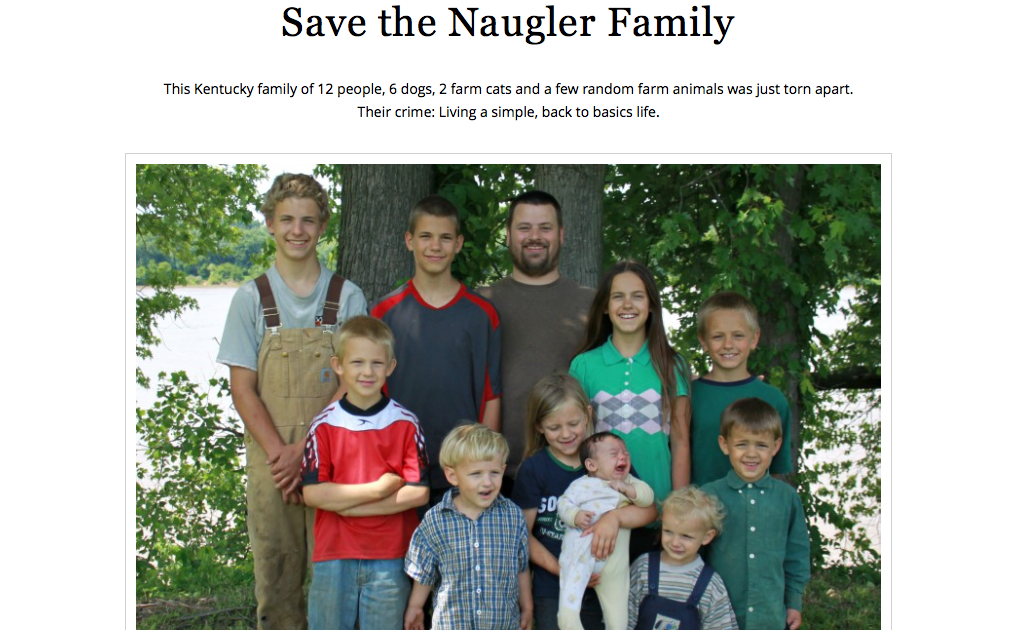
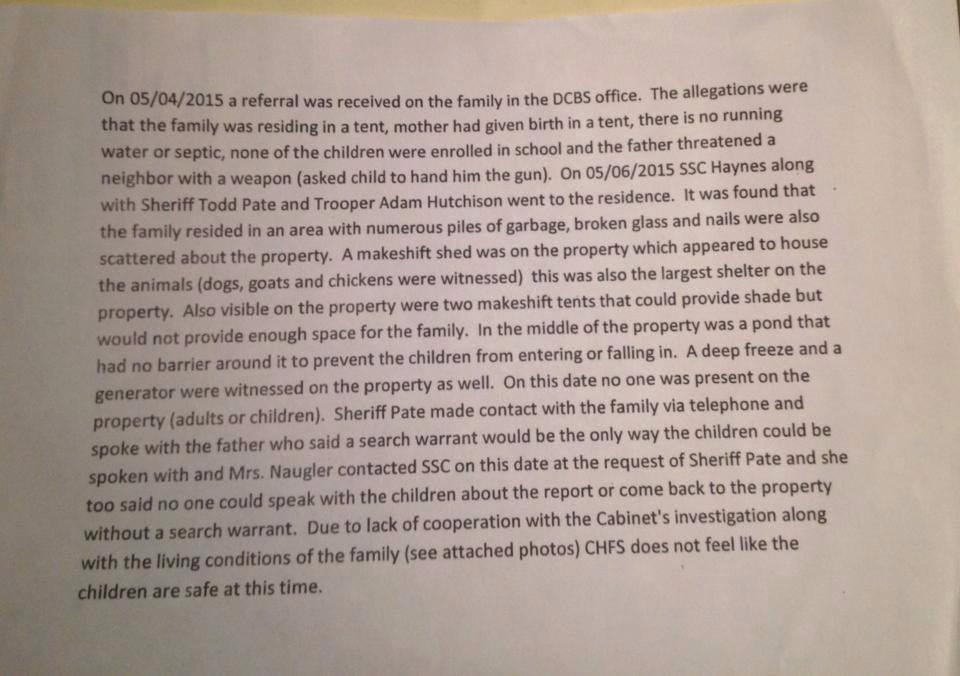 Furthermore, Nicole has revealed that her children do not have identification documents:

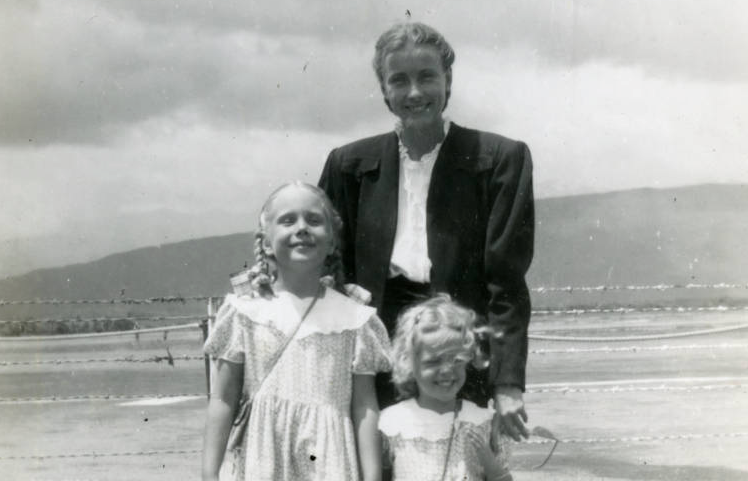

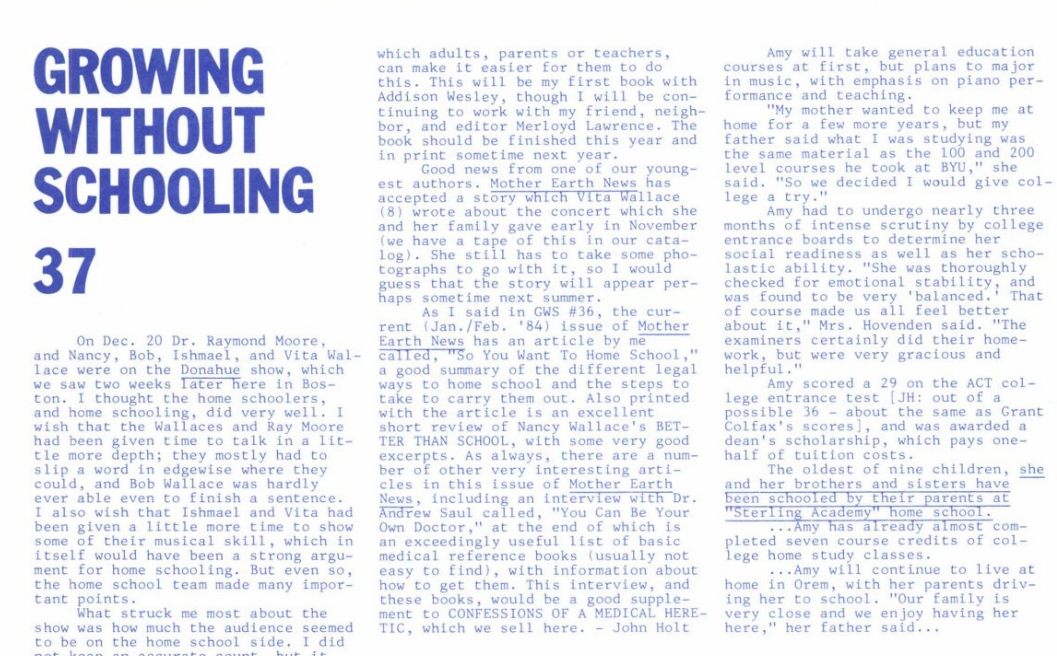
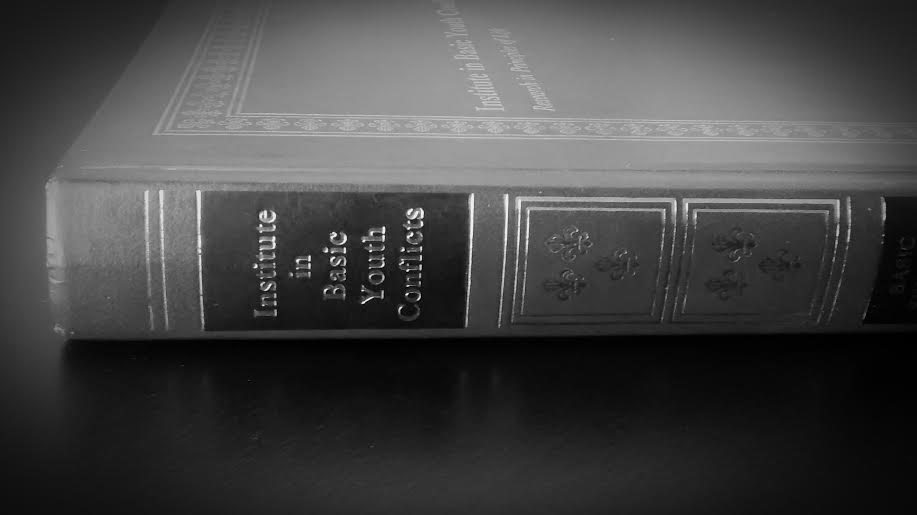
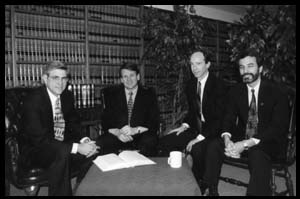






 Homeschoolers Anonymous