Resolved: That We Should Talk about HSLDA Debate, NCFCA, STOA, and CFC/ICC, Part Two

Resolved: That We Should Talk about HSLDA Debate, NCFCA, STOA, and CFC/ICC, Part Two

Note from Nicholas Ducote, HA Community Coordinator: I sent my thoughts on homeschool speech and debate to a close friend from NCFCA to have it proofread.  She responded with some reflections about her own time in NCFCA — my essay stirred some memories.  I asked for her permission to post her thoughts alongside my essay because I wanted a female voice on this topic and her response was very sincere, visceral, and empathetic. This is what she wrote.

*****

By Bethany*

This is such an important issue.

Listening to Elizabeth Smart when she gave that talk, I cried, because I used to think that way, too, and I know how trapped she must have felt and how disgusting. For so long, I absolutely thought “impurity” made you worthless. (As far as I can tell, that belief was something I picked up from a youth group leader, Harris books, unfortunate miscommunication in evangelical circles, and some of the NCFCA culture rather than my parents. I don’t think my parents really had fully figured out what they felt about the “purity culture” — they both had pretty wild pasts and wondered if there was a way they could protect their kids from it.)

I also know that I judged girls who behaved a certain way — girls that I now know I could’ve been close friends with and probably given a huge amount of companionship and emotional support to. The culture within the NCFCA kept friendships like that from happening on a large scale. (Especially as I consider myself to have been far more apt to “cross over” than many.) That makes me so angry.

I also remember a few occasions during NCFCA events when men made me feel genuinely unsafe — some guys were very predatory and harassing. And I remember every time I would be put upon by their advances, I would end up feeling guilty and shameful, like it was my fault. I really believed it was. It kept me from talking about it with anyone ever. (Fortunately I was emotionally safe enough with family and friends that I was never fully victimized.)

One thing that strikes me most about that culture we were in was the mixed messages. So much of the culture and ideology depended on the individual leading your local speech and debate club (usually 10-30 families).  These families would plan and host tournaments.  My mom and some local coaches who were far less patriarchal — they would give us long talks about how, as a woman, what you had to say was JUST as legitimate, that you should never be intimidated by a guy in a debate round and you should just be confident and hold your own, etc, etc.

Then I would go to another club or tournament and the local people there would give me the whole “women must carry themselves graciously and submissively.” I remember losing a round once because I was too assertive to a man in cross-examination, which was “unbecoming.” And it was really confusing.

I do want to say that I owe my professional confidence almost entirely to that experience, and the experience with CFC and NCFCA. Despite the mixed messages and plentiful paternalism to go around, the overwhelming lesson I carried away was to communicate as well as you could — to communicate better than the next person, male or female. Bottom line.

And that training has stuck. Part of it came from facing and facing down paternalistic attitudes — knowing there was something wrong with them and then in college developing the foundation to really push it off. Now, as a woman in a male-dominated business culture, I don’t experience the feelings of intimidation many of my female coworkers talk about and I have become a spokesperson for my company on account of that.

I’m grateful for the training.

*****

Contribute your story or thoughts to homeschool speech and debate week!

Is this a healthy or unhealthy environment for young people to grow up in? What are your stories and experiences with the homeschool speech and debate world? Were they positive, negative, or a mixture? These organizations were a vital part of many of our experiences with homeschooling in high school and no subject or institution is off limits here.

As always, you can contribute anonymously or publicly.

If you are interested in participating in this series, please email us at homeschoolersanonymous@gmail.com. The tentative deadline for submissions will be Saturday, June 29.

*****

HA note: The author’s name has been changed to ensure anonymity. “Bethany” is a pseudonym.

From Hell to Heroin to Here: Jezebel’s Story

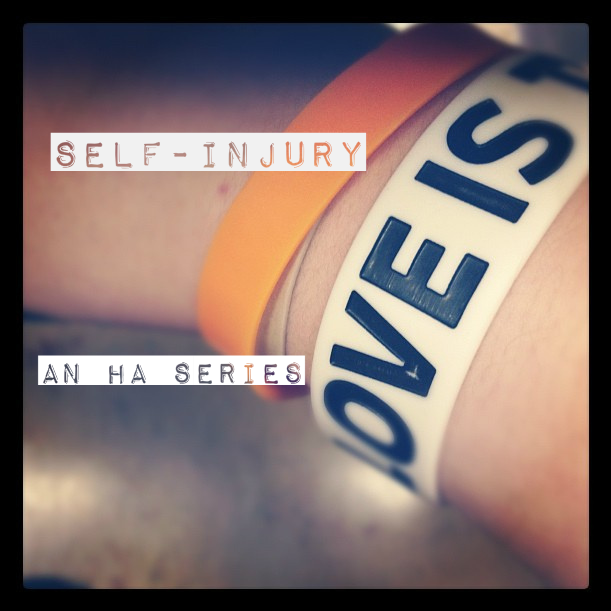
selfinjury

HA note: The author’s name has been changed to ensure anonymity. “Jezebel” is a pseudonym.

Trigger warnings: child sexual abuse, self-injury.

I’m not really sure how to describe my childhood.  Blacks and whites don’t really exist in my world, so it’s difficult to say that it was ‘good’ or ‘bad.’  I feel like we put labels like that on things to simplify them.

Unfortunately, nothing is simple.

My earliest memories are very fragmented – my memory isn’t that great to begin with, and PTSD combined with years of drug abuse have further eroded the recesses of my mind.  I remember starting first grade.  My parents decided to send me to a ‘cottage school’ where I would go to school two days a week and be homeschooled the other three.  I knew my friends from the neighborhood went to something called ‘public school,’ but from what I overheard my parents talking about, I was pretty sure that public school was bad.  That didn’t make sense to me, because my friends were really nice and their parents seemed nice too.  I was curious about public school, but at such a young age, I didn’t pay too much attention to the differences between myself and the other kids.

Around this same time (when I was seven) my father started to molest me.  To this day, I don’t talk about it too much.

At the time, I didn’t understand what was happening to me.  No one ever taught me about sexual abuse or inappropriate touching, so I thought that what was happening to me was normal.  I hated what was going on, but I understood that it was very important for me to pretend that everything was okay.  From a very young age, I understood the importance of not making waves and protecting my family’s reputation.

As I was growing up, the only sex education I received was from my time with my father.  My mom never talked about sex with me, and since I was homeschooled, I was never given formal sex-ed.  In one sense, I was insanely naïve about sex, but at the same time, I was receiving a sex-education from my father that would prove to be incredibly damaging to my psyche.  The messages he gave me were that I was powerless, worthless, and valuable only as a pleasure receptacle.  It was all very confusing for me.

As young girls, my friends and I used to talk about how we wanted our weddings to be.  We would all daydream about what type of guy we wanted to marry and what type of dress we wanted to wear.  Me, my sister, and our two best friends were planning a quadruple wedding.

When I found out that a father/daughter dance was a part of a traditional wedding, I remember deciding that I didn’t want to get married anymore.  I was willing to do anything to avoid spending time around my father.  The idea of having to dance with him made me sick to my stomach.

My parents continued to homeschool me and my three siblings.  We stopped going to the cottage school and started going to a homeschool co-op (it was pretty much the same thing, just less organized.)  I don’t remember too much from this time period.  I know that I wasn’t particularly happy and that I found solace in drawing.  I was off in my own little world much of the time, and I had quite a few pets that were my best friends.  I didn’t have a lot of friends, and the few I had I didn’t really like; most of the time I preferred to be alone and draw with my dog.

The abuse from my father continued until I was eleven.  I can’t tell you how many people have asked me why he stopped.  Don’t fucking ask me – go ask that pervert.  Maybe he’ll tell you.  I can only assume that I was getting too old for him or that he found someone else he liked better.  I didn’t ask questions about why he stopped, I was just thankful that he did.

I remember the time period after the abuse stopped a lot better than I remember my childhood.  My parents were still together.  I can’t begin to convey how terrible this was for me.  On Sunday’s my family would attend church together (by this time we had started to attend a home church because traditional church was too secular) and my dad would get up and lead worship.  I hated him so much and I didn’t understand why nobody else saw him the way I did.  Everybody I knew acted like he was such a great person – after all, he had a great job, he let my mom be a stay-at-home homeschool mom, and to all appearances he was a loving father.  My mom never noticed him abusing me, but I don’t blame her for this.  I can only attribute it to her own dysfunctional upbringing and the years of emotional abuse she endured with my father.

Even then, as a young teenager, I didn’t have the words to describe what had happened to me.  At thirteen I knew very little about sex, and I knew even less about how to express myself.  I was full of inner turmoil and hurt, and I had no outlet for it.  This is when I found out about cutting.  I was reading a magazine article about Angelina Jolie and the article said that she used to cut herself.  This was the first exposure I had to the concept of cutting and I decided to try it right away.  I got a safety pin and started to scratch my skin.  I couldn’t draw blood with my safety pin, but I liked the pain it caused me.  For the first time in a long time, I felt some release.

Around this same time, I realized that I could achieve a similar level of catharsis through not eating.  I wasn’t entirely aware that what I was doing was considered to be an eating disorder – I just knew that I really enjoyed how it felt when I would starve myself.  I came up with crazy diet plans and arbitrary numbers of how many calories I was allowed to eat in a day.  Occasionally, I would screw up and binge.  I felt horrible about my binges, so I would cut myself to try and feel better.  Somewhere along the lines I figured out that I could make myself vomit.  From that point on, I would starve myself for days, binge, and then make myself throw up.

This sort of behavior went on for quite a few years.  Of course, during this time I did my best to hide my eating disorder and cutting.  To outward appearances, I tried my best to look happy, well adjusted, intelligent, and well educated.  I simply wanted to be perfect.  I was part of a very insular community, so it was fairly easy to hide the symptoms of my problems – after all, everyone was sheltered to the point that they couldn’t recognize the symptoms of emotional disturbances.

In my early teen years, I started participating in competitive speech and debate.  My mom signed me up for NCFCA tournaments, and public speaking and debate took over my life.  I still kept up with my other school work, but the vast majority of my time was spent designing visual aids for expository speeches, researching debate resolutions, and practicing speeches.  I had very little life outside of NCFCA – as has been said by others, the closest thing I had to a graduating class were the people I competed at tournaments with.

During my teen years, I wasn’t allowed to date.  Despite the parental prohibition on relationships, I started talking to a boy I met through NCFCA.  He became my first boyfriend, and he was the first person I felt I could really confide in.  At fifteen, I was looking to him to save me.  I told him things I had never told anyone – I told him about my self-harm problems and my eating disorder.  We commiserated over our teenage angst and unhappy upbringings.  I was never able to trust him enough to talk to him about the abuse I suffered as a child, but this relationship helped me to begin to open up to people.

Of course, the relationship ended badly and dramatically (as most teenaged relationships do.)  Still, the simple experience of being able to confide in someone was profound.  Shortly after this breakup, I was researching something online, and I stumbled across an article on child abuse.  The article talked about sexual abuse and molestation.  For the first time in my life I had words to describe what had happened to me.  Prior to this time, I had heard people talk about molestation, but I always thought that if what happened wasn’t actual rape, that it didn’t constitute abuse.  No one had ever taught me otherwise.

I came unhinged when I read about what molestation actually was.  All the evil I had experienced as a child finally had a name.  Not only that, I felt justified in feeling that the abuse I suffered was wrong.  I spent that whole night crying, cutting, and throwing up.

The next day, I called my best friend.  I told her that when I was little my father had sexually abused me.  It was the first time in my life I had told someone the truth about my childhood.  I was sixteen years old.  My friend told me that she already knew – she could tell by the way I acted and talked about my family.  She knew I was miserable at home, but she didn’t know how to help me.  She was only a teenager herself.

Having the words to describe my experiences made me feel better about myself, but it didn’t help my immediate situation.  I still lived at home with my parents and my siblings and I didn’t feel safe enough to tell anyone about the abuse.  To make myself feel better, I started self-medicating with prescription pain pills and alcohol.  I started to get drunk off alcohol I stole from my parent’s liquor cabinet and I would get high off of Lortab’s and Percocet’s I found in our medicine cabinet.  My weight continued to fluctuate and my arms were still crisscrossed with cuts.  Because I was fairly isolated, few people took notice of my behavior.

My mom and I started to drift further and further apart – we would fight over the silliest things.  I wanted to listen to secular music, and she preferred that I listen to opera and classical.  I was a political libertarian and she was a staunch republican.  I thought that morality had little place in art, and she believed that the books I read needed to have strict moral messages.  We fought a lot.

On one particular day, mom and I had argued over the Harry Potter books (what homeschool child hasn’t been through a conflict involving these books?)  I ran upstairs to my room in tears.  I wasn’t really depressed about having differing opinions with my mom about Harry Potter – it was simply the metaphorical straw that broke the camel’s back.  The weight of all the secrets I was keeping came crashing down on me and I couldn’t deal with it anymore.  I felt like I had no way out, that my adolescence would never end.  So I did the only thing I could think of – I swallowed a bottle of pills and prayed that it would kill me.

My sister called an ambulance when she came upstairs and found me – I was inconsolable as I told her that I had just swallowed a bottle of pills and I wanted to die.  The ambulance came and carted me off to a mental hospital where I stayed for two weeks.

Ironically, the mental hospital was the only place where I came close to being in a public school.  Because I was in the adolescent ward, we had to attend school while at the hospital.  When I went to science class, I raised my hand and challenged the teacher on her teachings about evolution (that was what I had been taught to do in all my worldview and debate classes.)  I’m pretty sure that the staff took this as further evidence of my mental problems.

After I was released from the hospital, I went through a very rough period.  I finally told my mom about what my father had done to me.  It was an experience that I can only describe as horrific.  My mother believed me, and she had me write a letter to our church elders asking them for help.  I wrote a detailed letter and told these men what my father had done to me.  The church elders responded to my mother and said that both she and I were lying and that we weren’t welcome at that church anymore.  To this day, my father still attends that church and is a very active member.

Amidst all this madness, I attempted to finish my senior year of high school.  It was chaos.  My mom and I cobbled together a transcript that was substantiated by my debate experience, my love of classic British literature, and little else.  I was very intelligent, but no one ever really made me complete my math or science homework.  I would tell my mom that I did my math or science homework, and for the most part, my word was enough assurance that I was getting a well-rounded education.

When I went to take the SAT I hadn’t studied (literally, I think I cracked the study book one time) and I was hungover.  I did very well on the English and reading portion, and I bombed on the math portion.  At this point, I didn’t particularly care about school though, and my home life was so hectic that my mom didn’t have time to care either – she was in the process of dealing with a hellish divorce.

During my senior year I was so busy going to therapy and psych appointments that I never got around to applying to colleges.  Growing up, I had always wanted to go to college, but in the midst of the wreckage of my parent’s divorce, nobody really had time to help me figure out what I wanted to do with my life or where to apply for school.  I got more and more depressed and I started drinking and abusing pain pills even more heavily.

After high school graduation, I was simply drifting through life.  I worked a dead-end restaurant job and spent all my spare time at bars (I had a fake ID that I had stolen from someone.)  The only friends I had were people I knew from work – very few of my NCFCA friends kept in contact with me and I felt a bit ostracized.  Alcohol and pills fixed these feelings though, so I continued to self-medicate.

Eventually I applied to the local community college.  I went there for a semester, and I enjoyed it.  At the time though I was working fulltime at the restaurant, working weekends at a haunted house, and trying to keep up with a fulltime school schedule.  I ran myself ragged – my health started to deteriorate and I ended up in the hospital with meningitis.  I would also periodically have to go to the doctor because I got severe kidney infections.  One day as I was leaving to go to work, I simply collapsed in the garage – my body was wearing out.

While I was going to community college I couldn’t stop drinking.  I would routinely show up to class drunk or high out of my mind.  Alcohol was the only thing that helped me feel less stressed.  After one semester of college, I dropped out.

After dropping out of school my life became a bit of a blur.  I continued to drink myself into a stupor every night because I was severely depressed.  After a while, I got fired from my restaurant job because I routinely came to work drunk.  Within a few weeks of getting fired, I tried coke for the first time and I loved it.  I started routinely doing hard drugs.  My drug use culminated in an addiction to heroin.

To support my drug habit, I started working at a strip club.  I worked as a stripper and a prostitute for several years before I got arrested for trafficking heroin.  My life was a wreck and I had nowhere to go, so I went to rehab.  I had tried going to rehab several times before, so I wasn’t sure that it would work for me, but I was out of options.  I ended up in a year-long program, and it saved my life.

When I was shooting up heroin and stripping, I didn’t care about my life.  I would overdose or get beat up and it didn’t matter to me.  I felt like I was a fuckup and that my life wasn’t worth living.  In rehab I did the hard work of processing everything that had happened with my family, and as awful as it was, I’m a more whole person for all that.

It’s ironic – while I was in rehab, I was processing with a counselor and I told her about how I was brought up – conservative Christian homeschooler.  She was shocked.  She said that my story completely reframed how she thought about homeschooling.  She had always assumed that homeschooling was a good way to safeguard against having your kids become radically screwed up.  I guess I disproved that idea.

Since graduating rehab (most of the kids I competed in NCFCA with graduated college this year – I graduated rehab – ironic, right?) I’ve done my best to live life sober.  I attend 12 step meetings and a big part of my recovery is letting go of my resentments.  I’m still working on letting go of some resentment I have about my upbringing, but I’m slowly coming to terms with it.  In no way do I blame my choices on the way I was raised; I accept complete responsibility for my actions over the last few years.  Still, as people we are the sum of our experiences, and homeschooling was a huge part of my experience.  My upbringing shaped me into who I am today.

I can’t say that I liked the process of getting here, but today my life is good; I have a good job, I’m clean and sober, I’m not incarcerated, and I have people that love me when I don’t love myself.

It’s been hell to get here, but it is what it is and I’m okay with that today.

The Bruises Becoming My Silent Screams: Timothy

The Bruises Becoming My Silent Screams: Timothy

HA note: The author’s name has been changed to ensure anonymity. “Timothy” is a pseudonym.

Trigger warning: self-injury.

I don’t really remember how I got the idea. It just sort of happened.

I was at a homeschool speech and debate conference run by Communicators for Christ, that traveling caravan that brought NCFCA to the Christian homeschool masses. I wasn’t exactly the model homeschool student. Which doesn’t meant that I wore pentagrams and listened to Korn. It means that, when I liked a girl, I would try to hang out with her. But a guy and a girl hanging out — in the I Kissed Dating Goodbye world — meant that, I don’t know,  they’d have sex. And we all know sex leads to social dancing. Or that was the running joke.

Apparently I spent too much time with this girl. Because I got dragged in front of three sets of parents and — in front of all of them, as well their kids — got raked over the coals for all sorts of questionable activities. Not making out, or holding hands — I don’t even know if the girl liked me, so, yeah, we didn’t get as close as even holding hands. But apparently just talking to a girl for those few extra minutes in between debate classes justified this public inquisition.

Frankly, I was shaken to the core. I had never had experienced such a strange situation, having parents — not mine, mind you, as they weren’t there — criticize me in front of peers, as if to make an example of me. I was horrified and embarrassed.

I wanted to cry. I felt confused and surrounded and had nowhere to run or hide but just had to sit there for hours, listening to this “purity intervention.” But I already felt like I was a failure. I did not want to be myself in the position of revealing the pain I was in. Then I would have felt even more like a failure.

So after that, in between classes, I would hide in the bathroom. I was embarassed and didn’t want to hang out with anyone. And then I started hitting my thighs. At first just to get the negative energy out. But then I began hitting myself harder. Harder to the point that I was beating myself. The more painful it was physically, the less I felt emotionally. I was using my fists to bruise my skin — the bruises becoming my silent screams.

That was the beginning. For the next few years this became my chief method of releasing stress and turmoil. When parents criticized me, when my parents wouldn’t stand up for me to other busybody parents, when I would later leave Christianity and fundamentalism behind and find myself ostracized by my former friends and communities — I couldn’t bring myself to accept myself as my own self. I’d simply punish myself, my body. I would think, I was predestined for hell. That’s what they probably were thinking anyways. I was a vessel for wrath; I was always a vessel for wrath; I might as well prepare myself for eternal punishment in the here and now.

Now I know better. Now I know that those parents were trapped by their own fears, creating their own prisons of perfection and trying to bring everyone else into their prisons as well. Now I know that my body deserves better, that I deserve better.

It’s taken a long time to find this new strength. But I did find it. And now I refuse to treat my body like those parents treated my spirit.

Burn In Case Of Evil: Cain’s Story, Part Four

Burn In Case Of Evil: Cain’s Story, Part Four

HA note: The author’s name has been changed to ensure anonymity. “Cain” is a pseudonym.

*****

In this series: Part One | Part Two | Part Three | Part Four

*****

My Home “Education”

A lot of people read this site and remark on how accomplished, out-spoken, and well-educated we all seem.  Many have remarked that it was obviously homeschooling that made us who we are.  The answer to that question is complicated because I am what I am because of, and despite of, homeschooling.  When your entire social life and community K-12 is homeschooled, of course these influences significantly impacted my life.  But much of my adult life has been spent “re-learning” everything (from social skills, to history, to biology, to relationship etiquette).  I was taught about all of these things through homeschooling.  Some subjects I was never taught properly in high school and my insufficiency handicapped my educational opportunities.

My mother was the primary instructor and, bless her heart, she only had a GED and a few college classes.  It’s not that my mother is not smart, or stupid; it’s that she was not qualified to give me a high school education.  I consider most of my educational experiences before 8th or 9th grade to be generally positive.  I excelled in spelling, math, science, and language arts.  I really had an interest in science at an early age – I can remember enjoying earth science, nuclear science, and astronomy/space.  As I entered high school, a few things happened.  First, we got involved in ATI (a homeschooling cult) when I was about 10, but by my high school years the “Wisdom Booklets” became my primary textbooks (other than math).  Second, I became involved in NCFCA/CFC when I was 13 – started debating at 14.  Third, I started liking girls and “rebelling” by falling for them and having innocent phone and text conversations.

We used Saxon math as a supplement to the Wisdom Booklets.  I excelled at geometry, basic algebra, and word problems.  I’ve always enjoyed problem solving.  As I got involved with advanced geometry and algebra II, my mother simply could not keep up.  I would call my older sister, who was pursuing an engineering degree, and she would try to help me through it.  But math-by-phone is no substitute for a math teacher.

I think about 15 or 16, when I got involved heavily in debate, my mom stopped requiring me to do math.  Debate literally took over my life and I spent about 40 hours a week researching, writing speeches, and talking to friends in homeschool debate.  I consider my friends from CFC/NCFCA as the closest thing to a “high school class” because they were the only social group that I interacted with somewhat limited parental oversight.  I excelled at debate and it fed my father’s interest in history and politics.  So for three years all I did was debate, which was vastly superior to Wisdom Booklets.  My education with Wisdom Booklets made me think that AIDS was a gay disease and my sex mis-education was downright reckless.  I “learned” about logarithms intertwined with the tale of Jesus multiplying the loaves and fishes.

When it came time to submit my high school transcript for college (and to apply for state scholarships) my parents sat down at the computer and literally made up my transcript.  Debate-related activities and research were labeled under lots of different titles (American History, Composition, Logic, Civics, Public Speaking, English, etc).  Of course, I got A’s in all of these categories.  Now, my parents had some semblance of ethics and they decided I needed to complete some science courses to qualify for the state’s college entrance requirements.  My science courses in high school were pathetic, with the exception of computers because my dad worked in the industry for his entire adult life.

During most of my junior and senior years, I worked full-time and debated.  There was a long-distance Latin course from PHC, chemistry, and biology course interlaced with working and debate.  I got C’s in all of these classes and I’m pretty sure I had to cheat on two of the finals just to pass.

Technically, I took a chemistry and biology course, but in reality, I learned nothing about those subjects.  My mom wasn’t that knowledgeable in sciences. I used the Apologia biology textbook.  I remember bumbling through the biology book, not understanding anything I was reading.  Mostly because there was no grand narrative, like evolution, to make sense of all the different species.  I excelled in college biology, but not until I understood the topics from an evolutionary perspective.  My chemistry course was me and my homeschooled friend learning from his father, who was a doctor.  The “classes” lasted for maybe a month or two, but then life got busy and I stopped going.  He didn’t really follow-up, for whatever reason, and my parents didn’t seem that interested either.  So I taught myself chemistry?  Nope, I suck at chemistry – on a very basic level.

As a side note, I’m great with computers because of my father, but I never took a programming class beyond Visual Basic.  He tried to teach me about things, but it always seemed like I was missing part of the story – like he wasn’t “dumbing it down” enough.  Looking back, I realize it’s because my father was trying to teach me only the practical applications of computers while never learning the scientific theory.  I know he knows all about it, but I don’t know that he was qualified to teach it to a child.  It’s not like I gained marketable skills from my computer education.

I was also a huge asshole when I began college. I’m sure you know the type: fundamentalist Christian debater.  I had no idea how to navigate relationships with non-homeschooled people and it took a year or two, many broken friendships, and loneliness to find friends.  I was also encouraged through programs like Summit to challenge my “evil, secular humanist” professors in class – to “stand up” for Jesus in the public classroom.  I was prepared to enter an atmosphere that antagonized Christians and Christianity.

College was fantastic, but difficult and filled with substance abuse.  I realized that I had ADD, but self-medicated for sometime with cannabis.  Alcohol and cannabis helped with the anxiety –social, existential, spiritual, school and parent-related – and helped me to socialize with big groups.  I still can’t socialize with big groups of people easily and I lucked into taking a lot of Honors classes with small class sizes.  I almost lost my big scholarship (which required me to keep a 3.5) in my sophomore year because I got terrible grades in science and foreign languages.  I didn’t know how grades or tests worked, let alone how to study.  I excelled in political science and history, so that’s where I stayed.  I didn’t take biology until my senior year.  I finally understood it and, since then, I’ve developed a keen interest in neurobiology, psychopharmacology, psychology, and health care issues.  At this point, I’d love another two or three years of school to get a B.S. and another three to get an M.S., but that part of my life is over now.

I remember a time in middle school when I really wanted to be an engineer and I still think I could have excelled at it, if it wasn’t for my homeschooling.  Yes, I have an MA, but I’m confident I could have a stable, well-paying job in a science-related field.  My liberal arts education came easily to me, but I would have relished the challenge of advanced science and math.  Almost every public school student has a somewhat competent math teacher and most have access to AP calculus.  Yes, debate is a great skill and it has made me successful, but I’ve always been jealous of people who excelled in math or science – like I once did – and moved seamlessly into the job market.

To be continued.

A Call for Contributions to HA’s Upcoming Self-Injury Awareness Series

A Call for Contributions to HA’s Upcoming Self-Injury Awareness Series

 By R.L. Stollar, HA Community Coordinator

*****

Update, 06/04/2013: We will be starting this series on Monday, June 10. So if you are interested in contributing, please try to get your submissions to us by Saturday, June 8. The series will be running for all of the following week, so that’s not a “it must be in by then or you can’t contribute” deadline. Just send us an email and let us know if you need more time beyond Saturday.

*****

I vividly remember the day when cutting struck close to home.

The year was 2004. I was a junior in college, and visiting a friend at Point Loma Nazarene University in San Diego, California. I remember the evening when he started telling me who among the debate clubs we coached cut themselves. Actually, I should rephrase that: he did not tell me who; rather, he gave me the list. Because there was a list. There were that many.

I remember what I was eating. Because I was eating In N Out. Living in Oregon where In N Outs do not exist, I looked forward to eating it as much as possible while in San Diego.

I remember what I was eating because I instantly lost my appetite. My stomach clenched into a knot of pain. I would describe that pain as dull chainsaws hacking at my insides.

My stomach clenched not only into a knot of pain, but a knot of fury.

I could not articulate to anyone at that time why the pain mingled with fury.

But I can tell you now: I was furious that we had grown up, and were growing up, in a culture that tried so hard to be perfect but failed miserably and could not admit its failures. I was furious that homeschooling was paraded around as this children-first movement when in fact children were so often subjugated to the ideologies of their parents, to the point that children’s needs were being ignored. I was furious that these children did not feel safe enough to express their needs to their parents. I was furious that I knew I could do nothing — that I was powerless to help.

I cannot think about homeschooling without thinking about self-injury. I know they are not inherently related, but they are psychologically related in my own mind because of my personal experiences. I think about my friends who cut themselves because they had no other outlet to express their pain; I think about my friends who drank themselves into stupors, or overdosed, because the pain was overwhelming; I think about my ex-girlfriend, who would regularly lock herself in the bathroom to bang her head repeatedly against the wall or access her razors while I would beg her to please come out, that I would do anything I could to help — but again, I was rendered helpless.

I know there are many stories out there, many more than the ones I know. I know from my relationships with my friends how difficult it can be to struggle with self-injury, and how hard it is to overcome. But I also know that it can be done. I have seen people find strength to overcome and find healing for their pain.

This is honestly one of the most important subjects for me, personally, to bring awareness to. So I would like to do a self-injury awareness series at HA. This series would welcome contributions on any form of self-injury/abuse awareness. I know this can be a very difficult subject to talk about, but I am hoping that, in talking about it, we can shed light on this issue and maybe bring hope and healing for other homeschoolers.

If you are interested in contributing, here are some ideas for what you could write about:

1) Your personal story of struggling with self-injury

2) Your personal story of being a friend to someone struggling

3) Your thoughts on the relationship between your homeschooling experience and self-injury

4) Your advice, as someone who personally struggled with self-injury, to other homeschool kids who are currently struggling

5) Your advice, as a parent to a kid who personally struggled with self-injury, to other parents who have a kid currently struggling

You do not have to pick just one topic. You could combine several of these ideas, or bring your own ideas to the table, or — if you have a lot to say — contribute several pieces on a variety of these topics. There is no deadline as of yet. We are just putting out feelers to see if people would like to be a part of this and share their stories. At some point soon we will come up with a concrete deadline.

As always, you can contribute anonymously or publicly.

If you interested in participating in this, please email us at homeschoolersanonymous@gmail.com.

TeenPacters Speak Up: Part Two, TeenPact And Me

TeenPacters Speak Up: A Series by Between Black and White

HA note: This series is reprinted with permission from Between Black and White. Part Two was originally published on May 20, 2013.

*****

Part Two: TeenPact and Me, by Kierstyn King

Kierstyn King blogs at Bridging the Gap.

TeenPact is a christian conservative/evangelical organization that organizes government and civics classes and camps throughout the country. Their goal is to raise a generation of christian leaders (teens) to go and bring the country back “for christ” by encouraging activism and male leadership.

When I think about TeenPact and my time there, I don’t feel anger – like I do with most of my other past experiences. I feel confusion. Because I have so many good memories and experiences that are entrenched in environments that perpetuated the lies that enabled an abusive environment to thrive.

The thing about organizations like TeenPact and NCFCA is that their goal is to raise a new generation of leaders – thinkers, even – to do one specific thing: Take the nation back (for god!). What they don’t count on, is that by giving us the tools and resources to think critically, we’ll actually, you know, think critically and carry that on throughout our adulthood. Which is awesome and I’m really happy that I was allowed to learn that, because it’s served me well and enabled me to become the person I am today. Funny thing though, our parents and the people who head up these organizations get extremely grumpy and upset when we do what they taught us to do (or at least you know, the thinking part of that) without doing the rest of what they wanted us to do.

They teach us how to think, but then, they don’t actually want us to think, they want us to do their bidding.

And this, in a nutshell, is my beef with TeenPact. I’m going to be splitting this into parts instead of writing a book of a blogpost – because some things need to be fleshed out more, so for today, I’m going to concentrate on one particular event that happened while I was staffing.

I staffed one of the GA State classes in 2007. As staff, I helped oversee the voting process – a process which is designed to teach students about how elections work (assuming everyone is honest). The votes were tallied and my friend was a clear winner. I was pleased with this, and a little proud because he had really gone out of his comfort zone to even run. I was appalled, confused, and maybe a little angry when in that back room the Program Director turned to us and said, well, I don’t think he’d make a good governor, we should choose someone else. The founder was there and the high ranking staff wanted to impress him (by discarding the process?) and decided that my friend wouldn’t do it.

So in that back room, the Program Director, and the higher ranking staff decided to choose someone else from the 3 candidates to be governor and told us to be quiet about it. I was 15 (2 weeks before my birthday) and I had no idea how to respond – I was too shocked to say anything and too surprised to complain or dissent, so I stood there quietly, feeling as though my mouth was gaping.

When we left the room with the new results, and with the Program Director deciding that his vote overruled all, I was full of shame and guilt. We announced who won and there were many questions – because in the other room, everyone tells everyone who they voted for, so everyone actually knows who won. People asked me questions and I couldn’t respond. My friend asked me and I was crushed and had to give him the same line I had given everyone else:

“It’s just what the votes were”.

I felt helpless because everyone who I would have talked to about it, was in that room and made that decision. They didn’t expect dissent – honestly, I don’t even think dissent is allowed, though it’s never directly stated – it’s a very homogenous group and anyone who does dissent is instantly cast as weird/strange/anything you don’t really want to associate with.

The staff did what they did because they didn’t want to get in trouble with Mr. Echols. I don’t know what the staff meetings are like, but I imagine that choosing a good face was enough of a requirement to strike fear into the hearts of the interns.

To be continued.

More Than Just a Love Story: Phoebe’s Story

HA note: The author’s name has been changed to ensure anonymity. “Phoebe” is a pseudonym.

It was awkwardly quiet in the car as my words settled. They echoed in my own brain, I could only imagine what Michael was thinking.

“I have the highest respect for you, but I don’t think we can keep dating. I feel like I need to find someone who is more like-minded.”

The problem was, Michael was not a homeschooler and did not come from an evangelical background like I did, just the opposite in fact. His family was laid back about spirituality and never addressed it with structured religious custom. Pressure from my homeschooling family and friends and internal guilt had brought me to this point. I was sitting in the car with him having this awkward conversation because I felt there was no other option. I had grown up in a cloistered, homogenous community and I needed to find someone who would help me create the same kind of community for my own future children. This had been made clear to me when my family found out what kind of man I was dating.

When he graciously hugged me despite his confusion and left the car without looking back, I felt the old loneliness unpacking its bags and moving back into my heart.

For me, the story of being homeschooled was a story of being told to sit down and shut up. “An ideal woman is quiet and submissive,” I was told time and time again. As a weird, geeky, slightly tomboyish girl, I certainly didn’t fit that description at all. I ran around in the woods for hours at a time, I loved competitive debate, Cheese-Its and oversized cargo pants. My stubborn, goofy personality did not fit well in the sheltered, pressure-cooker that is the homeschooling culture.

My family followed the Quiverfull doctrine, which meant I was told that I was an arrow in my parent’s quiver, to be shot out into the world for God’s glory. As time went on, I began to realize that girl arrows get a much narrower, more specific target than boy arrows. They are to become wives and mothers or celibate missionaries. End of story.

At the local homeschooling meetups, it was hard for me to find a place in the circles of thin, whispy girls who were being groomed to be homeschooling mothers and wives. The pressure to be quiet, mousy and seemingly perfect was very high. I tried. I wore dresses and grew my hair out long. I read and quoted books about meekness and godly womanhood, and did my best to avoid hugging boys.

Ultimately, I wasn’t happy. I would hear the adults debate about how women were to be silent in the church. I would hear my dad yelling at my mother, telling her she was not a submissive wife. I would hear girls and mothers gossip about each other and use nasty words for whoever wasn’t ladylike enough. I saw the thousand mile stare and deadpan look on my mom’s face when she opted yet again to check-out, bottle up everything she was thinking and let her bitterness grow. I watched as other homeschooling mothers picked our family apart, criticizing us and pushing my mom around, spreading lies and rumors about each of us that my mother refused to refute. After years spent in this oppressively judgmental and chauvinistic environment, I listened to what I was told. I shut up just to avoid attention and judgment. I hoped to go unnoticed so no one would point out how inadequate I was. The silence and submission I was pushed into was ultimately a place of loneliness, bitterness and almost crippling insecurity. I wanted to get out, but I didn’t know how.

I went to the local college despite my parent’s discouragement. College (especially for women) is clearly contrary to the beliefs of many very zealous home-educators. In class, I met women who spoke up when they had something to say (sometimes even when they didn’t) without anyone thinking anything of it. Women who taught and led classes with passion and a certain touch of oddness that was all their own. They didn’t fit the submissive woman cookie-cutter shape I had grown up with. They were themselves. They were more feminine with their pant suits, unkempt hair and unabashed geek-out sessions than anyone else I had met. I wholeheartedly believe this is true because didn’t feel judged by them and I didn’t feel like less of a woman myself when I was around them. In my mind, that is a huge part of being truly feminine, letting other women feel comfortable being themselves around you. I cut my hair short, I got clothes that fit and I raised my hand in class.

Then I met Michael and we started dating. Michael is goofy, he is curious, he asks questions. He drew me out of my shell, took my hand and encouraged me to stand up and say something. We got into debates and he never once told me to shut up or submit. He was one of the first men I met who didn’t feel like women were solely meant to be homemakers; he helped me build a new confidence in the possibilities that were ahead of me.

Things got rough for Michael and I when my family and friends in the homeschooled circles realized what was going on. I was encouraged to dump him. I was told the path I was going down was dangerous. I was told our future children would go to hell, for sure. Michael was aggressively witnessed to by my family and friends almost constantly. He and I began to argue about religion and conservative beliefs almost every time we went out. I desperately wanted him to sit down with me, to shut up with me, so we could just quietly carry on and go unnoticed and free from judgment. Maybe if he would just nod his head in public and let the judgment pass us by.

He wouldn’t have any of that, so I tearfully dumped him. I decided in that moment that I would rather be comfortable, miserable and silent than be with the man I loved.

It took time, but we stayed in touch and slowly our friendship grew again. It became obvious that he was the man I wanted to be with and that the homogenous, fear-based homeschooling environment I had lived in for so long was holding me back from the life I now knew I really wanted. I wanted to be part of a family that could be open and honest and be married to a man who treated me as a true partner and an equal and respected my thoughts and goals. Two years later, on a pleasantly chilly day, we were married. My family and friends are still unhappy that this arrow went off target, but slowly they are learning to accept my husband and I for what we are and I am learning to stand up for myself around them.

With time I came to understand that my purpose on earth is not determined by my parents or the judgments of the homeschooling community. It can be hard to think and decide for yourself when you grow up without any autonomy, stuck at home with all your life decisions and friends carefully picked out for you. Sometimes, I get overwhelmed and slip back into passivity or dysfunction. I know this is frustrating for my husband to see, but he encourages me to step out of it.  Slowly, I am discovering how to communicate and take charge of my own life.

I am grateful to be away from an environment where women are told to sit down and shut up. Michael and I are slowly building a new family culture from the ground up, one that’s founded on mutual respect, openness and love. I hope if we ever have children, they will never feel like powerless arrows that their parents just shoot at set targets. I hope they will know that they are free to choose their own future, and that they will be prepared to take responsibility for doing so.

After homeschooling, this next phase of my life has become more than just a love story. It is about breaking the silence and learning to speak out for myself.

We Need Advocates: Philosophical Perspectives’s Story, Part One

Screen Shot 2014-08-23 at 1

HA note: The author’s name has been changed to ensure anonymity. “PhilosophicalPerspectives” is the author’s chosen pseudonym.

*****

In this series: Part One — We Need Advocates | Part Two — A Tool In Someone Else’s Culture War

***** 

As a kid, I remember seeing national media stories about homeschool families like Kevin and Elizabeth Schatz, who beat their daughter to death in 2010, or Banita Jacks, who in 2009 was convicted of murdering her four daughters.

I clearly remember having conversations with my mother about how “those people weren’t really homeschooling” and how our family and friends were getting it right. We talked about how they weren’t really part of any home school community, and their parents were just trying to get away from the responsibility they bore for the abuse they inflicted, by claiming the title “home schoolers.” The home school community distanced itself from these stories, claiming that the abuses of a few “nutjobs” shouldn’t impact the rights of the whole homeschool movement.

It’s been interesting to hear the same lines come up in response to the stories shared on this blog. In comments on other sites, I’ve read many things like, “you could find 30 abused kids in any school system!,” or “these kids’ parents were just crazy. That’s not what home schooling is really like!” It seems like many people invested in the homeschooling movement are reading this blog in the same way my mom read stories like the ones mentioned above — as extreme examples of abuse from people on the far fringes of the homeschool movement.  I’ve read comments that go so far as to dismiss these stories outright. More people, though, lament the suffering they read about, but make comments that distance themselves from the problem. These extreme cases are hard to catch, the sentiment goes, because these families never show up to homeschool groups or 4-H clubs or churches or anywhere we (homeschoolers) might be able to intervene. “These kids were totally isolated! It’s not our fault!” they declare, explicitly or implicitly.

This is misguided.

For many of us who are sharing our stories, our families were not on the fringes of the homeschooling movement — we were at its center. Our parents were the ones running the debate leagues, and founding the AWANA programs. We were the ones winning awards, respect, and acclaim. We are the poster children of the homeschooling movement.

And yet, we suffered serious abuse and neglect, and no one intervened on our behalf.

As a survivor, I started asking why. I was (almost constantly) involved in a myriad of extracurricular activities, and none of the adults in my life intervened in the neglect I experienced. They either didn’t notice, or didn’t care.

This is what isolation looks like in the homeschooling community.

I interacted with many adults outside of the homeschool movement, in many different contexts, and I honestly don’t think any of them had an inkling of what was really going on. Homeschoolers have always been trained to put on our most adult, most mature face to the outside world. This has to with the ways we’ve been socialized and the pressure we face to be walking proof of  the “success” of homeschooling — but that’s another post. Regardless, we’re excellent at being polite and reciting (often eloquently!) the ideas we’ve been taught. We therefore often make a very positive impression on outsiders — I can’t tell you how many times I was told how grown-up, how mature, how insightful I was when I was a tween. Most of the adults outside of the movement were so blown away by my irregularity (and my ability to discuss the classical origins of astronomical nomenclature) that they never asked deeper questions about my education or physical well-being, let alone about the emotional and spiritual abuse that was present in my home.

I also regularly interacted with adults within the homeschool movement, where parents should have been able to notice what was happening — and still, no one spoke up. Many of them didn’t (and still don’t) consider what many of us endured abuse — it’s just part of the process of “training up a child.” Many bought into the same vision of religious indoctrination and corporal punishment. The “us vs. them” mentality was huge, and “them” was often Child Protective Services. I’d still be surprised to hear of one home school parent reporting another. Even when the “moderate” parents didn’t agree with the techniques of the more fundamentalist ones, the “rights of the parent” continuously won out over the rights of the child. This line of reasoning is currently being used by the HSLDA to justify the refusal to ratify the UN Convention on the Rights of the Child.

The combination of these factors created a unique culture that fosters and covers up or ignores the abuse and neglect that happens at the center of its community. The case against Sovereign Grace Ministries, an evangelical denomination that promotes homeschooling, is just one example. We’ve experienced it, and we’re hurt. There was a deep sense of community in the homeschool movement, and many of us, as kids, trusted deeply in its people and institutions. Now that I’m an adult reflecting on my experiences, I feel betrayed. The people I trusted perpetuated the systems of indoctrination that harmed me, and facilitated my parents’ neglect.

This is what isolation looks like in the homeschooling community.

The invitation that this blog presents to the homeschooling community is to begin to take abuse, neglect, and indoctrination seriously, and refuse to look the other way. The children of homeschooling need advocates, and our parents aren’t always looking out for our best interest. Neither is the HSLDA.

To be continued.

Quiet Dog (Bite Hard): Thomas’ Story

Quiet Dog (Bite Hard): Thomas’ Story

HA note: The author’s name has been changed to ensure anonymity. “Thomas” is a pseudonym. This story was written as a companion piece to Cain’s stories. Originally, Cain and Thomas wrote their stories to intertwine and this story makes reference to the book burning Cain discussed.

*****

“Fuck Martha Stewart.”

~ Tyler Durden

They say my friend Cain is hard to get along with. That he’s sometimes dogmatic in his beliefs, sometimes ungentle in an argument, sometimes a bit arrogant and sometimes insensitive with how others feel. These same people will invariably turn to me and say, “but why do you get along so well with him? You’re caring, and sensitive, and you listen to other people’s opinions and never push others aside—you’re everything Cain is not!”. But this is unfair and a terrible misunderstanding. What they don’t understand is that those very same qualities that make Cain an “asshole” are the very same reasons we get along so well. In fact, I admire the asshole in Cain.

I want to be that asshole someday.

You see, it’s not that I’m nice. Or caring. Maybe I am sensitive, but if I had to be brutally honest (and I do, really, want to be brutal) my sensitivity stems from deep-seated insecurity. I am not kind because I am kind, I am kind because I am deathly afraid. Afraid of what you might think about me, afraid of what think about me, afraid of what you might do, afraid of what might do, and afraid afraid afraid of a thousand other fears. Sometimes people look at me and for no reason at all, without any sort of context, without even having met me before, and say, “you need to calm down”. Or sometimes they notice that I seem to shake very subtly all the time and ask me if I’m cold. And I’m so lost in my own head, chasing my own mental tail, that this sudden interruption in my inner-dialogue startles me, and I always look wild-eyed and scared, and I never know what to say in return so I stammer, and mumble, or just say absolutely nothing. Which probably doesn’t help the perception that I need to calm down.

What’s worse is they’re absolutely right. I do need to calm down. But how does one simply tell oneself to calm down? Trust me, in my head I’m screaming at myself to calm down, but that other anxious me in my head will always turn to the yelling me, laugh, and say with the accusatory finger, “No, YOU calm down!”. It’s a vicious cycle, the most morbid sort of tail-chasing invented by dog or man. It’s a terrible circle I’ve been drawing for my entire life, though I can’t necessarily blame any one thing or the other. I don’t believe in cause and effect. Maybe it’s all things wrapped up into one psychic knot. So let me unravel some of the threads before we return to my friend Cain, because in order to understand my relation to Cain, you have to understand me, and to understand me, well… you won’t. But for starters you’ll have to understand the concept of lapdogs, role-playing, and a book called Fight Club.

I was always a sickly child. With this condition and that condition, from infancy to adolescence to adulthood, I had one problem after the next. So obviously I spent a lot of time at home, with my mother, who coddled me. Don’t take this to mean I hold a grudge against my mother for coddling her sick child (who would?), just that God or Fate or stupid Bad Luck or whatever force that dictates these things saw to it that I was destined to become Mommy’s Favorite. I hogged all the attention; from my sister, from my brother, probably even from my father. I was always sent home from school (when I was going to school—later I would be homeschooled), I always had to be rushed back from a friend’s house early, always had to sit on the benches while my little league teammates played the game… essentially I was always in her lap. Like her quiet, dependent little dogs she loved so well. So it was inevitable that as she became so firmly attached to me, I became attached to her. Nobody would ever diagnose themselves with an Oedipal Complex, but I was unwittingly usurping my entire family’s place to be with my mother. And if you knew my mother, she was the Household.

If I wasn’t in my mother’s lap I was in the hospital. I bet you don’t know what Pyloric Stenosis is, but it’s no fun. It’s when your esophagus doesn’t connect into your stomach for one reason or the other. One reason is the sphincter in your stomach is too loose around the tubing of the esophagus, so your food spits back out of your stomach. The other reason (mine) is that your esophagus is too high up, so my food spit itself back out of my stomach. The results of both is you throw up every time you eat something. Or whenever you are jostled too much. My parents had an affectionate name for those Johnny-Jump-And-Bounce contraptions you put babies in—you know, those little seats suspended by bungee cords babies like to bounce in. Well, they called my Johnny-Jump-And-Bounce Johnny-Jump-And-Puke. I would go down, then up, then puke, then down, then up, then puke. I was a vomit machine, and always therefore crying. Why would they allow this to go on? Because Pyloric Stenosis usually corrects itself if you have the former cause, where the sphincter is too loose. But I, of course, had the latter cause, which doesn’t. So after countless medical examinations, after all the poking and prodding into my orifices, into surgery I went. They said the scar would disappear, but it hasn’t. It simply stretched.

I bet you know what Croup is, though. They call it the “barking cough”, which I believe is terribly ironic looking back. Here I was, the “quiet dog” in mother’s lap, with a barking cough. Oh, but Croup is not just having a bad cough. No sir. Have you ever felt your lungs rattle your entire body? Not just rattle, but shake, shake every fiber and nerve and bone and tissue and blood vessel in your body. It’s like having your own personal earthquake. Do you know what it’s like to have your throat constrict to the point where it is no larger in diameter than a coffee straw? How much oxygen can you get breathing through a needle-point? Have you ever had to sleep outside, in the snow, cradled in your father’s lap just so you can live through a single night? I have.

They say Croup is a childhood illness. I had it until about age 14. Almost every year, at around the same time, from as far back as I can remember I was in the hospital for a week at a time. I once worked at Blockbuster and I was always complemented on my movie trivia knowledge, like that’s such a noble thing to have. They never ask why I know so much about movies. If they could only see me sitting in a Croup tent, isolated from the world by a wall of plastic, watching the world imitated through technicolor tubes eighteen-plus hours a day for a week at a time, they’d probably pity me, rather than congratulate me. I remember one particular movie I watched almost every time, and I can’t watch it now without having a terrible feeling of tightness around the chest. My dad rented it for me, probably not remembering that I had seen it so many times before, and probably not thinking about the irony of the movie’s title and its associations with my condition. Or maybe he did, and it was his subtle way of striking back at all the attention I was stealing from his wife.

It was called The Abyss.

Not that my father was a cruel man. He was simply a passive man. My mother walked all over him, commanded him to sit, to stay, to roll over. She set the rhythm of the family and had the whole house at her beck and call. When her mood was down, so were ours—when they were up, we were up. But the downs seemed more frequent. And no, it was not entirely her fault either. I told you at the beginning that I can’t blame one thing or the other, but all, and my mother is no exception. She too was sick all the time and would spend weekends in her room watching TV, like me during Croup season, only every weekend. She had also been in a terrible car accident and was pretty thoroughly doped up on pain meds most of the time.

Physical illness can do terrible things for the mental and emotional state of a person, particularly if that person has a lot of mental and emotional baggage to begin with—and she had truckloads. Her family was, let’s just say, dysfunctional, like mine only in polar opposites. While we were caught up in religious fervor, ardent conservativism, what Cain would describe as fanaticism, hers was decadent, loud, liberal and with only the smallest attempt at appearing Christian. It’s funny how one moves from opposite to opposite. It’s true what they say, about opposites attracting. But that’s probably because these opposites are extremes, and one naturally leads to the other. Like how hope unfulfilled leads to despair, or unrequited love leads to hate. In my mother’s case, the extremes of liberalism led to the extreme backlash of conservatism, much like what we see happening in the news all the time. “The gays” pass a pro-homosexual marriage bill in California, Christians get it repealed, and Mormon churches get the short end of the shit-stick. Left to right to left to right… but imagine this in a microcosm of the home and you have the buildup of one dysfunctional home to the next in dysfunctional opposition to the first. Presto, neato, you have my family.

Cain was not the only person to experience a book burning. But while his family, at least from what I can gather, stuck to the fanaticism track, mine kind of waxed and waned back and forth between fanaticism and more relaxed religiosity. At times, usually when we were in a Baptist Church, our standards would give a little and I could watch PG-13 movies, or read books that had an occasional dirty word, or play video games with a moderate amount of violence. But when we joined more “spirit filled” churches, like the Pentecostal Church or “non-denominational spirit-filled congregations”, the fervor reached its zenith and we would have to gather all the material we had allowed, all the movies and music and books that had meant so much to me in my prepubescence and angsty teenage years, gather them up in one huge monument to the filth of modernity, and after my father had read a particular passage and explained to us the damage that this garbage was doing to our souls (while my mother would speak in tongues and occasionally repeat something my father had said), we would light the match and ceremoniously watch it burn. The smoke rose up to the heavens, like the sacrifices of so many little lambs centuries before us, in praise of God’s holy sanctification of our home.

During this time I went along with it, keeping my mouth shut, biting my tongue, and being the image of the perfect son. I learned to be passive, like my father, and never say anything against the orders of the day. I did what they told me to do, rarely got in trouble, read my Bible and prayed before each meal and before bed. In a phrase, I was just like my mother’s tame little domesticated dogs, quietly and eagerly awaiting that reassuring pat on the head and to hear the words “good boy”, because I was tired of potentially being bad all the time, I just wanted to hear that I was doing good. In fact, I don’t even remember the items that I burnt, all those things that had meant so much to me. Because when my parents told me they were evil, they were evil. I burned them willingly. But the only item I specifically remember being burnt was my copy of a role-playing game called Morrowind. In the fictional world of Morrowind, I could be anybody I wanted to be, do anything I wanted to do (good or bad) and change the (fictional) world in any way I saw fit. I was powerful.

You see, I remember burning Morrowind because Morrowind offered me an escape from me, because deep down, any quiet dog hates himself for being quiet, for being passive and docile. They desperately want to run around the house, to bark at cats and passing cars, to pee inside, to dig holes in the yard—they desperately want to be a dog, as a dog should be. But for fear of the words “bad dog”, they whimper, they tuck their tails between their legs and spend half their life pleasing their master, and the other half sleeping away the boredom. With the burning of that video game, I burned the last bridge to my escape.

God still has a taste for blood, but now we sacrifice images instead of animals.

And then came ATI. Advanced Training Institute. Which was really just a cute way of saying “Advanced Brainwashing Propaganda”. My science textbooks told me everything in existence was made in six days. That the earth was six thousand years old. My sociology and psychology (though we didn’t call it those “liberal” titles, they represented to us “worldviews”) taught me that masturbation was homosexuality because I was having sex with myself and I was obviously the same gender as me—an offense worthy of hellfire. Being the teenage boy that I was, of course I was masturbating like the world was ending tomorrow. So though I yearned for heaven, I secretly felt I was destined for Hell. Contraception was evil because it wasn’t trusting God to give you what you need. Any music with a beat was evil, because of some horseshit about Africans being essentially demon worshiping witch doctors who corrupted the white man through Elvis Presley because of his association with the black culture. Not that my parents went all that far, but still, these were the people we associated with, and some of it rubbed off on my parents.

Cain was in the same program, as well as the homeschooling speech and debate program we were in, where we met. And I think this is the sweetest revenge, that this dynamic duo of asshole and quiet dog should meet in the shelter of its doghouse. If we start the revolution that burns the world like so many evil books, know right now that it started in the very place that tried to keep us from the world.

Irony is a motherfucker.

But it was through ATI that I came upon the book that changed my life. It was called Fight Club. And yeah, it’s a little cliché now, what with the movie and the subculture that surrounds it, but fuck it, if it reaches so many people so deeply, that’s because it has something to say goddammit. I read that book while I spent a year in Taiwan with ATI, supposedly “teaching” kids English (though we were really undercover evangelists). Not that they would have approved, but for the first time I was away from home, with people that didn’t really know me. I could be anybody I wanted to be, do anything I wanted to do (good or bad). Taiwan was my Morrowind in the real world, and for the first time, I was considered the bad dog. Me! The quiet dog turned bad. I took a note from Tyler Durden and made it my personal quest to upset the precarious little perfect psuedo-world these little undercover evangelists lived in. And like the unnamed narrator of Fight Club, I wanted to destroy their beautiful world. Not that I didn’t like them to an extent, or that I didn’t even make friends with some of them—in fact, I still am friends with some of them and I cherish those friendships. It’s just that I felt they were misled. They worried about the wrong things. They knew what a duvet was. So I made it a habit to tell one cannibal joke at dinner, every dinner. I wouldn’t go on all their stupid little church visits, though I was forced to attend the “house church service” we held together (though then I wouldn’t sing along, wouldn’t share).

It was in this silence at church that I learned to turn my curse of being the quiet dog into a virtue. Sometimes not saying a damn thing communicates the most. All these empty words of God, and grace, and sin, and all their piddling little “daily struggles” to “overcome the sinfulness inside them” taught me that what these people considered hallow were really hollow. Little did they know that all those hours I disappeared in I was taking a train to the nearest city, going to the dingiest bars I could find, reading all those dirty little books, watching all those forbidden movies, starting up a healthy smoking addiction—my “daily struggle” was not against sin, it was to find the next! I was struggling with sin to overcome righteousness. While they were trying to overcome the world, I was trying to become it. While they were trying to convert the world, I was trying to embrace it.

And then came the day that I returned home. To my fence. To my leash and the patting patronizing hands who expected me to be such a good boy. And unfortunately I had not yet gathered enough strength to bark at my masters. It’s one thing to be whoever you want to be to people you don’t know, where you have the freedom to make yourself, like a character out of a role-playing game, before they can have an image of you pre-formed in their heads, but when you return back to the people who helped make you out of an egg and a sperm, who impressed upon you the concept of evil and good, who trained you, who clipped your nails, scooped up your poop, taught you to sit, stay, lay, and roll over, who know you… then they see only the quiet dog. They only see the unnamed narrator before he fabricated Tyler Durden for himself. Still weak, still pushing paper at his job, measuring days by the color of his boss’ tie, still stuck in conversation with himself as himself. Whereas the unnamed narrator could kill Tyler in the end but keep the better part of Tyler, the admirable part, and be OK in a mental asylum—I had simply lost Tyler and returned to the beginning.

But if Cain is an asshole, if he is dogmatic in his beliefs, sometimes ungentle in an argument, sometimes a bit arrogant and a bit insensitive to how others feel, that’s only because he’s living in Morrowind. He actually believes his beliefs, and if that conflicts with yours, then yours have to either conform or make way or simply accept it and walk your way. Maybe this isn’t all positive (nothing is), but at least he made himself and carries that with him, no matter how hard that image slaps the face of the image people expect him to carry. He’s the Tyler Durden to my “Jack”, the leader to the follower.  And when someone turns to me and expresses incredibility that the nice, kind-hearted little boy that I am could be such good friends with that prick, Cain, I’ll just smile and say, “woof”.

This project Mayhem was his idea, and whether or not he’s subtly making me or I him, or both, or whether we stand alone on the same turf of ground, we can both share the delight of a good bonfire.

Burn, baby, burn.

I’m tired,

tired of the gallivanting,

pussy-footing,

tamed and domesticated

sort of love.

The love we buy in shops,

staring out

with pitiful eyes from cages,

saying please,

please take me home,

take me home

and keep me there until

you put me down.

This sick puppy love begs

at tablecloths

for the little leftover scraps

of boredom,

of having nothing better to do.

If only,

if only it took it, instead of asked.

No,

I want to grow out my hair,

file down my teeth

and sharpen my trimmed claws.

No more birds,

I want to leap onto a gazelle

and tear it apart,

I want to chase down a zebra

to see how it tastes.

I want to rip off our rotting skin,

and spell love

and lust and hate and fear and joy

in intricate letters

with our intertwining entrails,

then gather them

back together with new-grown arms

and make ourselves anew.
Silence Isn’t Golden: Kierstyn King’s Story

HA note: The following is reprinted with permission from Kierstyn’s blog Bridging the Gap. It consists of two separate posts that HA has combined. The first, “The Cult That Changed Everything,” was originally published on March 18, 2013. The second, “Silence Isn’t Golden,” was originally published on March 10, 2013.

*****

The Cult That Changed Everything

"Maybe, just maybe, I’ll get better at balance, and I’ll be able to embrace all of it and accept the things I’m ashamed of, and help the ones who need it, and live an epic life."
“Maybe, just maybe, I’ll get better at balance, and I’ll be able to embrace all of it and accept the things I’m ashamed of, and help the ones who need it, and live an epic life.”

When I was between the ages of 5 and 7 my parents joined a bible study group through a family in our homeschool group. I guess it was less of a bible study and more of a home-church, because we went to their house for hours every weekend (I can’t remember if it was Saturday or Sunday, probably Sunday). This was not very long into homeschooling, maybe a year or two – my parents, I think, had been pressured by some of the group who had an incredibly spiritual persona that they weren’t godly or spiritual enough *or* homeschooling for the right reasons (but that’s a different discussion entirely). Anyway, My brother and I, we went along to this group with our parents and sat around being really bored, eating weird tasting food, listening to whatever it was we could understand and spending the rest of the time looking at the animals and wondering why it smelled funny at their house (they had a farm, and were into healthy/organic/self-sustaining life and for some reason that has a particular smell).

I don’t remember how long it took before my parents and the other couples at the group were introduced to this program called “Cleansing Stream.” Wanting to be godly and whatever, everyone hopped on board – they “learned” how to study their bible, use a concordance, expel demons (no, I’m not kidding), and we all had to make sacrifices (my brother and I lost many a loved plushie in the name of demon expulsion, and family heirlooms which didn’t matter to *me* as much) to make sure the demons didn’t have any “footholds”. There was a little red book, and any work by the Beveres’ makes me run the other direction. A lot of this now is instinctual, I don’t remember exactly what was taught (besides that demons could inhabit christians if they sinned, and apparently my stuffed tiger) but the ramifications have lasted…well they haven’t stopped.

My parents “left” or dropped out of the cult when they realized that the whole demon-inhabiting-christian-thing wasn’t actually biblical, but they never exited. They learned how to interpret the bible (according to the cult) and this is what became harmful. I was too young to understand anything happening at the bible study (that, or the memory is just blacked out), but the price that came with the things they learned there and after cost a lot:

Somehow god had turned from a loving being to an angry, vindictive, bastard who sent bad things to people for the fun of it, to “test” them, and “try them by fire” and somehow you knew you were loved by how miserable your life was and how much you suffered. The years following the cult were packed with much “love” from this deity.

We became increasingly isolated, we were drilled on the family beliefs, we had unassisted home-births (two of which resulted in stillborn babies – that *could* have been prevented by cesareans), we were constantly told that suffering was a good thing, that we should expect to suffer, even that not suffering was a bad thing (so anyone who good things were happening to? doomed. Anyone happy? obviously not loved by god). I was so scared to leave (and get married)because I thought for sure that after living through my own version of hell, the cycle would start all over again with my husband and our inevitable family.

We never had friends that lasted for more than a year or two – when I was finally able to make my own friends (on the internet!) I built myself a group of people I could trust, most whom I’m still friends with. The friends my parents “made” usually end up having a falling out over some doctrinal issue. We were kicked out of churches and widely hated (or so it felt) by anyone my parents disagreed with.

It grew worse as I aged, in ways I don’t yet have words for. I went from believing and being told that I could hear from god, to being told that he spoke to me through my parents (from my parents – it was convenient and self serving). I was less because I was a woman, my god-ordained-job at home was to be a caretaker to my siblings; I was brutally reminded of that pregnancy after pregnancy, child after child. I was told that my god-ordained-job as a woman, when I was married, was solely to reproduce and homeschool and give my husband sex when he wanted it (because otherwise, he’d find it somewhere else don’t ya know?). Not only that, but I had to let god plan how many kids we’d have, because “he wouldn’t give us more than we could handle” – don’t dare interfere with any kind of protection because that would be getting in the way of god’s will and that would be sinning.

I was a little self-conscious (I resisted as long as I could), but not of my own volition. My mom freaked out about facial imperfections – I have hereditary upper lip hair, my acne was worse than hers at my age, my teeth weren’t straight (supposedly, we could pray my teeth straight. true story), I didn’t wear makeup, I wore clothes a size too big so I’d “grow into them” (with a large family, you do that sometimes) even though I stopped growing when I was 15. The modesty culture was rampant, though admittedly my parents had little to do with this themselves.

Image and appearance were everything: we had (had) to look perfect and perfectly happy on the outside to everyone. We had to be good examples and witnesses, we could never complain, or have a less than perfect moment whenever we left home – if we did, there would be consequences. I can’t tell you how many times people have come up and commented to me about how perfect my family is and how “I bet you help out a lot, huh?” and I just had to stand there and smile politely, and nod, and say “yes, I don’t mind” (or a better variation) even though everything within me was screaming “no! everything is NOT okay! my family is NOT perfect!”  There was no room for human moments or authenticity (which is why I treasure them so).

We had to attract people (those poor, ignorant sinners) to our lifestyle, so we had to seem perfect. I have a great smile.

The version of christianity/god I knew, “loved”, and served was egotistical, demeaning, self righteous, superficial, and fear based (much of christianity I’ve seen so far is fear based, don’t you dare say love!). If my parents didn’t like someone, they’d rip them to shreds as soon as they were out of earshot, if I was less than perfect I’d get dragged out of bed and made to sit through several hours of Kierstyn-is-evil-thus-saith-the-lord lecturing until I would finally give up and act how they wanted (usually it was for minor infractions, like not hearing or understanding something correctly – sometimes it was for *gasp* wanting a life) I never knew when this line would be drawn or what the boundaries were.

*****

Silence Isn’t Golden

I’m tired of watching abuse. It happened to me, it happens around me – it’s the reason I can’t run away and escape from my past. The reason I can’t forget, the reason with every core of my being I become so angry that I lose words and start to breakdown.

In 2005, 2006, and 2007 I was a blogger, an NCFCA-er, a Rebelution moderator, a Regenerate Our Culture board member, a Student Project campaigner, and a TeenPact Alumni – if you recognize any of those (*except NCFCA outside region 8 prelims, I didn’t get far), then my name, Kierstyn Paulino (or variations thereof) will ring bells. I contributed to the amount of hurt I and many others who grew up in this radical/evangelical/conservative/christian subculture endured and continue to endure. I’m sorry for that, and ashamed. A large reason I don’t write about it here, and am vague at best is because I’m so ashamed of my past and who I used to be. I didn’t know any better, I was 15 and growing up in a spiritually, psychologically, and emotionally abusive environment. I was trying to do the “right” thing, to be a good girl, to be approved of, and I was. I was looked up to, and even World Magazine noticed. I succeeded for a while, before it all fell apart.

I am not that person anymore. I’ve spent the last 4 years of adulthood learning things most people learn in their late teen years, trying to heal and reach a sense of normalcy, trying to discover who I am because I lived a charade my whole life just to survive, grieving for everything I’ve lost, putting the pieces of myself back together with my best friend who’s been beside me this whole time. I have grown and evolved. I’m not whole, or healed, or perfect, or awesome, or anything. I’m still remarkably borked, but my past keeps casting a shadow and I’m so tired of being quiet, scared, and ashamed. It happened, it was wrong and abusive on so many levels, and I can help it stop.

I am a geek, artist, actress/filmmaker, and activist. I am a paladin, a champion, a defender of the defenseless. I am strong, determined, defiant. I am a protector, a safe place, a warrior, a sister. I am done being silent. I will fight to help the scores of us who are coming out of the woodwork to right the (unintended) wrongs and heal the fellow broken souls. Maybe that will help me heal too.

I doubt that I’ll ever be able to be completely normal, to live a life without the pain and reminders – because my past is a part of me, and it’s the reason that I rage at injustice, and it’s the reason I’m so strong. But maybe, just maybe, I’ll get better at balance, and I’ll be able to embrace all of it and accept the things I’m ashamed of, and help the ones who need it, and live an epic life.

Right now, I just need to cry.