An Interview with “13:24” Author M Dolon Hickmon

Artwork courtesy of "13:24," http://1324book.com.
Artwork courtesy of “13:24,” http://1324book.com.

Note from R.L. Stollar, HA Community Coordinator: I am honored to interview M Dolon Hickmon, author of the brand new novel “13:24,” for HA You can read my review of his novel here. Hickmon is a child abuse survivor, a writer and an anti-abuse activist. He married his wife in 2007, and they have one daughter together. He dedicates his time and skills to advocating on behalf of mistreated children, often in cooperation with children’s rights groups and other advocates. Learn more about him at his book’s website here.

*****

M Dolon Hickmon is a child abuse survivor, a writer and an anti-abuse activist.

HA: Thank you for being willing to do this interview. Can you tell us a bit about your personal background?

MDH: My parents were ‘saved’ in an Independent Baptist church when I was between three and four years old. It was a high-control group, with a family model based on male dominance. My earliest memories are of beatings and of witnessing domestic violence. Our pastor’s solution to spouse- and child abuse was to call for perfect obedience, so that the family head would have no reason to be provoked. Fortunately my mother kept trying until she found a secular psychologist who helped convince our abuser to leave that church.

HA: 13:24 is an intense, brutal, and deeply personal — yet vastly accurate — read. What inspired you to write it?

MDH: The easiest way to answer that is with a comparison: Thirty years ago, child molesters were pictured as violent rapists, who attacked unwary strangers. Victims were expected to make an immediate outcry. Meanwhile, accusations against coaches, parents, or priests were met with disbelief, or dismissed as bizarre flukes. Today, we know that society had those percentages backwards; it was actually stranger attacks that were a vanishing minority. But it took decades for sexual abuse survivors to convince schools, churches, police officers, prosecutors and judges that their policies were based on bad assumptions.

Today, on the subject of physical abuse, society is where we were on sexual abuse fifty years ago. Our entire system of thought is based on a set of almost clownish stereotypes. 13:24 exposes our false assumptions. It is based on real crimes, on real science, and on real survivors’ experiences. But what makes it disturbing is that when people are exposed to the truth, they immediately realize that our entire culture is off in the woods, when it comes to dealing with this problem. We are fighting imaginary boogeymen, while the actual perpetrators walk free among us.

HA: There are so many different ways you could have written something powerful about your personal experiences and the impressive amount of research you have done of the subject of religiously-motivated physical abuse. What attracted you to a novel as your method of delivery?

MDH: Outside of therapy groups, discussions of physical abuse tend to be dominated by the opinions of people who have not experienced it. These people are often kindhearted and well intentioned, but their understanding of the problem is shallow. It’s hard to address their mistaken beliefs, because they hold the majority and agree with one another. The novel is unique because we remember what we’ve read as if it were a personal experience. I think this is the key—for the majority to have a way of adding the victims’- and survivors’ perspective to their pool of shared experience.

HA: It has been noted — by people who grew up in cultures similar to the ones you describe in your book — how uncannily accurate your descriptions are of certain thought-patterns and sociopolitical realities within conservative American evangelical worlds. You also go into great detail about police and social work. Can you describe what your research process was and how long it took?

MDH: Often, it was as easy as Googling a phrase that I recalled my abuser had said. I also consulted with quite a few authorities, including a psychologist and trauma researcher, a retired vice detective, an active Postal Inspector, a working dominatrix, a police dog trainer, and others.

HA: Even though you tell the story through words in a novel, you really paint a vivid picture of Rehoboam’s music — lyrics, rhythm, melodies, even what their live performances feel and sound like. Why did you place such an emphasis on music?

MDH: In several instances, readers see an instigating childhood experience, and then discover through Josh’s lyrics how his adult mind has processed that event. However, the music is also part of a much bigger social dilemma: When a teenager commits murder, society is quick to consider to the influence of music, television or videogames; but when innumerable parents discipline their children to death, people are reluctant to examine the claims that are being made in the parenting advice that all of them read. I don’t know the answer, but I found the double-standard interesting to consider.

HA: 13:24 ends on an emotionally somber note: neither prescriptively hopeful, nor necessarily hopeless. Without giving anything away, can you talk about why you chose to end on the particular emotional note you did?

MDH: People who overcome child abuse are remarkable, because they have accomplished something that is both difficult and rare. I think the media belittles that accomplishment by making it seem as if every child abuse victim overcomes and is stronger for that experience, in the end. The reality is that there are a lot of unhappy endings. Children die, and those who survive often wind up addicted, or in prison; they make messes of their marriages, and do regrettable things to their own kids. I think 13:24 offers readers a balanced ending, which reflects the range of responses that are normal for human beings.

HA: In your discussion of religiously-motivated physical abuse, both in the novel and elsewhere, you hold nothing back in pointing to how pervasive the relevant problems are: existing not only private schools and home schools, but also public schools. What are some facts you think are important for homeschool advocates in particular to know about parallel problems in private and public schools? And how can or should we work together to address these problems?

When it comes to sexual abuse, we now realize that it is not enough for adults to be watchful and protective; children must be taught to protect themselves, because when abuse occurs, it is usually only the victim and the perpetrator in the room. We need a similar revolution in our thinking about physical abuse. You can’t leave it to parents, because abusers are never going to willingly give victims advice on how to escape. So whether you are a pastor, a neighbor, or family member, the obligation is for all adults to appropriately discuss physical abuse with the children they come in contact with. Kids should know that discipline does not leave children injured or scarred, or feeling worthless or terrified.

HA: One of my favorite sections in 13:24 was the “group therapy” scene were characters talk about the real physiological impacts trauma can have on the body, particularly the brain. Do you think there’s any connection between religious fundamentalists’ fear of taking mental health issues seriously and their unwillingness to talk about child abuse?

MDH: The church is certainly not the only institution that is failing to fully address those two issues. But given that corporal punishment is no longer recommended by any group of secular experts, I think the responsibility is now on pastors to be proactive in educating very young church members about the difference between discipline that is constructive, and physical abuse, which only contributes to mental health problems, substance abuse and rebellion.

HA: What’s next for you? Are you writing another novel?

MDH: I am in the pre-planning stages for a second novel. This one will also deal with abuse and spiritual themes.

HA: Thank you once again for doing this interview. Any closing thoughts?

MDH: I would like to ask everyone to consider how your own conversations about child discipline might seem to a child who is being physically abused. Are you explaining correction so that a five- or nine year old abuse victim can understand when she needs help? Do your words convey that abuse is unacceptable and that other adults will believe and protect? Because if you are not teaching kids to protect themselves from physical abuse, who will?

*****

Homeschoolers Anonymous is pleased to announce that we are teaming up with M Dolon Hickmon to give away free hard copies of his powerful new novel, 13:24Click here for information on how to enter.
This Present Darkness: A Review of M Dolon Hickmon’s “13:24”

* Read our exclusive interview with M Dolon Hickmon and enter our 13:24 Giveaway. *

By R.L. Stollar, HA Community Coordinator

The highest praise I can give M Dolon Hickmon’s debut novel is a trigger warning: While I believe that everyone everywhere needs to read this book, I must urge those with a history of physical or sexual abuse to approach this title with care. I personally had a nervous breakdown after I finished it; I couldn’t breathe because it felt like someone had punched me in the gut. And I could not console myself by saying, “This is fiction.” It isn’t, as anyone who has experienced child abuse will recognize.

1324
Hickmon gives readers an uncommon gift: a brief look behind the curtain of tragedy, a fleeting chance to understand a little more than we did.

In his prologue, the author explains his intentional use of real-life parallels, based on his childhood experiences and research into religiously-motivated child abuse. Also examined are the intersections between child trafficking rings, physical and sexual abuse, and fundamentalist cults. Woven with fictional elements, these create the book’s complex, dark, and brutal narrative.

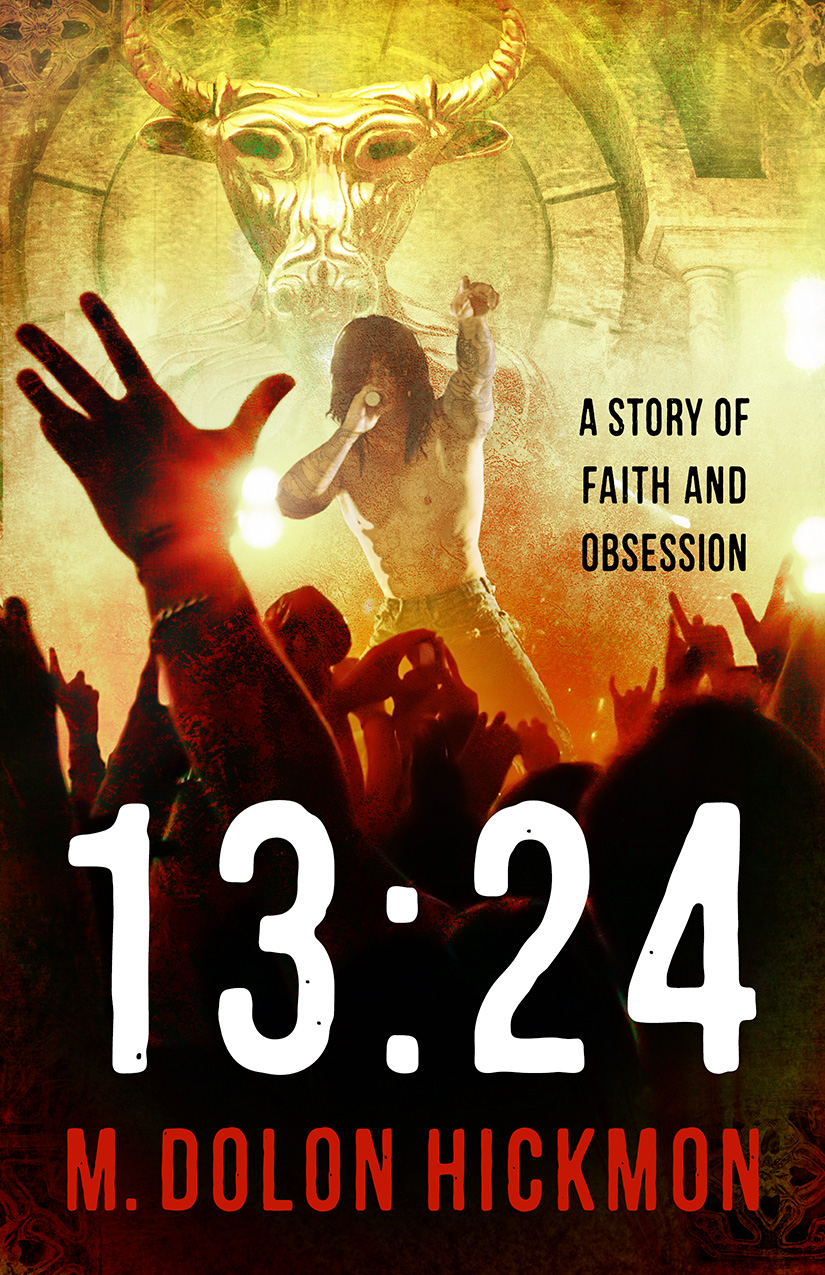
13:24 is the story of two young men: Josh, a rising rock star, and Chris, the neglected teenaged son of a drug addict. Their stories begin distinct and distant, but as the novel develops, their pasts—and futures—are revealed to be connected in ways that both shock and disturb.

The story opens on a gruesome murder. While the body count rises, questions multiply as a small-town detective chases Chris as a murder suspect. Along the way, readers encounter events and characters with uncanny real-life parallels: Josh has flashbacks of being abused by his minister father, who resembles Michael Pearl and advocates harsh physical punishment; in another thread, a controversial parenting manual is linked to a spate of discipline-related deaths, bringing to mind real-life cases, like those of Hana Williams and Lydia Schatz. Elsewhere, an imprisoned child abuser is freed through the efforts of a “homeschool legal defense fund”, reminiscent of the Home School Legal Defense Association. At the same time, an oily “Christian psychologist” heads a James Dobson-esque media empire, with tendrils in state and national politics.

13:24 may be fiction, but it describes the lives of any number of people I have known. In its imagery, I recognize moments that friends and colleagues have breathed and suffered through. That is what made this novel so hard for me to read.

The book exposes what many religious and homeschooled children experience every day. Readers witness their pain and hear their cries. We see their misery multiplied when it is justified in the name of God; we see their tragedies covered up to save face and preserve religious “freedom”. And unlike a Frank Peretti novel, there are no angels rushing in to the save the day. We must pick up the pieces and fight this present darkness.

Despite the darkness, 13:24 has a poetic beauty. That beauty is in the narrative symmetry: a murder begins it and a murder concludes it. While death marks where the story begins and ends, there is a profound shift in what those deaths mean. This is the power of Hickmon’s prose: he delves deep into pain, into what he has described in his subtitle as “faith and obsession,” and shows us the human faces behind news headlines’ “monsters.”

13:24 is not easy reading. It is neither uplifting nor redemptive. It will crack your heart open, set your blood on fire, and turn your screams into music. Most significantly, the characters’ actions are neither justified nor condemned by the author. He simply allows them to exist. In doing so, Hickmon gives readers an uncommon gift: a brief look behind the curtain of tragedy, a fleeting chance to understand a little more than we did.

When Your First Concert was Carman: Sapphira’s Story

Screen Shot 2014-02-23 at 3.50.31 PM

HA note: The author’s name has been changed to ensure anonymity. “Sapphira” is a pseudonym.

It’s always a really awkward question for me: “What was your first concert?”

For context, my husband owns a record store. This question is typically asked by someone after we’ve been discussing great hardcore, punk, or indie shows that we’ve recently attended.

Well… my first stadium concert was Carman.

[insert crickets chirping noise here].

Well, I’m pretty sure it was Carman, unless, wait, I think maybe I saw Twila Paris and my family was so excited because Mike Warnke – you know – the comedian — was opening for her. Who was your favorite rap artist in the 80’s…. Steven Wiley was rated highly… no one? Anyone? Any Michael W. Smith fans out there? Amy Grant (obviously pre-selling out and going secular)?

My evangelical musical background is not the cool kind of obscure the kids are typically looking for…

When my family converted, they went all in, they burned their old rock music, gave away our evil toys (thank you Turmoil in the Toybox for that trauma), smashed the TV, tossed out the VCR and shifted us over to only “wholesome” toys and music. Homeschooling followed soon thereafter.

I was starting 3rd grade when they pulled me out. I remember my oldest brother (10 years older) having a really hard time adjusting. He tried to trade in his Bon Jovi, Poison, and White Snake for Crumbächer and Stryper, but they just didn’t quite cut it. Plus, it didn’t matter because soon those bands were seen as “gateway” bands and they were also removed from the acceptable playlists.

Eventually it was a very small list of approved music and that is how I ended up at my first Carman concert, being enthralled by a ridiculous song about Lazarus. There would be many more Carman concerts, waiting in line to see The Newsboys, getting super excited to see Tooth & Nail bands, youth group trips to the Christian music festival at Great America, and then reaching the pinnacle of homeschool kid cool – joining the super hip praise dance crew at church and learning choreographed, very modest, dance moves to all of these bands and more to be performed at our outreach missionary programs.

There is nothing quite like boys and girls in baggy modest clothing doing very repetitive choreography to Audio Adrenaline or DC Talk to really get the crowd pumped.

What I always found especially amazing was the ability of some homeschool parents to find something sinister about even these ridiculously over-the-top super Christian bands. For example, my friend’s parents took her copy of DC Talk and recorded over the song “I Don’t Want It” – for those who weren’t DC Talk loving Jesus Freaks…note the lyrics to the first verse:

“S-E-X is test when I’m pressed

So back up off with less of that zest

Impress this brother with a life of virtue

The innocence that’s spent is gonna hurt you

Safe is the way they say to play

Then again safe ain’t safe at all today

So just wait for the mate that’s straight from God

Don’t have sex ’til you tie the knot” (Full lyrics available here)

This song has it all…. It’s perfectly aligned with the I Kissed Dating Goodbye lectures we were getting at youth group…women are the guardians of virtue and the temptresses, the most important thing is to guard your purity, safe sex is a lie, it continues on like this for the entire catchy song.

Yet it was too taboo for my homeschool crew.

About 50% of us were allowed to listen to it as long as we were over 16, the remainder had it removed from their tapes. It’s always amazed me that even though my family are two to three standard deviations away from the norm in their over the top hyper-controlled and restrictive practice of evangelical Christianity, I always had friends with even more restrictive and punitive parents that made my experience seem almost moderate. It was only after breaking away (and finding community in the hardcore/punk/feminist music scenes) that I was able to see how restrictive my family was and was able to begin to chart my own course.

At least it’s been easier to catch up on the music I missed out on…

That whole “unlearning pretend science” and “learning actual science” once I got to college thing was quite a bit more challenging.

50 Shades of Grey or Contemporary Christian Music Lyrics? A Quiz

Screen Shot 2014-03-14 at 3.15.05 PM

By R.L. Stollar, HA Community Coordinator

Growing up evangelical, I listened to a lot of Contemporary Christian Music (CCM). I never understood the whole “rock music causes demons to eat your brain” mentality. But I did understand — to some extent — their point that Christian rock music was just normal rock music with “Jesus” pasted on top. To my friends and I, that wasn’t actually an intelligent critique. It was more a joke, something we all laughed about.

Fact is, my peers and I often thought it was funny that many CCM songs appeared to be sexy romance songs where the “you” was just capitalized so it suddenly was about Jesus rather than a hot piece of man-flesh. And some CCM bands — Skillet, most of all — have lyrics that are so spiritually kinky, even actual kinksters might blush.

So to honor this humorous memory of CCM’s steamy lyricism, I decided to create a quiz where you must identify whether certain phrases are lines from the bestselling erotic BDSM novel 50 Shades of Grey by E.L. James or lyrics from Contemporary Christian Music songs. So pull out a pen and paper and keep track of your answers; an answer key is provided after the quiz.

Make sure you don’t cheat. God is watching you. As Phil Joel says about God, “He’s gonna keep the night light on. He’s waiting there to receive you.”

Or was that something Anastasia Steele wrote in her diary about Christian Grey?

*****

1. Which of the following is a lyric from a Newsboys song?

a. Giving it over, I was flat on my back.

b. I come instantly.

newsboys

2. Which use of “hand” is from 50 Shades of Grey and not a CCM song?

a. You gentle your hand…

b. Gushing with surrender in your hands…

c. My hands are open, so take what you see…

glove

3. Three of the following four lines are from Skillet songs. Which one is from 50 Shades of Grey?

a. Stretch me bigger….

b. An empty vessel to be filled at your whim…

c. I’m exploding like chemicals. I’m going crazy — can’t get enough!

d. It’s so urgent. It’s so desperate I can feel it in my bones.

skillet2

4. One of these four is dirty talk. The other three are DC Talk. Which one is dirty?

a. You consume me like a burning flame.

b. Anytime, anyplace.

c. I am calling out your name.

d. Oh, you know that I surrender.

dc talk

5. Which “you” is from a Sonicflood praise song? (The other two are about sex.)

a. God, I want you

b. I want to touch you.

c. I am in awe of you.

Screen Shot 2014-03-14 at 2.59.55 PM

6. Can you figure out which is neither Rebecca St. James nor Audio Adrenaline?

a. Here I am. I will do as you say.

b. You’re pinning me to the wall.

c. I’m enslaved to what you say.

audioadrenaline

7. Different people handle pain differently. Which one is the 50 Shades of Grey way?

a. How can I scream when the pain is such a release?

b. The pain is such that I refuse to acknowledge it.

c. I do not deserve to be set free.

50Shades

8. Once you experience something you really like, you usually want more. Which wanting more is not about God?

a. We’re going all the way.

b. I’ve never wanted more, until I met you.

c. I’ll be chasing you.

d. I wanna do it soon.

grammatrain

9. Which romantic exclamation is not about Jesus?

a. When I’m in your arms is when I feel the best.

b. My heart beats for you.

c. I want my world to start and end with you.

d. I can feel your power surging through the whole of me.

Delirious

10. One of these is about a BDSM master/slave relationship. The other three are from Christian music.

a. Capture me, make me a slave.

b. I’m struggling to resist, but I’m drawn.

c. If I could only be your master.

d. You can have everything I am.

Screen Shot 2014-03-14 at 3.01.14 PM

******

Answer Key

******

1. Which of the following is a lyric from a Newsboys song?

a. Giving it over, I was flat on my back. – Newsboys, “Giving It Over”

b. I come instantly. – 50 Shades of Grey

2. Which use of “hand” is from 50 Shades of Grey and not a CCM song?

a. You gentle your hand… – 50 Shades of Grey

b. Gushing with surrender in your hands… – Skillet, “Suspended In You”

c. My hands are open, so take what you see… – Smalltown Poets, “I’ll Give”

3. Three of the following four lines are from Skillet songs. Which one is from 50 Shades of Grey?

a. Stretch me bigger…. – Skillet, “Suspended In You”

b. An empty vessel to be filled at your whim… – 50 Shades of Grey

c. I’m exploding like chemicals. I’m going crazy — can’t get enough! – Skillet, “My Obsession”

d. It’s so urgent. It’s so desperate I can feel it in my bones. – Skillet, “Kill Me Heal Me”

4. One of these four is dirty talk. The other three are DC Talk. Which one isn’t DC?

a. You consume me like a burning flame. – DC Talk, “Consume Me”

b. Anytime, anyplace. – DC Talk, “Consume Me”

c. I am calling out your name. – 50 Shades of Grey

d. Oh, you know that I surrender. – DC Talk, “Consume Me”

5. Which “you” is from a Sonicflood praise song? The other two are about sex.

a. God, I want you – 50 Shades of Grey

b. I want to touch you. – Sonicflood, “I Want To Know You”

c. I am in awe of you. – 50 Shades of Grey

6. Can you figure out which is neither Rebecca St. James nor Audio Adrenaline?

a. Here I am. I will do as you say. – Rebecca St. James, “Here I Am”

b. You’re pinning me to the wall. – 50 Shades of Grey

c. I’m enslaved to what you say. – Audio Adrenaline, “Some Kind of Zombie”

7. Different people handle pain differently. Which one is the 50 Shades of Grey way?

a. How can I scream when the pain is such a release? – Skillet, “Kill Me Heal Me”

b. The pain is such that I refuse to acknowledge it. – 50 Shades of Grey

c. I do not deserve to be set free. – Grammatrain, “Pain”

8. Once you experience something you really like, you usually want more. Which wanting more is not about God?

a. We’re going all the way. – Delirious?, “Deeper”

b. I’ve never wanted more, until I met you. – 50 Shades of Grey

c. I’ll be chasing you. – Newsboys, “Beautiful Sound”

d. I wanna do it soon. – Seven Day Jesus, “Butterfly”

9. Which romantic exclamation is not about Jesus?

a. When I’m in your arms is when I feel the best. – Skillet, “Safe With You”

b. My heart beats for you. – Jars of Clay, “Love Song for a Savior”

c. I want my world to start and end with you. – 50 Shades of Grey

d. I can feel your power surging through the whole of me. – DC Talk, “Supernatural”

10. One of these is about a BDSM master/slave relationship. The other three are from Christian music.

a. Capture me, make me a slave. – Skillet, “Take”

b. I’m struggling to resist, but I’m drawn. – 50 Shades of Grey

c. If I could only be your master. – Grammatrain, “Sick Of Will”

d. You can have everything I am. – Audio Adrenaline, “Hands and Feet”

Part of “That” World: By Abigail

Screen Shot 2014-02-23 at 3.50.31 PM

Today I realized (aka found it amusing) how few words would have to be changed in Disney’s The Little Mermaid’s song, “Part of Your World,” to make it into a “homeschool edition” of the song. So I tinkered a few minutes and came up with the following.

Tip: it’s better if you sing/hum the tune as you read. 😉

.*****

Part of “That” World

*****

Look at this stuff

Isn’t it neat?

Wouldn’t you think my life’s purpose complete?

Wouldn’t you think I’m the girl

The girl who has everything?

.

Look at this shelf

Treasures untold

How many Christian books can one bookshelf hold?

Looking around here you think

Sure, she’s got everything

.

I’ve got Bibles and siblings a plenty

I’ve got homework and housework galore

You want jean skirts? I’ve got twenty!

But who cares?

No big deal

I want more

.

I wanna be where the people are

I wanna see, wanna see ‘em dancing;

Movin’ around to those – what do you call ‘em?

Oh – BEATS!

.

Stayin’ at home you don’t get too far

Socialization’s required for friendships, dating

Attending a youth – oh – what’s that word again?

Retreat?

.

Out where they walk, out where they run

Out where friends cut away and have fun

Wanderin’ free – wish I could be

Part of that world

.

What would I give if I could live out of this hell-house?

What would I pay to spend a day free from control?

Bet’cha the world, it understands

That you don’t subjugate your daughters

Bright young women, sick of submission

Not here to command

.

And ready to know what the people know

Ask ‘em my questions and get some answers

What’s a condom and how does it – what’s the word?

Work?

.

When’s it my turn?

Wouldn’t I love, love to explore the world they talk of?

Wanderin’ free – Wish I could be

Part of that world

Plowshares into Skyhooks: The Evolution (Intelligent Design?) of Bible Games: By Aaron Gotzon

Screen Shot 2014-02-23 at 3.50.31 PM

HA note: Aaron Gotzon is a homeschool alum and one of the regular contributors to The Ontological Geek, a website that examines videogames through various critical lenses. The following was originally published on The Ontological Geek on April 24, 2013 and is reprinted with permission.

*****

Beat your plowshares into swords and your pruninghooks into spears: let the weak say, I am strong. – The Book of Joel

Frequent readers will note my intimate familiarity with the Evangelical subculture. It wasn’t until I grew out of my larval form that I recognized just how sub that culture was. To me, it was normal to repudiate the machinations of the secular, decry the subversive whims of a liberal media, and lionize such defenders of the faith as the Billy Graham Crusaders, the Gaither Vocal Band, and Randy Hogue.

In TobyMac, Switchfoot, and Relient K, we had our own music; a pro-family, pro-social answer to every genre of song – many Christian acts of the late 90’s and early 2000’s, in fact (the heydecade of the movement) consisted of popular secular tunes repurposed to affirm our social agenda. We had our own cartoons, some of them actually rather clever and technologically groundbreaking. We had huge rallies in stadiums of millions, and popped out “world outreach centers” like sneezes: some of which have passed on into obscurity, some remain a force with which to be reckoned, and a certain quite famous one in my hometown is under scrutiny for harboring some dark practices within ostensibly benign, if radical, quarters.

We had hit novelsmajor motion pictures. We refitted holidays to eliminate pagan (or even neutral) elements, and had our own youth organizations, like AWANA, as a cultural counterpoint to the Deistic-in-theory American Scouting movement. It might be said that, for some, or even many of us, the Boy Scouts weren’t conservative enough.

And, of course, we had our own games.

This impulse was borne from the Pauline commandment to “be not conformed to this world, but be transformed by the renewing of your mind.”

“Worldly” was a slur.

The 1980s: BibleBytes, and Kidware Shareware Adware Underwear

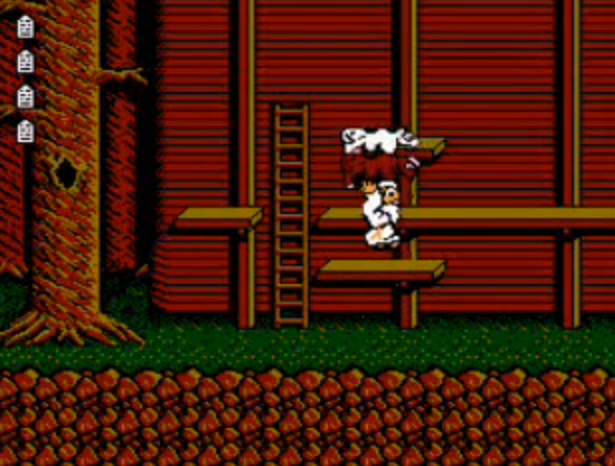
The gameplay and presentation in "Noah's Ark" are similar to that of the American Super Mario Bros. 2.
The gameplay and presentation in “Noah’s Ark” are similar to that of the American Super Mario Bros. 2.

The concept of the Christian computer game began with the uprising of modern Evangelicalism with its soon-to-be-realized theocratic tendencies and its reconstructionist emphasis on the budding culture war between the “old-time Religion” and the open secularization of the West. Focusing on the Family meant meeting the public mainstream culture point for point: in politics, in art, in hobbies and entertainments all alike.

As with certain evangelical leaders (Dr. James Dobson), internationally recognized conservative think tanks (Focus on the Family), and popular, still-running radio programs (Adventures in Odyssey), the “Christian” game was born in Colorado. BibleBytes was founded by the Conrod family with the express mission of bringing computer games into the mainstream with overtly religious messages. This being the early 1980s, videogames weren’t met with the scorn we witnessed in the early-to-mid 2000s, for example, on the charge of being unspeakably violent (and certainly they’ve earned that distinction, regardless of how that makes you feel personally). Instead, this was an answer to the emergent popularity and rampant growth of infant gaming, another tit-for-tat appropriation of an aspect of modern culture and integration into the fledgling Christian subculture.

BibleBytes was successful in marketing the first Christian games on the era’s microcomputers, which included those manufactured by Radio Shack, Texas Instruments, and Timex.

The overwhelming majority of Christian games produced during this period were developed by BibleBytes, and ported to the appropriate hardware platforms, including the Atari 2600 and Commodore 64, as those became widely available. The games were released in multiple volumes and iterations as a collection rather straightforwardly entitled Bible Computer Games.

Today, BibleBytes continues to operate as the dreadfully named “Kidware Software,” selling primers on programming basics designed for children of homeschooling families. They’ve since stopped supporting the old software, and no longer develop or distribute new games.

The wave of Bible games had begun, but it had yet to swell, until…

The 1990s: The Tree of the Knowledge of Dreams and Piracy

Like BibleBytes before it, the role of Flagship Developer of Bible Games fell to Wisdom Tree – the company formerly known as Color Dreams – during Our Most Awkward Decade.

Color Wisdom Dreamtree has several notches on its Belt of Contributions to Gaming History, the first being its development and distribution of the first-ever side-scroller for “IBM Compatible” (as the parlance went) PCs. The next two honorable mentions aren’t nearly as honorable, though they’re certainly not unimpressive: Color Dreams managed to develop a workable hardware bypass for Nintendo’s 10NES chip, the silicon gatekeeper of the Japanese company’s famously strict licensing rules. Later in the decade, they’d also publish the only unlicensed SNES title ever, Super Noah’s Ark 3D.

Wisdom Tree’s first release after their rebranding was Bible Adventures, for the NES, a three-in-one-pack featuring the following:

  • Noah’s Ark, a platformer wherein the goal is to gather up all of the animals by picking them up. The animals are presented as being hoisted above Noah’s head, and they can be stacked one atop the other, making Noah only slightly weaker than Superman (which I don’t remember from the Bible). The gameplay and presentation are similar to that of the American Super Mario Bros. 2.
  • Baby Moses, in which the player takes on the role of Moses’ sister Miriam, attempting to deliver him safely to the palace while evading guards after Pharaoh’s decree that all male Hebrew firstborn be killed. Miriam, like Noah, transports her charge by holding him directly above her head. Intriguingly, she is able to throw the infant prophet around the screen with no penalty damage to the child. She is, however unable to use the invincible slave-spawn as a bludgeoning weapon.
  • David and Goliath is similar. You’re still picking up animals as the psalmist shepherd and stacking them over your head. Except this time, once David succeeds in carrying enough sheep to safety, he is transported to the front lines of the Philistine war armed with a slingshot, with which he eventually defeats Goliath in the final stage by landing the perfect shot right in the giant’s forehead.

The Bible Adventures compilation was ported to the Sega Genesis as well, with virtually no changes to either graphics or gameplay.

Wisdom Tree would continue to release games throughout the rest of this decade, many of them with elements borrowed heavily from other more popular titles, like Zelda expy Spiritual Warfare for Game Boy, NES, and Sega Genesis. Sometimes, the games would be outright clones and re-skins of titles Color Dreams released before they re-styled themselves as a Christian developer, like top-down puzzlers Exodus: Journey to the Promised Land and Joshua: Battle of Jericho, both of which used the same gameplay mechanics and level layouts as the secular Crystal Mines, with different graphics reflecting the biblical theming.

Perhaps the most bizarre was the aforementioned Super Noah’s Ark 3D, which could only be played by loading a licensed cartridge on top of Noah while it was connected to the SNES console. It was an actual level-for-level clone of the popular Wolfenstein 3D by id Software, with Noah replacing the meaty muscled bloody guy (did he have a name?), a slingshot for a weapon, and various animals standing in for Nazis. A widely-spread rumor claims that id Software gave the source code of their Wolfenstein game to Wisdom Tree as a revenge on Nintendo for releasing an inferior port of their popular game, making it a point to tone down the violence (Nintendo was known for being especially particular about games for their system being Family-Friendly). The details surrounding this bit of corporate intrigue have never been released, and the facts remain unclear to the present day.

Technically, Wisdom Tree is still active, selling their own games and those of even smaller developers on their website, on which they promise to make their entire past library available for the current versions on Windows, eventually.

So, you know, if you ever really, really wanted to pay $22.95 for a videogame called JESUS IN SPACE, now’s your chance.

The 2000s: Cacti and Catacombs

One of the only explicitly Christian games to enjoy significant mainstream success and recognition was Catechumen.

So far, the formula for most Christian games, as codified by Wisdom Tree, was to adapt well-known stories from the Bible into playable adventures, most often by taking an existing secular game and copy-pasting kitschy religious imagery (the standards, mostly; bearded men in dresses and plenty of camels). In the early 2000s, the standard began to shift from adaptation to symbolic imaginings of the Christian journey and comic-style portrayals of spiritual warfare.

Arguably, one of the only explicitly Christian games to enjoy significant mainstream success and recognition was Catechumen, a first-person shooter which tasked the player with a journey to travel down into a Roman-inspired catacomb to defeat a demonic horde ensconced therein. Along the way, the player character increased in spiritual power until finally gaining enough strength to banish Satan himself from his lair in the bottommost parts of the caverns. The quality of the action, progressive gameplay, and “mature” theming drew many gamers from both inside and outside of the Evangelical community.

Cactus Game Design entered the scene a little later in the decade, bringing yet another more adolescent-oriented shooter offering, Saints of Virtue, to the range of Christian games available to consumers. The player journeyed into the center of a young man’s heart in an attempt to purge it of sinfulness from the outside in, gathering items representing the different pieces of the “full armor of God” along the way. These were accompanied by verses explaining different facets of the Christian inner life, and at times could be oddly introspective in its rather personal, if clichéd and Totally Rad! ™, exploration of the meaning of the modern Christian walk. The weapon in the game was the “Sword of the Spirit,” which was not used as a typical bladed tool. Instead, the player was able to fire bolts of lightning at the (quite scary) enemies, masks which took the names and traits of various sins or follies.

The Saints of Virtue characters would come to be used again in Cactus’ Magic-like trading card game, Redemption. Instead of draining the opposing player’s life points, the objective of matches in the card game was to come into possession of the opponent’s so-called “Lost Souls,” claiming them for the Kingdom of God with biblical hero characters, while at the same time defending their own souls with evil characters. The game worked well, and became pretty successful for a few years, hosting national and local tournaments and gaining a cult following even among those Christians not expressly invested in the culture of Evangelicalism.

The latter portions of the decade saw a trilogy of Left Behind games, based on the popular and long-running series of novels sets after a premillennial dispensationalist’s idea of the Rapture, which faced some controversy from the mainstream regarding various charges of cultural insensitivity and (of all things) violence.

Other than this briefest of debacles, and a few rhythm games, which were basically Dance Party and Guitar Hero but with contemporary praise and worship music, the rest of this decade saw no noticeable influence of explicitly Christian games on the mainstream.

The Present

We’re now well into the New Tens, and, as it turns out, they’re suspiciously absent of any noteworthy Christian games. Many of the old developers are either closed completely, or sustaining themselves by repackaging, reselling, and sometimes halfheartedly supporting or updating their old titles. It seems that, by and large, the Evangelical subculture has given up on appropriate games into itself. This may reflect the poor quality of the early games, the lack of significant commercial success of the newer ones, or the Evangelical movement’s withdrawal from the impulse to create a new, “Christian” world in lieu of being participatory in the new one.

It’s true that religious themes abound in modern games, as interactive media matures and becomes able to comment on more and more aspects of culture, layering complexifying narratives over dynamically evolving artistic structures and play mechanics. As with BioShock Infinite and Fallout: New Vegas, these new representations of Christianity and other religions seem to refrain rather cautiously from commenting on popular religion specifically, choosing instead to focus on general themes, patterns from history, or minority faiths (Mormonism is a popular one, and by some accounts New Vegas managed a nuanced and respectful portrayal of the Latter Day movement).

This advancement of a more subtle religious theming has allowed the faithful among us to project our journeys onto the adventures we undertake in our gameworlds of choice, without the exclusivity implicit in playing a “Christian game.” We’re allowed to think about the spiritual paths we choose, even as we consider the paths we undertake when synched-up to player characters. We’re allowed a wider discourse, incorporating gamers of other faiths, or no faith, to engage with us in our universal quest for personal, immediate, and transcendent truths. We’re allowed to put our problems, like violent impulses, misogyny, and all those sundry troublesome –isms, on display without fear of retribution from a community which once sought to burrow in and ignore or downplay the difficult issues which come along with being human, indeed, being fundamentally worldly.

There may well be something profound to be said of a freedom in Christ, but it seems like today’s secular games offer us a lot more freedom (even to be in Christ more fully and honestly, should we so choose) then would Christian games, had they gotten the chance to become as successful or ubiquitous as our more familiar, religiously neutral engagements.

Perhaps the central impulse of the Christian subculture of the past twenty years was slightly twisted: being “in the world, but not of it,” does mean rejecting ties to historical barbarism, checking destructive primal urges, and striving to create a more balanced, peaceful social order. All great ideals, but if we want to achieve them, we do have to be “in” the world. We don’t get to opt-out of the realities of earthly life before we’re through with it. Before we’ve managed to accomplish being in it, even if we choose to identify with an otherworldly ideal. Even if you suspect that your Real Home might be elsewhere, this is definitely where it is now.

So, “worldly,” perhaps, shouldn’t be a slur. Succeeding in embracing the world, loving it, being Home-for-Now, might be the first step toward transforming it into something better, toward making the “world” something not to be rejected, but to be cared for and nurtured. Something to be proud of.

So, yeah.

Anyway, go play some games.

“What is the kingdom of God like? What shall I compare it to? It is like a mustard seed, which a man took and planted in his garden. It grew and became a tree, and the birds of the air perched in its branches.” – The Book of Luke

*****

A note: for some fun, check out the Angry Video Game Nerd’s three-part series on Bible Games. He covers just about all of the Wisdom Tree titles of the 90s in detail, with his typical humor (which means the videos aren’t safe for work, obviously, and screw you for watching YouTube at work, you lazy ass).

Grandma’s Bible Classes: Katia’s Story

Screen Shot 2014-02-23 at 3.50.31 PM

HA note: The following is reprinted with permission from Katia’s blog Redeemed Aspie. It was originally published on March 7, 2014.

….And when the soldiers came, the brave little girl took the Bible and ran out to the garden and hid it under some cabbages… On Grandma S’s flannelgraph board was a picture of a little girl hiding a Bible under some cabbages. Grandma S was teaching her weekly Bible class, and this week we were learning about early Christians who were persecuted for their faith. I forget the rest of the story, but as a plant loving youngster, the idea of hiding a Bible under cabbages intrigued me. At the conclusion of class when we drew pictures and snacked, I drew a picture of the girl hiding a Bible under the cabbages and Grandma S wrote on the picture what it was.

Grandma S, my maternal grandmother, moved to Indiana from Ohio to live with us when I was 7. She needed a way to way to stay busy and loved her Lord and grandchildren. Holding a weekly Bible class for her four grandchildren enabled her to stay busy and show her love for both Lord and grandchildren.

Using a flannelgraph, drawings, or books with large illustrations, Grandma S taught us all the Bible stories Christian children learn — David and Goliath, Elijah, the Christmas story, the Easter story, Jesus’ parables etc. She also taught stories about missionaries, early Christians, Christian concepts, and the stories behind Thanksgiving and the Fourth of July.

Grandma S was a quiet, sober, simple, independent woman. Yet using her simple media, she held her four grandchildren (and later two friends of those grandchildren) spellbound as she gave her lessons. Even though I secretly disliked formal religious services, I don’t remember being bored with Grandma S’s stories. At the time of Grandma S’s Bible classes, we were attending a homechurch with no children’s Sunday School.

Grandma S’s Bible classes filled that void.

Each Bible class began and ended with prayer. Often Grandma let one of us children do the praying. Next up: singing. Each of us children got to choose a song. Because I loved animals, I usually chose “The Birds Upon the Treetops”

“The birds upon the treetops;

Sing their songs.

The angels chant the chorus,

All day long.

So why shouldn’t I?

Why shouldn’t you?

Praise Him too.

After we sang, Grandma S gave her Bible lesson. At the conclusion of class, Grandma gave us a snack and drawing materials. As we enjoyed the snack, we drew pictures of what we learned or other thing that interested us. Grandma posted each new picture on her refrigerator and kept all of our pictures in the folders she kept for her grandchildren.

Sometimes Grandma would give us a word and have us try to get as many words from it as possible. Today all four of her grandchildren love books and are good writers.

Grandma S’s Bible classes were something I took for granted. Only now as an adult do I see their value and treasure the few memories I have of them. Only now do I see the hard work and love Grandma S put into each class. Only now do I see her wisdom in letting us draw what we wanted after class, even when what we drew had nothing to do with what she had taught.

Grandma was a woman of God and understood the importance of letting a child voice what he had just learned or experienced in order to understand it.

And only now do I see the great blessing of learning those Bible truths from my grandmother in her quiet, simple way. Had I been in a loud Sunday school that used the latest technological media and involved complicated crafts and lots of people, I would not have learned those truths so thoroughly and treasure the memories so much.

Grandma S’s Bible classes ended the year I turned 14 when my older brother got a job and she got sick. Before the year was gone, Grandma S fell asleep in her Lord in the spot where she’d given so many Bible classes with Mom and I at her side.

I’ve written this in the room where Grandma S gave her Bible classes and fell asleep in Jesus. As I think of her, the day a trumpet sounds and we are reunited at the feet of Jesus in the rapture cannot come soon enough.

And The Music Was There: glor’s Story

Screen Shot 2014-02-23 at 3.50.31 PM

“Rock” music. Simultaneously my oppressor and my escape, we have an unusual relationship. Going from “anything with a strong beat will fill you with demons” to “oh hey, I just bought the newest VNV Nation album!” may seem extreme, and I admit that I sometimes suffer from whiplash, but at the same time it’s been a very freeing evolution and something that mirrors my general escape from my childhood/immediate family.

The first memories I really have about specific music was trying to defend myself at a camp-out.

I’d been found crying in a dark place by myself, and my fellow campers [all the same general age as myself, 9-12ish] didn’t believe me that the song made me cry because it reminded me of a friend who’d died. The song was played at his funeral. It was the first example of exactly how strongly music hits my emotional centers – and for that song, having to “prove” it made it hit me all the stronger in the following years.

Following that, the next set of memories is about music being “awesome” – or rather, not. The cult we were in at the time were very adept at using the “Sunday morning worship” to twist us this way and that, and I can distinctly remember how you could tell what the sermon would be about by the first half of the very first song of the day. I remember dirge-like music playing as we lined up in a school’s gymnasium to “repent of our sins.” I remember the slightly happier songs that the children danced to. I remember everyone in the room being scathingly rebuked because one of the singers had dared to say that a song was “awesome” – because, you know, only God is awesome. Never anything else, even a song literally praising his name.

The music collection at home wasn’t too much better. Michael Card. Sandi Patti [maybe… if we were lucky]. Some random Maranantha song tapes. Plenty of classical. That was about it, that I remember. I had very little interest in music outside of that, for the most part, simply because I didn’t know anything about it. There was the usual hush-hush about KISS and Marilyn Manson, stuff like that, but it was all mostly above my head. Then, I was introduced to DC Talk and Michael W Smith and Steven Curtis Chapman. My brain just about exploded from glee – finally, something that fit me!

I could put my emotions onto these songs and I could finally understand things about what I felt that I never could before.

See, I have bipolar disorder. I have rapid and multiple mood swings, from seriously depressed to extremely manic, and until that point, none of the music could encompass either end of the curve. Everything was beautiful and nothing hurt [because Jesus!] – to steal from Vonnegut. Any emotion other than happiness and joy was Wrong. You were a bad Christian – nay, a bad person, if you weren’t always basking in the love and companionship of Jesus. Being human, though, that wasn’t possible. So I struggled along in my lonely childhood self, trying to deal with these big emotions and not having anywhere to turn.

And then lo, DC Talk and “Jesus Freak.” They were my introduction to a larger world, and were, in fact, the very beginning of my long and slow departure from the church.

Teenagerhood hit. I was “rebellious,” according to my parents, and it was all because of my music. They had it backwards, of course. I was in an abusive home situation and I had found an escape in the music that expressed all the emotions I was feeling and allowed me to survive day after day, because there was nowhere else to go. Once again I was stifled under the “no emotions except happiness” expectation – which became more and more difficult the worse my bipolar got. It’s very hard to be “blissfully happy in Jesus” when one day you’re suicidal and the next you’re on a cloud and can do ANYTHING! that you could think of. I hid my music and snuck it as often as I could [or dared… woe betide me if I was found listening to [oh my!] Superchic[k] or the Newsboys or [quadruple gasp here, people] the Cruxshadows.] All of the songs that I listened to held deep emotion and symbolism for me, and allowed me to blindly feel my way through the disaster that was my home life.

There were fights about the music. My mother tried to convince me that rock music was of the devil. She emailed me all these “studies” about plants and rats [and since those have been addressed elsewhere on HA, I’ll refrain from doing so here], talked about the “demon beat,” and tried to take my CDs away. Fortunately, by that point, there was the internet and it was easily accessible. When it got really bad and my parents tried to take that too, I was attending the local community college and could use their computer lab to retrieve what I needed.

Eventually, I escaped. Barely.

When I got out of their home, I stopped attending church, I stopped seeing them, and I fairly quickly stopped identifying as Christian. My music needs changed – from the “life sucks and God’s still there for you” of the Christian rock world to the “you’re alive, you’ve survived some awful shit, and you’re still here” of VNV Nation, the Cruxshadows, Linkin Park, movie soundtracks, and so many other artists I can’t even list them. For the longest time, my playlists were nothing but loud anger and rage. I had to purge that from within myself eventually, I knew, but at the time all I could do was cope.

*****

I was sexually assaulted at work. More rage and bitterness. And the music was there.

I was extremely sick and almost lost my job. And the music was there.

I moved halfway across the country. And the music was there.

I was raped. And the music was there.

I had a psychotic break… and the music was there.

*****

Four years later, I had enough, and said “this anger, this bitterness, this rage and hate and harm will not be a part of me any more.”

And the music was there.

*****

It was there as I burned out the bitterness, screaming my tears of pain to the heavens. It was there as I sobbed in my friend’s arms. It was there the nights that I woke up screaming from the nightmares of the pain and the terror.

And the music was there when I finally broke through and let the love out.

Maybe it’s about the time
To let all of the love
Back in the light
Maybe it’s about the perfect place
To let go and forget
About the hate

Love into the light.

Kesha, “Love Into the Light”

When Homeschoolers Turn Violent: Series Index

Screen Shot 2014-03-02 at 5.36.11 PM

*****

“When Homeschoolers Turn Violent” is a joint research project by Homeschoolers Anonymous and Homeschooling’s Invisible Children. Writing and research was done by R.L. Stollar, Homeschoolers Anonymous; research and editing by Rachel Coleman, Homeschooling’s Invisible Children (HIC). Additional research was done by Dr. Chelsea McCracken, HIC. The series conclusion was written by Coleman, McCracken, and Rachel Lazerus (also HIC).

*****

Introduction

Cases

Isaac Aguigui

Couty Alexander

Claude Alexander Allen III

Patrick Armstrong

Hannah Bonser

Erin Caffey

Lukah Probzeb Chang

Hugo Clayton

Dillon Cossey

Schaeffer Cox

Cylena Crawford

Shanna Dreiling

Jake Evans

Kishon Green

Christopher Gribble

Nehemiah Griego

Joseph Hall

Robert Holguin and Accomplice

Andrew Jondle

Daniel Paul Jones

Chevie Kehoe

Cheyne Kehoe

Israel Keyes

Joshua Komisarjevsky

Adam Lanza

Matthew Liewald

Son of Marilyn and Charles Long

Christian Longo

David Ludwig

Michael Mason

Jonathan McMullen

Mentor High School threat from teenager

Matthew Murray

Johan Nel

Darren James Price

Jeremiah Reynolds

Charles Carl Roberts

Eric Robert Rudolph

Angela Shannon

Ben Simpson

John Timothy Singer

Aza Vidinhar

Brandon Warren

Benjamin Matthew Williams

James Tyler Williams

Conclusion

Appendices

Appendix 1: Timeline

Appendix 2: Exclusions

When Homeschoolers Turn Violent: Appendix 2, Exclusions

Screen Shot 2014-03-02 at 5.36.11 PM

Series note: “When Homeschoolers Turn Violent” is a joint research project by Homeschoolers Anonymous and Homeschooling’s Invisible Children. Please see the Introduction for detailed information about the purpose and scope of the project.

Trigger warning: If you experience triggers from descriptions of physical and sexual violence, please know that the details in many of the cases are disturbing and graphic.

*****

Appendix 2: Exclusions

We have chosen to exclude from this archive a number of individuals charged with murder or attempted murder whom news reports have referred to as “homeschooled.” The reasons for excluding them vary, so we will list each below:

Alton Romero Young:

In 1993, 17-year-old Alton Romero Young raped and strangled to death 57-year-old Shirley Mullinix. Alton was being taught at home due to suspension from Hammond High School. Shirley Mullinix was a home-hospital teacher in the Howard County school system, tasked with teaching students unable to attend normative classes on account of disciplinary or health problems. Thus while some news reports refer to Shirley as a “home school tutor” and Alton as homeschooled, he must be excluded from this list since his homeschooling was directly under the authority of a public school system and a public school teacher.

Jeff Weise: 

In 2005, 16-year-old Jeff Weise — a student at Red Lake Senior High School in Red Lake, Minnesota — went on a shooting spree and killed a total of 9 people. He first killed his grandfather and his grandfather’s companion and then went to the school and killed 7 others (as well as wounded 5). Following the attacks, he committed suicide. Jeff was living on the Red Lake Indian Reservation of the Ojibwe people. While he has occasionally been referred to as “homeschooled,” there are no verifiable records of this fact. All records seem to indicate short periods of time when he simply did not attend school due to depression and bullying.

Aaron Kean:

In 2003, 10-year-old Aaron Kean from Woodbridge, New Jersey sexually assaulted 3-year-old Amir Beeks and then beat the young child to death with a baseball bat. While some sources have described Aaron as “home-schooled,” there is no evidence that this is the case. He was expelled from public school 6 months before the attack, but the school itself made an arrangement for him to receive tutoring from a teacher at the local library but Aaron remained delinquent from the arrangement.

Jade Gonzalez: 

In June 1999, 12-year-old Jade Gonzalez from Albuquerque, New Mexico was charged with shooting her father in the head and killing him. Jade has correctly been described by some sources as homeschooled. However, in 2007, when she was 20 years old, the case against Jade was dismissed and her father’s death was ruled an accident.

Joshua Stone and David Stone, Jr.: 

In 2012, 21-year-old Joshua Stone — along with his 19-year-old brother David Jr. and his father David Sr., leader of the self-style Hutaree militia — were charged with conspiracy to murder law enforcement officials. David Sr. homeschooled both Joshua and David Jr. for a period of time. However, the charges for conspiracy to murder were ultimately dismissed. David Jr. was acquitted of all charges. Joshua and his father were only found guilty of federal gun law violations.

View the case index here.