Matt Walsh: “Let’s talk about everything as hyperbolically as possible”

Source: http://www.wlap.com/pages/MattWalsh.html
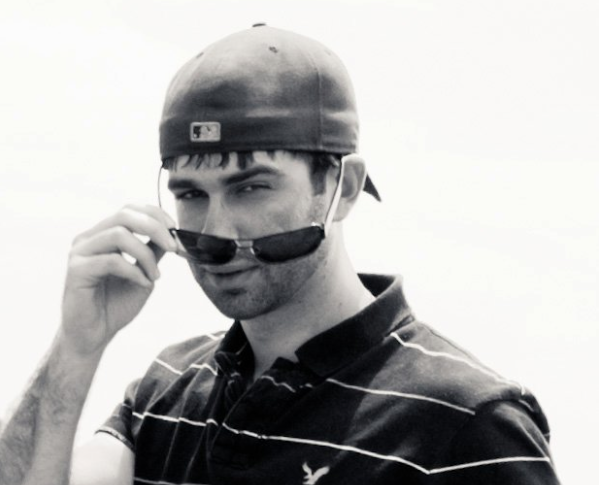
Matt Walsh. Source: http://www.wlap.com/pages/MattWalsh.html

By R.L. Stollar, HA Community Coordinator

As Matt Walsh once said, “Let’s talk about everything as hyperbolically as possible.”

Except Matt Walsh never said that.

Then again, no politician ever said, “Let’s treat all homeschool parents like felony child abusers,” which was the title of Walsh’s December 18, 2013 post on homeschooling.

I read Walsh’s homeschooling post the same way I read many of his other posts: with a mixture of bemusement, facepalms, and sadness. Sometimes he has interesting observations; but all the times, whatever potential insights he could be making are lost in his predilection for hyperbole and grandstanding.

Matt Walsh is Rush Limbaugh 2.0: Same Hyperbole, New Tattoos!

In his homescholing post, Walsh stands on a soapbox of “parental rights” and speaks dramatically about how if parents do not have “the unquestioned and absolute right to teach and raise our own children,” then — no exaggeration — “we don’t have any rights at all.” That is really the crux of his argument, which deserves analysis. But the specific context for the argument, from which he gets the title of his post, is the recent and tragic death of a 14 year old homeschooled boy, Teddy Foltz-Tedesco.

I would like to look at Teddy’s death first.

Teddy’s death, caused by horrific child abuse, should bring all conversation about homeschooling and parental rights — really, any and every political conversation — to a halt. The kid, only 14 years old, was beaten until he was unconscious by his mom’s boyfriend. He was not taken to a hospital until hours after the fact. Five days later, after suffering internal bleeding and brain contusions, he died.

But that was the end of the story, not the beginning. I will let Homeschooling’s Invisible Children explain what happened prior:

The abuse started three year prior, when Bush started dating Widdersheim. The family became increasingly isolated, and Teddy’s father did not see him after his tenth birthday. Two years before Teddy’s death a grandmother tried to intervene in the family, but Widdersheim refused to believe her children. Friends and neighbors contacted social services, but after teachers at Teddy’s school started an inquiry with the Ohio children’s services agency, Widdersheim withdrew her children from public school to homeschool them.

Too many people failed this kid. His own mother, his siblings, friends and neighbors, social services. People who could have acted, should have acted, did not. People who tried to act should have tried harder. Policies in place to protect kids like Teddy failed. Services we pay for to keep this from happening did nothing to stop it. It makes me nauseous. I’m not a libertarian and I’m not an authoritarian, but moments like these make me want to be both: I want to punch the walls of the entire child protective system in a blind rage because they had laws and money but they did not save this boy! and I want to ban everyone from ever being parents because if we can’t stop kids from dying let’s just take all the kids away from parents!

But neither the complete absence of laws nor passing every law ever will make each and every kid safe.

That’s the maddening factuality of politics’ limitations.

But that does not mean we should stop trying to make better policies. That does not mean we burn homeschooling to the ground or give parents free rein to do whatever the hell they want to their kids.

And most of all, that does not mean it is compassionate or right to encourage others to harass people trying to make the world a better place, even when those people are misguided. Yet that’s exactly what HSLDA and Matt Walsh did.

See, after Teddy’s death, his birth father and other family members began pressing for legal reform in an attempt to spare other kids from Teddy’s fate. His birth father and other family members approached Ohio state senator Capri Cafaro, the result of which was the proposed S.B. 248. The bill (which was later withdrawn) would have required all homeschooling parents to undergo an annual interview with social services before homeschooling.

This proposal was, in my opinion, doomed to fail at the start, not to mention misguided. (Ironically, it was also the first piece of legislation that the newly-launched Coalition for Responsible Home Education took a position on, and even CRHE opposed it.) But HSLDA quickly spun it as — and I quote — the “Worst-Ever Homeschool Law.”

Yes, the “Worst-Ever Homeschool Law.”

HSLDA knows their followers. They know how they respond to such rhetoric. They know their followers will flood social media and rant and rave and bully Facebook pages to no end, just like they did the German Embassy’s Facebook page for over a month, calling people Nazis and tyrants and other colorful phrases.

And then along comes Matt Walsh, saying Senator Cafaro was — and I quote — “repulsively exploiting the child abuse death of a 14 year old kid,” despite the fact that the Senator only proposed that bill because of the prompting of that kid’s father.

But, you know, facts get in the way of hyperbole, don’t they? 

Walsh wouldn’t get nearly as many blog hits if he didn’t exaggerate. HSLDA wouldn’t get nearly as much dedicated fervor from their audience if they didn’t say the bill was basically the Second Coming of Hitler. (Which makes one wonder, who is really exploiting Teddy’s death here?)

So of course inspired by both HSLDA and Walsh, angry homeschool parents flooded the Facebook page dedicated to Teddy’s death and run by his father. Teddy’s remaining family were berated and harassed for days. It was, in my opinion, a real low for the homeschool movement: a mob of people verbally abusing a grieving parent who lost his son, all in the name of “parental rights.”

But it wasn’t just sad. It was aggravating. Because there are real issues here. There are issues that demand a serious, sober debate — between legislators, child protective services, and homeschool advocates. There are heartbreaking failings that demand self-reflection within homeschooling communities about how to protect the communities’ kids from parents who misuse homeschooling.

But we don’t get any of that.

We get Walsh’s hyperbole and HSLDA’s spin.

Which means we don’t get better laws. We don’t get self-reflection. And we don’t get safer kids. 

But Walsh gets more blog hits and HSLDA gets more members.

Wash, rinse, repeat.

Homeschooling leaders and advocates can do better than this. We can do better than this.

No kids are saved while homeschooling leaders are off tilting after windmills of persecution. No progress is made — towards either safety of kids or freedom of education — when we cast our movement in Manichaean colors.

Matt Walsh: no one wants to treat all homeschool parents like felony child abusers. No one. No one thinks all homeschool parents are “dangerous terrorists.” No one. Not even us here at Homeschoolers Anonymous, who are apparently now “whistleblowers documenting the horrific secrets of the fundamentalist homeschooling movement.” Yes, not even us whistleblowers of horrific secrets, who blog daily about homeschool abuse, think all homeschool parents are or should be treated like terrorists or child abusers. You are vainly slapping the face of straw men. You have an entire field full of straw men. You are running around with a pitchfork and screaming at figments of your imagination.

Let’s look at the facts calmly, please?

The facts are, parents do not have “the unquestioned and absolute right to teach and raise our own children.” No. Never. This is good. This is how it should be. In refutation of this sentence of Matt Walsh’s from his post’s second paragraph, I would simply present this later sentence from — you guessed it — Matt Walsh:

You should be able to lose your claim over your child if you are truly abusive, or if you commit any felony crime that would put you in prison and require your kids to be cared for by someone else.

This is pretty simple, really: if you should lose your claim over your child if you are abusive (or for any other reason), then your right to teach or raise your own children is not “unquestioned and absolute.” So Walsh really does not mean half of what he says, or he simply ignores how he contradicts himself. There should be limits on parental rights. The state should have power over your children that supersedes your own.

To some extent.

We are ultimately arguing what the extent to which we should apply the principle; we are not actually arguing about the principle. Walsh confuses these two things. You cannot say “this right should be absolute unless.” If there is even one “unless,” then the right is — by definition — questioned and conditional, not unquestioned and absolute.

Walsh might want fewer restrictions on parents than Teddy’s dad might want, or the NEA might want, or members of the responsible homeschooling movement — myself included — might want. But all of us, Walsh included, believe we need to protect kids. We need to question parents’ right to teach and raise their own children when those parents teach and raise their children to believe God wants them raped and impregnated due to an impending Armageddon. We need to make conditional parents’ right to teach and raise their own children when those parents beat their kids to death in the name of righteousness.

People who believe “parental rights” should not be an excuse to rape and murder your kids are not “lunatics,” as Walsh might have you believe. They are not people who — again, a bizarre tangent on Walsh’s part — think “a person’s only fundamental parental right is to butcher their children.” The desire to protect children from abuse is a highly ecumenical one, transcending people’s beliefs about abortion.

So how about we not talk about everything as hyperbolically as possible?

We could sit down in person over a cup of coffee, or write reasonable blog posts with intelligent rhetoric, where we sift through the issues at hand. Issues that could literally mean the life or death of other homeschooled kids — or public school kids, even. We can have big conversations: about how to improve child protective services, how to help out parents trying to educate their children in safe and nurturing environments, how to assist public school teachers raise achievement for all groups of kids, and how to counter child abuse in any and every context.

By all means, let’s indict sexually abusive teachers in public schools. Let’s indict abusive teachers in public schools, private schools, home schools — even colleges. Let’s join with people like Boz Tchividjian and fight abuse in churches; let’s call out and bring to justice the Jerry Sanduskys in secular institutions, too.

But we’re not going to do that with hyperbole. We’re going to do that with well-vetted policies, dedicated parents, outspoken child advocates, and an endless supply of compassion for survivors and support for those fighting for them.

Let me put it another way:

The time for hyperbole in the homeschooling movement is over. It is time for productive discourse and action.

To My Baby Brother: The Things You’ll Never Know, by Jessica

sisterbrother

Also by Jessica on HA: “Copy Kids—The Immorality of Individuality” and “Christian Discipline, A Child’s Perspective.”

To my baby brother:

I know we don’t have the best relationship.

I know you think I’m ungrateful for the things my parents gave us. I know you think I ran away that day when I was 18.  I remember the day you told me I abandoned you.  I know you weren’t as mistreated and I am glad for that, because I’m your big sister.  I love you.

I can prove I love you in the things you’ll never know.

When you were little, you  liked to flush things down the toilet.  Dad was always snaking the drain in our little 2 bedroom trailer house.  It’s a  quirky kid thing.  One day, when you were 3 and I was 7 or 8, you flushed a match box car and clogged the drain.  Dad found out.  You ran to the bedroom screaming and locked the door.  You were 3.  You weighed 30 lbs soaking wet.  When dad got that door open, he sat down cross legged on the floor with you on his lap and started punching you.  I ran for him.  She made him stop.

I took a beating for you that night.

It was worth it and I would do it again.  This was the first time, it wasn’t the last.  I learned to take credit for your mistakes whenever I could when you were little.  I wish I had told him I flushed the car.

That day when I was 18, the day that made me leave, I cried all night.  I knew I had to leave.  I knew I wasn’t safe.  I knew being choked by my dad wasn’t normal.  I didn’t cry because I was worried for myself or that I was going to miss my parents.

I cried because I couldn’t take you or my older brother with me. 

I want you know though, I fought for you.  I spoke to your school about counseling for you.  I talked to social services. I spoke to an attorney.  I wasn’t trying to abandon you.  I thought about you every day and grieved when I was told their was nothing I could do.

You were just barely a teenager then and whether they will admit it or not, my parents learned something about smothering a teenager.  It backfires. You, little brother, were in public school after kindergarten and received a full education.  Be grateful for that, you’ll never know how valuable that is.  You were able to take drivers ed.  I heard one year that you were out celebrating halloween with your friends and I cried that day because I realized they were giving you freedom.  You were allowed to date.  You were given a car and they assisted you with college.

I am glad that they gave you a better a life. 

You were however, still abused.  I can’t say that enough and you need to hear it.  Dad was beating you too.  I remember your middle of the night cries.

So little brother, when we discuss these painful things, I need you to try to remember how things were.  I payed a price in love to try to make your life a little better.  I need to you to try to remember and see things from a little different perspective.  I don’t want you to stop loving mom and dad.  You guys have a good relationship.  I just want you to know that I fought for you.

I did not just run away. I didn’t abandon you.

Silent No Longer: Lani Harper’s Story, Part One

Screen Shot 2013-11-02 at 8.01.15 PM

HA note: The author’s name has been changed to ensure anonymity. “Lani Harper” is a pseudonym.

*****

Trigger warning: graphic descriptions of physical abuse.

*****

How to sum up the first twenty years of my life in a few paragraphs? The stories are too numerous and shocking for me to process, let alone speak of.

The memories tumble over one another, leaving me gasping for air as I look with new eyes at my childhood. A childhood I thought was near-idyllic for many years. Even after I started to see my parents as too harsh on us as kids, it took nearly a decade and a half for me to put the label on it. The stories are many, but they all begin with a single point. I cannot tell the rest until I tell the beginning, the root from which all other things sprung. I am a 36 year old woman, a wife of more than ten years, mother to three.

Yet I still feel like a 6 year old girl being tersely instructed to not tell, or else.

They taunted me with mysterious unnamed events that they assured me I didn’t want but would befall me if I spoke, told me they were only able to spare me these horrible things if I kept the Code of Silence. They told us that this was how Christians disciplined their children. Other people outside of our faith wouldn’t understand why we did things this way. They were ignorant, through no fault of their own, and we had to spare them this particularly harsh reality of Christian families.

Logically, I know that he will not beat me or physically harm me now, but emotionally, psychologically, I still hold a terror that he will. Yet I am compelled to speak and encouraged by those who have gone before to tell their stories. Sad, that this is how we bond, that we have been reduced to clinging desperately to one another in our shared woundedness.

My name is Lani Harper, and I was abused.

I am the middle child of five, the third girl, and my father always introduced us like this: This is Number One Daughter (hand on Libbie’s head), Number Two Daughter (hand on Andie’s head), Number Three Daughter (I always tried to duck his hand; I hated the heaviness on my head), Number One Son (a pause while he puffed himself up with pride at introducing our brother Dale), and Number Five (hand on Evie’s head). Number One was better than Two, Two better than Three, but we all paled in comparison to Number One Son. He was never “Number Four”.

I grew up in a house where my father JD exercised complete and aboslute authority over all. His word was, we joked then (but with an underlying seriousness) law. And he brooked no challenges, no contrariness, no insubordination. To do so was to incur the wrath, to bring down his heavy hand of judgment in the form of severe disciplines. I suppose he may have always had this sort of near-obsession with power and control, and joining the military because he was flunking out of college only reinforced these authoritarian tendencies and cemented them by practice, giving him tools and methods to use on us, his insubordinates. He often commented on how running a house was similar to running a ship. And, he would say, I want to run a tight ship.

We were commanded to fall in line and to call him Sir.

Children in this culture are viewed as the property of the parents, and especially of the father. When termed that way, instead of viewing a child as a gift, a blessing, an individual entrusted to two people to nurture into an independent, educated, intelligent, functioning member of their community and citizen of their country, one begins to see how little children are valued.

Children are not people. They are not worthy. They are born sinners, with the innate and persistent duty to sin against their parents. It is an us-versus-them mentality: the children are against us, are going to undermine us, are going to undo us at an elemental level. Consequently, the parents’ focus becomes the need to stand firm against their children’s “wiles”, and to guard themselves against being drawn astray by their children. To be strong and stronger than their children. To resist their children anytime the parents feel pulled against their will, their desires, their instincts. And then to deny their children as they ask for things, in an attempt to show the children, as my father would say, who’s boss.

With this perspective, every small blunder became magnified under the perception that we were elementally sinful, deliberately devious, manipulative, intentionally-subversive.

And it was punished as such. It was a society obsessed with control, evidenced by the behavior of the man’s children. We were brutally instructed on how to act, how to speak, how to comport ourselves in the home such that when outside the home, we would not embarrass them with our childishness.  We were drilled a horrid play-acting at home with severe punishment even for transgressing in practice – until we relinquished our will and just did things the way he wanted them.

So we sought to learn the mercurial rules, learn to be good, learn to do anything and everything we could to not bring about the abuse.

We were happy because children are happy until given a reason to be otherwise.

Happiness, I believe, persists as a desperate pursuit in order to feel normal, and to try to balance out or paint over some of the darkness in the home with something beautiful. It is a pursuit critical to their sanity, offering an escape from the horrors they have to face.

It took years after having kids of my own before I gathered courage to myself to describe to my husband how my parents spanked my siblings and me. After hesitantly giving the details, with a guarded watchfulness in my eye to see if he’d scoff or brush it off as inconsequential, he surprised me.

That’s not a spanking, he said, that’s a beat-down.

I had to change my definition: I now refer to them as “beatings” and not “spankings”. Definitions make all the difference.

The beatings began, like for most children raised in this early pre-solidified fundamentalist culture, in infancy. The weapon of choice grew with us, beginning with a wooden spoon or ruler. Then it was a ping-pong paddle, then a yard stick, and finally JD’s very thick leather belt folded in half, and beatings were given for any number of perceived-failings large and small.

During dinner one night, I stood to reach into the center of the table to give myself a second helping. I remember being excited, though whether at serving myself or being granted a rare second helping, I am not sure. I was about eight and small in stature, and I had a half-full glass of milk. In my childish exuberance, I reached over my glass and knocked it over. And froze. Maybe it didn’t happen. Maybe they would let it go. The milk seeped into the crack between the leaf and the rest of the table, wetting the place mats and the table runner underneath the dishes.

Let’s go, JD said with a sigh of exasperation and thew his napkin on the table, looks like you need a lesson with the belt.

And so, in the middle of the meal, I was escorted to The Bedroom. I knew what doom awaited me. All for spilling some milk. I knew that, if I were allowed to finish my meal, that I would be allowed no further drink because spilling my glass might have been purposeful.

He closed the door behind us, and told me to pull my pants down and bend over as he dramatically pulled his belt out of the beltloops of his pants.

Part Two >

I Was Beaten, But That’s Not My Primary Issue With Homeschooling: Rebecca Irene Gorman’s Story

Rebecca Irene Gorman. Photo used with permission.

I have a past.

Those I tell about my past find it tragic, unbelievable, and hard to understand.

I want them to understand my past so that they’ll know that I am an intelligent, social, motivated, hardworking woman, not the misanthrope slacker I may appear to be to the casual observer. I want them to know that I’m making positive life choices and tackling challenging issues everyday, even if they are not immediately visible to the outside world, due to the cruel grip of past violence, reaching through time.

Japan progresses into the future with the complex issues of radioactive waste ever-present. Development and renewal in Haiti includes rebuilding after the earthquake.  The America we build today for our children and grandchildren is built upon an America that experienced 9/11 and the Patriot Act. We may forgive the past, but it always continues to exist in the way it molds the present.

My preparations for sleep include putting a band-aid on my nose, threading floss through an oral appliance and braces, rinsing with hydrogen peroxide and oral wound care, turning on a white noise machine and a HEPA air purifier on high, propping myself up on pillows in hot-washed cases, tightly binding a strap around my chin, and attaching an air-blowing tube to my face.

If I’m lucky, I’ll wake up before noon, without sleep inertia, and untraumatized by any lingering nightmares – an encouraging start to my day.

My evenings and mornings – my evenings and mornings now – could have been like your evenings and mornings. But someone made a choice for me, more than twenty years ago, that this instead would be my life today.

Today, I can stand in line at the grocery store. I’m no longer sitting on the ground, in an ankle length dress, while I wait for the sales clerk to ring up my purchases. Today, as long as I remember to take my morning and afternoon medication, I can clumsily attempt a game of volleyball or tennis without needing to sit down between serves.** I can stand long enough to conduct my business professionally. If I were to join a tour through a museum or town, I would probably seek out a chair only once or twice. But this isn’t the way I lived for twenty years.

I make a note on my calendar on days I don’t have nausea, night sweats, dizziness, or hot flashes.

I know that if I go out for a Friday night of teetotaler fun, I’ll still be recovering on Monday.

Sometimes I skip a meal because I don’t have easy access to food that won’t make my symptoms worse.

I embrace the joys of being twenty-nine. The friends I can spend an evening with, or email or Skype. Beautiful afternoons in parks. The companionship of two quirky felines. The occasional party and obscenely long recovery period.

But when I meet a stranger at an event, and he inevitably asks me ‘What do you do?’, the answer resonates in my mind: ‘Not as much as you.’

Not out of lack of ambition. Not because I was born with a disability. Not because I was in an accident. Only because the individuals that the state gave complete control of my fate decided that my pain and the limitation of my life and potential wasn’t worth preventing or treating. My captors, in designer apparel, would corral me into their luxury vehicle, to be paraded before their high net-worth clients, boosting their social equity and enlarging their income. I must perform as a trained animal, smiling through my pain, submitting to verbal abuse when I sat before I fainted, suppressing my personality and self-identity and playing my role perfectly.

I lived in a dirty, dust-bunny-colonized room, with antique furniture, floral curtains, mold plated windows, and spiders between my sheets. If I read, I could mentally block out the sound of yelling, until its source burst into the space – and my face. I learned that the appropriate response was to immediately cower and obey: the longer I delayed, the more ensuing punishments would accumulate.

More than once a week, I was allowed the exercise of a supervised quarter mile walk. More than once a week, I was allowed an hour or two of supervised co-existence with children my own age in a structured educational context. The phone and television were off limits, but I was provided with instructional material in mathematics and grammar with which I could, and did, provide myself with an education.

The age of majority didn’t apply to me. I would live with my masters indefinitely, servicing  their home and work and satisfying their needs for intimacy and emotional support.

Today, when I look a little awkward at that party, or move a little strangely when we do business, it’s because I’m still assimilating into your culture.

And assimilate I must. I do not have a native culture to return to or celebrate.

Is my story tragic, unbelievable, and hard to understand? That’s because you didn’t come from my world. I’m glad for that.

** This was true only briefly. A year after gaining my mobility, I lost it again to wrongly developed hips. Until I go under the knife and complete the ensuing recovery, volleyball and tennis, as well as moderate walks, are off the menu for me.

Hana Williams Abuse and Murder Trial Ongoing

Hana-Williams1
Hana Williams.

HA note: The following is reprinted with permission from Libby Anne’s blog Love Joy Feminism. It was originally published on Patheos on August 6, 2013.

Hana Williams died two years ago, in May 2011, of hypothermia after her mother banished her from the house as punishment for being “rebellious.” Hana was already overly-thin from starvation—her parents withheld food as punishment—and she had often been forced to sleep in the barn, use an outdoor port-a-potty, and shower outside.

Hana Williams had been adopted from Ethiopia in 2008 by a conservative Christian homeschooling couple who followed the child training methods of Michael and Debi Pearl.

Her trial is currently taking place, including testimony from some of the children’s seven biological children and Hana’s adopted Ethiopian brother.

I’m going to offer some excerpts from recent articles covering the trial. If you want to see video news reports, click through, as most of these articles include news footage. For what I’ve previously had to say about Hana Williams’ death, read this post from two years ago, written right after the news of Hana’s death surfaced.

Jurors See Before and After Photos of Starved Girl, August 1, 2013

For the first time, jurors saw what Hana Williams looked like as a healthy girl–and her shocking deterioration before her death.

Video taken in 2007 before she left Ethiopia shows Hana smiling as she looks at the camera.  A photo taken closer to her death in 2011 shows her thin teen and shaved head.

Hana’s adopted brother, Immanuel, who is deaf, testified she was always told to stay outside by her adoptive parents, Larry and Carri Williams.

“They didn’t let her into the house to warm up,” said 12-year-old Immanuel, through an interpreter.

Immanuel says he and Hana were treated very differently from the Williams’ own seven children.

Hana’s Adopted Brother Testifies about Abuse, August 1, 2013

During the third day of witness testimony yesterday in the trial of Larry and Carri Williams, a mental health therapist from Seattle Children’s Hospital testified that Hana’s 12-year-old brother suffers from post-traumatic stress disorder because of the abuse he endured under the hands of his adoptive parents.

The mental health expert, Dr. Julia Petersen, said that the boy, who was also adopted from Ethiopia, started meeting with her last winter, when he had been in foster care for more than a year, local media reported. The couple have pleaded not guilty.

Per the Skagit Valley Herald: “Petersen said the boy fit the diagnostic criteria for PTSD based in part on his nightmares about being physically harmed and the fact he was constantly afraid of making mistakes or expressing himself lest he be “punished.” Discipline the boy experienced in the Williams home, plus seeing Hana in pain and dying, is traumatic enough to lead to PTSD, she said.”

Dr Petersen pointed out that the brother’s upbringing in Ethiopia or his stay at foster care in the U.S. do not appear to be the reason for the post-traumatic stress disorder. “Losing his parents caused the boy sadness and grief, but not the same kind of anxiety brought on by what he said happened in the Williams home,” Petersen said.

Latest from the Williams Trial, August 4, 2013

An expert on torture testified Friday in the homicide-by-abuse trial of Larry and Carri Williams who are accused of abusing their two adopted children from Ethiopia, Hana and Immanuel, and causing the death of Hana.

13-year-old Hana Alemu (Hana Williams) was found dead on May 12, 2011 in the family’s backyard in Sedro-Woolley, Washington. She died of hypothermia, which doctors say was hastened by malnutrition and a stomach condition.

“In my judgment, it’s not a close case,” said John Hutson, taking the witness stand on day-six of the trial. The law school professor and dean, who had previously testified before Congress about military prisoner abuse, added: “They both were unquestionably tortured.”

Kids Testify in Abuse and Murder Trial, August 5, 2013

Cara, one of Larry and Carri’s seven children, says Immanuel, a brother, and Hana ate outside and slept in a closet when they broke the rules in the gated, conservative Christian home.

The parents claim they cared for the adopted pair—like shaving Hana’s hair when she had lice. But Cara says Hana’s braids were shaved as punishment.

“Because she was clipping grass around the house and she was clipping it down to an inch instead of leaving a couple of inches,” said Cara.

The Williams could face life in prison and are charged with assaulting Immanuel and abusing Hana to death.

A witness told investigators the couple followed a controversial book called “Train Up A Child”. The author tells parents to use a switch, cold baths, withhold food and force children outside in cold weather as punishment. Cara says her father, a Boeing worker, and her stay-at-home mother hit all of the kids.

“In your family you call the swats and spanking “training” correct?” asked Larry’s attorney, Cassie Trueblood.

“Yes,” said Cara.

But Cara says the adopted children were the only ones who had to shower outside with a garden hose.

“Did you ever take a shower out there?” asked prosecutor Rich Weyrich.

“No,” said Cara.

Prosecutors want jurors to hear from the couple’s oldest sons. But a judge ruled the pair will not testify without immunity—because they are also accused with abusing their adopted siblings. Prosecutors say they are willing to give immunity from any future charges which should clear the way for the boys to testify this week.

It will be interesting to see where things go from here.

Growing Kids the Abusive Way: Auriel’s Story, Part Five — The Aftermath of Childhood Abuse

Screen Shot 2013-08-12 at 3.13.05 PM

*****

Trigger warnings: references (sometimes graphic) to emotional, physical, religious, and sexual abuse; self-injury.

*****

HA note: The author’s name has been changed to ensure anonymity. “Auriel” is a pseudonym. Auriel blogs at Drying My Wings.

*****

Also in this series: Part One: Growing Kids the Abusive Way | Part Two: Isolation and Ideology | Part Three: Mini-Parents | Part Four: The Sound of a Sewing Machine | Part Five: The Aftermath of Childhood Abuse

*****

Part 5: The Aftermath of Childhood Abuse

Sometimes, I still marvel at how I survived, and am able to function. I threw myself into extra-curriculars, speech, debate, work, volunteering — anything to be out of the house.

I now have been diagnosed with Post-Traumatic Stress Disorder, Obsessive Compulsive Disorder, depression, and suffer from panic attacks. It’s hard to emphasize just how much stress, anxiety, and pressure I was under. For years, the only dreams I could have were nightmares, and I developed eye-twitches and frequent illness from all the stress. I lived in a constant state of dealing with adult stress, all as a child.

I remember that I wanted to die young as a saint.

Maybe then, people would appreciate my life. Fleeting thoughts like, “You could die,” “You could cut yourself,” “You could kill Mom,” “Life would be better if Mom died or committed suicide,” crossed my mind unwillingly. They were my mind trying to find solutions to an impossible scenario. Of course, they only compounded my shame.

I didn’t know sophisticated ways to self-harm. As a distraction, I’d pick at cuts and bruises, pick and tear off my finger and toenails, or pull out hairs from my head. Starting in elementary school, I decided to become tough so no one could hurt me. I pulled out my teeth too early so they’d hurt, and walked barefoot on gravel or on the blacktop in 100 degree weather.

One day in high school, after a particularly terrible day, I was working in the sweatshop. In my sweaty palm, I held a gleaming, sharp sewing machine ripper to undo hours of stitching. In that moment, I didn’t fear my parents.

I just wanted to hurt, to escape, to get away from it all.

Somehow, I didn’t do it, and managed to keep pretending for several more years that I was ok.

Suddenly, a year into college, some memories hit me. I was floored. Day after day, I would have flashbacks and nightmares. It was exhausting, waking up shrieking into the night, trying to stay awake to avoid the haunting terrors that stalked my dreams, only to be beset by a new round of flashbacks in my waking hours. There was no relief.

I felt like a walking shell, a skeleton.

I remember thinking, “I must be going crazy. I am insane.” The next thought… “Dying has to be better than this, right?”

As soon as I thought that, I kicked myself into counseling.

As an adult, I stood up to my parents and protected my siblings like a mama bear. My parents threatened many times to kick me out for undermining their “parental authority.” I reported to CPS several times. Now, the reportable abuse has ended, my siblings are thriving in private school, and after many years of splitting up and reconcilement, my parents finally legally separated. They are less dysfunctional when apart.

The effects of the abuse don’t leave though.

Among us 5 kids, 4 have been suicidal, 4 have been in counseling, 3 have depression, 2 have run away multiple times, 2 have distorted eating and body issues, and 2 have self-harmed.

And yet my parents still do not see what they did as traumatizing! If these incredible effects don’t convince them, then nothing will.

As for me, I am on track to get a graduate degree. I have a great counselor, am on anti-anxiety meds, and have many coping mechanisms.

I’ve actually grown in my Catholic faith as well.

Having a higher power than my parents or the homeschool community gives me hope. In my darkest moments, I draw on my faith to give me strength.

I know I’m going to be ok. I would tell anyone in a similar situation that it gets better. The memories stay, and the pain doesn’t fully leave, but there comes a time when the pain doesn’t control you anymore. The waves don’t wash you out to sea, and you learn to stand strong amidst the soft ebb and flow of pain and joy.

So, if you’re struggling right now, I know how you feel. It is going to be ok. You will make it through. Reach out and tell someone you trust. It’s ok to need help. You are worth the help.

You deserve the best.

*****

She shook her tresses that were now darkened and saturated with the glistening orbs. The air smelled sweet, as it does just after rainfall. Each inhale was refreshing, rejuvenating, breathing life into her deflated bones. Sliding her feet through the thick grass, she balanced between the property line and the open world. Swiftly, silently, her right foot slipped across the barrier, followed by her left. Her bare toes clutched the asphalt, toeing the grooves.

She felt lost. She was lost. But she had herself.

She had her life. Perhaps it was just a shell and this was all a mystery. Who cared?

The cosmos would go on in its cosmic cycle with all of its boring striped pageantry. All she had to do was breathe. The only important thing was the asphalt, the sweet smell of the rain, and the tug of that straight road.

So swiftly, silently, she stepped into the night.

*****

End of series.

Growing Kids the Abusive Way: Auriel’s Story, Part Four — The Sound of a Sewing Machine

Screen Shot 2013-08-12 at 3.13.05 PM

*****

Trigger warnings: references (sometimes graphic) to emotional, physical, religious, and sexual abuse.

*****

HA note: The author’s name has been changed to ensure anonymity. “Auriel” is a pseudonym. Auriel blogs at Drying My Wings.

*****

Also in this series: Part One: Growing Kids the Abusive Way | Part Two: Isolation and Ideology | Part Three: Mini-Parents | Part Four: The Sound of a Sewing Machine | Part Five: The Aftermath of Childhood Abuse

*****

Part 4: The Sound of a Sewing Machine

Staring at thread and machinery, she allowed her exhausted shoulders to slump against the hardback chair.

With each repetitive motion, her hands deftly cut cut cut cut cut across the stiff grey table. Tic tic tic tic the machines whir endlessly, in and out, in and out. Rip rip rip rip!

Hours of work are undone by hours more work. Half-completed items lie in growing heaps. Reds, greens, blues, salts and peppers, all become a muddy pile of blah. Daylight dims as the girl strains her neck forward. Red eyes betray stray tears that struggle down her face leaving a salty presence among the rows upon rows of pretty yellow prints.

Her hair falls tiredly across her face. The soft skin of her feet are pricked and pierced by the pins, needles, and scraps that litter the floor. Each calloused finger burns from the glue that cements itself to her fingertips. Of course she longs for freedom. But her owners need not chain her leg to the chair. The girl cannot escape. She has nowhere to go.

The poor child does not even know she is a slave. They have lied to her.

*****

I was trafficked into slavery for forced labor.

Yes, you read that right.

I was trafficked into slavery for forced labor. As a teen, my mother asked if I wanted to do a craft business with her. After the physical, sexual, emotional and spiritual abuse and neglect, obviously it was an offer I couldn’t refuse.

If I had, I knew there’d be hell to pay, and I’d still have to do it.

Boom. I found myself working in a sweatshop 13 hours a day sewing for two months straight, and then for weeks at a time afterwards. I was a literal slave. Mom would not let me do school while I sewed, saying that this was my school (never mind the fact that she called it a business when it suited her).

"I found myself working in a sweatshop 13 hours a day sewing for two months straight, and then for weeks at a time afterwards."
“I found myself working in a sweatshop 13 hours a day sewing for two months straight, and then for weeks at a time afterwards.”

I spent hundreds of long hours sewing, cutting cloth, embellishing each tiny item with complicated finishes. Furthermore, I was in charge of our website, web store and blog content, and all business records.

To add insult to injury, a person from the newspaper came, interviewed us, and made a story, with me smiling a painted story, telling lies, and gritting my teeth pretending it was fun.

Mom rarely lifted a finger to help me with “our business.” I cried so often. My nerves were shot. Even now, it’s hard to speak of. I wrote in narrative because somehow, that’s easier.

In between, I spent so much time trying to catch up on missed time for school. After hundreds of hours, I was never paid a cent. It broke at least 7 child labor laws in my country. Nevertheless, I was a passionate abolitionist. Through speeches, and human trafficking cases, I poured my soul into the hope that someday slaves would be free, even as I was a slave myself.

I finally escaped with the help of my dad at 16. Somehow, my pleading broke through to him, and he stood up to my mom, telling her it was over.

Even now though, I cannot bear to hear the sound of a sewing machine.

*****

To be continued.

Growing Kids the Abusive Way: Auriel’s Story, Part Three — Mini-Parents

Screen Shot 2013-08-12 at 3.13.05 PM

*****

Trigger warnings: references (sometimes graphic) to emotional, physical, religious, and sexual abuse.

*****

HA note: The author’s name has been changed to ensure anonymity. “Auriel” is a pseudonym. Auriel blogs at Drying My Wings.

*****

Also in this series: Part One: Growing Kids the Abusive Way | Part Two: Isolation and Ideology | Part Three: Mini-Parents | Part Four: The Sound of a Sewing Machine | Part Five: The Aftermath of Childhood Abuse

*****

Part 3: Mini-Parents

For both of my parents, I served as a surrogate spouse.

I mediated their fights, hoping they wouldn’t escalate to violence. They would come to me as their confidant. Dad would complain to me about Mom, sharing his quandaries, wondering how to deal with her.

He even consulted me as to whether he should divorce my mom when I was 14, or if he should take her to a psychiatric hospital when she was suicidal.

My mother, on the other hand, was a lonely soul. Many nights, she’d climb into my bed with me and spoon me. Then, she’d complain about my father, their sex life, how she was abused by her family and my father. At 13, my mother declared that my father raped her. My father denied it. I was so shocked and torn, not knowing who to believe. To appease her, I would sit on her bed daily, listening to hours long diatribes about her marriage problems.

She would expose her naked body to me, change in front of me, climb in the hot tub with just underwear, have me give her shoulder and feet massages, bring me into public restrooms with her, use excuses to see my body and make comments from the time I was a tot until I was 17 and more.

I had no voice, no way to say no.

She was my mother. I didn’t like it, but had no idea it was sexually abusive. I did not know females could be sexual abusers. I thought this was normal for mothers to do. I thought all girls knew what their moms looked like naked.

My mom was chronically and mentally ill, and slept most of the day, leaving us unsupervised. If she got up, it was to rage, dole out beatings, blame us for how terrible she felt, and then to sit in front of the computer screen. I’d sit with her, patiently watching her computer screen, hoping she’d appreciate me then. But normally, she’d ignore me.

So, I took over as parent and ran the house. Eventually, I was in charge of watching, caring for, and tutoring my younger siblings, cooking all family meals, picking up and cleaning our huge house, and doing dishes. I taught my youngest sibling to read, write, do math, use scissors, play, everything. At age 9, I was calling for all the appointments, hotels, stores, rides, and play dates for my family… everything an adult would do, I did. On top of this, I was my mother’s caretaker. I made her meals, checked on her hourly, and cleaned her room.

The best way to describe it is that I parented my mother and all of my siblings.

With the belief in the homeschooling community that teenagers don’t exist, my mom called me a “young adult” at 12. I was the oldest girl, the responsible one. I just wanted approval and respect, and to keep the peace as much as possible for survival. Indeed, it seems that our parent’s love was conditional on our love. Our value was tied to our obedience, to our service, to our usefulness, resourcefulness. But with so many adult pressures, so much fear of violence, and our worth conditional to reception of love, there was a terrible price to pay.

I was taught to abuse.

I was taught to beat my dogs…hit, kick, shock them with the shock collar, all while the poor dogs cowered and yelped in pain, struggling to escape. I hated it, but did not know it was wrong. If I refused, I would be in trouble. Either way, I was damned.

With my 4 siblings, I started raising them from the time I was 8. Growing up in such an isolated, violent environment, violence was one of the few ways I knew to handle problems.

Being taught Ezzo methods did not help.

Yelling or name-calling could keep them in line. If they didn’t cooperate, I would grab, push, drag, smack the back of their heads, slap them, or kick them (I always told myself it was a light kick, so it was ok). I thought all siblings did this. I thought all families acted this way. Due to my extreme isolation, I did not know I was a bully until I was 16 years old! When I found out, I cried bitter tears of guilt and shame. I apologized profusely, and made amends to them. It pains me to this day that I could not take back what I’d done.

We were trained to keep silent about the fights and abuse at home or face severe punishment.

Moreover, there was so much shame surrounding it. I made it my responsibility to be the guardian of outgoing words. Concurrently, I was my parent’s pawn. I believed them. They forced me to be an apologist for the very things I despised. Therefore, to preserve my sanity, my mind forgot the abuse. I told folks what great parents I had, and gave my parents cards saying “#1 Dad” and “Best Mother in the World!”

I stood up for spanking rights, parental rights, homeschooling rights, courtship, no kissing before marriage, and so many other things that I internally was at war with myself over.

*****

To be continued.

Growing Kids the Abusive Way: Auriel’s Story, Part Two — Isolation and Ideology

Screen Shot 2013-08-12 at 3.13.05 PM

*****

Trigger warnings: references (sometimes graphic) to emotional, physical, religious, and sexual abuse.

*****

HA note: The author’s name has been changed to ensure anonymity. “Auriel” is a pseudonym. Auriel blogs at Drying My Wings.

*****

Also in this series: Part One: Growing Kids the Abusive Way | Part Two: Isolation and Ideology | Part Three: Mini-Parents | Part Four: The Sound of a Sewing Machine | Part Five: The Aftermath of Childhood Abuse

*****

Part 2: Isolation and Ideology

 At 16 years old, I was not allowed to cross our property line without another human being with me.

Like a caged dog, I paced back and forth, crying at the injustice of it all. The bonds that held me weren’t physical. I was chained by my sheltered life. The isolation came from homeschooling.

Until high school, I only had three close friends outside of my siblings, and I only saw them once a month. Although I was involved with many extra-curricular activities, I was not allowed to be friends with boys, non-homeschoolers, nor kids whose families my parents did not know.

So, no friends.

Pop and rock ave evil beats, movies with kissing or language — let alone violence — will make you copy them, gyms make you compare people’s bodies, TV shows are so sexualized they’re evil, iPods hurt your spiritual life, and so on. At least, that’s why I was not allowed. My siblings and I snuck around, listening to Christian music here, pop music there, watching TV when our parents were gone.

I’m still trying to get caught up on movies, pop culture, and music references.

Courtship was introduced as the only method of finding a spouse. We read books like the Courtship of Sarah McLean, I Kissed Dating Goodbye, Boy Meets Girl, The Princess and the Kiss, and so many more. It was like my dad was supposed to own me, and any potential mate would have to ask for my father’s permission both to be near me and to eventually own me.

It’s so damaging to think of oneself as property.

Now, I want to date to find someone to marry, but my father does not own me. I do not need to be under his “vision” for my family. I have my own vision, which does not include abuse.

"Girls were to have babies, homeschool their kids, and be dominated by men."
“Girls were to have babies, homeschool their kids, and be dominated by men.”

Mom held a sexist view of girls: they should not work outside the home. Girls were to have babies, homeschool their kids, and be dominated by men. Many Vision Forum books cemented this view in her mind like So Much More, What’s a Girl to Do, the Beautiful Girlhood books, Mother, and Joyfully at Home. Mom taught me needlework like a good Victorian girl, but I hated these activities! Just because I’m a girl does not mean I have to knit and drink tea!

I’m a person! I’m not a gender stereotype.

I was taught to be afraid of gays, Islam, and black men. It’s tough to grow up in a homophobic, Islamophobic, racist, sexist environment and come out unscathed. While it’s a struggle, I have learned to love everyone as made in the image and likeness of God.

The modesty teachings were awful. Modesty was focused more on covering skin than on ensuring the dignity of each person. I learned to watch my back for guys who would lust after me.

I heard that what I wore made me a rape target.

At first, Mom dressed me in denim jumpers or Easter and Christmas dresses from the local stores. Eventually, she forced me to sew my own dresses and skirts. When I was 9 years old, she told me that having my hair down made me look like a “lady of the night.” Even though I was a shy, modest girl, Mom constantly told me that something I did or wore was sinful, displeasing to God, and might turn on my dad or my brothers.

I was so scared that I was going to lead my brothers or dad into sin for lusting after me.

If that’s not twisted thinking, I really don’t know what is. Bleh.

I cried so many tears over how ugly I thought my body was, thanks to the baggy clothes I wore. Looking back, I was a healthy weight and my body was great. But shirts had to have sleeves and couldn’t come below the collarbone. Pants were forbidden after age 6. Swimwear was culottes that puffed full of water. The lifeguards even chided me for not wearing appropriate swim attire. I wanted to scream, “It’s not me!” My skirts had to be several inches below the knee, or else I was “showing some leg,” and that would “give guys a little jolt.”

When I finally turned 18, I had to beg a friend to help me pick out my first real pair of pants since Kindergarten. Of course, Mom called me a “slut” and a “whore,” declaring she could see intimate parts through my pants that would have been impossible for her to see. It was just to shame me.

Oh boy, here comes the scary part.

Sex.

No one in my homeschooling community talked about sex. I got the talk at 12, earlier than any of my homeschooled friends. However, I only knew about one type of intercourse. I didn’t even know people did it lying down, lol. Because puberty, sex, and all related words were so hush hush, I stopped asking my mother questions.

The first time I heard another girl even mention her period, I was 16.

I stared at her in shock! “Did she just speak of her period?” I wondered. When I turned 18, I succumbed to searching dictionaries to learn the rest of the words and meanings.

I was also incredibly afraid of CPS. Through HSLDA and my parents, I learned that foster homes are terrible places that abuse children by burning their hands on stoves, and more. Well, it worked. I didn’t call hotlines, tell the speech moms who cared about me, or beg my few friends for help.

When CPS showed up at our doorstep, my siblings and I lied for fear of being separated from each other forever.

The community that attended our very conservative Catholic church supported the sheltered, so-modest-its-frumpy, sexist views of my parents. I even was bullied at church for failing to meet up to the standards of the kids my age. In the midst of all this, I got comments asking if I was part of a cult, Amish, or Mormon. It hurt deeply that people thought I was a freak. “IT’S NOT BY CHOICE!” I wanted to scream. But I couldn’t.

When people think you’re part of a cult, they tend to ignore you or avoid you.

The few people I told about the abuse after I escaped looked at me with shock and said, “I had no idea.” The isolation of homeschooling added with the isolation of a cultic appearance equals an ideal environment for abuse to continue.

*****

To be continued.

Growing Kids the Abusive Way: Auriel’s Story, Part One

Screen Shot 2013-08-12 at 3.13.05 PM

*****

Trigger warnings: references (sometimes graphic) to emotional, physical, religious, and sexual abuse.

*****

HA note: The author’s name has been changed to ensure anonymity. “Auriel” is a pseudonym. Auriel blogs at Drying My Wings.

*****

Also in this series: Part One: Growing Kids the Abusive Way | Part Two: Isolation and Ideology | Part Three: Mini-Parents | Part Four: The Sound of a Sewing Machine | Part Five: The Aftermath of Childhood Abuse

*****

Part One: Growing Kids the Abusive Way

“Turn around, put your hands on the bed.” You scream, “No mommy, please!” She’ll grab you by your arm, wrist, shoulder, lapel, jaw or hair, shake, twist, or drag you, scratch, pull, shove, slap or kick you if you don’t move your butt to her room. “You selfish, spoiled rotten brat! You’re just a little ingrate, you little jerk. Let’s have a spanking!” she yells. Escape is futile. 

“You’re abusing me! How could you be so cruel?” your mom asks in tears over her rage. You clench your fists and teeth at the injustice, but can do nothing. After all, you’re an “idiot” and a “stupid a-hole.”

She has told you that this hurts her more than it hurts you.

*****

My parents were abused as kids.

They perpetuated the cycle with us.

With their first child, my parents discovered Growing Kids God’s Way by the Ezzos. True to the teachings, my parents controlled our hearts with fear, and later taught Growing Kids classes to dozens of families over the years, and taught me the classes to use on my younger siblings. I grew up in a Catholic, upper middle class family, and was homeschooled K-12, starting out under an umbrella charter school, moving to become our own private homeschool when I entered high school.

As far as didactics go, I learned a great deal. While my friends used Mother of Divine Grace (MODG) or Seton, we used an eclectic mix of those and other curriculums like Abeka since the Catholic curriculums usually require an overload of coursework. My education was classical and informative until middle school when my chronically and mentally ill mom gave up on teaching us. From there, I had a tutor, online classes, or taught myself through my textbooks. Lucky for me, I had a passion for learning and was pretty studious. I ended up graduating early!

Unfortunately, the damage was done.

I was physically, sexually, emotionally, and spiritually abused and neglected as a child.

"With their first child, my parents discovered Growing Kids God’s Way by the Ezzos. True to the teachings, my parents controlled our hearts with fear."
“With their first child, my parents discovered Growing Kids God’s Way by the Ezzos. True to the teachings, my parents controlled our hearts with fear.”

From the time I was 6 months old, up until I was a teenager, my parents beat me with a leather strap. This was based on the Ezzo’s teaching of chastisement. My parents would force me to pull up my dress, and if I were especially stubborn, they’d have me pull down my panties. Just the humiliation was enough to fuel my ire. The pain only compounded the injury. Flinching, screaming, or crying meant longer beatings. So, you learn to shut up, have “first time obedience,” “right away all the way with a happy heart.” Don’t show even a flicker of anger, sadness, discontent, or any negative emotion. Those are signs of rebellion.

I often had scratches and bruises, in various stages of healing. They’d start out as the new red or white fingerprint marks or welts, moving to purplish blues, healing to ugly greens and sickly yellows.

Some days, the punishment was only receiving smacks from a wooden ruler, running scores of laps around the yard or being flicked in the face. Other times, punishment was no supper.

My stomach would suffer, painfully contorting, gnawing at the emptiness, and I would cry myself to sleep.

Sometimes we would only be fed plain oatmeal or bread and water for the week as punishment. My brothers were locked outside or forced to sleep naked on the cold floor as punishments. And it’s hard to imagine the amount of screaming we bore.

Back then, tears were weak. They could be used against you. I couldn’t let anyone see them, or they’d be powerful. I’d curl in a ball on the floor in a corner, and just sit, and rock, and cry, soothing myself in the dark. I reverted to thumb sucking when I was 8. Even today, I still rub my arm and hug myself to self-soothe.

I tried to protect my siblings by covering for them on chores and standing up to my parents for them. My littlest sibling even called me Mommy, and would call to me for help and protection. We’d take beatings for each other too. But if no one confessed to a failure on a chore (read: perfectly swept floor), everyone would suffer. If we brought a sibling into our mistakes, we would be held outside the room, while our parents reminded us that the screams of our siblings were our own fault. Overtime, you become jaded to pain. It no longer hurts you, and the screams of others become mundane and almost comical.

To be honest, I was so sheltered, I didn’t even know I was being beaten or abused. I thought this was legal spanking.

Nightly, we’d fall asleep to domestic violence, fights, slamming doors, broken glass. After a nice tuck in and a whispered, “Jesus loves you,” we’d hear Mom attacking Dad. She’d claw, scratch, knee, hit and punch him, pounding her fists into his chest and back, smacking him with objects.

A few snapshots of my home life:

  • Mom threatening Dad with a knife in our kitchen right in front of me
  • Dad leaving me in my Mom’s room to talk her out of suicide
  • Dad throwing my brother into a bedpost
  • Mom driving recklessly nearly driving into oncoming traffic or a telephone pole
  • Mom yelling at us and publically humiliating us in restaurants

In the end, I learned to lie to save my skin.

I learned to take my siblings away from domestic violence. I learned that violence was acceptable.

This is not to say that my parents didn’t love me.

I firmly believe they did, and see it in countless examples. They hugged me, cared for me, kissed away my childhood scrapes, bought me gifts just because, and told me that they loved me. Birthdays and holidays were special, and they taught me fervently, took me on outings, gave me my faith, drove me to events, encouraged me to learn musical instruments, play sports, and compete in speech and debate.

It’s not like they are monsters.

But they are hurt people who probably should never have had kids. The abusive techniques propagated by the Ezzos jived with my parents’ abusive upbringings. It was their normal, supported by “experts.”

I don’t hate my parents.

I don’t know how to hate human beings. All I feel for them is love, pity, and a need to be far away from them out of self-preservation.

*****

To be continued.