False Dichotomies: “Homeschooled Girls vs. Feminists”

Screen Shot 2014-01-29 at 8.36.12 PM

Samantha Field blogs at Defeating the Dragons. This piece was originally published on her own blog on December 18, 2013, and is reprinted with her permission.

So, Robert Knight, an extremely conservative writer for Townhall and whose articles occasionally appear in publications like the Washington Times, wrote an article last Tuesday called “Homeschooled Girls vs. Feminists.” Since the article spends most of its time talking about grown women, I have to admit to some mild annoyance to the persistent infantilization of women in conservative circles.

College-aged females are women, thank you.

My real problem with his article, however, is the false dichotomy he frames in the title and then argues in the piece itself. Just a quick review: a false dichotomy, also known as the false dilemma, is an attempt to reduce a complex, nuanced argument down to two separate, extreme positions. This type of argument is probably more familiar to people as “black and white thinking.” Knight’s article is an excellent example of how fundamentalists approach almost any issue– it’s us against them. Good, godly, homeschooled “girls” (grr) verses those big, bad, bra-burning, man-hating feminists.

First of all, I’m a homeschooled graduate and a feminist. My existence flies in the face of Knight’s argument. Also, there has not been any backlash against homeschooling led by feminists. If a feminist figure says anything at all, it’s to comment on the sexist attitude in religious homeschooling culture. Also, the feminist who said that, Laura Collins Lyster-Mensh, homeschooled her children and published that article in Home Education Magazine. The only people who really seem to be saying that feminists oppose homeschooling are homeschoolers. In fact, there are many feminists who choose to homeschool– women like Sara Schmidt. And Suki Wessling.

But it’s not an uncommon reaction for homeschooling advocates to point at people like me who want to see common-sense policies introduced and start shouting “you’re all a bunch of feminists!”

See Robert Knight, and “Overhere” (who was commenting on a secular homeschooling forum). In these sorts of discussions, feminists get painted inaccurately, and motivations are attributed to us that fall right in line with the anti-feminist rhetoric that’s existed for decades. We’re just selfish. We think homeschooling means signing ourselves into a “concentration camp” (which, granted, that comparison comes from The Feminine Mystique…).

Which is, le sigh, not true.

But, I’d like to address how Knight sets up this dichotomy in his article. He’s responding to an article I can’t read, “Feminism’s Worst Nightmare: Educated Women,” by Lou Markos for The City (published by Houston Baptist University), but giving the somewhat paranoid nature of most of his writing, I’m going to assume that this essay is pretty typical fare, and probably falls inside CBMW and CWA -type arguments, which Knight seems to share.

Knight shares Markos’ presentation of the “homeschooled girl”:

They possess a razor-sharp wit with which they can cut pretentious people (especially males) down to size, but they rarely use this skill, and only when they are sorely provoked …

They have a firm knowledge of the Bible, but they (unlike my biblically-literate male students) don’t engage in forensic debates over minor theological points of controversy; they will, however, step in if the boys get too contentious or triumphalist …

Home-schooled girls have wonderfully synthetic and creative minds that make connections across disciplines … they are gifted in the arts; almost all of them can sing and most play instruments and draw. …

They have not bought in to the lies of our modern consumerist state: that is to say, they do not judge their value and worth on the basis of power, wealth, or job status.

There are some pretty specific attitudes that Markos (and now Knight) are praising.

  • These young women are quiet and submissive, meek and gentle– they rarely react, and only when “sorely provoked.”
  • They understand what their place is when it comes to the Bible; they always let men lead discussions and refuse to become involved in discussing theology or become a part of a debate– they only lovingly point out that a debate has become “contentious.” They know better than to think they can engage with men on theological issues.
  • They pursue stereotypically feminine talents.
  • They find their value in the patriarchal attitudes of being a mother, wife, and homemaker and see employment as inconsequential.

Knight follows this up with talking about how Jane Austen and Downton Abbey are so popular– which he attributes to these works as not catering to “politically correct feminist lenses.” All that claim does is demonstrate a rather astonishing lack of historical awareness of either the Regency Era or WWI-era Britain. Trying to appropriate Jane Austen as some sort of anti-feminist figure is ridiculous. I’m not overly familiar with Downton Abbey, but many of my friends love it for explicitly feminist reasons.

And, apparently, feminists are engaged in the “real war on women” because we have some sort of campaign to encourage promiscuity and convince women not to ever, ever get married. Which is a pretty typical conservative phrasing of feminist arguments– they take the sex-positive, anti-shame, you-can-get-married-when-you-want-to-who-you-want narratives of feminism and completely flip them upside down.

Feminists also supposedly scream a lot about how there’s no differences between men and women and about how much we hate femininity and feminine women:

They have the wit and discernment to perceive that the feminist is finally a greater threat than the male chauvinist: for whereas the chauvinist demeans femininity, the feminist dismisses it altogether as a social construct that has no essential grounding in our God-created soul. It’s no wonder feminists hate the feminine Sarah Palin with white-hot intensity.

I would like to actually address this issue, because it’s something that as a feminist I bump into a lot, and I think it’s the essential disagreement between egalitarians and complementarians. Feminists and egalitarians both assert that while biological factors exist (besides the obvious reproductive differences, there’s also different skeletal and muscular structures), that substantial and essential differences don’t. Men and women are both created with the imago dei, both receive spiritual gifts, and both can serve in equal roles. Egalitarians recognize the variety and complexity of all people, and are uncomfortable with dividing that variety according to patriarchal stereotypes.

So yes, feminists actually believe that “femininity” is a social construct that has little grounding in biological sex–  men, women, and trans* persons can have traits and attitudes reflective of socially constructed “feminine” and “masculine” traits. Knight isn’t wrong here.

However, what Knight believes is that there is absolutely fundamental difference between men and women– and it’s doubtful if he recognizes the legitimacy of trans* persons (which would be an attitude he shared with some). He believes that this difference is a part of our “God-created soul” and arguing any differently is akin to arguing against God and his Holy, Inspired, Infallible, Inerrant Word (instead of just a traditional interpretation of it).

It’s interesting to note that Knight spends so much of his article recognizing women he describes in terms of Proverbs 31– as “strong” and, at many points, very capable and intelligent. I think it’s possible that if Knight could engage with feminism, he’d realize that the feminism he’s portrayed here is nothing more than a straw man. I think the views he’s expressed here are sexist, but they come from this conservative preaching-at-the-choir that’s happened for decades now. Organizations like CBMW and CWA have spent a long time telling Christians what feminism is and what feminists do, and it’s gotten to the point that many Christians accept these portrayals without analysis or research.

Feminists don’t hate men.

Feminists want a world where gender privilege no longer exists, where people are treated the same regardless of their sex or gender identity, where women and trans* persons are no longer oppressed by violent systems. That’s it, really.

Sorry Gentlemen, This Homeschooled Girl’s a Feminist

Screen Shot 2014-01-29 at 8.20.19 PM

HA note: The following is reprinted with permission from Libby Anne’s blog Love Joy Feminism. It was originally published on Patheos on January 29, 2014.

You know those moments where you step back from something and you’re not even sure what you just read? I’m having one of those moments, because I just stumbled upon Louis Markos’ article, “Why Homeschooled Girls Are Feminism’s Worst Nightmare.” Speaking as a homeschooled girl and a feminist, let’s see what Louis has to say, shall we?

I have become famous (or infamous) at my university for my ability to spot immediately a homeschooled girl, at least the kind of homeschooled girl who majors in the Humanities (English, Writing, History, Philosophy, Christianity, Art, Music) or who joins an Honors college devoted to a classical Christian curriculum. What is my method for spotting such literary homeschooled girls? If when I speak to a freshman girl I feel that I am speaking (literally) to a character out of a Jane Austen novel, then I know that she was homeschooled. (To date, my success rate is about 85%).

I . . . feel . . . objectified? I am no one’s specimen.

I’m also slightly disturbed by his equation of “homeschool girl” with “Christian homeschool girl,” and not just that but “super conservative Christian homeschool girl.” I’ve met secular homeschool girls who were complete tomboys. Actually, strike that, I’ve met spades of super conservative Christian homeschool girls who were tomboys—and then were taught, over the years, to repress it. But for many of us—most of us, probably—it didn’t work. I never fit the perfect feminine ideal, and I knew it. I was always too loud, or too clumsy, or too forward. Actually, I’m feeling more erased than objectified at the moment. Or maybe both.

Speaking of years, why is Louis calling these college students “girls”? I get that to a professor undergraduates can look increasingly young, but this isn’t an article about children, it’s an article about women. When I hear the term “homeschool girl,” I don’t think of a grown woman, I think of a twelve year old in braids. Perhaps Louis thinks young adult female homeschool alumni—which is what he’s really talking about—need to be forever infantilized as “homeschool girls.” But why he would infantalize individuals he is claiming are a threat to feminism—unless he thinks the real threat to feminism is for women to never grow up—is beyond me.

On the surface, the link between the homeschooled girl and Elizabeth Bennet is part educational and part linguistic. Most homeschooled girls—henceforth, I will be focusing on the literary type—spend a great deal of their time reading great books, especially eighteenth- and nineteenth-century novels. They therefore possess a much higher level of diction and understand the finer rules of etiquette. They value good conversation and are able to participate in it without succumbing to arrogance or false modesty.

First off, do you know why we spend so much time reading great books? It’s often because our math and science education is given comparatively less time and emphasis—and because we don’t have a lot of time with friends. Second, we learn these “finer rules of etiquette” because we are quite literally taught them (Charm Course anyone?), as though our parents have a grand plan for sending us back in time two centuries. These things are not coincidental.

But the link goes far deeper than that. The Jane Austen connection only rests partly on the homeschooler’s ability to speak with eloquence and wit and to conduct herself with grace and charm. She resembles Elizabeth Bennet because she shares with all of Austen’s heroines a firm and rooted sense of herself as a female member of the human race.

Sigh. It is true that as a “homeschool girl” I learned to tie my identity closely in with my femaleness—and the fact that I was destined first and foremost to be a wife and mother. But honestly? All of this eloquence and wit and grace and charm is way over the top. Louis may be describing some ideal he has, but he is not describing the homeschool girls I grew up with. Although, to be honest, he’s doing a pretty good job of describing someone I’ve met as an adult—and she was a Christian school graduate, not a “homeschool girl.” We most of us were simply normal—though we did wish we could be what Louis describes, for that was the ideal constantly held out to us.

What I have found in my homeschooled students is what one used to find frequently in Catholic girls who attended parochial school. Such girls do not consider their femininity a limitation to be overcome or a weakness to be hidden, but something special and unique that must be nurtured and developed. The properly Catholic-educated girl of the past, like the homeschooled girl of today, is less likely than her peers to engage in pre-marital sex: not because she thinks sex is dirty or men are pigs, but because she views her own sexuality as a gift to be treasured by her and by her future husband.

You know, I actually think Louis is making a mistake in assuming that all feminists everywhere flee their “femininity.”

I don’t think this is true.

While many feminists are queer or prefer an androgynous look and affect or just don’t like gender boxes, plenty enjoy being feminine. But then, I think the problem here may be one of definitions. Louis seems to think that the true essence of being female is exhibiting innocence, being shy, demure, and untainted by the world. He seems unaware that femaleness can be something very different entirely, that it can also be fierce, and independent, and worldly. The fact that we do not exhibit our femaleness in the way that Louis wants us to does not mean that we do not have a firm and rooted sense of ourselves as female members of the human race, as he suggests in the end of his previous paragraph.

And as for the bit about premarital sex—I am pretty sure Louis has never been inside of the head of a woman raised in the purity culture that pervades conservative Christian homeschooling, so I don’t know how he could possibly insist that these “homeschool girls” he knows are truly at such peace with their sexuality.

Louis then turns to “other admirable qualities” of homeschool girls, offering a bullet point list that includes such gems as these:

They know what they believe and have a firm knowledge of the Bible, but they (unlike my biblically-literate male students) don’t engage in forensic debates over minor theological points of controversy; they will, however, step in if the boys get too contentious or triumphalist.

See actually, I and the other homeschool girls I knew spent scads of time engaging in forensic debates over minor theological points. What could be so fascinating as trying to bring out the nuance of a Greek word! (That is actually not sarcasm.) But in a world where so much was off limits, this was a way we could exercise our minds within the safety of our subculture.

Like the aristocratic ladies of the Old South, they are gifted in the arts; almost all of them can sing, and most play instruments and draw.

I can’t sing, I hated to play my instrument, and I couldn’t draw a stick figure. But I wished I could do all of those and well, because I knew feminine accomplishments were important if I wanted to attract a godly suitor.

They proudly identify themselves as daughters, sisters, and granddaughters, and aspire to be identified as wives, mothers, and grandmothers—a self-identification that enhances, rather than diminishes, their sense of themselves.

They desire to be helpmeets in the full biblical sense and to have their husbands trust in them and call them blessed; they desire as well to be mothers who will raise up godly children.

And this would be because this is all they know, and all they have been allowed to know. I know, I’ve been there. When you’ve never been allowed to dream other dreams, it can be surprising how universal your and your friends dreams all seem. How coincidental!

Though not all of them plan to be stay-at-home moms, they all make it clear that if they have children, they will put them first.

You know, I don’t think I have ever met a mom who doesn’t make it clear that she puts her children first. And it’s not just children—it’s family. Most people value family, whether the family the were born to or the family they create. Including feminists. Shocker, I know!

The glorious and unashamed femininity that radiates from my homeschooled students is a beautiful thing that at times brings me close to tears. These young women will give all they have to nurture the children God puts in their care and to make their home a humane and creative place where faith, hope, and love can thrive and bear fruit. And they desire to do this, not because they do not think they can contribute to the business world, but because they consider motherhood a high and noble calling.

Oh good grief.

Try to imagine, for a moment, that you are told from early childhood that your role in life is to be a wife and mother, and that women who are so selfish as to have careers—or even want them—will live lives of pain and sorrow in rebellion against God’s plan for their lives.

Try to imagine, for a moment, that you are taught form early childhood that wives must submit to husbands, and daughters to fathers, that women are to always be under male headship and authority—and that the woman who steps out from under her male head has stepped into danger and will likely come to untimely end.

Try to imagine, for a moment, that you live in a world where finding a godly husband to support and care for you and your future children overshadows every other thought from age twelve on, and where you are told that you must attract a husband through your feminine skills—your cooking, your sewing, your sweet voice, your delicate beauty.

Try to imagine, for a moment, a world where any male characteristics or attributes you may exhibit are fretted over by your mother and the other mothers, where you are put in ballet and put through etiquette classes, where you are told to mind your posture, lower your voice, and not be so rowdy, or who will want to marry you?

Try to imagine, for a moment, a world where your virginity is your most precious asset, where losing it risk utter ruin, where even a stray dalliance that comes to no more than talk can sully your reputation, where bringing your virginity to your wedding day is the most important thing you can do for your husband.

That, gentle readers, is what it is like to grow up female in the super conservative Christian circles of the homeschool world.

And do you know what I just realized? That is also what it was like to grow up in the world of Louis’s beloved Jane Austen. And now I’m not sure what to think.

I read Jane Austen’s books as a girl because they were some of the most steamy love stories available to me that were also approved reading. I read the scenes where Darcy proposes over and over. I reveled in Elizabeth’s wit—a wit that pushed the boundaries, but was careful not to digress so much as to bring censure. I wanted to be a character in one of Austen’s books—but then, I really didn’t. That was the ideal were were taught to aspire to, but even then I could see that women got a raw deal. You see, I read Austen’s other books as well—Persuasion, and Northanger Abbey—and I knew that on some level these were tragedies in the dress of romantic comedy. Perhaps, in some sense, it was Jane Austen who set me on my first step toward feminism.

I’m not going to finish going through Louis’s article. You can read the rest yourself, if you like. I want to finish, I think, on a slightly more somber note. Louis is wrong in his monolithizing of homeschool girls—and he seems unaware that many of us “homeschool girls” join the dark side and proudly take up the title “feminist”—but he is right that this is the ideal so many homeschooled girls are raised to embrace. It is the ideal I wanted—and yet somehow internally resisted. It was an ideal I was unable to obtain, and for years, that tortured me. But no longer.

Being a feminist is not about rejecting family, or rejecting compassion for others.

In fact, I would argue that feminism is very often a fulfillment of both. For me, feminism is the revealing of my inner self, a self that is fierce and somehow calm—a self I tried to hide for so long as a girl. For me, feminism is about unhindered compassion, global interconnectedness, and created community. It is about righting wrongs and asking questions. It is about separating who I am as a woman from the toxic messages of passivity and submission. It is about releasing myself to the wind, and finding myself again. It is about being loud, and being deathly quiet. It is about building new families and forming new relationships—families built on undemanding love and relationships built on honest trust.

It is about a storm, and a calm.

And it is beautiful—more beautiful than that “homeschool girl” ideal I strove for so unsuccessfully for so many years.

Jonathan Lindvall on the Women’s Suffrage Movement

Screen Shot 2013-12-02 at 11.18.17 AM

By R.L. Stollar, HA Community Coordinator

Jonathan Lindvall is the president of Bold Christian Living. He has spoken at many homeschooling conferences and organized “Bold Christian Youth Seminars” as well as “Bold Parenting Seminars.” He also presented “New Testament House Church Seminars” in the U.S. and beyond.

I remember Lindvall from the homeschool teen track at a CHEA homeschool conference in California. Lindvall and Reb Bradley taught the teens about “godly” relationships — Bradley emphasizing courtship, Lindvall emphasizing betrothal. I distinctly remember Bradley making fun of Lindvall for “being extreme.” Which Lindvall would actually consider a badge of honor. According to Vyckie Garrison, who years ago also attended one of his “Bold Christian Living” conferences, Lindvall teaches that Jesus finds balanced people “repulsive.” “Don’t shy away from extremism,” Lindvall admonished.

Bill Gothard of IBLP/ATI directly inspired Jonathan Lindvall’s relationship views. Lindvall is an unabashed proponent of “sheltering” your children to the point of being called an “isolationist” by fellow Christians. And most disturbingly, Lindvall holds up an example of a 26-year-old man pursuing a 13-year-old girl as “a true romantic betrothal example.” (Libby Anne has a good summary of Lindvall and child marriage.)

I recently came across a quotation from Lindvall on No Longer Quivering suggesting young women should be “shielded” from jury duty and that women should not vote. I was pretty shocked to read this. I was not shocked that a leader in the Christian homeschool movement would express this, mind you. I am just shocked at how unapologetic and fervent Lindvall is in his dismissal of the women’s suffrage movement.

Here is what Lindvall said:

I obviously share your conclusion that young women serving on a jury is a very vulnerable, potentially damaging experience we should be able to shield them from. Let me share some thoughts of how we can protect our daughters from this particular emotional/mental threat.

You noted that “never allowing her to become a registered voter” is something you have learned the hard way. This is definitely one of the ways we express our “individuality” in our culture. Early in the republic’s history, only heads of households voted. Sadly, today even in very conservative households most of us have embraced the philosophic underpinnings of the women’s suffrage movement. Of course women should vote! Therefore even Christian couples occasionally “split” their vote, canceling one another’s vote.

But since women are allowed to vote in our society, doesn’t this mean Christians must compromise with the cultural mores and have our wives vote, so we can double our impact? This assumes that God NEEDS our help in appointing His choice of leaders (Romans 13:1 makes it clear that all “authorities that exist are appointed by God”). Especially if registering to vote creates greater vulnerability for our families, perhaps we should rethink this question.

My Father, An Enigma

HA note: The following is reprinted with permission from Libby Anne’s blog Love Joy Feminism. It was originally published on Patheos on November 21, 2013

“Libby, you could be an engineer. You have the mind for it.”

My dad made this comment while we were in the car, driving by a factory of some sort. I was probably around sixteen. My dad’s comment was completely offhand, and I didn’t bother to respond. Inside, though, I was baffled.

Why would my dad suggest such a thing?

Didn’t he realize that my lot in life, the lot God had designed for me, was to be a homemaker, raising children, caring for my husband, and tending the home? Couldn’t he see that engineering was not even remotely related to homemaking, and that if I were going to learn a trade it should be something feminine like teaching or nursing?

Why would he even suggest that I could be an engineer? It made no sense!

I wrote recently about something similar regarding my mother. I grew up seeing that Above Rubies magazine on the counter, in mom’s bedroom, or on the stool in the bathroom, and I myself read it voraciously. It was clearly approved reading material, and I never heard my parents contradict it or disagree with it, so I assumed that my parents believed everything in it. I adopted its beliefs myself, and it shaped my conception of myself as a woman and my dreams for my future. And yet, my mother told me several months ago that she had never believed everything in that magazine.

I had had no idea.

Every so often I am reminded of my father’s offhand comment and I am bothered. When I was growing up, I was immersed in the literature of the Christian homeschooling movement and was surrounded by the patriarchal ideas I found there. These ideas shaped my understanding of the world and the trajectory of my life. But did I miss something? Did my father not actually hold all of these beliefs?

Did he honestly think that being an engineer would have been a perfectly legitimate life choice for me?

The mothers and fathers of my parents generation of homeschooling had no idea what it was like to grow up homeschooled in the Christian homeschooling communities they saw as so safe and godly. They may not have realized how deeply we children were imbibing and embracing ideas the that flowed through the Christian homeschooling movement—ideas they may not always have agreed with. Perhaps our parents took many of these things with a grain of salt—but if they did, unless they were vocal about this we had no way of knowing it. And so we believed.

As for my father, I honestly cannot say for sure. When I was in college and things started going haywire, he very clearly expected me to obey him, and very clearly believed that he was my male authority and that I was bound by God to submit to him. But was this perhaps simply the way he responded in his fear of losing me? How deeply did he actually hold those ideas? At the time, I took his reaction as confirmation that he bought into the entire slate of patriarchal beliefs that so characterized the Christian homeschooling world of my childhood and youth.

Now, I’m not so sure.

Now, I wonder.

When Your Daughters are The #1 Threat to Your Agenda

Screen Shot 2013-10-23 at 9.29.13 PM

HA note: The following is reprinted with permission from Julie Anne Smith’s blog Spiritual Sounding Board. It was originally published on October 15, 2013 with the title “Are Daughters the Biggest Threat to the Christian Patriarchy Movement and Reconstructionism?”

Whether they say it publicly or not, I believe that Christian leaders in the Reconstructionist and Homeschool Movements view adult daughters to be the biggest threat to their agenda in furthering their ideologies.

In this video trailer of The Return of the Daughters, you can hear the urgency of this movement, the fear-mongering blaming the feminists as the primary cause of the destruction of the idolized godly family image.

Stay-at-home daughters — it’s a matter of choice

I want to be clear what my beef is with this movement.

It is not the idea of daughters staying at home if they choose to stay at home.  It’s about an adult daughter not being allowed to make choices for herself.  It’s the idea that if daughters don’t stay at home under their father’s “protection,” they are not being biblical – that the only right way is if a daughter has her father’s blessing on all of her choices, including marriage – and that marriage is very selective as the father wants to make sure that his future son-in-law holds to the same Patriarchal beliefs as he.

I am sick and tired of the implication that young ladies who go to college are trying to perpetuate the feminist agenda and destroy families, simply for making the adult choice to further their education.

In studying the patterns of abuse in churches, the control tactics the proponents of this movement use are similar.  

Why does this issue have to be so black and white?  Because it’s about control.  We see love-bombing of daughters, building her up in her femininity, her homemaking skills, but there is no allowance for an adult daughter to question of authority, to have differing viewpoints, to have a mind of her own.

If adult daughters are not sold on the concept of first being comfortable at being stay-at-home daughters, and then stay-at-home moms, the authoritarian position of the Patriarch, and thus, the entire Movement, is diminished. Any diminishing of their role as Patriarch by a daughter challenging or questioning them would be looked at as disobedience and sin and divisive, just as in spiritual abuse patterns, any questioning of a pastor’s authority would be labeled as divisive.  Do you see the parallels?

Their ideology is that husbands will be spiritual heads of the home, will rule over their wives and families and wives will humbly submit without question to everything they say.  They will be reproducing babies and raising them with the same ideologies:  boys will grow up to be men and heads of households and will rule their families spiritually.  Daughters will grow up and embrace their “biblical role” as submissive wives/mothers.

But ask these folks what happens when abuse enters the picture?  

Does the wife and children get support?  Or what about a death of a husband or disability or unemployment?   Does the church assist these families in real and practical ways?  Or is the family abandoned and the wife accused of sin when she attempts to earn income for her impoverished and broken family?

…O, treason of the blood!
Fathers, from hence trust not your daughters’ minds
By what you see them act.  ~ Othello

Daughters who are allowed to think for themselves, make their own choices, are viewed as a threat

It is my belief that daughters who go against this system, who go to college, learn how to think for themselves, are viewed as a threat. It is wrong to challenge, to question, undermine, speak out against this destructive movement.

I’m certain that Patriarchs know this real threat and that is why we are seeing so much building up daughters positively by glorifying the godly wife role and encouraging the relationships with fathers and daughters.

Patriarchal fathers must win their daughter’s heart at a very young age, win her approval and trust, in order to successfully perpetuate this cycle.

I am now convinced that for many Patriarchs, the agenda is not to honestly build the relationship between the father and daughter. Rather, fathers are using their daughters to instill in them what they believe to be the godly ideology and sell the daughters on their role in continuing and supporting this ideology. This is accomplished through purity ballspurity covenants, books, videos, conferences or retreats like this:

God’s Word speaks volumes to the relationship between fathers and daughters: His most sacred duty is her protection and preservation from childhood to virtuous womanhood. He leads her, woos her, and wins her with a tenderness and affection unique to the bonds of father and daughter. Success in his life mission is directly related to the seriousness and compassion with which he seeks to raise her as an industrious, family-affirming, children-loving woman of God.

She, in turn, looks to her father as a loving picture of leadership, of devotion, and of care. Her relationship with her father will help to define her view of the worth of a woman, the meaning of fulfillment and contentment, and her vision for virtue. When these relationships are realized and cultivated, the generational mission of the Christian family is secure.

Is it any wonder that Satan is on the prowl seeking to tear the hearts of daughters from their fathers, and driving wedges of indifference between them — fathers with no time for their little girls, and young ladies who have replaced the love of their fathers with the acceptance of peers and inappropriate romantic relationships? The Vision Forum Ministries Father & Daughter Retreat is one step on the journey of recovering the preciousness of this relationship so crucial to the kingdom-building work of the Church. (from Father & Daughter Retreated Sponsored by Vision Forum)

Sadly, I also think that some fathers are unknowingly climbing aboard this fast train of destruction.

They don’t understand the system in which they are caught.  

They believe what they are doing is good for their families and daughters and don’t understand the price it will have on their family. It really is not about a relationship for many.  It is about an agenda.

As I have been following trends in the Homeschool Movement, what I am seeing is that those fathers who tightly control their daughters and their lives — do not allow them to have educational and work choices, do not allow them to make important life decisions,  do not allow them to think for themselves spiritually or own their own faith — will likely lose their daughters in adulthood.

They may in fact lose a relationship with their daughters forever.

Good Homeschooled Girls: Hide the Real You

Screen Shot 2013-10-21 at 3.20.26 PM

HA note: The following is reprinted with permission from Kierstyn King’s blog Bridging the Gap.  It was originally published on October 21, 2013 with the title, “On Femininity.”

Good Homeschooled Girls are supposed to be perfect.

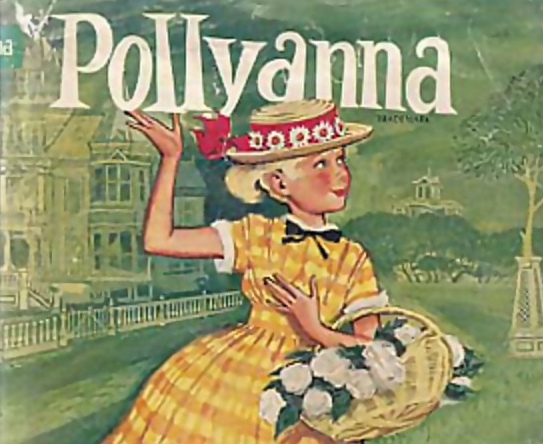
They’re supposed to be Pollyanna, Elsie Dinsmore, and Jane Bennet.  They’re supposed to be completely innocent, unnoticed, modest, graceful, but still look beautiful and unblemished (while not thinking too hard about it).

Good Homeschooled Girls are impossible. All of us are wearing masks, we’re all acting feminine, we’re all hiding ourselves, because none of us are that perfect.

Instead, we are berated — we are told we are never enough, that we’ll never be good enough, that we don’t measure up. We’re told we need to fix our hair and only wear makeup to cover our acne, we’re told we need to look just so — but not focus on it. Our appearance and personalities are shamed, muted. We are turned into china dolls — empty, silent, porcelain — while we die slowly inside.

Our unique identities are stripped — told to be sinful.

Our independence is denied, and to fight for it is to abandon all that we were raised to be.

Our dreams — if they exist outside the chosen path — are cast aside, scoffed at, or allowed under very specific circumstances and made to end upon marriage and/or pregnancy.

And if we abandon this dream, or if we seem to have a particularly hard time measuring up to this standard? We are broken, and there is something wrong with us. To base our worth in who we are instead of when our uterus is used flies in the face of this ideal.

Elsie DinsmoreBeautiful Girlhood, and Jane Austen are the books that are handed to us as examples of femininity and how we should conduct ourselves. Good Homeschooled Girls are supposed to be quiet, demure, masters in the art of domesticity — never raising their voices or asserting themselves, never doing heavy lifting (unless it’s babies or laundry baskets), always walking with poise, always graceful, always innocent and perfect, never loud.

The first two emphasize the devaluing of self as godly and feminine. I can’t speak to Jane Austen because I’ve never been able to make past the first chapter.

Innocent, all with Hayley Mills and a yellow house in Maine and everything, harmless. Right?

If we leave it at the movie, sure (?). I didn’t know at the time, but the out-dated standards they sing about are things that are invisibly expected of all Good Homeschooled Girls.

The line hide the real you (while it was probably meant to be funny and absurd) was essentially my way of life.

I’ve always been stubborn, strong-willed, and independent. When it worked in my parents favor, this was a good thing. Otherwise it was something to be squelched.

I was never really a tom-boy. Sports bored me and seemed pointless — which, I suppose naturally meant I was a good candidate for the social experiment of super-girly-femininity. I was given books — Elsie Dinsmore, Beautiful Girlhood, Pride and Prejudice or Emma or Northanger Abbey (I don’t remember which ended up in our collection), and etiquette 101 for tweens (I can’t remember the name). I had to learn to be hospitable and submissive, though my parents never (or rarely) used the word feminine.

Submissive and feminine are often synonymous here.

I read them, dutifully, internalizing the expectations (well except Austen. I just couldn’t, but that comes in later). My parents never really talked with me about this. They had a tendency to just give me the books and expect I learn from them. Elsie is less fiction and more a not-so-subtle way of giving young girls impossible and unhealthy expectations and telling them they’re worthless if they can’t master it as Elsie did.

It didn’t take long for me to realize Elsie is an impossible set of standards that I was never going to meet. Though the real line was when she married her father’s best friend. I couldn’t bring myself to do it anymore, arranged marriages to a man who’s old enough to be your father who was creepy as hell to you when you were 8, and you’re too perfect and ideal to even exist or be relatable.

Just, no.

The appeal of the civil war/regency era vanished — because I saw through what they were trying to do and I think it was my own secret form of rebellion, sort of. Good Homeschooled Girls are given these books as guidelines – Beautiful Girlhood literally is a guideline for femininity and social conduct.

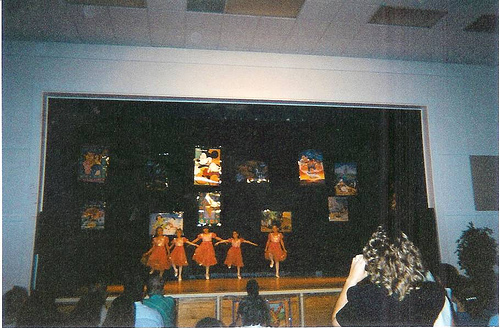
My first ballet recital to “Femininity” from Summer Magic.

As much as I tried to mask my nature, to hide the real me, I was never able to do it well enough to be the pinnacle of femininity that I felt I was supposed to be.

Austen bored me, because I couldn’t get into the obsession with ribbons and dresses and who’s-courting-who. Elsie and Beautiful Girlhood just made me more painfully aware of the inadequacies I was already painfully aware of.

I felt broken. I felt broken because I didn’t live up to this idealized standard of godly womanhood (or girlhood).

I felt broken because I am not delicate, and no amount of silencing myself was going to re-write the core of my DNA. I come from a line of stubborn women, you can’t demure you’re way out of it. Or maybe you can, but I couldn’t. I felt like that meant I was less desirable (the end-goal of being female being married and having kids).

Being born female meant that I had my entire life and code of conduct set in front of me, no personality required. I was required to follow the program. I felt wrong because the very fiber of my being was in direct opposition to it.

It still is. 

I remember when I was 11 or 12 trying painfully to write fiction about an edwardian-era girl (instead of my book about the secret society of women who fought in the Revolution via spying because the Quartering Act) who sat in a garden in her frilly dresses and waited for suitors. I think I got maybe 4 paragraphs and then became frustrated because it was impossible for me to even write about that without getting bored.

The idea of being locked up, spending my life in waiting for someone to whisk me away, and then to spend the rest of my life locked up birthing and raising children horrified me. No matter how hard I tried to make it not, or how hard I tried to make it seem…a s ultimate as people were telling me, no matter how hard I tried to convince myself it wasn’t certain death.

I couldn’t escape the feeling of the futility and meaninglessness of my life if all I was allowed to do was wait, and then have kids, and hope that one day they’d grow up to do the great things that I wanted to spend my life doing.

That meant something was wrong with me. I was too independent and god wouldn’t like that.

I remember being told, on several occasions, when I chose to fight for my autonomy, “independence is bad [for a woman], how do you think God feels about that [me being autonomous]?”

I was wrong and broken because I was not, am not, could not be demure, quiet, and feminine. I would never live up to the standards that Good Homeschooled Girls are supposed to live up to – no matter how many masks I put on, or how hard I tried to hide myself.

I may never have been a tom-boy, but I was never the epitome of girlishness either.

Masks could only cover so much. I found ways to let myself be stubborn in subtle and approved ways. I was compliant to a point.

The things is, I know now that those books are poison to my rose-soul, but I still feel the need to embody all that is wispy delicate and feminine.

I still feel broken because I don’t fit  the mold when other people project it onto me. Because it is impossible for me. It would require giving up my autonomy and a complete change of taste.

*****

I can’t watch Pride and Prejudice without raging, I generally hate dramas (there are exceptions to this), I’d rather read a good fantasy or scifi novel or comic than a book about amish courtship (don’t get me fucking started), I love a good action movie — Give me robots fighting monsters any day.

None of my most basic preferences are even considered in the world of Godly Womanhood and Good Homeschooled Girls. It is assumed that I LOOOOOOOVE anything by Austen, that cooking, courtship, and children appeal to all of my tastes and interests, that robots and monsters and other-worlds are boring and unnecessary, and action movies are for boys.

When I express otherwise, it’s all but laughed at or ignored.

*****

I watched the Lizzie Bennet Diaries without raging (loved it, even). I know Austen was groundbreaking for her time (a woman author? *gasp*), but I can’t read her – not just because I find it dry, but because of homeschool culture.

Good Homeschooled Girls are supposed to be looking waiting for their Mr. Darcy (an asshole, really?). Good Homeschooled Girls are supposed to be Jane Bennet (Lizzie is far too independent) which doesn’t make sense because Jane marries Mr. Bingley? I know too many people who are trying to hack the 21st century into a Jane Austen novel and it frightens and sickens me. Wouldn’t it be nice if there were balls and you married the person you danced with? I feel like that can’t be the point of Pride and Prejudice, but you wouldn’t know it in this particular subculture.

^ Don’t start thinking about it too hard, it’ll hurt your brain.

It is the obsession with denying women humanity — autonomy — and worth that pervades this whole idea. 

Good Homeschooled Girls have no needs. Good Homeschooled Girls are whatever they are told to be. Good Homeschooled Girls must gracefully and perfectly meet and fulfill contradictory requirements (look perfect, but don’t obsess about it! learn things, but don’t use your brain!), while never having a bad day or a human moment.

Good Homeschooled Girls aren’t allowed to be.

All in the name of femininity.

“My Daughters Are Not Going Off to College”: When Homeschooled Girls Are Trapped

Screen Shot 2013-10-12 at 1.44.36 PM

HA note: The following is reprinted with permission from Julie Anne Smith’s blog Spiritual Sounding Board. It was originally published on October 12, 2013 with the title “Homeschooled Adult Daughters Held Captive at Home, Prevented from Getting College Education.”

*****

“There are too many homeschooled girls who need help overcoming the legal obstacles their parents put in their path to a college education. It also bothers me that the leaders of the Christian homeschooling movement preach that young girls shouldn’t get a ‘regular’ education – that they should only be trained in domestic arts and ‘female’ tasks.”

~ Nick Ducote, “Reflections on Malala, Patriarchy, and Homeschool Advocacy”

*****

In an effort to “raise up a child in the way they should go,” some Christian homeschool parents are essentially kidnapping their daughters, only teaching “homemaking” skills, even denying and preventing them from getting a college education.

The father is involved in all aspects of his adult daughter’s lives until marriage.

Earlier this week, my young friend, Nicholas Ducote, co-founder of Homeschoolers Anonymous, wrote something that resonated with me.  It hit me hard because this was a path our family was heading down.  He was writing about the plight he has seen among a number of young ladies who are part of the “Homeschool Movement,” the subculture of fundamentalist Christians who adhere to the Patriarchal lifestyle in which the father is very involved in all aspects of his adult daughters’ lives, even through adulthood until they are married — married to a husband approved by the father.

Nick, a former homeschool student, has earned his Master’s degree.  He knows the challenges he faced in getting his degrees. But it struck me how Nick was clearly upset about the injustices he saw facing his female homeschool peers.

In the Homeschool Movement, this educational imbalance among the sexes is not perceived as an injustice whatsoever. In fact, to even think of sending an adult daughter “off to school,” is to some, heretical.  As recent as a month ago, a homeschool mom and friend of mine posted on Facebook that her adult daughters would not be going to college — that she and her husband “just don’t believe in that.”

It makes me wonder: did her parents make all of her decisions when she became an adult?  Probably not.

Here is a screenshot I saved from a homeschool wives group on Facebook several months ago and you can see the similar mindset:

daughters1

I used to believe this way.  

In the Homeschool Movement, I was taught to believe that if we sent our daughters off to college, they would want to use that education, get a job, might even earn more money than their husbands.  This was “not right” because husbands were supposed to be the breadwinners and mothers were to be busy at home with the children.   They claimed this was all the work of feminists and the feminist influence on society was breaking up families and demeaning men.

Feminism was the cause of the moral decay in society.

I’ve been a homemaker for nearly 27 years.  I have loved staying home with the children.  It is wonderful for mom to stay home with her children.  But is it the only way?  Is it always possible?  Is it really all that black and white as “they” portray it to be?  Can we have decent families in which a mom works part-time?

Leaders in the Homeschool Movement spend an exorbitant amount of time selling their rhetoric in words and in materials (books, videos, blog articles) sharing what they believe to be the ultimate role of women as homemaker:  how to be respectful and submissive wives, how to cook, sew, how to raise children, etc.

If you are a young girl raised in this environment, your know your lot in life is:  get married to your approved husband, have many children, teach your children at home, and hopefully, your children will do the same.

It is important to note the basis of this ideology. The ultimate goal in the Homeschool Movement is to be fruitful and multiply and “take dominion” of the world.  Dominionism and Reconstructionism are foundational roots from which everything in the movement is cultivated.

Nick then discussed a young lady who has been in the spotlight lately, Malala.  If you are unfamiliar with Malala, I encourage you to read about this courageous young lady who is making her voice be heard in a country where women’s voices are squelched.

“Malala Yousafzai is a Pakistani school pupil and education activist from the town of Mingora in the Swat District of Pakistan’s northwestern Khyber Pakhtunkhwa province. She is known for her activism for rights to education and for women, especially in the Swat Valley, where the Taliban had at times banned girls from attending school. (Source)

Here is a video Nick included of Malala.  The Taliban tried to assassinate this young lady because of her powerful voice and she survived and her voice is even stronger and now has international attention.   Please listen to this amazing interview.

Nick writes:

What is especially disturbing is when you hear Malala talk about how the Taliban in the Swat Valley of Pakistan wants to take education away from girls. You would hope, in the 21st century, young women would have basic access to education.

I will be loud and proud about my homeschooling advocacy because my heart is broken on a regular basis when homeschooled teenagers trapped in fundamentalism contact me trapped, struggling to assert themselves and pursue the future they want. Sometimes parents deny FAFSA signatures, or they edit their transcript if they apply to an “unapproved” school. I have talked to homeschooled girls who were literally trafficked (for sex and for labor).

Some homeschooled adult daughters fare no better than Pakistani young ladies when it comes to education.

Nick is right.  We expect this kind of thing in Pakistan, but not in the US.  Some of these young ladies who have officially graduated from their homeschool high school are not allowed to even choose whether they go to college or not. College is simply not allowed. They are destined to be a “stay-at-home-daughter,” serving parents, helping with the remaining children at home, help with cooking, cleaning around the house, etc.

In the United States of America, we have young female adults — I said adults — who are living at the home of their Christian homeschooling parents, unable to make adult decisions of where they can live, where they can go to school, who they can be friends with, where they go on the internet, etc.  They are essentially forced to follow the path of their parents.  They are cut off from the outside because their internet use, cell phone use is highly monitored.

Now some of these young ladies go along with this without any dissension. This is the only life they’ve ever known. They have been sheltered from the “world” or society.  Their friends are people from church, from homeschool groups, etc.

This is their norm.

Some may do fine with this. They will allow their parents to help select a husband for them, get married, have babies and continue living the legacy their parents planned for them.

However, there are other young ladies who want to explore life outside of the life and rule of their parents.  They want the opportunity to go to school and further their education. But they are not allowed this opportunity. They are prevented.  How can this be? In this day and age?

These parents hold the keys to their adult daughters’ freedom. They are the ones who decide whether they will turn over their signed homeschool high school transcript. They are the ones who must sign and turn over info for FAFSA documentation for financial aid. They decide whether their daughters can get a driver’s license, work outside the home, etc.

In the United States of America, there are young ladies held against their will in their parents’ homes and they are trapped.

They don’t know where to go. They don’t know how to escape. They don’t know how to get schooling. They are completely isolated.

This is happening in our country — the USA.

To My Past — I Wouldn’t Be Who I Am Today Without You

Screen Shot 2013-08-13 at 4.10.13 PM

HA note: The following is reprinted with permission from Faith Beauchemin’s blog Roses and Revolutionaries. It was originally published on June 30, 2013.

I was raised in a home and a church with certain expectations.

Most of the people I grew up with have lived up to those expectations.  They’re all good Christians, remaining doctrinally pure and behaviorally righteous. Most of them are married and gearing up to raise the next generation of good Christians, in homes where the father is the leader and the mother is submissive.

My peers who have followed this path are the pride of their parents and the future of their church.

I have flouted all of these expectations. I quit attending fundamentalist churches years ago, and quit altogether around the time I graduated college.  Although my parents think it’s okay for a single woman to work, they also think a woman’s highest calling is wifehood and motherhood.  I’m nowhere near being a wife and I intend never to have children at all.  My politics are so far removed from those of my parents that we can barely discourse on the topic due to fundamentally different worldviews.  My behavior, as well, is far from the stringent moral standards held up by my former community, although somehow I think I’m still a pretty good person (mysteriously, drinking, going out to bars, and similar behaviors have not turned me into some kind of monster).

But it is clear to me that, however far removed I am from the outcome intended by the key players in my past (my parents and their church), my politics and anti-authoritarian worldview are a direct result of that past.

My parents made the mistake of teaching me to think for myself, to go against the mainstream, to be willing to believe what I know to be right.  They homeschooled me partially in order to keep me from conforming to ordinary culture.  Then they expected me to accept the exact same conclusions and ideas they themselves had accepted.

My church was, for a fundamentalist congregation, quite intellectual.  They taught us to look at textual and cultural context and to know (their version of) church history. They taught us to argue for our faith.  Then they expected that we would use each of these skills only to defend their particularly narrow viewpoint.   I attended a Christian college, where I took classes which taught me how to reason, how to gather evidence, how to think for myself and effectively communicate with others.

But that same Christian college naively assumed that its graduates would toe the party line. 

There were immense cultural pressures from my parents, their church, and my college to conform to a particular point of view, but all of them also gave me the tools to make my own way in the world, to reject conformity and with it the point of view they so desperately demanded I embrace.

At the same time as my parents, their church, and my college gave me the tools I needed to think for myself, they also taught me important lessons about fascism and forced conformity and loyalty to a particular ideology.  I saw and I experienced in my own life the terrible consequences of valuing ideology and power structures over people.

I learned that unquestioning acceptance of authority often leads to very negative outcomes. 

I learned that although those in authority demand implicit trust, I cannot implicitly trust them because they almost never truly have my best interests at heart.  As I have said before, fundamentalism is simply religious fascism.  It didn’t take long for my opposition to religious fascism to translate into the political arena as well.  Also, my past taught me the harm of a “we few vs. the rest of the world” mentality.  By its nature, conservative Christianity is elitist, claiming an inside track on knowledge and a superiority to unbelievers.

I am now utterly opposed to absolute power and I am wary of elitism in whatever form it takes.

So however critical I am of those in my past who attempted to control my life, I must also always be grateful to them. 

They gave me early experiences which formed my current worldview.  They gave me tools with which I was able to break out of the prisons they constructed around me and then build my own life, a life which looks nothing like they want it to but a life which I inhabit very happily.

Crosspost: Sally’s First Kiss and The Princess and the Kiss

The-Princess-and-the-Kiss1-e1373847077493

HA note: The following is reprinted with permission from Libby Anne’s blog Love Joy Feminism. It was originally published on Patheos on July 24, 2013.

When I was a teen, I did a lot of babysitting for other homeschool families. One day I babysat two families worth of children while their moms went out for lunch—I think there were about ten kids total that I was watching. I was in the kitchen cleaning up from lunch and the kids were in the living room putting on a play wedding as kids sometimes do. The nine year old was presiding over the wedding of the two five year olds, a girl from the one family and a boy from the other.

All of a sudden I heard the older child say “now you’re supposed to kiss each other” and I freaked out and ran into the living room to break it up.

I wasn’t about to let those two five year olds kiss, thus forever depriving each of the chance to save that first kiss for the altar.

In the conservative Christian homeschooling community in which I grew up, a person’s first kiss was incredibly important. Even today, the products of this culture debate this question with great energy, arguing about whether forbidding the first kiss until the altar is a form of legalism or the preservation of a precious gift.

Now, I was taught that part of the reason that the first kiss should be saved for the alter was that it was a gateway into other things. First comes kissing, and then, who knows? Making out, humping, sex—once you open the door, it’s hard to close it. It would seem, then, that five year olds kissing at a play wedding wouldn’t fit this category, given that we’re not talking about a kiss that comes as a result of sexual tension and mutual attraction.

And yet.

The literature I read didn’t make a distinction between preschoolers kissing and teens kissing.

Instead, it simply talked about the importance of saving “your first kiss” for your wedding day. And of course, we were regaled with stories of virtuous couples who had done just that—didn’t we want to be like them? And then there is The Princess and the Kiss, a book marketed to children as young as four.

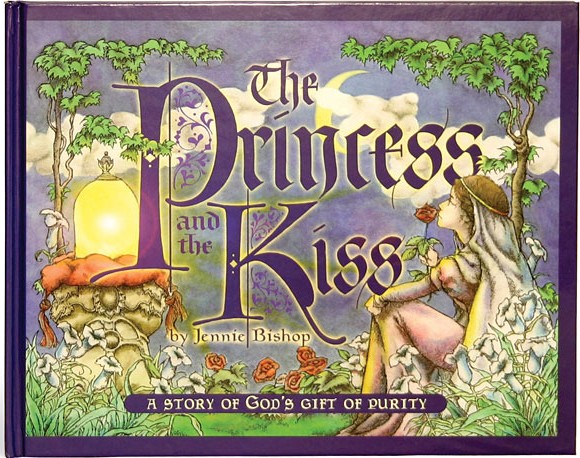
The book is about a king and queen who help their daughter save her most precious gift, her first kiss, for the prince she will marry. The princess’s first kiss lives in a glass orb, something like the rose in the Disney version of Beauty and the Beast (you can see it on the cover). This book has become very popular in Christian homeschooling circles and beyond, and there are hundreds of thousands in print. This is the sort of thing I was raised on (though this particular book wasn’t around when I was little, lots of kids are growing up on it now).

All of this came rushing back to mind recently when [my daughter] Sally kissed a little boy at her preschool—or, as I would have seen it in the past, when Sally “gave away her first kiss.”

We had gotten together with the family for a play date, and Sally and her little friend did the whole pretend wedding ceremony thing that little kids spontaneously do (I presided over a few in my day myself). At the end Sally grabbed the little boy and planted a kiss on his face. Surprised and bemused, I couldn’t help but recall my reaction to the pretend wedding staged by the five year olds I was babysitting so many years ago. This time, of course, my perception and reaction was different.

Sally didn’t lose anything when she kissed her little friend. Instead, she simply gained a common life experience—something she will look back at and laugh about when she’s grown.

It’s the people who impute a cute childish action with so much meaning who are creating the problem, not my preschooler.

What Do Presents, Chocolate Bars, Roses, Chewing Gum, and Packing Tape Have in Common?

HA note: The following is reprinted with permission from Libby Anne’s blog Love Joy Feminism. It was originally published on Patheos on June 6, 2013.

*****

Question: What do presents, chocolate bars, roses, chewing gum, and packing tape have in common?

Answer: Nobody wants them when they’re used.

Presents, chocolate bars, roses, chewing gum, and packing tape have all been used by abstinence educators and various Christian leaders and teachers to illustrate to young people how having sex before marriage will ruin them and leave them disgusting and unwanted. Those who grew up in the purity culture probably knew the answer to the question asked in the title before even opening this post.

I was reminded of this when reader Laura left this comment on my blog:

I had to go through the True Love Waits program. The “activity” I remember the most was a wrapped present. I held the package and stood at the front of the room. Then, the youth leaders lined up the guys and each of them tore off some of the paper. Then I had to read some paragraph about how virginity is like a gift – no one wants a present that was “meant for them” to have already been opened by someone else.

Because of that one activity, I never told anyone I was raped at 15 until years later. I can’t even imagine the rest of the damage that was done to the other girls in the group.

Laura’s comment reminded me of Samantha’s post from several months back. In her case, the teachings she received about purity led her to stay in an abusive relationship long after she should have left—because she believed that, having given up her virginity, she was ruined for anyone else. Here is why Laura’s comment reminded me of Samantha’s post:

When I was fourteen, I went to a month-long summer camp at the college I would later attend. Like most Christian summer camps, this one involved going to a chapel service twice a day. Most of the time they were fun, lighthearted– until one evening they split up the girls and the boys. Great, I remember thinking, because I knew exactly what was coming. Segregation can only mean one thing– they were going to talk about sex. I sighed when they made the announcement. Again? I thought wearily.

That evening, when the camp counselors had shooed all the men and boys out of the building, the speaker got up to the podium. She didn’t even beat around the bush, but launched right into her object lesson. Holding up a king-size Snickers bar, she asked if anyone in the audience wanted it. It’s a room full of girls– who doesn’t want chocolate? A hundred hands shot up. She picked a girl close to the front that wouldn’t have to climb over too many people and brought her up to the stage. Very slowly, she unwrapped the Snickers bar, splitting the package like a banana peel. She handed it to the young woman, and asked her, very clearly, to lick the chocolate bar all over. Just lick it.

Giggling, the young lady started licking the chocolate bar, making a little bit of a show of it. At fourteen, I had no idea what a blow job was, so I missed the connection that had a lot of girls in the room snorting and hooting. The young lady finished and handed it back to the speaker. As she was sitting down, the speaker very carefully wrapped the package around the candy bar, making it look like the unopened package as possible.

Then she asked if anyone else in the room wanted a go.

No one raised her hand.

And Samantha gives a second example, too:

My sophomore year in college, another speaker shared a similar object lesson– ironically, in the exact same room, also filled exclusively with women. She got up to the podium carrying a single rose bud. At this point I was more familiar with sexual imagery, and I knew that the rose had frequently been treated as a symbol for the vagina in literature and poetry– so, again, I knew what was coming.

This speaker asked us to pass the rose around the room, and encouraged us to enjoy touching it. “Caress the petals,” she told us. “Feel the velvet.” By the time the rose came to me, it was destroyed. Most of the petals were gone, the ones that were still feebly clinging to the stem were bruised and torn. The leaves were missing, and someone had ripped away the thorns, leaving gash marks down the side.

This reminds me too of something teen kidnap victim Elizabeth Smart said, explaining one reason she stayed with her captor and didn’t try to run sooner.

Rescued kidnapping victim Elizabeth Smart said Wednesday she understands why some human trafficking victims don’t run.

Smart said she “felt so dirty and so filthy” after she was raped by her captor, and she understands why someone wouldn’t run “because of that alone.”

Smart spoke at a Johns Hopkins human trafficking forum, saying she was raised in a religious household and recalled a school teacher who spoke once about abstinence and compared sex to chewing gum.

“I thought, ‘Oh, my gosh, I’m that chewed up piece of gum, nobody re-chews a piece of gum, you throw it away.’ And that’s how easy it is to feel like you know longer have worth, you know longer have value,” Smart said. “Why would it even be worth screaming out? Why would it even make a difference if you are rescued? Your life still has no value.”

And finally, Ariel Levy has reminisced similarly:

To illustrate his not terribly complex point, Worley called a stocky young man from the audience onto the stage and then pulled out a length of clear packing tape.

“This is Miss Tape. She looks pretty good, right? She’s tall, right? She’s … what else is she?” Worley raised his eyebrows at us encouragingly.

“Thin!” someone shouted out.

“Right! She’s thin,” he said, and wiggled the piece of tape so it undulated in the air. “And she has nice curves!” Worley winked. “So they have sex.”

To illustrate the act of coitus, Worley wrapped the piece of tape around the volunteer’s arm. After a few more minutes of make believe, we came to the inevitable bump in the road when Worley said the volunteer had decided to move on to other chicks. Worley ripped the piece of tape off his arm.

“Ouch,” said the volunteer.

“How does she look now?” Worley asked, holding  the crumpled Miss Tape up for inspection.

I fought back the urge to yell, “like a dirty whore?”

Presents, chocolate bars, roses, chewing gum, packing tape—these sorts of metaphors abound in circles where what I call “purity culture” is strongest, and each one is used to illustrate how having sex before marriage will ruin you, rendering you dirty and potentially even unable to bond or form real relationships for the rest of your life. In the effort to keep young people from having sex before saying marriage vows, Christian leaders, pastors, and parents resort to threatening their youth, doing their utmost to scare them out of having sex and slut-shaming like crazy in the process.

In case you were wondering, no, this isn’t healthy, and the result of these teachings has been a generation of Christian youth with warped and toxic ideas about sex, dating, and even their own bodies. And in the process, these very teachings have led young women like Laura, Samantha, and Elizabeth to leave their rapes unreported, remain in abusive relationships, and stay with their abductors. This is not okay. 

How about you? What similar metaphors have you encountered, and how have they affected your life?