The Day They Stole My Brave: Chantelle Chamberlain’s Story

CC image courtesy of Flickr, Jussi Mononen. Image links to source.

Chantelle Chamberlain blogs at Happy Hippie Herbivore. The following was originally published by Chantelle on May 11, 2014, and is reprinted with permission.

I found my Brave. I finally took hold of it with both hands and pulled as hard as I could. It was mine, bold and shiny and terrifying and free and all mine at last. The Brave I have struggled to claim for as long as I can remember. I took my brave and I packed it in a suitcase and I walked out the door.

And then the chains. How they rattled and clanked. How they pulled and creaked, rusty and stiff from being still for so long. The weight, so unbearable, long-forgotten from years of quiet tolerance. So many hours of nodding and smiling and “mmm hmm” and “nuh uh,” just waiting for my wings to sprout and my Brave to come.

I found my Brave. But it wasn’t enough. Like so many other parts of me that aren’t enough. That will never be “enough.” Because as soon as I pulled with my Brave, they pulled back, harder than ever, with heavy chains and thick ropes and overwhelming shame.

They told me it was wrong. That my Brave was evil. That it was carnal and selfish and not Brave at all, but cowardly. They told me I was stupid. That thinking I could be Brave was crazy and idiotic. For the next 3 hours, my Brave, once shiny and bright, was battered and beaten, dragged down, wings broken, and finally thrown into a box and locked away. “You can have it later,” they said, but what they really meant was:

Don’t ask.

Don’t try.

Don’t run.

Don’t dare.

Brave isn’t for you. It was never for you. Brave is only for them. The dirty, the unworthy, the sinners.

They spit the words like venom, sour and dark and poisonous, piercing my very soul until I cowered on the floor, broken and bitter and bloody and so, so trapped. They built up their arguments like a cage around my life, my ambition, my future. Squeezing my world into a tiny box of “yes, sir” and “no, ma’am,” where you choose logic and money over love and adventure and spontaneity.

They stole my Brave. They took it away and reprimanded me for playing with the big kids’ toys. They told me I wasn’t old enough, I wasn’t ready, I couldn’t handle Brave. I could only handle Timid and Obedient. They sent me to my room, the very room I had pulled so hard to escape, and told me to think about what I had done. They clipped my wings with jagged shears and left scars that will never heal properly.

They stole my Brave. Cut it from my chest with words and paper and Angry-Jesus. Spitting scripture like fire just to keep me chained in place. Whatever happened to “my chains are gone, I’ve been set free?” This isn’t freedom. This is house arrest. This is worse than prison. It’s the taste of freedom without ever getting the whole bite, the whole plate, the whole dish. There is nothing worse than hope.

They stole my Brave. They said it was never mine to begin with.

But they were wrong.

I’m taking back my Brave. One day at a time. Bit by tiny bit. I’m collecting the pieces. Gluing the feathers back onto my broken wings. I’m cutting the chains, one by one. I’m making my plans, packing my bags, and making my way out that door one toe at a time. I’m getting ready and as soon as I see my opportunity, in the blink of an eye, the flash of a second, I’ll be gone. They’ll never see me again. I’ll be no more than a flicker in the candlelight, a shadow on the windowpane, a whisper in the wind.

Blink. I dare you.

James and Lisa Pennington Respond to Identification Abuse Claims

Lisa Pennington.
Lisa Pennington.

By R.L. Stollar, HA Community Coordinator

James and Lisa Pennington responded today to their daughter Alecia’s allegations of identification abuse.

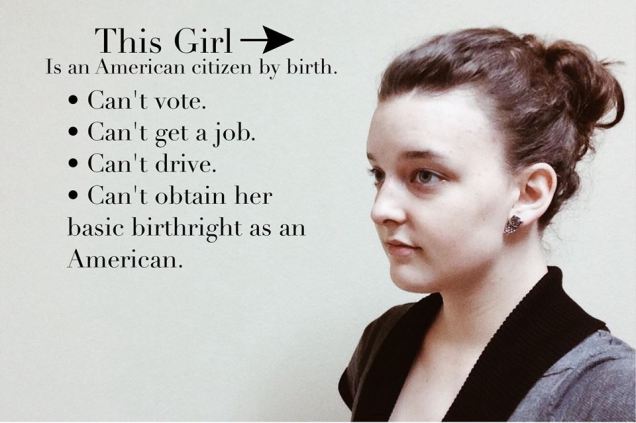
In a video posted on YouTube on February 9, 2015, Alecia claims that she was home-birthed and her parents neglected to file any birth certificate or record of any kind. They also allegedly never got her a Social Security number, have no school records for her, and have never taken her to a hospital (and thus she has no hospital records). “This leaves me with nothing to prove my identity or citizenship,” Alecia explains. “I am now 19 years old and I’m unable to get a driver’s license, get a job, go to college, get on a plane, get a bank account, or vote.” Alecia’s story has gone viral, with her video being viewed over 500,000 times and reaching the front page of Reddit. Several mainstream news sources have covered her story, including Addicting Info and The Stir.

In response, Lisa posted a YouTube video today but then promptly deleted it:

Screen Shot 2015-02-11 at 1.33.18 PM

Fortunately, an individual at Free Jinger transcribed the video. A transcript of Lisa’s comments is as follows:

Many of you have seen the video that our daughter has made and while we would prefer to talk to her privately that has not been an option for us because she has let us know that she does not want us talking to her at all. We have reached out to her and she has not responded. So, we feel like it’s best if we just go ahead and answer some of the questions about the video that she made. She says in the video that she does not have a birth certificate or the documentation that she needs to get a Social Security number or documentation for the things that she needs in her life. And she says in the video that we have refused and we want you to know that is 100% not true.

The thing that is true about her video is that she was born at home. And to our knowledge there was a birth certificate filed, the midwives told us you have to file a birth certificate and as far as we know there was one filed. We do not know what information was put on it and we do not have any copies of that. We are unaware of what was filed when she was born but we have no interest in holding anything back from her and we know you can get a delayed birth certificate which would be a great option for her. Apparently she’s been through a lot to try to get this documentation for herself and we didn’t know about any of that until the video came out. She has not shared anything along the way of her journey of her trying to deal with this. We didn’t know.

But we do know that we are happy to help her and sign whatever we need and give her whatever we need. We have told her we are looking for anything that might help her. And we’ve been looking through file boxes and we haven’t come across anything but we have nothing to hold back and we are perfectly thrilled to give her whatever she needs for her life.

Our older children have drivers licenses and voter registration and they go to college, they fly. They do what they want to do in their life and we want that for her as well. We don’t want to have any say in the choices that she’s making. We don’t want to control her. We love her. Let me be clear. We love her with the depth of a parent’s love. And if you’re parents then you know what that is. And we certainly want only the best for her and we want her to live her dreams. And we care about her having those things.

But we have been left out of the loop and not given the opportunity to help her in the way that we have helped the other kids so we don’t really know what to do. We are being attacked for this – the things she has said in the video and I just want to say loud and clear it is absolutely not true. We want every opportunity for her, we have offered over and over to help her and she has not responded or accepted that help. So whatever she needs now, we are happy to do, whatever we need to sign, we are happy to sign and let her move on with her life. And if she never wants to talk to us again, as heartbreaking as that would be, we don’t want to control that either, because we just want her to have the life that she wants. And so I hope that that answers some of your questions and thanks for stopping by.

There is no word on Lisa’s YouTube account, blog, Twitter, or Facebook page as to why she immediately removed the video after uploading it. Furthermore, several of Lisa’s blog posts about her daughter have been removed from her Pennington Point website. The most notable piece deleted was “The Hardest Post I Ever Wrote,” Lisa’s post from September 24, 2014 where she mentioned that Alecia had fled their home with the help of her grandparents. That post is no longer viewable on the Pennington Point, though HA has archived a PDF of it here.

Alecia’s father, James Pennington, also responded to my blog post today about Alecia’s situation. He first commented with a pseudonym, “Reasonable”:

Screen Shot 2015-02-11 at 1

Then he later repeated the comment with his own name:

Screen Shot 2015-02-11 at 1

Text is,

We want nothing but the best for Faith. We’ve told her we will sign any affidavit that will help her in the process, and that once she sends it, we’ll get it right back to her. I’ve also offered to meet with her and walk her through the process as we have with our other children.

James also preemptively bought the domain HelpMeProveIt.com, likely to prevent Alecia from using it.

While James and Lisa have a right to respond to Alecia’s allegations, posting — then immediately deleting — videos and making comments under pseudonyms isn’t exactly a persuasive strategy.

** Update, 02/11, 4:45 pm:

James Pennington gave the following explanation for why he and Lisa are domain-squatting on HelpMeProveIt.com...

Screen Shot 2015-02-11 at 4.39.06 PM

Today I’m Proud of Joshua Harris

Screen Shot 2015-02-10 at 5.12.21 PM
Josh Harris.


HA note: The following is reprinted with permission from Libby Anne’s blog Love Joy Feminism. It was originally published on Patheos on February 2, 2015.

So, have you heard the news? Joshua Harris is stepping down from his role of head pastor of Covenant Life Church and heading to Vancouver to attend seminary at Regent College. I don’t know much about Regent, though the Washington Post described it as “mainstream.” Not only that, but Josh is planning to send his kids to public school while he attends seminary. Public school. This is huge, and it’s hard to describe how much it means to me.

Josh Harris was the oldest child of Gregg Harris, a well known early Christian homeschool leader who traveled the country speaking at conferences and convincing people that homeschooling was God’s plan for families and the best way to raise children. Because of his father’s ideas, Josh did not go to either college or seminary, and instead went straight into ministry, including both writing and preaching.

Josh published I Kissed Dating Goodbye in 1997, and the book took the Christian homeschooling world by storm. Suddenly “courtship” became the word of the hour, and parents of children like myself were deciding that they would not let their children date—and indeed, would teach us that dating is akin to adultery, or worse. Josh Harris singlehandedly created the atmosphere I grew up in with regards to romance and marriage. I not only read his book, I lived and breathed it—as did countless other fundamentalist and evangelical homeschooled teens.

Ten years ago, Josh became the pastor of Covenant Life Church, a nondenominational evangelical megachurch with 3000 members, all without formal theological training. But in recent years, his church and others in its loose association became mired in scandal. The words “Sovereign Grace Ministries” may be familiar to you. The upshot of it all was that Josh and other pastors (most prominently C.J. Mahoney) were dealing with sex abuse allegations internally and not reporting anything to the authorities. Josh himself was not accused of sex abuse, and when everything started going down Josh disassociated his church from the association and made changes.

And now this. It seems that the scandal has made Josh realize that he was not adequately prepared for the position of authority he held, and that formal educational training actually has some merit. This is a huge admission to make as the son of one of the most prominent Christian homeschooling pioneers. I’m sure Josh is doing his best to mollify his father and bring him around, but in making this decision he is admitting that his father was wrong. Not wrong about homeschooling necessarily, but wrong in his opposition to formal education writ large.

And the whole sending his kids to public school while he’s in seminary thing? You have to understand that leaders like Gregg Harris made homeschooling part of the gospel. To be a true Christian, for them, was to homeschool. That and that alone was God’s will for families. I felt great trepidation about how my mother would react to me sending my own children to public school, and my mother has never been a prominent homeschooling leader on the scale of Gregg Harris. For many Christian homeschooling parents (my mother included) having a child grow up to put their own children in public school is a sign of failure. So for Josh to do what he’s doing—that takes guts.

Even going to seminary takes guts for someone like him! Why? Because of this:

For most of his career, Joshua Harris was the kind of evangelical pastor who chuckled at the joke that “seminary” should really be called “cemetery.”

There is a strong anti-seminary bent in the circles Josh runs in. Josh himself admits that he probably would not have been hired on as head pastor at Covenant Life Church if he had been to seminary. Seminary is almost a dirty word. All you need is the Bible! You don’t need to be taught by professors! Biblical criticism? Who needs that! Just listen to the Holy Spirit, read the Bible, and you’re good! And here Josh is, admitting that he does need that, and heading off to seminary.

Here is Josh’s own description of what’s going on:

F. Scott Fitzgerald wrote a short story called “The Curious Case of Benjamin Button.” (Maybe you saw the movie starring Brad Pitt). It’s about a man who ages in reverse—he is born old and with each passing day becomes younger.

In reflecting on my own story, I can’t help but think that I have lived a sort of backwards life. Without meaning to, I have experienced life out of the normal order and sequence of events.

At the end of last year I turned 40 years old. Yet it is only now that I am going to school. I haven’t completed any post-graduate study. I don’t even have an undergraduate degree. In fact, I have never attended a formal school full-time in my life.

I’ve been on a unique educational path my whole life. For the first 17 years of my life I was homeschooled by my mother. My father was a well-known homeschool advocate who traveled the country teaching parents the biblical principles for and advantages of home education. I was “Exhibit A” of my dad’s philosophy that you could learn by doing, be directed in study by your delights and succeed outside of the “system.”

At age 17, when most kids my age were going off to college, I started a ministry called New Attitude. I began publishing a magazine and putting on conferences for teenagers. I felt a clear sense of calling from God to speak to my generation and call them to a passionate pursuit of God. When I was 21, I wrote my first book [I Kissed Dating Goodbye], which met with a good deal of success.

That’s when I met C.J. Mahaney, who was the previous Senior Pastor of our church. In C.J. I found someone who understood me and who was willing to train me. He was a charismatic pastor (in all senses of the word) who pastored a mega-church, led a national network of churches, and embraced both reformed theology and charismatic practice.

Like me, C.J. got his start on the conference circuit before becoming a pastor. Like me he had never received formal theological training, and the group of churches he led, which grew out of the Jesus Movement in the 1970s, at that time didn’t place a high value on seminary training. So instead of attending seminary before becoming a pastor, I moved into C.J.’s basement, worked as an intern in the church, traveled the country with him and began preaching. It was on the job training and I soaked up everything C.J. taught me.

Seven years after I arrived at the church, I was set in as the hand-picked replacement for C.J. I was 30 years old, with no formal theological training and no formal training in organizational leadership, and I was the Senior Pastor of a 3,000 member church. That my friends is a crazy, backwards life!

Yes. Yes.

And so here I am, feeling proud of Josh Harris. What he’s doing is not an easy thing, but it is an important thing. He’s not the only one who feels he led a backward life. I and many others feel the same way too. As teens, we were expected to have the maturity of 30-year-old adults, and only later, as young adults ourselves, were we able to let the facade drop and finally go through adolescence.

Forging our own paths after the level of parental control homeschooling afforded our parents isn’t easy, but it’s worth it. I wish Josh the best as he leaves the conveyer belt he was set on—by both his father and evangelical leaders like C.J. Mahoney—and makes his own decisions and chooses his own path.

Note: It’s probably worth mentioning that Josh has also walked back his ideas about dating and courtship. I hope to write more about this later, once I’ve had time to listen to his sermons on the topic, which seem to be available only as audio files. 

When Your Very Identity is Held Hostage: Alecia Pennington and Identification Abuse

HelpAlecia
Image from Alecia Pennington’s Facebook page, Help Me Prove It. Image links to source.

By R.L. Stollar, HA Community Coordinator

Alecia Pennington is one of nine children of James and Lisa Pennington.

James and Lisa are group leaders for the Texas Home School Coalition (THSC) and board members of the Hill Country Home School Association. THSC awarded James and Lisa their “2010 Leaders of the Year” award. Lisa is also a popular homeschool blogger who blogs at The Pennington Point and Hip Homeschool Moms and has spoken at homeschooling events such as the Homeschool Moms Winter Summit.

But according to recent revelations by Alecia, the 19-year-old daughter of the Pennington family, not all is as idyllic as it seems. According to a blog post by Lisa, Alecia fled her family last year on September 24, 2014, with the help of her grandparents. Alecia is now speaking up about how her parents are allegedly refusing to help her get documents necessary for operating in society. In a video posted on YouTube on February 9, 2015, Alecia claims that she was home-birthed and her parents neglected to file any birth certificate or record of any kind. They also allegedly never got her a Social Security number, have no school records for her, and have never taken her to a hospital (and thus she has no hospital records). “This leaves me with nothing to prove my identity or citizenship,” Alecia explains. “I am now 19 years old and I’m unable to get a driver’s license, get a job, go to college, get on a plane, get a bank account, or vote.”

You can watch the video below:

Alecia created a Facebook page, Help Me Prove It, as well as a Twitter account to bring attention to her plight. On February 10, 2015, Alecia posted a document explaining what steps she has already attempted to get the necessary documents and why they failed. According to that document, Alecia alleges that she tried to get the midwife that delivered her to find a birth record but the midwife “doesn’t seem supportive.” Furthermore, Alecia claims, after “requesting an affidavit to her birth facts and attesting to their citizenship,” James and Lisa Pennington “refused this request.”

Basically, according to these allegations, James and Lisa Pennington are holding Alecia’s very identity hostage.

The situation Alecia faces is what HA’s parent non-profit Homeschool Alumni Reaching Out has termed identification abuse. Identification abuse is destroying, holding hostage, or denying a child their identification documents: birth certificate, driver’s license, Social Security card, and so forth. While such abuse can happen anywhere and everywhere regardless of one’s educational environment, homeschool kids (and alumni) are particularly vulnerable to this form of abuse because of certain anti-government and pro-parental rights attitudes in totalistic homeschool subcultures. Some people see identification documents as ungodly or even a “mark of the Beast,” a reference to the number 666 associated with the Antichrist in the Christian Book of Revelations.

Sadly, Alecia is not alone in her predicament. According to HARO’s 2014 Survey of Adult Alumni of the Modern Christian Homeschool Movement, out of 3703 respondents, 3.65% (or 135 respondents) experienced some form of identification abuse. Numerous testimonies from homeschool alumni denied identification documents can be seen at the Coalition for Responsible Home Education’s website. One alumna, Sarah, said,

[My parents deprived me of a social security number and birth certificate] because they believed they would give the government ownership of me & that God wanted his people to be unaffiliated with any government. I am unable to attend any school, drive, get a job, get a background check. I have been trying for 3 years and still have not been successful in obtaining any documentation whatsoever.

This situation transcends homeschooling. According to The Independent UK, “Globally, there are an estimated 220 million children under five across the world whose birth is not recorded.” That number is increasingly rapidly, as “51 million babies – almost one in three of all babies born across the world annually – …are not registered each year.” These are called “hidden children.” And the tragedy of these increasing numbers of hidden children is reflected in what can result from not having identification:

There is growing evidence that, without a birth certificate, such youngsters are more likely to be poorer than even the most disadvantaged of their peers, struggling to access healthcare, attend school, sit exams, or even get the vaccinations they need to survive… A child without a birth certificate, and therefore unable to prove his or her age, is more at risk of being exploited by being put to work, of being arrested and treated as an adult in the justice system, of being forcibly conscripted into the armed forces or child marriage, or of being trafficked. It is also almost impossible to open a bank account, get a passport, vote, or even gain employment, without a record of your birth.

By denying their children documentation of their existence and citizenship, such parents set up their children for future exploitation and abuse, even trafficking. They are forcing their children into jobs that are unsafe and/or lacking basic rights and protections. For example, I have heard from a number of homeschool alumni who were forced into sex work because they had no other ways to stay afloat.

Alecia is lucky to be supported and surrounded by caring extended family and friends who have taken her into their care. Not all children or homeschool alumni have such a safety net. They enter the adult world in extremely precarious and dangerous situations and their options for surviving in that world are limited.

Sadly, even with all the love and support she has, Alecia faces an uphill battle. And what is tragic about that battle is how unnecessary it is — if only her parents were willing to help her and/or filed the necessary paperwork years ago. Instead, they appear to only value their own “parental rights” to the point of being willing to sacrifice Alecia’s own rights as a person. This is one end result of the parental rights mindset championed by groups like HSLDA and ParentalRights.org, who believe children have no rights and are nothing more than spiritual “weapons” needing to be “carefully crafted” without government interference.

Even if they are right under the law, they are wrong in the court of morality.

To follow Alecia’s story and support her, “like” her Facebook page Help Me Prove It and follow her on Twitter at @HelpMeProveIt.

** Update, 02/11, 2 pm: 

James and Lisa Pennington have issued responses. Read them here.

The White Dress and Modesty: Mahalath’s Story

CC image courtesy of Flickr. Image links to source.

HA note: The author’s name has been changed to ensure anonymity. “Mahalath” is a pseudonym. Also by Mahalath on HA: “Paper Swords.”

I once owned a dress that was made of white lace and thought it was the most beautiful thing I’d ever seen.

I don’t know how it ended up in my possession, but I remember trying it on near the bathroom mirror. No frills, no fluffy skirt, and it actually fit my body. While I admired myself in the mirror, however, I kept one hand on the door and both ears straining for the slightest noise. The dress had wide straps and a skirt that ended above my knees, so of course it was “immodest”. I could never wear it. So I put it in my dresser, way in the back, for “someday”. Someday, when I could wear what I wanted, I would take it out again and go for a smoothie. I would laugh and feel pretty.

I never got to wear that dress.

My parents snooped through my stuff one day and found it. In order to escape punishment for keeping such immodest apparel, I said that I was saving it for sewing scraps. I had to keep my face still and bite my tongue as they cut my dream dress apart, saying they’d feel better if they gave me a head start.

I don’t recall a time in my parent’s house when I could feel pretty without the risk of shame.

Everything had to have sleeves, cover the knees, and not show any cleavage. It couldn’t fit you properly, because it might show off your body. (I wore a size too big for years because my mother refused to let me wear the right size.) White shirts might show your bra, v-necks invited boys, and heaven forbid I go swimming in a swimsuit without a skirt!

The term “dress” meant a Victorian-era type garment with a wide collar, sash, and buttons down the front. They were obtained from Goodwill and Salvation Army in varying degrees of atrociousness. I fit right in with Samantha, my American girl doll, right down to the lacy white socks. (A huge victory came at age nine, when I destroyed all my lacy socks and refused to wear new ones.)

Makeup was a battle that was fought and lost. The little makeup that was permitted was frequently inspected and deemed “too much”. The only acceptable amount was just enough so that it didn’t look like we wore any at all. I gave up, and consequently know nothing about makeup. My little sister, however, cared a great deal. Even though my parents somewhat relaxed their rules with her, she still can’t get ready for church without some remark about how she “cakes it on”.

When bags of used clothing would arrive for our perusal, my sister and I would grab the most risky of them all (Shorts above the knees? A shirt cut to fit a girl? A cute mini dress?) We’d try them on, helping each other with straps and zippers, admiring how good we looked in them. But there was a certain sense of doom that accompanied this private fashion show, and we gave each other looks of sympathy as we marched out to be inspected. Rather, rejected, as the criticism began. How could we think that was appropriate? You should have known better than to try that on. What would God think of what we were wearing? That needs more “up top”, this makes people look at your bottom, that is “painted on”.

As the door slammed behind us, the air ringing with the edict to put on something else, two young girls cried and rubbed each other’s backs in sympathy.

“But,” we’d whisper, “I look pretty.”

They wondered why I had self-esteem issues afterwards. Seriously.

My father asked me once how I couldn’t like myself after all of this. Because, daddy, you and mum have spent my whole life telling me it was wrong to feel like a girl. Be pretty, but not too pretty, or you may as well be a prostitute. So many other girls have grown up this way, being ashamed of their femininity while “femininity” and traditional gender roles are being crammed down their throats. It’s a contradiction at best, a tragedy at worst, that as the children of the modesty culture grow up they are forced to decide whether or not they want to be accepted by their families or themselves.

It was hard for me to think about dresses for a long time. To me, “dress” meant an ugly hand-me-down that looked like it belonged in a history museum, not on a modern girl’s body. It as a momentous occasion when I went shopping for my very first dress and fell in love with being a girl, not a piece of meat that had to be covered to prevent flies from getting too close.

I never really appreciated what it meant to be female when I lived at home. It was as if having curves was sinful, that hiding what I was born with was the only atonement. At times, I remember expressing hatred for my gender because we had to go through so much to keep men from “stumbling”. But how I dress is my decision, and if someone has a problem with it, male or female, it’s their problem.

I have had to relearn what it is to be pretty, and I’m still not done learning.

I still wear a lot of jeans and T-shirts, but the jeans and T-shirts fit now. I’m trying to get in touch with my feminine side, and it’s kind of great. Who I am is not and will never be a reflection of some set of rules for modesty, but what makes me feel good. And I do feel good.

I visited my home a couple of weeks ago for the first time since I moved away. I walked out of the storage room they’d thrown my bed into, ready for Sunday church in a dress I had bought myself. It was a gray mini dress from Forever 21, a v-neck that was simple in design and very slimming. I wore leggings underneath, and had spent time before I emerged adjusting so the skirt didn’t hike up and the neckline didn’t sink low. The first thing my mother said was, “I thought you were getting dressed for church.” I confirmed that I was dressed, and she began to criticize. I was wearing a shirt, not a dress. Didn’t I know how immoral it was to wear leggings? “Tell her!” she exclaimed to my silent father. His contribution was a quiet remark of how it showed my shoulders. Shoulders? Seriously? Of course, hordes of men were waiting at the front door of the church to lust at my bare shoulders!

I ended up not wearing the dress, to avoid conflict. She literally begged me to let her wash my mud-stained jeans instead. When she brought them up to me, freshly laundered, she asked why I had even thought about wearing my dress in the first place. I looked her square in the eye and said, “I love this dress because it makes me feel like a girl. It makes me feel pretty.” And she had nothing to say.

I’m still looking for a dress like the one I lost, white and lacy and feminine.

Someday I’ll find it, and I’ll wear it with pride.

I Just Want to Be Normal: Alice’s Story

siblings

I am the oldest of four.

My three siblings are… an interesting little bunch. I’ve babysat them for the past couple of years while my (recently widowed) mother works a part-time job. As much as I’ve come to appreciate their individual personalities and how they’ve come to help me mature, I’ve struggled to care for them.

The thirteen year old is especially nosey when I’m trying to work on any of my writing. I have no idea if she does this on purpose, but it just happens. The five year old is very attached to me, and while I love it and wouldn’t trade it for the world, it gets exhausting real quick when she wants ice cream and I have to be the one to make it and no the others cannot get it for her because I make it perfectly.

And then there’s my brother.

My brother’s always had a strong-willed personality. It made the first year or two of babysitting him (along with the other two siblings) quite difficult at times. He would constantly ignore my attempts to uphold the rules my mother had previously set up. After a few too many discussions and emotional breakdowns, we decided that he’d have free reign (short of burning down the house or hurting people). Whatever he didn’t do that he was supposed to? That was “taken care of” when Mom got back.

Most of the time, he just gets off with a warning. He rarely get punished like my thirteen year old sister and I do. He can slack for a couple of days (not do jobs and schoolwork), when I get upset over him not being held to the same standards, he perceives it as an attack against him. He was always the victim. Of course, I never know any better. When Mom gets home, it’s hard for me to switch from the “mommy” role to “sister” role. Part of me still needs to make sure that everyone is being obedient. He’s become my focus because he’s the one who slacks off the most, and yes, it eats at me that he’s Mom’s favorite. Hey, have favorites all day long, just don’t let them get away with shitty behavior and admonish the older ones for being upset with it!

Keep in mind that I started this whole “babysitting while she went to work” thing at age thirteen or fourteen.

My dad was still alive then, but he couldn’t do much to help out because he suffered from a physical disability which led him to staying in bed a lot, and he was a really gentle man so he couldn’t really discipline my siblings like my mother did. Then, when he passed away a couple of months ago to a gruesome, debilitating cancer, the role of second parent was placed on me.

Don’t get me wrong, I don’t “hate” babysitting my siblings. Despite their conflicting personalities, they can be a hilarious group to be around. (Just as long as they’re not sorely pissed off at each other. They have their mother’s temper for sure.) But even when my dad was around, I struggled (and still sometimes do) with taking care of them “properly.” Being placed in the role of “mother” at fourteen years old for up to eight hours was not the most pleasant of experiences. At that age, my brain wasn’t equipped to deal with the mother-like duties of being the sole caregiver of three children under thirteen.

Even though I was placed in the role of “mother,” I still had to obey and enforce my mom’s rules. Her “don’t answer the door to anyone” rule isn’t the main problem here, nor is the “lock the door behind me” rule.

My problem is that I’m pretty much isolated with three kids (thirteen, ten, and five) inside an 800 square foot house for anywhere from 8-10 hours.

No sunlight, no fresh air unless we turn off the A/C or heater and open the windows. And people get grumpy when they’re kept isolated in such close quarters. We all get the cabin fever from hell. It might not be so bad if I was allowed outside to go get the mail. Being the oldest at sixteen, I figured my mom might extend some privileges to me and allow me to go outside. If not to the mailbox, then at least on the front porch. It’s not like I’m going to go and make out with some boy on the front porch or in my yard, for God’s sakes. I barely have any real life contact with boys as it is, asides from going to youth group once a week and my occasional trip to the store. Heck, I don’t even have any male friends in my life asides from the married Christian adult men. I mean, what she could be worried about? What could I possibly accomplish being outside in my front yard where all the neighbors can see me?

I’m mature enough to babysit three kids for hours on end, but not enough to go outside for a few minutes. Or she’s just paranoid of kidnappers.

It was 2:15 yesterday that everything finally exploded in my poor little brain. Mom had called earlier and said something had come up and she needed to stay a few extra hours at the office if that was okay with me. And of course, I’m gonna say “Yeah, it’s okay with me!” Because what else can I say? It’s not like the kids were misbehaving at that time. Sure, they had the occasional argument, but I expect that. They’re siblings. They’re not going to get along 24/7. Hell, I still fight with them.

But she’d been doing this for a few days now, working until 5:00 and not getting back home until 6:00. It sucked, because staying inside all day was taking its toll on me. I try my best to pay attention to the kids when they need it, but it’s hard to keep my cool when the two younger ones are constantly arguing and the thirteen year old is going through one of her moods again. It’s overwhelming to try and solve the problems of three children, or at least calm them down.

And if I actually manage to do any of that? I’m too brain-fried to even do any of my schoolwork.

I know the moment I sit down, the drama will start again. So I don’t even try any more. Hell, I don’t even try to get the others to do their schoolwork. It’s not like I can force them to do it. And if on the rare occasion they actually do their schoolwork? The five year old will probably need them while I’m in the middle of explaining a math problem.

Mom doesn’t always ask about the school work situation when she gets back home, but when she does, it ticks me off. I just spent eight freaking hours with your kids. I haven’t had the time nor the energy. And wait…what? Now you want to tell me to go do it? Great! So I spent 10-5 with the kids, and now I have to spend 5-9 doing my schoolwork and whoops, would you lookie there? It’s time for bed! Yay, my whole day is gone. Now to go to bed and repeat the exact same thing in the morning.

The fact is, I’m a teenager. Yes, I need to be responsible and help watch the kids while she works, but I want a life. A life where I can have some fun before I go full-blown adult in a couple of years. I don’t want to spent the rest of my teenage years babysitting and doing schoolwork all day.

I want to go out and have fun. I want to meet people. I want to make friends.

I just want a semi-normal life.

I have friends both from the public school and homeschool environments, so I’m able to see how our lifestyles vary. Being in the public school system doesn’t always make life better, and it doesn’t always mean the parents are less controlling. I’ve seen homeschooled teens with parents who have proper boundaries, but aren’t over-emphatic with them. I’ve seen public-schooled teens with parents who…well, to put it nicely, don’t understand that there’s a difference between a sixteen year old and a two year old.

I just want to be normal. I just want to be a good sister, and when I need to, a good mother to my siblings.

I just want to do things right, for once.

A Little Girl’s Screams for Help: LJ Lamb’s Story

siblings

Pseudonym note: The author’s name has been changed to ensure anonymity. “LJ Lamb” is the pseudonym chosen by the author.

Content warning: descriptions of physical and sexual sibling abuse.

Mum had these weird beliefs about Christianity. She believed that when you became a Christian you gave up your human rights. I’m going to let you think about that. Stop, re-read that, and let it sink in. My mother believes that no Christian has any human rights. None, zero, zilch, nuda. Feel free to grab your spew bag now.

One of my older brothers had a particular thing for beating, bullying, destroying, and even killing anything and everything he could get his hands on. Everyone younger than him was petrified of him. It only got worse as he got older.

I remember telling one of my younger brothers off – I think for making a mess in the kitchen and not wanting to clean it up. My older brother, hearing the argument between my younger brother and I, suddenly entered the room. He cracked his belt and threatened to whip my younger brother because our fight had disturbed his afternoon nap.

I pleaded with him to let me deal with it and not hurt our younger brother.

Another time he took some things that belonged to me. I ascertained to the family members there that taking something from someone without permission was stealing. Mum agreed, until she heard that it was her little ‘angel’ who did it. Allegedly she prayed about it, and God told her that I needed to learn to give up my rights.

It shouldn’t come as any surprise, then, when he worked out how to get into my bedroom and my bed so that I couldn’t kick him out without making a fuss to mother (who would of course side with him all my experience told me) despite me feeling desperately frightened and dirty. I was certain I must be displeasing God, but believed with all my heart that if I went to mum she would punish me and turn me over to the wolf.

So I didn’t scream.

I didn’t fight.

I did the best I could. I tried to amuse him every other way under the sun. I knew he wanted sex. I was so frightened of him. What he would do to me if I as much made a peep. I kept putting my clothes back on. When at the end of the day mum finally came to put me to bed that night and found him in bed with me, his instant reaction was to blame me.

It was my idea. My fault.

By this stage I had already started blocking memories, so I couldn’t even remember what happened earlier that day. I was too frightened to speak. But I felt so dirty. I have no idea what he told my parents later, as I begged out. I pleaded to be smacked instead. After all, we were taught that beating makes atonement for wrong. Beatings were the only way to be worthy of God’s forgiveness. I intended to later get a belt and whip myself or get my younger sister to do it as a favour to me. It still makes me sick to think of it.

I knew what happened that day wasn’t right. I just didn’t realise for years that I had been conditioned to it and groomed for abuse. I didn’t realize it wasn’t my fault. God wasn’t choosing not to forgive me because I was too evil. He didn’t see me as having sinned in the first place. He saw me as the hurt, not the hurter. And He loves the scarred and hurt girls as much as the ones who weren’t abused.

Several weeks after that, the family was at the beach (minus dad). My brother tried to murder me by drowning me when no-one was looking. I couldn’t understand his behaviour and asked him why he was doing this to me. I will never forget the dark look in his eyes when he told me he was going to kill me, because he hated me.

I desperately tried to swim away, but I was quite young still, and couldn’t swim very well. In moments he was on top of me again, holding me under, willing me to drown.

I wasn’t sure why he let go.

Maybe I struggled too much at first. Maybe the waves knocked him about, because it was choppy. But I remember looking up at one stage realising the shore was too far away, and there was no way I could get back in because I was losing my strength to fight. And when I went back I can still hear that little girl’s desperate screams for help, realising she was about to drown at the hands of her own brother, and no-one would know why.

Then there was the terrible moment when I realised that nobody heard, because the wind dragged my voice away.

We were too far from the shore. Nobody saw us, and in my heart I knew that nobody was coming to my rescue.

My brother again grabbed me and held me under (over 8 times now), but this time something happened. Mum suddenly saw what happened, and called for him to come to her. (I didn’t see this of course, I heard about it afterward.) All I knew was that he let go of me, as a waves went over me, and I popped up into glorious air. And he was somewhere else, out of reach of me, and mum was calling him. He was in big trouble. I was much closer to shore than I was before he pushed me under the last time and I was able to catch a wave in.

He ended up being barely punished for the incident, because mother felt sorry for him. I should have told her what happened, but I didn’t. She wouldn’t have believed me over him. She never did.

It was only recently I was able to go back and unpack that memory in counselling. One thing it confirmed for me was that God did hear that little girl’s screams for help, and He didn’t abandon me in my darkest moment. As petrifying as it was to go back, I was comforted by that. Because God still loved me and was looking out for me, even then.

To this day I know the only reason I am still alive is because God spared my life that day.

#WhyILeft Fundamentalism, Part 6: Why My Parents Aren’t Villains

Source: 40ozheroes.com. Image links to source.

Eleanor Skelton blogs at eleanorskelton.com, is the news editor of the UCCS student newspaper, and is majoring in English and Chemistry. The following was originally published on Eleanor’s blog on January 17, 2015, and is reprinted with permission. 

Part Five

The morning I moved out, I texted my research professor who was helping me leave that my parents weren’t letting me take the heirloom violin, but left me an old laundry basket, a case of canned green beans, and a pot they didn’t like.

She replied, “That sounds like Harry’s birthday presents from the Dursleys.” Yep. The crazy relatives who made Harry Potter live in the cupboard under the stairs.

Sometimes my parents act like the Dursleys. Or even Miss Minchin in A Little Princess. It’s easy to compare my parents to fairy tale bad guys. And even helpful sometimes in predicting their behavior.

But villainizing anyone denies the psychological complexity at work.

My parents are more like the mature antagonists in classical literature. They’re more similar to Javert in Les Miserables, whose sense of justice and punishment for lawbreakers overrides any compassion, rendering him incapable of giving or accepting mercy.

And the pastor at my old church isn’t a villain either.

Sometimes I feel like fundamentalism was like living in Wise Blood, one of Flannery O’Connor’s Southern Gothic novels. The story is riddled with variations of extreme street preachers proclaiming damnation, but unable to uphold their own rigid moral standards.

My parents paid tuition for the A Beka Academy video curriculum, which was more than other families at our church could afford and made sure I graduated with an accredited high school diploma so I didn’t have to take the GED like my other homeschooled friends.

In 3rd grade when I was diagnosed with ADHD and prescribed Ritalin and a depressant, my mom saw how unbalanced I was. She told the doctors she’d make our home quiet so I could focus. She copied my long division problems lengthwise on lined notebook paper so I’d keep the columns straight.

My parents noticed I wasn’t on the growth percentile charts at the pediatrician’s office. They appealed for insurance coverage for my growth hormone therapy when I was 12 to 16.  Female growth plates between bones fuse around menarche, so my parents worked with my endocrinologist for an experimental combined treatment that delayed puberty and gave me more growing time.

My dad was even going to sell our more expensive car to afford a year of treatment without insurance.

If not for the daily Nutropin and monthly Lupron injections, today I’d be a real-life dwarf. I wouldn’t be able to drive a regular car or reach dishes in kitchen cabinets.

And they did pay for my first three years of college. My dad always said he wanted to give me “every advantage in life.”

I know deep down my parents love me.

Even if they don’t believe I am an adult yet. Even if they try to control what I believe and what I do.

Their beliefs dictate that they should shun me because I don’t measure up to what they think God wants.

Back in high school, the pastor at my old church talked me through why the King James Version isn’t an inspired translation or the only valid Bible to read. It was one of the first conversations that helped me to recognize the fear and control inherent in legalism.

And now he too believes I should be ostracized.

The summer I moved out, I borrowed the graphic novel Watchmen from my punk friend Kat. It’s about the second generation of a group of superheros blended into American history. But the first generation wasn’t as perfect as the press advertised.

“Who watches the Watchmen?” the book asks over and over. Who makes sure the good guys don’t become bad guys? What happens when authority is corrupted?

And (SPOILER) at the end the “villain” is one of their own. Disaster is sort of averted, they save the planet, but there is no real hero, either. Life just continues.

It’s not black and white.

Like Cynthia Jeub wrote, of course it wasn’t all bad.

My parents did many good things. And many hurtful things. I’m not obligated to give into their demands, I don’t have to lose my freedom. The bad doesn’t void the good and the good doesn’t cancel out the bad.

But if I don’t recognize their human complexity, then I am refusing to see the raw reality. And I will blind myself from the truth.

End of series.

#WhyILeft Fundamentalism, Part 5: Why Fundamentalism?

Source: Eleanor Skelton.

Eleanor Skelton blogs at eleanorskelton.com, is the news editor of the UCCS student newspaper, and is majoring in English and Chemistry. The following was originally published on Eleanor’s blog on January 15, 2015, and is reprinted with permission. 

Part Four

The biggest question that surfaced during this week’s series was: “What do you mean when you say you left fundamentalism?”

I’m mostly referring to the definition that Homeschoolers Anonymous used in their 2014 alumni survey:

Christian Fundamentalism includes, but is not limited to, the following ideologies: Christian legalism, Quiverfull, young earth creationism, anti-LGBT rights, Christian Patriarchy, modesty and purity culture, betrothal and/or courtship, stay-at-home daughter movement, Dominionism, and Christian Reconstructionism. It is not limited to Protestantism and can also be seen in Catholic, Mormon, and other subcultures.

Does it mean I stopped believing core doctrines of the faith? No.

Have I wrestled with what to believe now? Yes.

I actually wrote a post on it called help my unbelief.

But many of the fundamentalist ideologies listed above are recent inventions, reacting against the hippie movement and supporting the conservative boom of the Reagan administration.

These are not central tenets of the faith, at least traditionally. My Catholic and Orthodox friends have showed me as much.

The trouble is that we mean different things when we use terms like fundamentalism. Or legalism. My sister told me her freshman seminar at Bob Jones University discussed how to avoid legalism. But from my perspective, the BJU student handbook is legalistic (check out the dress codes) and doesn’t allow college students to formulate opinions.

Why did I leave fundamentalism? Because those belief systems taught me to fear the outside, helped me to think that only people who believed the exact same set of things I did were safe to associate with.

This is why I refer to it as “the box.”

I realized purity culture can make women feel like their virginity determines their worth, and I stopped wearing my purity ring. I replaced it with different rings, rings that matched a new understanding of my worth.

I stopped believing in courtship because I realized my dad may never approve who I would want to marry.

I sold my copy of the Botkins sisters’ book So Much More during freshman year of college, because well. The Botkins said girls were more easily tainted by the college experience and should not seek out higher education.

Rebecca Davis wrote about why being a stay-at-home daughter is not a Biblical mandate in her post For Shame, Beautiful Botkins. She defends single female missionaries the Botkins condemned.

I read about how many were hurt by Bill Gothard’s teachings and abuse at Recovering Grace.

One of my chemistry professors reminded me that I didn’t have to believe in young earth creationism because “it’s not a salvation issue.” Now my answer is simply: I don’t know. I don’t care whether the universe came about in 6 days or 6 billion years. It’s a beautiful place to live, and I like to think someone awesome created it somehow.

Oddly, the Pearls’ articles against patriarchy in 2011 convinced me that my family was unhealthy: Cloistered Homeschool Syndrome and Patriarchal Dysfunctional Families, Part 2. Although their child rearing methods advocate breaking childrens’ spirits and enable abuse.

In my teen years, I knew several Quiverfull families, although my family only had us three. I loved hanging out with the family with 13 kids we knew in Dallas, and the Jeub kids made me feel almost one of them at their birthday bash in 2013. But I always wondered if they were really happy or if they hid their problems.

I read books like The Children Are Free arguing that Christianity and LGBT lifestyles aren’t incompatible. And my friend Cynthia Jeub wrote a defense of equal marriage rights.

I now support making all marital unions contract-based, with a divorce clause built in so breakups could be more amicable. Then religious organizations wouldn’t be forced to perform ceremonies, and my LGBT friends would have equality with any other couple.

My parents didn’t believe all of the fundamental philosophies I’ve described here. Many of them I found in Focus on the Family’s Clubhouseor Brio magazines and devotional / Christian living books I received for Christmas or birthdays.

Other ideas seeped in through guilt and fear-based devotionals like Leslie Ludy’s Set Apart Thot YouTube videos, which argue that “even the good things in our life [example: Starbucks] can become idols” and “the only true beauty comes from a life totally surrendered to Jesus Christ.”

For those who believe Christian theology, valuing anything to the point of worship would be idolatry. I believe that I give over my darkness and am healed by the light, and for me, I think it comes from Jesus. But videos and sermons like Ludy’s seem to encourage excessive self-denial and an obsession with sacrifice.

This is the problem with words like fundamentalism.

And other church buzzwords like surrender or take up your cross. (I took that last one literally in my self-harm.)

For one person, the words capture a beautiful release or fulfillment. For another, the same words trigger being crushed by guilt and self-hatred.

In leaving fundamentalism, I left behind a cult-like system of beliefs that caged me.

My friend Rebecca M. sent me an article last fall on recovery from religious abuse, which recommends: “Take a breather from organized religion for about three to nine months, at least.  Deal with your questions about religion, ethics, and philosophy in an honest and challenging manner.”

This is why I only attend church services and events sporadically. Many familiar things are still painful. Rachel Held Evans described this in her post this week Post-Evangelicals and Why We Can’t Just Get Over It.

This is why it’s taken me over two years to hope I can find welcome in a church again.

This is what I left.

Part Six >

A Sister, Not a Parent: Sage Lynn’s Story

siblings

Pseudonym note: The author’s name has been changed to ensure anonymity. “Sage Lynn” is the pseudonym chosen by the author.

I absolutely love being a big sister. In the darkest times of my life, thinking of my siblings kept me going. I would do anything in the world for them, and they know it.

However, my relationship with my siblings is also complicated. 

When, as a kid, I expressed concern that I didn’t get to hang out with kids my own age and wouldn’t know how to do that when I went to college, my mom quickly told me that “if you can get along with your siblings, you can get along with anyone.” Naively believing this, I struggled with the guilt of wishing I had perfect, loving relationships with my siblings (“Making Brothers and Sisters Best Friends,” anyone?) and the reality that we just didn’t get along all the time, even though we loved each other fiercely.

As the oldest of eight siblings—a small family by the standards of the church I grew up in—I grew up with mega responsibility. Early on, I learned that my role was to take care of younger siblings. I babysat, cooked, sewed, cleaned, taught, and filled dozens of other parental roles. My younger siblings would accidentally call me mom, something that landed me in the middle of a fury storm as my mom raged at me for usurping her place before retreating back to her room to try to deal with the depression she refused to seek help for. I was proud that I could run the household.

Luckily, schoolwork was incredibly easy for me (even though the material was comparable to a standard traditional school education), so I managed to get a great education even though my time was full with chores and housework. I would often get installed in the kitchen, doing schoolwork at the table while I watched several of the youngest children so my mom could teach the middle ones. From the age of seven, I took on making breakfast and lunch every day—by the time I was nine, I was making dinner as well. I have a knack for involving kids in whatever activity I happened to be doing, something that was honed in my years at home. Some of my happiest sibling memories involve making meals in the kitchen. My mom never had much patience with them, but I loved nothing better than to find something for them to do and have some company while I worked.

Our bond was not always nurtured under such happy circumstances, though.

My mom had anger issues and could flare up at short notice. My dad’s way of dealing with it was to ignore it, leaving for work early and coming home late. We had an unspoken rule of covering for each other as much as we could. Any animosity we felt was laid aside in the event of an anger outburst.

Walking on eggshells is the best way to describe what our life felt like.

When my mom was fine, our normal sibling arguments and jealousies sprang up. We loved each other, and we also fought; this was when life felt the most normal. When my mom was angry, though, we worked like a well-oiled machine. Each older child took a younger one under their wing, and even the babies seemed to realize they needed to be quiet and keep sweet. We came to look forward to when my mom would leave the house for hours or days on end—although we never knew if she was ok or not, we were able to have fun. We didn’t have to worry that any laughter would be shushed and any argument would incur violent punishment. We’d clean the house, make meals, and care for our younger siblings under and unspoken agreement that delegated certain jobs to each of us. It worked, and it provided the most security and schedule we ever had.

Sure, we were acting more like adults than kids, but we also got to tease each other and come up with goofy rituals that made the chores seem easier. For example, my next older siblings and I often cleaned up dinner together. We split the jobs into three main parts and each took one. While we cleaned, we’d tell jokes, sing songs, have arm wrestling matches, and talk about our days. When my mom was home, however, we were expected to do our work in silence.

It was easier with my younger siblings. I left home for college out of state when they were still fairly young. While it tore my heart apart to leave them, since I was their surrogate mom, it was the best thing for me and them. I still have good relationships with them—I feel more like I’m their aunt than their big sister. When I’m at home, we will do activities, go out to eat, and have fun. My parents have loosened up some with them, and I am no longer afraid of my parents, so things go much better. Even though I still have a lot of anxiety about leaving them and feel more responsibility than most older siblings probably do, I know that I am no longer responsible for them.

I also know that I don’t have to get along with any of my siblings perfectly.

In fact, socialization is an entirely different thing altogether. My older siblings still believe a great deal of the fundamentalist teachings we grew up with, but they are also all still living at home. When I’m at home, I walk the fine line of not disagreeing with my parents’ worldview, principles, and positions in front of my siblings while simultaneously believing that their attitudes are often dangerous and harmful. If I want to continue to interact with my siblings, I have to keep up this balancing act. At the same time, as my siblings get older, I hope that they see me as a safe person who will accept them for whoever they are and whatever they believe.

Gradually, perhaps, they will see that the girls have other options than being wives and mothers, although that is perfectly fine if that is what they truly want. They may see that women and men are inherently equal, and that neither needs to conform to traditional expectations of gender from any source.

I will always love being a big sister. For most of my life, though, I did not know what being a sister meant.

Today, I am truly a sister, not a parent. And I love it.